Yu Choy
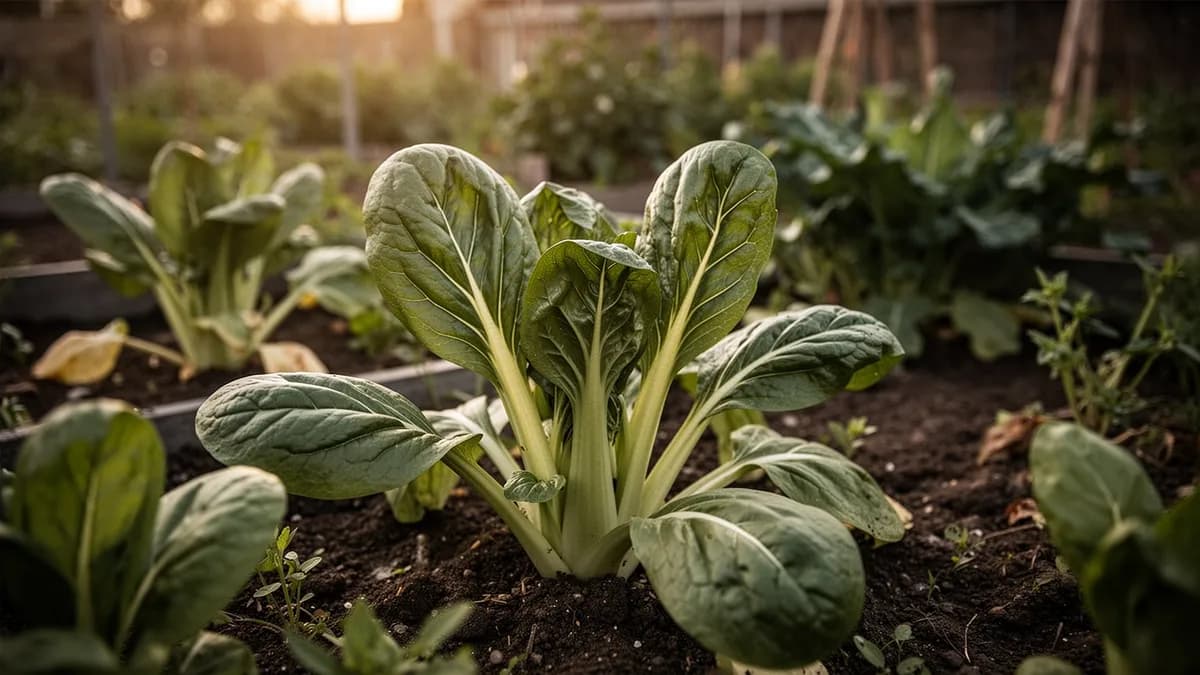
El yu choy (Brassica rapa var. parachinensis), también conocido como choy sum o brócoli chino de flor, es una verdura de hoja originaria del sur de China, apreciada por sus tallos tiernos, hojas suaves y pequeñas flores amarillas comestibles.





En esta páginaResumen
Conoce Yu Choy
El yu choy (Brassica rapa var. parachinensis), también conocido como choy sum o brócoli chino de flor, es una verdura de hoja originaria del sur de China, apreciada por sus tallos tiernos, hojas suaves y pequeñas flores amarillas comestibles. Tiene un sabor ligeramente dulce y una textura crujiente que lo convierten en uno de los vegetales más populares en la cocina cantonesa y del sudeste asiático.
Cuándo plantar Yu Choy
Siembre las semillas directamente en el exterior a 1 cm de profundidad, desde principios de primavera hasta mediados de otoño, evitando el calor del verano. La germinación ocurre en 5-10 días a 15-25 °C. Para una cosecha continua, realice siembras sucesivas cada 2-3 semanas. También puede iniciar en bandejas y trasplantar con 3-4 hojas verdaderas.
Tu año de Yu Choy
Ajustado a Zona 7 · temporada típica · la helada se va hacia el 2 abr y vuelve hacia el 1 nov
Planta Yu Choy Mar – Abr, Ago – Sep y cosecha May – Jun, Oct – Nov. Consulta los métodos de plantación y elige tu clima para adaptar los periodos.
Cómo cultivar Yu Choy
El yu choy es una planta de crecimiento rápido que prefiere temperaturas frescas entre 12 y 22 °C, aunque tolera mejor el calor que muchas otras brassicas. Siembre en un lugar a pleno sol o semisombra ligera con suelo fértil, bien drenado y rico en materia orgánica, pH entre 6,0 y 7,0.
Siembre las semillas directamente a 1 cm de profundidad en hileras separadas 20-30 cm. Aclare las plántulas a 15-20 cm cuando tengan 5 cm de altura. Para una cosecha continua, realice siembras sucesivas cada 2-3 semanas desde primavera hasta otoño, evitando los meses más calurosos de verano.
Riegue regularmente para mantener el suelo uniformemente húmedo, ya que el estrés hídrico causa espigado prematuro y hojas amargas. Aplique un fertilizante equilibrado cada 2-3 semanas. El yu choy crece muy rápido y puede estar listo para cosechar en solo 40-50 días, lo que permite múltiples cosechas por temporada.
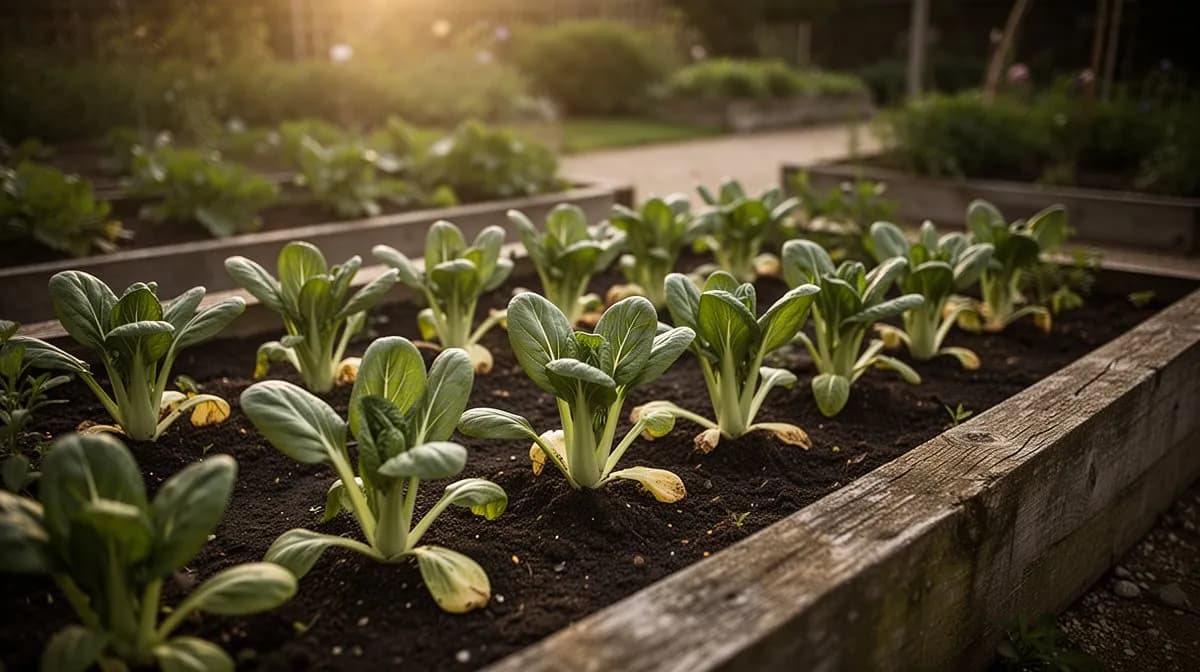
72 plantas caben en un bancal de 120 × 240 cm
Cada Yu Choy pide 20 cm de margen. El planificador guarda ese marco por ti — cada planta, cada bancal.
Los mejores vecinos de Yu Choy
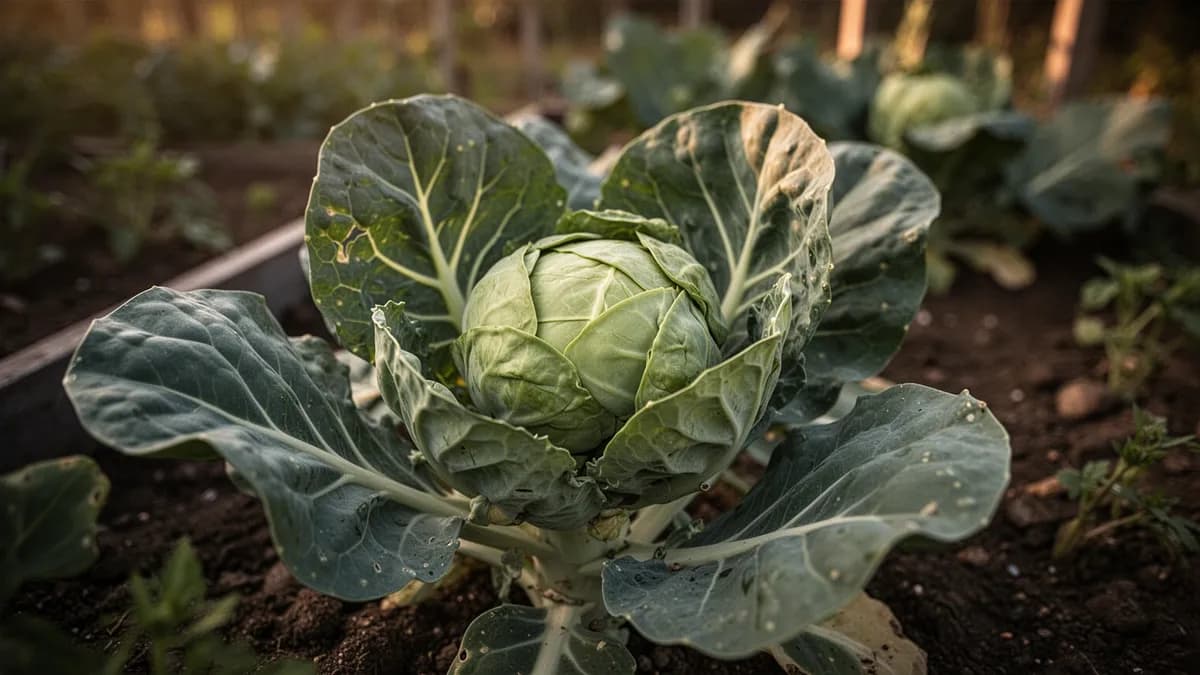
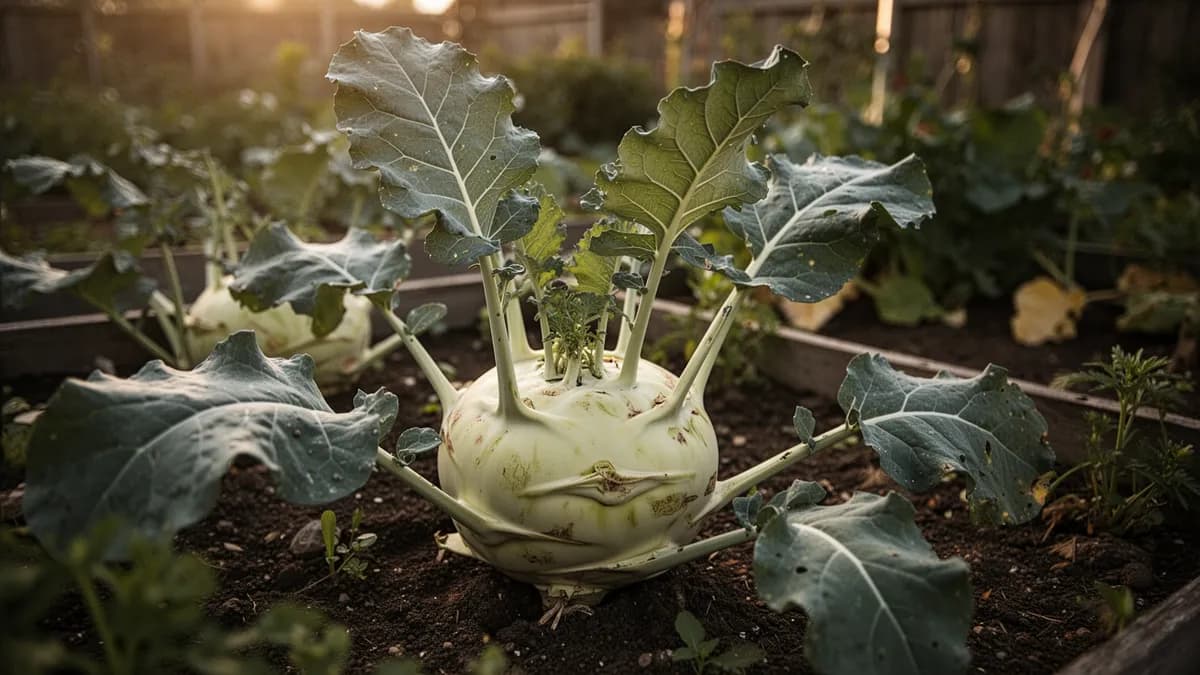
El yu choy crece bien junto a otras verduras asiáticas como el pak choi, el mizuna y la mostaza. Las hierbas aromáticas como el cilantro y la menta ayudan a repeler ciertos insectos. Evite plantarlo junto a otras brassicas para reducir la presión de plagas y enfermedades compartidas.
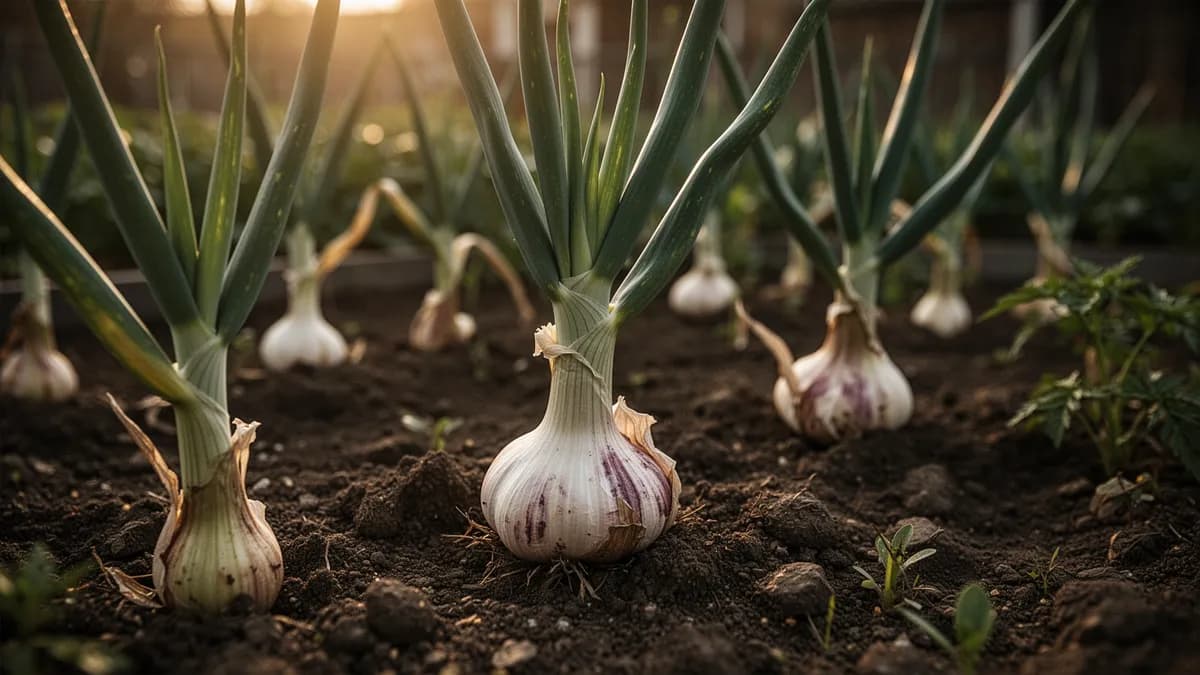
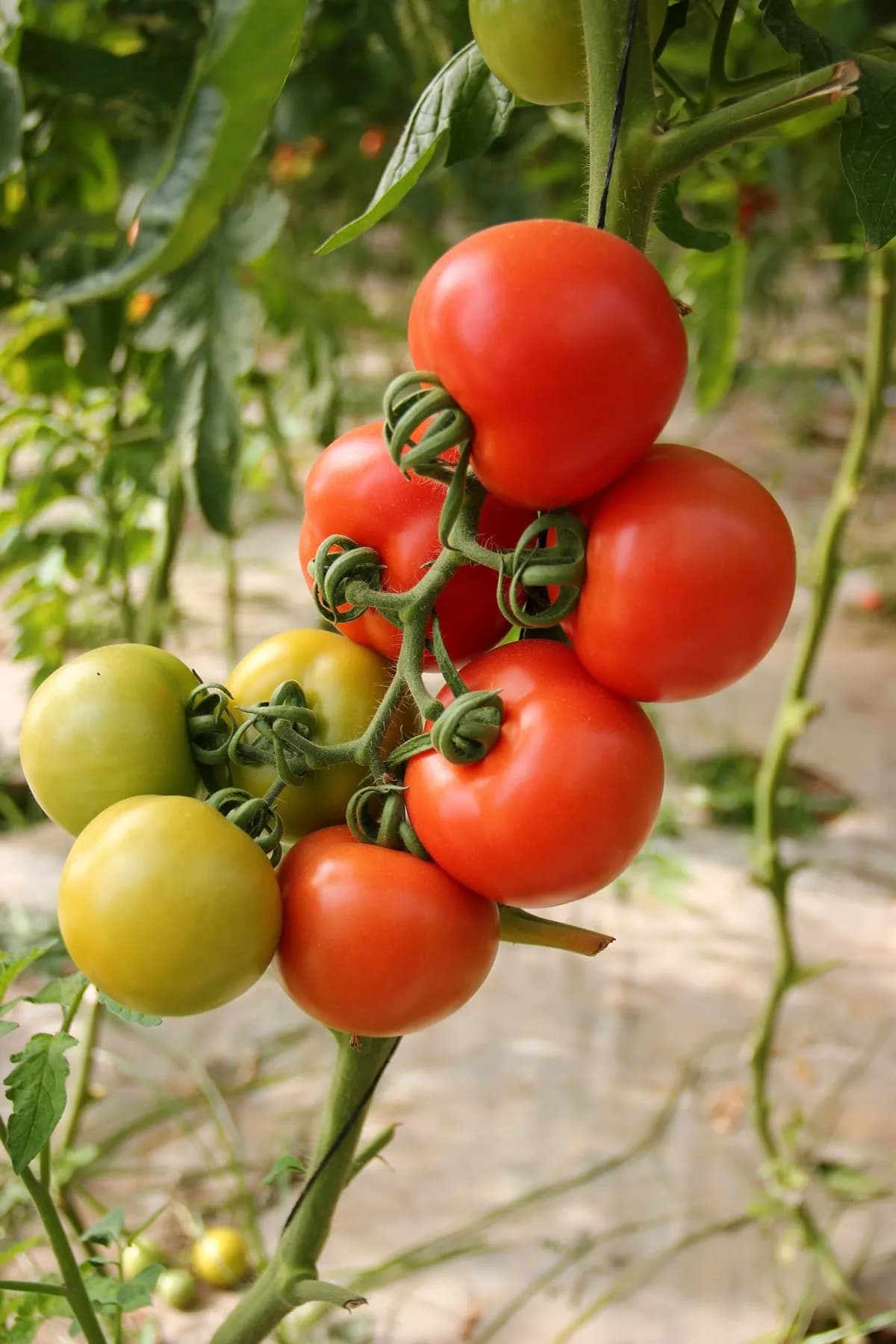
Ajo va a su lado. Tomate no.
Saber de huerto de siempre, cotejado con la tabla real de Yu Choy — prueba cualquier planta que cultives.
Prueba Yu Choy en un bancal, aquí mismo
Un bancal real del planificador con Yu Choy ya plantado. Toca una planta compañera para colocarla y mira cómo responde la comprobación de vecinos: verde para buenos vecinos, rojo si hay conflicto.


Guías de cultivo relacionadas
Abónalo bien
El yu choy necesita suelo fértil, rico en materia orgánica, bien drenado y con pH entre 6,0 y 7,0. Incorpore compost antes de la siembra. Aplique fertilizante equilibrado cada 2-3 semanas durante la temporada de crecimiento. El riego regular es fundamental para un crecimiento rápido y tierno.
Temperatura ideal
Compatibilidad de zonas de rusticidad
De la semilla a la cosecha, etapa por etapa
Germinación de semillas
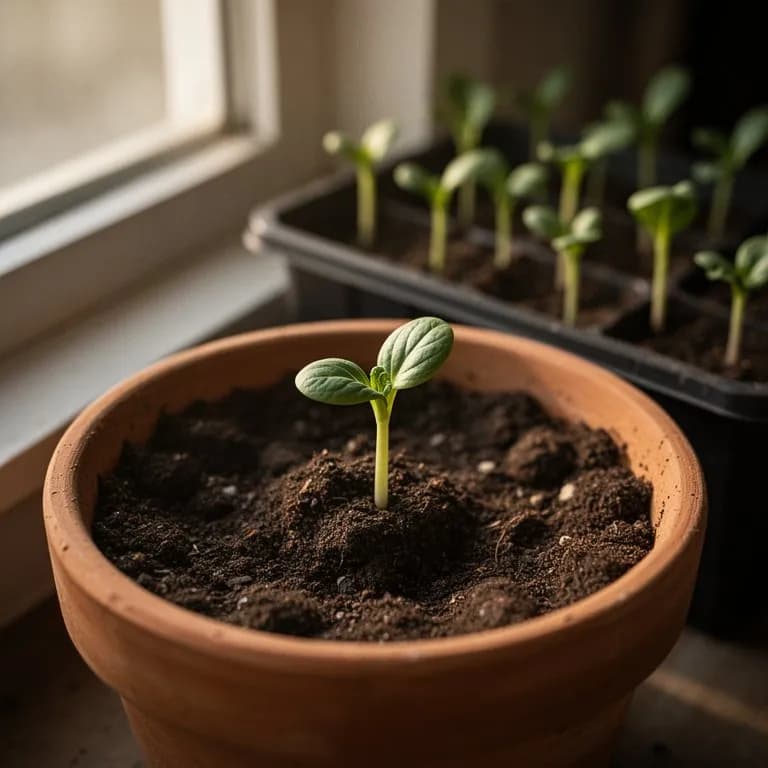
Las semillas redondas y diminutas germinan con rapidez en suelo fresco y húmedo, y a menudo brotan en 3-5 días. Primero aparecen los cotiledones redondeados, de color verde pálido y carnosos. Las semillas de yu choy son muy pequeñas —unas 300-350 por gramo—, así que para sembrarlas de manera uniforme hace falta mano ligera o mezclarlas con arena.
Desarrollo de plántulas
Las hojas verdaderas se desarrollan con rapidez, mostrando la característica forma redondeada y lisa de una brassica con un leve brillo ceroso. Los tallos empiezan a engrosarse y el sistema radicular se establece rápidamente en un suelo suelto y fértil. Las plántulas crecen con vigor en clima fresco y toleran heladas ligeras.
Crecimiento vegetativo
Las plantas crecen rápido y desarrollan tallos gruesos y jugosos, además de hojas anchas de color verde oscuro. El tallo central se engrosa hasta el grosor de un lápiz o más. Comienzan a aparecer brotes laterales desde las axilas de las hojas, formando una estructura arbustiva. Esta es la fase de máxima producción de hojas y tallos.
Formación de botones
Pequeños botones florales verdes se forman en racimos compactos en las puntas de los tallos. Esta es la ventana principal de cosecha: los tallos están en su punto máximo de ternura y dulzor justo cuando aparecen los botones, pero antes de que se abran las flores. La planta empieza a alargar su tallo central al pasar a la floración.
Floración y cosecha continua
Las flores amarillas brillantes de cuatro pétalos se abren en tallos alargados. Las flores también son comestibles y de sabor ligeramente dulce. Los brotes laterales siguen produciendo nuevos botones y tallos para cosechas sucesivas. En clima fresco, las plantas pueden producir brotes cosechables durante 3-5 semanas después del primer corte.
Formación de semillas y declive
Las flores maduran y se convierten en vainas de semillas delgadas (siliquas) mientras la planta completa su ciclo de vida. Los tallos se vuelven cada vez más leñosos y fibrosos. El sabor se vuelve amargo a medida que la planta dirige su energía a la producción de semillas. Deja que algunas plantas formen semillas si deseas guardarlas.
Siembra las semillas a 0,5-1 cm de profundidad en un suelo húmedo y mantenlo constantemente húmedo hasta la germinación. No las entierres demasiado, porque necesitan luz para brotar. Una temperatura del suelo de 15-20 °C es ideal para una germinación rápida y uniforme.
Cuidar Yu Choy mes a mes
Qué hacer cada mes para tu Yu Choy
Octubre
Mes actualHarvest autumn-sown crops at the bud stage for the best flavor and texture. Continue succession sowing in mild zones for harvests through December. Apply row cover for frost protection as nights grow cold.
Ten claro qué hacer en tu huerto, cada mes
Un correo al empezar cada mes: qué sembrar, plantar y hacer ahora mismo — para tu Yu Choy y todo lo que crece alrededor. Más un breve curso inicial para esquivar los errores clásicos.
- Qué hacer ahora mismo
- Ajustado a tu temporada
- Curso inicial incluido
Cosechar Yu Choy
Coseche el yu choy cuando los tallos florales comiencen a emerger pero antes de que las flores se abran completamente, generalmente entre 40 y 50 días tras la siembra. Corte la planta entera a 3-5 cm del suelo o corte los tallos florales individuales con 15-20 cm de longitud. Las flores abiertas también son comestibles y decorativas.
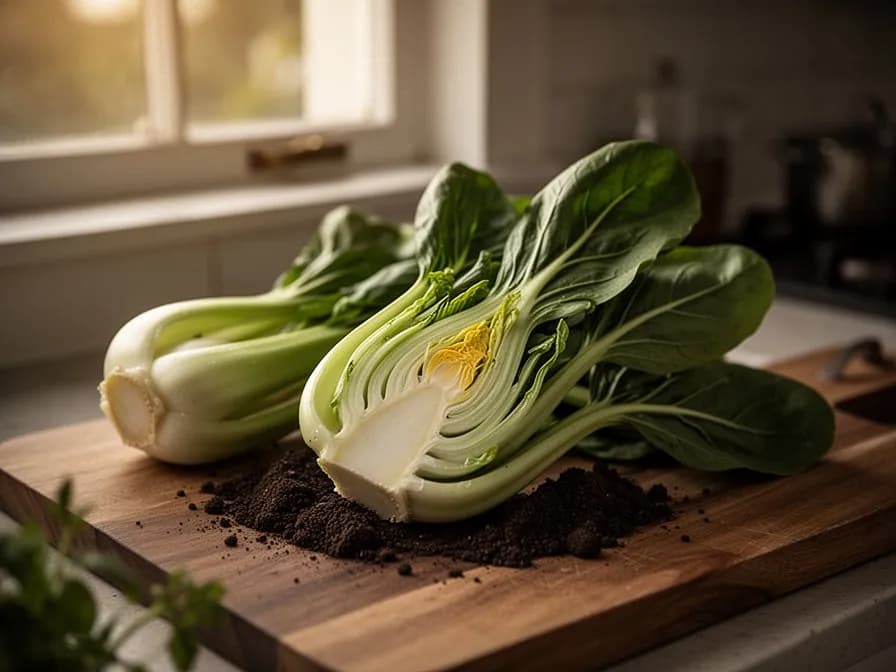
se supone que plantas al comenzar el periodo — indica tu fecha real
Cuando los botones florales apenas empiezan a verse y los tallos miden alrededor de 15-20 cm.
Almacenamiento y conservación
El yu choy fresco se conserva en el refrigerador 3-5 días envuelto en un paño húmedo dentro de una bolsa perforada. Para congelación, blanquee los tallos y hojas durante 1-2 minutos, enfríe en agua helada y congele. El yu choy se consume mejor fresco para apreciar su textura crujiente y sabor delicado.
Qué falla — y cómo solucionarlo
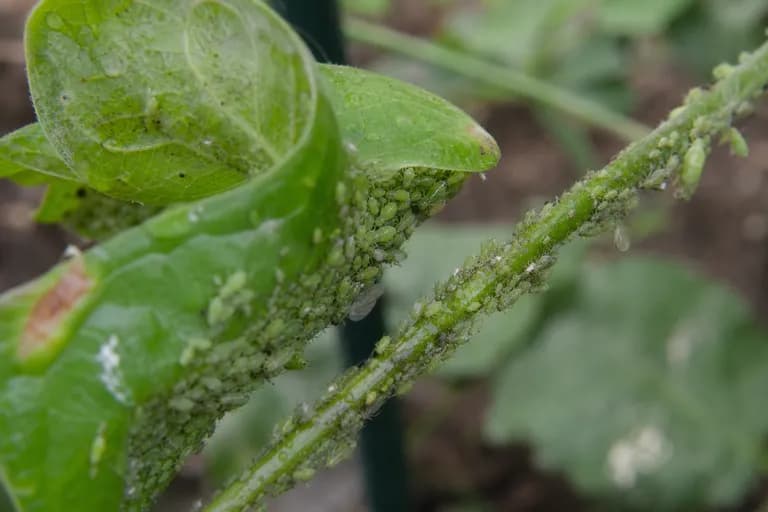
Mariposa de la col (Pieris rapae)
PlagaOrugas verdes que devoran las hojas, dejando solo las nervaduras en casos graves. Los excrementos verdes oscuros son un indicador de su presencia.
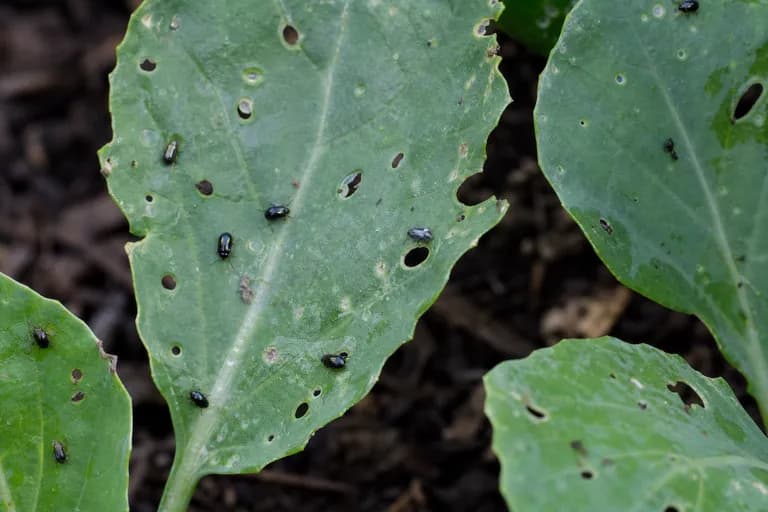
Pulguilla (Phyllotreta spp.)
PlagaPequeños agujeros redondos en las hojas que dan un aspecto de perdigonada. Las plántulas jóvenes son especialmente vulnerables.
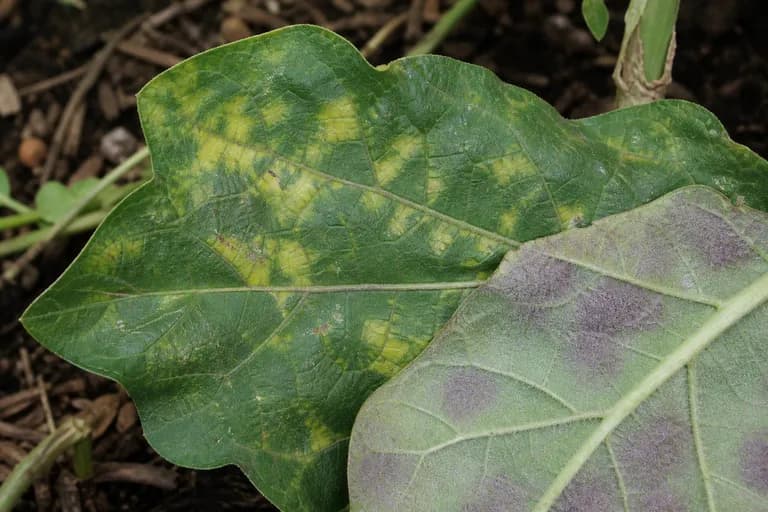
Mildiú velloso (Hyaloperonospora parasitica)
EnfermedadManchas amarillentas en el haz con moho grisáceo-violáceo en el envés. Las hojas se necrosan progresivamente, especialmente en condiciones húmedas y frías.
Solución de problemas comunes
El espigado prematuro (floración antes de alcanzar un buen tamaño) es el problema principal, causado por temperaturas superiores a 25 °C y estrés hídrico. Siembre en las estaciones frescas y mantenga el suelo uniformemente húmedo. Las siembras sucesivas cada 2-3 semanas aseguran un suministro continuo incluso si alguna siembra se espiga.
Consejos de cultivo
- Succession sow every 2-3 weeks from early spring through autumn for a continuous supply. Yu choy matures so quickly (35-50 days) that you can fit 4-6 plantings into a single growing season, maximizing your harvest from minimal garden space.
- Harvest at the bud stage for peak flavor and tenderness — cut the main stem about 15-20 cm from the top just above a leaf node when small green flower buds have formed but before they open. This timing gives the best balance of sweetness and crunch.
- Always cut above a leaf node to encourage regrowth. After the initial main stem harvest, side shoots will emerge from the remaining leaf axils and produce 2-3 additional harvests over the following 3-5 weeks.
- Do not grow yu choy in hot weather. Temperatures above 25°C (77°F) cause immediate bolting, tough stems, and bitter flavor. In warm climates, plant only in spring, autumn, and winter — skip the summer months entirely.
- Flea beetles are the primary pest of yu choy and can riddle seedling leaves with tiny holes. Cover newly sown beds with fine insect mesh (0.8mm) immediately after planting and leave it in place until plants are well established.
- Space plants 10-15 cm apart for full-sized stems, or sow densely at 5 cm spacing and harvest as baby greens at 20-25 days for tender salad leaves. Dense sowing also suppresses weeds and makes efficient use of small garden beds.
- Water consistently and evenly — drought stress causes premature bolting and bitter, fibrous stems. Yu choy has shallow roots and needs 2-3 cm of water per week. Mulch with straw or grass clippings to retain soil moisture in warmer weather.
- Rotate yu choy with non-brassica crops each season to prevent clubroot and other soil-borne diseases common to the cabbage family. Avoid planting where any brassica (cabbage, broccoli, bok choy, kale) has grown in the previous 2-3 years.
Cultiva tu mejor Yu Choy — y todo lo que la rodea.
Empieza un plan gratis hoy. Diseña tus bancales, coloca tu Yu Choy y deja que PlotMyGarden gestione el momento, el espaciado, las asociaciones y los recordatorios de la semilla a la cesta.
Elige tu Yu Choy
Yu Choy Sum (estándar)
La variedad clásica con tallos verdes tiernos y flores amarillas. Crecimiento rápido y producción abundante. 40-50 días.
Hon Tsai Tai (púrpura)
Variedad con tallos y nervaduras de color púrpura intenso y flores amarillas. Sabor ligeramente más fuerte. Muy ornamental. 45-55 días.
Kosaitai
Variedad japonesa seleccionada con tallos especialmente tiernos y dulces. Más compacta y de crecimiento rápido. 35-45 días.
Yu choy is one of the most cost-effective vegetables to grow at home. A single packet of seeds ($2-4) contains hundreds of seeds and can plant an entire season of successive crops. Fresh yu choy sells for $3-6 per bunch at Asian supermarkets and $5-8 per pound at farmers markets. Growing just a 3-meter row with succession sowings can yield 8-15 kg over a season, easily saving $50-120 compared to store-bought. The savings are even greater for organic yu choy, which commands premium prices. Since it matures in just 35-50 days, yu choy offers one of the fastest returns on garden investment of any vegetable.
Recetas rápidas
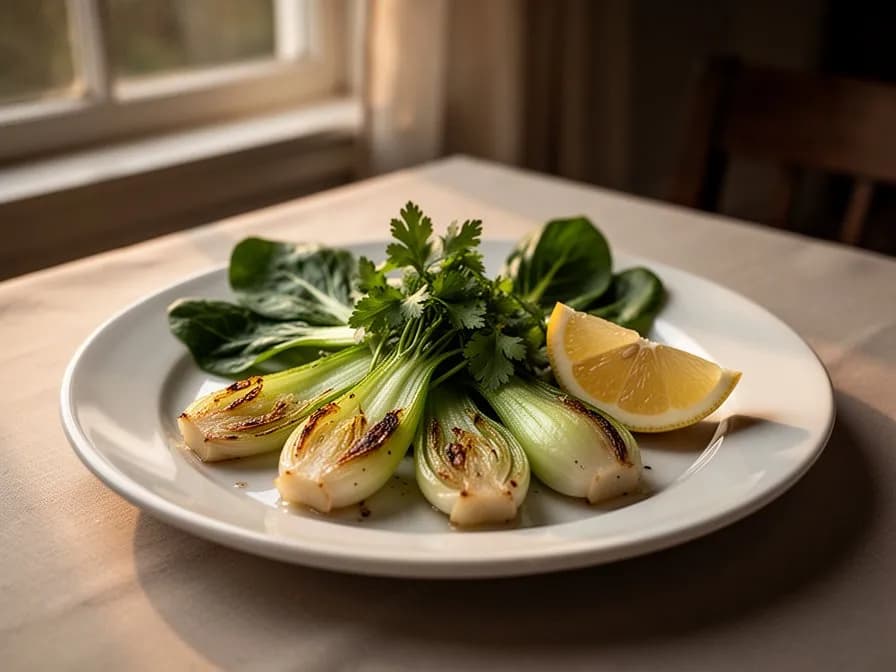
Garlic Stir-Fried Yu Choy
10 minThe quintessential Cantonese preparation — yu choy flash-fried in a blazing hot wok with garlic until the stems are crisp-tender and the leaves just wilted. A splash of Shaoxing wine at the end adds depth and aroma to this beautifully simple dish.
7 ingredientesBlanched Yu Choy with Oyster Sauce
8 minA staple of Cantonese home cooking and dim sum restaurants — whole yu choy stems blanched until just tender, then arranged on a plate and drizzled with a warm garlic oyster sauce. The clean flavors let the natural sweetness of the vegetable shine.
8 ingredientesYu Choy and Shiitake Noodle Soup
20 minA warming bowl of thin egg noodles in a fragrant ginger-mushroom broth, topped with tender yu choy stems and rehydrated shiitake mushrooms. A comforting one-bowl meal that comes together quickly on a cool evening.
9 ingredientesUsos culinarios
El yu choy se prepara típicamente salteado a fuego vivo con aceite de cacahuete, ajo y salsa de ostras en la cocina cantonesa. También se cuece al vapor brevemente y se adereza con aceite de sésamo y salsa de soja. Las flores amarillas aportan un toque decorativo y un sabor ligeramente dulce. Se añade a sopas de fideos en el último minuto de cocción para mantener su textura crujiente.
Qué contiene
Beneficios para la salud
- Exceptionally high in beta-carotene and vitamin A (over 80% DV per 100g), which support healthy vision, immune function, and skin cell turnover — particularly important for maintaining night vision and protecting corneal health.
- Rich in vitamin C (50% DV per 100g), a powerful antioxidant that supports immune defense, enhances iron absorption from plant foods, and is essential for collagen synthesis in skin, bones, and blood vessels.
- Provides highly bioavailable calcium (105mg per 100g) with low oxalate levels — unlike spinach, the calcium in yu choy is well-absorbed by the body, supporting bone density and muscle function.
- Contains glucosinolates, sulfur-containing compounds found in brassica vegetables that are broken down into isothiocyanates during digestion — these compounds have been extensively studied for their potential anti-cancer and anti-inflammatory properties.
- Good source of folate and iron, both critical for healthy blood cell production. The combination of iron with high vitamin C content in the same vegetable enhances non-heme iron absorption, making yu choy especially valuable for plant-based diets.
- Low in calories (20 per 100g) and rich in dietary fiber, supporting healthy digestion and satiety. The combination of high nutrient density and very low calorie content makes yu choy one of the most nutritionally efficient foods available.
De dónde viene Yu Choy
Yu choy (Brassica rapa var. parachinensis), also widely known as choy sum, originated in southern China, where it has been cultivated for well over 1,500 years. It belongs to the vast and diverse Brassica rapa species complex, which includes turnips, napa cabbage, bok choy, and rapini. The warm subtropical climate of Guangdong and surrounding provinces provided ideal conditions for this cool-to-mild weather crop, and it became deeply embedded in the daily food culture of the Cantonese-speaking south.
For centuries, yu choy was a staple of smallholder farms throughout the Pearl River Delta region. Its extraordinary speed from seed to harvest — often just 35-50 days — made it invaluable for market gardeners who could grow six or more successive crops per year. The vegetable's tender flowering stems, mild sweetness, and versatility in the kitchen made it the default everyday green on Cantonese dinner tables, a status it still holds today. Yu choy is so central to Cantonese cuisine that the broader category term 'choy sum' (vegetable heart) has become almost synonymous with this single species in southern Chinese markets.
Chinese immigrants carried yu choy seeds to Southeast Asia, where it became a foundation vegetable in the cuisines of Malaysia, Singapore, Thailand, Vietnam, and Indonesia. It thrives in the tropical lowlands when planted during cooler dry seasons and at higher elevations year-round. In the 20th century, waves of Chinese immigration brought yu choy to North America, Australia, and Europe, where it is now widely grown both commercially and in home gardens. Today it is available year-round in Asian supermarkets worldwide, and Western gardeners are increasingly discovering its remarkable ease of cultivation, rapid growth, and outstanding flavor — qualities that have made it indispensable in Chinese kitchens for over a millennium.
Yu Choy: ¿sabías que?
Datos fascinantes sobre Yu Choy
Yu choy (Brassica rapa var. parachinensis) is also known as 'choy sum' in Cantonese, which translates literally to 'vegetable heart' — referring to the prized tender flowering heart of the plant that is considered the most delicious part.
Yu Choy: preguntas frecuentes
¿Cuándo debo plantar Yu Choy?
¿Cuáles son buenas plantas acompañantes para Yu Choy?
¿En qué zonas de rusticidad puede crecer Yu Choy?
¿Cuánto sol necesita Yu Choy?
¿A qué distancia debo espaciar Yu Choy?
¿Qué plagas y enfermedades afectan a Yu Choy?
¿Cómo almaceno Yu Choy después de la cosecha?
¿Cuáles son las mejores variedades de Yu Choy para cultivar?
¿Qué suelo necesita Yu Choy?
What is the difference between yu choy and choy sum?
Why is my yu choy bolting before it forms thick stems?
Can I eat yu choy flowers?
How is yu choy different from bok choy?
Can I grow yu choy in containers?
How do I store freshly harvested yu choy?
Acabas de leer la teoría. Ahora cultívala en piloto automático.
Todo lo que hace que Yu Choy sea delicado — el momento, el espaciado, las asociaciones, la ventana de cosecha — es justo lo que PlotMyGarden resuelve por ti, para cada planta de tu huerto.
Un plan que conoce tu clima
Indica tu ubicación una vez. Recibe fechas de siembra, abonado y cosecha basadas en tu última helada real y el pronóstico en vivo — sin adivinar con un sobre genérico.
De la sección “Cuándo plantar”Planificador de bancales de arrastrar y soltar
Diseña bancales sobre una cuadrícula. Cada planta encaja con su espaciado correcto y ves toda la temporada antes de gastar un céntimo en semillas.
De la sección “Cultivo”Conflictos de asociación, detectados a tiempo
Más de 200 buenas y malas combinaciones comprobadas en vivo mientras plantas — para que un error que arruine la temporada nunca llegue a la tierra.
De la sección “Asociaciones”Recordatorios que sí vas a seguir
“Riega las judías.” “Recoge hoy antes de que se pase.” Oportunos, concretos y ligados a las plantas que de verdad cultivas.
De la sección “Cosecha”Escalonado, programado
¿Quieres cosechar seis semanas en vez de seis días? Reparte tus siembras automáticamente y te avisa cuando toca el siguiente lote.
De la sección “Cuándo plantar”Un registro que se vuelve más listo
Cada cosecha que registras le enseña tu huerto. El plan del año que viene parte de lo que de verdad funcionó en tu suelo, no en un manual.
De la sección “Resumen”Planta estos junto a Yu Choy
Más Crucíferas
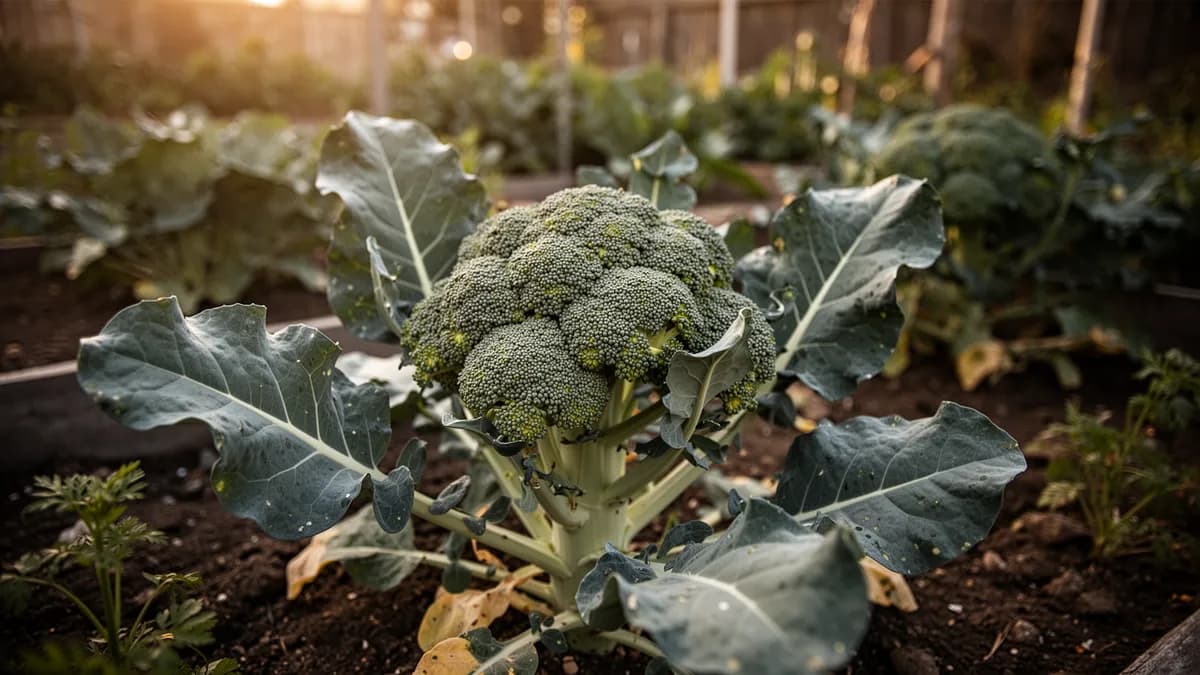
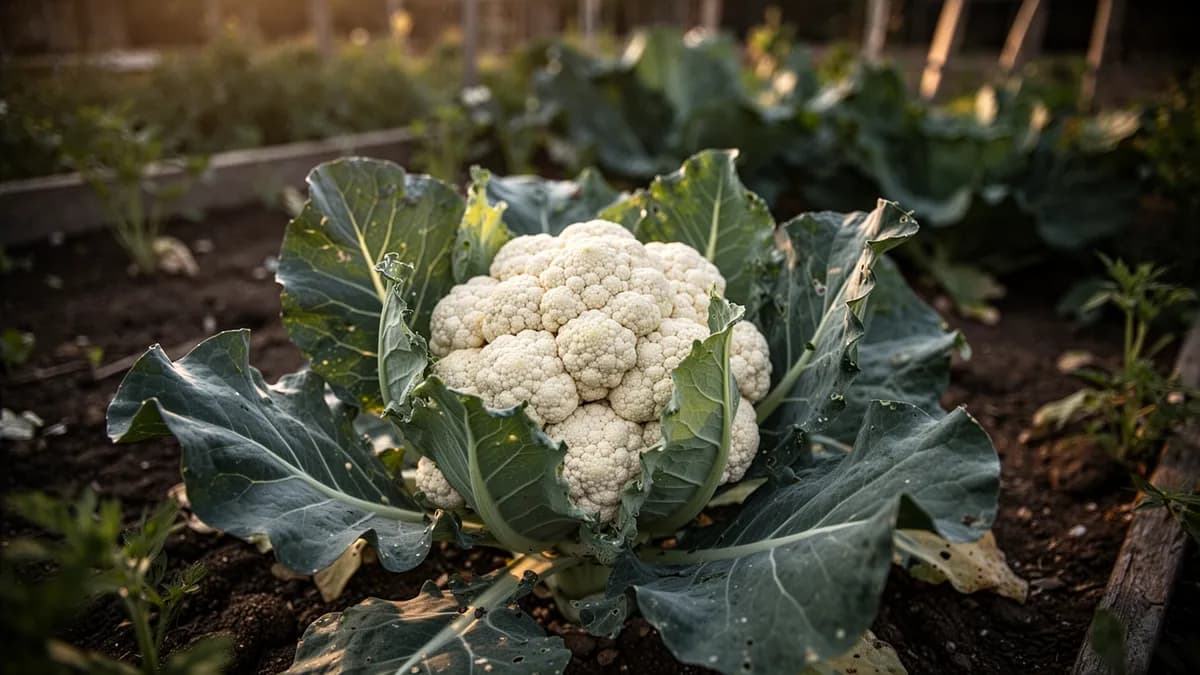
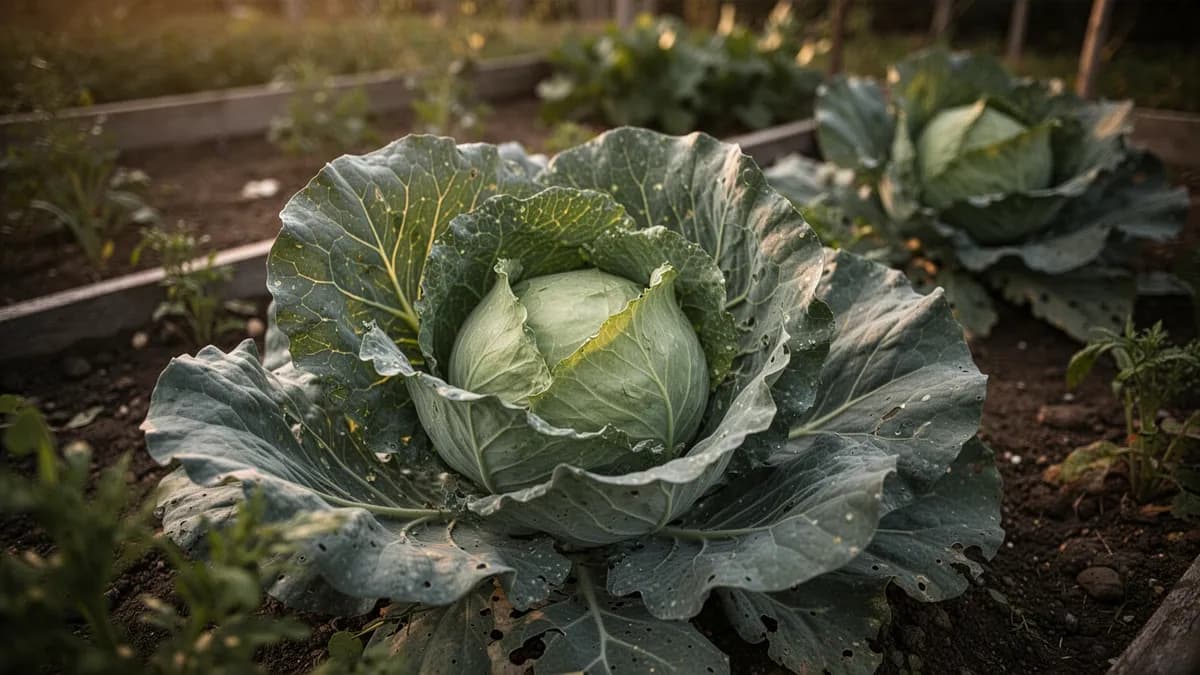
Mantén Yu Choy lejos de estos
Diseños de jardín con Yu Choy
Cultiva tu mejor Yu Choy — y todo lo que la rodea.
Empieza un plan gratis hoy. Diseña tus bancales, coloca tu Yu Choy y deja que PlotMyGarden gestione el momento, el espaciado, las asociaciones y los recordatorios de la semilla a la cesta.