Tomato
A warm-season staple prized for its versatile fruits, thriving in rich well-drained soil with consistent moisture.





On this pageOverview
Meet Tomato
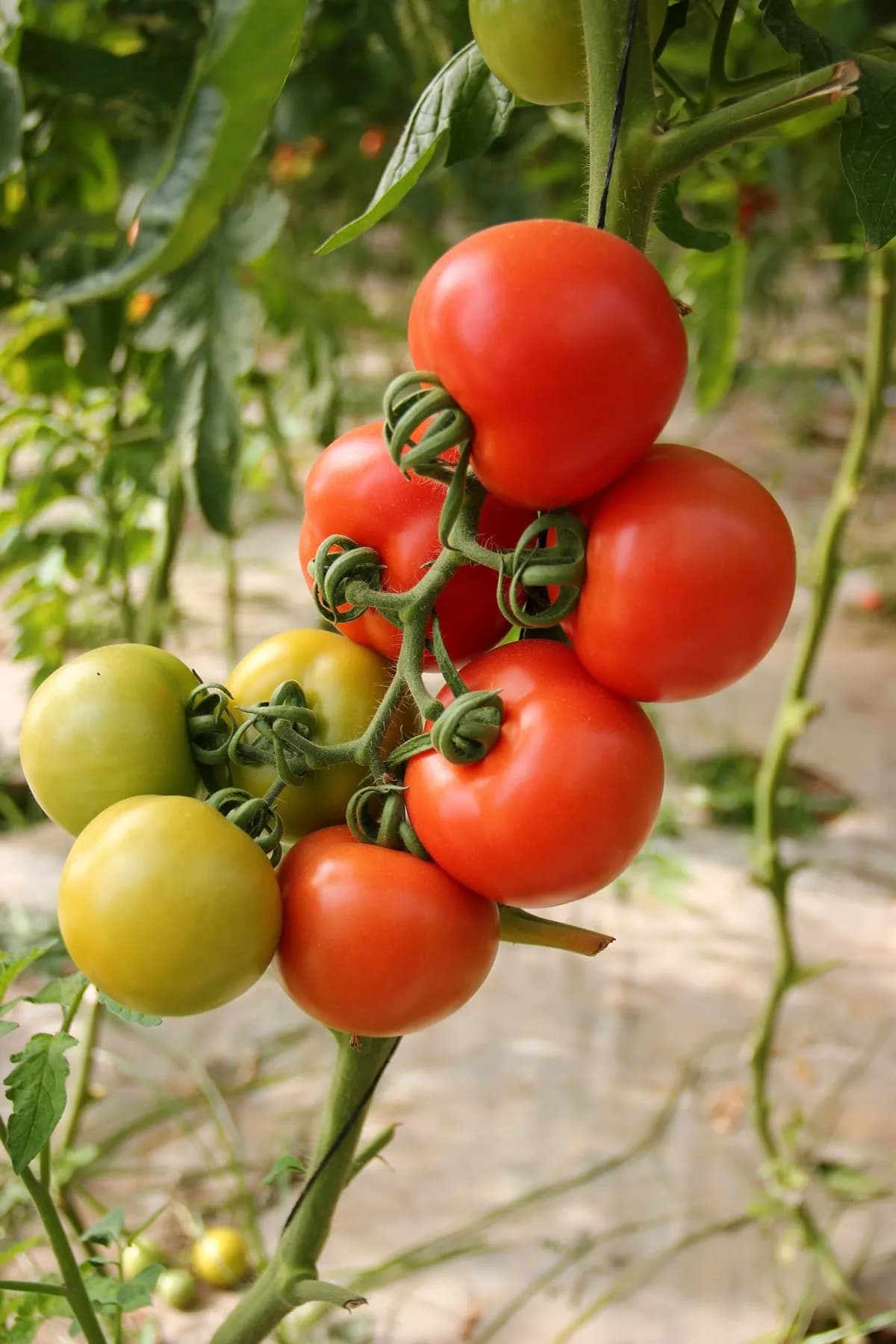
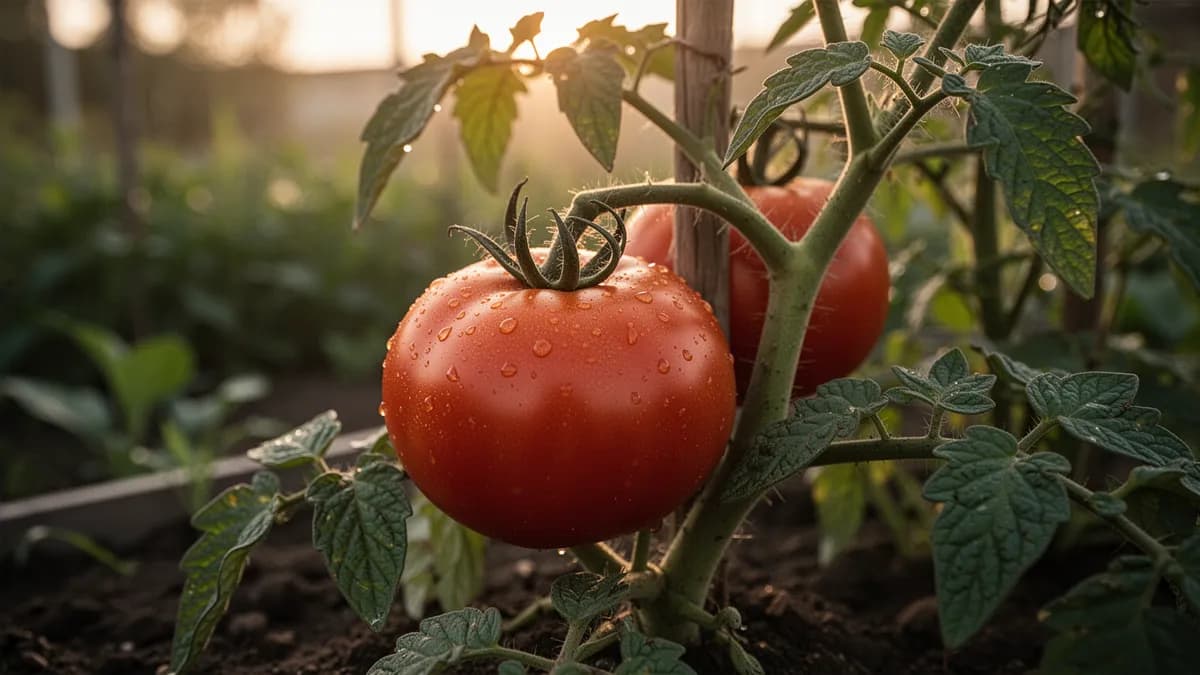
A warm-season staple prized for its versatile fruits, thriving in rich well-drained soil with consistent moisture. Stake or cage plants early to support heavy fruit clusters and remove lower suckers for better air circulation. Watch for hornworms, blossom end rot, and early blight, especially in humid climates. Harvest when fruits are fully colored and give slightly when pressed for peak flavor.
When to plant Tomato
Start tomato seeds indoors 6-8 weeks before your last frost date. Sow seeds 6mm (1/4 inch) deep in a sterile seed-starting mix at 21-27°C (70-80°F) — use a heat mat for consistent warmth. Seeds germinate in 5-10 days. Cover trays with a humidity dome or plastic wrap until sprouts appear, then remove immediately to prevent damping off.
Once seedlings emerge, provide 14-16 hours of strong light daily. A south-facing window is rarely sufficient for stocky seedlings — use grow lights positioned 5-8 cm above the plants, raising them as seedlings grow. Insufficient light produces leggy, weak transplants that struggle in the garden.
Transplant seedlings into larger individual pots (10cm / 4 inch) when the first true leaves appear, burying the stem up to the cotyledons — roots will form along the buried stem. Water with a dilute liquid fertilizer (quarter strength) weekly from the two-leaf stage onward.
Begin hardening off 7-10 days before your transplant date by placing seedlings outdoors in a sheltered, shaded spot for 1-2 hours initially, increasing daily exposure gradually. By day 7 they should handle full sun and light wind. Transplant on a cloudy day or in late afternoon to reduce transplant shock, and water deeply immediately after planting.
Your Tomato Year
Composed for Zone 7 · typical seasons · frost passes Apr 2, returns Nov 1
Plant Tomato Feb – May, pick Jul – Sep. Check the planting methods below and set your climate to personalize these windows.
How to grow Tomato
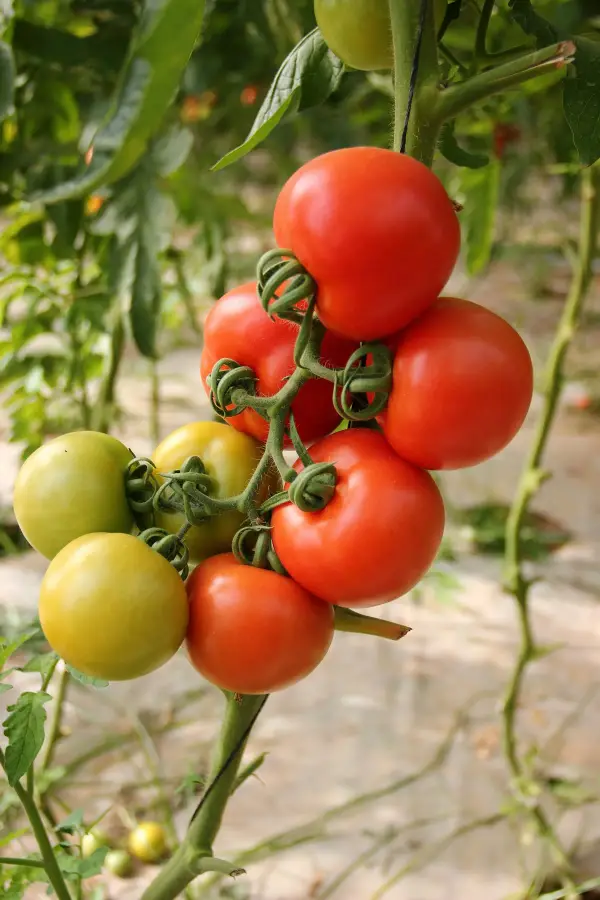
Tomatoes are one of the most rewarding crops for home gardeners, producing abundant harvests from just a few plants when given proper care. Begin by hardening off seedlings over 7-10 days before transplanting outdoors, gradually exposing them to sun, wind, and outdoor temperatures. Transplant into the garden after the last frost date when soil temperatures have reached at least 15°C (60°F), burying the stem up to the first set of true leaves to encourage a strong root system along the buried stem.
Choose a location that receives 6-8 hours of direct sunlight and has not grown tomatoes, peppers, or eggplants in the previous two years to reduce soilborne disease pressure. Install stakes, cages, or trellises at planting time to avoid damaging roots later. For indeterminate varieties, prune suckers that develop in leaf axils to direct energy toward fruit production and improve airflow through the canopy.
Water deeply and consistently, providing 2.5-4 cm (1-1.5 inches) per week, ideally with drip irrigation or soaker hoses to keep foliage dry. Mulch with 5-8 cm of straw or shredded leaves to conserve moisture, regulate soil temperature, and suppress weeds. Side-dress with a balanced fertilizer or compost tea every 3-4 weeks once fruits begin to set, switching to a lower-nitrogen formula to promote fruiting over foliage growth.
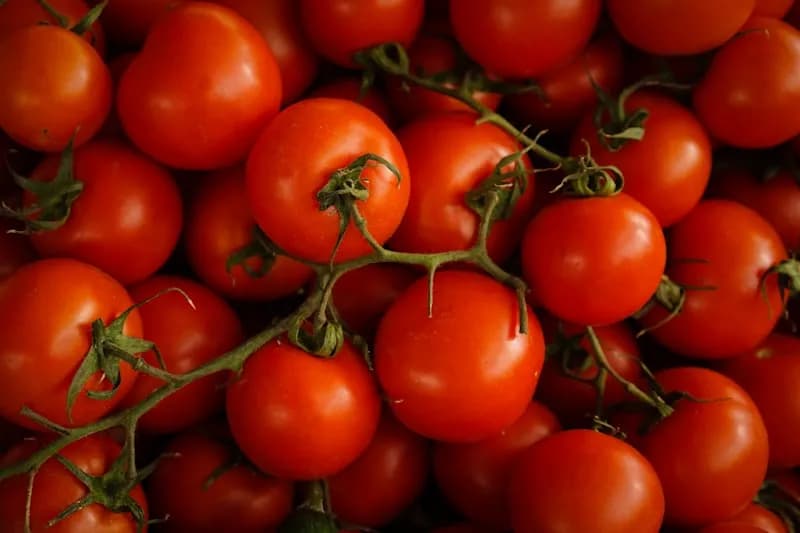
8 plants fit a 4 × 8 ft bed
Each Tomato wants 60 cm of elbow room. The planner keeps that spacing for you — every plant, every bed.
Tomato's best neighbours
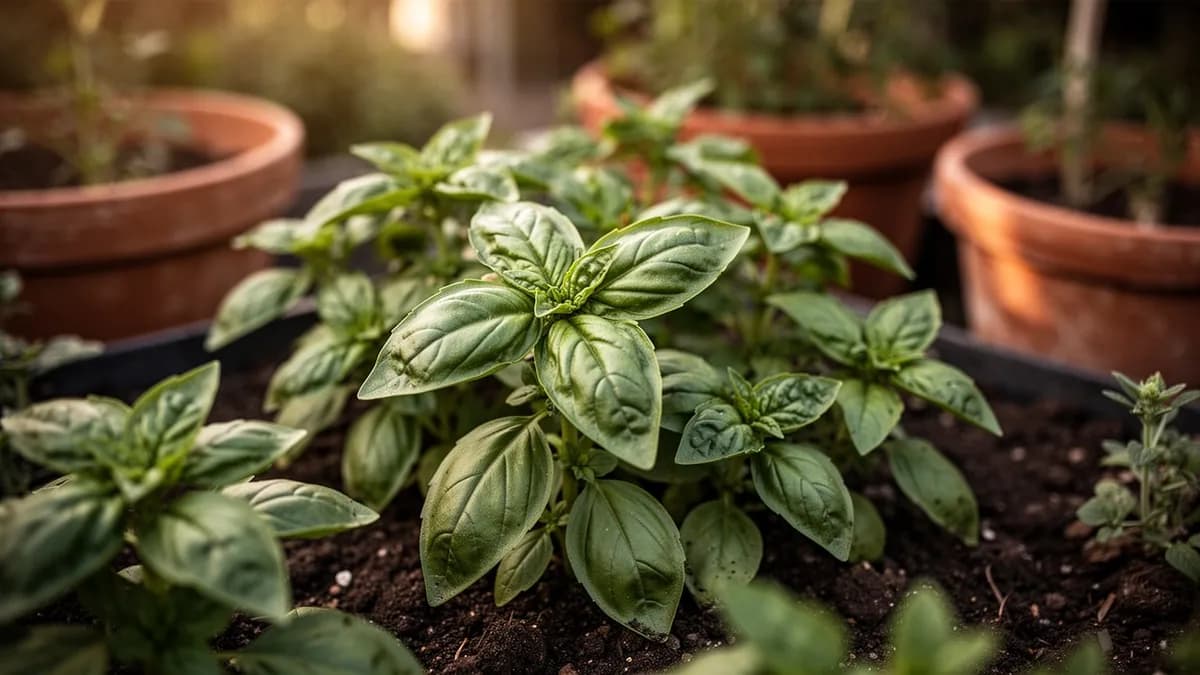
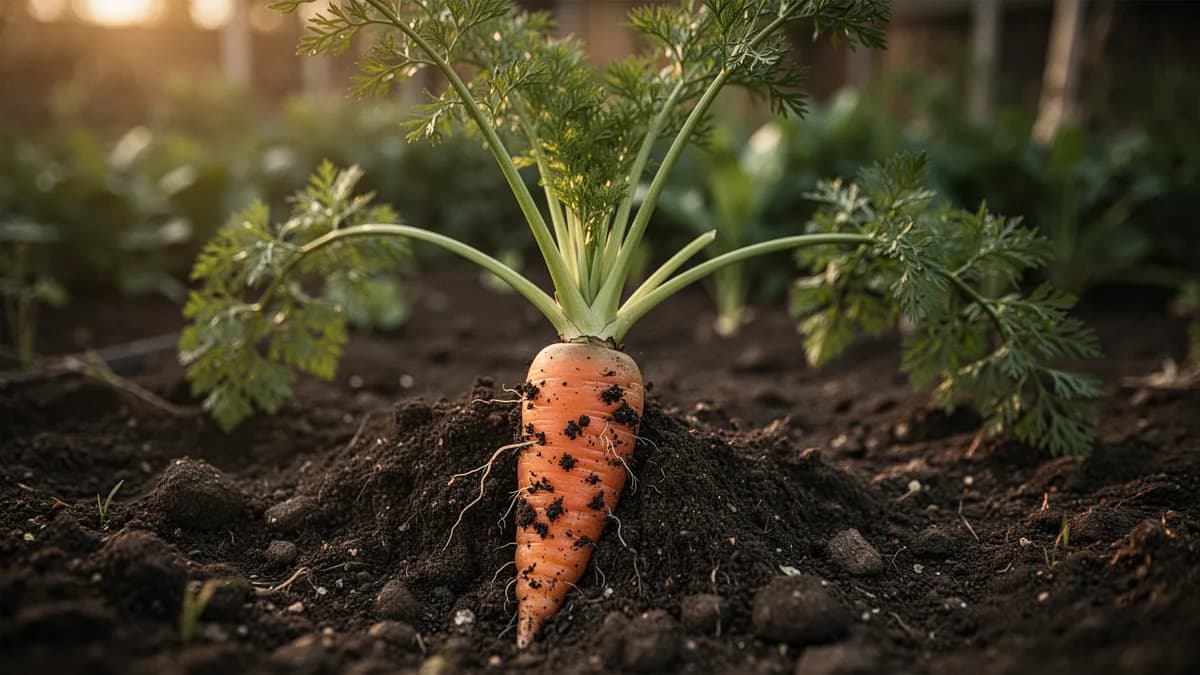
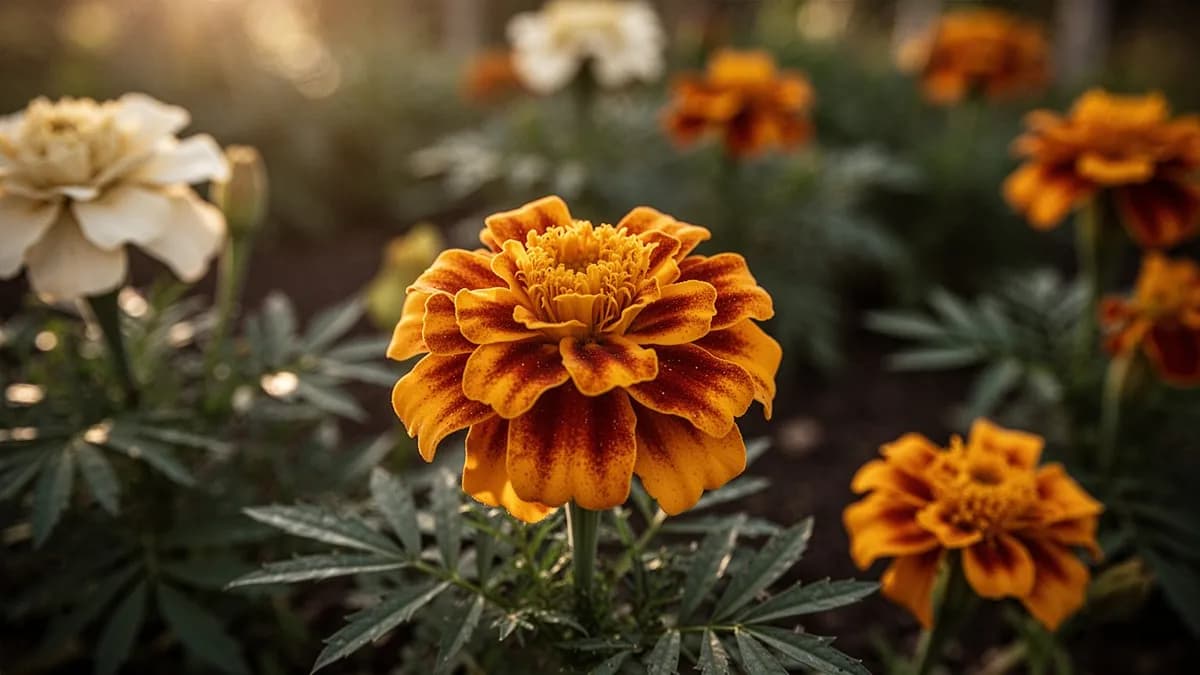
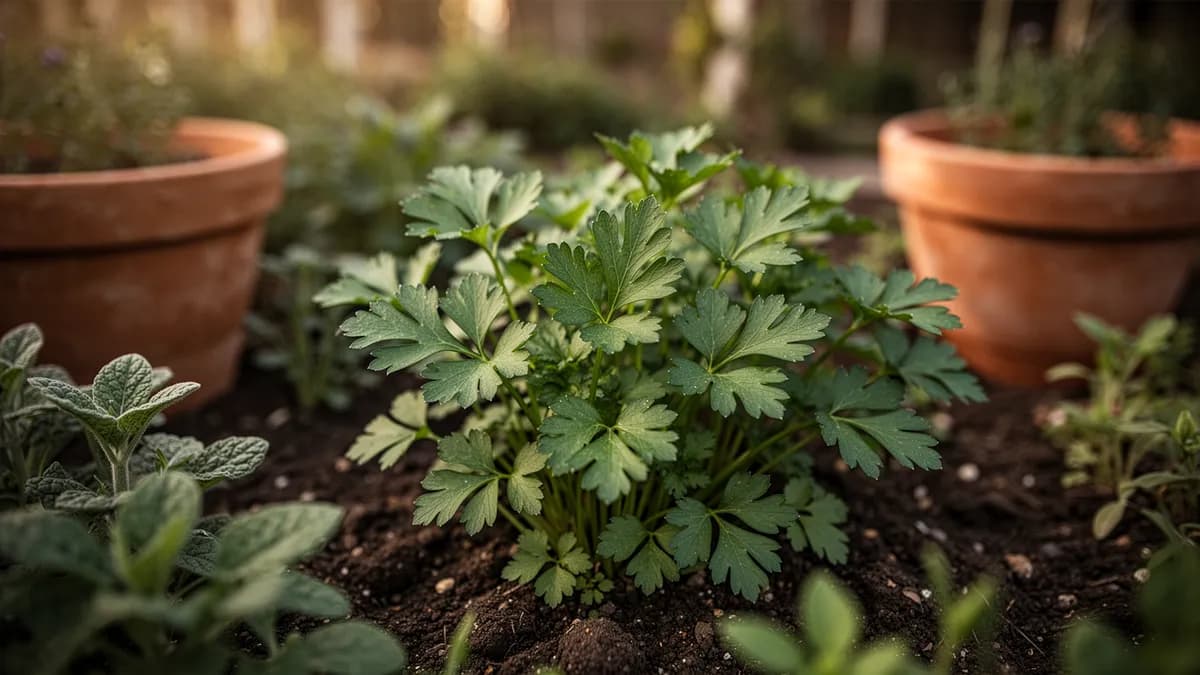
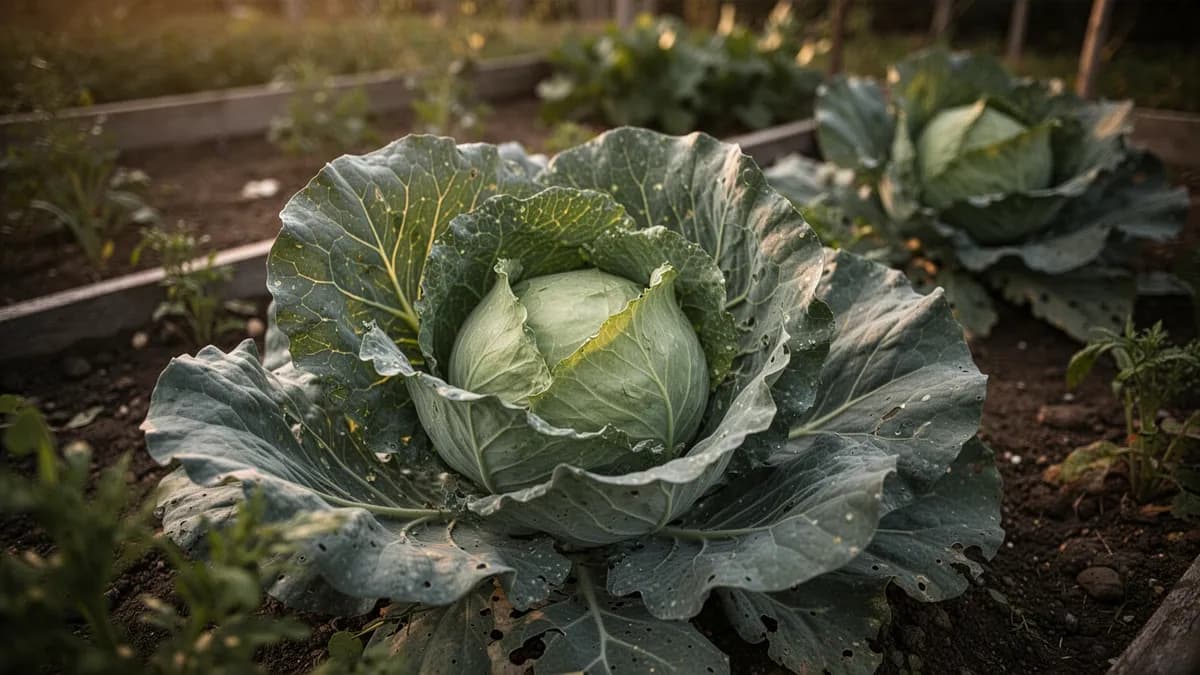
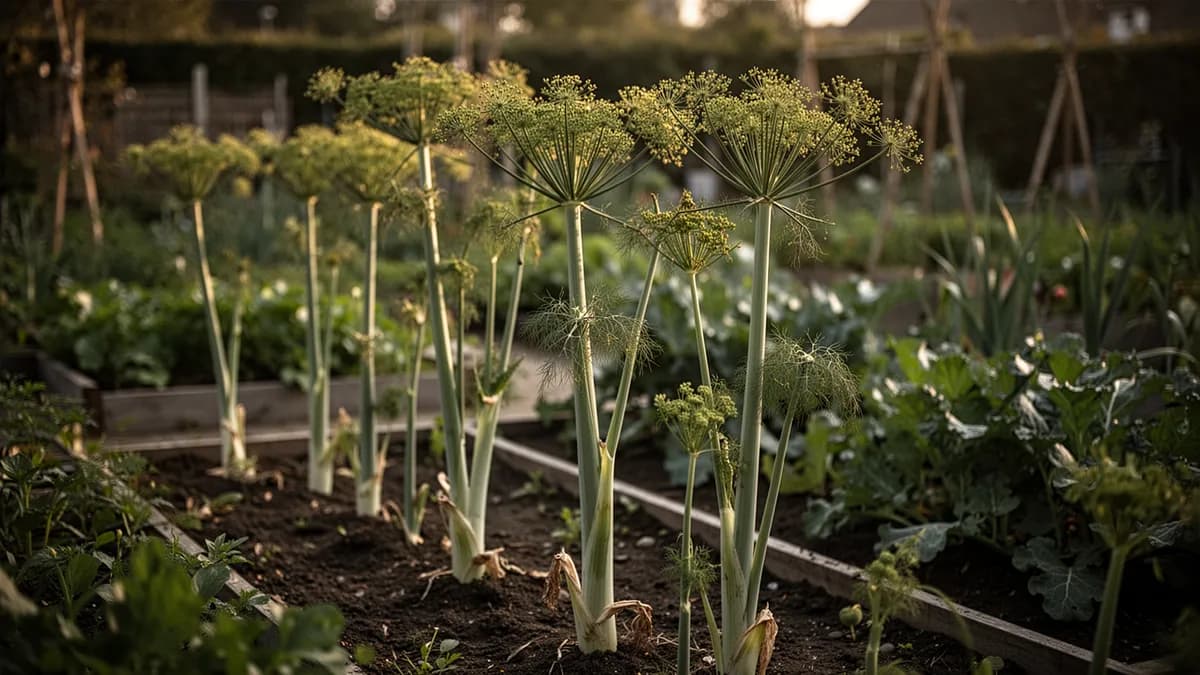
Basil is the classic tomato companion — its volatile oils repel aphids, whiteflies, and thrips while some gardeners report that interplanting improves tomato flavor. Marigolds release alpha-terthienyl from their roots, which suppresses root-knot nematodes that attack tomato roots. Carrots planted nearby loosen the soil with their deep taproots, improving water penetration and aeration around tomato roots. Parsley attracts hoverflies whose larvae devour aphids. Avoid planting near fennel, which releases root exudates that inhibit tomato growth, or cabbage-family crops that compete for the same nutrients and attract similar pests.
Basil belongs beside it. Cabbage doesn't.
Old growers' knowledge, checked against Tomato's real companion table below — test any plant you're growing.
Try Tomato in a bed — right here
A real planner bed with Tomato already in it. Tap a companion to place it and watch the pairing checks answer — green for good neighbours, red for a clash.


Related growing guides
Feed it well
Tomatoes thrive in well-drained, loamy soil rich in organic matter with a pH between 6.0-6.8. Before planting, work 5-8 cm of compost into the top 30 cm of soil along with a balanced slow-release fertilizer (such as 10-10-10). If your soil is heavy clay, raise beds at least 15-20 cm and mix in perlite or coarse sand to improve drainage.
At transplanting, add a handful of bone meal to the planting hole for phosphorus to promote strong root establishment. A tablespoon of Epsom salts mixed into the soil provides magnesium, which helps with chlorophyll production and fruit development.
Once fruits begin setting, switch to a fertilizer higher in phosphorus and potassium (such as 5-10-10 or a dedicated tomato fertilizer) to support fruiting rather than leafy growth. Avoid excessive nitrogen, which produces lush foliage but delays fruiting and reduces disease resistance. Side-dress with compost or liquid fish emulsion every 3-4 weeks throughout the season. Stop fertilizing 4 weeks before your first expected frost to help plants harden off.
Ideal Temperature
Hardiness Zone Compatibility
From seed to harvest, stage by stage
Seed Starting
Seeds germinate in warm, moist soil. Tiny white roots emerge first, followed by a pair of round seed leaves (cotyledons) pushing through the surface. Keep soil consistently moist but not waterlogged.
Seedling Growth
True leaves develop with the characteristic serrated edges. The stem thickens and the root system expands rapidly. Seedlings grow 10-15cm tall and develop 4-6 sets of true leaves before they're ready for transplanting.
Transplanting
Plants are moved to their permanent outdoor location after the last frost. Buried deep (up to the first set of true leaves) to encourage additional root growth along the buried stem — a unique tomato trait.
Flowering
Small yellow star-shaped flowers appear in clusters. Each flower can self-pollinate — tomatoes don't strictly need bees, but wind and gentle shaking improves fruit set. This is a critical period for consistent watering.
Fruiting
Small green fruits form and swell over several weeks. The plant directs enormous energy into fruit development. Fruits start firm and green, gradually reaching full size before the ripening process begins from the inside out.
Harvest
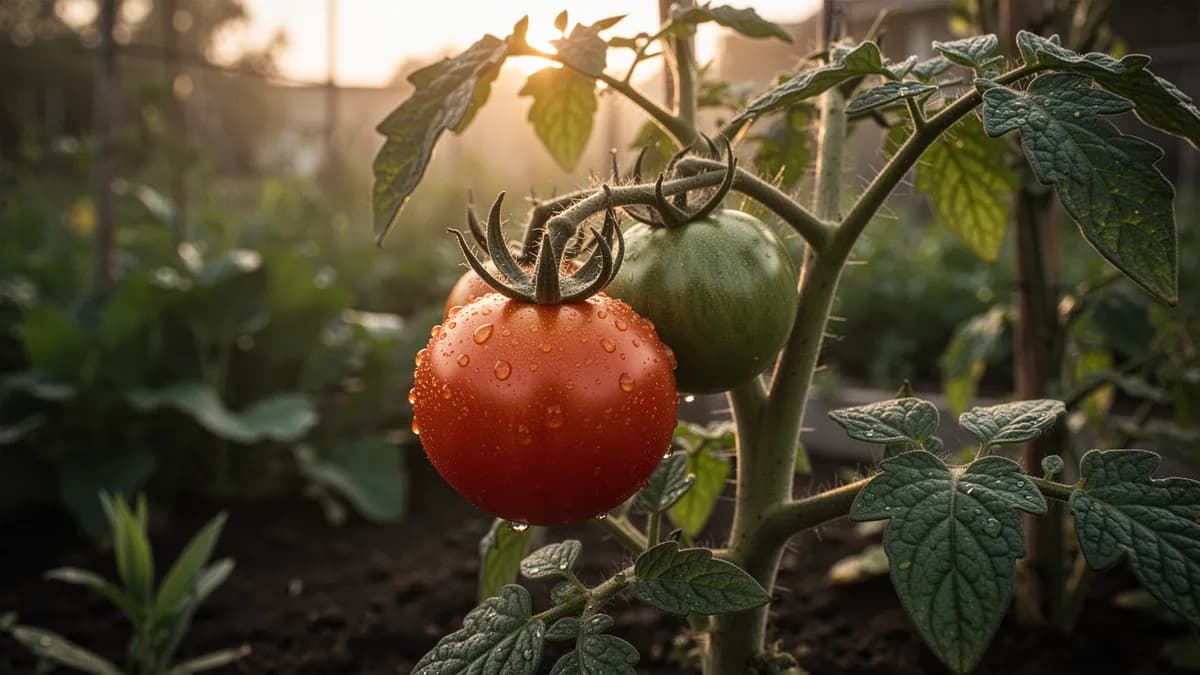
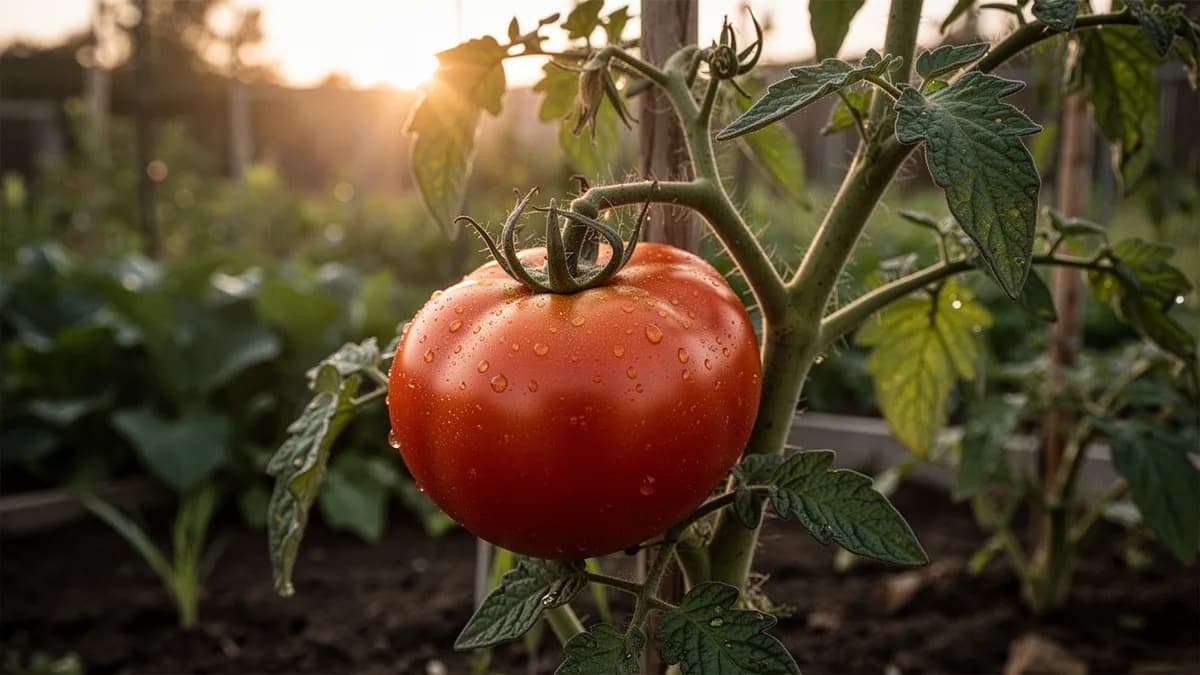
Fruits change color from green to their mature hue — red, yellow, orange, or purple depending on variety. Ripe tomatoes give slightly when gently squeezed and have a rich, sweet aroma at the stem end.
Maintain 21-27°C (70-80°F) using a heat mat. Cover trays with a humidity dome until sprouts appear. Provide 14-16 hours of grow light daily once seedlings emerge.
Caring for Tomato month by month
What to do each month for your Tomato
October
You are hereHarvest remaining fruits before frost. Green tomatoes can ripen indoors at room temperature. Pull spent plants and compost healthy material. Note which varieties performed best for next year's planning.
Know exactly what to do in your garden — every month
One email at the start of each month: what to sow, plant, and tackle right now — for your Tomato and everything growing around it. Plus a short starter course that helps you dodge the classic mistakes.
- What to do, right now
- Matched to your season
- Starter course included
Harvesting Tomato
Harvest tomatoes when they are fully colored and give slightly when gently squeezed — a fully ripe tomato will have deep, even color and a slight softness at the blossom end. For the best flavor, pick in the morning after the dew has dried. Cut larger varieties from the vine with pruning shears rather than pulling, which can damage the plant and leave open wounds susceptible to disease.
If frost threatens before green tomatoes ripen, harvest them and ripen indoors by placing them stem-side down in a single layer at room temperature (18-21°C / 65-70°F), out of direct sunlight. Place a banana or apple nearby to speed ripening — the ethylene gas they emit accelerates the process. Green tomatoes can take 1-3 weeks to ripen indoors depending on maturity.
Avoid refrigerating fresh tomatoes, as temperatures below 10°C (50°F) permanently destroy flavor compounds and produce a mealy texture. If you must refrigerate overripe tomatoes, bring them to room temperature for at least 30 minutes before eating to partially restore flavor.
assuming you plant when the window opens — set your real date
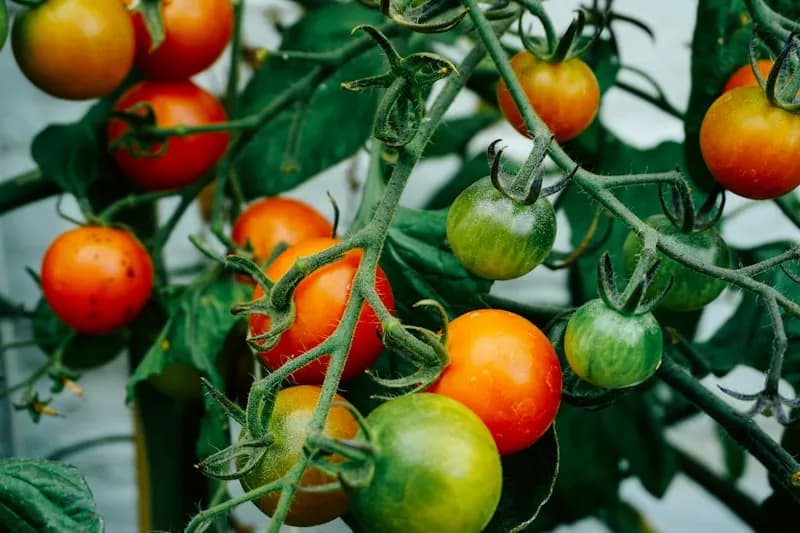
When fruits are fully coloured, give slightly to gentle pressure, and smell sweet at the stem.
Storage & Preservation
Fresh ripe tomatoes keep best at room temperature for 3-5 days and should not be refrigerated. Store them stem-side down on a plate or towel — this seals the scar where the stem was attached, slowing moisture loss and preventing mold entry.
For freezing, the simplest method is to freeze whole tomatoes on a baking sheet, then transfer to bags. When you need them, hold under warm water for a few seconds and the skins slip right off — no blanching needed. Frozen tomatoes keep up to 12 months and are perfect for cooked dishes like sauces and soups.
Canning is ideal for large harvests: water-bath canning works for high-acid varieties with 2 tablespoons of lemon juice per quart jar, while pressure canning at 10 PSI for 25 minutes is safer for low-acid types. Always follow tested recipes from trusted sources.
Sun-drying or oven-drying at low heat (70°C/160°F for 6-8 hours) concentrates flavor beautifully for use in winter cooking. Roasting and freezing is the easiest preservation method — halve tomatoes, toss with olive oil and garlic, roast at 200°C (400°F) until caramelized, and freeze in portions for instant pasta sauce.
What goes wrong — and the fix
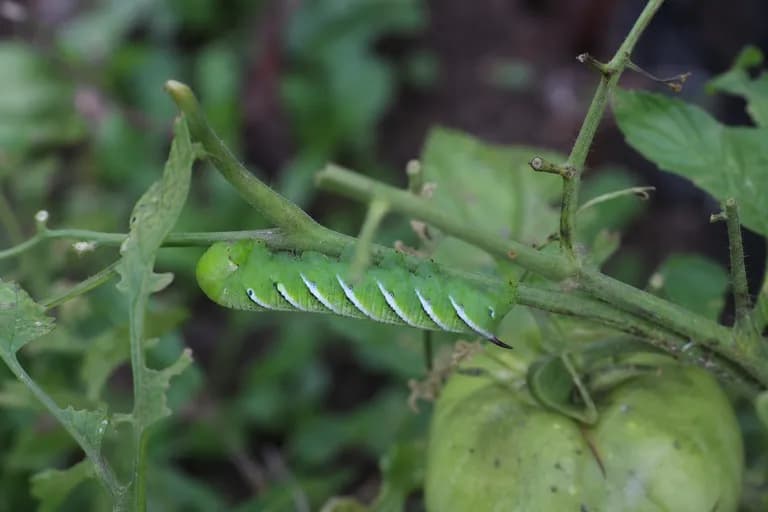
Tomato Hornworm
PestLarge green caterpillars with white diagonal stripes and a horn-like tail, rapidly defoliating plants. Dark droppings visible on leaves below feeding areas.
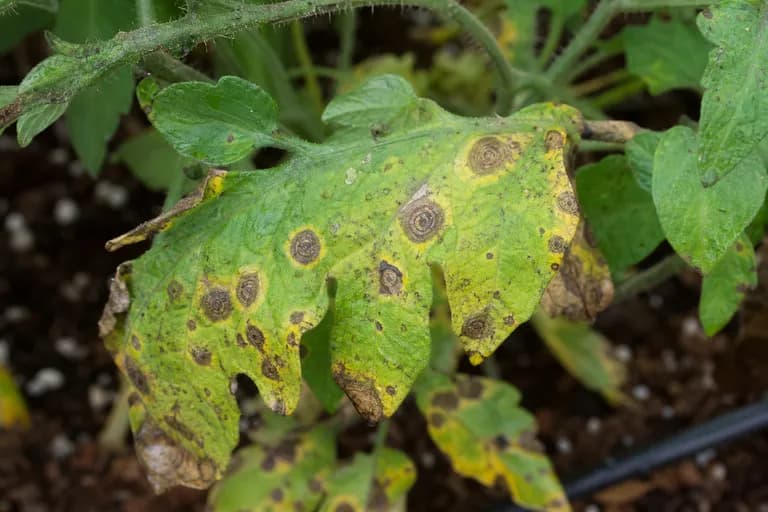
Early Blight
DiseaseDark brown concentric rings forming target-like spots on lower leaves first, gradually moving upward. Affected leaves yellow around spots and eventually drop, exposing fruits to sunscald.
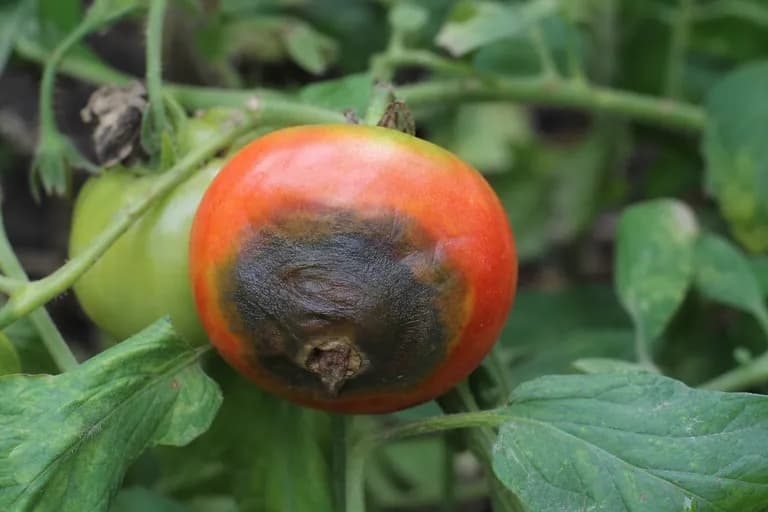
Blossom End Rot
DiseaseDark, sunken, leathery patches appearing on the bottom (blossom end) of developing fruits. Often affects the first fruits of the season most severely.
Aphids
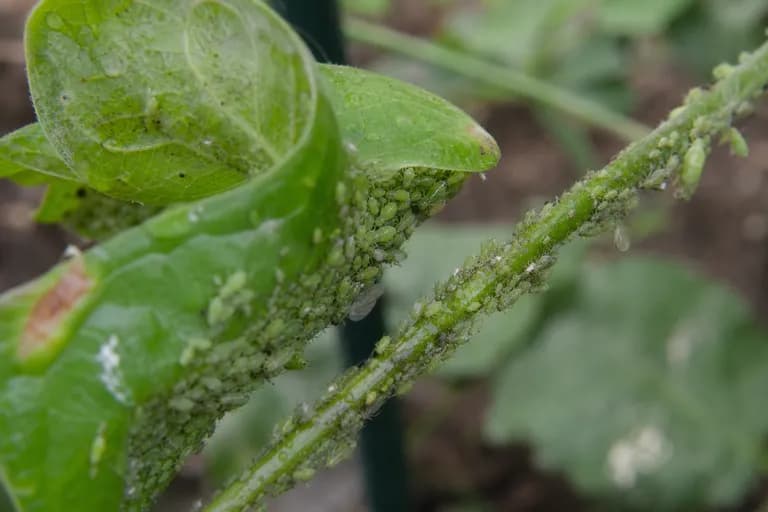
PestClusters of small green, yellow, or black soft-bodied insects on new growth, leaf undersides, and stems. Leaves curl downward and become sticky with honeydew, which may develop sooty mold.
Late Blight
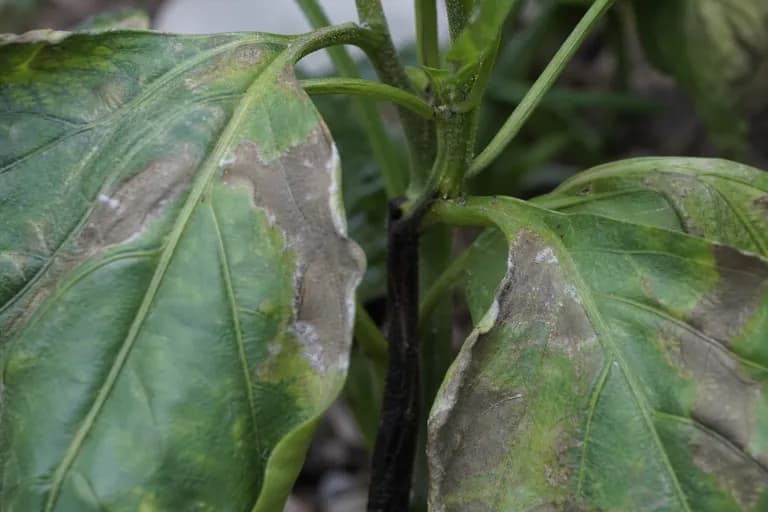
DiseaseLarge, irregular, water-soaked dark patches on leaves and stems that spread rapidly in cool wet weather. White fuzzy mold may appear on leaf undersides. Fruits develop firm, dark, greasy-looking lesions.
Troubleshooting Common Problems
Yellowing lower leaves are normal as the plant matures and redirects energy upward — remove them for cleanliness and airflow. However, widespread yellowing across the plant may indicate nitrogen deficiency, overwatering, or root problems. Check soil moisture and drainage first.
Leaf curling without other symptoms often indicates environmental stress from heat, inconsistent watering, or heavy pruning, and typically resolves on its own. If curling is accompanied by stunted growth or mottling, inspect for viral diseases like tomato mosaic virus.
Catfacing (misshapen, scarred fruits) is caused by cool temperatures during flowering — cover plants when temperatures drop below 13°C (55°F). This is cosmetic only; catfaced tomatoes are perfectly safe to eat and taste just as good.
Cracking or splitting occurs when heavy rain follows a dry spell, causing fruits to expand faster than their skin can stretch — consistent watering and mulching prevents this. Harvest fruits showing the first signs of cracking immediately before they split further.
Poor fruit set in hot weather (above 32°C/90°F) happens because pollen becomes sterile. Provide afternoon shade during heatwaves using shade cloth (30-50%), or plant heat-tolerant varieties like 'Solar Fire' and 'Phoenix' if you live in a hot climate.
Growing Tips
- Tomatoes are frost-tender. Wait until all danger of frost has passed and night temperatures stay above 10°C (50°F) before transplanting outdoors. In cooler climates, start seeds indoors 6-8 weeks before your last frost date.
- Plant tomatoes deeply — bury up to two-thirds of the stem. Roots will form along the buried stem, creating a stronger, more drought-resistant plant with better nutrient uptake.
- Full sun is non-negotiable: 6-8 hours of direct sunlight daily. Southern exposure is ideal. Insufficient light leads to leggy plants, poor fruit set, and bland flavor.
- Water deeply and consistently — 2.5-4cm (1-1.5 inches) per week. Inconsistent watering is the #1 cause of blossom end rot and fruit cracking. Drip irrigation or soaker hoses are best; avoid wetting foliage to prevent fungal diseases.
- Prune suckers (the shoots between the main stem and branches) on indeterminate varieties. This directs energy toward fruit production, improves airflow, and reduces disease. Determinate varieties should NOT be pruned.
- Spacing: Plant 60cm apart in rows for standard growing. However, companion plants like basil, marigolds, and parsley can be planted right next to or even underneath tomato plants — they actually benefit from the partial shade tomatoes provide.
- Stake or cage plants early — before they need it. Tomatoes on supports produce cleaner fruit, have less disease, and are easier to harvest. Indeterminate varieties can reach 2m+ and need sturdy support.
- Mulch heavily (5-8cm of straw, leaves, or wood chips) to retain moisture, suppress weeds, and prevent soil-borne diseases from splashing onto lower leaves.
- Feed every 2-3 weeks with a balanced tomato fertilizer once fruits start forming. Avoid high-nitrogen fertilizers after transplanting — too much nitrogen produces lush leaves but few fruits.
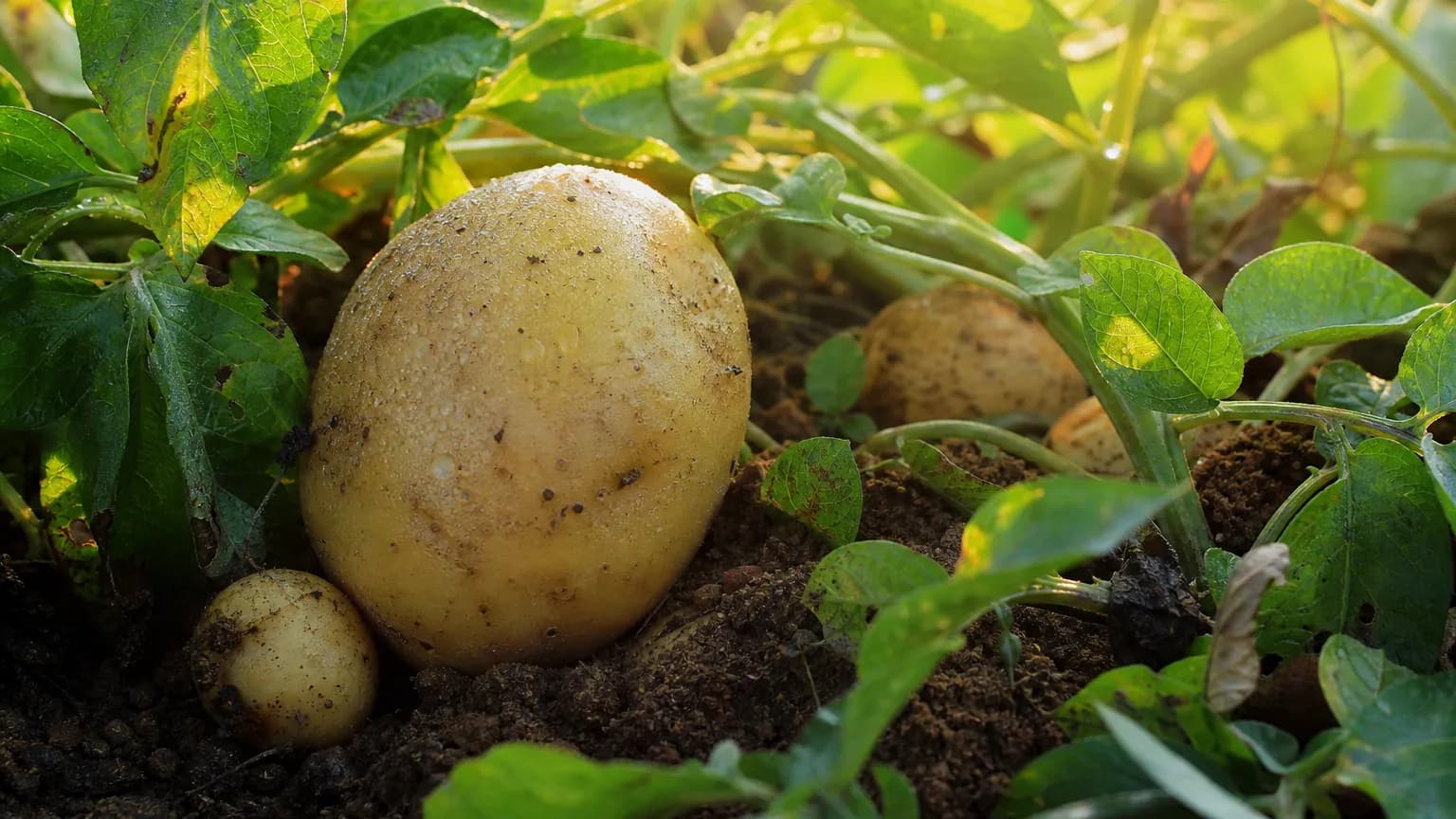
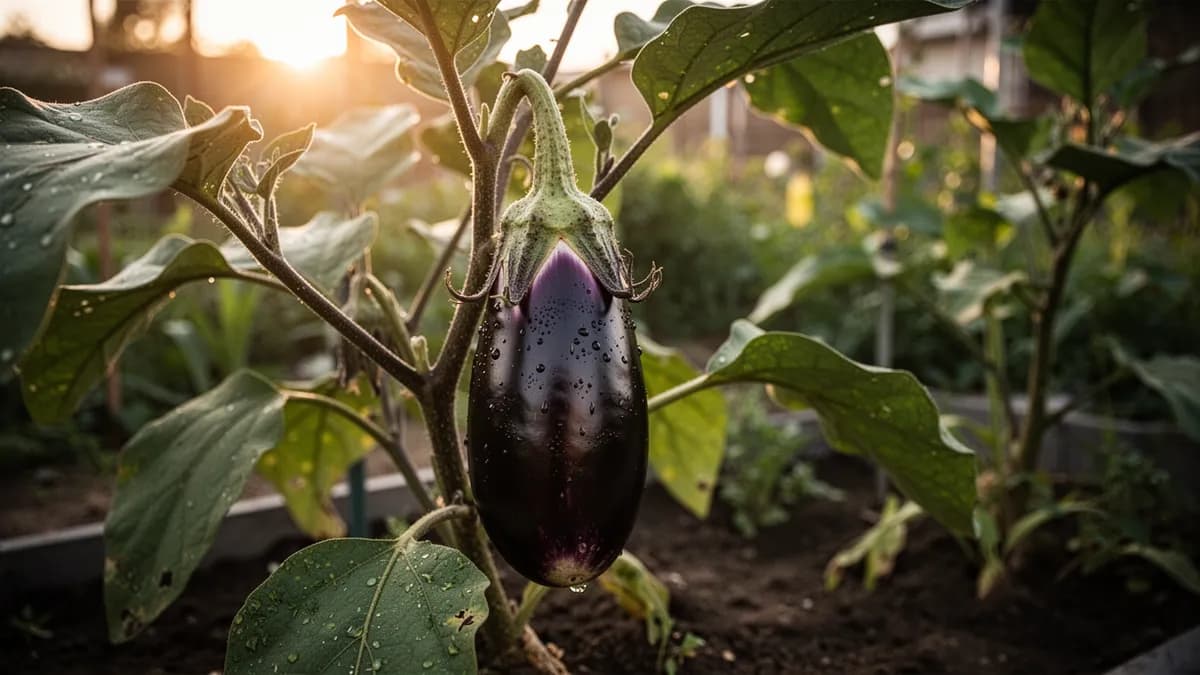
- Rotate your tomato planting location every 3 years. Tomatoes, peppers, eggplants, and potatoes are all nightshades and share the same diseases. Never plant tomatoes where any nightshade grew the previous two seasons.
Grow your best Tomato yet — and everything around it.
Start a free plan today. Lay out your beds, drop in your Tomato, and let PlotMyGarden handle the timing, spacing, companions and reminders from seed to harvest basket.
Pick your Tomato
Cherokee Purple
An heirloom with dusky purple-brown skin and complex, rich, slightly smoky flavor. Indeterminate, 80-90 days to maturity. Excellent for slicing and fresh eating, considered one of the best-tasting tomatoes available.
San Marzano
The gold standard for paste and sauce tomatoes. Elongated plum shape with meaty flesh, few seeds, and low moisture. Indeterminate, 80 days. Originated near Naples and thrives in warm climates.
Sweet 100
Prolific cherry tomato producing long cascading clusters of bite-sized, intensely sweet red fruits. Indeterminate, 65 days. Ideal for snacking, salads, and children's gardens due to its candy-like sweetness.
Brandywine
A beloved Amish heirloom prized for enormous fruits (up to 500g) with exceptional old-fashioned tomato flavor. Indeterminate, 90-100 days. Requires staking and patience, but delivers unmatched taste.
Roma VF
A determinate paste tomato with excellent disease resistance (Verticillium and Fusarium). Compact plants produce heavy crops of 75g egg-shaped fruits ideal for canning, sauces, and drying. 75 days to maturity.
Sun Gold
A cherry tomato with stunning orange fruits and tropical-sweet flavor that consistently wins taste tests. Indeterminate and extremely vigorous, 57 days. Crack-resistant and productive from midsummer until frost.
A single tomato plant costing $3-5 can produce $20-40 worth of organic tomatoes over a season. A small 4-plant garden can easily yield 15-20 kg of tomatoes — equivalent to $60-120 at organic grocery prices. The flavor difference between vine-ripened homegrown and store-bought is incomparable.
Quick recipes

Classic Bruschetta
15 minThe perfect way to showcase fresh garden tomatoes. Diced ripe tomatoes tossed with garlic, basil, and olive oil, piled onto crispy toasted bread. Simple, elegant, and bursting with summer flavor.
7 ingredients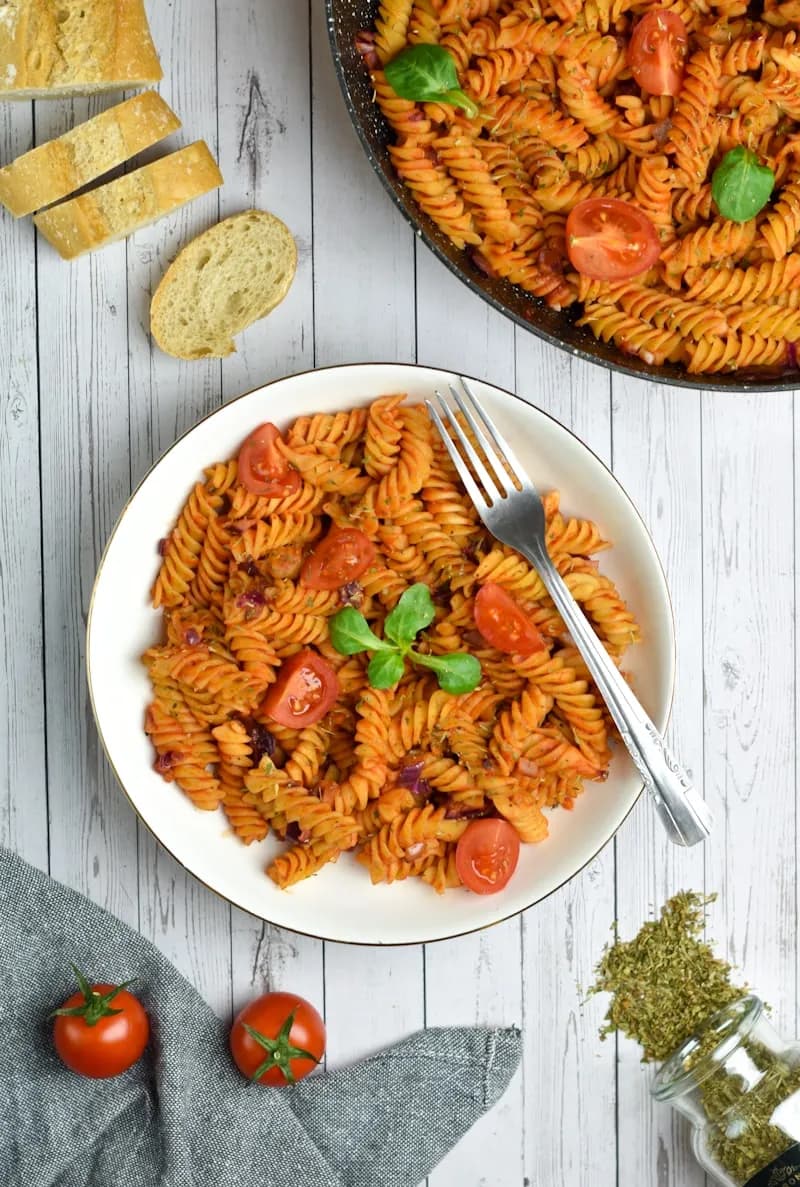
Caprese Salad
10 minItaly's iconic salad that lets each ingredient shine. Thick slices of ripe tomato layered with fresh mozzarella and basil leaves — a celebration of simplicity. Best made with tomatoes still warm from the sun.
7 ingredientsRoasted Tomato Soup
45 minA comforting classic elevated by roasting. Halved tomatoes roasted until caramelized bring a deep, sweet intensity that no canned soup can match. Perfect for using a large harvest all at once.
8 ingredientsCulinary Uses
Tomatoes are culinary workhorses — the foundation of sauces, salsas, soups, and stews across virtually every world cuisine. Each variety type has its ideal use: slice large beefsteak varieties for sandwiches and caprese salads, use paste types like San Marzano for concentrated sauces, roast cherry tomatoes for pasta toppings, or enjoy Sun Gold cherries straight off the vine.
Classic pairings include basil, mozzarella, garlic, olive oil, oregano, and balsamic vinegar. For international cuisine, tomatoes are essential in Mexican salsas and guacamole, Indian curries, Middle Eastern shakshuka, Spanish gazpacho, and Italian pizza and pasta.
Cooking tip: Cooking tomatoes actually increases the bioavailability of lycopene (a powerful antioxidant) by breaking down cell walls. Adding a small amount of olive oil further increases absorption. For maximum nutrition from raw tomatoes, chop and let them sit for 15-20 minutes before eating — this activates beneficial enzymes.
What's inside
Health Benefits
- Lycopene, the pigment that makes tomatoes red, is one of the most powerful natural antioxidants. Studies link high lycopene intake to reduced risk of heart disease and prostate cancer.
- Rich in Vitamin C — one medium tomato provides about 28% of daily recommended intake, supporting immune function, collagen production, and iron absorption.
- Contains Vitamin A (as beta-carotene) important for eye health, skin integrity, and immune system function.
- Provides potassium, which helps regulate blood pressure and supports proper muscle and nerve function.
- The combination of vitamins C and E plus beta-carotene in tomatoes may help protect skin from UV damage when consumed regularly.
- Low glycemic index food — tomatoes don't cause blood sugar spikes, making them suitable for diabetic-friendly diets.
Where Tomato comes from
The tomato's journey spans continents and centuries. Wild ancestors of the modern tomato originated in the Andes mountains of western South America, where tiny, berry-sized fruits grew as weeds among other crops. The Aztecs in Mexico were among the first to cultivate and deliberately breed larger tomatoes, calling them 'tomatl'. Spanish conquistadors brought tomato seeds back to Europe in the early 1500s, where the plant was initially grown as an ornamental curiosity rather than food.
For nearly 200 years, many Europeans believed tomatoes were poisonous — partly because they belong to the nightshade family (Solanaceae), and partly because wealthy Europeans who ate them from lead pewter plates often got sick (from lead poisoning, not the tomato). It wasn't until the late 1700s that tomatoes gained widespread acceptance as food, first in southern Italy where they became the foundation of pasta sauces and pizza.
The tomato's rise to global culinary dominance happened remarkably fast. By the mid-1800s, it had transformed from feared 'poison apple' to essential ingredient. Today, the tomato is the world's most widely grown non-grain crop, with over 180 million tonnes produced annually. From ketchup to curry, salsa to soup, the tomato has woven itself into virtually every food culture on Earth.
Tomato: did you know?
Fascinating facts about Tomato
Tomatoes are technically berries — botanically, they develop from a single flower with one ovary and contain seeds embedded in the flesh, meeting every criterion for a true berry.
Tomato questions, answered
When should I plant Tomato?
What are good companion plants for Tomato?
What hardiness zones can Tomato grow in?
How much sun does Tomato need?
How far apart should I space Tomato?
What pests and diseases affect Tomato?
How do I store Tomato after harvest?
What are the best Tomato varieties to grow?
What soil does Tomato need?
How do I prevent blossom end rot on my tomatoes?
Should I prune my tomato plant suckers?
Why are my tomato leaves turning yellow?
Can I grow tomatoes in containers?
How do I get the most flavorful tomatoes?
When is the best time to plant tomatoes in my region?
You just read the theory. Now grow it on autopilot.
Everything that makes Tomato fiddly — the timing, the spacing, the companions, the harvest window — is exactly what PlotMyGarden handles for you, for every plant in your garden.
A plan that knows your weather
Set your location once. Get sow, feed and harvest dates built around your real last-frost date and live forecast — no more guessing from a generic seed packet.
From the “When to plant” sectionDrag-and-drop bed planner
Design beds on a grid. Every plant snaps to its proper spacing, and you can see your whole season laid out before you spend a cent on seed.
From the “Growing guide” sectionCompanion conflicts, caught early
200+ good-and-bad pairings checked live as you plant — so a season-wrecking mistake never makes it into the ground.
From the “Companions” sectionReminders you'll actually act on
“Water the beans.” “Pick today before it turns.” Timely, specific, and tied to the plants you're really growing.
From the “Harvest” sectionSuccession, scheduled
Want a harvest for six weeks, not six days? It spaces your sowings automatically and reminds you when each new block is due.
From the “When to plant” sectionA record that gets smarter
Every harvest you log teaches it your garden. Next year's plan starts from what actually worked in your soil, not a textbook's.
From the “Overview” sectionPlant these alongside Tomato
More Nightshades
Keep Tomato away from these
Garden plans featuring Tomato
Grow your best Tomato yet — and everything around it.
Start a free plan today. Lay out your beds, drop in your Tomato, and let PlotMyGarden handle the timing, spacing, companions and reminders from seed to harvest basket.