Petersilie
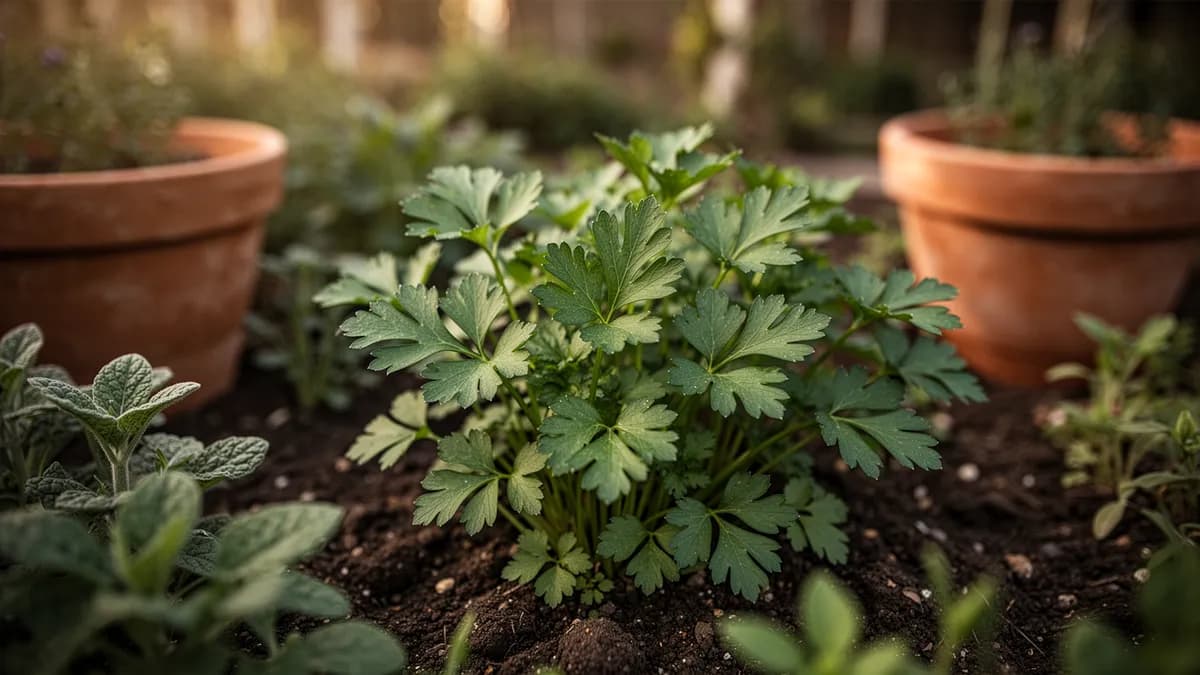
Ein zweijähriges Kraut, das häufig als einjährige Pflanze angebaut wird und die gesamte Saison über flache oder krause, vitaminreiche Blätter hervorbringt.





Auf dieser SeiteÜberblick
Petersilie im Überblick
Ein zweijähriges Kraut, das häufig als einjährige Pflanze angebaut wird und die gesamte Saison über flache oder krause, vitaminreiche Blätter hervorbringt. Weichen Sie die Samen vor dem Pflanzen über Nacht ein, um die Keimung zu beschleunigen, die sonst drei bis vier Wochen dauern kann. Glattblättrige italienische Sorten bieten ein kräftigeres Aroma zum Kochen, während krause Sorten attraktive Garnituren und Beetränder ergeben. Petersilie ist reich an den Vitaminen A, C und K und kann kontinuierlich geerntet werden, indem die äußeren Stängel an der Basis der Pflanze abgeschnitten werden.
Wann Petersilie pflanzen
Weichen Sie Petersiliensamen vor der Aussaat 24 Stunden in warmem Wasser ein, um die harte Samenschale aufzuweichen und die Keimung zu beschleunigen. Säen Sie 8–10 Wochen vor dem letzten Frost in Innenräumen aus und legen Sie die Samen 6 mm tief in feuchte Anzuchterde. Halten Sie die Bodentemperatur bei 18–24 °C. Seien Sie geduldig: Die Keimung dauert 14–28 Tage. Halten Sie die Oberfläche gleichmäßig feucht mit einem Sprühnebel oder einer durchsichtigen Kunststoffabdeckung. Sorgen Sie für helles Licht, sobald die Sämlinge erscheinen. Vereinzeln Sie auf eine Pflanze pro Zelle. Härten Sie die Setzlinge über 7–10 Tage schrittweise ab, bevor Sie sie ins Freie pflanzen.
Dein Petersilie-Jahr
Abgestimmt auf Zone 7 · typische Saison · Frost geht um den 2. Apr. und kehrt um den 1. Nov. zurück
Petersilie Mär – Mai pflanzen, Mai – Okt ernten. Beachte die Pflanzmethoden unten und wähle dein Klima für passende Zeiträume.
So baust du Petersilie an
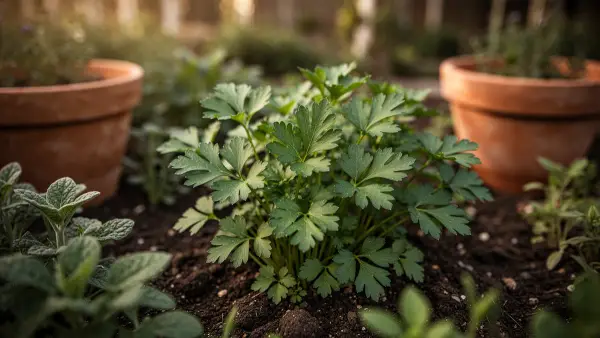
Beginnen Sie 8–10 Wochen vor dem letzten Frosttermin mit der Aussaat von Petersiliensamen in Innenräumen, da die Keimung bekanntermaßen langsam ist und 14–28 Tage dauert. Das Einweichen der Samen in warmem Wasser für 24 Stunden vor der Aussaat beschleunigt die Keimung erheblich. Säen Sie die Samen 6 mm tief in feuchte Anzuchterde und halten Sie die Temperatur bei 18–24 °C. Seien Sie geduldig und halten Sie die Oberfläche während der langen Keimphase gleichmäßig feucht.
Setzen Sie die Setzlinge nach dem letzten strengen Frost ins Freie um, mit einem Abstand von 20–25 cm an einem Standort mit Halbschatten bis voller Sonne. Petersilie bevorzugt nährstoffreichen, feuchten, gut durchlässigen Boden mit einem pH-Wert von 6,0–7,0. Arbeiten Sie vor dem Pflanzen 5–8 cm Kompost ein. Petersilie verträgt Halbschatten und profitiert in heißen Klimazonen sogar von Nachmittagsschatten, wobei sie zartere Blätter hervorbringt.
Gießen Sie regelmäßig, um eine gleichmäßige Bodenfeuchtigkeit zu erhalten, da unregelmäßiges Gießen die Pflanze stressen und die Blattqualität verringern kann. Mulchen Sie rund um die Pflanzen, um die Feuchtigkeit zu bewahren und Unkraut zu unterdrücken. Im zweiten Jahr treibt die Petersilie Blütenstängel aus, danach nimmt die Blattqualität ab. Die meisten Gärtner pflanzen jährlich neu für die beste Ernte. Düngen Sie alle 3–4 Wochen mit einem ausgewogenen Flüssigdünger, um die kontinuierliche Blattproduktion zu unterstützen.
72 Pflanzen passen in ein Beet von 120 × 240 cm
Petersilie braucht 20 cm Platz pro Pflanze. Der Planer hält diesen Abstand für dich ein — jede Pflanze, jedes Beet.
Die besten Nachbarn für Petersilie
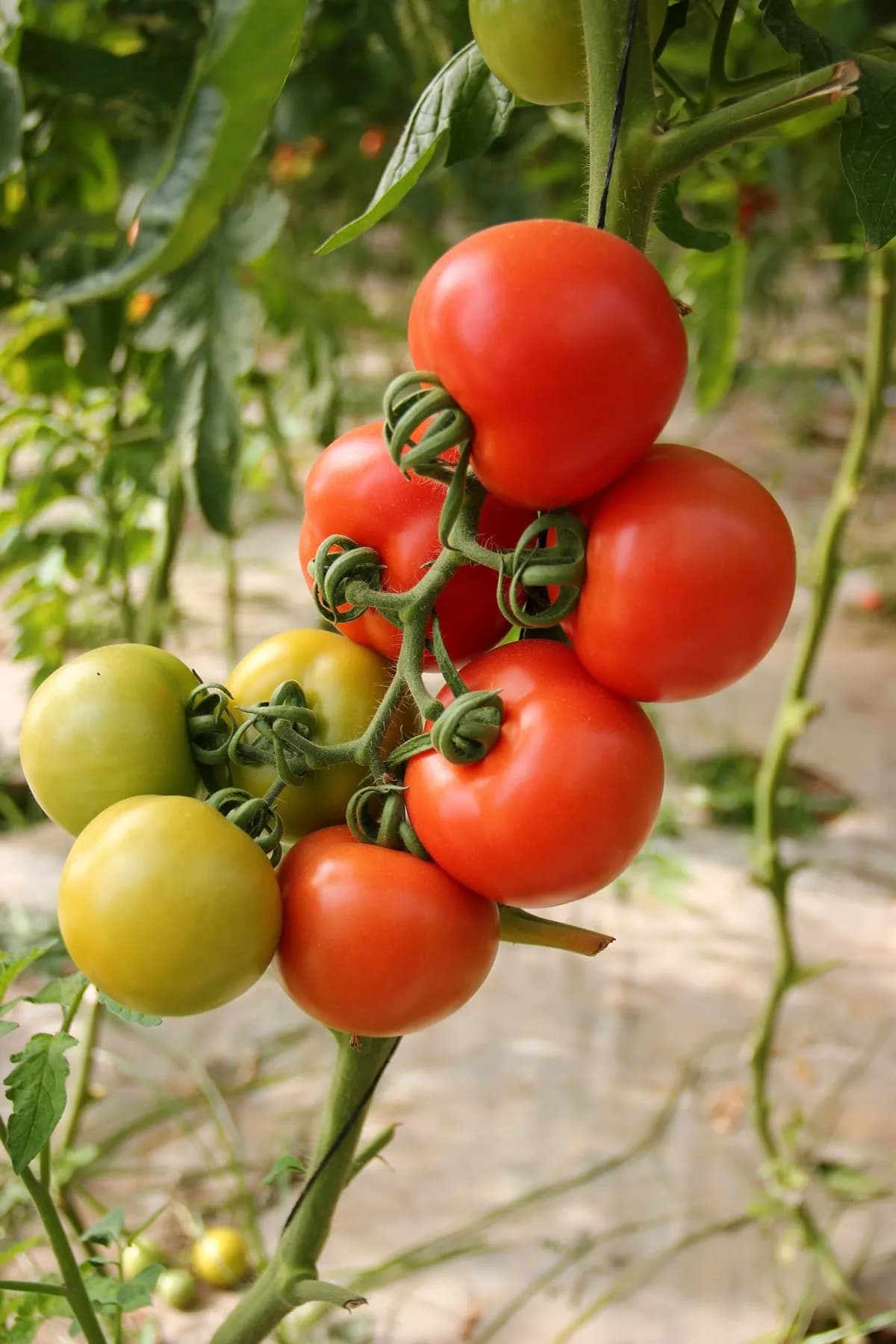
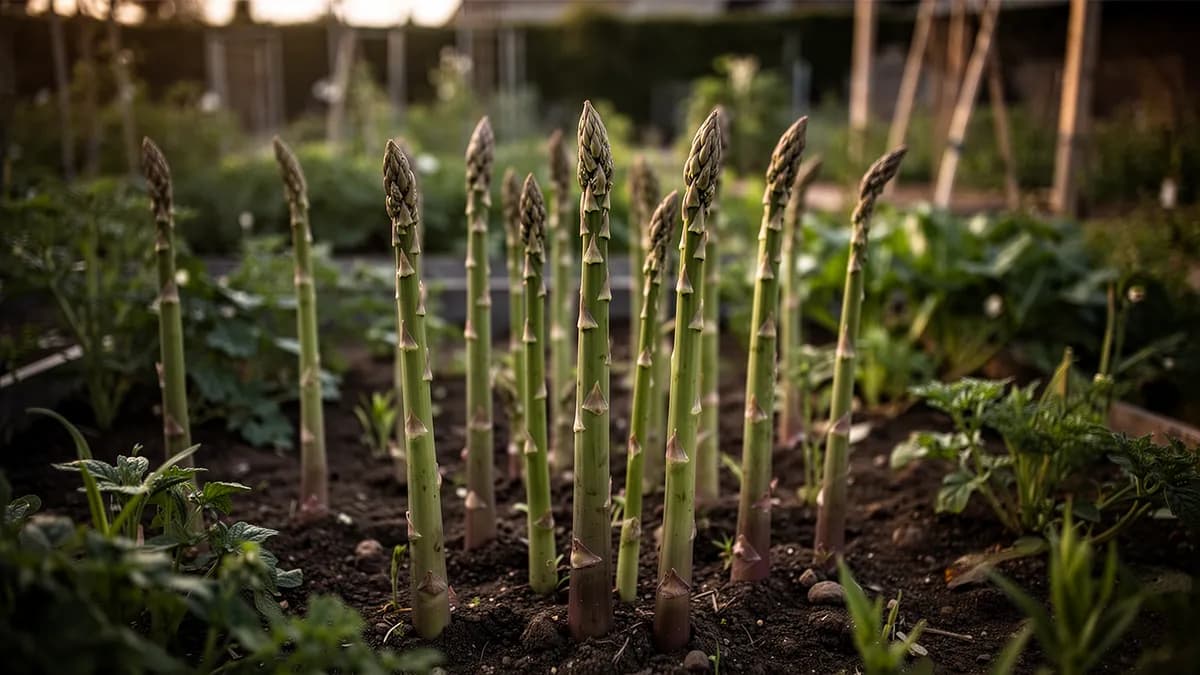
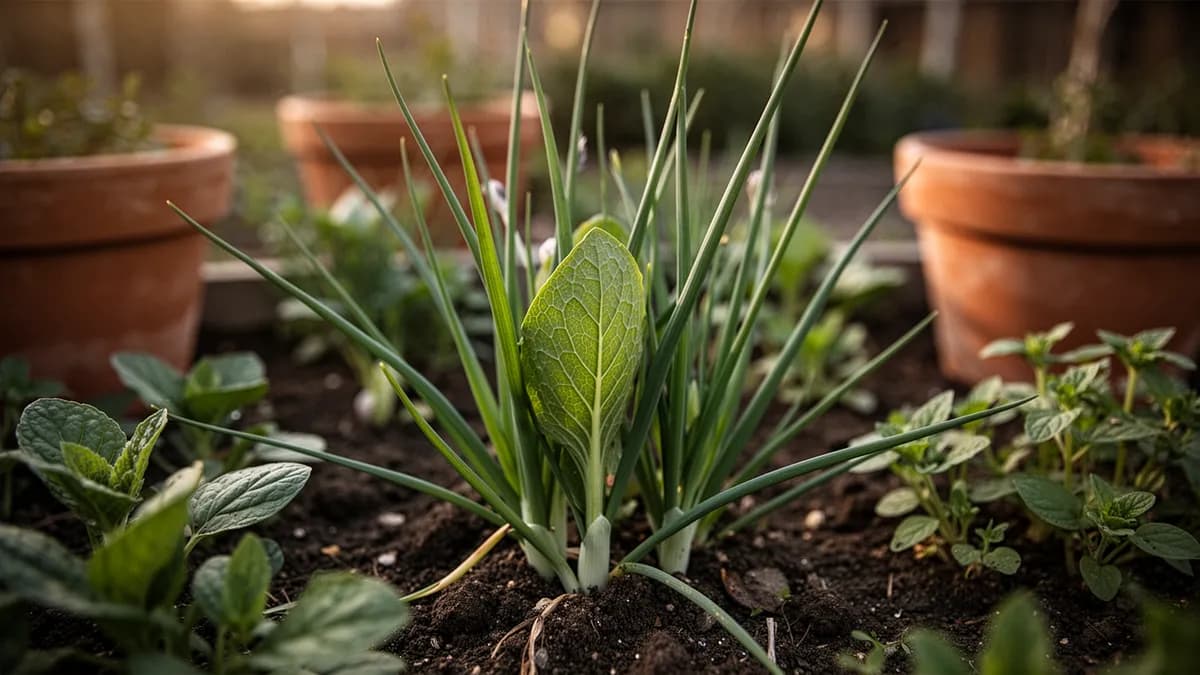
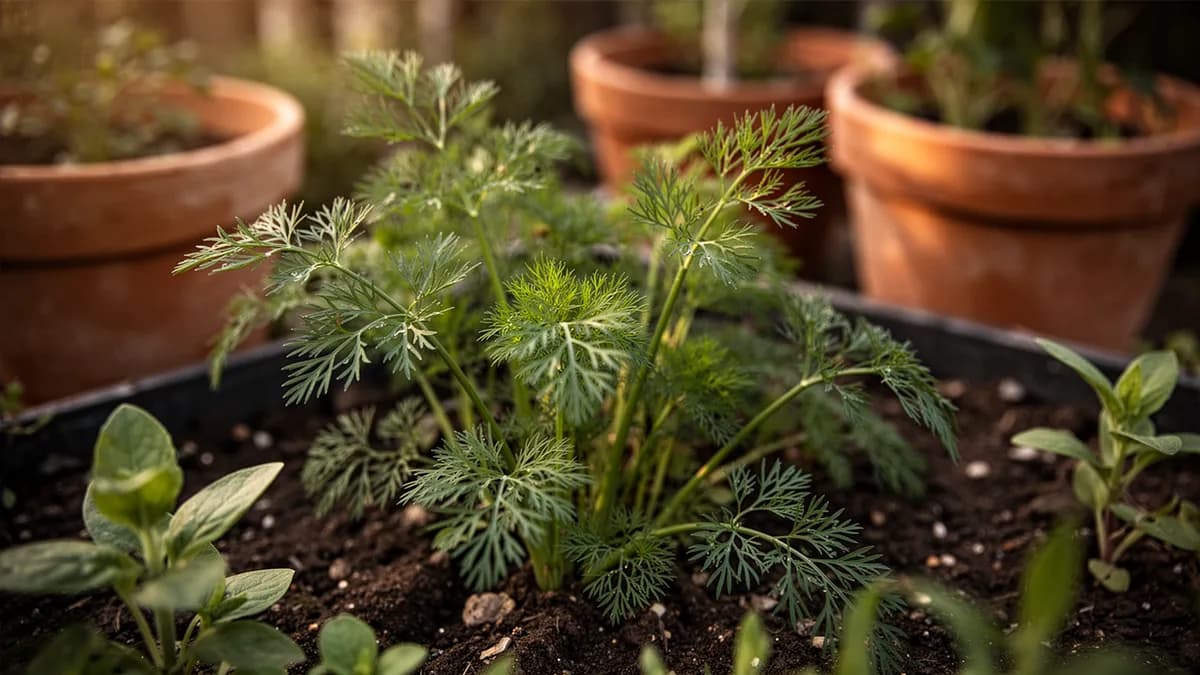
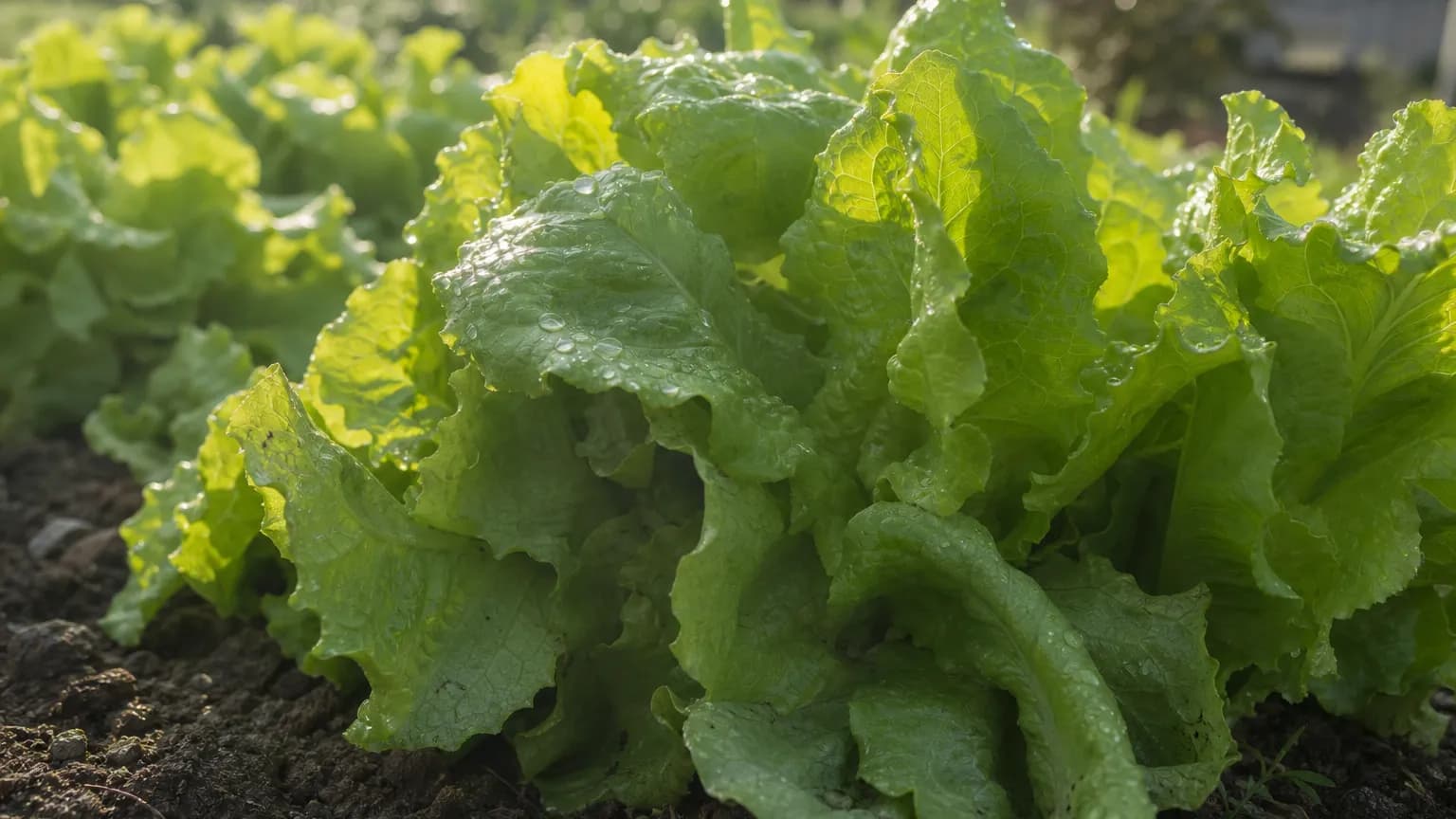
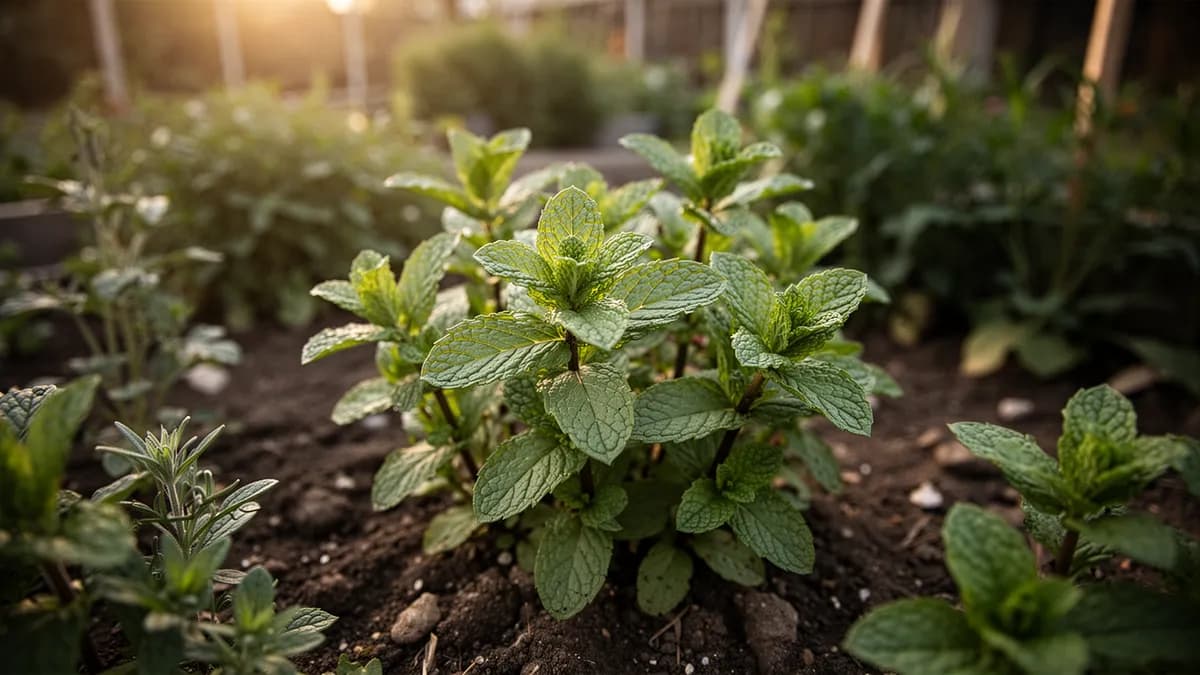
Petersilie zieht nützliche Schwebfliegen, Schlupfwespen und Raupenfliegen an, wenn sie schosst und blüht, was sie zu einer wertvollen Nützlingspflanze macht. Pflanzen Sie sie neben Tomaten, Spargel und Rosen, wo sie Berichten zufolge Wachstum und Vitalität verbessert. Die tiefe Pfahlwurzel der Petersilie kann verdichteten Unterboden aufbrechen. Das Zusammenpflanzen mit Schnittlauch ergibt eine gegenseitig vorteilhafte Kombination. Vermeiden Sie das Pflanzen neben Salat, da sie konkurrieren können, und halten Sie Minze fern, die Petersilie mit ihrem aggressiven Wurzelsystem überwältigen würde.
Tomate gehört daneben. Kopfsalat nicht.
Altes Gärtnerwissen, geprüft an der echten Nachbartabelle von Petersilie — teste jede Pflanze, die du anbaust.
Probiere Petersilie direkt hier im Beet
Ein echtes Planer-Beet, Petersilie steht schon drin. Tippe einen Begleiter an, platziere ihn und sieh, wie die Nachbarschaftsprüfung antwortet — grün für gute Nachbarn, rot bei Streit.


Passende Anbau-Ratgeber
Richtig düngen
Petersilie gedeiht in nährstoffreichem, feuchtigkeitsspeicherndem Boden mit einem pH-Wert von 6,0–7,0. Reichern Sie die Pflanzbeete vor dem Pflanzen mit 8–10 cm Kompost an, da Petersilie einen höheren Nährstoffbedarf hat als die meisten Kräuter. Tragen Sie alle 3–4 Wochen während der Wachstumsperiode einen ausgewogenen Flüssigdünger (10-10-10) auf. Geben Sie zur Saisonmitte eine Kompostgabe als Seitendüngung, um die Blattproduktion anzukurbeln. In Kübeln verwenden Sie ein hochwertiges Topfsubstrat und düngen regelmäßig, da Nährstoffe bei häufigem Gießen schnell ausgewaschen werden. Vermeiden Sie es, den Boden vollständig austrocknen zu lassen, da Petersilie Trockenstress nicht verträgt.
Ideale Temperatur
Winterhärtezone-Kompatibilität
Von der Saat zur Ernte, Schritt für Schritt
Einweichen & Aussaat
Weichen Sie Petersiliensamen vor dem Pflanzen 12–24 Stunden in warmem Wasser ein, um die harte Samenschale aufzuweichen und die Keimung zu beschleunigen. Säen Sie die Samen 5–6 mm tief in feuchte, feinkörnige Erde oder Anzuchtsubstrat.
Keimung
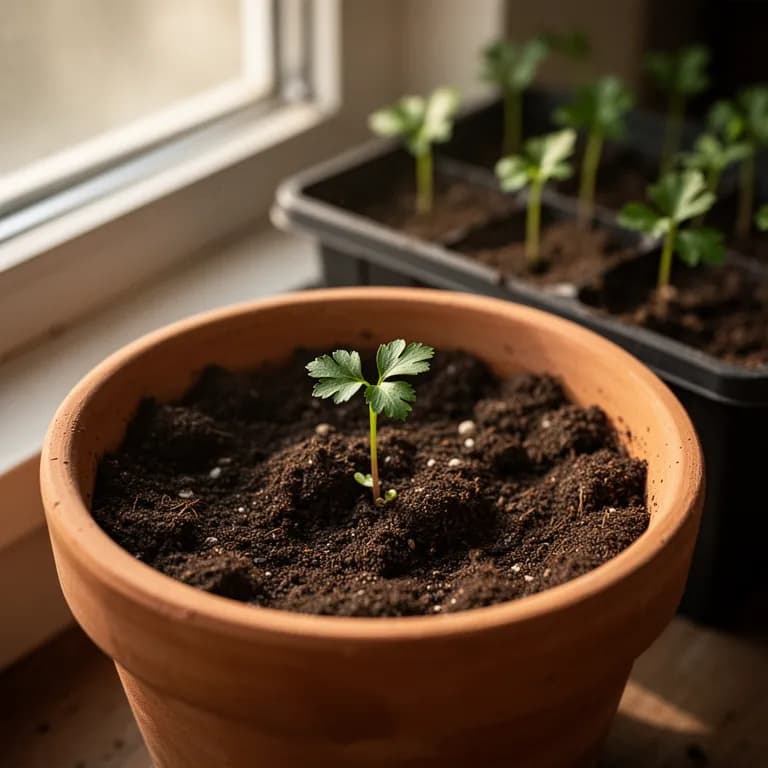
Petersilie ist bekannt dafür, besonders langsam zu keimen, oft dauert es 14–28 Tage. Die Samen benötigen gleichmäßige Feuchtigkeit und Bodentemperaturen zwischen 15–25 °C. Die ersten winzigen Keimblätter erscheinen als ein Paar schmaler Kotyledonen.
Sämlingsentwicklung
Die echten Blätter beginnen sich mit der charakteristischen Petersilienform zu entwickeln, entweder glatt oder kraus, je nach Sorte. Der Sämling bildet sein Pfahlwurzelsystem aus und bringt seine ersten 3–4 Sätze echter Blätter hervor.
Vegetatives Wachstum
Die Pflanze tritt in eine Phase schneller Blattproduktion ein und entwickelt eine buschige Rosette aus Stängeln. Die Pfahlwurzel vertieft sich und die Pflanze baut ihr volles Blätterdach aus aromatischen Blättern auf und erreicht eine Höhe von 25–35 cm.
Reife Erntephase
Die Pflanze erreicht die volle Reife und ist bereit für regelmäßige Ernte. Die Stängel sind kräftig mit voll entwickelten Aromastoffen. Die Pflanze produziert während der gesamten Wachstumsperiode weiterhin neues Wachstum aus der Mitte.
Überwinterung & Schossen
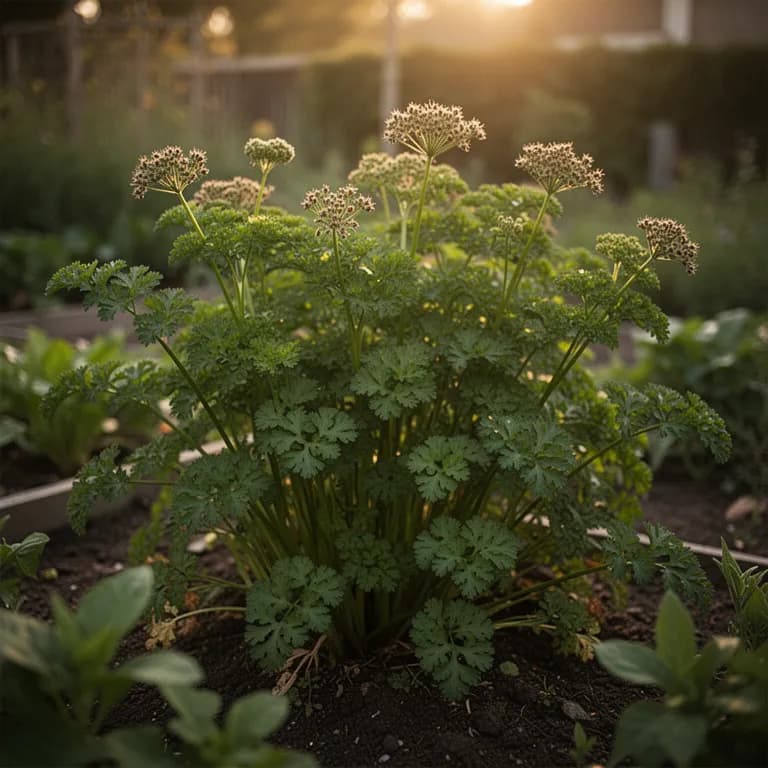
Als zweijährige Pflanze übersteht Petersilie den Winter in milden Klimazonen und schosst im zweiten Frühling. Die Pflanze treibt einen hohen Blütenstängel mit doldenförmigen Gruppen kleiner gelblich-grüner Blüten aus und produziert Samen, bevor sie ihren Lebenszyklus abschließt.
Das Voreinweichen ist unerlässlich, da Petersiliensamen keimungshemmende Verbindungen enthalten. Wechseln Sie das Wasser einmal während des Einweichens für beste Ergebnisse.
Petersilie Monat für Monat pflegen
Was du jeden Monat für deine Petersilie tun solltest
Oktober
Aktueller MonatBedecken Sie Pflanzen in kalten Regionen mit Vlies oder Glasglocken, um die Erntesaison zu verlängern. Topfen Sie einige Pflanzen ein und bringen Sie sie für den Winter auf die Fensterbank. Ernten Sie weiter.
Immer wissen, was jetzt im Garten zu tun ist
Eine E-Mail zum Monatsanfang: was du jetzt säen, pflanzen und anpacken solltest — für deine Petersilie und alles, was drumherum wächst. Dazu ein kurzer Startkurs, der dich vor den klassischen Fehlern bewahrt.
- Was jetzt zu tun ist
- Passend zu deiner Saison
- Startkurs inklusive
Petersilie ernten
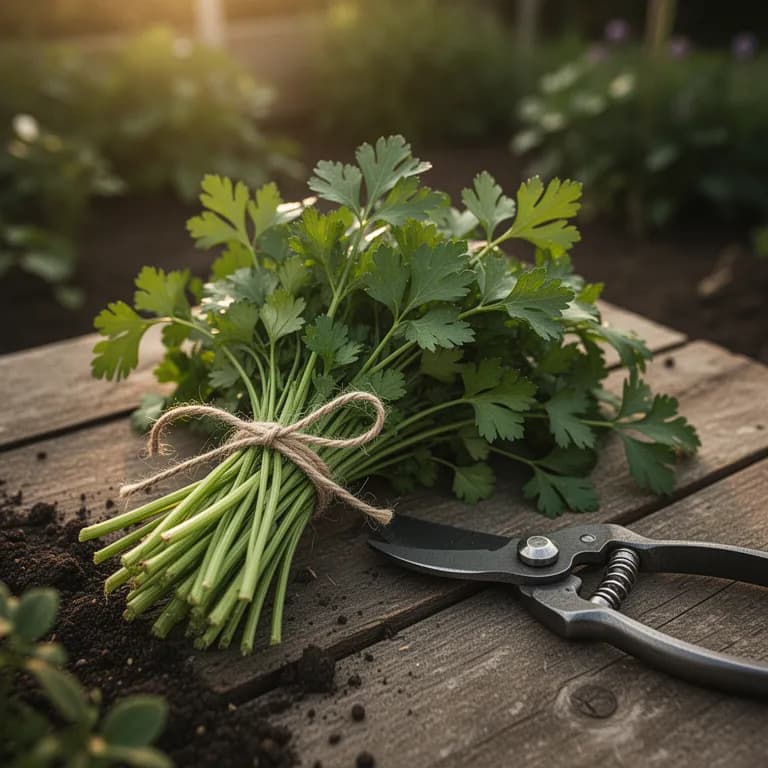
Beginnen Sie mit der Ernte der Petersilie, wenn die Pflanzen mindestens drei Blattsegmente an ihren Stängeln haben. Schneiden Sie zuerst die äußeren Stängel an der Basis ab, damit die innere Rosette weiterwachsen kann. Diese Schnitt-und-Nachwuchs-Methode ermöglicht kontinuierliche Ernten während der gesamten Saison. Ernten Sie morgens für den besten Geschmack. Regelmäßiges Ernten fördert ein dichteres, produktiveres Wachstum. Im zweiten Jahr sollten Sie die Blätter ernten, bevor der Blütenstängel erscheint, da die Blattqualität nach Beginn des Schossens stark nachlässt. Petersilie verträgt leichten Frost und liefert oft noch späte Ernten in der Saison.
angenommen, du pflanzt zu Beginn des Zeitraums — trage dein tatsächliches Datum ein
Pflanze hat mindestens 8 Stängel; äußere Stängel zuerst ernten
Lagerung & Konservierung
Frische Petersilie hält sich 1–2 Wochen im Kühlschrank, wenn die Stängel in einem Glas Wasser stehen und locker mit einer Plastiktüte abgedeckt sind. Für längere Aufbewahrung hacken Sie die Blätter und frieren Sie sie in Eiswürfelbehältern mit etwas Wasser oder Olivenöl ein. Glattblättrige Petersilie lässt sich besser einfrieren als krause Sorten und behält mehr Geschmack. Petersilie kann in einem Dörrgerät bei 35 °C getrocknet oder in Bündeln aufgehängt werden, verliert beim Trocknen jedoch erheblich an Aroma. Chimichurri-Sauce aus Petersilie lässt sich gut einfrieren und bietet das ganze Jahr über Zugang zum Petersiliengeschmack.
Was schiefgeht — und die Lösung
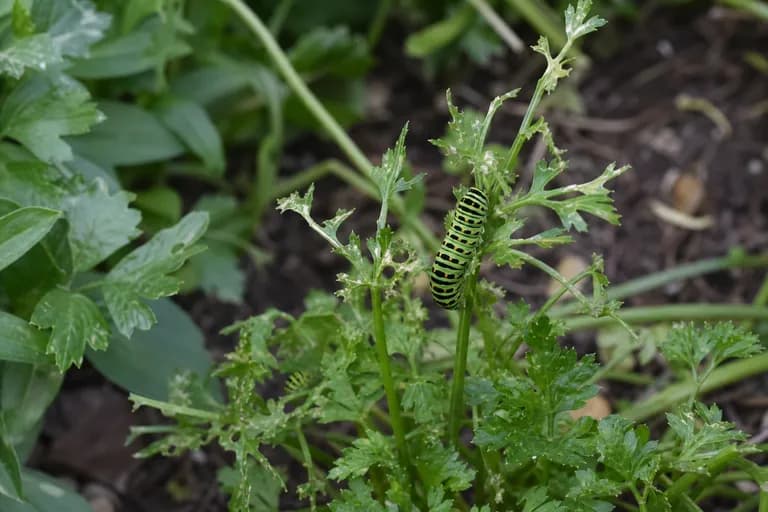
Petersilienraupe (Schwalbenschwanz-Raupe)
SchädlingGrün-schwarz gestreifte Raupen, die Blätter fressen, erheblicher Blattverlust bei kleinen Pflanzen.
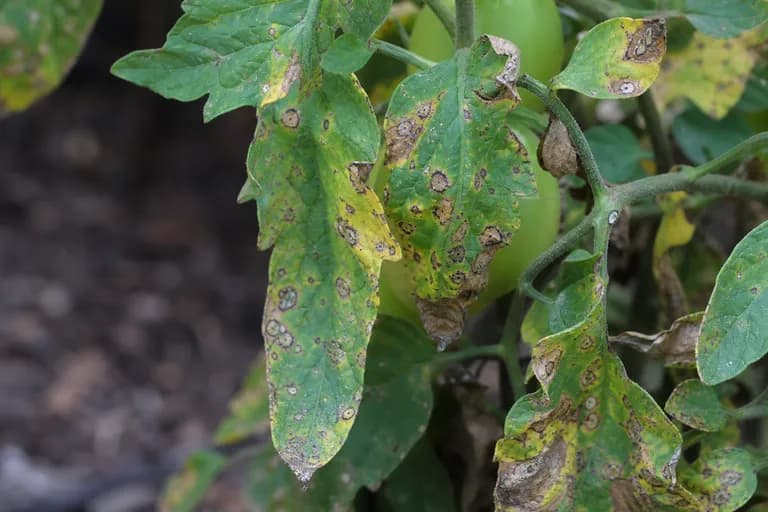
Septoria-Blattfleckenkrankheit
KrankheitKleine hellbraune Flecken mit dunklen Rändern auf älteren Blättern, fortschreitende Vergilbung, vorzeitiger Blattfall.
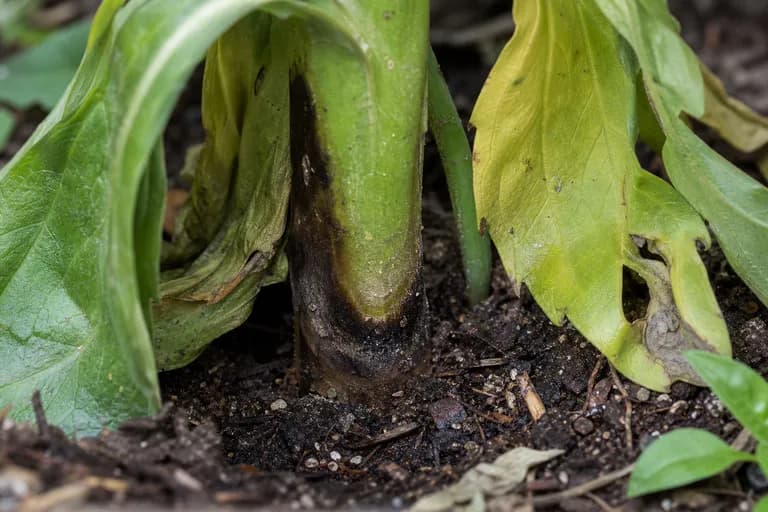
Kronenfäule
KrankheitVergilbung und Zusammenbruch der äußeren Blätter, matschiges braunes Gewebe an der Pflanzenkrone, übler Geruch.
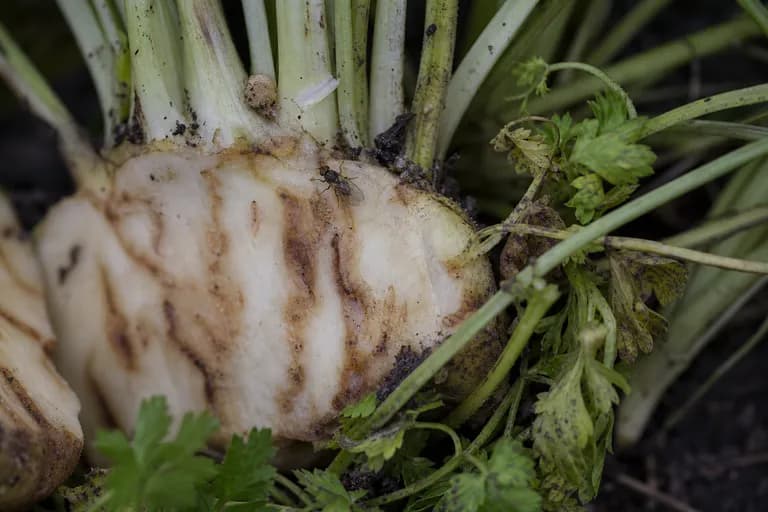
Möhrenfliege
SchädlingRostbraune Fraßgänge in den Wurzeln, welkendes Laub, Kümmerwuchs, Larven im Wurzelgewebe sichtbar.
Fehlerbehebung bei häufigen Problemen
Eine extrem langsame Keimung (14–28 Tage) ist normal und kein Zeichen von Misserfolg. Das Einweichen der Samen über Nacht und das Aufrechterhalten einer gleichmäßigen Feuchtigkeit verbessern die Keimrate deutlich. Vergilbende untere Blätter weisen meist auf Überwässerung, Stickstoffmangel oder natürliches Altern des äußeren Laubs hin. Das Schossen im zweiten Jahr ist unvermeidlich, da Petersilie zweijährig ist. Schwalbenschwanz-Raupen können Pflanzen kahl fressen, sind aber nützliche Schmetterlingslarven; pflanzen Sie zusätzlich, um zu teilen. Blasses, spindliges Wachstum deutet auf unzureichendes Licht oder zu dichten Stand hin.
Anbautipps
- Weichen Sie Petersiliensamen vor dem Pflanzen 12–24 Stunden in warmem Wasser ein, um die Keimruhe zu brechen und die notorisch lange Keimzeit von 4 Wochen auf 2 Wochen deutlich zu verkürzen.
- Beginnen Sie mit der Aussaat in Innenräumen 8–10 Wochen vor dem letzten Frosttermin, da die langsame Keimung der Petersilie bei direkter Freilandaussaat oft zu einem späten Start in die Wachstumsperiode führt.
- Pflanzen Sie Petersilie in nährstoffreichen, gut durchlässigen Boden, der mit Kompost angereichert ist, und halten Sie einen leicht sauren bis neutralen pH-Wert von 6,0–7,0 für optimale Nährstoffaufnahme und gesunde Wurzelentwicklung aufrecht.
- Gießen Sie tiefgründig und regelmäßig, etwa 2,5 cm pro Woche, halten Sie den Boden gleichmäßig feucht, aber niemals staunass, da die tiefe Pfahlwurzel der Petersilie von gründlichem Durchnässen statt häufigem oberflächlichem Gießen profitiert.
- Ernten Sie zuerst die äußeren Stängel, indem Sie an der Basis der Pflanze schneiden, anstatt die Blattspitzen zu kürzen, was kräftiges Nachwachsen aus der mittleren Krone fördert und eine produktive, buschige Form erhält.
- Pflanzen Sie alle 3–4 Wochen vom Frühling bis Hochsommer nach, um eine kontinuierliche Versorgung mit zarten jungen Blättern sicherzustellen, da ältere Pflanzen härtere Stängel und weniger intensives Aroma entwickeln können.
- Tragen Sie alle 3–4 Wochen während der aktiven Wachstumsperiode einen stickstoffreichen Flüssigdünger wie Fischsud oder Seetangextrakt auf, um die kontinuierliche Blattproduktion zu fördern und die dunkelgrüne Farbe zu erhalten.
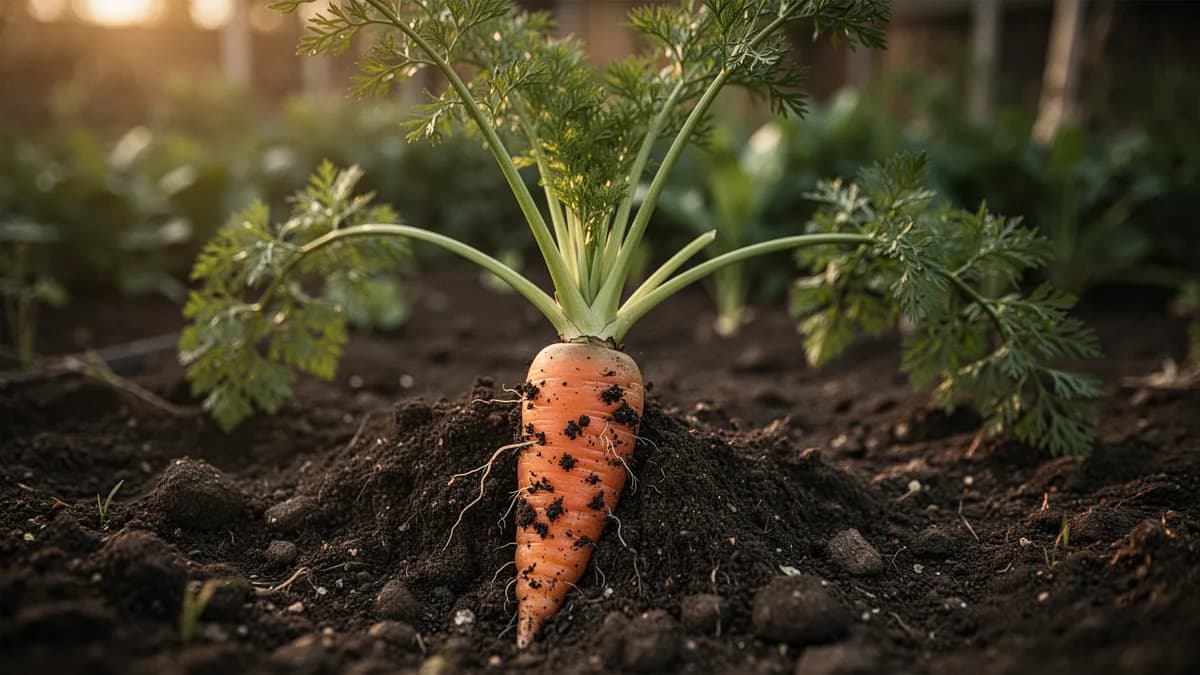
- Pflanzen Sie Petersilie neben Tomaten, Spargel und Rosen als Begleitpflanze, da sie nützliche Schwebfliegen und Schlupfwespen anzieht und gleichzeitig bestimmte Schädlinge wie Möhrenfliegen und Spargelkäfer abwehren hilft.
- Schützen Sie Petersilie in kalten Klimazonen im Winter mit einer dicken Schicht Strohmulch oder einem Frühbeet, da etablierte Pflanzen Temperaturen bis -5 °C überstehen und frühe Frühlingsernte liefern können, bevor neue Aussaaten aufgehen.
- Um überschüssige Ernten zu konservieren, frieren Sie gehackte Petersilie in Eiswürfelbehältern mit etwas Wasser oder Olivenöl ein, was weitaus mehr Geschmack und Farbe bewahrt als traditionelle Lufttrocknungsmethoden.
Bau deine beste Petersilie an — und alles drumherum.
Starte heute kostenlos. Lege deine Beete an, setze deine Petersilie ein und lass PlotMyGarden Timing, Abstände, Begleiter und Erinnerungen von der Saat bis zum Erntekorb übernehmen.
Finde deine Petersilie
Italienische Riesenblättrige (Glattblättrig)
Die beliebteste Küchen-Petersilie mit großen, flachen, aromatischen Blättern. Kräftige Pflanzen liefern reichliche Ernten und ein starkes, reines Aroma, das von Köchen bevorzugt wird.
Dreifach Gekraust
Dichte, eng gekrauste, leuchtend grüne Blätter, die eine attraktive Garnitur ergeben. Milderes Aroma als glattblättrige Petersilie, aber ausgezeichnete Textur und längere Haltbarkeit.
Hamburger (Wurzelpetersilie)
Wird hauptsächlich wegen ihrer dicken, pastinakähnlichen Pfahlwurzel angebaut, die in mitteleuropäischen Suppen und Eintöpfen verwendet wird. Die Blätter sind ebenfalls essbar mit kräftigem Petersiliengeschmack.
Titan
Eine verbesserte glattblättrige Sorte mit außergewöhnlich dunkelgrünen, aufrechten Blättern. Kräftiges Aroma, ausgezeichnete Krankheitsresistenz und kräftiger Nachwuchs nach dem Schnitt.
Der Anbau von Petersilie zu Hause kann im Vergleich zum Kauf frischer Bunde im Supermarkt 70–130 € pro Jahr einsparen. Ein einziges Samentütchen für 2–4 € kann Dutzende Pflanzen hervorbringen, von denen jede über zwei Wachstumsperioden kontinuierlich geerntet werden kann. Im Laden gekaufte frische Petersilie kostet in der Regel 1,30–2,60 € pro Bund und welkt innerhalb einer Woche, während eine selbst angebaute Pflanze 8–12 Monate lang frische Ernte auf Abruf liefert. Getrocknete Petersilie aus dem Laden, die deutlich weniger Geschmack und Nährwert hat, kostet 3,50–7,00 € pro Glas, während das Trocknen des eigenen Überschusses im Grunde kostenlos ist.
Schnelle Rezepte
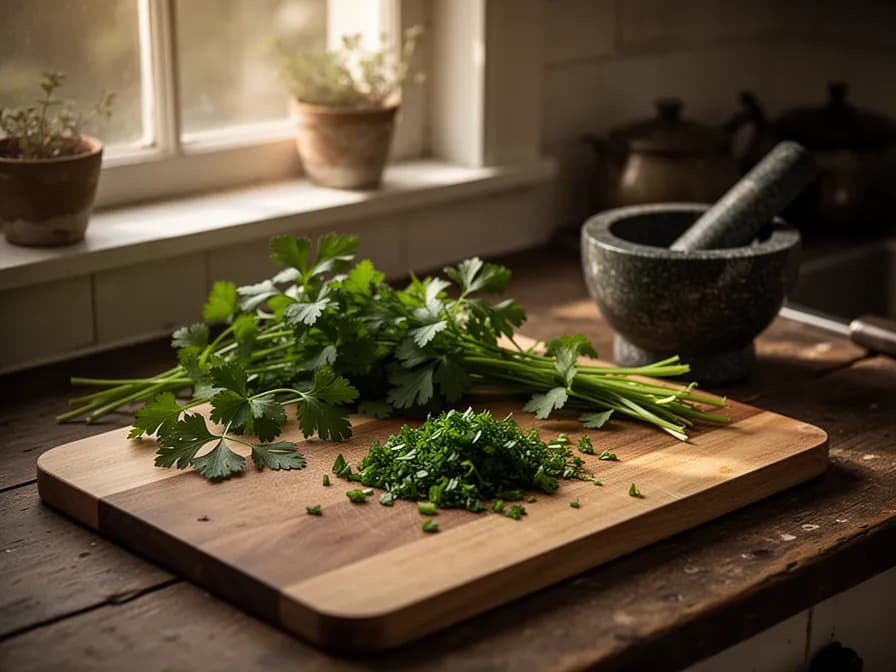
Klassische Chimichurri-Sauce
10 Min.Eine lebhafte argentinische Kräutersauce, perfekt zu gegrilltem Fleisch, geröstetem Gemüse oder knusprigem Brot. Dieses frische, würzige Dressing stellt Petersilie als Hauptzutat in den Mittelpunkt und hält sich im Kühlschrank bis zu einer Woche.
7 ZutatenTraditioneller Taboulé-Salat
20 Min.Ein authentischer libanesischer Salat, bei dem Petersilie die Hauptzutat ist und nicht nur eine Garnitur. Dieses erfrischende Gericht ist voller frischer Kräuter, saftiger Tomaten und nussigem Bulgurweizen für eine gesunde und sättigende Mahlzeit.
8 Zutaten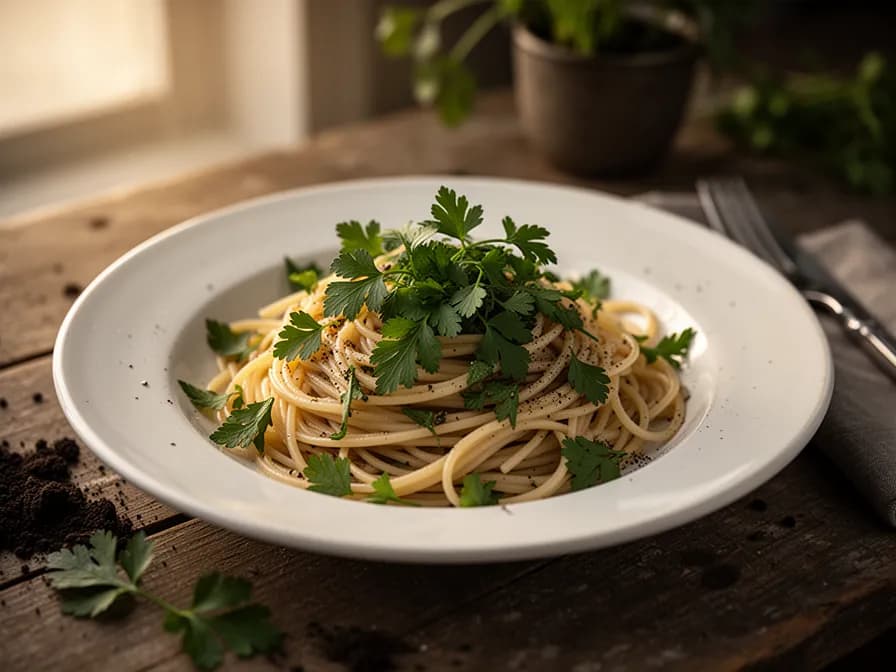
Petersilien-Pesto mit Walnüssen
10 Min.Eine kostengünstige Variante des klassischen Basilikum-Pestos, die reichlich Petersilie mit gerösteten Walnüssen für eine tiefwürzige, leicht pfeffrige Sauce kombiniert, ideal für Pasta, Sandwiches oder als Dip.
7 ZutatenKulinarische Verwendung
Glattblättrige Petersilie ist ein grundlegendes Kraut in Taboulé, Chimichurri, Gremolata und Bouquet garni. Verwenden Sie sie großzügig als Zutat und nicht nur als Garnitur, indem Sie Handvoll in Salate, Getreideschalen und Saucen geben. Das klare, frische Aroma der Petersilie passt zu praktisch jedem herzhaften Gericht und durchbricht die Schwere von Fleischgerichten. Fein gehackte Petersilie, die im letzten Moment in Pasta, Suppen und Omeletts eingerührt wird, verleiht Frische und Farbe. Die Stängel tragen ein intensives Aroma und eignen sich hervorragend für Brühen und Fonds.
Was drinsteckt
Gesundheitsvorteile
- Außergewöhnlich reich an Vitamin K, das eine entscheidende Rolle bei der Blutgerinnung, dem Knochenstoffwechsel und der Herz-Kreislauf-Gesundheit spielt – bereits 10 Stängel decken den gesamten Tagesbedarf.
- Reich an Antioxidantien, darunter Flavonoide wie Apigenin und Luteolin, die in Laborstudien auf ihre potenziellen entzündungshemmenden und krebshemmenden Eigenschaften untersucht wurden.
- Wirkt als natürliches Diuretikum und wird traditionell zur Unterstützung der Nierengesundheit und zur Verringerung von Wassereinlagerungen eingesetzt, mit Verbindungen, die eine gesunde Harnwegsfunktion fördern.
- Enthält ätherische Öle wie Myristicin und Apiol, die antimikrobielle Eigenschaften gezeigt haben und bestimmte Karzinogene wie Benzopyren, das in Zigarettenrauch und Holzkohlegrillrauch vorkommt, neutralisieren können.
- Bietet eine bedeutende Quelle für Folsäure, die für die DNA-Synthese und Zellteilung unerlässlich ist, was sie besonders wichtig für Frauen im gebärfähigen Alter macht, und unterstützt die Herz-Kreislauf-Gesundheit durch die Regulierung des Homocysteinspiegels.
- Frische Petersilie ist ein wirksamer natürlicher Atemerfrischer dank ihres hohen Chlorophyllgehalts und polyphenolischer Verbindungen, die die für Knoblauch- und Zwiebelgeruch verantwortlichen Schwefelverbindungen neutralisieren.
Woher Petersilie stammt
Petersilie (Petroselinum crispum) hat ihren Ursprung in der zentral- und ostmediterranen Region, insbesondere an den felsigen Hängen Sardiniens, Süditaliens und Griechenlands, wo noch heute Wildformen wachsen. Die alten Griechen schätzten Petersilie sehr, allerdings hauptsächlich für zeremonielle und nicht für kulinarische Zwecke. Sie flochten Petersilie in Trauerkränze und verwendeten sie zur Dekoration von Gräbern, wobei sie das Kraut mit Archemoros, dem Herold des Todes, assoziierten. Paradoxerweise wurden siegreiche Athleten bei den Isthmischen und Nemeischen Spielen mit Petersiliengirlanden gekrönt, als Symbol für Ehre und Feier. Die Römer gehörten zu den Ersten, die Petersilie als Küchenkraut annahmen und sie in Saucen, Salate und Fleischgerichte einarbeiteten. Der römische Naturforscher Plinius der Ältere dokumentierte ihre medizinischen Eigenschaften und erwähnte ihren Einsatz als Verdauungshilfe und Atemerfrischer. Das Kraut verbreitete sich allmählich im mittelalterlichen Europa, wo es mit Aberglauben verflochten wurde. Volksglauben besagte, dass das Umpflanzen von Petersilie Unglück bringe und nur Böswillige sie erfolgreich anbauen könnten. Karl der Große ordnete um 800 n. Chr. an, Petersilie in seinen kaiserlichen Gärten anzubauen, was dazu beitrug, sie als Grundbestandteil der europäischen Küche zu etablieren. Im Mittelalter kultivierten Klöster sowohl glattblättrige als auch die neu entwickelten krausblättrigen Sorten, wobei krause Petersilie in England und Nordeuropa als Garnitur an Beliebtheit gewann. Im 16. Jahrhundert gelangte Petersilie mit europäischen Kolonisten nach Amerika und wurde in gemäßigten Regionen schnell heimisch. Heute ist Petersilie eines der am weitesten verbreiteten Kräuter weltweit, wobei Italien, Deutschland, Frankreich und die Vereinigten Staaten die Produktion anführen. Moderne Züchtung hat zwei Hauptsortengruppen hervorgebracht: den kräftigen glattblättrigen italienischen Typ, der von Köchen wegen seines intensiven Aromas geschätzt wird, und den dekorativen krausen Typ, der wegen seines optischen Reizes und seines milderen Geschmacks bevorzugt wird.
Petersilie: Schon gewusst?
Faszinierende Fakten über Petersilie
Die alten Griechen assoziierten Petersilie mit dem Tod und verwendeten sie zur Schmückung von Gräbern, krönten aber auch siegreiche Athleten bei den Isthmischen Spielen mit Petersilienkränzen.
Petersilie: Fragen & Antworten
Wann sollte ich Petersilie pflanzen?
Was sind gute Begleitpflanzen für Petersilie?
In welchen Winterhärtezonen kann Petersilie wachsen?
Wie viel Sonne braucht Petersilie?
Welchen Abstand sollte ich zwischen Petersilie lassen?
Welche Schädlinge und Krankheiten befallen Petersilie?
Wie lagere ich Petersilie nach der Ernte?
Was sind die besten Petersilie-Sorten zum Anbauen?
Welchen Boden braucht Petersilie?
Warum braucht meine Petersilie so lange zum Keimen?
Was ist der Unterschied zwischen glattblättriger und krauser Petersilie, und welche sollte ich anbauen?
Warum wird meine Petersilie gelb?
Kann ich Petersilie das ganze Jahr über in Innenräumen anbauen?
Wie verhindere ich, dass meine Petersilie schosst?
Ist es sicher, Petersilie in großen Mengen zu essen?
Du hast die Theorie gelesen. Jetzt baue sie auf Autopilot an.
Alles, was Petersilie knifflig macht — das Timing, die Abstände, die Begleiter, das Erntefenster — genau das übernimmt PlotMyGarden für dich, für jede Pflanze im Garten.
Ein Plan, der dein Wetter kennt
Standort einmal festlegen. Aussaat-, Dünge- und Erntedaten rund um deinen echten letzten Frosttermin und die Live-Vorhersage — kein Raten mehr nach Saattüte.
Aus dem Abschnitt „Pflanzzeit“Beetplaner per Drag & Drop
Beete auf einem Raster gestalten. Jede Pflanze rastet im richtigen Abstand ein, und du siehst die ganze Saison, bevor du einen Cent für Saatgut ausgibst.
Aus dem Abschnitt „Anbau“Begleiter-Konflikte früh erkannt
Über 200 gute und schlechte Kombinationen werden beim Pflanzen live geprüft — so landet ein saisonruinierender Fehler nie in der Erde.
Aus dem Abschnitt „Begleiter“Erinnerungen, nach denen du wirklich handelst
„Gieß die Bohnen.“ „Heute ernten, bevor's umschlägt.“ Pünktlich, konkret und auf deine echten Pflanzen bezogen.
Aus dem Abschnitt „Ernte“Staffel-Aussaat, geplant
Sechs Wochen ernten statt sechs Tage? Die App verteilt deine Aussaaten automatisch und erinnert dich, wenn der nächste Satz fällig ist.
Aus dem Abschnitt „Pflanzzeit“Ein Verlauf, der schlauer wird
Jede protokollierte Ernte bringt der App deinen Garten bei. Der Plan fürs nächste Jahr startet bei dem, was in deinem Boden wirklich funktioniert hat.
Aus dem Abschnitt „Überblick“Pflanze diese neben Petersilie
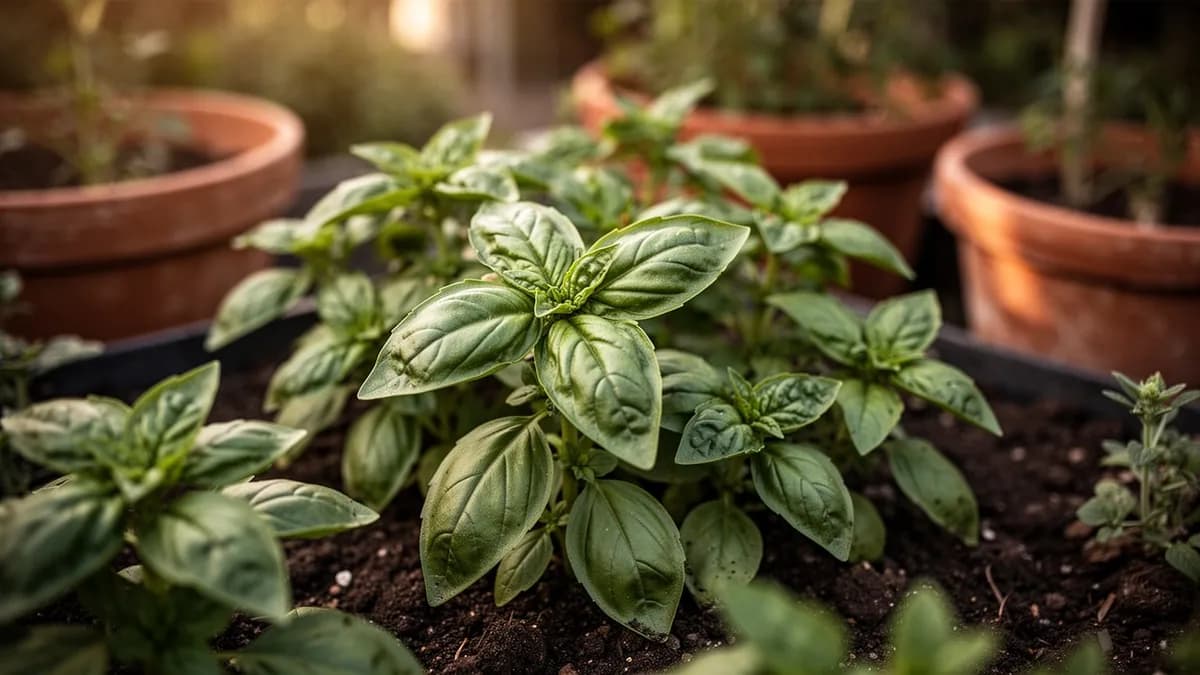
Weitere Küchenkräuter
Halte Petersilie von diesen fern
Gartenpläne mit Petersilie
Bau deine beste Petersilie an — und alles drumherum.
Starte heute kostenlos. Lege deine Beete an, setze deine Petersilie ein und lass PlotMyGarden Timing, Abstände, Begleiter und Erinnerungen von der Saat bis zum Erntekorb übernehmen.