Aubergine
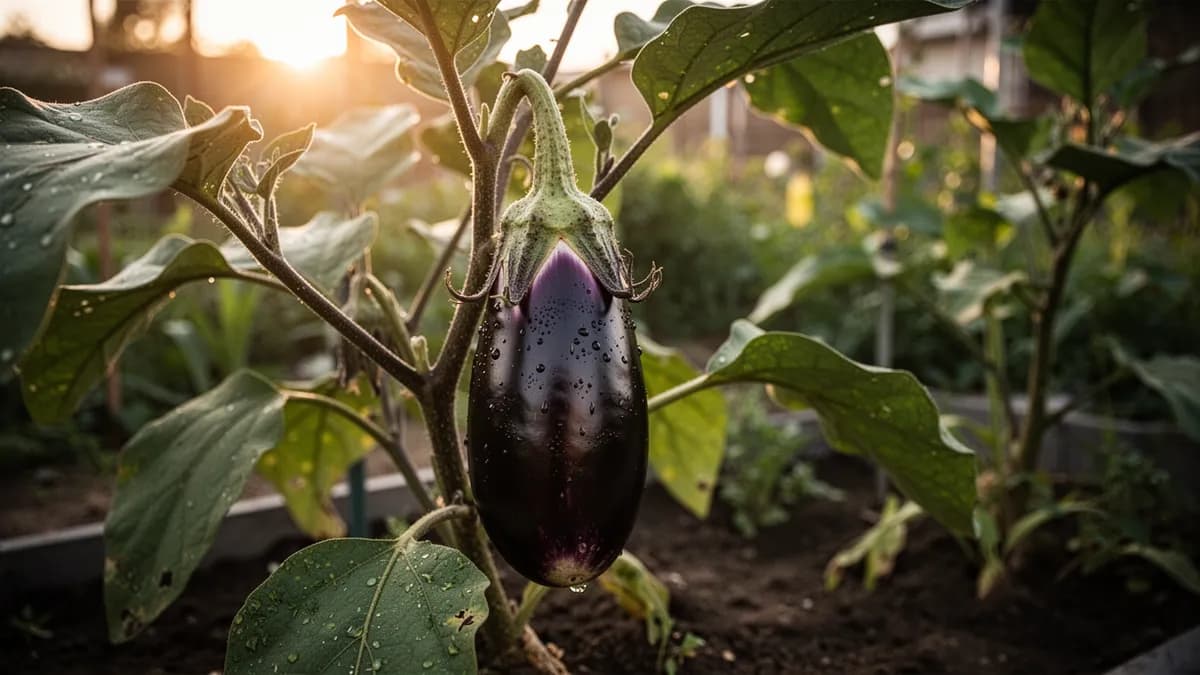
Ein wärmeliebendes Nachtschattengewächs, das glänzende, violette Früchte hervorbringt und eine lange, warme Saison für eine ordnungsgemäße Reifung benötigt.





Auf dieser SeiteÜberblick
Aubergine im Überblick
Ein wärmeliebendes Nachtschattengewächs, das glänzende, violette Früchte hervorbringt und eine lange, warme Saison für eine ordnungsgemäße Reifung benötigt. Säen Sie die Samen acht bis zehn Wochen vor dem letzten Frost im Haus vor und pflanzen Sie erst dann ins Freie um, wenn die Nachttemperaturen dauerhaft über 15 Grad Celsius bleiben. Auberginen harmonieren hervorragend mit der mediterranen und asiatischen Küche, und kleinere Sorten eignen sich besonders gut für den Kübelanbau. Ernten Sie, wenn die Haut glänzend und fest ist, und prüfen Sie durch sanftes Drücken, ob das Fruchtfleisch zurückfedert statt eingedrückt zu bleiben.
Wann Aubergine pflanzen
Säen Sie Auberginensamen 8-10 Wochen vor dem letzten Frosttermin im Haus aus — sie benötigen eine längere Anzuchtperiode als Tomaten oder Paprika. Säen Sie die Samen 6 mm tief in sterile Anzuchterde, die mit einer Heizmatte konstant bei 27-32°C gehalten wird. Die Keimung dauert 7-14 Tage und ist bei Temperaturen unter 24°C unregelmäßig. Bieten Sie nach dem Aufgang 14-16 Stunden starkes Licht täglich. Topfen Sie in größere Einzeltöpfe um, wenn die ersten echten Blätter erscheinen. Härten Sie die Setzlinge über 10-14 Tage schrittweise ab, bevor Sie sie ins Freie pflanzen — Auberginen sind sehr kälteempfindlich und selbst eine leichte Kühle kann das Wachstum hemmen. Pflanzen Sie erst um, wenn die Nachttemperaturen zuverlässig 15°C überschreiten.
Auberginensetzlinge wachsen langsamer und sind empfindlicher als ihre Nachtschatten-Verwandten. Bodenwärme ist entscheidend — ohne Heizmatte sinken die Keimraten drastisch und können drei Wochen oder länger dauern. Sobald die Keimlinge erscheinen, senken Sie die Temperatur leicht auf 21-24°C, um Vergeilung zu verhindern, aber niemals unter 18°C. Topfen Sie Setzlinge in 10 cm Töpfe um, wenn das erste echte Blattpaar voll entwickelt ist, und behandeln Sie sie vorsichtig an den Blättern statt an den empfindlichen Stängeln. Düngen Sie ab dem Zweiblattstadium wöchentlich mit Flüssigdünger in Viertelstärke.
Das Abhärten von Auberginen erfordert mehr Geduld als bei anderem Gemüse, da sie extrem kälteempfindlich sind. Beginnen Sie 10-14 Tage vor dem geplanten Pflanztermin, indem Sie die Setzlinge am ersten Tag nur eine Stunde an einem geschützten, schattigen Platz im Freien aufstellen und die Expositionszeit täglich um 30-60 Minuten steigern. Führen Sie ab dem vierten oder fünften Tag schrittweise direkte Sonneneinstrahlung ein. Holen Sie die Pflanzen herein, wenn die Nachttemperaturen unter 13°C fallen. Am Pflanztag sollten die Setzlinge volle Sonne und leichten Wind einen ganzen Tag lang vertragen. Pflanzen Sie an einem bewölkten Nachmittag um und gießen Sie gründlich mit einer verdünnten Seetanglösung, um den Umpflanzschock zu reduzieren.
Dein Aubergine-Jahr
Abgestimmt auf Zone 7 · typische Saison · Frost geht um den 2. Apr. und kehrt um den 1. Nov. zurück
Aubergine Feb – Jun pflanzen, Jul – Sep ernten. Beachte die Pflanzmethoden unten und wähle dein Klima für passende Zeiträume.
So baust du Aubergine an
Die Aubergine gehört zu den wärmebedürftigsten Gemüsearten und benötigt warmen Boden, heiße Tage und warme Nächte für eine gute Produktion. Säen Sie die Samen 8-10 Wochen vor dem letzten Frosttermin im Haus aus, 6 mm tief in warme (27-32°C) Anzuchterde. Im Vergleich zu anderen Nachtschattengewächsen keimt die Aubergine langsam — verwenden Sie eine Heizmatte für gleichmäßige Wärme und rechnen Sie mit 7-14 Tagen bis zum Aufgang. Pflanzen Sie erst ins Freie um, wenn die Nachttemperaturen zuverlässig über 15°C liegen und der Boden sich auf mindestens 21°C erwärmt hat. In kühleren Klimazonen verwenden Sie schwarze Mulchfolie, um den Boden vorzuwärmen.
Setzen Sie die Pflänzchen im Abstand von 45-60 cm an einen Standort mit mindestens 8 Stunden voller, direkter Sonneneinstrahlung. Bereiten Sie die Beete mit reichlich Kompost und einem ausgewogenen Dünger vor. Auberginen haben flache Wurzeln, die von 5-8 cm organischem Mulch profitieren, sobald der Boden gründlich erwärmt ist. Stützen oder käfigen Sie die Pflanzen, wenn sie unter der Fruchtlast schwer werden — mit großen Früchten beladene Zweige können leicht brechen.
Gießen Sie gleichmäßig mit 2,5-5 cm pro Woche mittels Tropfbewässerung, um das Laub trocken zu halten — Auberginen sind anfällig für Pilzkrankheiten, wenn die Blätter feucht bleiben. Düngen Sie nach, wenn die ersten Früchte ansetzen, mit Kompost oder einem ausgewogenen Dünger. In sehr heißen Klimazonen kann der Fruchtansatz bei Temperaturen über 35°C pausieren — die Pflanzen nehmen die Produktion wieder auf, sobald die Temperaturen sinken. Entfernen Sie die ersten Blüten an jungen Setzlingen, um eine stärkere Wurzelbildung zu fördern, bevor Sie die Fruchtentwicklung zulassen.
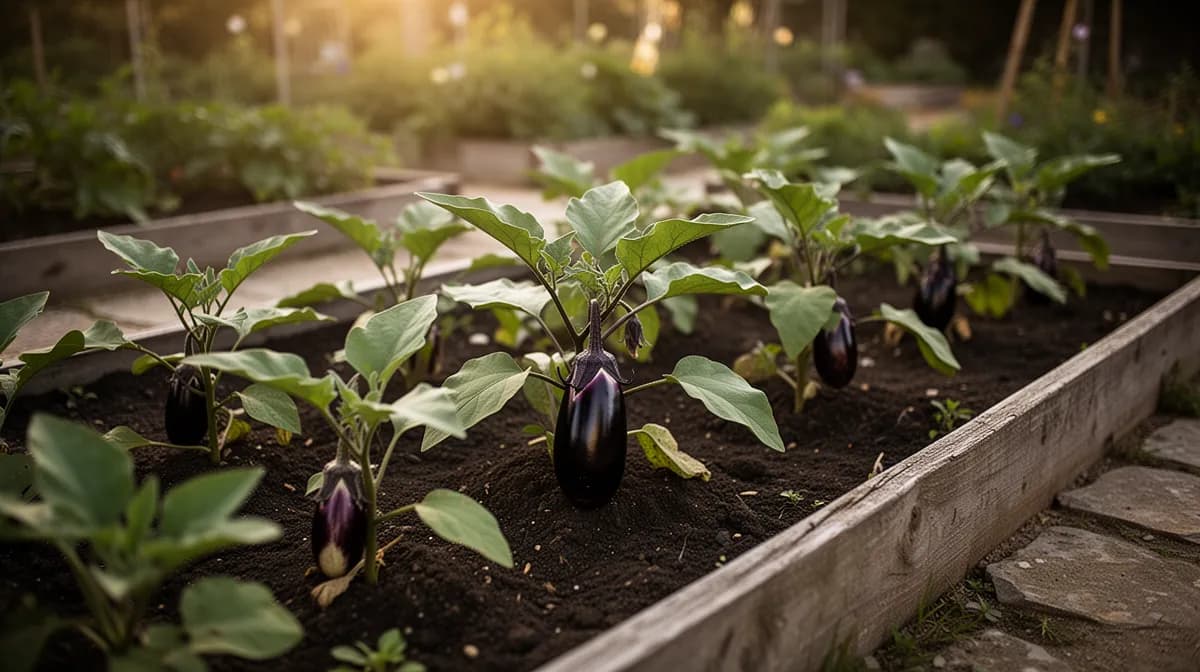
8 Pflanzen passen in ein Beet von 120 × 240 cm
Aubergine braucht 60 cm Platz pro Pflanze. Der Planer hält diesen Abstand für dich ein — jede Pflanze, jedes Beet.
Die besten Nachbarn für Aubergine
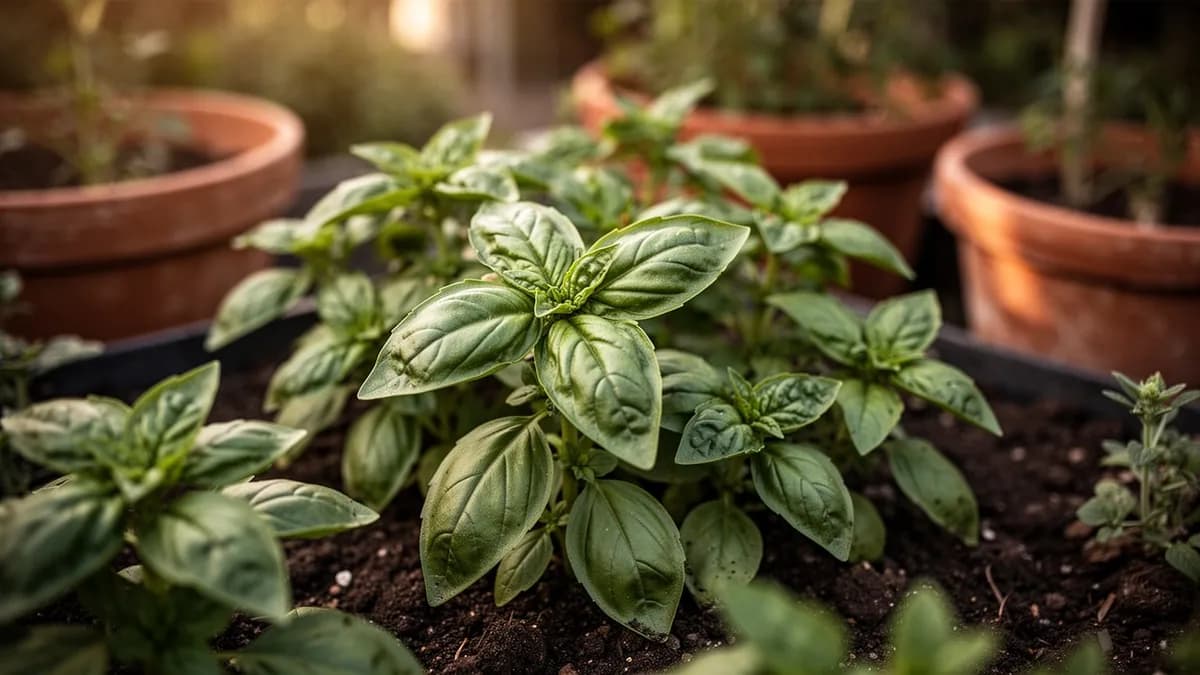
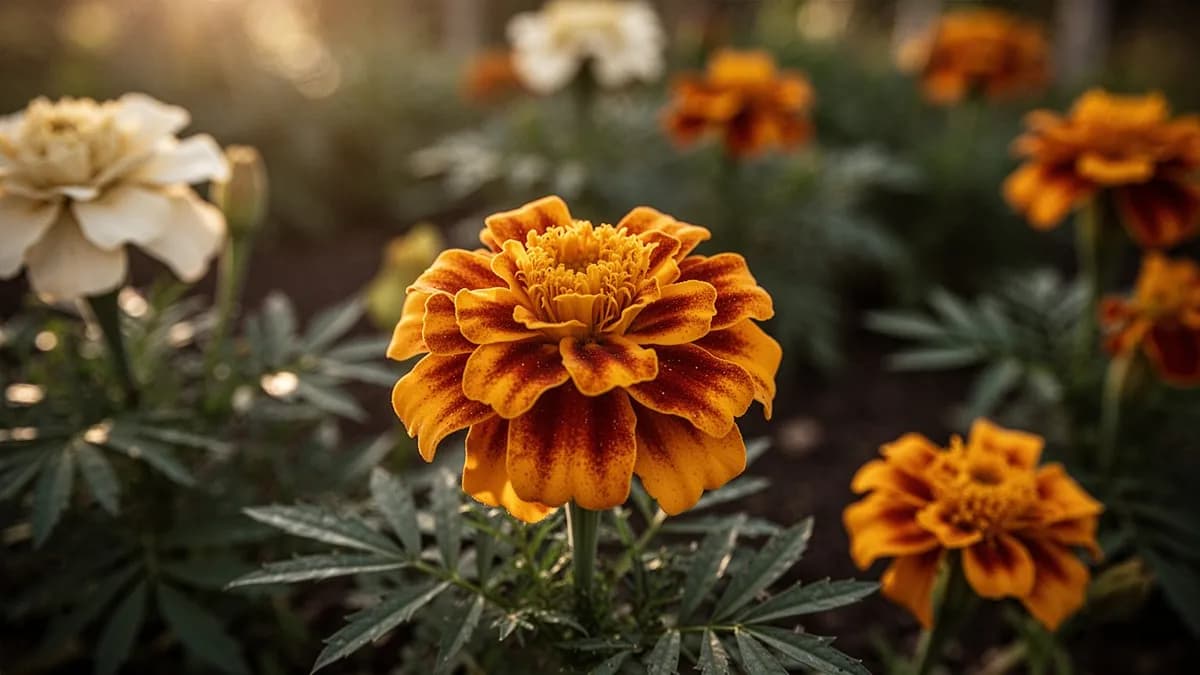
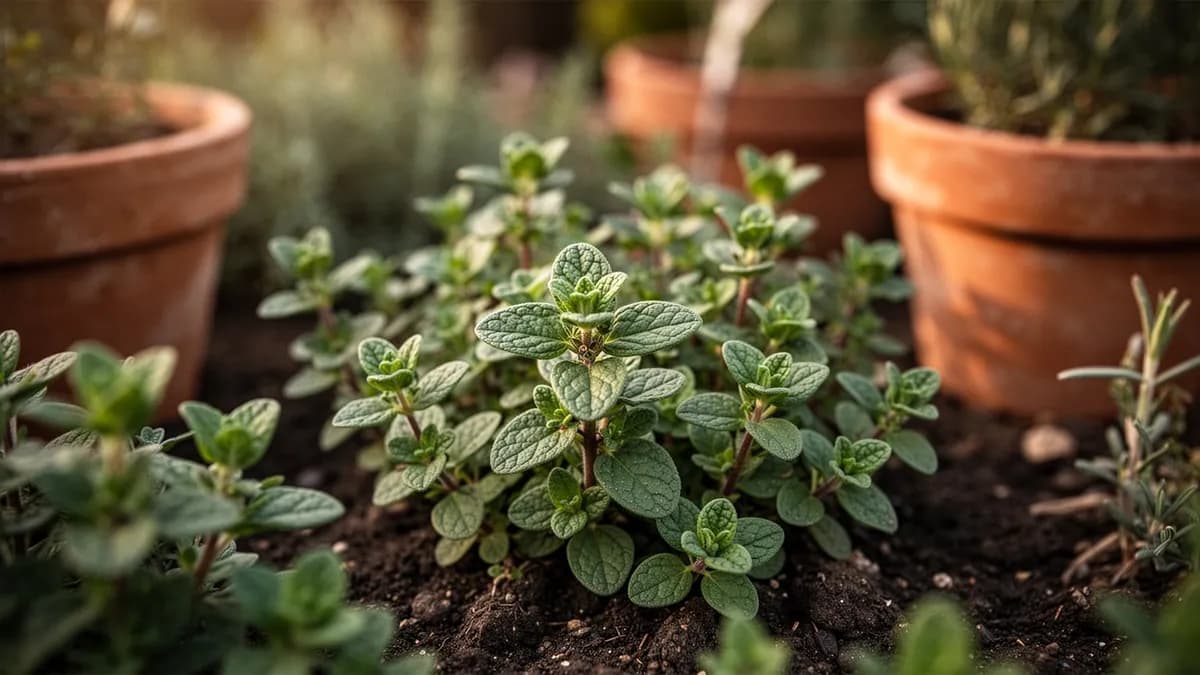
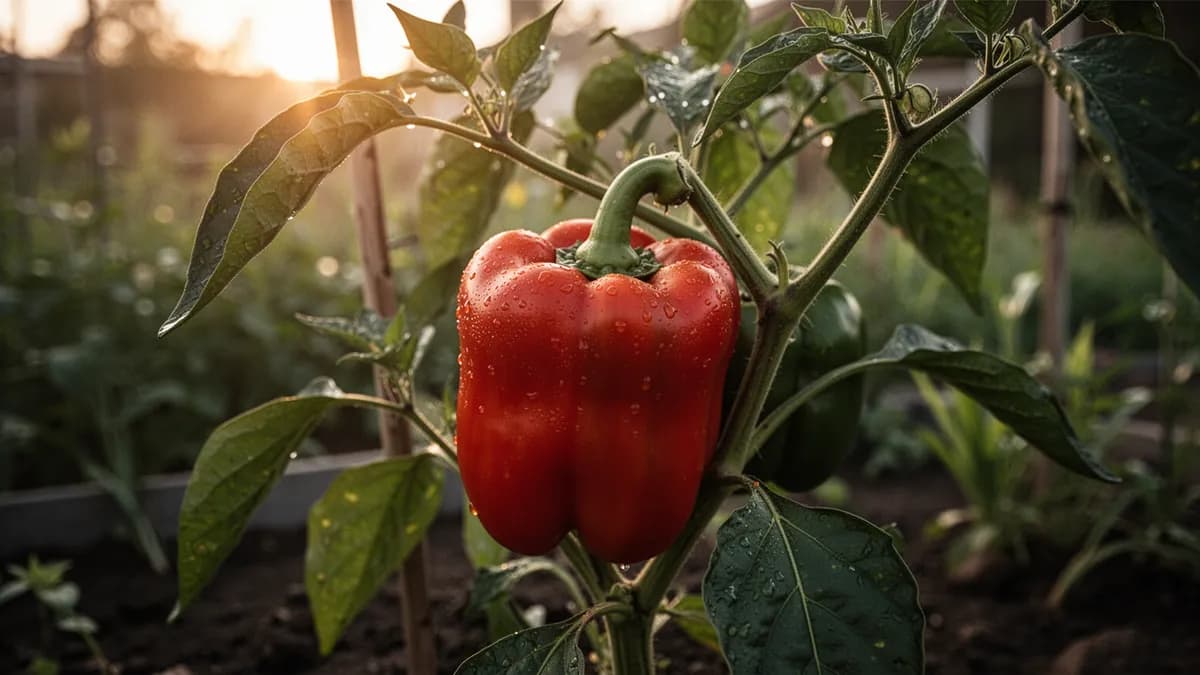
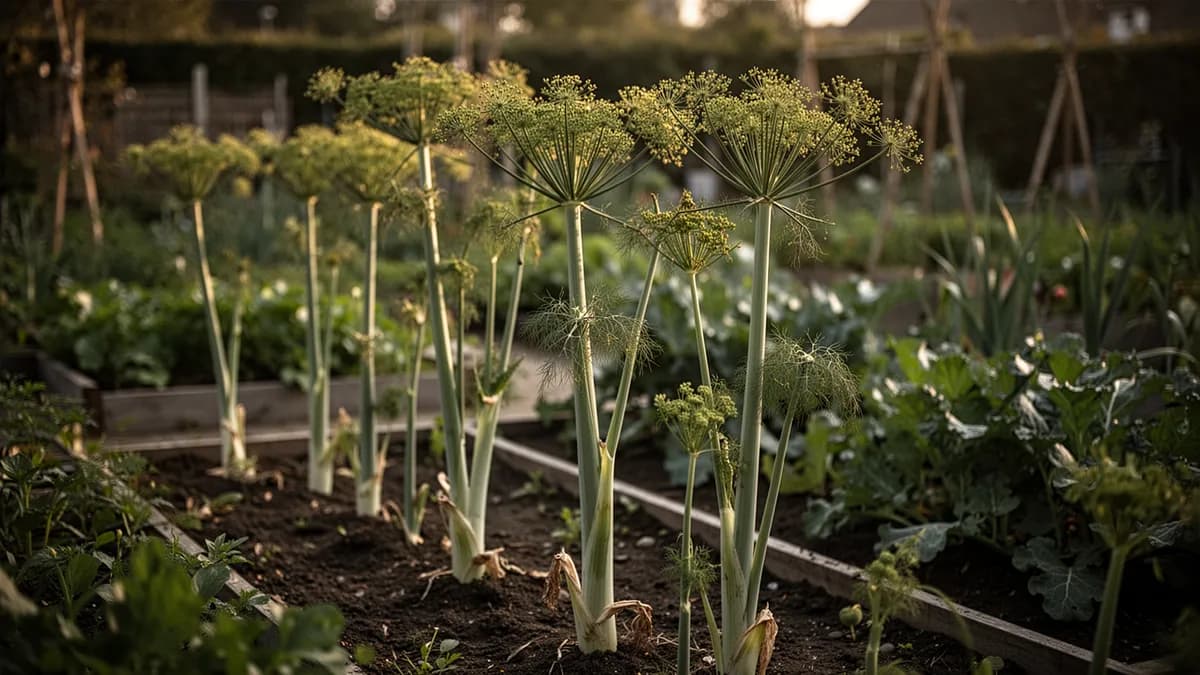
Basilikum ist der beste Begleitpflanze für Auberginen — seine flüchtigen aromatischen Öle vertreiben Blattläuse, Spinnmilben und Weiße Fliegen, die häufig Auberginen befallen. Tagetes schrecken Nematoden und Weiße Fliegen mit ihren Wurzelausscheidungen und dem stechenden Laub ab. Thymian und Oregano bieten Bodendeckung, die Feuchtigkeit bewahrt, während ihr Duft Schädlinge verwirrt, die Auberginen suchen. Paprika und Auberginen haben ähnliche Kulturanforderungen und wachsen gut nebeneinander. Vermeiden Sie die Pflanzung in der Nähe von Fenchel, der wachstumshemmende Substanzen abgibt, und wechseln Sie den Standort zu anderen Nachtschattengewächsen, um Krankheitsaufbau zu verhindern.
Basilikum gehört daneben. Fenchel nicht.
Altes Gärtnerwissen, geprüft an der echten Nachbartabelle von Aubergine — teste jede Pflanze, die du anbaust.
Probiere Aubergine direkt hier im Beet
Ein echtes Planer-Beet, Aubergine steht schon drin. Tippe einen Begleiter an, platziere ihn und sieh, wie die Nachbarschaftsprüfung antwortet — grün für gute Nachbarn, rot bei Streit.


Passende Anbau-Ratgeber
Richtig düngen
Auberginen verlangen nährstoffreichen, gut durchlässigen Boden mit einem pH-Wert von 5,5-6,8. Arbeiten Sie 8-10 cm Kompost und einen ausgewogenen Langzeitdünger vor dem Umpflanzen ein. Schwarze Mulchfolie wärmt den Boden, speichert Feuchtigkeit und unterdrückt Unkraut. Sobald Früchte ansetzen, wechseln Sie zu einem Dünger mit höherem Phosphor- und Kaliumgehalt (z. B. 5-10-10), um die Fruchtentwicklung statt des Blattwachstums zu unterstützen. Düngen Sie alle 3-4 Wochen während der Vegetationsperiode mit Kompost oder flüssiger Fischemulsion nach. Calcium ist wichtig zur Vorbeugung der Blütenendfäule — fügen Sie Gips oder zerkleinerte Eierschalen hinzu, wenn der Calciumgehalt niedrig ist. Vermeiden Sie übermäßigen Stickstoff, der üppiges Laub fördert, aber die Fruchtbildung verzögert.
Auberginen sind Starkzehrer, die von nährstoffreichem, biologisch aktivem Boden profitieren. Arbeiten Sie vor dem Pflanzen 5-8 cm gut verrotteten Kompost in die oberen 30 cm Boden ein, zusammen mit einer Handvoll Knochenmehl pro Pflanzloch für Phosphor. Wenn Ihr Boden schwerer Lehm ist, erhöhen Sie die Beete mindestens 15-20 cm und mischen Sie Perlit oder groben Sand ein, um die Drainage zu verbessern — Auberginenwurzeln faulen schnell in staunassem Boden. Eine Bodentemperatur von mindestens 21°C beim Umpflanzen ist unerlässlich; kalter Boden hemmt die Wurzelentwicklung und verzögert die Fruchtbildung um Wochen.
Magnesiummangel ist bei Auberginen häufig und zeigt sich als Vergilbung zwischen den Blattadern an älteren Blättern. Beugen Sie dem vor, indem Sie einen Esslöffel Bittersalz beim Umpflanzen in das Pflanzloch mischen. Überwachen Sie den Boden-pH während der gesamten Saison, da Auberginen in alkalischen Bedingungen über 7,0 schlecht gedeihen. Blattdüngung mit verdünntem Seetangextrakt alle zwei Wochen liefert Spurenelemente und wachstumsfördernde Hormone, die den Fruchtansatz und die Pflanzenvitalität steigern, besonders während der intensiven Fruchtperiode im Hochsommer.
Ideale Temperatur
Winterhärtezone-Kompatibilität
Von der Saat zur Ernte, Schritt für Schritt
Aussaat
Samen keimen langsam unter warmen, feuchten Bedingungen. Zuerst erscheint eine winzige weiße Keimwurzel, gefolgt von einem Paar runder Keimblätter, die sich durch die Oberfläche schieben. Die Keimung der Aubergine ist langsamer und unregelmäßiger als bei Tomaten oder Paprika.
Setzlingswachstum
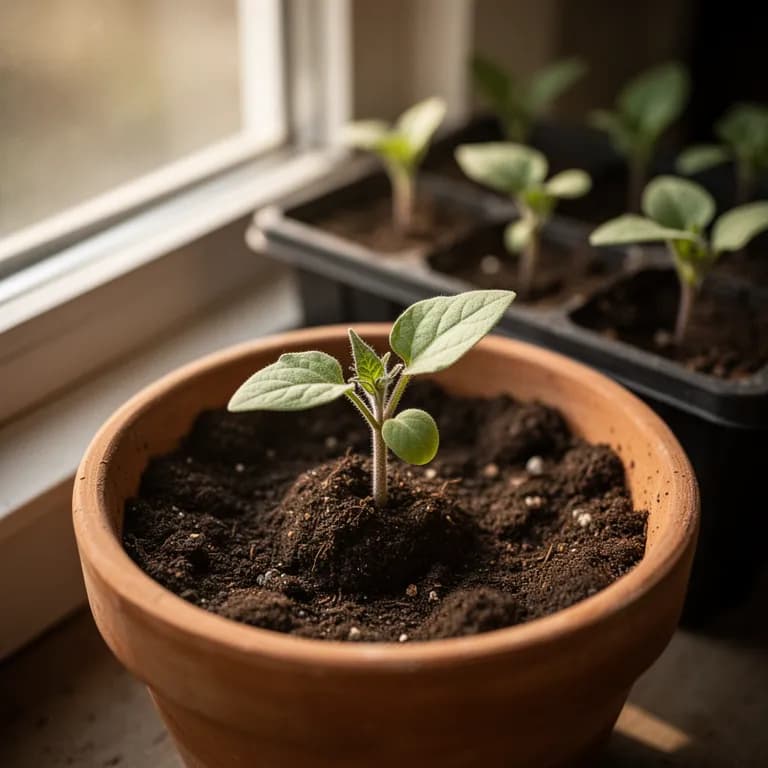
Echte Blätter erscheinen mit weicher, leicht flaumiger Textur. Der Stängel verdickt sich und kann eine violette Tönung entwickeln. Setzlinge wachsen im Vergleich zu anderen Nachtschattengewächsen langsam und erreichen 10-15 cm Höhe mit 4-6 echten Blättern vor dem Umpflanzen.
Umpflanzen
Die Pflanzen werden an ihren endgültigen Standort im Freien umgesetzt, nachdem alle Frostgefahr vorüber ist und sich der Boden auf mindestens 21°C erwärmt hat. Die Aubergine ist das kälteempfindlichste der gängigen Nachtschattengewächse und muss sorgfältig abgehärtet werden.
Blüte
Wunderschöne sternförmige Lavendelblüten mit markanten gelben Staubgefäßen erscheinen an den Verzweigungsstellen. Jede Blüte ist selbstfruchtbar, benötigt aber Vibration, um den Pollen effektiv freizusetzen. Blüten fallen ab, wenn die Nachttemperaturen unter 15°C sinken.
Fruchtbildung
Nach erfolgreicher Bestäubung bilden sich kleine grüne Früchte, die bei warmem Wetter schnell anschwellen. Die charakteristische violette Farbe entwickelt sich mit der Reifung. Die Pflanzen lenken erhebliche Energie in die Fruchtentwicklung — stützen Sie die Zweige, um ein Abbrechen unter dem Gewicht zu verhindern.
Ernte
Die Früchte erreichen ihre volle Größe und entwickeln einen tiefen, glänzenden Schimmer, der auf optimale Reife hinweist. Das Fruchtfleisch ist fest und cremeweiß mit kleinen, hellen Samen. Regelmäßiges Ernten regt die Pflanze an, weiterhin neue Blüten und Früchte zu bilden.
Halten Sie 27-32°C mit einer Heizmatte — die Keimung ist unter 24°C sehr schlecht. Bedecken Sie die Schalen mit einer Feuchtigkeitshaube, bis Sprösslinge erscheinen. Bieten Sie sofort nach dem Aufgang 14-16 Stunden Pflanzenlicht.
Aubergine Monat für Monat pflegen
Was du jeden Monat für deine Aubergine tun solltest
Oktober
Aktueller MonatErnten Sie alle verbleibenden Früchte vor dem ersten starken Frost. Grüne oder unreife Früchte können für Pfannengerichte oder zum Einlegen verwendet werden. Ziehen Sie verbrauchte Pflanzen heraus und kompostieren Sie gesundes Material. Notieren Sie, welche Sorten am besten abgeschnitten haben.
Immer wissen, was jetzt im Garten zu tun ist
Eine E-Mail zum Monatsanfang: was du jetzt säen, pflanzen und anpacken solltest — für deine Aubergine und alles, was drumherum wächst. Dazu ein kurzer Startkurs, der dich vor den klassischen Fehlern bewahrt.
- Was jetzt zu tun ist
- Passend zu deiner Saison
- Startkurs inklusive
Aubergine ernten
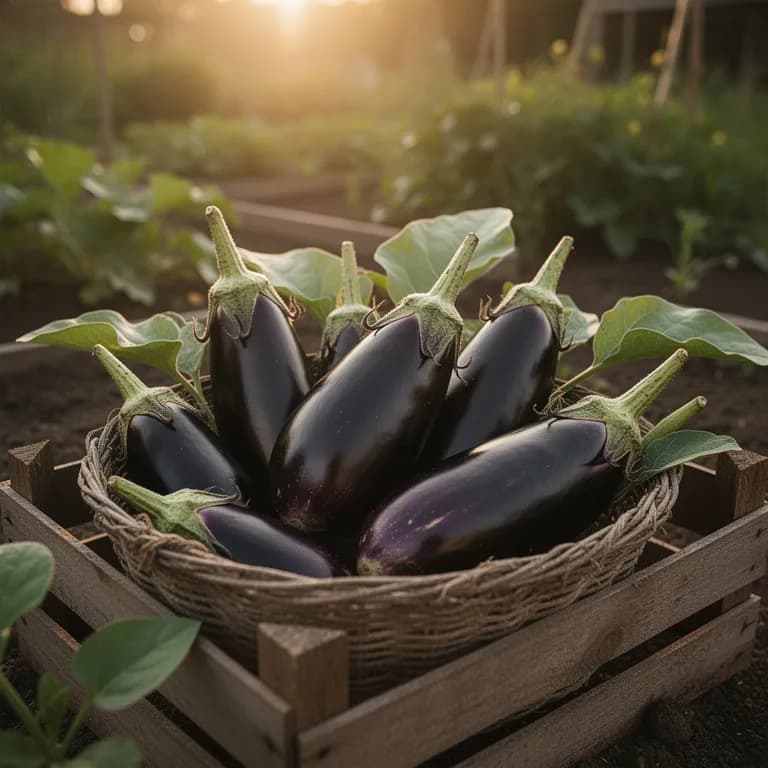
Ernten Sie Auberginen, wenn die Früchte glänzend, fest und die erwartete Größe für die jeweilige Sorte erreicht haben — typischerweise 15-20 cm für Standardsorten und 8-12 cm für asiatische Sorten. Drücken Sie sanft mit dem Daumen auf die Haut; wenn sie zurückfedert, ist die Frucht auf dem Höhepunkt der Qualität, bleibt die Delle jedoch bestehen, ist die Frucht überreif mit zähen Samen und bitterem Fruchtfleisch. Auch matte, glanzlose Haut deutet auf Überreife hin. Schneiden Sie die Früchte mit einer Gartenschere von der Pflanze und lassen Sie 2-3 cm Stiel stehen — der Kelch hat bei manchen Sorten kleine Dornen, tragen Sie daher Handschuhe. Ernten Sie regelmäßig alle paar Tage, um die Weiterproduktion anzuregen, da das Belassen reifer Früchte an der Pflanze das Signal gibt, die Blütenbildung zu verlangsamen.
Das richtige Timing der Ernte macht einen erheblichen Unterschied in der Essqualität. Auberginen entwickeln Bitterkeit, wenn sie über ihren Höhepunkt hinaus reifen — die Samen verfärben sich von weiß über hellbraun zu braun, und das Fruchtfleisch wird schwammig und entwickelt Fehlaromen. Für das mildeste, cremigste Fruchtfleisch ernten Sie eher auf der jüngeren Seite, wenn die Samen noch hell sind und das Innere gleichmäßig weiß oder cremefarben ist. Morgendliches Ernten nach dem Abtrocknen des Taus ergibt die festesten Früchte mit der längsten Haltbarkeit. Im Hochsommer kontrollieren Sie die Pflanzen alle ein bis zwei Tage, da warme Temperaturen eine Frucht in nur 48 Stunden von perfekt zu überreif bringen können.
Verschiedene Sorten haben unterschiedliche Erntemerkmale. Standard-Kugelsorten wie Black Beauty sollten tief, gleichmäßig violett-schwarz und 15-20 cm lang sein. Lange asiatische Sorten wie Ichiban sind am besten bei 20-25 cm, solange sie noch schlank sind — sie werden samenreich, wenn man sie dicker werden lässt. Kleine italienische Sorten wie Rosa Bianca werden geerntet, wenn sie Softball-Größe erreichen und die Lavendelfarbe leuchtend ist. Weiße Sorten sollten reinweiß ohne Vergilbung sein. Unabhängig vom Typ ist ein glänzender Schimmer der universelle Indikator für optimale Erntereife — sobald der Glanz zu matt verblasst, ist das Zeitfenster verstrichen.
angenommen, du pflanzt zu Beginn des Zeitraums — trage dein tatsächliches Datum ein
Schale tiefviolett und glänzend, federt bei leichtem Daumendruck zurück.
Lagerung & Konservierung
Auberginen werden am besten innerhalb von 2-3 Tagen nach der Ernte verwendet, da sie sich langfristig nicht gut lagern lassen. Bewahren Sie sie bei Raumtemperatur auf, wenn Sie sie innerhalb eines Tages verwenden, oder im Gemüsefach des Kühlschranks bis zu einer Woche — Temperaturen unter 10°C verursachen Kälteschäden und braune Flecken. Zum Einfrieren schneiden und rösten oder grillen Sie die Aubergine zuerst, frieren Sie sie dann einzeln auf Blechen ein, bevor Sie sie in Beutel umfüllen — bis zu 6 Monate haltbar. Frieren Sie rohe Aubergine nicht ein, da sie matschig wird. Eingelegte Aubergine in Öl und Essig ist eine ausgezeichnete mediterrane Konservierungsmethode. Trocknen Sie dünne Scheiben bei 52°C für 8-12 Stunden für Auberginenchips.
Für eine längere Konservierung kann Caponata — ein sizilianisches süß-saures Relish aus gewürfelter Aubergine mit Tomaten, Sellerie, Kapern, Oliven und Essig — im Wasserbad eingekocht und bis zu einem Jahr gelagert werden. Auberginen-Parmigiana lässt sich ebenfalls hervorragend einfrieren: Gericht zusammenstellen, vollständig abkühlen lassen, fest in Frischhaltefolie und Alufolie einwickeln und bis zu drei Monate einfrieren. Über Nacht im Kühlschrank auftauen, bevor Sie es wieder erwärmen. Gegrillte Auberginenscheiben können in Olivenöl mit Knoblauch und Kräutern in sterilisierten Gläsern eingelegt und im Kühlschrank bis zu zwei Wochen aufbewahrt werden.
Geräucherte Aubergine ist ein weiterer ausgezeichneter Konservierungsansatz — halbieren Sie die Früchte, grillen oder überbacken Sie sie, bis das Fruchtfleisch vollständig weich und die Haut verkohlt ist, löffeln Sie dann das rauchige Fruchtfleisch heraus und frieren Sie es portionsweise ein für sofortiges Baba Ghanoush oder rauchige Dips das ganze Jahr über. Für Auberginenpulver trocknen Sie dünne Scheiben, bis sie vollständig brüchig sind, mahlen Sie sie dann zu einem feinen Pulver, das Suppen, Eintöpfen und Gewürzmischungen eine reiche Umami-Tiefe verleiht. Bewahren Sie das Pulver in luftdichten Behältern, lichtgeschützt, bis zu sechs Monate auf.
Was schiefgeht — und die Lösung
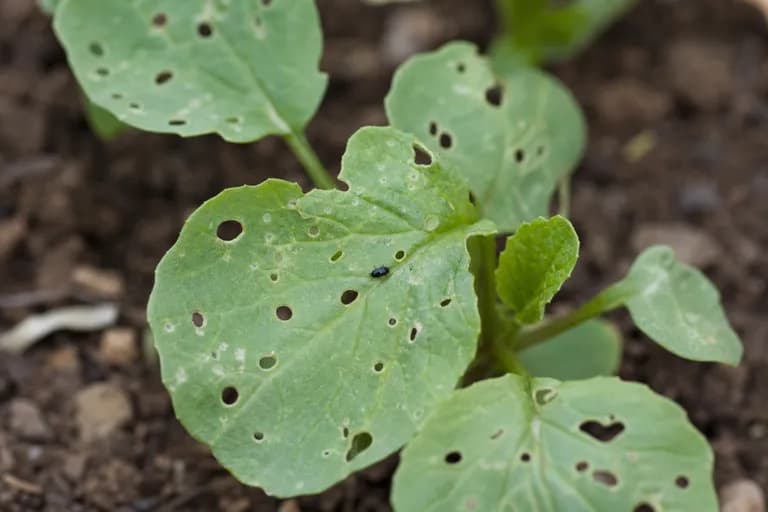
Erdfloh
SchädlingWinzige, glänzende schwarze Käfer springen bei Störung auf und fressen zahlreiche kleine runde Löcher in die Blätter, wodurch ein spitzenartiges Erscheinungsbild entsteht. Keimlinge und junge Setzlinge sind am anfälligsten und können bei starkem Befall absterben. Die Käfer sind bei warmem, sonnigem Wetter am aktivsten.
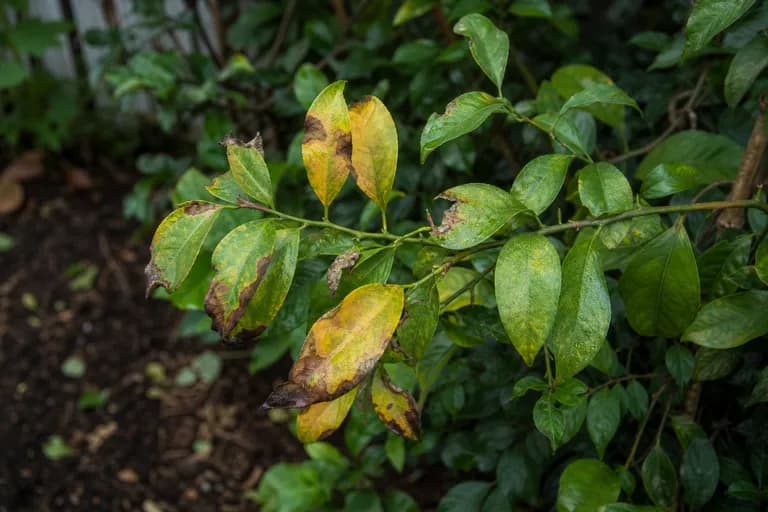
Verticillium-Welke
KrankheitAn den unteren Blättern entwickeln sich gelbe, V-förmige Flecken zwischen den Blattadern, die dann braun werden und welken. Die Symptome schreiten nach oben fort. Pflanzen können tagsüber welken und sich nachts teilweise erholen. Ein Schnitt durch den Stängel zeigt eine braune Verfärbung des Leitgewebes.
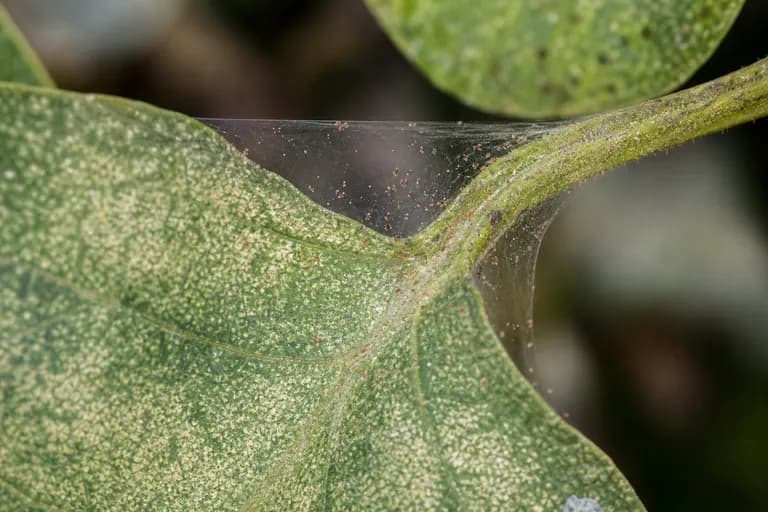
Spinnmilben
SchädlingWinzige, gesprenkelte gelbe Punkte auf der Blattoberfläche, feine Gespinste auf Blattunterseiten und zwischen Zweigen. Blätter verfärben sich bronzefarben, trocknen aus und fallen vorzeitig ab. Populationen explodieren bei heißen, trockenen Bedingungen.
Phytophthora-Fäule
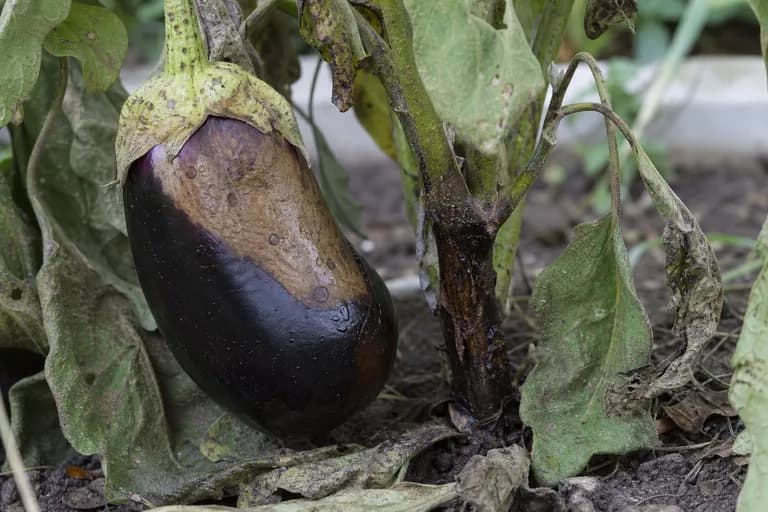
KrankheitWassergetränkte, dunkle Läsionen an Stängeln nahe der Bodenoberfläche, die zum plötzlichen Zusammenbruch der Pflanzen führen. Früchte entwickeln dunkle, fettig wirkende Flecken und faulen schnell. Am schlimmsten in nassen, schlecht entwässerten Böden bei warmem Wetter.
Fehlerbehebung bei häufigen Problemen
Blütenabwurf ohne Fruchtansatz ist die häufigste Frustration — dies wird meist durch Nachttemperaturen unter 15°C oder Tagestemperaturen über 35°C, niedrige Luftfeuchtigkeit oder unzureichende Bestäuberaktivität verursacht. Klopfen Sie vorsichtig an offene Blüten, um die Selbstbestäubung zu unterstützen. Kleine, bittere Früchte resultieren aus Wasserstress oder Überreife — ernten Sie rechtzeitig, solange die Früchte glänzend sind, und halten Sie gleichmäßige Bewässerung ein. Sonnenbrand zeigt sich als blasse, papierartige Flecken auf Fruchtoberflächen, die intensiver direkter Sonne ausgesetzt sind — bewahren Sie eine gute Laubbedeckung. Blütenendfäule (dunkle, eingesunkene Flecken am Fruchtboden) wird durch Calciummangel in Verbindung mit unregelmäßiger Bewässerung verursacht.
Erdflohschäden treten bei Auberginen fast universell auf und können für junge Setzlinge verheerend sein. Das typische Schrotschussmuster schwächt die Pflanzen und öffnet Wunden für bakterielle Infektionen. Vliesabdeckungen sind die wirksamste biologische Abwehr — installieren Sie sie sofort nach dem Umpflanzen und entfernen Sie sie erst, wenn die Blüte beginnt, damit Bestäuber Zugang zu den Blüten haben. Wenn Erdflöhe ein wiederkehrendes Problem in Ihrem Garten sind, erwägen Sie den Anbau von Auberginen unter permanenter Vliesabdeckung und die Handbestäubung der Blüten mit einem kleinen Pinsel.
Geringe Fruchtgröße und missgebildete Früchte resultieren oft eher aus unzureichender Bestäubung als aus Nährstoffmangel. Auberginenblüten sind selbstfruchtbar, benötigen aber Vibration, um den Pollen effektiv freizusetzen — in Gewächshäusern oder unter Vliesabdeckungen schütteln Sie die Pflanzen manuell oder verwenden Sie eine elektrische Zahnbürste an den Blütenständen, um die Vibrationsbestäubung der Bienen zu simulieren. Kühle Nachttemperaturen unter 15°C verursachen ebenfalls Bestäubungsversagen und missgebildete Früchte. Wenn Ihr Klima kühle Sommer hat, wählen Sie schnell reifende Sorten und verwenden Sie schwarze Mulchfolie und Vliesabdeckungen, um ein wärmeres Mikroklima zu schaffen.
Anbautipps
- Die Aubergine benötigt mehr Wärme als jedes andere gängige Gartengemüse. Überstürzen Sie das Umpflanzen nicht — warten Sie, bis die Nachttemperaturen zuverlässig über 15°C bleiben und der Boden mindestens 21°C erreicht hat. Kalter Boden und kühle Nächte hemmen das Wachstum dauerhaft.
- Schwarze Mulchfolie ist die Geheimwaffe des Auberginengärtners. Sie erwärmt den Boden um 3-5°C über die Umgebungstemperatur, speichert Feuchtigkeit und unterdrückt Unkraut. Legen Sie sie zwei Wochen vor dem Umpflanzen aus, um die Beete vorzuwärmen, besonders in kühleren Klimazonen.
- Volle Sonne ist absolut unerlässlich — 8 oder mehr Stunden direkte, ungefilterte Sonneneinstrahlung täglich. Eine Südausrichtung an einer wärmereflektierenden Wand oder einem Zaun ist ideal. Im Halbschatten angebaute Auberginen bringen wenige bis keine Früchte hervor.
- Gießen Sie tief und gleichmäßig mit 2,5-5 cm pro Woche mittels Tropfbewässerung. Auberginen sind besonders empfindlich gegenüber Wasserstress während der Blüte und des Fruchtansatzes — unregelmäßige Feuchtigkeit verursacht Blütenabwurf und bittere, markige Früchte.
- Stützen oder käfigen Sie jede Pflanze zum Zeitpunkt des Umpflanzens, bevor sie Unterstützung benötigt. Auberginenzweige sind spröde und brechen leicht unter dem Gewicht großer Früchte. Verwenden Sie weiche Bindungen, um Hauptstämme und fruchtbeladene Zweige an Stützen zu befestigen.
- Erdflöhe sind der Feind Nummer eins der Aubergine. Installieren Sie leichte Vliesabdeckungen sofort nach dem Umpflanzen und lassen Sie sie an Ort und Stelle, bis die Blüte beginnt. Diese einzelne Maßnahme verhindert mehr Schäden als jedes Sprühmittel.
- Entfernen Sie die ersten zwei oder drei Blüten an frisch umgepflanzten Auberginen. Das fühlt sich kontraintuitiv an, lenkt aber die Energie der Pflanze in die Wurzel- und Stängelentwicklung um, was zu einer stärkeren Pflanze führt, die letztendlich mehr und größere Früchte produziert.
- Wechseln Sie den Standort der Aubergine zu allen Nachtschattengewächsen (Tomaten, Paprika, Kartoffeln) in einem 3-4-jährigen Zyklus. Diese Kulturen teilen Krankheiten wie Verticillium-Welke und Phytophthora, die jahrelang im Boden überdauern. Pflanzen Sie niemals Auberginen dort, wo in den letzten drei Jahren ein Nachtschattengewächs gewachsen ist.
Bau deine beste Aubergine an — und alles drumherum.
Starte heute kostenlos. Lege deine Beete an, setze deine Aubergine ein und lass PlotMyGarden Timing, Abstände, Begleiter und Erinnerungen von der Saat bis zum Erntekorb übernehmen.
Finde deine Aubergine
Black Beauty
Die klassische große, glänzende, tiefviolette Aubergine, die als Standardsorte für Hausgärten gilt. Produziert 3-6 große, tropfenförmige Früchte pro Pflanze. 80 Tage bis zur Reife. Hervorragend zum Grillen, Backen und Panieren.
Ichiban
Eine lange, schlanke japanische Sorte mit dünner, zarter Haut, die nicht geschält werden muss. Dunkelviolette Früchte 25-30 cm lang mit mildem, süßem Geschmack und wenigen Samen. 70 Tage. Ertragreiche Sorte, perfekt für Pfannengerichte.
Rosa Bianca
Eine wunderschöne italienische Erbsorte mit runden, lavendel-rosa Früchten, weiß gestreift. Cremiges, mildes Fruchtfleisch ohne Bitterkeit — gilt als eine der feinsten Speiseauberginen. 88 Tage. Am besten in warmen Klimazonen.
Fairy Tale
Eine Miniatursorte, die Trauben kleiner, lila-weiß gestreifter Früchte mit außergewöhnlich süßem, zartem Fruchtfleisch produziert. 50 Tage. Perfekt für Kübel. Keine Bitterkeit und kein Salzen vor dem Kochen nötig.
Thai Green
Eine kompakte Sorte, die runde, limettengrüne Früchte von 5-8 cm Durchmesser produziert. Unverzichtbar in thailändischen und südostasiatischen Currys. Die feste Textur hält langem Kochen stand. 65 Tage. Sehr ertragreich.
Ein einzelner Auberginensetzling, der 3-5 € kostet, kann über eine Saison Bio-Auberginen im Wert von 15-30 € produzieren. Spezialitätensorten wie Rosa Bianca oder japanische Sorten, die auf Bauernmärkten 8-12 € pro Kilogramm erzielen, bieten besonders hohe Erträge. Eine kleine Pflanzung von 3-4 Pflanzen liefert mehr als genug Auberginen für eine Familie, mit Überschuss zum Grillen, Einfrieren und Teilen mit Nachbarn.
Schnelle Rezepte
Klassisches Baba Ghanoush
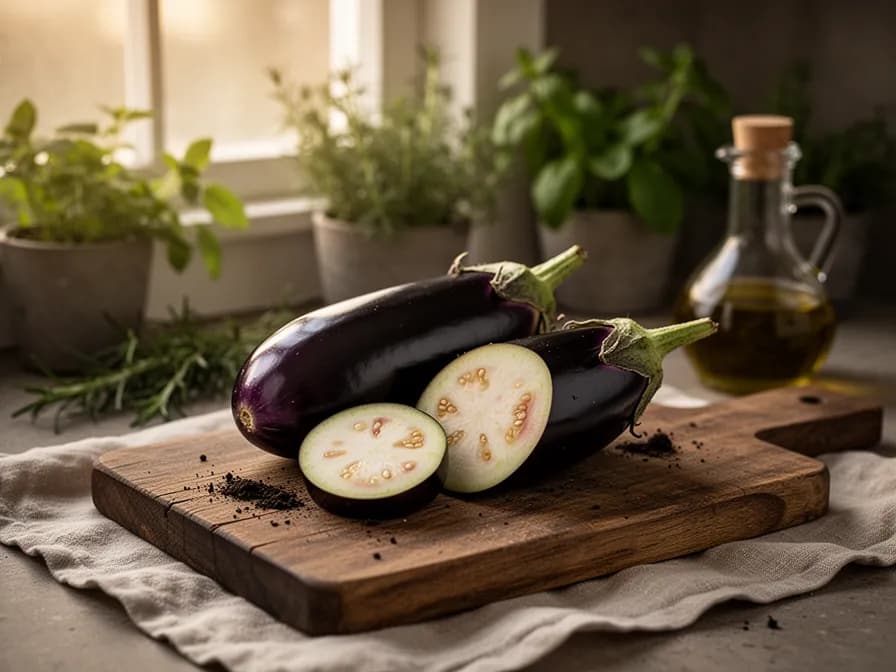
30 Min.Der klassische Auberginen-Dip aus dem Nahen Osten. Ganze Auberginen werden über offener Flamme oder unter dem Grill verkohlt, bis das Fruchtfleisch vollständig weich und rauchig ist, dann mit Tahini, Zitrone und Knoblauch zu einem seidigen, unwiderstehlichen Aufstrich püriert.
7 Zutaten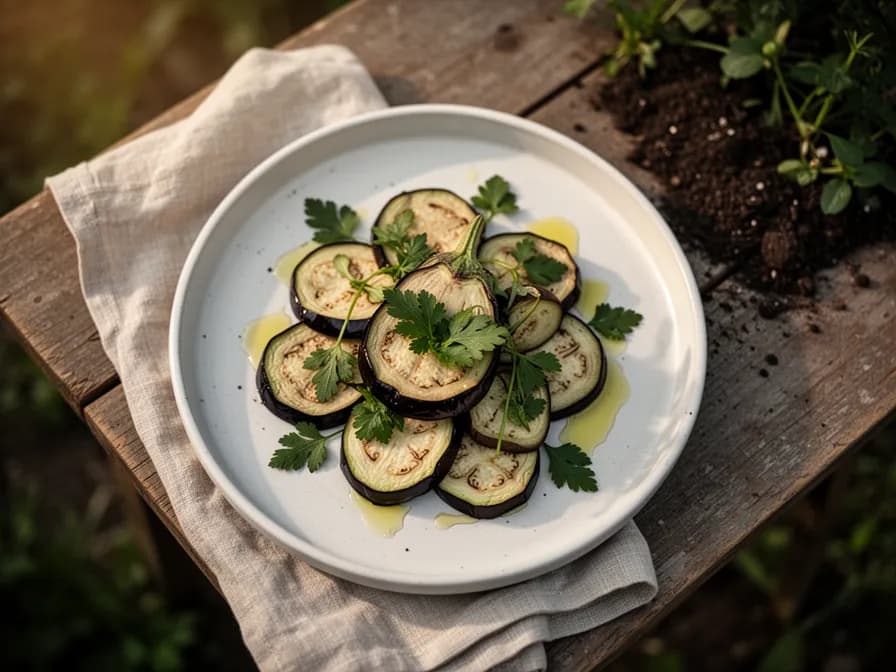
Gegrillte Auberginensteaks
20 Min.Dicke Auberginenscheiben, bestrichen mit einer Knoblauch-Kräuter-Marinade und gegrillt, bis sie zart sind und schöne Grillstreifen zeigen. Ein sättigendes vegetarisches Hauptgericht, das neben jedem Grillfleisch bestehen kann. Am besten mit frisch aus dem Garten geernteter Aubergine.
7 ZutatenJapanische Miso-glasierte Aubergine (Nasu Dengaku)
25 Min.Halbierte Aubergine, kreuzweise eingeritzt, goldbraun angebraten, dann mit einer süßen weißen Miso-Glasur überzogen und überbacken, bis sie blubbert und karamellisiert. Ein beliebtes japanisches Beilagengericht, das die Aubergine in ihrer seidigsten Form präsentiert.
7 ZutatenKulinarische Verwendung
Die Aubergine ist ein kulinarisches Chamäleon, das Aromen wunderbar aufnimmt — grillen, rösten, braten oder backen Sie sie für mediterrane Gerichte wie Moussaka, Ratatouille und Baba Ghanoush. Sie ist unverzichtbar in asiatischen Pfannengerichten, Currys und Tempura. Salzen und entwässern Sie Scheiben vor dem Kochen, um Feuchtigkeit und Bitterkeit bei älteren Sorten zu reduzieren. Aubergine harmoniert gut mit Olivenöl, Knoblauch, Tomaten, Basilikum, Miso, Sesam und Kreuzkümmel. Sie liefert Ballaststoffe, Kalium, Folsäure und Nasunin, ein starkes Antioxidans in der violetten Haut.
Das schwammartige Fruchtfleisch der Aubergine macht sie zu einem außergewöhnlichen Träger für Saucen und Marinaden. Für den reichsten Geschmack rösten oder grillen Sie Aubergine, bis sie tief karamellisiert ist — hohe Hitze verwandelt die Textur von schwammig zu seidig und entwickelt komplexe, rauchige Süße. In Scheiben geschnittene und gegrillte Aubergine ist ein hervorragender Fleischersatz in Sandwiches, Wraps und Lasagne. In der nahöstlichen Küche erzeugt das Verkohlen ganzer Auberginen über offener Flamme das unvergleichliche rauchige Fruchtfleisch für Baba Ghanoush und Mutabal. Die japanische Küche präsentiert Nasu Dengaku — halbierte Aubergine, mit süßem Miso glasiert und überbacken, bis sie blubbert.
Für die knusprigste gebratene Aubergine salzen Sie die Scheiben 30 Minuten, um Feuchtigkeit zu entziehen, tupfen Sie sie gründlich trocken und panieren Sie sie dann in gewürztem Mehl, Ei und Semmelbröseln, bevor Sie sie in heißem Öl frittieren. Diese Technik verhindert, dass das Fruchtfleisch übermäßig Öl aufsaugt — eine häufige Beschwerde beim Frittieren ungesalzener Aubergine. Aubergine ist von Natur aus kalorienarm (nur 25 pro 100 g) und liefert bedeutende Ballaststoffe, was sie zu einer ausgezeichneten Komponente herzgesunder und gewichtskontrollierter Ernährung macht. Die tiefviolette Haut enthält Nasunin, ein Anthocyan-Antioxidans, das laut Forschung zum Schutz der Zellmembranen vor oxidativen Schäden beitragen kann.
Was drinsteckt
Gesundheitsvorteile
- Nasunin, das Anthocyan-Pigment in der Auberginenhaut, ist ein starkes Antioxidans, das laut Forschung zum Schutz der Hirnzellmembranen vor Lipidperoxidation und Schäden durch freie Radikale beitragen kann.
- Reich an Ballaststoffen (3 g pro 100 g), die die Verdauungsgesundheit unterstützen, die Regelmäßigkeit fördern, nützliche Darmbakterien ernähren und zur Senkung des LDL-Cholesterinspiegels beitragen können.
- Enthält Chlorogensäure, eine der häufigsten und stärksten antioxidativen Verbindungen im Pflanzengewebe, mit nachgewiesenen entzündungshemmenden, antimikrobiellen und antidiabetischen Eigenschaften in Laborstudien.
- Sehr geringe Kaloriendichte (nur 25 Kalorien pro 100 g) und hoher Wassergehalt (92 %) machen die Aubergine zu einem ausgezeichneten Lebensmittel für Gewichtsmanagement und Sättigung ohne Kalorienüberschuss.
- Gute Quelle für Kalium (229 mg pro 100 g), ein essenzielles Mineral, das den Blutdruck reguliert, die Muskelkontraktion unterstützt und das Flüssigkeitsgleichgewicht im Körper aufrechterhält.
- Liefert Mangan, Kupfer und B-Vitamine einschließlich Folsäure und Thiamin, die gemeinsam die Knochengesundheit, den Energiestoffwechsel, die Bildung roter Blutkörperchen und die Nervensystemfunktion unterstützen.
Woher Aubergine stammt
Die Aubergine hat eine der längsten und faszinierendsten Domestizierungsgeschichten unter den gängigen Gemüsearten. Wilde Auberginenarten stammen ursprünglich aus Afrika, doch die Pflanze wurde erstmals vor über 4.000 Jahren auf dem indischen Subkontinent kultiviert, wo sie in der ayurvedischen Medizin geschätzt und in die vielfältige Palette an Formen und Farben entwickelt wurde, die wir heute kennen. Alte Sanskrit-Texte verweisen auf den Auberginenanbau, und archäologische Funde von indischen Stätten bestätigen ihre Bedeutung als Nahrungspflanze lange vor der geschriebenen Geschichte. Von Indien aus verbreitete sich die Aubergine ostwärts entlang der Handelswege nach China bis zum 5. Jahrhundert n. Chr., wo sie zum Grundnahrungsmittel wurde und weiter zu den langen, schlanken Sorten gezüchtet wurde, die für die ostasiatische Küche charakteristisch sind.
Arabische Händler und Kaufleute trugen die Aubergine während des 7. und 8. Jahrhunderts westwärts durch die islamische Welt, führten sie in Persien, Nordafrika und schließlich auf der Iberischen Halbinsel ein. Die Mauren brachten die Aubergine während ihrer Herrschaft nach Spanien, und von dort verbreitete sie sich im gesamten Mittelmeerraum. Die europäische Akzeptanz war jedoch langsam und misstrauisch — die Zugehörigkeit der Pflanze zur Nachtschattenfamilie ließ viele glauben, sie sei giftig oder verursache Wahnsinn. Italienische Namen wie 'mala insana' (verrückter Apfel) und 'melanzana' spiegeln dieses tiefe Misstrauen wider, das über Jahrhunderte anhielt.
Erst im 18. und 19. Jahrhundert fand die Aubergine breite kulinarische Akzeptanz in Europa und wurde schließlich zu einer Eckpfeiler-Zutat der mediterranen Küche. Gerichte wie Moussaka in Griechenland, Ratatouille in Frankreich, Parmigiana di Melanzane in Italien und Escalivada in Spanien entstanden alle in dieser Zeit. Thomas Jefferson baute 1806 in Monticello Auberginen als Zierpflanze an, obwohl die Amerikaner sie erst im 20. Jahrhundert mit dem Zustrom mediterraner und asiatischer Einwanderer, die ihre Rezepte und Esstraditionen mitbrachten, weitgehend als Nahrungsmittel annahmen.
Aubergine: Schon gewusst?
Faszinierende Fakten über Aubergine
Die Aubergine verdankt ihren englischen Namen 'Eggplant' frühen europäischen Sorten, die kleine, weiße, eiförmige Früchte trugen — sie sahen buchstäblich wie Eier aus, die an der Pflanze hingen, bevor die großen violetten Sorten dominant wurden.
Aubergine: Fragen & Antworten
Wann sollte ich Aubergine pflanzen?
Was sind gute Begleitpflanzen für Aubergine?
In welchen Winterhärtezonen kann Aubergine wachsen?
Wie viel Sonne braucht Aubergine?
Welchen Abstand sollte ich zwischen Aubergine lassen?
Welche Schädlinge und Krankheiten befallen Aubergine?
Wie lagere ich Aubergine nach der Ernte?
Was sind die besten Aubergine-Sorten zum Anbauen?
Welchen Boden braucht Aubergine?
Warum fallen die Blüten meiner Aubergine ab, ohne Früchte zu bilden?
Muss ich Auberginen vor dem Kochen salzen?
Kann ich Auberginen im Kübel anbauen?
Wie erkenne ich, ob eine Aubergine überreif ist?
Was verursacht kleine, missgebildete Auberginenfrüchte?
Wie lange dauert es, bis die Aubergine nach dem Umpflanzen Früchte trägt?
Du hast die Theorie gelesen. Jetzt baue sie auf Autopilot an.
Alles, was Aubergine knifflig macht — das Timing, die Abstände, die Begleiter, das Erntefenster — genau das übernimmt PlotMyGarden für dich, für jede Pflanze im Garten.
Ein Plan, der dein Wetter kennt
Standort einmal festlegen. Aussaat-, Dünge- und Erntedaten rund um deinen echten letzten Frosttermin und die Live-Vorhersage — kein Raten mehr nach Saattüte.
Aus dem Abschnitt „Pflanzzeit“Beetplaner per Drag & Drop
Beete auf einem Raster gestalten. Jede Pflanze rastet im richtigen Abstand ein, und du siehst die ganze Saison, bevor du einen Cent für Saatgut ausgibst.
Aus dem Abschnitt „Anbau“Begleiter-Konflikte früh erkannt
Über 200 gute und schlechte Kombinationen werden beim Pflanzen live geprüft — so landet ein saisonruinierender Fehler nie in der Erde.
Aus dem Abschnitt „Begleiter“Erinnerungen, nach denen du wirklich handelst
„Gieß die Bohnen.“ „Heute ernten, bevor's umschlägt.“ Pünktlich, konkret und auf deine echten Pflanzen bezogen.
Aus dem Abschnitt „Ernte“Staffel-Aussaat, geplant
Sechs Wochen ernten statt sechs Tage? Die App verteilt deine Aussaaten automatisch und erinnert dich, wenn der nächste Satz fällig ist.
Aus dem Abschnitt „Pflanzzeit“Ein Verlauf, der schlauer wird
Jede protokollierte Ernte bringt der App deinen Garten bei. Der Plan fürs nächste Jahr startet bei dem, was in deinem Boden wirklich funktioniert hat.
Aus dem Abschnitt „Überblick“Pflanze diese neben Aubergine
Weitere Nachtschattengewächse
Halte Aubergine von diesen fern
Gartenpläne mit Aubergine
Bau deine beste Aubergine an — und alles drumherum.
Starte heute kostenlos. Lege deine Beete an, setze deine Aubergine ein und lass PlotMyGarden Timing, Abstände, Begleiter und Erinnerungen von der Saat bis zum Erntekorb übernehmen.