Fenchel
Eine aromatische Pflanze mit verdickter Knollenbasis und federartigen Wedeln, die auf viele Nachbarpflanzen allelopathisch wirkt.





Auf dieser SeiteÜberblick
Fenchel im Überblick
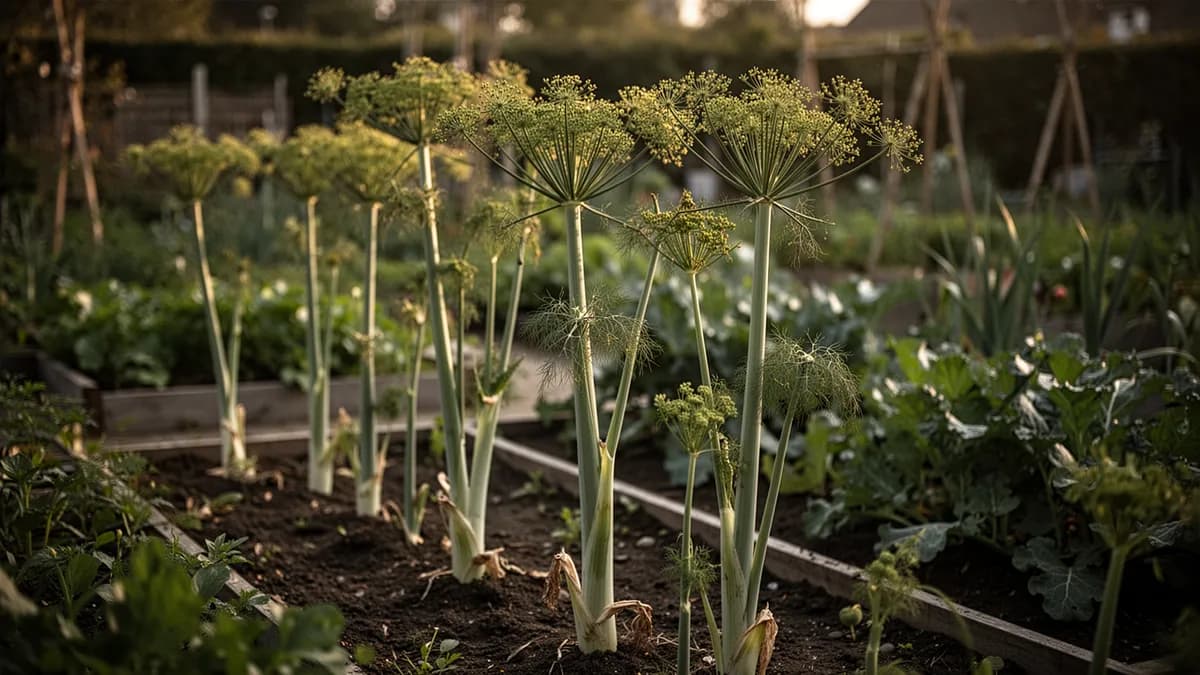
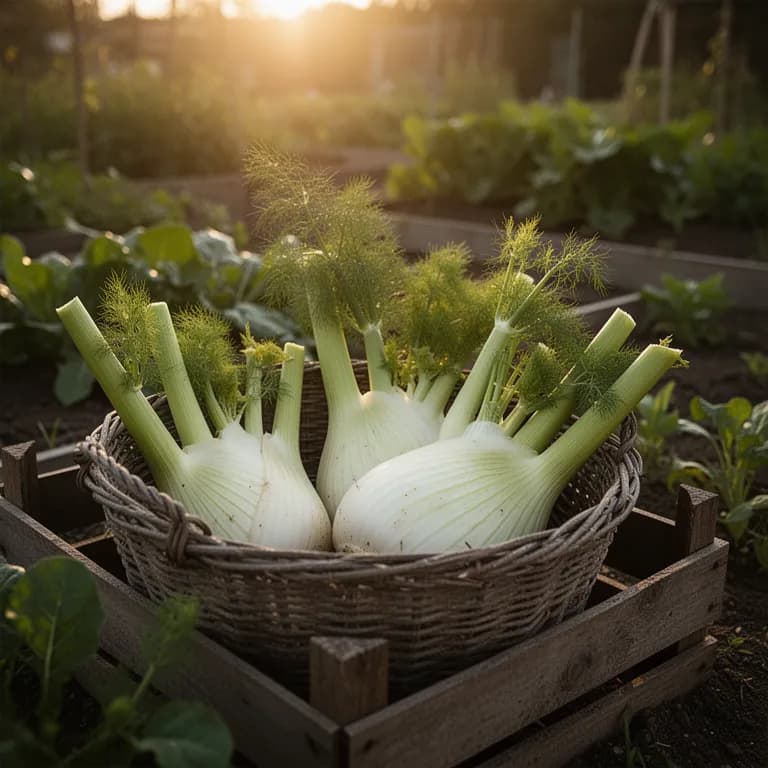
Eine aromatische Pflanze mit verdickter Knollenbasis und federartigen Wedeln, die auf viele Nachbarpflanzen allelopathisch wirkt. Pflanzen Sie Fenchel abseits der meisten anderen Gartenkulturen, da er das Wachstum von Tomaten, Paprika, Bohnen und anderen empfindlichen Arten hemmen kann. Die knackige, nach Anis schmeckende Knolle eignet sich hervorragend roh in Salaten, geröstet oder geschmort, während die Wedel eine hübsche Garnitur abgeben. Ernten Sie die Knolle, wenn sie die Größe eines Tennisballs erreicht hat, indem Sie knapp über der Wurzel schneiden, die möglicherweise kleine Triebe nachtreibt.
Wann Fenchel pflanzen
Für Herbstkulturen (die zuverlässigste Methode) säen Sie Samen direkt 6 mm tief und 2-3 cm auseinander im Spätsommer, 8-10 Wochen vor dem ersten erwarteten Frost. Vereinzeln Sie die Sämlinge auf 25-30 cm Abstand, wenn sie 2-3 echte Blätter haben — verwenden Sie eine Schere, um unerwünschte Sämlinge auf Bodenhöhe abzuschneiden, statt sie herauszuziehen, was die Pfahlwurzeln der Nachbarpflanzen stören kann. Herbstaussaat ist vorzuziehen, da kürzer werdende Tageslänge und sinkende Temperaturen die Knollenbildung statt Schossen natürlich fördern. Samen keimen in 7-14 Tagen bei 15-21°C und benötigen kein Licht zum Keimen.
Für Frühjahrskulturen starten Sie Samen 4-6 Wochen vor dem letzten Frosttermin drinnen in tiefen Töpfen (mindestens 10 cm) oder Erdpresstöpfen — Fenchel entwickelt eine lange, empfindliche Pfahlwurzel, die Störungen nicht verträgt, weshalb flache Anzuchtplatten eine schlechte Wahl sind. Säen Sie 2-3 Samen pro Topf und vereinzeln Sie auf den kräftigsten Sämling. Bieten Sie 14-16 Stunden Pflanzenbeleuchtung nach dem Auflaufen und halten Sie den Boden gleichmäßig feucht, aber nicht staunass. Düngen Sie mit verdünntem Flüssigdünger (Viertelstärke) alle 10 Tage, sobald die ersten echten Blätter erscheinen. Fenchelsämlinge wachsen im Vergleich zu anderem Gemüse relativ langsam, daher ist Geduld erforderlich.
Härten Sie Setzlinge 7-10 Tage vor dem Auspflanzen ab, indem Sie die Exposition gegenüber Sonne und Wind schrittweise erhöhen. Pflanzen Sie nach dem letzten Frosttermin aus und behandeln Sie die Wurzelballen mit äußerster Vorsicht — selbst leichte Wurzelstörungen können Schossen auslösen. Pflanzen Sie auf derselben Tiefe wie im Topf und gießen Sie sofort nach dem Umpflanzen gründlich. Vermeiden Sie es unbedingt, junge Setzlinge über längere Zeit Temperaturen unter 10°C auszusetzen, da anhaltende Kälteeinwirkung die Pflanzen vernalisieren und unabhängig von der Sorte vorzeitiges Schossen verursachen kann. Eine einzelne Herbstaussaat ist im Allgemeinen die erfolgreichste Strategie für Hausgärten, insbesondere in Klimazonen mit langen, warmen Frühlingen, in denen im Frühjahr gesäter Fenchel einem hohen Schossdruck ausgesetzt ist.
Dein Fenchel-Jahr
Abgestimmt auf Zone 7 · typische Saison · Frost geht um den 2. Apr. und kehrt um den 1. Nov. zurück
Fenchel Apr – Mai, Aug – Sep pflanzen, Jul – Aug, Nov – Dez ernten. Beachte die Pflanzmethoden unten und wähle dein Klima für passende Zeiträume.
So baust du Fenchel an
Knollenfenchel (Foeniculum vulgare var. azoricum) ist eine kühle Jahreszeitkultur, die an der Stängelbasis eine verdickte, geschichtete Knolle mit charakteristischem Anisaroma bildet. Er unterscheidet sich von Gewürzfenchel, der nur für Samen und Wedel angebaut wird. Fenchel reagiert empfindlich auf die Tageslänge — lange Tage und Hitze lösen vorzeitiges Schossen aus, bevor sich Knollen bilden, weshalb der Zeitpunkt entscheidend ist. Für die Frühjahrsaussaat starten Sie Samen 4-6 Wochen vor dem letzten Frost drinnen und pflanzen Sie nach dem Abhärten aus, da direkt gesäter Frühlingsfenchel oft schosst, bevor er Knollen bildet. Für Herbstkulturen säen Sie direkt 8-10 Wochen vor dem ersten erwarteten Frost, was im Allgemeinen zuverlässiger ist, da kürzer werdende Tage die Knollenbildung fördern.
Säen Sie Samen 6 mm tief in gut durchlässigen, nährstoffreichen Boden. Fenchel hat eine lange Pfahlwurzel und verträgt kein Umpflanzen, verwenden Sie daher tiefe Töpfe oder Erdpresstöpfe für die Vorkultur. Setzen Sie die Pflanzen im Abstand von 25-30 cm in Reihen mit 45 cm Abstand. Halten Sie den Boden gleichmäßig feucht — Trockenstress löst Schossen aus und führt zu zähen, faserigen Knollen. Wenn die Knollen auf Eigröße anschwellen, häufeln Sie Erde um die Basis, um die Knolle weiß zu bleichen und einen milderen, zarteren Geschmack zu erzielen.
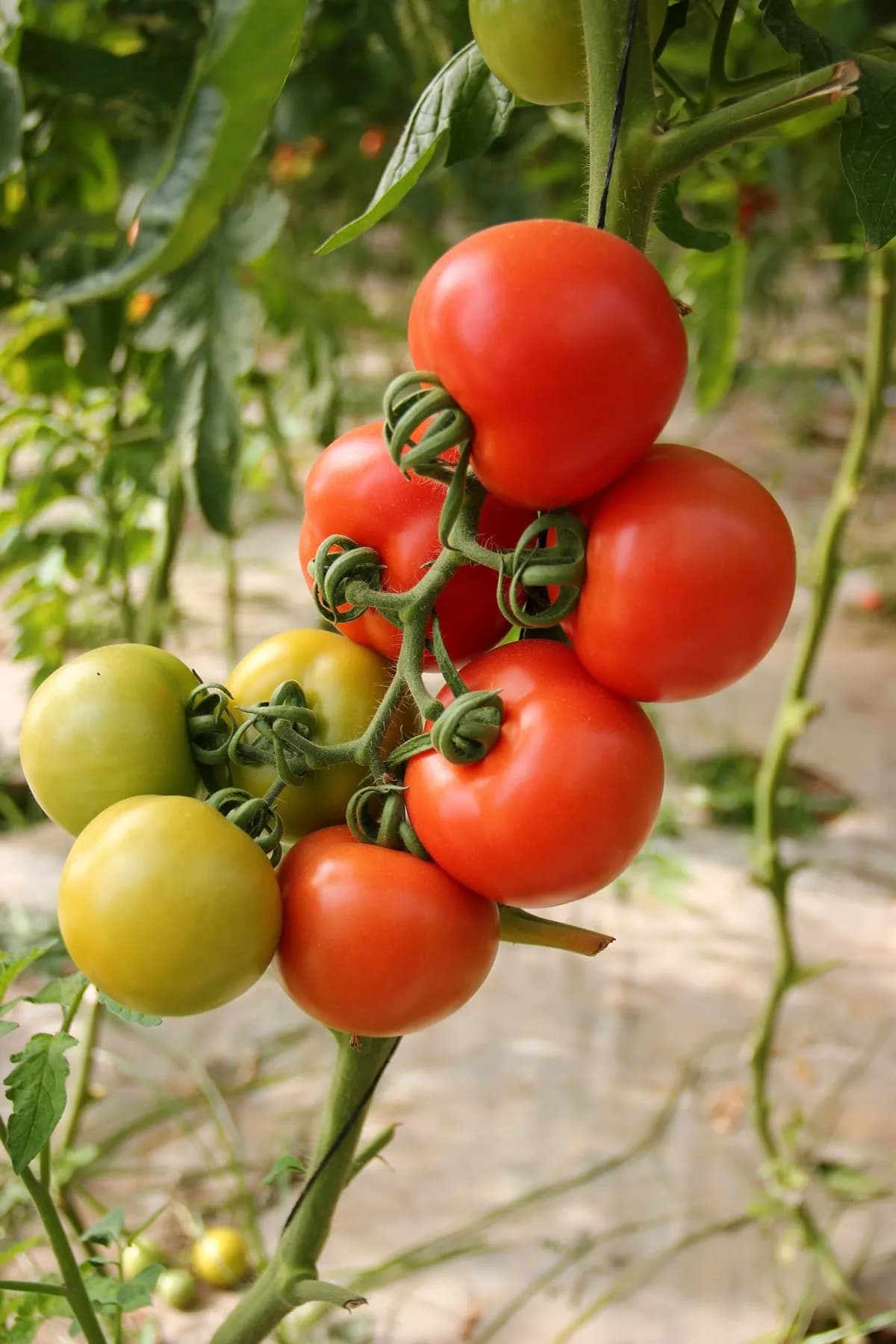
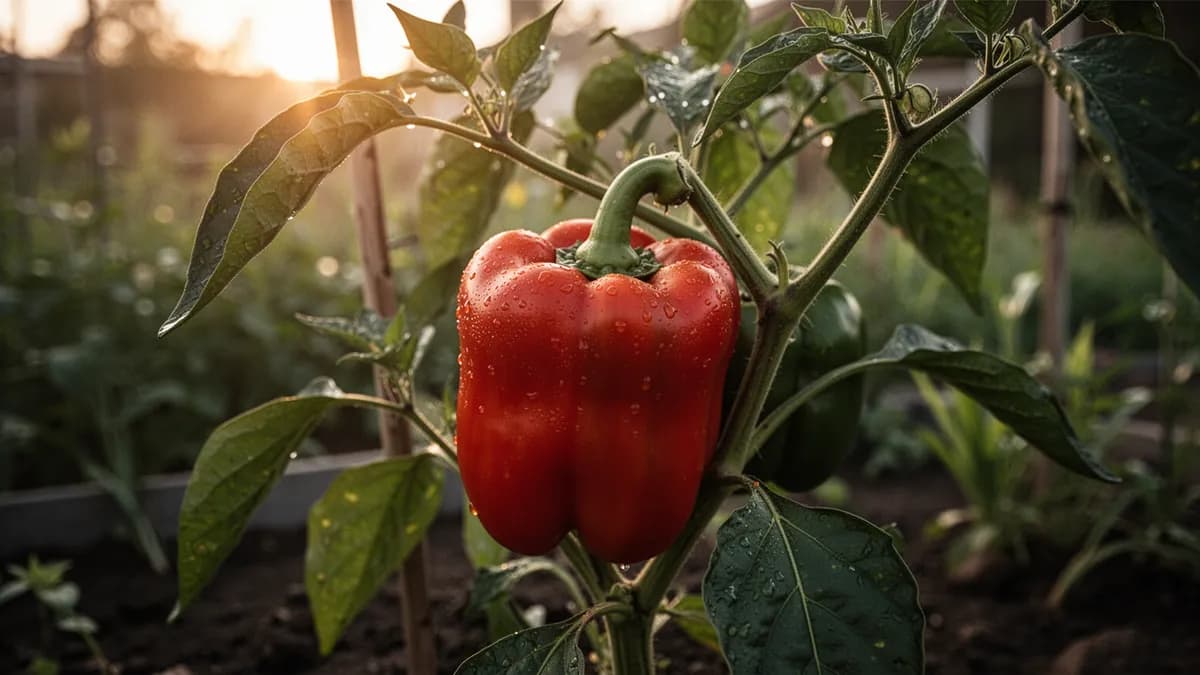
Fenchel ist allelopathisch — er scheidet chemische Verbindungen über seine Wurzeln aus, die das Wachstum vieler Gartenpflanzen hemmen, darunter Tomaten, Paprika, Bohnen und die meisten Kohlgewächse. Pflanzen Sie Fenchel in ein eigenes, separates Beet oder an den Gartenrand, abseits empfindlicher Kulturen. Die federartigen Wedel locken nützliche Schwebfliegen und Schlupfwespen an, was Fenchel trotz seiner Unverträglichkeit mit Nachbarn für die biologische Schädlingsbekämpfung wertvoll macht.
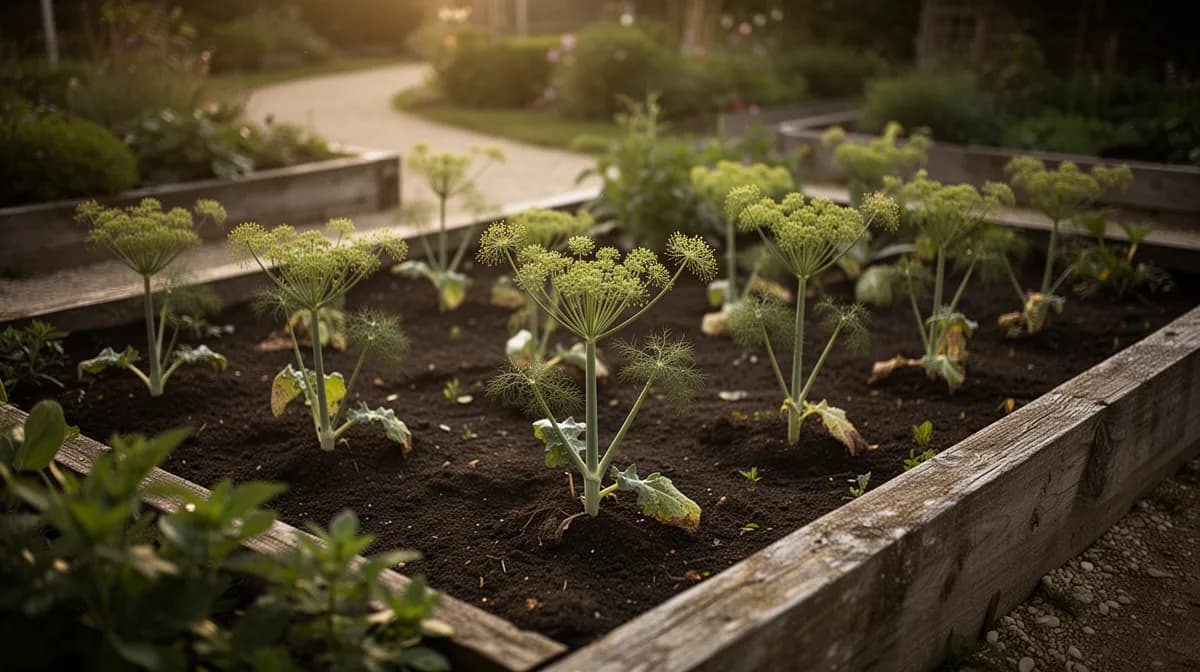
32 Pflanzen passen in ein Beet von 120 × 240 cm
Fenchel braucht 30 cm Platz pro Pflanze. Der Planer hält diesen Abstand für dich ein — jede Pflanze, jedes Beet.
Die besten Nachbarn für Fenchel
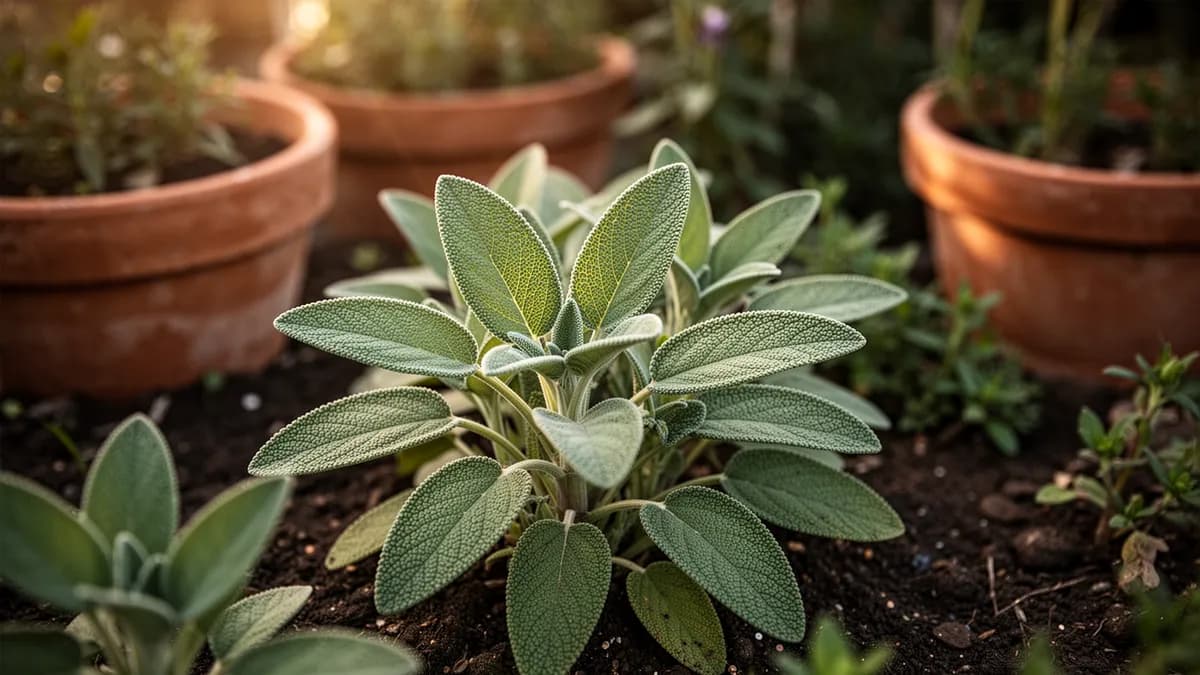
Fenchel ist eines der allelopathischsten Gartengemüse — seine Wurzelausscheidungen hemmen das Wachstum von Tomaten, Paprika, Bohnen, Kohlrabi und den meisten Kohlgewächsen. Pflanzen Sie Fenchel in ein isoliertes Beet am Gartenrand oder in Kübel. Dill ist einer der wenigen guten Begleiter, obwohl Kreuzbestäubung auftreten kann, wenn beide zur Samenreife kommen. Salbei verträgt sich gut mit Fenchel. Die federartigen Wedel locken Schwebfliegen, Florfliegen und Schlupfwespen an, die biologische Schädlingsbekämpfung für den gesamten Garten bieten. Trotz seiner allelopathischen Eigenschaften ist Fenchel wegen seiner Rolle als Insektenpflanze für die Anlockung von Nützlingen wertvoll.
Dill gehört daneben. Tomate nicht.
Altes Gärtnerwissen, geprüft an der echten Nachbartabelle von Fenchel — teste jede Pflanze, die du anbaust.
Probiere Fenchel direkt hier im Beet
Ein echtes Planer-Beet, Fenchel steht schon drin. Tippe einen Begleiter an, platziere ihn und sieh, wie die Nachbarschaftsprüfung antwortet — grün für gute Nachbarn, rot bei Streit.


Passende Anbau-Ratgeber
Richtig düngen
Fenchel bevorzugt nährstoffreichen, gut durchlässigen Boden mit einem pH-Wert von 6,0-7,0. Arbeiten Sie 5-8 cm großzügig Kompost oder gut verrotteten Mist in die oberen 30 cm des Bodens vor der Pflanzung ein, da Fenchel ein mittlerer bis starker Zehrer ist, der von fruchtbarem, humusreichem Boden profitiert. Die ideale Bodentextur ist ein sandiger Lehm, der Feuchtigkeit speichert, ohne staunass zu werden — schwere Tonböden verursachen schlechte Drainage, missgebildete Knollen und Wurzelfäule. In Gebieten mit schwerem Boden werden Hochbeete mit mindestens 20 cm Tiefe dringend empfohlen. Testen Sie Ihren Boden-pH vor der Pflanzung und kalken Sie bei einem Wert unter 6,0 oder geben Sie Schwefel hinzu bei einem Wert über 7,0.
Bringen Sie zur Pflanzzeit einen ausgewogenen Langzeitdünger (10-10-10) aus und arbeiten Sie ihn in die oberen 10 cm des Bodens ein. Wenn die Knollen zu schwellen beginnen — typischerweise 6-8 Wochen nach dem Umpflanzen oder 8-10 Wochen nach der Direktsaat — geben Sie alle 2-3 Wochen Kompost oder einen ausgewogenen Flüssigdünger als Seitengabe, um die weitere Knollenentwicklung zu unterstützen. Vermeiden Sie übermäßigen Stickstoff spät in der Saison, der das Blattwachstum auf Kosten der Knollenbildung fördert. Eine leichte Gabe kaliumreichen Düngers (wie Seetangmehl oder Holzasche) zu Beginn der Knollenbildung kann die Knollendichte und den Geschmack verbessern.
Mulchen Sie nach dem Erwärmen des Bodens mit 5-8 cm Stroh oder gehäckseltem Laub, um Feuchtigkeit zu halten, die Bodentemperatur zu regulieren und Unkraut zu unterdrücken. Halten Sie den Mulch etwas von der Knollenbasis fern, um die Luftzirkulation zu ermöglichen und Fäulnis an der Stelle zu verhindern, wo die Hüllblätter aus dem Boden austreten. Fenchel benötigt gleichmäßige Feuchtigkeit — etwa 2,5 cm Wasser pro Woche — verträgt jedoch keine Staunässe. Tropfbewässerung ist ideal, um gleichmäßige Feuchtigkeit zu liefern, ohne das Laub zu benetzen, was Falschen Mehltau und andere Pilzkrankheiten vorbeugen hilft.
Ideale Temperatur
Winterhärtezone-Kompatibilität
Von der Saat zur Ernte, Schritt für Schritt
Keimung
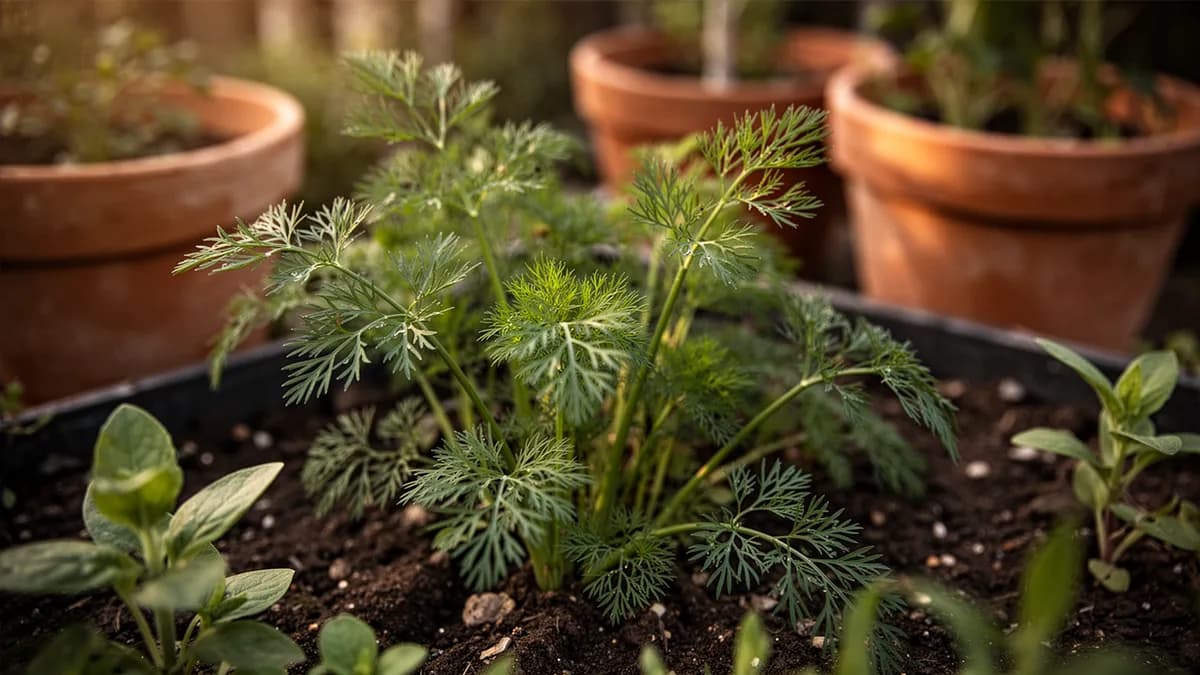
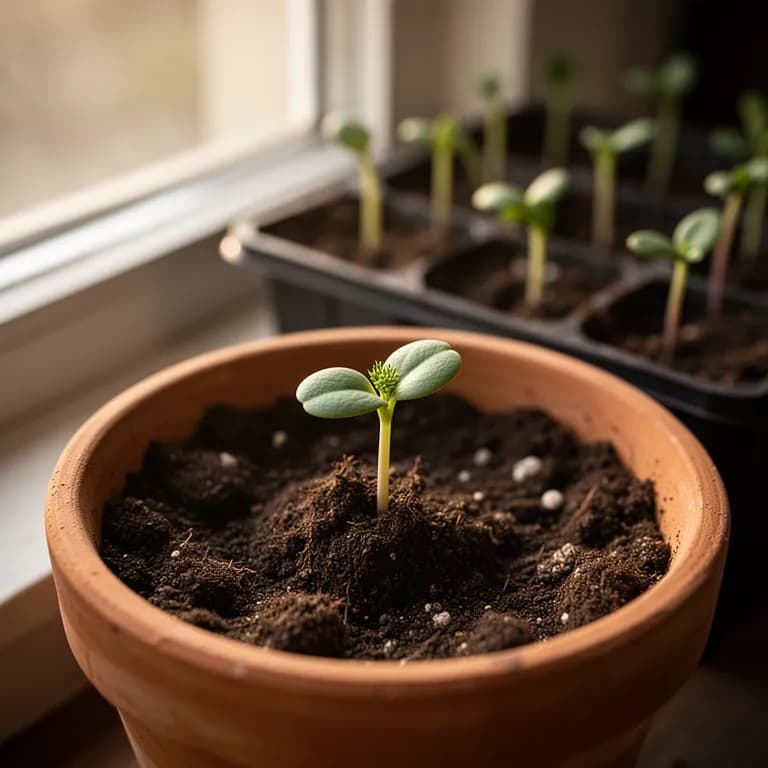
Fenchelsamen werden 6 mm tief in feuchten Boden gesät. Die Keimung dauert 7-14 Tage bei 15-21°C. Die ersten Strukturen, die erscheinen, sind ein Paar schmale, grasartige Keimblätter, die keinerlei Ähnlichkeit mit dem reifen federartigen Laub haben.
Sämlingsentwicklung
Echte Blätter erscheinen mit den charakteristischen federartigen, fadenförmigen Segmenten. Der Sämling entwickelt eine schlanke Pfahlwurzel und wächst anfangs langsam. Am Ende dieser Phase haben die Pflanzen 4-6 Sätze echter Blätter und sind 10-15 cm hoch.
Vegetatives Wachstum
Die Pflanze zeigt schnelles oberirdisches Wachstum und bildet hohe, hohle Stängel mit zunehmend dichten federartigen Wedeln. Die Stängelbasis beginnt sich leicht zu verdicken, während die Pflanze Energiereserven für die Knollenbildung aufbaut.
Knollenbildung
Die Blattbasen am Stängelgrund schwellen an und überlappen sich, um die charakteristische geschichtete Knolle zu bilden. Dies ist die kritische Phase — die Knolle vergrößert sich in 2-3 Wochen schnell von Eigröße auf Tennisballgröße. Kürzer werdende Tageslänge und kühle Temperaturen fördern die beste Knollenentwicklung.
Erntereif
Die Knollen erreichen 7-10 cm Durchmesser und fühlen sich fest und schwer an. Die äußeren Hüllblätter sind eng geschichtet und weiß bis hellgrün. Die Wedel sind voll und aromatisch. Dies ist das optimale Erntefenster — weiteres Verzögern führt zu Verhärtung und möglichem Schossen.
Blüte und Samenbildung
Wenn nicht geerntet oder wenn die Pflanze schosst, erscheint ein hoher Blütenstängel mit flachen gelben Doldenblüten. Diese ziehen eine große Vielfalt an Nützlingen an, darunter Schwebfliegen, Schlupfwespen und Bestäuber. Samen bilden sich und reifen über mehrere Wochen.
Halten Sie den Boden während der Keimung gleichmäßig feucht, aber nicht staunass. Bis zum Auflaufen der Sämlinge ist kein Licht erforderlich. Vermeiden Sie es, die Bodenoberfläche zu stören, da Fenchelsamen klein und flach gesät sind.
Fenchel Monat für Monat pflegen
Was du jeden Monat für deine Fenchel tun solltest
Oktober
Aktueller MonatHerbstfenchel-Knollen bilden sich und schwellen an. Häufeln Sie Erde um die Knollenbasis zum Bleichen. Achten Sie bei kühlem, feuchtem Wetter auf Falschen Mehltau. Beginnen Sie mit der Ernte der Knollen, wenn sie 7-10 cm Durchmesser erreichen. Ernten Sie Wedel für den Frischgebrauch oder zum Einfrieren.
Immer wissen, was jetzt im Garten zu tun ist
Eine E-Mail zum Monatsanfang: was du jetzt säen, pflanzen und anpacken solltest — für deine Fenchel und alles, was drumherum wächst. Dazu ein kurzer Startkurs, der dich vor den klassischen Fehlern bewahrt.
- Was jetzt zu tun ist
- Passend zu deiner Saison
- Startkurs inklusive
Fenchel ernten
Ernten Sie Fenchelknollen, wenn sie 7-10 cm Durchmesser erreichen — etwa die Größe eines Tennisballs. Schneiden Sie die Knolle mit einem scharfen Messer auf Bodenhöhe ab, lassen Sie die Wurzel im Boden, da sie möglicherweise kleine Triebe für eine Bonusernte an Mini-Wedeln nachtreibt. Warten Sie nicht, bis die Knollen zu groß werden, da sie dann zäh und faserig mit einem stärkeren, schärferen Anisaroma werden. Die ideale Knolle fühlt sich fest und schwer für ihre Größe an, mit eng geschichteten Hüllblättern ohne Risse oder Braunfärbung. Ernten Sie morgens, wenn die Knollen am kühlsten und knackigsten sind, für die beste Essqualität.
Die federartigen Wedel können jederzeit während der Wachstumsperiode als Kräutergarnitur geerntet werden — schneiden Sie einfach äußere Wedel nach Bedarf ab und lassen Sie den zentralen Trieb weiterwachsen. Wenn eine Pflanze schosst und einen Blütenstängel austreibt, ziehen die gelben Doldenblüten Nützlinge an und produzieren schließlich Samen. Lassen Sie die Samenstände an der Pflanze trocknen, bis sie braun werden, schneiden Sie dann den gesamten Kopf in eine Papiertüte und schütteln Sie die Samen heraus. Fenchelsamen sind ein wertvolles Gewürz, das beim Wurstmachen, Brotbacken und für Kräutertees verwendet wird.
Für eine Nachernte schneiden Sie die Knolle etwa 2-3 cm über dem Wurzelhals ab, statt auf Bodenhöhe. In milden Klimazonen treibt der Strunk oft mehrere kleine Triebe nach, die zarte Mini-Knollen und reichlich Wedel in den folgenden Wochen produzieren. Dieser Neuaustrieb ist besonders zuverlässig bei Herbstpflanzungen, wo kühle Temperaturen das Schossen verhindern. Wenn Sie für die Lagerung ernten, kürzen Sie die Stängel auf etwa 5 cm über der Knolle und entfernen Sie die äußere Hülle, wenn sie beschädigt oder zäh ist.
angenommen, du pflanzt zu Beginn des Zeitraums — trage dein tatsächliches Datum ein
Ernte Fenchel zügig, dann trägt die Pflanze weiter.
Lagerung & Konservierung
Frische Fenchelknollen halten sich in einem Plastikbeutel im Gemüsefach des Kühlschranks 1-2 Wochen. Entfernen Sie die Wedel vor der Lagerung, da sie der Knolle Feuchtigkeit entziehen und sie vorzeitig weich werden lassen — lagern Sie Wedel separat in ein feuchtes Küchentuch gewickelt in einem losen Plastikbeutel bis zu einer Woche. Waschen Sie Fenchel nicht vor dem Kühlen, da überschüssige Feuchtigkeit den Verfall beschleunigt. Die Schnittfläche der Knolle kann bei der Lagerung leicht bräunen; schneiden Sie sie vor dem Gebrauch einfach ab. Fenchel hält am besten bei Temperaturen knapp über 0°C bei hoher Luftfeuchtigkeit.
Zum Einfrieren schneiden Sie die Knollen in Spalten oder Würfel, blanchieren Sie sie 3 Minuten in kochendem Wasser, kühlen Sie sie sofort in Eiswasser ab, lassen Sie sie gründlich abtropfen und verteilen Sie sie auf einem mit Backpapier ausgelegten Backblech zum Schockfrosten, bevor Sie sie in beschriftete Gefrierbeutel umfüllen. Gefrorener Fenchel hält bis zu 10 Monate und eignet sich gut für gekochte Gerichte wie Suppen, Schmorgerichte und Gratins, verliert jedoch seine Rohknackigkeit. Als fertiges Gericht zubereiteter geschmorter oder gerösteter Fenchel lässt sich hervorragend in seiner Kochflüssigkeit bis zu 6 Monate einfrieren. Fenchelwedel können in Eiswürfelformen mit Olivenöl oder Wasser für die ganzjährige Verwendung als Garnitur oder Würzmittel eingefroren werden.
Fenchelsamen gehören zu den am einfachsten zu erntenden und lagernden Gewürzen für den Hausgebrauch. Lassen Sie die Samenstände am Stängel an der Luft trocknen, dreschen Sie sie dann in einen sauberen Behälter und lagern Sie sie in verschlossenen Glasgefäßen an einem kühlen, dunklen Ort für 2-3 Jahre mit hervorragender Aromaerhaltung. Eingelegter Fenchel in Weißweinessig mit Senfkörnern und Pfefferkörnern ergibt eine hervorragende Beilage für Wurstplatten und gegrilltes Fleisch. Fenchel kann auch gedörrt werden — dünn aufschneiden und bei 57°C für 6-8 Stunden trocknen, um eine leichte, intensiv aromatische Zutat für Suppen und Gewürzmischungen zu erhalten.
Was schiefgeht — und die Lösung
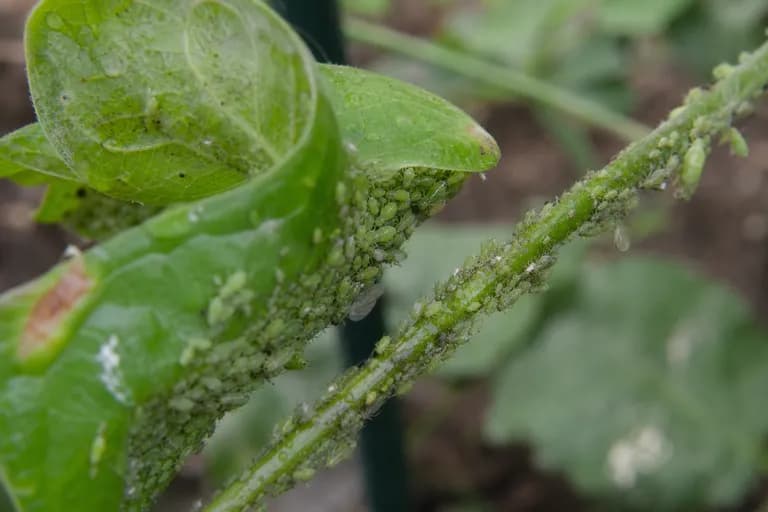
Blattläuse
SchädlingAnsammlungen kleiner grüner oder schwarzer Insekten an zartem Neuaustrieb und Wedeln, die klebrigen Honigtau absondern. Starker Befall verursacht Blattkräuselung, Wachstumshemmung und Rußtau auf dem Honigtau.
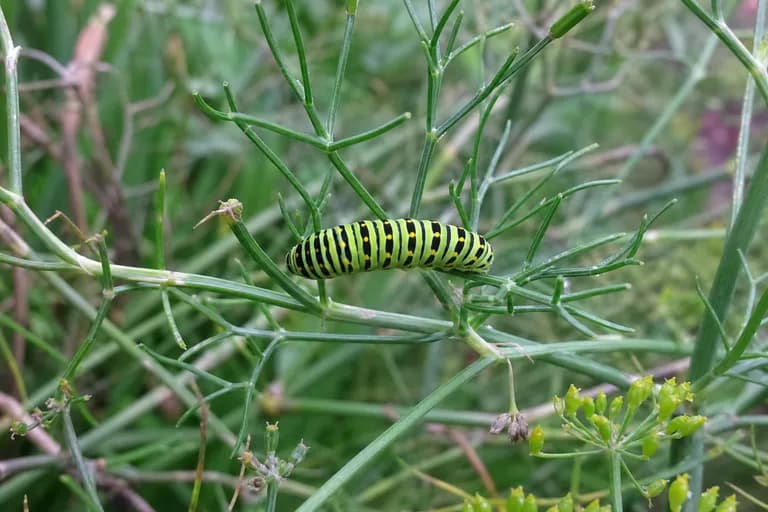
Schwalbenschwanz-Raupe
SchädlingFarbenfrohe grün, schwarz und gelb gestreifte Raupen (Larven des Schwalbenschwanz-Schmetterlings) fressen an Wedeln und entblättern gelegentlich ganze Pflanzen. Sie werden trotz der Schäden von Schmetterlingsgärtnern oft begrüßt.
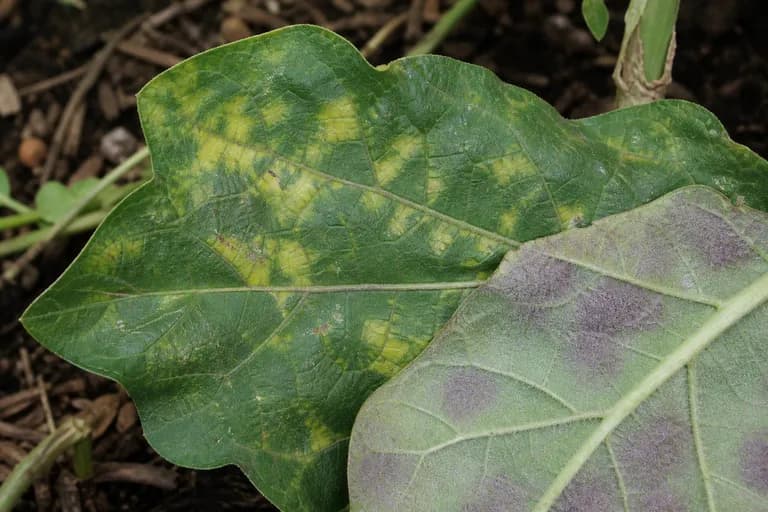
Falscher Mehltau
KrankheitGelbe Flecken erscheinen auf den Blattoberseiten mit grau-violettem, filzigem Belag auf den Unterseiten. Befallene Wedel welken und trocknen aus. Die Krankheit breitet sich bei kühlen, feuchten Bedingungen schnell aus.
Fehlerbehebung bei häufigen Problemen
Vorzeitiges Schossen ist das frustrierendste Problem beim Fenchel — ausgelöst durch lange Tage (mehr als 14 Stunden Tageslicht), Hitzestress über 24°C, Pflanzschock oder Trockenheit. Knollenfenchel ist eine tageslängenempfindliche Pflanze, die schosst, wenn die Tageslänge ihren Schwellenwert überschreitet, weshalb Herbstkulturen in den meisten Klimazonen weit zuverlässiger sind als Frühjahrspflanzungen. Um das Schossrisiko im Frühjahr zu minimieren, wählen Sie schossresistente Sorten wie Orion F1 oder Preludio, starten Sie Samen drinnen in tiefen Töpfen, um Wurzelstörungen beim Umpflanzen zu vermeiden, und halten Sie den Boden während der kritischen Knollenphase gleichmäßig feucht.
Zähe, faserige Knollen entstehen durch verspätete Ernte, Hitzestress oder ungleichmäßiges Gießen — sobald eine Knolle 10 cm Durchmesser überschreitet oder die Pflanze Anzeichen von Schossen zeigt, nimmt die Qualität rasch ab. Kleine oder flache Knollen, die sich nicht verdicken, deuten auf die falsche Sorte hin (Gewürzfenchel bildet keine Knollen), auf zu engen Stand mit weniger als 25 cm Abstand oder auf unzureichende Nährstoffe während der Knollenphase. Schiefe oder gerissene Knollen werden meist durch ungleichmäßiges Gießen oder plötzlichen starken Regen nach einer Trockenperiode verursacht. Wenn die äußere Hülle der Knolle holzig oder verfärbt ist, sind die inneren Schichten oft noch vollkommen zart und verwendbar.
Wurzelstörung beim Umpflanzen ist ein häufiger Auslöser für Schossen — Fenchel entwickelt eine tiefe Pfahlwurzel, die Störungen nicht verträgt. Verwenden Sie immer tiefe Töpfe oder Erdpresstöpfe für die Vorkultur und behandeln Sie Wurzelballen beim Umpflanzen mit Vorsicht. Fenchel, der zu nah an anderen Gemüsesorten gepflanzt wird, kann deren Wachstum durch Allelopathie hemmen, isolieren Sie ihn daher in seinem eigenen Beet oder am Gartenrand. Blattlausbefall kann Wedel verformen und das Wachstum hemmen, wenn er nicht frühzeitig behandelt wird. In feuchten Klimazonen kann Falscher Mehltau bei kühlem, nassem Wetter auf den Wedeln auftreten — verbessern Sie die Luftzirkulation und vermeiden Sie Überkopfbewässerung, um das Risiko zu verringern.
Anbautipps
- Herbstpflanzung ist der wichtigste Tipp für erfolgreichen Fenchelanbau. Kürzer werdende Tage und sinkende Temperaturen fördern die Knollenbildung statt Schossen, was das Gegenteil der Frühjahrspflanzung ist, bei der längere Tage gegen Sie arbeiten. Säen Sie direkt 8-10 Wochen vor dem ersten Frost für die zuverlässigsten Knollen.
- Fenchel entwickelt eine tiefe, empfindliche Pfahlwurzel. Wenn Sie drinnen vorziehen, verwenden Sie tiefe Töpfe (mindestens 10 cm) oder Erdpresstöpfe statt flacher Anzuchtplatten. Pflanzen Sie mit minimaler Wurzelstörung um — selbst leichte Beschädigung der Pfahlwurzel kann Schossen auslösen.
- Halten Sie einen Abstand von 25-30 cm bei voller Sonne. Fenchel benötigt täglich mindestens 6 Stunden direkte Sonneneinstrahlung für die ordnungsgemäße Knollenentwicklung. Zu eng stehende Pflanzen produzieren kleine, längliche Knollen statt der gewünschten runden, prallen Form.
- Gießen Sie gleichmäßig — etwa 2,5 cm pro Woche. Trockenstress ist einer der Hauptauslöser für vorzeitiges Schossen und produziert zähe, faserige Knollen. Tropfbewässerung ist ideal, um gleichmäßige Bodenfeuchtigkeit aufrechtzuerhalten, ohne das Laub zu benetzen.
- Häufeln Sie Erde um die Knollenbasis, wenn sie zu schwellen beginnt (typischerweise bei Eigröße). Dadurch werden die äußeren Hüllblätter weiß gebleicht, was eine mildere, zartere Knolle mit weniger Bitterkeit ergibt — eine traditionelle Technik italienischer Marktgärtner.
- Isolieren Sie Fenchel von anderen Gartenkulturen. Fenchel ist allelopathisch und gibt Wurzelausscheidungen ab, die das Wachstum von Tomaten, Paprika, Bohnen und Kohlgewächsen hemmen. Pflanzen Sie ihn in sein eigenes Beet, an den Gartenrand oder in große Kübel.
- Wählen Sie schossresistente Sorten für die Frühjahrspflanzung. Orion F1, Preludio und Finale sind auf verbesserte Schossresistenz gezüchtet. Dennoch ist Frühlingsfenchel in den meisten Klimazonen weniger zuverlässig als Herbstfenchel und erfordert enge Überwachung.
- Lassen Sie einige Pflanzen absichtlich blühen. Die gelben Doldenblüten sind Magneten für Nützlinge, darunter Schwebfliegen, Schlupfwespen, Marienkäfer und Bestäuber, die natürliche Schädlingsbekämpfung für Ihren gesamten Garten bieten.
Bau deine beste Fenchel an — und alles drumherum.
Starte heute kostenlos. Lege deine Beete an, setze deine Fenchel ein und lass PlotMyGarden Timing, Abstände, Begleiter und Erinnerungen von der Saat bis zum Erntekorb übernehmen.
Finde deine Fenchel
Orion F1
Eine zuverlässige Hybridsorte, die große, dicke, runde Knollen mit ausgezeichneter Schossresistenz bildet. 75 Tage. Gut für Frühlings- und Herbstpflanzung. Süßes, mildes Anisaroma mit knackiger Textur.
Finale
Eine italienische Sorte mit flachen, breiten Knollen und hervorragendem Geschmack. 75 Tage. Gute Schossresistenz und gleichmäßige Knollenform. Hervorragend roh in Salaten oder geschmort. Breit anpassungsfähig.
Preludio
Eine sehr früh reifende Sorte, ideal für die Frühjahrspflanzung in kühlen Klimazonen. 60 Tage. Kompakte Pflanzen mit mittelgroßen, gut geformten Knollen. Starke Schossresistenz für frühe Aussaaten.
Bronzefenchel
Ein dekorativer Gewürzfenchel mit auffälligem bronzefarbenem bis purpurnem, federartigem Laub, der für Wedel und Samen statt für Knollen angebaut wird. 65 Tage bis zur Wedelernte. Eindrucksvoll in Staudenbeeten und lockt Nützlinge an. Sät sich leicht selbst aus.
Fenchelknollen kosten im Supermarkt in der Regel 2-4 Euro pro Stück, und Bio-Fenchel kann 4-6 Euro pro Knolle kosten. Ein einzelnes Päckchen Fenchelsamen (2-4 Euro) kann 20-30 Knollen hervorbringen, was eine potenzielle Ersparnis von 50-100 Euro pro Saison darstellt. Über die Knollen hinaus erhalten Hausgärtnerinnen und Hausgärtner Wedel (die oft als separates Kraut für 2-3 Euro pro Bund verkauft werden), Stängel zum Brühezubereiten und Fenchelsamen im Wert von 5-8 Euro pro Glas — Teile, die kommerzielle Anbauer in der Regel wegwerfen. Der Geschmack von frisch geerntetem Fenchel, noch knackig aus dem Garten, ist deutlich besser als der von gekauften Knollen, die möglicherweise Tausende von Kilometern gereist sind.
Schnelle Rezepte
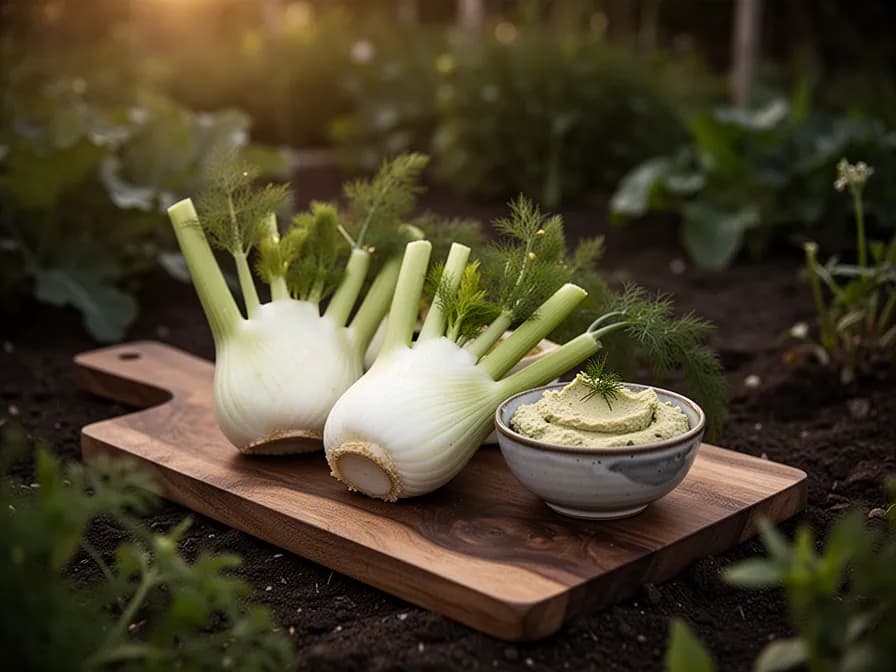
Gehobelter Fenchel-Zitrus-Salat
15 MinEin frischer, erfrischender italienischer Salat, der rohen Fenchel optimal zur Geltung bringt. Hauchdünne Scheiben knackigen Fenchels gepaart mit saftigen Zitrussegmenten, pfeffrigem Rucola und gehobeltem Parmesan, vollendet mit einer einfachen Zitronenvinaigrette.
7 ZutatenGerösteter Fenchel mit Parmesan
35 MinRösten bei hoher Hitze verwandelt Fenchel in eine karamellisierte, schmelzend süße Beilage. Die Ränder werden golden und knusprig, während das Innere zart und fast buttrig wird — eine Offenbarung für alle, die gekochten Fenchel nicht kennen.
7 ZutatenGeschmorter Fenchel in Weißwein
45 MinEine klassische französische Zubereitung, bei der Fenchel langsam in einem Bad aus Weißwein, Butter und Brühe geschmort wird, bis er seidig und zart ist. Das lange, sanfte Garen mildert das Anisaroma zu etwas Süßem und tief Herzhaftem.
7 ZutatenKulinarische Verwendung
Roher Fenchel ist knackig, saftig und erfrischend mit einem milden Anisaroma, das beim dünnen Schneiden milder wird. Hobeln Sie die Knolle hauchdünn auf einer Mandoline für Salate — die klassische Kombination mit Blutorangensegmenten, Rucola, gehobeltem Parmesan und einem Zitronen-Vinaigrette ist ein Grundpfeiler der italienischen Küche. Roher Fenchel eignet sich auch hervorragend für Krautsalate mit Apfel und Kohl, auf Rohkostplatten mit Hummus oder einfach mit gutem Olivenöl und Flockensalz beträufelt. Die knackige Textur und der klare Lakritzton machen ihn zu einem vielseitigen Rohgemüse, das gut zu fettreichen Zutaten wie Prosciutto, Räucherlachs und Sahne-Käse passt.
Rösten bei hoher Hitze (200-220°C) verwandelt Fenchel in eine karamellisierte, schmelzend süße Beilage mit tief goldenen Rändern und einem komplexen, fast nussigen Geschmack. Schneiden Sie die Knollen in Spalten, wenden Sie sie in Olivenöl und Salz und rösten Sie sie 25-35 Minuten bis sie zart sind. Langsam in Hühnerbrühe und Weißwein mit einem Lorbeerblatt geschmort, wird Fenchel seidig, reichhaltig und zergeht praktisch auf der Gabel — eine klassische französische Bistroart der Zubereitung, die wunderbar zu gebratenem Huhn oder gegrilltem Fisch passt. Fenchel ist hervorragend in Gratins mit Sahne und Gruyère geschichtet, in Risottos und in Pastasaucen mit italienischer Wurst.
Jeder Teil der Fenchelpflanze ist essbar und in der Küche nützlich. Die federartigen Wedel ergeben eine elegante Garnitur mit leichterem, delikaterem Anisaroma — hacken Sie sie in zusammengesetzte Butter, Joghurtsaucen oder streuen Sie sie über fertige Gerichte wie frischen Dill. Die Stängel können zum Aromatisieren von Brühen, Suppen und Court-Bouillon zum Pochieren von Fisch verwendet werden. Fenchelsamen sind unverzichtbar in italienischer Wurst, der indischen Panch-Phoron-Gewürzmischung, skandinavischen Roggenbroten und Kräutertees. Kurzes Rösten der Samen in einer trockenen Pfanne intensiviert ihr warmes, süßes Aroma. Fenchelpollen, aus den Blüten geerntet, gilt als Gourmet-Gewürz mit einem intensiv konzentrierten Geschmack.
Was drinsteckt
Gesundheitsvorteile
- Reich an Ballaststoffen (3,1 g pro 100 g), die die Verdauungsgesundheit unterstützen, die Regelmäßigkeit fördern und nützliche Darmbakterien nähren. Fenchel wird seit Jahrhunderten traditionell als Verdauungshilfe eingesetzt, und die moderne Forschung bestätigt seine karminativen Eigenschaften.
- Enthält Anethol, die primäre aromatische Verbindung, die für den Anisgeschmack des Fenchels verantwortlich ist und in klinischen Studien entzündungshemmende, antioxidative und antimikrobielle Wirkungen gezeigt hat.
- Hervorragende Quelle für Kalium (414 mg pro 100 g / 12% TW), das zur Blutdruckregulierung beiträgt, die kardiovaskuläre Gesundheit unterstützt und den Flüssigkeitshaushalt im Körper aufrechterhält.
- Liefert Vitamin C (12 mg pro 100 g), Mangan, Folsäure und Kalzium — eine Kombination, die Immunfunktion, Knochengesundheit und gesunde Zellteilung während der Schwangerschaft unterstützt.
- Fencheltee aus zerkleinerten Samen ist eines der am weitesten verbreiteten pflanzlichen Heilmittel gegen Säuglingskoliken, Blähungen und Gasbildung. Die ätherischen Öle entspannen die glatte Muskulatur des Verdauungstrakts und lindern Krämpfe und Beschwerden.
- Kalorienarm (31 pro 100 g) mit hohem Wassergehalt (90%), was Fenchel zu einem ausgezeichneten Lebensmittel für das Gewichtsmanagement und die Flüssigkeitszufuhr macht, während er dennoch bedeutende Mengen an essenziellen Vitaminen und Mineralstoffen liefert.
Woher Fenchel stammt
Fenchel (Foeniculum vulgare) stammt von den Küsten des Mittelmeerraums, wo er seit Jahrtausenden wild an Küstenklippen, Straßenrändern und trockenen Hängen wächst. Er ist eine der ältesten Kulturpflanzen der Welt, wobei Aufzeichnungen über seine Verwendung bis ins alte Ägypten zurückreichen, wo Fenchel sowohl als Nahrungsmittel als auch als Heilpflanze geschätzt wurde. Die alten Griechen kannten ihn als 'marathon' — die berühmte Ebene, auf der die entscheidende Schlacht gegen Persien 490 v. Chr. geschlagen wurde, erhielt ihren Namen von dem wilden Fenchel, der ihre Felder bedeckte. Griechische Ärzte wie Hippokrates und Dioskurides verschrieben Fenchel gegen eine breite Palette von Beschwerden, von Verdauungsstörungen bis zu Augenleiden.
Die Römer verbreiteten den Fenchelanbau in ihrem gesamten Reich und brachten ihn nach Britannien und Nordeuropa, wo er zu einem Grundpfeiler der Klosterkräutergärten im Mittelalter wurde. Römische Soldaten kauten Fenchelsamen auf langen Märschen, in dem Glauben, er verbessere die Ausdauer und unterdrücke den Hunger. Im mittelalterlichen Europa war Fenchel eines der neun heiligen Kräuter des angelsächsischen 'Neunkräutersegens' und wurde in der Volksmedizin, beim Kochen und sogar als Schutz gegen Hexerei eingesetzt. Italienische Gärtner entwickelten schließlich die Knollenform, bekannt als Knollenfenchel (Foeniculum vulgare var. azoricum), indem sie auf die verdickte, geschichtete Stängelbasis selektierten, die das geschätzte Gemüse ist, das wir heute anbauen.
Knollenfenchel wurde zu einem Eckpfeiler der italienischen Küche, insbesondere in Süditalien und Sizilien, wo er in Salaten, Pasta und als geschmorte oder geröstete Beilage erscheint. Italienische Einwanderer brachten ihre Liebe zum Fenchel im 19. und frühen 20. Jahrhundert in die Neue Welt, wo er allmählich über die italienischen Gemeinschaften hinaus an Beliebtheit gewann. Heute wird Fenchel weltweit angebaut, wobei Indien den Großteil der Fenchelsamen produziert und Italien, Spanien und die Vereinigten Staaten die führenden Produzenten von Knollenfenchel sind. Wilder Fenchel hat sich in Kalifornien, Australien und anderen Regionen mit Mittelmeerklima weitgehend eingebürgert, wo er aufgrund seiner kräftigen Selbstaussaat manchmal als invasiv gilt.
Fenchel: Schon gewusst?
Faszinierende Fakten über Fenchel
Altgriechische Marathonläufer glaubten, dass Fenchel Ausdauer und Durchhaltevermögen verbessert. Das griechische Wort für Fenchel ist 'marathon' — die berühmte Schlacht von Marathon 490 v. Chr. wurde auf einem Feld voller wildem Fenchel ausgetragen, was dem Langstreckenlauf seinen Namen gab.
Fenchel: Fragen & Antworten
Wann sollte ich Fenchel pflanzen?
Was sind gute Begleitpflanzen für Fenchel?
In welchen Winterhärtezonen kann Fenchel wachsen?
Wie viel Sonne braucht Fenchel?
Welchen Abstand sollte ich zwischen Fenchel lassen?
Welche Schädlinge und Krankheiten befallen Fenchel?
Wie lagere ich Fenchel nach der Ernte?
Was sind die besten Fenchel-Sorten zum Anbauen?
Welchen Boden braucht Fenchel?
Warum schosst mein Fenchel immer, bevor er eine Knolle bildet?
Was ist der Unterschied zwischen Knollenfenchel und Gewürzfenchel?
Kann ich Fenchel neben meinen Tomaten und Paprika anbauen?
Kann ich die Wedel, Stängel und Blüten des Fenchels essen?
Wie kann ich Fenchelsamen für nächstes Jahr aufbewahren?
Ist Fenchel eine mehrjährige oder einjährige Pflanze?
Du hast die Theorie gelesen. Jetzt baue sie auf Autopilot an.
Alles, was Fenchel knifflig macht — das Timing, die Abstände, die Begleiter, das Erntefenster — genau das übernimmt PlotMyGarden für dich, für jede Pflanze im Garten.
Ein Plan, der dein Wetter kennt
Standort einmal festlegen. Aussaat-, Dünge- und Erntedaten rund um deinen echten letzten Frosttermin und die Live-Vorhersage — kein Raten mehr nach Saattüte.
Aus dem Abschnitt „Pflanzzeit“Beetplaner per Drag & Drop
Beete auf einem Raster gestalten. Jede Pflanze rastet im richtigen Abstand ein, und du siehst die ganze Saison, bevor du einen Cent für Saatgut ausgibst.
Aus dem Abschnitt „Anbau“Begleiter-Konflikte früh erkannt
Über 200 gute und schlechte Kombinationen werden beim Pflanzen live geprüft — so landet ein saisonruinierender Fehler nie in der Erde.
Aus dem Abschnitt „Begleiter“Erinnerungen, nach denen du wirklich handelst
„Gieß die Bohnen.“ „Heute ernten, bevor's umschlägt.“ Pünktlich, konkret und auf deine echten Pflanzen bezogen.
Aus dem Abschnitt „Ernte“Staffel-Aussaat, geplant
Sechs Wochen ernten statt sechs Tage? Die App verteilt deine Aussaaten automatisch und erinnert dich, wenn der nächste Satz fällig ist.
Aus dem Abschnitt „Pflanzzeit“Ein Verlauf, der schlauer wird
Jede protokollierte Ernte bringt der App deinen Garten bei. Der Plan fürs nächste Jahr startet bei dem, was in deinem Boden wirklich funktioniert hat.
Aus dem Abschnitt „Überblick“Pflanze diese neben Fenchel
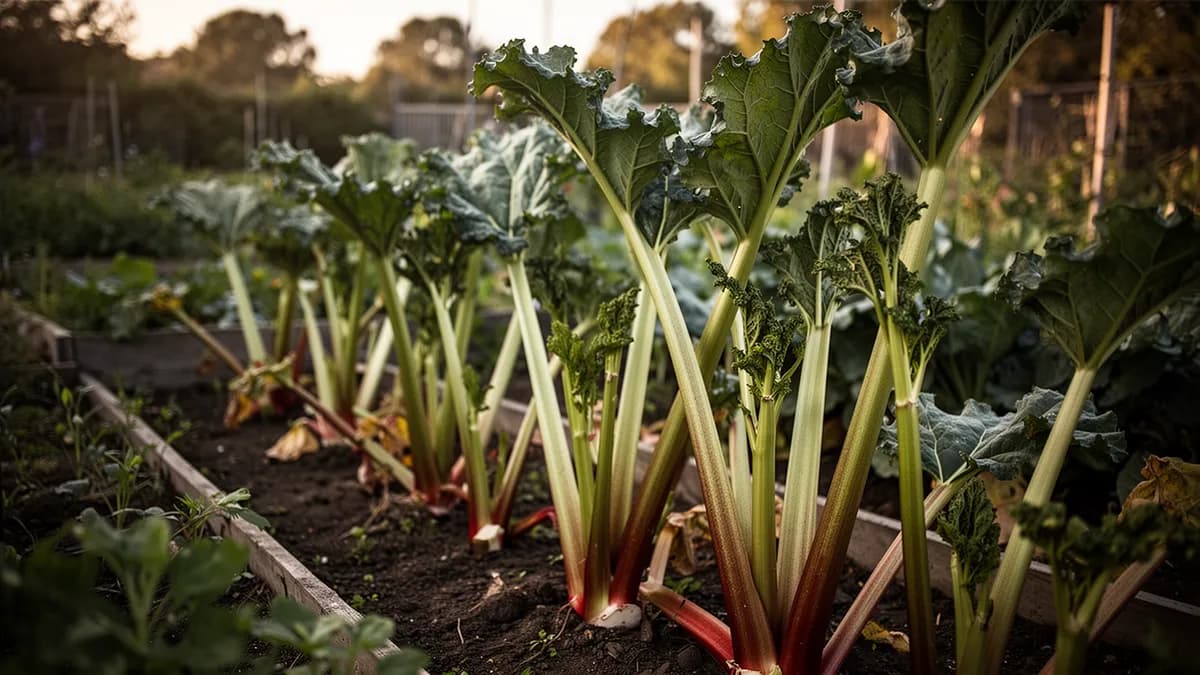
Weitere Stängel & Stiele
Halte Fenchel von diesen fern
Bau deine beste Fenchel an — und alles drumherum.
Starte heute kostenlos. Lege deine Beete an, setze deine Fenchel ein und lass PlotMyGarden Timing, Abstände, Begleiter und Erinnerungen von der Saat bis zum Erntekorb übernehmen.