Spargel
Eine langlebige Staude, die jeden Frühling zarte Stangen über bis zu zwanzig Jahre produziert, sobald sie etabliert ist.





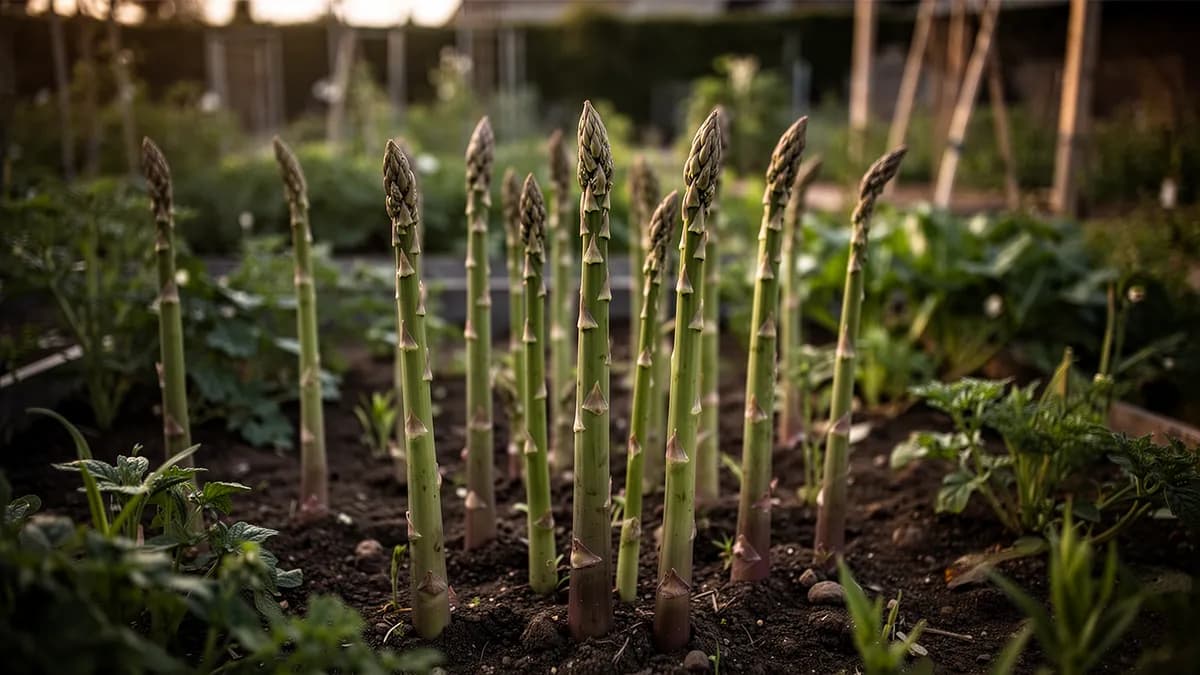
Auf dieser SeiteÜberblick
Spargel im Überblick
Eine langlebige Staude, die jeden Frühling zarte Stangen über bis zu zwanzig Jahre produziert, sobald sie etabliert ist. Pflanzen Sie Kronen in tiefe Gräben, die nach und nach mit kompostreichem Boden aufgefüllt werden, und verzichten Sie in den ersten beiden Jahren auf die Ernte, um ein starkes Wurzelsystem aufzubauen. Tragen Sie jährlich eine dicke Mulchschicht auf, um Unkraut zu unterdrücken und die Bodenfeuchtigkeit rund um das flache Wurzelnetzwerk zu erhalten. Brechen oder schneiden Sie die Stangen auf Bodenniveau ab, wenn sie 15 bis 20 Zentimeter erreicht haben und bevor sich die Spitzen zu öffnen beginnen und austreiben.
Wann Spargel pflanzen
Obwohl Spargel aus Samen gezogen werden kann, wird der Kauf einjähriger Kronen von einer seriösen Baumschule dringend empfohlen, da dies die Wartezeit um 1 bis 2 Jahre verkürzt und sicherstellt, dass Sie krankheitsfreie, kräftige Pflanzen bekannten Geschlechts erhalten — rein männliche Hybriden werden für maximale Stangenproduktion bevorzugt. Kronen sind im zeitigen Frühling in Gartencentern und bei Versandhändlern erhältlich. Bestellen Sie frühzeitig für die beste Auswahl an Sorten, die für Ihre Klimazone geeignet sind.
Wenn Sie aus Samen starten, säen Sie 12 bis 14 Wochen vor dem letzten Frost drinnen aus, 1 cm tief in einzelne tiefe Töpfe bei 24 bis 27°C. Die Keimung dauert 2 bis 3 Wochen und kann unregelmäßig sein — weichen Sie die Samen vor der Aussaat 24 Stunden in warmem Wasser ein, um die Keimrate zu verbessern. Ziehen Sie die Sämlinge in ihrer ersten vollen Wachstumssaison unter starkem Licht auf und halten Sie sie gut bewässert sowie alle zwei Wochen mit verdünntem Flüssigdünger versorgt. Pflanzen Sie die jungen Pflanzen nach dem Abhärten in ein Freiland-Aufzuchtbeet um, mit 15 cm Abstand in Reihen. Lassen Sie sie eine vollständige Saison ungestört wachsen und kräftige Kronen entwickeln.
Im folgenden Frühling graben Sie die einjährigen Kronen vorsichtig aus und setzen sie an ihren endgültigen Beetstandort um. Für die Kronenpflanzung — ob gekauft oder selbst gezogen — graben Sie Gräben von 30 cm Tiefe und 45 cm Breite im zeitigen Frühling, sobald der Boden bearbeitbar ist. Formen Sie einen Hügel entlang des Grabenbodens, drapieren Sie die Kronenwurzeln darüber und bedecken Sie zunächst nur mit 5 cm Erde, wobei Sie den Graben schrittweise auffüllen, während die Triebe in der ersten Saison wachsen. Spargelkronen sind winterhart und sollten früh gepflanzt werden, um die Frühlingsfeuchtigkeit und kühle Etablierungsbedingungen zu nutzen, bevor die Sommerhitze einsetzt.
Dein Spargel-Jahr
Abgestimmt auf Zone 7 · typische Saison · Frost geht um den 2. Apr. und kehrt um den 1. Nov. zurück
Spargel Mär – Apr pflanzen, Apr – Jun ernten. Beachte die Pflanzmethoden unten und wähle dein Klima für passende Zeiträume.
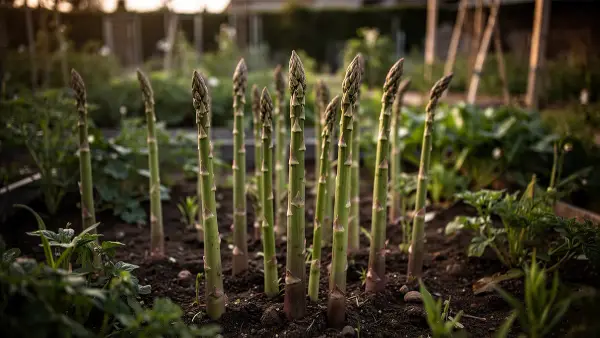
So baust du Spargel an
Spargel ist eine langfristige Garteninvestition — richtig angelegte Beete liefern Frühlingsernten für 15 bis 25 Jahre. Wählen Sie den Pflanzstandort sorgfältig, da diese Staude denselben Platz über Jahrzehnte besetzen wird. Suchen Sie einen gut drainierten Bereich in voller Sonne ohne Konkurrenz durch Baumwurzeln. Kaufen Sie einjährige Kronen (Wurzelballen) von einer seriösen Baumschule, anstatt aus Samen zu ziehen, was die Wartezeit um 1 bis 2 Jahre verlängert. Rein männliche Hybridsorten produzieren mehr Stangen als ältere gemischtgeschlechtliche Typen, da sie keine Energie für die Samenproduktion aufwenden.
Graben Sie Gräben von 30 cm Tiefe und 45 cm Breite, mit einem Abstand von 120 bis 150 cm zwischen mehreren Gräben. Verbessern Sie den Grabenboden mit 5 cm Kompost und einer großzügigen Gabe von phosphorreichem Knochenmehl. Formen Sie einen Erdhügel entlang des Grabenbodens und drapieren Sie die spinnenartigen Wurzeln der Krone über den Hügel, mit einem Abstand von 45 cm zwischen den Kronen. Bedecken Sie zunächst nur mit 5 cm Erde und füllen Sie den Graben dann schrittweise auf, während die Triebe im ersten Jahr wachsen — diese progressive Auffülltechnik fördert die tiefe Wurzelentwicklung.
Die entscheidende Disziplin beim Spargel ist Geduld: Ernten Sie im ersten Jahr keine Stangen und nehmen Sie im zweiten Jahr nur eine leichte zweiwöchige Ernte vor. Lassen Sie alle Stangen zu hohen, gefiederten Farnen heranwachsen, die Photosynthese betreiben und das sich ausbreitende Wurzelsystem versorgen. Ab dem dritten Jahr genießen Sie eine volle 6- bis 8-wöchige Erntezeit. Tragen Sie jährlich 10 bis 15 cm organischen Mulch auf, um Unkraut zu unterdrücken, Feuchtigkeit zu bewahren und organische Substanz hinzuzufügen. Versorgen Sie die Beete im zeitigen Frühling und nach Abschluss der Ernte mit einem ausgewogenen Dünger oder einer großzügigen Kompost-Deckschicht.
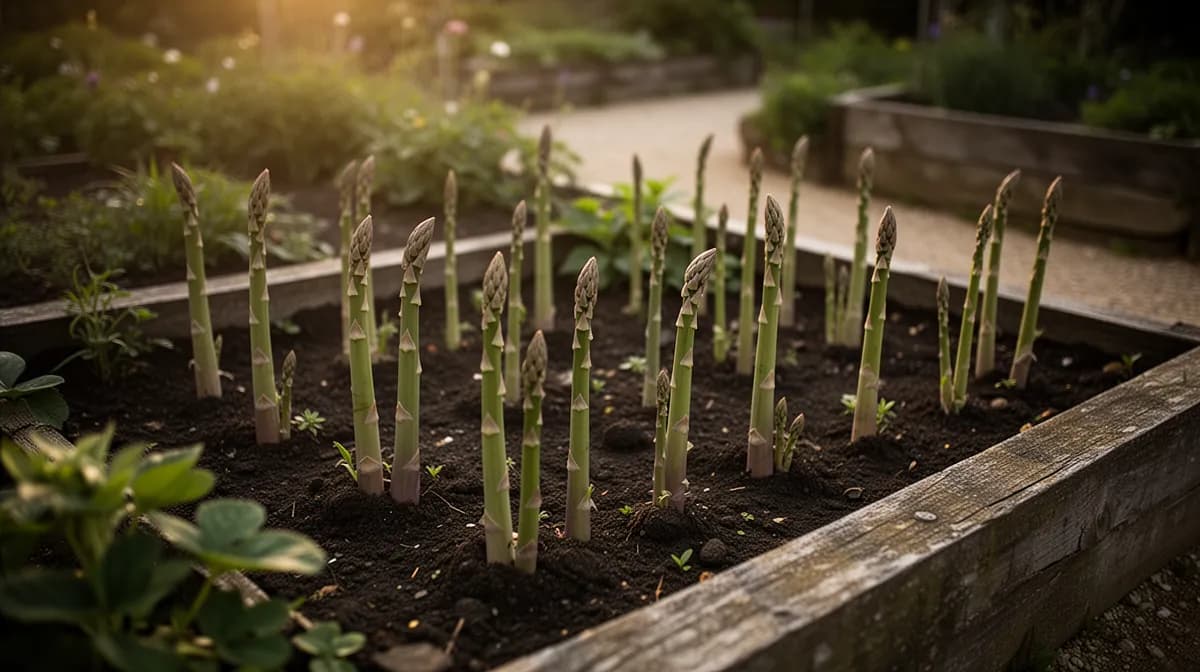
10 Pflanzen passen in ein Beet von 120 × 240 cm
Spargel braucht 45 cm Platz pro Pflanze. Der Planer hält diesen Abstand für dich ein — jede Pflanze, jedes Beet.
Die besten Nachbarn für Spargel
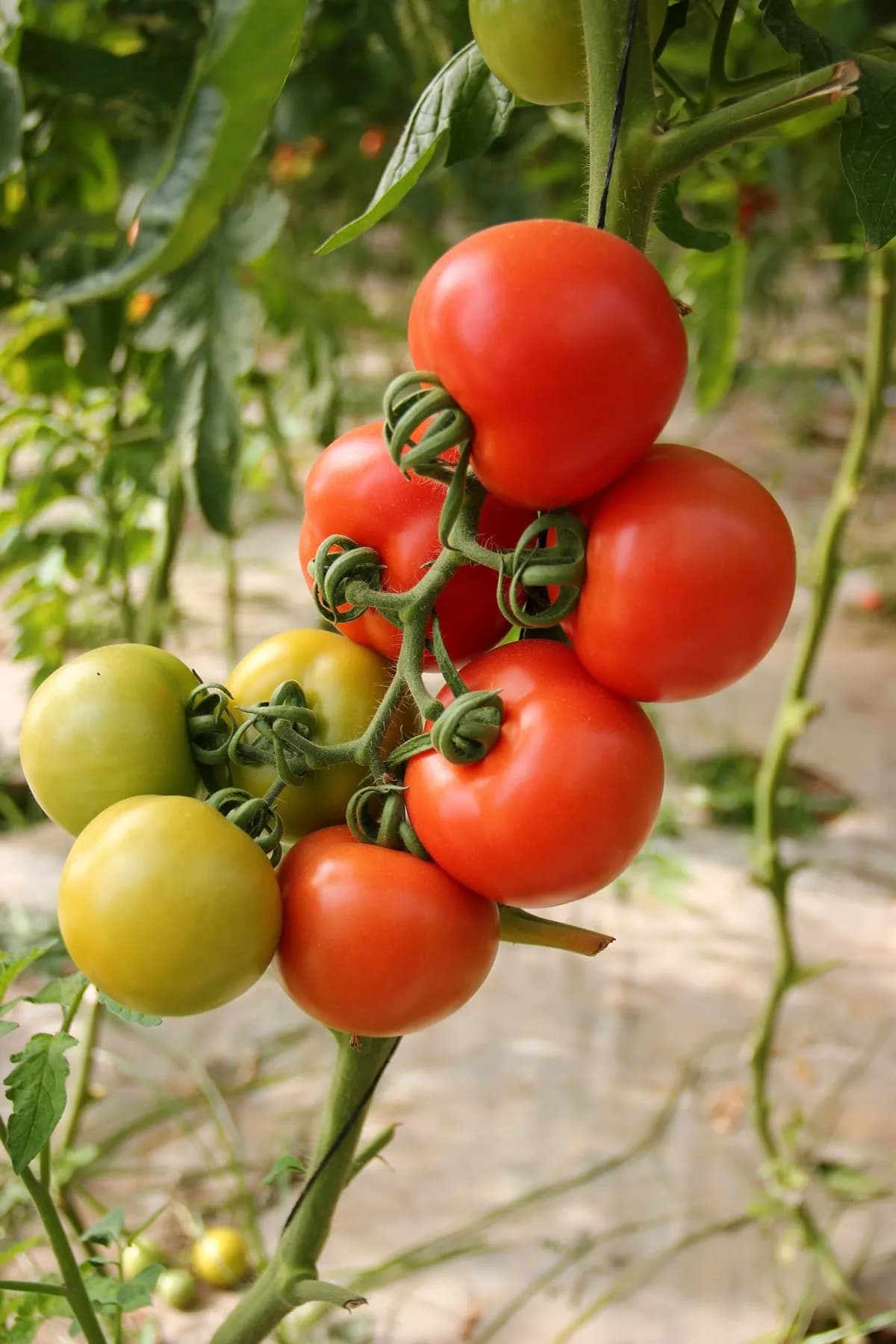
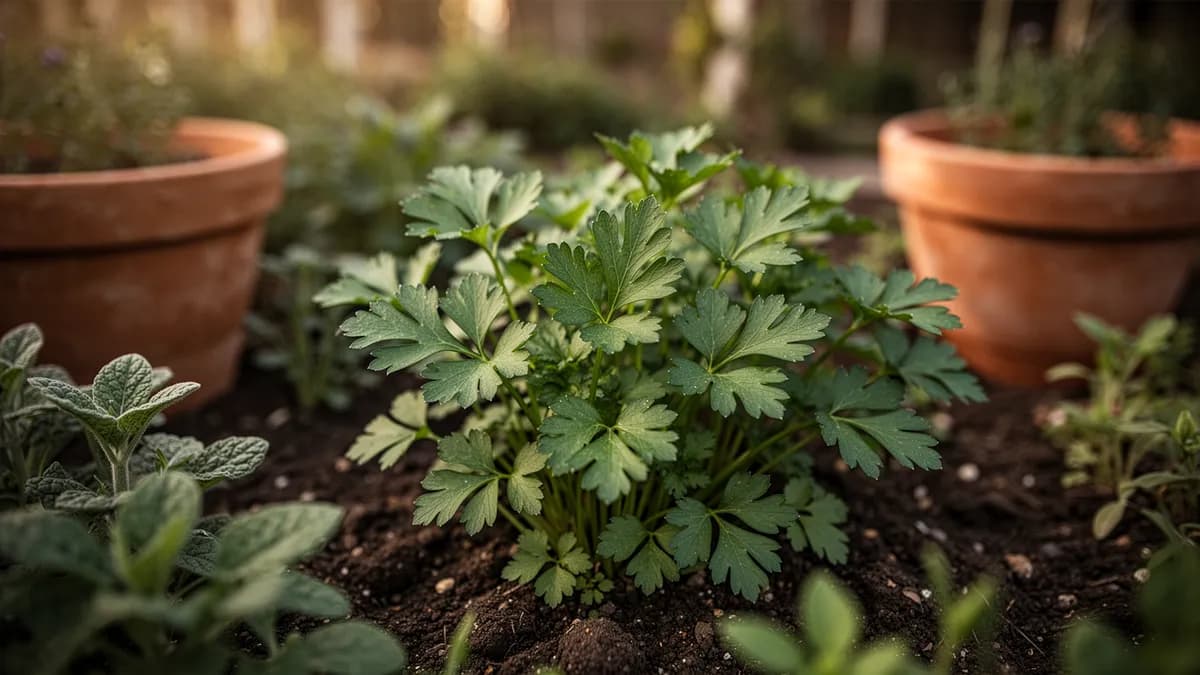
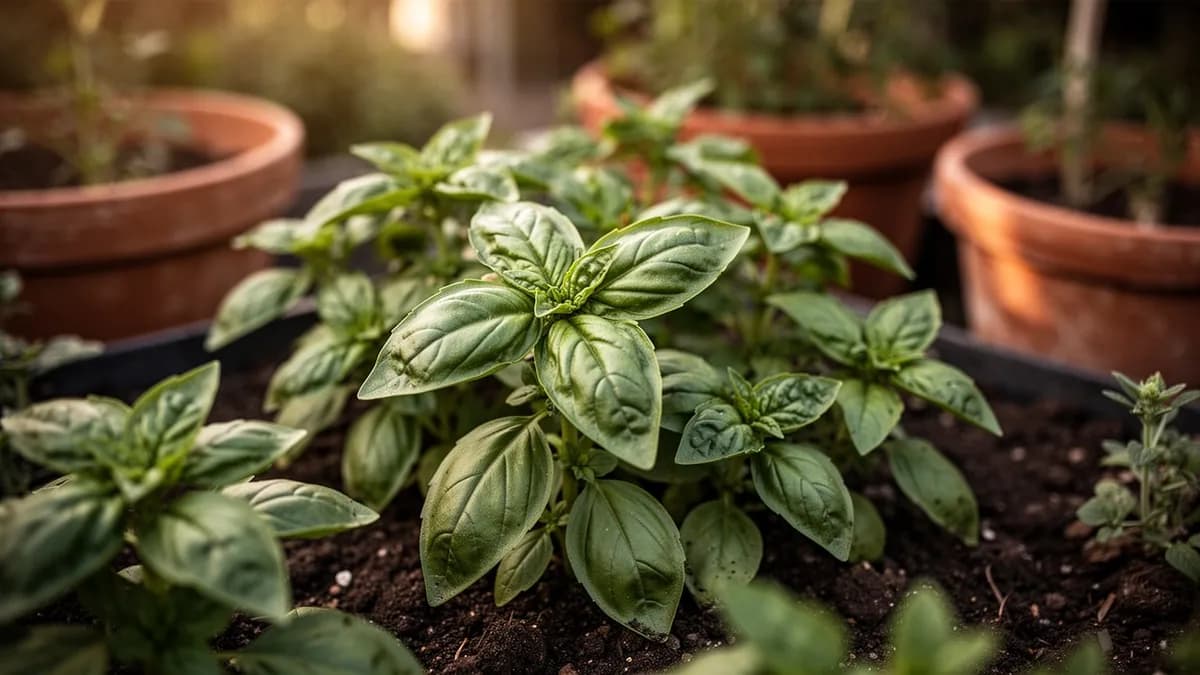
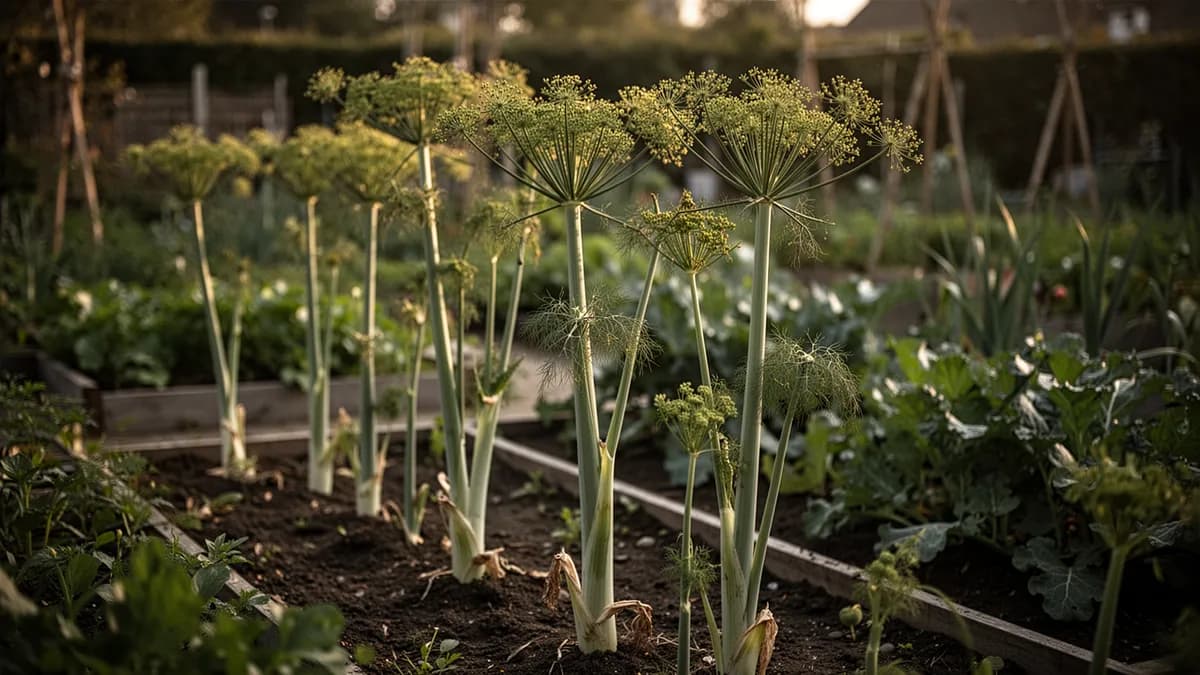
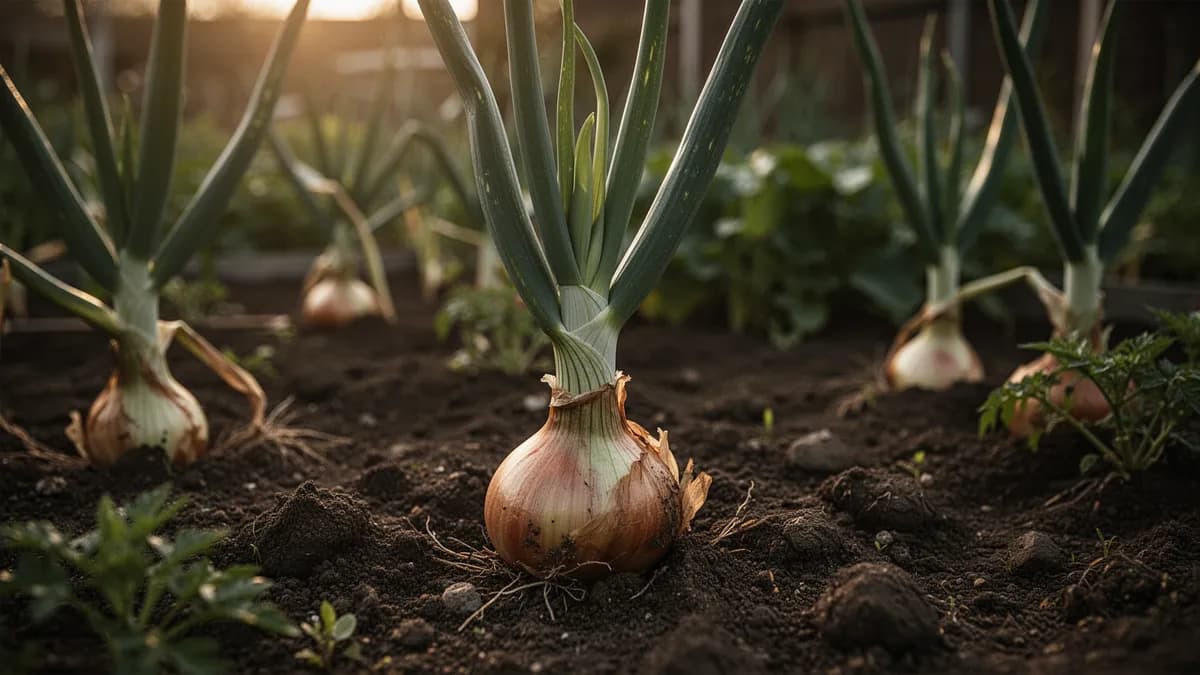
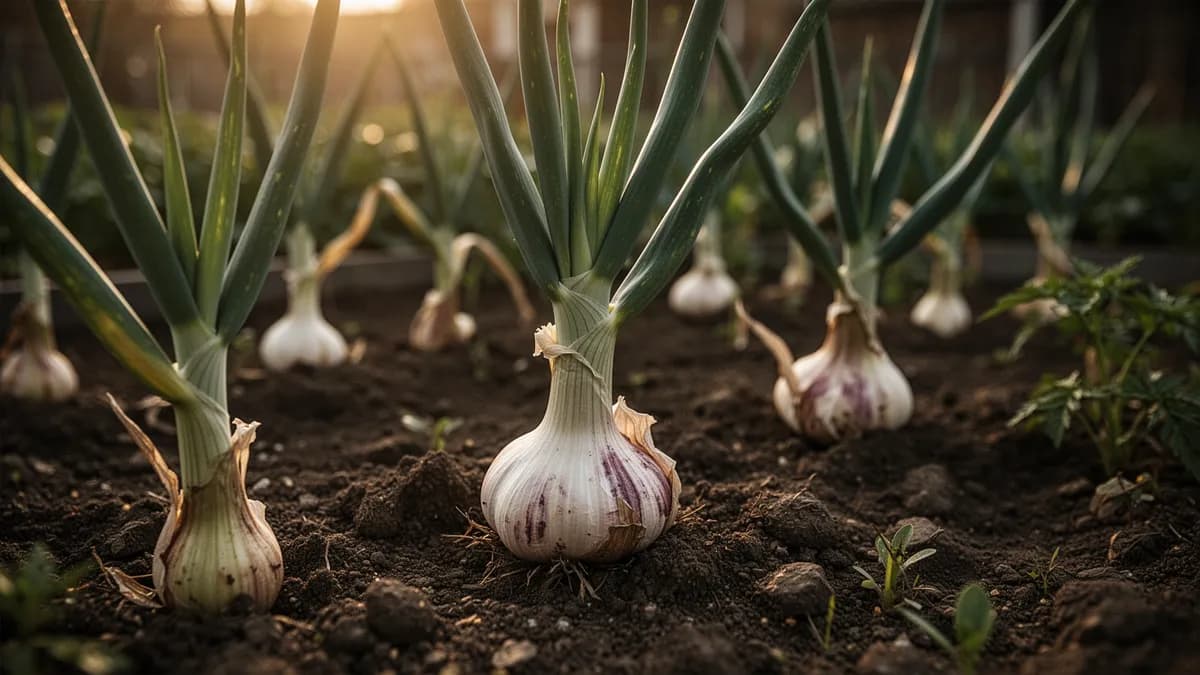
Tomaten sind ein ausgezeichneter Begleiter für Spargel — Tomaten produzieren Solanin, das Spargelkäfer vertreibt, während Spargelwurzeln eine Substanz absondern, die für Wurzelgallenälchen toxisch ist, die Tomaten befallen. Petersilie und Basilikum, an den Rändern des Spargelbeetes gepflanzt, vertreiben Schädlinge mit ihren ätherischen Ölen und locken nützliche Bestäuber an. Vermeiden Sie das Pflanzen von Zwiebeln, Knoblauch und Kartoffeln in der Nähe von Spargel — Lauchgewächse können um Nährstoffe konkurrieren und Kartoffeln teilen die Anfälligkeit für Fusarium-Krankheiten, die sich über den Boden auf Spargelkronen ausbreiten könnten.
Tomate gehört daneben. Zwiebel nicht.
Altes Gärtnerwissen, geprüft an der echten Nachbartabelle von Spargel — teste jede Pflanze, die du anbaust.
Probiere Spargel direkt hier im Beet
Ein echtes Planer-Beet, Spargel steht schon drin. Tippe einen Begleiter an, platziere ihn und sieh, wie die Nachbarschaftsprüfung antwortet — grün für gute Nachbarn, rot bei Streit.


Passende Anbau-Ratgeber
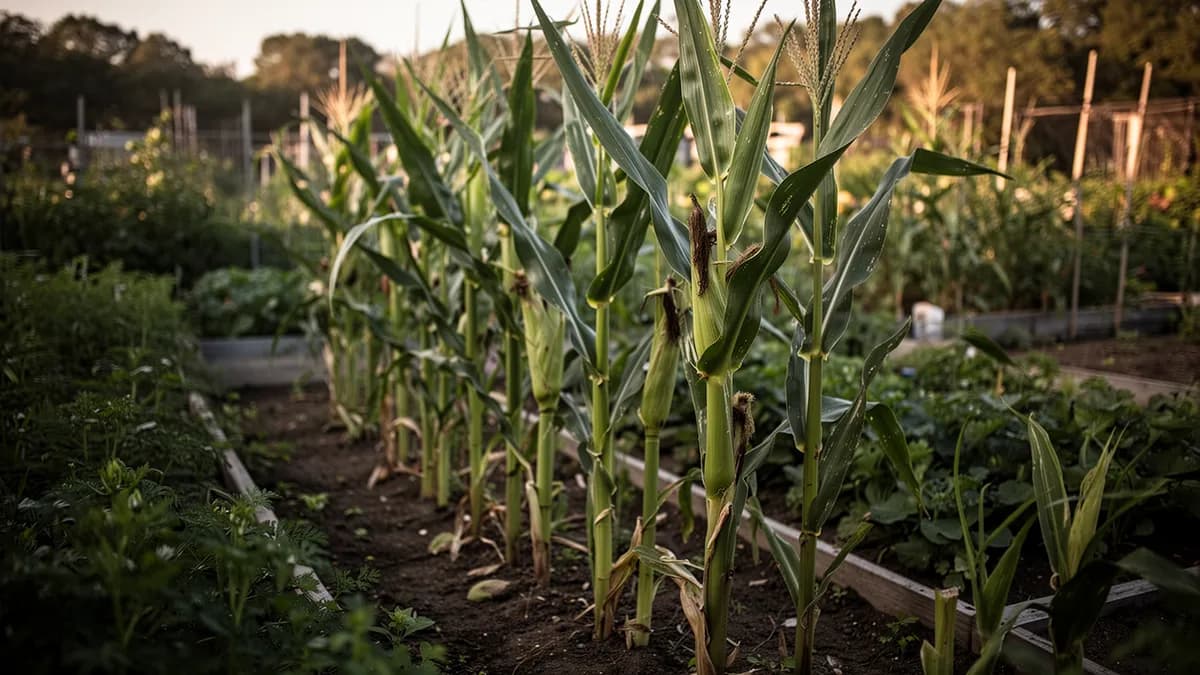
Richtig düngen
Spargel benötigt tiefen, gut drainierten, leicht alkalischen Boden mit einem pH-Wert von 6,5 bis 7,5. Gute Drainage ist absolut entscheidend — Spargelkronen faulen in staunassem Boden, weshalb Hochbeete eine ausgezeichnete Option in Gebieten mit schwerem Lehmboden darstellen. Arbeiten Sie vor dem Pflanzen großzügige Mengen an Kompost und Knochenmehl bis zu einer Tiefe von 30 cm in die Gräben ein. Sandiger Lehm ist ideal, aber jeder gut drainierte Boden, der mit organischer Substanz angereichert ist, liefert ausgezeichnete Ergebnisse. Führen Sie vor dem Pflanzen eine Bodenanalyse durch — liegt der pH-Wert unter 6,5, geben Sie Gartenkalk in der empfohlenen Menge hinzu, da Spargel in sauren Bedingungen schlecht gedeiht.
Etablierte Beete profitieren von einem zweiphasigen jährlichen Düngeprogramm. Im zeitigen Frühling, bevor die Stangen erscheinen, düngen Sie mit einem ausgewogenen Dünger (10-10-10) mit 200 g pro Quadratmeter, um die Stangenproduktion anzutreiben. Nach Abschluss der Erntezeit im Frühsommer tragen Sie eine zweite Runde ausgewogenen Dünger oder großzügig Kompost auf, um kräftiges Farnwachstum zu unterstützen — die Farne sind die Solarzellen, die die Krone für die Ernte des nächsten Jahres aufladen. Rohphosphat und Grünsand liefern langsam freigesetzten Phosphor und Kalium für langfristige Kronengesundheit ohne das Risiko chemischer Verbrennungen.
Im Herbst, nachdem die Farne natürlich braun geworden und zurückgeschnitten sind, tragen Sie eine 5 bis 8 cm dicke Schicht Kompost oder gut abgelagerten Mist über das gesamte Beet auf. Diese jährliche Zugabe organischer Substanz ernährt die Bodenbiologie, verbessert die Struktur im Laufe der Zeit und zersetzt sich langsam, um über Winter und Frühling Nährstoffe bereitzustellen. Spargel verträgt sandige Böden gut, benötigt aber zusätzliche organische Substanz für die Feuchtigkeitsspeicherung. Vermeiden Sie stickstoffreiche Dünger spät in der Saison, da sie weiches Farnwachstum fördern, das frostanfällig ist. Eine Bodenanalyse alle 2 bis 3 Jahre hilft, pH-Drift und Nährstoffgehalte in dieser langlebigen Staudenkultur zu überwachen.
Ideale Temperatur
Winterhärtezone-Kompatibilität
Von der Saat zur Ernte, Schritt für Schritt
Kronenpflanzung
Einjährige Kronen werden im zeitigen Frühling in tiefe Gräben gepflanzt. Die spinnenartigen Wurzeln werden über einen Hügel am Grabenboden drapiert und mit einer dünnen Erdschicht bedeckt. Die Krone beginnt innerhalb von 2 bis 3 Wochen ihre ersten dünnen Stangen auszutreiben, wenn sich der Boden erwärmt.
Etablierung im ersten Jahr
Dünne Stangen treiben aus und wachsen schnell zu hohen, gefiederten Farnen von 120 bis 180 cm heran. Das Farnlaub betreibt die ganze Saison über Photosynthese und leitet Energie zurück in das sich ausbreitende Kronen- und Wurzelsystem. In diesem Jahr geht es ausschließlich um den Aufbau der Wurzelreserven.
Wachstum im zweiten Jahr
Die Stangen treiben dicker und zahlreicher als im ersten Jahr aus. Die Krone hat sich unterirdisch verdoppelt oder verdreifacht. Eine sehr leichte zweiwöchige Ernte ist zulässig, dann müssen alle verbleibenden Stangen zu Farnen auswachsen und die Krone versorgen.
Reife im dritten Jahr
Das Beet erreicht die Produktionsreife. Dicke, kräftige Stangen treiben bei warmem Wetter täglich aus, und eine volle 6- bis 8-wöchige Erntezeit kann beginnen. Die Krone ist nun groß genug, um anhaltende Ernte ohne Beeinträchtigung zukünftiger Erträge zu verkraften.
Sommerliches Farnwachstum
Nach Ernteende dürfen alle austreibenden Stangen zu hohen Farnen heranwachsen. Diese kritische Erholungsphase ermöglicht es der Krone, Kohlenhydrate für die Stangenproduktion des folgenden Frühlings einzulagern. Gesundes Farnwachstum korreliert direkt mit der Erntequalität des nächsten Jahres.
Winterruhe und Aufräumen
Die Farne vergilben und bräunen nach den ersten harten Frösten im Herbst auf natürliche Weise. Die Krone tritt in die Winterruhe ein und ruht über die kalten Monate unterirdisch. Abgestorbene Farnstängel werden zurückgeschnitten und das Beet für den nächsten Wachstumszyklus vorbereitet.
Bedecken Sie die Kronen zunächst nur mit 5 cm Erde. Füllen Sie den Graben schrittweise auf, während die Triebe in der ersten Saison wachsen. Gießen Sie sanft, um die Erde um die Wurzeln zu setzen, ohne sie zu verdichten. Ernten Sie in diesem Jahr keine Stangen.
Spargel Monat für Monat pflegen
Was du jeden Monat für deine Spargel tun solltest
Oktober
Aktueller MonatDie Farne beginnen natürlich zu vergilben, wenn die Temperaturen sinken. Schneiden Sie Farne nicht, bis sie vollständig braun sind — sie betreiben noch Photosynthese und versorgen die Krone. Tragen Sie eine dicke Schicht Kompost um die Farnbasen als Herbstdüngung auf.
Immer wissen, was jetzt im Garten zu tun ist
Eine E-Mail zum Monatsanfang: was du jetzt säen, pflanzen und anpacken solltest — für deine Spargel und alles, was drumherum wächst. Dazu ein kurzer Startkurs, der dich vor den klassischen Fehlern bewahrt.
- Was jetzt zu tun ist
- Passend zu deiner Saison
- Startkurs inklusive
Spargel ernten
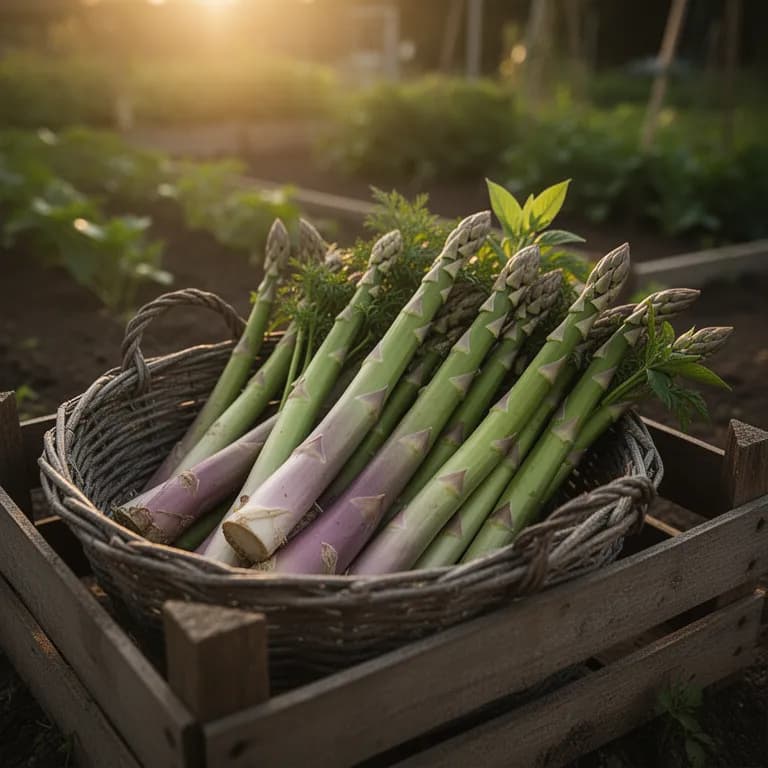
Ernten Sie im ersten Jahr nach dem Pflanzen der Kronen keine Stangen und nehmen Sie im zweiten Jahr nur eine leichte zweiwöchige Ernte vor. Ab dem dritten Jahr ernten Sie alle Stangen, wenn sie 15 bis 20 cm hoch sind und die Spitzen noch fest geschlossen sind. Brechen Sie die Stangen auf Bodenniveau ab, indem Sie sie nahe der Basis biegen — sie brechen natürlich an der Stelle, wo zart auf faserig trifft. Alternativ schneiden Sie knapp unter der Bodenoberfläche mit einem speziellen Spargelmesser oder einem scharfen Schälmesser. Ernten Sie während der Produktionszeit täglich, da Stangen bei warmem Wetter schnell wachsen und in der Hauptsaison an einem einzigen Tag 5 bis 10 cm zulegen können.
Beenden Sie die Ernte, wenn neue Stangen dünner als ein Bleistift erscheinen — dies signalisiert, dass die Energiereserven der Krone erschöpft sind und durch Farnwachstum wieder aufgebaut werden müssen. Die Erntezeit dauert in etablierten Beeten 6 bis 8 Wochen, typischerweise von Mitte April bis Anfang Juni, je nach Klimazone. Jüngere Beete im dritten und vierten Jahr sollten ein kürzeres Erntefenster von 4 bis 5 Wochen haben, damit die Kronen weiter erstarken können. Bei warmem Wetter über 27°C können Stangen innerhalb von 24 Stunden austreiben und ihre Spitzen öffnen, prüfen Sie die Beete daher zweimal täglich, um die optimale Erntequalität nicht zu verpassen.
Für die beste Essqualität ernten Sie am frühen Morgen, wenn die Stangen am stärksten hydratisiert sind und die Zucker über Nacht konzentriert gespeichert wurden. Verwenden Sie geerntete Stangen so schnell wie möglich — Spargel verliert nach dem Schnitt rasch an Süße und wandelt Zucker in Stärke um, schneller als fast jedes andere Gemüse. Falls Sie ihn nicht sofort essen können, stellen Sie die Stangen aufrecht in ein Glas mit kaltem Wasser im Kühlschrank. Dicke Stangen sind nicht zäher als dünne — die Dicke wird durch die Kraft der Krone und die Sorte bestimmt, nicht durch Alter oder Zartheit. Ein verbreiteter Irrglaube ist, dass bleistiftdünne Stangen begehrenswerter sind, aber dicke Stangen einer gesunden Krone sind ebenso zart und haben mehr Geschmack.
angenommen, du pflanzt zu Beginn des Zeitraums — trage dein tatsächliches Datum ein
Ernte Spargel zügig, dann trägt die Pflanze weiter.
Lagerung & Konservierung
Frischer Spargel wird am besten innerhalb von 2 bis 3 Tagen nach der Ernte verwendet, da er nach dem Schnitt rasch an Süße und Zartheit verliert. Lagern Sie ihn aufrecht in einem Glas oder einer Vase mit 2 bis 3 cm kaltem Wasser im Kühlschrank, locker mit einer Plastiktüte bedeckt — dies hält die Stangen bis zu einer Woche knackig und hydratisiert. Schneiden Sie die Schnittenden vor der Lagerung leicht an, um frische Wasseraufnahme zu ermöglichen. Waschen Sie die Stangen erst, wenn Sie sie verwenden möchten, da überschüssige Feuchtigkeit Schimmelbildung begünstigt. In Gummibändern gebündelte Spargelpackungen aus dem Supermarkt sollten sofort ausgepackt werden, um Ethylen-Anreicherung und vorzeitigen Verderb zu verhindern.
Zum Einfrieren schneiden Sie die Stangen zu und sortieren sie nach Dicke, dann blanchieren Sie sie 2 Minuten (dünne Stangen) bis 4 Minuten (dicke Stangen) in kochendem Wasser. Tauchen Sie sie sofort in ein Eisbad, um den Garvorgang zu stoppen, lassen Sie sie gründlich abtropfen und frieren Sie sie in einer einzigen Schicht auf Backblechen vor, bevor Sie sie in Gefrierbeutel umfüllen. Richtig blanchierter und eingefrorener Spargel hält 8 bis 12 Monate und eignet sich gut für Suppen, Aufläufe und Pfannengerichte, obwohl die Textur weicher als frisch sein wird. Vakuumversiegelung der gefrorenen Stangen verlängert die Qualität und verhindert Gefrierbrand.
Eingelegter Spargel in einer Dill-Essig-Lake ist eine ausgezeichnete Konservierungsmethode, die sich für das Einkochen im Wasserbad eignet — die säurereiche Lake gewährleistet die Lebensmittelsicherheit. Verwenden Sie Stangen, die vertikal in hohe Halbliter-Gläser mit Knoblauch, Dill und roten Chiliflocken passen, für einen Gourmet-Vorratsschrank-Klassiker. Trocknen Sie blanchierte Stangenspitzen bei 52°C für 6 bis 10 Stunden, um haltbare Spargelstücke für Suppen, Risottos und Gewürzmischungen herzustellen. Fermentierter Spargel erfreut sich wachsender Beliebtheit — füllen Sie geschnittene Stangen in ein Glas mit einer 3-prozentigen Salzlake und fermentieren Sie bei Raumtemperatur 5 bis 7 Tage lang für einen probiotischen, säuerlichen Genuss.
Was schiefgeht — und die Lösung
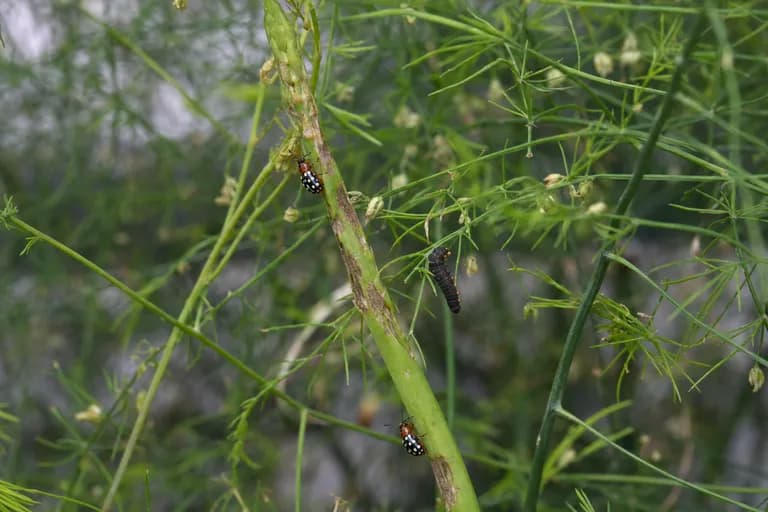
Spargelkäfer
SchädlingCharakteristische metallisch blau-schwarze Käfer mit cremefarbenen Flecken und rötlich-orangefarbenen Rändern fressen an Stangen und Farnlaub. Dunkle, nacktschneckenartige Larven entlauben ebenfalls die Farne. Beschädigte Stangen weisen braune, angefressene Narben auf und können sich verbiegen oder verformen.
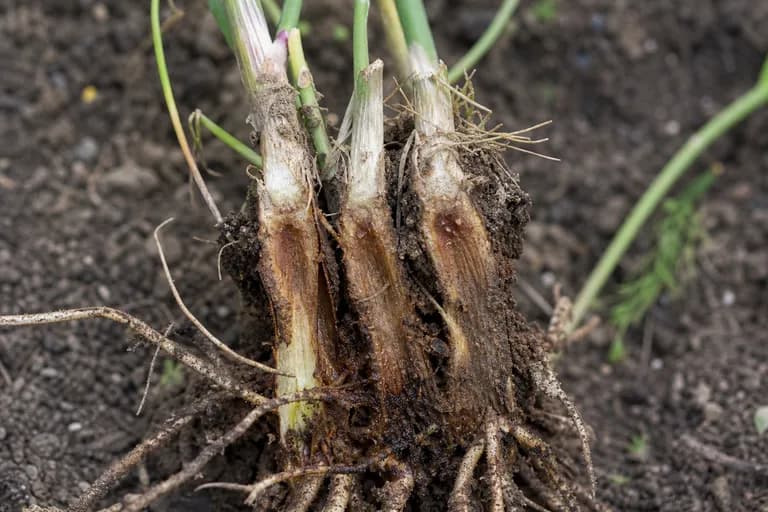
Fusarium-Kronen- und Wurzelfäule
KrankheitPflanzen bauen über mehrere Jahre allmählich ab, mit zunehmend dünneren Stangen und spärlichem Farnwuchs. Kronen zeigen rötlich-braune innere Verfärbungen. Wurzeln faulen und sterben ab, was die Pflanze schließlich abtötet.
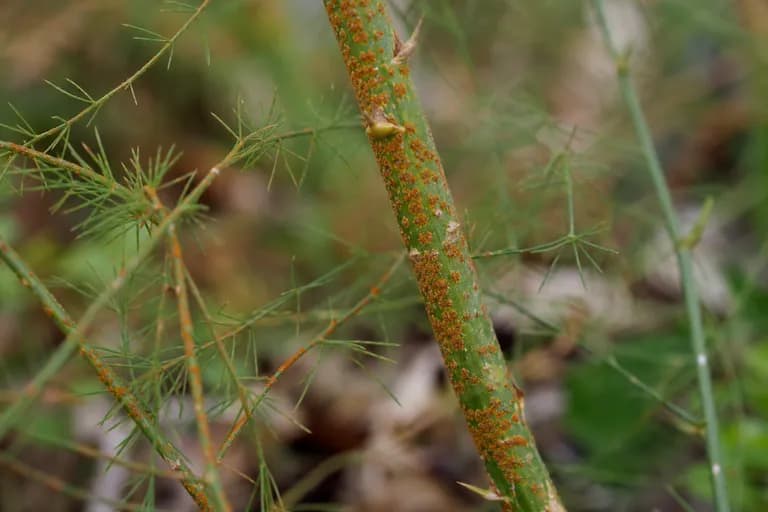
Spargelrost
KrankheitRötlich-orangefarbene, pudrige Pusteln an Farnstielen und -ästen, am häufigsten bei warmen, feuchten Bedingungen. Schwerer Rost verursacht vorzeitigen Blattfall, schwächt die Krone und reduziert die Ernte im folgenden Jahr.
Fehlerbehebung bei häufigen Problemen
Dünne, spindelige Stangen deuten auf ein überfülltes Beet, unzureichende Düngung oder Überernte hin — düngen Sie mit Kompost und ausgewogenem Dünger nach und beenden Sie die Ernte früher, damit die Farne die Kronenreserven wieder aufbauen können. Stangen, die krumm oder gebogen austreiben, treffen meist auf ein unterirdisches Hindernis wie Steine oder verdichteten Boden — halten Sie Beete unkrautfrei und gut gemulcht. Farne, die im Sommer vorzeitig vergilben, können auf Fusarium-Wurzelfäule hinweisen — ziehen Sie eine betroffene Pflanze heraus und prüfen Sie die Krone auf rötlich-braunes inneres Gewebe.
Wilde Spargelsämlinge von weiblichen Pflanzen schaffen unerwünschte Konkurrenz und entziehen den etablierten Kronen Ressourcen — entfernen Sie diese umgehend oder verhindern Sie das Problem vollständig durch Pflanzung rein männlicher Hybridsorten. Geringe Produktion in neu angelegten Beeten ist normal; Geduld während der Etablierungsjahre ist wesentlich, und dem Drang zur Überernte in den Jahren eins bis drei zu widerstehen ist der wichtigste Einzelfaktor für die langfristige Beetproduktivität. Wenn die Stangen in einem reifen Beet, das zuvor gut produziert hat, plötzlich dünn werden, vermuten Sie Spargelkäferschäden an den Farnen des Vorjahres, die die Kohlenhydratspeicherung in den Kronen reduziert hätten.
Unkrautkontrolle ist eine anhaltende Herausforderung, da Spargelbeete über Jahrzehnte bestehen bleiben und nicht tief umgegraben werden können, ohne das flache Kronensystem zu beschädigen. Tragen Sie jährlich 10 bis 15 cm organischen Mulch auf, um Unkraut zu unterdrücken, und jäten Sie von Hand, was durch die Mulchschicht durchwächst. Vermeiden Sie Herbizide in der Nähe von Spargel, es sei denn, sie sind ausdrücklich für den Einsatz bei dieser Kultur zugelassen. Salz wurde historisch zur Unkrautbekämpfung in Spargelbeeten verwendet — Spargel ist salztoleranter als die meisten Unkräuter — aber diese Praxis schädigt langfristig die Bodengesundheit und wird nicht mehr empfohlen. Eine Kronenteilung ist bei Spargel nicht praktikabel; wenn ein Beet nach 15 bis 20 Jahren nachlässt, legen Sie ein neues Beet an einem anderen Standort an.
Anbautipps
- Spargel ist eine langfristige Verpflichtung — wählen Sie den Beetstandort sorgfältig, denn die Pflanzen werden ihn 15 bis 25 Jahre belegen. Suchen Sie einen Platz in voller Sonne (6 bis 8 Stunden täglich), mit ausgezeichneter Drainage und ohne Konkurrenz durch Baumwurzeln. Ein eigenes Beet entlang einer Gartengrenze oder Zaunlinie eignet sich gut.
- Kaufen Sie rein männliche Hybridsorten wie Jersey Knight, Jersey Giant oder Millennium für maximale Stangenproduktion. Männliche Pflanzen produzieren dreimal mehr Stangen als weibliche, da sie keine Energie in die Samenproduktion umleiten.
- Geduld ist die wichtigste Fähigkeit für Spargelanbauer. Ernten Sie im ersten Jahr überhaupt nicht, im zweiten Jahr nur leicht für 2 Wochen und beginnen Sie erst im dritten Jahr mit einer vollen 6- bis 8-wöchigen Ernte. Ein Überstürzen dieses Zeitplans schwächt die Kronen dauerhaft.
- Pflanzen Sie Kronen in tiefe Gräben (30 cm tief) und füllen Sie schrittweise auf, während die Triebe wachsen. Diese tiefe Pflanzung stellt sicher, dass sich die Krone in einer Tiefe entwickelt, in der die Bodentemperaturen stabil sind, und schützt sie vor Frost-Tau-Wechselschäden und Trockenstress.
- Unkrautkontrolle ist entscheidend — Spargel kann nicht mit aggressiven Unkräutern konkurrieren, insbesondere in den Etablierungsjahren. Tragen Sie jährlich 10 bis 15 cm organischen Mulch (Stroh, Holzhäcksel oder zerkleinertes Laub) auf und jäten Sie aufkommende Unkräuter von Hand.
- Gießen Sie gleichmäßig und stellen Sie während der Wachstumsperiode 2,5 cm pro Woche bereit. Obwohl Spargel nach der Etablierung etwas trockenheitstolerant ist, produziert gleichmäßige Feuchtigkeit dickere, zartere Stangen und ein kräftigeres Farnwachstum.
- Entfernen Sie niemals grünes Farnwachstum im Sommer und Herbst — die Farne laden die Krone für die Ernte des nächsten Jahres auf. Warten Sie, bis die Farne vollständig braun und abgestorben sind, bevor Sie sie im Spätherbst zurückschneiden.
- Düngen Sie zweimal jährlich mit ausgewogenem Dünger — einmal im zeitigen Frühling vor dem Stangenaustrieb und erneut nach Abschluss der Erntezeit. Eine jährliche Kompost-Deckschicht im Herbst ernährt die Bodenbiologie und verbessert die langfristige Beetgesundheit.
Bau deine beste Spargel an — und alles drumherum.
Starte heute kostenlos. Lege deine Beete an, setze deine Spargel ein und lass PlotMyGarden Timing, Abstände, Begleiter und Erinnerungen von der Saat bis zum Erntekorb übernehmen.
Finde deine Spargel
Jersey Knight
Ein rein männlicher Hybrid, der dicke, gleichmäßige, dunkelgrüne Stangen mit fest geschlossenen, violett getönten Spitzen produziert. Ausgezeichnete Krankheitsresistenz, insbesondere gegen Fusarium. Sehr winterhart bis Zone 3. Ertragreich und langlebig.
Mary Washington
Der am weitesten verbreitete Erbstück-Spargel mit mittelgrünen Stangen und gutem Geschmack. Samenfest mit gemischten männlichen und weiblichen Pflanzen. Rostresistent. Eine zuverlässige, bewährte Sorte für Hausgärten seit 1919.
Purple Passion
Eine auffällige Sorte mit tiefburgunderroten Stangen, die süßer und zarter als grüne Typen sind und einen höheren Zuckergehalt aufweisen. Die Farbe verblasst beim Kochen zu Grün. Am besten roh oder leicht gedünstet genießen, um die Farbe zu erhalten.
Jersey Supreme
Ein rein männlicher Hybrid mit frühem Austrieb und außergewöhnlich hohen Erträgen an dicken, zarten grünen Stangen. Ausgezeichnete Krankheitsresistenz. Etabliert sich schnell und kann bereits im zweiten Jahr eine leichte Ernte liefern.
Millennium
Eine winterharte, rein männliche Sorte, die für nördliche Klimazonen entwickelt wurde, mit ausgezeichnetem Ertragspotenzial und Krankheitsresistenz. Mittlere dicke grüne Stangen mit fest geschlossenen Spitzen. Besonders gut geeignet für die Zonen 3 bis 5.
Eine Spargelkrone, die 2 bis 5 Euro kostet, produziert jährlich Biospargel im Wert von 10 bis 25 Euro über 15 bis 25 Jahre — ein Gesamtlebenswert von 150 bis 500 Euro pro Krone. Ein kleines 3-Meter-Beet mit 7 Kronen stellt eine einmalige Investition von 15 bis 35 Euro dar, die bei Bio-Supermarktpreisen jährlich 100 bis 175 Euro an Spargel einbringen kann, wobei frischer Spargel typischerweise 8 bis 15 Euro pro Kilogramm kostet.
Schnelle Rezepte
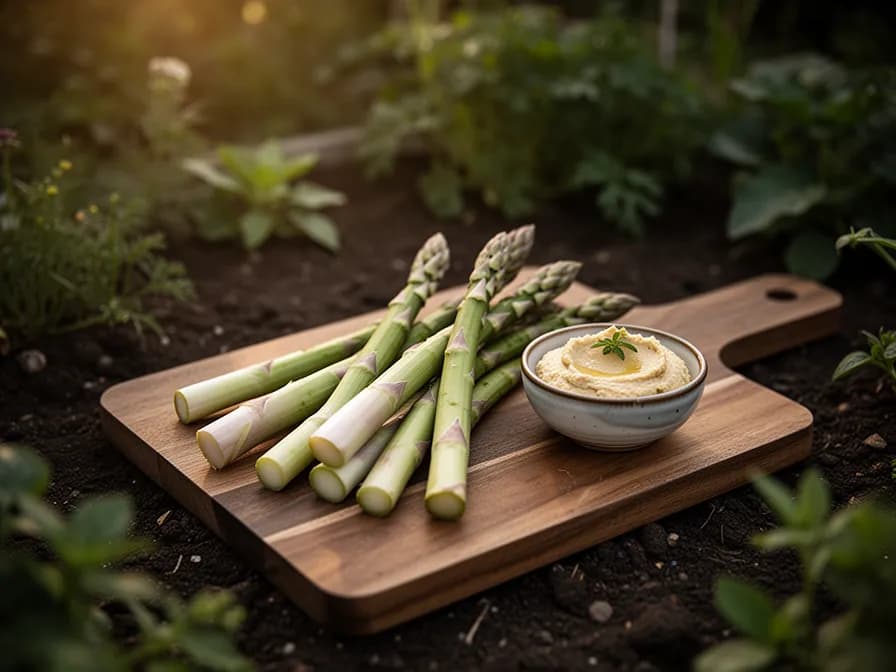
Gerösteter Spargel mit Zitrone und Parmesan
15 Min.Die einfachste und beliebteste Art, frischen Spargel zuzubereiten. Das Rösten bei hoher Hitze karamellisiert die natürlichen Zucker, während ein Spritzer Zitrone und eine Prise Parmesan diese Beilage zu etwas wirklich Besonderem erheben. In wenigen Minuten fertig.
7 Zutaten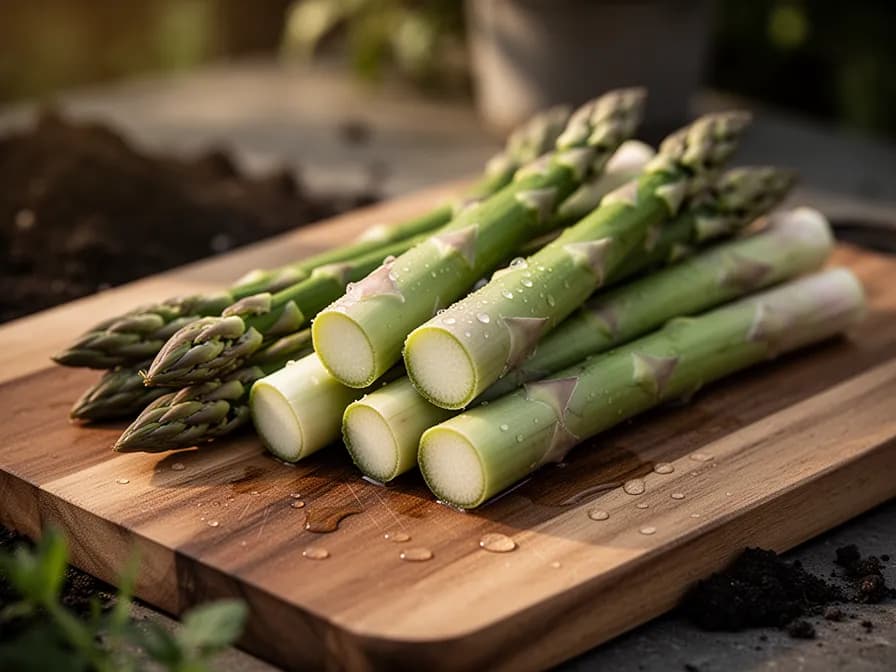
Frühlings-Spargelrisotto
35 Min.Ein cremiger italienischer Klassiker, der den ersten Spargel des Frühlings feiert. Zarte Spargelstücke werden in üppigen, parmesanreichen Arborio-Reis eingearbeitet für ein tröstendes und zugleich elegantes Gericht. Verwenden Sie die abgeschnittenen Spargelenden für die Brühe, um den Geschmack zu verdoppeln.
8 ZutatenSpargel-Parmaschinken-Päckchen
20 Min.Eine elegante Vorspeise oder Beilage, die die erdige Süße des Spargels mit der salzigen Fülle des Parmaschinkens verbindet. Blanchieren Sie die Stangen kurz, wickeln Sie sie in dünne Parmaschinken-Scheiben und rösten Sie, bis der Schinken knusprig ist. Perfekt für Festlichkeiten.
6 ZutatenKulinarische Verwendung
Spargel ist eine Frühlingsdelikatesse, die am besten bei einfacher Zubereitung zur Geltung kommt — dämpfen, rösten, grillen oder blanchieren Sie die Stangen und servieren Sie sie mit Butter, Zitrone und Sauce Hollandaise. Das Rösten bei 220°C für 10 bis 12 Minuten mit Olivenöl und Meersalz karamellisiert die natürlichen Zucker und ergibt knusprig-zarte Stangen mit konzentriertem Geschmack. Hobeln Sie rohen Spargel mit einem Gemüseschäler in dünne Streifen für elegante Salate mit Zitronenvinaigrette und gehobeltem Parmesan.
Spargel harmoniert wunderbar mit Eiern in praktisch jeder Form — Rührei, pochiert, in Frittatas oder in Quiches gebacken. Er ist ein natürlicher Begleiter von Parmaschinken, Räucherlachs, Parmesan, Ziegenkäse, Zitrone, Knoblauch, Estragon und Dill. In der italienischen Küche ist Spargelrisotto ein Frühlingsklassiker, während französische Zubereitungen ihn mit Sauce Hollandaise oder Beurre Blanc bevorzugen. Asiatische Pfannengerichte mit Spargel, Knoblauch und Sesamöl heben seinen natürlichen Biss und seine Süße hervor.
Werfen Sie die holzigen Stielenden nicht weg — sie enthalten ausgezeichnetes Aroma für die Zubereitung von Spargelbrühe. Kochen Sie die abgeschnittenen Enden in Wasser mit einem Lorbeerblatt und Pfefferkörnern 30 Minuten lang, seihen Sie ab und verwenden Sie die resultierende Brühe als Basis für Spargelsuppe oder Risotto. Reich an Folsäure, den Vitaminen A, C und K sowie der Aminosäure Asparagin (nach der das Gemüse benannt ist), gehört Spargel zu den nährstoffreichsten Frühlingsgemüsen überhaupt. Violette Spargelsorten sind süßer als grüne und können roh gegessen werden, aber ihre Farbe verblasst beim Kochen zu Grün.
Was drinsteckt
Gesundheitsvorteile
- Außergewöhnlich reich an Folsäure (Vitamin B9) — sechs Stangen liefern etwa 60 % der empfohlenen Tageszufuhr. Folsäure ist wesentlich für die DNA-Synthese, Zellteilung und besonders wichtig während der Schwangerschaft zur Vorbeugung von Neuralrohrdefekten.
- Eine der besten natürlichen Quellen für Glutathion, ein starkes Antioxidans, das freie Radikale neutralisiert, die Leberentgiftung unterstützt und laut aktueller Forschung möglicherweise eine Rolle bei der Krebsprävention spielt.
- Enthält präbiotische Ballaststoffe in Form von Inulin, das nützliche Bifidobakterien und Laktobazillen im Darm ernährt und die Verdauungsgesundheit, Nährstoffaufnahme und Immunfunktion unterstützt.
- Reich an Vitamin K, das über 50 % des Tagesbedarfs pro 100 g liefert. Vitamin K ist wesentlich für die ordnungsgemäße Blutgerinnung und spielt eine wichtige Rolle beim Knochenstoffwechsel und der Calciumregulierung.
- Bietet eine natürliche harntreibende Wirkung dank der Aminosäure Asparagin, die helfen kann, Wassereinlagerungen und Blähungen zu reduzieren. Dies war eine der primären medizinischen Anwendungen von Spargel in antiken Kräutertraditionen.
- Enthält entzündungshemmende Verbindungen wie Saponine und Flavonoide, die helfen können, chronische Entzündungen zu reduzieren — ein Faktor bei Herzkrankheiten, Diabetes und bestimmten Krebsarten.
Woher Spargel stammt
Spargel hat eine der längsten kulinarischen Geschichten aller Gemüsearten, mit Belegen für den Anbau, die über 3.000 Jahre in den östlichen Mittelmeerraum zurückreichen. Wilder Spargel stammt aus den Küstenregionen Europas, Nordafrikas und Westasiens, wo er in sandigen Böden nahe dem Meer wuchs. Die alten Ägypter opferten Spargel ihren Göttern, und die alten Griechen ernteten wilde Stangen als Nahrung und Medizin. Die Römer waren die Ersten, die systematische Anbautechniken entwickelten, wobei detaillierte Anbauanweisungen in den Schriften von Cato dem Älteren um 200 v. Chr. erscheinen.
Während des Mittelalters ging der Spargelanbau in weiten Teilen Europas zurück, wurde aber in Klostergärten bewahrt, wo Mönche ihn sowohl zu medizinischen als auch kulinarischen Zwecken anbauten. Das Gemüse erlebte eine bedeutende Renaissance im Frankreich des 17. Jahrhunderts, wo Ludwig XIV. so leidenschaftlich für Spargel war, dass er spezielle Gewächshäuser bauen ließ, um seinen Tisch ganzjährig zu versorgen. Französische und niederländische Züchter entwickelten in dieser Zeit verbesserte Sorten, und die Tradition des Anbaus von gebleichtem weißem Spargel verwurzelte sich tief in der nordeuropäischen Küche.
Spargel gelangte mit europäischen Kolonisten im 17. Jahrhundert nach Nordamerika und wurde schnell zu einer geschätzten Gartenkultur. Im 19. Jahrhundert hatte sich der kommerzielle Spargelanbau über die gesamten Vereinigten Staaten ausgebreitet, wobei Kalifornien, New Jersey und Washington zu bedeutenden Anbauregionen wurden. Die Entwicklung rein männlicher Hybridsorten im späten 20. Jahrhundert verbesserte Erträge und Krankheitsresistenz dramatisch und verwandelte Spargel von einer anspruchsvollen Kultur in eine zuverlässige Hausgarten-Staude. Heute wird Spargel auf jedem bewohnten Kontinent angebaut, mit einer weltweiten Produktion von über 9 Millionen Tonnen jährlich.
Spargel: Schon gewusst?
Faszinierende Fakten über Spargel
Spargel ist eines der ältesten Kulturgemüse — die alten Ägypter bauten ihn vor über 3.000 Jahren an, und er wurde sowohl von den Griechen als auch von den Römern als Luxusnahrungsmittel und Heilpflanze geschätzt.
Spargel: Fragen & Antworten
Wann sollte ich Spargel pflanzen?
Was sind gute Begleitpflanzen für Spargel?
In welchen Winterhärtezonen kann Spargel wachsen?
Wie viel Sonne braucht Spargel?
Welchen Abstand sollte ich zwischen Spargel lassen?
Welche Schädlinge und Krankheiten befallen Spargel?
Wie lagere ich Spargel nach der Ernte?
Was sind die besten Spargel-Sorten zum Anbauen?
Welchen Boden braucht Spargel?
Wie lange dauert es, bis Spargel eine Ernte liefert?
Warum sind meine Spargelstangen so dünn?
Sollte ich Spargel aus Samen oder Kronen anbauen?
Kann ich Spargel in Kübeln anbauen?
Was ist weißer Spargel und wie wird er angebaut?
Wann sollte ich aufhören, Spargel zu ernten?
Du hast die Theorie gelesen. Jetzt baue sie auf Autopilot an.
Alles, was Spargel knifflig macht — das Timing, die Abstände, die Begleiter, das Erntefenster — genau das übernimmt PlotMyGarden für dich, für jede Pflanze im Garten.
Ein Plan, der dein Wetter kennt
Standort einmal festlegen. Aussaat-, Dünge- und Erntedaten rund um deinen echten letzten Frosttermin und die Live-Vorhersage — kein Raten mehr nach Saattüte.
Aus dem Abschnitt „Pflanzzeit“Beetplaner per Drag & Drop
Beete auf einem Raster gestalten. Jede Pflanze rastet im richtigen Abstand ein, und du siehst die ganze Saison, bevor du einen Cent für Saatgut ausgibst.
Aus dem Abschnitt „Anbau“Begleiter-Konflikte früh erkannt
Über 200 gute und schlechte Kombinationen werden beim Pflanzen live geprüft — so landet ein saisonruinierender Fehler nie in der Erde.
Aus dem Abschnitt „Begleiter“Erinnerungen, nach denen du wirklich handelst
„Gieß die Bohnen.“ „Heute ernten, bevor's umschlägt.“ Pünktlich, konkret und auf deine echten Pflanzen bezogen.
Aus dem Abschnitt „Ernte“Staffel-Aussaat, geplant
Sechs Wochen ernten statt sechs Tage? Die App verteilt deine Aussaaten automatisch und erinnert dich, wenn der nächste Satz fällig ist.
Aus dem Abschnitt „Pflanzzeit“Ein Verlauf, der schlauer wird
Jede protokollierte Ernte bringt der App deinen Garten bei. Der Plan fürs nächste Jahr startet bei dem, was in deinem Boden wirklich funktioniert hat.
Aus dem Abschnitt „Überblick“Pflanze diese neben Spargel
Weitere Stängel & Stiele
Halte Spargel von diesen fern
Gartenpläne mit Spargel
Bau deine beste Spargel an — und alles drumherum.
Starte heute kostenlos. Lege deine Beete an, setze deine Spargel ein und lass PlotMyGarden Timing, Abstände, Begleiter und Erinnerungen von der Saat bis zum Erntekorb übernehmen.