Rhubarb
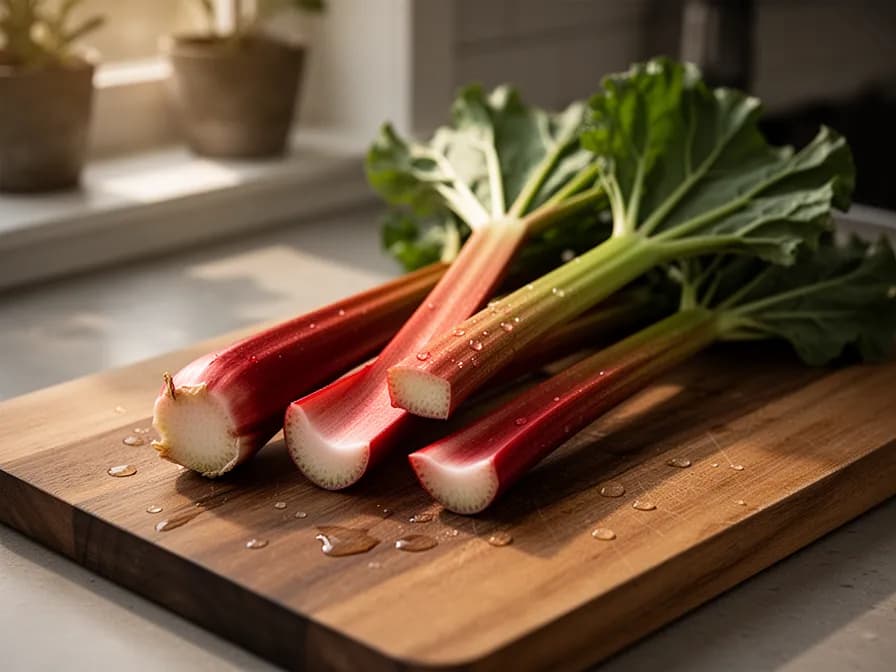
A hardy perennial grown for its tart, ruby-red stalks while the leaves contain toxic oxalic acid and should not be eaten.

On this pageOverview
Meet Rhubarb
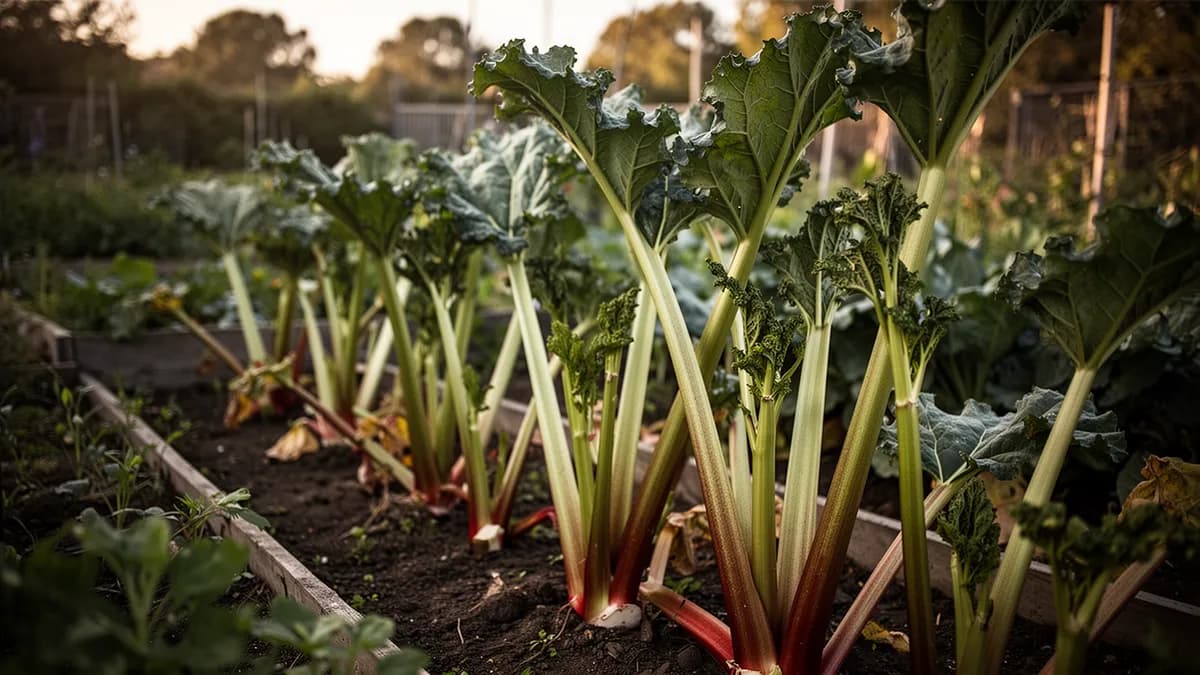
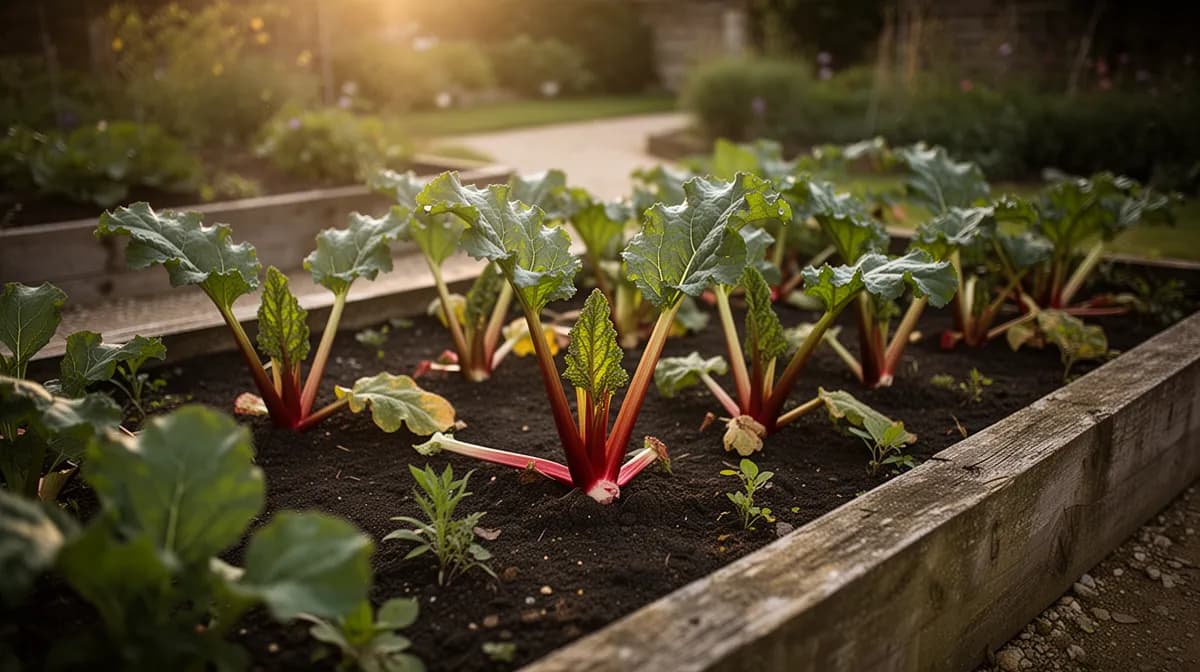
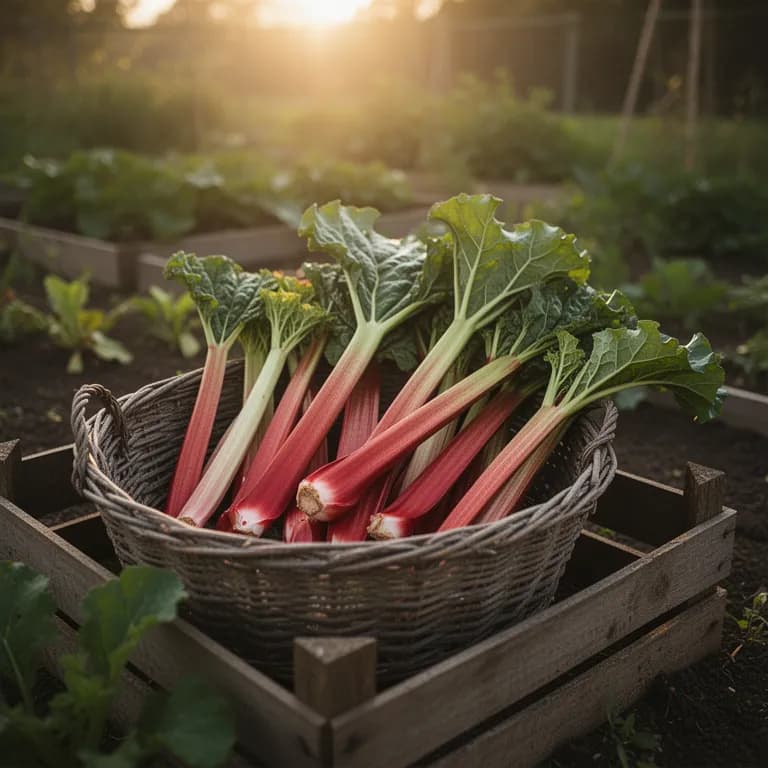
A hardy perennial grown for its tart, ruby-red stalks while the leaves contain toxic oxalic acid and should not be eaten. Plant crowns in rich, well-drained soil with plenty of compost and avoid harvesting for the first year to let the root system establish. Rhubarb prefers cold winters for proper dormancy and struggles in regions without a reliable chill period. Pull stalks by twisting them at the base rather than cutting, and pair the tangy flavor with strawberries for classic pies and preserves.
When to plant Rhubarb
Rhubarb is best established from crown divisions rather than seed — this is the standard method used by virtually all experienced gardeners, and for good reason. Crown divisions are clones of the parent plant, so you know exactly what variety, color, and vigor you are getting. Seed-grown plants are genetically variable (even within named varieties) and may produce thin green stalks instead of the thick red ones you expected. Obtain 1-2 year old crown divisions with at least one strong bud (eye) and a fist-sized piece of fleshy root from a nursery, garden center, or a fellow gardener willing to share when dividing their clump. The best time to plant divisions is early spring while the crown is still dormant, just as the buds begin to swell.
Plant divisions immediately after obtaining them — do not let the roots dry out. Dig a generous hole in your prepared bed, set the division so the top bud sits about 5 cm (2 inches) below the soil surface, and firm the soil around it. Water deeply after planting and apply 5-8 cm of mulch around (not on) the crown. If you receive divisions before the ground is workable, pot them temporarily in large containers with moist potting mix and keep them in a cool, sheltered location until you can plant out. Space crowns 90-120 cm apart — mature rhubarb plants are large and need room to spread. Mark the planting spots clearly, as the first shoots may take several weeks to emerge.
If starting from seed (slower and less predictable, but significantly cheaper and interesting for adventurous gardeners), sow indoors 8-10 weeks before the last frost date. Plant seeds 1 cm deep in moist seed-starting mix and maintain a temperature of 15-20°C (60-68°F). Germination is erratic and takes 7-21 days — be patient and keep the soil consistently moist. Once seedlings have 3-4 true leaves, transplant into individual 10 cm pots and grow on in bright light. Harden off for 7-10 days before transplanting outdoors after the last frost. Seed-grown rhubarb requires 2-3 full years before the first harvest, compared to 1-2 years for crown divisions, and you may want to cull any plants that produce thin, green, or stringy stalks in favor of the most vigorous, colorful specimens.
We watch the calendar so you don't have to
Tell us where you garden once. We line your sow and harvest windows up with your local season — and nudge you the moment each one opens.
See your exact Rhubarb dates
Share your location once and we'll line every sow and harvest date up with your real local season — not a generic seed-packet guess.
Used once to set your season · never sharedHow to grow Rhubarb
Rhubarb is a long-lived perennial that can produce for 15-20 years once established, making it one of the most rewarding investments in a home garden. It requires a cold winter dormancy period with temperatures below 5°C (40°F) for at least 8 weeks, making it poorly suited to zones warmer than 8. Plant rhubarb from crown divisions (not seed) in early spring, setting crowns 5 cm (2 inches) below the soil surface in a deeply prepared bed enriched with generous amounts of compost or aged manure.
Choose a permanent location carefully — rhubarb resents transplanting and will occupy its spot for years. Full sun produces the most stalks, but partial shade is tolerated in warmer zones. Space crowns 90-120 cm apart, as mature plants become quite large. Water deeply and regularly during the first growing season to establish a strong root system. Mulch heavily with straw or compost to suppress weeds and retain moisture.
Do not harvest any stalks during the first year after planting — the plant needs all its energy to build a strong root crown. In the second year, harvest lightly for just 2-3 weeks. From the third year onward, harvest freely for 8-10 weeks in spring. Always leave at least one-third of the stalks on the plant to maintain vigor. Remove any flower stalks immediately, as flowering diverts energy from stalk production. Top-dress with 5-8 cm of compost or well-rotted manure in late autumn after the foliage dies back, providing nutrients for the following season.

The bed planner spaces every plant for you
Pick a bed size and PlotMyGarden spaces your Rhubarb at 90 cm, counts how many fit, and lays the block out before you buy a single seed.
Rhubarb's best neighbours
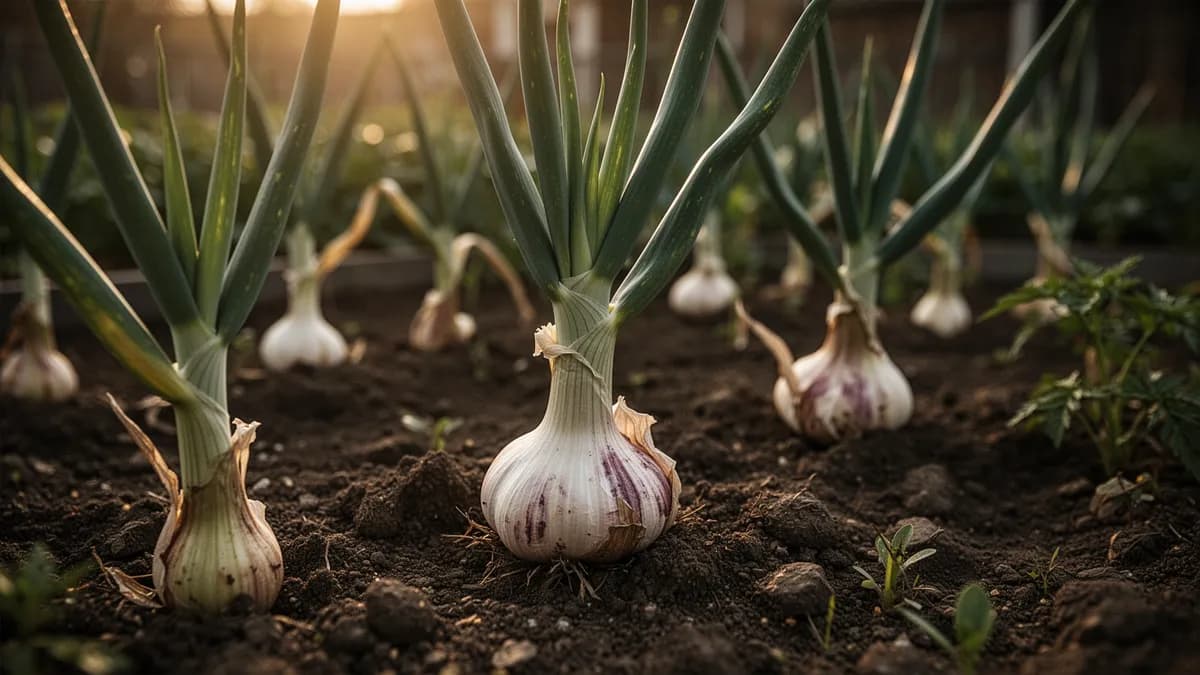
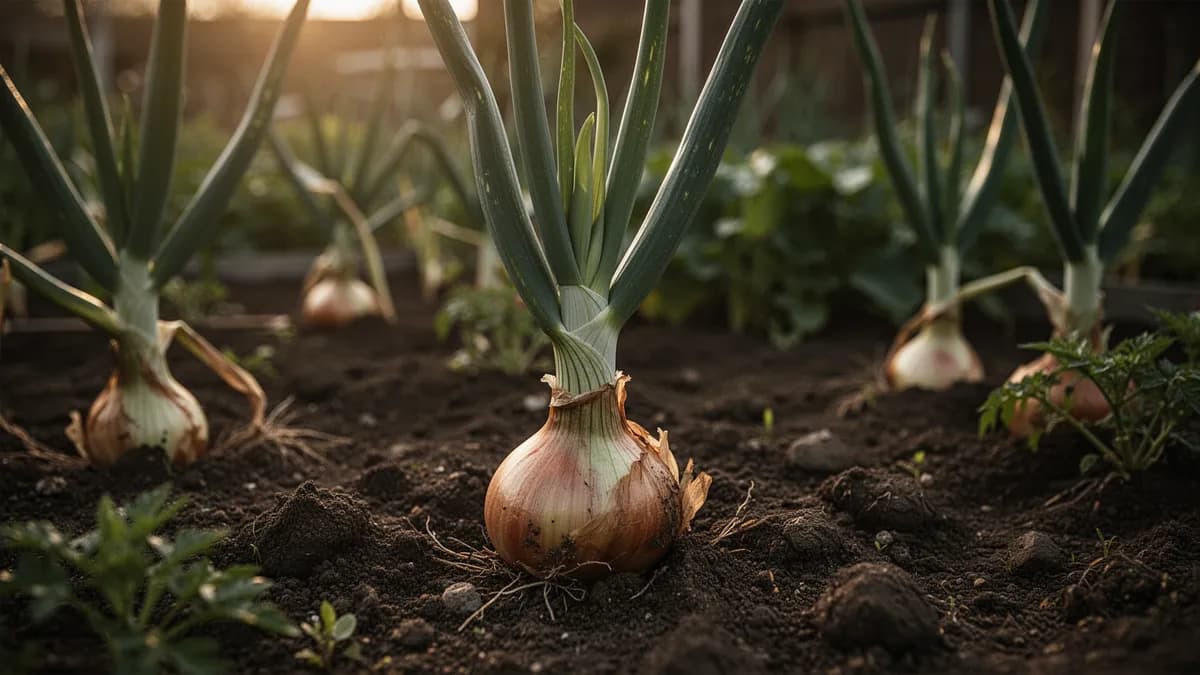
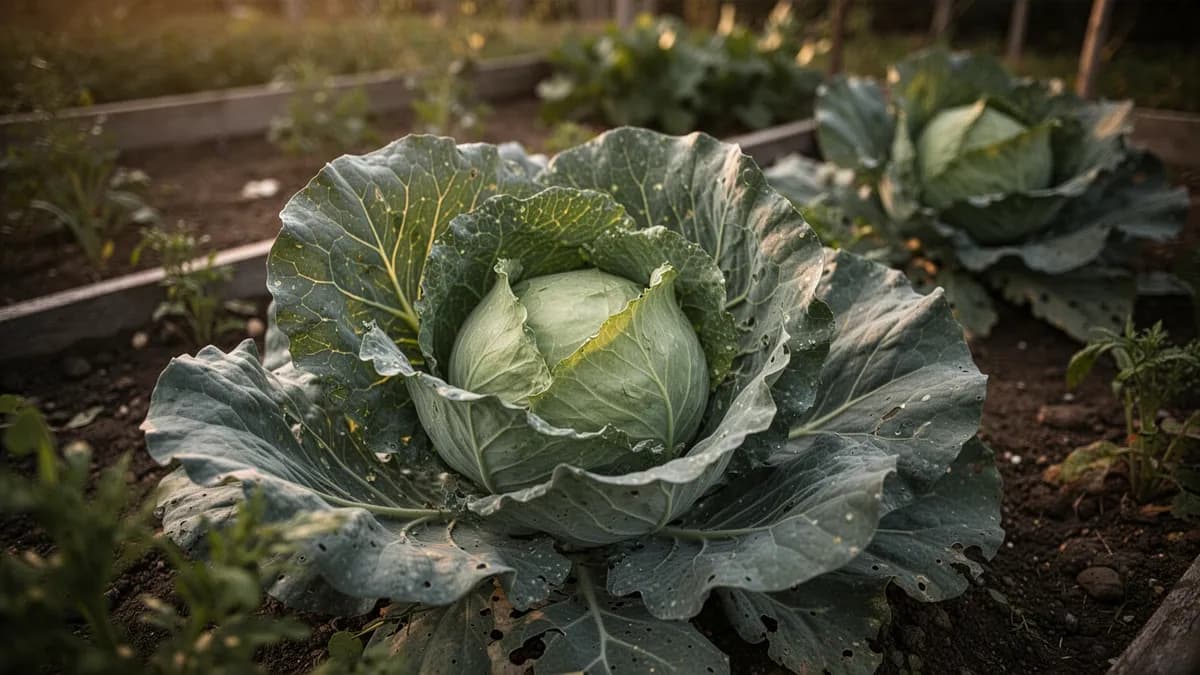
Garlic and onion planted around rhubarb beds help deter slugs and other pests with their pungent compounds. Cabbage family plants coexist well with rhubarb, and the large rhubarb leaves may help shade out weeds around neighboring plants. Columbine and other perennial flowers share similar growing conditions and make attractive bed mates. Avoid planting near fennel, which is allelopathic and may inhibit rhubarb growth. Keep rhubarb away from dock weeds, which harbor the rhubarb curculio beetle and should be removed from the vicinity.
It flags clashes before you plant, not after
Every plant you place is checked against its neighbours in real time. Good matches glow green; conflicts get flagged on the spot — so a season-wrecking mistake never makes it into the ground.
Feed it well
Rhubarb is a heavy feeder that demands rich, deeply prepared soil to sustain its massive leaf canopy and decades of productivity. Before planting, dig the bed to a depth of at least 30 cm (12 inches) and incorporate 10-15 cm of well-rotted manure or compost throughout. Ideal soil pH is 6.0-6.8 — test your soil and amend with garden lime if it falls below 6.0 or with sulfur if it exceeds 7.0. Rhubarb absolutely requires excellent drainage, as its fleshy crown will rot in waterlogged conditions; in heavy clay soil, plant in raised beds or mound the soil 15-20 cm above grade. Despite needing good drainage, rhubarb also demands consistent moisture because the enormous leaves transpire heavily on warm days.
The most important annual feeding happens in late autumn after the foliage has died back from frost. Top-dress each established clump with 5-8 cm of compost or well-rotted manure, spreading it in a ring around the crown but not directly on top of the buds. This autumn mulch feeds the plant, insulates the crown through winter, and improves soil structure over time. In spring, as the first pink buds push through the soil, scatter a balanced granular fertilizer (10-10-10) around each plant at a rate of about 100g per clump and water it in. Avoid fresh manure at any time of year — it can burn the crown and introduce weed seeds. A midsummer side-dressing of compost tea provides a gentle nutrient boost during the recovery period after harvesting ends.
Phosphorus is particularly important for rhubarb because it supports the robust root system that sustains this long-lived perennial. Work bone meal into the planting hole when establishing new crowns, and include it in your autumn top-dressing every few years. Potassium (potash) promotes strong stalks and disease resistance — wood ash is a good organic source, applied lightly in spring. Avoid high-nitrogen fertilizers during the growing season, as excessive nitrogen produces large, floppy leaves on thin stalks rather than the thick, sturdy stalks you want for cooking. Mulch around (not on) the crown with straw, shredded leaves, or wood chips to conserve moisture and suppress weeds — rhubarb does not compete well with grass and weeds that steal nutrients from the root zone.
Ideal Temperature
Hardiness Zone Compatibility
From seed to harvest, stage by stage
Crown Dormancy
Rhubarb crowns rest dormant through winter, requiring 500+ hours of cold exposure below 5°C (40°F) to break dormancy and trigger spring growth.
Spring Emergence
Bright red buds push through the soil surface in early spring, unfurling into tightly rolled leaves. The characteristic crimson color is most intense during this cool-weather growth.
Rapid Growth
Stalks elongate rapidly in cool spring weather, reaching 30-60 cm with large, dramatic leaves expanding to shade the crown. The plant draws heavily on root reserves and current nutrition.
Peak Harvest
Stalks reach full size and optimal flavor — firm, crisp, and tangy. Well-established plants (3+ years) support intensive harvesting during this period.
Flower Stalk Development
Thick central flower stalks may emerge, producing large creamy-white flower clusters. If allowed to bloom, the plant redirects energy from stalk production to seed development.
Summer Dormancy & Recovery
As temperatures rise above 24°C (75°F), growth slows and stalk quality declines. The plant shifts energy to building root reserves for the following spring. Leaves may become tattered.
Plant dormant crowns or divisions in early spring or late autumn, with the growing point 5 cm below the soil surface. Mulch heavily for winter protection.

Caring for Rhubarb month by month
What to do each month for your Rhubarb
July
You are hereHarvesting is over. Water regularly during hot weather and maintain mulch to keep roots cool. The plant is now rebuilding root reserves for next spring. Remove any tattered or yellowing leaves for neatness.
Harvesting Rhubarb
Never harvest rhubarb in its first year — the plant needs every leaf to photosynthesize and build a robust root crown that will sustain decades of production. In the second year, harvest lightly for just 2-3 weeks, taking no more than a few of the thickest stalks. From the third year onward, you can harvest freely for 8-10 weeks through spring and early summer, typically from April through late June depending on your climate. The key rule is to always leave at least one-third of the stalks on the plant at any given time so it can continue feeding the crown.
Pull stalks by grasping firmly at the base and twisting with a slight downward pull until the stalk separates cleanly from the crown — never cut with a knife, as the remaining stub can rot and introduce fungal disease into the crown. Harvest only stalks that are fully colored and at least 25 cm (10 inches) long with fully unfurled leaves. Thinner, shorter stalks are still feeding the plant and should be left alone. The color of the stalk (red vs. green) depends on the variety, not ripeness — green-stalked varieties like Victoria are perfectly ready to harvest when they reach full size. Remove the toxic leaves immediately after pulling and compost them or discard; the oxalic acid breaks down during composting and poses no risk to the compost pile.
Stop all harvesting by late June or early July to give the plant the remainder of the growing season to rebuild its energy reserves through photosynthesis. This recovery period is critical for next year's crop. After the final harvest, let the remaining leaves grow large and lush — they are the solar panels that recharge the crown for winter dormancy. In autumn, the leaves will yellow and collapse naturally after the first hard frost. Cut back the dead foliage to ground level and top-dress with compost. Forced rhubarb — grown under a dark cover in late winter — produces tender, pale pink stalks with a milder flavor, but forcing weakens the crown and should only be done every other year on well-established plants at least four years old.

We count the days and tell you when to pick
Tell us when you planted and PlotMyGarden tracks the 365-day countdown to harvest, then pings you the day your Rhubarb is ready.
Storage & Preservation
Fresh rhubarb stalks keep remarkably well. Wrap unwashed stalks loosely in a damp paper towel, place inside a plastic bag left slightly open, and store in the refrigerator crisper drawer for 2-3 weeks. Do not trim or cut before storing, as exposed flesh dries out and oxidizes quickly. If stalks begin to go limp, stand them upright in a glass of cold water in the refrigerator for a few hours to rehydrate — they will crisp up significantly. Avoid washing until you are ready to use them, as excess moisture promotes mold during storage.
Freezing is the best long-term preservation method and rhubarb freezes exceptionally well. Wash stalks, trim the ends, and cut into 2-3 cm pieces. Spread the pieces in a single layer on a parchment-lined baking sheet and flash-freeze for 2-3 hours, then transfer to labeled freezer bags with the air pressed out. This prevents the pieces from clumping into a solid block. Frozen rhubarb keeps for 12 months and can go directly into pies, crumbles, and sauces without thawing — it breaks down during cooking just like fresh. For a sugar-pack method, toss the cut pieces with sugar (1 cup sugar per 4 cups rhubarb) before freezing to draw out juices and create a ready-to-bake pie filling.
Rhubarb is outstanding for preserving in other forms as well. Stewed gently with sugar, it becomes a versatile compote for spooning over yogurt, oatmeal, pancakes, or ice cream — store refrigerated for up to two weeks or freeze for six months. Classic rhubarb-strawberry jam is a springtime canning tradition that captures the fleeting season in a jar, and rhubarb butter (cooked down with sugar and spices until thick and spreadable) is an underappreciated treat. Savory rhubarb chutney with onion, ginger, and vinegar pairs beautifully with cheese boards and roast meats, and processes safely in a water-bath canner for shelf-stable storage. Rhubarb simple syrup — equal parts rhubarb, sugar, and water simmered and strained — keeps refrigerated for a month and makes an elegant cocktail mixer, lemonade sweetener, or drizzle for desserts.
What goes wrong — and the fix
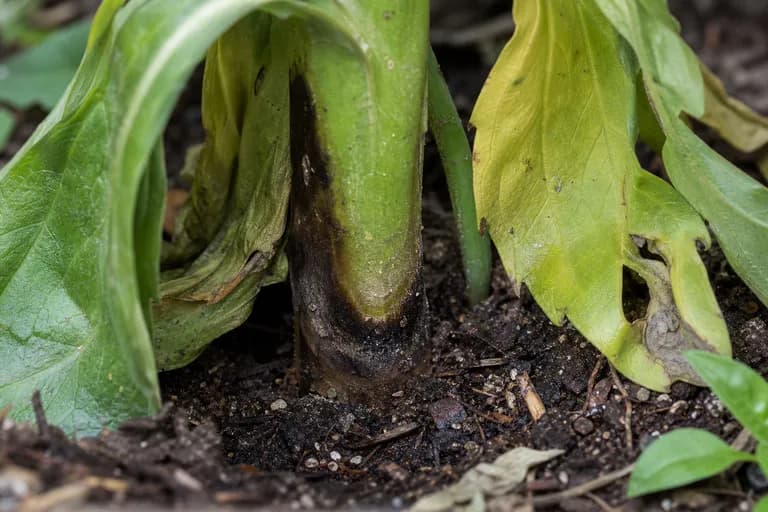
Crown Rot
DiseaseThe crown and base of stalks develop soft, watery rot that spreads inward. Affected stalks collapse at the base and pull away easily. The entire crown may disintegrate in severe cases, often after wet winters in poorly drained soil.
Rhubarb Curculio
PestA large rusty-brown snout beetle bores into rhubarb stalks and crowns, leaving frass-filled holes. Larvae feed inside the crown, weakening or killing the plant over time. Adults are often seen on dock weeds nearby.
Leaf Spot
DiseaseCircular brown or reddish spots appear on leaves, sometimes with lighter centers. Severe infections cause premature leaf drop, weakening the plant over time. Disease is worst in humid weather with poor air circulation.
Troubleshooting Common Problems
Thin, spindly stalks are the most common complaint and almost always indicate an underfed or overcrowded plant. Rhubarb clumps naturally expand outward over the years, and after 5-8 years the center of the clump becomes woody and unproductive while the outer edges crowd together competing for nutrients. The solution is division: in early spring while dormant, dig up the entire clump, cut it into sections with a sharp spade (each section needs at least one strong bud and a fist-sized piece of root), discard the woody center, and replant the vigorous outer divisions in freshly prepared soil. Annual top-dressing with 5-8 cm of compost or well-rotted manure in autumn prevents nutrient depletion between divisions.
Flowering (bolting) is another frequent issue — when rhubarb sends up a thick central flower stalk, it diverts enormous energy away from producing edible stalks. Remove flower stalks immediately by cutting them at the base as soon as they appear. Some varieties bolt more readily than others, and stress from drought, heat, or nutrient deficiency can trigger bolting. Soft, mushy stalks at the base of the plant signal crown rot, which is almost always caused by poor drainage or burying the crown too deeply. If caught early, you can cut away the affected tissue, dust with sulfur, and improve drainage. In severe cases, dig up the plant, salvage any healthy crown sections, and replant in a better-drained location or raised bed.
Rhubarb struggles in warm-winter climates (zones 8 and above) where it cannot achieve the 8-plus weeks of temperatures below 5°C (40°F) needed for proper winter dormancy. Without this chill period, stalks emerge thin and weak, and the plant gradually declines over a few years. There is no workaround for this — rhubarb is fundamentally a cold-climate crop. The leaves contain high concentrations of oxalic acid and are toxic if eaten — always remove and discard them immediately after harvesting stalks. They are safe to add to a home compost pile, as the oxalic acid breaks down during decomposition, but never feed rhubarb leaves to livestock or poultry. Finally, patience in the first year is essential: harvesting stalks from a newly planted crown robs it of the energy it needs to establish a strong root system and will reduce productivity for years to come.
Growing Tips
- Plant rhubarb crowns with the growing point exactly 5 cm below the soil surface — too shallow and they dry out, too deep and they rot. This is the single most critical factor for establishment success.
- Never harvest any stalks in the first year after planting — the plant needs every leaf to build the root reserves that will fuel decades of future production.
- Always twist and pull stalks from the base rather than cutting with a knife — cutting leaves a stub that can rot and introduce disease to the crown.
- Remove flower stalks immediately at the base whenever they appear — flowering diverts massive energy from stalk production and can weaken the plant for the following year.
- Stop all harvesting by late June (or after 8-10 weeks of picking) to allow the plant to rebuild root reserves through summer and autumn photosynthesis.
- Divide overcrowded clumps every 5-8 years in early spring or autumn — lift the crown and split into sections with 2-3 buds each. Replant immediately at the correct depth.
- Apply 10 cm of aged manure or compost as a mulch ring around (not on top of) the crown every spring — rhubarb is an extremely heavy feeder that rewards generous nutrition.
- For the sweetest forced rhubarb, cover a mature crown in January with a large bin or traditional forcing pot to exclude all light. Harvest the tender pink stalks in 6-8 weeks.
Pick your Rhubarb
Victoria
The most widely available variety, producing thick green stalks with pink-red blush. Vigorous and productive. Can be grown from seed, though crown divisions produce faster. Mildly tart flavor.
Crimson Red (Crimson Cherry)
Deep red stalks throughout with excellent color that holds when cooked. Sweeter than green varieties. Very hardy and productive. The best choice for the most visually striking pies and preserves.
Timperley Early
The earliest-producing variety, with stalks ready 2-3 weeks before other cultivars. Green stalks with light pink tinge. Excellent for forcing (covering with a bucket in late winter for early, tender pink stalks).
Canada Red
Reliably red-stalked variety with outstanding cold hardiness to zone 2. Sweet flavor with less tartness than green varieties. Vigorous producer. Excellent for cold-climate gardens.
Rhubarb is extraordinarily economical — a single crown division (free from a fellow gardener or €3-5 from a nursery) produces 2-5 kg of stalks annually for 15-20+ years with minimal care. At retail prices of €4-8/kg, a single plant yields €10-40 worth of rhubarb every year. Over its lifetime, one plant produces €200-800+ worth of rhubarb from a single initial planting — the best return on investment of any garden perennial.
Quick recipes

Classic Strawberry-Rhubarb Pie
60 minThe quintessential early-summer pairing — tart rhubarb balanced by sweet strawberries in a flaky butter crust. A timeless dessert that showcases rhubarb at its best.
8 ingredients
Quick Rhubarb Compote
15 minA simple, versatile sauce that transforms rhubarb into a ruby-red topping for yogurt, ice cream, pancakes, or oatmeal. Cooks down in minutes and keeps for a week.
6 ingredients
Rhubarb Crumble
40 minA rustic, comforting British classic — tangy stewed rhubarb topped with a buttery oat crumble. Serve warm with custard or vanilla ice cream for the ultimate spring dessert.
8 ingredientsCulinary Uses
Rhubarb is almost always cooked with sugar to balance its intense tartness, and this combination is the foundation of some of the most beloved spring desserts. Classic strawberry-rhubarb pie is the quintessential early-summer treat, where the tartness of rhubarb perfectly complements the sweetness of strawberries. Rhubarb crumble (or crisp) with a buttery oat topping is perhaps the simplest and most satisfying way to use a large harvest — simply toss chopped stalks with sugar and a squeeze of orange juice, top with a crumble mixture, and bake until bubbling. Stewed rhubarb compote, made by gently simmering chopped stalks with sugar and a splash of water until they collapse into a thick sauce, is endlessly versatile as a topping for yogurt, porridge, ice cream, pancakes, or pound cake.
Beyond classic desserts, rhubarb shines in preserves and beverages. It makes outstanding jam on its own or combined with strawberry, ginger, or vanilla. Rhubarb curd — made like lemon curd but with rhubarb juice — is a luxurious spread for scones and toast. Rhubarb simple syrup (equal parts rhubarb, sugar, and water, simmered and strained) produces a gorgeous pink syrup that elevates cocktails, lemonade, sparkling water, and prosecco. Rhubarb shrub (a drinking vinegar) is a traditional preparation that combines rhubarb with sugar and apple cider vinegar for a tangy, probiotic-rich mixer. In the British tradition, rhubarb fool — stewed rhubarb folded into whipped cream — is an elegant no-bake dessert that takes minutes to prepare.
In savory cooking, rhubarb's acidity works much like a squeeze of lemon or a splash of vinegar to brighten rich dishes. Rhubarb chutney with onion, ginger, and warm spices is a superb accompaniment to roast pork, grilled duck, or a sharp cheddar cheese board. A quick rhubarb salsa with red onion, cilantro, and a pinch of chili pairs beautifully with grilled salmon or seared scallops. Persian cuisine uses rhubarb in khoresh-e rivas, a lamb stew where the tartness cuts through the richness of the meat. The key flavor pairings to remember are strawberry, ginger, vanilla, orange, cinnamon, cardamom, and rose water — any of these will enhance rhubarb's unique tart character.
What's inside
Health Benefits
- Excellent source of vitamin K (26% DV per cup cooked) essential for proper blood clotting, bone metabolism, and calcium regulation in the body.
- Very low in calories (21 per cup) making rhubarb desserts significantly lighter than those made with fruit — when sugar is controlled, it's a diet-friendly ingredient.
- Rich in anthocyanins (the red pigments) and polyphenols with demonstrated anti-inflammatory and antioxidant properties in research studies.
- Good source of dietary fiber supporting digestive regularity, beneficial gut bacteria growth, and helping manage cholesterol levels.
- Contains calcium (86mg per cup), though some is bound by oxalic acid. Cooking reduces oxalate content and improves mineral availability.
- Provides manganese (supporting bone health), potassium (supporting heart function), and vitamin C (supporting immune health) in a low-calorie package.
Where Rhubarb comes from
Rhubarb (Rheum rhabarbarum) is native to central Asia, with wild species growing across Siberia, Mongolia, and the mountainous regions of western China. For over 5,000 years, Chinese medicine used dried rhubarb root (from Rheum palmatum and R. officinale) as a powerful purgative and digestive remedy — it was one of the most valuable traded medicinal plants on the Silk Road, sometimes worth more than cinnamon, opium, or saffron.
Rhubarb reached Europe via the Silk Road, and for centuries was known exclusively as a medicine rather than a food. The culinary use of rhubarb stalks only developed in 17th-18th century Britain, where cheap sugar from Caribbean colonies made it practical to sweeten the intensely tart stalks into pies, crumbles, and preserves. The technique of 'forcing' rhubarb — growing it in heated darkness to produce tender, sweet, early-season stalks — was accidentally discovered in 1817 at the Chelsea Physic Garden in London when soil was heaped over dormant crowns during construction.
By the Victorian era, rhubarb had become one of the most popular dessert ingredients in Britain, especially in the industrial north where the 'Rhubarb Triangle' of West Yorkshire produced vast quantities using coal-heated forcing sheds. Forced rhubarb from this region is now protected by EU PDO status. British and Northern European emigrants carried rhubarb to North America, Australia, and New Zealand, where it remains a cherished garden perennial. Today, rhubarb is experiencing a culinary renaissance, appearing in cocktails, savory sauces, and fine-dining desserts alongside its traditional role in pies and crumbles.
Rhubarb: did you know?
Fascinating facts about Rhubarb
Rhubarb was classified as a fruit by a New York court in 1947 specifically to reduce import tariffs — botanically it is unambiguously a vegetable (we eat the leaf stalk, not the fruit).
Rhubarb questions, answered
When should I plant Rhubarb?
What are good companion plants for Rhubarb?
What hardiness zones can Rhubarb grow in?
How much sun does Rhubarb need?
How far apart should I space Rhubarb?
What pests and diseases affect Rhubarb?
How do I store Rhubarb after harvest?
What are the best Rhubarb varieties to grow?
What soil does Rhubarb need?
Are rhubarb leaves really poisonous?
Why shouldn't I harvest rhubarb in the first year?
Can I grow rhubarb in a warm climate?
How do I force rhubarb for an early harvest?
When should I divide my rhubarb plant?
Is rhubarb a fruit or a vegetable?
You just read the theory. Now grow it on autopilot.
Everything that makes Rhubarb fiddly — the timing, the spacing, the companions, the harvest window — is exactly what PlotMyGarden handles for you, for every plant in your garden.
A plan that knows your weather
Set your location once. Get sow, feed and harvest dates built around your real last-frost date and live forecast — no more guessing from a generic seed packet.
From the “When to plant” sectionDrag-and-drop bed planner
Design beds on a grid. Every plant snaps to its proper spacing, and you can see your whole season laid out before you spend a cent on seed.
From the “Growing guide” sectionCompanion conflicts, caught early
200+ good-and-bad pairings checked live as you plant — so a season-wrecking mistake never makes it into the ground.
From the “Companions” sectionReminders you'll actually act on
“Water the beans.” “Pick today before it turns.” Timely, specific, and tied to the plants you're really growing.
From the “Harvest” sectionSuccession, scheduled
Want a harvest for six weeks, not six days? It spaces your sowings automatically and reminds you when each new block is due.
From the “When to plant” sectionA record that gets smarter
Every harvest you log teaches it your garden. Next year's plan starts from what actually worked in your soil, not a textbook's.
From the “Overview” sectionPlant these alongside Rhubarb
More Stalks & Stems
Keep Rhubarb away from these
Grow your best Rhubarb yet — and everything around it.
Start a free plan today. Lay out your beds, drop in your Rhubarb, and let PlotMyGarden handle the timing, spacing, companions and reminders from seed to harvest basket.