Corn
A tall, wind-pollinated grass best planted in blocks of at least four rows to ensure proper pollination and full ear development.





On this pageOverview
Meet Corn
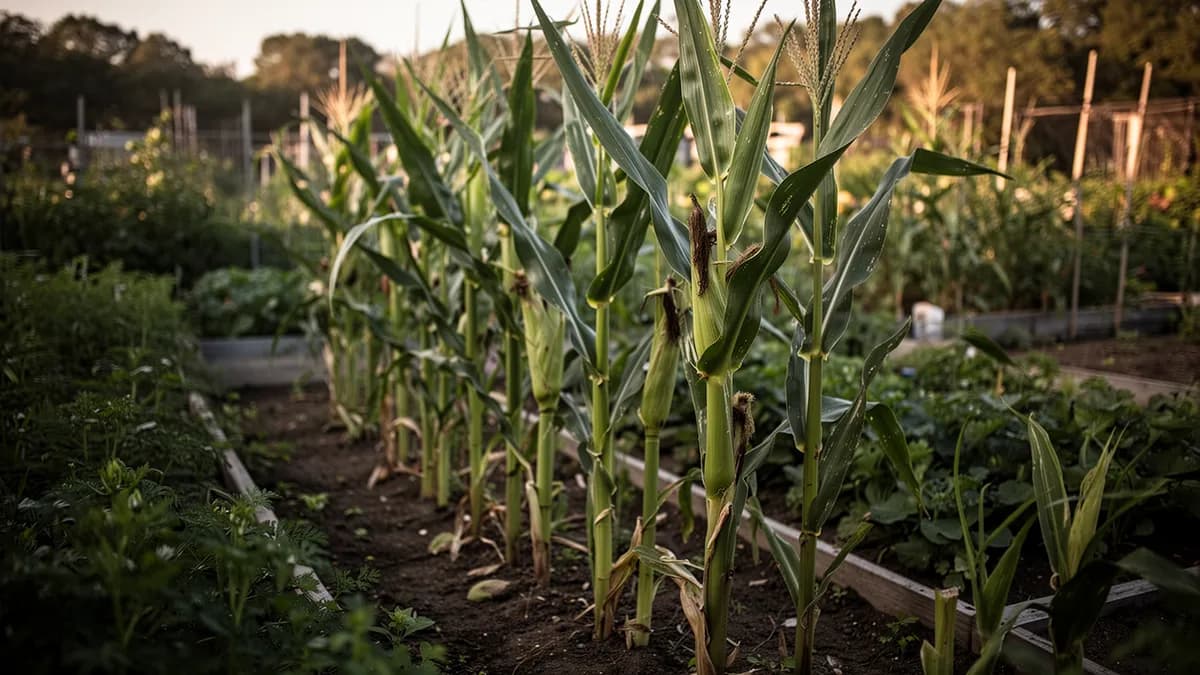
A tall, wind-pollinated grass best planted in blocks of at least four rows to ensure proper pollination and full ear development. Corn is a heavy feeder requiring nitrogen-rich soil and benefits from side-dressing with fertilizer when plants reach knee height. Water deeply during tasseling and silking stages, as drought stress at this time results in poorly filled ears. Harvest when silks turn brown and a punctured kernel releases milky rather than clear juice.
When to plant Corn
Corn should almost always be direct-sown — it has a large, vigorous taproot and fibrous root system that resents disturbance, and it grows so rapidly in warm soil that indoor starting provides minimal advantage. Wait until soil temperatures reach at least 16°C (60°F) at 5 cm depth — or 18°C (65°F) for supersweet (sh2) varieties, which have shrunken endosperm with less stored energy and rot easily in cool, wet conditions. Use a soil thermometer rather than guessing; air temperature can be 10°C warmer than the soil in spring.
Sow seeds 2.5 cm (1 inch) deep and 20-30 cm apart in blocks of at least 4 rows spaced 75-90 cm apart. Block planting is essential — corn is wind-pollinated, and single rows result in poor pollination and sparsely filled ears. For a visual guide, imagine a square or rectangle rather than a ribbon. Germination takes 7-10 days in warm soil but can take 2-3 weeks in cooler conditions, during which seeds may rot. In short-season areas (zones 3-5), pre-warm soil with black plastic mulch for 2 weeks before planting to gain precious growing time.
For staggered harvests, make succession plantings every 2 weeks from your last frost date through early summer, or plant early-season (70 days), mid-season (80 days), and late-season (90+ days) varieties simultaneously. Isolate supersweet varieties from other corn types by at least 75 meters or stagger planting dates by 2+ weeks to prevent cross-pollination that produces tough, starchy kernels. If you must start seeds indoors in very short-season areas, use deep biodegradable peat pots (10+ cm) and transplant carefully without disturbing roots, no more than 2-3 weeks before outdoor planting.
Your Corn Year
Composed for Zone 7 · typical seasons · frost passes Apr 2, returns Nov 1
Plant Corn Apr – Jun, pick Aug – Oct. Check the planting methods below and set your climate to personalize these windows.
How to grow Corn
Corn demands warm soil, full sun, and generous fertility to produce well. Wait until soil temperatures reach at least 16°C (60°F) before planting — seeds rot in cold ground. Prepare beds by working in 8-10 cm of aged compost or well-rotted manure, as corn is one of the heaviest feeders in the vegetable garden. Sow seeds 2.5 cm (1 inch) deep and 20-30 cm apart in blocks of at least 4 rows rather than single long rows, since corn is wind-pollinated and block planting ensures thorough pollination and fully filled ears.
Thin seedlings to 30 cm apart when they reach 10 cm tall. As plants grow, hill soil around the base of stalks when they reach 30 cm tall to support the shallow root system and improve stability against wind. Apply a high-nitrogen side-dressing when plants are knee-high and again when tassels first appear — corn's nitrogen appetite is enormous during rapid growth and grain filling.
Water deeply and consistently, providing 4-5 cm (1.5-2 inches) per week, with extra attention during tasseling and silking when drought causes the most damage to ear development. Mulch between rows with straw to conserve moisture and suppress weeds. Avoid cultivating deeply near plants as corn has a shallow, spreading root system easily damaged by hoeing. Consider succession planting every 2 weeks for a staggered harvest rather than one overwhelming crop.
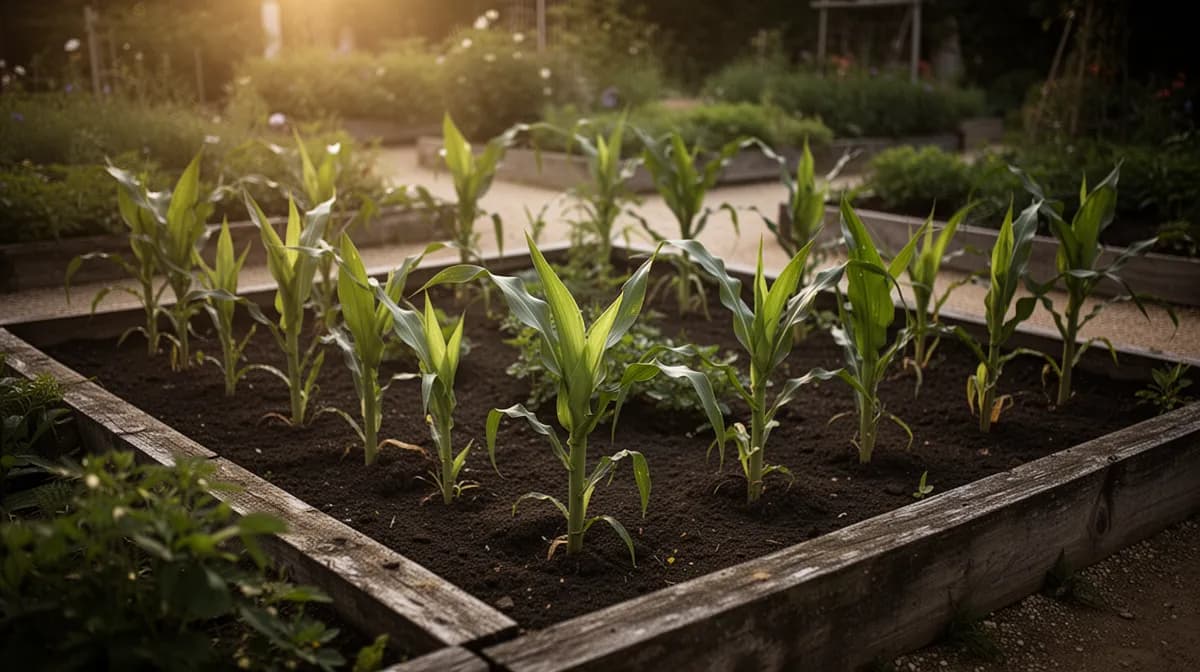
32 plants fit a 4 × 8 ft bed
Each Corn wants 30 cm of elbow room. The planner keeps that spacing for you — every plant, every bed.
Corn's best neighbours
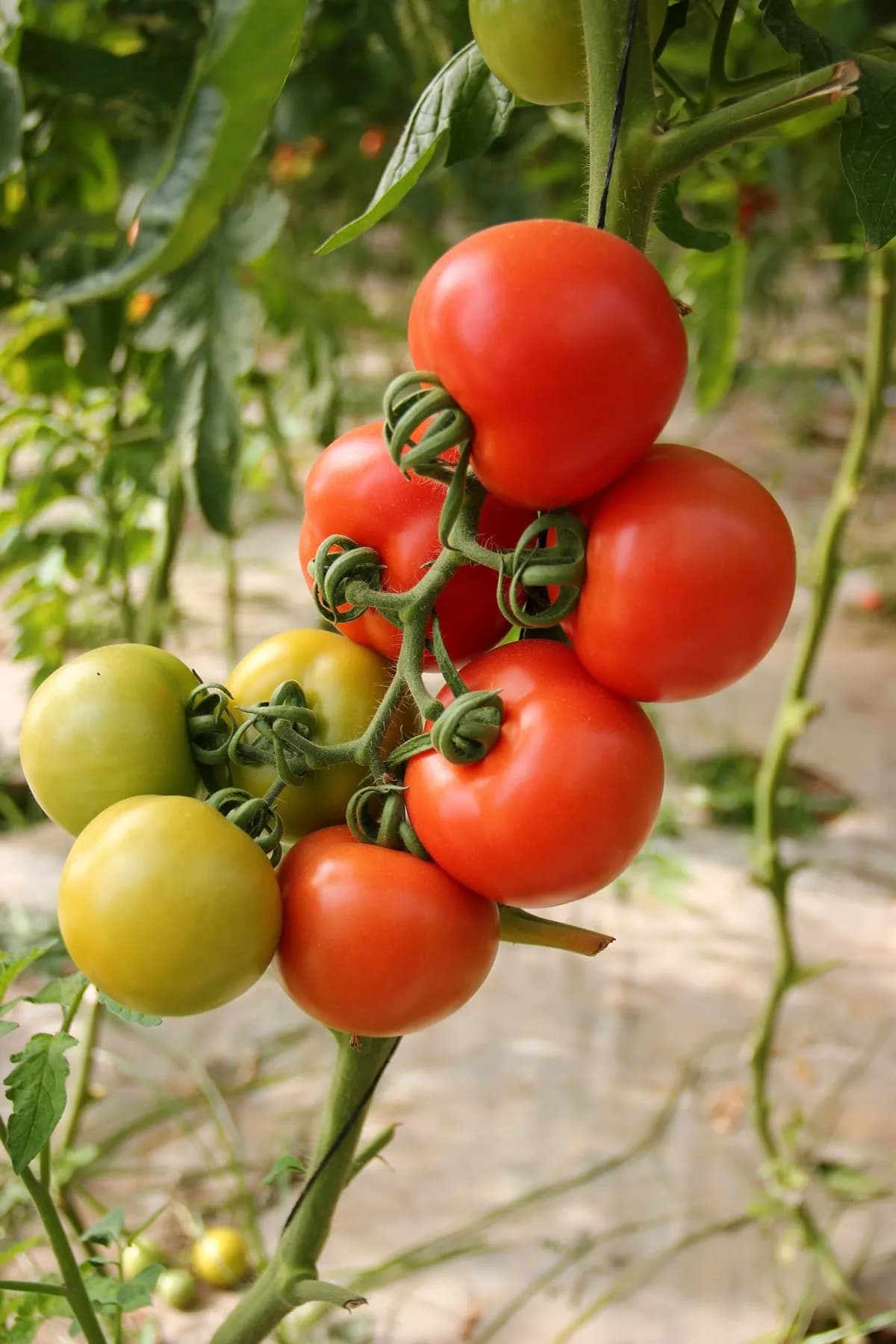
The Three Sisters planting — corn, beans, and squash — is one of the oldest and most effective companion planting schemes. Corn provides a natural trellis for climbing beans, beans fix atmospheric nitrogen that corn desperately needs, and sprawling squash leaves shade the soil to retain moisture and suppress weeds. Marigolds planted at block edges deter many corn pests. Avoid planting corn near tomatoes, as both are susceptible to the same earworm species and proximity concentrates pest pressure. Corn also competes aggressively with shallow-rooted crops for water and nutrients.
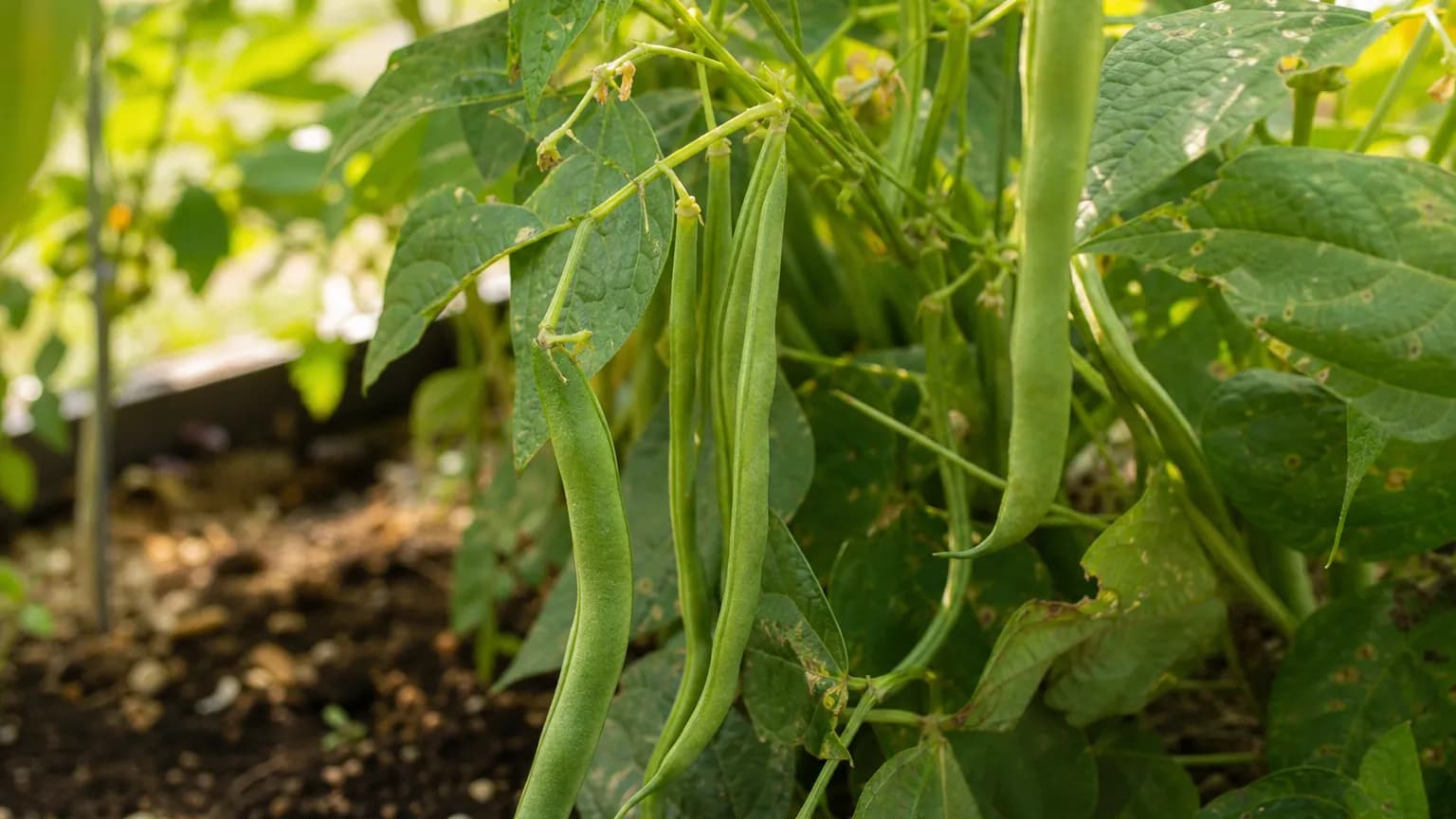
Green Beans belongs beside it. Tomato doesn't.
Old growers' knowledge, checked against Corn's real companion table below — test any plant you're growing.
Try Corn in a bed — right here
A real planner bed with Corn already in it. Tap a companion to place it and watch the pairing checks answer — green for good neighbours, red for a clash.


Related growing guides
Feed it well
Corn is the heaviest feeder in most vegetable gardens, requiring rich, well-drained soil with a pH of 6.0-6.8. Before planting, incorporate 8-10 cm of aged compost or well-rotted manure into the top 30 cm of soil, along with a balanced granular fertilizer (10-10-10) at approximately 1 kg per 10 square meters. If your soil has not been enriched recently, double the compost rate — you almost cannot overfeed a corn bed. In clay soils, add perlite or coarse sand to improve drainage, as corn roots will not tolerate standing water.
Nitrogen management is critical for corn success. The plant's nitrogen appetite is enormous during two key periods: rapid vegetative growth (knee-high stage) and ear filling (tassel emergence). Side-dress with a high-nitrogen fertilizer such as blood meal, feather meal, or ammonium sulfate when plants reach 30 cm tall, working it into a shallow trench 15 cm from the stalks and watering in. Apply a second side-dressing when tassels emerge. For organic growers, fish emulsion applied every 2-3 weeks provides a steady nitrogen supply. Avoid broadcasting nitrogen on leaves — it can burn foliage.
Phosphorus and potassium are also important: bone meal provides phosphorus for strong roots and ear development, while potash or greensand supplies potassium that strengthens stalks against wind lodging. In acidic soils below pH 6.0, apply agricultural lime 2-3 months before planting to improve nutrient availability. After harvest, corn stalks are excellent composting material — shred them first to speed decomposition. Rotate corn to a different bed each year and follow with nitrogen-fixing legumes (beans or peas) to naturally replenish what corn depleted.
Ideal Temperature
Hardiness Zone Compatibility
From seed to harvest, stage by stage
Germination
The kernel absorbs water, swelling to twice its size. The radicle (primary root) pushes downward, anchoring the seed, while the coleoptile — a protective sheath covering the first leaf — pushes upward through the soil surface. Corn emerges as a single spike-like shoot.
Vegetative Growth (V-stages)
Plants grow rapidly, producing a new leaf every 3-4 days. The stalk thickens and a shallow but extensive root system spreads outward. By the knee-high stage (V6), the growing point rises above the soil surface and the plant begins its explosive upward growth — gaining up to 8 cm per day in ideal conditions.
Tasseling
The tassel emerges from the top of the stalk, unfurling branching structures loaded with pollen sacs. Each tassel produces 2-5 million pollen grains over 5-8 days. Pollen is released primarily in the morning and carried by wind to the silks of neighboring plants.
Silking & Pollination
Silks emerge from developing ear shoots — long, thread-like strands that each connect to a single ovule (future kernel). Each silk must receive at least one pollen grain for its kernel to develop. The 5-7 day silking window is the most critical period in the corn plant's life.
Grain Fill
Pollinated ovules develop into kernels that fill with sugary liquid. Over 3 weeks, kernels progress through the blister, milk, and dough stages. The plant channels enormous energy from leaves and stalk into ear development — this is when kernel count and size are determined.
Harvest
Silks turn brown and dry back. Ears feel full and firm through the husk. The kernel puncture test shows milky juice at peak sweetness. Husks may begin to loosen slightly from the ear tips. Sweet corn should be harvested promptly — waiting even a few days past peak causes rapid sugar-to-starch conversion.
Maintain consistent soil moisture without waterlogging. Soil must stay above 16°C. Do not fertilize until plants are established. Protect from birds, which can pull emerging seedlings to eat the kernel.
Caring for Corn month by month
What to do each month for your Corn
October
You are hereFinal harvests. Shred and compost stalks or till them into the soil. Harvest dried corn for storage. Plant cover crops in cleared beds to protect and enrich soil over winter.
Know exactly what to do in your garden — every month
One email at the start of each month: what to sow, plant, and tackle right now — for your Corn and everything growing around it. Plus a short starter course that helps you dodge the classic mistakes.
- What to do, right now
- Matched to your season
- Starter course included
Harvesting Corn
Sweet corn is ready for harvest approximately 18-22 days after silks first emerge, when the silks have turned completely brown and dried back to the husk while the husks themselves remain green and tight. The most reliable test is the fingernail puncture method: peel back a small section of husk at the ear tip and pierce a kernel — milky white juice indicates peak sweetness and starch balance, clear watery juice means the ear is still immature, and thick pasty juice means it has passed prime.
Harvest in the early morning when temperatures are cool and sugar content is at its daily peak — corn sugars are highest before the plant starts using them for daytime metabolic processes. Grasp the ear firmly, pull it downward and away from the stalk, then twist — the ear should snap off cleanly. Each stalk typically produces 1-2 ears; the top ear matures first, with the lower ear ready 1-2 weeks later and usually slightly smaller.
Process or eat sweet corn as soon as possible after picking. Traditional sugary (su) varieties begin converting sugars to starch within 30 minutes of harvest — the old saying about having the water boiling before you pick is based in real science. Modern sugar-enhanced (se) and supersweet (sh2) varieties retain sweetness much longer, but nothing beats the flavor of corn eaten within an hour of picking. If growing multiple varieties, isolate them by at least 75 meters or stagger planting by 2 weeks to prevent cross-pollination, which can produce starchy kernels in supersweet ears.
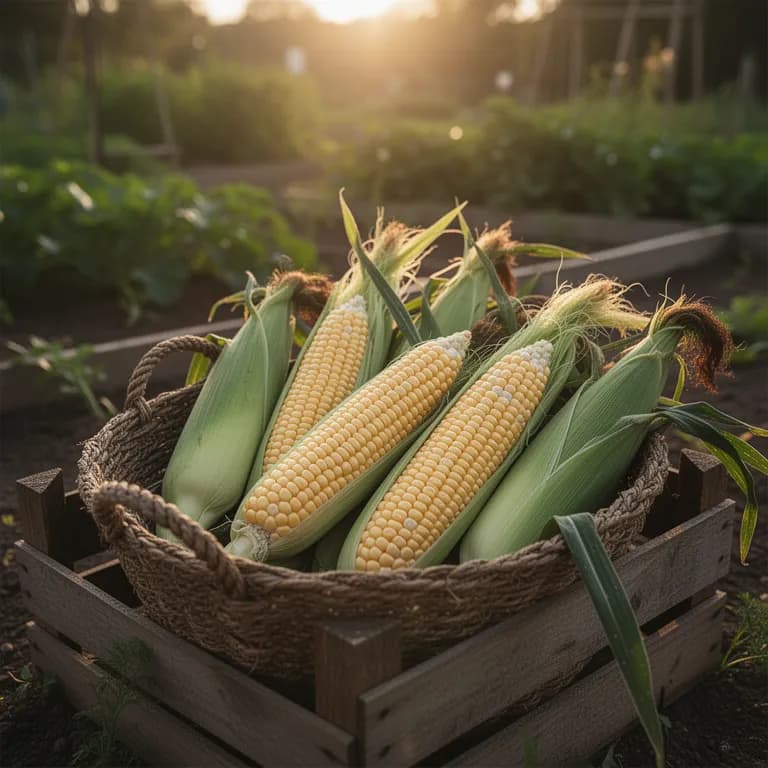
assuming you plant when the window opens — set your real date
Pick Corn promptly and the plant keeps producing.
Storage & Preservation
Fresh corn degrades faster than almost any other vegetable — sugar-to-starch conversion begins immediately at harvest and accelerates with warmth. Store unhusked ears in the coldest part of your refrigerator and eat within 1-2 days for the best experience. Keeping the husks on acts as a natural moisture barrier and slows deterioration. If you can't eat corn within 48 hours, blanch and freeze it immediately rather than letting it sit.
Freezing is the gold-standard preservation method for sweet corn. Husk ears, remove silk, and blanch in rapidly boiling water — 4 minutes for small ears, 6 minutes for large. Cool immediately in an ice bath for the same duration, then either freeze whole ears wrapped tightly in plastic wrap and foil, or cut kernels from the cob for loose-pack freezing. For cut kernels, spread on parchment-lined sheet pans to freeze individually before transferring to labeled freezer bags — this prevents clumping and lets you pour out exactly the amount you need. Properly blanched frozen corn keeps 10-12 months.
Pressure canning is the only safe method for shelf-stable corn preservation — corn is a low-acid food and must never be water-bath canned. Process pint jars at 10 PSI for 55 minutes, following tested USDA recipes exactly. For a quick preserved product, corn relish (a sweet-tangy condiment with peppers and vinegar) can be water-bath canned safely due to the added acid. Dehydrating is another excellent option: blanch kernels, spread on dehydrator trays, and dry at 52°C (125°F) for 8-12 hours until kernels are hard and brittle. Dried corn rehydrates well in soups and stews, and can be ground into cornmeal.
What goes wrong — and the fix
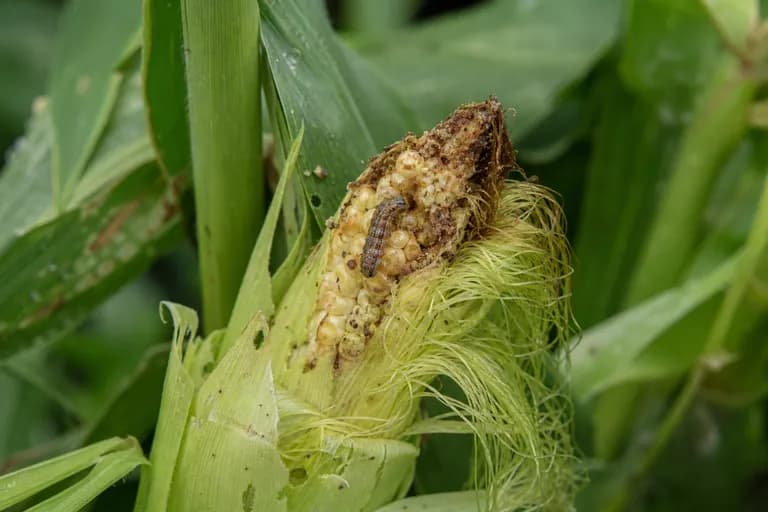
Corn Earworm
PestGreen, brown, or tan caterpillars feeding on kernels at the tip of developing ears. Entry holes with frass visible at the silk end. Damage opens ears to secondary fungal infections.
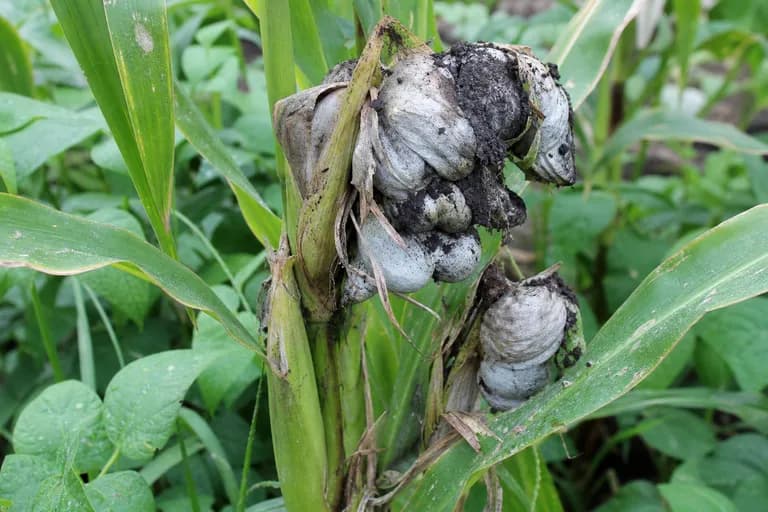
Corn Smut
DiseaseLarge, swollen grayish-white galls that rupture to release masses of dark powdery spores, appearing on ears, tassels, and stalks. Individual kernels may swell to many times their normal size.
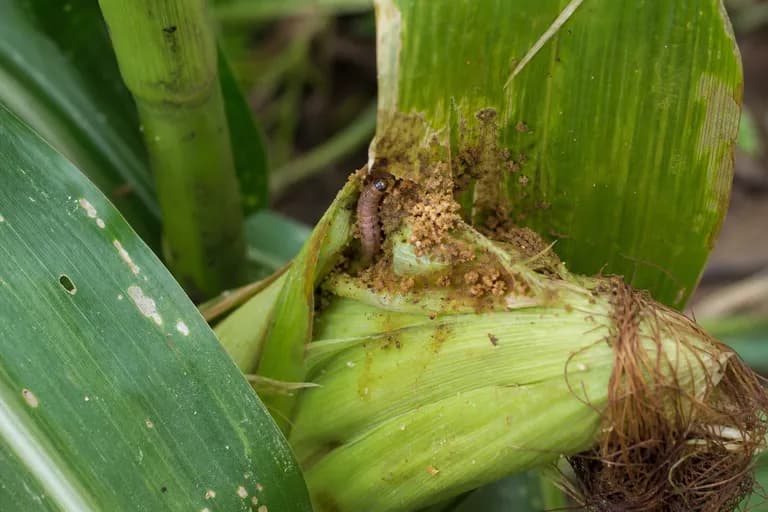
European Corn Borer
PestSmall holes in stalks and ears with sawdust-like frass. Stalks may break at boring sites. Larvae tunnel through the stalk interior, disrupting nutrient and water transport.
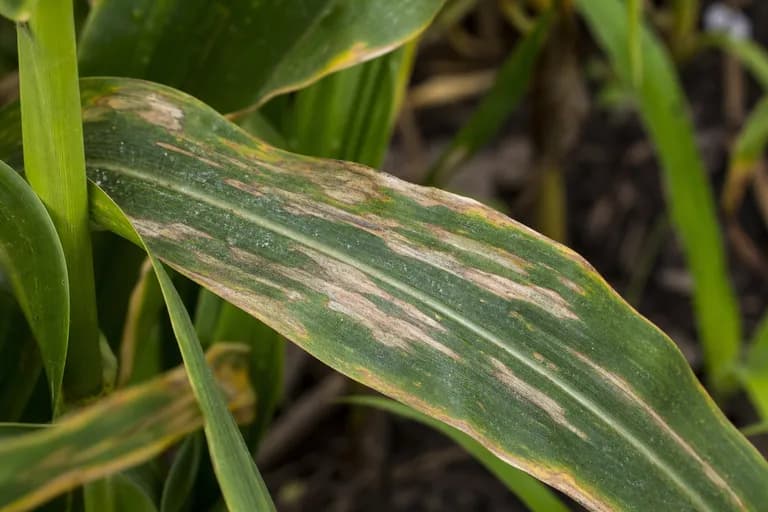
Northern Corn Leaf Blight
DiseaseLong, elliptical, grayish-green to tan lesions on leaves, 2-15 cm long. Severe infections cause extensive leaf death, reducing the plant's ability to fill ears properly.
Troubleshooting Common Problems
Poorly filled ears with missing or scattered kernels are the most common frustration and almost always trace to a pollination problem. Corn is wind-pollinated, and pollen must travel from the tassel at the top of one plant to the silks of another — each individual silk connects to a single kernel, and any silk that doesn't receive a pollen grain produces a blank space on the cob. Always plant corn in blocks of at least 4 rows (never a single long row) and ensure blocks face the prevailing wind direction. On calm, humid mornings, you can improve pollination by gently shaking tassels to release pollen.
Ears with good filling in the middle but bare tips indicate drought stress during the silking period — the most critical watering window in corn's entire lifecycle. Even a single day of severe water stress while silks are receptive can result in 20-30% yield loss. Provide at least 4-5 cm of water per week during tasseling and silking, and never let the soil dry out completely during this 2-week period.
Stalks falling over (lodging) result from shallow root systems, high winds, or corn rootworm larvae feeding on roots. Hilling soil 8-10 cm around stalk bases when plants are 30 cm tall encourages brace root formation and significantly improves wind resistance. Short, stunted plants with purple-tinged leaves in early season indicate phosphorus deficiency, common in cold soils where phosphorus becomes unavailable — this usually self-corrects as soil warms, but bone meal supplements help. Suckers (tillers) emerging at the stalk base are normal and do not need removal — they can actually strengthen the plant by providing additional brace roots.
Growing Tips
- Block planting is non-negotiable — corn is wind-pollinated, and single rows produce poorly filled ears. Plant in a minimum 4×4 block for reliable pollination. Larger blocks give even better results.
- Use a soil thermometer, not air temperature, to time planting. Corn seeds rot in cold, wet soil. Wait for consistent 16°C (60°F) readings at 5 cm depth — and 18°C for supersweet varieties.
- Corn is the heaviest nitrogen feeder in the garden. Side-dress twice: once at knee-high and again at tassel emergence. Blood meal, fish emulsion, or high-N granular fertilizer all work.
- Hill soil 8-10 cm around stalk bases when plants are 30-45 cm tall. This encourages brace root development from lower nodes and dramatically improves wind resistance — lodged corn rarely recovers.
- Water is most critical during tasseling and silking (roughly days 55-70). Drought during this 2-week window permanently reduces kernel count. Provide at least 5 cm per week during this period.
- Isolate supersweet (sh2) varieties from other corn types by 75+ meters or 2+ weeks of planting time to prevent cross-pollination, which produces starchy, tough kernels in supersweet ears.
- Protect ripening ears from raccoons, squirrels, and birds. Electric fence is the most effective raccoon deterrent. For birds, drape lightweight bird netting over the block. Harvest promptly when ready.
- Succession-plant every 2 weeks from last frost through early summer, or plant early, mid, and late varieties simultaneously for a staggered harvest spanning 4-6 weeks.
Grow your best Corn yet — and everything around it.
Start a free plan today. Lay out your beds, drop in your Corn, and let PlotMyGarden handle the timing, spacing, companions and reminders from seed to harvest basket.
Pick your Corn
Silver Queen
A classic white sweet corn with large ears and exceptionally sweet, tender kernels. 92 days to maturity. Tall plants require wind protection. Long considered the gold standard of sweet corn flavor.
Peaches and Cream
A bicolor variety with mixed yellow and white kernels offering outstanding sweetness. 83 days to maturity. Vigorous plants with good disease resistance. Excellent for fresh eating and freezing.
Golden Bantam
An heirloom open-pollinated yellow corn with rich, old-fashioned corn flavor prized since 1902. Shorter plants at 150 cm. 78 days. Perfect for home gardeners who want to save seed.
Honey Select
A triple-sweet hybrid combining sugar-enhanced and supersweet genetics for outstanding flavor that holds well after harvest. 79 days. Vigorous plants with improved cold-soil germination.
Incredible
A widely adapted yellow supersweet variety with large ears and excellent tip fill. 85 days to maturity. Holds sweetness well after harvest, making it ideal for farmers' market growers.
A $3-4 seed packet plants about 50-60 seeds, which can yield 40-50 ears of sweet corn worth $30-60 at farmers' market prices ($1-1.50 per ear for organic). The real value is in flavor — garden-fresh corn eaten within an hour of picking is a completely different experience from store-bought ears that may be 3-7 days old and have already lost much of their sweetness. Growing corn is one of those crops that truly justifies the garden space in pure taste terms.
Quick recipes
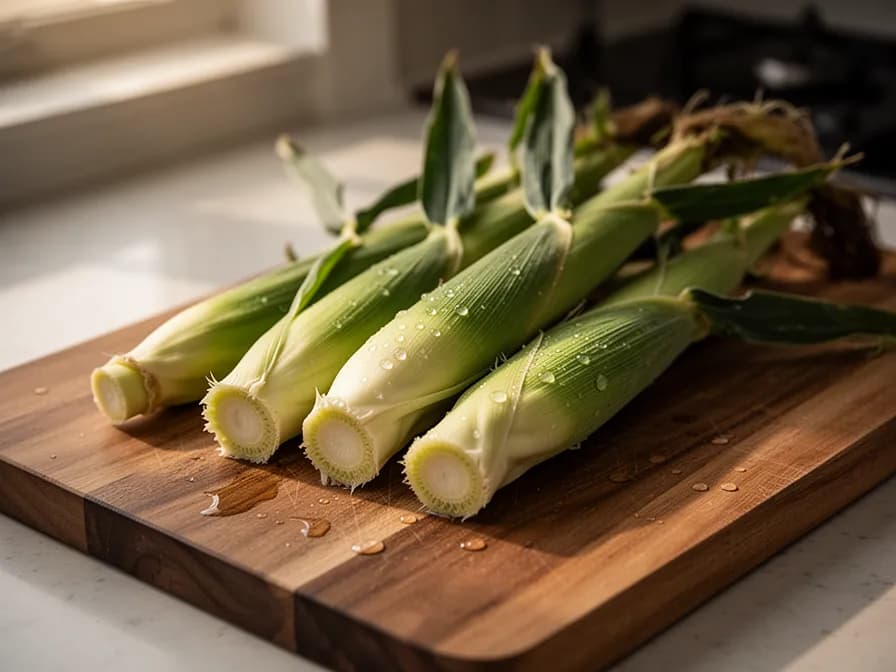
Mexican Street Corn (Elote)
15 minThe ultimate grilled corn experience — charred ears slathered with creamy mayo-sour cream mixture, rolled in salty cotija cheese, and finished with lime juice and chili powder. Messy, addictive, and perfect for summer barbecues.
8 ingredientsFresh Corn & Tomato Salsa
15 minA bright, crunchy summer salsa that showcases two garden favorites at their peak. Raw sweet corn kernels provide a satisfying pop against juicy tomatoes, spicy jalapeño, and fresh lime. Best served within hours of making.
7 ingredients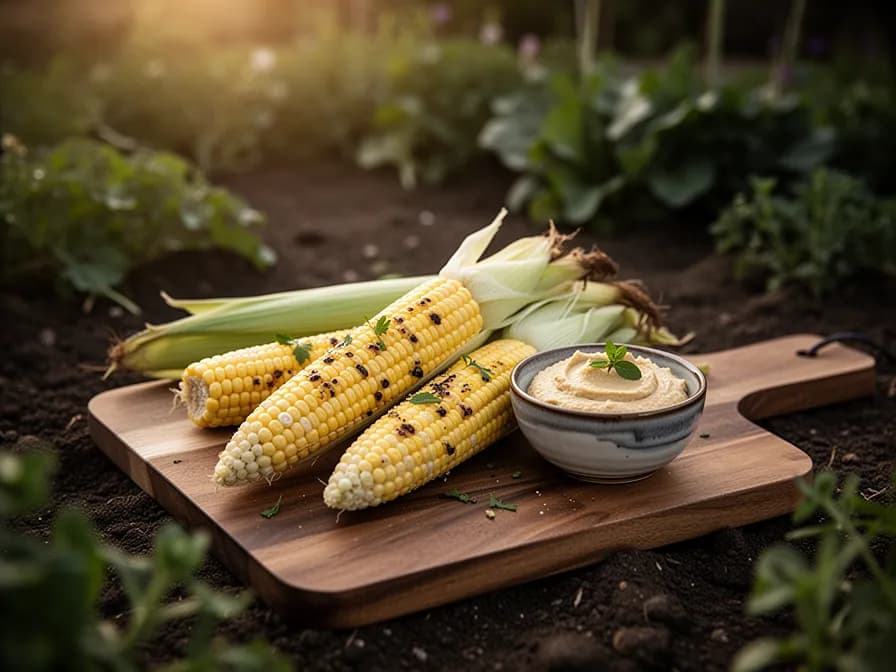
Creamy Corn Chowder
35 minA rich, comforting soup that transforms sweet corn into silky, golden perfection. Fresh kernels and corn cob stock (the secret ingredient) create layers of corn flavor that no canned soup can match.
8 ingredientsCulinary Uses
Sweet corn straight from the garden is one of summer's greatest pleasures — the difference between corn eaten within an hour of picking and supermarket corn that's been sitting for days is a revelation that converts many non-gardeners into enthusiastic growers. The simplest preparations are often the best: boil husked ears in unsalted water for 3-5 minutes (salt toughens kernels), grill unhusked ears over medium heat for 15-20 minutes turning regularly, or roast husked ears at 200°C (400°F) for 20 minutes until kernels blister and caramelize.
Cut kernels open up endless possibilities. Mexican elote (grilled corn slathered with mayo, cotija cheese, lime juice, and chili powder) is a street food sensation, while fresh corn salsa with tomatoes, jalapeño, cilantro, and lime is a summer barbecue essential. Corn chowder — a creamy soup with potatoes, bacon, and fresh herbs — is comfort food at its finest. Succotash (corn and lima beans) is a traditional Southern side dish dating back to Native American cuisine. Fresh kernels also elevate cornbread, fritters, risotto, pasta dishes, and summer salads.
Beyond sweet corn, dried field corn varieties are the foundation of staple foods worldwide: hominy and grits in the American South, polenta in Italy, masa for tortillas and tamales in Mexico, and cornmeal for breads and porridge across Africa. Popcorn is a separate corn type with a hard moisture-sealed hull that creates steam pressure until it explodes. Nutritionally, corn provides complex carbohydrates, dietary fiber, B vitamins (thiamine, niacin, folate), and the antioxidant carotenoids lutein and zeaxanthin, which are important for eye health.
What's inside
Health Benefits
- Contains lutein and zeaxanthin, two carotenoid pigments that concentrate in the retina and may help protect against age-related macular degeneration — the leading cause of vision loss in older adults.
- Good source of thiamine (Vitamin B1), essential for converting food into energy and supporting nervous system function.
- Provides resistant starch, especially when cooled after cooking, that feeds beneficial gut bacteria and may improve insulin sensitivity and blood sugar regulation.
- Rich in ferulic acid, a phenolic compound with strong antioxidant and anti-inflammatory properties that is more bioavailable in corn than in most other food sources.
- Whole-grain corn is naturally gluten-free, making it a safe staple carbohydrate for people with celiac disease or non-celiac gluten sensitivity.
- Contains phosphorus and magnesium, minerals important for bone health, energy metabolism, and hundreds of enzymatic reactions in the body.
Where Corn comes from
Corn's origin story is one of the most remarkable feats of human agricultural ingenuity. Modern corn (Zea mays) was domesticated from teosinte, a wild grass native to the Balsas River valley of southwestern Mexico approximately 9,000 years ago. Teosinte bears almost no resemblance to modern corn — its tiny 'ears' are just 3 cm long with a handful of hard, triangular kernels encased in rock-hard shells. Through thousands of years of patient selection by Mesoamerican farmers, teosinte was gradually transformed into the large-eared, soft-kerneled crop we know today — one of the most dramatic examples of selective breeding in all of agriculture.
Corn became the foundational crop of pre-Columbian civilizations throughout the Americas. The Maya, Aztec, and Inca all depended on it as their primary calorie source. The Three Sisters planting system — corn, beans, and squash grown together — was a brilliant agroecological innovation that provided complete nutrition (carbohydrates from corn, protein from beans, vitamins from squash) and mutual growing benefits. When European explorers arrived, corn was cultivated from southern Canada to Chile, adapted to an extraordinary range of climates and elevations.
After Columbus brought corn to Europe in 1493, it spread across the globe with remarkable speed, becoming a staple food in Africa, Asia, and southern Europe within a century. Today, corn is the world's most-produced grain crop, with over 1.1 billion tonnes grown annually. Its uses extend far beyond the dinner table — corn is the raw material for ethanol fuel, bioplastics, adhesives, textiles, and thousands of industrial chemicals. Sweet corn for eating represents less than 1% of total production; the rest is field corn for livestock feed and industrial processing.
Corn: did you know?
Fascinating facts about Corn
A single corn plant can grow 2.5-3 meters (8-10 feet) tall in a single growing season — an astonishing rate of up to 8 cm per day during peak vegetative growth, making corn one of the fastest-growing plants you can observe in a home garden.
Corn questions, answered
When should I plant Corn?
What are good companion plants for Corn?
What hardiness zones can Corn grow in?
How much sun does Corn need?
How far apart should I space Corn?
What pests and diseases affect Corn?
How do I store Corn after harvest?
What are the best Corn varieties to grow?
What soil does Corn need?
Why are my corn ears only partially filled with kernels?
How many ears does each corn plant produce?
Can I grow different corn varieties near each other?
Why is my corn so short and stunted?
How do I know when my corn is ready to pick?
Is the 'knee-high by the Fourth of July' saying accurate?
You just read the theory. Now grow it on autopilot.
Everything that makes Corn fiddly — the timing, the spacing, the companions, the harvest window — is exactly what PlotMyGarden handles for you, for every plant in your garden.
A plan that knows your weather
Set your location once. Get sow, feed and harvest dates built around your real last-frost date and live forecast — no more guessing from a generic seed packet.
From the “When to plant” sectionDrag-and-drop bed planner
Design beds on a grid. Every plant snaps to its proper spacing, and you can see your whole season laid out before you spend a cent on seed.
From the “Growing guide” sectionCompanion conflicts, caught early
200+ good-and-bad pairings checked live as you plant — so a season-wrecking mistake never makes it into the ground.
From the “Companions” sectionReminders you'll actually act on
“Water the beans.” “Pick today before it turns.” Timely, specific, and tied to the plants you're really growing.
From the “Harvest” sectionSuccession, scheduled
Want a harvest for six weeks, not six days? It spaces your sowings automatically and reminds you when each new block is due.
From the “When to plant” sectionA record that gets smarter
Every harvest you log teaches it your garden. Next year's plan starts from what actually worked in your soil, not a textbook's.
From the “Overview” sectionPlant these alongside Corn
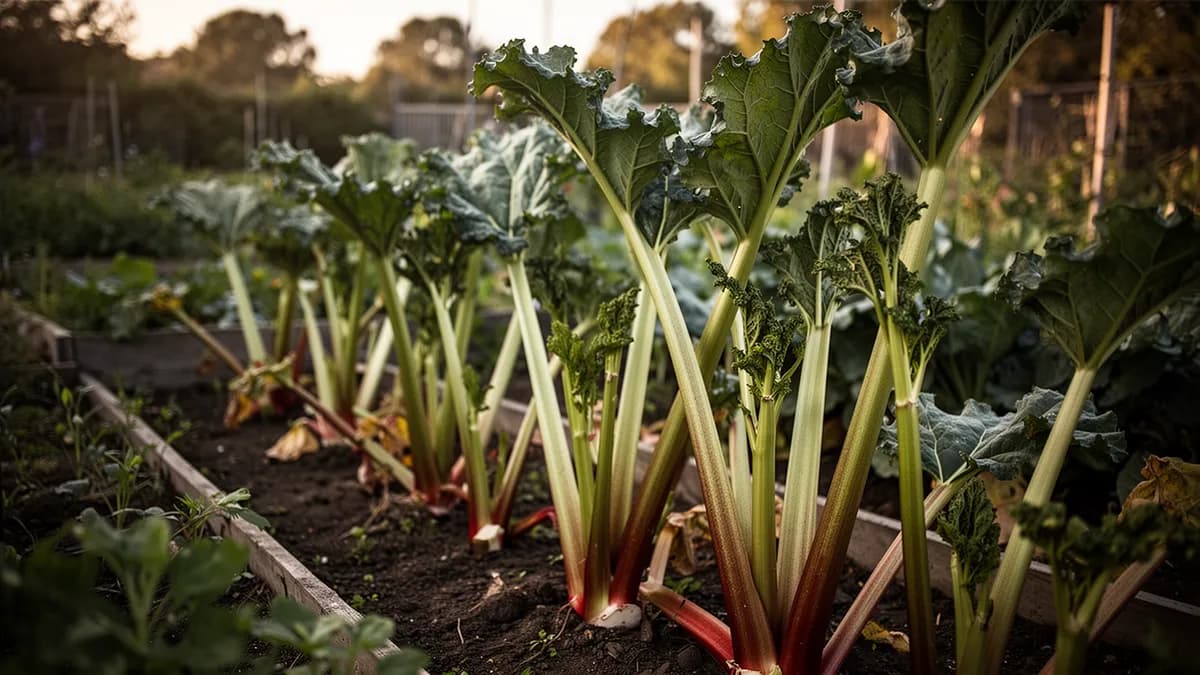
More Stalks & Stems
Keep Corn away from these
Garden plans featuring Corn
Grow your best Corn yet — and everything around it.
Start a free plan today. Lay out your beds, drop in your Corn, and let PlotMyGarden handle the timing, spacing, companions and reminders from seed to harvest basket.