Ruibarbo
Una verdura perenne con tallos ácidos y rojos.





En esta páginaResumen
Conoce Ruibarbo
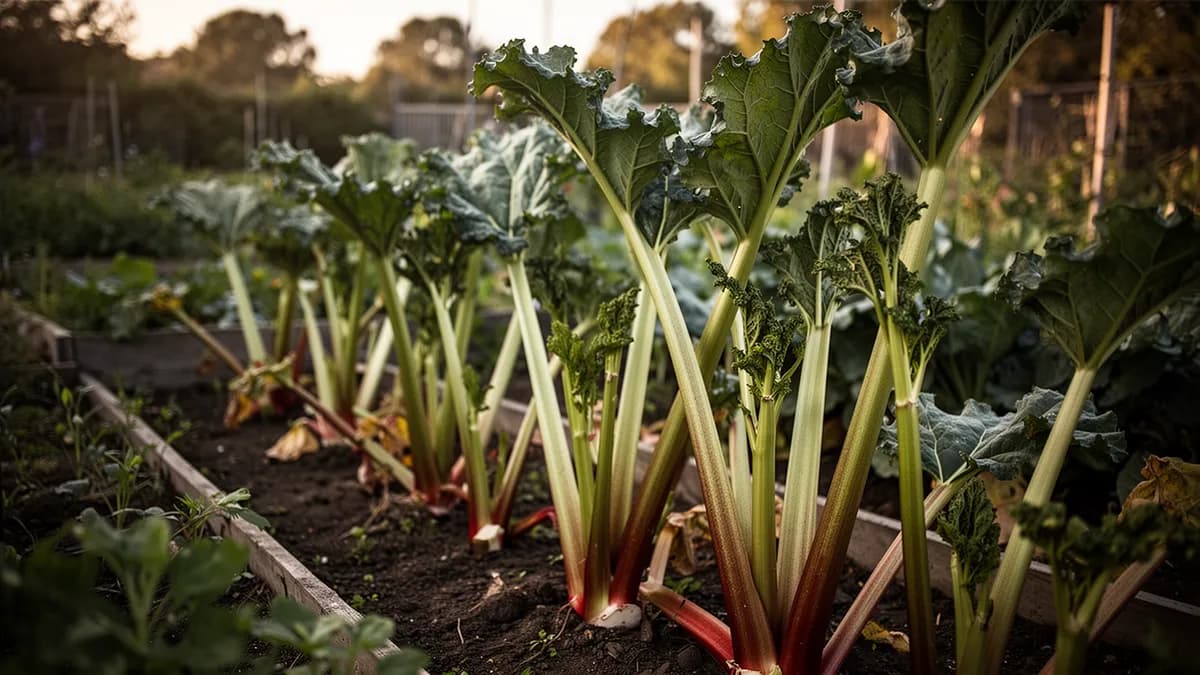
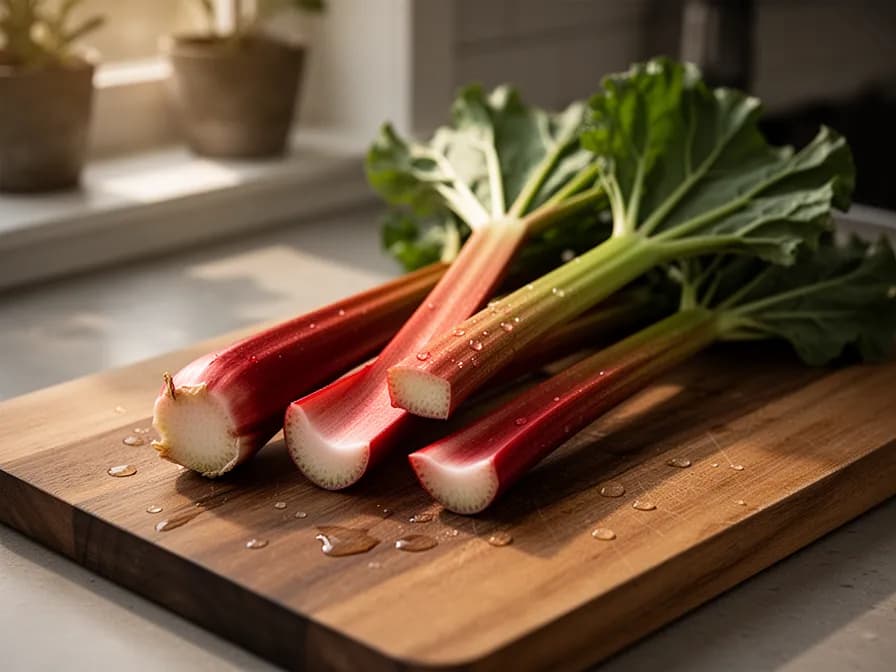
Una verdura perenne con tallos ácidos y rojos. Solo los tallos son comestibles, las hojas son tóxicas.
Cuándo plantar Ruibarbo
Plante coronas, semillas muy lentas.
Tu año de Ruibarbo
Ajustado a Zona 7 · temporada típica · la helada se va hacia el 2 abr y vuelve hacia el 1 nov
Planta Ruibarbo Mar – Abr y cosecha Abr – Jun. Consulta los métodos de plantación y elige tu clima para adaptar los periodos.
Cómo cultivar Ruibarbo
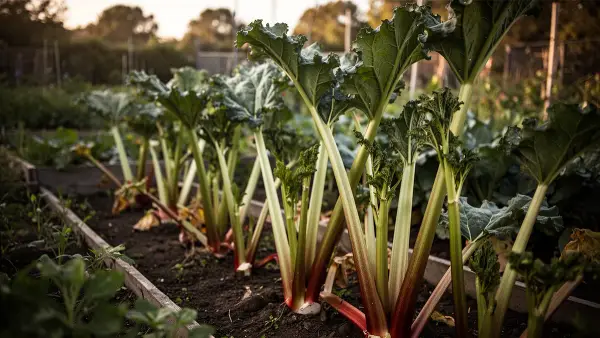
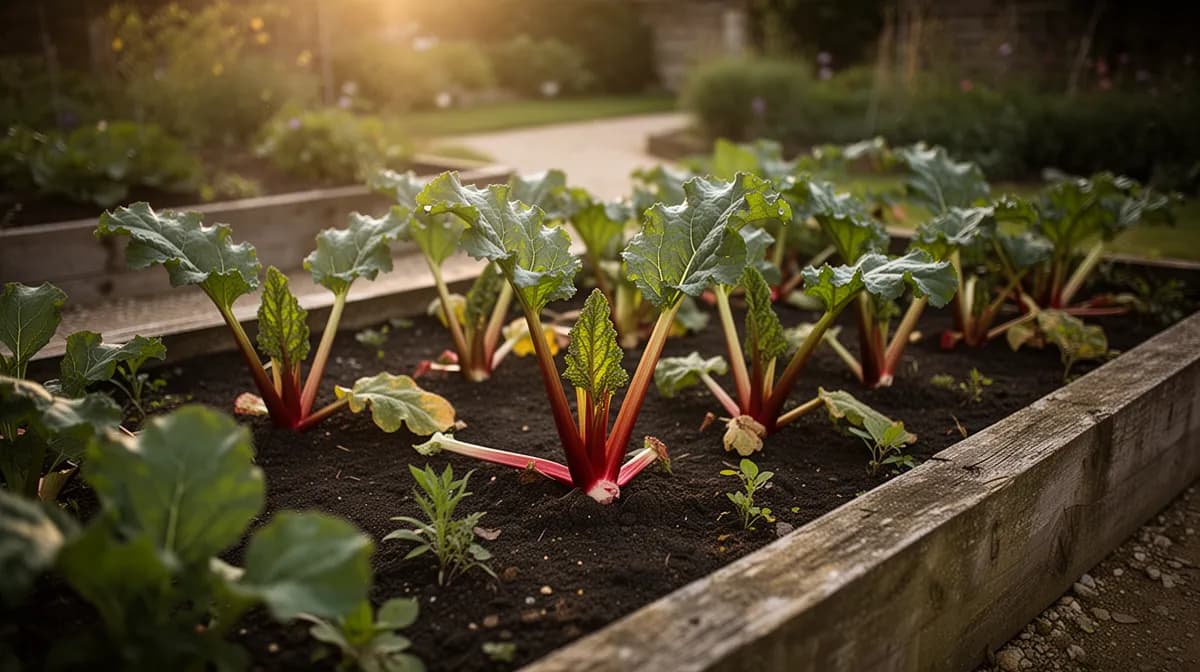
El ruibarbo es perenne y necesita poco cuidado. Plante en primavera u otoño.
No coseche el primer año. Desde el 2º año coseche moderadamente.
2 plantas caben en un bancal de 120 × 240 cm
Cada Ruibarbo pide 90 cm de margen. El planificador guarda ese marco por ti — cada planta, cada bancal.
Los mejores vecinos de Ruibarbo
Col y frijoles.
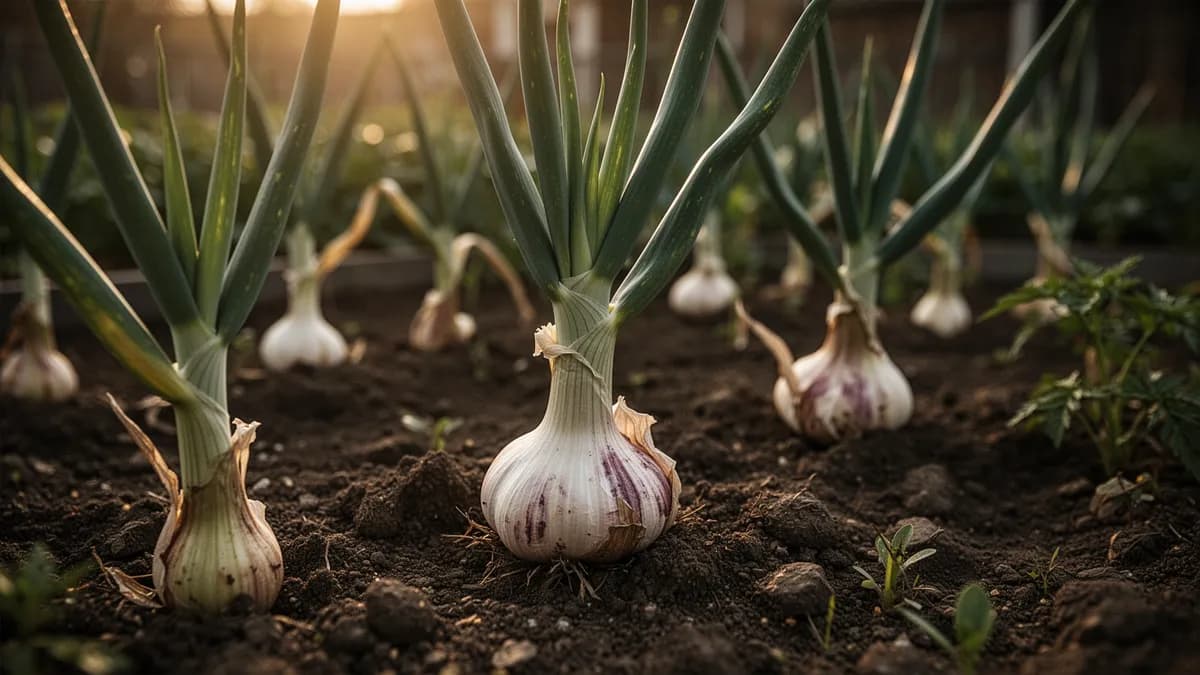
Ajo va a su lado. Hinojo no.
Saber de huerto de siempre, cotejado con la tabla real de Ruibarbo — prueba cualquier planta que cultives.
Prueba Ruibarbo en un bancal, aquí mismo
Un bancal real del planificador con Ruibarbo ya plantado. Toca una planta compañera para colocarla y mira cómo responde la comprobación de vecinos: verde para buenos vecinos, rojo si hay conflicto.


Guías de cultivo relacionadas
Abónalo bien
Rico en nutrientes, pH 6,0-6,8.
Temperatura ideal
Compatibilidad de zonas de rusticidad
De la semilla a la cosecha, etapa por etapa
Reposo de la corona
Las coronas de ruibarbo descansan en reposo invernal y requieren más de 500 horas de exposición al frío por debajo de 5 °C para romper la dormancia e iniciar el crecimiento primaveral.
Emergencia primaveral
Los brotes rojos intensos asoman por la superficie del suelo a comienzos de la primavera y se despliegan en hojas muy enrolladas. El color carmesí característico es más intenso durante este crecimiento de clima fresco.
Crecimiento rápido
Los tallos se alargan con rapidez en el clima fresco de la primavera y alcanzan 30-60 cm, mientras las hojas grandes y llamativas sombrean la corona. La planta consume gran parte de sus reservas de la raíz y de los nutrientes disponibles.
Cosecha máxima
Los tallos alcanzan su tamaño completo y su mejor sabor: firmes, crujientes y ácidos. Las plantas bien establecidas (3+ años) soportan una cosecha intensiva durante este periodo.
Desarrollo de tallos florales
Pueden surgir tallos florales centrales y gruesos, que producen grandes ramilletes de flores blanco crema. Si se deja florecer, la planta desvía energía de la producción de tallos hacia la formación de semillas.
Reposo y recuperación de verano
Cuando las temperaturas superan los 24 °C, el crecimiento se ralentiza y la calidad de los tallos disminuye. La planta dirige su energía a construir reservas en la raíz para la primavera siguiente. Las hojas pueden verse desgastadas.
Planta coronas o divisiones en reposo a principios de la primavera o a finales del otoño, con el punto de crecimiento 5 cm por debajo de la superficie del suelo. Cubre con un acolchado abundante para protegerlas en invierno.
Cuidar Ruibarbo mes a mes
Qué hacer cada mes para tu Ruibarbo
Octubre
Mes actualFoliage dies back after the first frosts. Cut away dead leaves and compost them (despite containing oxalic acid, they compost safely). Apply a heavy mulch of straw, leaves, or compost over the crown for winter protection.
Ten claro qué hacer en tu huerto, cada mes
Un correo al empezar cada mes: qué sembrar, plantar y hacer ahora mismo — para tu Ruibarbo y todo lo que crece alrededor. Más un breve curso inicial para esquivar los errores clásicos.
- Qué hacer ahora mismo
- Ajustado a tu temporada
- Curso inicial incluido
Cosechar Ruibarbo
Coseche tallos de afuera hacia adentro. No más de 1/3 de la planta.
se supone que plantas al comenzar el periodo — indica tu fecha real
A partir del tercer año, cosecha libremente durante 8-10 semanas en primavera y comienzos del verano, por lo general desde abril hasta finales de junio.
Almacenamiento y conservación
En refrigerador 1 semana. Puede congelarse.
Qué falla — y cómo solucionarlo
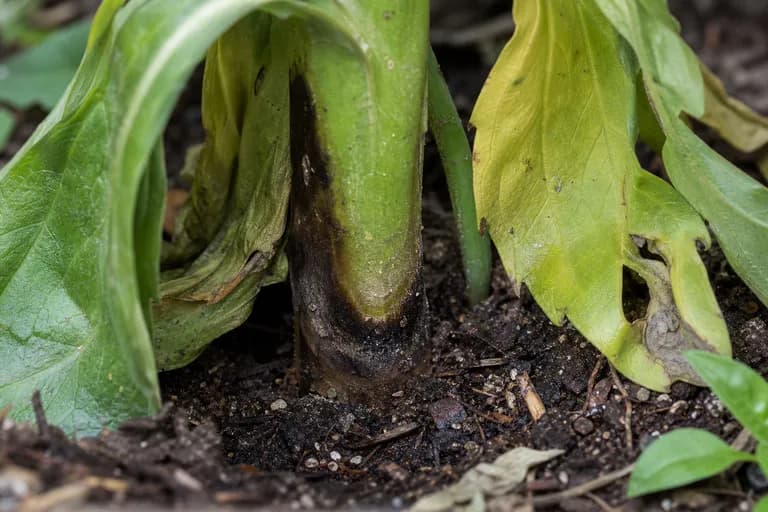
Escarabajo del ruibarbo
PlagaAgujeros en hojas.
Solución de problemas comunes
Dividir plantas cada 5-6 años.
Consejos de cultivo
- Plant rhubarb crowns with the growing point exactly 5 cm below the soil surface — too shallow and they dry out, too deep and they rot. This is the single most critical factor for establishment success.
- Never harvest any stalks in the first year after planting — the plant needs every leaf to build the root reserves that will fuel decades of future production.
- Always twist and pull stalks from the base rather than cutting with a knife — cutting leaves a stub that can rot and introduce disease to the crown.
- Remove flower stalks immediately at the base whenever they appear — flowering diverts massive energy from stalk production and can weaken the plant for the following year.
- Stop all harvesting by late June (or after 8-10 weeks of picking) to allow the plant to rebuild root reserves through summer and autumn photosynthesis.
- Divide overcrowded clumps every 5-8 years in early spring or autumn — lift the crown and split into sections with 2-3 buds each. Replant immediately at the correct depth.
- Apply 10 cm of aged manure or compost as a mulch ring around (not on top of) the crown every spring — rhubarb is an extremely heavy feeder that rewards generous nutrition.
- For the sweetest forced rhubarb, cover a mature crown in January with a large bin or traditional forcing pot to exclude all light. Harvest the tender pink stalks in 6-8 weeks.
Cultiva tu mejor Ruibarbo — y todo lo que la rodea.
Empieza un plan gratis hoy. Diseña tus bancales, coloca tu Ruibarbo y deja que PlotMyGarden gestione el momento, el espaciado, las asociaciones y los recordatorios de la semilla a la cesta.
Elige tu Ruibarbo
Victoria
Variedad clásica con tallos verdes.
Canada Red
Tallos rojos, más dulce.
Rhubarb is extraordinarily economical — a single crown division (free from a fellow gardener or €3-5 from a nursery) produces 2-5 kg of stalks annually for 15-20+ years with minimal care. At retail prices of €4-8/kg, a single plant yields €10-40 worth of rhubarb every year. Over its lifetime, one plant produces €200-800+ worth of rhubarb from a single initial planting — the best return on investment of any garden perennial.
Recetas rápidas
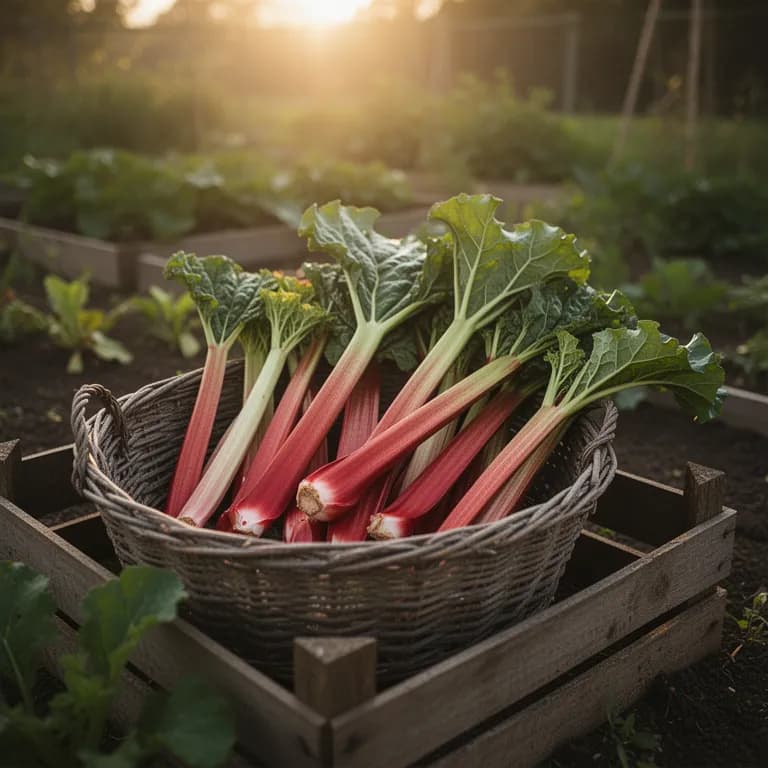
Classic Strawberry-Rhubarb Pie
60 minThe quintessential early-summer pairing — tart rhubarb balanced by sweet strawberries in a flaky butter crust. A timeless dessert that showcases rhubarb at its best.
8 ingredientesQuick Rhubarb Compote
15 minA simple, versatile sauce that transforms rhubarb into a ruby-red topping for yogurt, ice cream, pancakes, or oatmeal. Cooks down in minutes and keeps for a week.
6 ingredientesRhubarb Crumble
40 minA rustic, comforting British classic — tangy stewed rhubarb topped with a buttery oat crumble. Serve warm with custard or vanilla ice cream for the ultimate spring dessert.
8 ingredientesUsos culinarios
En pasteles, mermeladas, compota. Siempre cocinar con azúcar.
Qué contiene
Beneficios para la salud
- Excellent source of vitamin K (26% DV per cup cooked) essential for proper blood clotting, bone metabolism, and calcium regulation in the body.
- Very low in calories (21 per cup) making rhubarb desserts significantly lighter than those made with fruit — when sugar is controlled, it's a diet-friendly ingredient.
- Rich in anthocyanins (the red pigments) and polyphenols with demonstrated anti-inflammatory and antioxidant properties in research studies.
- Good source of dietary fiber supporting digestive regularity, beneficial gut bacteria growth, and helping manage cholesterol levels.
- Contains calcium (86mg per cup), though some is bound by oxalic acid. Cooking reduces oxalate content and improves mineral availability.
- Provides manganese (supporting bone health), potassium (supporting heart function), and vitamin C (supporting immune health) in a low-calorie package.
De dónde viene Ruibarbo
Rhubarb (Rheum rhabarbarum) is native to central Asia, with wild species growing across Siberia, Mongolia, and the mountainous regions of western China. For over 5,000 years, Chinese medicine used dried rhubarb root (from Rheum palmatum and R. officinale) as a powerful purgative and digestive remedy — it was one of the most valuable traded medicinal plants on the Silk Road, sometimes worth more than cinnamon, opium, or saffron.
Rhubarb reached Europe via the Silk Road, and for centuries was known exclusively as a medicine rather than a food. The culinary use of rhubarb stalks only developed in 17th-18th century Britain, where cheap sugar from Caribbean colonies made it practical to sweeten the intensely tart stalks into pies, crumbles, and preserves. The technique of 'forcing' rhubarb — growing it in heated darkness to produce tender, sweet, early-season stalks — was accidentally discovered in 1817 at the Chelsea Physic Garden in London when soil was heaped over dormant crowns during construction.
By the Victorian era, rhubarb had become one of the most popular dessert ingredients in Britain, especially in the industrial north where the 'Rhubarb Triangle' of West Yorkshire produced vast quantities using coal-heated forcing sheds. Forced rhubarb from this region is now protected by EU PDO status. British and Northern European emigrants carried rhubarb to North America, Australia, and New Zealand, where it remains a cherished garden perennial. Today, rhubarb is experiencing a culinary renaissance, appearing in cocktails, savory sauces, and fine-dining desserts alongside its traditional role in pies and crumbles.
Ruibarbo: ¿sabías que?
Datos fascinantes sobre Ruibarbo
Rhubarb was classified as a fruit by a New York court in 1947 specifically to reduce import tariffs — botanically it is unambiguously a vegetable (we eat the leaf stalk, not the fruit).
Ruibarbo: preguntas frecuentes
¿Cuándo debo plantar Ruibarbo?
¿Cuáles son buenas plantas acompañantes para Ruibarbo?
¿En qué zonas de rusticidad puede crecer Ruibarbo?
¿Cuánto sol necesita Ruibarbo?
¿A qué distancia debo espaciar Ruibarbo?
¿Qué plagas y enfermedades afectan a Ruibarbo?
¿Cómo almaceno Ruibarbo después de la cosecha?
¿Cuáles son las mejores variedades de Ruibarbo para cultivar?
¿Qué suelo necesita Ruibarbo?
Are rhubarb leaves really poisonous?
Why shouldn't I harvest rhubarb in the first year?
Can I grow rhubarb in a warm climate?
How do I force rhubarb for an early harvest?
When should I divide my rhubarb plant?
Is rhubarb a fruit or a vegetable?
Acabas de leer la teoría. Ahora cultívala en piloto automático.
Todo lo que hace que Ruibarbo sea delicado — el momento, el espaciado, las asociaciones, la ventana de cosecha — es justo lo que PlotMyGarden resuelve por ti, para cada planta de tu huerto.
Un plan que conoce tu clima
Indica tu ubicación una vez. Recibe fechas de siembra, abonado y cosecha basadas en tu última helada real y el pronóstico en vivo — sin adivinar con un sobre genérico.
De la sección “Cuándo plantar”Planificador de bancales de arrastrar y soltar
Diseña bancales sobre una cuadrícula. Cada planta encaja con su espaciado correcto y ves toda la temporada antes de gastar un céntimo en semillas.
De la sección “Cultivo”Conflictos de asociación, detectados a tiempo
Más de 200 buenas y malas combinaciones comprobadas en vivo mientras plantas — para que un error que arruine la temporada nunca llegue a la tierra.
De la sección “Asociaciones”Recordatorios que sí vas a seguir
“Riega las judías.” “Recoge hoy antes de que se pase.” Oportunos, concretos y ligados a las plantas que de verdad cultivas.
De la sección “Cosecha”Escalonado, programado
¿Quieres cosechar seis semanas en vez de seis días? Reparte tus siembras automáticamente y te avisa cuando toca el siguiente lote.
De la sección “Cuándo plantar”Un registro que se vuelve más listo
Cada cosecha que registras le enseña tu huerto. El plan del año que viene parte de lo que de verdad funcionó en tu suelo, no en un manual.
De la sección “Resumen”Planta estos junto a Ruibarbo
Más Tallos y brotes
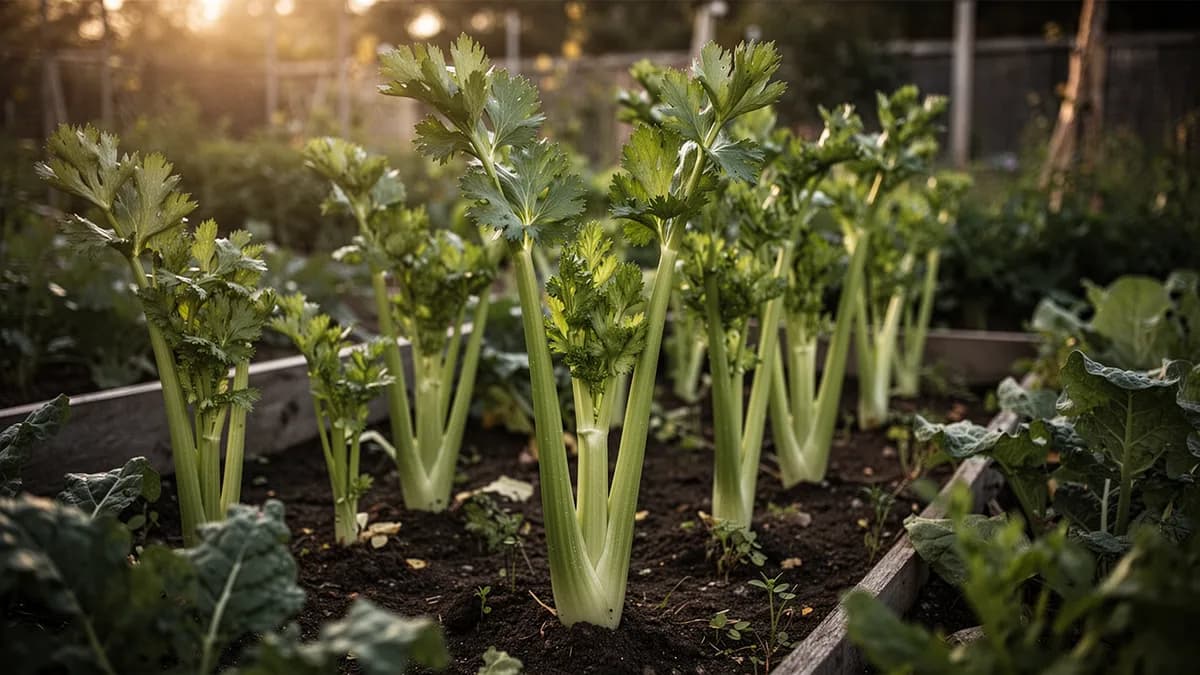
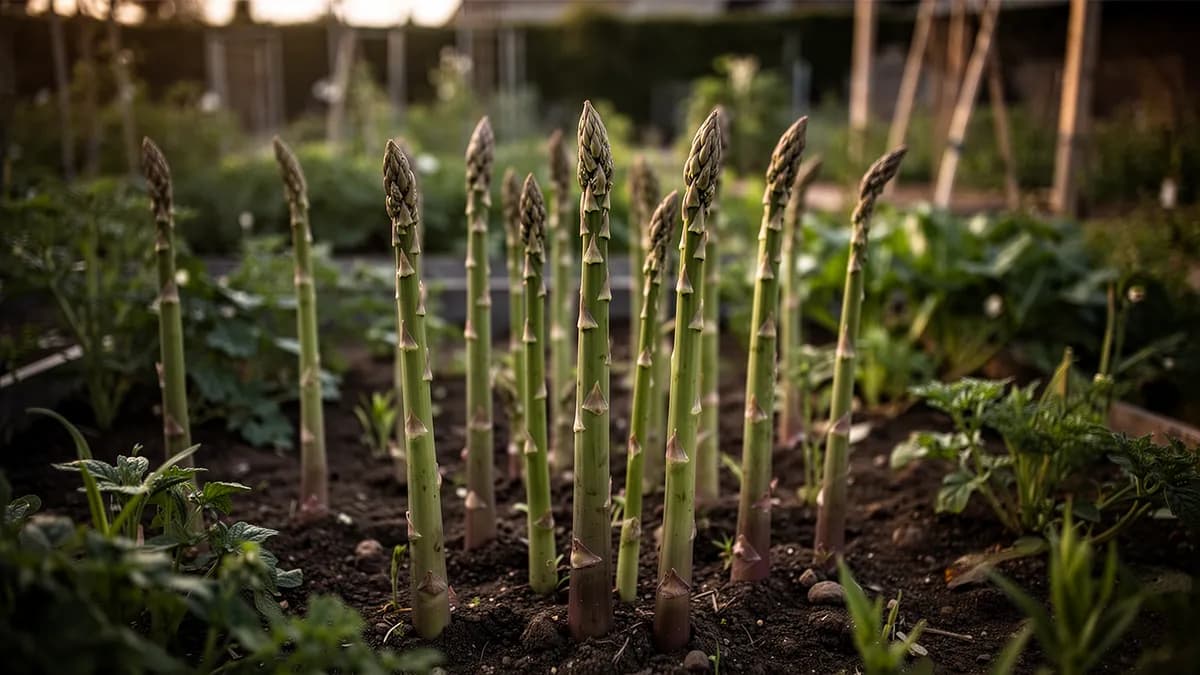
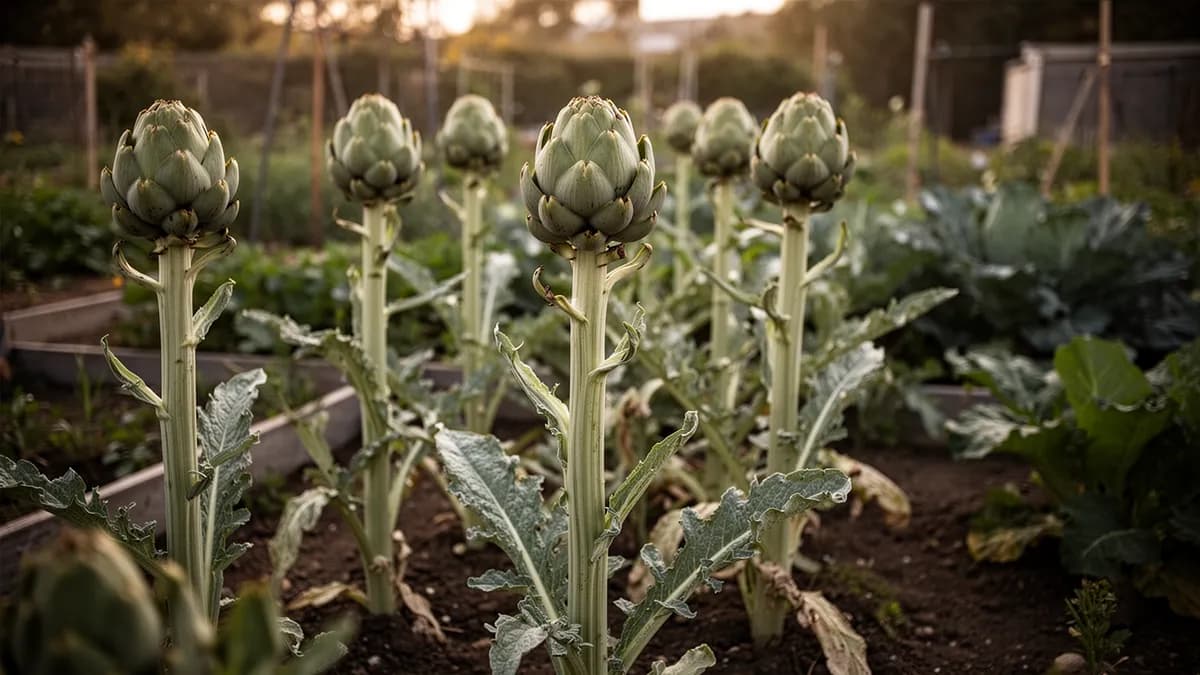
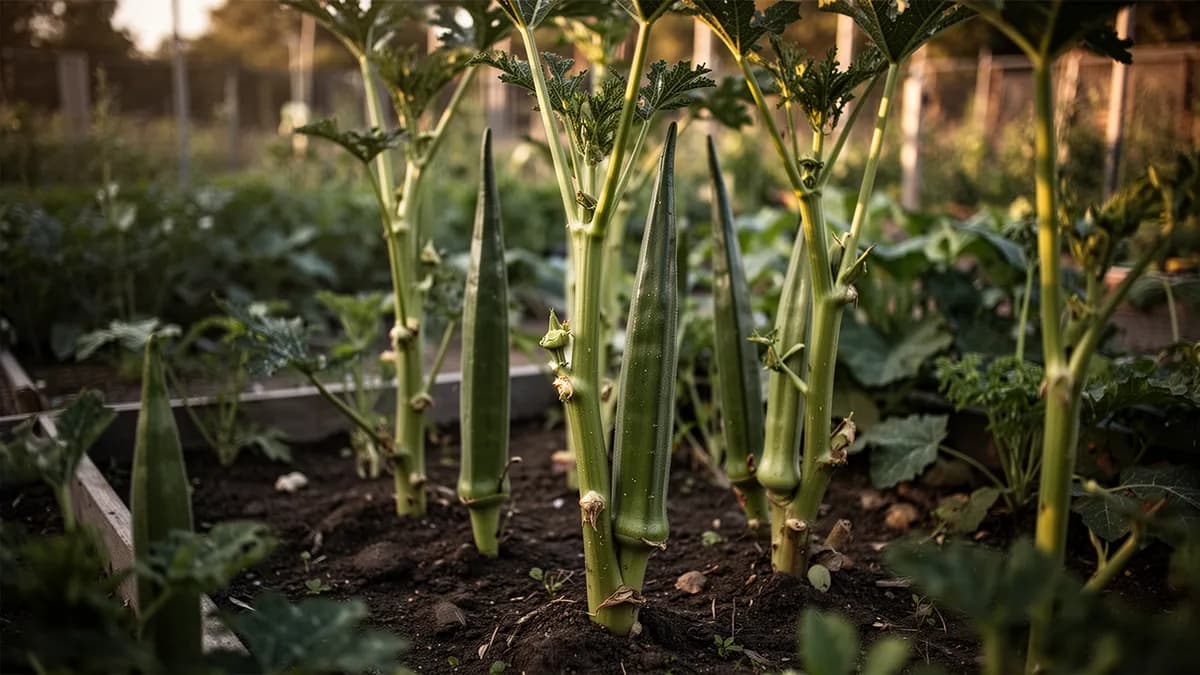
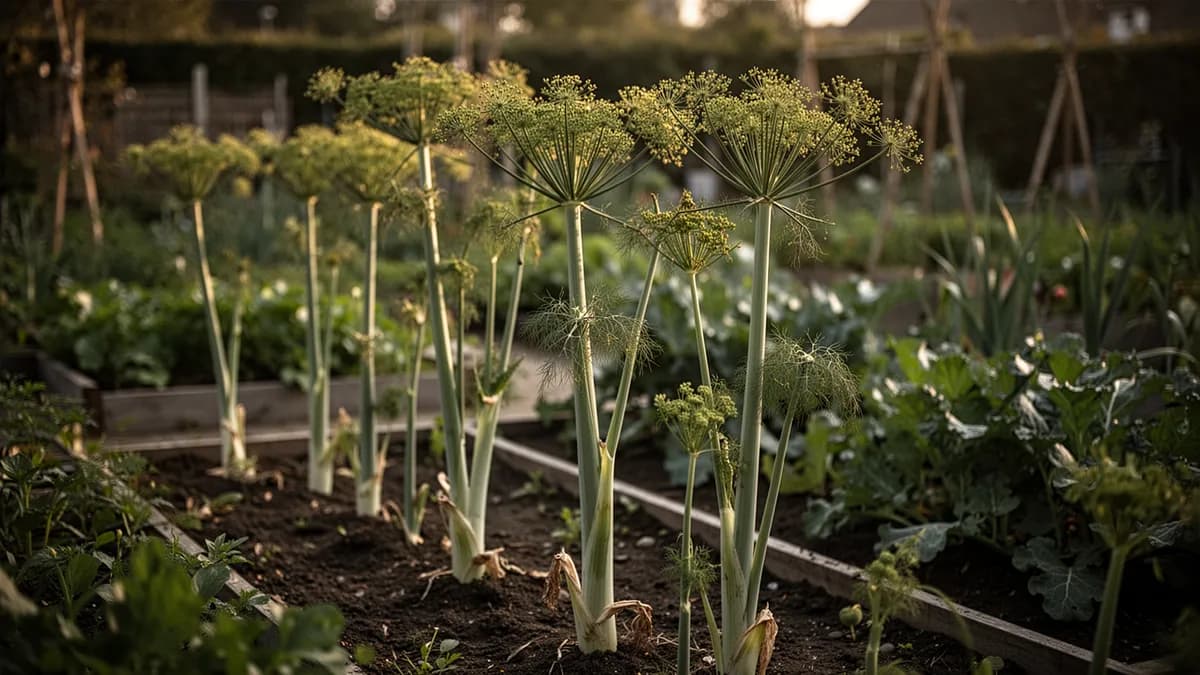
Mantén Ruibarbo lejos de estos
Diseños de jardín con Ruibarbo
Cultiva tu mejor Ruibarbo — y todo lo que la rodea.
Empieza un plan gratis hoy. Diseña tus bancales, coloca tu Ruibarbo y deja que PlotMyGarden gestione el momento, el espaciado, las asociaciones y los recordatorios de la semilla a la cesta.