Cebolla
Una verdura de raíz con bulbos aromáticos.





En esta páginaResumen
Conoce Cebolla
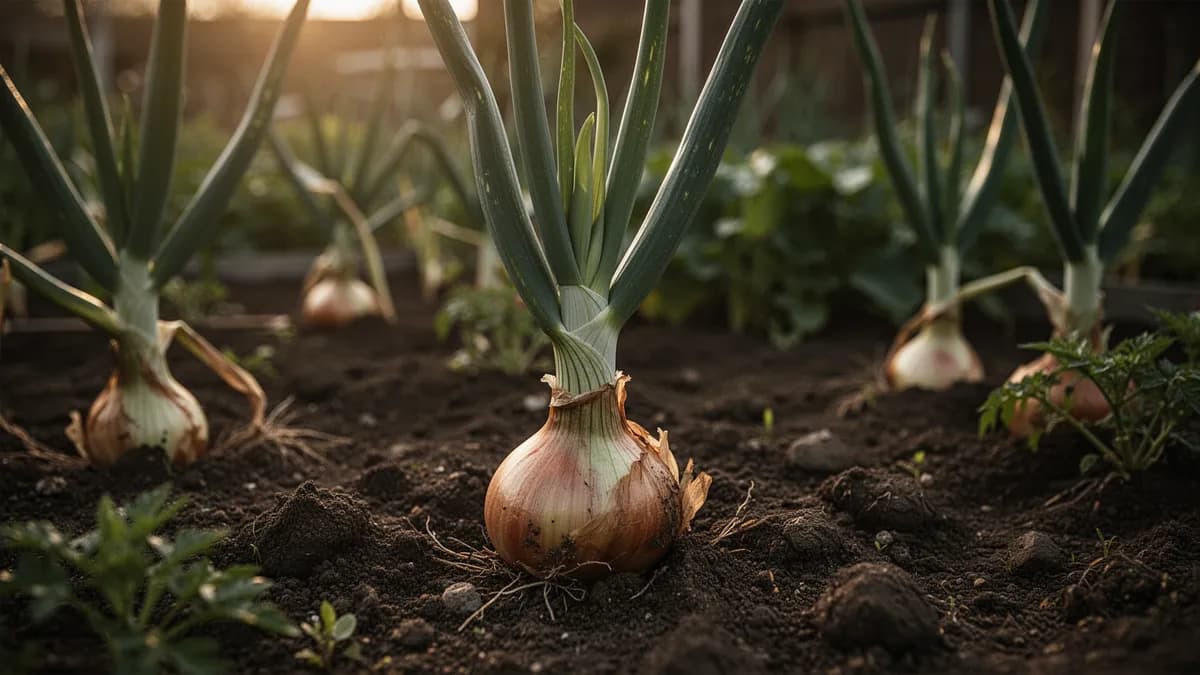
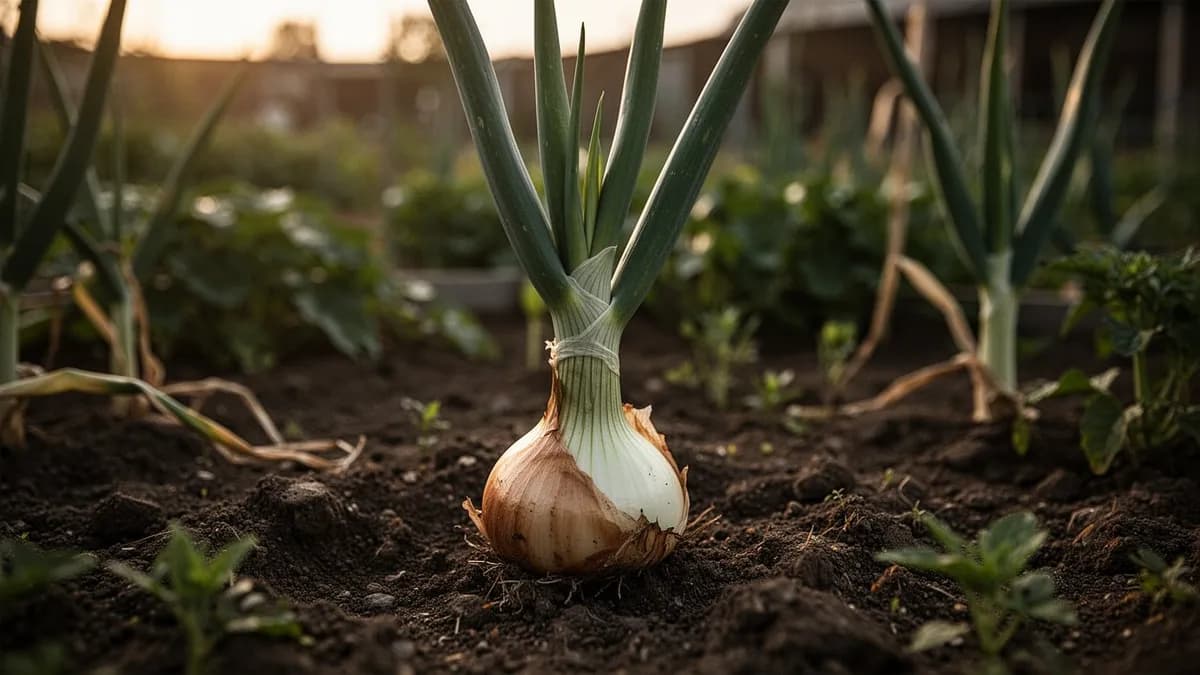
Una verdura de raíz con bulbos aromáticos. Las cebollas son un ingrediente básico en muchas cocinas del mundo.
Cuándo plantar Cebolla
Plante conjuntos o plantas en primavera. Las semillas pueden iniciarse en interiores.
Tu año de Cebolla
Ajustado a Zona 7 · temporada típica · la helada se va hacia el 2 abr y vuelve hacia el 1 nov
Planta Cebolla Ene – Abr y cosecha Jul – Sep. Consulta los métodos de plantación y elige tu clima para adaptar los periodos.
Cómo cultivar Cebolla
Plante cebollas a principios de primavera tan pronto como el suelo sea trabajable. Use conjuntos o plantas. Espacie 10-15 cm aparte, 2,5 cm de profundidad.
Las cebollas necesitan suelo bien drenado y humedad constante. No fertilice en exceso con nitrógeno.
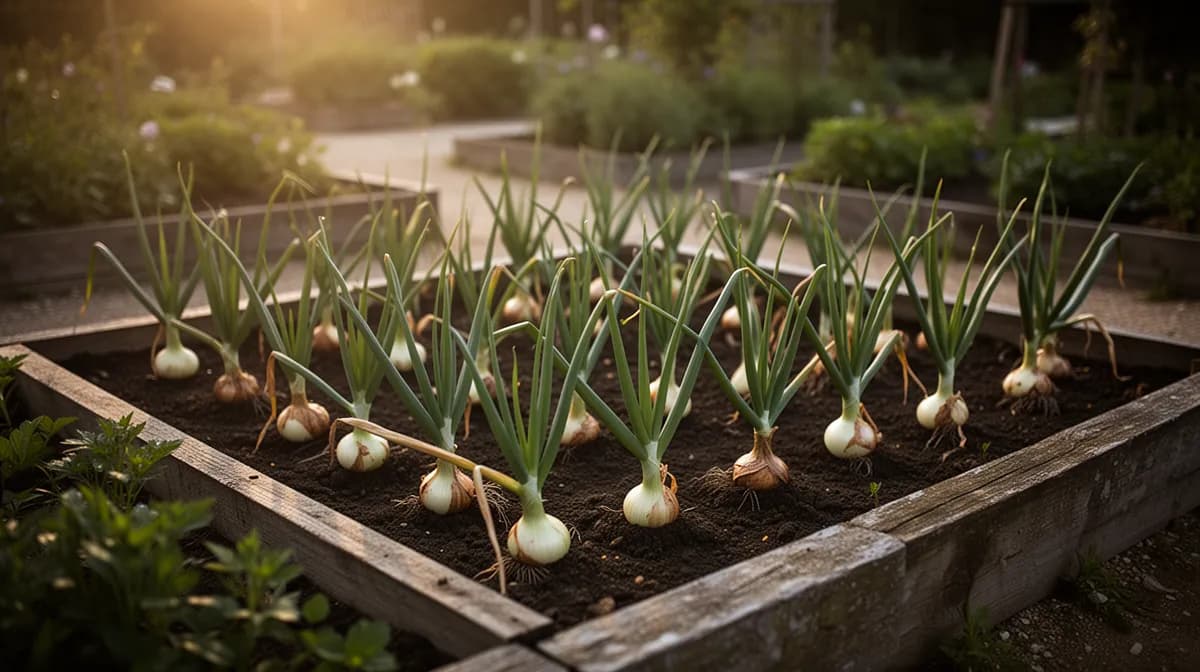
128 plantas caben en un bancal de 120 × 240 cm
Cada Cebolla pide 15 cm de margen. El planificador guarda ese marco por ti — cada planta, cada bancal.
Los mejores vecinos de Cebolla
Zanahorias, col y tomates son buenos compañeros.
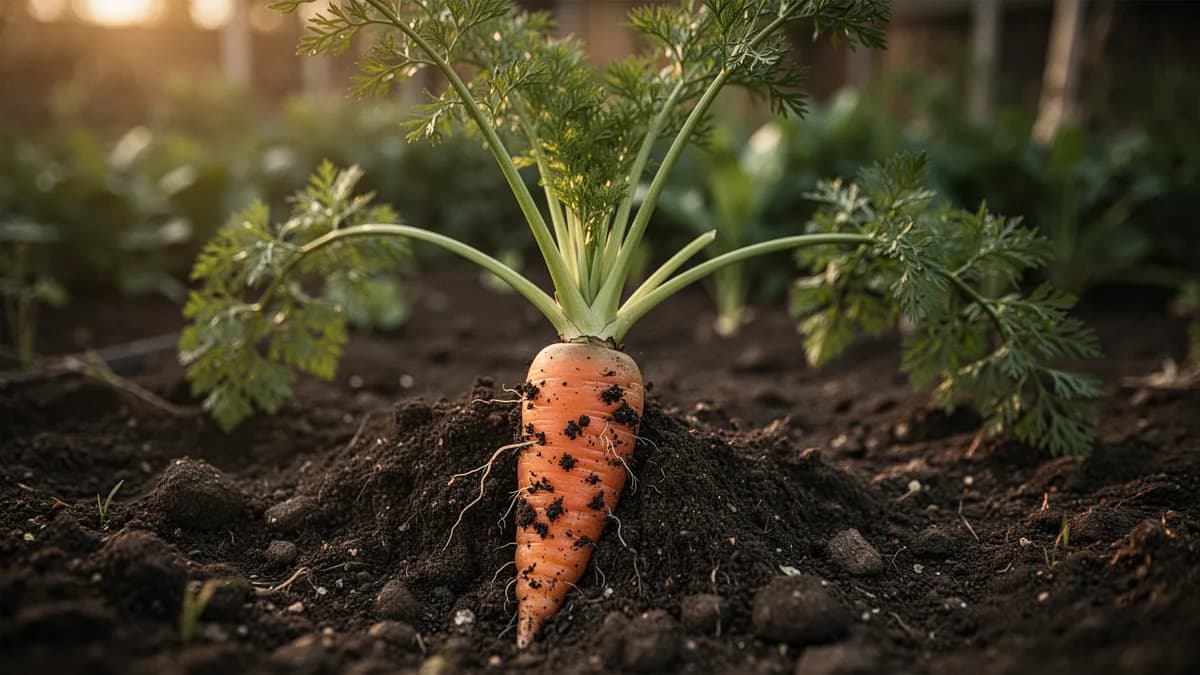
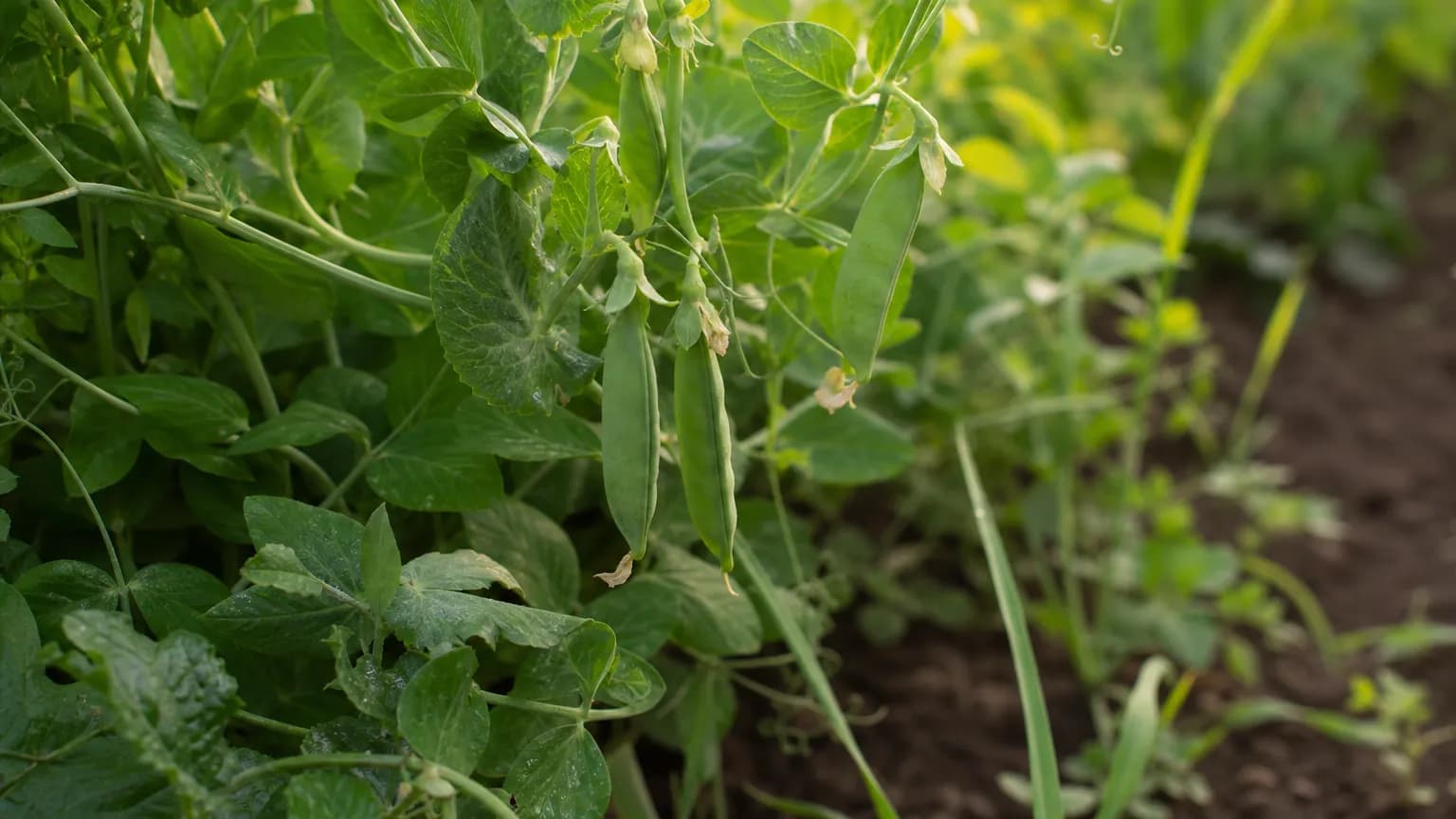
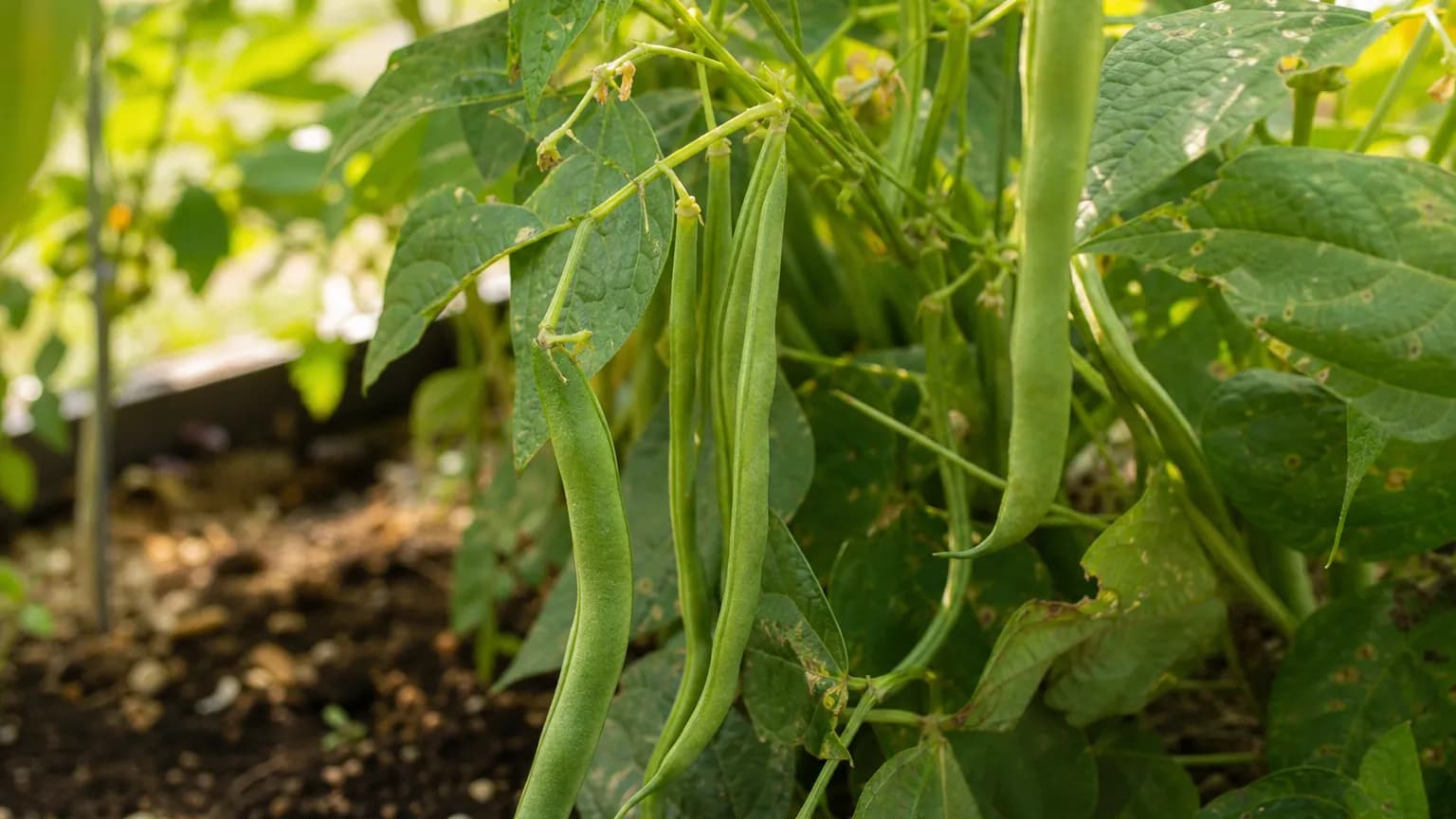
Zanahoria va a su lado. Guisantes no.
Saber de huerto de siempre, cotejado con la tabla real de Cebolla — prueba cualquier planta que cultives.
Prueba Cebolla en un bancal, aquí mismo
Un bancal real del planificador con Cebolla ya plantado. Toca una planta compañera para colocarla y mira cómo responde la comprobación de vecinos: verde para buenos vecinos, rojo si hay conflicto.


Guías de cultivo relacionadas
Abónalo bien
Suelo bien drenado con pH 6,0-7,0. Incorpore compost.
Temperatura ideal
Compatibilidad de zonas de rusticidad
De la semilla a la cosecha, etapa por etapa
Inicio de semillas
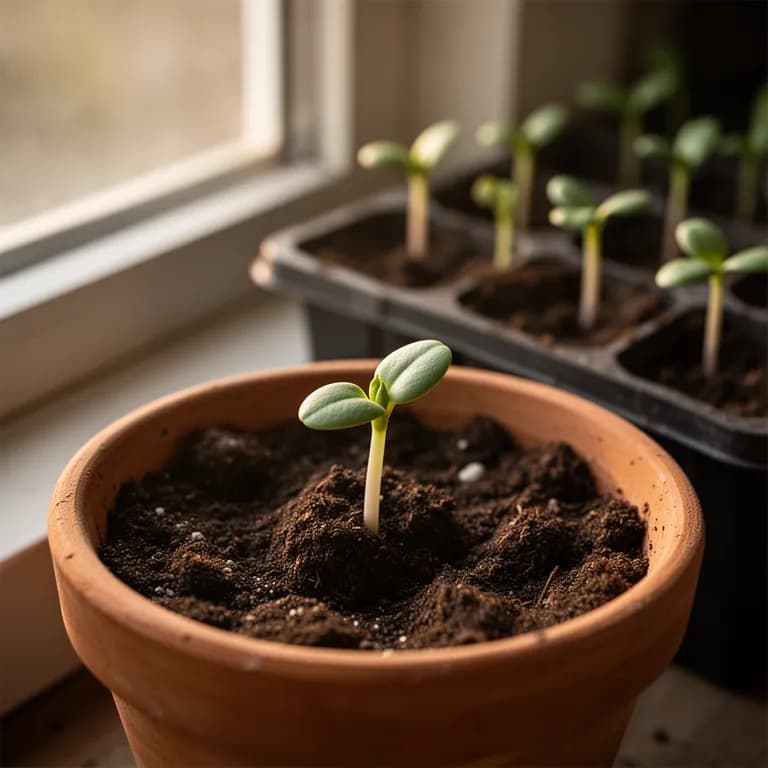
Las semillas se siembran en interior, en bandejas planas o de alvéolos, 10-12 semanas antes del trasplante. Aparecen brotes finos y parecidos a briznas de hierba en 7-10 días. La germinación es lenta y desigual comparada con la mayoría de las hortalizas.
Crecimiento de la plántula
Las plántulas desarrollan varias hojas finas y tubulares y forman un pequeño sistema radicular. Es una fase larga de interior en la que el recorte y la fertilización regulares producen trasplantes robustos y fuertes. Cada hoja representa una futura capa del bulbo.
Trasplante
Las plántulas se trasplantan al jardín a principios de primavera, separadas 10-15 cm en hileras. Las cebollas toleran las heladas ligeras y pueden salir al exterior en cuanto el suelo sea trabajable. Como alternativa, en este momento se plantan directamente los bulbillos.
Crecimiento foliar
La planta se concentra en producir cuantas más hojas verdes sanas mejor. Es la fase de crecimiento más crítica — cada hoja que se forme se convertirá en una capa del bulbo maduro. Un follaje vigoroso y erguido es señal de una planta sana.
Formación del bulbo
Activada por la duración del día al alcanzar el umbral crítico de la variedad, la base de la planta comienza a hincharse formando un bulbo. Las vainas foliares exteriores se expanden y se llenan de azúcares y agua almacenados. El crecimiento deja de producir nuevas hojas y pasa a engrosar el bulbo.
Cosecha y curado
Las hojas amarillean, se ablandan en el cuello y caen de forma natural. Los bulbos se extraen, se secan brevemente al sol y luego se curan durante 2-3 semanas en un lugar cálido, seco y ventilado, hasta que las pieles estén apergaminadas y los cuellos completamente secos.
Mantén el suelo constantemente húmedo a 18-24°C. Proporciona 12-14 horas diarias de luz de cultivo en cuanto aparezcan los brotes. Recorta las puntas a 10 cm cuando se tumben para fomentar tallos gruesos.
Cuidar Cebolla mes a mes
Qué hacer cada mes para tu Cebolla
Octubre
Mes actualEnjoy your stored onion harvest. In mild climates (zones 7+), plant overwintering onion sets or short-day varieties for an early spring harvest next year. Clean and store garden tools.
Ten claro qué hacer en tu huerto, cada mes
Un correo al empezar cada mes: qué sembrar, plantar y hacer ahora mismo — para tu Cebolla y todo lo que crece alrededor. Más un breve curso inicial para esquivar los errores clásicos.
- Qué hacer ahora mismo
- Ajustado a tu temporada
- Curso inicial incluido
Cosechar Cebolla
Coseche cebollas cuando el follaje se cae y se vuelve marrón. Deje secar antes de almacenar.
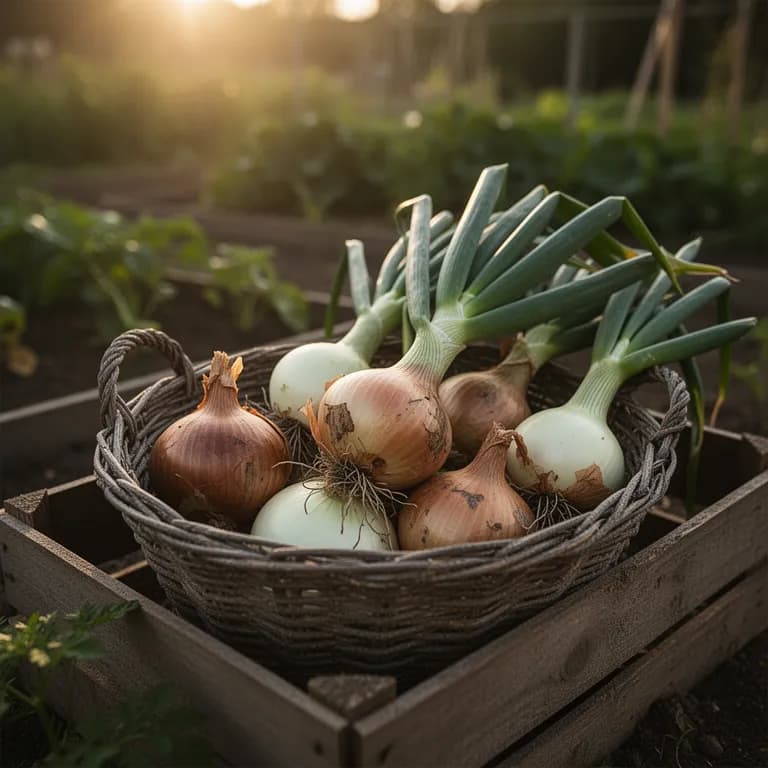
se supone que plantas al comenzar el periodo — indica tu fecha real
Las hojas amarillean y caen de forma natural (alrededor de la mitad de las plantas).
Almacenamiento y conservación
Almacene en lugar fresco y seco. Pueden congelarse o secarse.
Qué falla — y cómo solucionarlo
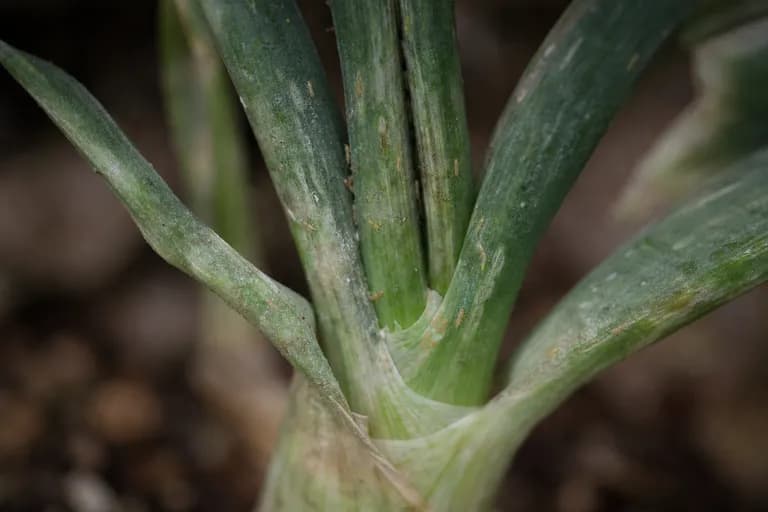
Mosca de la cebolla
PlagaLarvas en bulbos que causan pudrición.
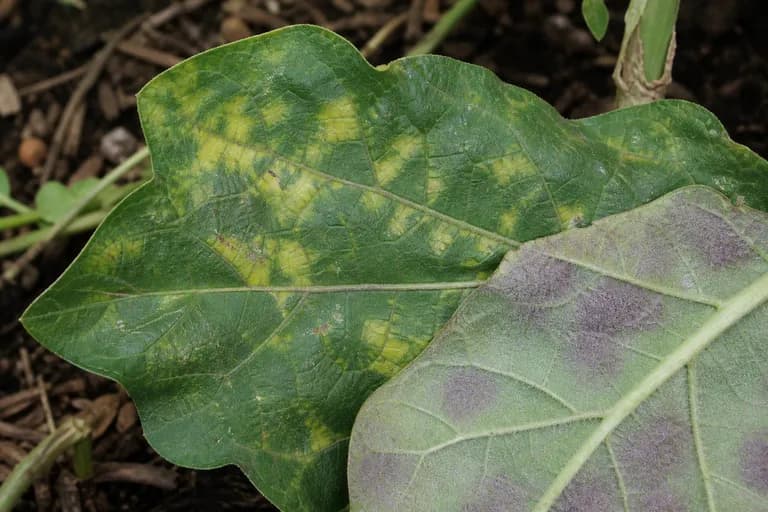
Mildiú velloso
EnfermedadMoho gris en hojas.
Solución de problemas comunes
Pudrición por exceso de humedad. Cuellos gruesos por exceso de nitrógeno.
Consejos de cultivo
- Choosing the correct day-length type for your latitude is the single most important decision for onion success. Short-day varieties (below 35°N), intermediate-day (35-38°N), and long-day (above 38°N) — planting the wrong type guarantees tiny bulbs or no bulbing at all.
- Start seeds indoors 10-12 weeks before transplanting for the widest variety selection and strongest plants. Trim seedling tops to 10 cm whenever they get floppy — this is the secret to producing thick, sturdy transplants that establish quickly.
- Onions are extremely poor competitors against weeds due to their shallow root system and narrow upright leaves that cast almost no shade. Keep beds immaculately weed-free through the entire growing season — even moderate weed pressure reduces yields by 50% or more.
- Each green leaf on the plant corresponds to exactly one ring in the mature bulb. Maximize leaf production through consistent nitrogen feeding every 2-3 weeks during the vegetative phase — more leaves means bigger onions.
- Stop all nitrogen fertilization and reduce watering once bulbs begin swelling above the soil. Continued nitrogen at this stage produces thick, soft necks that resist curing and rot in storage.
- Water consistently with 2.5 cm per week during active growth. Onions have shallow roots concentrated in the top 15 cm of soil and dry out quickly. Drip irrigation or soaker hoses are ideal — avoid overhead watering which promotes foliar disease.
- For the best storage onions, let tops fall over naturally before harvesting. Cure thoroughly for 2-3 weeks in a warm, dry, ventilated area. Only store bulbs with completely dry, papery necks.
- Rotate onion beds on a 3-4 year cycle to prevent buildup of soil-borne diseases like white rot, pink root, and Fusarium basal rot. Never plant alliums (onion, garlic, leek, shallot) in the same spot in consecutive years.
Cultiva tu mejor Cebolla — y todo lo que la rodea.
Empieza un plan gratis hoy. Diseña tus bancales, coloca tu Cebolla y deja que PlotMyGarden gestione el momento, el espaciado, las asociaciones y los recordatorios de la semilla a la cesta.
Elige tu Cebolla
Stuttgarter
Cebolla amarilla clásica, buena para almacenar.
Red Baron
Cebolla roja con sabor suave.
A packet of 200+ onion seeds costs $3-5 and can produce 150+ onions worth $75-150 at grocery store prices, where individual onions sell for $0.50-1.00 each. Growing from sets is slightly more expensive ($5-8 per 50 sets) but still delivers outstanding value. Home-grown onions also store for 6-10 months, providing nearly year-round self-sufficiency from a single spring planting — one of the best cost-to-value ratios in the entire vegetable garden.
Recetas rápidas
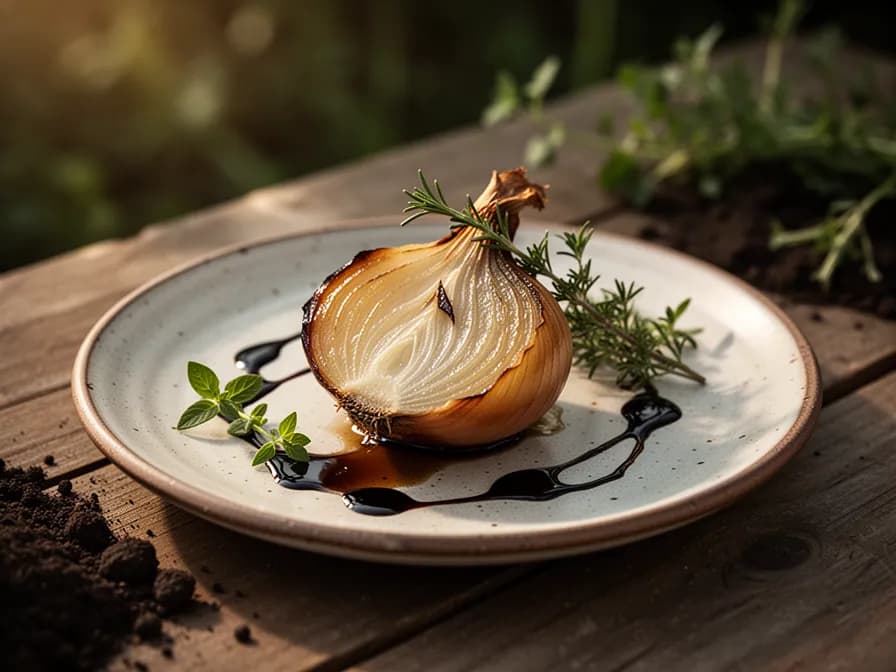
Classic French Onion Soup
60 minDeeply caramelized onions simmered in rich beef broth, ladled into oven-safe bowls, topped with crusty bread and melted Gruyere cheese. The long, slow caramelization brings out the natural sweetness of the onions.
9 ingredientesQuick-Pickled Red Onions
15 minThinly sliced red onions marinated in a tangy vinegar brine. Ready in 30 minutes and perfect for tacos, sandwiches, salads, and grain bowls. Keeps for 2-3 weeks refrigerated.
6 ingredientesCaramelized Onion Tart
50 minButtery puff pastry topped with slow-cooked caramelized onions, tangy goat cheese, and fresh thyme. An elegant appetizer or light meal that showcases the transformative sweetness of properly caramelized onions.
8 ingredientesUsos culinarios
Cruda en ensaladas, cocida en sopas, salteada o caramelizada.
Qué contiene
Beneficios para la salud
- Rich in quercetin, one of the most potent flavonoid antioxidants found in food, with documented anti-inflammatory, antihistamine, and anticancer properties in laboratory studies.
- Contains prebiotic fiber (fructooligosaccharides) that selectively feeds beneficial Bifidobacterium and Lactobacillus gut bacteria, supporting digestive health and immune function.
- Sulfur compounds including allicin and diallyl disulfide have antimicrobial properties and may help lower blood pressure and reduce cholesterol levels.
- Provides chromium, a trace mineral that enhances insulin sensitivity and helps regulate blood sugar — particularly beneficial for people managing type 2 diabetes.
- Contains vitamin C and various sulfur compounds that support collagen production, skin health, and the body's natural detoxification processes.
- Regular onion consumption has been associated in epidemiological studies with reduced risk of stomach and colorectal cancers, likely due to the synergistic effects of organosulfur compounds and flavonoids.
De dónde viene Cebolla
The onion is one of the oldest cultivated vegetables, with origins that trace back over 5,000 years to central Asia — likely in the region of modern-day Iran and western Pakistan. Wild onions grew across a vast range from Palestine to India, and multiple cultures appear to have domesticated them independently. Their ease of transport, long storage life, and ability to grow in diverse climates made onions one of the first crops to spread along early trade routes. Archaeological evidence shows onion cultivation in ancient Egypt by 3500 BC, where they held both culinary and spiritual significance.
In ancient Egypt, onions were objects of worship — their concentric ring structure was seen as a symbol of eternal life, and they appear frequently in tomb paintings and burial offerings. Egyptian laborers building the pyramids were fed large quantities of onions, garlic, and radishes to maintain their strength. The Romans brought onions throughout their empire, and the vegetable became a staple across Europe during the Middle Ages, when onions were among the three main vegetables (along with beans and cabbage) that sustained the common population. They were so valued that they served as currency for rent payments and were given as gifts.
Spanish explorers introduced onions to the Americas in the early 1500s, where they quickly naturalized and became essential to New World cuisines. Today, onions are the second most widely grown horticultural crop in the world after tomatoes, with global production exceeding 100 million tonnes annually. They appear in virtually every cuisine on earth — from Indian curries and Mexican salsas to French onion soup and Japanese tempura — a testament to their extraordinary versatility and universal appeal.
Cebolla: ¿sabías que?
Datos fascinantes sobre Cebolla
Ancient Egyptians revered onions as symbols of eternity because of their concentric circle structure — onions have been found in the eye sockets of mummified pharaohs, including Ramesses IV.
Cebolla: preguntas frecuentes
¿Cuándo debo plantar Cebolla?
¿Cuáles son buenas plantas acompañantes para Cebolla?
¿En qué zonas de rusticidad puede crecer Cebolla?
¿Cuánto sol necesita Cebolla?
¿A qué distancia debo espaciar Cebolla?
¿Qué plagas y enfermedades afectan a Cebolla?
¿Cómo almaceno Cebolla después de la cosecha?
¿Cuáles son las mejores variedades de Cebolla para cultivar?
¿Qué suelo necesita Cebolla?
What is the difference between short-day, intermediate-day, and long-day onions?
Why did my onions bolt and send up flower stalks?
How do I know when my onions are ready to harvest?
Why are my onions so small?
Can I grow onions in containers?
How long can I store onions, and which varieties store best?
Acabas de leer la teoría. Ahora cultívala en piloto automático.
Todo lo que hace que Cebolla sea delicado — el momento, el espaciado, las asociaciones, la ventana de cosecha — es justo lo que PlotMyGarden resuelve por ti, para cada planta de tu huerto.
Un plan que conoce tu clima
Indica tu ubicación una vez. Recibe fechas de siembra, abonado y cosecha basadas en tu última helada real y el pronóstico en vivo — sin adivinar con un sobre genérico.
De la sección “Cuándo plantar”Planificador de bancales de arrastrar y soltar
Diseña bancales sobre una cuadrícula. Cada planta encaja con su espaciado correcto y ves toda la temporada antes de gastar un céntimo en semillas.
De la sección “Cultivo”Conflictos de asociación, detectados a tiempo
Más de 200 buenas y malas combinaciones comprobadas en vivo mientras plantas — para que un error que arruine la temporada nunca llegue a la tierra.
De la sección “Asociaciones”Recordatorios que sí vas a seguir
“Riega las judías.” “Recoge hoy antes de que se pase.” Oportunos, concretos y ligados a las plantas que de verdad cultivas.
De la sección “Cosecha”Escalonado, programado
¿Quieres cosechar seis semanas en vez de seis días? Reparte tus siembras automáticamente y te avisa cuando toca el siguiente lote.
De la sección “Cuándo plantar”Un registro que se vuelve más listo
Cada cosecha que registras le enseña tu huerto. El plan del año que viene parte de lo que de verdad funcionó en tu suelo, no en un manual.
De la sección “Resumen”Planta estos junto a Cebolla
Más Aliáceas
Mantén Cebolla lejos de estos
Diseños de jardín con Cebolla
Cultiva tu mejor Cebolla — y todo lo que la rodea.
Empieza un plan gratis hoy. Diseña tus bancales, coloca tu Cebolla y deja que PlotMyGarden gestione el momento, el espaciado, las asociaciones y los recordatorios de la semilla a la cesta.