Cebolleta de Ramillete
La cebolleta de ramillete (Allium fistulosum) es una cebolla perenne que no forma bulbo, creciendo en matas densas de tallos verdes huecos que se cosechan enteros.





En esta páginaResumen
Conoce Cebolleta de Ramillete
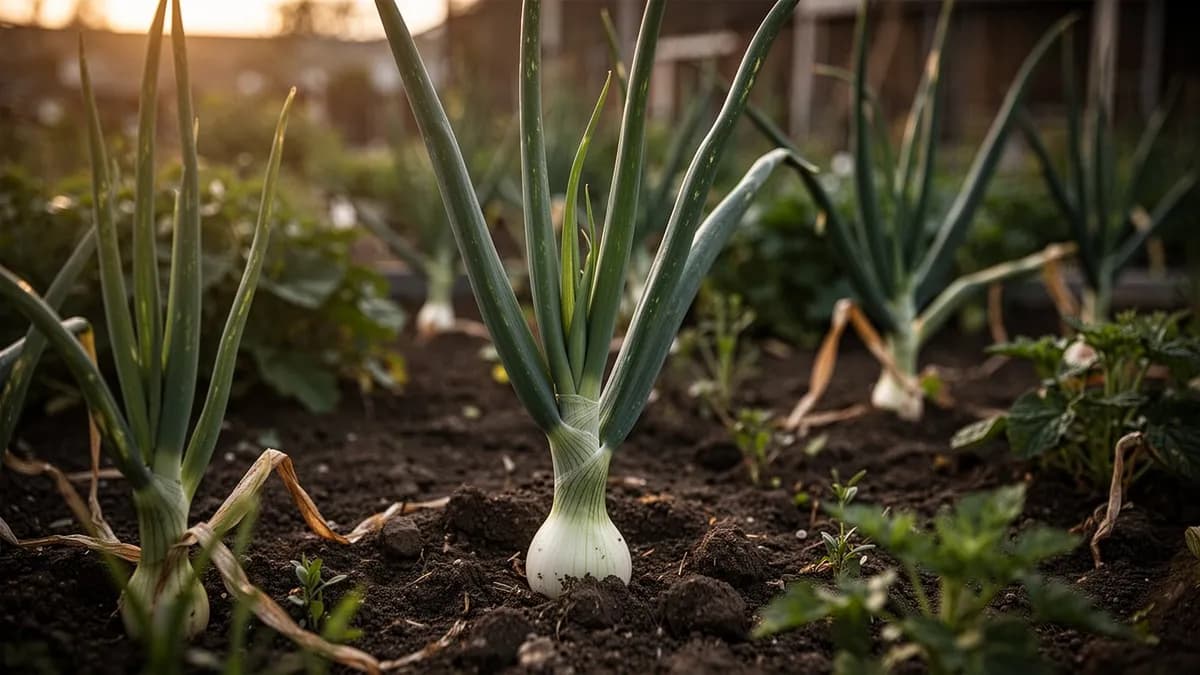
La cebolleta de ramillete (Allium fistulosum) es una cebolla perenne que no forma bulbo, creciendo en matas densas de tallos verdes huecos que se cosechan enteros. Originaria de Asia oriental, es un ingrediente esencial de las cocinas china, japonesa y coreana, apreciada por su sabor suave y dulce que es más delicado que el de la cebolla común.
Cuándo plantar Cebolleta de Ramillete
Siembre a 0,5-1 cm de profundidad directamente o en bandejas en interiores 6-8 semanas antes del trasplante. Germinación en 7-14 días a 15-25 °C. Las semillas son pequeñas; mezcle con arena fina para distribución uniforme.
Tu año de Cebolleta de Ramillete
Ajustado a Zona 7 · temporada típica · la helada se va hacia el 2 abr y vuelve hacia el 1 nov
Planta Cebolleta de Ramillete Mar – Abr, Ago – Sep y cosecha May – Jul, Oct – Nov. Consulta los métodos de plantación y elige tu clima para adaptar los periodos.
Cómo cultivar Cebolleta de Ramillete
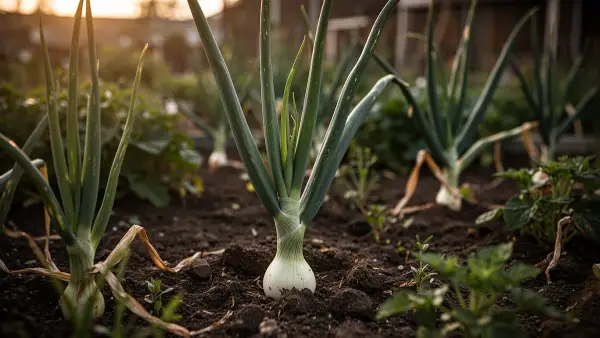
Siembre directamente a 0,5-1 cm de profundidad en filas de 20-30 cm, o inicie en interiores 6-8 semanas antes del trasplante. Espacie 5-8 cm entre plantas para matas individuales o siembre más denso para cosecha tipo cebollino.
Las cebollas de ramillete son extraordinariamente adaptables y toleran tanto frío como calor moderado. Riegue regularmente con 2-3 cm semanales. Aplique acolchado para mantener humedad y suprimir malas hierbas. Aporcado progresivo blanquea los tallos.
Fertilice cada 3-4 semanas con abono equilibrado. Las plantas son perennes y rebrotan continuamente tras el corte. Divida las matas cada 2-3 años para mantener el vigor. Siembre sucesivamente cada 3 semanas para cosecha continua.
288 plantas caben en un bancal de 120 × 240 cm
Cada Cebolleta de Ramillete pide 10 cm de margen. El planificador guarda ese marco por ti — cada planta, cada bancal.
Los mejores vecinos de Cebolleta de Ramillete
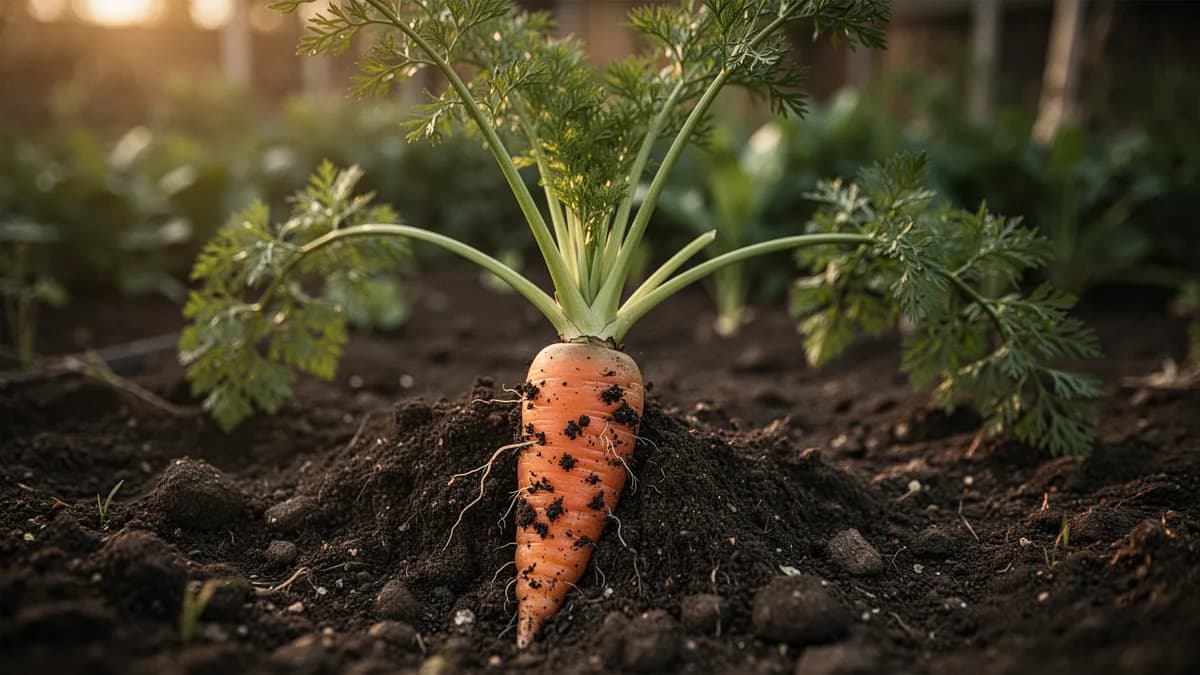
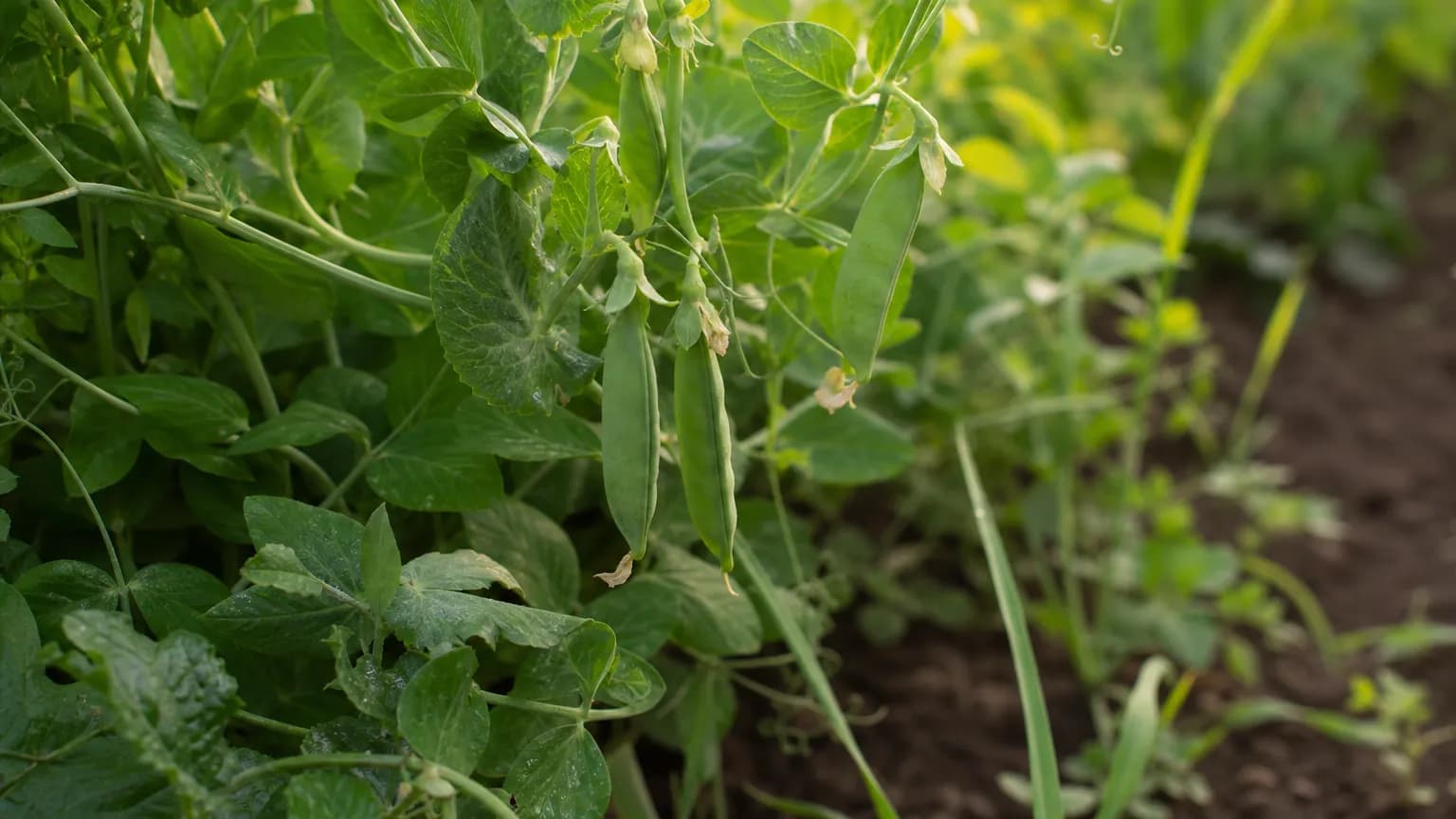
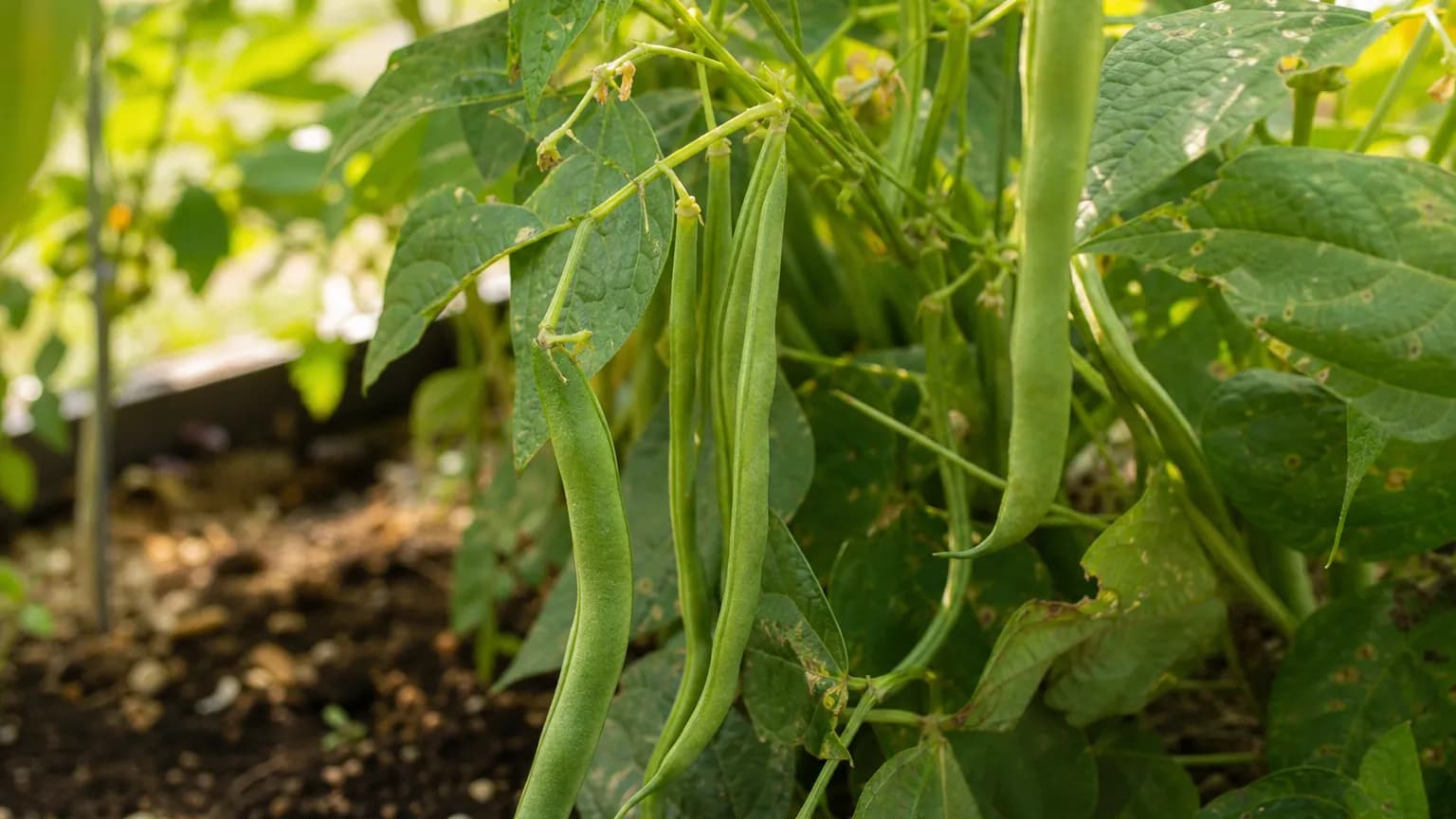
Crecen bien junto a zanahorias, cuyo aroma ayuda a repeler la mosca de la cebolla, y viceversa. Las remolachas y la lechuga son buenos compañeros. Evite plantar junto a leguminosas que pueden ser inhibidas por los compuestos de azufre.
Zanahoria va a su lado. Guisantes no.
Saber de huerto de siempre, cotejado con la tabla real de Cebolleta de Ramillete — prueba cualquier planta que cultives.
Prueba Cebolleta de Ramillete en un bancal, aquí mismo
Un bancal real del planificador con Cebolleta de Ramillete ya plantado. Toca una planta compañera para colocarla y mira cómo responde la comprobación de vecinos: verde para buenos vecinos, rojo si hay conflicto.


Guías de cultivo relacionadas
Abónalo bien
Suelos ricos, sueltos y bien drenados con pH 6,0-7,0. Enmiende con compost. Fertilice regularmente con abono equilibrado. Aporcado progresivo con tierra o compost blanquea los tallos y mejora su sabor.
Temperatura ideal
Compatibilidad de zonas de rusticidad
De la semilla a la cosecha, etapa por etapa
Germinación
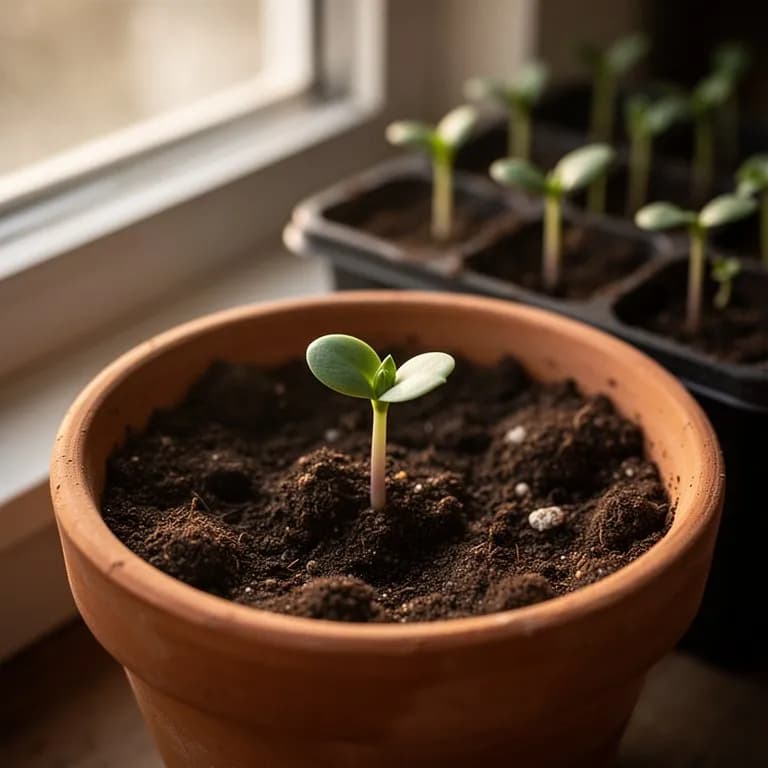
Las semillas germinan lentamente y producen un solo brote fino, parecido a una brizna de hierba, que forma un característico bucle antes de enderezarse. La germinación tarda 7–14 días y requiere humedad constante. Las plántulas diminutas pasan fácilmente desapercibidas y al principio pueden confundirse con hierba.
Desarrollo de plántulas
La hoja inicial se acompaña de otras hojas huecas y tubulares que emergen del punto de crecimiento central. Durante esta fase, las plántulas siguen siendo finas y delicadas, y se van engrosando gradualmente a medida que se establece el sistema radicular. El crecimiento es lento pero constante.
Crecimiento vegetativo
Las plantas entran en un periodo de producción constante de hojas, añadiendo nuevas hojas verdes huecas mientras el tallo o base blanca empieza a engrosar. Pueden formarse brotes laterales en la base, produciendo el característico grupo de tallos que da nombre a las cebolletas de mata. La planta desarrolla su sabor suave a cebolla durante esta fase.
Maduración
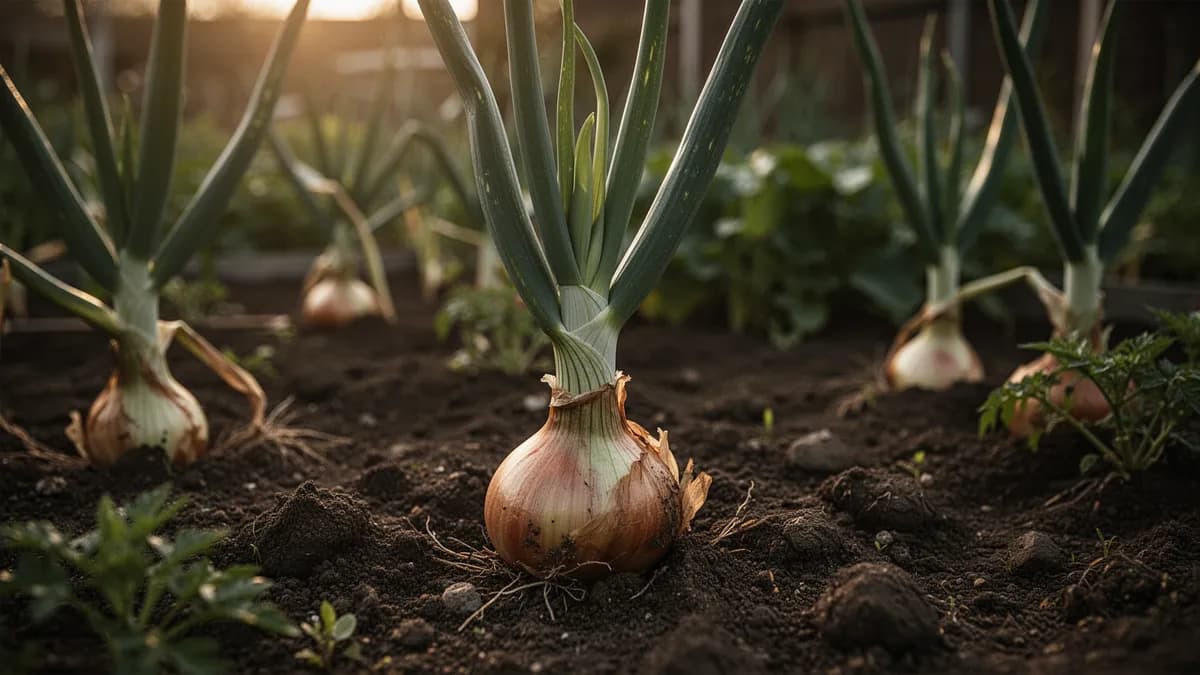
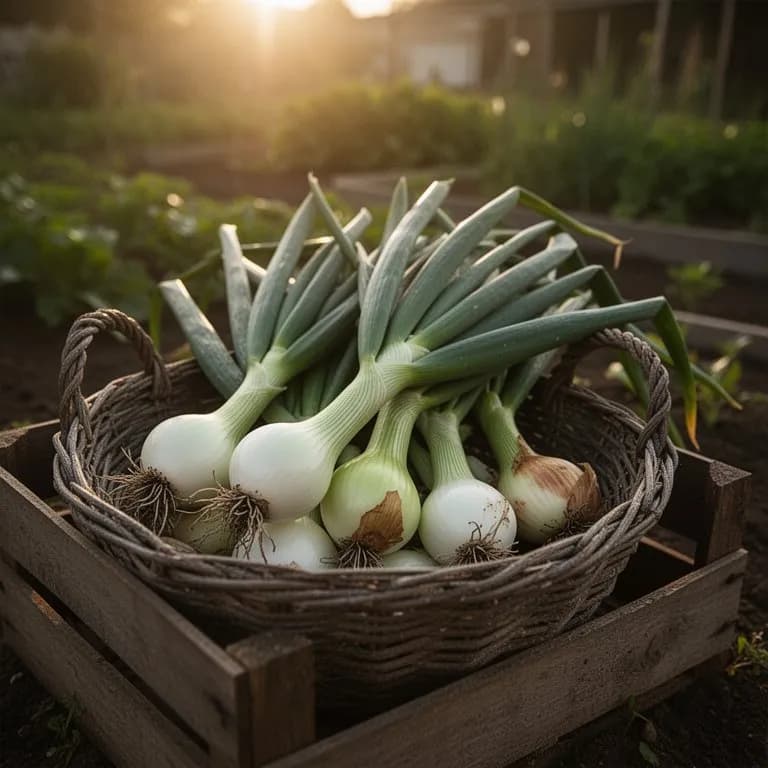
Las plantas alcanzan un tamaño apto para la cosecha con tallos de 15–20 cm de largo y 1–2 cm de grosor. La parte blanca se extiende bien por debajo de la línea del suelo si se ha aporcado correctamente. Pueden haberse formado varios brotes laterales en un macollo apretado. Las hojas son de color verde intenso, erguidas y huecas, con un aroma suave y pungente al aplastarlas.
Macollamiento y rebrote
Si no se cosechan, las cebolletas de mata siguen dividiéndose y formando macollos cada vez más densos mediante el macollamiento. Las variedades perennes pueden durar años y producir nuevos brotes indefinidamente. Las plantas pueden espigarse en su segundo año o durante el estrés térmico, emitiendo un tallo floral redondo rematado por una cabeza blanca de flores globosa.
Mantén el suelo uniformemente húmedo, pero nunca encharcado. Siembra las semillas superficialmente, a solo 5–10 mm de profundidad. Una ligera capa de vermiculita ayuda a conservar la humedad sin formar costra. La temperatura del suelo de 15–24 °C (60–75 °F) da los mejores resultados de germinación.
Cuidar Cebolleta de Ramillete mes a mes
Qué hacer cada mes para tu Cebolleta de Ramillete
Octubre
Mes actualHarvest autumn-grown bunching onions. In cold climates, apply a thick mulch of straw or shredded leaves over perennial clumps and overwintering sowings. In mild zones, bunching onions continue growing through autumn without protection.
Ten claro qué hacer en tu huerto, cada mes
Un correo al empezar cada mes: qué sembrar, plantar y hacer ahora mismo — para tu Cebolleta de Ramillete y todo lo que crece alrededor. Más un breve curso inicial para esquivar los errores clásicos.
- Qué hacer ahora mismo
- Ajustado a tu temporada
- Curso inicial incluido
Cosechar Cebolleta de Ramillete
Coseche cortando los tallos a 2-3 cm del suelo cuando alcancen 20-30 cm de alto, unos 60-70 días tras la siembra. Las plantas rebrotan para múltiples cosechas. También puede arrancar matas enteras cuando sean necesarias. Coseche por la mañana para máxima frescura.
se supone que plantas al comenzar el periodo — indica tu fecha real
Cosecha cuando los tallos alcancen el grosor de un lápiz, normalmente entre 60 y 70 días desde la siembra.
Almacenamiento y conservación
Las cebollas de ramillete frescas se conservan en refrigerador envueltas en papel húmedo 7-10 días. Para conservación, pique finamente y congele en bolsas. También se pueden deshidratar en rodajas finas o preparar en aceite aromatizado.
Qué falla — y cómo solucionarlo
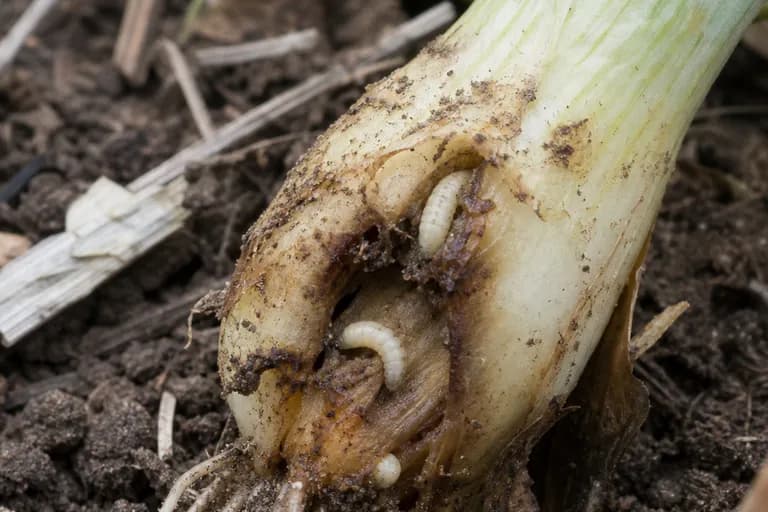
Mosca de la cebolla (Delia antiqua)
PlagaLarvas que perforan la base del tallo causando marchitez y pudrición.
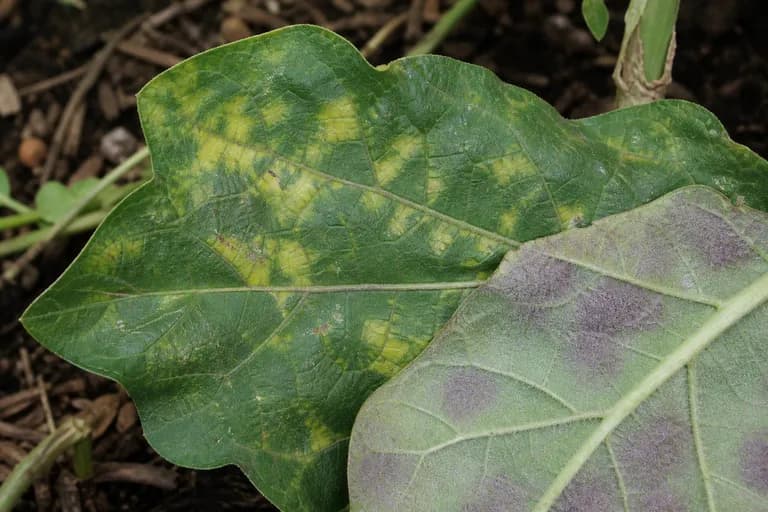
Mildiu (Peronospora destructor)
EnfermedadManchas pálidas alargadas en hojas con pelusa gris-violácea.
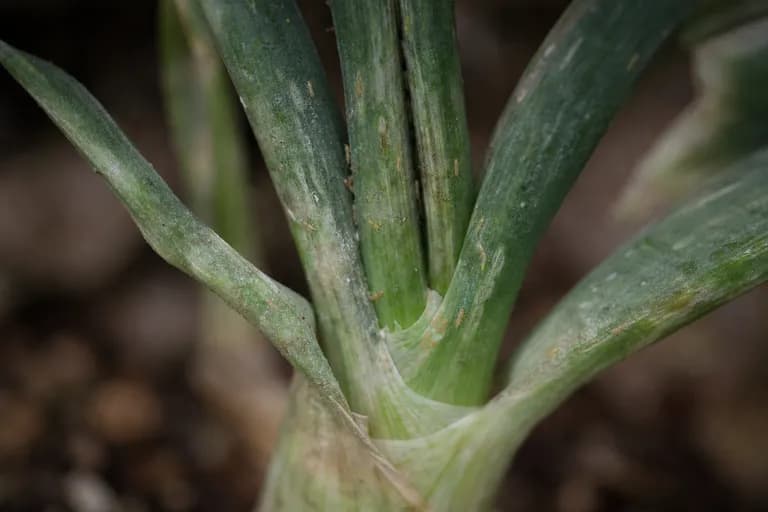
Trips de la cebolla (Thrips tabaci)
PlagaEstrías plateadas en hojas, deformación de hojas jóvenes.
Solución de problemas comunes
Las plantas pueden espigarse prematuramente con estrés. La mosca de la cebolla puede destruir las matas. El exceso de humedad causa pudrición basal. Las matas viejas no divididas pierden vigor y producen tallos finos.
Consejos de cultivo
- Succession sow every 3-4 weeks from early spring through late summer for a year-round supply. Bunching onions do not store well once harvested, so growing a continuous pipeline of small batches is far better than one large planting.
- Hill soil around the base of plants every 2-3 weeks as they grow — this blanches the shank and produces the long, white stem portion that is most prized in cooking. Without hilling, you will get mostly green tops with very short white sections.
- Plant in clusters of 4-6 seeds or seedlings rather than single rows for a true bunching harvest. Each cluster grows into a tight, attractive bunch that can be pulled as a single unit, mimicking the bunches sold in grocery stores.
- Bunching onions are exceptionally cold-hardy for an allium. Sow in autumn for the earliest possible spring harvest — overwintered plants resume growth weeks before spring-sown seeds even germinate, giving you fresh onions when nothing else is ready.
- Interplant bunching onions with carrots, lettuce, and brassicas. Their mild allium scent helps deter carrot rust fly and aphids, and their upright, narrow growth habit takes almost no space between rows of other crops.
- For perennial production, leave a few plants unharvested each season and allow them to tiller into large clumps. Divide these clumps every 1-2 years and replant the divisions — this provides free planting stock indefinitely.
- Water consistently but avoid wetting the foliage, especially in humid conditions. Bunching onions are susceptible to downy mildew and purple blotch when leaves remain wet for extended periods. Drip irrigation or morning watering is ideal.
- Harvest by pulling entire plants or by cutting individual outer leaves 2-3 cm above the base — the plant will regrow from the center. This cut-and-come-again approach works well for the green tops and can extend a single planting's productive life by months.
Cultiva tu mejor Cebolleta de Ramillete — y todo lo que la rodea.
Empieza un plan gratis hoy. Diseña tus bancales, coloca tu Cebolleta de Ramillete y deja que PlotMyGarden gestione el momento, el espaciado, las asociaciones y los recordatorios de la semilla a la cesta.
Elige tu Cebolleta de Ramillete
Evergreen Hardy White
Variedad perenne resistente al frío con tallos blancos largos. Muy adaptable. Cosecha continua todo el año en climas templados.
Tokyo Long White (Naga Negi)
Variedad japonesa con tallo blanco largo por aporcado. Esencial para ramen y nabe. Madura en 65 días.
Ishikura
Variedad japonesa que no forma bulbo, con tallos blancos largos de 30-40 cm. Sabor suave y dulce. Madura en 60 días.
Red Beard
Variedad con base roja decorativa y sabor más intenso. Atractiva en ensaladas. Madura en 60 días.
Bunching onions are one of the most cost-effective crops to grow at home. A single $2-3 seed packet produces 200-400 plants, and perennial varieties that tiller provide harvests for years from one planting. Store-bought scallions cost $1-3 per small bunch (6-8 stalks), so a single 3-meter row replaces $15-30 worth of store purchases. Growing your own also means you can harvest the entire plant including roots and outer leaves that are typically trimmed for retail, eliminating all waste.
Recetas rápidas
Chinese Scallion Pancakes (Cong You Bing)
40 minFlaky, crispy, and intensely aromatic — these layered flatbreads are one of the most popular street foods in China. The dough is rolled with oil and chopped scallions, then coiled and flattened to create dozens of paper-thin layers that shatter when bitten.
7 ingredientes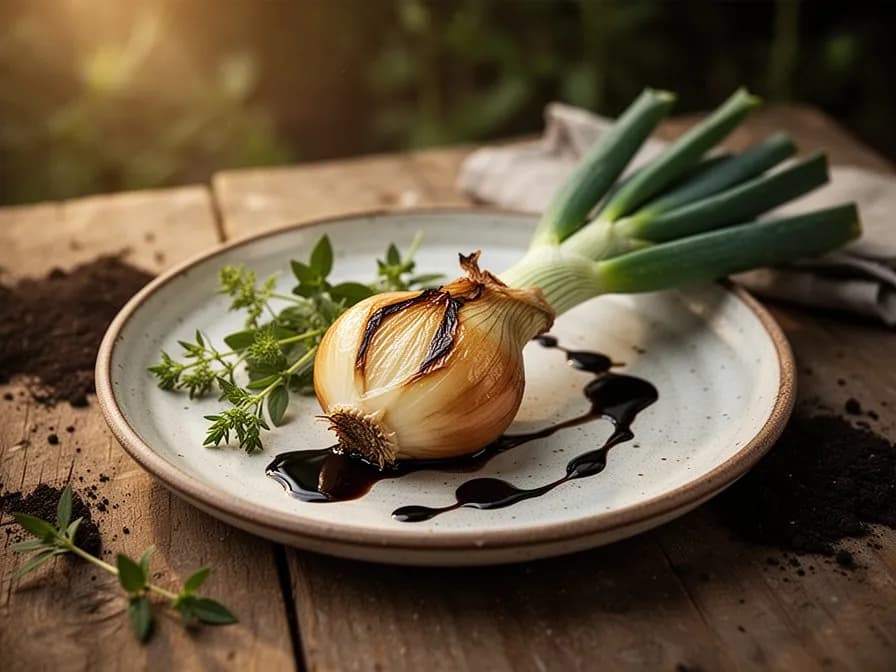
Japanese Negima Yakitori
25 minClassic Japanese grilled chicken skewers alternating juicy thigh meat with chunks of bunching onion that caramelize and sweeten over charcoal. The tare glaze creates a lacquered, savory-sweet finish that makes these irresistible.
7 ingredientesScallion Ginger Oil Noodles
15 minA deceptively simple Shanghainese classic where hot oil is poured over a mountain of sliced scallions to release their fragrance, then tossed with noodles and soy sauce. The sizzle of oil hitting the onions creates an aroma that fills the entire kitchen.
8 ingredientesUsos culinarios
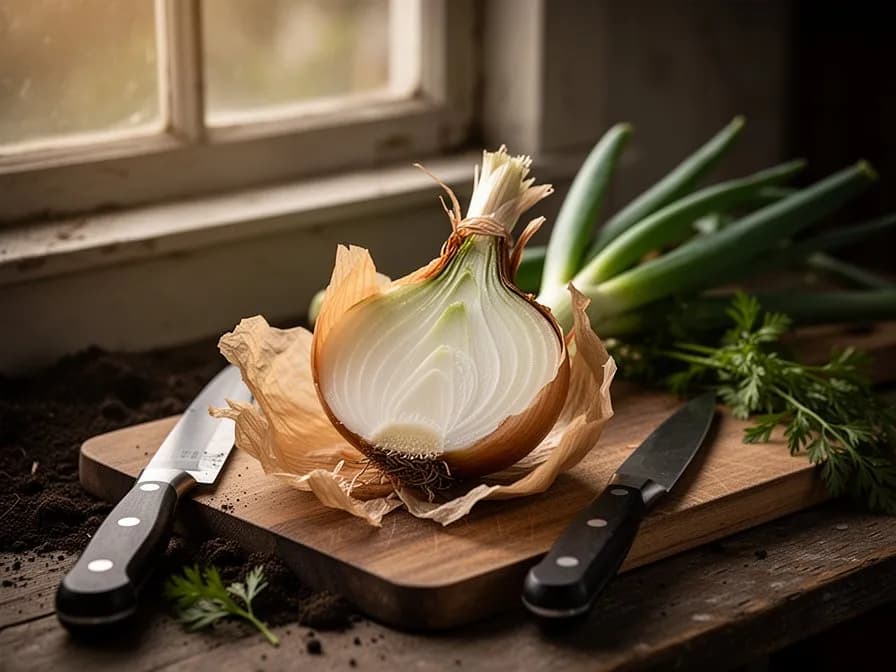
Las cebollas de ramillete son imprescindibles en la cocina asiática: picadas como guarnición de ramen, fideos y sopas; en rodajas en salteados y stir-fry; como ingrediente principal de cong you bing (tortitas chinas de cebolleta); y en negimaki japonés (enrolladas en carne). También se usan crudas en ensaladas.
Qué contiene
Beneficios para la salud
- Rich in vitamin K — the green tops provide over 170% of the daily value per 100g, essential for blood clotting, bone metabolism, and calcium regulation throughout the body.
- Contains organosulfur compounds including allicin and allyl sulfides that have demonstrated antimicrobial properties and may help reduce blood pressure and LDL cholesterol levels.
- Good source of vitamin C at 21% of the daily value per 100g, functioning as an antioxidant that protects cells from oxidative damage and supports immune system function.
- The green tops contain significant beta-carotene (provitamin A), important for eye health, skin integrity, and immune function — the darker green the leaves, the higher the concentration.
- Provides prebiotic fructans (inulin-type fibers) that feed beneficial gut bacteria, supporting digestive health and potentially improving mineral absorption in the intestines.
- Contains quercetin and kaempferol — flavonoid antioxidants studied for their potential anti-inflammatory effects and possible role in reducing the risk of cardiovascular disease and certain cancers.
De dónde viene Cebolleta de Ramillete
Bunching onions (Allium fistulosum) originated in northwestern China and southern Siberia, where wild populations still grow in mountainous regions. Archaeological and literary evidence suggests they were first cultivated in China at least 2,000 years ago, making them one of the oldest continuously cultivated vegetables in Asia. Unlike the common bulb onion (Allium cepa), which was domesticated independently in Central Asia, bunching onions were selected specifically for their green tops and slender white shanks rather than for bulb formation.
From China, bunching onions spread to Japan, Korea, and Southeast Asia along ancient trade routes, becoming deeply embedded in the culinary and medicinal traditions of each region. In Japan, selective breeding over centuries produced the long, thick-shanked 'negi' varieties prized for grilling and hot pot dishes, while Korean agriculture developed varieties optimized for the intense flavors needed in kimchi and fermented preparations. Each East Asian culinary tradition developed its own distinct cultivars adapted to local tastes and growing conditions.
Bunching onions reached Europe relatively late compared to bulb onions, arriving via trade routes in the 16th and 17th centuries. European gardeners initially grew them as a novelty but gradually adopted them as a reliable cool-season crop that could provide fresh allium greens when bulb onions were not yet ready. In the Americas, they became known as scallions, green onions, or spring onions depending on the region. Today, bunching onions are grown commercially on every inhabited continent, with China, Japan, and South Korea remaining the largest producers. Modern breeding programs have developed varieties with exceptional cold hardiness, disease resistance, and extended harvest windows, but the fundamental character of this versatile, easy-to-grow allium remains much as it was when Chinese farmers first selected it from wild populations millennia ago.
Cebolleta de Ramillete: ¿sabías que?
Datos fascinantes sobre Cebolleta de Ramillete
Bunching onions (Allium fistulosum) are genetically distinct from common bulb onions (Allium cepa) and have been cultivated independently in East Asia for over 2,000 years — they never form true bulbs regardless of day length or growing conditions.
Cebolleta de Ramillete: preguntas frecuentes
¿Cuándo debo plantar Cebolleta de Ramillete?
¿Cuáles son buenas plantas acompañantes para Cebolleta de Ramillete?
¿En qué zonas de rusticidad puede crecer Cebolleta de Ramillete?
¿Cuánto sol necesita Cebolleta de Ramillete?
¿A qué distancia debo espaciar Cebolleta de Ramillete?
¿Qué plagas y enfermedades afectan a Cebolleta de Ramillete?
¿Cómo almaceno Cebolleta de Ramillete después de la cosecha?
¿Cuáles son las mejores variedades de Cebolleta de Ramillete para cultivar?
¿Qué suelo necesita Cebolleta de Ramillete?
What is the difference between bunching onions, scallions, green onions, and spring onions?
Can I regrow bunching onions from store-bought scallions?
Why are my bunching onions bolting and sending up flower stalks?
How do I get long white shanks on my bunching onions?
Are bunching onions perennial — do they come back every year?
Can I grow bunching onions in pots or containers?
Acabas de leer la teoría. Ahora cultívala en piloto automático.
Todo lo que hace que Cebolleta de Ramillete sea delicado — el momento, el espaciado, las asociaciones, la ventana de cosecha — es justo lo que PlotMyGarden resuelve por ti, para cada planta de tu huerto.
Un plan que conoce tu clima
Indica tu ubicación una vez. Recibe fechas de siembra, abonado y cosecha basadas en tu última helada real y el pronóstico en vivo — sin adivinar con un sobre genérico.
De la sección “Cuándo plantar”Planificador de bancales de arrastrar y soltar
Diseña bancales sobre una cuadrícula. Cada planta encaja con su espaciado correcto y ves toda la temporada antes de gastar un céntimo en semillas.
De la sección “Cultivo”Conflictos de asociación, detectados a tiempo
Más de 200 buenas y malas combinaciones comprobadas en vivo mientras plantas — para que un error que arruine la temporada nunca llegue a la tierra.
De la sección “Asociaciones”Recordatorios que sí vas a seguir
“Riega las judías.” “Recoge hoy antes de que se pase.” Oportunos, concretos y ligados a las plantas que de verdad cultivas.
De la sección “Cosecha”Escalonado, programado
¿Quieres cosechar seis semanas en vez de seis días? Reparte tus siembras automáticamente y te avisa cuando toca el siguiente lote.
De la sección “Cuándo plantar”Un registro que se vuelve más listo
Cada cosecha que registras le enseña tu huerto. El plan del año que viene parte de lo que de verdad funcionó en tu suelo, no en un manual.
De la sección “Resumen”Planta estos junto a Cebolleta de Ramillete
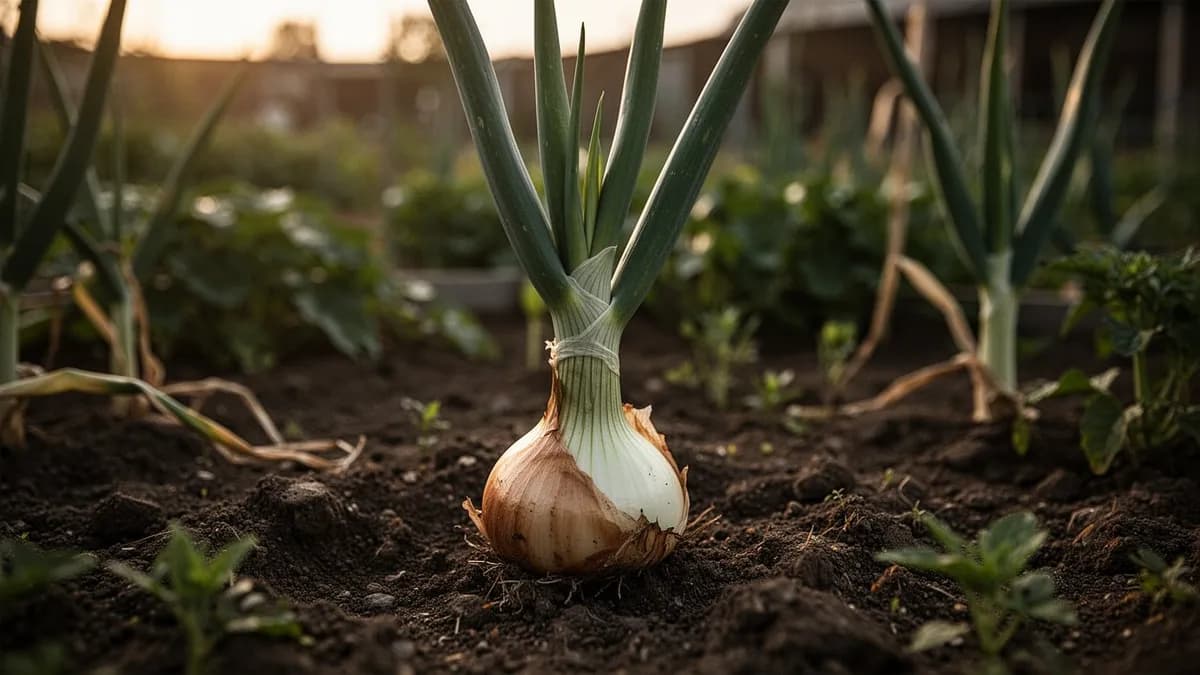
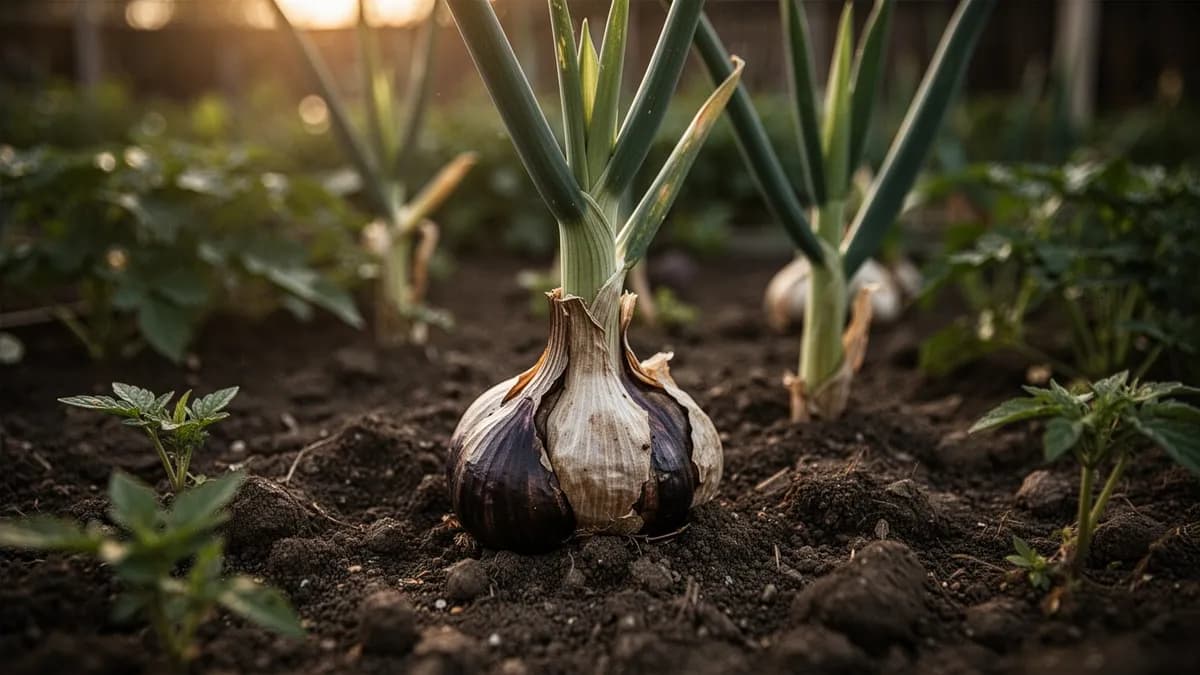
Más Aliáceas
Mantén Cebolleta de Ramillete lejos de estos
Diseños de jardín con Cebolleta de Ramillete
Cultiva tu mejor Cebolleta de Ramillete — y todo lo que la rodea.
Empieza un plan gratis hoy. Diseña tus bancales, coloca tu Cebolleta de Ramillete y deja que PlotMyGarden gestione el momento, el espaciado, las asociaciones y los recordatorios de la semilla a la cesta.