Ajo Negro
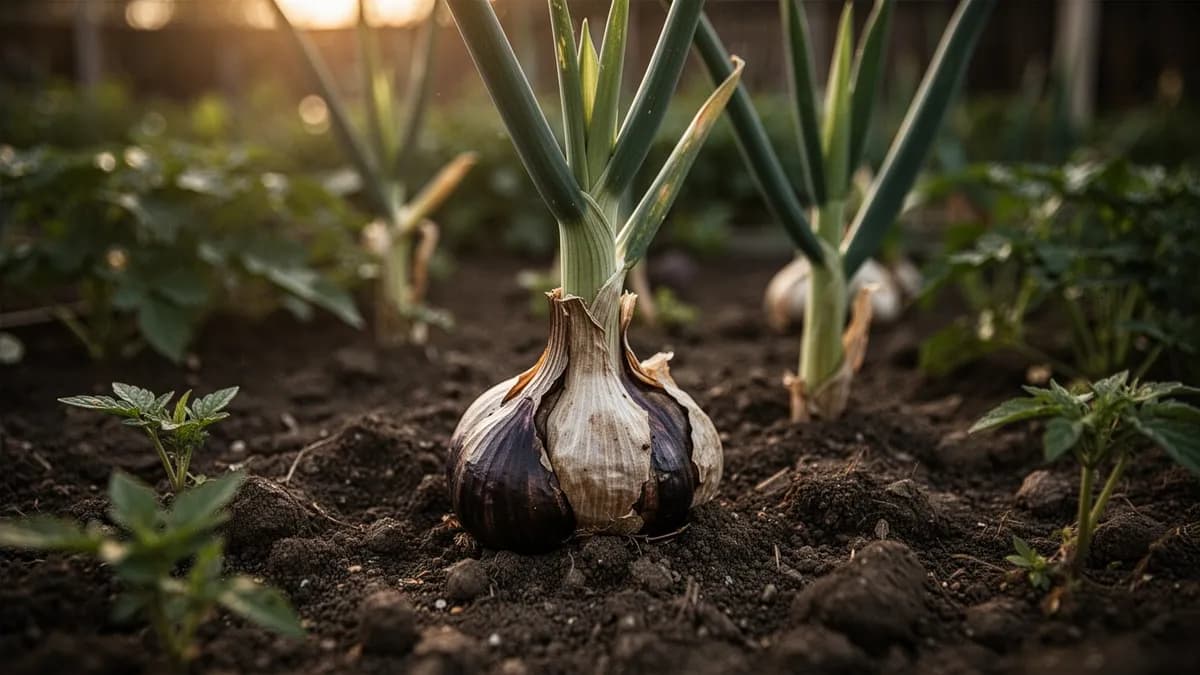
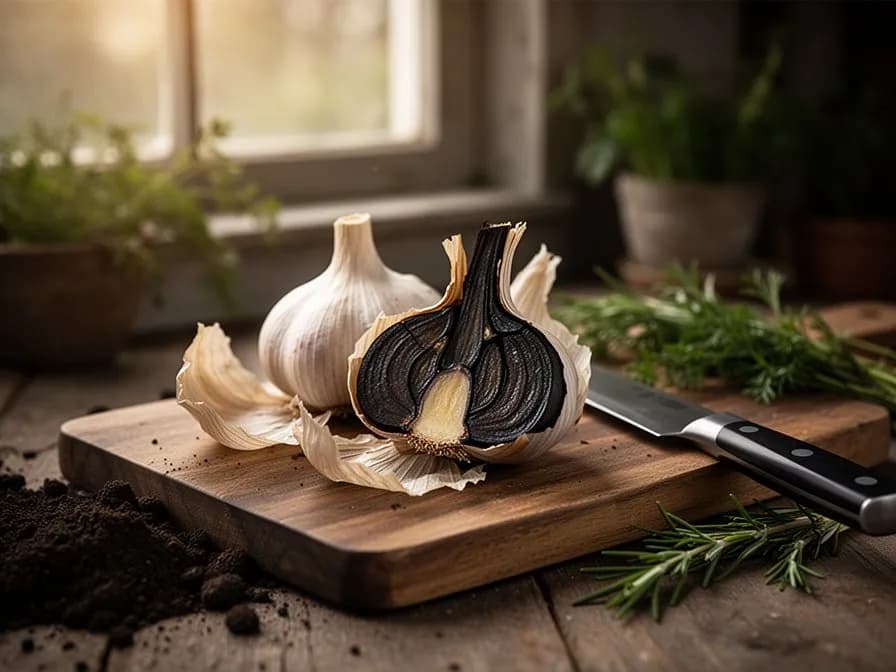
El ajo negro es ajo convencional (Allium sativum) sometido a un proceso controlado de fermentación lenta a temperatura y humedad específicas durante varias semanas, que transforma los dientes blancos en una sustancia negra, suave y pegajosa con un sabor dulce, umami y complejo que recuerda al regaliz, el vinagre balsámico y la ciruela pasa.





En esta páginaResumen
Conoce Ajo Negro
El ajo negro es ajo convencional (Allium sativum) sometido a un proceso controlado de fermentación lenta a temperatura y humedad específicas durante varias semanas, que transforma los dientes blancos en una sustancia negra, suave y pegajosa con un sabor dulce, umami y complejo que recuerda al regaliz, el vinagre balsámico y la ciruela pasa. Este producto gourmet se ha convertido en un ingrediente estrella de la alta cocina mundial.
Cuándo plantar Ajo Negro
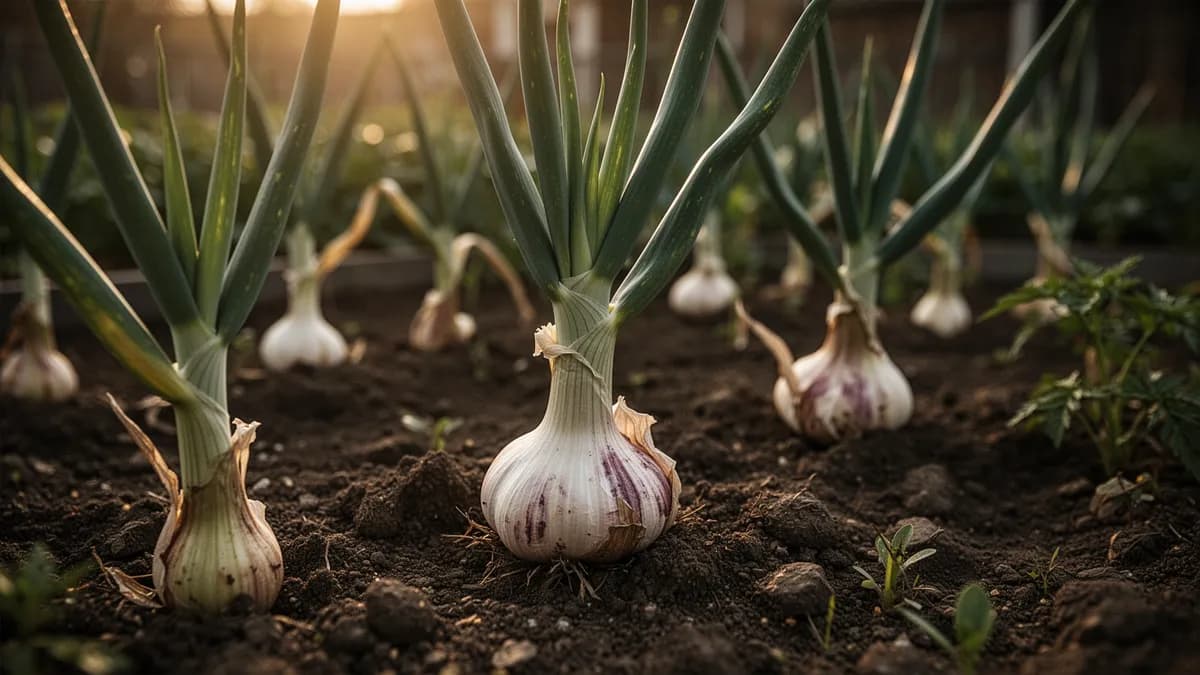
Plante dientes de ajo individuales en otoño (octubre-noviembre en el hemisferio norte) a 5-8 cm de profundidad con la punta hacia arriba, espaciados 15 cm en hileras separadas 25-30 cm. Use dientes grandes de cabezas sanas. La vernalización invernal es necesaria para la formación de los dientes. Los brotes emergen en primavera y la cosecha se realiza en verano, tras lo cual se inicia el proceso de fermentación para obtener el ajo negro.
Tu año de Ajo Negro
Ajustado a Zona 7 · temporada típica · la helada se va hacia el 2 abr y vuelve hacia el 1 nov
Planta Ajo Negro Sep – Nov y cosecha Jun – Jul. Consulta los métodos de plantación y elige tu clima para adaptar los periodos.
Cómo cultivar Ajo Negro
El cultivo del ajo para producir ajo negro sigue las mismas pautas que el ajo convencional: plante los dientes en otoño a 5-8 cm de profundidad y 15 cm de separación en pleno sol, en suelo fértil y bien drenado con pH entre 6,0 y 7,5. Riegue regularmente y fertilice con compost en primavera.
La diferencia clave está en el procesamiento post-cosecha. Tras cosechar y curar el ajo normalmente, coloque las cabezas enteras en un fermentador o arrocera eléctrica mantenida a 60-80 °C con humedad relativa del 70-90 % durante 3-4 semanas. El proceso de Maillard y la fermentación enzimática transforman gradualmente los dientes.
Controle la temperatura regularmente: demasiado baja y la fermentación no se completa; demasiado alta y el ajo se seca o quema. Después de la fermentación, deje reposar las cabezas a temperatura ambiente durante 1-2 semanas adicionales para que los sabores se equilibren y la textura se estabilice. El resultado final debe ser dientes completamente negros, suaves y con aroma dulce.
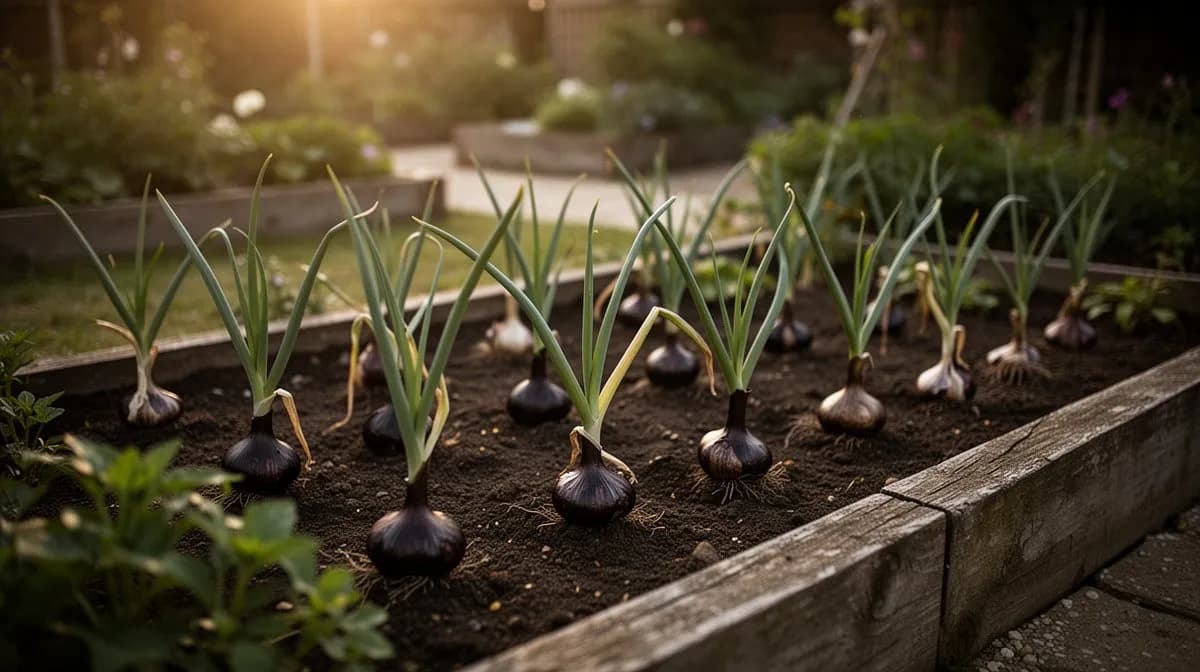
128 plantas caben en un bancal de 120 × 240 cm
Cada Ajo Negro pide 15 cm de margen. El planificador guarda ese marco por ti — cada planta, cada bancal.
Los mejores vecinos de Ajo Negro
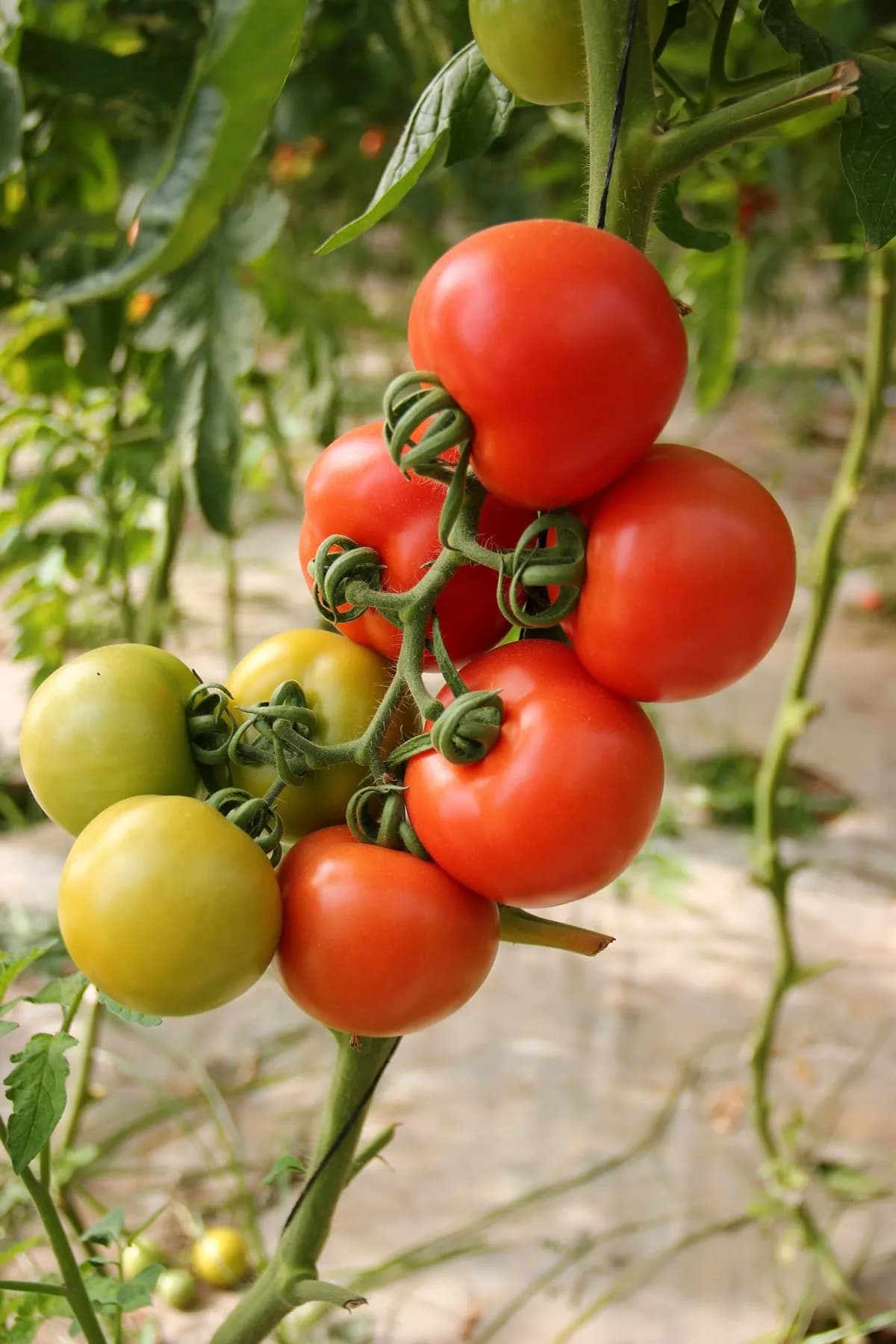
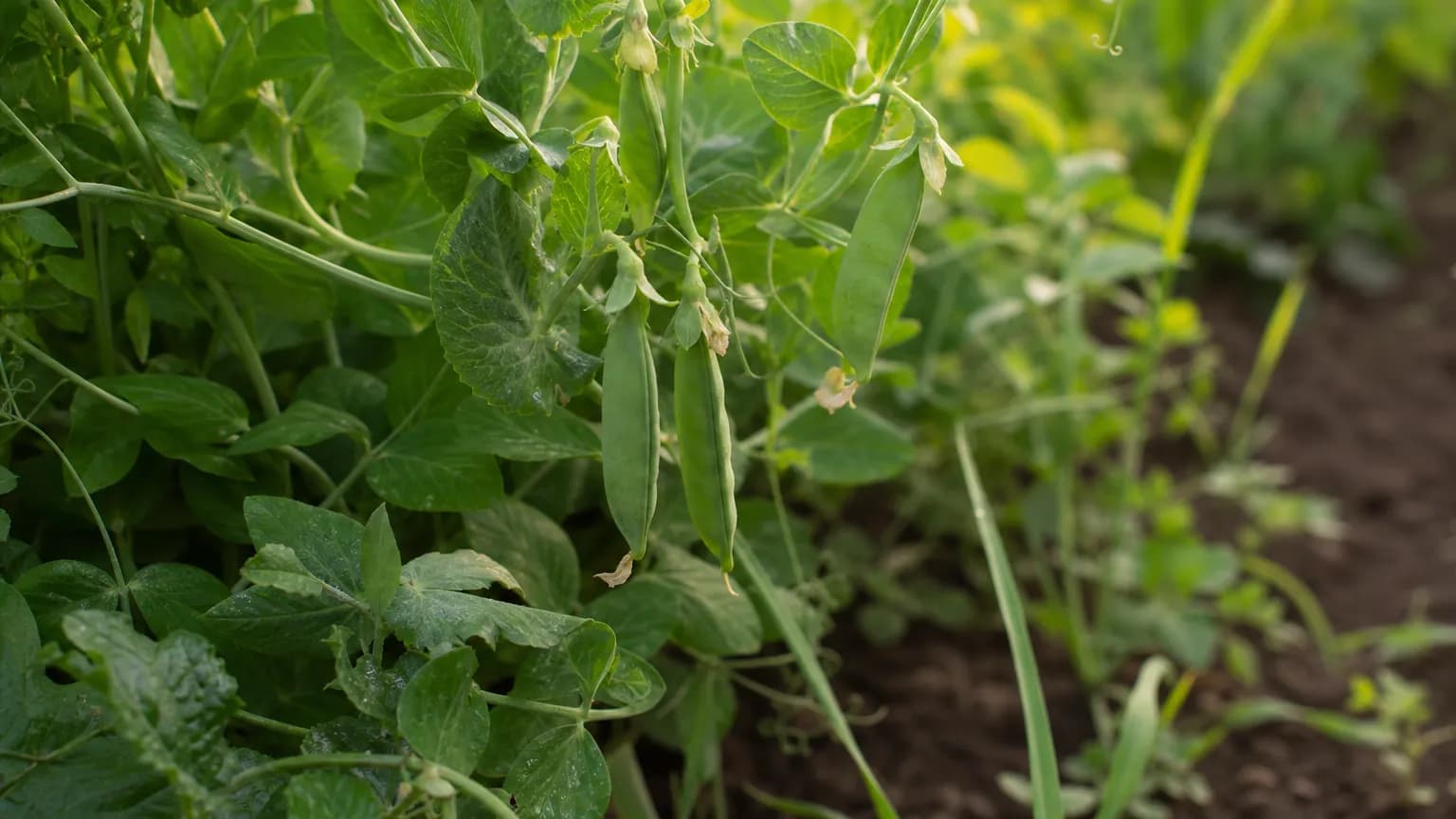
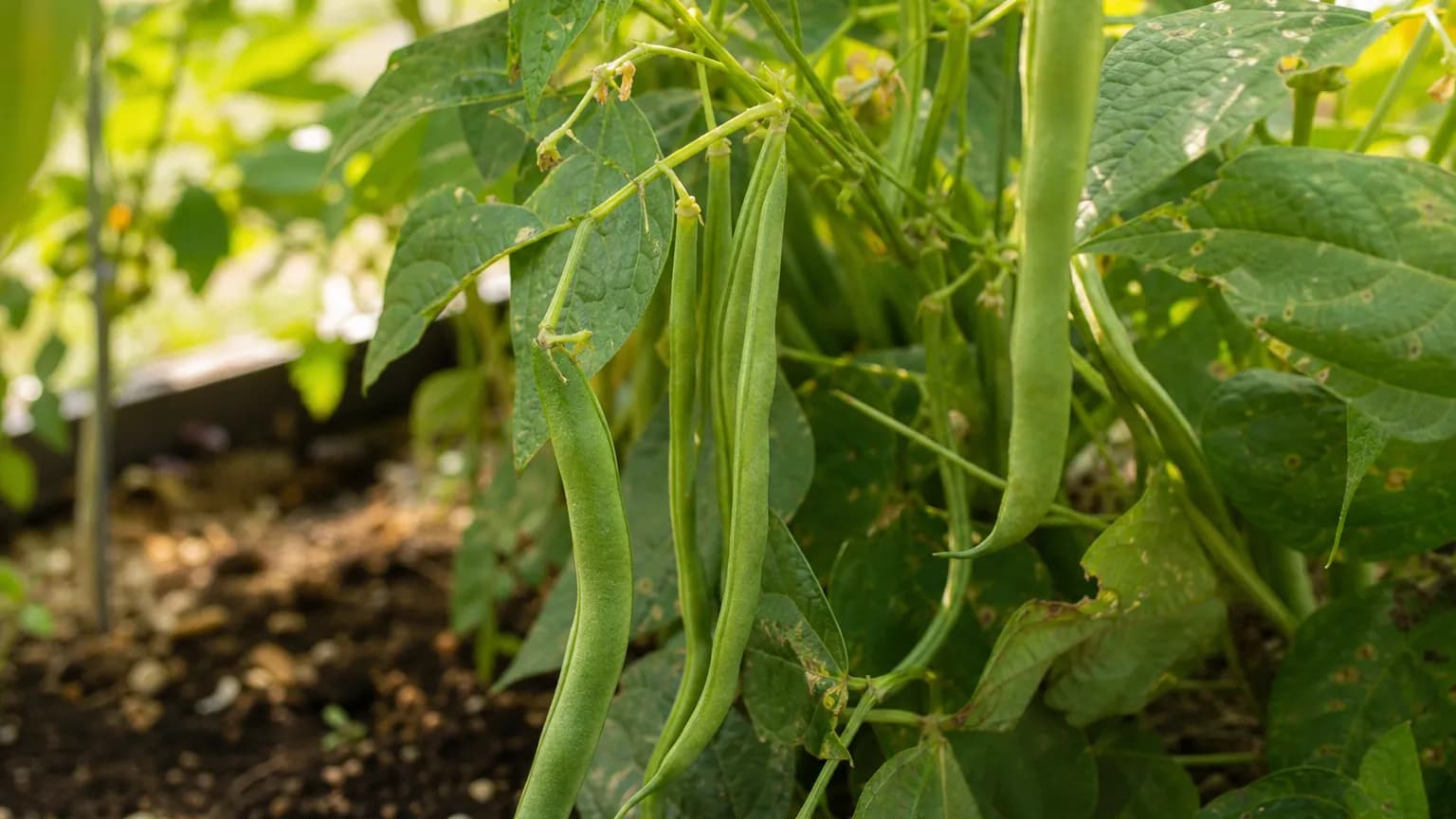
Durante la fase de cultivo del ajo, las asociaciones clásicas beneficiosas incluyen rosales (el ajo repele los pulgones), tomates, fresas y zanahorias. Evite plantar junto a leguminosas como guisantes y judías, ya que el ajo puede inhibir su crecimiento y la fijación de nitrógeno.
Tomate va a su lado. Guisantes no.
Saber de huerto de siempre, cotejado con la tabla real de Ajo Negro — prueba cualquier planta que cultives.
Prueba Ajo Negro en un bancal, aquí mismo
Un bancal real del planificador con Ajo Negro ya plantado. Toca una planta compañera para colocarla y mira cómo responde la comprobación de vecinos: verde para buenos vecinos, rojo si hay conflicto.


Guías de cultivo relacionadas
Abónalo bien
El cultivo del ajo base requiere suelos fértiles, bien drenados y con pH entre 6,0 y 7,5. Incorpore compost maduro antes de la plantación otoñal. Aplique un fertilizante rico en nitrógeno en primavera cuando comience el crecimiento activo. Evite el exceso de nitrógeno cerca de la cosecha, ya que dificulta el curado y la conservación.
Temperatura ideal
Compatibilidad de zonas de rusticidad
De la semilla a la cosecha, etapa por etapa
Plantación de dientes
Los dientes individuales de variedades de ajo de cuello duro se plantan con la punta hacia arriba en suelo bien drenado y enriquecido con compost. La plantación otoñal es esencial para una buena formación de bulbos en la primavera siguiente.
Reposo invernal
Los dientes permanecen bajo tierra durante el período frío de vernalización, que desencadena la correcta división del bulbo en primavera. En climas más suaves, los brotes verdes pueden persistir durante el invierno.
Crecimiento primaveral
A medida que el suelo se calienta, emergen brotes verdes fuertes y las hojas se desarrollan una tras otra, aportando capacidad fotosintética que impulsa el desarrollo del bulbo bajo tierra.
Formación del escapo
Las variedades de cuello duro emiten un tallo central rígido con un escapo floral en espiral. Si se deja, desvía energía del desarrollo del bulbo subterráneo.
Formación del bulbo y cosecha
Los bulbos subterráneos se hinchan rápidamente mientras los dientes se llenan dentro de las envolturas papiráceas. El momento de cosecha es crítico para conservar la vida útil y la integridad de las envolturas.
Fermentación del ajo negro
Las cabezas enteras de ajo curadas se colocan en un ambiente cálido controlado, donde la reacción de Maillard transforma lentamente los dientes blancos en bocados negro intenso, dulces, ricos en umami y con una textura suave, similar a un dátil.
Planta de 4 a 6 semanas antes de la primera helada fuerte para favorecer un buen enraizamiento. Elige los dientes más grandes y sanos de cada cabeza.
Cuidar Ajo Negro mes a mes
Qué hacer cada mes para tu Ajo Negro
Octubre
Mes actualPrimary planting month for next year's garlic crop. Plant individual cloves from your best reserved bulbs 5-8 cm deep and 15 cm apart. Apply 10-15 cm of straw mulch. Harvest completed black garlic — cloves should be uniformly jet black, soft, and sweet with no raw garlic pungency.
Ten claro qué hacer en tu huerto, cada mes
Un correo al empezar cada mes: qué sembrar, plantar y hacer ahora mismo — para tu Ajo Negro y todo lo que crece alrededor. Más un breve curso inicial para esquivar los errores clásicos.
- Qué hacer ahora mismo
- Ajustado a tu temporada
- Curso inicial incluido
Cosechar Ajo Negro
Coseche el ajo cuando las hojas inferiores estén secas y las superiores empiecen a amarillear, generalmente en junio-julio. Cure las cabezas en un lugar seco y ventilado durante 2-3 semanas. Seleccione las cabezas más grandes, firmes y sin defectos para la fermentación. Tras la fermentación de 3-4 semanas a 60-80 °C, el ajo negro está listo cuando los dientes son completamente negros y suaves.
se supone que plantas al comenzar el periodo — indica tu fecha real
A partir de bulbos, tubérculos o dientes
Cosecha cuando las 3 a 4 hojas inferiores se hayan vuelto marrones y queden 4 a 5 hojas superiores verdes.
Almacenamiento y conservación
El ajo negro fermentado se conserva a temperatura ambiente en un lugar fresco y seco durante 3-6 meses, o refrigerado hasta 12 meses. Las cabezas enteras sin abrir se conservan mejor que los dientes sueltos. También puede congelarse en porciones para uso prolongado. Una vez abierto, envuelva en film y refrigere para consumir en 2-3 semanas.
Qué falla — y cómo solucionarlo
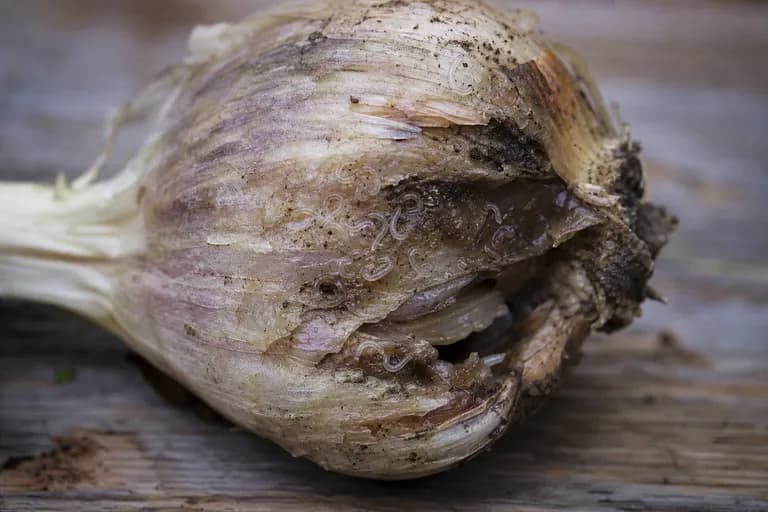
Mosca de la cebolla (Delia antiqua)
PlagaLarvas blancas que excavan en los dientes y la base del ajo, causando pudrición maloliente, amarillamiento y marchitez de las hojas.
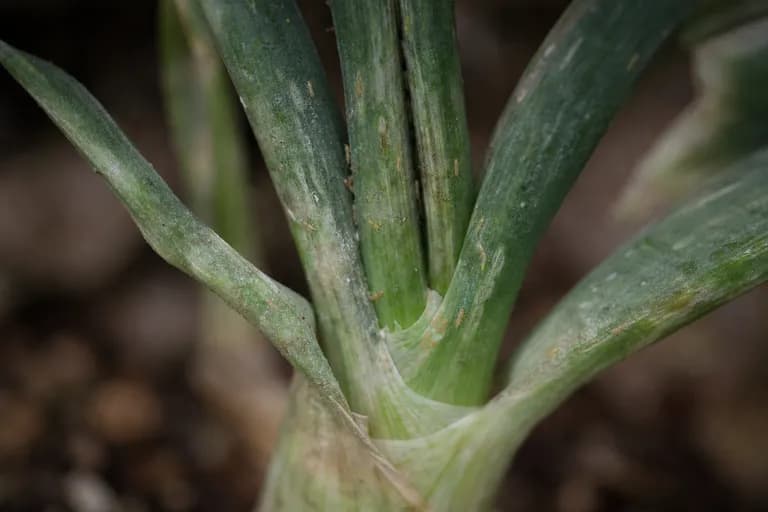
Roya del ajo (Puccinia allii)
EnfermedadPústulas anaranjadas en las hojas que liberan esporas polvorientas. Las hojas amarillean, se debilitan y la formación del bulbo se reduce.
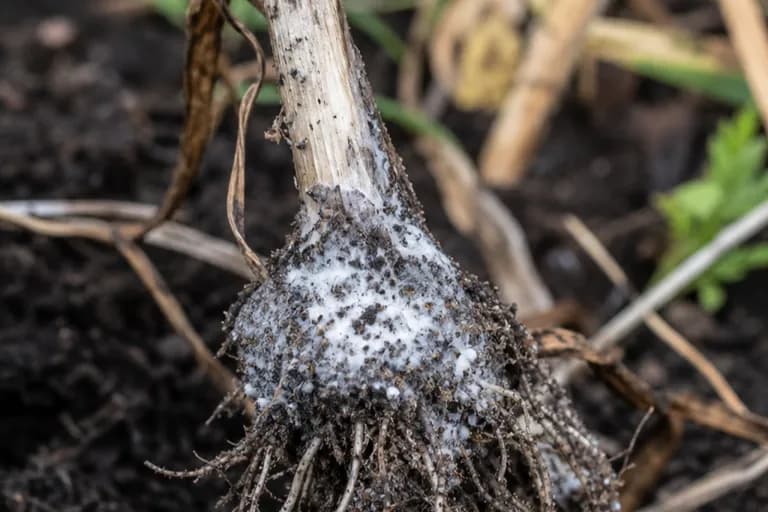
Podredumbre blanca (Sclerotium cepivorum)
EnfermedadMarchitamiento progresivo de las hojas desde las puntas. Al extraer la planta, los dientes muestran un moho blanco algodonoso con pequeños esclerocios negros.
Solución de problemas comunes
El proceso de fermentación requiere un control preciso de temperatura y humedad durante 3-4 semanas, lo que puede ser difícil sin equipo adecuado. Temperaturas demasiado altas secan el ajo y producen un sabor quemado. Temperaturas demasiado bajas no completan la transformación. La selección de ajo de partida de alta calidad es crucial para un buen resultado final.
Consejos de cultivo
- Choose hardneck garlic varieties for black garlic production. Porcelain types like Music and German Extra Hardy produce large, uniform cloves with robust flavour that intensifies beautifully during fermentation. Avoid softneck varieties — their smaller, irregular cloves ferment unevenly.
- Plant in autumn, not spring. Garlic requires a vernalization period of cold exposure to form proper bulbs. Spring-planted garlic produces undersized, poorly differentiated bulbs that are unsuitable for black garlic where uniform clove size and quality matter.
- Invest in soil preparation. Work in 5-8 cm of aged compost plus bone meal before planting. Garlic is a heavy feeder with a shallow root system — rich, loose, well-drained soil produces the largest bulbs with the best flavour compounds for black garlic conversion.
- Remove scapes from hardneck varieties as soon as they form one full curl. This single action can increase final bulb weight by 20-30%, which translates directly into more black garlic per plant. Scapes are a delicious bonus crop in their own right.
- Time your harvest precisely using the leaf indicator method. When the bottom 3-4 leaves have died back while 4-5 green leaves remain, bulbs are at peak size with intact wrapper layers. Each green leaf corresponds to one wrapper layer — too few green leaves means degraded storage quality.
- Cure garlic thoroughly before attempting black garlic fermentation. Bulbs need 2-3 weeks of drying in a warm, well-ventilated area until the necks are completely papery. Inadequately cured garlic retains excess moisture that can cause mould during the long fermentation process.
- For DIY black garlic, use a rice cooker with a reliable 'warm' or 'keep warm' setting that holds 60-65°C. Wrap bulbs loosely in foil, place in the cooker, and set it in a garage or well-ventilated outdoor area — the smell is extremely strong for the first 7-10 days. Check weekly and remove when cloves are uniformly black and soft.
- Store finished black garlic in airtight containers. At room temperature it keeps for one month, refrigerated for three months, and frozen for six months or longer. Peel and freeze individual cloves on a tray, then transfer to bags for easy portioning directly into recipes.
Cultiva tu mejor Ajo Negro — y todo lo que la rodea.
Empieza un plan gratis hoy. Diseña tus bancales, coloca tu Ajo Negro y deja que PlotMyGarden gestione el momento, el espaciado, las asociaciones y los recordatorios de la semilla a la cesta.
Elige tu Ajo Negro
Ajo Morado de Las Pedroñeras
Variedad española con denominación de origen, ideal para ajo negro por sus dientes grandes y sabor intenso que se suaviza y enriquece con la fermentación. 9-10 meses de cultivo.
Music (cuello duro)
Variedad robusta de cuello duro con dientes grandes y fáciles de pelar, perfecta para la fermentación. Produce ajo negro con textura suave y sabor profundo. 8-9 meses.
Spanish Roja
Variedad clásica rocambole con sabor rico y complejo que se intensifica con la fermentación. Dientes de tamaño mediano con piel fácil de retirar. 8-9 meses.
Elephant Garlic
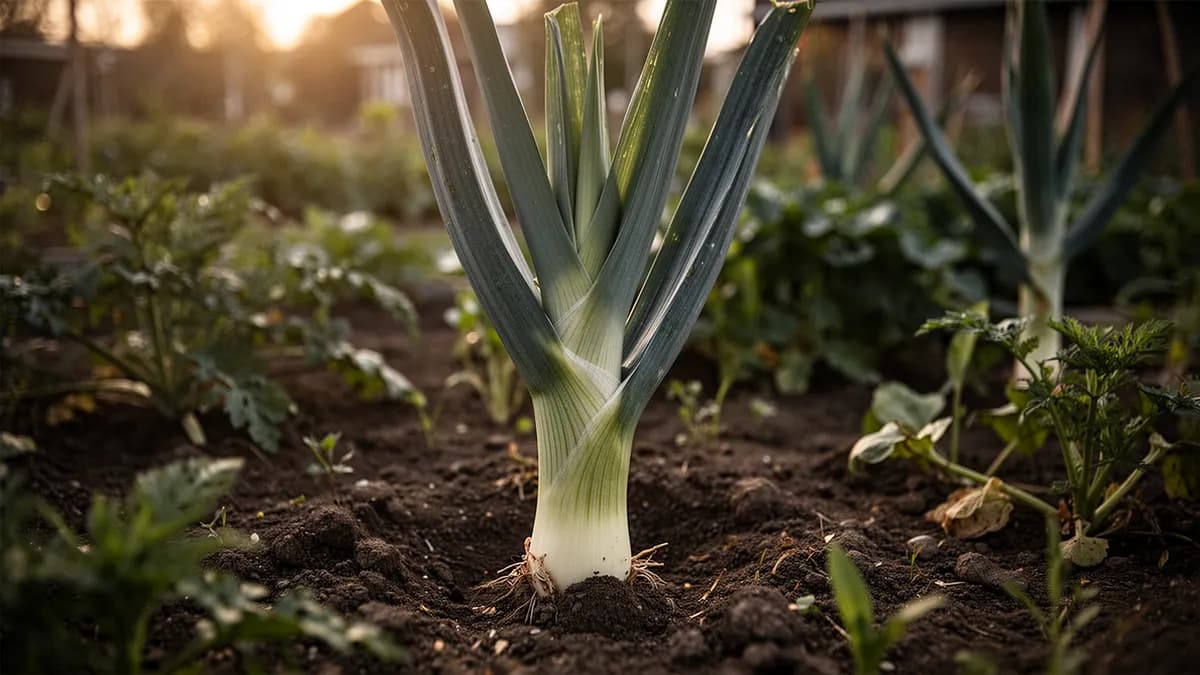
Técnicamente un puerro, produce dientes enormes que dan porciones generosas de ajo negro con sabor más suave y dulce. Ideal para principiantes en la fermentación. 7-8 meses.
Artisanal black garlic sells for $8-15 per bulb or $30-60 per pound at specialty stores and farmers markets, making it one of the most expensive pantry ingredients by weight. Growing your own garlic from a $15-20 bag of seed garlic (roughly 8-10 bulbs yielding 50-80 cloves for planting) can produce 3-5 kg of cured garlic, which converts to 2-3.5 kg of black garlic worth $150-400 at retail prices. The only additional cost is the electricity to run a rice cooker on warm for 3-4 weeks, which amounts to roughly $3-5. Even factoring in seed garlic, soil amendments, and electricity, home-produced black garlic costs less than $2 per bulb compared to $8-15 retail.
Recetas rápidas
Black Garlic Butter
10 minAn intensely savoury compound butter that transforms any grilled steak, roasted vegetables, or piece of crusty bread into something extraordinary. Mashed black garlic cloves are folded into softened butter with a touch of salt and fresh herbs for a condiment that keeps for weeks.
6 ingredientes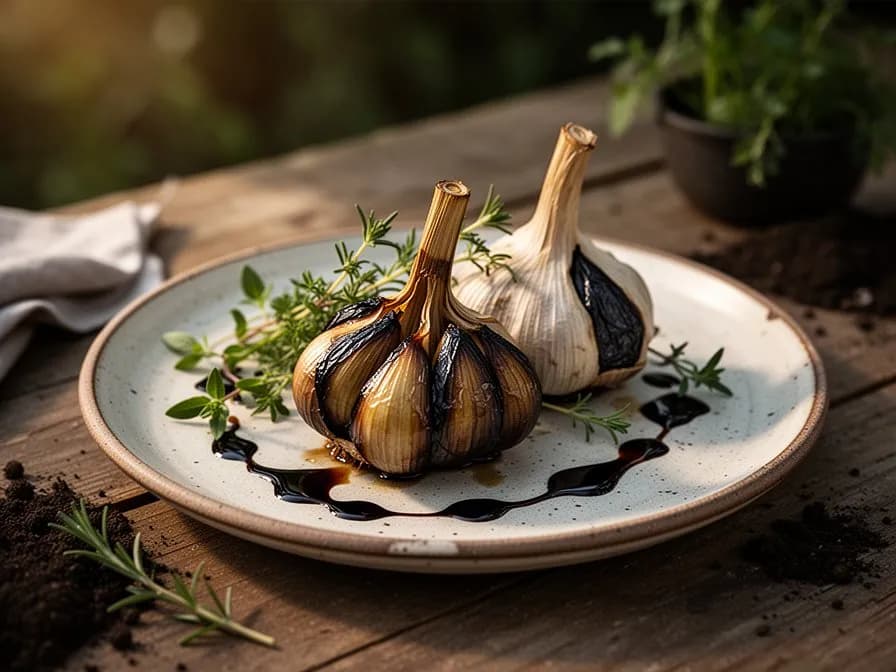
Black Garlic Steak Sauce
20 minA glossy, deeply complex pan sauce built on pureed black garlic, red wine, and beef stock. The natural sweetness and umami of black garlic create a sauce with extraordinary depth that rivals anything from a fine restaurant kitchen.
10 ingredientesBlack Garlic Aioli
15 minA striking jet-black aioli with sweet, balsamic depth that elevates burgers, grilled seafood, roasted potatoes, and charcuterie boards. The dark colour and complex flavour never fail to impress guests who have never encountered black garlic.
7 ingredientesUsos culinarios
El ajo negro es un ingrediente gourmet versátil que se usa untado directamente sobre pan tostado, incorporado en salsas y vinagretas, o como acompañamiento de carnes y pescados. Su sabor dulce y umami lo hace perfecto para mayonesas aromatizadas, mantequillas compuestas y purés. Se incorpora en risottos, pastas y platos de arroz. También se usa en postres creativos y en maridaje con quesos.
Qué contiene
Beneficios para la salud
- Contains dramatically higher levels of S-allyl-cysteine (SAC) than raw garlic — SAC is a stable, water-soluble antioxidant with high bioavailability that has been shown in studies to reduce oxidative stress and support cardiovascular health.
- Rich in melanoidins formed during the Maillard reaction, which act as potent antioxidants and have demonstrated prebiotic properties that support beneficial gut bacteria populations.
- May support heart health by helping to lower LDL cholesterol and reduce arterial plaque formation — multiple clinical studies suggest regular black garlic consumption improves lipid profiles and blood vessel elasticity.
- Gentler on the digestive system than raw garlic because the fermentation process breaks down fructans and volatile sulfur compounds that cause bloating, heartburn, and gastrointestinal distress in sensitive individuals.
- Contains anti-inflammatory compounds that may help reduce chronic inflammation markers — research has linked regular consumption to decreased levels of C-reactive protein and other inflammatory biomarkers.
- Supports immune function through enhanced antioxidant activity and the presence of organosulfur compounds that stimulate natural killer cell activity and other immune defence mechanisms.
De dónde viene Ajo Negro
Black garlic's origins are rooted in the ancient culinary traditions of East Asia, where various forms of aged and preserved garlic have been used in Korean, Japanese, and Thai cooking and traditional medicine for centuries. However, the standardized process for producing modern black garlic was developed in South Korea around 2004 by inventor Scott Kim, who created a controlled method of heating whole garlic bulbs at specific temperatures and humidity levels for extended periods. This patented process transformed an ancient folk preparation into a consistent, reproducible product.
The technique spread rapidly across East Asia, particularly to Japan where black garlic (kurozu ninniku) became enormously popular both as a culinary ingredient and a health supplement. Japanese food scientists conducted some of the earliest formal studies on black garlic's enhanced antioxidant properties, discovering that the fermentation process dramatically increases S-allyl-cysteine content and overall antioxidant capacity compared to raw garlic. By the late 2000s, black garlic had caught the attention of Western fine-dining chefs who were captivated by its complex umami sweetness and dramatic dark colour.
Today black garlic is produced commercially on every continent and has transitioned from an exotic chef's ingredient to a mainstream specialty product available in supermarkets worldwide. Major garlic-growing regions including California, Spain, China, and South Korea are now significant producers. The growing DIY food movement has also made home production popular, with simple rice cooker methods making it accessible to any cook willing to dedicate three to four weeks and tolerate the powerful aroma. Growing your own hardneck garlic specifically for black garlic production closes the full circle from garden to gourmet ingredient, delivering a truly premium product at a fraction of the retail cost.
Ajo Negro: ¿sabías que?
Datos fascinantes sobre Ajo Negro
Black garlic was developed in Korea in the early 2000s by inventor Scott Kim, who patented a controlled fermentation process. It quickly became a sensation in Korean cuisine before spreading to fine-dining kitchens across Japan, Europe, and North America, where chefs prize its unique sweet-savoury profile.
Ajo Negro: preguntas frecuentes
¿Cuándo debo plantar Ajo Negro?
¿Cuáles son buenas plantas acompañantes para Ajo Negro?
¿En qué zonas de rusticidad puede crecer Ajo Negro?
¿Cuánto sol necesita Ajo Negro?
¿A qué distancia debo espaciar Ajo Negro?
¿Qué plagas y enfermedades afectan a Ajo Negro?
¿Cómo almaceno Ajo Negro después de la cosecha?
¿Cuáles son las mejores variedades de Ajo Negro para cultivar?
¿Qué suelo necesita Ajo Negro?
Can I make black garlic at home without special equipment?
How do I know when black garlic is done fermenting?
Which garlic varieties make the best black garlic?
Does black garlic cause garlic breath like raw garlic?
How should I store black garlic and how long does it last?
Is growing my own garlic for black garlic worth the effort versus buying it?
Acabas de leer la teoría. Ahora cultívala en piloto automático.
Todo lo que hace que Ajo Negro sea delicado — el momento, el espaciado, las asociaciones, la ventana de cosecha — es justo lo que PlotMyGarden resuelve por ti, para cada planta de tu huerto.
Un plan que conoce tu clima
Indica tu ubicación una vez. Recibe fechas de siembra, abonado y cosecha basadas en tu última helada real y el pronóstico en vivo — sin adivinar con un sobre genérico.
De la sección “Cuándo plantar”Planificador de bancales de arrastrar y soltar
Diseña bancales sobre una cuadrícula. Cada planta encaja con su espaciado correcto y ves toda la temporada antes de gastar un céntimo en semillas.
De la sección “Cultivo”Conflictos de asociación, detectados a tiempo
Más de 200 buenas y malas combinaciones comprobadas en vivo mientras plantas — para que un error que arruine la temporada nunca llegue a la tierra.
De la sección “Asociaciones”Recordatorios que sí vas a seguir
“Riega las judías.” “Recoge hoy antes de que se pase.” Oportunos, concretos y ligados a las plantas que de verdad cultivas.
De la sección “Cosecha”Escalonado, programado
¿Quieres cosechar seis semanas en vez de seis días? Reparte tus siembras automáticamente y te avisa cuando toca el siguiente lote.
De la sección “Cuándo plantar”Un registro que se vuelve más listo
Cada cosecha que registras le enseña tu huerto. El plan del año que viene parte de lo que de verdad funcionó en tu suelo, no en un manual.
De la sección “Resumen”Planta estos junto a Ajo Negro
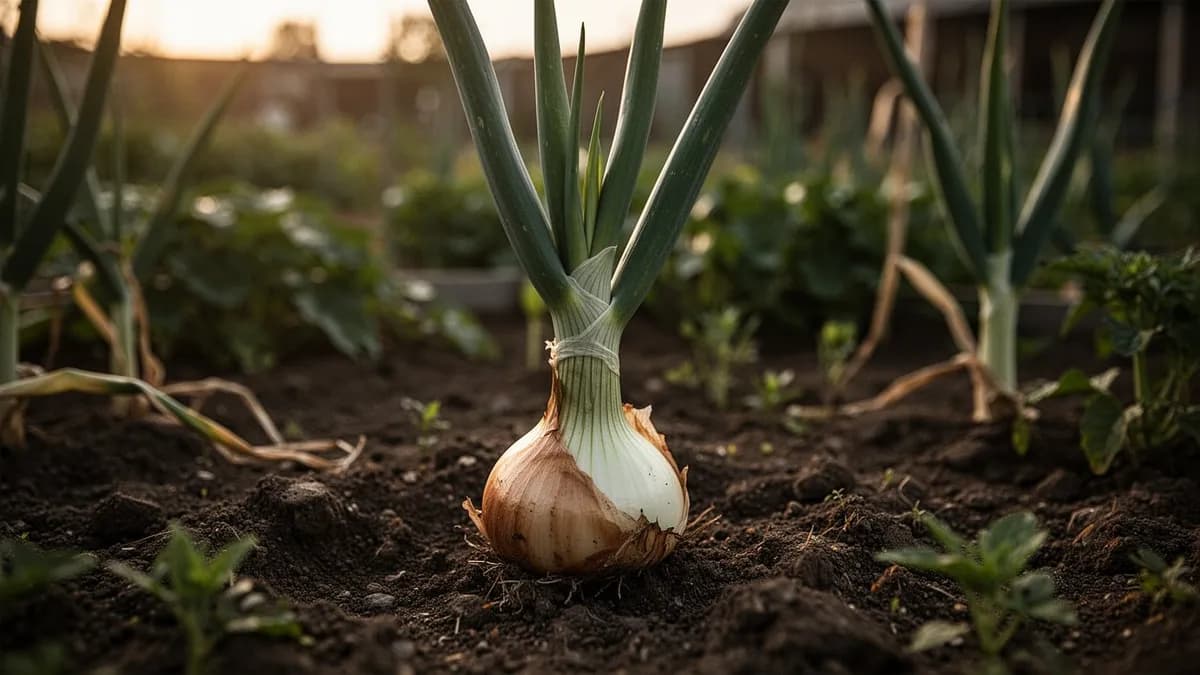
Más Aliáceas
Mantén Ajo Negro lejos de estos
Cultiva tu mejor Ajo Negro — y todo lo que la rodea.
Empieza un plan gratis hoy. Diseña tus bancales, coloca tu Ajo Negro y deja que PlotMyGarden gestione el momento, el espaciado, las asociaciones y los recordatorios de la semilla a la cesta.