Onion
A pungent allium grown from sets or seed, with bulb formation triggered by day length and temperature.





On this pageOverview
Meet Onion
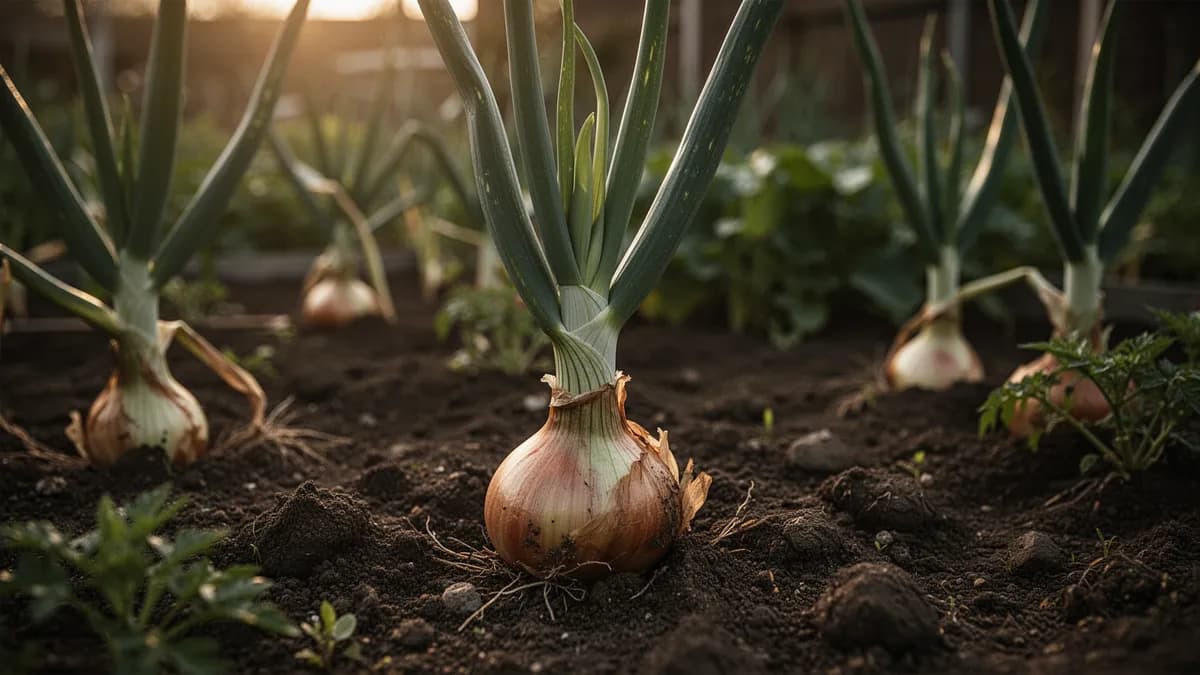
A pungent allium grown from sets or seed, with bulb formation triggered by day length and temperature. Choose short-day, intermediate, or long-day varieties based on your latitude to ensure proper bulbing in your region. Keep beds well weeded since onions have shallow roots and compete poorly against vigorous weeds. Harvest when tops begin to yellow and fall over, then cure bulbs in a warm, dry area for two weeks before storing.
When to plant Onion
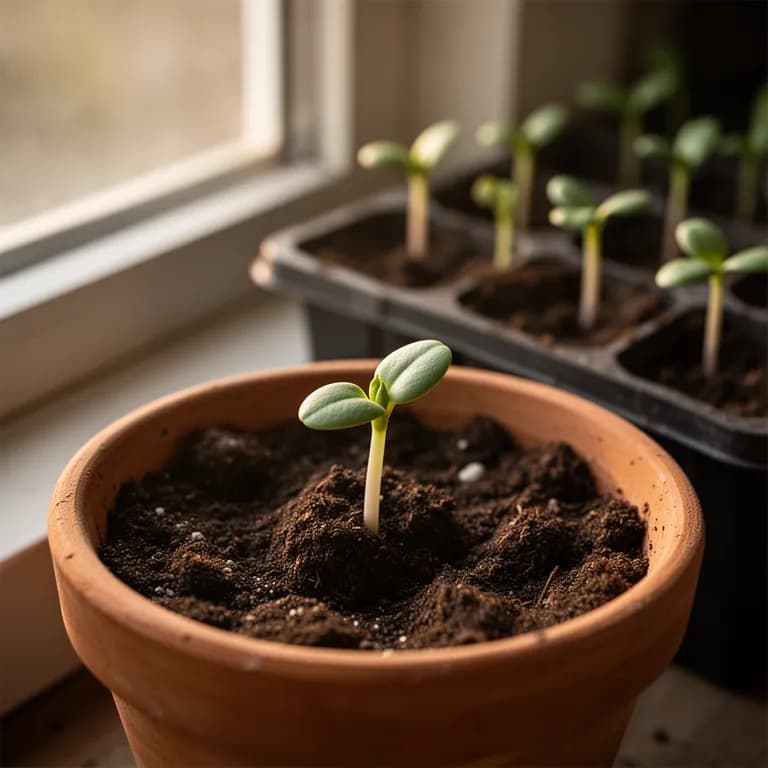
For the widest variety selection and strongest plants, start onions from seed indoors 10-12 weeks before your planned transplant date — this is earlier than most gardeners expect. Sow seeds 6mm (1/4 inch) deep in flats or cell trays filled with sterile seed-starting mix, spacing seeds 1 cm apart. Keep the mix consistently moist at 18-24°C (65-75°F) and cover with a humidity dome until sprouts appear in 7-10 days. Onion seeds are slow and erratic germinators compared to most vegetables, so be patient.
Once seedlings emerge, provide 12-14 hours of strong light daily from grow lights positioned 5-8 cm above the tops. Onion seedlings grow as thin, grass-like shoots that tend to get floppy and fall over — trim the tops to 10 cm tall whenever they exceed 15 cm to encourage thick, sturdy stems and redirect energy to root development. This trimming can be done 2-3 times during the indoor growing period and is one of the most important steps for producing strong transplants. Feed with a dilute liquid fertilizer (half-strength) every 2 weeks from the three-leaf stage onward.
Begin hardening off seedlings 1-2 weeks before transplanting by exposing them to outdoor conditions for increasing periods each day. Onion seedlings are remarkably cold-tolerant and can be transplanted in early spring as soon as the soil is workable — they tolerate light frost down to -3°C (27°F) without damage. Set transplants 10-15 cm apart in rows 30 cm apart, planting just deep enough to anchor the roots with the small bulb base at the soil line. Water in well and apply a thin layer of mulch. Alternatively, plant onion sets (small dry bulbs) directly in the garden 2-4 weeks before the last frost date, pushing them into soil so the pointed tip just shows above the surface. Sets are the easiest method but offer far fewer variety choices and are more prone to bolting than seed-grown transplants.
Your Onion Year
Composed for Zone 7 · typical seasons · frost passes Apr 2, returns Nov 1
Plant Onion Jan – Apr, pick Jul – Sep. Check the planting methods below and set your climate to personalize these windows.
How to grow Onion
Onions are a fundamental garden crop that requires understanding of day-length sensitivity for successful bulb formation. Short-day varieties (for latitudes below 35°N) begin bulbing when days reach 10-12 hours, intermediate-day types (35-38°N) at 12-14 hours, and long-day varieties (above 38°N) at 14-16 hours. Planting the wrong type for your latitude results in tiny bulbs or premature bolting. Onions can be started from seed (most variety choices, cheapest), transplants (fast establishment), or sets (easiest but limited selection). For seed starting, sow indoors 8-10 weeks before transplanting outdoors.
Prepare beds by working in 5-8 cm of compost and a balanced fertilizer into loose, well-drained soil. Onions are shallow-rooted and need weed-free conditions — they compete poorly against weeds and yield drops dramatically in weedy beds. Transplant seedlings or sets 10-15 cm apart in rows 30 cm apart, planting just deep enough to anchor the bulb with the top visible above soil.
Water consistently with 2.5 cm per week, especially during bulb enlargement, and keep the root zone weed-free through shallow cultivation or thick mulch. Side-dress with nitrogen fertilizer every 2-3 weeks during active leaf growth — each leaf corresponds to one ring of the bulb, so more healthy leaves means larger bulbs. Stop fertilizing and reduce watering once bulbs begin swelling visibly and tops start to soften. When half the tops have fallen over naturally, bend the remaining tops to initiate the curing process.
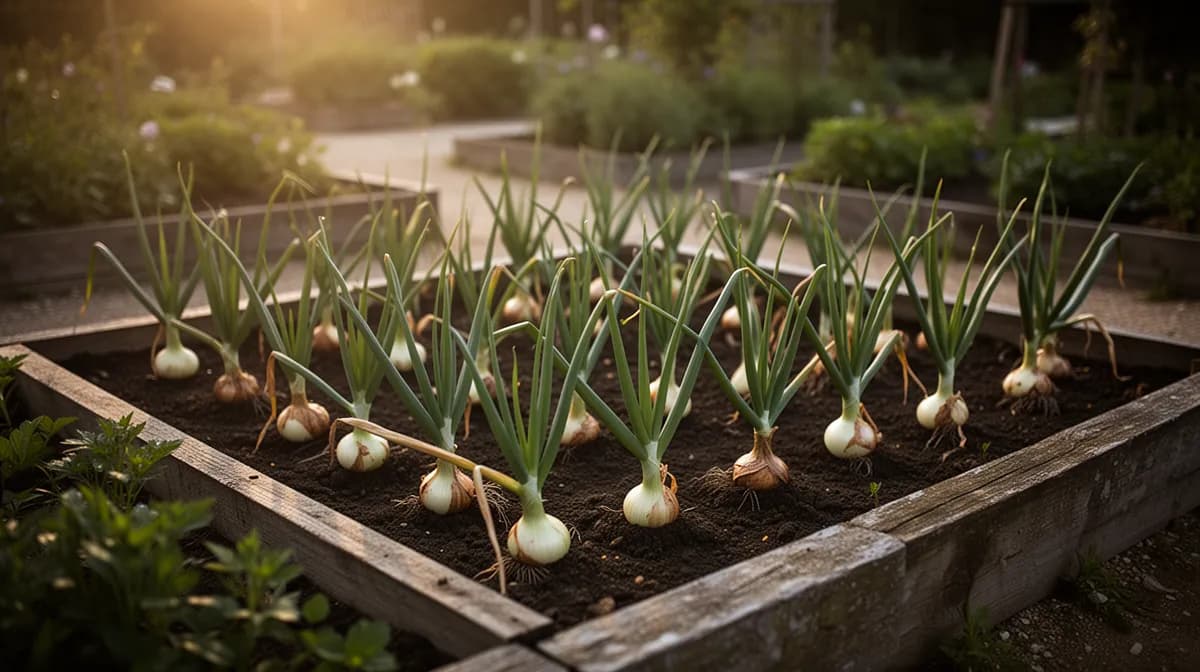
128 plants fit a 4 × 8 ft bed
Each Onion wants 15 cm of elbow room. The planner keeps that spacing for you — every plant, every bed.
Onion's best neighbours
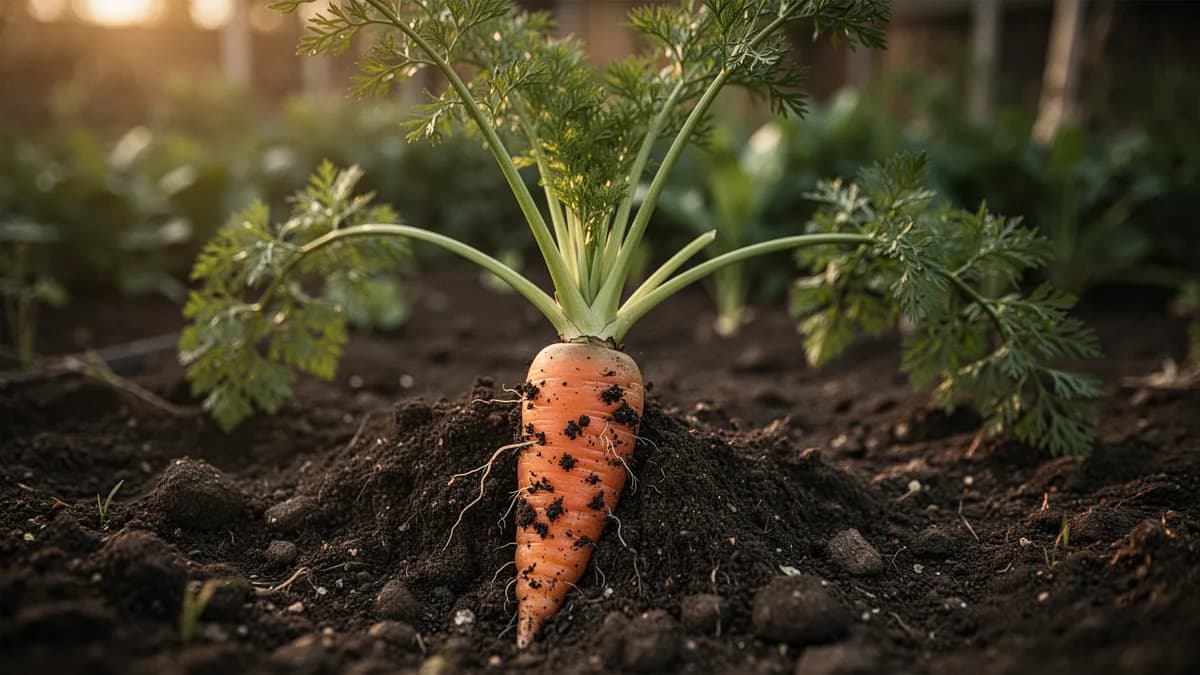
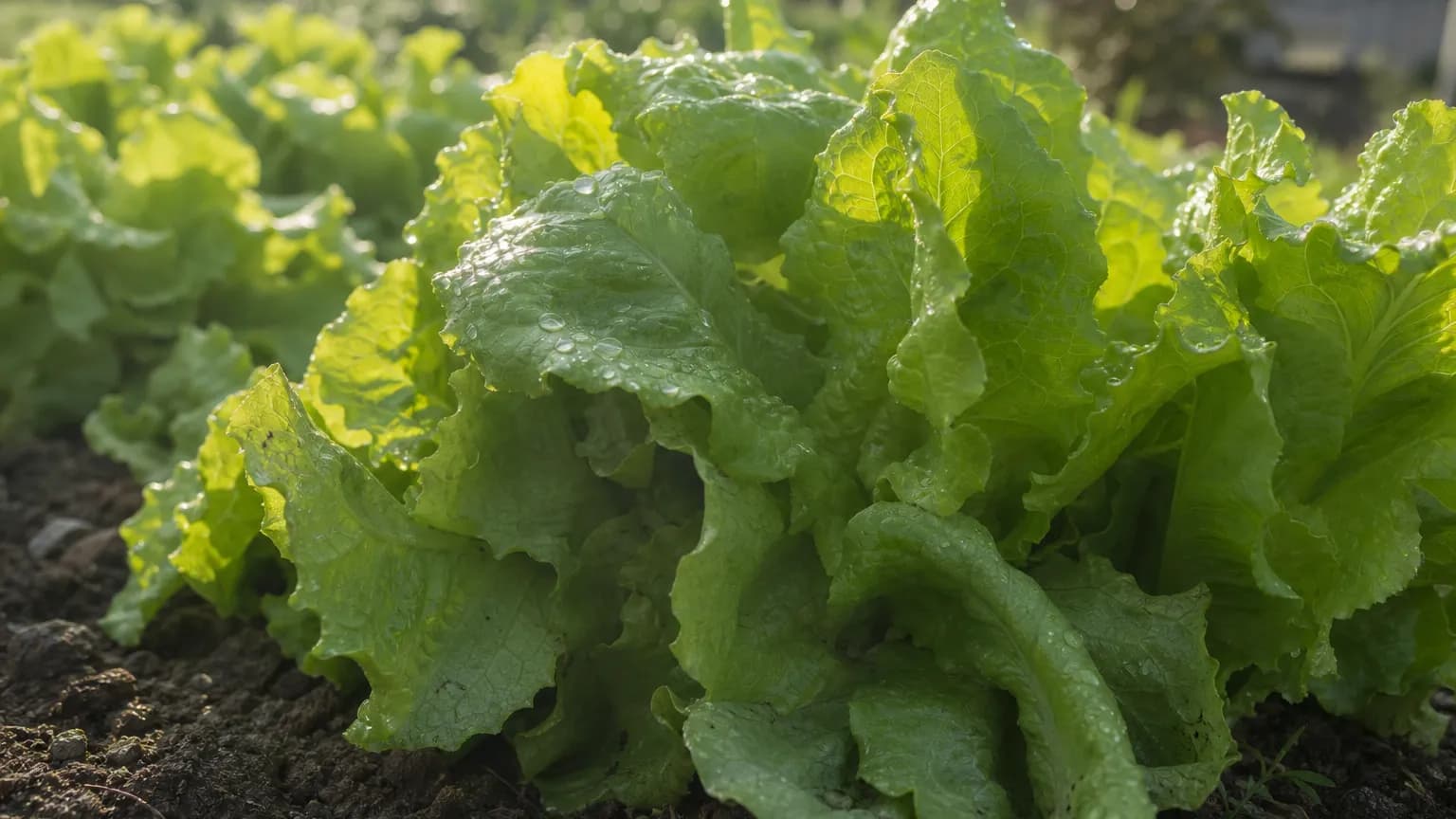
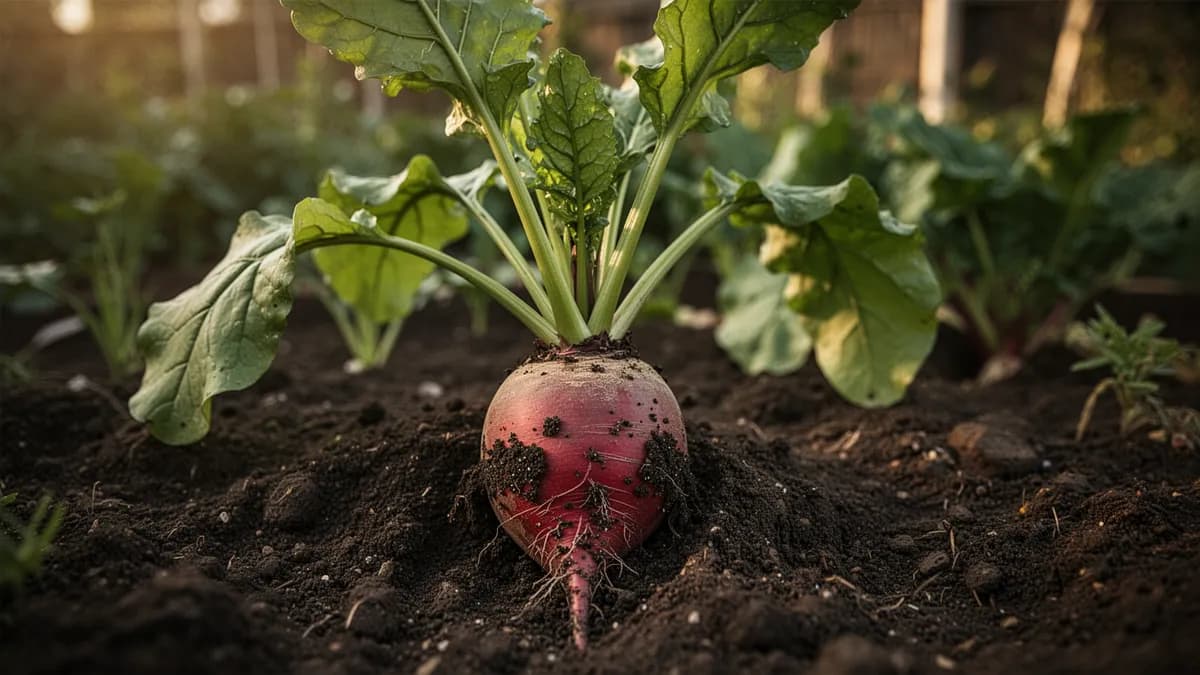
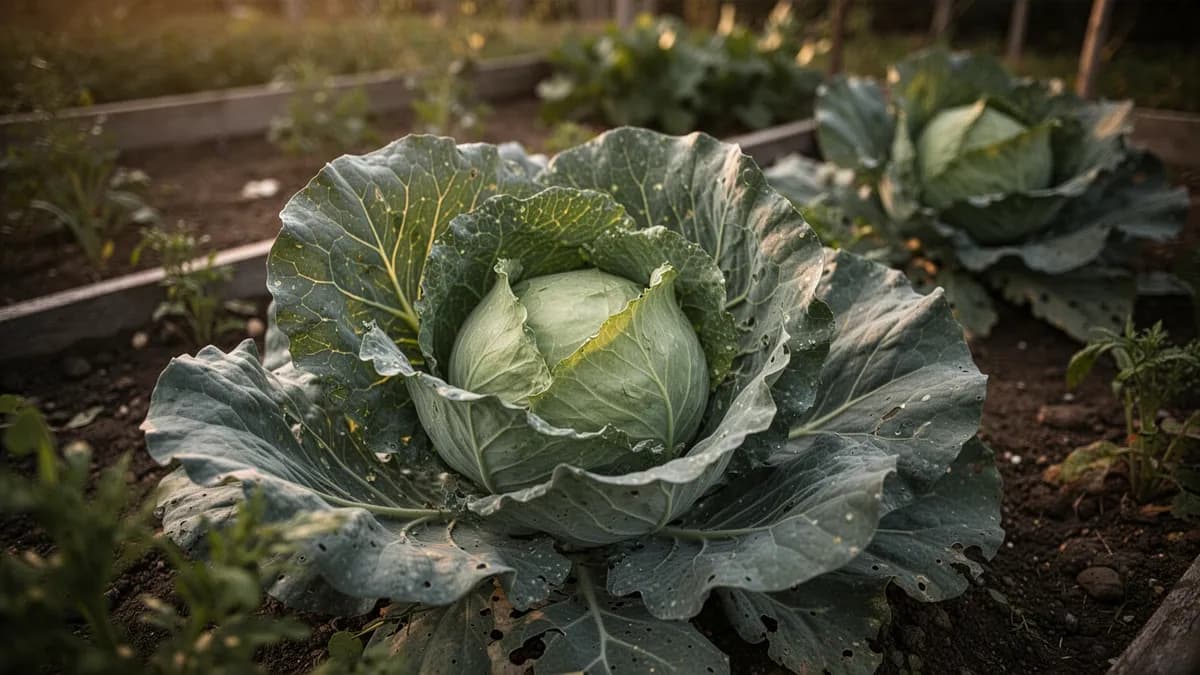
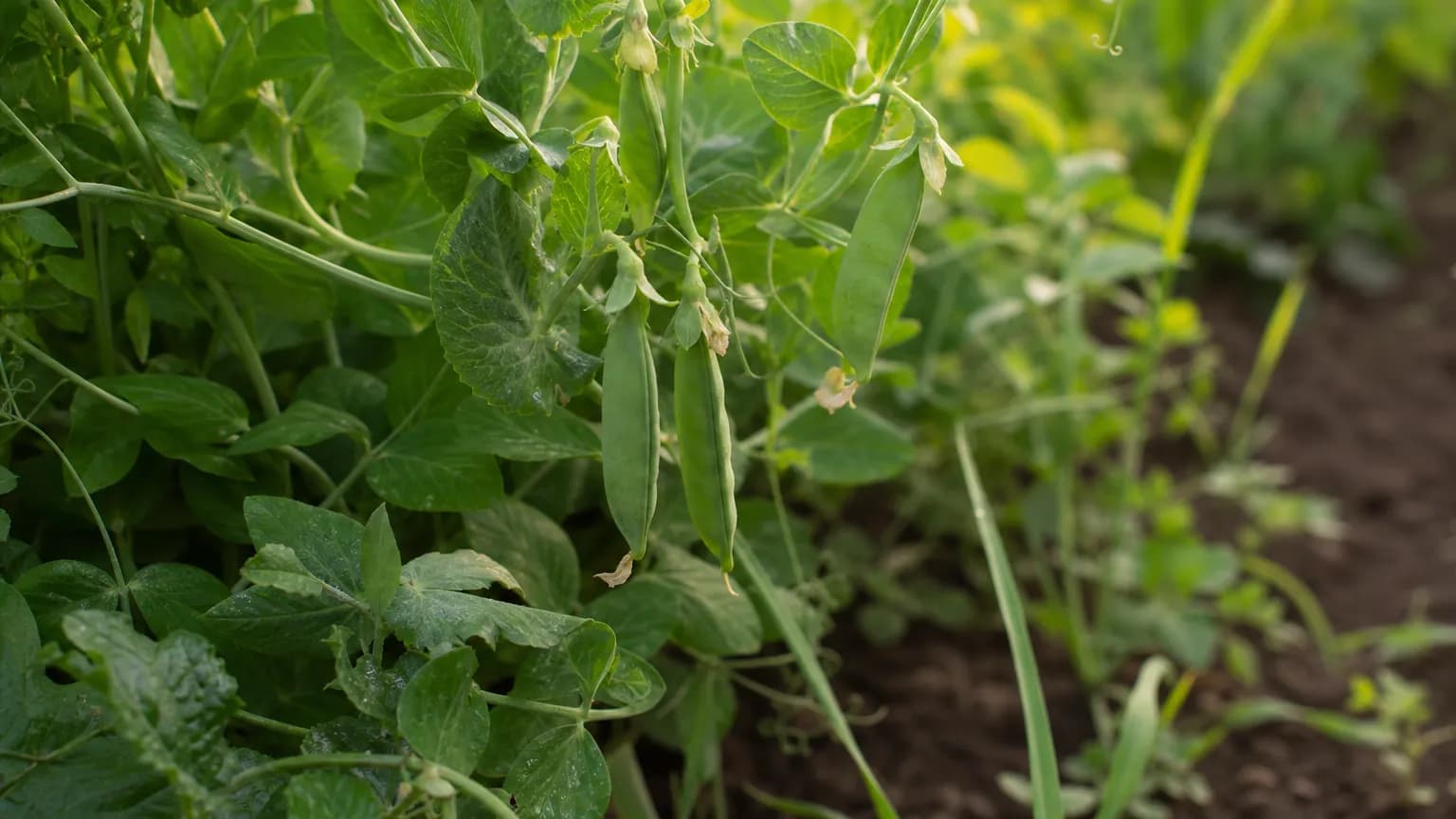
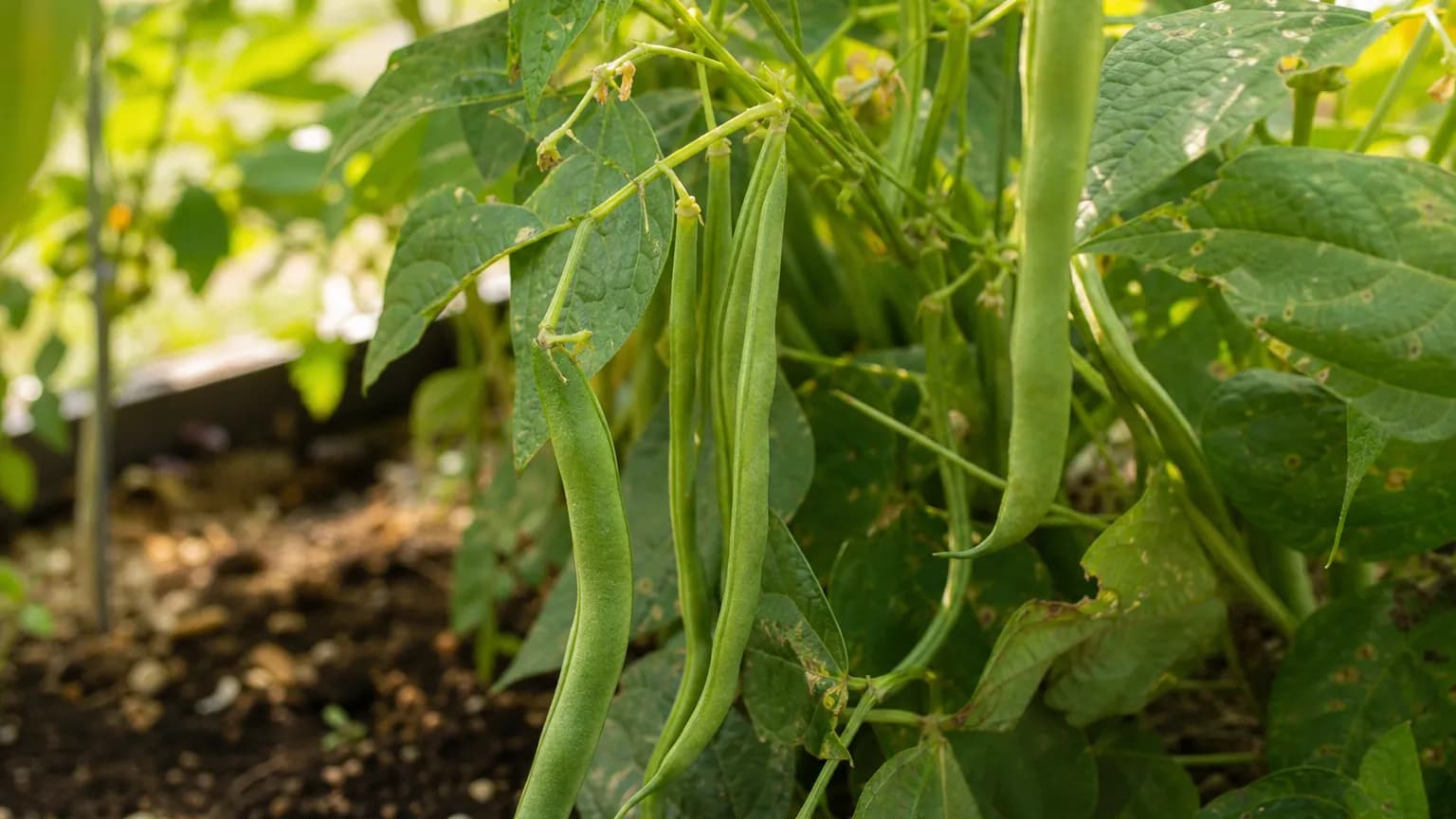
Onions' pungent sulfur compounds repel carrot rust fly, making them one of the best companions for carrots — the benefit is mutual since carrots repel onion flies. Lettuce and beets grow well alongside onions because they occupy different soil depths and do not compete for the same resources. Cabbage family crops benefit from onions' pest-deterring scent. Avoid planting near peas and beans — alliums inhibit the nitrogen-fixing Rhizobium bacteria that legumes depend on, significantly reducing their vigor and yield.
Carrot belongs beside it. Peas doesn't.
Old growers' knowledge, checked against Onion's real companion table below — test any plant you're growing.
Try Onion in a bed — right here
A real planner bed with Onion already in it. Tap a companion to place it and watch the pairing checks answer — green for good neighbours, red for a clash.


Related growing guides
Feed it well
Onions require fertile, well-drained, loose soil with a pH of 6.0-7.0. Heavy or compacted clay soil is the enemy of good bulb development — it restricts expansion and holds excess moisture that promotes rot. If your soil is heavy, amend generously with compost, coarse sand, and perlite to improve drainage and create the loose, friable texture onions need. Raised beds 15-20 cm high are ideal for onions in clay soils. Sandy soils drain well but need extra compost to retain moisture and nutrients. Test your soil pH before planting — onions struggle in strongly acidic soil below 5.8.
At planting time, work in a balanced fertilizer (10-10-10) at a rate of 100g per square meter, along with 5-8 cm of compost into the top 20 cm of soil. Nitrogen is the most critical nutrient during the leaf-growing phase because each healthy green leaf corresponds directly to one ring in the mature bulb — more leaves means larger bulbs. Side-dress every 2-3 weeks with ammonium sulfate, blood meal, or fish emulsion until you see bulbs beginning to swell above the soil line. Phosphorus from bone meal supports strong root development, while potassium from wood ash or sulfate of potash promotes bulb firmness and improves storage life.
The critical transition point comes when bulbs begin visibly swelling — typically 3-4 weeks before harvest. Stop all nitrogen fertilization at this stage, as continued nitrogen encourages soft, thick-necked growth that resists curing and rots in storage. Reduce watering gradually as well, allowing the soil surface to dry between irrigations. This mild stress signals the plant to stop producing new leaves and concentrate energy on bulb maturation and the formation of tight, protective outer skins essential for long-term storage.
Ideal Temperature
Hardiness Zone Compatibility
From seed to harvest, stage by stage
Seed Starting
Seeds are sown indoors in flats or cell trays 10-12 weeks before transplanting. Thin, grass-like shoots emerge in 7-10 days. Germination is slow and erratic compared to most vegetables.
Seedling Growth
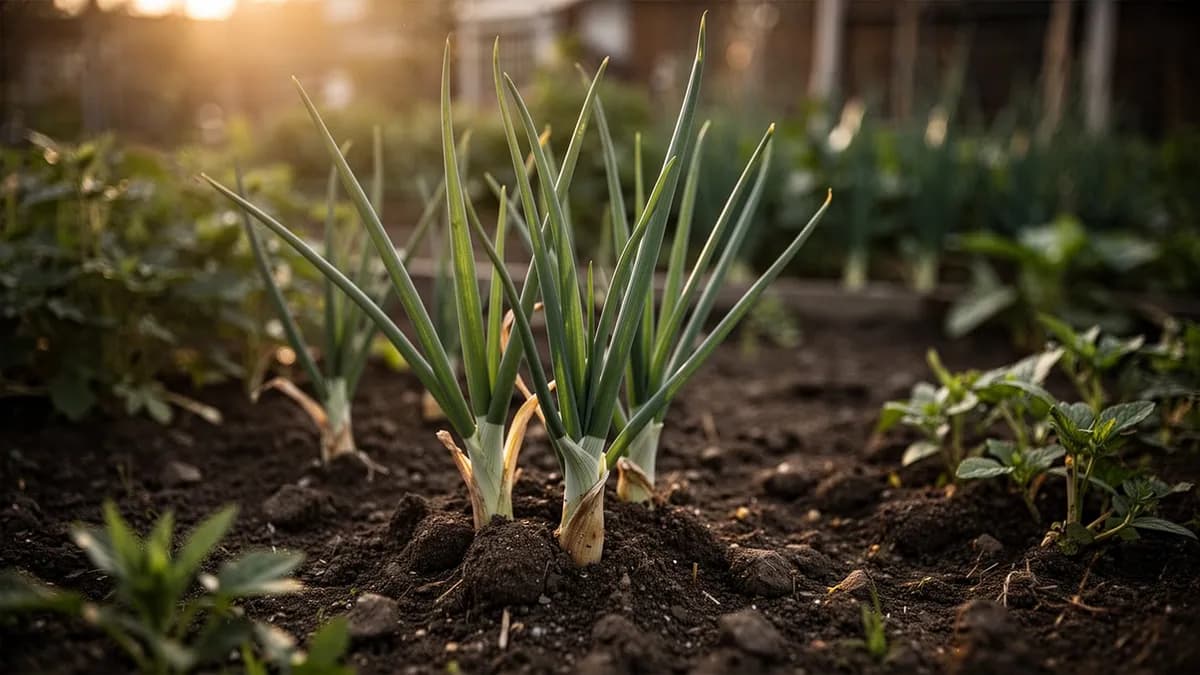
Seedlings develop multiple thin, tubular leaves and build a small root system. This is a long indoor phase where regular trimming and feeding produces stocky, strong transplants. Each leaf represents a future bulb ring.
Transplanting
Seedlings are transplanted to the garden in early spring, 10-15 cm apart in rows. Onions tolerate light frost and can go out as soon as the soil is workable. Alternatively, sets are planted directly at this time.
Leaf Growth
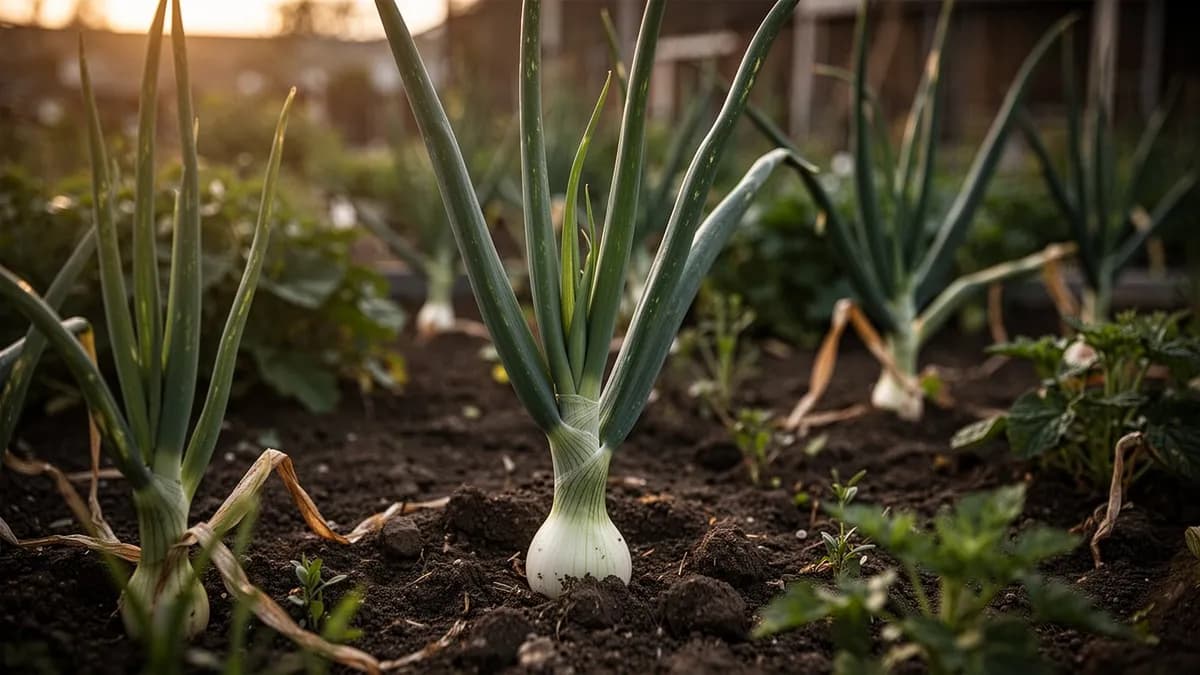
The plant focuses on producing as many healthy green leaves as possible. This is the most critical growth phase — every leaf that forms will become one ring in the mature bulb. Vigorous, upright foliage is the sign of a healthy plant.
Bulbing
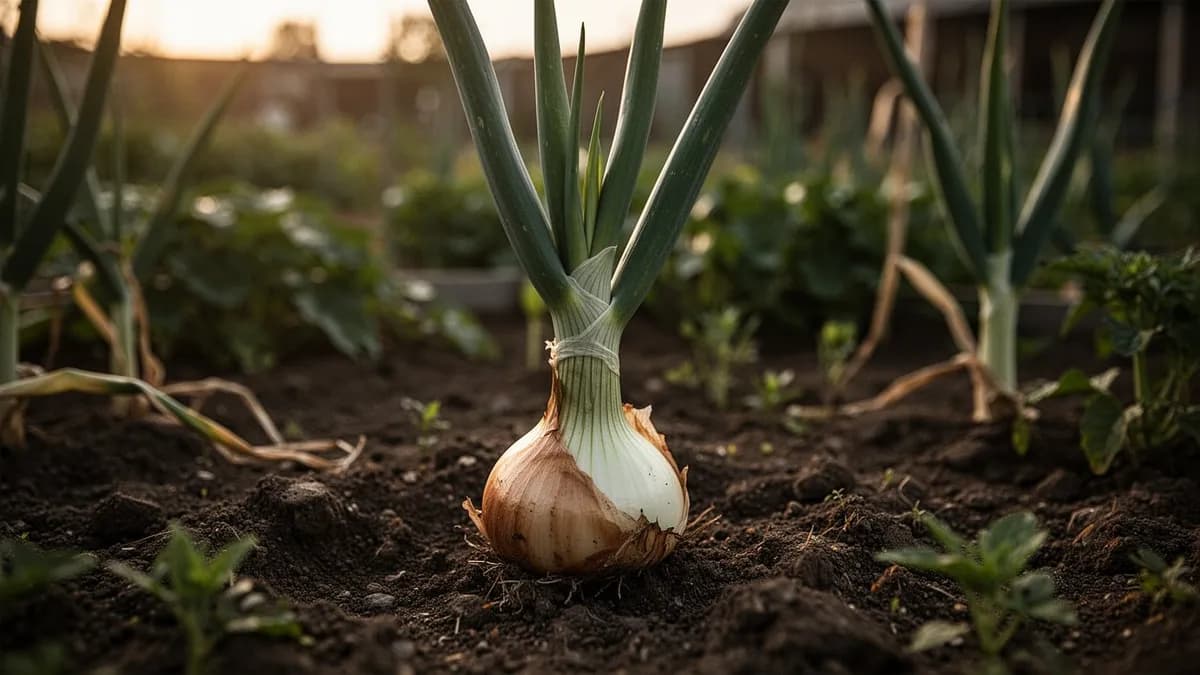
Triggered by day length reaching the critical threshold for the variety type, the base of the plant begins to swell into a bulb. The outer leaf sheaths expand and fill with stored sugars and water. Growth shifts from producing new leaves to enlarging the bulb.
Harvest and Curing
Tops yellow, soften at the neck, and fall over naturally. Bulbs are lifted, sun-dried briefly, then cured for 2-3 weeks in a warm, dry, ventilated area until skins are papery and necks are fully dry.
Keep soil consistently moist at 18-24°C (65-75°F). Provide 12-14 hours of grow light daily once sprouts emerge. Trim tops to 10 cm when they get floppy to encourage thick stems.
Caring for Onion month by month
What to do each month for your Onion
October
You are hereEnjoy your stored onion harvest. In mild climates (zones 7+), plant overwintering onion sets or short-day varieties for an early spring harvest next year. Clean and store garden tools.
Know exactly what to do in your garden — every month
One email at the start of each month: what to sow, plant, and tackle right now — for your Onion and everything growing around it. Plus a short starter course that helps you dodge the classic mistakes.
- What to do, right now
- Matched to your season
- Starter course included
Harvesting Onion
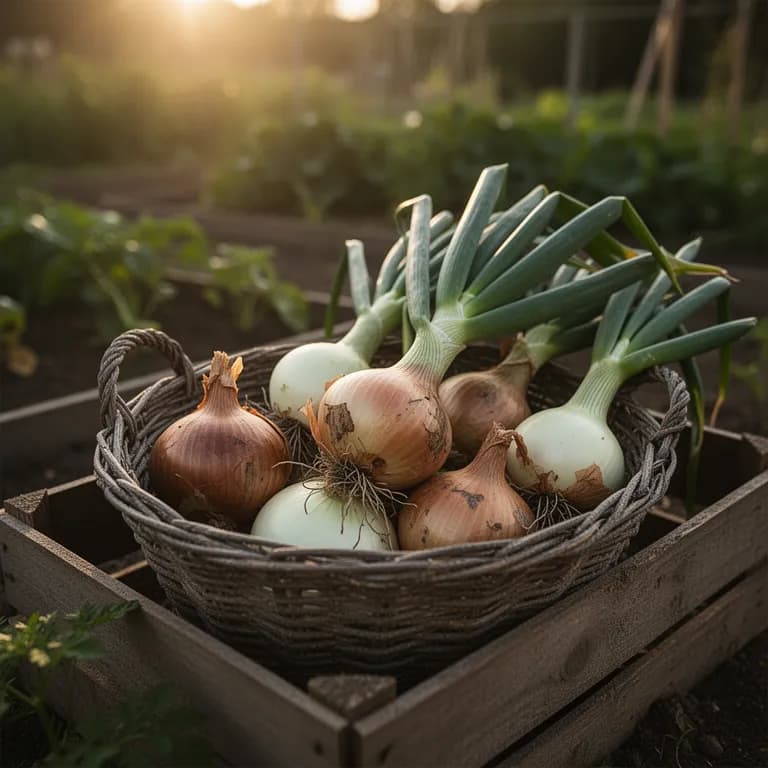
Onions are ready to harvest when the tops begin to yellow, weaken at the neck, and fall over naturally — this typically happens in late summer when the bulbs have finished sizing up. Once about half the tops have fallen, gently bend the remaining upright tops to speed maturation. Do not break or cut the tops — simply push them over at the neck to signal the plant to stop sending energy to the leaves and instead concentrate on sealing the neck. Wait 7-10 days after bending before pulling bulbs to allow the neck tissue to close and dry, which is critical for long-term storage success.
Loosen bulbs carefully with a garden fork inserted 10-15 cm away from the row to avoid puncturing the bulbs. Lift gently and shake off loose soil — never wash onions, as moisture promotes rot. If weather is dry and sunny, lay the pulled onions directly on the soil surface for 1-2 days to begin the curing process, turning them once. If rain threatens, move them immediately to a covered area with good airflow, such as a porch, carport, or greenhouse bench. Handle bulbs carefully throughout — bruised onions develop soft spots in storage and rot quickly.
Cure onions for 2-3 weeks in a warm (24-30°C / 75-85°F), dry, well-ventilated location out of direct sunlight. The curing is complete when the outer skins are papery and rustle when handled, the necks are completely dry and tight with no green tissue visible, and the roots are dry and wiry. Trim roots close to the base and cut the tops to 2-3 cm above the bulb, or leave tops intact for braiding softneck varieties. Inspect each bulb before storing — any with thick, moist necks, soft spots, or damage should be set aside for immediate use rather than long-term storage.
assuming you plant when the window opens — set your real date
Tops yellow and fall over naturally (about half the plants)
Storage & Preservation
Cured onions store best in a cool (0-4°C / 32-40°F), dry (65-70% humidity), well-ventilated location with good air circulation. Mesh bags, open crates, nylon stockings, or braided strings all work well — the key is preventing moisture buildup around the bulbs. Pungent varieties store far longer than sweet types because their higher sulfur content acts as a natural preservative. Strong-flavored storage onions like Copra and Patterson can last 6-10 months, while mild sweet onions like Walla Walla and Vidalia should be used within 1-2 months. Store onions away from potatoes — potatoes release moisture and ethylene gas that accelerate onion sprouting and rot.
For freezing, peel and dice or slice onions, then spread in a single layer on parchment-lined baking sheets and flash-freeze for 2 hours before transferring to labeled freezer bags. This prevents clumping so you can grab just the amount you need. Frozen diced onions keep for 10-12 months and are perfect for cooked dishes where texture is less important. Caramelize large batches slowly over 45-60 minutes until deep golden-brown, then freeze in ice-cube-tray portions for instant flavor in soups, sauces, and gravies throughout the year.
Onions dehydrate exceptionally well — slice into thin rings or dice, then dry at 57°C (135°F) for 6-10 hours until brittle. Dried onion flakes last 1-2 years in airtight containers and can be ground into homemade onion powder with far more flavor than commercial versions. Pickled pearl onions and cocktail onions in spiced vinegar brine are a classic preservation method, lasting 6-12 months in the refrigerator. Onion jam or relish made with balsamic vinegar and brown sugar is a gourmet condiment worth preserving in small jars for gift giving.
What goes wrong — and the fix
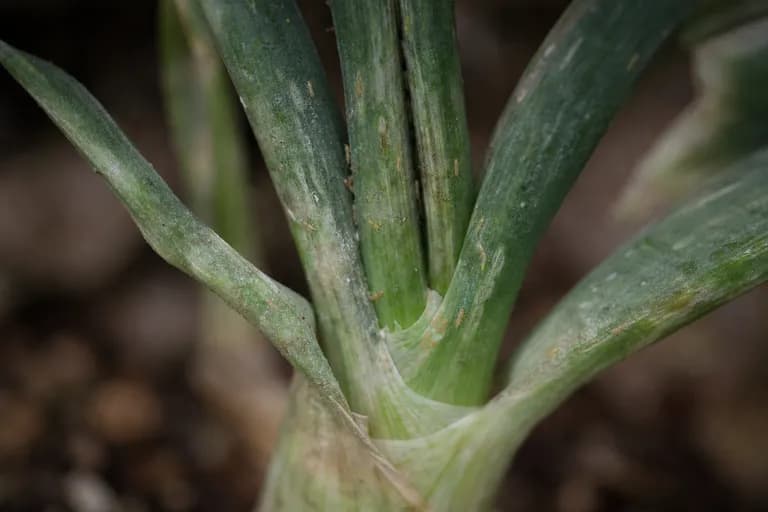
Onion Thrips
PestTiny, slender tan insects feed on leaves, creating silvery streaks and distorted, papery leaf tissue. Severely infested plants have stunted, bleached leaves and produce undersized bulbs. Thrips congregate in the tight leaf folds near the neck.
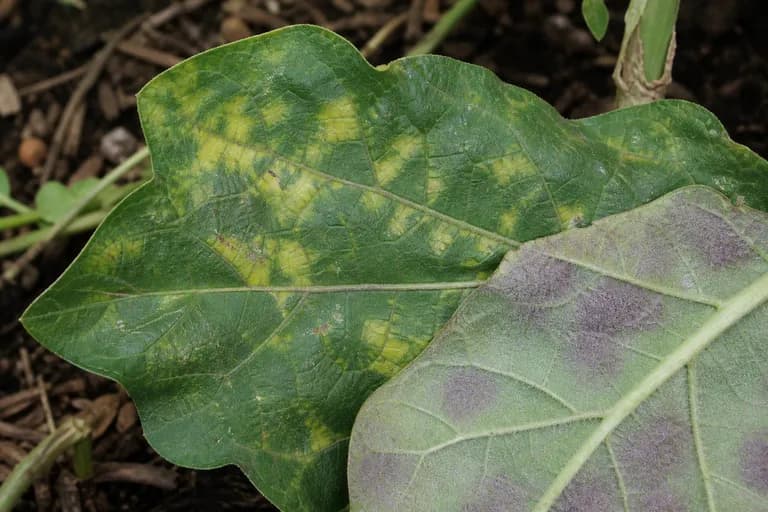
Downy Mildew
DiseasePale green to yellowish oval lesions on leaves, often with a fuzzy grayish-purple mold visible in humid conditions. Leaves collapse from the tip downward. Bulbs may develop soft neck rot in storage.
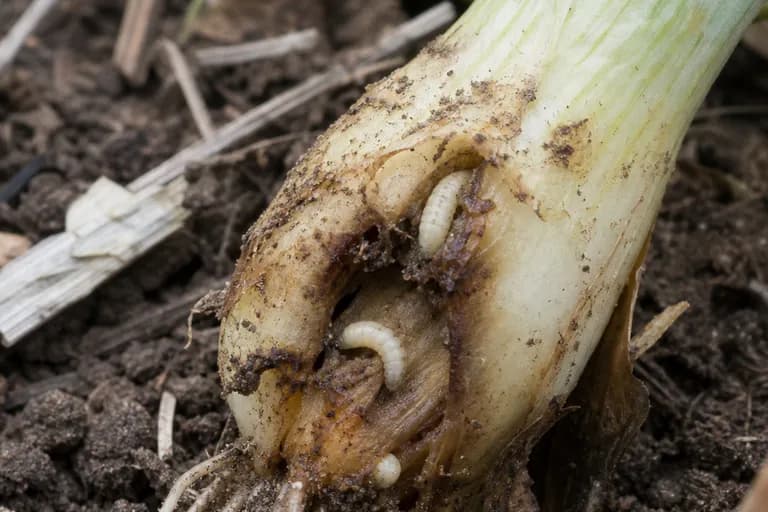
Onion Maggot
PestSmall white maggots tunnel into the base of the bulb and feed on roots, causing plants to wilt, yellow, and collapse. Seedlings and transplants are most vulnerable. Affected bulbs become soft and mushy with a foul odor.
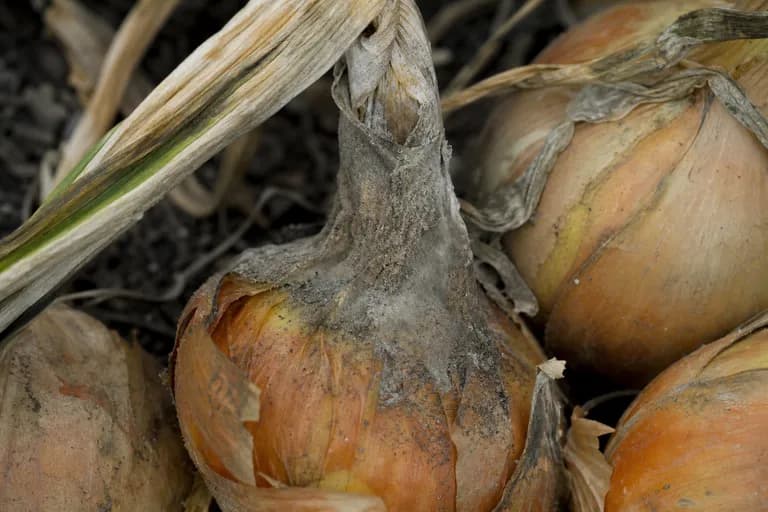
Botrytis Neck Rot
DiseaseA gray mold developing around the neck area of bulbs, usually appearing in storage. The neck softens, and fluffy gray spores spread between stored onions. Bulbs gradually become soft and watery from the neck downward.
Troubleshooting Common Problems
Bolting — the premature formation of a flower stalk — is the most frustrating problem for onion growers and is almost always triggered by cold stress on young plants. Onion seedlings or sets exposed to prolonged temperatures below 10°C (50°F) for 10 or more days interpret this as a winter signal and switch from vegetative growth to reproductive mode. To prevent bolting, avoid transplanting too early into cold soil, do not expose sets to freezing temperatures before planting, and choose bolt-resistant varieties for your region. If a flower stalk does appear, snip it at the base immediately — the bulb is still edible but will have a tough central core and will not store well, so use it first.
Small bulbs are one of the most common disappointments and can result from several causes: planting the wrong day-length variety for your latitude (the single most common mistake), overcrowding without adequate thinning, insufficient nitrogen during the leaf-growth phase, or weed competition during the critical bulb-sizing period. Onions are shallow-rooted and compete very poorly with weeds — even modest weed pressure can reduce bulb size by 50% or more. Keep beds meticulously clean through shallow cultivation or thick mulch throughout the growing season.
Thick necks that refuse to dry during curing indicate over-fertilization with nitrogen late in the season or excessive watering during the final weeks before harvest. These thick-necked bulbs will not store and should be used promptly. Split or doubled bulbs occur when growth is interrupted by drought and then restarted by heavy rain or irrigation — the plant restarts from multiple growing points rather than resuming the original bulb. Maintain consistent, even moisture throughout the growing season to prevent splitting. Green sprouts emerging from stored onions indicate exposure to light, warmth, or moisture — store in complete darkness at 0-4°C for longest dormancy.
Growing Tips
- Choosing the correct day-length type for your latitude is the single most important decision for onion success. Short-day varieties (below 35°N), intermediate-day (35-38°N), and long-day (above 38°N) — planting the wrong type guarantees tiny bulbs or no bulbing at all.
- Start seeds indoors 10-12 weeks before transplanting for the widest variety selection and strongest plants. Trim seedling tops to 10 cm whenever they get floppy — this is the secret to producing thick, sturdy transplants that establish quickly.
- Onions are extremely poor competitors against weeds due to their shallow root system and narrow upright leaves that cast almost no shade. Keep beds immaculately weed-free through the entire growing season — even moderate weed pressure reduces yields by 50% or more.
- Each green leaf on the plant corresponds to exactly one ring in the mature bulb. Maximize leaf production through consistent nitrogen feeding every 2-3 weeks during the vegetative phase — more leaves means bigger onions.
- Stop all nitrogen fertilization and reduce watering once bulbs begin swelling above the soil. Continued nitrogen at this stage produces thick, soft necks that resist curing and rot in storage.
- Water consistently with 2.5 cm per week during active growth. Onions have shallow roots concentrated in the top 15 cm of soil and dry out quickly. Drip irrigation or soaker hoses are ideal — avoid overhead watering which promotes foliar disease.
- For the best storage onions, let tops fall over naturally before harvesting. Cure thoroughly for 2-3 weeks in a warm, dry, ventilated area. Only store bulbs with completely dry, papery necks.
- Rotate onion beds on a 3-4 year cycle to prevent buildup of soil-borne diseases like white rot, pink root, and Fusarium basal rot. Never plant alliums (onion, garlic, leek, shallot) in the same spot in consecutive years.
Grow your best Onion yet — and everything around it.
Start a free plan today. Lay out your beds, drop in your Onion, and let PlotMyGarden handle the timing, spacing, companions and reminders from seed to harvest basket.
Pick your Onion
Walla Walla
A famous sweet onion from Washington state with large, mild bulbs perfect for eating raw in sandwiches and salads. Long-day variety, 115 days from transplant. Does not store long — use within 1-2 months.
Yellow Sweet Spanish
A large globe onion with mild, sweet flavor excellent for cooking and fresh use. Long-day variety producing bulbs up to 500g. 110 days. Moderate storage life of 2-3 months.
Red Burgundy
A beautiful deep-red short-day onion with mild, sweet flavor ideal for salads, grilling, and pickling. 95 days from transplant. Moderate storage. Adds striking color to dishes.
Copra
The gold standard for storage onions — firm, pungent yellow bulbs that store for 10-12 months in proper conditions. Long-day variety, 104 days. Outstanding disease resistance. Flavor intensifies during storage.
Candy
An intermediate-day hybrid adaptable across a wide range of latitudes. Large, sweet, mild bulbs with good yields. 85 days from transplant. Early maturing with moderate storage of 3-4 months.
A packet of 200+ onion seeds costs $3-5 and can produce 150+ onions worth $75-150 at grocery store prices, where individual onions sell for $0.50-1.00 each. Growing from sets is slightly more expensive ($5-8 per 50 sets) but still delivers outstanding value. Home-grown onions also store for 6-10 months, providing nearly year-round self-sufficiency from a single spring planting — one of the best cost-to-value ratios in the entire vegetable garden.
Quick recipes
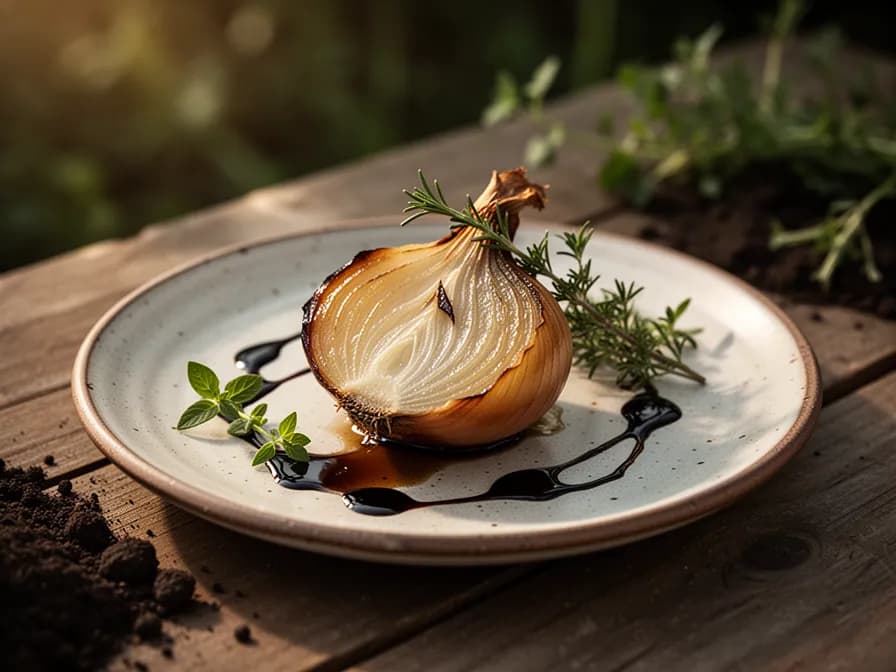
Classic French Onion Soup
60 minDeeply caramelized onions simmered in rich beef broth, ladled into oven-safe bowls, topped with crusty bread and melted Gruyere cheese. The long, slow caramelization brings out the natural sweetness of the onions.
9 ingredientsQuick-Pickled Red Onions
15 minThinly sliced red onions marinated in a tangy vinegar brine. Ready in 30 minutes and perfect for tacos, sandwiches, salads, and grain bowls. Keeps for 2-3 weeks refrigerated.
6 ingredientsCaramelized Onion Tart
50 minButtery puff pastry topped with slow-cooked caramelized onions, tangy goat cheese, and fresh thyme. An elegant appetizer or light meal that showcases the transformative sweetness of properly caramelized onions.
8 ingredientsCulinary Uses
Onions are arguably the most indispensable ingredient in world cuisine — the aromatic backbone of virtually every savory dish across every culinary tradition on earth. Sauteed in butter or oil, they form the flavor base (mirepoix, soffritto, sofrito, or the holy trinity) for sauces, soups, stews, curries, and braises. Raw, they add sharp, pungent crunch to salads, sandwiches, burgers, salsas, and ceviche. Caramelized slowly over 45-60 minutes until deep amber, they transform into a silky-sweet condiment that elevates pizza, tarts, burgers, and French onion soup to extraordinary heights.
Different onion types suit different culinary roles. Yellow onions are the all-purpose workhorse with balanced flavor that sweetens beautifully when cooked. Red onions are milder and best for raw applications, grilling, and pickling where their striking color shines. White onions have a sharper, cleaner bite preferred in Mexican cuisine for salsas and guacamole. Sweet varieties like Vidalia and Walla Walla are ideal for eating raw, in salads, and on burgers. Shallots offer a refined, delicate flavor perfect for vinaigrettes, sauces, and French cooking.
Nutritionally, onions are surprisingly powerful despite their modest calorie count. They are one of the richest dietary sources of quercetin, a flavonoid antioxidant with anti-inflammatory and antihistamine properties. Onions contain prebiotic fructooligosaccharides (FOS) that feed beneficial gut bacteria and support digestive health. The sulfur compounds responsible for making you cry — particularly allicin released when cells are damaged — have documented antimicrobial and cardiovascular benefits. Cooking tip: to reduce tears, chill onions for 30 minutes before cutting, use a sharp knife to minimize cell damage, and cut near running water or a vent fan.
What's inside
Health Benefits
- Rich in quercetin, one of the most potent flavonoid antioxidants found in food, with documented anti-inflammatory, antihistamine, and anticancer properties in laboratory studies.
- Contains prebiotic fiber (fructooligosaccharides) that selectively feeds beneficial Bifidobacterium and Lactobacillus gut bacteria, supporting digestive health and immune function.
- Sulfur compounds including allicin and diallyl disulfide have antimicrobial properties and may help lower blood pressure and reduce cholesterol levels.
- Provides chromium, a trace mineral that enhances insulin sensitivity and helps regulate blood sugar — particularly beneficial for people managing type 2 diabetes.
- Contains vitamin C and various sulfur compounds that support collagen production, skin health, and the body's natural detoxification processes.
- Regular onion consumption has been associated in epidemiological studies with reduced risk of stomach and colorectal cancers, likely due to the synergistic effects of organosulfur compounds and flavonoids.
Where Onion comes from
The onion is one of the oldest cultivated vegetables, with origins that trace back over 5,000 years to central Asia — likely in the region of modern-day Iran and western Pakistan. Wild onions grew across a vast range from Palestine to India, and multiple cultures appear to have domesticated them independently. Their ease of transport, long storage life, and ability to grow in diverse climates made onions one of the first crops to spread along early trade routes. Archaeological evidence shows onion cultivation in ancient Egypt by 3500 BC, where they held both culinary and spiritual significance.
In ancient Egypt, onions were objects of worship — their concentric ring structure was seen as a symbol of eternal life, and they appear frequently in tomb paintings and burial offerings. Egyptian laborers building the pyramids were fed large quantities of onions, garlic, and radishes to maintain their strength. The Romans brought onions throughout their empire, and the vegetable became a staple across Europe during the Middle Ages, when onions were among the three main vegetables (along with beans and cabbage) that sustained the common population. They were so valued that they served as currency for rent payments and were given as gifts.
Spanish explorers introduced onions to the Americas in the early 1500s, where they quickly naturalized and became essential to New World cuisines. Today, onions are the second most widely grown horticultural crop in the world after tomatoes, with global production exceeding 100 million tonnes annually. They appear in virtually every cuisine on earth — from Indian curries and Mexican salsas to French onion soup and Japanese tempura — a testament to their extraordinary versatility and universal appeal.
Onion: did you know?
Fascinating facts about Onion
Ancient Egyptians revered onions as symbols of eternity because of their concentric circle structure — onions have been found in the eye sockets of mummified pharaohs, including Ramesses IV.
Onion questions, answered
When should I plant Onion?
What are good companion plants for Onion?
What hardiness zones can Onion grow in?
How much sun does Onion need?
How far apart should I space Onion?
What pests and diseases affect Onion?
How do I store Onion after harvest?
What are the best Onion varieties to grow?
What soil does Onion need?
What is the difference between short-day, intermediate-day, and long-day onions?
Why did my onions bolt and send up flower stalks?
How do I know when my onions are ready to harvest?
Why are my onions so small?
Can I grow onions in containers?
How long can I store onions, and which varieties store best?
You just read the theory. Now grow it on autopilot.
Everything that makes Onion fiddly — the timing, the spacing, the companions, the harvest window — is exactly what PlotMyGarden handles for you, for every plant in your garden.
A plan that knows your weather
Set your location once. Get sow, feed and harvest dates built around your real last-frost date and live forecast — no more guessing from a generic seed packet.
From the “When to plant” sectionDrag-and-drop bed planner
Design beds on a grid. Every plant snaps to its proper spacing, and you can see your whole season laid out before you spend a cent on seed.
From the “Growing guide” sectionCompanion conflicts, caught early
200+ good-and-bad pairings checked live as you plant — so a season-wrecking mistake never makes it into the ground.
From the “Companions” sectionReminders you'll actually act on
“Water the beans.” “Pick today before it turns.” Timely, specific, and tied to the plants you're really growing.
From the “Harvest” sectionSuccession, scheduled
Want a harvest for six weeks, not six days? It spaces your sowings automatically and reminds you when each new block is due.
From the “When to plant” sectionA record that gets smarter
Every harvest you log teaches it your garden. Next year's plan starts from what actually worked in your soil, not a textbook's.
From the “Overview” sectionPlant these alongside Onion
More Alliums
Keep Onion away from these
Garden plans featuring Onion
Grow your best Onion yet — and everything around it.
Start a free plan today. Lay out your beds, drop in your Onion, and let PlotMyGarden handle the timing, spacing, companions and reminders from seed to harvest basket.