Garlic
A cold-hardy allium planted in autumn and harvested the following summer, requiring a chilling period to form cloves.





On this pageOverview
Meet Garlic
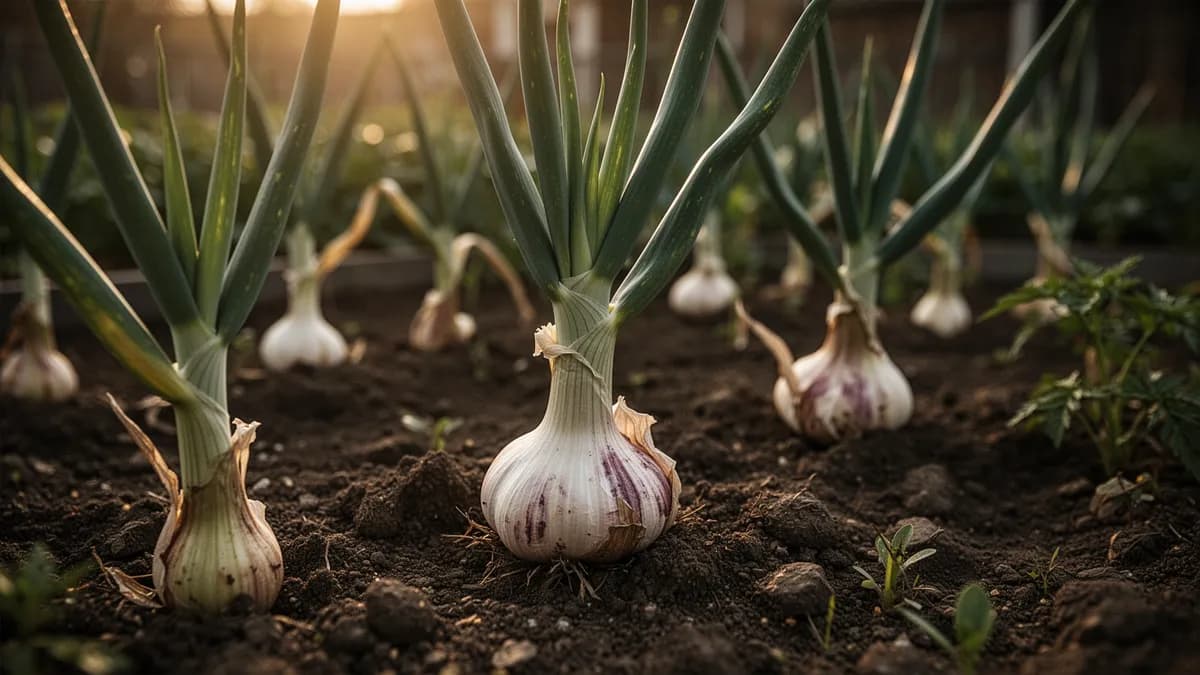
A cold-hardy allium planted in autumn and harvested the following summer, requiring a chilling period to form cloves. Choose hardneck varieties for cold climates and enjoy their bonus edible scapes in spring, or softneck types for milder regions and longer storage. Plant individual cloves pointed end up in well-drained soil mulched with straw to protect against winter heaving. Harvest when the lower third of leaves have browned, then cure in a dry, airy space for several weeks.
When to plant Garlic
Garlic is planted as individual cloves, not from true seed — though garlic does produce true botanical seed from its flowers (called bulbils), this method takes 2-3 years to produce full-sized bulbs and is mainly used by breeders. For home gardeners, purchase certified disease-free seed garlic from a reputable grower rather than planting grocery store garlic, which may be treated with sprout inhibitors, could carry soil-borne diseases, and may be a variety poorly suited to your climate. Order seed garlic in summer for fall delivery — popular varieties sell out quickly.
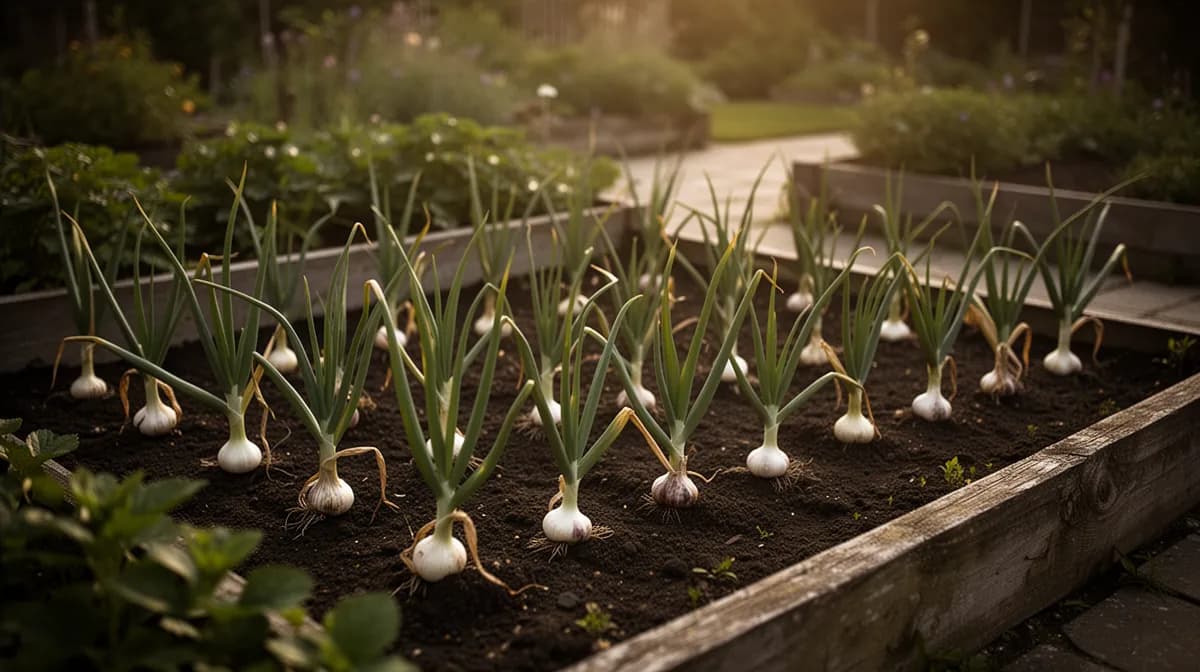
Break bulbs into individual cloves no more than 48 hours before planting, selecting only the largest, healthiest outer cloves — each clove produces one new bulb, and larger cloves produce larger bulbs. Discard any cloves with soft spots, mold, or blue-green discoloration. Plant 4-6 weeks before the ground freezes in fall — this gives roots time to establish a strong root system (10-15 cm of root growth) before winter dormancy, without allowing enough top growth to be damaged by hard freezes. Set cloves 5 cm (2 inches) deep and 15 cm apart, with the pointed end facing up and the flat basal plate down.
Immediately after planting, cover beds with 10-15 cm of straw, shredded leaves, or seed-free hay mulch. This insulation protects cloves from freeze-thaw cycles that cause heaving, moderates soil temperature, and suppresses early spring weeds. In spring, green shoots will push through the mulch — do not remove the mulch, as it continues to retain moisture and suppress weeds throughout the growing season. For mild-winter areas (zones 8-9) where the ground rarely freezes, plant softneck varieties in late January through February, as they require less cold vernalization than hardneck types.
Your Garlic Year
Composed for Zone 7 · typical seasons · frost passes Apr 2, returns Nov 1
Plant Garlic Oct – Nov, pick Jun – Jul. Check the planting methods below and set your climate to personalize these windows.
How to grow Garlic
Garlic is planted in autumn, grows through winter and spring, and is harvested the following summer — it needs a cold period of 4-8 weeks below 4°C (40°F) to trigger proper clove differentiation. There are two main types: hardneck varieties produce a rigid central stalk, fewer but larger cloves, edible flower scapes, and are best for cold climates (zones 3-6); softneck varieties produce many smaller cloves in multiple layers, store much longer, and are suited to milder regions (zones 6-9). Plant 4-6 weeks before the ground freezes in your area, typically mid-October to November.
Break bulbs into individual cloves just before planting, selecting only the largest, healthiest outer cloves for planting — small inner cloves produce small bulbs. Plant cloves 5 cm (2 inches) deep and 15 cm apart, pointed end up, in well-drained soil enriched with compost. Immediately after planting, apply 10-15 cm of straw mulch to insulate the soil, moderate temperature fluctuations, and prevent winter heaving that can push cloves out of the ground.
In spring, green shoots emerge through the mulch and grow rapidly. Maintain mulch, water regularly as the weather warms, and side-dress with nitrogen fertilizer in early spring when growth resumes. For hardneck varieties, snap off the curling flower scapes when they make one full loop — this redirects the plant's energy from flower production to bulb sizing. Scapes are a delicious culinary bonus with a mild garlic flavor. Stop watering 2-3 weeks before harvest to allow bulbs to dry and wrapper layers to form properly.
128 plants fit a 4 × 8 ft bed
Each Garlic wants 15 cm of elbow room. The planner keeps that spacing for you — every plant, every bed.
Garlic's best neighbours
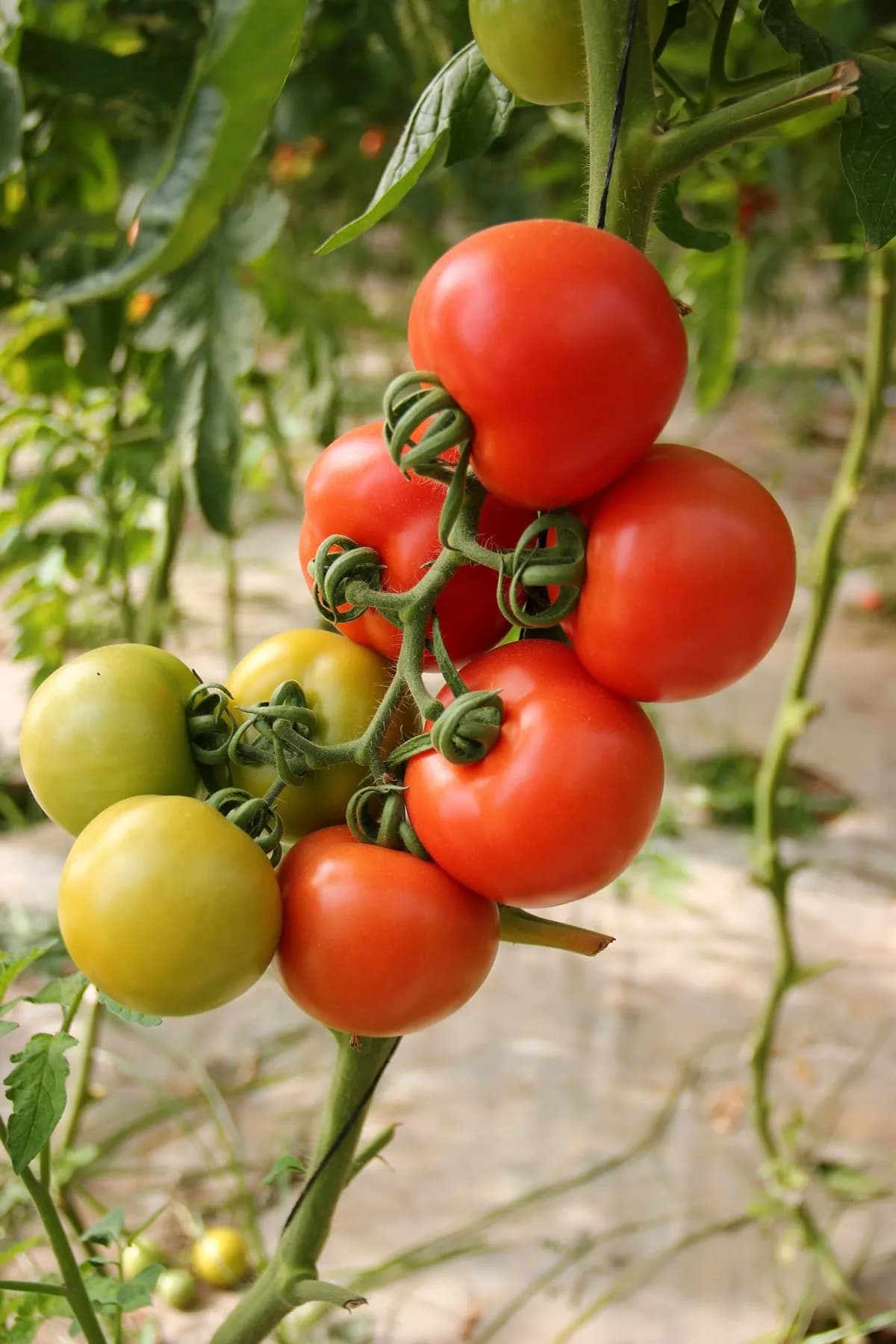
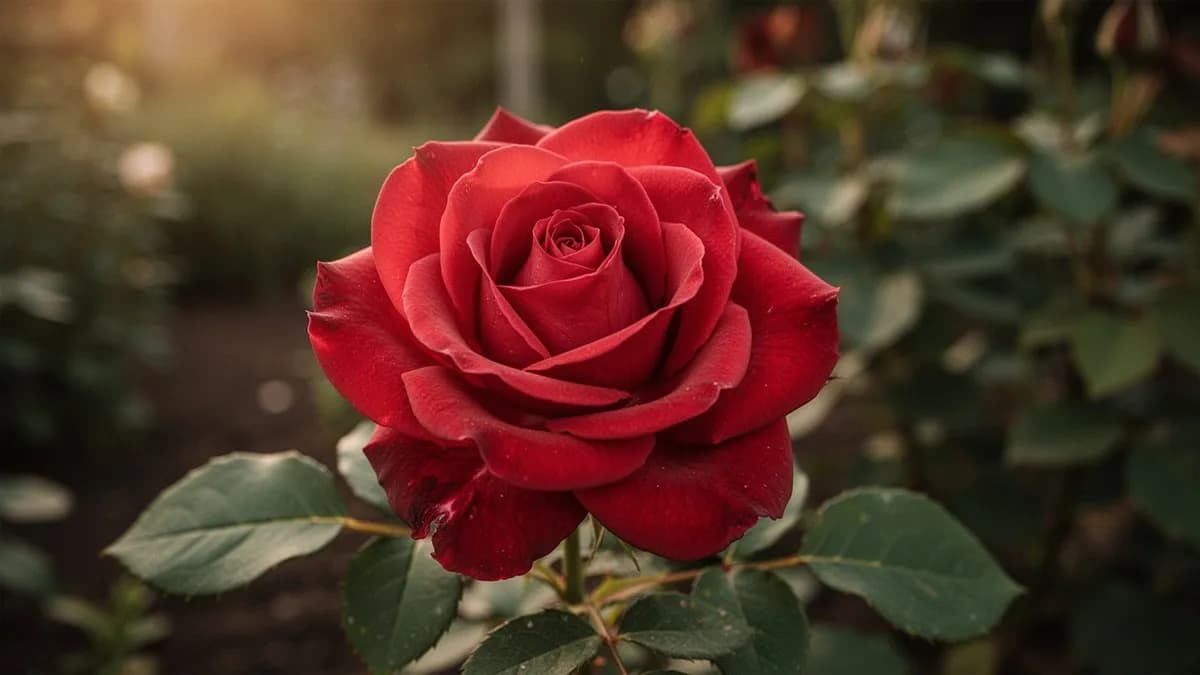
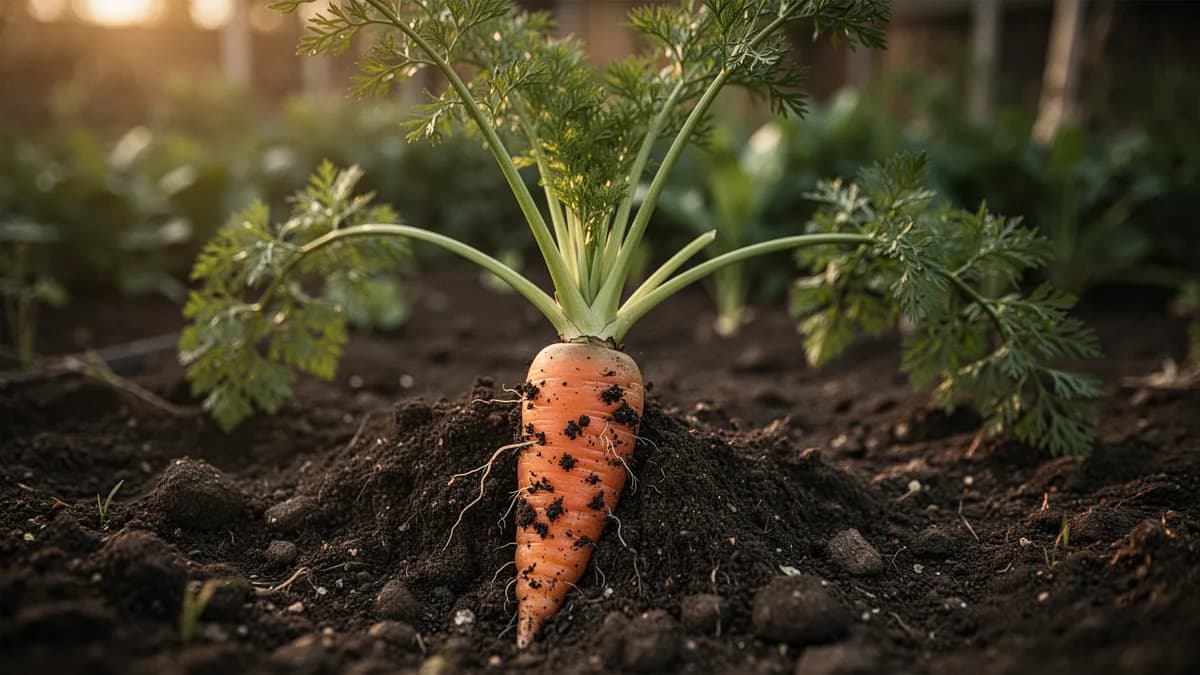
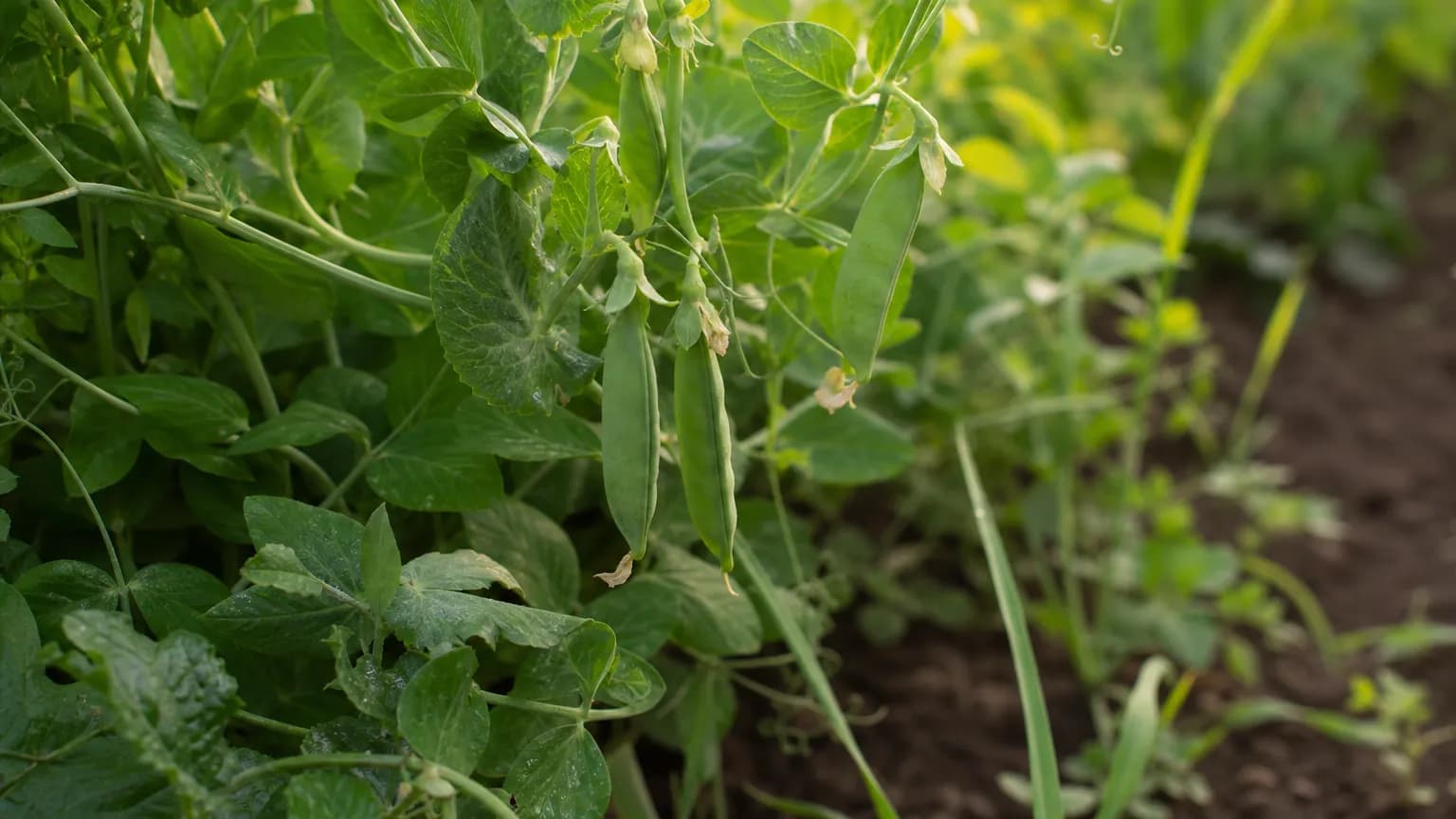
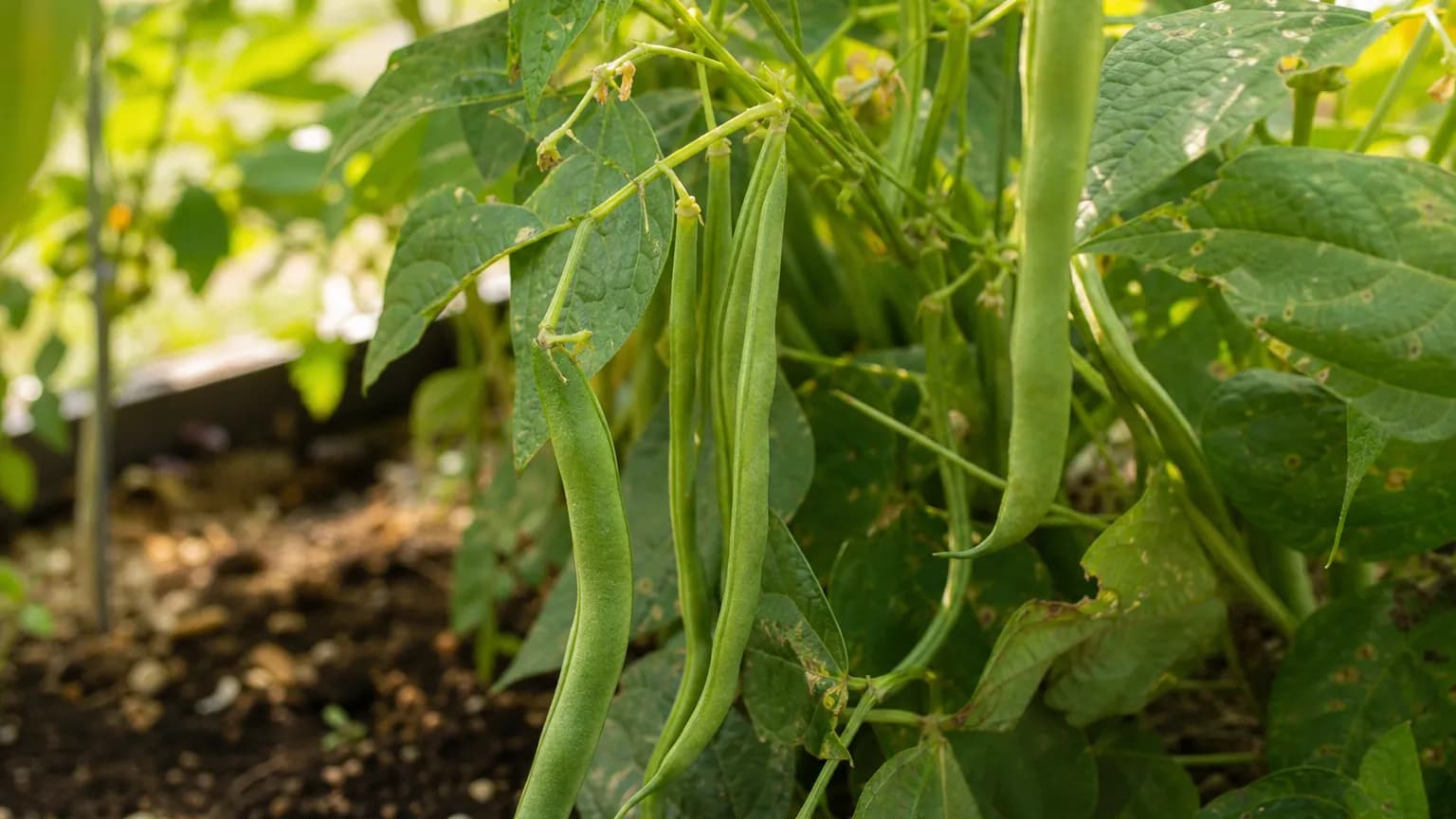
Garlic is one of the most powerful companion plants due to its sulfur compounds that repel a wide range of pests. Planted near roses, garlic deters aphids, Japanese beetles, and fungal diseases. Tomatoes benefit from garlic's ability to repel spider mites and red spider mites. Fruit trees underplanted with garlic show reduced borer activity. Carrots and garlic are mutually beneficial — garlic repels carrot rust fly while carrots loosen soil around garlic bulbs. Avoid planting near peas, beans, and other legumes — garlic's sulfur compounds inhibit nitrogen-fixing bacteria essential for legume growth.
Tomato belongs beside it. Peas doesn't.
Old growers' knowledge, checked against Garlic's real companion table below — test any plant you're growing.
Try Garlic in a bed — right here
A real planner bed with Garlic already in it. Tap a companion to place it and watch the pairing checks answer — green for good neighbours, red for a clash.


Related growing guides
Feed it well
Garlic needs fertile, well-drained soil with a pH of 6.0-7.0 and plenty of organic matter. Before planting in fall, amend beds with 5-8 cm of well-aged compost worked into the top 20 cm of soil. Add bone meal or rock phosphate for phosphorus, which supports the vigorous root development garlic needs during its winter establishment phase. Garlic absolutely cannot tolerate waterlogged soil — in heavy clay, plant in raised beds at least 15-20 cm tall to ensure drainage, as sitting in wet soil causes cloves to rot before they ever sprout.
Garlic is a moderate but steady feeder with specific timing needs. Apply a nitrogen-rich fertilizer such as blood meal, fish emulsion, or a balanced organic fertilizer (10-10-10) in early spring as soon as green growth resumes, and again 3-4 weeks later. This spring nitrogen push fuels the rapid leaf growth that drives bulb sizing — each leaf the plant produces corresponds to one wrapper layer on the bulb, so more leaves means larger, better-wrapped bulbs. Stop all nitrogen applications by late spring once bulbs begin swelling (typically when you can feel a bulge at the soil line), as late nitrogen encourages soft, poorly storing bulbs.
Potassium is the other critical nutrient for garlic, supporting bulb development, disease resistance, and storage quality. Apply wood ash, sulfate of potash, or kelp meal alongside your spring nitrogen applications. Sandy soils drain well but need extra compost for moisture retention and fertility; they may also require more frequent light fertilizer applications since nutrients leach quickly. A sulfur-based fertilizer can benefit garlic flavor development, as sulfur compounds are responsible for garlic's characteristic pungency and many of its health benefits.
Ideal Temperature
Hardiness Zone Compatibility
From seed to harvest, stage by stage
Planting & Root Establishment
Individual cloves are planted in fall, 4-6 weeks before the ground freezes. Below the surface, roots grow actively even as air temperatures drop. Cloves develop a robust root system of 10-15 cm before the ground freezes solid, anchoring them for winter.
Winter Dormancy
Garlic enters dormancy as the ground freezes. The critical vernalization period occurs now — 4-8 weeks of temperatures below 4°C (40°F) trigger the hormonal changes that cause a single clove to differentiate into a multi-cloved bulb. Without this cold period, garlic produces rounds instead of cloved bulbs.
Spring Growth
Green shoots emerge through the mulch as soil warms. Garlic enters a period of rapid leaf growth — each leaf produced corresponds to one wrapper layer on the future bulb. Plants grow 30-60 cm tall with flat, blade-like leaves. This vegetative phase is critical for building the photosynthetic capacity that will power bulb development.
Scape Formation
Hardneck varieties send up a central flower stalk called a scape that curls into a distinctive loop. If left to grow, the scape straightens and produces a cluster of tiny bulbils at its tip. This stage signals that the plant is transitioning from leaf growth to bulb development.
Bulbing
The bulb underground swells rapidly as the plant channels all its energy downward. Individual cloves differentiate and expand within the wrapper layers. Lower leaves begin dying back as nutrients are mobilized into the bulb. This is the final critical growth phase.
Harvest & Curing
Garlic is ready when 40-50% of leaves have browned. Bulbs are lifted from the soil, brushed clean, and cured for 3-4 weeks in a warm, dry, well-ventilated space. During curing, wrappers become papery, necks dry completely, and flavor concentrates.
Plant cloves 5 cm deep, pointed end up, spaced 15 cm apart. Apply 10-15 cm of straw mulch immediately after planting to insulate against freeze-thaw cycles and prevent heaving.
Caring for Garlic month by month
What to do each month for your Garlic
October
You are herePrime planting month in most climates. Plant cloves 4-6 weeks before the ground freezes. Set cloves 5 cm deep and 15 cm apart, pointed end up. Apply 10-15 cm of straw mulch immediately after planting.
Know exactly what to do in your garden — every month
One email at the start of each month: what to sow, plant, and tackle right now — for your Garlic and everything growing around it. Plus a short starter course that helps you dodge the classic mistakes.
- What to do, right now
- Matched to your season
- Starter course included
Harvesting Garlic
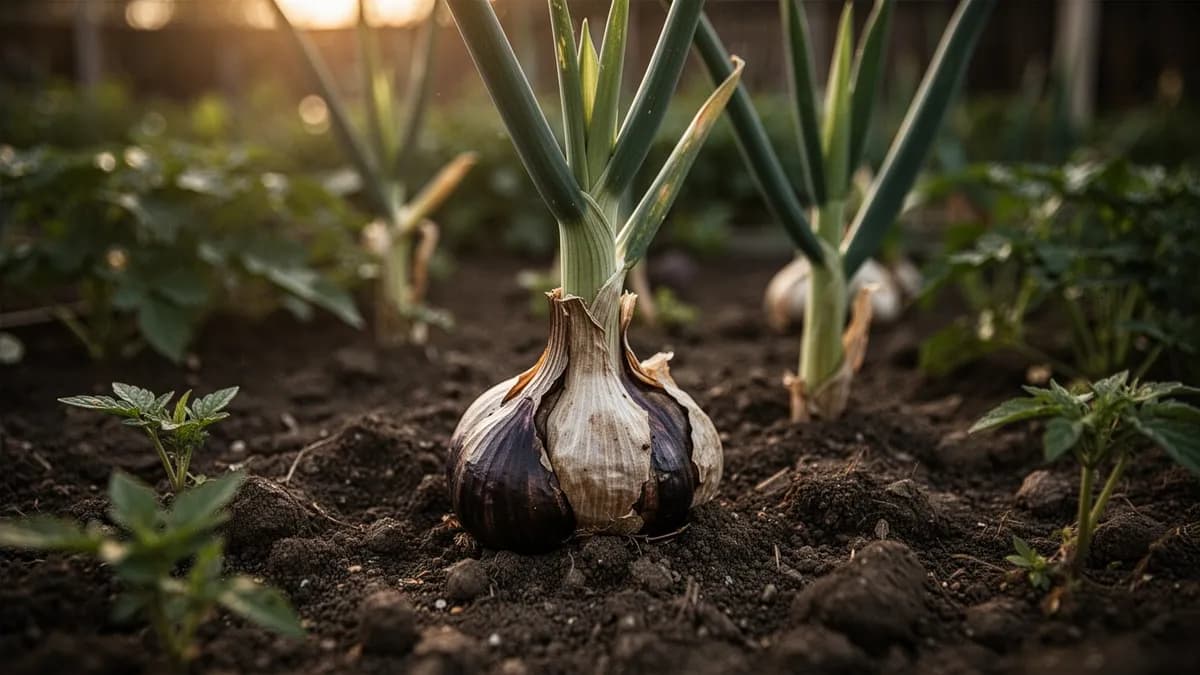
Garlic is ready to harvest when the lower third to half of the leaves have turned brown while upper leaves remain green — typically late June to July depending on your climate and planting date. Do not wait until all leaves are brown, as the wrapper layers that protect bulbs during storage will have deteriorated, leaving cloves exposed and prone to mold. Each green leaf corresponds to one papery wrapper layer on the bulb, so more green leaves at harvest means better-protected bulbs. Loosen soil with a digging fork inserted several inches away from the bulb, then gently lift — never pull by the stalk, as it can separate from the bulb and introduce rot.
Curing is essential for long-term storage. Immediately after harvest, brush off loose soil but do not wash the bulbs — moisture encourages fungal growth. Hang bundles of 8-10 plants or spread bulbs in a single layer on screens or drying racks in a warm (27°C / 80°F), dry, well-ventilated area out of direct sunlight. A covered porch, garage, or barn works well. Curing takes 3-4 weeks, during which the outer wrappers become papery, the necks dry completely, and the flavor mellows and concentrates.
Once cured, trim roots to 6mm and cut stalks to 2-3 cm above the bulb — or braid softneck varieties for decorative hanging storage. Inspect each bulb and set aside any with damaged wrappers, soft spots, or exposed cloves for immediate kitchen use rather than storage. Save your largest, best-formed bulbs from your strongest plants as seed garlic for next fall's planting — this practice of selecting the best bulbs year after year gradually adapts your garlic strain to your specific growing conditions.
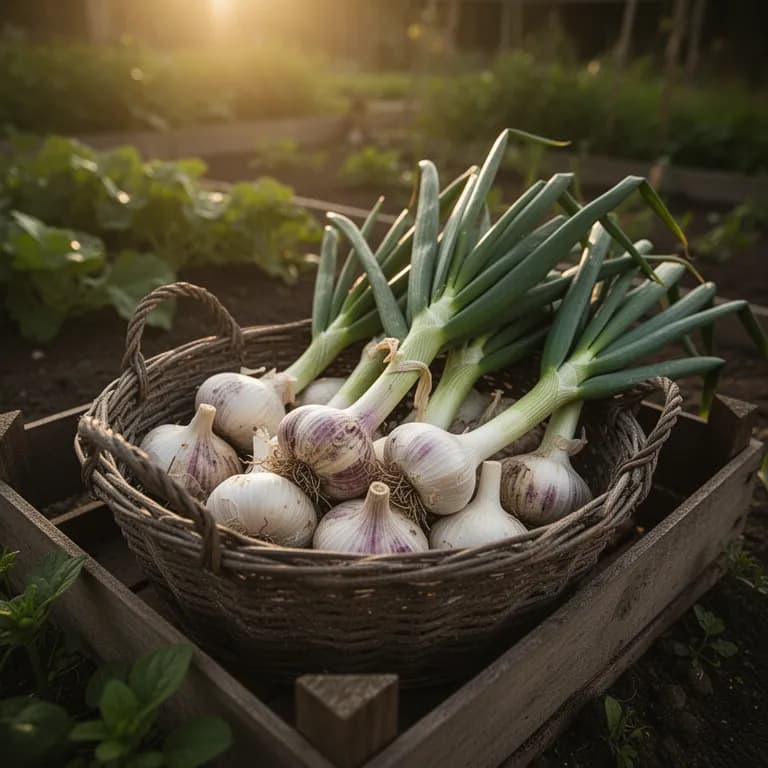
assuming you plant when the window opens — set your real date
From bulbs, tubers or cloves
40-50% of leaves have browned
Storage & Preservation
Properly cured garlic stores remarkably well when kept in the right conditions. Softneck varieties are the storage champions, keeping 9-12 months at 15-18°C (60-65°F) with good air circulation and 60-70% humidity. Hardneck types store for 4-6 months under the same conditions. Avoid storing garlic in the refrigerator — temperatures between 0-10°C (32-50°F) trigger sprouting by mimicking the cold period garlic needs before growing. Mesh bags, open baskets, or paper bags all work well. Braiding softneck garlic and hanging it in a cool, dry room is both decorative and practical, and keeps bulbs well-ventilated.
For longer preservation, several methods work excellently. Peel and freeze whole cloves in airtight bags for up to 12 months — frozen cloves grate easily on a microplane straight from the freezer. Roast whole heads at 200°C (400°F) for 40 minutes, squeeze out the soft golden paste, and freeze in ice cube trays for instant cooking flavor. Dehydrate thin clove slices at 57°C (135°F) for 6-8 hours until crisp, then grind into homemade garlic powder that far surpasses store-bought. Fermented black garlic, made by holding whole bulbs at 60°C (140°F) and high humidity for 3-4 weeks, produces a sweet, complex ingredient prized in gourmet cooking.
Garlic can be safely preserved in vinegar (pickled garlic) and will keep for several months refrigerated. However, garlic should never be stored in oil at room temperature due to the serious risk of botulism — the anaerobic, low-acid environment of oil is ideal for Clostridium botulinum growth. Garlic-infused oil must be kept refrigerated and used within a week, or frozen for longer storage. Commercially produced garlic-in-oil products contain acidifiers that make them shelf-stable, but homemade versions lack this safety measure.
What goes wrong — and the fix
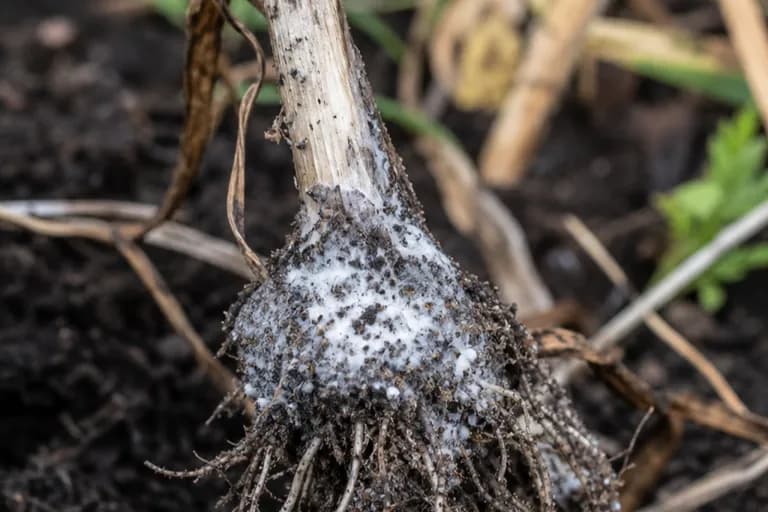
White Rot
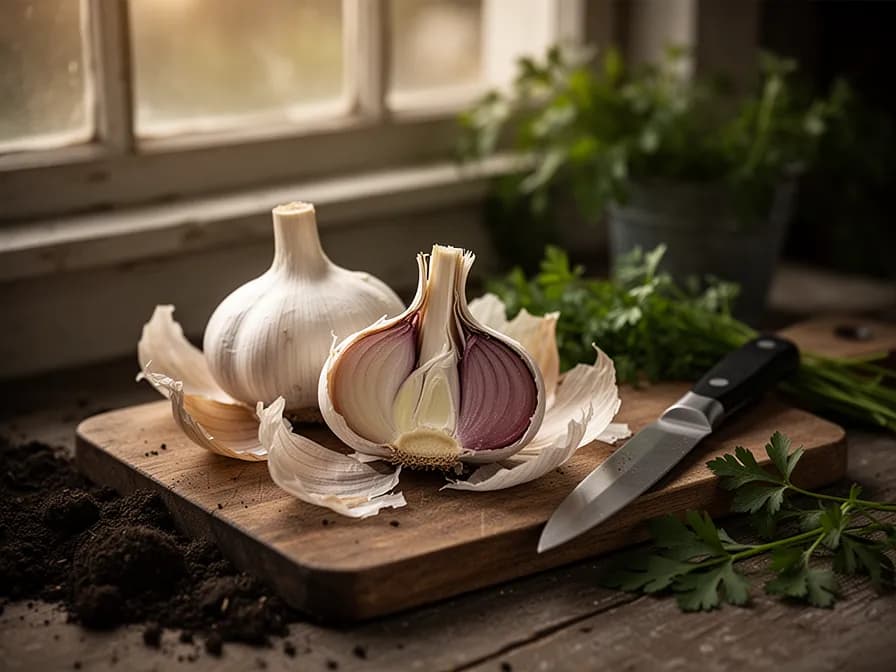
DiseaseA devastating soil-borne fungal disease causing yellow, wilting leaves and a fluffy white mold with tiny black sclerotia at the base of the bulb. Roots rot completely. The fungus can persist in soil for 20+ years.
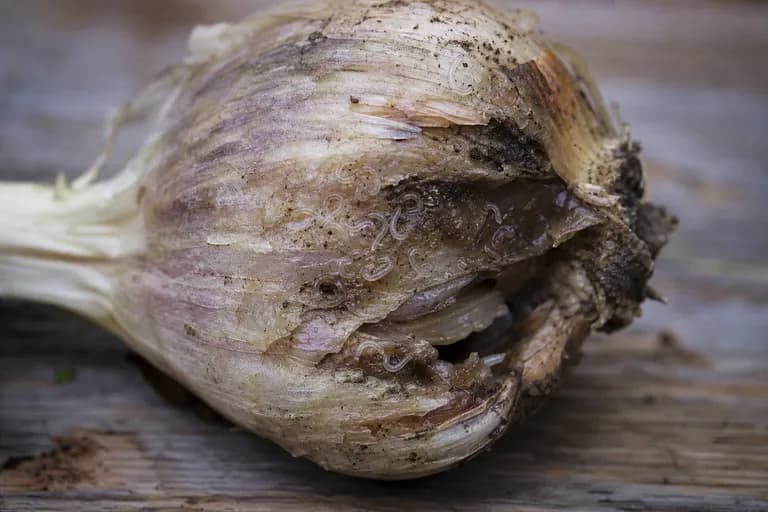
Garlic Bloat Nematode
PestMicroscopic worms that feed inside the stem and cloves, causing swollen, distorted, spongy bulbs that crack open. Infested cloves show dark, discolored patches and have a bloated, softened texture.
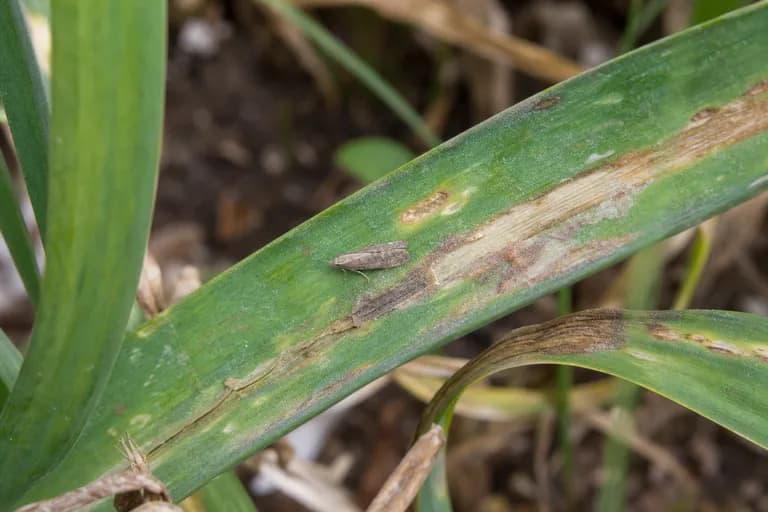
Leek Moth
PestSmall brown moths lay eggs on leaves. Larvae mine into leaves and bore down into the bulb, leaving frass-filled tunnels. Damaged plants have ragged, brown-streaked leaves and may be stunted.
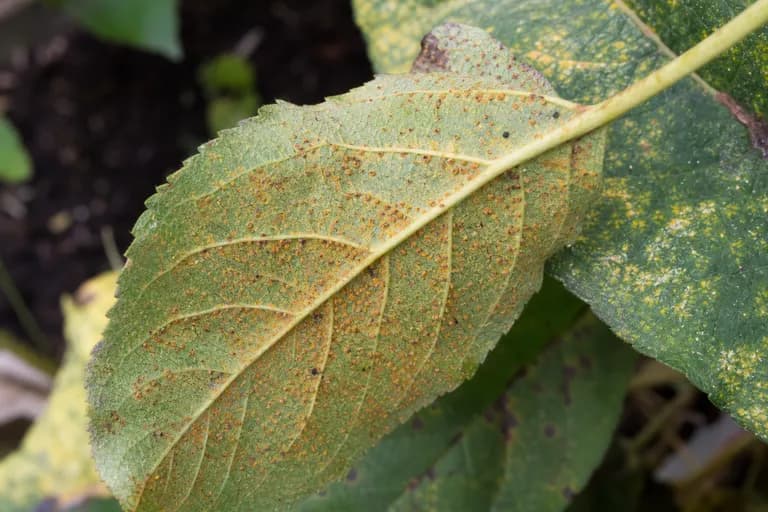
Rust
DiseaseOrange, elongated pustules on leaves, spreading rapidly in warm, humid conditions. Severe infections cause premature leaf death, reducing the plant's ability to size up bulbs. Common in late spring.
Troubleshooting Common Problems
Garlic not forming cloves (producing a single round bulb, called a 'round') means it did not receive enough cold vernalization — ensure it is planted in fall with time for 4-8 weeks of temperatures below 4°C (40°F). This is the most common problem for gardeners in mild-winter climates trying to grow hardneck varieties. Rounds are still perfectly edible and can be replanted the following fall for a second chance at proper clove formation. Small bulbs usually result from late planting, crowding, insufficient fertility, or weed competition during the critical spring growth period when bulbs are sizing up.
Bulbs splitting open in the ground indicate late harvest — the wrappers have deteriorated and cloves have separated, exposing them to soil moisture and disease. Check maturity regularly once lower leaves start browning, and harvest promptly when 40-50% of leaves have died back. Waxy breakdown, where cloves become translucent and sticky, is caused by excessive heat during bulb development or harvesting in very hot conditions — harvest in the morning when temperatures are cooler. Double-cloved garlic (cloves within cloves) is a genetic trait common in some Artichoke-type softneck varieties and is not a problem.
Garlic turning blue or green in pickled preparations or when cooked with acid is a harmless reaction between sulfur compounds and trace amounts of copper, and is completely safe to eat — it is not a sign of spoilage. Scapes left on hardneck varieties divert significant energy from bulb development — remove them when they form a full curl for a 10-30% increase in bulb size. Yellowing leaves in spring before bulbing time may indicate nitrogen deficiency, overwatering, or root disease — check roots for signs of white rot or nematode damage before assuming it is a nutrient issue.
Growing Tips
- Plant garlic in fall, not spring. Garlic needs 4-8 weeks of cold temperatures below 4°C (40°F) to form proper cloves. Spring-planted garlic often produces small, poorly formed bulbs because it misses this critical vernalization period.
- Choose the right type for your climate: hardneck varieties for cold climates (zones 3-6) produce fewer but larger cloves and delicious scapes; softneck varieties for mild climates (zones 6-9) store much longer and can be braided.
- Always plant the largest cloves — small inner cloves produce small bulbs. Save only the biggest, healthiest outer cloves for planting and use the smaller ones in the kitchen. Each generation of selecting the best improves your strain.
- Mulch is non-negotiable. Apply 10-15 cm of straw or shredded leaf mulch immediately after planting. This insulates cloves from freeze-thaw heaving, retains moisture, and suppresses spring weeds — garlic's narrow leaves compete poorly with weeds.
- Remove scapes from hardneck varieties when they form one full curl — this simple step redirects the plant's energy from flower production to bulb sizing and can increase bulb weight by 10-30%. Bonus: scapes are delicious.
- Stop watering 2-3 weeks before harvest. This allows the outer wrapper layers to dry and tighten around the bulb, dramatically improving storage life. Bulbs harvested from wet soil have thin, fragile wrappers that tear easily.
- Never skip curing. Freshly dug garlic must be dried for 3-4 weeks in a warm (27°C / 80°F), dry, well-ventilated area out of direct sunlight. Uncured garlic has a short shelf life and muted flavor compared to properly cured bulbs.
- Buy seed garlic from reputable growers, not the grocery store. Grocery garlic may be treated with sprout inhibitors, could carry soil-borne diseases like white rot or nematodes, and may be a variety unsuited to your climate and day length.
Grow your best Garlic yet — and everything around it.
Start a free plan today. Lay out your beds, drop in your Garlic, and let PlotMyGarden handle the timing, spacing, companions and reminders from seed to harvest basket.
Pick your Garlic
Music
A popular hardneck (Porcelain type) with large, easy-to-peel cloves and a robust, spicy raw flavor that mellows beautifully when roasted. Very cold-hardy. 4-5 large cloves per bulb. Stores 6-8 months.
German Extra Hardy
An extremely cold-tolerant hardneck Porcelain variety producing large bulbs with rich, strong flavor. Thrives in zones 3-6. 4-6 large cloves per bulb. Beautiful purple-streaked wrapper. 5-7 months storage.
Inchelium Red
A softneck Artichoke type named the best-tasting garlic in a Rodale Institute taste test. Mild, complex flavor. 10-20 cloves per bulb in multiple layers. Excellent storage of 9-12 months.
Chesnok Red
A hardneck Purple Stripe variety famous for being the best garlic for roasting, with a creamy, sweet, mellow flavor when baked. Beautiful purple-striped wrappers. 8-10 cloves per bulb. Stores 5-6 months.
California Early
A reliable softneck variety widely adapted to warm climates. Mild, classic garlic flavor with good productivity. 12-16 cloves per bulb. Excellent braiding variety with long storage of 10-12 months.
A single head of organic garlic costs $1-3 at the grocery store, while seed garlic costs $10-15 per bulb but yields 6-10 new bulbs. One $12 seed garlic bulb can produce 8 bulbs worth $8-24 in organic garlic in a single season. Over time, saving your own seed garlic makes the cost essentially free — a 3m row produces enough garlic for both eating and replanting, saving $50-100 annually compared to buying organic garlic year-round.
Quick recipes
Classic Garlic Bread
15 minThe ultimate comfort food side dish. Butter blended with fresh minced garlic and parsley spread onto crusty bread and toasted until golden and fragrant. Simple yet irresistible with pasta, soups, or salads.
6 ingredientsGarlic Scape Pesto
10 minA seasonal springtime treat that makes brilliant use of the curly flower stalks from hardneck garlic. Vibrant green with a mild garlic flavor, this pesto is perfect on pasta, pizza, grilled meat, or as a dip for crusty bread.
6 ingredientsRoasted Garlic Spread
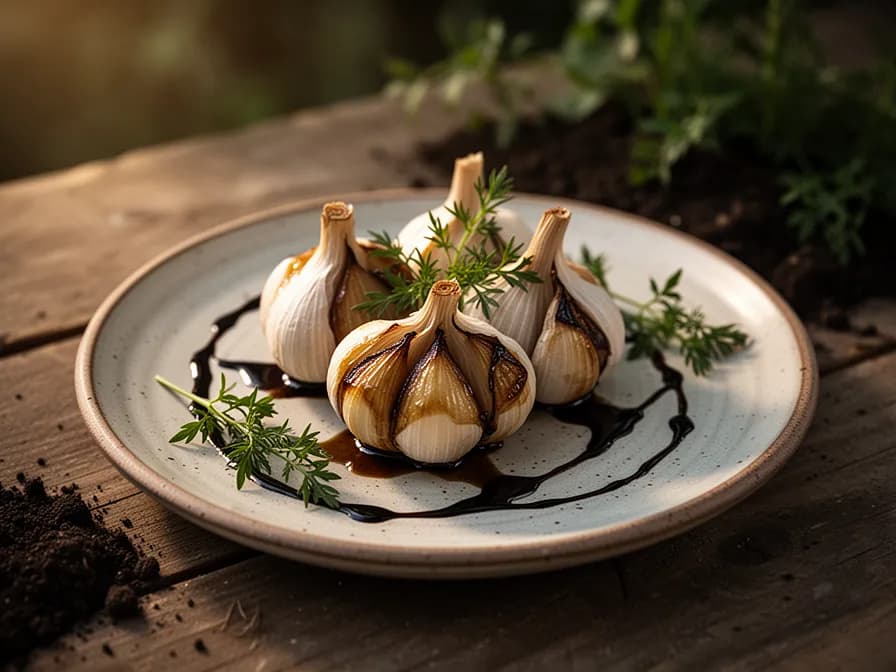
45 minWhole garlic heads roasted until the cloves turn golden and butter-soft. The resulting spread is sweet, nutty, and mellow — a world away from raw garlic's bite. Perfect on crusty bread, mixed into mashed potatoes, or stirred into sauces.
6 ingredientsCulinary Uses
Garlic is a cornerstone of world cuisine, used in virtually every culinary tradition on Earth. Raw garlic delivers sharp pungency and heat from its allicin content — crush or mince it and let it sit for 10 minutes before cooking to maximize the enzymatic conversion that produces allicin and its health benefits. Sauteed garlic mellows into a sweet, nutty flavor that forms the aromatic base of countless dishes. Roasted garlic, baked whole at 200°C (400°F) for 35-40 minutes until soft and golden, transforms into a creamy, spreadable paste with a rich, caramelized sweetness that bears little resemblance to its raw form.
Fermented black garlic has become a gourmet sensation — the slow fermentation process converts sharp, pungent raw garlic into jet-black cloves with a soft, date-like texture and deep umami flavor with notes of balsamic vinegar, tamarind, and molasses. Garlic scapes, the curly flower stalks of hardneck varieties harvested in late spring, are a seasonal delicacy prized for pesto, stir-fries, grilling, and pickling. Green garlic — young, immature plants harvested in spring before bulbing — has a fresh, mild flavor perfect for using like scallions in salads, soups, and omelets.
Garlic pairs with virtually every savory dish and especially complements olive oil, butter, fresh herbs, tomatoes, lemon, chili, ginger, and all types of meat, fish, and legumes. It is essential in aioli, chimichurri, toum, aglio e olio, and thousands of other classic preparations. Nutritionally, garlic contains allicin — a powerful sulfur compound with significant antimicrobial, antifungal, and cardiovascular health benefits — along with manganese, vitamin B6, vitamin C, and selenium.
What's inside
Health Benefits
- Allicin, released when garlic is crushed or chopped, has potent antimicrobial properties effective against a wide range of bacteria, viruses, and fungi — studies show it can inhibit the growth of antibiotic-resistant bacteria.
- Regular garlic consumption has been shown to reduce blood pressure by an average of 7-8 mmHg systolic and 5 mmHg diastolic, comparable to some prescription medications.
- Garlic may lower total cholesterol by 10-15% and LDL cholesterol specifically, while potentially raising beneficial HDL cholesterol — supporting overall cardiovascular health.
- Contains organosulfur compounds that studies suggest may reduce the risk of certain cancers, particularly stomach and colorectal cancers, when consumed regularly as part of a varied diet.
- Aged garlic extract has been shown to boost immune function by enhancing the activity of natural killer cells and other immune cells, potentially reducing the severity and duration of colds and flu.
- Rich in manganese (23% DV per 28g), vitamin B6 (17% DV), vitamin C, and selenium — a powerful combination of nutrients supporting bone health, brain function, immune defense, and antioxidant protection.
Where Garlic comes from
Garlic originated in the mountainous regions of Central Asia — modern-day Kyrgyzstan, Tajikistan, Turkmenistan, and Uzbekistan — where wild garlic species still grow today. From these origins, garlic spread along ancient trade routes in both directions: westward through the Middle East and Mediterranean, and eastward into China and the Indian subcontinent. Archaeological evidence confirms garlic cultivation dating back over 5,000 years, with clay models of garlic bulbs found in Egyptian tombs dating to 3700 BCE.
Ancient civilizations revered garlic as both food and medicine. The Egyptians fed it to pyramid laborers for strength, placed clay bulbs in pharaohs' tombs, and used it medicinally. Greek and Roman soldiers consumed garlic before battle for courage and stamina — Hippocrates prescribed it for a wide range of ailments. In ancient India, garlic was valued in Ayurvedic medicine but avoided by certain religious sects who believed its stimulating properties interfered with meditation. Chinese medicine has used garlic for over 4,000 years to treat respiratory infections and digestive problems.
Garlic arrived in the Americas with Spanish and Portuguese colonists in the 1500s and quickly naturalized. For centuries, garlic was associated with working-class and immigrant cuisine in English-speaking countries and was derided by upper-class cooks. It was not until the mid-20th century, with the rise of interest in Mediterranean and Asian cooking, that garlic gained mainstream acceptance in American and British kitchens. Today, global garlic production exceeds 28 million tonnes annually, and garlic is recognized by modern science for its cardiovascular, antimicrobial, and immune-boosting properties — validating millennia of traditional medicinal use.
Garlic: did you know?
Fascinating facts about Garlic
Garlic has been cultivated for over 5,000 years, making it one of the oldest known cultivated plants. Ancient Egyptian records show that garlic was fed to the workers who built the Great Pyramids to boost their strength and endurance.
Garlic questions, answered
When should I plant Garlic?
What are good companion plants for Garlic?
What hardiness zones can Garlic grow in?
How much sun does Garlic need?
How far apart should I space Garlic?
What pests and diseases affect Garlic?
How do I store Garlic after harvest?
What are the best Garlic varieties to grow?
What soil does Garlic need?
When should I plant garlic?
What is the difference between hardneck and softneck garlic?
Why did my garlic not form cloves?
Should I remove garlic scapes?
How do I know when garlic is ready to harvest?
Can I plant garlic from the grocery store?
You just read the theory. Now grow it on autopilot.
Everything that makes Garlic fiddly — the timing, the spacing, the companions, the harvest window — is exactly what PlotMyGarden handles for you, for every plant in your garden.
A plan that knows your weather
Set your location once. Get sow, feed and harvest dates built around your real last-frost date and live forecast — no more guessing from a generic seed packet.
From the “When to plant” sectionDrag-and-drop bed planner
Design beds on a grid. Every plant snaps to its proper spacing, and you can see your whole season laid out before you spend a cent on seed.
From the “Growing guide” sectionCompanion conflicts, caught early
200+ good-and-bad pairings checked live as you plant — so a season-wrecking mistake never makes it into the ground.
From the “Companions” sectionReminders you'll actually act on
“Water the beans.” “Pick today before it turns.” Timely, specific, and tied to the plants you're really growing.
From the “Harvest” sectionSuccession, scheduled
Want a harvest for six weeks, not six days? It spaces your sowings automatically and reminds you when each new block is due.
From the “When to plant” sectionA record that gets smarter
Every harvest you log teaches it your garden. Next year's plan starts from what actually worked in your soil, not a textbook's.
From the “Overview” sectionPlant these alongside Garlic
More Alliums
Keep Garlic away from these
Garden plans featuring Garlic
Grow your best Garlic yet — and everything around it.
Start a free plan today. Lay out your beds, drop in your Garlic, and let PlotMyGarden handle the timing, spacing, companions and reminders from seed to harvest basket.