Leek
A mild-flavored allium grown for its blanched white stem, achieved by gradually hilling soil around the base throughout the season.





On this pageOverview
Meet Leek
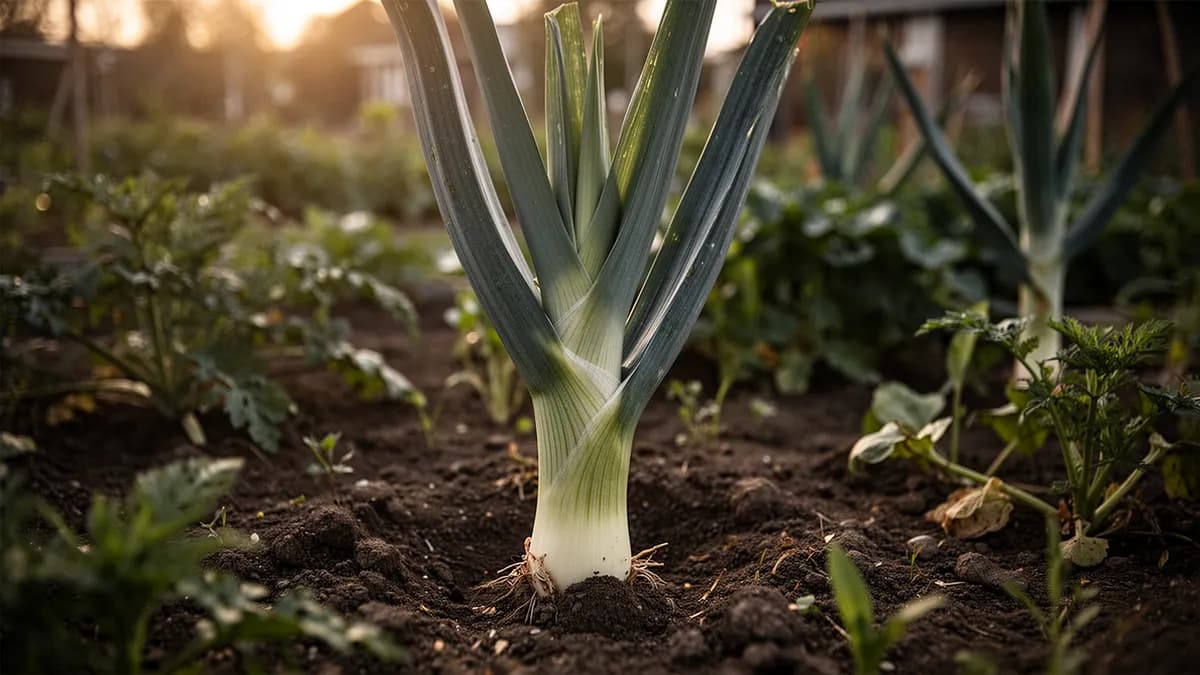
A mild-flavored allium grown for its blanched white stem, achieved by gradually hilling soil around the base throughout the season. Start seeds indoors in late winter and transplant into deep trenches that are filled in gradually as the plants grow. Leeks are remarkably cold-hardy and can be harvested well into winter, often improving in flavor after a frost. Their subtle onion taste is ideal for soups, quiches, and gratins, and they store well when kept in cool, moist conditions.
When to plant Leek
Start leek seeds indoors 10-12 weeks before the last frost date for the longest possible growing season — timing is critical because leeks need every day they can get to reach full size. Sow seeds 6mm (1/4 inch) deep in flats or cell trays filled with fine seed-starting mix at 18-24°C (65-75°F). Germination takes 10-14 days. Keep the surface moist but not waterlogged, and provide bottom heat with a seedling heat mat for the most uniform germination.
Grow seedlings under strong light for 14-16 hours daily, trimming tops to 10 cm whenever they grow floppy — this seemingly harsh haircut is actually critical, as it encourages thicker stems and stronger roots while preventing seedlings from falling over and tangling. Feed with half-strength liquid fertilizer weekly from the three-leaf stage onward. Leek seedlings grow slowly compared to other vegetables, so do not be discouraged by their pace — they are building the root system needed for rapid growth after transplanting.
Transplant outdoors after hardening off for 7-10 days, when seedlings are pencil-thick and 15-20 cm tall. The traditional planting method is to use a dibber to poke holes 15 cm deep and 15 cm apart, drop a seedling into each hole, and water in without backfilling — soil gradually fills around the stem naturally, blanching the shaft without any hilling needed. Alternatively, plant in shallow trenches and gradually hill soil as plants grow. Direct sowing outdoors in early spring is possible (6mm deep), but direct-sown leeks are typically smaller since they have significantly less growing time.
Your Leek Year
Composed for Zone 7 · typical seasons · frost passes Apr 2, returns Nov 1
Plant Leek Jan – Apr, pick Sep – Dec. Check the planting methods below and set your climate to personalize these windows.
How to grow Leek
Leeks are one of the most elegant alliums, prized for their long, thick white shafts and refined mild flavor. They have a long growing season of 100-150 days and are typically started indoors in late winter. Sow seeds 6mm (1/4 inch) deep in flats 10-12 weeks before the last frost date, keeping at 18-24°C (65-75°F). Germination takes 10-14 days. Grow seedlings under strong light, trimming tops to 10 cm when they get floppy to encourage thick, sturdy stems — this root and stem strengthening is critical for transplant success.
Transplant outdoors after hardening off, when seedlings are pencil-thick and 15-20 cm tall. The traditional planting method is to use a dibber to poke holes 15 cm deep and 15 cm apart, drop a seedling into each hole, and water in without backfilling — soil gradually fills around the stem over time, naturally blanching the shaft. Alternatively, plant in shallow trenches and gradually hill soil around the stems as they grow to produce longer white sections.
Water consistently with 2.5 cm per week — leeks need steady moisture but not waterlogged conditions. Mulch generously to retain moisture and suppress weeds. Feed every 3-4 weeks with a balanced liquid fertilizer or compost tea throughout the growing season. As plants grow, continue hilling soil or adding mulch around the stems to blanch as much of the shaft as possible — the more white shaft, the more usable leek you harvest. Leeks are remarkably cold-hardy, surviving temperatures down to -10°C (14°F), making them a valuable late fall and winter vegetable.
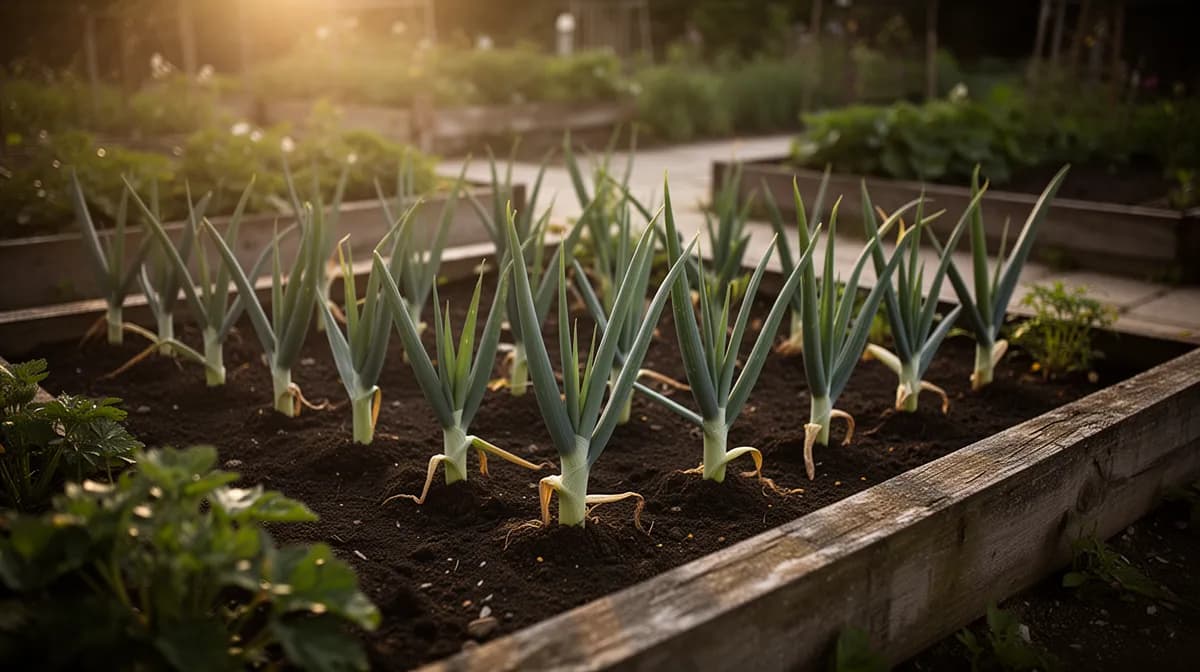
128 plants fit a 4 × 8 ft bed
Each Leek wants 15 cm of elbow room. The planner keeps that spacing for you — every plant, every bed.
Leek's best neighbours
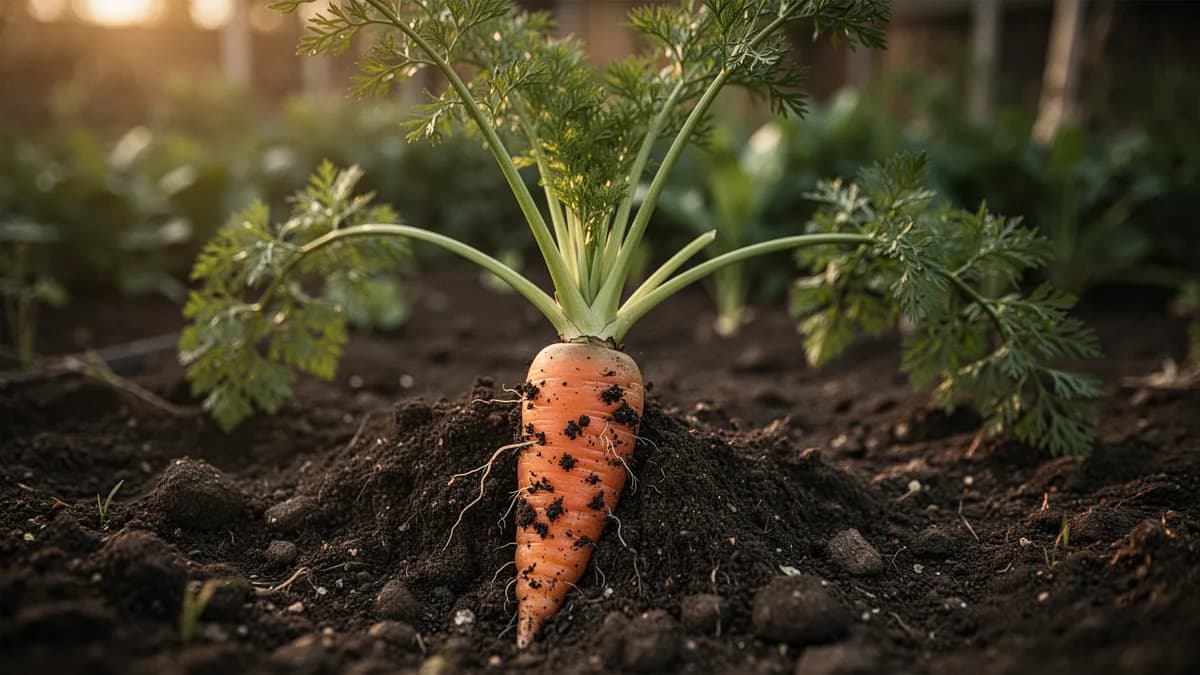
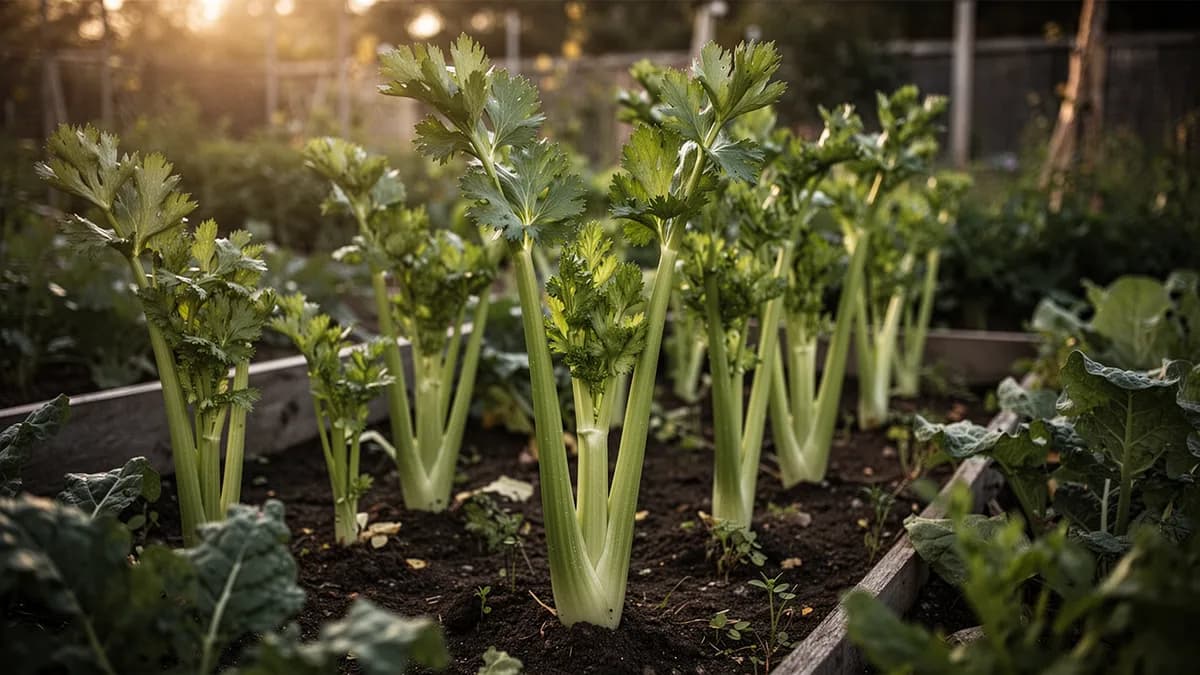
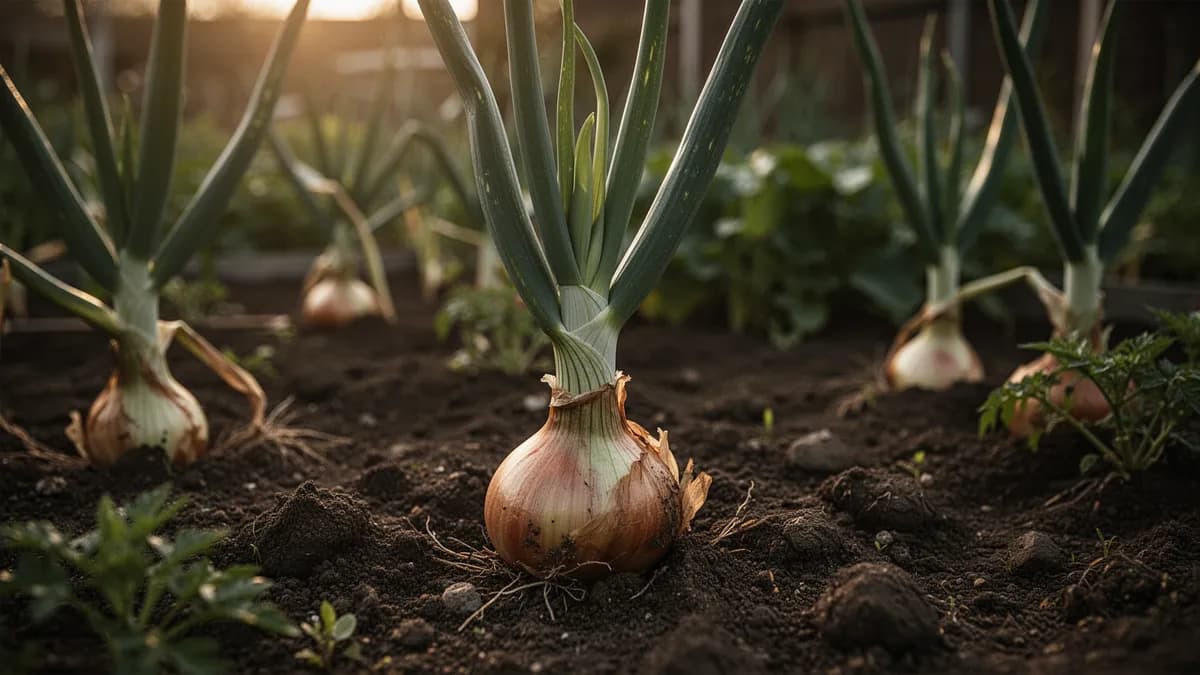
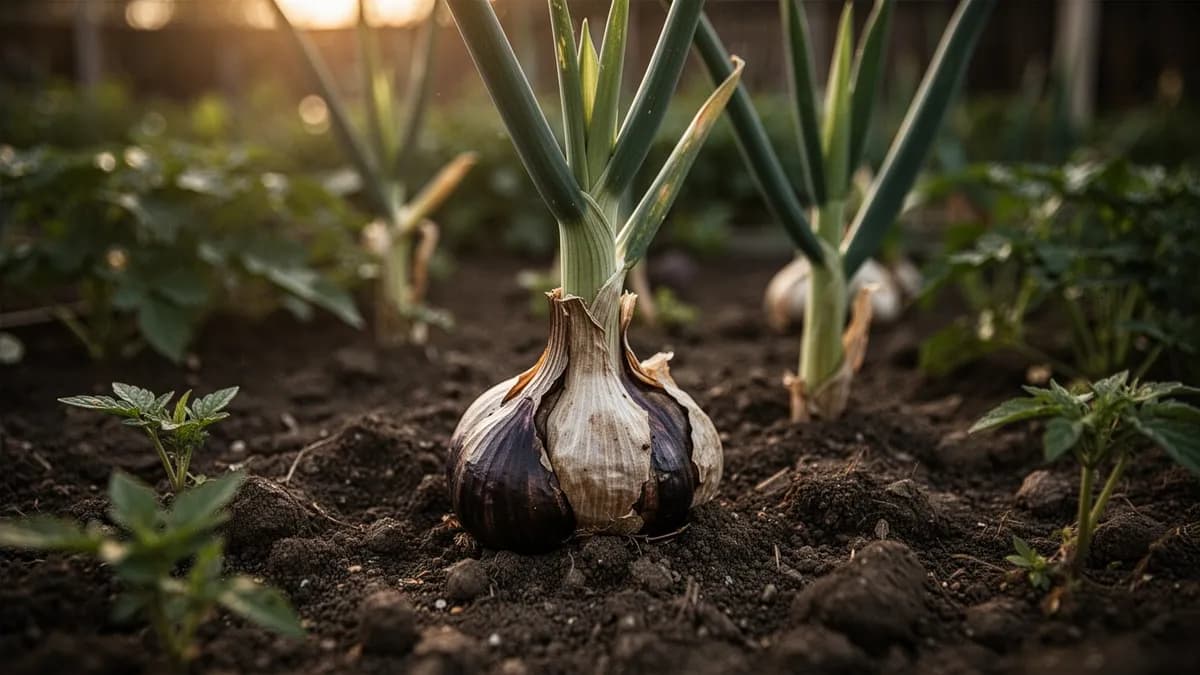
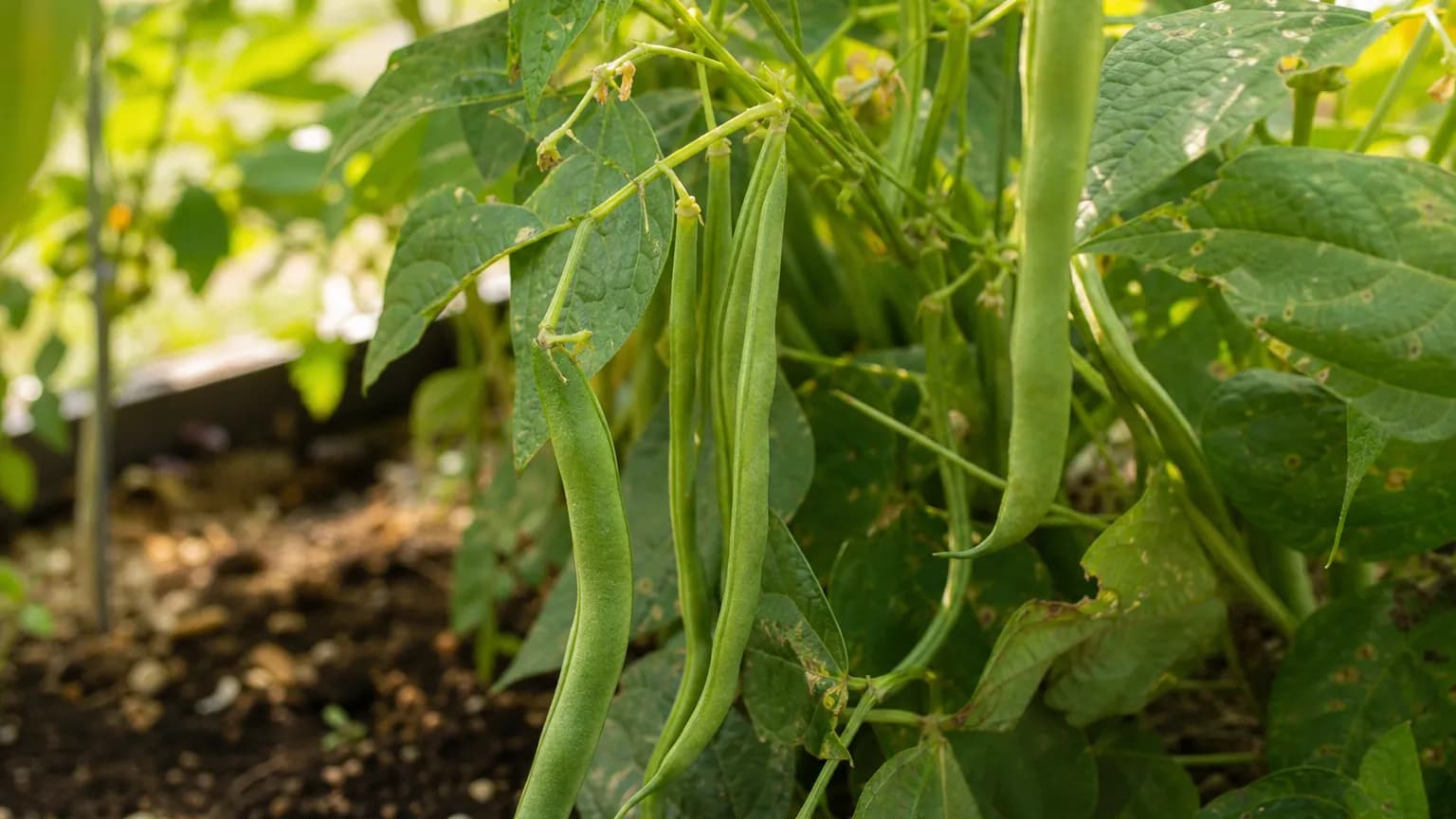
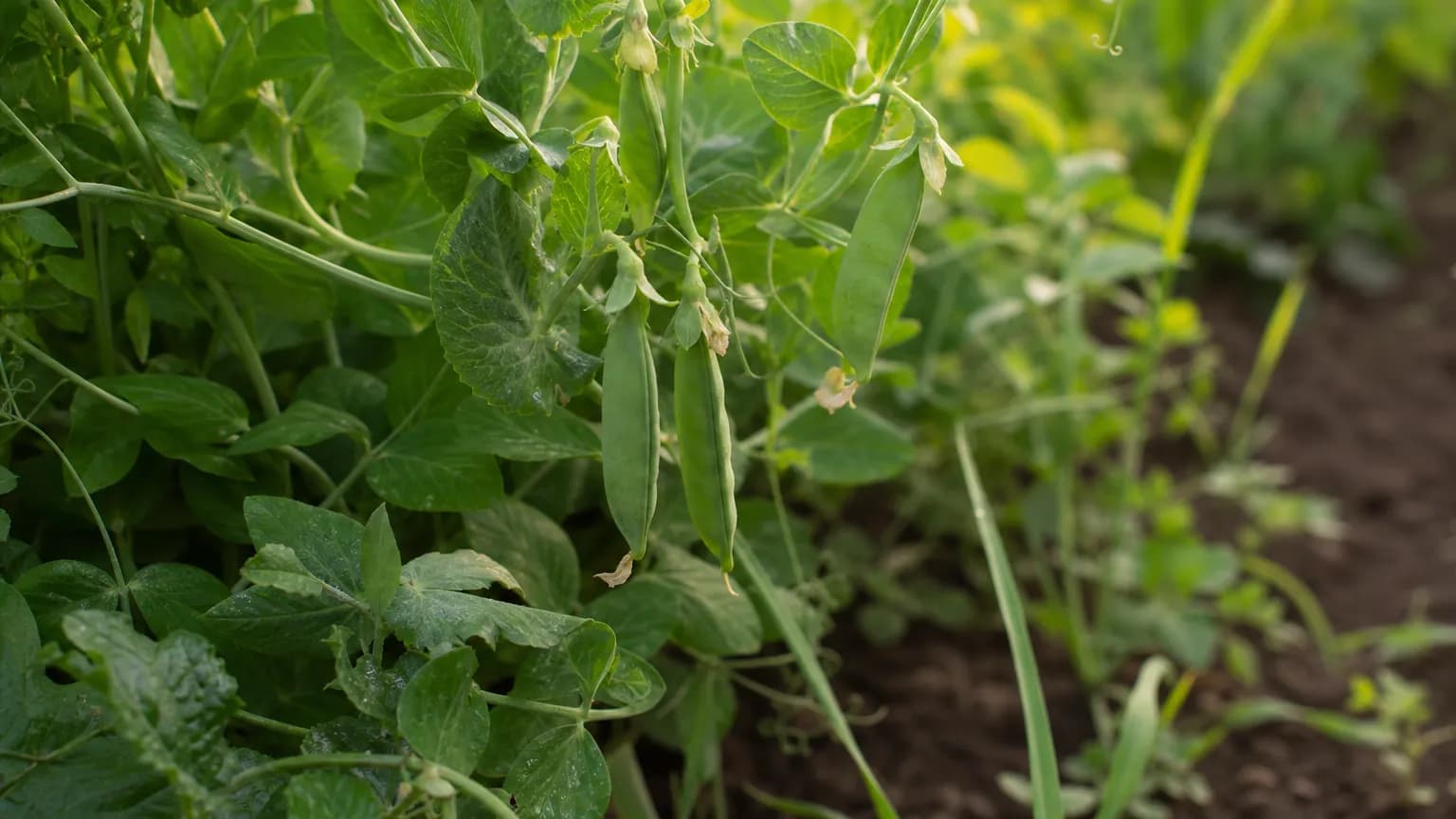
Carrots and leeks are one of the most beneficial companion pairings in the garden — the leek's strong scent repels carrot rust fly, while carrots repel onion fly and leek moth. Celery planted alongside leeks shares similar moisture requirements and their combined aromatic presence confuses many pest species. Onions are natural companions sharing cultural needs and pest-repelling properties. Avoid planting near legumes (peas, beans) — like all alliums, leeks release sulfur compounds that inhibit the nitrogen-fixing bacteria legumes depend on for growth.
Carrot belongs beside it. Green Beans doesn't.
Old growers' knowledge, checked against Leek's real companion table below — test any plant you're growing.
Try Leek in a bed — right here
A real planner bed with Leek already in it. Tap a companion to place it and watch the pairing checks answer — green for good neighbours, red for a clash.


Related growing guides
Feed it well
Leeks need rich, deep, well-drained soil with a pH of 6.0-7.0 and abundant organic matter for their long growing season. Work in 8-10 cm of compost before planting and ensure soil is loose to at least 30 cm depth for deep transplanting. Raised beds are ideal for leeks because they allow deep, loose soil and excellent drainage. If your native soil is heavy clay, amend generously with compost and coarse sand, or grow leeks exclusively in raised beds to prevent waterlogging that causes root rot.
Apply a balanced fertilizer (10-10-10) at planting time, then side-dress every 3-4 weeks with nitrogen-rich amendments like blood meal or liquid fish emulsion — leeks need consistent nitrogen throughout their long 100-150 day growth cycle to build foliage that translates into thick shafts. Unlike many vegetables, leeks are heavy nitrogen feeders for the entire season and should never be allowed to go hungry. Potassium, supplied through wood ash or greensand, supports robust stem development and improves winter hardiness. A mid-season top dressing of well-rotted compost provides both slow-release nutrients and additional soil structure.
Avoid fresh manure, which can burn young transplants and introduce weed seeds. Instead, incorporate aged compost or composted manure in fall for spring planting. Leeks respond well to compost tea applied as a foliar feed every 2-3 weeks during active growth. If leaves appear pale or yellowish despite adequate water, apply a quick-acting nitrogen source like diluted fish emulsion immediately. In acidic soils below pH 6.0, apply garden lime several weeks before planting to bring the pH into the optimal range.
Ideal Temperature
Hardiness Zone Compatibility
From seed to harvest, stage by stage
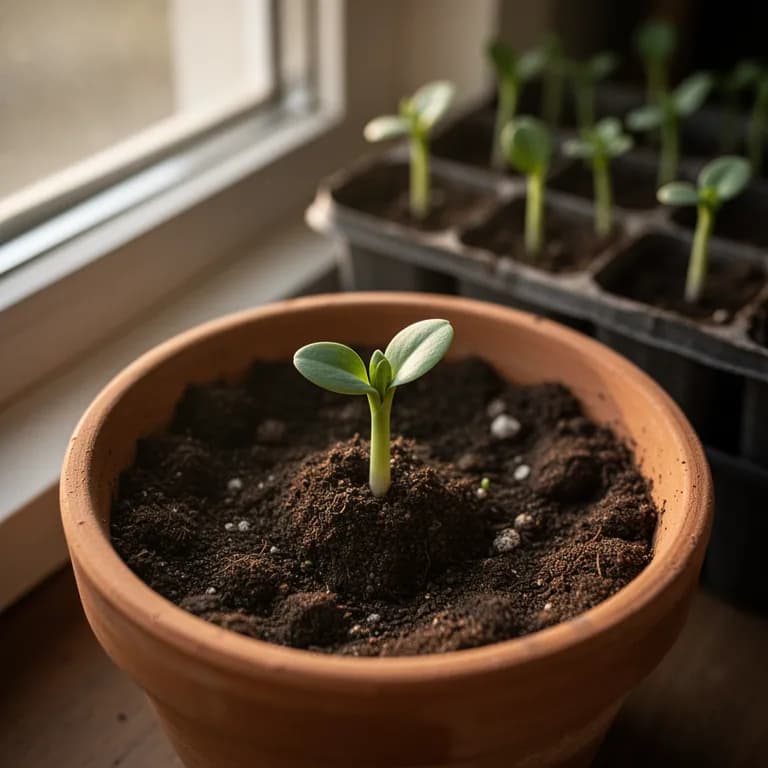
Seed Starting
Seeds germinate slowly in warm, moist seed-starting mix. Fine, grass-like shoots emerge as a single looped leaf that straightens over several days. Leek seeds require patience — germination is slower than most vegetables.
Seedling Growth
Seedlings develop thin, grass-like leaves and slowly thicken at the base. Growth appears slow but the root system is developing extensively below the surface. Seedlings will be pencil-thick and 15-20 cm tall by transplanting time.
Transplanting
Pencil-thick seedlings are moved to their permanent outdoor location. The traditional method uses a dibber to create deep holes, dropping seedlings in without backfilling. Plants establish new roots and adapt to outdoor conditions.
Vegetative Growth
The leek enters its main growth phase, producing broad, flat, blue-green leaves that emerge from a central growing point. The base thickens steadily as the plant builds its characteristic shaft. This is the longest growth phase.
Shaft Thickening
The white shaft reaches its full diameter of 3-5 cm as the plant stores energy. Outer leaves may begin to toughen while inner leaves remain tender. The leek is approaching harvest maturity and developing its full mild, sweet flavor.
Harvest
Leeks are ready when shafts reach 2.5-5 cm in diameter with 15-20 cm of white shaft. Unlike most vegetables, the harvest window is extraordinarily long — leeks can remain in the ground through winter, improving in flavor after frost.
Maintain 18-24°C (65-75°F) with a heat mat. Keep surface consistently moist but not waterlogged. Provide 14-16 hours of grow light daily once shoots emerge.
Caring for Leek month by month
What to do each month for your Leek
October
You are herePrime harvest month for most main-crop leeks. Dig with a fork to avoid damaging shafts. For leeks staying in the ground over winter, apply 15-20 cm of straw mulch for insulation. Frost improves flavor of remaining plants.
Know exactly what to do in your garden — every month
One email at the start of each month: what to sow, plant, and tackle right now — for your Leek and everything growing around it. Plus a short starter course that helps you dodge the classic mistakes.
- What to do, right now
- Matched to your season
- Starter course included
Harvesting Leek
Leeks can be harvested at any size — from slender baby leeks (pencil-thick) for grilling to full-sized specimens 3-5 cm in diameter. For the largest leeks, allow the full growing season of 100-150 days. Loosen soil around the base with a fork before pulling, as the extensive root system anchors firmly. Twist gently while pulling to release. Trim roots to 2 cm and cut the dark green tops down to the point where the leaves transition from light green to dark — the dark green portions are tough but can be used for stock.
Leeks left in the ground into winter actually improve in flavor after frost, and in mild climates can be harvested all winter with heavy straw mulch protection. The ideal harvest window for fall-planted leeks runs from late September through March in many zones. To extend winter harvesting in cold climates, heap 20-30 cm of straw or leaves around the plants before the ground freezes solid — this insulates the soil enough to keep it diggable even after snow arrives. Mark rows with tall stakes so you can locate them under mulch.
For baby leeks, harvest when stems are pencil-thick (about 1-2 cm diameter) at 60-75 days — these are prized by chefs for their tenderness and delicate flavor. Whole baby leeks can be grilled, braised, or charred without splitting. For full-size leeks, wait until the white shaft reaches at least 2.5 cm in diameter and 15-20 cm in length. Harvest in the morning when plants are turgid for the best post-harvest shelf life. If a leek sends up a flower stalk (bolts), harvest it immediately — the central core becomes woody and inedible, though the outer layers can still be peeled away and used.
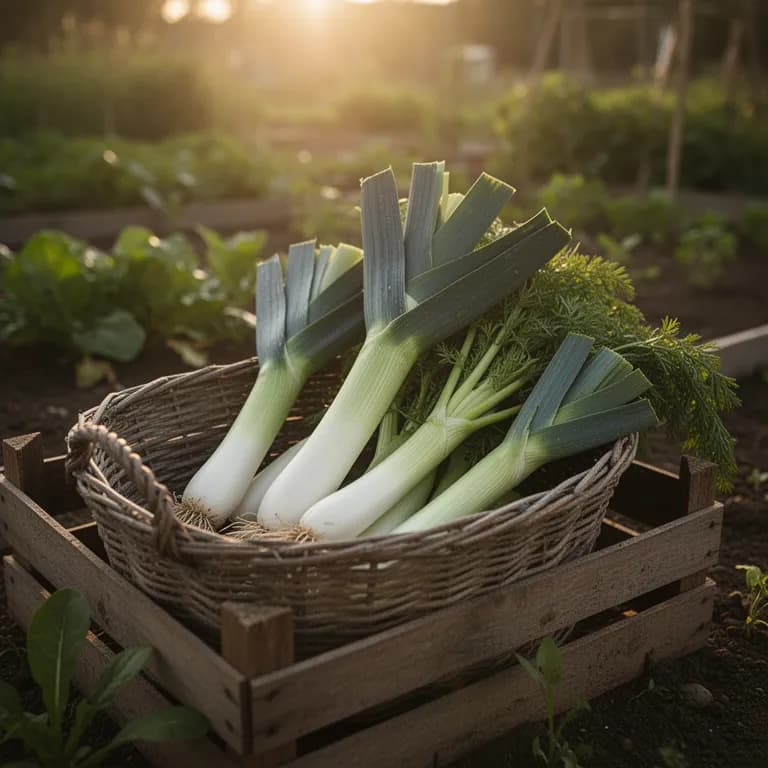
assuming you plant when the window opens — set your real date
Pick Leek promptly and the plant keeps producing.
Storage & Preservation
Fresh leeks store in the refrigerator for 2-3 weeks wrapped in a damp paper towel inside a plastic bag — do not wash before storing, as excess moisture accelerates decay. For the longest fresh storage, leave roots intact and trim only the darkest green tops. Stand leeks upright in a tall container with a small amount of water in the bottom, loosely covered with a plastic bag — this mimics their growing position and keeps them crisp for up to four weeks.
For extended root cellar storage, dig plants with roots intact and replant them upright in a bucket of moist sand at 0-2°C (32-35°F) and 90-95% humidity — they keep for 2-3 months this way and actually continue to grow slowly, staying fresh and alive. This traditional method was the primary way European gardeners stored leeks before refrigeration. In mild climates (zones 7+), the simplest storage is leaving them in the ground under a heavy mulch layer and harvesting as needed throughout winter.
For freezing, slice cleaned leeks into rings and blanch for 2-3 minutes, cool in ice water, and freeze flat on baking sheets before transferring to bags — frozen leeks keep for 10-12 months and are excellent for soups, stews, and quiches. Dehydrate thinly sliced leeks at 52°C (125°F) for 6-8 hours until brittle for a shelf-stable seasoning that rehydrates beautifully in hot dishes. Pickled leeks in a white wine vinegar brine with peppercorns, bay leaf, and thyme make an elegant condiment for charcuterie boards. Leek confit — slowly cooked in olive oil until silky — can be jarred and refrigerated for up to a month.
What goes wrong — and the fix
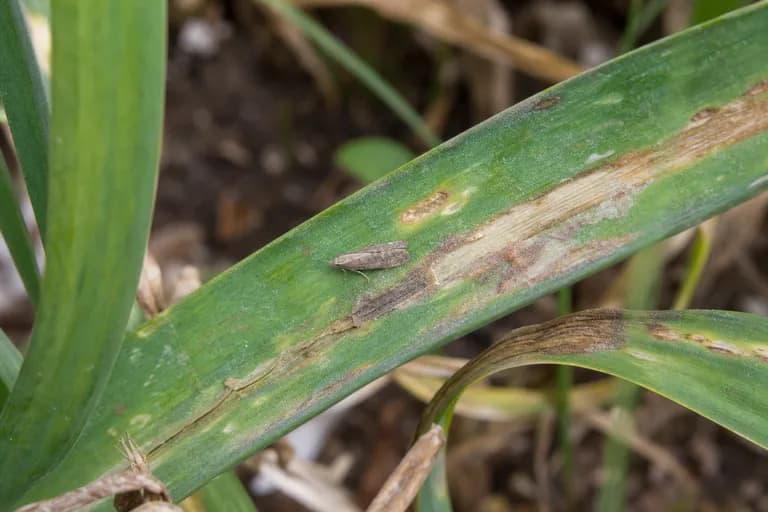
Leek Moth
PestSmall yellowish-green caterpillars mine into leaves and bore down into the shaft of the leek. Visible entry holes with frass on outer leaves. Internal tunneling damages the edible shaft and allows secondary rot organisms to enter.
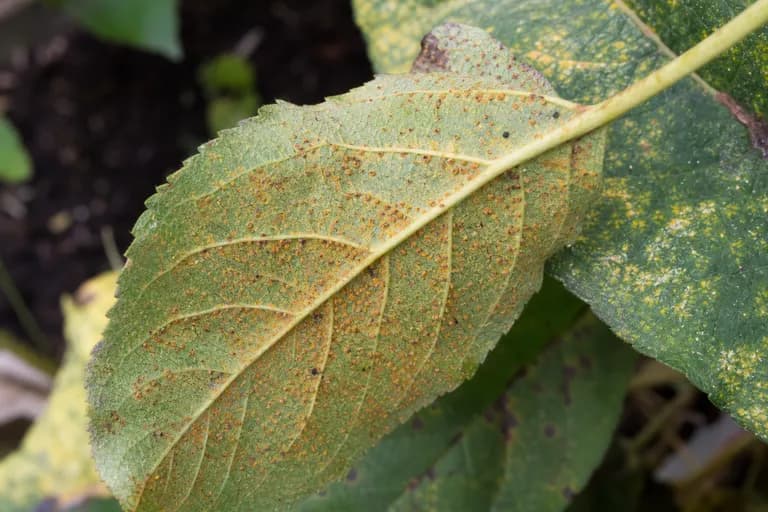
Rust
DiseaseBright orange, elongated pustules on leaves that release powdery spores when touched. Severe infections cause premature leaf yellowing and death, weakening the plant and reducing shaft size.
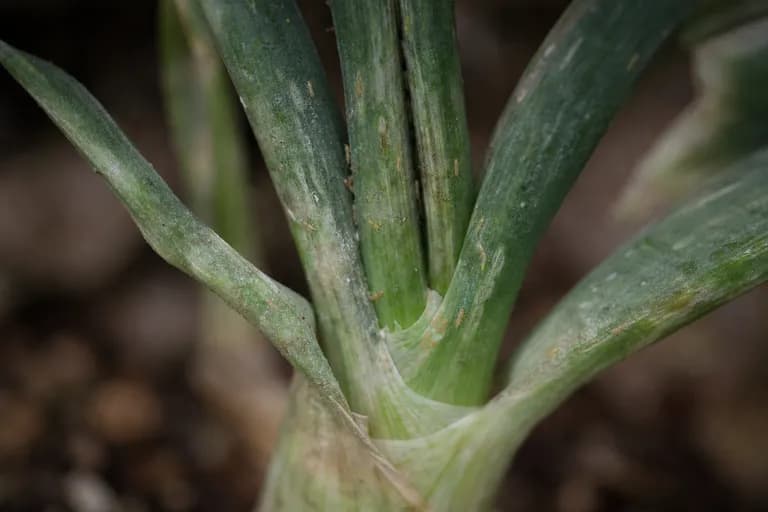
Onion Thrips
PestTiny, slender tan insects hide between leaf layers, feeding on sap and creating silvery streaks on foliage. Heavy infestations cause stunted, bleached, and papery leaves, reducing overall plant vigor and shaft development.
Troubleshooting Common Problems
Thin, skinny leeks are the most common complaint and result from overcrowding, insufficient fertility, or inadequate growing time — leeks need wide spacing (15 cm minimum), heavy feeding throughout their long season, and 100-150 days to reach full size. Starting seeds too late in the season is a frequent mistake that guarantees undersized leeks. Ensure transplants go out as early as possible after the last frost so they have maximum growing time before winter.
Bolting (sending up a flower stalk) occurs when plants experience prolonged cold below 10°C (50°F) followed by warming — this vernalization triggers the reproductive cycle. Avoid planting out too early in cold climates, and choose bolt-resistant varieties like Bandit or Tadorna for early spring transplanting. Once a leek bolts, the central shaft becomes woody and inedible, though the outer layers can still be peeled away and used. Remove flower stalks as soon as they appear if you want to salvage any usable portion.
Soil trapped between the leaf layers makes leeks gritty and unpleasant to eat — prevent this by hilling soil carefully from one side only and avoiding splashing mud during watering or heavy rain. Use mulch rather than bare soil for hilling where practical. To clean harvested leeks thoroughly, slice lengthwise from top to bottom and fan the layers open under running water — soil hides in surprising amounts between the tightly wrapped leaves. Short white shafts indicate insufficient blanching — begin hilling or adding mulch around stems earlier and more aggressively throughout the growing season to maximize the usable white portion.
Growing Tips
- Start seeds indoors 10-12 weeks before your last frost — this is non-negotiable for full-size leeks. Every week of delay costs you shaft diameter at harvest. Mark the seed-starting date on your calendar in January.
- Use the dibber method for the easiest transplanting: poke 15 cm deep holes, drop seedlings in, and water gently. Do not backfill — the soil fills in naturally over time and blanches the shaft without any hilling effort.
- Trim seedling tops to 10 cm whenever they flop over. This haircut feels aggressive but is essential — it produces thicker, sturdier stems and stronger root systems that translate directly into bigger leeks at harvest.
- Feed heavily and consistently throughout the season. Leeks are nitrogen-hungry for their entire 100-150 day growth cycle. Side-dress every 3-4 weeks with blood meal, fish emulsion, or compost tea. Pale or yellowish leaves signal immediate need for nitrogen.
- Hill soil around the stems gradually throughout the growing season to blanch the shaft and produce more usable white portion. Each hilling session should add 3-5 cm of soil. Use mulch if you want to avoid getting soil between the leaf layers.
- Water consistently at 2.5 cm per week — leeks need steady moisture but not waterlogged conditions. Mulch heavily with straw to retain moisture, moderate soil temperature, and suppress weeds that compete for nutrients.
- Leave leeks in the ground after the first frost — cold exposure converts starches to sugars and dramatically improves flavor. Mulch with 15-20 cm of straw for winter harvesting. In zones 5+, leeks can overwinter in the ground.
- Plant leeks next to carrots for one of the best companion pairings in the garden. Leek scent repels carrot rust fly, while carrot scent repels leek moth. Avoid planting near peas and beans, as allium sulfur compounds inhibit nitrogen-fixing bacteria.
Grow your best Leek yet — and everything around it.
Start a free plan today. Lay out your beds, drop in your Leek, and let PlotMyGarden handle the timing, spacing, companions and reminders from seed to harvest basket.
Pick your Leek
King Richard
An early-maturing variety producing tall, slender, elegant shafts 30-40 cm long. Best for summer and early fall harvest. 75 days. Mild flavor, excellent for salads and gentle cooking. Not as winter-hardy as later types.
Musselburgh (Scotch Flag)
A classic heirloom dating to the 1800s with thick, stocky stems and outstanding cold hardiness to -15°C. Rich, full leek flavor. 100-110 days. Excellent for overwintering in the garden.
Bandit
An extremely cold-hardy Dutch variety with upright, blue-green foliage and thick, uniform white shafts. 120 days. Holds well in the garden through winter without splitting. Excellent late-season variety.
Lancelot
A high-yielding baby leek variety that matures quickly at pencil-thickness, perfect for bundling and grilling. 55-75 days. Can be sown densely for efficient production. Mild, sweet flavor.
A packet of 200+ leek seeds costs $3-5 and can produce over $80 worth of organic leeks at grocery store prices of $3-4 per pound. Leeks are one of the most expensive alliums to buy, especially organic ones, making them an excellent value crop for home gardeners. Their long harvest season from September through March provides fresh produce during the most expensive months for store-bought vegetables.
Quick recipes
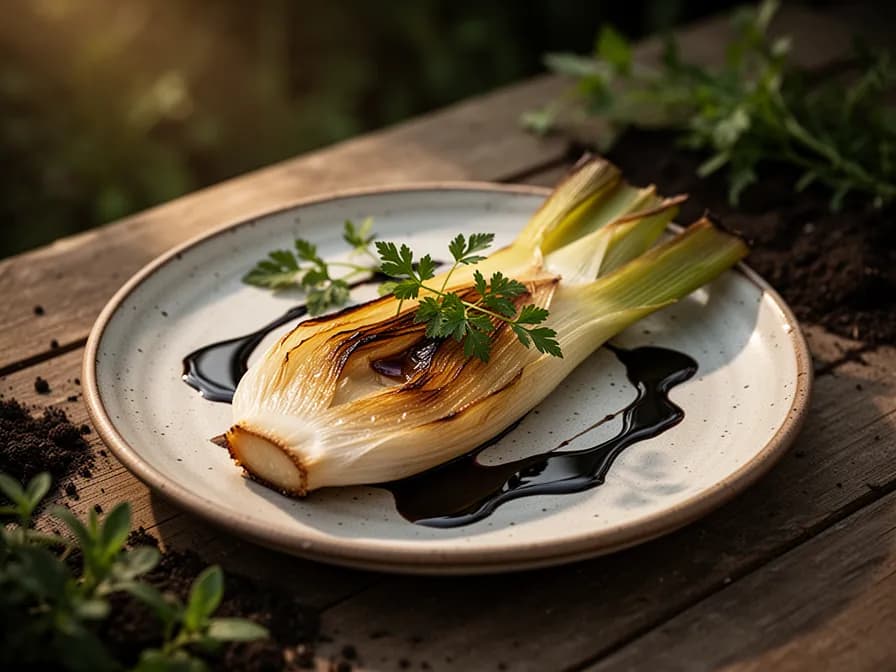
Classic Vichyssoise
45 minThe quintessential leek dish — a velvety chilled soup of leeks and potatoes that showcases the vegetable's delicate flavor. Equally delicious served warm as a comforting potato leek soup in winter.
7 ingredientsGrilled Baby Leeks with Romesco
25 minInspired by the Catalan calçotada tradition, baby leeks are charred whole until smoky and tender, then served with a rich romesco dipping sauce. A stunning appetizer that celebrates the leek in its simplest form.
8 ingredientsLeek and Gruyere Tart
55 minA savory French-style tart with buttery pastry cradling sweet, caramelized leeks and nutty melted Gruyere. Perfect for brunch, lunch, or a light dinner with a green salad alongside.
8 ingredientsCulinary Uses
Leeks have a sweet, subtle, mild onion flavor that is refined and delicate — they are essential in French cuisine and form the backbone of classic dishes like vichyssoise (chilled leek and potato soup), cock-a-leekie soup, flamiche (leek tart), quiche, gratins, and braised preparations. The white and light green portions are used for most cooking, while the tougher dark green tops are invaluable for making stocks, broths, and bouquet garni.
Sautee sliced leeks slowly in butter until silky and sweet as an elegant side dish, add to pasta sauces for depth without sharpness, layer into savory tarts and galettes, or grill whole baby leeks brushed with olive oil until charred and tender. Leeks pair beautifully with cream, butter, potatoes, thyme, Gruyere cheese, white wine, mustard, and bacon. They are the foundation of the classic French mirepoix-style base called fondue de poireaux, used as a bed for fish and poultry.
Nutritionally, leeks provide vitamins A, C, and K, plus manganese and prebiotic fiber (inulin) that supports beneficial gut bacteria. They contain kaempferol, a flavonoid with anti-inflammatory properties. Leeks are lower in intensity than onions or garlic, making them ideal for those who find other alliums too strong. For maximum nutrition, include some of the light green portion rather than using only the white shaft.
What's inside
Health Benefits
- Rich in Vitamin K — one cooked cup provides about 42% of daily needs, essential for proper blood clotting and bone metabolism. Regular consumption may help reduce the risk of osteoporosis.
- Excellent source of Vitamin A (as beta-carotene and other carotenoids) — supports eye health, immune function, and skin integrity. The green portions contain significantly more than the white shaft.
- Contains prebiotic fiber (inulin) that selectively feeds beneficial Bifidobacterium and Lactobacillus bacteria in the gut, supporting digestive health and immune function.
- Provides folate (Vitamin B9), critical for DNA synthesis and cell division. Especially important for women of childbearing age, as adequate folate helps prevent neural tube defects.
- Contains kaempferol, a flavonoid antioxidant studied for its potential anti-inflammatory, anti-cancer, and cardioprotective properties.
- The organosulfur compounds in leeks (allicin and related compounds) may support cardiovascular health by helping to regulate cholesterol levels and blood pressure, similar to garlic but in milder concentrations.
Where Leek comes from
The leek traces its origins to the wild species Allium ampeloprasum, native to the Mediterranean basin and parts of the Middle East. Ancient Egyptians cultivated leeks extensively — they appear in tomb paintings and were part of the rations fed to the workers who built the pyramids. Leeks were so valued in ancient Egypt that they were included among the foods the Israelites lamented losing during the Exodus, according to the Book of Numbers.
The Romans elevated the leek to near-mythical status. Emperor Nero consumed them regularly in oil, believing they strengthened his vocal cords for public oratory and singing. Roman legions carried leeks across Europe during their conquests, establishing the vegetable throughout the continent. The leek became deeply entwined with Welsh identity — according to legend, St. David ordered Welsh soldiers to wear leeks in their helmets during a 7th-century battle against the Saxons so they could distinguish friend from foe in the chaos of combat.
Throughout the medieval period, leeks were a staple food across northern Europe, valued for their ability to produce food in cold weather when little else grew. They became particularly important in Scottish, Welsh, and French cuisines, forming the basis of peasant soups and stews that remain beloved today. The giant leek-growing tradition in northeast England dates back to the 19th century and continues as a fiercely competitive hobby. Today, leeks are grown worldwide and remain especially popular in European cuisines, prized for their subtle elegance that sets them apart from their more pungent allium relatives.
Leek: did you know?
Fascinating facts about Leek
The leek is the national emblem of Wales, worn on St. David's Day (March 1st) since the 7th century. Legend says Welsh soldiers wore leeks in their caps to distinguish themselves from Saxon enemies in battle.
Leek questions, answered
When should I plant Leek?
What are good companion plants for Leek?
What hardiness zones can Leek grow in?
How much sun does Leek need?
How far apart should I space Leek?
What pests and diseases affect Leek?
How do I store Leek after harvest?
What are the best Leek varieties to grow?
What soil does Leek need?
Why are my leeks so thin and skinny?
How do I get more white shaft on my leeks?
Can leeks survive winter in the ground?
How do I clean soil from between the leaf layers?
My leek is sending up a flower stalk — can I still eat it?
Can I grow leeks in containers?
You just read the theory. Now grow it on autopilot.
Everything that makes Leek fiddly — the timing, the spacing, the companions, the harvest window — is exactly what PlotMyGarden handles for you, for every plant in your garden.
A plan that knows your weather
Set your location once. Get sow, feed and harvest dates built around your real last-frost date and live forecast — no more guessing from a generic seed packet.
From the “When to plant” sectionDrag-and-drop bed planner
Design beds on a grid. Every plant snaps to its proper spacing, and you can see your whole season laid out before you spend a cent on seed.
From the “Growing guide” sectionCompanion conflicts, caught early
200+ good-and-bad pairings checked live as you plant — so a season-wrecking mistake never makes it into the ground.
From the “Companions” sectionReminders you'll actually act on
“Water the beans.” “Pick today before it turns.” Timely, specific, and tied to the plants you're really growing.
From the “Harvest” sectionSuccession, scheduled
Want a harvest for six weeks, not six days? It spaces your sowings automatically and reminds you when each new block is due.
From the “When to plant” sectionA record that gets smarter
Every harvest you log teaches it your garden. Next year's plan starts from what actually worked in your soil, not a textbook's.
From the “Overview” sectionPlant these alongside Leek
More Alliums
Keep Leek away from these
Garden plans featuring Leek
Grow your best Leek yet — and everything around it.
Start a free plan today. Lay out your beds, drop in your Leek, and let PlotMyGarden handle the timing, spacing, companions and reminders from seed to harvest basket.