Ajo
Una verdura de raíz con dientes aromáticos.





En esta páginaResumen
Conoce Ajo
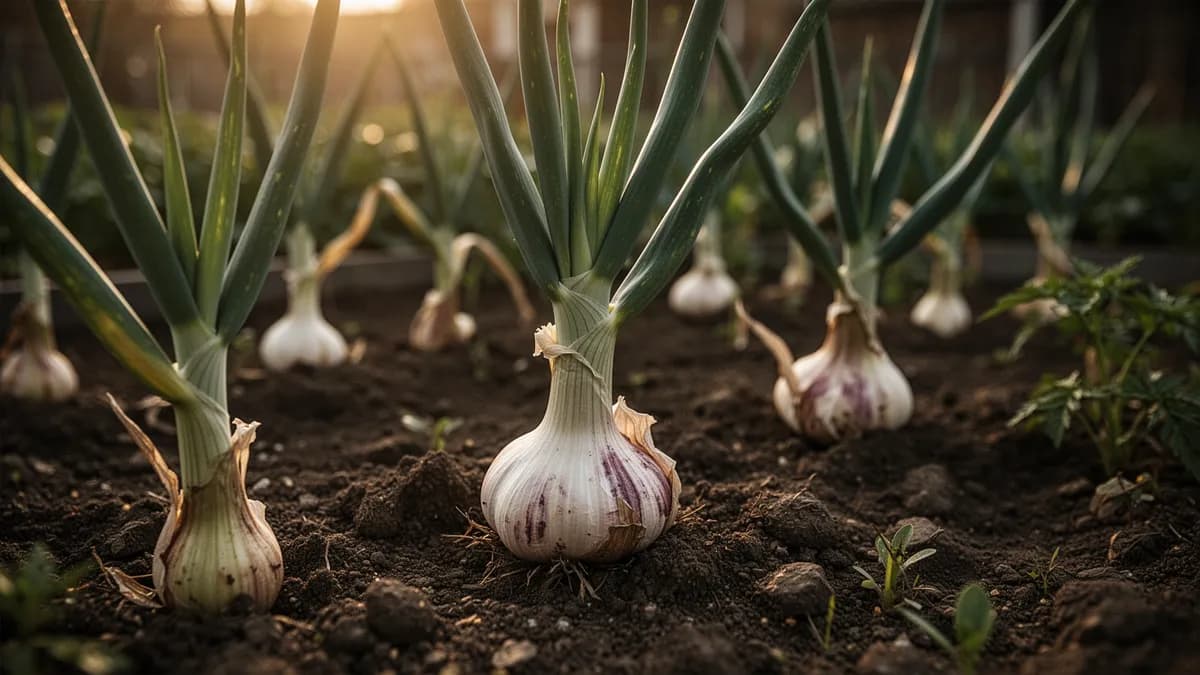
Una verdura de raíz con dientes aromáticos. El ajo es saludable y una especia básica en muchas cocinas.
Cuándo plantar Ajo
Plante dientes en otoño. 5 cm de profundidad, 10-15 cm aparte.
Tu año de Ajo
Ajustado a Zona 7 · temporada típica · la helada se va hacia el 2 abr y vuelve hacia el 1 nov
Planta Ajo Oct – Nov y cosecha Jun – Jul. Consulta los métodos de plantación y elige tu clima para adaptar los periodos.
Cómo cultivar Ajo
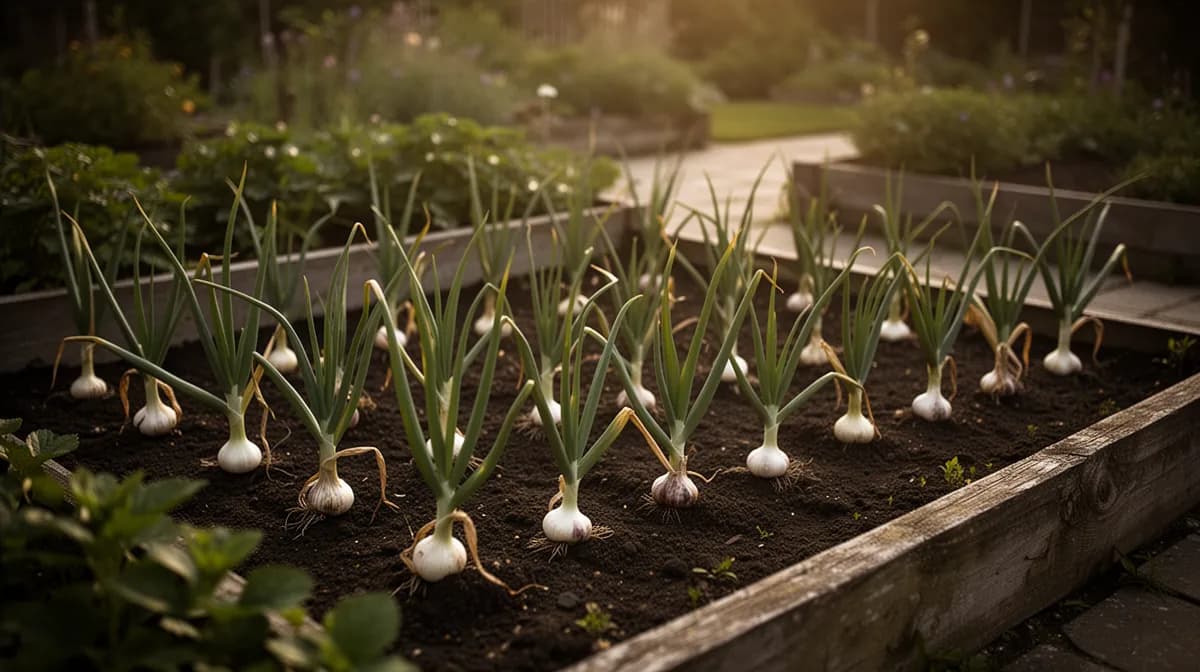
Plante ajo en otoño, 6-8 semanas antes de la primera helada. Plante dientes 5 cm de profundidad, 10-15 cm aparte.
El ajo necesita frío en invierno para buena formación de bulbos. Mantenga libre de malezas.
128 plantas caben en un bancal de 120 × 240 cm
Cada Ajo pide 15 cm de margen. El planificador guarda ese marco por ti — cada planta, cada bancal.
Los mejores vecinos de Ajo
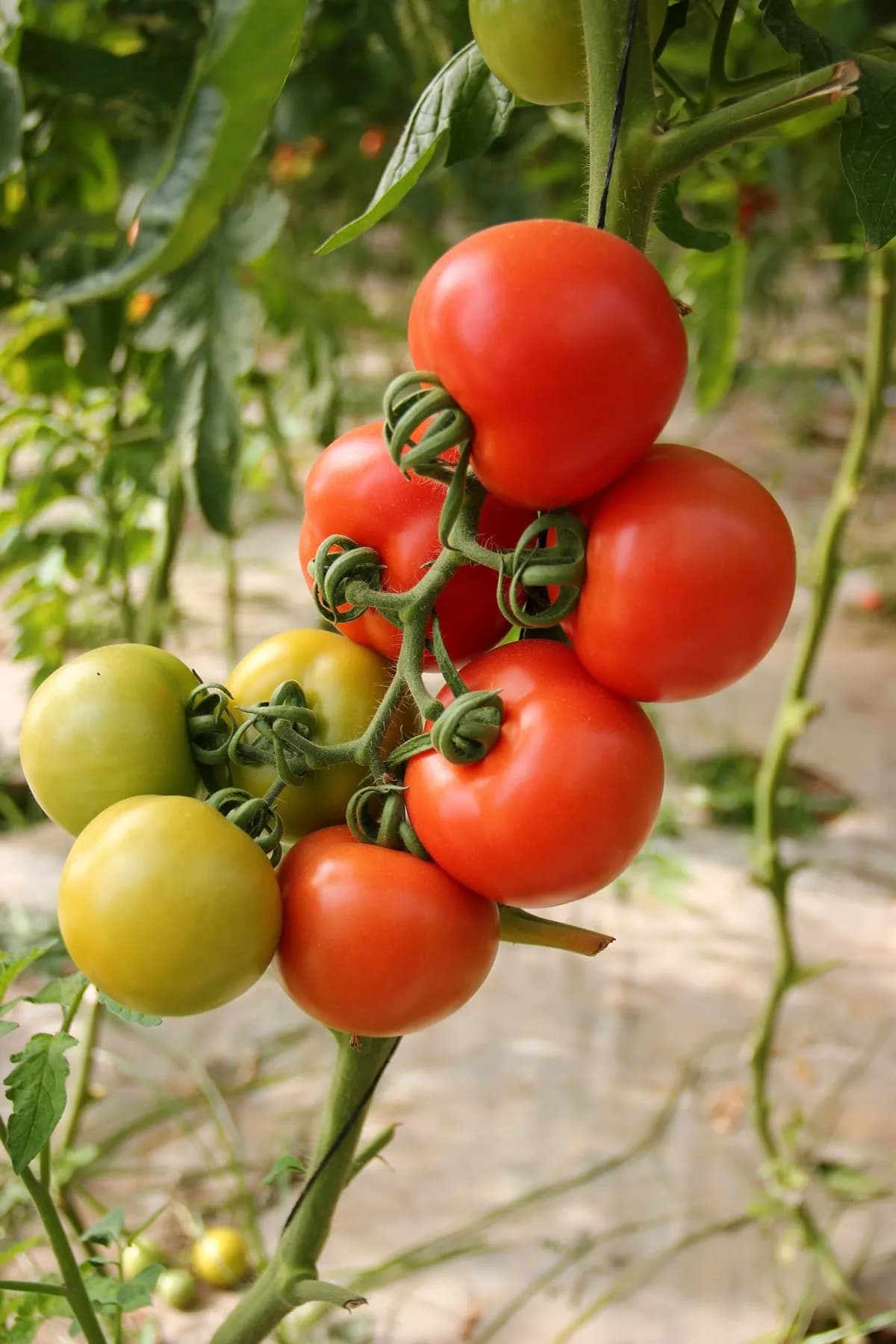
Rosas, tomates y col se benefician del ajo.
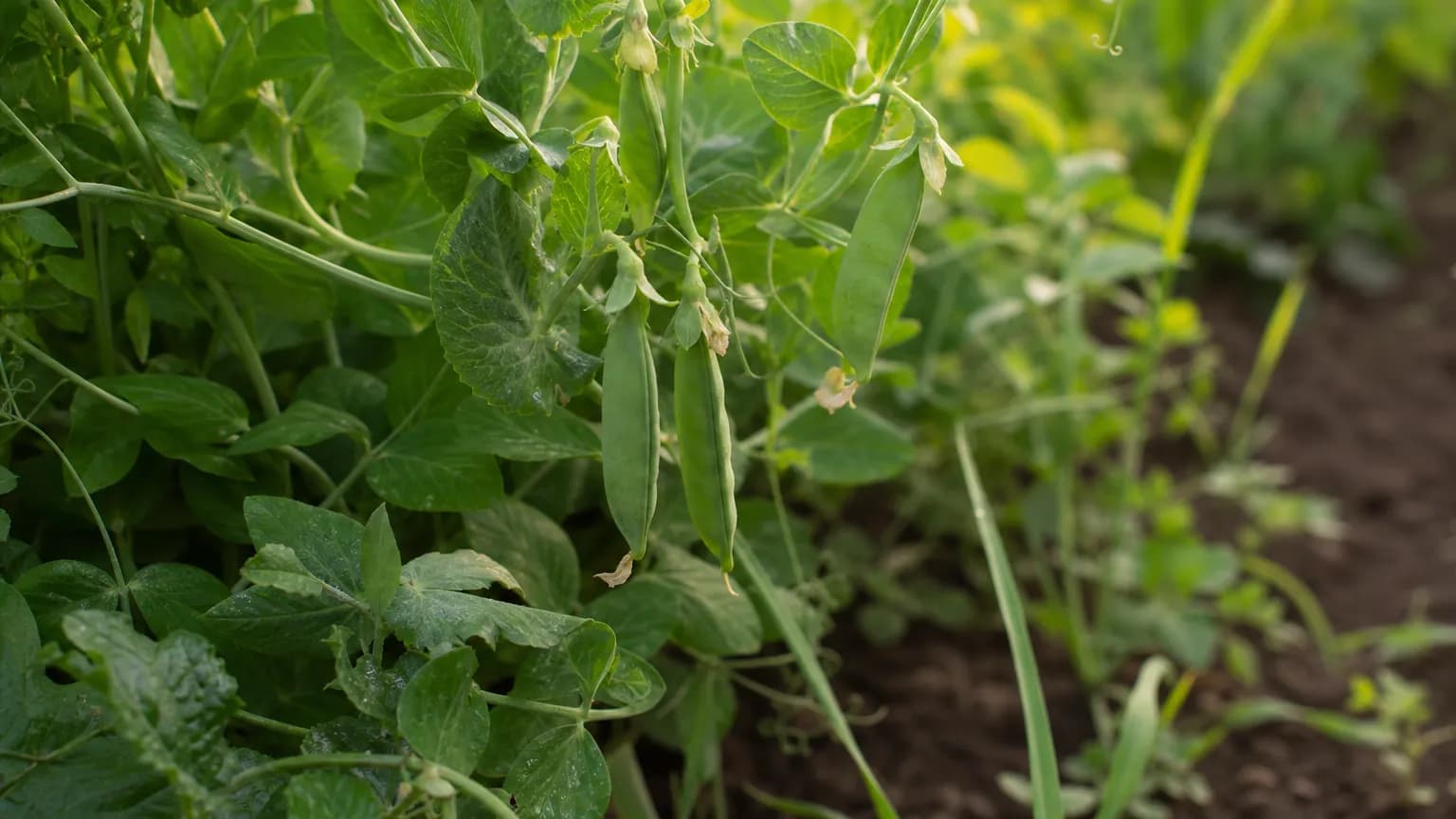
Tomate va a su lado. Guisantes no.
Saber de huerto de siempre, cotejado con la tabla real de Ajo — prueba cualquier planta que cultives.
Prueba Ajo en un bancal, aquí mismo
Un bancal real del planificador con Ajo ya plantado. Toca una planta compañera para colocarla y mira cómo responde la comprobación de vecinos: verde para buenos vecinos, rojo si hay conflicto.


Guías de cultivo relacionadas

Abónalo bien
Suelo bien drenado con pH 6,0-7,0. Incorpore compost.
Temperatura ideal
Compatibilidad de zonas de rusticidad
De la semilla a la cosecha, etapa por etapa
Plantación y enraizamiento
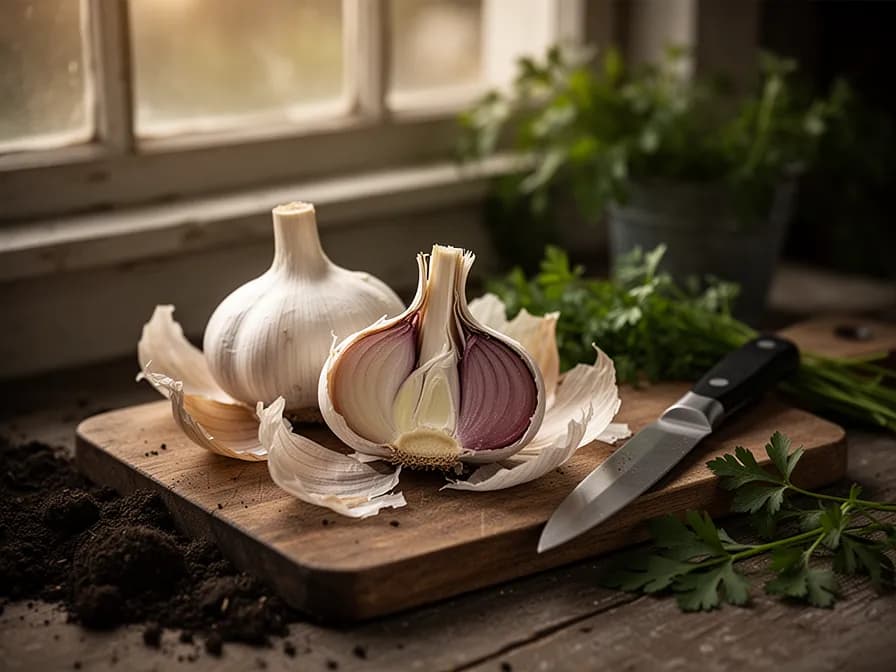
Los dientes individuales se plantan en otoño, 4-6 semanas antes de que el suelo se congele. Bajo la superficie, las raíces crecen de forma activa incluso mientras bajan las temperaturas del aire. Los dientes desarrollan un sistema radicular robusto de 10-15 cm antes de que el suelo se congele por completo, anclándolos para el invierno.
Dormancia invernal
El ajo entra en dormancia cuando el suelo se congela. El período crítico de vernalización ocurre ahora — 4-8 semanas de temperaturas por debajo de 4°C activan los cambios hormonales que hacen que un solo diente se diferencie en un bulbo con múltiples dientes. Sin este período frío, el ajo produce bulbos redondos en lugar de bulbos divididos en dientes.
Crecimiento primaveral
Los brotes verdes emergen a través del acolchado a medida que el suelo se calienta. El ajo entra en un período de rápido crecimiento foliar — cada hoja que produce corresponde a una capa envolvente del futuro bulbo. Las plantas crecen 30-60 cm con hojas planas tipo cuchilla. Esta fase vegetativa es crítica para construir la capacidad fotosintética que impulsará el desarrollo del bulbo.
Formación de escapos
Las variedades de cuello duro emiten un tallo floral central llamado escapo que se enrosca formando un bucle característico. Si se deja crecer, el escapo se endereza y produce un racimo de pequeños bulbillos en su extremo. Esta etapa señala que la planta está pasando del crecimiento foliar al desarrollo del bulbo.
Formación del bulbo
El bulbo bajo tierra se hincha rápidamente a medida que la planta canaliza toda su energía hacia abajo. Los dientes individuales se diferencian y se expanden dentro de las capas envolventes. Las hojas inferiores empiezan a secarse a medida que los nutrientes se movilizan hacia el bulbo. Esta es la fase de crecimiento final y crítica.
Cosecha y curado
El ajo está listo cuando el 40-50% de las hojas se han vuelto marrones. Los bulbos se extraen del suelo, se cepillan para limpiarlos y se curan durante 3-4 semanas en un espacio cálido, seco y bien ventilado. Durante el curado, las envolturas se vuelven apergaminadas, los cuellos se secan por completo y el sabor se concentra.
Planta los dientes a 5 cm de profundidad con la punta hacia arriba, separados 15 cm. Aplica 10-15 cm de acolchado de paja inmediatamente después de la plantación para aislar frente a los ciclos de hielo y deshielo y evitar que las plantas sean expulsadas del suelo.
Cuidar Ajo mes a mes
Qué hacer cada mes para tu Ajo
Octubre
Mes actualPrime planting month in most climates. Plant cloves 4-6 weeks before the ground freezes. Set cloves 5 cm deep and 15 cm apart, pointed end up. Apply 10-15 cm of straw mulch immediately after planting.
Ten claro qué hacer en tu huerto, cada mes
Un correo al empezar cada mes: qué sembrar, plantar y hacer ahora mismo — para tu Ajo y todo lo que crece alrededor. Más un breve curso inicial para esquivar los errores clásicos.
- Qué hacer ahora mismo
- Ajustado a tu temporada
- Curso inicial incluido
Cosechar Ajo
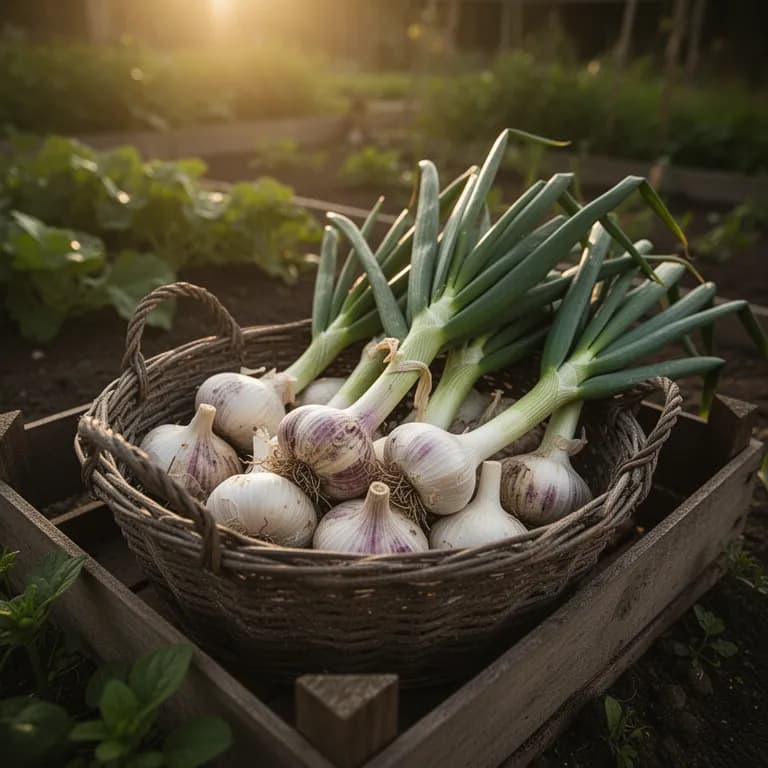
Coseche ajo cuando las hojas inferiores se vuelven marrones y las superiores aún están verdes. Deje secar.
se supone que plantas al comenzar el periodo — indica tu fecha real
A partir de bulbos, tubérculos o dientes
Del 40 al 50% de las hojas se han vuelto marrones.
Almacenamiento y conservación
Almacene en lugar fresco y seco. Puede congelarse o conservarse en aceite.
Qué falla — y cómo solucionarlo
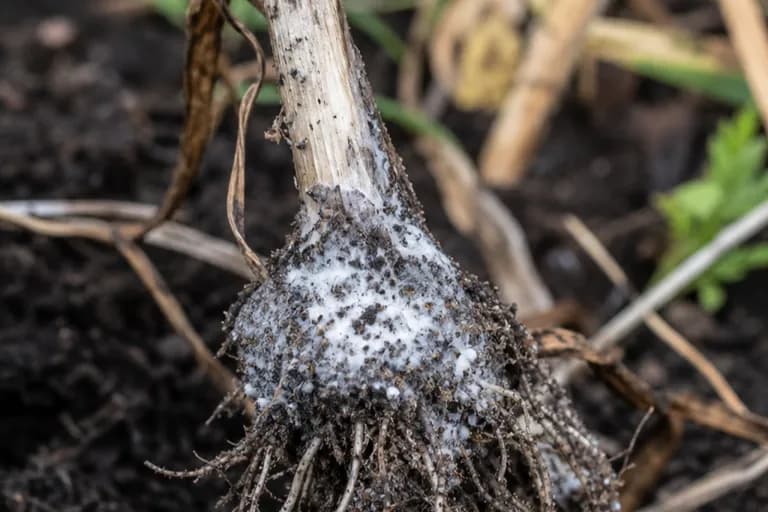
Mosca del ajo
PlagaLarvas en bulbos.
Solución de problemas comunes
Pudrición por exceso de humedad. Dientes pequeños por deficiencia de nutrientes.
Consejos de cultivo
- Plant garlic in fall, not spring. Garlic needs 4-8 weeks of cold temperatures below 4°C (40°F) to form proper cloves. Spring-planted garlic often produces small, poorly formed bulbs because it misses this critical vernalization period.
- Choose the right type for your climate: hardneck varieties for cold climates (zones 3-6) produce fewer but larger cloves and delicious scapes; softneck varieties for mild climates (zones 6-9) store much longer and can be braided.
- Always plant the largest cloves — small inner cloves produce small bulbs. Save only the biggest, healthiest outer cloves for planting and use the smaller ones in the kitchen. Each generation of selecting the best improves your strain.
- Mulch is non-negotiable. Apply 10-15 cm of straw or shredded leaf mulch immediately after planting. This insulates cloves from freeze-thaw heaving, retains moisture, and suppresses spring weeds — garlic's narrow leaves compete poorly with weeds.
- Remove scapes from hardneck varieties when they form one full curl — this simple step redirects the plant's energy from flower production to bulb sizing and can increase bulb weight by 10-30%. Bonus: scapes are delicious.
- Stop watering 2-3 weeks before harvest. This allows the outer wrapper layers to dry and tighten around the bulb, dramatically improving storage life. Bulbs harvested from wet soil have thin, fragile wrappers that tear easily.
- Never skip curing. Freshly dug garlic must be dried for 3-4 weeks in a warm (27°C / 80°F), dry, well-ventilated area out of direct sunlight. Uncured garlic has a short shelf life and muted flavor compared to properly cured bulbs.
- Buy seed garlic from reputable growers, not the grocery store. Grocery garlic may be treated with sprout inhibitors, could carry soil-borne diseases like white rot or nematodes, and may be a variety unsuited to your climate and day length.
Cultiva tu mejor Ajo — y todo lo que la rodea.
Empieza un plan gratis hoy. Diseña tus bancales, coloca tu Ajo y deja que PlotMyGarden gestione el momento, el espaciado, las asociaciones y los recordatorios de la semilla a la cesta.
Elige tu Ajo
Ajo Blanco
Ajo de cuello duro con dientes grandes.
Roja Española
Ajo de cuello duro con sabor excelente.
A single head of organic garlic costs $1-3 at the grocery store, while seed garlic costs $10-15 per bulb but yields 6-10 new bulbs. One $12 seed garlic bulb can produce 8 bulbs worth $8-24 in organic garlic in a single season. Over time, saving your own seed garlic makes the cost essentially free — a 3m row produces enough garlic for both eating and replanting, saving $50-100 annually compared to buying organic garlic year-round.
Recetas rápidas
Classic Garlic Bread
15 minThe ultimate comfort food side dish. Butter blended with fresh minced garlic and parsley spread onto crusty bread and toasted until golden and fragrant. Simple yet irresistible with pasta, soups, or salads.
6 ingredientesGarlic Scape Pesto
10 minA seasonal springtime treat that makes brilliant use of the curly flower stalks from hardneck garlic. Vibrant green with a mild garlic flavor, this pesto is perfect on pasta, pizza, grilled meat, or as a dip for crusty bread.
6 ingredientesRoasted Garlic Spread
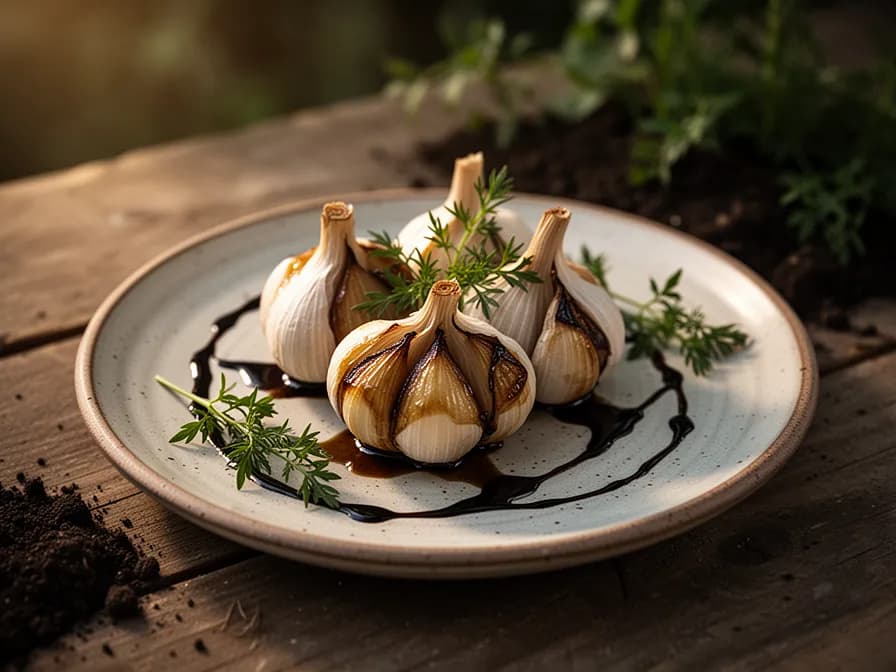
45 minWhole garlic heads roasted until the cloves turn golden and butter-soft. The resulting spread is sweet, nutty, and mellow — a world away from raw garlic's bite. Perfect on crusty bread, mixed into mashed potatoes, or stirred into sauces.
6 ingredientesUsos culinarios
Crudo, cocido, asado o conservado en aceite. Especia básica.
Qué contiene
Beneficios para la salud
- Allicin, released when garlic is crushed or chopped, has potent antimicrobial properties effective against a wide range of bacteria, viruses, and fungi — studies show it can inhibit the growth of antibiotic-resistant bacteria.
- Regular garlic consumption has been shown to reduce blood pressure by an average of 7-8 mmHg systolic and 5 mmHg diastolic, comparable to some prescription medications.
- Garlic may lower total cholesterol by 10-15% and LDL cholesterol specifically, while potentially raising beneficial HDL cholesterol — supporting overall cardiovascular health.
- Contains organosulfur compounds that studies suggest may reduce the risk of certain cancers, particularly stomach and colorectal cancers, when consumed regularly as part of a varied diet.
- Aged garlic extract has been shown to boost immune function by enhancing the activity of natural killer cells and other immune cells, potentially reducing the severity and duration of colds and flu.
- Rich in manganese (23% DV per 28g), vitamin B6 (17% DV), vitamin C, and selenium — a powerful combination of nutrients supporting bone health, brain function, immune defense, and antioxidant protection.
De dónde viene Ajo
Garlic originated in the mountainous regions of Central Asia — modern-day Kyrgyzstan, Tajikistan, Turkmenistan, and Uzbekistan — where wild garlic species still grow today. From these origins, garlic spread along ancient trade routes in both directions: westward through the Middle East and Mediterranean, and eastward into China and the Indian subcontinent. Archaeological evidence confirms garlic cultivation dating back over 5,000 years, with clay models of garlic bulbs found in Egyptian tombs dating to 3700 BCE.
Ancient civilizations revered garlic as both food and medicine. The Egyptians fed it to pyramid laborers for strength, placed clay bulbs in pharaohs' tombs, and used it medicinally. Greek and Roman soldiers consumed garlic before battle for courage and stamina — Hippocrates prescribed it for a wide range of ailments. In ancient India, garlic was valued in Ayurvedic medicine but avoided by certain religious sects who believed its stimulating properties interfered with meditation. Chinese medicine has used garlic for over 4,000 years to treat respiratory infections and digestive problems.
Garlic arrived in the Americas with Spanish and Portuguese colonists in the 1500s and quickly naturalized. For centuries, garlic was associated with working-class and immigrant cuisine in English-speaking countries and was derided by upper-class cooks. It was not until the mid-20th century, with the rise of interest in Mediterranean and Asian cooking, that garlic gained mainstream acceptance in American and British kitchens. Today, global garlic production exceeds 28 million tonnes annually, and garlic is recognized by modern science for its cardiovascular, antimicrobial, and immune-boosting properties — validating millennia of traditional medicinal use.
Ajo: ¿sabías que?
Datos fascinantes sobre Ajo
Garlic has been cultivated for over 5,000 years, making it one of the oldest known cultivated plants. Ancient Egyptian records show that garlic was fed to the workers who built the Great Pyramids to boost their strength and endurance.
Ajo: preguntas frecuentes
¿Cuándo debo plantar Ajo?
¿Cuáles son buenas plantas acompañantes para Ajo?
¿En qué zonas de rusticidad puede crecer Ajo?
¿Cuánto sol necesita Ajo?
¿A qué distancia debo espaciar Ajo?
¿Qué plagas y enfermedades afectan a Ajo?
¿Cómo almaceno Ajo después de la cosecha?
¿Cuáles son las mejores variedades de Ajo para cultivar?
¿Qué suelo necesita Ajo?
When should I plant garlic?
What is the difference between hardneck and softneck garlic?
Why did my garlic not form cloves?
Should I remove garlic scapes?
How do I know when garlic is ready to harvest?
Can I plant garlic from the grocery store?
Acabas de leer la teoría. Ahora cultívala en piloto automático.
Todo lo que hace que Ajo sea delicado — el momento, el espaciado, las asociaciones, la ventana de cosecha — es justo lo que PlotMyGarden resuelve por ti, para cada planta de tu huerto.
Un plan que conoce tu clima
Indica tu ubicación una vez. Recibe fechas de siembra, abonado y cosecha basadas en tu última helada real y el pronóstico en vivo — sin adivinar con un sobre genérico.
De la sección “Cuándo plantar”Planificador de bancales de arrastrar y soltar
Diseña bancales sobre una cuadrícula. Cada planta encaja con su espaciado correcto y ves toda la temporada antes de gastar un céntimo en semillas.
De la sección “Cultivo”Conflictos de asociación, detectados a tiempo
Más de 200 buenas y malas combinaciones comprobadas en vivo mientras plantas — para que un error que arruine la temporada nunca llegue a la tierra.
De la sección “Asociaciones”Recordatorios que sí vas a seguir
“Riega las judías.” “Recoge hoy antes de que se pase.” Oportunos, concretos y ligados a las plantas que de verdad cultivas.
De la sección “Cosecha”Escalonado, programado
¿Quieres cosechar seis semanas en vez de seis días? Reparte tus siembras automáticamente y te avisa cuando toca el siguiente lote.
De la sección “Cuándo plantar”Un registro que se vuelve más listo
Cada cosecha que registras le enseña tu huerto. El plan del año que viene parte de lo que de verdad funcionó en tu suelo, no en un manual.
De la sección “Resumen”Planta estos junto a Ajo
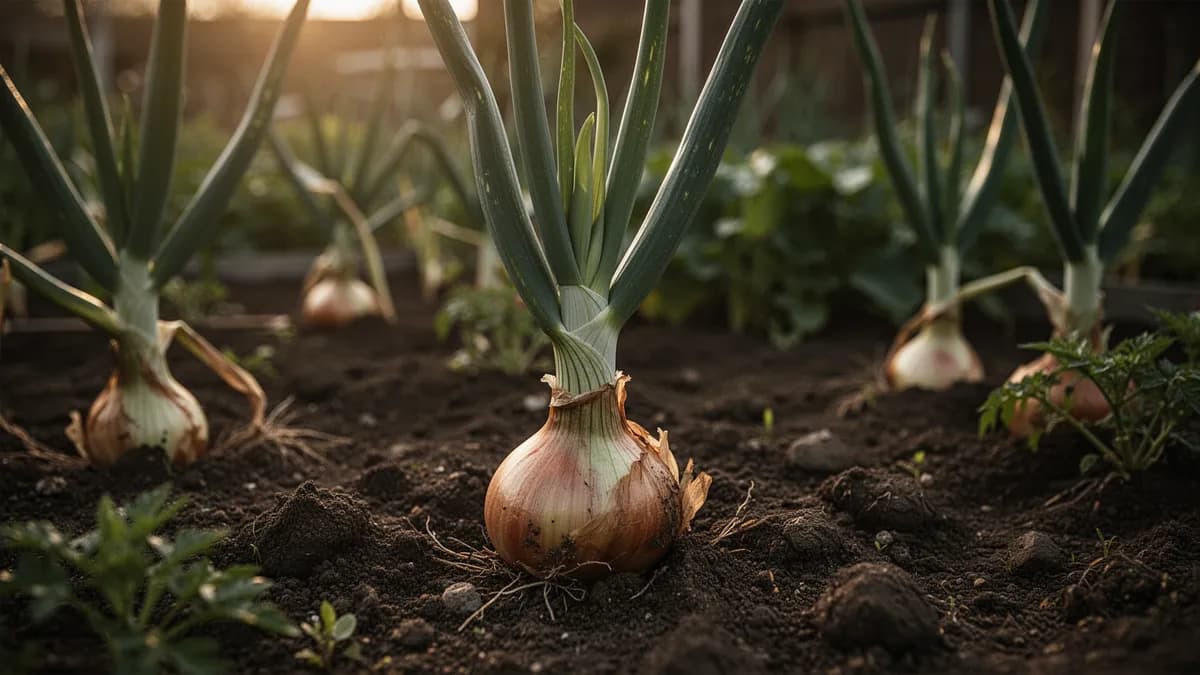
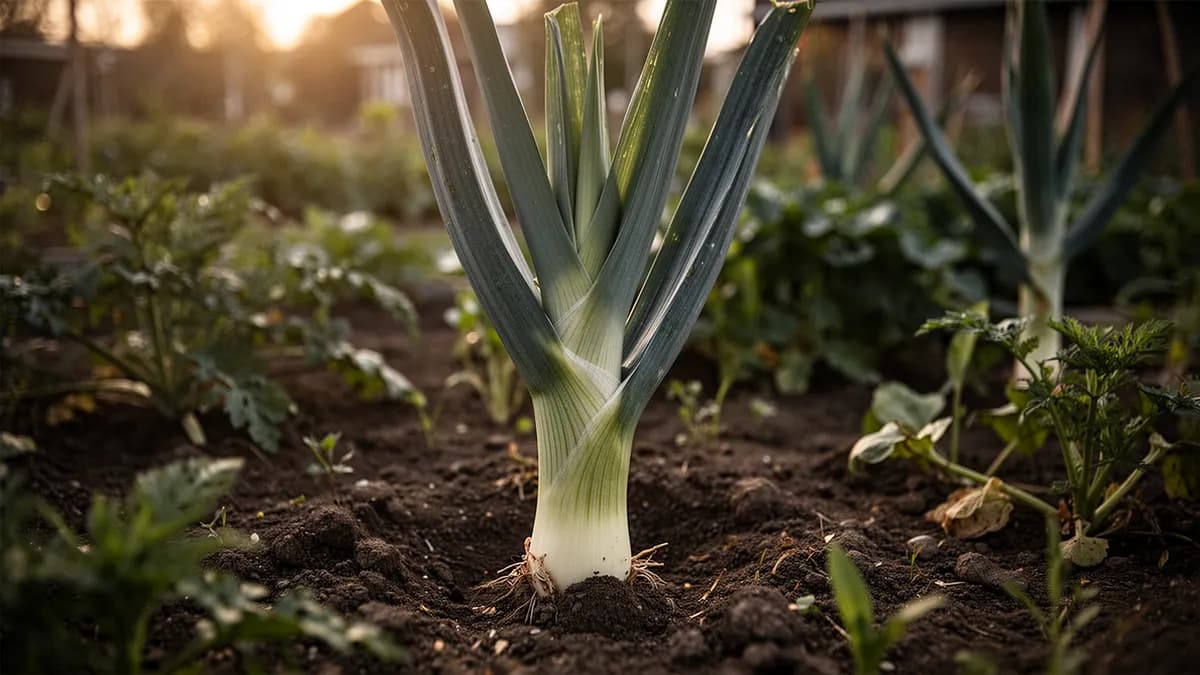
Más Aliáceas
Mantén Ajo lejos de estos
Diseños de jardín con Ajo
Cultiva tu mejor Ajo — y todo lo que la rodea.
Empieza un plan gratis hoy. Diseña tus bancales, coloca tu Ajo y deja que PlotMyGarden gestione el momento, el espaciado, las asociaciones y los recordatorios de la semilla a la cesta.