Quingombó
Un cultivo de temporada cálida con vainas comestibles.





En esta páginaResumen
Conoce Quingombó
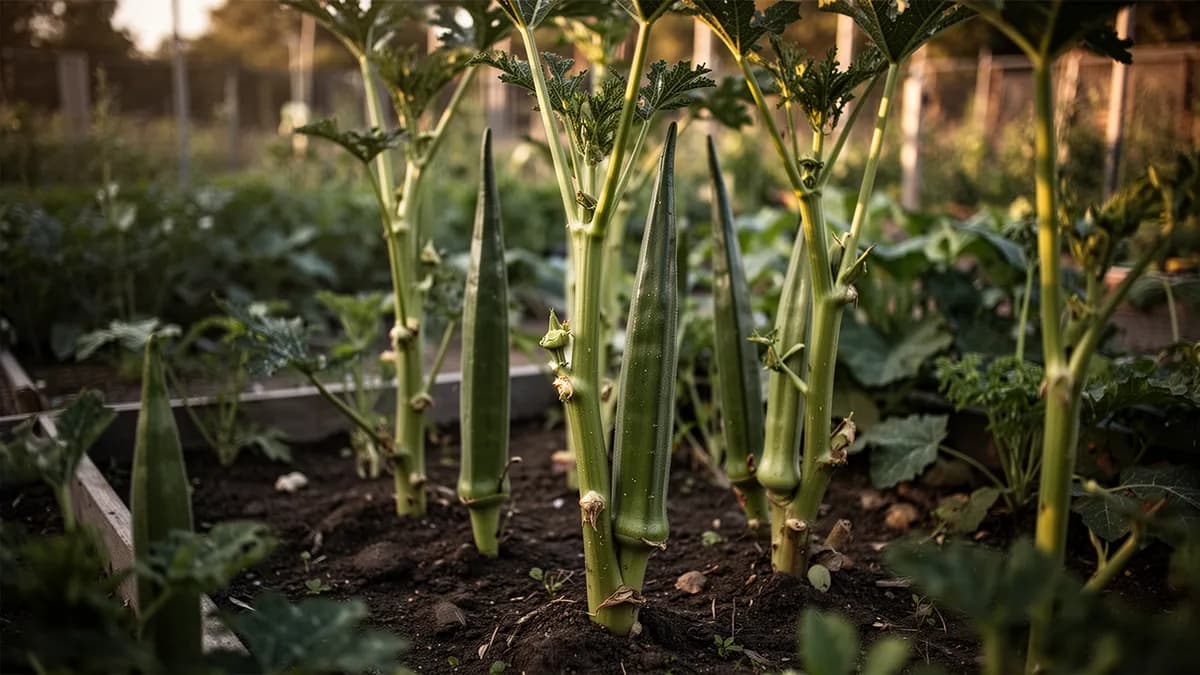
Un cultivo de temporada cálida con vainas comestibles. El quingombó ama el calor.
Cuándo plantar Quingombó
Remoje las semillas en agua tibia durante 12 horas antes de sembrar para acelerar la germinación. Siembre directamente en el exterior cuando el suelo esté cálido.
Tu año de Quingombó
Ajustado a Zona 7 · temporada típica · la helada se va hacia el 2 abr y vuelve hacia el 1 nov
Planta Quingombó May – Jun y cosecha Jul – Oct. Consulta los métodos de plantación y elige tu clima para adaptar los periodos.
Cómo cultivar Quingombó
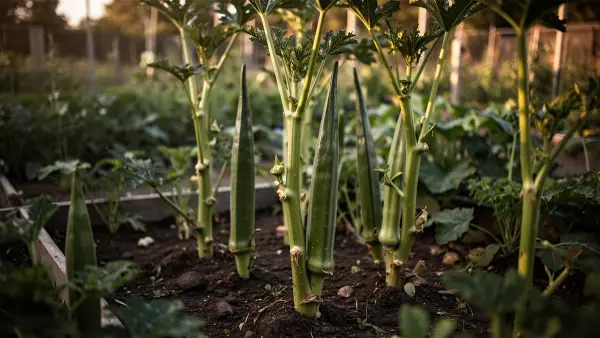
Elija un lugar soleado con suelo bien drenado y fértil, con pH 6,0-7,5. Enmiende con compost antes de plantar.
Siembre semillas 2 cm de profundidad y 30 cm de separación después de la última helada, cuando el suelo supere los 21°C. Para acelerar la germinación, remoje las semillas durante la noche.
Riegue de forma regular pero evite el encharcamiento. Abone con fertilizante equilibrado cada 4 semanas. El quingombó crece con rapidez en climas cálidos.
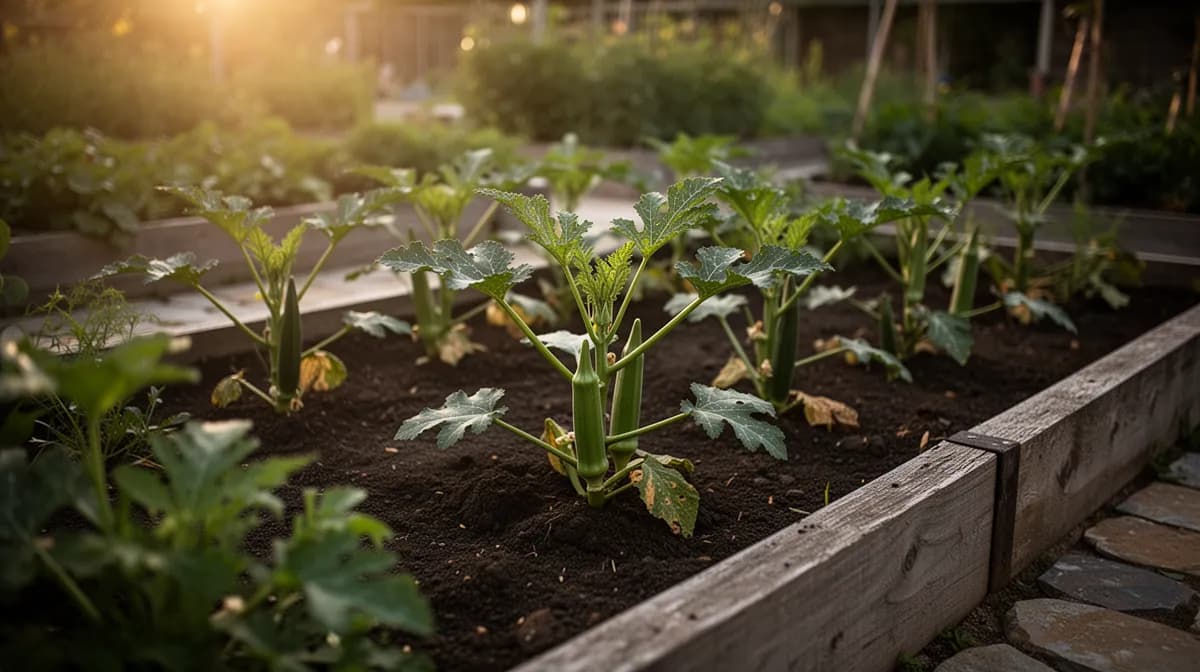
10 plantas caben en un bancal de 120 × 240 cm
Cada Quingombó pide 45 cm de margen. El planificador guarda ese marco por ti — cada planta, cada bancal.
Los mejores vecinos de Quingombó
Se asocia bien con melones, pepinos y pimientos. Evite plantar junto a tomates, que compiten por nutrientes.
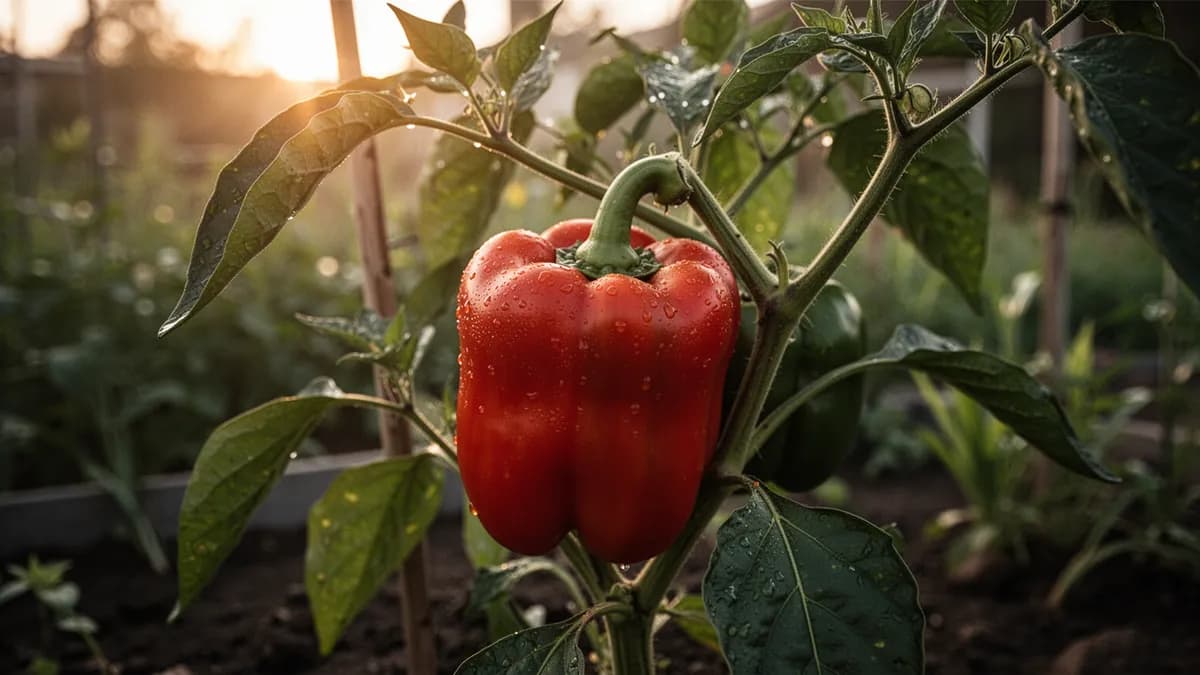
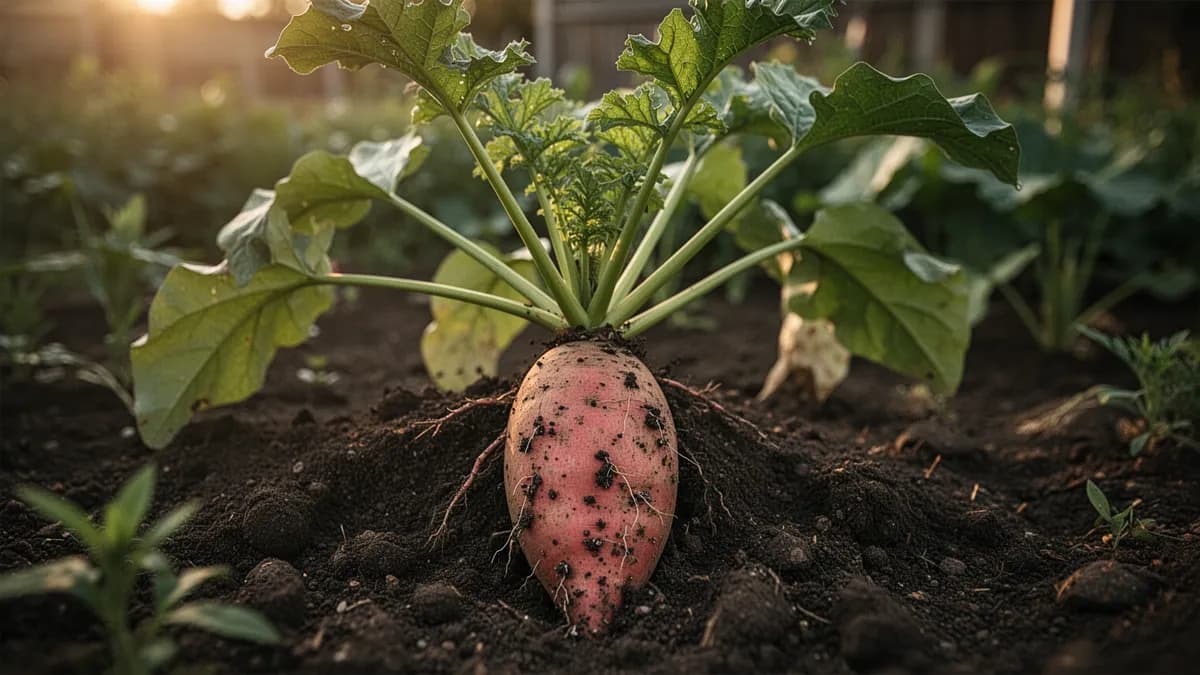
Pimiento va a su lado. Batata no.
Saber de huerto de siempre, cotejado con la tabla real de Quingombó — prueba cualquier planta que cultives.
Prueba Quingombó en un bancal, aquí mismo
Un bancal real del planificador con Quingombó ya plantado. Toca una planta compañera para colocarla y mira cómo responde la comprobación de vecinos: verde para buenos vecinos, rojo si hay conflicto.


Guías de cultivo relacionadas
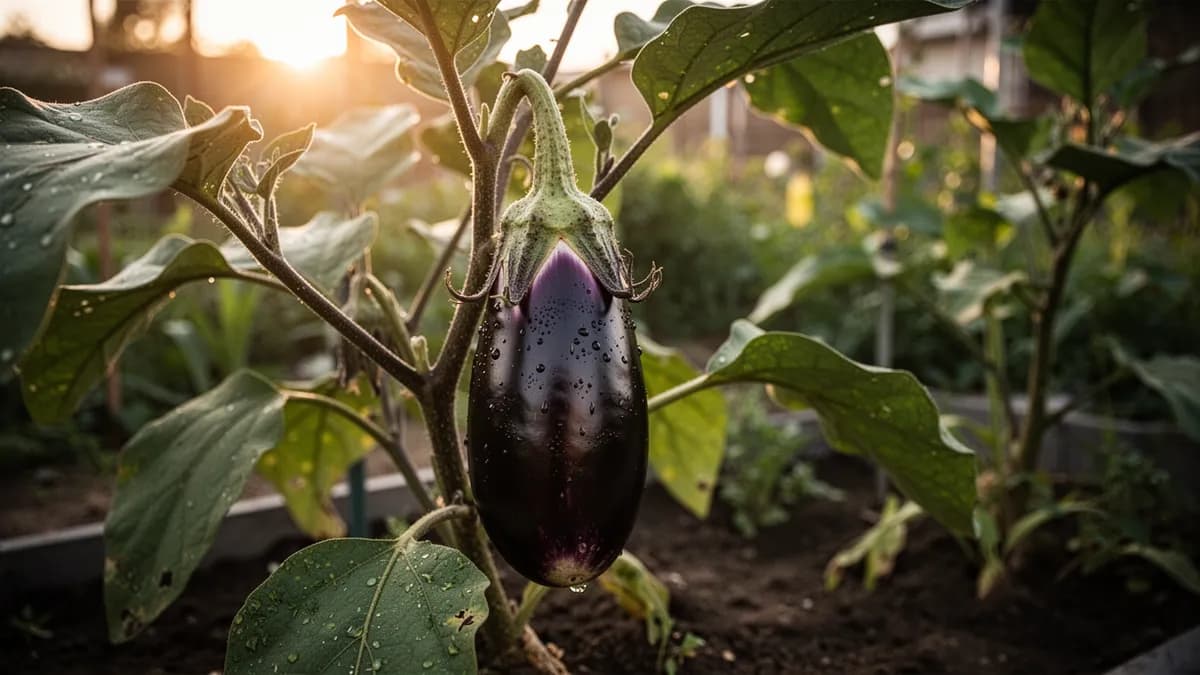
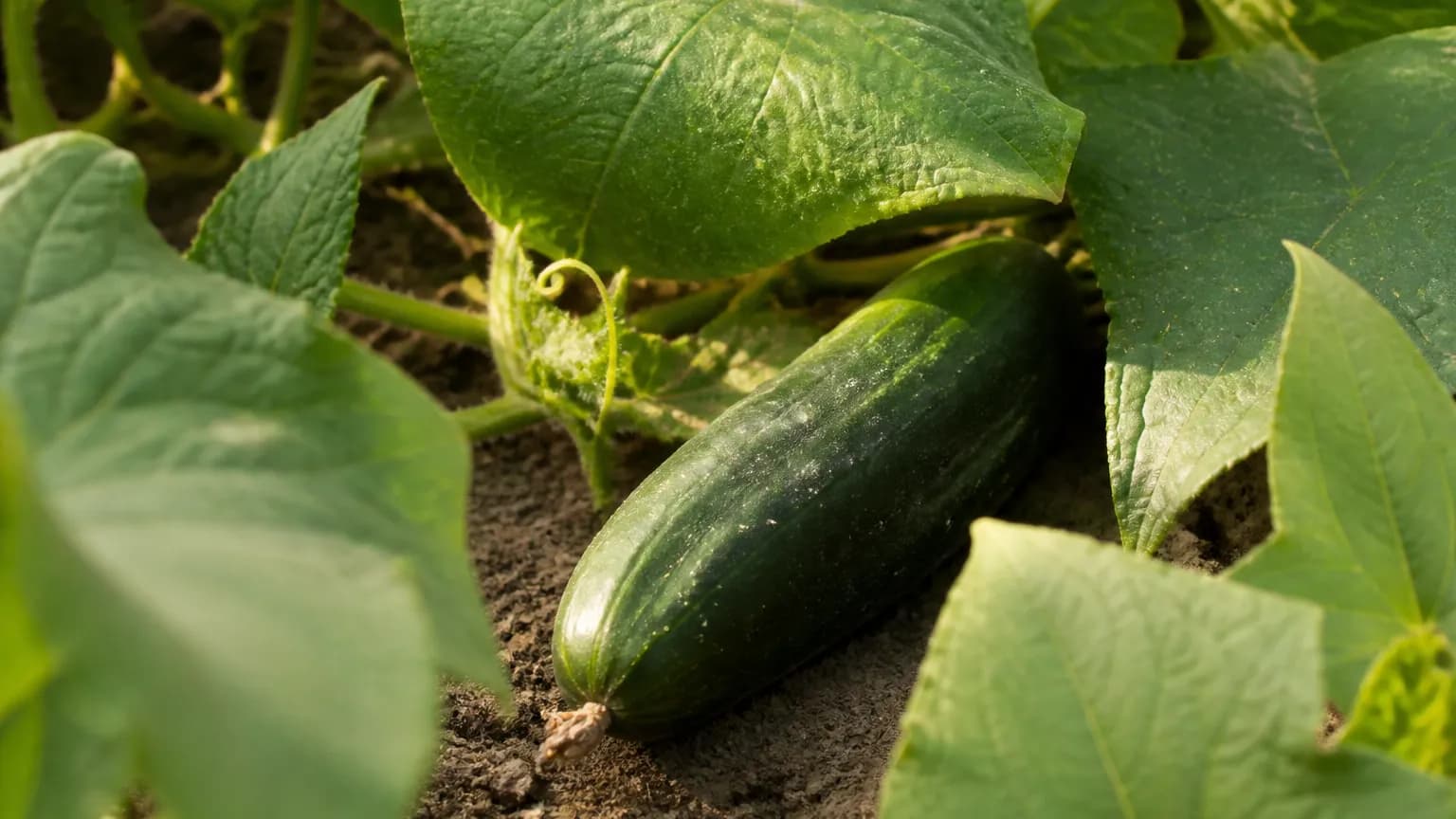
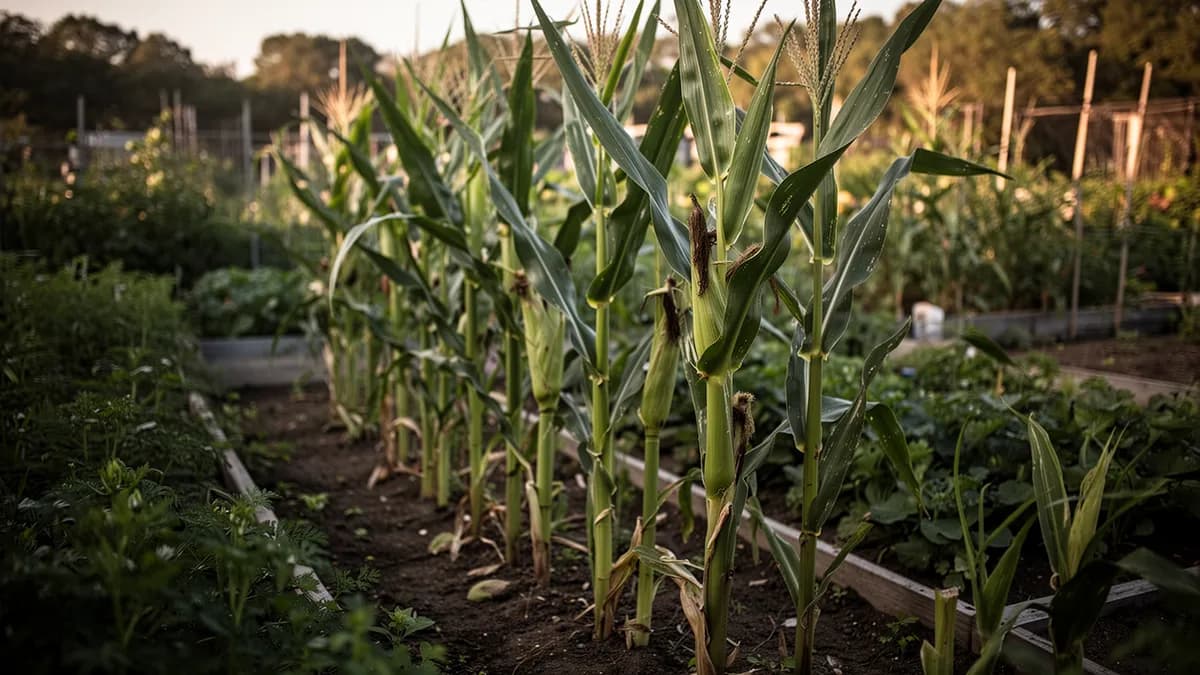
Abónalo bien
Prefiere suelo arcillo-arenoso, bien drenado y rico en materia orgánica, con pH 6,0-7,5. Abone al momento de plantar con fertilizante 10-10-10 y repita cada mes.
Temperatura ideal
Compatibilidad de zonas de rusticidad
De la semilla a la cosecha, etapa por etapa
Inicio de siembra
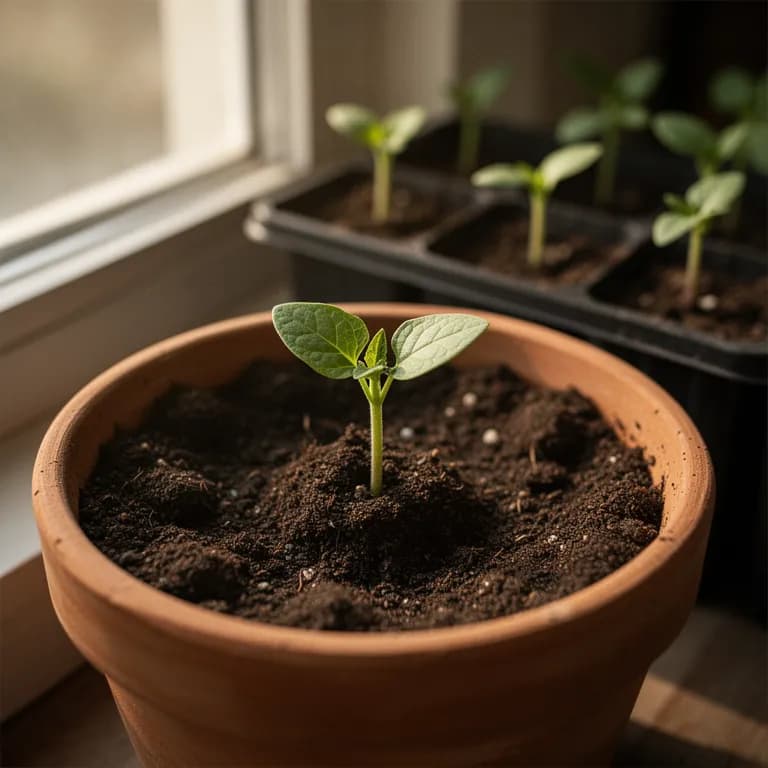
Las semillas germinan en suelo cálido después de remojarlas durante la noche para ablandar la cubierta dura. Primero emerge una radícula blanca, seguida por los cotiledones redondeados que atraviesan la superficie. La germinación requiere temperaturas del suelo de al menos 18°C y tarda 7-14 días.
Crecimiento de plántulas
Se desarrollan las hojas verdaderas con la característica forma lobulada, parecida a la del arce. El tallo se engrosa y el sistema de raíz pivotante profunda se establece rápidamente. Las plántulas crecen lentamente al principio, pero se aceleran a medida que las temperaturas superan los 27°C.
Crecimiento vegetativo
Las plantas crecen rápidamente con calor intenso, desarrollando un tallo central robusto con hojas grandes y profundamente lobuladas. La planta puede aumentar de 5 a 10 cm de altura por semana durante el pico del verano. Se pueden retirar las hojas inferiores para mejorar la circulación del aire.
Floración
Aparecen llamativas flores color amarillo crema con centros granate oscuro en las axilas de las hojas; cada flor se parece a una pequeña hibisco y solo se abre durante un día. Las flores son autopolinizantes, pero se benefician de las visitas de las abejas para mejorar la formación de vainas.
Desarrollo de vainas
Las vainas se forman rápidamente a partir de las flores marchitas y crecen erguidas a lo largo del tallo principal. Con calor intenso pueden crecer 2-3 cm por día y alcanzar el tamaño cosechable de 5-8 cm en 3-5 días después de la floración. La planta sigue produciendo nuevas flores y vainas al mismo tiempo.
Cosecha máxima
La planta entra en un modo de producción sostenida, floreciendo y fructificando al mismo tiempo durante 8-12 semanas. Una planta sana puede producir 2-4 vainas por día durante el tiempo más caluroso. La producción se ralentiza cuando las temperaturas nocturnas bajan de 15°C en otoño.
Remoja las semillas en agua tibia durante 12-24 horas antes de sembrarlas; esto es fundamental para una germinación confiable. Mantén la temperatura del suelo entre 24 y 27°C usando una manta térmica si las inicias en interior.
Cuidar Quingombó mes a mes
Qué hacer cada mes para tu Quingombó
Octubre
Mes actualFinal harvests in most zones as nighttime temperatures drop below 15°C (60°F). Collect dried seed pods for next year. Pull spent plants and compost healthy material. Note variety performance for planning.
Ten claro qué hacer en tu huerto, cada mes
Un correo al empezar cada mes: qué sembrar, plantar y hacer ahora mismo — para tu Quingombó y todo lo que crece alrededor. Más un breve curso inicial para esquivar los errores clásicos.
- Qué hacer ahora mismo
- Ajustado a tu temporada
- Curso inicial incluido
Cosechar Quingombó
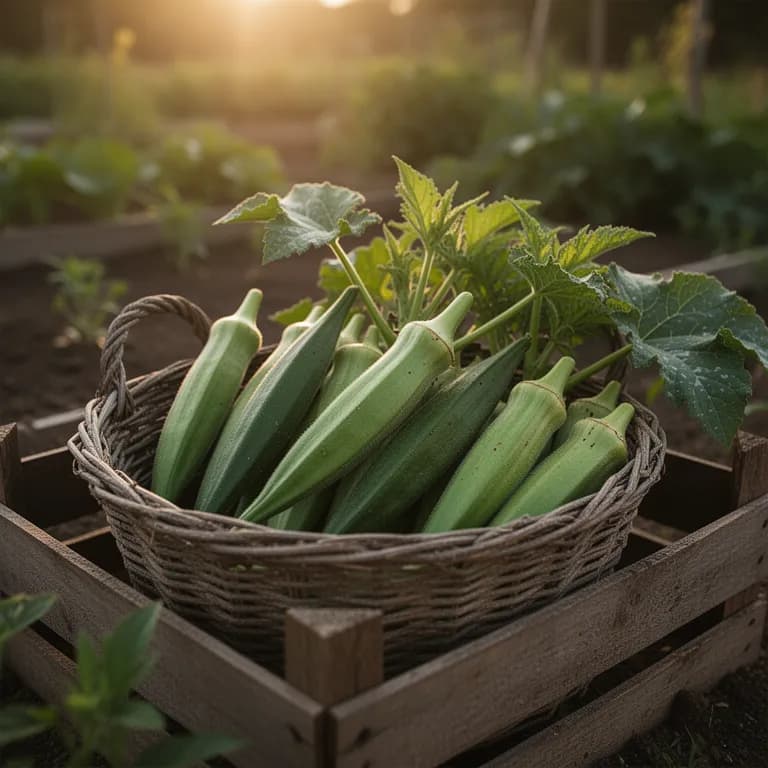
Coseche las vainas cuando tienen entre 5 y 10 cm de largo, antes de que se endurezcan. Corte con tijeras cada 2-3 días durante la temporada productiva.
se supone que plantas al comenzar el periodo — indica tu fecha real
Cosecha las vainas cuando midan 5-8 cm y sigan tiernas.
Almacenamiento y conservación
Conserve en bolsa de plástico en el refrigerador hasta 3 días. Para mayor duración, blanquee y congele. También puede encurtir o deshidratar.
Qué falla — y cómo solucionarlo
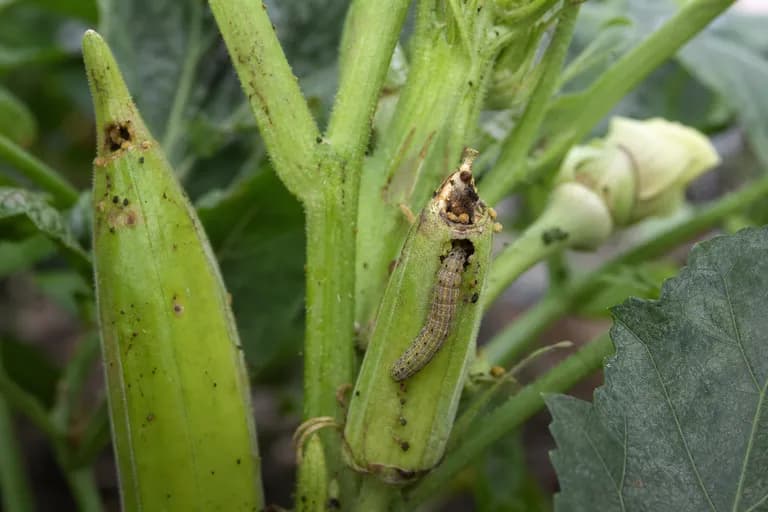
Pulgones
PlagaColonias en brotes tiernos que causan deformaciones y hojas pegajosas.
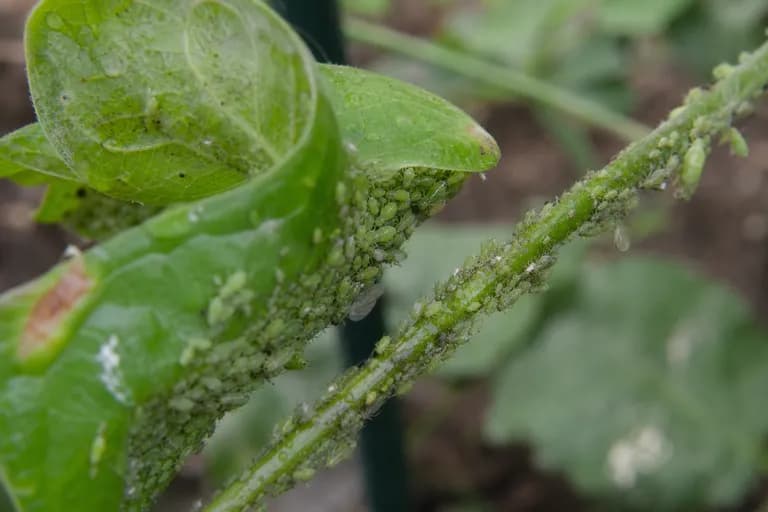
Ácaros
PlagaTelarañas finas y punteado amarillo en hojas.
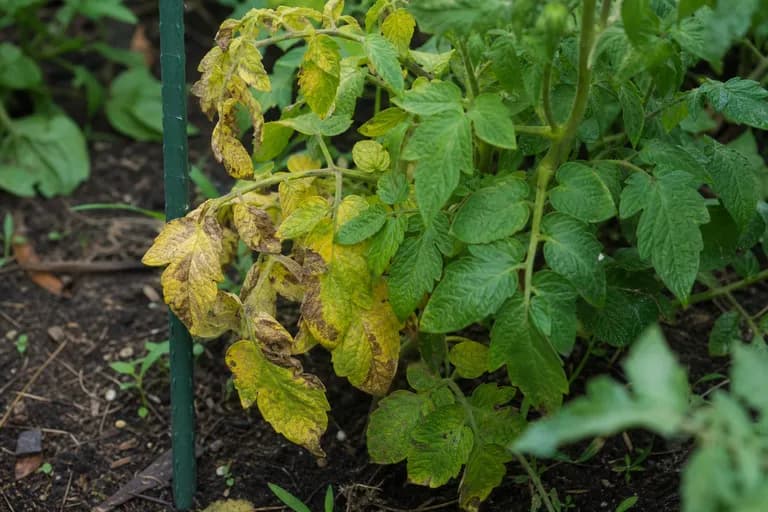
Marchitez por Fusarium
EnfermedadAmarillamiento y marchitamiento de la planta.
Solución de problemas comunes
Las vainas se endurecen si no se cosechan a tiempo. El exceso de nitrógeno favorece el follaje en lugar de la producción. El frío retrasa la germinación.
Consejos de cultivo
- Soaking seeds is non-negotiable. Okra has one of the hardest seed coats of any garden vegetable. Soak in warm water for 12-24 hours or nick with a file — without this step, germination rates plummet to 30-40%.
- Do not rush planting. Okra planted in cold soil will rot, not grow. Wait until soil temperatures are genuinely warm — at least 18°C (65°F), and ideally 24°C (75°F). Use black plastic mulch to warm beds 2-3 weeks early.
- Full sun is absolutely essential — a minimum of 8 hours of direct sunlight daily. Okra planted in partial shade produces tall, spindly plants with few pods and is more prone to disease.
- Water deeply but infrequently once plants are established. Okra's deep taproot makes it surprisingly drought-tolerant, but consistent moisture of 2.5 cm per week during flowering and pod production maximizes yields.
- Harvest daily during peak production without exception. Pods can grow from harvestable to woody in 24-48 hours during hot weather. A pod that is tender at breakfast may be tough by dinner.
- Remove all overgrown woody pods from the plant even though they are no longer edible. Pods left to mature signal the plant to stop flowering and shift energy to seed production, dramatically reducing your harvest.
- Cut back the main stem by one-third in late summer if your growing season is long enough. This forces new side branching and a second flush of pods in early autumn, extending your harvest by several weeks.
- Wear gloves and long sleeves when working with okra. The tiny spines (trichomes) on leaves, stems, and pods cause irritating skin rashes in most people. Morning harvesting when dew is present helps soften the spines.
Cultiva tu mejor Quingombó — y todo lo que la rodea.
Empieza un plan gratis hoy. Diseña tus bancales, coloca tu Quingombó y deja que PlotMyGarden gestione el momento, el espaciado, las asociaciones y los recordatorios de la semilla a la cesta.
Elige tu Quingombó
Clemson Spineless
Variedad clásica sin espinas, vainas verdes. Madura en 60 días.
Burgundy
Vainas de color burdeos intenso, decorativas y sabrosas. Madura en 60 días.
Baby Bubba
Variedad compacta ideal para jardines pequeños. Madura en 53 días.
A single okra plant costing $2-4 (or just pennies if grown from seed) can produce 50-100 pods over a season, with fresh okra selling for $4-8 per pound at grocery stores and farmers markets. Growing just 4-6 plants can save $40-80 per season on fresh okra alone. The savings multiply dramatically if you factor in the cost of specialty items like pickled okra ($6-10 per jar) or frozen breaded okra ($4-6 per bag) — all easily made from your home harvest.
Recetas rápidas
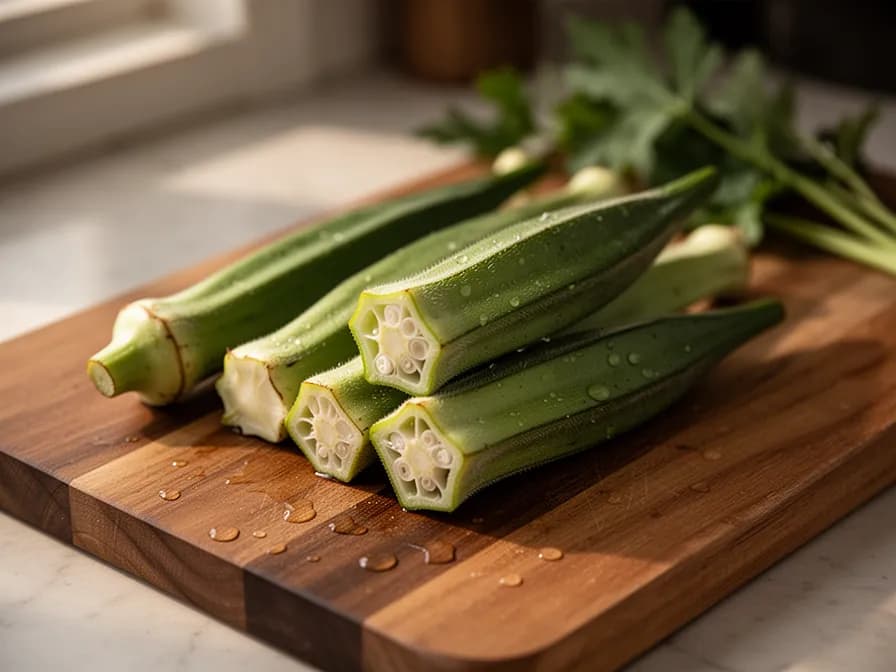
Southern Fried Okra
20 minThe quintessential Southern side dish — tender okra slices coated in seasoned cornmeal and fried to golden, crunchy perfection. High-heat frying eliminates any sliminess and creates an irresistibly crispy coating.
7 ingredientesClassic Chicken and Okra Gumbo
60 minA rich, deeply flavored Louisiana stew where okra serves as both vegetable and natural thickener. The holy trinity of onion, celery, and bell pepper forms the aromatic base for this iconic comfort dish.
10 ingredientesRoasted Okra with Lemon and Garlic
25 minWhole okra pods roasted at high heat until slightly charred and tender — the simplest way to enjoy okra with zero sliminess. A squeeze of lemon and a sprinkle of flaky salt make this an addictive side dish.
7 ingredientesUsos culinarios
Ideal para guisos como el gumbo criollo, frito rebozado, al vapor o en escabeche. Actúa como espesante natural en sopas.
Qué contiene
Beneficios para la salud
- Okra's soluble fiber (mucilage) forms a gel in the digestive tract that slows sugar absorption, helping to regulate blood glucose levels — studies suggest regular okra consumption may benefit people with type 2 diabetes.
- Rich in vitamin C, providing 26% of the daily value per 100g, supporting immune function, wound healing, and collagen synthesis for healthy skin.
- Excellent source of vitamin K, providing about 40% of the daily value per 100g — essential for proper blood clotting and bone metabolism.
- Contains folate (B9), critical for DNA synthesis and cell division, making okra particularly important during pregnancy for preventing neural tube defects.
- The antioxidants in okra, including polyphenols, flavonoids, and vitamins A and C, help combat oxidative stress and may reduce the risk of chronic inflammatory conditions.
- High fiber content (3.2g per 100g) supports digestive health by promoting regular bowel movements, feeding beneficial gut bacteria, and supporting a healthy microbiome.
De dónde viene Quingombó
Okra (Abelmoschus esculentus) is believed to have originated in the Ethiopian highlands of East Africa, though some botanists place its origin in West Africa or South Asia. Wild relatives of okra still grow in parts of Ethiopia, Eritrea, and Sudan. The plant was cultivated in ancient Egypt by at least the 12th century, where it was prized for its ability to thrive in extreme heat and its value as a food, fiber, and medicinal plant. Arab traders spread okra along trade routes through North Africa and into the Middle East, where it became a staple ingredient in stews and soups.
Okra arrived in the Americas through the transatlantic slave trade in the 1600s and 1700s, carried by enslaved West Africans who brought seeds of familiar food plants to the New World. The plant became deeply embedded in the cuisines of the American South, the Caribbean, and Brazil — regions where the hot, humid climate was ideal for its cultivation. Gumbo, the iconic dish of Louisiana Creole cuisine, takes its name from 'ki ngombo,' the Bantu word for okra, and the dish itself evolved from West African okra-based stews. Okra became one of the most important culinary links connecting African, Caribbean, and Southern American food traditions.
Today, okra is grown commercially across tropical and subtropical regions worldwide. India is by far the largest producer, growing over 6 million tonnes annually — roughly 60% of the global supply — followed by Nigeria, Sudan, and other West African nations. In the United States, okra cultivation is concentrated in the southeastern states from Texas to the Carolinas, where hot summers provide ideal growing conditions. Modern breeding programs have developed spineless varieties, compact cultivars for small gardens, and red-podded ornamental types, but the fundamental character of this heat-loving, prolific producer remains unchanged from its African origins.
Quingombó: ¿sabías que?
Datos fascinantes sobre Quingombó
Okra is a member of the mallow family (Malvaceae) and is closely related to hibiscus, cotton, and cocoa — its stunning yellow flowers with dark centers are unmistakably hibiscus-like and each bloom opens for just a single day.
Quingombó: preguntas frecuentes
¿Cuándo debo plantar Quingombó?
¿Cuáles son buenas plantas acompañantes para Quingombó?
¿En qué zonas de rusticidad puede crecer Quingombó?
¿Cuánto sol necesita Quingombó?
¿A qué distancia debo espaciar Quingombó?
¿Qué plagas y enfermedades afectan a Quingombó?
¿Cómo almaceno Quingombó después de la cosecha?
¿Cuáles son las mejores variedades de Quingombó para cultivar?
¿Qué suelo necesita Quingombó?
Why are my okra seeds not germinating?
How do I reduce okra's slimy texture when cooking?
Why is my okra plant tall but producing few pods?
Can I grow okra in containers?
When should I pick okra pods — how big is too big?
Does okra come back every year or do I need to replant?
Acabas de leer la teoría. Ahora cultívala en piloto automático.
Todo lo que hace que Quingombó sea delicado — el momento, el espaciado, las asociaciones, la ventana de cosecha — es justo lo que PlotMyGarden resuelve por ti, para cada planta de tu huerto.
Un plan que conoce tu clima
Indica tu ubicación una vez. Recibe fechas de siembra, abonado y cosecha basadas en tu última helada real y el pronóstico en vivo — sin adivinar con un sobre genérico.
De la sección “Cuándo plantar”Planificador de bancales de arrastrar y soltar
Diseña bancales sobre una cuadrícula. Cada planta encaja con su espaciado correcto y ves toda la temporada antes de gastar un céntimo en semillas.
De la sección “Cultivo”Conflictos de asociación, detectados a tiempo
Más de 200 buenas y malas combinaciones comprobadas en vivo mientras plantas — para que un error que arruine la temporada nunca llegue a la tierra.
De la sección “Asociaciones”Recordatorios que sí vas a seguir
“Riega las judías.” “Recoge hoy antes de que se pase.” Oportunos, concretos y ligados a las plantas que de verdad cultivas.
De la sección “Cosecha”Escalonado, programado
¿Quieres cosechar seis semanas en vez de seis días? Reparte tus siembras automáticamente y te avisa cuando toca el siguiente lote.
De la sección “Cuándo plantar”Un registro que se vuelve más listo
Cada cosecha que registras le enseña tu huerto. El plan del año que viene parte de lo que de verdad funcionó en tu suelo, no en un manual.
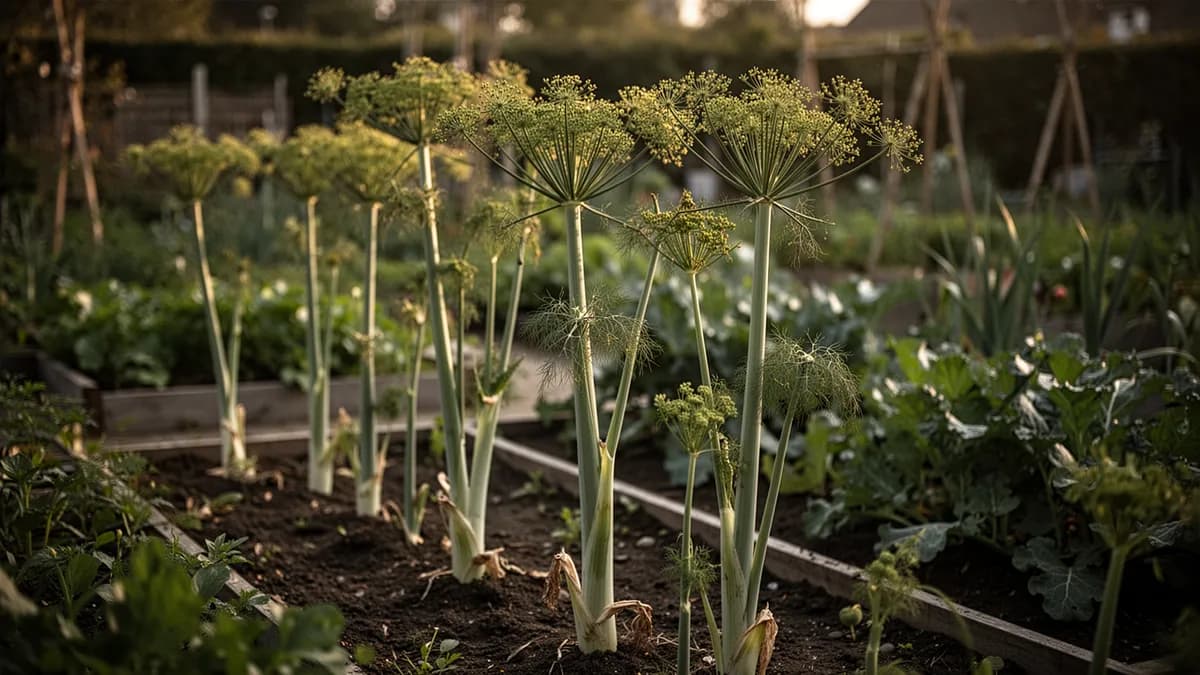
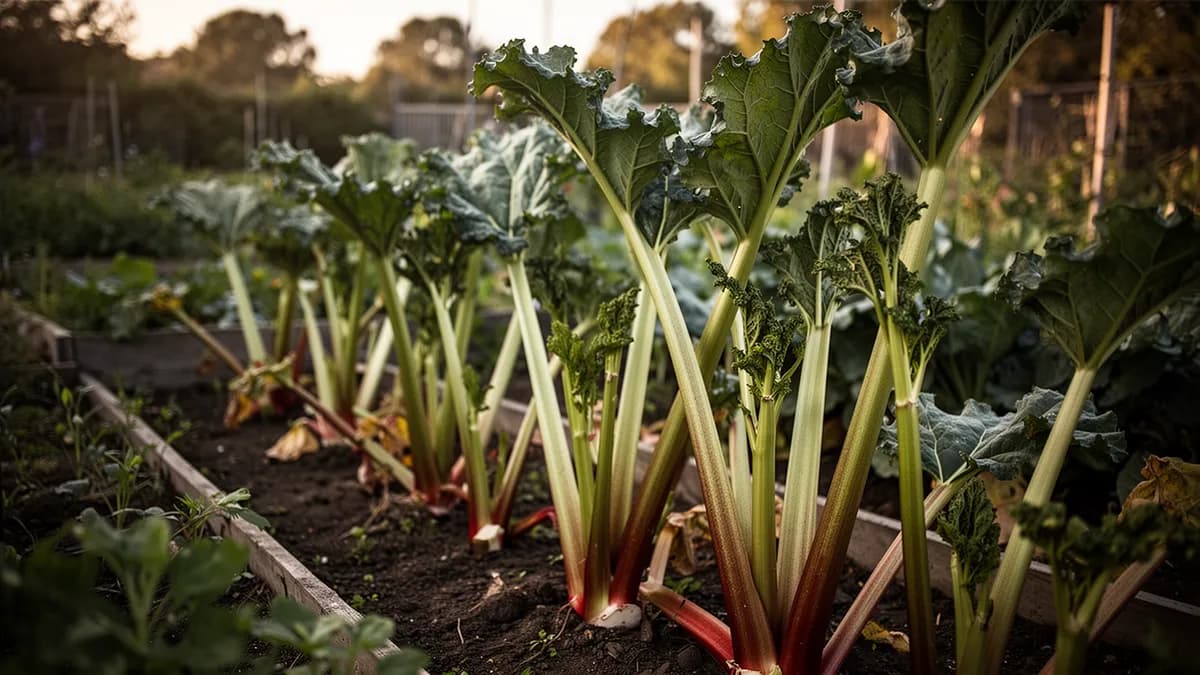
De la sección “Resumen”Planta estos junto a Quingombó
Más Tallos y brotes
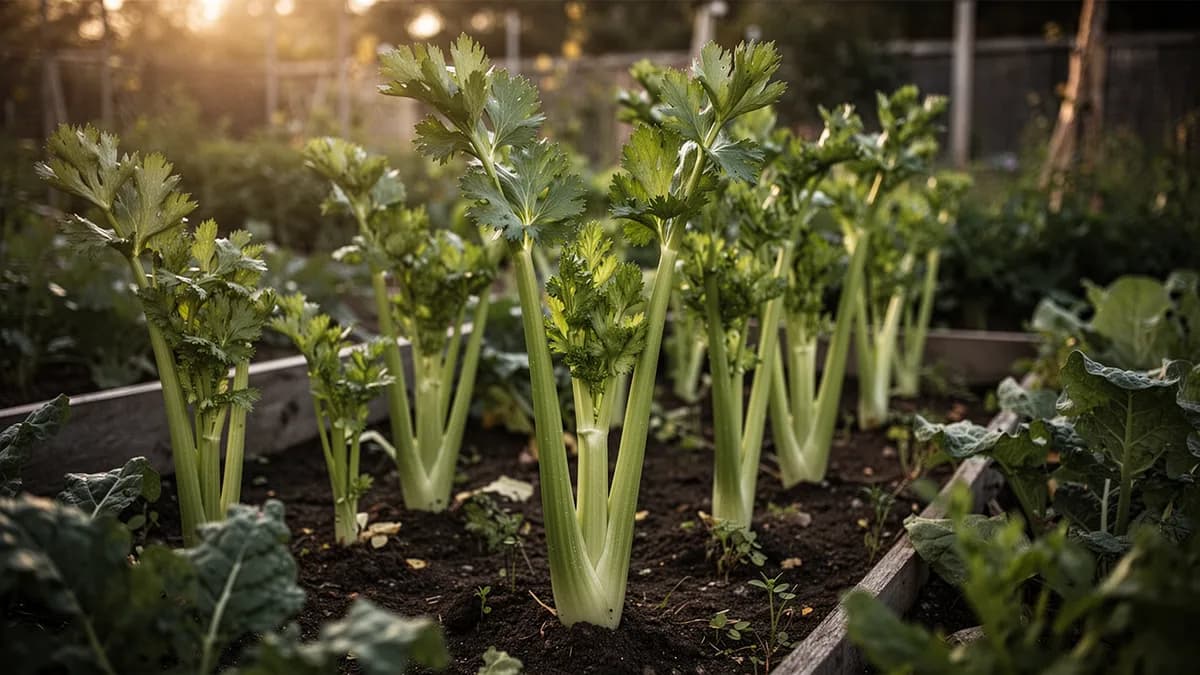
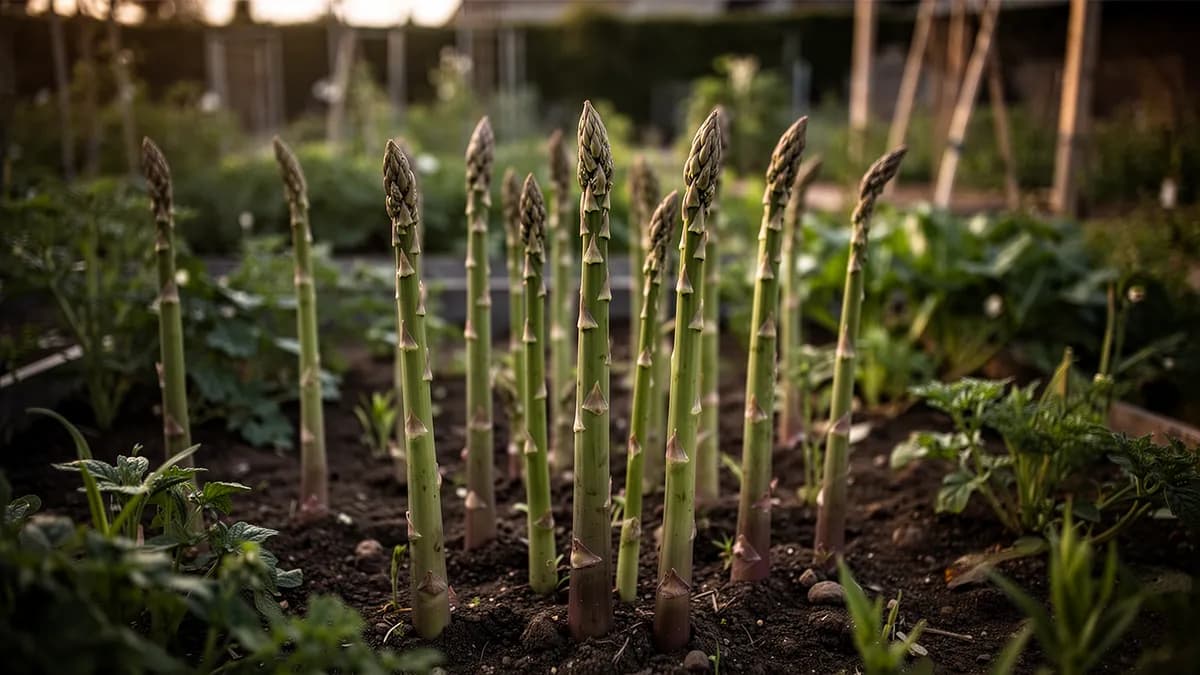
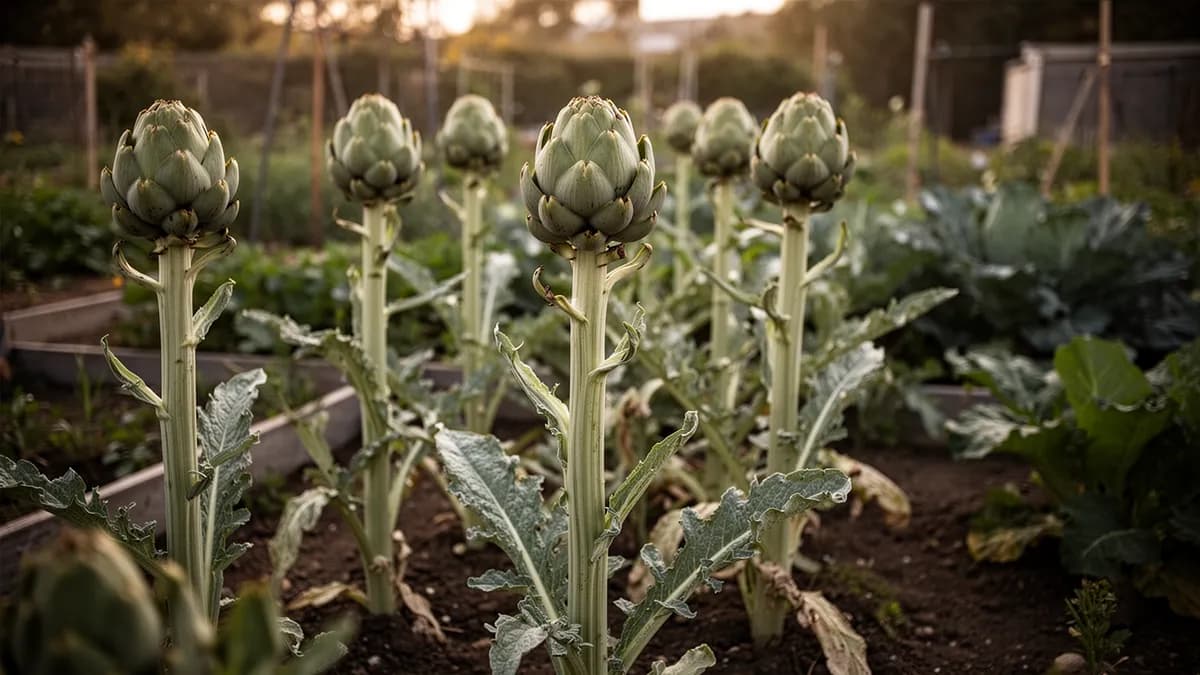
Mantén Quingombó lejos de estos
Diseños de jardín con Quingombó
Cultiva tu mejor Quingombó — y todo lo que la rodea.
Empieza un plan gratis hoy. Diseña tus bancales, coloca tu Quingombó y deja que PlotMyGarden gestione el momento, el espaciado, las asociaciones y los recordatorios de la semilla a la cesta.