Batata
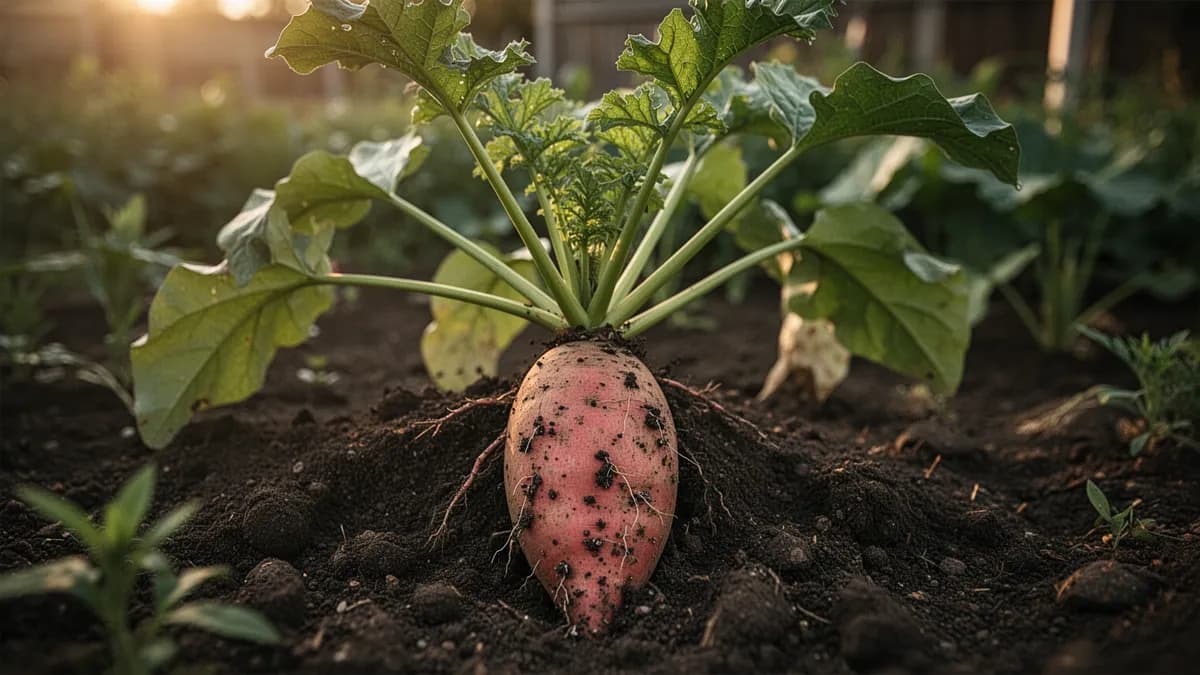
Una verdura de raíz tropical con raíces dulces y anaranjadas.





En esta páginaResumen
Conoce Batata
Una verdura de raíz tropical con raíces dulces y anaranjadas. Las hojas también son comestibles.
Cuándo plantar Batata
Plante esquejes después de la última helada.
Tu año de Batata
Ajustado a Zona 7 · temporada típica · la helada se va hacia el 2 abr y vuelve hacia el 1 nov
Planta Batata May – Jun y cosecha Sep – Nov. Consulta los métodos de plantación y elige tu clima para adaptar los periodos.
Cómo cultivar Batata
Las batatas necesitan calor y larga temporada. Plante esquejes después de la última helada.
Plante en montículos, 30-40 cm aparte.
18 plantas caben en un bancal de 120 × 240 cm
Cada Batata pide 40 cm de margen. El planificador guarda ese marco por ti — cada planta, cada bancal.
Los mejores vecinos de Batata
Frijoles y maíz.
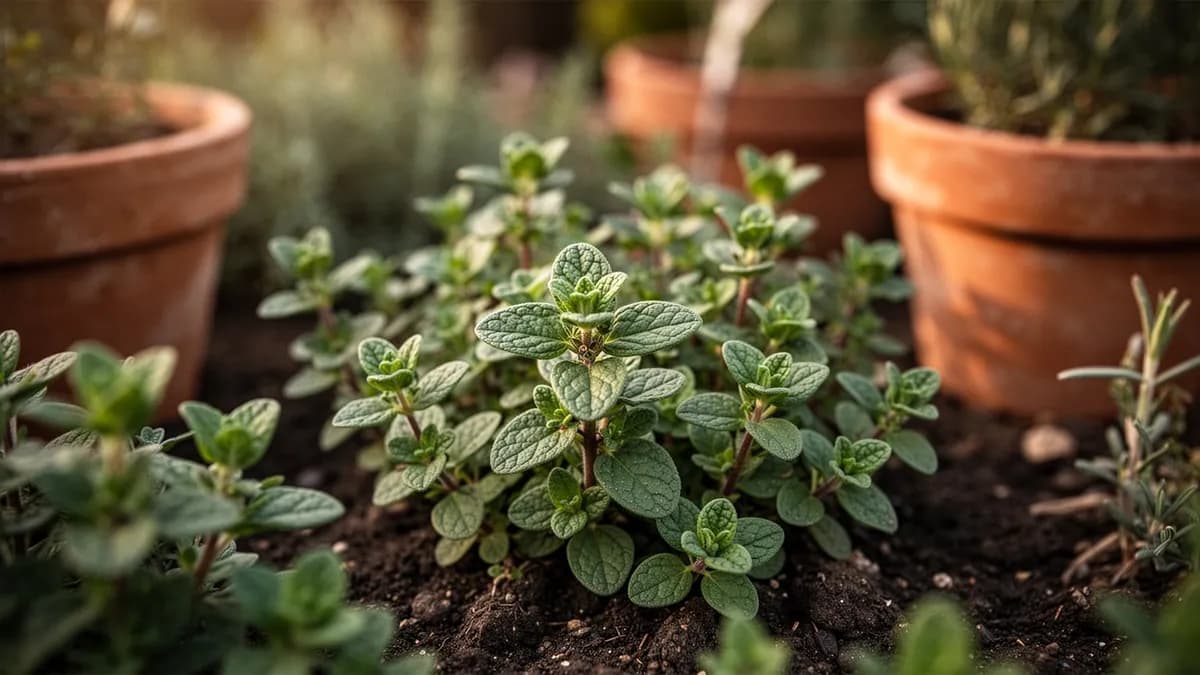
Tomillo va a su lado. Tomate no.
Saber de huerto de siempre, cotejado con la tabla real de Batata — prueba cualquier planta que cultives.
Prueba Batata en un bancal, aquí mismo
Un bancal real del planificador con Batata ya plantado. Toca una planta compañera para colocarla y mira cómo responde la comprobación de vecinos: verde para buenos vecinos, rojo si hay conflicto.


Guías de cultivo relacionadas
Abónalo bien
Suelo arenoso, pH 5,5-6,5.
Temperatura ideal
Compatibilidad de zonas de rusticidad
De la semilla a la cosecha, etapa por etapa
Producción de brotes
Los brotes emergen de los ojos de una batata madre suspendida en agua o enterrada en sustrato húmedo. Los pequeños brotes verdes aparecen en 2-3 semanas en condiciones cálidas y crecen rápidamente hacia la luz. Cada brote desarrolla su propio pequeño sistema de raíces en la base.
Enraizamiento de los esquejes
Los esquejes se separan de la batata madre cuando miden 15-20 cm y se colocan en agua para desarrollar sistemas de raíces independientes. Las raíces blancas aparecen en 5-7 días y crecen hasta 5-8 cm antes del trasplante. Los esquejes sanos muestran un crecimiento vigoroso de hojas y raíces blancas fuertes.
Trasplante y establecimiento
Los esquejes enraizados se plantan en montículos preparados y cálidos cuando la temperatura del suelo supera los 18°C. Las plantas se concentran en el establecimiento de las raíces durante las primeras 2-3 semanas, y el crecimiento aéreo parece lento. Bajo tierra, el sistema radicular se expande rápidamente para sostener el futuro crecimiento de las enredaderas y de los tubérculos.
Crecimiento de la enredadera
Las enredaderas crecen de forma explosiva, extendiéndose 1-3 metros en todas direcciones y formando una cobertura densa que ahoga las malezas. Las hojas son en forma de corazón y de color verde brillante. La planta realiza una fotosíntesis intensiva, acumulando reservas de energía que se dirigirán a la formación de tubérculos.
Desarrollo de tubérculos
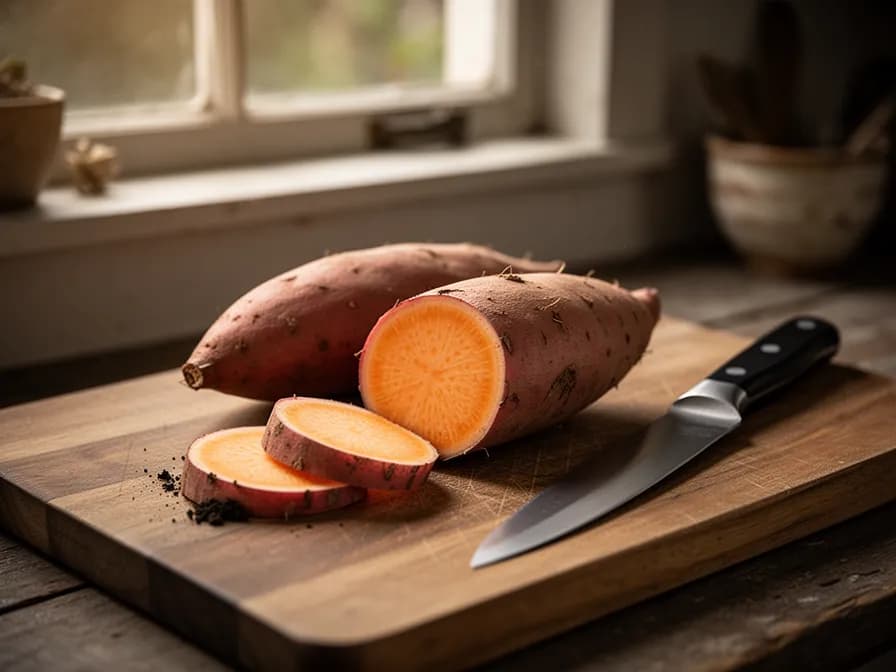
Las raíces de reserva se hinchan bajo tierra mientras la planta dirige los carbohidratos acumulados a la formación de tubérculos. Los tubérculos crecen rápidamente durante días y noches cálidos y alcanzan el tamaño de cosecha en 4-6 semanas. El pigmento naranja (beta-caroteno) se desarrolla durante este periodo en las variedades de pulpa naranja.
Cosecha y curado
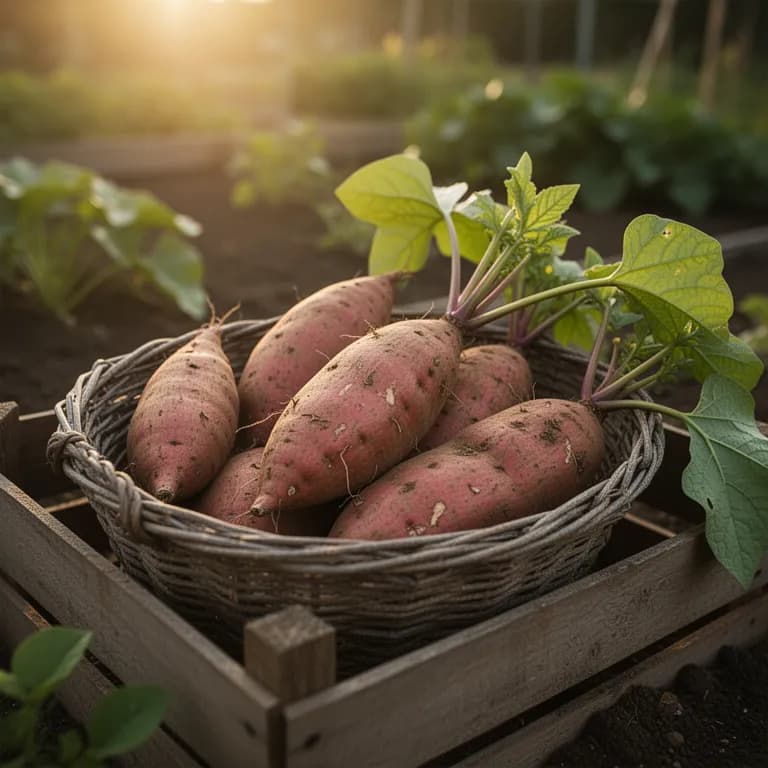
Los tubérculos se desentierran con cuidado antes de la primera helada, cuando las enredaderas empiezan a amarillear. Las batatas recién cosechadas tienen una piel fina y frágil y un sabor suave y harinoso. El proceso crítico de curado de 7-10 días en condiciones cálidas y húmedas cura las heridas, endurece la piel y convierte los almidones en azúcares.
Mantén la batata madre cálida y en luz brillante indirecta. Cambia el agua cada 2-3 días para evitar el crecimiento bacteriano. Una manta térmica acelera mucho la brotación.
Cuidar Batata mes a mes
Qué hacer cada mes para tu Batata
Octubre
Mes actualPrime harvest month for most regions. Dig tubers on a dry day when soil is not waterlogged. Handle with extreme care — skin is very fragile before curing. Begin curing immediately in a warm (27-32°C), humid (85-90%) location for 7-10 days.
Ten claro qué hacer en tu huerto, cada mes
Un correo al empezar cada mes: qué sembrar, plantar y hacer ahora mismo — para tu Batata y todo lo que crece alrededor. Más un breve curso inicial para esquivar los errores clásicos.
- Qué hacer ahora mismo
- Ajustado a tu temporada
- Curso inicial incluido
Cosechar Batata
Coseche antes de la primera helada, cuando las hojas amarillean.
se supone que plantas al comenzar el periodo — indica tu fecha real
Cosecha 2-3 semanas después de dejar de regar, antes de la primera helada, cuando las puntas de las enredaderas empiecen a amarillear.
Almacenamiento y conservación
Cure a 27°C por 10 días, luego almacene fresco.
Qué falla — y cómo solucionarlo
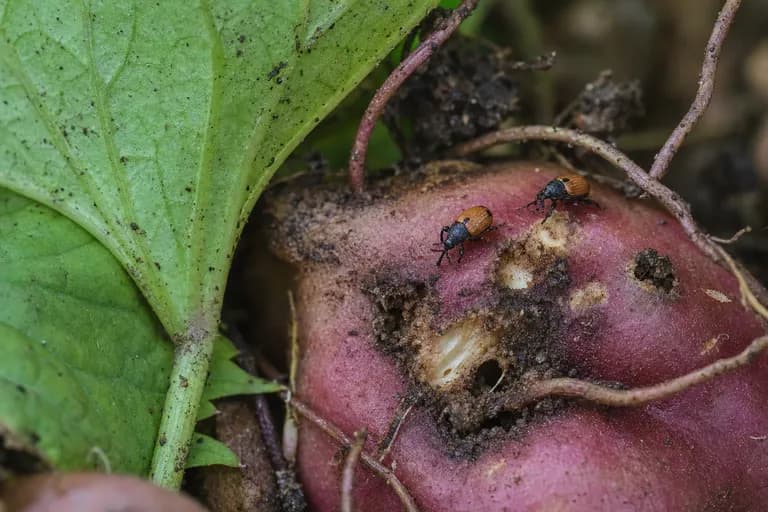
Escarabajo de la batata
PlagaAgujeros en hojas.
Solución de problemas comunes
Pudrición con exceso de humedad.
Consejos de cultivo
- Sweet potatoes need a long, hot growing season — at least 100-150 frost-free days with warm soil. In northern climates, use black plastic mulch, row covers, and early-maturing varieties like Georgia Jet (90 days) to succeed.
- Never plant sweet potatoes in cold soil. Wait until soil temperature is at least 18°C (65°F) at a depth of 10 cm. A soil thermometer is a worthwhile investment — planting too early in cold soil stunts growth permanently.
- Build raised mounds or ridges 20-30 cm tall for planting. The elevated soil warms faster in spring, drains excess moisture, and gives tubers room to expand without compaction. This single technique can double yields.
- Do not over-fertilize, especially with nitrogen. Sweet potatoes need far less nitrogen than most garden vegetables. Too much nitrogen produces enormous vines with tiny tubers — the most common mistake new growers make.
- Water consistently during the first month after transplanting, then reduce to moderate levels. Stop watering entirely 2-3 weeks before harvest to concentrate sugars and toughen skins for storage.
- Never skip the curing step. Freshly dug sweet potatoes taste bland and starchy. Curing at 27-32°C (80-90°F) with high humidity for 7-10 days transforms them — starches convert to sugars, skin toughens, and wounds heal.
- Grow your own slips from a single organic sweet potato to save money and ensure disease-free stock. One mother tuber can produce 10-15 slips — enough for a generous planting from a investment.
- Sweet potato leaves and young vine tips are edible and highly nutritious — rich in protein, vitamins, and minerals. In many cultures, the greens are valued as much as the tubers. Harvest young leaves without stripping the vine.
Cultiva tu mejor Batata — y todo lo que la rodea.
Empieza un plan gratis hoy. Diseña tus bancales, coloca tu Batata y deja que PlotMyGarden gestione el momento, el espaciado, las asociaciones y los recordatorios de la semilla a la cesta.
Elige tu Batata
Beauregard
Pulpa anaranjada. 100 días.
Jewel
Muy dulce. 100 días.
Sweet potato slips cost /bin/zsh.50-2.00 each, and a single plant can produce -12 worth of organic sweet potatoes. A modest planting of 10-15 slips costing -20 can yield 15-30 kg of sweet potatoes — worth -120 at organic grocery prices. Growing your own slips from a single store-bought organic sweet potato (-3) can produce 10-15 free slips, making the cost per plant nearly zero.
Recetas rápidas
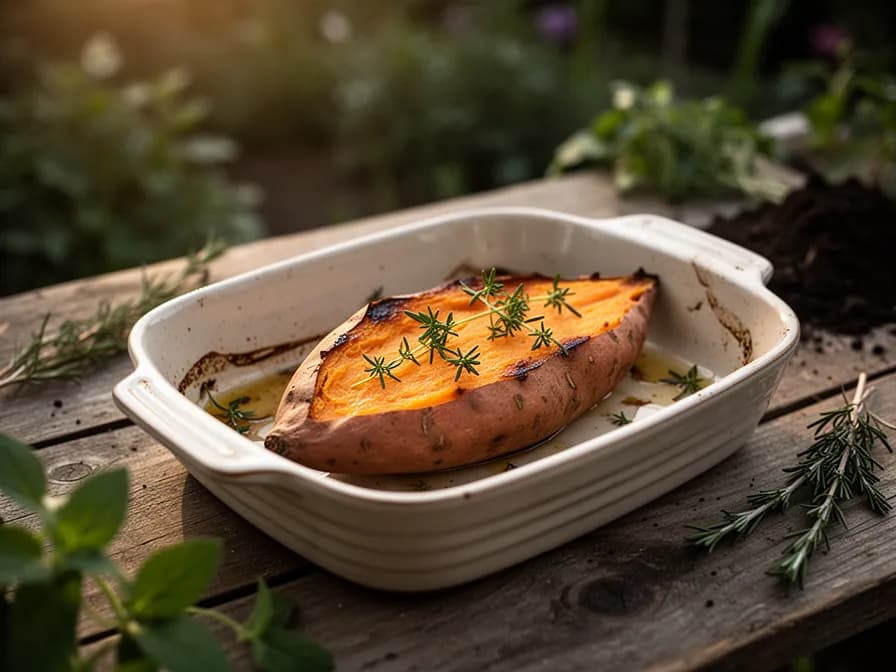
Perfect Baked Sweet Potato
60 minThe simplest and most delicious way to enjoy homegrown sweet potatoes. Slow baking at moderate heat allows maximum starch-to-sugar conversion, producing incredibly sweet, caramelized flesh with almost no effort.
5 ingredientesCrispy Sweet Potato Fries
45 minThe secret to truly crispy sweet potato fries is removing excess starch and moisture before baking. A light cornstarch coating creates an irresistible crunch while the interior stays tender and sweet.
7 ingredientesSweet Potato and Black Bean Chili
40 minA hearty vegetarian chili where sweet potatoes add natural sweetness and creamy body that balances the smoky heat of chipotles. A perfect autumn meal that uses the harvest beautifully.
8 ingredientesUsos culinarios
Horneada, frita, en puré o en sopas.
Qué contiene
Beneficios para la salud
- Exceptionally rich in beta-carotene (provitamin A) — one medium orange-fleshed sweet potato provides over 400% of daily Vitamin A needs, critical for vision, immune function, and skin health.
- High in dietary fiber (both soluble and insoluble) which supports healthy digestion, promotes beneficial gut bacteria, and helps maintain steady blood sugar levels after meals.
- Contains significant amounts of Vitamin B6, which plays a crucial role in brain development, nervous system function, and the production of mood-regulating neurotransmitters like serotonin.
- Purple-fleshed sweet potatoes are loaded with anthocyanins — potent antioxidants with demonstrated anti-inflammatory, anti-cancer, and neuroprotective properties in research studies.
- Good source of potassium (337mg per 100g), which helps regulate blood pressure, balance fluid levels, and support proper muscle and nerve function — important for heart health.
- Contains manganese, an essential trace mineral that supports bone formation, blood clotting, metabolism of carbohydrates and amino acids, and the body's antioxidant defense system.
De dónde viene Batata
The sweet potato originated in Central or South America, with the oldest archaeological evidence — dried sweet potato roots dating to approximately 8000 BCE — discovered in caves in the Chilca Canyon of Peru. Wild sweet potato species still grow in the tropical Americas, and genetic analysis points to the region between the Yucatan Peninsula and the mouth of the Orinoco River as the crop's center of origin. The Aztecs, Maya, and Inca all cultivated sweet potatoes extensively, developing distinct varieties adapted to their local conditions long before European contact.
Spanish and Portuguese explorers carried sweet potatoes across the globe during the 15th and 16th centuries, introducing them to Europe, Africa, and Asia. The crop adapted remarkably well to tropical and subtropical climates worldwide. In Japan, sweet potatoes became a critical famine food after their introduction in the 1600s, saving countless lives during rice crop failures. In Africa, sweet potatoes became a staple crop that provided food security across the continent. One of the great botanical mysteries is how sweet potatoes reached Polynesia before European contact — genetic evidence confirms that Polynesians were growing South American sweet potatoes by 1000 CE, suggesting pre-Columbian transoceanic contact.
Today, sweet potatoes are grown in more than 100 countries and are a critical food security crop in the developing world. Orange-fleshed sweet potato varieties have become a key tool in combating Vitamin A deficiency in sub-Saharan Africa, where the crop's ability to produce high yields in poor soils with minimal inputs makes it invaluable. In the United States, North Carolina produces nearly half of the national sweet potato crop, and the Southern states have a deep culinary tradition built around sweet potatoes — from Thanksgiving casseroles to sweet potato pie. The crop continues to gain popularity worldwide as consumers discover its exceptional nutritional profile and versatility in the kitchen.
Batata: ¿sabías que?
Datos fascinantes sobre Batata
Sweet potatoes are not actually potatoes at all — they belong to the morning glory family (Convolvulaceae), while regular potatoes are nightshades (Solanaceae). The two are completely unrelated botanically despite the shared name.
Batata: preguntas frecuentes
¿Cuándo debo plantar Batata?
¿Cuáles son buenas plantas acompañantes para Batata?
¿En qué zonas de rusticidad puede crecer Batata?
¿Cuánto sol necesita Batata?
¿A qué distancia debo espaciar Batata?
¿Qué plagas y enfermedades afectan a Batata?
¿Cómo almaceno Batata después de la cosecha?
¿Cuáles son las mejores variedades de Batata para cultivar?
¿Qué suelo necesita Batata?
How do I grow sweet potatoes in a short-season northern climate?
Why are my sweet potato vines huge but I got no tubers?
Can I grow sweet potatoes in containers?
What is the difference between sweet potatoes and yams?
How important is the curing process and can I skip it?
When exactly should I harvest my sweet potatoes?
Acabas de leer la teoría. Ahora cultívala en piloto automático.
Todo lo que hace que Batata sea delicado — el momento, el espaciado, las asociaciones, la ventana de cosecha — es justo lo que PlotMyGarden resuelve por ti, para cada planta de tu huerto.
Un plan que conoce tu clima
Indica tu ubicación una vez. Recibe fechas de siembra, abonado y cosecha basadas en tu última helada real y el pronóstico en vivo — sin adivinar con un sobre genérico.
De la sección “Cuándo plantar”Planificador de bancales de arrastrar y soltar
Diseña bancales sobre una cuadrícula. Cada planta encaja con su espaciado correcto y ves toda la temporada antes de gastar un céntimo en semillas.
De la sección “Cultivo”Conflictos de asociación, detectados a tiempo
Más de 200 buenas y malas combinaciones comprobadas en vivo mientras plantas — para que un error que arruine la temporada nunca llegue a la tierra.
De la sección “Asociaciones”Recordatorios que sí vas a seguir
“Riega las judías.” “Recoge hoy antes de que se pase.” Oportunos, concretos y ligados a las plantas que de verdad cultivas.
De la sección “Cosecha”Escalonado, programado
¿Quieres cosechar seis semanas en vez de seis días? Reparte tus siembras automáticamente y te avisa cuando toca el siguiente lote.
De la sección “Cuándo plantar”Un registro que se vuelve más listo
Cada cosecha que registras le enseña tu huerto. El plan del año que viene parte de lo que de verdad funcionó en tu suelo, no en un manual.
De la sección “Resumen”Planta estos junto a Batata
Más Hortalizas de raíz
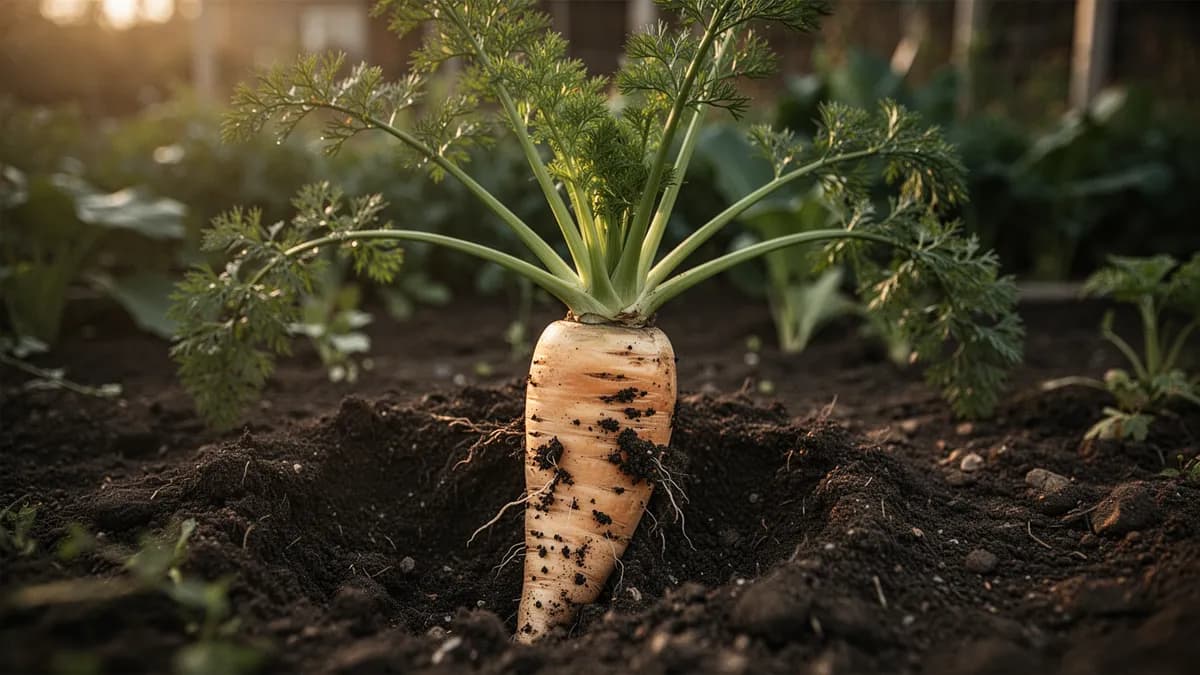
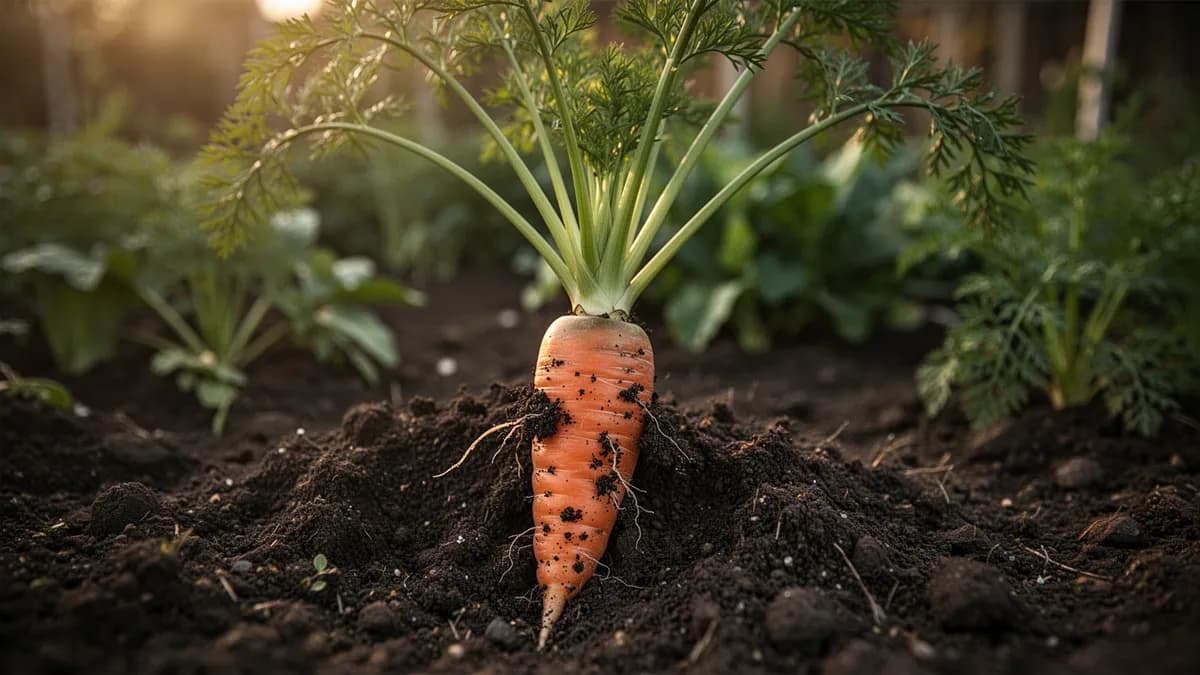
Mantén Batata lejos de estos
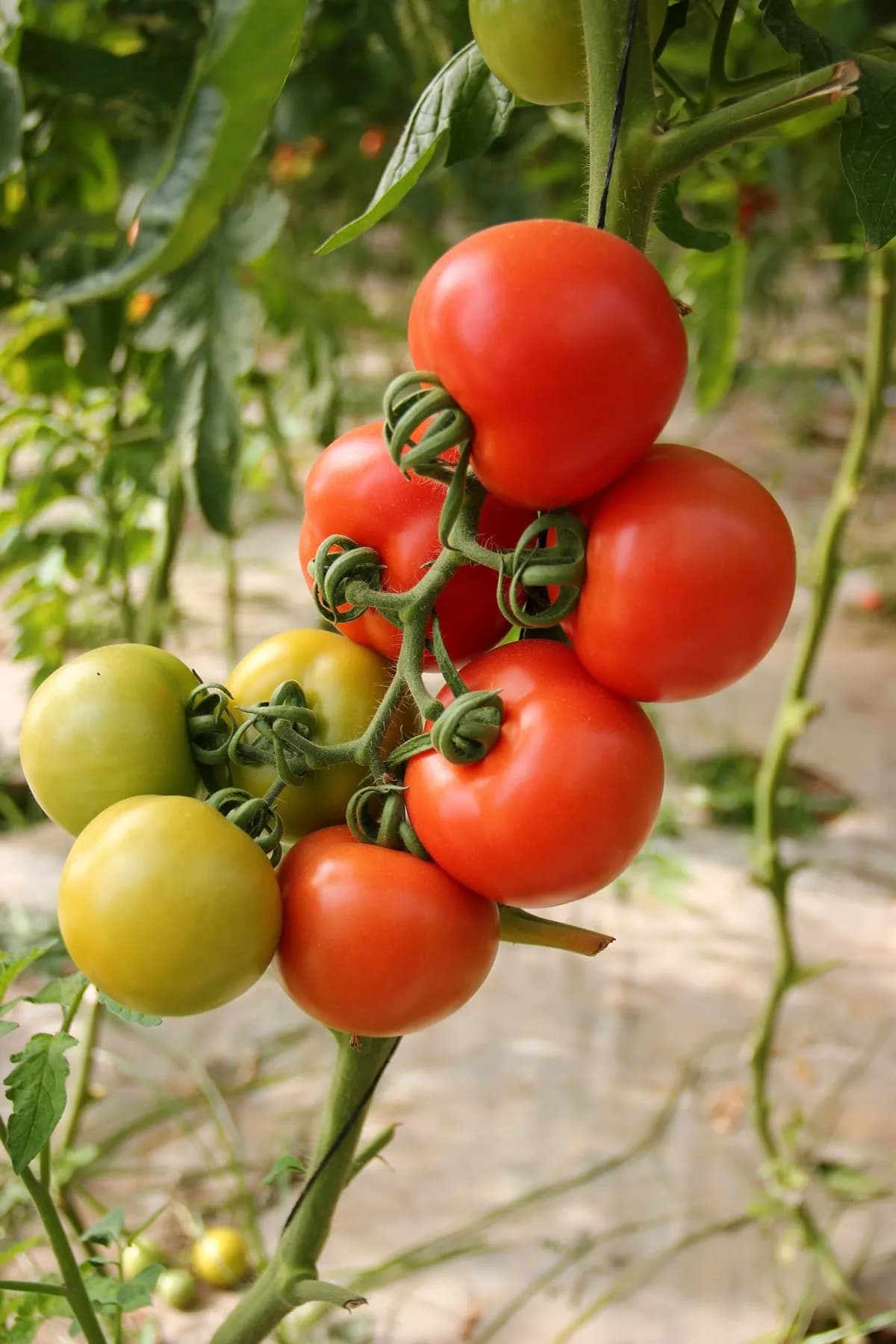
Diseños de jardín con Batata
Cultiva tu mejor Batata — y todo lo que la rodea.
Empieza un plan gratis hoy. Diseña tus bancales, coloca tu Batata y deja que PlotMyGarden gestione el momento, el espaciado, las asociaciones y los recordatorios de la semilla a la cesta.