Kohlrabi
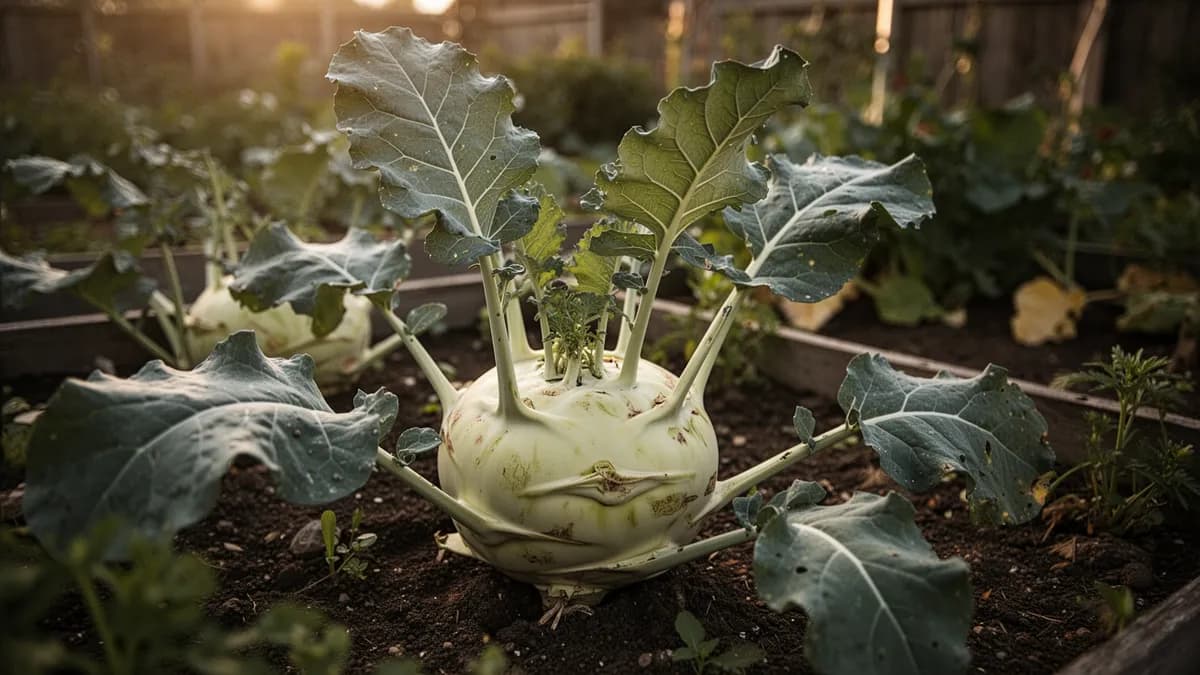
An unusual brassica forming a swollen stem above ground with a mild, crisp flavor similar to broccoli stems.





On this pageOverview
Meet Kohlrabi
An unusual brassica forming a swollen stem above ground with a mild, crisp flavor similar to broccoli stems. Grow in cool weather with consistent moisture for the most tender bulbs, harvesting when they reach two to three inches in diameter. Both green and purple varieties exist, and the leaves are also edible and nutritious when cooked like collard greens. Kohlrabi is excellent eaten raw in slaws and salads, roasted, or added to stir-fries for a sweet, mild crunch.
When to plant Kohlrabi
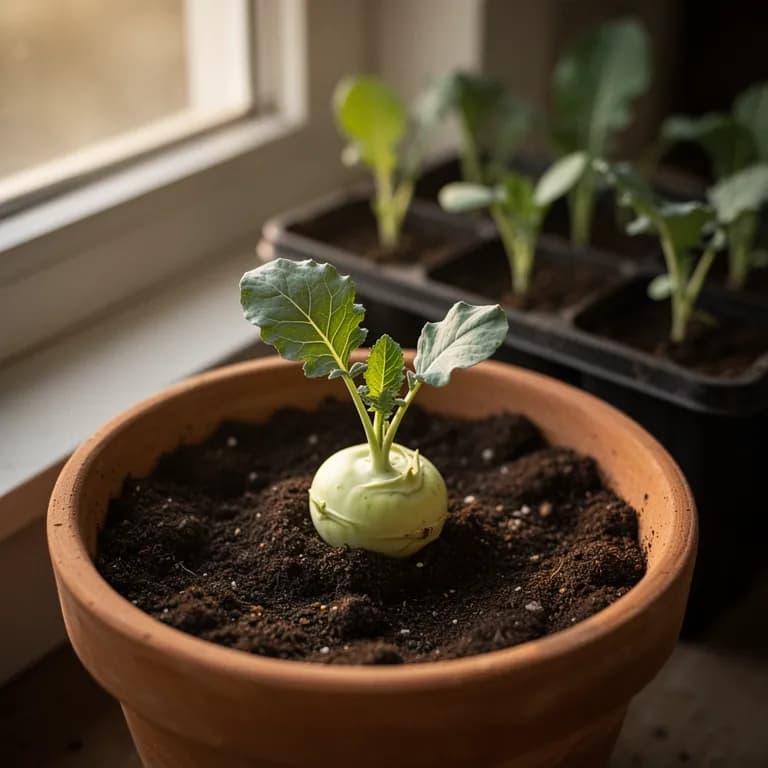
Kohlrabi can be direct-sown or started indoors, and both methods work well given the plant's adaptable nature. For direct sowing, plant seeds 1 cm (1/2 inch) deep and 5 cm apart as soon as soil can be worked in spring — seeds germinate in 5-10 days at 10-30°C (50-85°F), with the fastest germination around 20°C (68°F). For an earlier harvest, start seeds indoors 4-6 weeks before the last frost in cell trays filled with a standard seed-starting mix. Transplant outdoors when seedlings have 3-4 true leaves, spacing them 15-20 cm apart.
Kohlrabi tolerates light frost down to about -5°C (23°F), so early spring transplanting is safe and even beneficial — cool weather produces the sweetest, most tender bulbs. For a fall crop, direct-sow 6-8 weeks before the first expected frost. Fall plantings are often more successful than spring ones in warm climates because the crop matures during increasingly cool weather rather than racing against rising summer heat. Succession plant every 2-3 weeks for continuous harvest throughout the season.
Kohlrabi does not develop a deep taproot, so transplanting is straightforward and seedlings recover quickly from the move. Harden off indoor-started seedlings for 5-7 days before transplanting by gradually exposing them to outdoor conditions. Seeds remain viable for about 4 years when stored in a cool, dry place. For the earliest possible spring harvest, start seeds indoors in late winter under grow lights and transplant under row covers as soon as the ground thaws — kohlrabi's frost tolerance makes this an achievable strategy even in cold climates.
Your Kohlrabi Year
Composed for Zone 7 · typical seasons · frost passes Apr 2, returns Nov 1
Plant Kohlrabi Mar – Apr, Aug – Sep, pick May – Jun, Oct – Nov. Check the planting methods below and set your climate to personalize these windows.
How to grow Kohlrabi
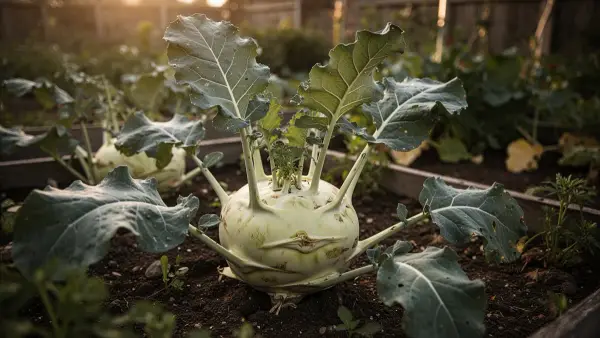
Kohlrabi is one of the fastest-growing brassicas and one of the most unusual-looking vegetables in the garden, forming a swollen, bulb-like stem just above the soil surface. It thrives in cool weather between 7-24°C (45-75°F) and matures in as little as 45-60 days, making it an excellent crop for spring and fall planting. Sow seeds directly 1 cm (1/2 inch) deep and 5 cm apart in rows spaced 30 cm apart, or start transplants indoors 4-6 weeks before the last frost for an earlier harvest.
Thin seedlings to 15-20 cm apart once they develop their first true leaves. Keep the soil consistently moist, as drought stress causes the bulb to become tough and woody. Mulch around plants to maintain even soil moisture and moderate soil temperature. Kohlrabi has relatively shallow roots, so avoid deep cultivation near the plants. A balanced fertilizer applied at planting provides adequate nutrition for this fast-growing crop.
For spring planting, sow as soon as soil can be worked — kohlrabi tolerates light frost. For fall crops, sow 6-8 weeks before the first expected frost. Fall-grown kohlrabi is often sweeter than spring crops due to cool maturation temperatures. Harvest when bulbs reach 5-8 cm (2-3 inches) in diameter for the most tender, crisp texture. Giant varieties like Superschmelz can grow to the size of a softball while remaining tender, but standard varieties become woody if left too long.
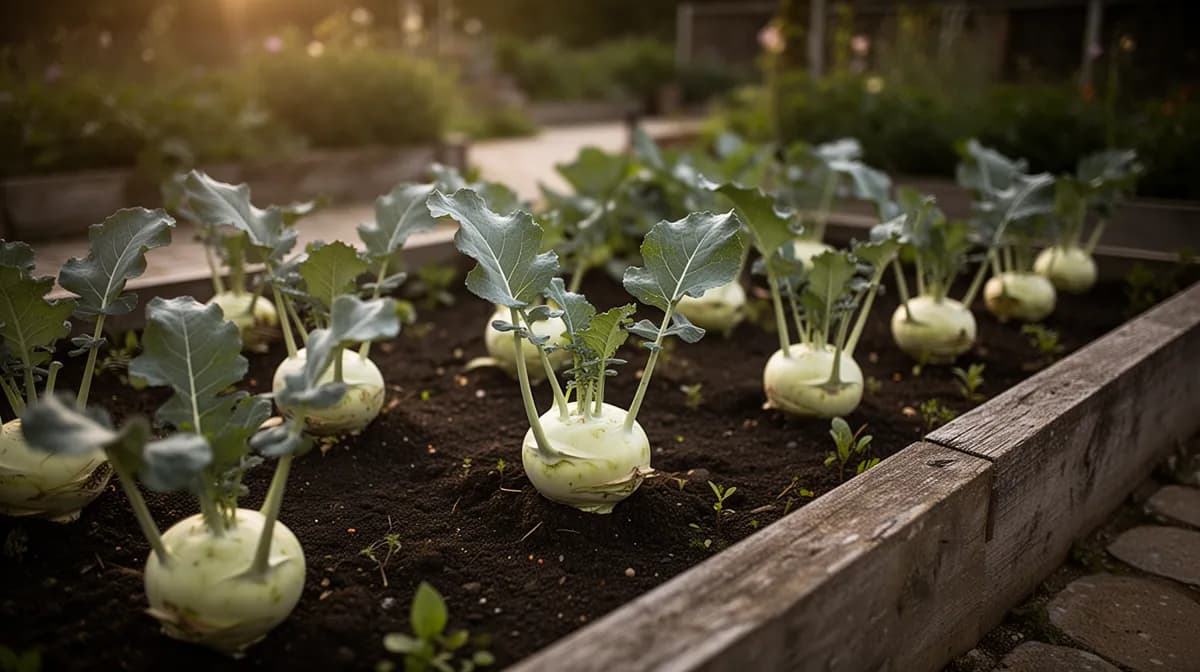
72 plants fit a 4 × 8 ft bed
Each Kohlrabi wants 20 cm of elbow room. The planner keeps that spacing for you — every plant, every bed.
Kohlrabi's best neighbours
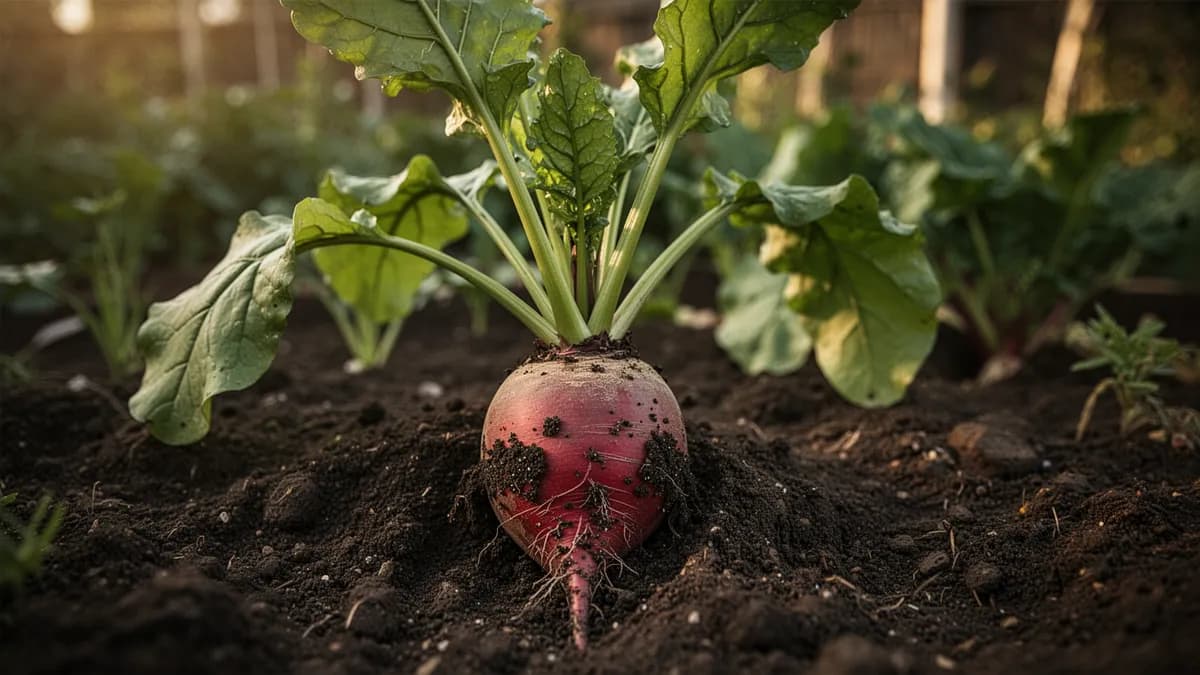
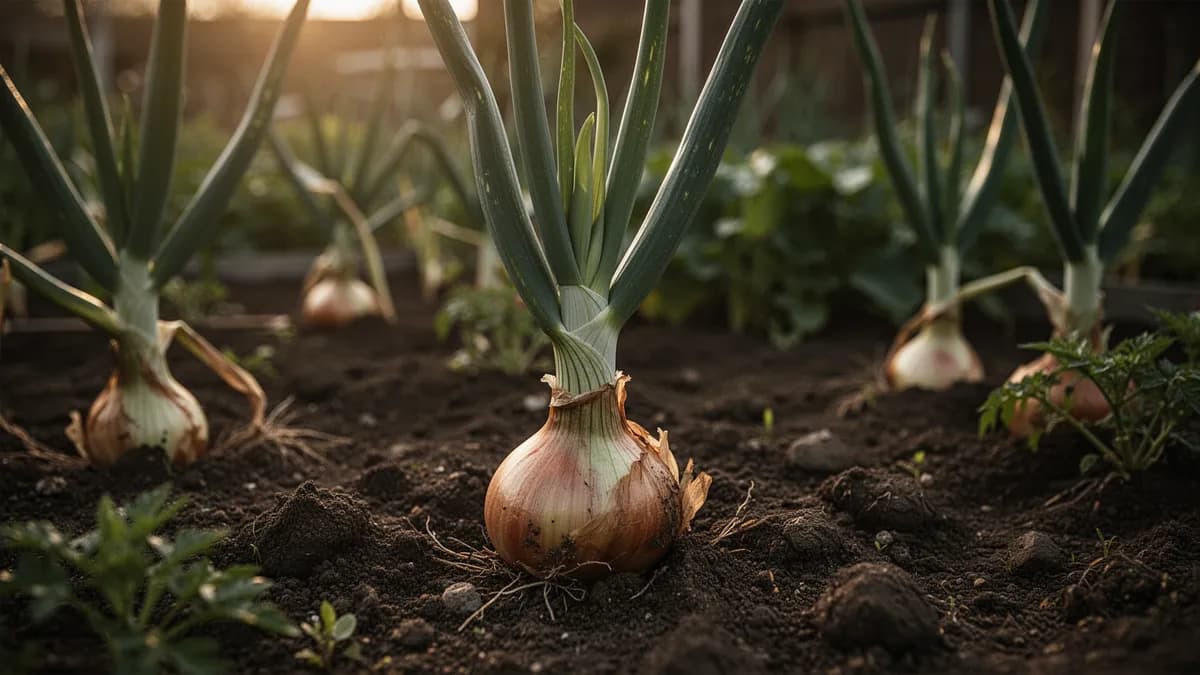
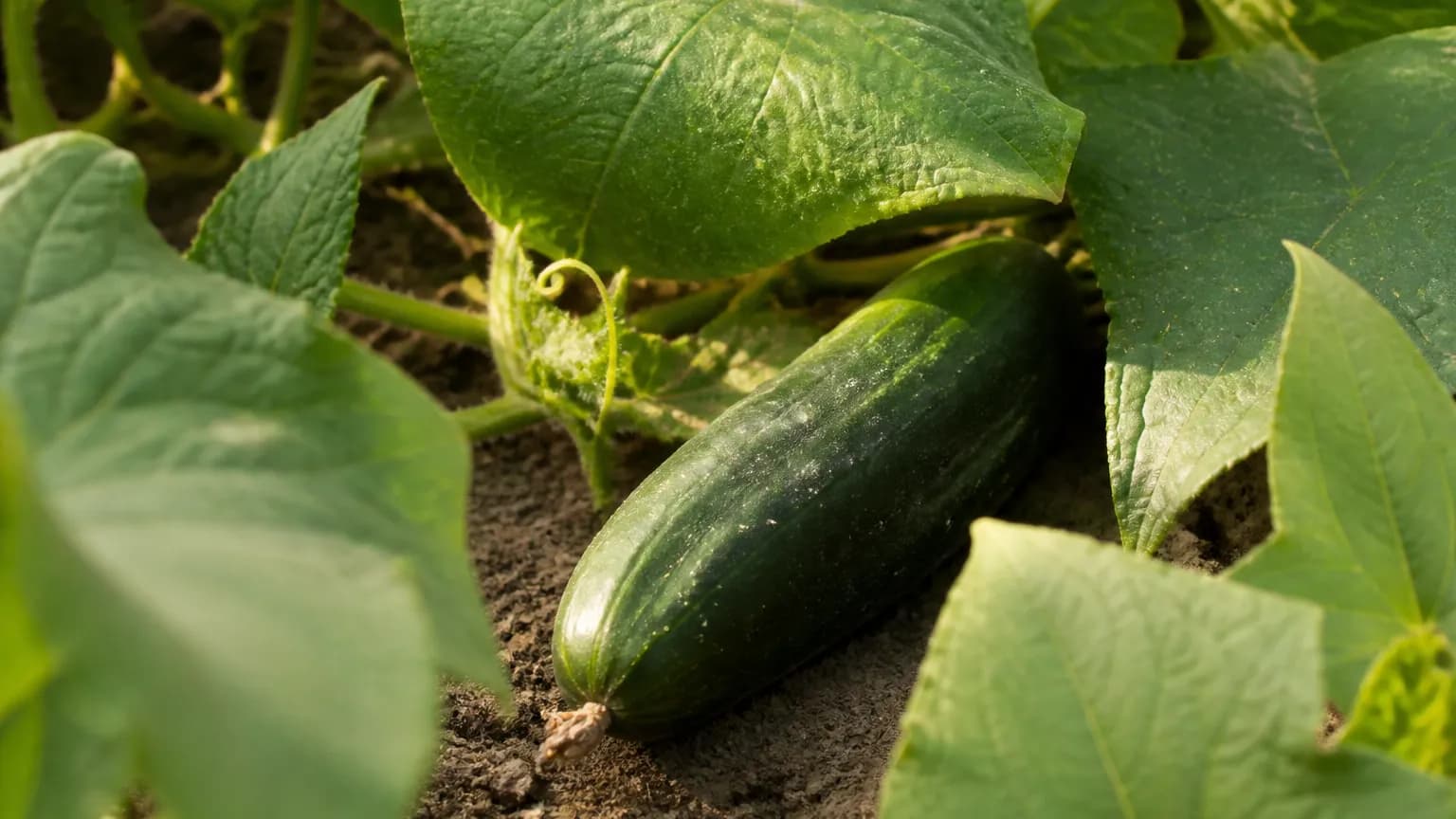
Beets are excellent kohlrabi companions, as they occupy different soil depths and do not compete for nutrients. Onions planted nearby help deter cabbage worms and flea beetles with their pungent scent. Cucumbers benefit from the partial shade kohlrabi provides at their base during hot weather. Avoid planting near tomatoes, which are allelopathically incompatible with brassicas and may stunt kohlrabi growth. Keep away from strawberries, which compete for similar nutrients and space. Lettuce and spinach make good interplanting partners, harvested before kohlrabi bulbs need full space.
Beet belongs beside it. Tomato doesn't.
Old growers' knowledge, checked against Kohlrabi's real companion table below — test any plant you're growing.
Try Kohlrabi in a bed — right here
A real planner bed with Kohlrabi already in it. Tap a companion to place it and watch the pairing checks answer — green for good neighbours, red for a clash.


Related growing guides
Feed it well
Kohlrabi grows best in fertile, well-drained soil with a pH of 6.0-7.5. Work 5-8 cm of well-aged compost into the top 20 cm of soil before planting to provide both nutrients and moisture retention for the fast growth rate. Apply a balanced fertilizer (10-10-10) at planting at approximately 60 grams per square meter. Sandy soils benefit from extra compost to improve water-holding capacity, while heavy clay soils should be amended with compost and coarse sand or grown in raised beds to ensure adequate drainage.
Kohlrabi is a moderate feeder and generally does not need side-dressing given its fast 45-60 day maturity. Avoid excess nitrogen, which can cause the bulb to crack or develop hollow, pithy centers. Calcium is critically important for cell wall structure and bulb integrity — lime the soil if pH is below 6.0, and consider a calcium foliar spray during rapid bulb expansion if cracking has been a problem in past seasons. Boron deficiency, while uncommon, can cause brown, corky patches inside the bulb — a light application of borax (1 gram per square meter) at planting prevents this.
Kohlrabi benefits from consistent moisture more than heavy feeding, so prioritize mulching and irrigation over additional fertilization. Apply 5-8 cm of straw, shredded leaves, or grass clippings around plants once they are established to maintain even soil moisture and suppress weeds. If growth appears sluggish midseason, a light side-dressing of compost tea or dilute fish emulsion provides a gentle nutrient boost without the risk of excessive nitrogen. Avoid fresh manure, which can introduce weed seeds, burn shallow roots, and promote lush leaf growth at the expense of bulb development.
Ideal Temperature
Hardiness Zone Compatibility
From seed to harvest, stage by stage
Seed Germination
Seeds germinate quickly in cool to warm soil, with tiny cotyledons (seed leaves) emerging within 5-10 days. Kohlrabi seeds are small and round, similar to other brassica seeds. Germination is fastest at around 20°C (68°F) but occurs reliably across a wide temperature range.
Seedling Development
True leaves develop with the characteristic rounded, slightly lobed shape of brassica foliage. Seedlings grow rapidly and should be thinned to 15-20 cm apart when they have 2-3 true leaves to prevent overcrowding that leads to poor bulb formation.
Vegetative Growth
The plant produces a rosette of large, blue-green leaves on sturdy stems. The stem just above the soil line begins to thicken noticeably — this is the beginning of the edible bulb. Leaf growth accelerates and the root system establishes in the top 15-20 cm of soil.
Bulb Formation
The stem swells rapidly into the characteristic globe shape above the soil surface. The bulb expands to 3-5 cm in diameter during this phase. Leaves continue growing from the top of the swelling bulb, giving the plant its distinctive alien-like appearance.
Bulb Maturation
The bulb reaches harvestable size of 5-8 cm diameter for standard varieties. Skin becomes smooth and taut. The flesh inside is crisp, juicy, and mildly sweet. Giant varieties like Superschmelz continue growing beyond this point while maintaining tenderness.
Harvest
Bulbs are at peak quality for harvest. The skin is smooth, the flesh is crisp and juicy when cut, and the flavor is mild and sweet. Fall-harvested bulbs exposed to light frost develop enhanced sweetness.
Keep soil consistently moist but not waterlogged during germination. A light covering of vermiculite helps retain surface moisture. No fertilizer is needed at this stage.
Caring for Kohlrabi month by month
What to do each month for your Kohlrabi
October
You are hereMonitor fall kohlrabi as bulbs mature. Light frost actually improves flavor by converting starches to sugars. Harvest as bulbs reach ideal size. Begin storing bulbs in the refrigerator or root cellar for extended keeping.
Know exactly what to do in your garden — every month
One email at the start of each month: what to sow, plant, and tackle right now — for your Kohlrabi and everything growing around it. Plus a short starter course that helps you dodge the classic mistakes.
- What to do, right now
- Matched to your season
- Starter course included
Harvesting Kohlrabi
Harvest kohlrabi when the swollen stem reaches 5-8 cm (2-3 inches) in diameter — about the size of a tennis ball. Standard green and purple varieties become woody and fibrous if allowed to grow much larger, so check plants regularly once bulbs begin forming. Cut the stem at soil level with a sharp knife rather than pulling, which can disturb neighboring plants. The ideal harvest window is short for standard varieties — perhaps only 5-7 days between perfectly tender and unpleasantly woody — so daily monitoring is worthwhile once bulbs start sizing up.
The leaves are also edible and nutritious when young and tender — cook them like collard greens, add small ones to stir-fries, or blend into smoothies for a mild brassica boost. Harvest leaves selectively while the bulb is still developing, taking only one or two outer leaves at a time to avoid reducing the plant's photosynthetic capacity. Giant varieties like Superschmelz can be harvested at much larger sizes (up to 25 cm across) while retaining remarkably good texture, making them ideal for gardeners who prefer fewer, larger harvests.
For the crispest texture and mildest flavor, harvest in the morning after dew has dried but before the heat of the day. Fall-grown kohlrabi exposed to light frost actually develops a sweeter flavor as the plant converts starches to sugars in response to cold — a phenomenon shared with many brassicas. Succession plantings every 2-3 weeks extend the harvest window from a single concentrated picking to weeks of continuous supply. Pull or cut the entire plant at harvest rather than trying to leave the root in place, as kohlrabi does not resprout from the base.
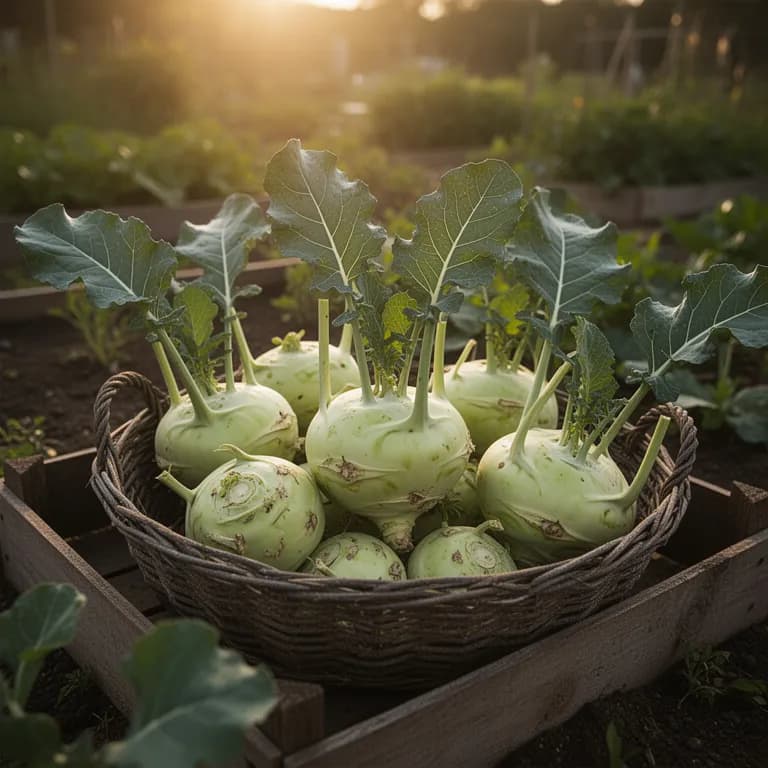
assuming you plant when the window opens — set your real date
Pick Kohlrabi promptly and the plant keeps producing.
Storage & Preservation
Remove leaves immediately after harvest — they draw moisture from the bulb and accelerate wilting — and store them separately in a damp paper towel inside a plastic bag for up to 5 days. Whole, unwashed bulbs keep in a perforated plastic bag in the refrigerator crisper drawer for 2-3 weeks. For extended root cellar storage, layer unwashed bulbs in damp sand or peat moss at 0-2°C (32-35°F) and 90-95% humidity, where they can keep for 1-2 months while maintaining their crisp texture.
Kohlrabi freezes well for long-term preservation. Peel and dice bulbs into 1-2 cm cubes, blanch in boiling water for 2 minutes, immediately cool in ice water to halt cooking, drain thoroughly, and spread on a parchment-lined baking sheet to flash-freeze before transferring to labeled freezer bags. Frozen kohlrabi keeps for up to 10 months and works best in cooked dishes like soups, stews, and gratins — the crisp raw texture is lost after freezing, so plan accordingly.
Kohlrabi can also be lacto-fermented like sauerkraut for a tangy, probiotic-rich preserve that keeps for months in the refrigerator. Peel and shred or thinly slice the bulbs, toss with 2% salt by weight, pack tightly into a jar, and allow to ferment at room temperature for 5-7 days. Pickled kohlrabi in a vinegar brine with mustard seeds, dill, and garlic makes an excellent condiment. Dehydrating thin slices at 57°C (135°F) for 6-8 hours produces crispy kohlrabi chips that store in airtight containers for months — a healthy, addictive snack seasoned with sea salt or smoked paprika.
What goes wrong — and the fix
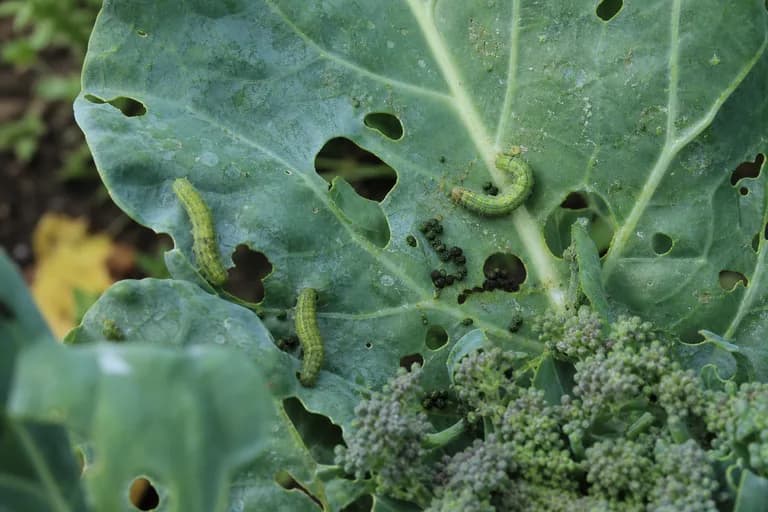
Cabbage Worm
PestGreen caterpillars of the imported cabbage white butterfly chew irregular holes in leaves and may bore into the developing bulb. Look for small white butterflies hovering around plants and tiny yellow eggs on leaf undersides.
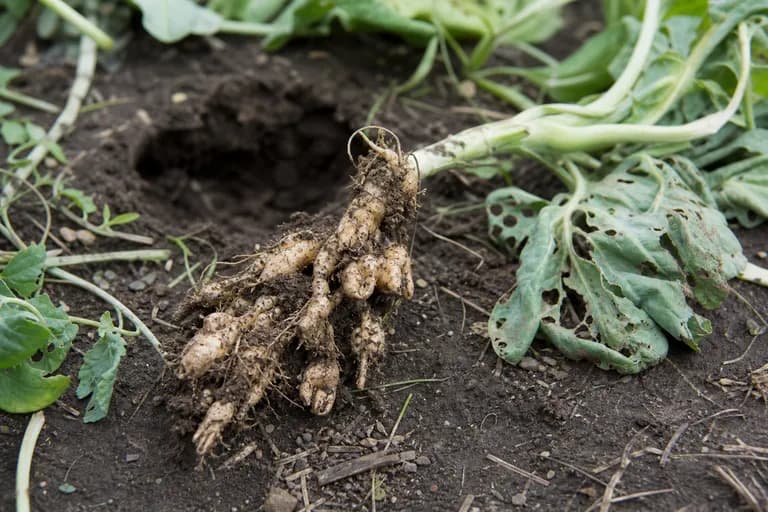
Clubroot
DiseasePlants wilt on warm days despite adequate moisture. Roots develop swollen, distorted galls. Growth is stunted and bulbs fail to develop properly. The soil-borne pathogen persists for many years once established.
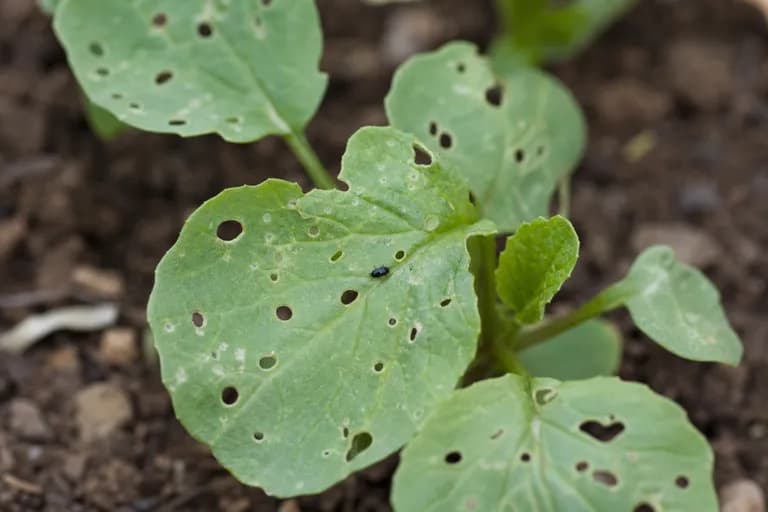
Flea Beetle
PestTiny jumping beetles chew small round holes throughout leaves, giving them a shot-hole appearance. Seedlings are most vulnerable and can be killed by severe infestations before they establish.
Troubleshooting Common Problems
Woody, fibrous bulbs are the most common issue — caused by harvesting too late, heat stress, or drought. Always harvest standard varieties at 5-8 cm diameter and grow in cool seasons. The single best prevention is daily monitoring once bulbs start sizing up, because the window between perfectly tender and unpleasantly tough can be as short as 5-7 days in warm weather. Growing giant varieties like Superschmelz largely eliminates this problem, as they remain tender at much larger sizes.
Cracked or split bulbs result from irregular watering — sudden heavy rain or irrigation after a dry spell causes rapid expansion that splits the skin. Maintain consistent moisture with drip irrigation and mulch. Bolting (going to seed without forming a proper bulb) occurs when young transplants are exposed to prolonged cold below 10°C (50°F) followed by warmth, a process called vernalization. Avoid setting out transplants too early in spring, or use row covers to buffer temperature swings. Direct-sown kohlrabi is less prone to bolting than transplants that experienced cold stress.
Hollow or pithy centers develop from excessive nitrogen fertilization or wide temperature fluctuations between day and night. Slow growth and poor bulb formation usually indicate overcrowding — thin seedlings to 15-20 cm apart early and do not delay. Purple discoloration of leaves in cool weather is typically a temporary phosphorus uptake issue that resolves as soils warm and is not cause for concern. Root maggots can occasionally tunnel into the bulb base — floating row covers at planting provide the best prevention.
Growing Tips
- Timing is everything with kohlrabi. Plant in early spring or late summer for a fall harvest — avoiding the heat of midsummer, which causes tough, woody bulbs and triggers bolting. Fall crops generally produce sweeter, more tender bulbs than spring ones.
- Thin seedlings early and ruthlessly to 15-20 cm (6-8 inches) apart. Overcrowded kohlrabi produces small, misshapen bulbs that never reach their full potential. Use thinned seedlings as microgreens — they have a mild, pleasant brassica flavor.
- Consistent moisture is the single most important factor for tender, crack-free bulbs. Use drip irrigation or soaker hoses and mulch heavily with straw or shredded leaves to maintain even soil moisture throughout the growing period.
- Harvest standard varieties promptly at 5-8 cm (2-3 inches) diameter — do not wait for them to grow larger. The window between perfectly tender and unpleasantly woody is very short. If you want large bulbs, grow Superschmelz instead of leaving standard varieties in the ground too long.
- Floating row covers are your best friend for kohlrabi. They protect against flea beetles and cabbage worms from day one, eliminating the two most common pest problems without any spraying. Leave covers on from planting through harvest.
- Succession plant every 2-3 weeks to avoid a glut of kohlrabi all maturing at once. Stagger sowings from early spring through late summer for a continuous supply of perfectly sized bulbs from May through November.
- Do not discard the leaves — they are nutritious and delicious. Young kohlrabi leaves can be sautéed with garlic and olive oil, added to soups, or used anywhere you would use collard greens or kale. They are higher in calcium and iron than the bulb itself.
- Kohlrabi is one of the best vegetables for container growing. Its compact size, shallow roots, and fast maturity make it ideal for pots at least 20 cm (8 inches) deep. Grow 3-4 plants per 40 cm container for a satisfying harvest on a balcony or patio.
Grow your best Kohlrabi yet — and everything around it.
Start a free plan today. Lay out your beds, drop in your Kohlrabi, and let PlotMyGarden handle the timing, spacing, companions and reminders from seed to harvest basket.
Pick your Kohlrabi
Purple Vienna
A classic heirloom with vivid purple-blue skin and white interior flesh. 55 days. Mild, sweet flavor and crisp texture. The most popular purple variety for home gardens. Best harvested at 5-7 cm diameter.
White Vienna
The standard green-white variety with pale green skin and crisp white flesh. 55 days. Very reliable producer with mild, slightly sweet flavor. Excellent raw in salads or lightly cooked.
Superschmelz
A remarkable giant variety that can grow to 25 cm across while remaining tender and sweet. 60-70 days. Austrian heirloom prized for its buttery texture. The best choice when you want large bulbs without woodiness.
Kolibri F1
A modern hybrid with bright purple skin and exceptional uniformity. 45 days. Very fast maturing with excellent flavor and long standing ability in the garden. Good bolt resistance for spring planting.
A packet of kohlrabi seeds costs $2-4 and contains 200-500 seeds — enough to plant a large garden. At organic grocery prices of $3-5 per bulb, even a modest planting of 10-15 plants saves $30-75 in a single season. The fast 45-60 day maturity and tolerance for spring and fall planting means two full crops per year are achievable in most climates, doubling the savings.
Quick recipes
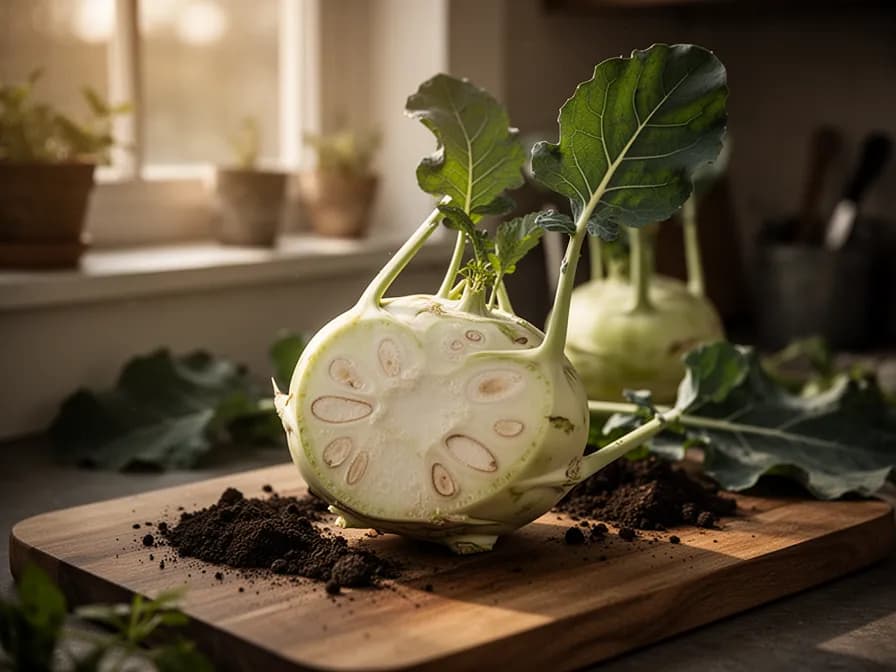
Kohlrabi Apple Slaw
15 minA crisp, refreshing slaw that showcases raw kohlrabi at its best. Julienned kohlrabi and tart apple tossed with a bright lemon-Dijon dressing. The perfect crunchy side dish for grilled meats or fish.
7 ingredients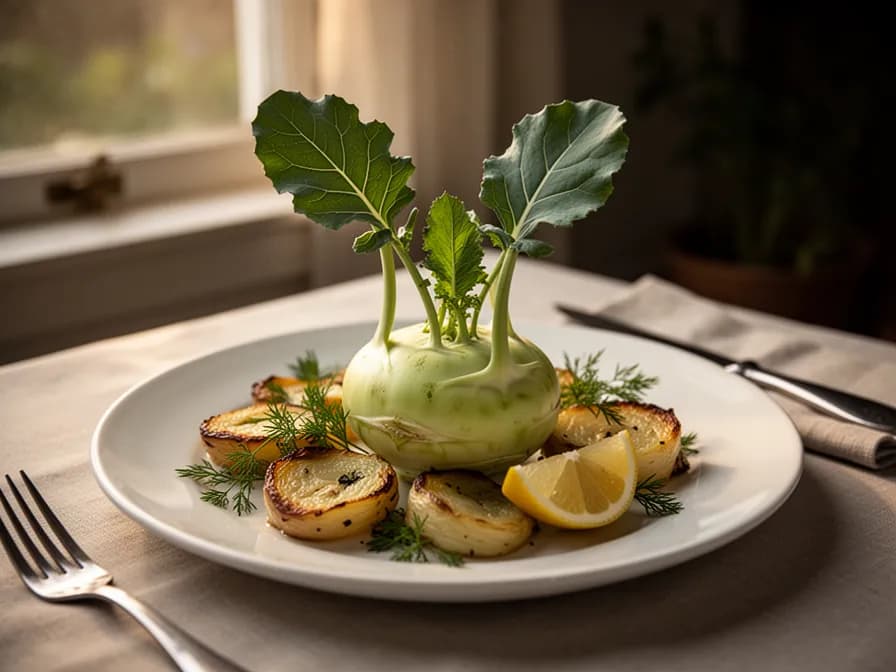
Roasted Kohlrabi Wedges
35 minHigh-heat roasting transforms kohlrabi into caramelized, golden wedges with a sweet, nutty flavor. A simple preparation that converts even kohlrabi skeptics. Excellent as a side dish or snack.
7 ingredientsCreamy Kohlrabi Soup
30 minA silky, comforting soup that highlights kohlrabi's delicate flavor. Simmered with potato and onion, then pureed until velvety smooth. A warming bowl that proves kohlrabi deserves a starring role.
8 ingredientsCulinary Uses
Kohlrabi is remarkably versatile and underappreciated in the kitchen. Raw, it has a crisp, juicy texture similar to a crisp apple or jicama with a mild brassica sweetness — peel and slice into sticks for crudites with hummus, grate into slaws with carrot and apple, or julienne for refreshing salads dressed with lemon vinaigrette. Children often enjoy raw kohlrabi sticks as a snack because of the mild, slightly sweet flavor and satisfying crunch. It substitutes beautifully for water chestnuts in stir-fries, maintaining its crunch even after brief cooking.
Roasting kohlrabi at high heat (220°C / 425°F) caramelizes the natural sugars beautifully — toss peeled wedges with olive oil, salt, and a pinch of smoked paprika for a simple, addictive side dish. Kohlrabi makes excellent creamy soups when peeled, cubed, simmered until tender, and pureed with a touch of cream and nutmeg. It can be mashed like turnips with butter and white pepper, or sliced thin and layered into gratins with cream and Gruyère cheese. Kohlrabi fries — cut into batons, tossed in oil and seasoning, and roasted until golden — are a lower-carb alternative to potato fries.
The young leaves are nutritious cooked as greens — sauté them with garlic and olive oil, or add to soups and stews in the last few minutes of cooking. In German and Central European cuisine, kohlrabi is traditionally served in a creamy white sauce (Kohlrabigemüse) as a comforting side dish. It pairs exceptionally well with cream, cheese, apple, caraway seeds, dill, lemon, mustard, and nutmeg. Pickled kohlrabi adds a crunchy, tangy element to grain bowls and sandwiches.
What's inside
Health Benefits
- Exceptional Vitamin C content — one cup of raw kohlrabi provides nearly 140% of the daily recommended intake, making it one of the richest vegetable sources of this essential antioxidant that supports immune function and skin health.
- Contains glucosinolates, sulfur-containing compounds found in brassica vegetables that break down into isothiocyanates during digestion. Research suggests these compounds may have anti-inflammatory and anti-cancer properties.
- High in dietary fiber (3.6g per cup), which supports healthy digestion, feeds beneficial gut bacteria, promotes satiety, and helps regulate blood sugar levels after meals.
- Good source of potassium (350mg per cup), an essential mineral that helps regulate blood pressure, supports proper muscle contraction, and maintains fluid balance in the body.
- Provides Vitamin B6 (pyridoxine), which plays a key role in brain development, neurotransmitter production, and the metabolism of proteins and red blood cells.
- Very low calorie density — only 27 calories per 100g — combined with high water content (91%) and good fiber, making kohlrabi an excellent food for weight management and healthy snacking.
Where Kohlrabi comes from
Kohlrabi's origins trace back to northern Europe, where it was developed through selective breeding of wild cabbage (Brassica oleracea) sometime in the late medieval period. Unlike its ancient brassica relatives — cabbage, kale, and broccoli, which have been cultivated for thousands of years — kohlrabi is a comparatively recent creation. The earliest reliable written descriptions come from the Italian botanist Mattioli in 1554, who noted it was already being grown in Germany and Italy. By the 1600s, kohlrabi had spread across Central and Northern Europe, particularly taking root in German-speaking regions where it became a kitchen staple.
The vegetable was brought to North America by European immigrants in the early 1800s, but it never achieved the widespread popularity it enjoys in its Central European heartland. Thomas Jefferson is recorded to have grown kohlrabi at Monticello, and it appeared in American seed catalogs throughout the 19th century. However, its unusual appearance — a swollen, above-ground stem studded with leaf stalks — may have limited its mainstream adoption compared to more familiar root vegetables like turnips and beets.
Today, kohlrabi remains most popular in Germany, Austria, Switzerland, and parts of Eastern Europe, where it is sold fresh in every market and used in a wide range of traditional dishes from creamy Kohlrabigemüse to hearty soups and salads. In India, particularly in Kashmir, a local variety called monj-hak has been cultivated for centuries and holds deep cultural significance in Kashmiri cuisine. Interest in kohlrabi has grown substantially in recent years among home gardeners and chefs worldwide, driven by its fast growth, mild flavor, versatility in the kitchen, and impressive nutritional profile.
Kohlrabi: did you know?
Fascinating facts about Kohlrabi
The name 'kohlrabi' comes from the German words 'Kohl' (cabbage) and 'Rübe' (turnip), literally meaning 'cabbage turnip' — even though the edible part is neither a head nor a root, but a swollen stem.
Kohlrabi questions, answered
When should I plant Kohlrabi?
What are good companion plants for Kohlrabi?
What hardiness zones can Kohlrabi grow in?
How much sun does Kohlrabi need?
How far apart should I space Kohlrabi?
What pests and diseases affect Kohlrabi?
How do I store Kohlrabi after harvest?
What are the best Kohlrabi varieties to grow?
What soil does Kohlrabi need?
Why did my kohlrabi bulb become woody and fibrous?
Can I eat kohlrabi leaves, or are they only for composting?
What is the difference between green and purple kohlrabi?
How do I grow the giant kohlrabi variety Superschmelz?
Can I grow kohlrabi in containers on a balcony?
When should I plant kohlrabi for a fall harvest?
You just read the theory. Now grow it on autopilot.
Everything that makes Kohlrabi fiddly — the timing, the spacing, the companions, the harvest window — is exactly what PlotMyGarden handles for you, for every plant in your garden.
A plan that knows your weather
Set your location once. Get sow, feed and harvest dates built around your real last-frost date and live forecast — no more guessing from a generic seed packet.
From the “When to plant” sectionDrag-and-drop bed planner
Design beds on a grid. Every plant snaps to its proper spacing, and you can see your whole season laid out before you spend a cent on seed.
From the “Growing guide” sectionCompanion conflicts, caught early
200+ good-and-bad pairings checked live as you plant — so a season-wrecking mistake never makes it into the ground.
From the “Companions” sectionReminders you'll actually act on
“Water the beans.” “Pick today before it turns.” Timely, specific, and tied to the plants you're really growing.
From the “Harvest” sectionSuccession, scheduled
Want a harvest for six weeks, not six days? It spaces your sowings automatically and reminds you when each new block is due.
From the “When to plant” sectionA record that gets smarter
Every harvest you log teaches it your garden. Next year's plan starts from what actually worked in your soil, not a textbook's.
From the “Overview” sectionPlant these alongside Kohlrabi
More Cruciferous
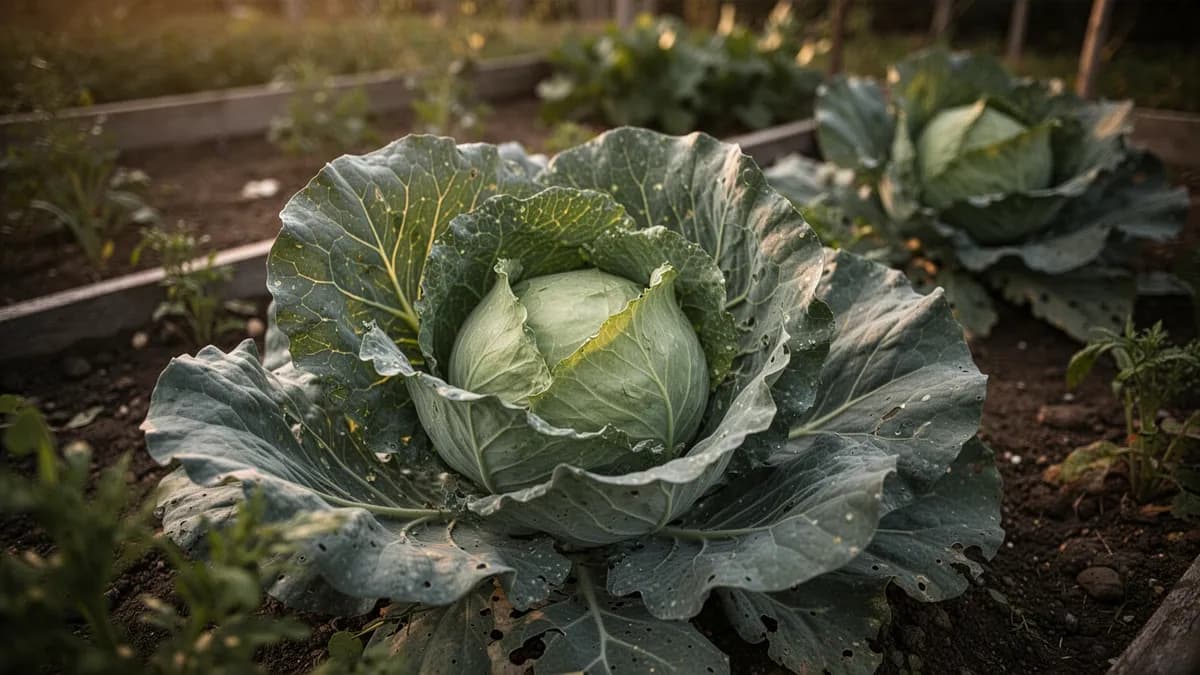
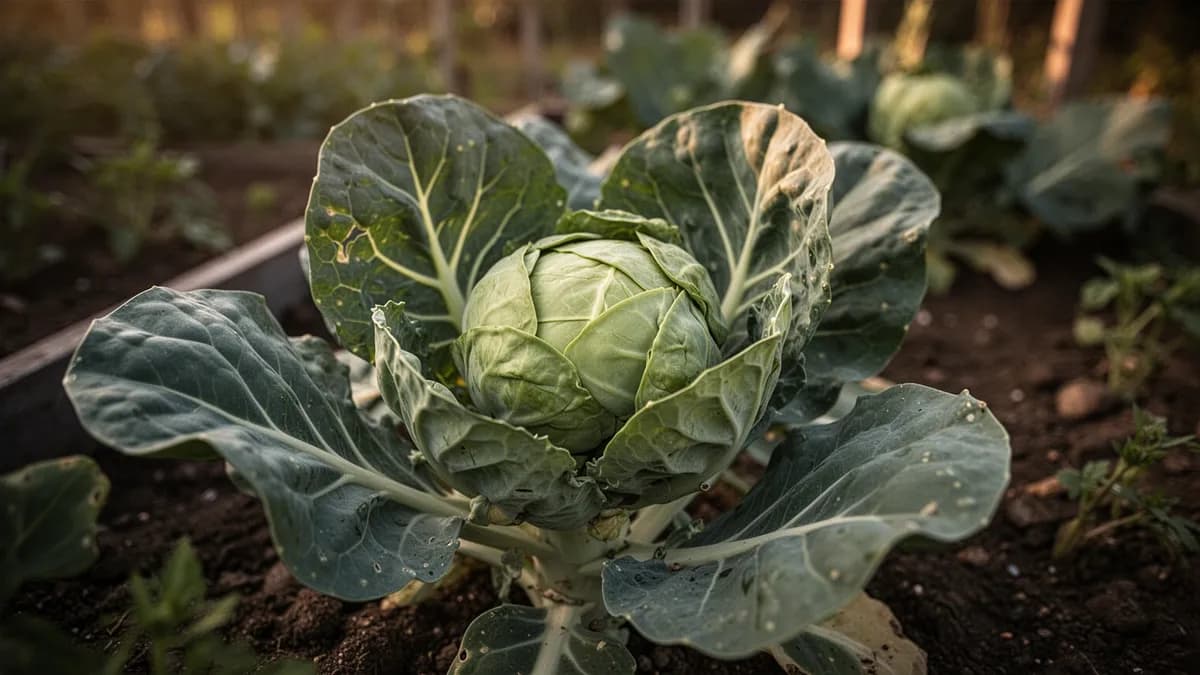
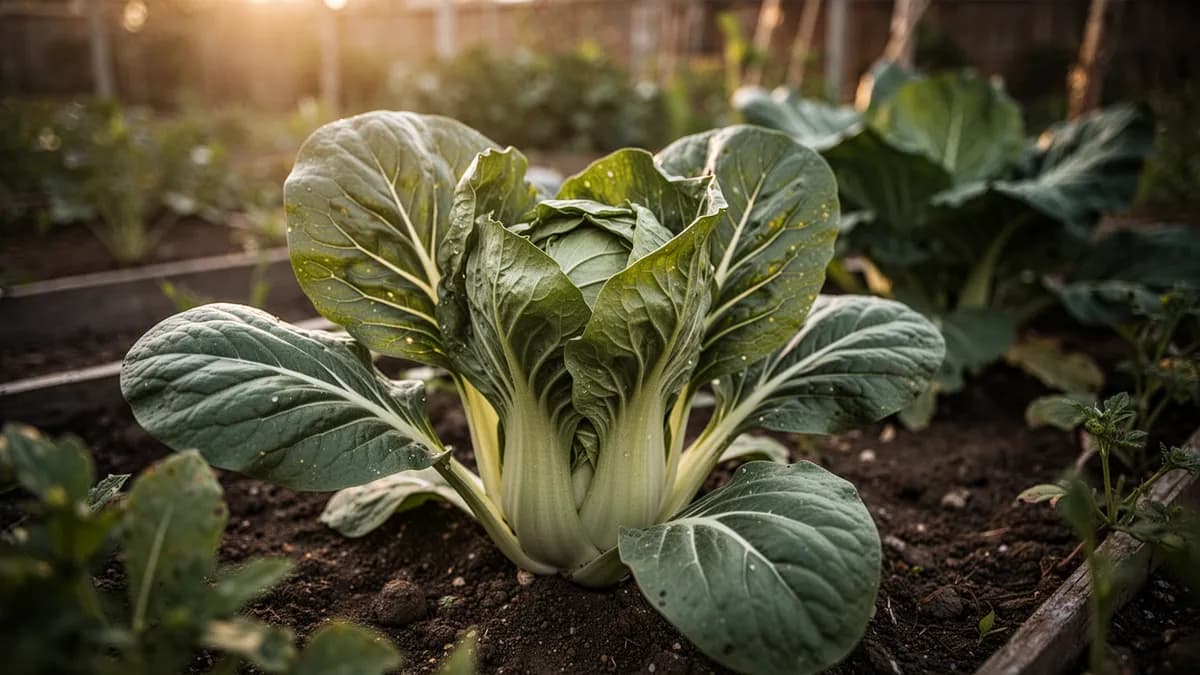
Keep Kohlrabi away from these
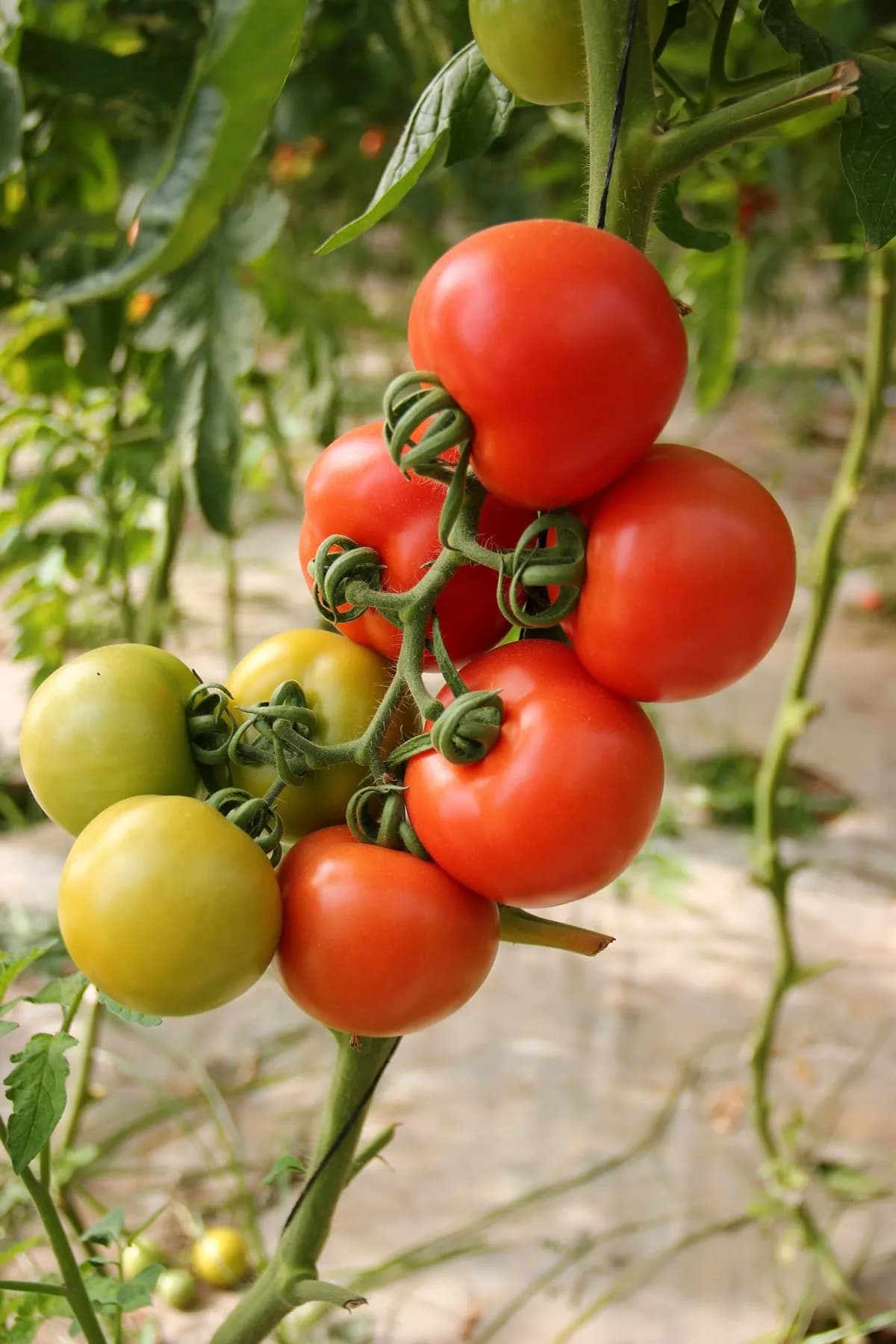
Garden plans featuring Kohlrabi
Grow your best Kohlrabi yet — and everything around it.
Start a free plan today. Lay out your beds, drop in your Kohlrabi, and let PlotMyGarden handle the timing, spacing, companions and reminders from seed to harvest basket.