Coles de Bruselas
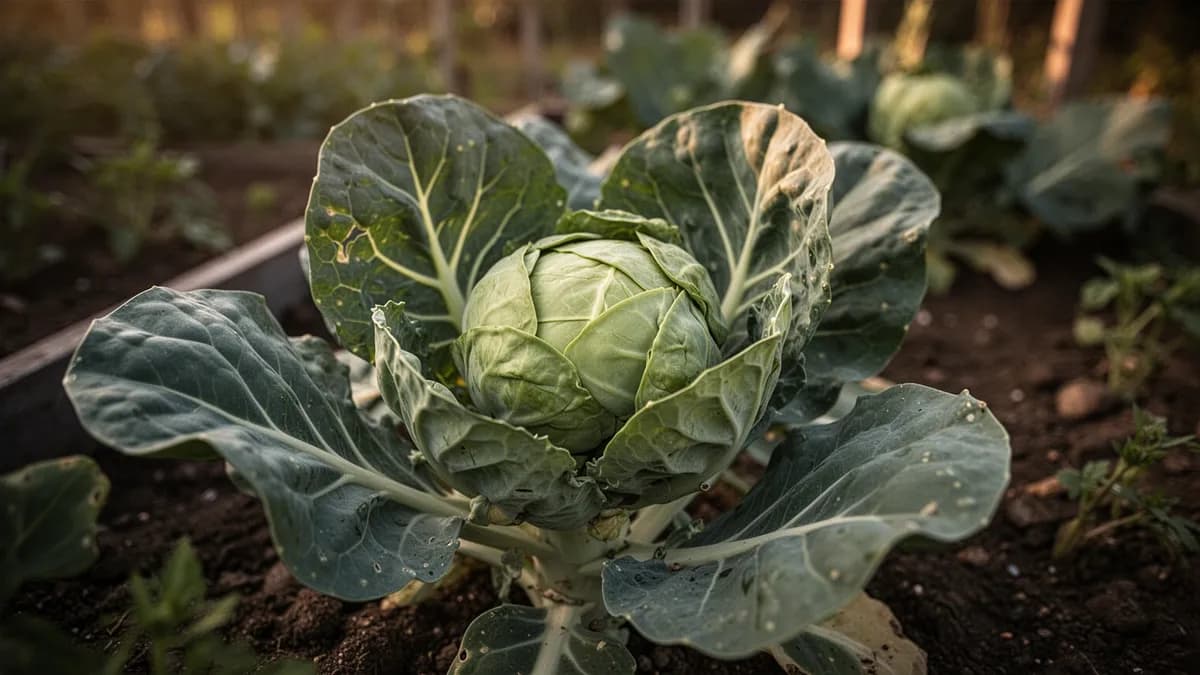
Una brassica de crecimiento lento que produce coles pequeñas similares al repollo a lo largo de un tallo central alto.





En esta páginaResumen
Conoce Coles de Bruselas
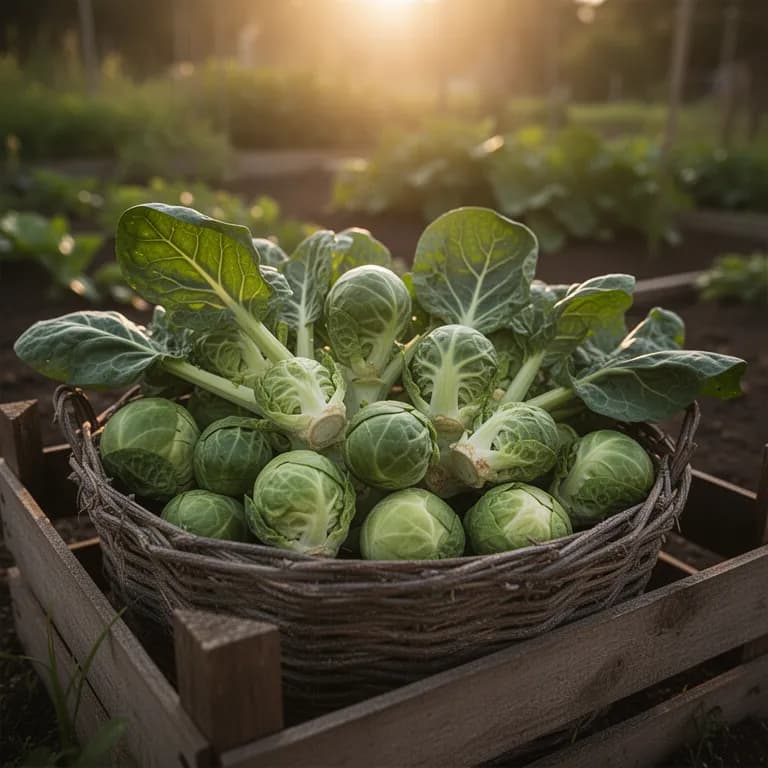
Una brassica de crecimiento lento que produce coles pequeñas similares al repollo a lo largo de un tallo central alto. Inicie semillas en interior en primavera para cosecha de otoño o principios de invierno, ya que las coles se desarrollan mejor en clima fresco. Retire hojas inferiores a medida que se forman las coles y estaque plantas altas para prevenir vuelco por viento. Coseche desde la parte inferior del tallo hacia arriba una vez que las coles alcancen 2,5-5 cm de diámetro para el mejor sabor a nuez y dulce.
Cuándo plantar Coles de Bruselas
Inicie semillas de coles de Bruselas en interior 12-16 semanas antes de la primera helada de otoño esperada — el tiempo es crítico porque las coles deben madurar durante clima fresco para el mejor sabor. Siembre semillas 6 mm de profundidad en mezcla estéril para iniciar semillas a 18-24°C. La germinación ocurre en 5-10 días. Mantenga plántulas a 15-18°C y proporcione 12-14 horas de luz brillante para crecimiento compacto y robusto. Transplante a macetas individuales cuando aparezcan las primeras hojas verdaderas. Endurezca por 7-10 días antes de trasplantar al exterior a finales de primavera o principios de verano. Cuente hacia atrás desde su fecha de primera helada de otoño para determinar la fecha de trasplante ideal. Las plántulas de coles de Bruselas son robustas y toleran heladas ligeras una vez establecidas.
Tu año de Coles de Bruselas
Ajustado a Zona 7 · temporada típica · la helada se va hacia el 2 abr y vuelve hacia el 1 nov
Planta Coles de Bruselas Abr – May y cosecha Oct – Dic. Consulta los métodos de plantación y elige tu clima para adaptar los periodos.
Cómo cultivar Coles de Bruselas
Las coles de Bruselas son un cultivo de temporada larga que demanda paciencia — requieren 90-120 días desde el trasplante hasta la cosecha y producen su mejor sabor después de exposición a heladas. Inicie semillas en interior 12-16 semanas antes de la primera helada de otoño esperada, sembrando 6 mm de profundidad a 18-24°C. Transplante plántulas endurecidas al exterior a finales de primavera hasta principios de verano, espaciando plantas 60-75 cm de distancia en hileras de 75-90 cm de separación. El objetivo es temporizar la maduración para finales de otoño o principios de invierno cuando temperaturas frescas endulzan las coles.
Elija una ubicación con pleno sol (6-8 horas diarias) y suelo muy fértil y firme que pueda anclar estas plantas altas y pesadas contra el viento. Prepare camas incorporando 8-10 cm de compost y un fertilizante de liberación lenta balanceado. Las coles de Bruselas son alimentadores pesados que necesitan nutrición constante durante toda su larga temporada de crecimiento. Firme el suelo alrededor de trasplantes y considere instalar estacas al momento de plantar, ya que plantas maduras pueden alcanzar 60-90 cm de alto y volverse pesadas en la parte superior con tallos cargados de coles.
Riegue profunda y consistentemente, proporcionando 2,5-4 cm por semana — humedad uniforme del suelo produce el desarrollo de coles más uniforme. Acolche con 5-8 cm de paja para conservar humedad y suprimir malezas. Abono lateral con fertilizante rico en nitrógeno cada 3-4 semanas hasta que las coles comiencen a formarse. Para fomentar coles más grandes y uniformes, retire la punta de crecimiento (2-3 cm superiores del tallo principal) aproximadamente 3-4 semanas antes de su fecha de cosecha prevista — esto redirige la energía de la planta hacia engrosar coles existentes en lugar de producir nuevas hojas. Retire hojas inferiores a medida que se desarrollan las coles para mejorar circulación de aire y permitir más luz a coles en desarrollo.
8 plantas caben en un bancal de 120 × 240 cm
Cada Coles de Bruselas pide 60 cm de margen. El planificador guarda ese marco por ti — cada planta, cada bancal.
Los mejores vecinos de Coles de Bruselas
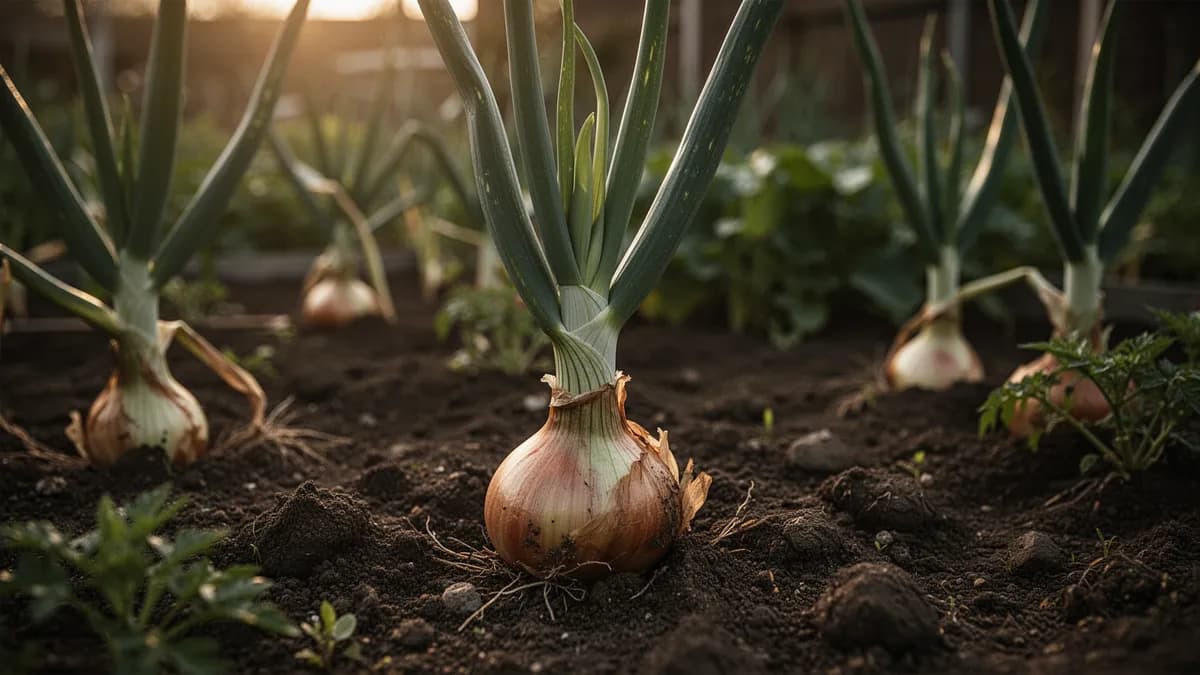
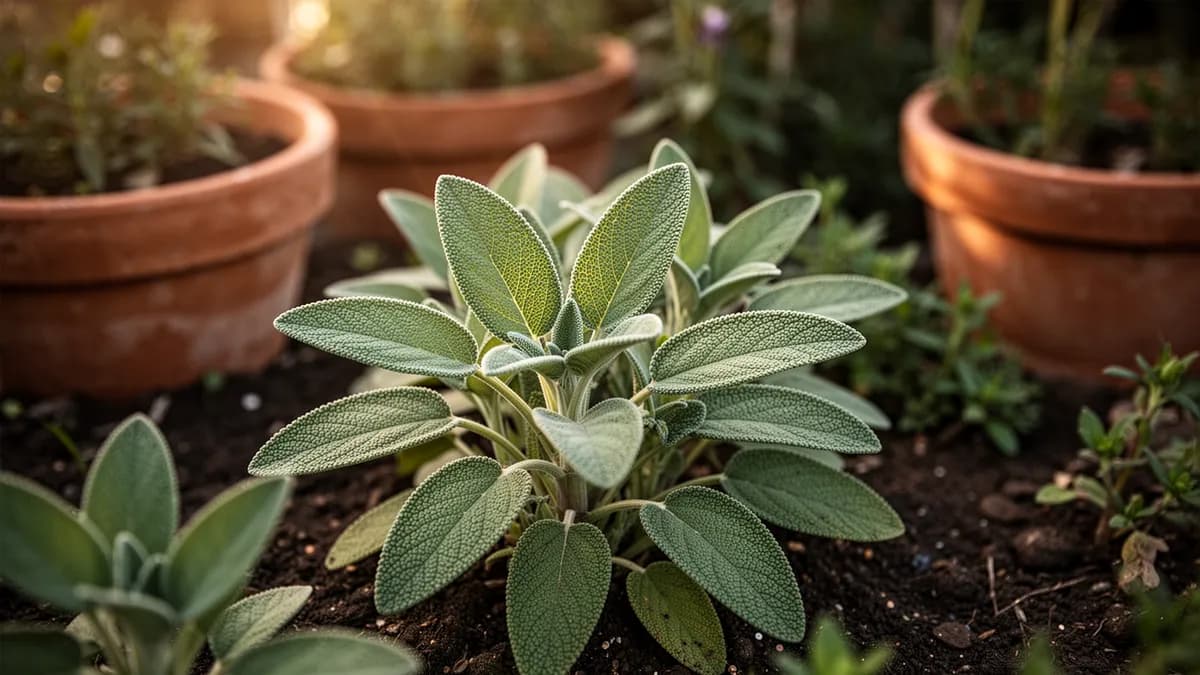
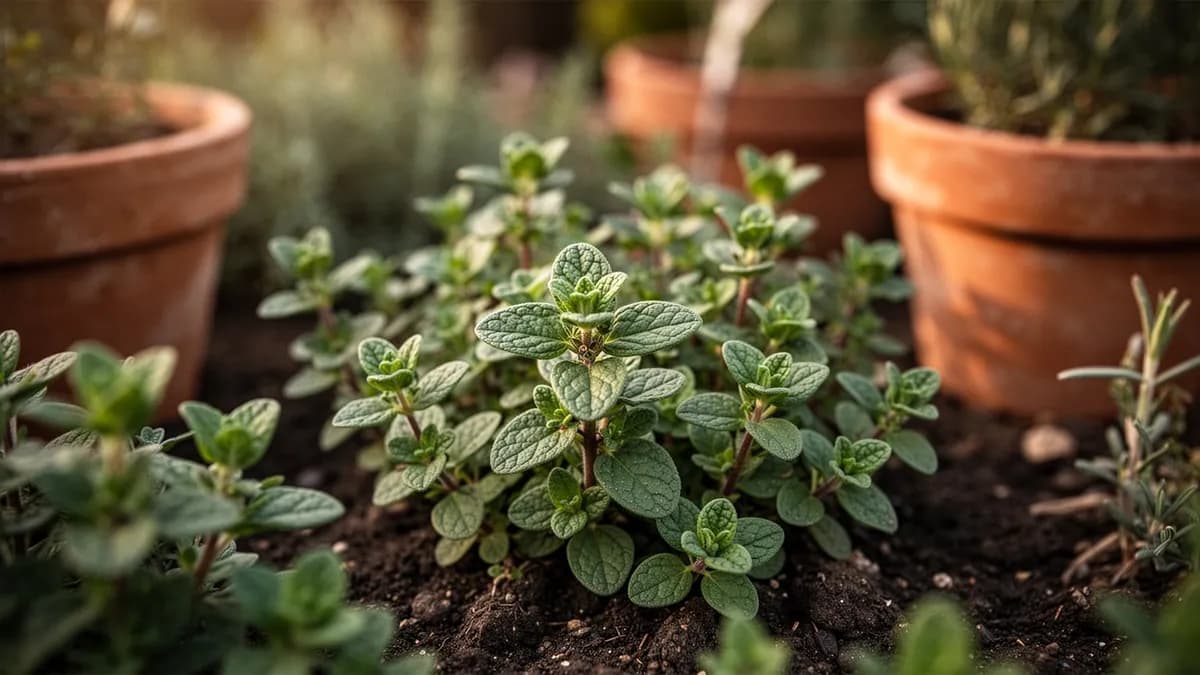
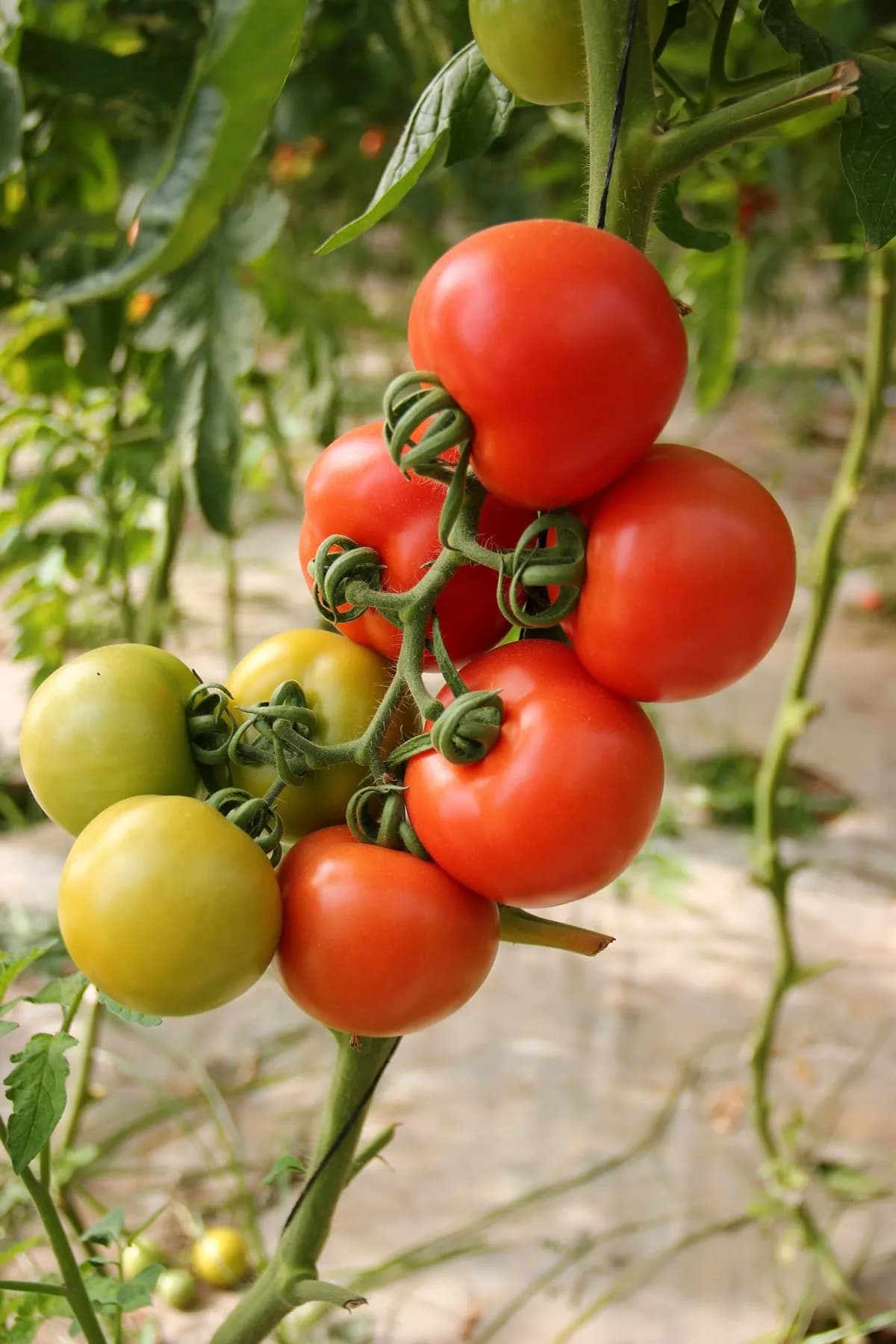
Cebollas y ajo plantados cerca disuaden pulgones y plagas de la col con su aroma de azufre picante, proporcionando protección valiosa durante la larga temporada de crecimiento de coles de Bruselas. Los aceites esenciales fuertes de la salvia repelen la mariposa blanca de la col, y su hábito de bajo crecimiento no compite con los tallos altos de coles. El tomillo atrae moscas sírfidas cuyas larvas son depredadores voraces de pulgones, mientras que su crecimiento cubresuelos suprime malezas alrededor de la base de las plantas altas. Evite plantar cerca de tomates, que son alimentadores pesados compitiendo por los mismos nutrientes durante una temporada larga, y cerca de fresas, que comparten susceptibilidad a patógenos comunes de suelo de brassica.
Cebolla va a su lado. Tomate no.
Saber de huerto de siempre, cotejado con la tabla real de Coles de Bruselas — prueba cualquier planta que cultives.
Prueba Coles de Bruselas en un bancal, aquí mismo
Un bancal real del planificador con Coles de Bruselas ya plantado. Toca una planta compañera para colocarla y mira cómo responde la comprobación de vecinos: verde para buenos vecinos, rojo si hay conflicto.


Guías de cultivo relacionadas
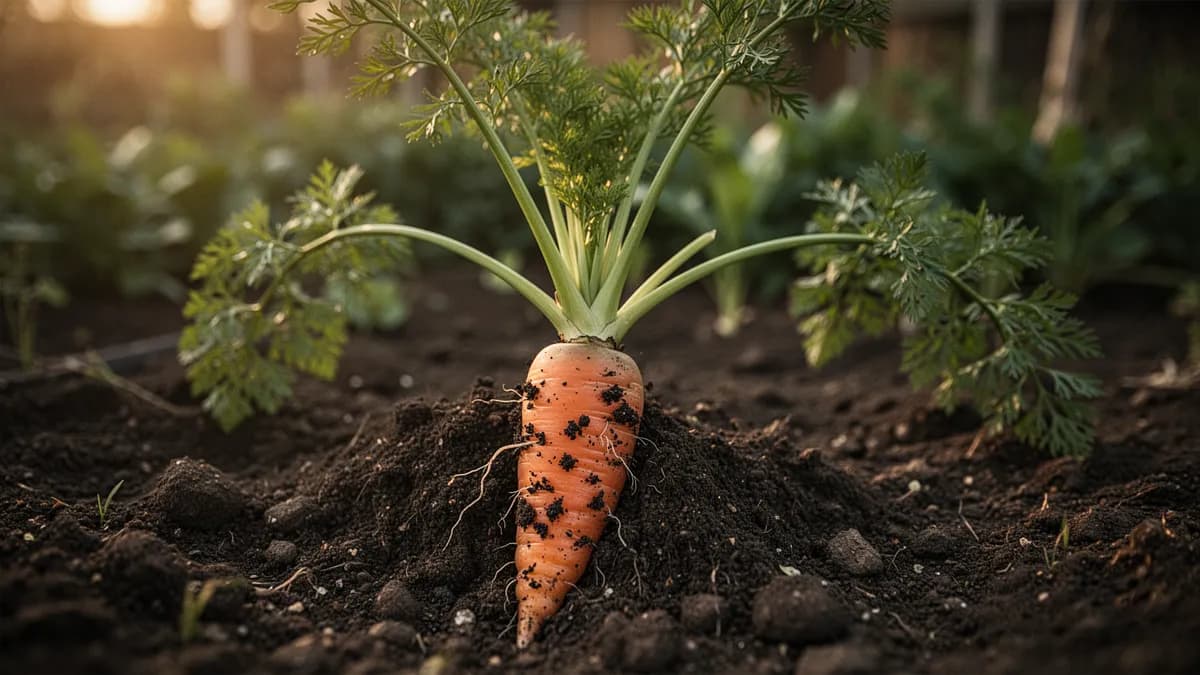
Abónalo bien
Las coles de Bruselas demandan suelo muy rico y firme con un pH de 6,0-7,5 y alto contenido de materia orgánica. Antes de plantar, incorpora 8-10 cm de compost bien añejo y un fertilizante de liberación lenta equilibrado (10-10-10) en los 30 cm superiores del suelo. Firma bien el suelo después de enmendar — esto es fundamental porque un suelo suelto produce plantas flojas y pesadas en la parte superior que se vuelcan con el viento y producen mal. Si tu suelo es arcilla pesada, mejora el drenaje incorporando arena gruesa y elevando los bancales 15-20 cm, pero no dejes el suelo demasiado esponjoso. Un grado moderado de firmeza ancla estas plantas altas durante las tormentas de otoño.
Las coles de Bruselas se encuentran entre los alimentadores más pesados del huerto debido a su larga temporada de crecimiento (90-120 días desde el trasplante). Abona lateralmente con una enmienda rica en nitrógeno como harina de sangre, emulsión de pescado o té de compost cada 3-4 semanas desde el trasplante hasta que las coles comiencen a formarse en el tallo inferior. Una vez que comience la formación de coles, reduce las aplicaciones de nitrógeno para evitar coles flojas, hojosas y mal formadas — cambia a un fertilizante con mayor fósforo y potasio (como 5-10-10) para apoyar el desarrollo denso de las coles. El exceso de nitrógeno en esta etapa es la causa más común de coles abiertas y esponjosas que nunca forman cabezas compactas.
Asegura un aporte adecuado de boro, que es un micronutriente crítico para las brassicas — la deficiencia de boro causa tallos huecos y corchosos y un pobre desarrollo de las coles. Aplica una solución de bórax (1 cucharada disuelta en 4 litros de agua por cada 10 metros cuadrados) una vez a mitad de temporada, o usa una mezcla de fertilizante que contenga boro. Encala los suelos ácidos para mantener el pH por encima de 6,0, ya que un pH bajo no solo limita la disponibilidad de nutrientes sino que aumenta drásticamente el riesgo de hernia de las coles. Un análisis de suelo en primavera antes de plantar guiará tus aplicaciones de cal y fertilizante con precisión.
Temperatura ideal
Compatibilidad de zonas de rusticidad
De la semilla a la cosecha, etapa por etapa
Siembra
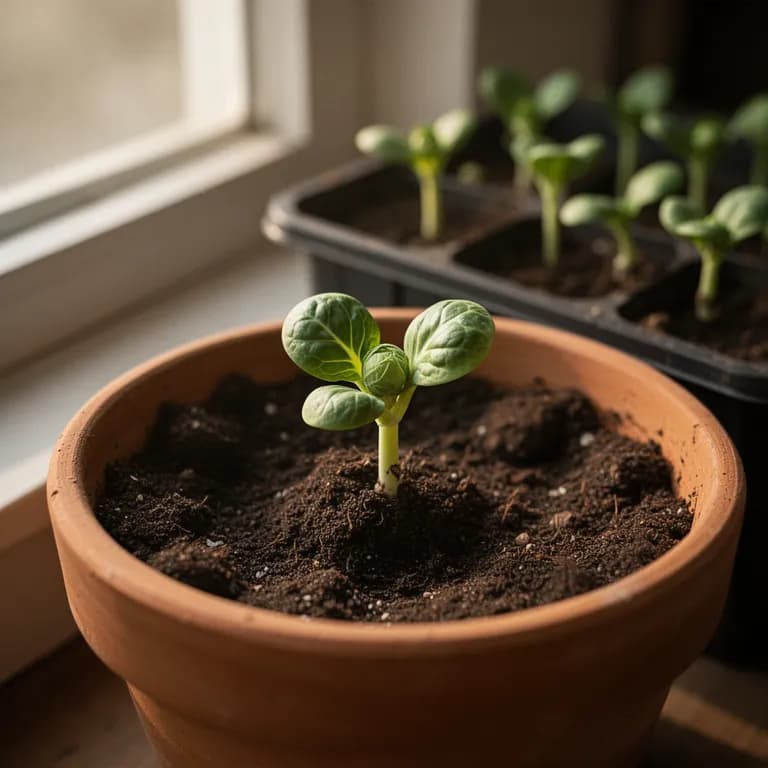
Las semillas germinan en interior en un sustrato de siembra cálido y húmedo. Lo primero que aparece es un par de cotiledones redondos, con forma de corazón. Las raíces se establecen rápidamente en condiciones cálidas antes de que las plántulas pasen a temperaturas más frescas.
Crecimiento de plántulas
Se desarrollan las hojas verdaderas con el característico tono azul verdoso y el ligero aspecto ceroso del follaje de las brassicas. El tallo se engrosa y las plántulas crecen de forma constante, formando 4-6 pares de hojas verdaderas antes de estar listas para el trasplante al exterior. Esta es una fase interior larga y propia de las coles de Bruselas.
Trasplante y establecimiento
Las plántulas endurecidas se trasplantan a su ubicación definitiva en exterior a finales de primavera o principios de verano. Las plantas establecen su sistema radicular en un suelo firme y fértil y comienzan un crecimiento vegetativo rápido. El tallo central se engrosa visiblemente y se despliegan grandes hojas en forma de pala.
Crecimiento vegetativo
La planta entra en una larga fase de crecimiento ascendente vigoroso, desarrollando un tallo central grueso que puede alcanzar 60-90 cm de altura. Las hojas grandes ascienden en espiral por el tallo y la planta se convierte en un gran consumidora de nutrientes que exige agua y fertilización constantes. Comienzan a formarse pequeñas yemas en las axilas de las hojas cerca de la base del tallo.
Formación de brotes
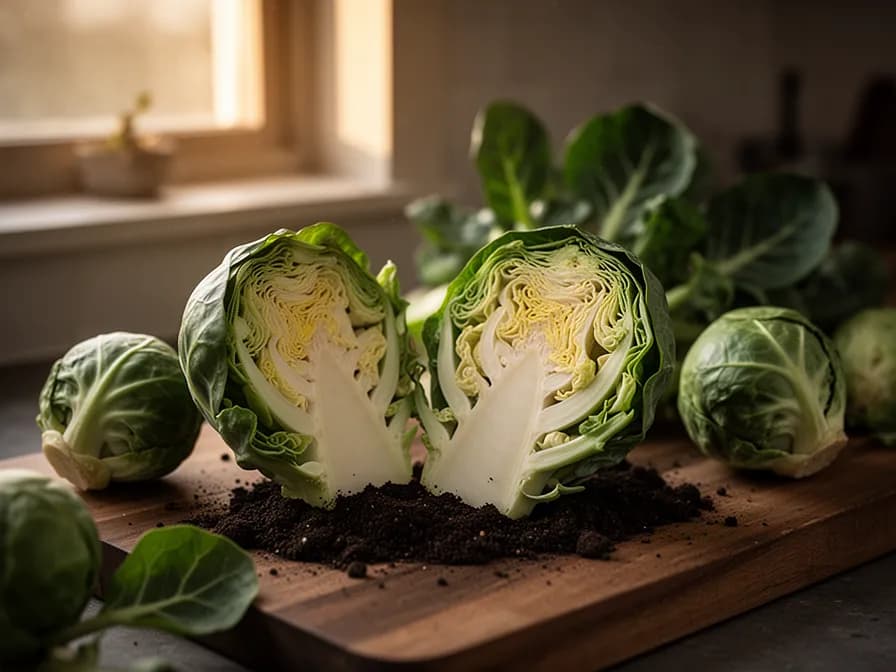
Las pequeñas cabezas parecidas a mini coles comienzan a engrosarse en las axilas de las hojas, empezando por la parte baja del tallo y avanzando hacia arriba. Cada brote se forma a partir de una yema lateral y se enrolla firmemente en una bola densa de hojas superpuestas. Esta es la fase más crítica para la calidad final de los brotes.
Endulzamiento por heladas
A medida que bajan las temperaturas otoñales y llegan las primeras heladas, la planta convierte los almidones almacenados en azúcares como mecanismo natural de protección contra el frío. Este período de endulzamiento transforma el sabor de ligeramente parecido a la col en claramente dulce y a nuez, la firma de las coles de Bruselas perfectamente cultivadas.
Cosecha
Los brotes se cosechan desde la parte baja del tallo hacia arriba cuando alcanzan 2,5-4 cm de diámetro y se sienten firmes al presionarlos. En climas suaves, la cosecha puede prolongarse durante muchas semanas a medida que los brotes superiores siguen madurando. Se puede cortar el tallo completo y almacenarlo para prolongar su uso fresco.
Mantén 18-24°C para la germinación. Cubre las bandejas con una campana de humedad hasta que aparezcan los brotes. Una vez emergidas, muévelas a un lugar más fresco de 15-18°C con 12-14 horas de luz intensa para evitar que se espiguen.
Cuidar Coles de Bruselas mes a mes
Qué hacer cada mes para tu Coles de Bruselas
Octubre
Mes actualBegin harvesting bottom sprouts as they reach 2.5-4 cm and feel firm. First frosts will sweeten remaining sprouts — do not rush the harvest. Pick from the bottom up. In cold zones, apply a thick layer of mulch around the base for root insulation.
Ten claro qué hacer en tu huerto, cada mes
Un correo al empezar cada mes: qué sembrar, plantar y hacer ahora mismo — para tu Coles de Bruselas y todo lo que crece alrededor. Más un breve curso inicial para esquivar los errores clásicos.
- Qué hacer ahora mismo
- Ajustado a tu temporada
- Curso inicial incluido
Cosechar Coles de Bruselas
Cosecha las coles de Bruselas comenzando desde la parte inferior del tallo y trabajando hacia arriba a medida que alcanzan 2,5-4 cm de diámetro y se sienten firmes al apretarlas. Tuerce cada col firmemente para desprenderla del tallo, o córtala con un cuchillo afilado lo más cerca posible del tallo central. Las coles inferiores maduran primero, con las superiores siguiendo durante varias semanas, lo que extiende el período de cosecha bien entrada la parte final del otoño y principios de invierno. Para el sabor más dulce, espera hasta después de una o dos heladas ligeras — temperaturas por debajo de -2°C activan la conversión de almidones a azúcares como respuesta natural de anticongelante, produciendo coles notablemente más dulces y con sabor a nuez.
Para cosechar todas las coles de una sola vez en un lote grande, retira la punta de crecimiento de la planta (los 2-3 cm superiores del tallo principal) aproximadamente 3-4 semanas antes de tu fecha de cosecha prevista. Esto obliga a la planta a redirigir la energía hacia el engrosamiento de todas las coles existentes simultáneamente en lugar de seguir produciendo hojas nuevas. También puedes cortar el tallo entero por la base, colgarlo boca abajo en un garaje fresco o bodega, e ir cosechando coles según las necesites — el tallo actúa como un sistema de almacenamiento natural, manteniendo las coles más frescas que si las recogieras individualmente.
Evita cosechar coles que todavía estén flojas y hojosas, ya que carecerán de la textura densa y sabor a nuez de las cabezas debidamente maduradas. Si las coles empiezan a amarillear o a abrirse, coséchalas inmediatamente sin importar el tamaño — las coles demasiado maduras se vuelven amargas y desagradables. En climas suaves (zonas 8-10), las plantas pueden seguir produciendo durante el invierno e incluso hasta principios de primavera, pero cúbrelas con manta térmica o un marco frío si las temperaturas caen por debajo de -12°C, ya que esto puede dañar incluso las variedades más resistentes.
se supone que plantas al comenzar el periodo — indica tu fecha real
Cosecha después de una o dos heladas ligeras, cuando los brotes estén firmes y midan 2,5-4 cm de diámetro.
Almacenamiento y conservación
Para el almacenamiento fresco más prolongado, conserva las coles de Bruselas en el tallo — un tallo entero cosechado almacenado en posición vertical en un cubo con poca agua en un garaje fresco o bodega (0-4°C) mantendrá las coles frescas durante 3-5 semanas. El tallo sigue suministrando humedad y nutrientes a las coles, conservando su textura crujiente y sabor dulce mucho más tiempo que las coles recogidas individualmente. Si necesitas guardar coles sueltas, colócalas sin lavar en una bolsa de plástico perforada en el cajón de verduras del refrigerador, donde se mantendrán por 1-2 semanas. Evita lavarlas antes de guardarlas, ya que el exceso de humedad acelera el deterioro.
La congelación es el método de conservación a largo plazo más práctico. Recorta las hojas exteriores, clasifica por tamaño y parte por la mitad las coles grandes para que las piezas queden uniformes. Escalda en agua hirviendo con sal durante 3 minutos (pequeñas) a 5 minutos (grandes), luego sumérgelas inmediatamente en agua con hielo durante el mismo tiempo para detener la cocción. Escurre bien sobre paños limpios, extiende en una sola capa sobre una bandeja de horno forrada con papel vegetal y congela hasta que estén sólidas antes de transferir a bolsas de congelador etiquetadas con el aire expulsado. Las coles correctamente congeladas se conservan por 10-12 meses y son ideales para platos asados, gratinados o sopas donde el ligero cambio de textura por la congelación pasa desapercibido.
El encurtido produce un condimento ácido excepcional — parte las coles pequeñas por la mitad, envásalas en frascos esterilizados con dientes de ajo, semillas de mostaza, granos de pimienta y hojuelas de pimiento rojo, luego vierte salmuera caliente de vinagre de sidra sobre ellas. Los encurtidos refrigerados están listos en 3-5 días y se conservan durante meses. La fermentación es otra opción: ralla las coles crudas, sálalas y envásalas en frascos para lactofermentar durante 1-2 semanas, produciendo una versión brassica del chucrut con beneficios probióticos. No se recomienda la deshidratación ya que la textura se vuelve desagradable al rehidratar.
Qué falla — y cómo solucionarlo
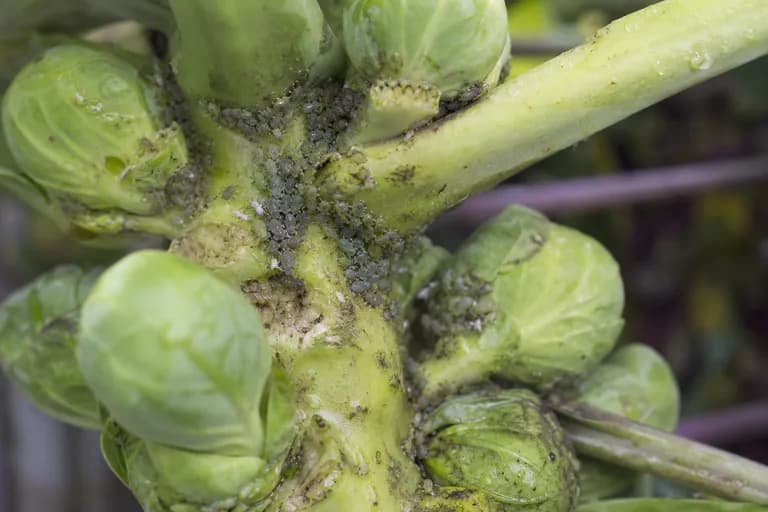
Pulgón de la col
PlagaColonias densas de pulgones verde-grisáceos con recubrimiento ceroso agrupados en los espacios estrechos entre coles en desarrollo y en el envés de hojas. Las coles se contaminan con melaza y moho negro, volviéndose difíciles de limpiar y poco apetitosas.
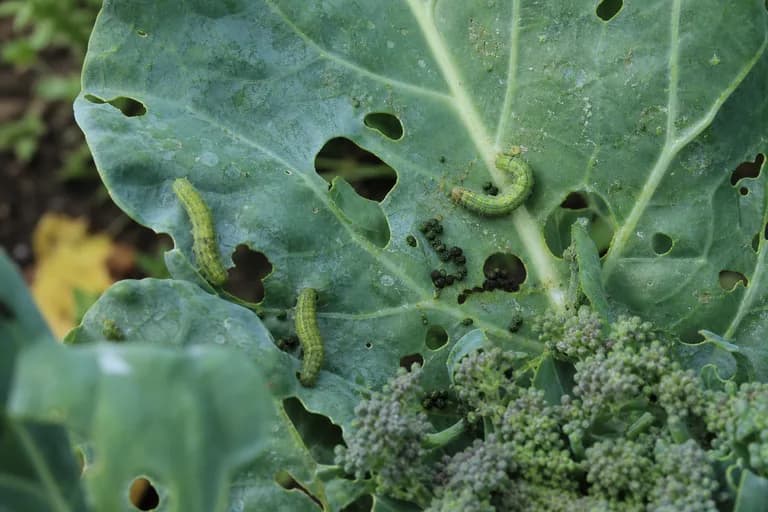
Gusano de la col
PlagaOrugas verdes alimentándose de hojas y horadando en coles en desarrollo, dejando agujeros desiguales y depósitos de excremento. Mariposas blancas activamente poniendo huevos señalan problemas de orugas próximos.
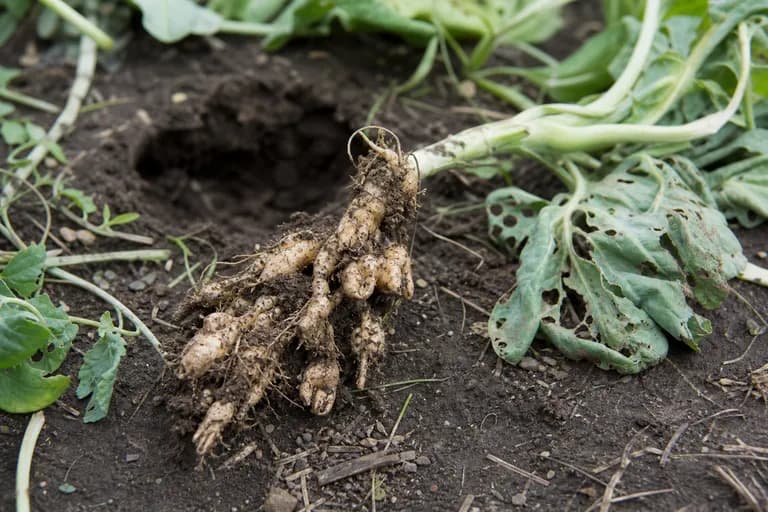
Hernia de las coles
EnfermedadLas plantas se marchitan durante tardes cálidas y se recuperan durante la noche, empeorando gradualmente. Las raíces se vuelven masivamente hinchadas y distorsionadas. Las plantas están atrofiadas y pueden producir pocas o ninguna col usable. El patógeno sobrevive en el suelo por 10-20 años.
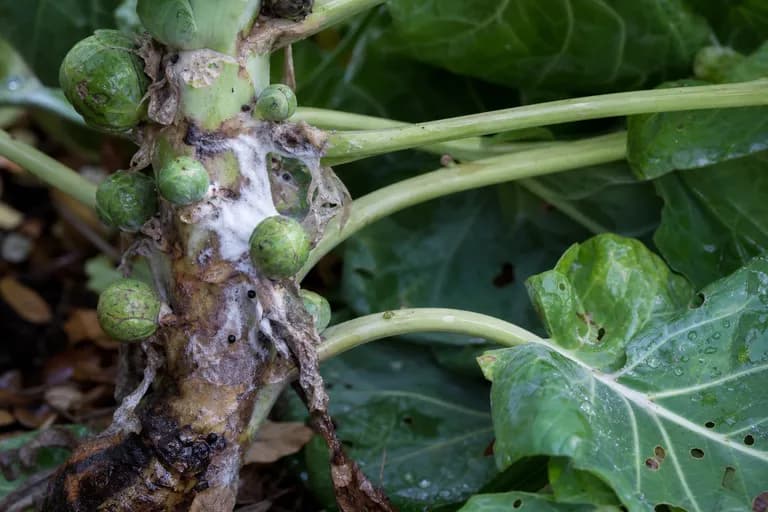
Moho blanco (Sclerotinia)
EnfermedadCrecimiento fúngico blanco y algodonoso apareciendo en tallos y alrededor de bases de coles, especialmente durante condiciones frescas y húmedas en otoño. El tejido afectado se vuelve suave y acuoso. Los esclerocios duros y negros se forman en el tejido en descomposición.
Solución de problemas comunes
Las coles flojas y abiertas que no forman cabezas compactas son la queja más frecuente, y las causas son casi siempre culturales más que genéticas. El exceso de nitrógeno durante la formación de coles es el principal culpable — reduce los fertilizantes ricos en nitrógeno una vez que las primeras coles comiencen a aparecer en el tallo inferior y cambia a una mezcla de fósforo-potasio. Las temperaturas altas durante el desarrollo de las coles (por encima de 24°C) también impiden la formación de cabezas compactas, por lo que programar el cultivo para que madure durante el fresco clima otoñal es esencial. Despuntar la planta (retirar la punta de crecimiento) 3-4 semanas antes de la cosecha obliga la energía hacia las coles existentes y mejora significativamente la densidad y uniformidad.
Las coles formándose de manera desigual — grandes abajo y diminutas arriba — es un comportamiento de crecimiento normal, no un problema. Las coles inferiores siempre maduran primero porque se formaron primero. Para fomentar que las coles superiores engrosen, retira progresivamente las hojas inferiores a medida que cosechas las coles de abajo, lo que redirige la energía de la planta hacia arriba y mejora la penetración de luz y aire hacia las coles superiores en desarrollo. Las plantas volcándose durante las tormentas de otoño es una frustración común causada por suelo suelto, plantación superficial o estacado insuficiente — firma bien el suelo al plantar, entierra los trasplantes ligeramente más profundo de lo que estaban en sus macetas, e instala estacas resistentes temprano en la temporada antes de que las plantas se vuelvan pesadas en la parte superior.
Las infestaciones de pulgones ocultas dentro de las grietas estrechas entre las hojas de las coles son notoriamente difíciles de tratar una vez establecidas, ya que los sprays no pueden penetrar las densas capas de hojas. La prevención mediante plantación compañera y monitoreo temprano en la temporada es mucho más efectiva que el tratamiento tardío. Para coles cosechadas con contaminación de pulgones, remójalas en agua fría con sal (2 cucharadas de sal por litro) durante 15-20 minutos — los pulgones flotan a la superficie y se enjuagan fácilmente. Las coles de sabor amargo son casi siempre resultado de estrés por calor durante el desarrollo o de cosechar antes de la exposición a heladas — espera siempre al menos una o dos heladas ligeras antes de recoger para obtener el sabor más dulce.
Consejos de cultivo
- Timing is everything with Brussels sprouts. Count backward 12-16 weeks from your first expected fall frost to determine when to start seeds indoors. Sprouts that mature in hot weather will be loose, bitter, and disappointing — they must ripen in cool autumn temperatures for proper flavor and head formation.
- Firm, well-compacted soil is critical. Unlike most vegetables that prefer loose, fluffy soil, Brussels sprouts need firm ground to anchor their tall, top-heavy stalks against autumn winds. Press soil firmly around transplants and consider hilling soil around the base as plants grow.
- Top your plants 3-4 weeks before harvest by removing the growing tip (top 2-3 cm of the main stem). This is the single most effective technique for producing uniform, dense, well-sized sprouts — it forces the plant to put all its energy into the existing sprouts rather than continuing to grow taller.
- Remove lower leaves progressively as sprouts develop. Start stripping leaves from the bottom when the lowest sprouts begin to swell, working your way up the stalk over the weeks. This improves air circulation, reduces disease pressure, directs energy to the sprouts, and allows better light penetration.
- Stake tall varieties early in the season, before they become top-heavy with sprouts. A single sturdy bamboo pole or wooden stake per plant, with soft ties at two or three points along the stem, prevents the devastating toppling that can snap stems and ruin entire plants during autumn storms.
- Wait for frost before harvesting whenever possible. Brussels sprouts are one of the rare vegetables that actually improve with cold exposure — the plant converts starches to sugars as a natural cold-protection mechanism, producing noticeably sweeter, more complex-flavored sprouts after the first few frosts.
- Water deeply and consistently throughout the long growing season — 2.5-4 cm (1-1.5 inches) per week. Inconsistent watering causes uneven sprout development and can stress plants during the critical sprout formation phase. Drip irrigation or soaker hoses are ideal for brassicas.
- Monitor for aphids early and often. Cabbage aphids are the most persistent pest of Brussels sprouts, and once they colonize the tight crevices between sprout leaves, they are extremely difficult to dislodge. Early detection and treatment with insecticidal soap prevents the need for labor-intensive post-harvest soaking.
- Avoid excessive nitrogen once sprouts begin forming. Heavy nitrogen produces lush foliage but loose, fluffy sprouts that never form tight heads. Switch to a phosphorus-potassium fertilizer once the first sprout buds appear in the lower leaf axils.
- Rotate Brussels sprouts (and all brassicas) on a 3-4 year cycle. Planting brassicas in the same soil year after year builds up clubroot, black rot, and other soilborne diseases that can persist for over a decade. Keep detailed garden records of where you planted brassicas each year.
Cultiva tu mejor Coles de Bruselas — y todo lo que la rodea.
Empieza un plan gratis hoy. Diseña tus bancales, coloca tu Coles de Bruselas y deja que PlotMyGarden gestione el momento, el espaciado, las asociaciones y los recordatorios de la semilla a la cesta.
Elige tu Coles de Bruselas
Long Island Improved
Un heirloom compacto creciendo solo 50-60 cm de alto con racimos densos de coles verde oscuro de 2,5 cm. 90 días desde trasplante. Productor fiable ampliamente adaptado a jardines caseros. Polinización abierta.
Jade Cross
Un híbrido vigoroso con excelente resistencia a enfermedades y altos rendimientos de coles uniformes y firmemente empacadas. 95 días. Tolerante de condiciones más cálidas que la mayoría de variedades. Plantas compactas resisten a vuelco.
Diablo
Un híbrido de alto rendimiento produciendo grandes números de coles redondas y lisas a lo largo de un tallo alto. 110 días. Excelente calidad de retención — las coles permanecen firmes en la planta por una ventana de cosecha extendida.
Falstaff
Una variedad rojo-púrpura impresionante con coles que intensifican en color después de exposición a heladas. 100 días. Más suave y dulce que variedades verdes. El color resiste bien cuando se asa ligeramente o saltéa.
Nautic
Un híbrido de temporada tardía criado por sabor sobresaliente y tolerancia al frío, produciendo coles bien entrado el invierno. 120 días. Coles lisas y densas con excelente sabor a nuez-dulce después de exposición repetida a heladas.
A single Brussels sprouts plant costs $2-4 as a seedling or pennies when grown from seed, yet produces 1-1.5 kg (2-3 lbs) of sprouts over an extended autumn-winter harvest. At organic grocery prices of $6-10 per kg, a modest 6-plant row can yield $40-90 worth of Brussels sprouts. The extended harvest period — often spanning 2-3 months — provides fresh sprouts over many weeks, far outlasting a single grocery store purchase.
Recetas rápidas
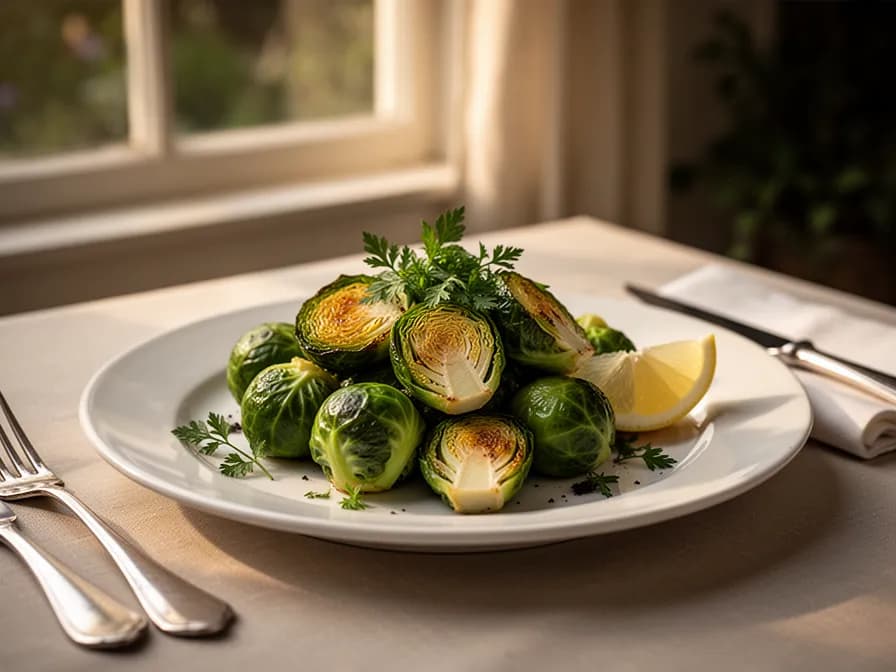
Crispy Roasted Brussels Sprouts
30 minThe preparation that converted millions of Brussels sprouts skeptics. Halved sprouts roasted at high heat until the cut faces are deeply golden and caramelized, with crispy outer leaves and a tender, sweet center. The secret is a hot oven, a single layer, and not overcrowding the pan.
7 ingredientesShaved Brussels Sprouts Salad
15 minA fresh, crunchy winter slaw that showcases raw Brussels sprouts at their best. Thinly shaved sprouts tossed with a bright lemon vinaigrette, toasted pecans, dried cranberries, and shaved Parmesan create a salad with incredible texture contrast and a balance of sweet, tart, salty, and nutty flavors.
8 ingredientesMaple-Bacon Brussels Sprouts
35 minThe ultimate crowd-pleasing Brussels sprouts dish — salty, crispy bacon meets sweet maple glaze over perfectly roasted sprouts. This combination of smoky, sweet, and savory flavors has won over even the most stubborn Brussels sprouts doubters at countless holiday tables.
7 ingredientesUsos culinarios
Las coles de Bruselas han experimentado un renacimiento culinario — asar coles partidas por la mitad a calor alto (220°C) con aceite de oliva hasta caramelizarse y con bordes crujientes ha convertido a muchos ex escépticos. Combinan excepcionalmente bien con tocino, vinagre balsámico, jarabe de arce, parmesano, nueces, arándanos y mostaza. Ralle coles crudas para ensaladas, fría hojas profundamente para chips crujientes o brasee coles enteras en salsa de crema. Evite hervir, que produce el sabor sulfuroso que a la mayoría de la gente no le gusta. Las coles de Bruselas son ricas en vitaminas C y K, fibra, folato y contienen glucosinolatos con beneficios potenciales para la salud.
Qué contiene
Beneficios para la salud
- Exceptionally high in Vitamin C — a single 80g serving provides over 75% of daily needs, supporting immune function, collagen synthesis, wound healing, and iron absorption from plant foods.
- One of the richest vegetable sources of Vitamin K1, critical for proper blood clotting and increasingly recognized for its role in maintaining bone density and reducing fracture risk.
- Contains high levels of glucosinolates, sulfur-containing compounds unique to cruciferous vegetables that the body converts to isothiocyanates — bioactive molecules with documented anti-inflammatory and potential anti-cancer properties in laboratory and observational studies.
- Rich in the antioxidant kaempferol, which research suggests may reduce chronic inflammation, protect against oxidative cell damage, and support cardiovascular health.
- High dietary fiber content (3.8g per 100g) promotes healthy digestion, feeds beneficial gut bacteria, supports blood sugar regulation, and contributes to long-lasting satiety after meals.
- Provides significant folate (15% DV per serving), an essential B-vitamin for DNA synthesis, red blood cell formation, and healthy fetal development during pregnancy.
De dónde viene Coles de Bruselas
Brussels sprouts are believed to have been first cultivated in the region around Brussels, Belgium, in the 13th century, though the exact origins are debated by agricultural historians. They likely evolved from wild cabbage (Brassica oleracea) through centuries of selective breeding by Flemish farmers who favored plants producing dense axillary buds along a tall central stalk rather than a single terminal head like cabbage. The first written references to Brussels sprouts appear in Belgian market records from 1587, and by the late 1600s they were a firmly established crop throughout the Low Countries.
French settlers introduced Brussels sprouts to Louisiana in the 1800s, and the vegetable gradually spread across North America, though it remained far more popular in Europe — particularly in Britain, Belgium, and the Netherlands — than in America for most of the 20th century. In Britain, Brussels sprouts became inseparable from the traditional Christmas dinner during the Victorian era, a tradition that continues to this day and drives enormous seasonal demand.
The vegetable's reputation suffered greatly from decades of institutional overcooking — boiling sprouts until soft and sulfurous became the standard preparation in school cafeterias and hospitals, creating generations of Brussels sprouts skeptics. The renaissance began in the 2000s as chefs discovered that high-heat roasting, frying, and shredding produced entirely different flavors. Simultaneously, Dutch seed companies quietly revolutionized the crop by breeding out the most bitter-tasting glucosinolate compounds, producing inherently sweeter, milder modern varieties. Today, Brussels sprouts are among the fastest-growing specialty vegetables in popularity, with demand increasing year over year as home cooks and restaurants alike celebrate their transformation from maligned side dish to culinary star.
Coles de Bruselas: ¿sabías que?
Datos fascinantes sobre Coles de Bruselas
Brussels sprouts get their name from Brussels, Belgium, where they were widely cultivated as early as the 13th century. They remain a beloved staple of Belgian cuisine to this day.
Coles de Bruselas: preguntas frecuentes
¿Cuándo debo plantar Coles de Bruselas?
¿Cuáles son buenas plantas acompañantes para Coles de Bruselas?
¿En qué zonas de rusticidad puede crecer Coles de Bruselas?
¿Cuánto sol necesita Coles de Bruselas?
¿A qué distancia debo espaciar Coles de Bruselas?
¿Qué plagas y enfermedades afectan a Coles de Bruselas?
¿Cómo almaceno Coles de Bruselas después de la cosecha?
¿Cuáles son las mejores variedades de Coles de Bruselas para cultivar?
¿Qué suelo necesita Coles de Bruselas?
Why are my Brussels sprouts not forming tight heads?
When should I plant Brussels sprouts for the best flavor?
How do I deal with aphids hiding inside my Brussels sprouts?
Can I grow Brussels sprouts in containers?
Why do my Brussels sprouts taste bitter?
How long does it take to grow Brussels sprouts from seed to harvest?
Acabas de leer la teoría. Ahora cultívala en piloto automático.
Todo lo que hace que Coles de Bruselas sea delicado — el momento, el espaciado, las asociaciones, la ventana de cosecha — es justo lo que PlotMyGarden resuelve por ti, para cada planta de tu huerto.
Un plan que conoce tu clima
Indica tu ubicación una vez. Recibe fechas de siembra, abonado y cosecha basadas en tu última helada real y el pronóstico en vivo — sin adivinar con un sobre genérico.
De la sección “Cuándo plantar”Planificador de bancales de arrastrar y soltar
Diseña bancales sobre una cuadrícula. Cada planta encaja con su espaciado correcto y ves toda la temporada antes de gastar un céntimo en semillas.
De la sección “Cultivo”Conflictos de asociación, detectados a tiempo
Más de 200 buenas y malas combinaciones comprobadas en vivo mientras plantas — para que un error que arruine la temporada nunca llegue a la tierra.
De la sección “Asociaciones”Recordatorios que sí vas a seguir
“Riega las judías.” “Recoge hoy antes de que se pase.” Oportunos, concretos y ligados a las plantas que de verdad cultivas.
De la sección “Cosecha”Escalonado, programado
¿Quieres cosechar seis semanas en vez de seis días? Reparte tus siembras automáticamente y te avisa cuando toca el siguiente lote.
De la sección “Cuándo plantar”Un registro que se vuelve más listo
Cada cosecha que registras le enseña tu huerto. El plan del año que viene parte de lo que de verdad funcionó en tu suelo, no en un manual.
De la sección “Resumen”Planta estos junto a Coles de Bruselas
Más Crucíferas
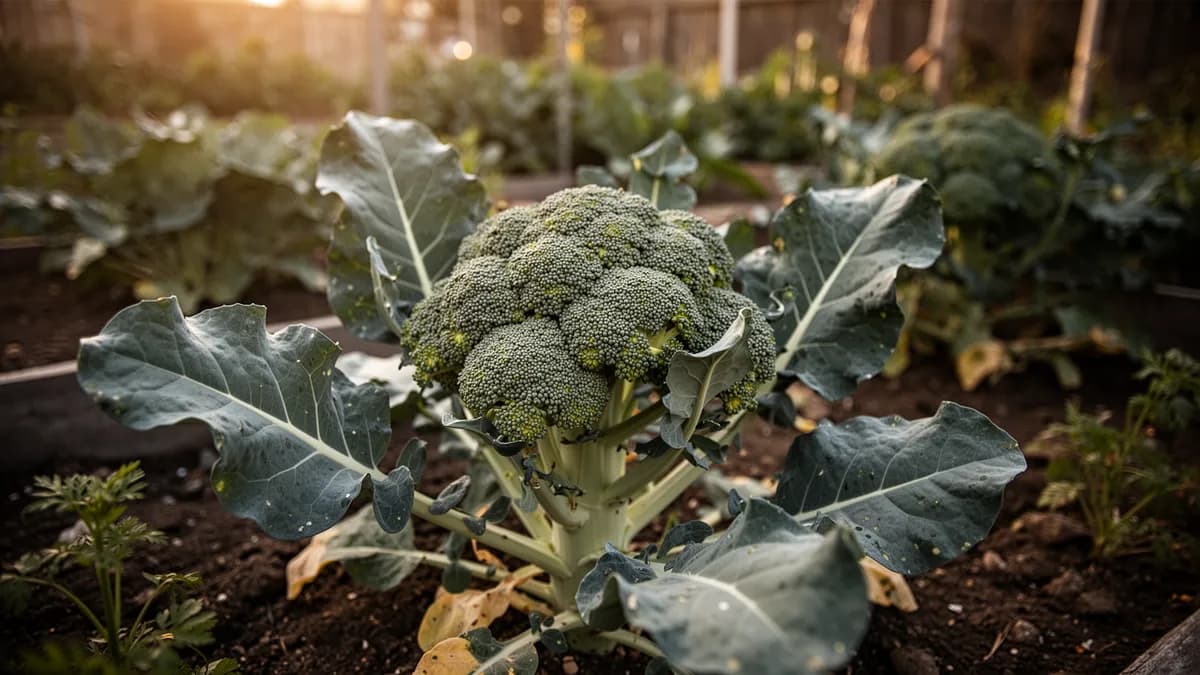
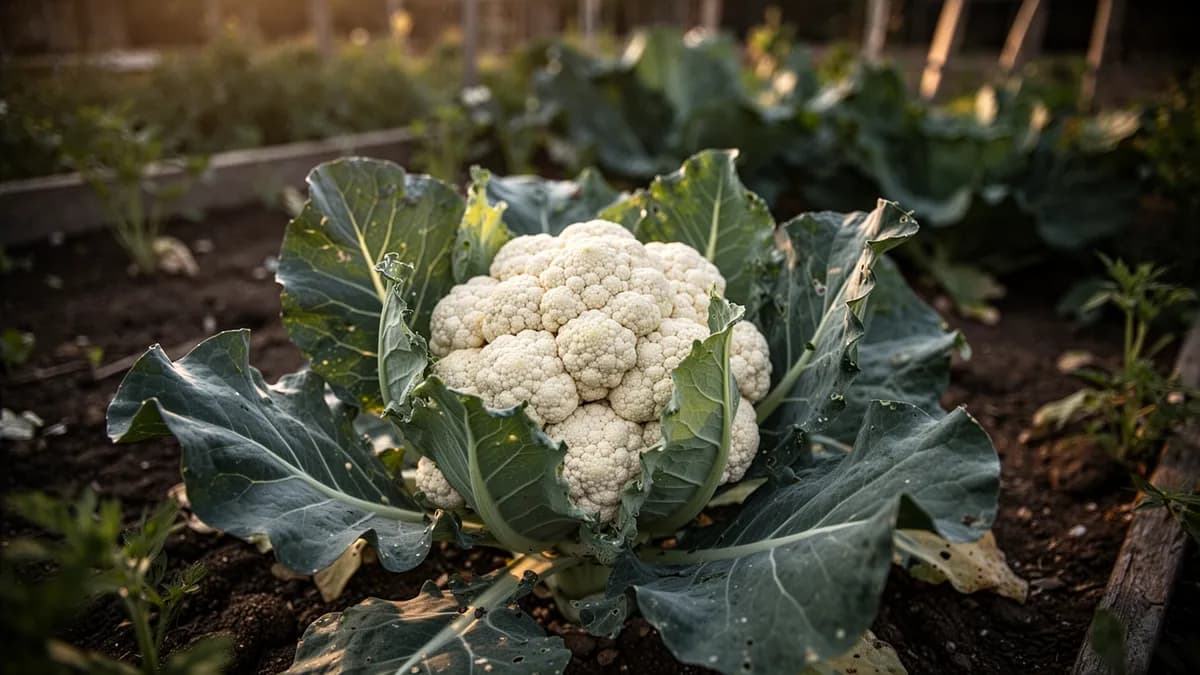
Mantén Coles de Bruselas lejos de estos
Diseños de jardín con Coles de Bruselas
Cultiva tu mejor Coles de Bruselas — y todo lo que la rodea.
Empieza un plan gratis hoy. Diseña tus bancales, coloca tu Coles de Bruselas y deja que PlotMyGarden gestione el momento, el espaciado, las asociaciones y los recordatorios de la semilla a la cesta.