Saskatoon Berry
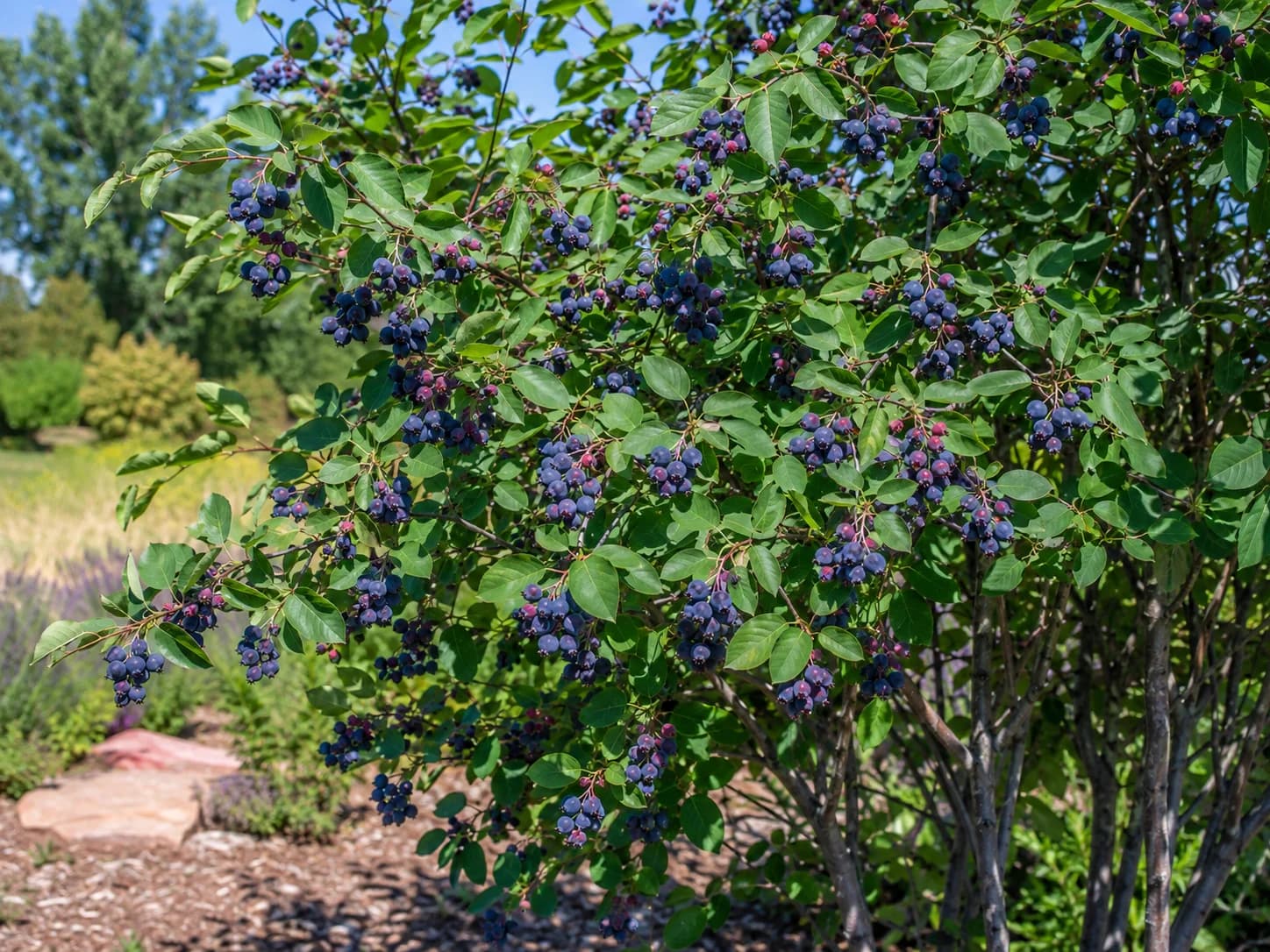
An exceptionally hardy multi-stemmed shrub or small tree producing clusters of fragrant white star-shaped blossoms in spring followed by sweet, deep blue-purple berries with a flavor often compared to a richer, almond-tinged wild blueberry.





On this pageOverview
Meet Saskatoon Berry
An exceptionally hardy multi-stemmed shrub or small tree producing clusters of fragrant white star-shaped blossoms in spring followed by sweet, deep blue-purple berries with a flavor often compared to a richer, almond-tinged wild blueberry. Native to the Canadian Prairies and the northern Great Plains, Saskatoon Berry tolerates winter lows to -50 °C, drought, and lean soils that defeat most other fruit-bearing woody plants. The brilliant red-orange autumn foliage rivals any ornamental shrub, making it as valuable in the landscape as it is in the kitchen, where its pies, jams, and syrups remain a signature taste of Western Canada. Long-lived clumps remain productive for 30 to 50 years and require remarkably little care once established.
When to plant Saskatoon Berry
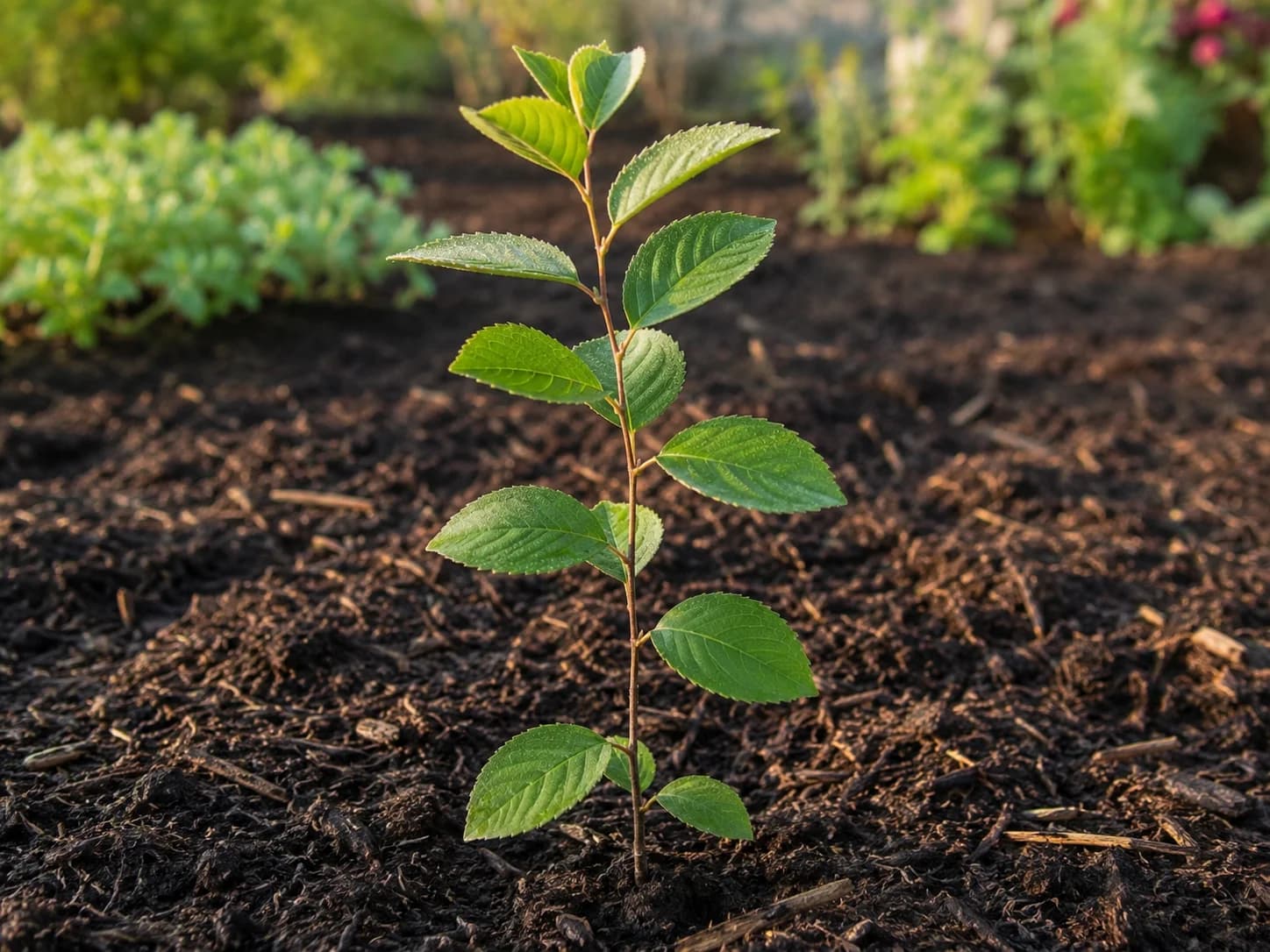
While Saskatoon Berry can be grown from seed, this is rarely the right choice for home gardeners. Seed-grown plants are genetically variable, often produce inferior fruit, and take 4-6 years to bear their first crop. Far better is to start with named-cultivar bare-root or container-grown stock from a reputable nursery. If you nonetheless want to grow from seed, collect fully ripe berries in July, mash gently to release the small soft seeds, rinse free of pulp, and dry briefly. The seeds require 90-120 days of cold-moist stratification at 1-5 °C before germination — typically achieved by mixing seed with damp peat or vermiculite in a sealed bag inside the refrigerator. After stratification, sow at 5 mm depth in deep pots of seed-starting mix at 18-22 °C; expect germination in 14-28 days. Pot seedlings into individual containers once they have two sets of true leaves, then grow on for a full season before transplanting outdoors. Alternatively, take softwood cuttings in June from current-year growth — these root reliably with bottom heat and rooting hormone and produce genetically identical clones of the parent plant in half the time of seed-grown stock.
Your Saskatoon Berry Year
Composed for Zone 7 · typical seasons · frost passes Apr 2, returns Nov 1
Sow Saskatoon Berry Mar – May, Oct – Nov, pick Jun – Jul. Set your climate below and every date on this plate re-times itself.
How to grow Saskatoon Berry
Saskatoon Berry is one of the easiest fruit-bearing woody plants for cold climates, but a few site decisions made at planting time determine the next three decades of productivity. Choose a full-sun site with well-drained loam, ideally on a gentle slope or raised bed where cold air drains away during late-spring frosts. Avoid heavy clay that holds water in winter, low frost pockets that catch late freezes during bloom, and strongly alkaline soils above pH 7.5 where iron chlorosis becomes chronic. The plant tolerates a remarkable pH range from 5.5 to 7.5 but performs best around pH 6.0 to 6.8.
Plant bare-root stock in early spring while still dormant, or container-grown shrubs from spring through fall outside of summer heat. Dig a hole twice as wide as the root mass but no deeper, set the plant at the same depth it grew in the nursery, backfill with native soil amended with one-third compost, and water deeply. Most Saskatoon cultivars are partially self-fertile, but planting two or more different cultivars within 15 m of one another improves berry size and yield by 20 to 40 percent through cross-pollination. Space individual plants 1.5 m apart for a dense hedgerow or 3 m apart for free-standing specimens.
Water the first two seasons deeply once a week during dry spells; established plants tolerate considerable drought thanks to their wide-spreading root system. Apply 8 to 10 cm of wood-chip or shredded-bark mulch around the base each spring, keeping it 10 cm clear of the stems to prevent rodent damage and basal rot. Annual nitrogen needs are modest — a thin spring top-dressing of compost meets them in most soils. If using mineral fertilizer, apply no more than 50-100 g/m² of balanced 10-10-10 in the early spring of years one through three only; mature plants typically need no further feeding.
Saskatoon Berry produces fruit on two-, three-, and four-year-old wood, so renewal pruning is essential for sustained high yields. Each late winter, remove the oldest one to three stems at ground level once they reach five years of age, opening the centre to light and air and encouraging vigorous young replacement canes. Skip pruning entirely in the first two years to build a strong framework. To control sucker spread, sever any suckers that emerge more than 30 cm from the parent plant with a sharp spade in early summer. For a tighter tree form, allow only one central stem and remove all basal suckers as they emerge; for the more traditional multi-stem shrub form, keep five to ten well-spaced main stems at any given time.
The single most challenging issue for home growers is bird pressure. Robins, waxwings, finches, and starlings will strip a small planting overnight as berries reach the soft-blue stage. Drape lightweight insect netting or fine bird netting over the canopy a week before harvest begins and leave it in place until picking is complete. For larger plantings, simple frame-and-net enclosures pay for themselves in the first season. Without bird protection, expect to lose 60 to 95 percent of the crop.
Expect light fruiting in year two, moderate yields in year three, and full production from year four onward. Mature shrubs in their prime (years 6-20) yield 4 to 9 kg of berries each, with commercial orchards on modern cultivars routinely harvesting 10-15 tonnes per hectare. Productive life is typically 30 to 50 years, though documented specimens in the Canadian Prairies remain productive at 80 years and beyond.
Saskatoon Berry needs more room than a 4 × 8 ft bed gives
Each Saskatoon Berry wants 200 cm of elbow room. The planner keeps that spacing for you — every plant, every bed.
Saskatoon Berry's best neighbours
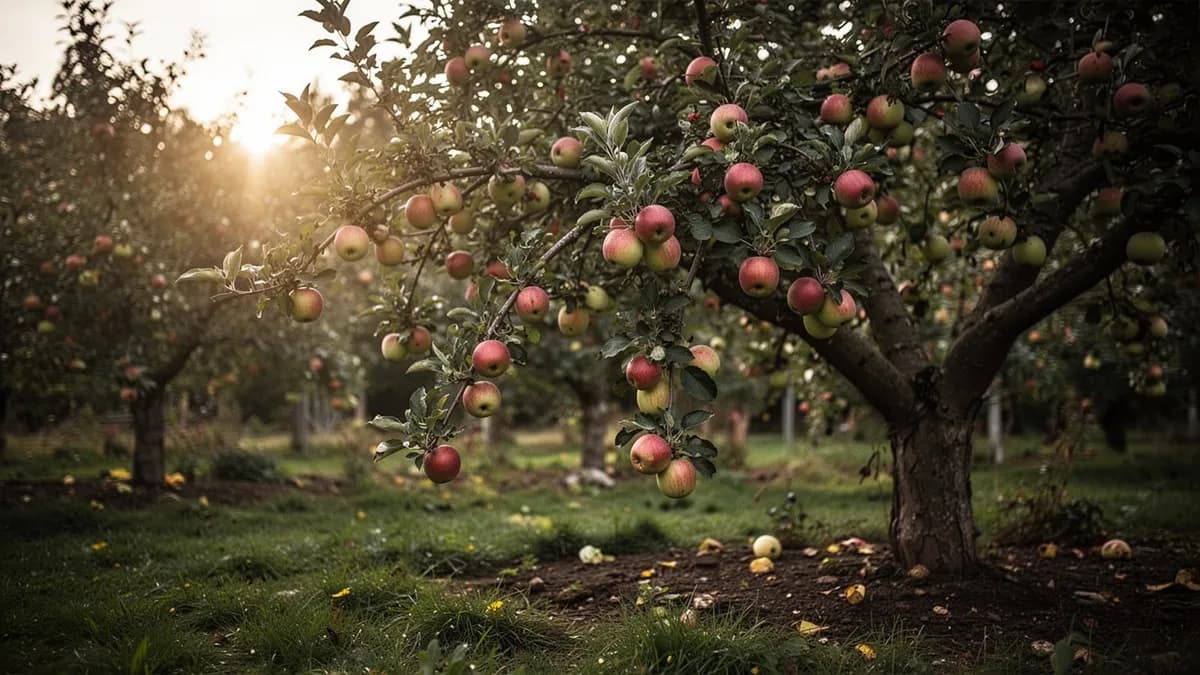
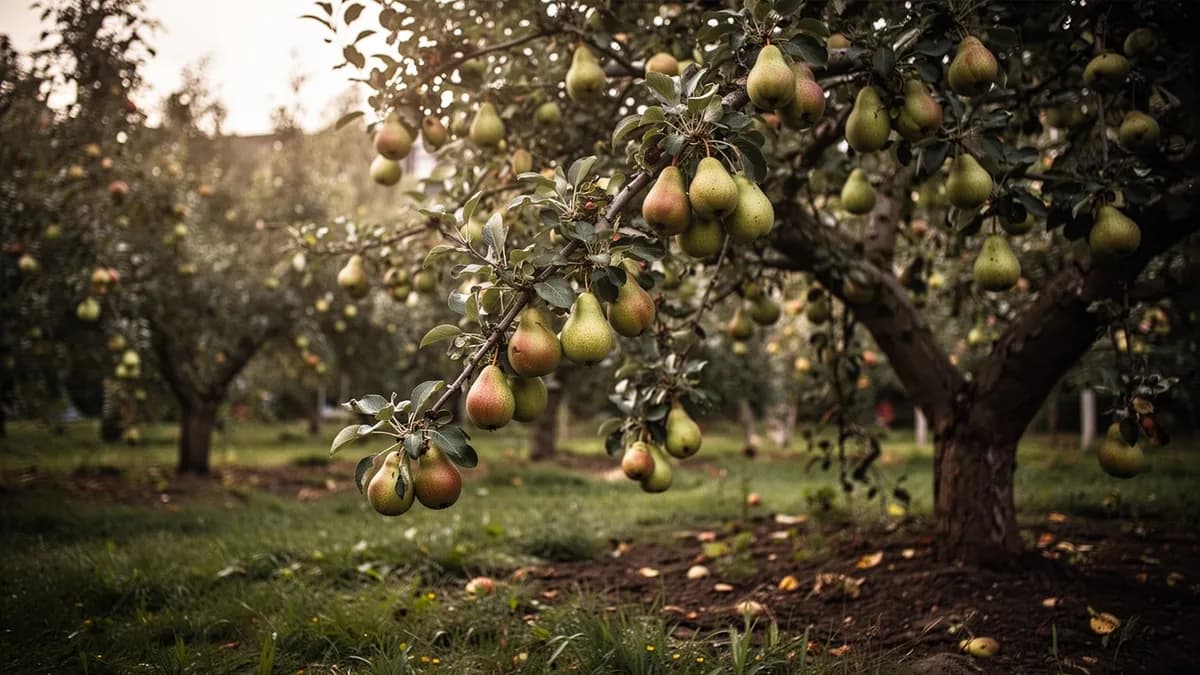
Saskatoon Berry pairs naturally with other hardy fruit-bearing shrubs and small trees in zone 2-5 edible landscapes. Plant alongside Serviceberry (its close cousin in the Amelanchier genus), Black Currant, Honeyberry (Haskap), Elderberry, and Chokecherry for a productive prairie fruit hedge with staggered harvest windows from June through September. Native pollinator-attracting companions like Wild Bergamot (Monarda), Yarrow (Achillea), and goldenrod ensure strong bee populations during the early-spring Saskatoon bloom. Comfrey planted at the dripline serves as a dynamic accumulator, drawing nutrients from deep soil layers and contributing them back through chop-and-drop mulching. Avoid planting within 100 m of junipers, red cedars, or hawthorns where possible — these are alternate hosts for the rust diseases that affect Saskatoons. Apple and pear trees pair well as larger orchard elements; both bloom at similar times and benefit from the same pollinator support.
Serviceberry belongs beside it.
Old growers' knowledge, checked against Saskatoon Berry's real companion table below — test any plant you're growing.
Try Saskatoon Berry in a bed — right here
A real planner bed with Saskatoon Berry already in it. Tap a companion to place it and watch the pairing checks answer — green for good neighbours, red for a clash.


Related growing guides
Feed it well
Saskatoon Berry tolerates a remarkably wide range of soils — sandy loam, clay loam, gravelly subsoils, and even heavy clay if drainage is adequate. The sweet spot is well-drained loam with a pH between 6.0 and 6.8, but the plant performs acceptably from pH 5.5 to 7.5. Strongly alkaline soils above pH 7.5 cause chronic iron chlorosis (interveinal yellowing of new leaves) that limits growth and yield; in those soils, choose another fruit-bearing species or amend heavily with sulfur and chelated iron at planting and annually thereafter. An 8-10 cm spring mulch of wood chips, shredded bark, or composted leaves maintains soil moisture, suppresses weeds, and gradually contributes organic matter as it decomposes. Annual fertilization needs are modest: a thin spring top-dressing of finished compost meets the requirements of most established plants. For mineral fertilizer, apply 50-100 g/m² of balanced 10-10-10 in early spring of years one through three only, then taper to compost-only feeding from year four onward. Avoid heavy nitrogen, which produces lush vegetative growth at the expense of flowering and fruiting and increases susceptibility to fire blight and aphid attack.
Ideal Temperature
Hardiness Zone Compatibility
From seed to harvest, stage by stage
Winter Dormancy
Saskatoon Berry is fully deciduous and enters deep dormancy from late October through March in most of its range. Bare stems display the characteristic smooth gray bark and the distinctive elongated leaf buds. Below ground the wide-spreading root system remains metabolically active during mild spells, accumulating chilling hours essential for proper spring bloom. Most cultivars require 800 to 1,200 hours below 7 °C to break dormancy reliably.
Bud Break and Bloom
As temperatures consistently rise above 5 °C in early to mid-spring, leaf buds swell and expand into bronze-red new leaves while flower clusters emerge separately on short pendant racemes. Each cluster bears 6-12 pure white five-petaled star-shaped flowers that open over a 7-10 day period, releasing a sweet honey-like fragrance and drawing native bees, mason bees, and bumblebees. Bloom timing of late April through mid-May coincides with the most active period of native pollinator emergence.
Fruit Set and Early Development
After successful pollination, petals fall and tiny green fruitlets begin to form at each pollinated flower position. Initial fruit set is typically 60-85 percent of bloom in well-pollinated plantings, with some thinning naturally over the following two weeks as the plant aborts excess fruit. Leaves expand fully to a soft blue-green and begin photosynthesizing actively to supply the developing berries with sugars.
Berry Development and Coloring
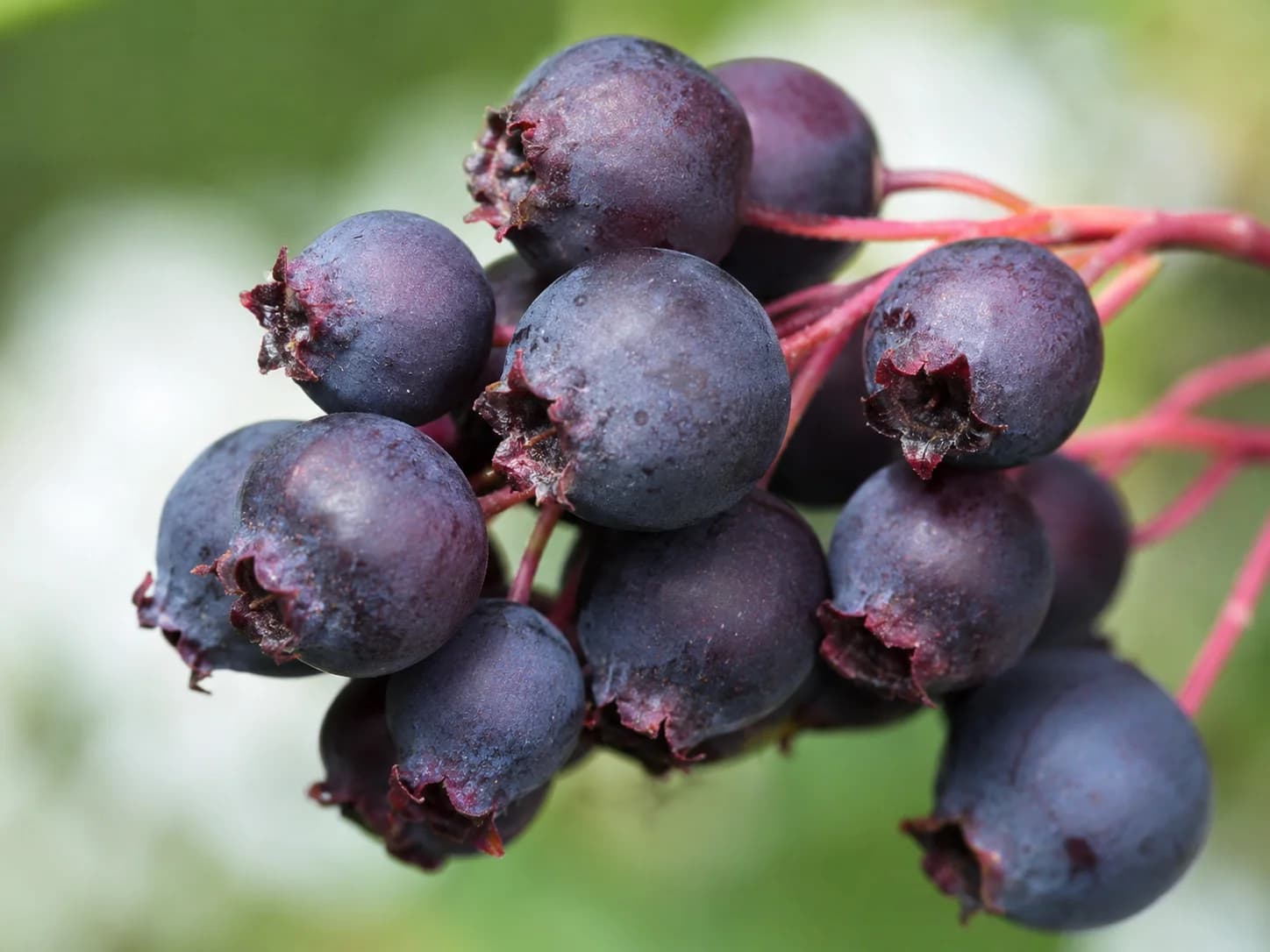
Through May and June the berries enlarge from tiny green pellets to plump fruits the size of a small blueberry. Color shifts through green to red to red-purple to the final deep blue-purple with a natural waxy bloom over a 3-4 week period. Sugars accumulate rapidly in the final 10 days of ripening; flavor develops alongside color. Bird pressure begins as soon as the first berries shift from red to blue, often 7-10 days before peak harvest.
Harvest
Berries ripen progressively over a 2-3 week window in late June through mid-July. Hand-strip whole clusters when berries are fully deep blue-purple with the characteristic soft waxy bloom and feel slightly soft to gentle pressure. A mature shrub yields 4-9 kg per season, distributed across 3-5 harvest sessions spaced 3-5 days apart. Peak quality is the first morning after dew has dried, when berries are cool, firm, and fully sweet.
Post-Harvest Summer Growth
After harvest, the shrub redirects energy from fruit production into vegetative growth and root development. New canes emerge from the base and existing canes extend their length. Leaves remain a healthy blue-green through July and August. Fruit buds for the following year begin to form in late summer, distinguishing the plant from many other fruit trees that set buds the previous autumn.
Autumn Color and Late Dormancy
Leaves shift from blue-green through gold and orange to brilliant red and burgundy across late September and October before dropping in early to mid November. The spectacular autumn color rivals any ornamental shrub and adds considerable late-season landscape value. After leaf drop the shrub's gray-barked structural framework remains visible through winter, and the plant gradually re-enters full dormancy as temperatures drop below freezing for sustained periods.
Late winter is the optimal pruning window. Remove the oldest one to three stems at ground level once they reach five years old, plus any dead, diseased, or crossing branches. Apply dormant oil before bud swell to smother overwintering insect eggs and disease spores. Confirm winter mulch is in place; rodents can girdle young trunks during snow cover, so wrap stems with hardware cloth in high-pressure regions.
Caring for Saskatoon Berry month by month
What to do each month for your Saskatoon Berry
September
You are hereNo specific care tasks for this month.
Know exactly what to do in your garden — every month
One email at the start of each month: what to sow, plant, and tackle right now — for your Saskatoon Berry and everything growing around it. Plus a short starter course that helps you dodge the classic mistakes.
- What to do, right now
- Matched to your season
- Starter course included
Harvesting Saskatoon Berry
Saskatoon Berries ripen progressively over a 2 to 3 week window in late June through mid-July, depending on cultivar and climate. Pick when berries have shifted from green through red to a deep blue-purple with a soft natural waxy bloom and feel slightly soft when gently squeezed. Underripe berries (still firm and red-purple) are tart and mealy; overripe berries (fully soft, beginning to wrinkle) are heavy and sweet but bruise easily and ferment fast. The best harvest is in the morning when berries are cool and firm. Hand-strip whole clusters into shallow trays no more than 8 cm deep to avoid crushing fruit at the bottom; commercial growers use blueberry-style picking combs for speed. Expect three to five pickings per shrub spaced 3-5 days apart across the full harvest window. A productive mature shrub yields 4-9 kg per season, with peak harvest in years 6-20.
assuming you sow when the window opens — set your real date
Pick Saskatoon Berry promptly and the plant keeps producing.
Storage & Preservation
Fresh Saskatoon Berries store in the refrigerator for 7 to 10 days when kept dry and unwashed in a shallow container with a single layer of paper towel underneath. Wash only just before use, as residual moisture accelerates spoilage. For freezing, spread cleaned and dried berries in a single layer on a baking sheet, freeze until firm (about 2 hours), then transfer to airtight bags or containers where they keep at -18 °C for 12 months or more without loss of flavor. Dehydration produces an excellent dried fruit similar to raisins but with a richer, more complex flavor; whole berries dry at 60 °C for 12-16 hours on standard dehydrator trays. Saskatoons also preserve beautifully as jam, syrup, fruit leather, and wine. Traditional Plains Indigenous preparation included drying the berries and pounding them with bison fat and lean meat to make pemmican, a portable concentrated food that fueled long journeys across the plains.
What goes wrong — and the fix
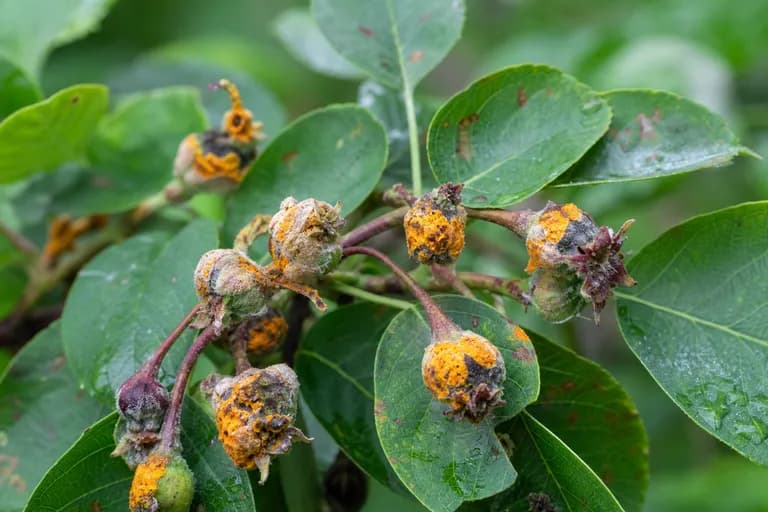
Saskatoon-Juniper Rust
DiseaseBright orange-yellow spots on upper leaf surfaces in spring, often with corresponding tube-shaped cup spores on the underside. Berries develop hard orange lesions and become inedible. Heavy infections can defoliate plants and reduce yield by 50 percent or more.
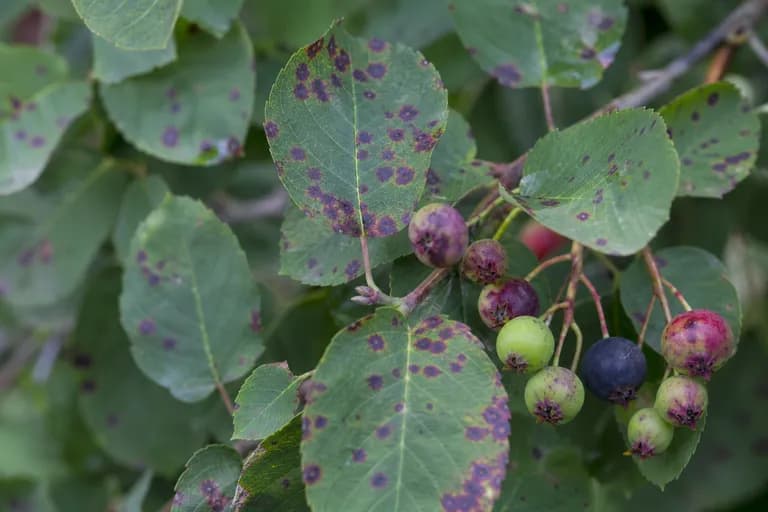
Entomosporium Leaf and Berry Spot
DiseaseSmall reddish-purple spots on leaves and developing berries, often with a yellow halo. Spots enlarge and merge in wet weather, causing premature leaf drop and berry russetting that reduces marketability.
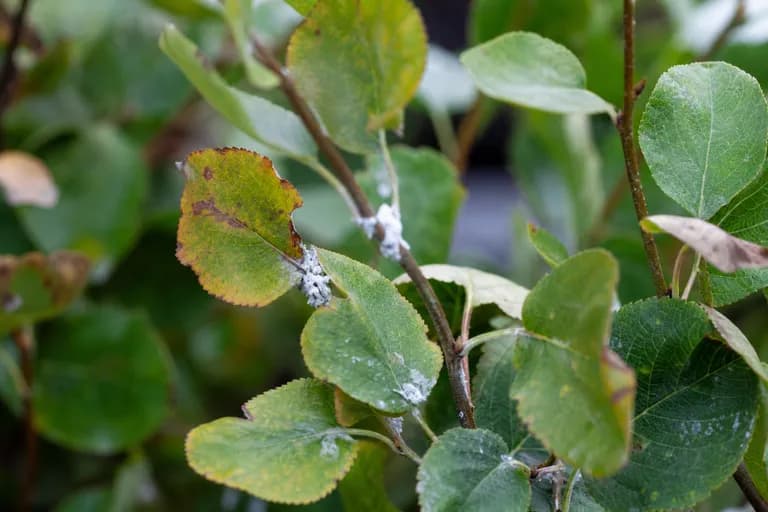
Woolly Elm Aphid
PestWhite cottony masses on root tips below ground; affected plants show stunted growth, yellowing foliage, and reduced fruit yield. Heavily infested young plants may die within a season.
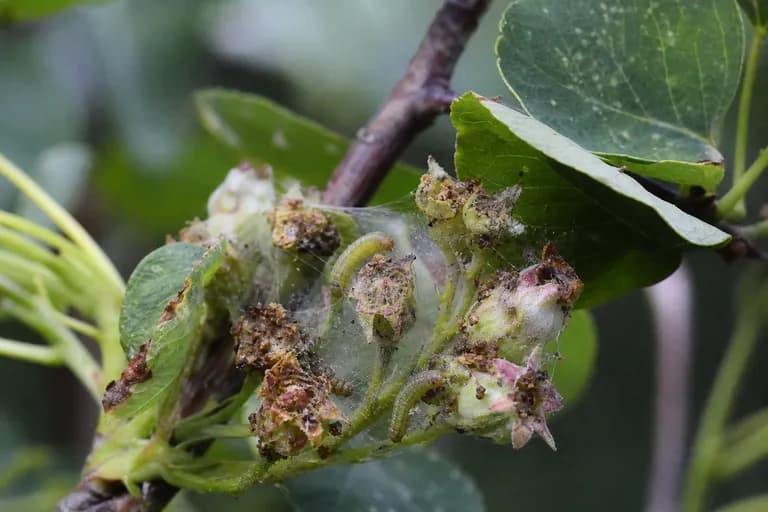
Saskatoon Bud Moth
PestWebbed flower clusters in early spring as small green caterpillars feed on developing buds and blossoms. Damaged buds fail to set fruit, with losses ranging from 5 to 40 percent of the potential crop.
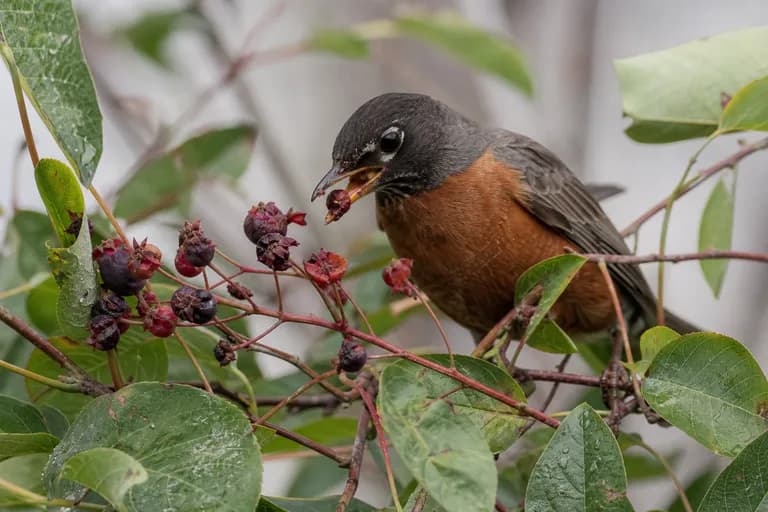
Birds
PestBerries disappear or are partially eaten just as they reach optimal ripeness. Robins, cedar waxwings, finches, and starlings cause heavy losses, often stripping 60-95 percent of an unprotected crop overnight.
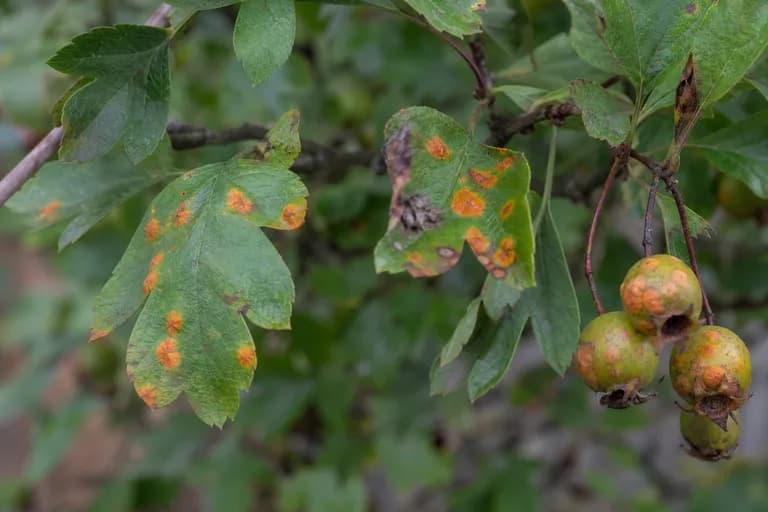
Cedar-Hawthorn Rust
DiseaseOrange spots on leaves and small orange protrusions on berries, similar to but distinct from Saskatoon-Juniper Rust. Generally less damaging but cosmetically affects fruit and reduces tree vigor.
Troubleshooting Common Problems
Bird losses are universally the number one frustration for home growers — without netting, expect to lose 60-95 percent of the crop to robins, waxwings, finches, and starlings. The second-most-common problem is sucker proliferation: vigorous cultivars spread vigorously by underground rhizomes, with new shoots appearing 1-2 m from the parent plant. Sever unwanted suckers with a sharp spade in early summer to control spread. Alternate-year bearing — heavy crops one year, light the next — is common in unpruned older shrubs and is largely corrected by annual renewal pruning that maintains a steady supply of young fruiting wood. Saskatoon-Juniper Rust pressure becomes chronic in regions with abundant junipers nearby; choose resistant cultivars and remove alternate hosts where practical. Iron chlorosis in alkaline soils manifests as interveinal yellowing of new leaves and is correctable with chelated iron applications. Finally, slow first-year establishment can frustrate impatient gardeners, but full production by year four is well worth the early wait.
Growing Tips
- Plant two or more different named cultivars within 15 m of one another to improve cross-pollination, increase berry size, and boost yields by 20 to 40 percent over self-pollinated plantings.
- Deploy bird netting BEFORE the first berries turn fully blue. Once birds find the crop, even netting becomes partial damage control rather than full protection — proactive deployment is critical.
- Renew old wood. Each late winter remove the oldest one to three stems at ground level once they reach five years old, opening the centre and stimulating vigorous young replacement canes that will fruit for the next four to five years.
- Mulch with 8 to 10 cm of wood chips, shredded bark, or composted leaves each spring, kept 10 cm clear of the stems to prevent rodent damage and basal rot.
- Avoid planting within 100 m of junipers, red cedars, or hawthorns where possible — these are alternate hosts for the rust diseases that affect Saskatoons. If juniper removal is impractical, choose rust-resistant cultivars such as Honeywood or JB-30.
- Manage suckers proactively. Sever any underground shoots emerging more than 30 cm from the parent plant with a sharp spade in early summer, before they steal energy from the main shrub.
- Do not over-fertilize. A thin spring top-dressing of compost meets the needs of most established plants. Heavy nitrogen produces lush vegetative growth, reduces flowering, and increases susceptibility to fire blight and aphids.
- Wrap young trunks with hardware cloth or plastic spiral guards through the first three winters to prevent rodent girdling under snow cover. Voles can kill a 2-year-old plant in a single winter.
- Pick berries in the morning when cool and firm. Sort harvested fruit immediately into three grades — fully ripe for fresh use, slightly soft for jam-making, and any damaged for chickens or compost — for the best quality across all preparations.
- Freeze the season's surplus on trays in a single layer until firm, then bag for long-term storage. Saskatoons frozen this way retain texture and flavor for 12 months or more and substitute one-for-one for blueberries in any recipe.
Grow your best Saskatoon Berry yet — and everything around it.
Start a free plan today. Lay out your beds, drop in your Saskatoon Berry, and let PlotMyGarden handle the timing, spacing, companions and reminders from seed to harvest basket.
Pick your Saskatoon Berry
Smoky
The most widely grown commercial cultivar across the Canadian Prairies. Large 13-15 mm berries with mild, sweet flavor and a productive multi-stemmed habit reaching 3-4 m tall. Excellent for processing and fresh eating, with reliable yields of 6-10 kg per mature bush.
Northline
An early-ripening cultivar with intense flavor and slightly smaller berries than Smoky. Spreads vigorously by suckers, making it ideal for hedgerow plantings or naturalizing. Ripens 5-7 days earlier than Smoky, extending the harvest window in commercial plantings.
Thiessen
Notable for its very large, full-flavored berries averaging 15-17 mm, the biggest of any standard cultivar. Slightly later ripening than Smoky with a more open, upright growth habit reaching 4-5 m. The premium choice for fresh-eating and farmers-market sales.
Honeywood
A heavy-cropping cultivar with strong rust resistance, particularly valuable in regions with chronic Saskatoon-Juniper Rust pressure. Medium-large berries with rich flavor on dense, vigorous shrubs. The default choice where rust is a recurring problem.
JB-30 (Martin)
A relatively new cultivar selected for exceptional disease resistance and uniform ripening, making it well-suited to mechanical harvest in commercial operations. Berries are medium-large, sweet, and ship well, with the entire crop typically ripening within a 10-day window.
Pembina
An older heritage cultivar prized for its outstanding flavor and consistent productivity. Medium-sized berries on a compact 2.5-3 m bush, ideal for home gardens with limited space. Slightly later than Smoky but extends the season nicely in mixed plantings.
Saskatoon Berry offers exceptional long-term value for the home grower. A single named-cultivar bare-root plant costs $15-30 at planting and produces 4-9 kg of fruit annually from year four through year forty or beyond — well over 100 kg of fruit per plant across its productive lifetime. Fresh Saskatoons retail at $15-25 per kg where available, but the fruit is virtually unavailable in major grocery chains outside the Canadian Prairies and parts of the Northern Plains, making home production effectively the only way to access fresh fruit elsewhere. Across a 30-year productive lifespan, a single home-grown plant supplies the equivalent of $1,500 to $3,000 in retail-priced fruit while providing brilliant spring bloom, autumn color, and habitat for native pollinators and beneficial insects. A hedgerow of five to ten plants pays for itself in two to three seasons and continues delivering for decades.
Quick recipes
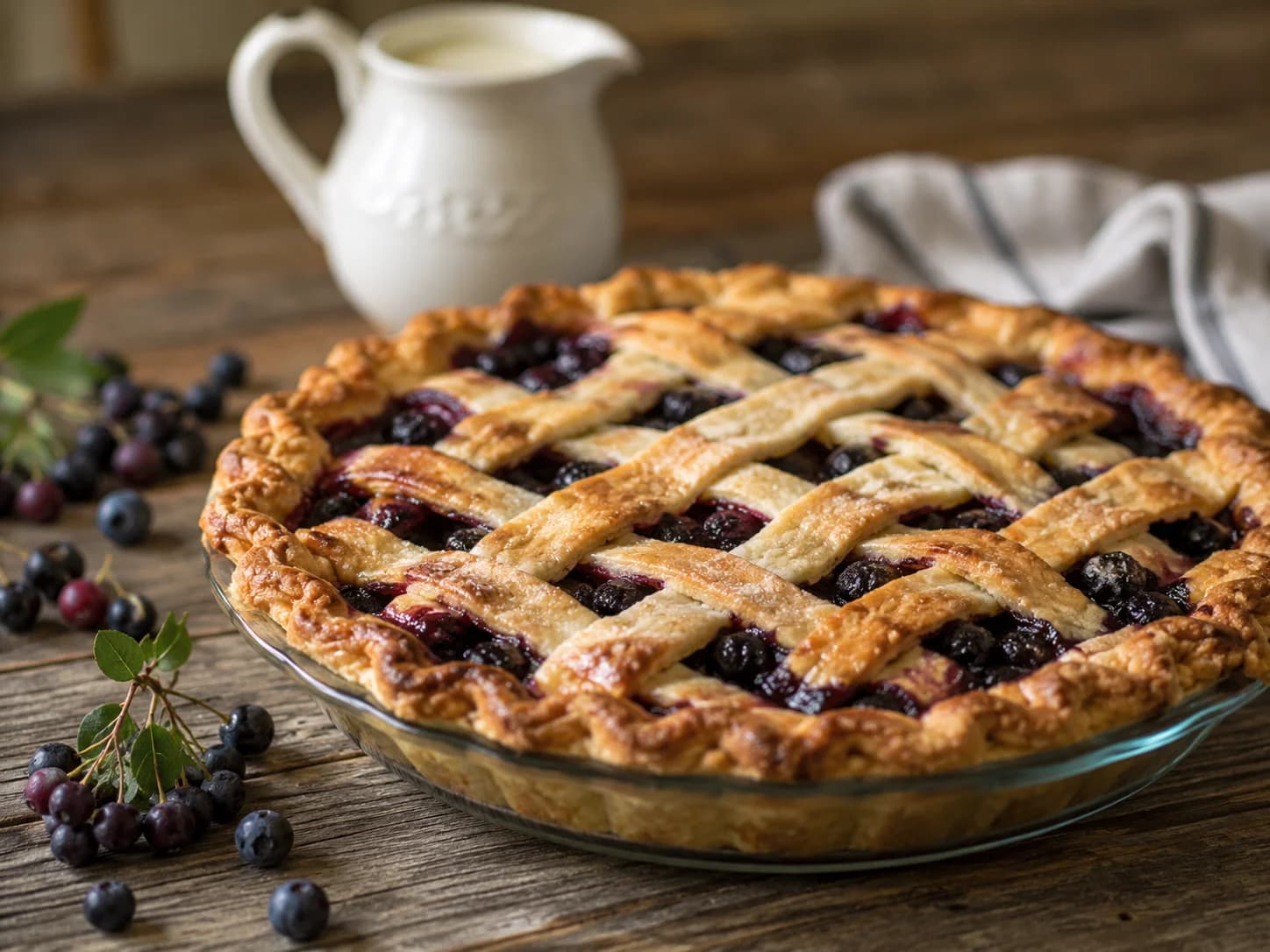
Classic Saskatoon Berry Pie
30 minutesThe signature dessert of the Canadian Prairies — a deep-purple Saskatoon Berry pie under a buttery golden lattice crust. The natural almond undertone of the berries pairs beautifully with a hint of lemon and a touch of cardamom, making this pie far more interesting than its blueberry cousin. A slice still warm from the oven with vanilla ice cream is one of the great pleasures of a Prairie summer.
10 ingredients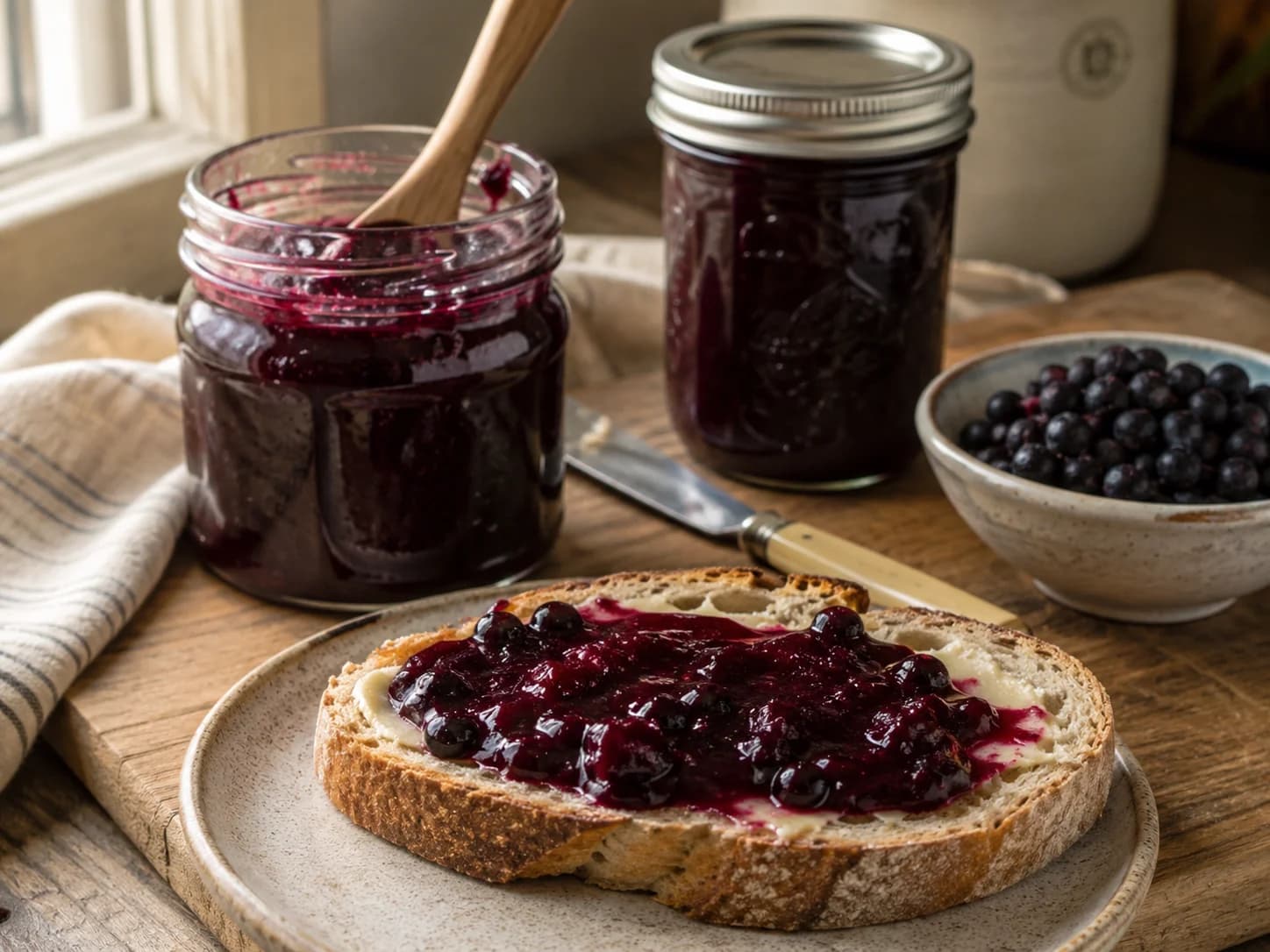
Small-Batch Saskatoon Berry Jam
45 minutesA bright, lightly-set Saskatoon Berry preserve that highlights the natural flavor of the fruit rather than masking it under heavy sugar. The relatively low pectin content of Saskatoons allows a softer, more spreadable set that works beautifully on morning toast, swirled into yogurt, or as a glaze for roast pork and lamb. This small-batch recipe scales easily and freezes well.
6 ingredientsSaskatoon Berry Syrup
30 minutesA versatile deep-purple syrup that works equally well drizzled on pancakes, stirred into cocktails, poured over vanilla ice cream, or thinned with sparkling water for a summer berry soda. The hint of almond extract picks up and amplifies the natural undertone of the fruit. Keeps in the refrigerator for two weeks or freezes for six months.
6 ingredientsCulinary Uses
Saskatoon Berry has been the signature fruit of the Canadian Prairies for thousands of years and remains so today. Fresh eating reveals its characteristic flavor — sweeter and richer than blueberry, with a distinct almond undertone that comes from the small soft seeds. The classic preparation is Saskatoon pie, the prairie equivalent of blueberry pie, often with a lattice top and a hint of lemon to balance the sweetness. The berries also produce outstanding jam (a particularly popular use because the pectin content allows light-set, lower-sugar preserves), syrup for pancakes and cocktails, fruit leather, and wine. In baking, Saskatoons substitute one-for-one for blueberries in muffins, scones, pancakes, crisps, and cobblers, with no loss of texture and an arguably more interesting flavor. Indigenous Plains peoples traditionally combined dried Saskatoon Berries with bison fat and lean meat to make pemmican, a high-energy portable food that powered the long migrations of buffalo hunters across the plains. Modern restaurants in Western Canada increasingly feature Saskatoon Berry in savory pairings with game, lamb, and pork, where its mild almond note complements rich meats beautifully.
What's inside
Health Benefits
- Exceptionally high anthocyanin content (approximately three times that of cultivated blueberries by weight) supports cardiovascular health and may help reduce systemic inflammation according to emerging nutritional research.
- High dietary fiber content (5.9 g per 100 g serving) supports digestive health, promotes beneficial gut microbiome populations, and contributes to satiety in weight-management diets.
- Manganese content provides approximately 50 percent of recommended daily intake per 100 g, supporting bone formation, connective tissue health, and antioxidant enzyme function.
- The combination of natural sugars with high fiber produces a favorable glycemic response compared to most fresh fruits, making Saskatoons a reasonable choice for those managing blood sugar levels.
- Traditional Indigenous medicinal uses included bark and root decoctions for digestive complaints and eye infections; modern research has begun investigating bioactive compounds with anti-inflammatory and antimicrobial properties.
- Iron content is notably higher than most temperate-climate fresh fruits (0.9 mg per 100 g), making Saskatoons a meaningful dietary iron source in plant-forward eating patterns.
Where Saskatoon Berry comes from
Amelanchier alnifolia is native to a vast swath of western and northern North America, occurring naturally from Alaska and the Yukon south through British Columbia, Alberta, Saskatchewan, and Manitoba into the northern United States from Washington and Oregon eastward through the Dakotas and Minnesota. Its ancestral range encompasses the boreal forest edge, the parkland transition zone between boreal forest and prairie, the river valleys and coulees that cut through the Great Plains, and the foothill zones of the Rocky Mountains. It thrives in habitats that experience deep winter cold, dry summer conditions, and the periodic fires that historically renewed prairie ecosystems.
Plains Indigenous peoples — the Cree, Blackfoot, Dakota, Lakota, Ojibwe, Salish, and many others — have used Saskatoon Berry as a primary food source for thousands of years. Archaeological evidence from sites across the Northern Plains confirms harvesting and processing of the berries for at least 8,000 years, with strong continuity into the present day. The most distinctive traditional preparation was pemmican: dried Saskatoon Berries pounded together with rendered bison fat and pounded lean dried meat, packed into rawhide pouches for long-term storage. Pemmican was the trail food of the Plains, fueling everything from buffalo hunts to multi-week migrations. Indigenous knowledge also encompassed harvest timing, drying techniques, ceremonial uses, and the medicinal properties of the bark and roots, which were prepared as decoctions for digestive complaints, eye infections, and as a treatment during difficult childbirth.
European fur traders and explorers first encountered the berries in the late 18th century. Alexander Mackenzie's 1789 expedition mentioned "service berries" provided by Cree partners during the descent of the Mackenzie River. Lewis and Clark documented their critical role in surviving the winter of 1805-1806 in present-day North Dakota. The voyageurs of the Hudson's Bay Company and the North West Company purchased and traded pemmican in vast quantities, with single Hudson's Bay Company posts processing tens of thousands of kilograms each year in the early 1800s. Pemmican made from Saskatoon Berries and bison fat was for several decades the most important shelf-stable food in the North American fur trade economy.
The formal scientific description came in 1818, when American botanist Thomas Nuttall classified the species as Pyrus alnifolia during his expedition through the Great Lakes and across the Mississippi. Later taxonomic revisions moved the species to the genus Amelanchier, where it remains today, distinguished from its eastern cousins by the rounder leaves with toothing concentrated near the leaf apex and by its preference for open, sunny habitats rather than the woodland edges favored by Amelanchier canadensis and A. arborea.
The city of Saskatoon was founded in 1883 by John Lake's temperance settlement society on the South Saskatchewan River, in country where the wild Saskatoon Berry was abundant. The Cree word "misâskwatômina" — referring to the berry — provided the name for both the river and the new town. Saskatoon Berry remains the official fruit of the City of Saskatoon to this day.
Commercial cultivation began in earnest in the early 20th century as homesteaders established orchards alongside their grain operations. The Beaverlodge Research Station in northern Alberta, founded in 1939, became the world's leading centre for Saskatoon Berry breeding and selection. Working alongside researchers at the University of Saskatchewan, Beaverlodge breeders released the named cultivars that anchor today's commercial industry: Pembina in the 1950s, Smoky in 1952, Honeywood in 1973, Northline and Thiessen in the 1980s. Commercial orchards across the Canadian Prairies — particularly in Saskatchewan, Alberta, and Manitoba — now produce thousands of tonnes annually, supplying pie filling, jam, syrup, dried fruit, and increasingly fresh-frozen fruit to domestic and export markets.
In recent decades, Saskatoon Berry has experienced a renaissance among home gardeners, permaculture practitioners, and Indigenous food sovereignty movements seeking to reconnect with traditional foodways. Its exceptional cold hardiness, modest care requirements, brilliant autumn color, and outstanding fruit make it one of the most rewarding fruit-bearing plants for any home garden in zones 2 through 8. As Prairie agriculture diversifies away from monoculture grain and oilseed, Saskatoon Berry continues to expand both in commercial production and in the cultural imagination as a quintessential symbol of Western Canadian foodways.
Saskatoon Berry: did you know?
Fascinating facts about Saskatoon Berry
The city of Saskatoon, Saskatchewan was named after the berry, not the other way around — the name comes from the Cree word "misâskwatômina" referring to the wild berries that grew along the South Saskatchewan River where the city was founded in 1883.
Saskatoon Berry questions, answered
When should I plant Saskatoon Berry?
What are good companion plants for Saskatoon Berry?
What hardiness zones can Saskatoon Berry grow in?
How much sun does Saskatoon Berry need?
How far apart should I space Saskatoon Berry?
What pests and diseases affect Saskatoon Berry?
How do I store Saskatoon Berry after harvest?
What are the best Saskatoon Berry varieties to grow?
What soil does Saskatoon Berry need?
Is Saskatoon Berry a tree or a shrub?
Will Saskatoon Berry grow in my zone 7 garden, or does it need cold winters?
How long until I get my first real harvest?
Do birds really take that much of the crop?
Is Saskatoon Berry self-fertile?
What is the difference between Saskatoon, Serviceberry, and Juneberry?
You just read the theory. Now grow it on autopilot.
Everything that makes Saskatoon Berry fiddly — the timing, the spacing, the companions, the harvest window — is exactly what PlotMyGarden handles for you, for every plant in your garden.
A plan that knows your weather
Set your location once. Get sow, feed and harvest dates built around your real last-frost date and live forecast — no more guessing from a generic seed packet.
From the “When to plant” sectionDrag-and-drop bed planner
Design beds on a grid. Every plant snaps to its proper spacing, and you can see your whole season laid out before you spend a cent on seed.
From the “Growing guide” sectionCompanion conflicts, caught early
200+ good-and-bad pairings checked live as you plant — so a season-wrecking mistake never makes it into the ground.
From the “Companions” sectionReminders you'll actually act on
“Water the beans.” “Pick today before it turns.” Timely, specific, and tied to the plants you're really growing.
From the “Harvest” sectionSuccession, scheduled
Want a harvest for six weeks, not six days? It spaces your sowings automatically and reminds you when each new block is due.
From the “When to plant” sectionA record that gets smarter
Every harvest you log teaches it your garden. Next year's plan starts from what actually worked in your soil, not a textbook's.
From the “Overview” sectionPlant these alongside Saskatoon Berry
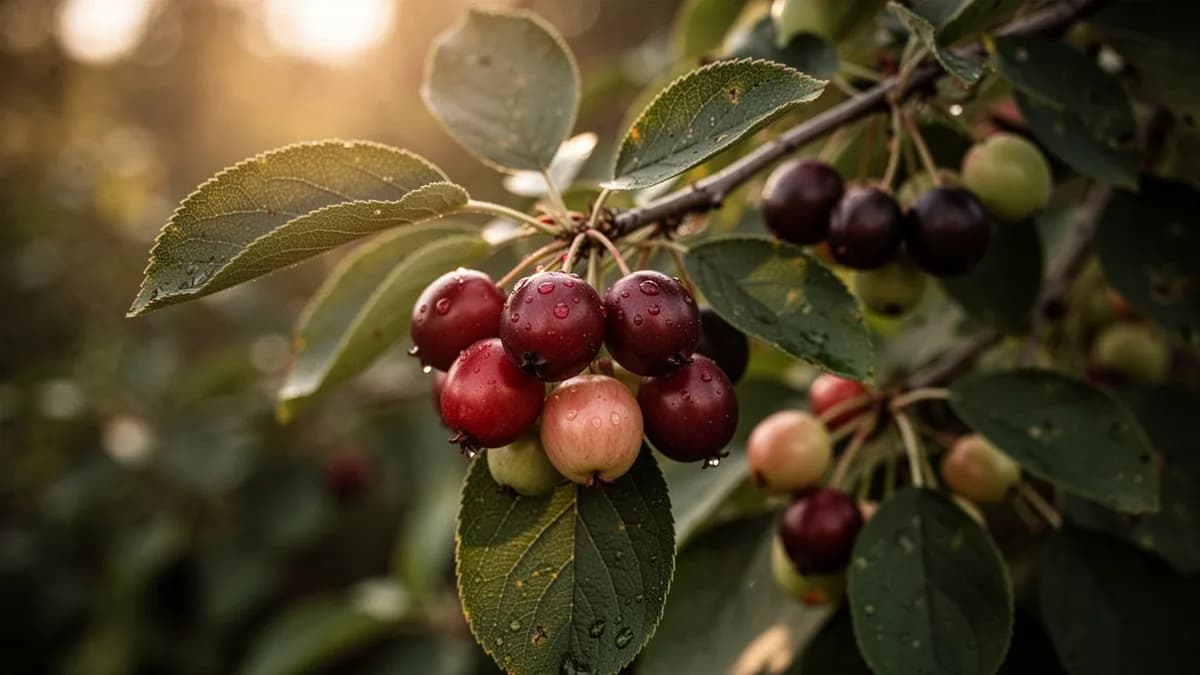
Serviceberry
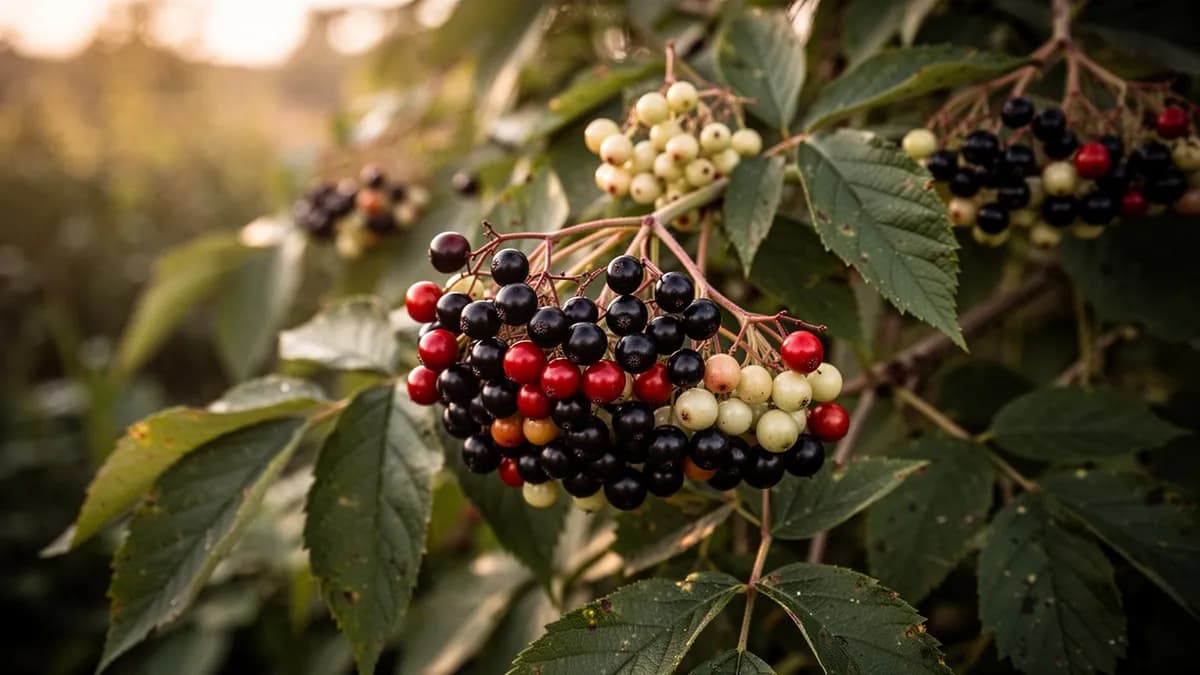
Elderberry
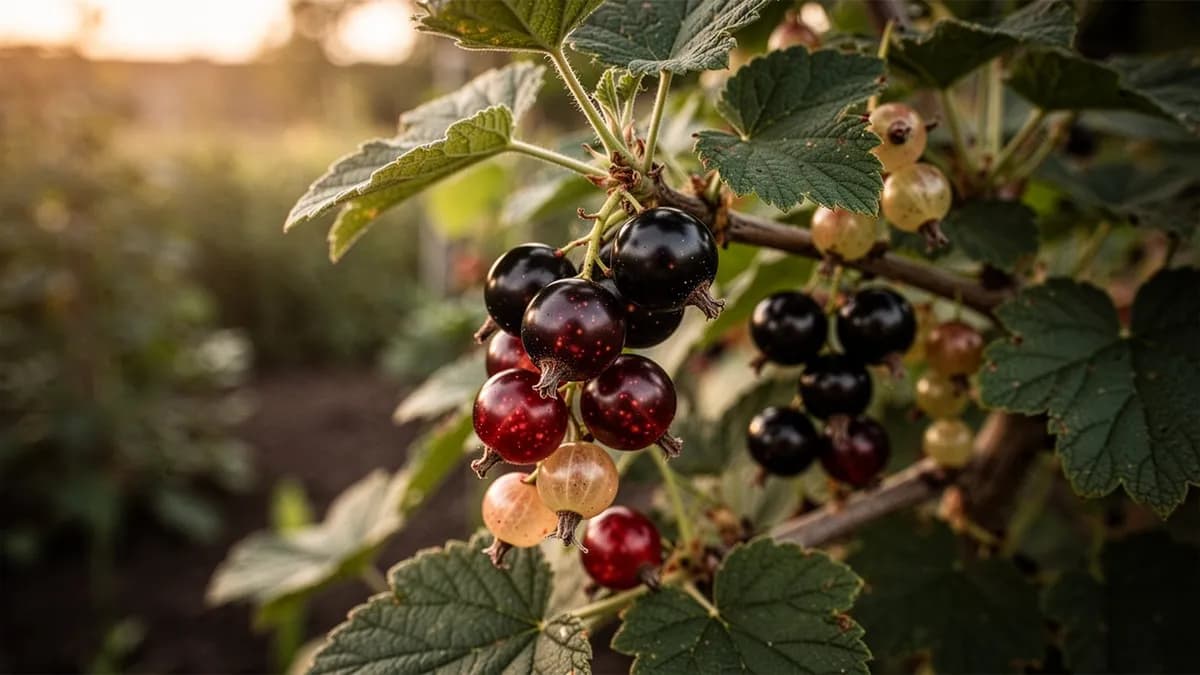
Black Currant
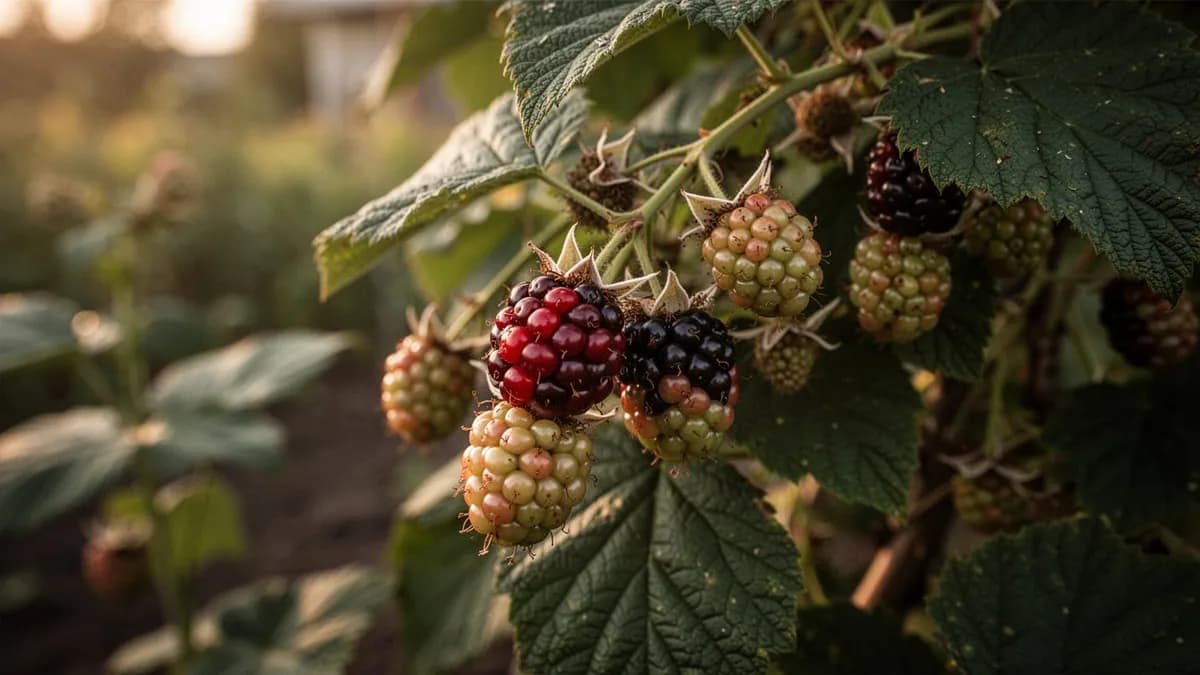
Honeyberry
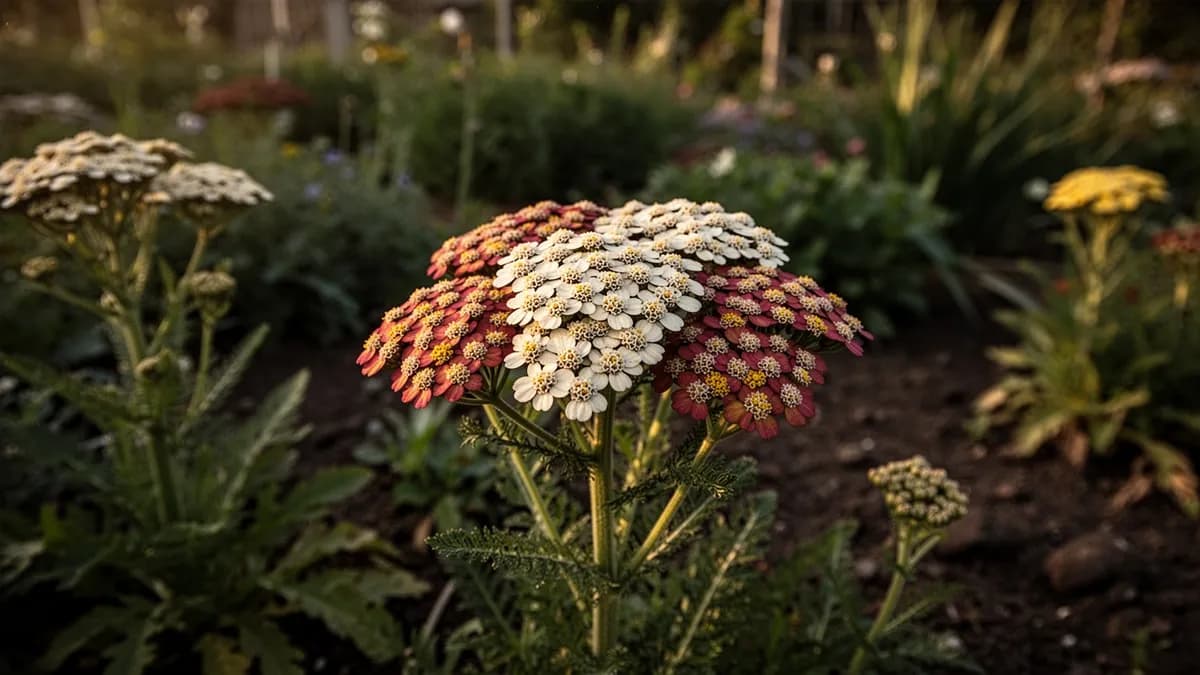
Yarrow
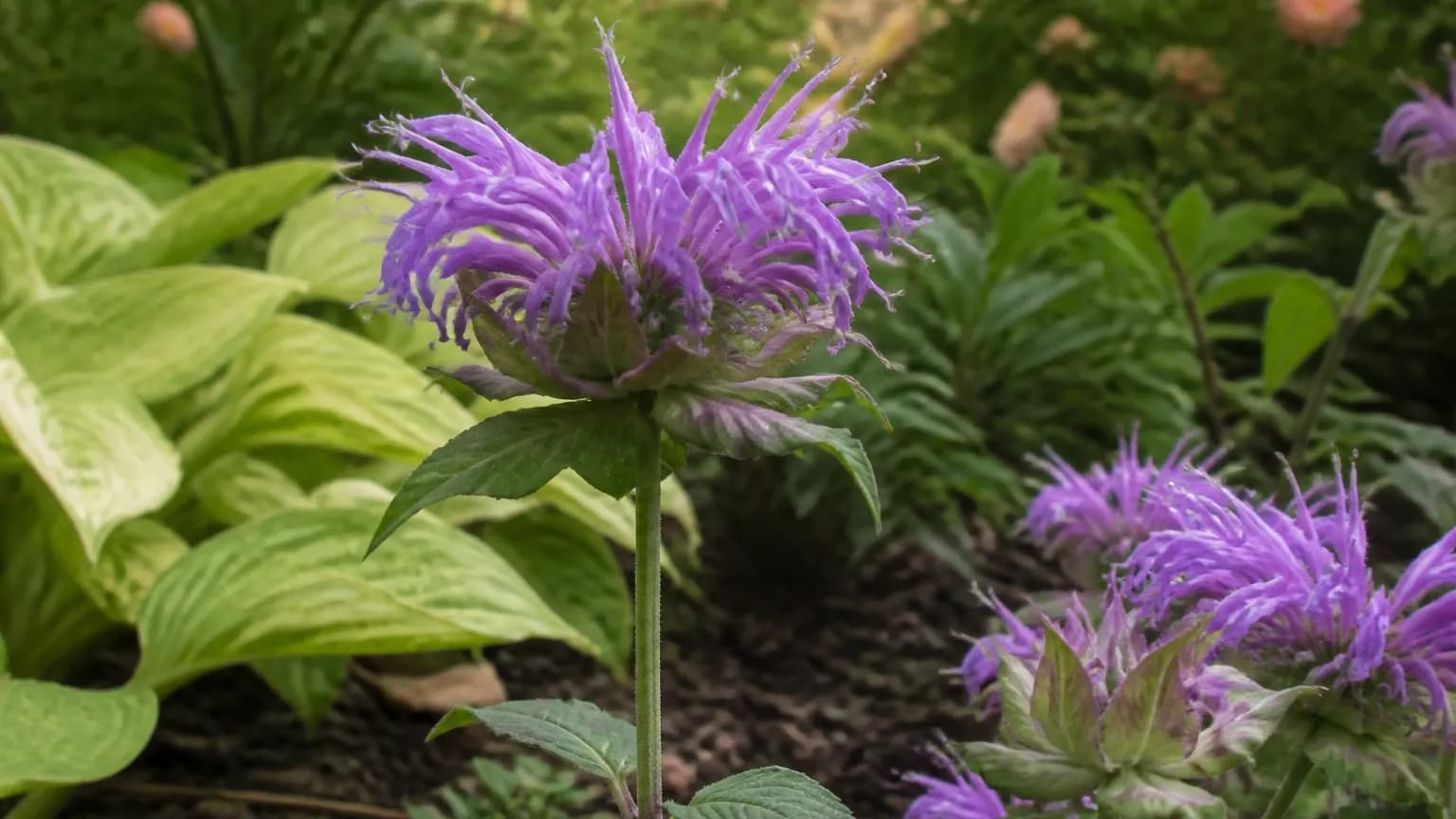
Wild Bergamot
More Fruit Trees
Grow your best Saskatoon Berry yet — and everything around it.
Start a free plan today. Lay out your beds, drop in your Saskatoon Berry, and let PlotMyGarden handle the timing, spacing, companions and reminders from seed to harvest basket.