Olive Tree
An ancient Mediterranean evergreen that can live for centuries, producing oil-rich fruits in hot, dry climates.





On this pageOverview
Meet Olive Tree
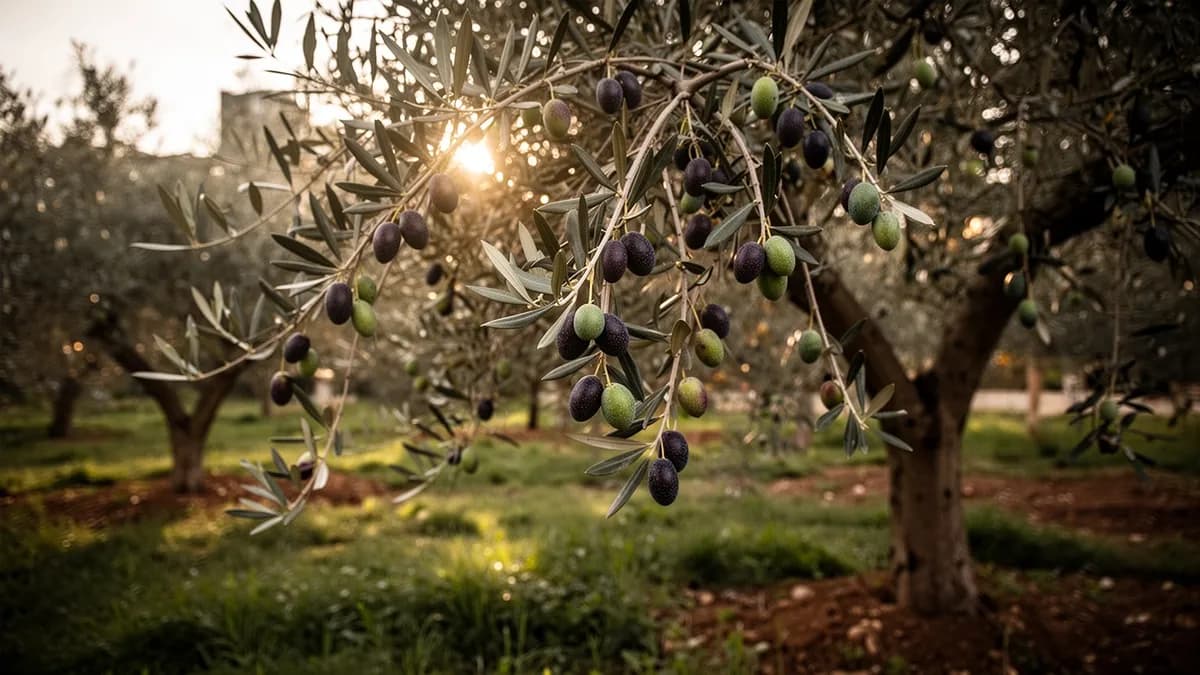
An ancient Mediterranean evergreen that can live for centuries, producing oil-rich fruits in hot, dry climates. Olive trees are extremely drought-tolerant once established and thrive in poor, rocky soil with excellent drainage. In cooler climates, grow in large containers and bring indoors during winter, or choose cold-hardy cultivars that can withstand brief freezes. Harvest green olives in autumn for brining or let them ripen to black on the tree for pressing into oil, though home curing requires patience.
When to plant Olive Tree
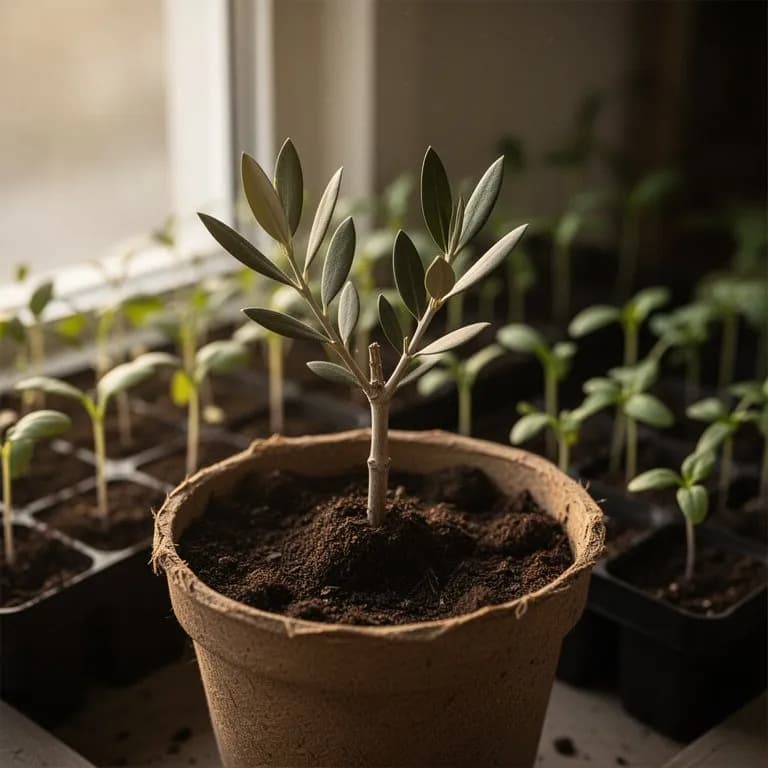
Olive trees are best propagated from semi-hardwood cuttings or purchased as grafted container-grown plants from nurseries. Seed-grown olives take 8 to 12 years to bear fruit and may not produce quality fruit. For cuttings, take 6-inch semi-hardwood stems in late summer, dip in rooting hormone, and root in a well-drained propagation mix under mist. Container-grown nursery trees can be planted anytime during the growing season in warm climates.
Your Olive Tree Year
Composed for Zone 7 · typical seasons · frost passes Apr 2, returns Nov 1
Plant Olive Tree Mar – May, pick Oct – Dec. Check the planting methods below and set your climate to personalize these windows.
How to grow Olive Tree
Choose the hottest, sunniest, and most sheltered spot in your garden for olive trees. They thrive in poor, rocky, well-drained soil and actually produce better-flavored oil when not over-watered or over-fertilized. In cooler climates, plant against a south-facing wall to benefit from reflected warmth. Space trees 20 to 25 feet apart for orchard planting or grow in large containers that can be moved indoors during winter.
Plant container-grown olive trees in spring after the last frost. Dig a hole twice the width of the root ball and ensure the top of the root ball sits slightly above the surrounding soil grade to prevent crown rot. Water deeply at planting, then allow the soil to dry considerably between waterings. Olives are remarkably drought-tolerant once established and over-watering is more harmful than under-watering.
Olive trees require minimal pruning compared to other fruit trees. Remove crossing branches, water sprouts, and dead wood annually in late winter. Open the center of the tree to allow light penetration for even fruit ripening. In container culture, repot every 3 to 4 years and prune roots lightly to maintain a manageable size. Protect from temperatures below 25 degrees Fahrenheit.
Olive Tree needs more room than a 4 × 8 ft bed gives
Each Olive Tree wants 600 cm of elbow room. The planner keeps that spacing for you — every plant, every bed.
Olive Tree's best neighbours
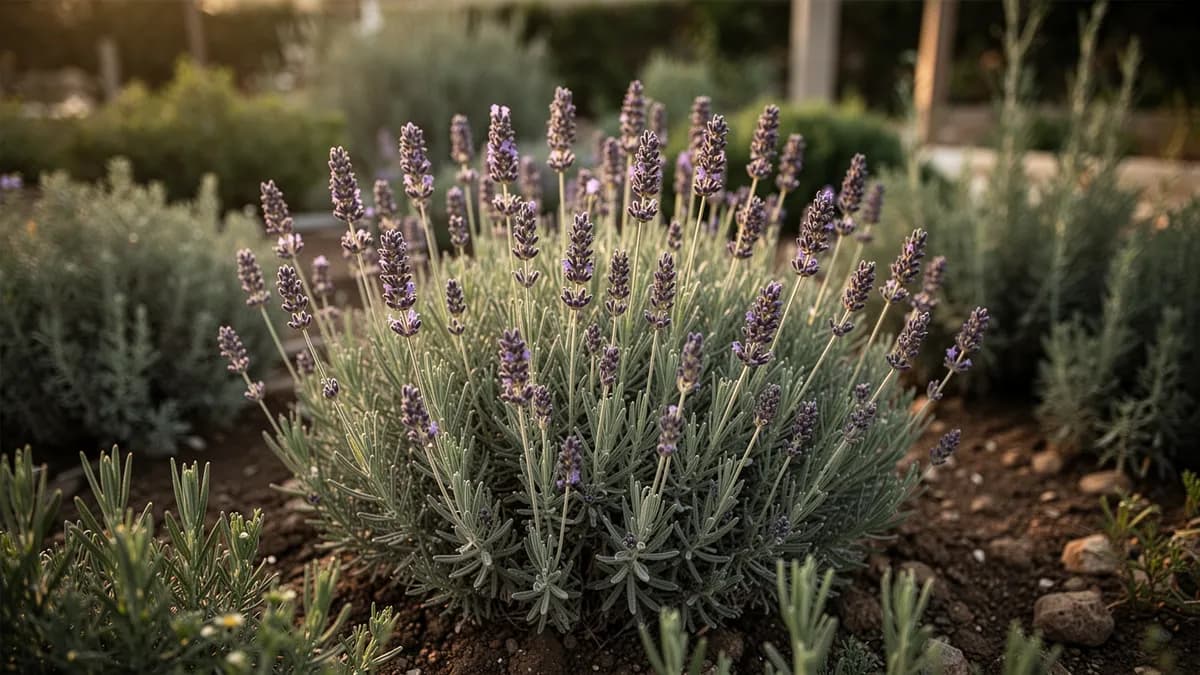
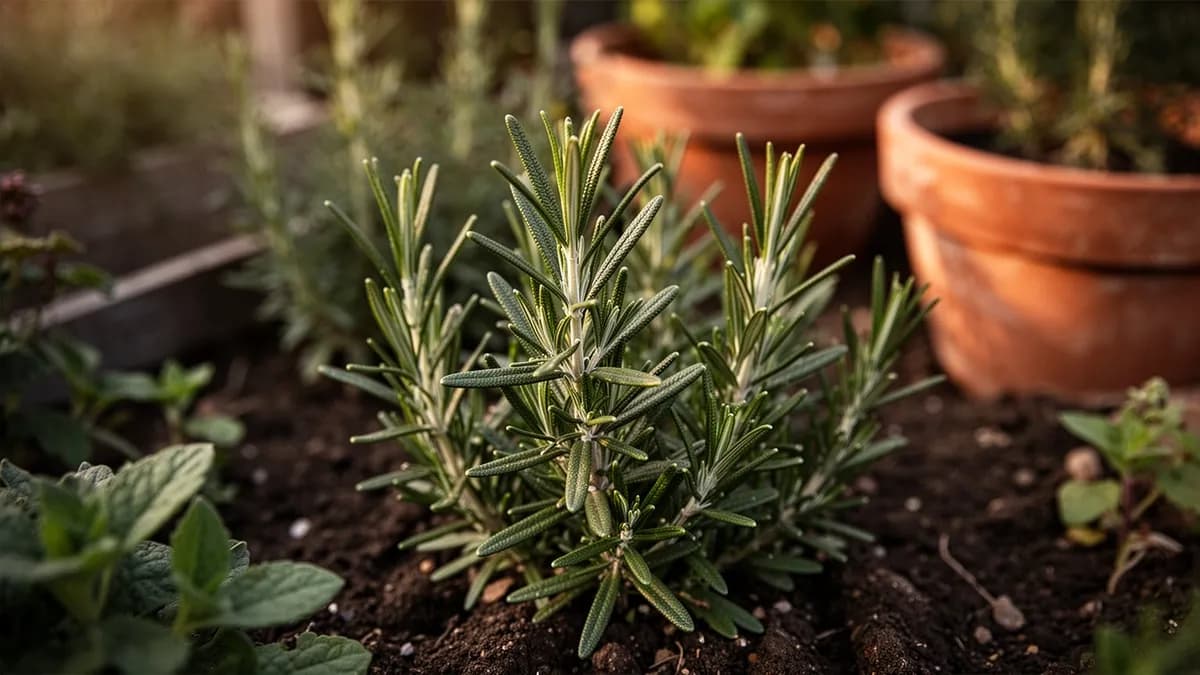
Lavender, rosemary, and thyme are classic Mediterranean companions for olive trees, thriving in the same dry, well-drained conditions. These aromatic herbs attract pollinators and repel certain pests. Plant drought-tolerant wildflowers beneath mature olive trees for ground cover. Avoid planting moisture-loving species near olives, as the irrigation they require can cause root problems for the olive tree.
Lavender belongs beside it. Walnut Tree doesn't.
Old growers' knowledge, checked against Olive Tree's real companion table below — test any plant you're growing.
Try Olive Tree in a bed — right here
A real planner bed with Olive Tree already in it. Tap a companion to place it and watch the pairing checks answer — green for good neighbours, red for a clash.


Related growing guides
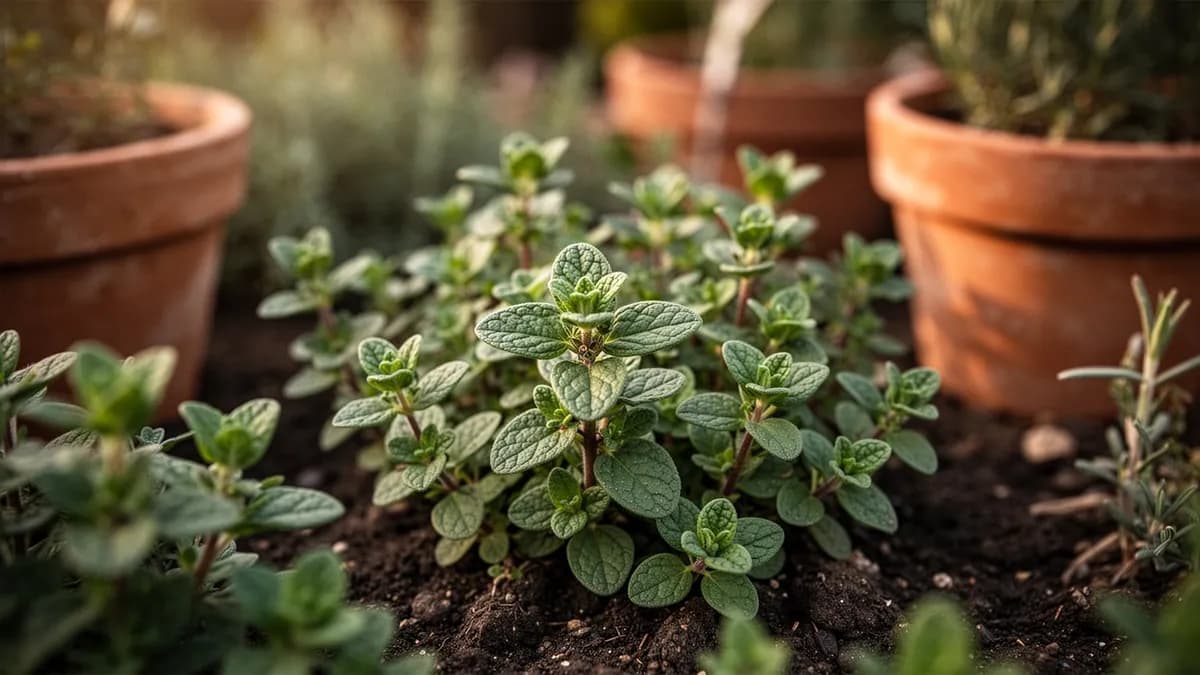
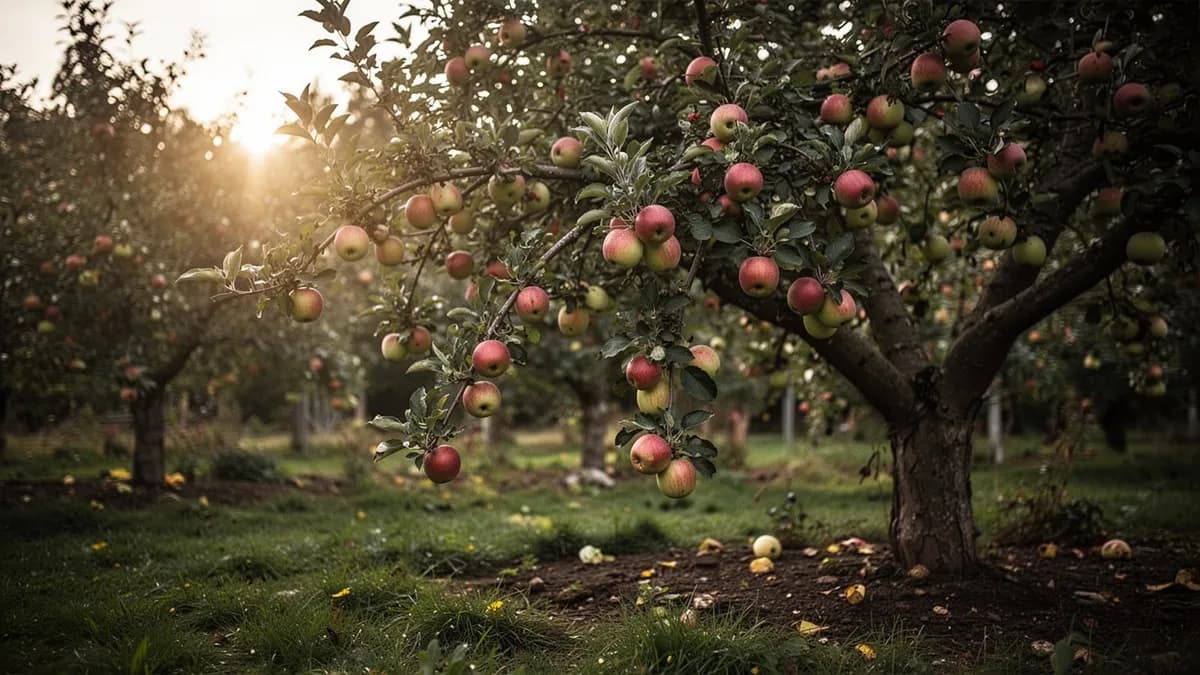
Feed it well
Olive trees prefer poor to moderately fertile, well-drained soil with a pH of 6.0 to 8.0. They thrive in rocky, limestone-based soil and tolerate alkaline conditions well. Over-fertilization reduces fruit quality and encourages excessive vegetative growth. Apply a low-nitrogen fertilizer once in early spring. Supplement with boron if fruit set is poor, as olives have a high boron requirement compared to most fruit trees.
Ideal Temperature
Hardiness Zone Compatibility
From seed to harvest, stage by stage
Germination & Seedling
Olive seeds are slow to germinate, often taking 1 to 3 months with scarification. Seedlings develop a single taproot and a few sets of narrow leaves. Most commercial growers prefer cuttings or grafted stock for faster establishment.
Juvenile Growth
Over the first 1 to 3 years, the young tree develops a woody trunk and begins branching. Growth is slow compared to deciduous fruit trees, typically adding 20 to 30 cm of height per year. The root system deepens and spreads to anchor the tree.
Pre-Bearing
Between years 3 and 5, the tree develops a more defined canopy and may produce scattered flowers. Fruit set is minimal during this stage. The tree is building the structural framework needed for sustained production.
First Fruiting
Most olive trees begin meaningful fruit production between years 5 and 7. Flower clusters appear on the previous season's growth. Wind pollination occurs in late spring, and small green fruits develop over summer.
Mature Production
From year 7 onward, a healthy olive tree reaches full production capacity. Trees typically exhibit alternate bearing, with heavier crops every other year. A well-managed mature tree can produce 15 to 40 kg of olives per season, depending on variety and growing conditions.
Heritage Stage
Olive trees are exceptionally long-lived, with some specimens exceeding 1000 years. Older trees develop characteristically gnarled, hollow trunks but continue producing fruit. Productivity may decline slightly with extreme age, but many ancient trees remain commercially viable.
Keep soil consistently moist but never waterlogged. Maintain temperatures above 15°C (60°F) for best germination rates.
Caring for Olive Tree month by month
What to do each month for your Olive Tree
October
You are herePrimary harvest month for green table olives and early-season oil production. Hand-pick or use raking tools gently to avoid damaging branches. Process harvested olives within 24 hours.
Know exactly what to do in your garden — every month
One email at the start of each month: what to sow, plant, and tackle right now — for your Olive Tree and everything growing around it. Plus a short starter course that helps you dodge the classic mistakes.
- What to do, right now
- Matched to your season
- Starter course included
Harvesting Olive Tree
Harvest green olives in early autumn for brining and table use, or wait until they turn purple-black on the tree for oil production. Green olives are firmer and more bitter, requiring longer curing. Ripe black olives are softer with higher oil content. Hand-pick or use a small rake to comb fruit into collection nets spread beneath the tree. Handle fruit gently to minimize bruising, which can affect oil quality and accelerate fermentation in table olives.
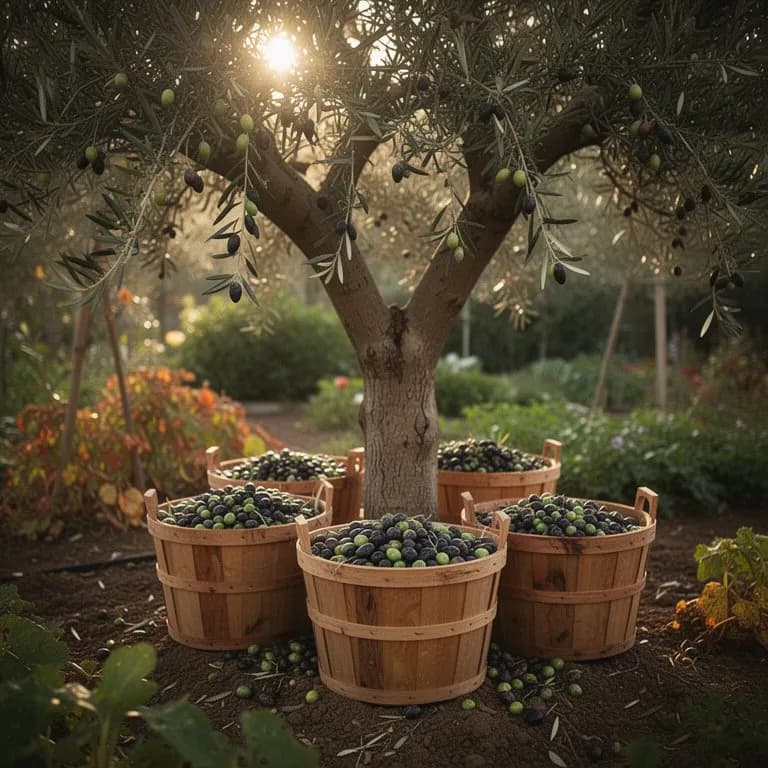
assuming you plant when the window opens — set your real date
Pick Olive Tree promptly and the plant keeps producing.
Storage & Preservation
Fresh olives are inedibly bitter and must be cured before eating. Brine-cure green olives by soaking in a salt solution for 3 to 6 months, changing the brine periodically. Dry-cure ripe black olives by packing in coarse salt for 4 to 6 weeks. Lye curing produces milder-flavored olives more quickly. For oil production, press fruit within 24 hours of harvest for the highest quality. Finished olive oil stores for up to 2 years in dark glass bottles in a cool location.
What goes wrong — and the fix
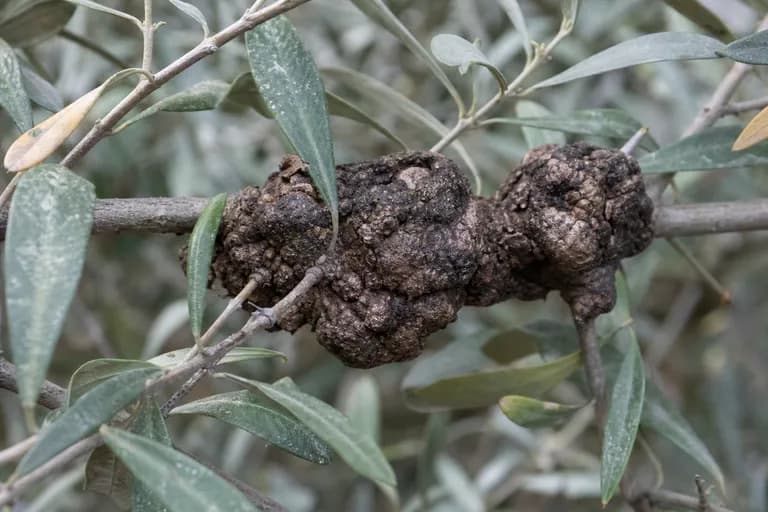
Olive Knot
DiseaseRough, woody galls develop on branches, twigs, and sometimes the trunk. Galls disrupt nutrient flow and weaken affected branches.
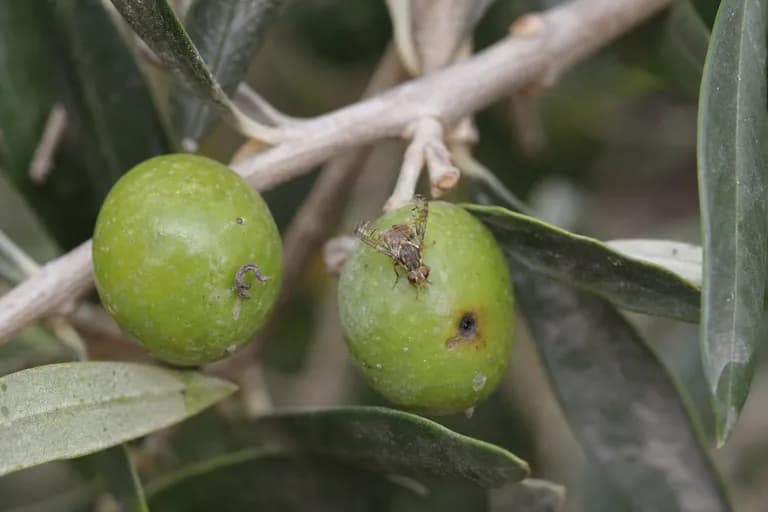
Olive Fruit Fly
PestSmall stings or punctures on fruit surface where eggs are laid. Larvae feed inside the fruit, causing soft rot and premature drop.
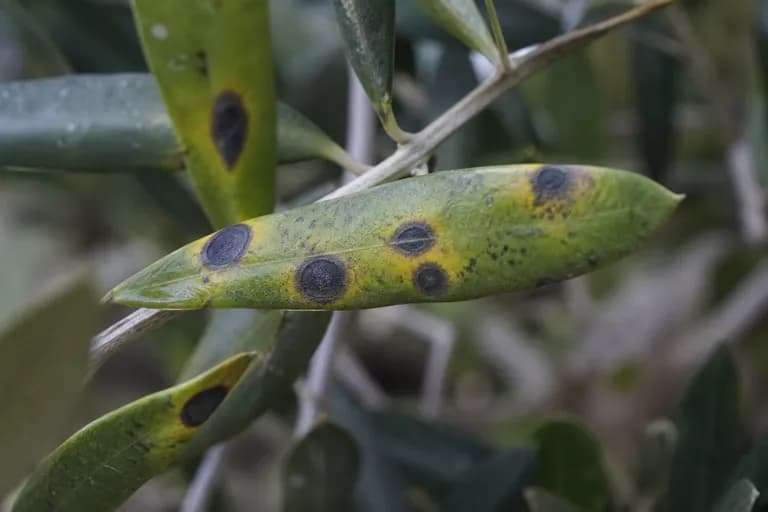
Peacock Spot
DiseaseDark circular spots with yellow halos on upper leaf surfaces. Severe infection causes premature leaf drop and reduced fruit production.
Troubleshooting Common Problems
Alternate bearing is common, with heavy crop years followed by light ones. Thinning fruit in heavy years can moderate this cycle. In cool climates, the main challenge is winter cold damage, so choose cold-hardy varieties like Arbequina. Lack of fruit on container-grown trees indoors is usually caused by insufficient light or failure to provide adequate winter chill. Over-watering in heavy soil causes root rot, the most common killer of olive trees.
Growing Tips
- Choose a planting site with full sun exposure — olive trees need at least 6 to 8 hours of direct sunlight daily for proper fruit development and ripening.
- Ensure excellent drainage by planting on a slope or amending heavy clay soil with coarse sand and gravel. Olive trees cannot tolerate waterlogged roots and are susceptible to root rot in poorly drained conditions.
- Select a cultivar suited to your climate. For colder regions (USDA zones 7-8), consider cold-hardy varieties like Arbequina, Arbosana, or Koroneiki, which tolerate brief freezes better than most.
- Water deeply but infrequently once established. Mature olive trees are highly drought-tolerant and perform best with deep irrigation every 2 to 4 weeks during dry periods rather than frequent shallow watering.
- Apply fertilizer sparingly — olive trees have modest nutrient needs. A single application of balanced fertilizer (10-10-10) in early spring is sufficient for most established trees.
- Prune annually in late winter to maintain an open vase shape that allows sunlight and air circulation into the interior canopy. Remove water sprouts, suckers from the base, and any dead or crossing branches.
- Protect young trees from frost by wrapping trunks with burlap or frost cloth when temperatures are forecast to drop below minus 5°C. Established trees are more cold-hardy but benefit from windbreaks in exposed locations.
- For container growing, use a large pot (at least 60 cm diameter) with drainage holes and a well-draining potting mix. Move containers indoors to a cool, bright location when winter temperatures drop below minus 5°C.
- Monitor for olive fruit fly, the most significant pest in most regions. Hang yellow sticky traps in June to detect adult flies early, and apply kaolin clay sprays as a preventive barrier on developing fruit.
- Harvest timing determines flavor: pick green olives in September or October for a peppery, bitter profile, or wait until November or December when fruits turn black for a milder, richer taste suitable for oil pressing.
Grow your best Olive Tree yet — and everything around it.
Start a free plan today. Lay out your beds, drop in your Olive Tree, and let PlotMyGarden handle the timing, spacing, companions and reminders from seed to harvest basket.
Pick your Olive Tree
Arbequina
Compact, self-fertile variety excellent for containers and small gardens. Produces mild, buttery oil and begins bearing at a young age.
Kalamata
Greek table olive with distinctive almond shape and dark purple color. Rich, fruity flavor prized for Mediterranean cuisine. Needs a warm climate.
Mission
Dual-purpose California variety good for both oil and table use. Hardy and productive, with medium-sized black fruit.
Frantoio
Premium Italian oil variety producing peppery, complex-flavored oil. Vigorous grower that needs regular pruning to maintain shape.
Manzanilla
The classic green table olive with firm flesh and mild flavor. Self-fertile and productive, widely grown commercially in Spain and California.
A single mature olive tree can produce 15 to 40 kg of fruit annually, yielding 3 to 4 liters of homemade extra virgin olive oil worth $40 to $80 at retail prices. Table olives from one tree can replace $50 to $100 in annual grocery purchases. While olive trees take 5 to 7 years to reach full production, they can live and produce for centuries with minimal input costs, making them one of the most cost-effective long-term food investments for suitable climates. Container-grown dwarf varieties can still produce 2 to 5 kg of fruit per year.
Quick recipes
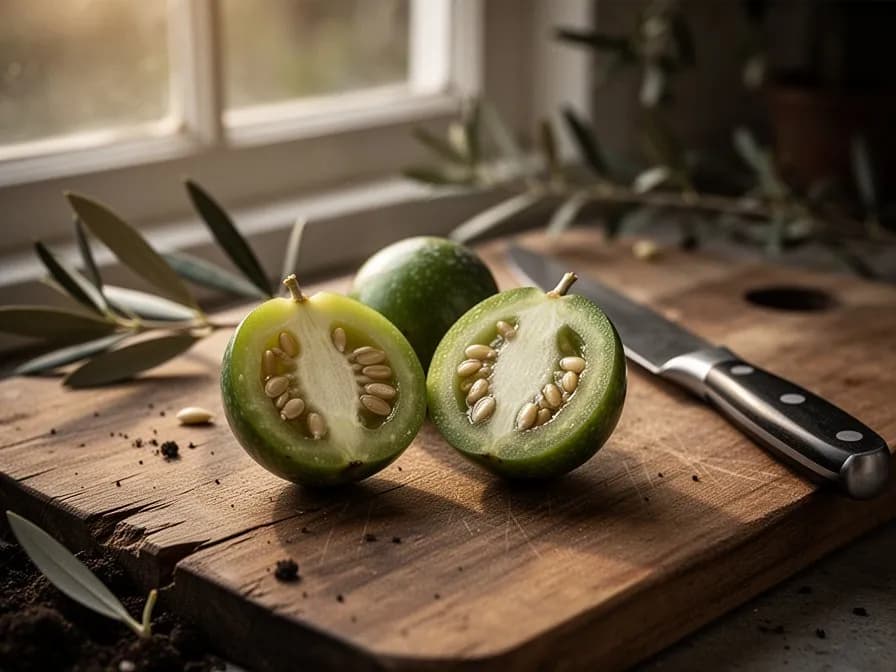
Classic Olive Tapenade
10 minutesA rich, savory spread made from finely chopped olives, capers, and anchovies. Perfect on crusty bread, as a pasta sauce, or as a topping for grilled fish. This traditional Provencal recipe takes just minutes to prepare in a food processor.
8 ingredientsMarinated Mixed Olives with Herbs
15 minutes plus 2 hours marinatingTransform plain olives into an elegant appetizer with a warm citrus and herb marinade. The gentle heating releases aromatic oils from the herbs and allows the flavors to penetrate the olives. Serve at room temperature for the best flavor.
9 ingredientsOlive and Sun-Dried Tomato Focaccia Topping
20 minutesA Mediterranean-inspired topping for homemade or store-bought focaccia. The combination of briny olives, sweet sun-dried tomatoes, and fragrant rosemary creates a flavorful bread that pairs well with soups, salads, or simply dipped in olive oil.
6 ingredientsCulinary Uses
Olives are a cornerstone of Mediterranean cuisine, used as table olives, pressed into oil, or added to salads, pasta, pizza, and tapenades. Extra virgin olive oil is valued for its health benefits, rich in monounsaturated fats and polyphenols. Green olives tend to be tangier and firmer, while ripe black olives are milder and meatier. Olive oil is essential for vinaigrettes, sauteing, and bread dipping. The fruit pairs well with feta cheese, lemon, and fresh herbs.
What's inside
Health Benefits
- Oleic acid and polyphenols in olives help reduce LDL cholesterol and lower the risk of cardiovascular disease when consumed regularly as part of a Mediterranean diet.
- The antioxidant hydroxytyrosol found in olives and olive oil has demonstrated strong anti-inflammatory effects in clinical studies, potentially reducing markers of chronic inflammation.
- Regular olive oil consumption is associated with improved cognitive function and a reduced risk of neurodegenerative diseases, including Alzheimer's, according to longitudinal population studies.
- Oleuropein, a compound unique to olives, exhibits antimicrobial properties and may support the immune system by inhibiting the growth of harmful bacteria and viruses.
- The monounsaturated fats in olives improve insulin sensitivity and help regulate blood sugar levels, making them a beneficial food for people managing type 2 diabetes.
- Vitamin E and polyphenols in olives protect skin cells from oxidative damage caused by UV radiation and environmental pollutants, supporting overall skin health and aging resilience.
Where Olive Tree comes from
The olive tree (Olea europaea) is native to the eastern Mediterranean basin, with wild ancestors originating in the region spanning modern-day Turkey, Syria, and Iran. Archaeological evidence suggests that humans first domesticated the olive around 4000 BCE in the Levant, making it one of the earliest fruit trees brought under cultivation. Ancient civilizations along the Mediterranean coast — including the Phoenicians, Greeks, and Romans — spread olive cultivation throughout the region, recognizing both its culinary and economic value. The Greeks considered the olive sacred to the goddess Athena, and legend held that she gifted the first olive tree to the city of Athens. Olive oil served not only as food but also as lamp fuel, medicine, and a key ingredient in religious rituals across multiple cultures. The Romans systematically planted olive groves across their empire, establishing the tree in North Africa, Iberia, and southern France. Following European colonization, Spanish missionaries introduced olive trees to the Americas in the 16th century, planting groves in Peru, Mexico, and eventually California. Today, olive cultivation spans six continents, with significant production in Australia, Argentina, South Africa, and China in addition to the traditional Mediterranean producers. The global olive oil market exceeds 3 million metric tons annually, and the tree remains a cornerstone of the Mediterranean diet, which is widely recognized for its cardiovascular health benefits. Modern breeding programs have developed cold-hardy cultivars that extend the olive's range into regions previously considered too cool, including parts of the southeastern United States and the Pacific Northwest.
Olive Tree: did you know?
Fascinating facts about Olive Tree
The olive tree is one of the oldest cultivated trees in human history, with evidence of olive oil production dating back over 6000 years to the eastern Mediterranean.
Olive Tree questions, answered
When should I plant Olive Tree?
What are good companion plants for Olive Tree?
What hardiness zones can Olive Tree grow in?
How much sun does Olive Tree need?
How far apart should I space Olive Tree?
What pests and diseases affect Olive Tree?
How do I store Olive Tree after harvest?
What are the best Olive Tree varieties to grow?
What soil does Olive Tree need?
How long does it take for an olive tree to produce fruit?
Can I grow an olive tree in a cold climate?
Do I need two olive trees for pollination?
Why are my olives bitter and how do I cure them?
How much water does an olive tree need?
Can I make olive oil at home from my own tree?
You just read the theory. Now grow it on autopilot.
Everything that makes Olive Tree fiddly — the timing, the spacing, the companions, the harvest window — is exactly what PlotMyGarden handles for you, for every plant in your garden.
A plan that knows your weather
Set your location once. Get sow, feed and harvest dates built around your real last-frost date and live forecast — no more guessing from a generic seed packet.
From the “When to plant” sectionDrag-and-drop bed planner
Design beds on a grid. Every plant snaps to its proper spacing, and you can see your whole season laid out before you spend a cent on seed.
From the “Growing guide” sectionCompanion conflicts, caught early
200+ good-and-bad pairings checked live as you plant — so a season-wrecking mistake never makes it into the ground.
From the “Companions” sectionReminders you'll actually act on
“Water the beans.” “Pick today before it turns.” Timely, specific, and tied to the plants you're really growing.
From the “Harvest” sectionSuccession, scheduled
Want a harvest for six weeks, not six days? It spaces your sowings automatically and reminds you when each new block is due.
From the “When to plant” sectionA record that gets smarter
Every harvest you log teaches it your garden. Next year's plan starts from what actually worked in your soil, not a textbook's.
From the “Overview” sectionPlant these alongside Olive Tree
More Fruit Trees
Keep Olive Tree away from these
Grow your best Olive Tree yet — and everything around it.
Start a free plan today. Lay out your beds, drop in your Olive Tree, and let PlotMyGarden handle the timing, spacing, companions and reminders from seed to harvest basket.