Walnut Tree
typical season: plant Nov – Apr · harvest Sep – Oct · set your climate
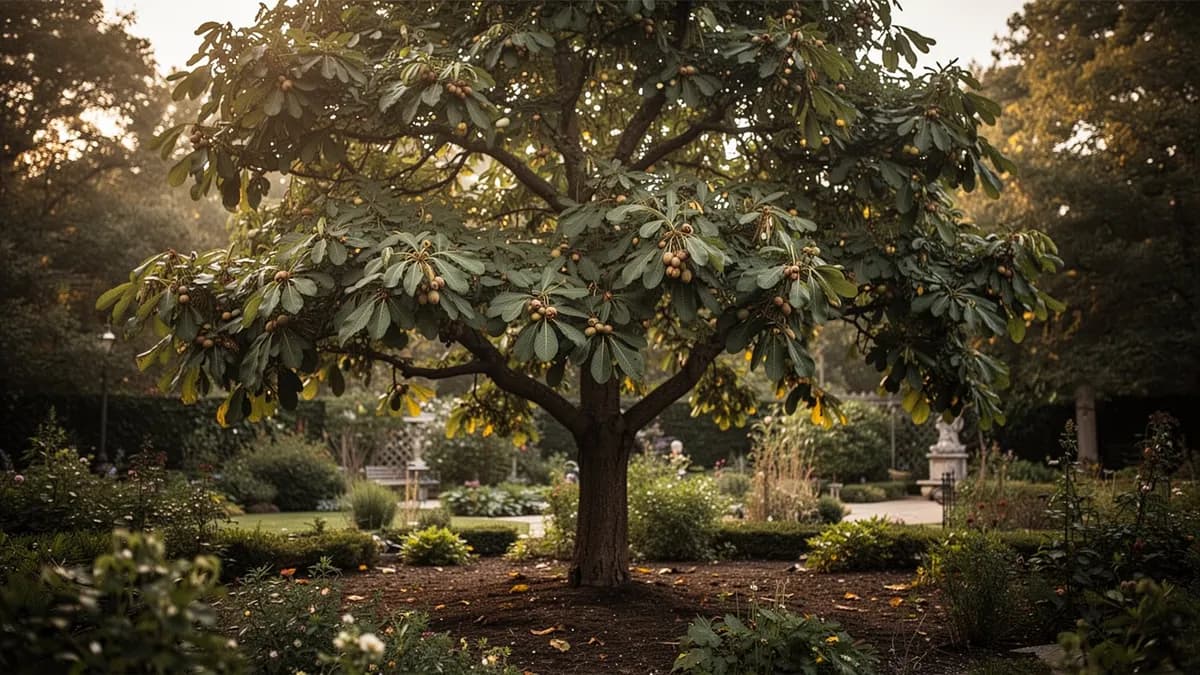
A large deciduous tree producing edible nuts, but its roots release juglone which inhibits many nearby plants including tomatoes, apples, and blueberries.
On this pageOverview
Meet Walnut Tree
A large deciduous tree producing edible nuts, but its roots release juglone which inhibits many nearby plants including tomatoes, apples, and blueberries. Plant walnut trees well away from vegetable gardens and sensitive ornamentals, giving them the wide spacing their massive mature canopy requires. Trees take seven to ten years to begin bearing, but once productive they can yield over a hundred pounds of nuts annually for decades. Harvest walnuts when the green husks begin to split and dry the shelled nuts thoroughly before storage to prevent mold.
When to plant Walnut Tree
Named walnut varieties are propagated by grafting onto seedling walnut rootstock. Patch budding in summer or whip grafting in spring are the most common techniques. English walnut scions are often grafted onto black walnut or Paradox hybrid rootstock for improved vigor and disease resistance. Seeds require 90 to 120 days of cold stratification and produce variable seedlings that take 7 to 10 years to bear. Plant stratified seeds in deep containers to accommodate the taproot. Purchase grafted trees for guaranteed variety and earlier production.
Your Walnut Tree Year
Composed for Zone 7 · typical seasons · frost passes Apr 2, returns Nov 1
Plant Walnut Tree Mar – Apr, Nov, pick Sep – Oct. Check the planting methods below and set your climate to personalize these windows.
Picking Walnut Tree this season? Its next window opens Nov 1
One email a few days before it opens where you garden.
One email per milestone, never more than one a week. Unsubscribe with one tap. No account needed.
How to grow Walnut Tree
Walnut trees are majestic, long-lived deciduous trees that can reach 50 to 75 feet tall with an equally wide canopy. Plant in full sun in deep, well-drained, fertile loam with a pH of 6.0 to 7.5. Walnuts develop a deep taproot and extensive lateral root system, so choose a permanent location with ample space. Space trees 40 to 60 feet apart. The most critical consideration is juglone toxicity: walnut roots, leaves, and hulls release juglone, a compound that inhibits or kills many garden plants including tomatoes, peppers, blueberries, and apples.
Water young walnut trees deeply once a week during the first 3 to 5 years to encourage deep root development. Established trees are moderately drought-tolerant but produce better nut crops with supplemental irrigation during dry summers. Apply a balanced fertilizer in early spring, spreading it beneath the drip line. Zinc deficiency is common in walnut trees and causes rosetting of terminal leaves; apply zinc sulfate foliar sprays when symptoms appear.
Prune walnut trees in late summer or early fall rather than in winter or spring, as fresh pruning wounds in wet conditions are susceptible to walnut blight. Train young trees to a central leader with well-spaced scaffold branches. Remove lower limbs gradually as the tree grows to provide clearance beneath the canopy. English walnuts generally require a pollinizer variety within 100 feet for best nut production, though some cultivars are partially self-fertile.
Walnut Tree's best neighbours
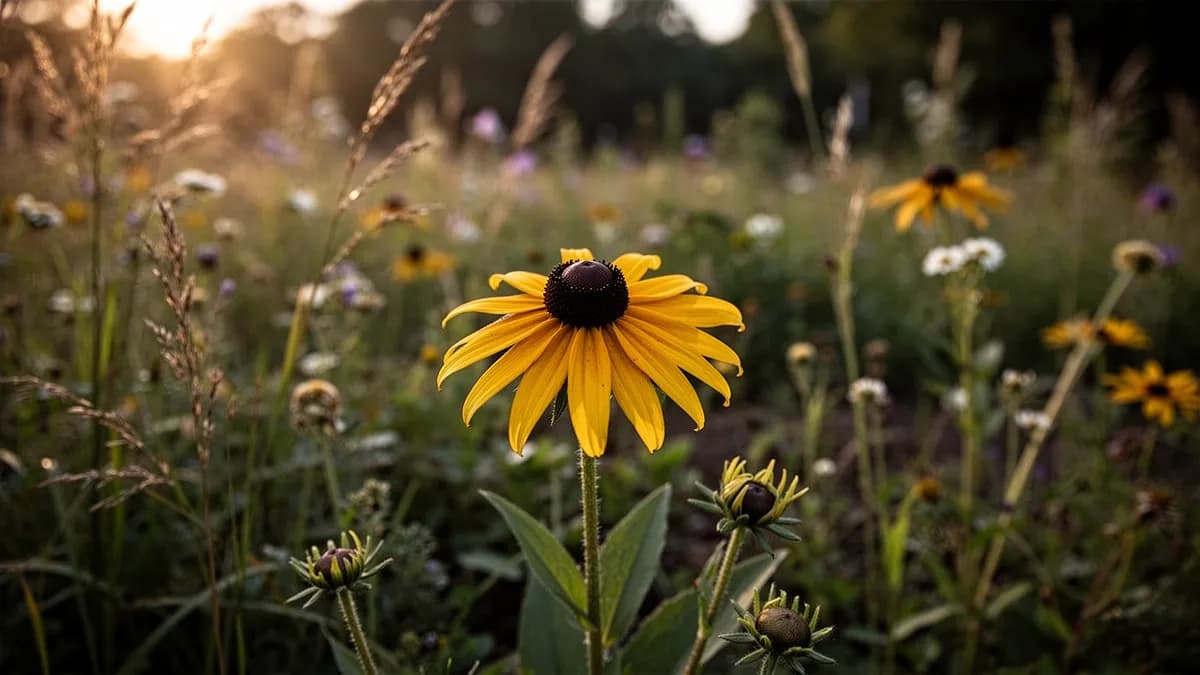
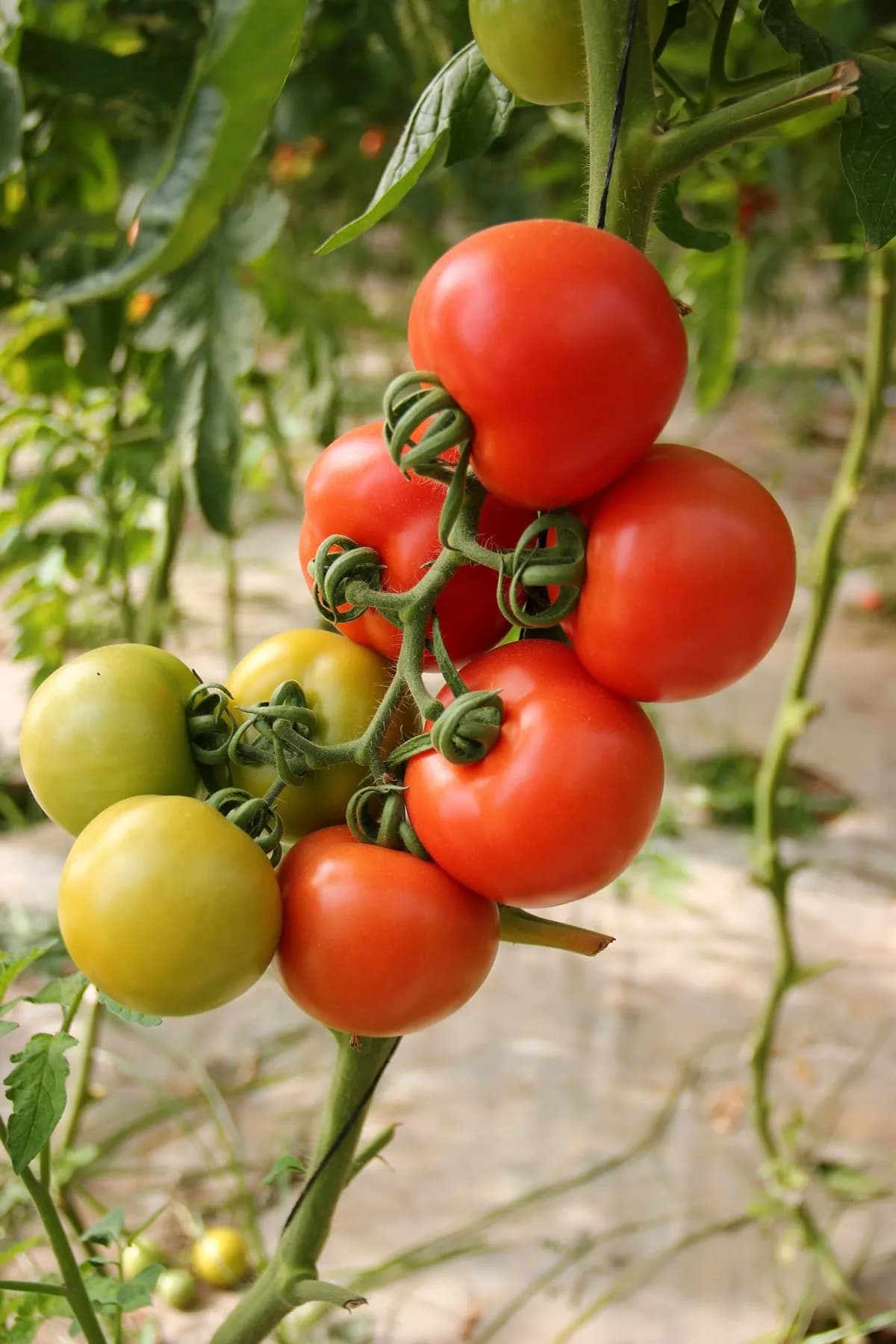
Due to juglone toxicity, companion planting around walnut trees requires careful plant selection. Juglone-tolerant plants include black raspberries, elderberries, currants, and some stone fruits. Tolerant perennials include hostas, daylilies, black-eyed Susans, and most spring bulbs. White clover, Kentucky bluegrass, and fescue grasses tolerate juglone for ground cover. Keep walnut trees at least 50 feet from vegetable gardens, tomatoes, peppers, and blueberries, which are extremely sensitive to juglone.
Black-eyed Susan belongs beside it. Tomato doesn't.
Old growers' knowledge, checked against Walnut Tree's real companion table below — test any plant you're growing.
Related growing guides
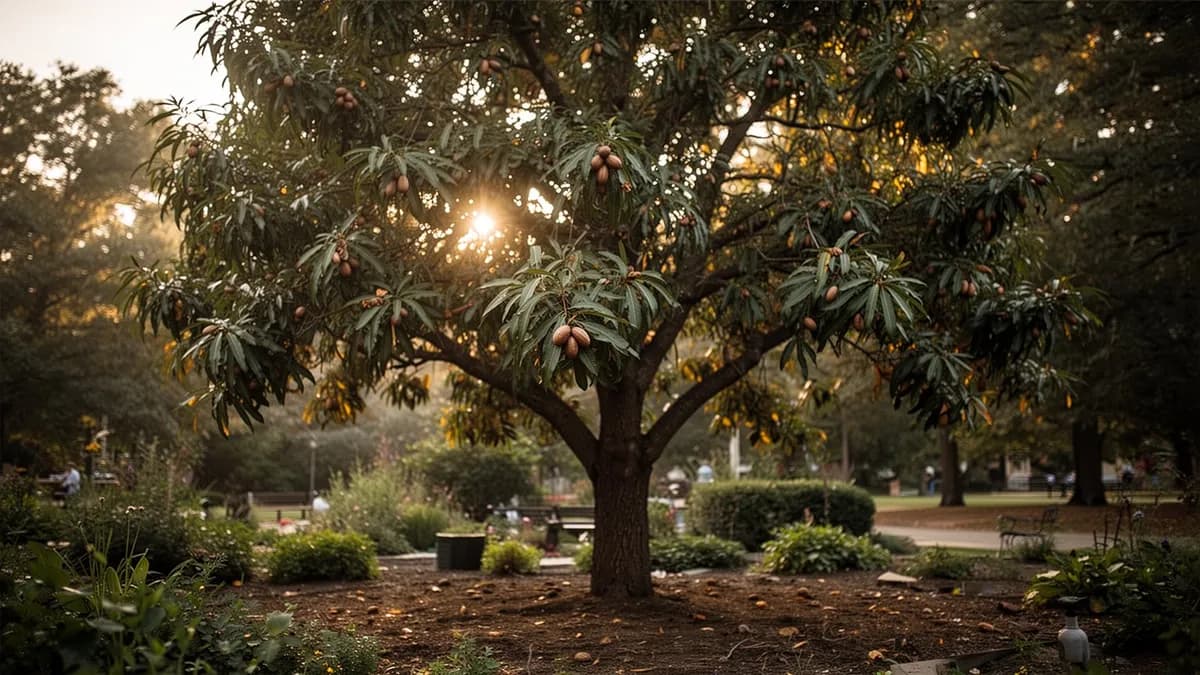
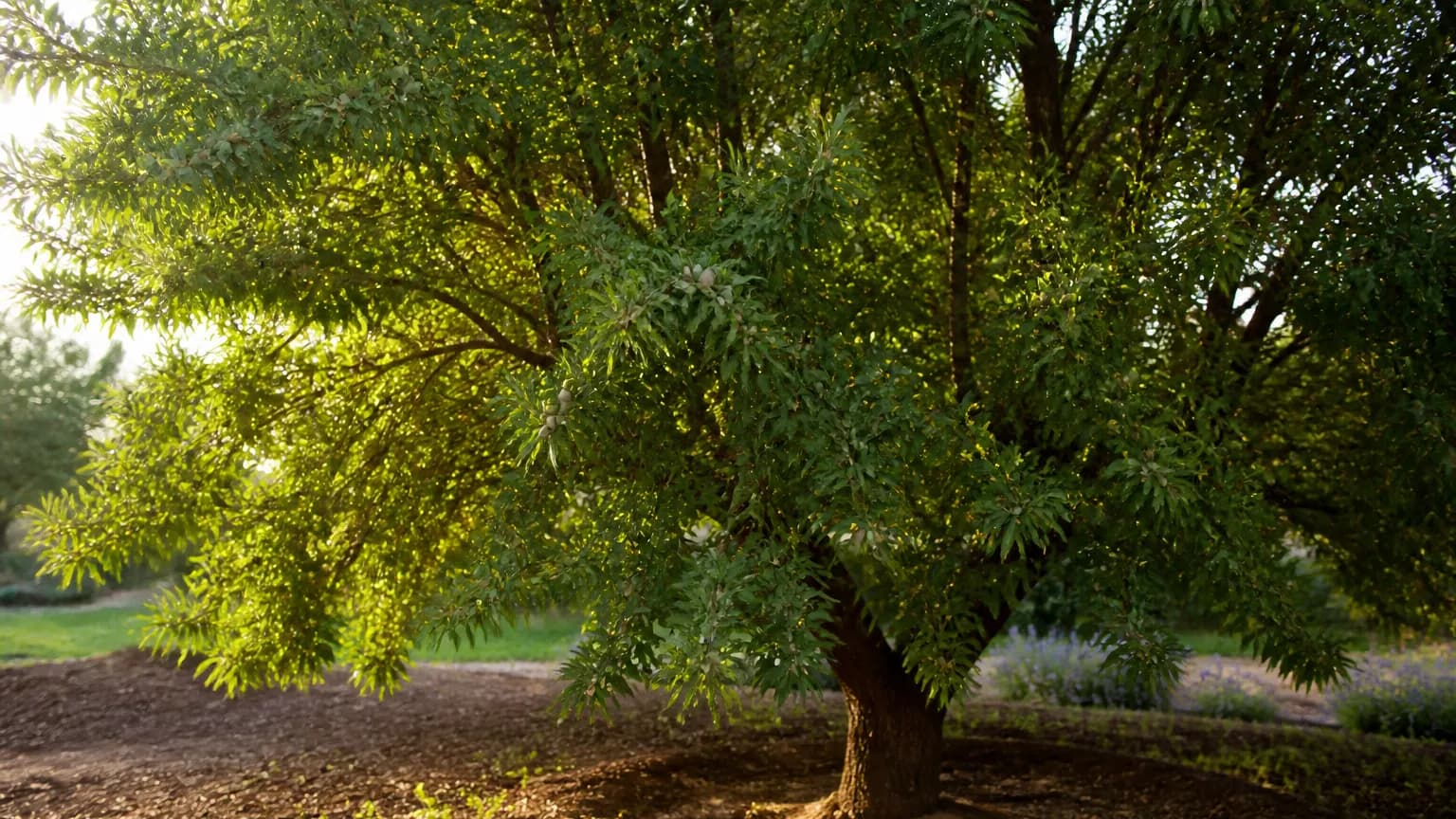
Feed it well
Walnut trees require deep, well-drained, fertile loam with a pH of 6.0 to 7.5 for best production. They do not tolerate waterlogged conditions or shallow soil over hardpan. Apply a balanced fertilizer in early spring at a rate of 1 to 2 pounds per inch of trunk diameter, spread beneath the drip line. Zinc is the most commonly deficient micronutrient in walnuts; apply zinc sulfate as a foliar spray at budbreak if leaves show rosetting or interveinal chlorosis. Avoid excessive nitrogen that promotes blight-susceptible soft growth.
Ideal Temperature
Hardiness Zone Compatibility
From seed to harvest, stage by stage
Dormancy and Planting
English walnut trees are planted as bare-root or container-grown specimens during winter dormancy, when the tree has shed all leaves and energy is stored in the extensive root system and woody tissues. Walnuts have a deep taproot that establishes during this period. The tree requires approximately 700-1000 chill hours below 7°C to break dormancy properly in spring, making it well suited to temperate climates with distinct seasons.
Bud Break and Flowering
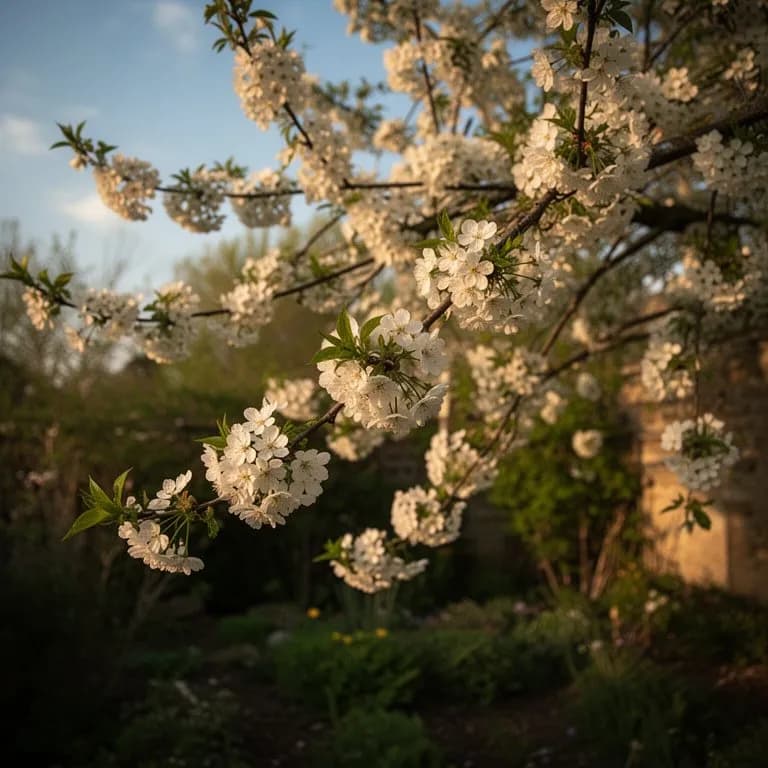
As spring temperatures rise above 10°C consistently, walnut buds swell and burst to reveal emerging compound leaves. Male flowers appear as long pendulous catkins up to 10 cm long, releasing vast quantities of wind-borne pollen. Female flowers are small and inconspicuous, borne in clusters of two to five at the tips of current-season shoots. English walnuts are monoecious but often dichogamous, meaning male and female flowers may not mature simultaneously on the same tree.
Fruit Set and Nut Development
After successful wind pollination, fertilized female flowers develop into small green fruits enclosed in a fleshy husk. The shell begins to harden inside the husk during early summer through a process of lignification. The kernel inside initially appears as a watery gel that gradually solidifies over several weeks. Each tree may set hundreds to thousands of fruitlets, though natural drop reduces this number as the tree regulates its crop load based on available resources.
Shell Hardening and Kernel Fill
During midsummer, the walnut shell completes its hardening process, forming the familiar woody protective layer around the developing kernel. Inside, the kernel transitions from gelatinous to firm as oils and proteins accumulate. The characteristic walnut flavor develops during this stage as lipids, particularly alpha-linolenic acid and linoleic acid, are synthesized and stored. The green husk remains tightly attached and smooth throughout this period.
Hull Split and Harvest
In early to mid-autumn, the outer green husk begins to crack and split along its suture line, signaling that the nut inside is mature. The husk darkens from green to brown-black as it separates from the shell. Mature nuts fall naturally from the tree or can be shaken loose. The timing of hull split varies by cultivar, with early varieties like Payne splitting in early autumn and later varieties like Hartley splitting in mid-autumn. Prompt harvest after hull split is essential to prevent mold and kernel darkening.
Leaf Fall and Dormancy
After harvest, walnut leaves turn yellow and drop relatively early in autumn compared to many other deciduous trees. The tree begins translocating nutrients from leaves back into roots and woody tissues for winter storage. Once fully dormant, the tree can withstand temperatures down to -25°C or lower depending on the variety. The bare winter silhouette reveals the tree's naturally open, spreading branch architecture.
Plant bare-root trees in late winter to early spring while fully dormant. Dig a hole at least 60 cm deep and wide to accommodate the long taproot without bending. Set the graft union 10 cm above the soil line. Water deeply at planting and apply a 10 cm layer of organic mulch in a wide ring, keeping mulch 20 cm away from the trunk to prevent crown rot.
Caring for Walnut Tree month by month
What to do each month for your Walnut Tree
October
You are hereComplete harvest of late-season varieties. Continue drying harvested nuts in a warm, well-ventilated location until kernels snap cleanly when bent. Clean up all fallen husks and debris from beneath the tree to reduce overwintering disease inoculum. Reduce irrigation frequency as the tree prepares for dormancy.
Harvesting Walnut Tree
Walnuts are ready to harvest in early to mid-autumn when the green outer husk begins to split and darken. Shake or knock branches to dislodge ripe nuts, or collect them from the ground daily to prevent mold development. Remove the husks immediately after harvest, wearing gloves as the husk juice stains skin and clothing dark brown. Wash the shelled nuts and dry them thoroughly in a warm, well-ventilated area for 2 to 3 weeks before storage to prevent mold inside the shell.
Storage & Preservation
Properly dried walnuts in the shell keep at room temperature for 2 to 3 months and in the refrigerator for up to a year. Shelled walnut kernels store best in airtight containers in the freezer for up to 2 years, as the high oil content causes rancidity at warm temperatures. Toast walnuts lightly to extend shelf life and enhance flavor. Green walnuts harvested in June can be pickled whole in vinegar and spices, a traditional English condiment. Walnut oil pressed from fresh kernels is a prized culinary ingredient.
What goes wrong — and the fix
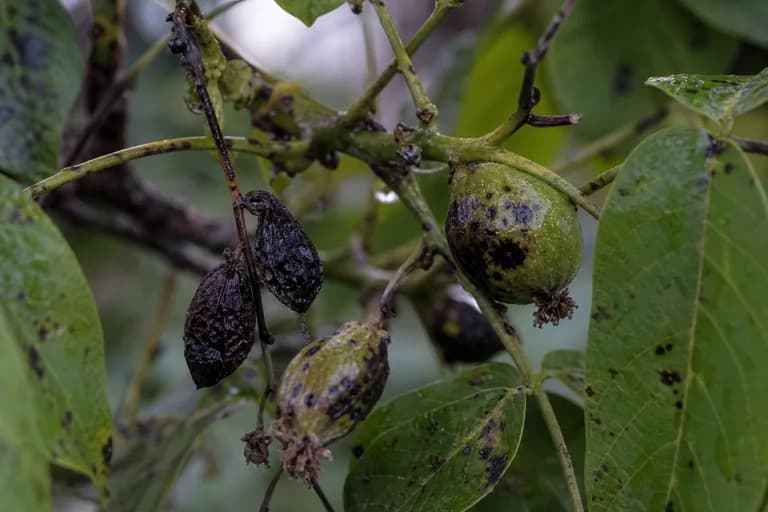
Walnut Blight
DiseaseBlack, sunken lesions on young nuts, catkins, and shoots during wet spring weather. Infected nuts develop blackened shells and shriveled kernels.
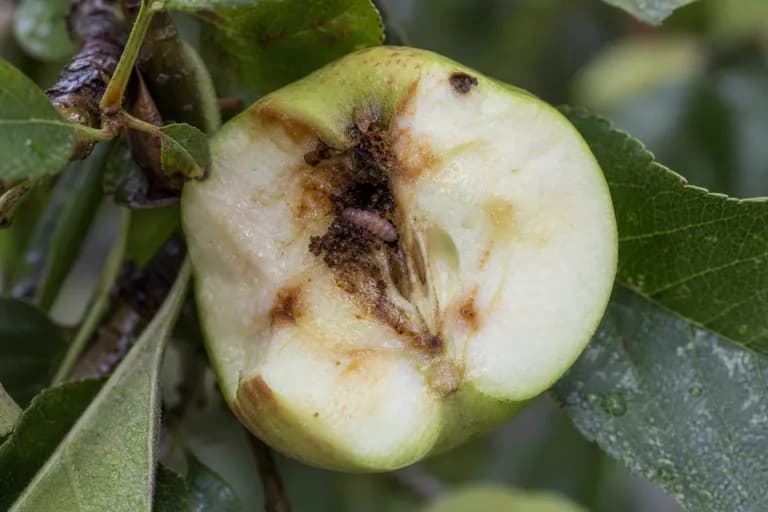
Codling Moth
PestLarvae bore into nuts through the husk, contaminating kernels with frass and creating entry points for mold and decay.
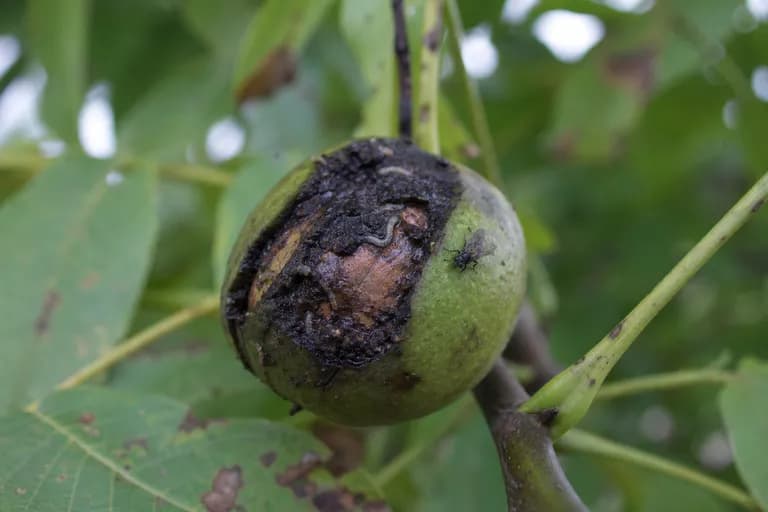
Walnut Husk Fly
PestLarvae feed inside the husk, causing it to turn black and adhere to the shell. Nuts may develop stained, discolored shells and off-flavored kernels.
Troubleshooting Common Problems
Juglone toxicity from walnut roots kills or damages many common garden plants, limiting what can be grown within the root zone that extends well beyond the canopy drip line. This is the most important factor to consider before planting. Walnut blight during wet springs can devastate nut crops. Late spring frosts damage early-leafing varieties; choose late-leafing cultivars for frost-prone sites. Squirrels are aggressive nut thieves that can harvest an entire crop before the grower. Large mature trees are difficult to prune and maintain safely.
Growing Tips
- Select a planting site with full sun exposure and deep, well-drained loamy soil. Walnut trees develop extensive taproots and lateral root systems, so avoid sites with shallow bedrock, high water tables, or compacted clay subsoil that restricts root penetration below 1.5 meters.
- Purchase grafted named cultivars rather than seedling trees for reliable nut quality and earlier bearing. Popular home garden varieties include Chandler for high-quality large nuts, Franquette for late leafing that avoids spring frost, and Broadview for colder climates with a self-fertile tendency.
- Be aware of juglone toxicity when planning your garden layout. Walnut roots, leaves, and husks release juglone which is toxic to many plants including tomatoes, peppers, potatoes, azaleas, and apple trees. Keep susceptible plants at least 15-20 meters from the walnut canopy drip line.
- Prune walnut trees only during full winter dormancy from early through late winter, as they bleed sap heavily from pruning wounds made during active growth. Focus on establishing a strong central leader with 4-6 well-spaced scaffold branches at wide crotch angles to support heavy nut crops.
- Apply zinc sulfate as a foliar spray in spring if leaves show interveinal chlorosis or rosetting of terminal growth. Zinc deficiency is the most common micronutrient problem in walnut trees worldwide and significantly reduces nut yield and quality if left uncorrected.
- Water deeply and consistently during the growing season, providing 50-75 mm of water per week from fruit set through kernel fill. Use drip irrigation or flood irrigation rather than overhead sprinklers, as wet foliage promotes walnut blight caused by the bacterium Xanthomonas arboricola pv. juglandis.
- Protect young trees from late spring frosts, which can destroy emerging flowers and shoot growth. Late-leafing cultivars like Franquette and Fernette are preferable in frost-prone areas, as they delay bud break until the risk of damaging frost has passed.
- Harvest walnuts promptly when husks begin to split and nuts drop from the tree. Spread tarps beneath the canopy and shake branches with a long pole to dislodge ripe nuts. Remove husks within 24 hours and wash shells immediately to prevent tannin staining and mold development on the kernel surface.
- Dry harvested walnuts thoroughly before storage by spreading them in a single layer in a warm, well-ventilated area for 2-3 weeks. Test dryness by cracking a sample nut and bending the kernel, which should snap cleanly rather than flex. Store dried walnuts in-shell in mesh bags in a cool, dark location at 1-4°C for up to a year, or freeze shelled kernels for up to two years.
- Plant a second walnut variety within 30 meters for reliable cross-pollination if your chosen cultivar is strongly dichogamous. While English walnuts are monoecious with both male and female flowers on the same tree, many cultivars shed pollen before or after their own female flowers are receptive, reducing self-pollination success.
Pick your Walnut Tree
Chandler
The leading commercial variety in California with large, light-colored kernels and thin shells. Late-leafing habit helps it avoid spring frost and walnut blight.
Franquette
A classic French variety prized for its rich-flavored kernels. Very late-leafing, making it one of the best choices for frost-prone areas.
Carpathian
An extremely cold-hardy strain surviving to minus 30 degrees Fahrenheit. Produces good quality nuts in northern climates where other walnuts cannot grow.
Broadview
A compact variety that bears at a young age, producing medium-sized nuts with excellent flavor. Well-suited to smaller garden spaces.
A mature English walnut tree can produce 30-70 kg of in-shell nuts annually, yielding approximately 15-35 kg of shelled kernels. At typical retail prices of $18-$28 per kg for organic shelled walnuts, this represents $270-$980 worth of nuts per year from a single tree. While walnut trees require patience with a 5-7 year wait before first significant harvest from grafted trees, they continue producing for 50-100 years or more with minimal input costs once established. Growing your own also ensures access to the freshest possible nuts with maximum omega-3 content, as walnut oils begin to degrade within months of commercial processing.
Quick recipes
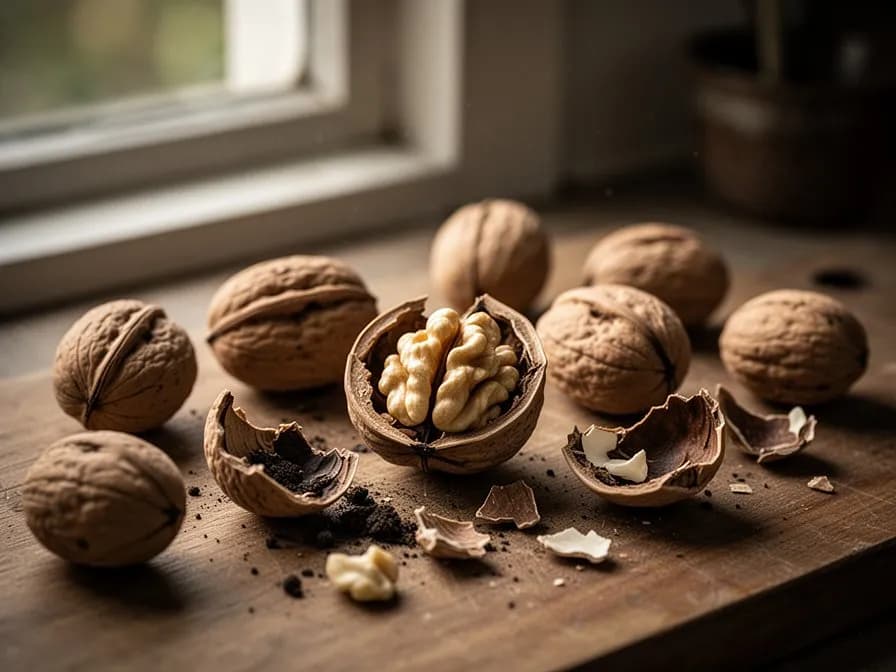
Honey-Glazed Spiced Walnuts
20 minutesIrresistibly crunchy caramelized walnuts coated in honey, warm spices, and a touch of sea salt. These make an elegant snack, salad topping, or homemade gift. The combination of sweet honey glaze with aromatic spices enhances the natural butteriness of fresh garden-grown walnuts far beyond any store-bought version.
8 ingredientsClassic Walnut Pesto with Basil
10 minutesA rich, earthy twist on traditional pesto that substitutes walnuts for pine nuts, creating a more robust and economical sauce with deeper flavor complexity. Fresh garden walnuts provide a creamy, slightly tannic base that pairs beautifully with aromatic basil and sharp Parmesan, perfect for pasta, bruschetta, or grilled vegetables.
7 ingredientsRustic Walnut and Rosemary Bread
30 minutes active (3 hours total with rising)A hearty artisan loaf studded with crunchy walnut pieces and fragrant rosemary, baked to a deep golden crust with a soft, chewy interior. This bread showcases the marriage of garden-fresh walnuts with aromatic herbs and is equally at home alongside soups, cheeses, or slathered with butter as an afternoon treat.
8 ingredientsCulinary Uses
Walnuts are among the most nutritious and versatile tree nuts, rich in omega-3 fatty acids, protein, and antioxidants. They are excellent raw, toasted, or candied for snacking and add crunch and richness to salads, baked goods, and grain dishes. Walnut oil is a prized finishing oil for vinaigrettes and drizzling. Traditional uses include baklava, walnut pesto, and walnut-stuffed dates. Black walnuts have a more intense, earthy flavor preferred in American baking traditions.
What's inside
Health Benefits
- Richest tree nut source of plant-based omega-3 fatty acids (alpha-linolenic acid), with clinical studies demonstrating that consuming 30-60g of walnuts daily can reduce LDL cholesterol by 5-10 percent and lower overall cardiovascular disease risk
- Contains high concentrations of polyphenol antioxidants including ellagitannins and pedunculagin, which exhibit anti-inflammatory properties and may help reduce oxidative stress markers associated with chronic diseases including cancer and neurodegenerative conditions
- Supports gut microbiome health by acting as a prebiotic, with research showing that regular walnut consumption increases beneficial bacteria populations including Lactobacillus and Ruminococcaceae that produce short-chain fatty acids important for colon health
- Rich in melatonin and other sleep-regulating compounds, with studies suggesting that walnut consumption may increase blood melatonin levels and improve sleep quality, making them a natural dietary approach to better rest
- Provides significant amounts of L-arginine, an amino acid that the body converts to nitric oxide, helping to maintain blood vessel elasticity, reduce blood pressure, and support overall circulatory health
- Associated with improved cognitive function and brain health in epidemiological studies, with researchers attributing benefits to the synergistic action of omega-3 fatty acids, polyphenols, and vitamin E in supporting neuronal membrane integrity and reducing neuroinflammation
Where Walnut Tree comes from
The English walnut (Juglans regia) originated in the mountain ranges of Central Asia, spanning from modern-day Kyrgyzstan, Uzbekistan, and Tajikistan westward through Iran, Turkey, and into the Caucasus region. Wild walnut forests still survive in these areas, with some of the most ancient and genetically diverse stands found in the Chatkal and Ferghana ranges of Kyrgyzstan, where trees grow at elevations between 1,000 and 2,000 meters. These wild forests represent an invaluable genetic resource for breeding programs worldwide. The cultivation of walnuts likely began more than 7,000 years ago in Persia, where the nut was regarded as royal food reserved for the king and elite classes, earning it the Latin name Juglans regia, meaning 'Jupiter's royal acorn.' Ancient Greek and Roman civilizations embraced walnut cultivation enthusiastically, spreading orchards throughout the Mediterranean basin. The Romans introduced walnut trees to Gaul, Iberia, and Britain, where the mild climate of southern England proved marginally suitable for production. During the Middle Ages, Franciscan monks carried walnut cultivars along trade routes, establishing orchards at monasteries across Europe. Spanish missionaries brought English walnuts to California in the late 18th century, planting trees at the missions of San Diego and Santa Barbara around 1770. The California walnut industry expanded dramatically in the 19th century when French cultivars such as Franquette and Mayette were imported for their superior nut quality and late-leafing habit that avoided spring frost damage. Modern breeding programs at the University of California, Davis have developed widely planted cultivars including Chandler, Howard, and Tulare that combine high yields with excellent kernel quality. Today, global walnut production exceeds 3.5 million tonnes annually, with China producing nearly half the world total, followed by the United States, Iran, Turkey, and Chile.
Walnut Tree: did you know?
Fascinating facts about Walnut Tree
The English walnut (Juglans regia) is not actually from England at all. The name comes from Old English 'wealhhnutu' meaning 'foreign nut,' as Anglo-Saxon traders imported walnuts from Gaul and the Mediterranean region, distinguishing them from native hazelnuts.
Walnut Tree questions, answered
When should I plant Walnut Tree?
What are good companion plants for Walnut Tree?
What hardiness zones can Walnut Tree grow in?
How much sun does Walnut Tree need?
How far apart should I space Walnut Tree?
What pests and diseases affect Walnut Tree?
How do I store Walnut Tree after harvest?
What are the best Walnut Tree varieties to grow?
What soil does Walnut Tree need?
How long does it take for a walnut tree to produce nuts?
What plants can I grow near a walnut tree without being affected by juglone?
Why are my walnuts black inside or have dark kernels?
Can I grow an English walnut tree in a cold climate?
How do I store walnuts to keep them fresh for the longest time?
Should I prune my walnut tree and when is the best time?
Plant these alongside Walnut Tree
More Nut Trees
Keep Walnut Tree away from these
Grow your best Walnut Tree yet — and everything around it.
Start a free plan today. Lay out your beds, drop in your Walnut Tree, and let PlotMyGarden handle the timing, spacing, companions and reminders from seed to harvest basket.
