Pecan Tree
A massive native North American tree that can reach over one hundred feet tall and produce nuts for generations.





On this pageOverview
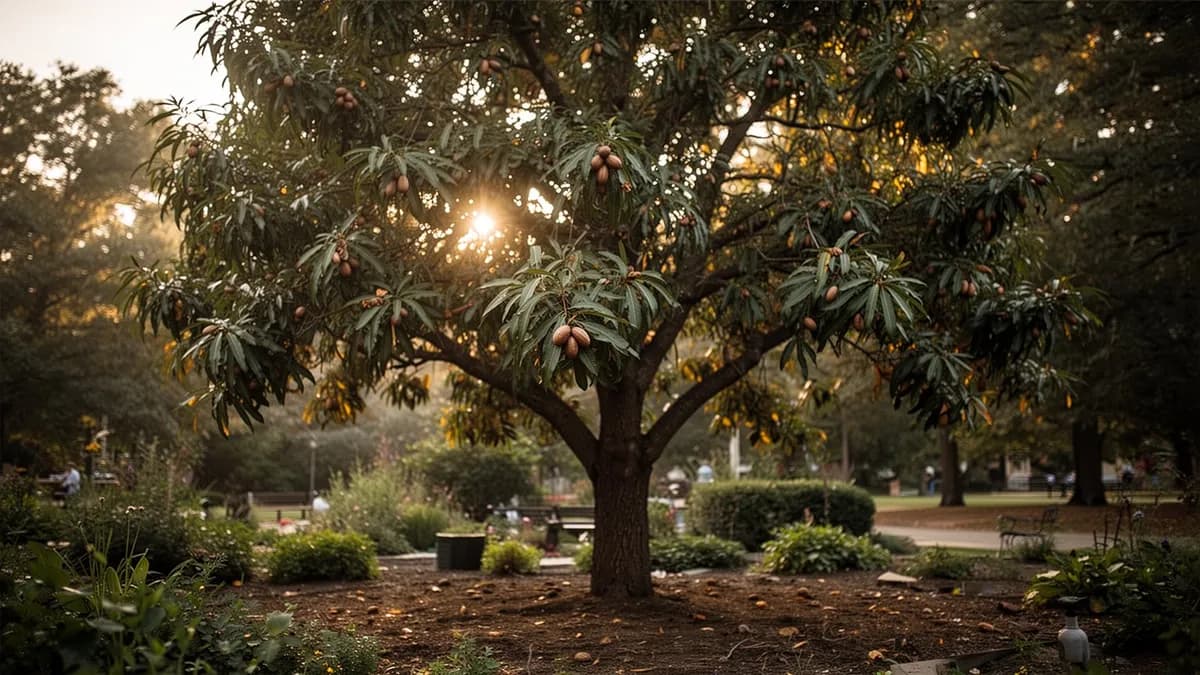
Meet Pecan Tree
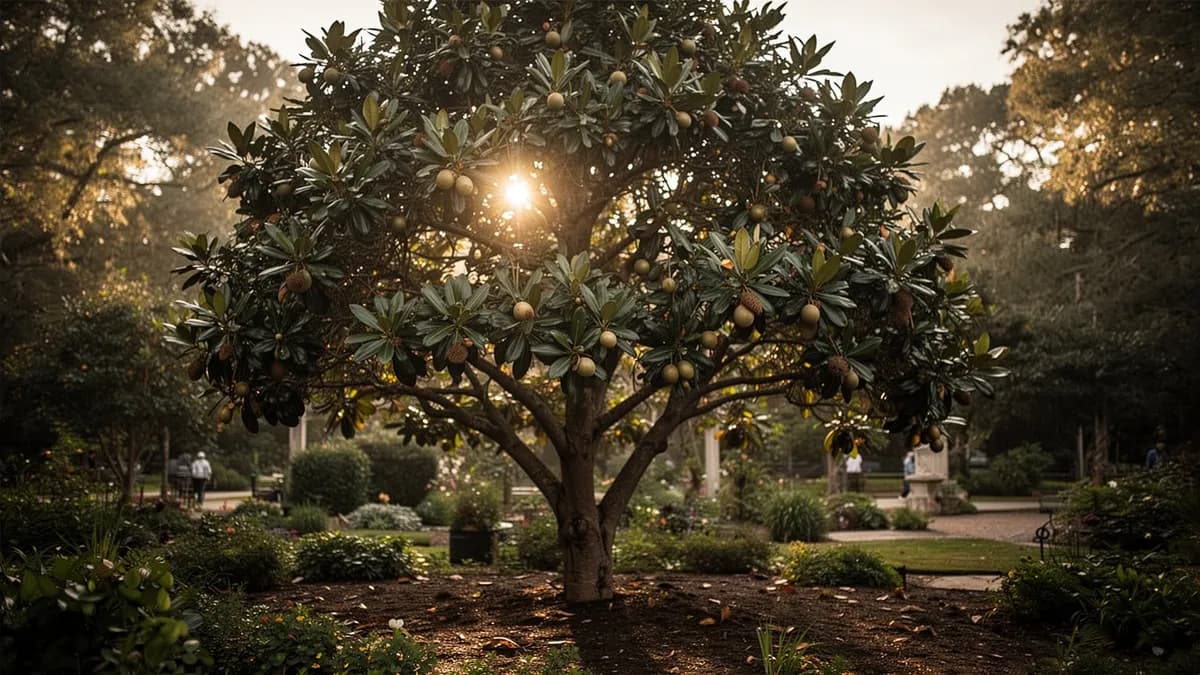
A massive native North American tree that can reach over one hundred feet tall and produce nuts for generations. Pecans require a very long, hot growing season to fill their shells properly, making them best suited for southern climates. Plant two different varieties for cross-pollination, choosing Type I and Type II cultivars that shed and receive pollen at complementary times. Deep, well-drained alluvial soil and regular zinc fertilization are essential for healthy pecan production.
When to plant Pecan Tree
Pecan trees are propagated by patch budding or bark grafting named varieties onto seedling pecan rootstock. Rootstock seeds are planted in fall for natural stratification and develop a strong taproot in the first year. Grafting is performed the following spring or summer when bark slips easily. Purchase grafted nursery trees for home planting, selecting varieties adapted to your climate and growing season length. Bare-root pecan trees should be planted in winter while dormant, cutting back the top by one-third and watering deeply at planting.
Your Pecan Tree Year
Composed for Zone 7 · typical seasons · frost passes Apr 2, returns Nov 1
Plant Pecan Tree Feb – Apr, pick Oct – Nov. Check the planting methods below and set your climate to personalize these windows.
How to grow Pecan Tree
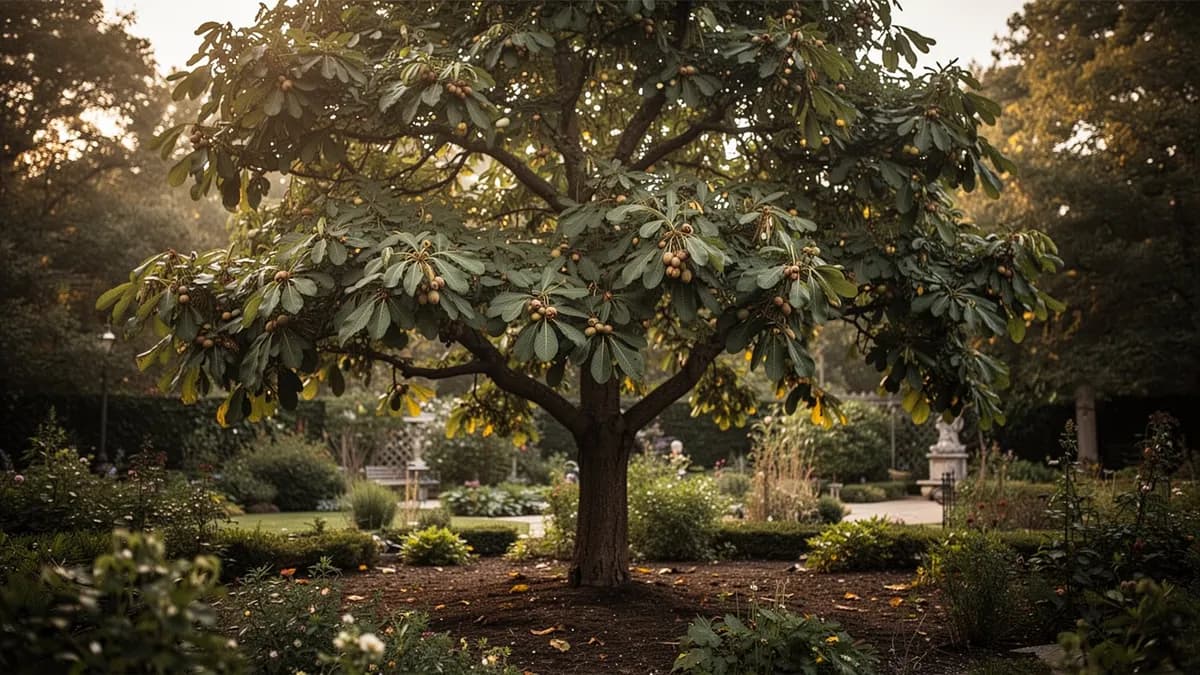
Pecan trees are massive, long-lived native North American trees that can reach over 100 feet tall and live for centuries. They require a very long, hot growing season of at least 200 frost-free days to properly fill nut shells. Plant in full sun in deep, well-drained alluvial or bottomland soil with a pH of 6.0 to 7.0. Pecans develop an extremely deep taproot, so avoid sites with shallow hardpan or high water tables. Space trees 60 to 80 feet apart to accommodate their enormous mature canopy.
Plant bare-root pecan trees in late winter while dormant, cutting back the top by one-third to balance with the reduced root system from transplanting. Water deeply and frequently during the first 3 years to establish the deep root system, providing 10 to 15 gallons per week. Pecans are wind-pollinated and require cross-pollination between Type I (protandrous) and Type II (protogynous) varieties for good nut set, so plant at least two compatible types.
Fertilize established pecan trees with ammonium nitrate or urea in spring, applying 1 to 2 pounds of actual nitrogen per inch of trunk diameter. Zinc is the most critical micronutrient for pecans; deficiency causes rosetting of terminal leaves and poor nut fill. Apply zinc sulfate as foliar sprays three to four times from budbreak through midsummer. Pecan trees begin bearing at 6 to 10 years of age and reach full production at about 20 years, potentially yielding over 100 pounds per tree annually.
Pecan Tree needs more room than a 4 × 8 ft bed gives
Each Pecan Tree wants 1200 cm of elbow room. The planner keeps that spacing for you — every plant, every bed.
Pecan Tree's best neighbours
Pecan orchards traditionally include a grass or clover ground cover between rows, mowed regularly during the growing season. White clover or crimson clover fix nitrogen and support beneficial insect populations. Avoid planting shade-intolerant crops beneath mature pecan trees, as the dense canopy blocks most sunlight. In young orchards before canopy closure, interplant with cover crops, small fruits, or vegetables between rows. Native wildflowers and black-eyed Susans create attractive borders that support pollinators and predatory insects.
Keep Walnut Tree away from it.
Old growers' knowledge, checked against Pecan Tree's real companion table below — test any plant you're growing.
Related growing guides
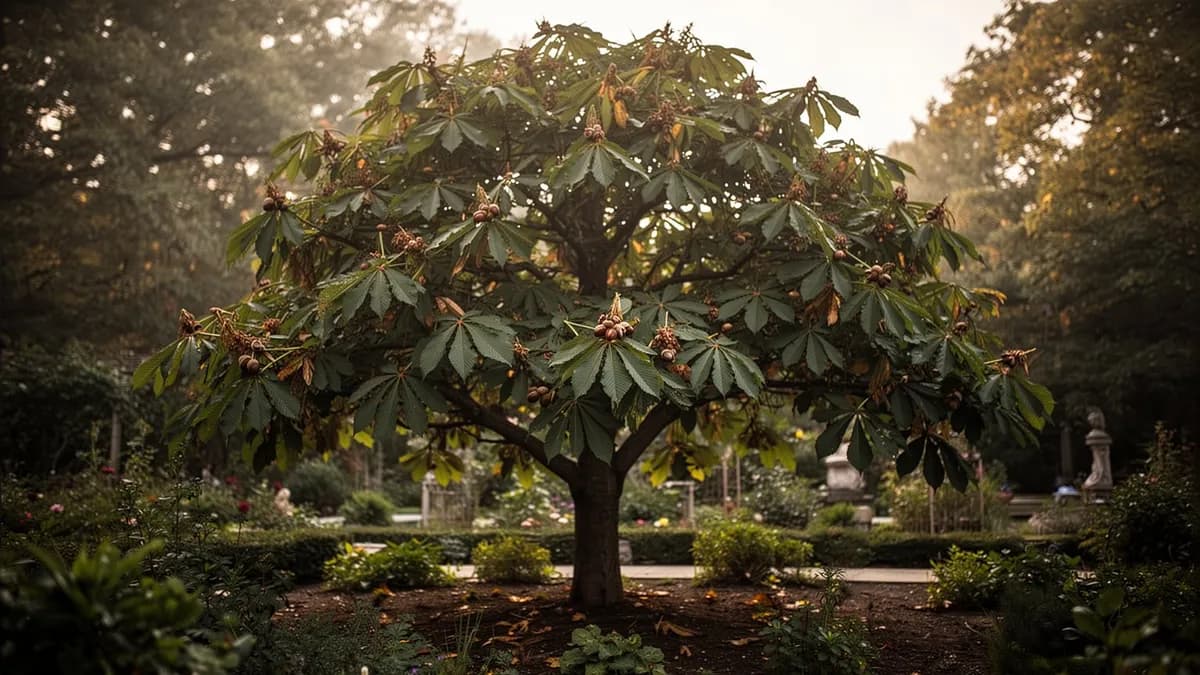
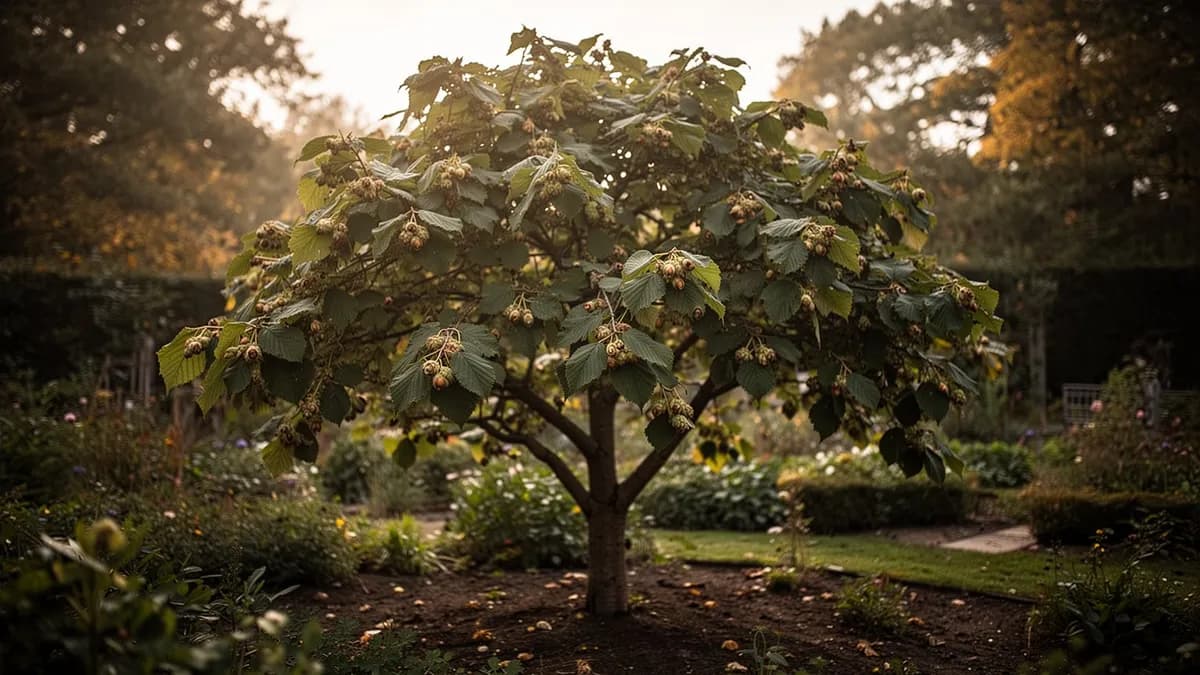
Feed it well
Pecans thrive in deep, well-drained alluvial soils with a pH of 6.0 to 7.0 and good fertility. They tolerate occasional flooding but not permanently waterlogged soil. Apply nitrogen fertilizer in spring at a rate of 1 to 2 pounds per inch of trunk diameter. Zinc is critically important; deficiency is the most common nutritional disorder in pecans. Apply zinc sulfate foliar sprays 3 to 4 times during the growing season. Soil-applied zinc is generally ineffective due to soil binding. Potassium and phosphorus should be maintained based on soil test results.
Ideal Temperature
Hardiness Zone Compatibility
From seed to harvest, stage by stage
Germination and Seedling
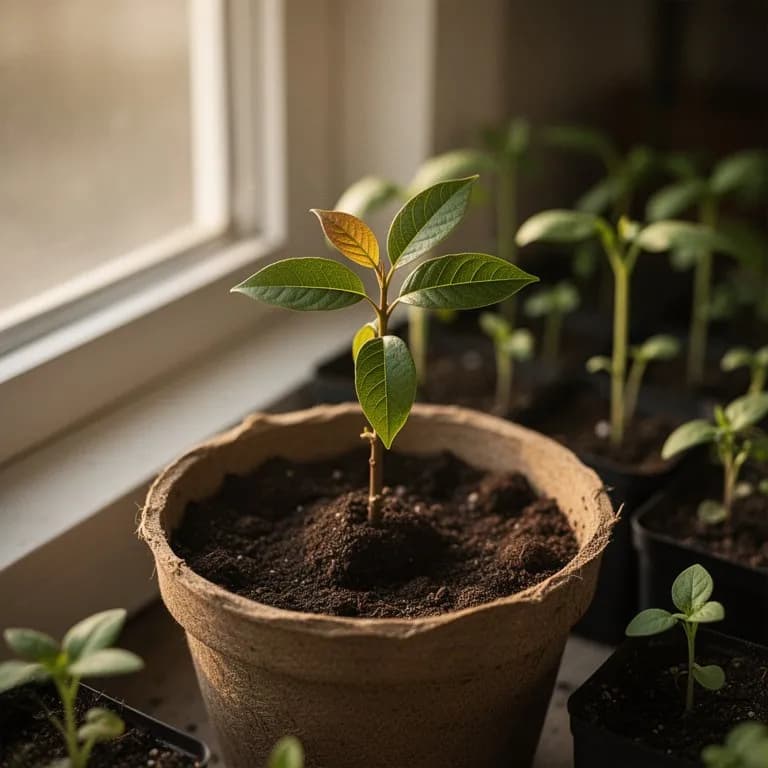
Pecan seeds require 60 to 90 days of cold stratification before germinating. Once planted, the taproot develops rapidly, often reaching 12 inches before significant top growth appears. Seedlings produce their first compound leaves within several weeks of emergence.
Juvenile Growth
During the first five years the tree focuses on establishing a deep root system and building trunk diameter. Growth rates of 2 to 4 feet per year are common in favorable conditions. The tree develops its characteristic upright oval shape and begins forming scaffold branches.
Pre-Bearing Adolescence
Between years five and ten the tree grows vigorously, adding substantial canopy volume. Some grafted varieties may produce a light initial crop during this stage. The root system extends well beyond the drip line and the tree becomes increasingly drought tolerant.
Early Production
Grafted trees typically begin meaningful nut production between years six and ten, while seedling trees may take 10 to 15 years. Yields increase steadily each year as the canopy expands. The tree begins its pattern of alternate bearing, producing heavier crops every other year.
Full Production Maturity
Mature pecan trees reach full production between 15 and 20 years of age and can continue producing for well over 100 years. A healthy mature tree can yield 50 to 200 pounds of nuts per year depending on variety, growing conditions, and alternate bearing cycle. Some heritage trees in the southern United States are over 300 years old and still bearing.
Harvest and Dormancy
Nuts mature and husks split open from late September through November depending on variety and climate. Trees drop their leaves after harvest and enter winter dormancy, requiring 400 to 600 chill hours below 45 degrees Fahrenheit to break dormancy and produce properly the following season.
Keep the soil consistently moist but not waterlogged during germination. Protect young seedlings from direct afternoon sun and rodents that may dig up the nuts.
Caring for Pecan Tree month by month
What to do each month for your Pecan Tree
October
You are hereBegin harvesting nuts as husks split and pecans fall from the tree. Collect fallen nuts every two to three days to minimize ground contact time. Dry harvested nuts in thin layers with good air circulation for two to three weeks
Know exactly what to do in your garden — every month
One email at the start of each month: what to sow, plant, and tackle right now — for your Pecan Tree and everything growing around it. Plus a short starter course that helps you dodge the classic mistakes.
- What to do, right now
- Matched to your season
- Starter course included
Harvesting Pecan Tree
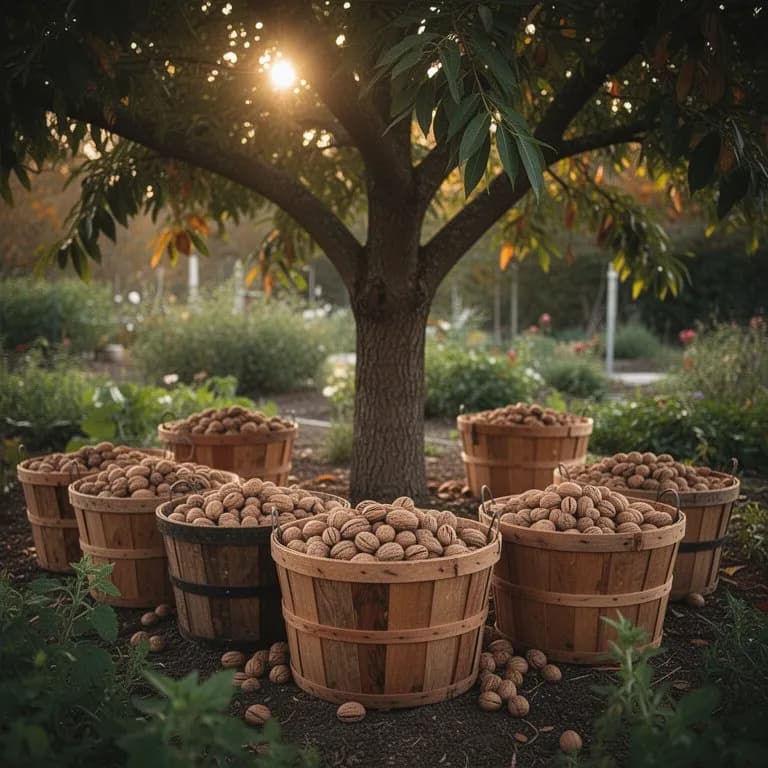
Pecans are ready for harvest in October and November when the outer shuck splits and the nut falls free. Shake tree limbs with a mechanical shaker or long pole to dislodge ripe nuts, then collect from the ground. Gather nuts promptly to prevent mold, insect damage, and theft by squirrels. Remove any remaining shuck material from the shell. Fresh pecans have high moisture content and must be dried before storage to prevent mold and rancidity.
assuming you plant when the window opens — set your real date
Pick Pecan Tree promptly and the plant keeps producing.
Storage & Preservation
Dry freshly harvested pecans by spreading them in a single layer in a warm, well-ventilated area for 2 to 3 weeks. Dried in-shell pecans keep at room temperature for 3 to 4 months and refrigerated for up to a year. Shelled pecan kernels store best in the freezer for up to 2 years in airtight containers. Toasting pecans enhances flavor and extends shelf life. Pecans can be candied, made into pralines, or pressed for oil. Their high oil content makes prompt and proper drying essential.
What goes wrong — and the fix
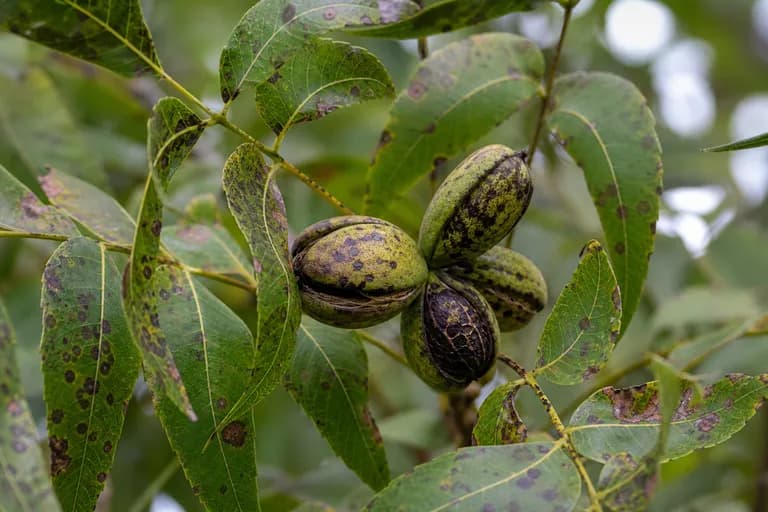
Pecan Scab
DiseaseDark olive-green to black spots on leaves, shucks, and nut husks. Severe infections cause premature nut drop and poorly filled shells with dark, shriveled kernels.
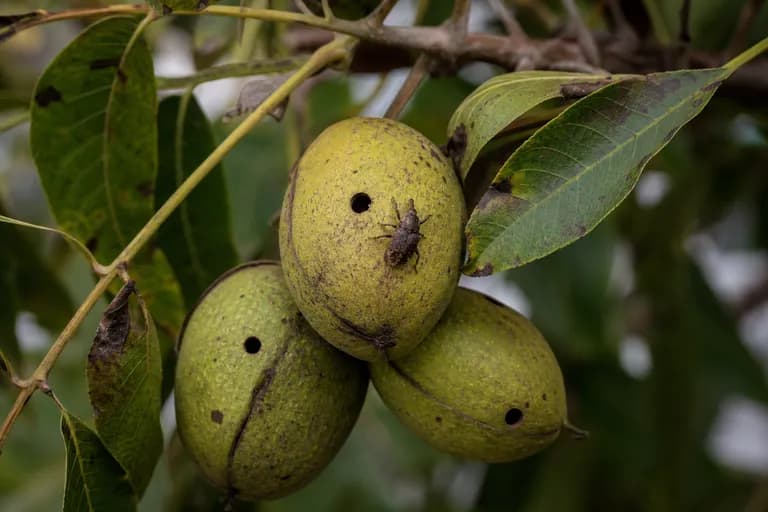
Pecan Weevil
PestSmall round holes in the shell where adult weevils have fed or laid eggs. Larvae develop inside the nut, consuming the kernel and leaving frass.
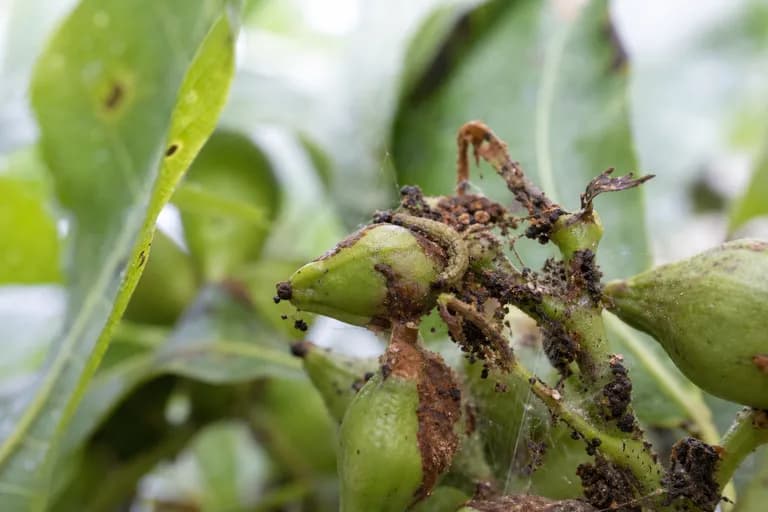
Pecan Nut Casebearer
PestSmall caterpillars bore into developing nutlets in spring, causing them to drop. Frass and webbing at the base of nut clusters indicate infestation.
Troubleshooting Common Problems
Alternate bearing is a major issue with pecans, producing heavy crops one year and light crops the next. This pattern is difficult to break once established. Pecan scab is devastating in humid southeastern climates and requires multiple fungicide applications on susceptible varieties. Zinc deficiency causes stunted, rosetted growth and poor nut quality. Squirrels, crows, and blue jays compete aggressively for the crop. The enormous mature size of pecan trees makes them unsuitable for small properties.
Growing Tips
- Plant at least two different cultivars with complementary pollination types (Type I protandrous and Type II protogynous) within 150 feet of each other to ensure adequate cross-pollination and maximum nut set.
- Select cultivars adapted to your specific region and climate, as pecan varieties bred for the humid Southeast often perform poorly in the arid Southwest and vice versa due to differing scab resistance and chill hour requirements.
- Provide deep well-drained soil with a pH between 6.0 and 7.0 and avoid planting in heavy clay or areas with a high water table, as pecan taproots can extend 10 feet or more and require good drainage.
- Apply zinc sulfate foliar sprays three to four times during spring and early summer starting at bud break, as pecans are exceptionally prone to zinc deficiency which causes rosetting, poor leaf development, and reduced yields.
- Water deeply and infrequently rather than with shallow frequent irrigation, providing 1 to 2 inches per week during the growing season and increasing to 2 inches per week during the critical August through October kernel fill period.
- Space trees 40 to 60 feet apart in orchard settings or at least 30 feet from structures and other large trees, as mature pecans develop massive root systems and broad canopies that need ample room.
- Fertilize annually with nitrogen at a rate of 1 to 2 pounds of actual nitrogen per inch of trunk diameter measured at 4.5 feet above ground, split into two or three applications from March through June.
- Manage pecan scab, the most destructive disease, by selecting resistant cultivars for your area and applying fungicide sprays on a preventive schedule during wet springs if growing susceptible varieties.
- Control pecan weevil, the most damaging late-season pest, using circle trunk traps to monitor emergence in August and applying targeted insecticide treatments when weevils are detected in the traps.
- Thin crowded interior branches every three to five years to improve air circulation and light penetration throughout the canopy, which reduces disease pressure and promotes more uniform nut development.
Grow your best Pecan Tree yet — and everything around it.
Start a free plan today. Lay out your beds, drop in your Pecan Tree, and let PlotMyGarden handle the timing, spacing, companions and reminders from seed to harvest basket.
Pick your Pecan Tree
Desirable
A leading commercial variety with large, well-filled nuts and good scab resistance. Requires a long growing season and performs best in the Deep South.
Kanza
An excellent northern-adapted variety with high scab resistance and consistent production. Medium-sized nuts with very good kernel quality.
Pawnee
An early-ripening variety with large, attractive nuts. Good for areas with shorter growing seasons, though somewhat scab-susceptible in humid climates.
Lakota
A scab-resistant variety with excellent kernel quality and consistent bearing. Good choice for low-input and organic production.
A single mature pecan tree can produce 50 to 200 pounds of in-shell nuts annually, and with retail pecan prices averaging 8 to 14 dollars per pound for shelled halves, one productive tree could yield 200 to 1400 dollars worth of nuts each year. Although pecan trees take 6 to 10 years to begin bearing and require some investment in fertilizer, zinc sprays, and irrigation, they are remarkably long-lived and can produce for well over a century. Over a 50-year productive lifespan, a well-maintained tree can easily provide tens of thousands of dollars in nut value while also adding significant property value as a large shade tree.
Quick recipes

Maple Glazed Spiced Pecans
25 minutesSweet and warmly spiced roasted pecans coated in real maple syrup, perfect for snacking, salad toppings, or holiday gift giving. The combination of cinnamon, cayenne, and maple creates an irresistible sweet-heat balance.
7 ingredientsClassic Southern Pecan Pie
75 minutesA traditional Southern pecan pie with a rich buttery filling of dark corn syrup, brown sugar, and vanilla poured over toasted pecan halves in a flaky pie crust. This timeless recipe produces a perfectly set filling with a beautiful caramelized pecan top layer.
8 ingredientsPecan-Crusted Honey Butter Salmon
30 minutesFresh salmon fillets topped with a crunchy pecan crust bound with honey butter and Dijon mustard, baked until the fish is flaky and the nut topping is golden and crisp. A simple yet elegant weeknight dinner.
7 ingredientsCulinary Uses
Pecans are one of North America's finest native foods, with a rich, buttery flavor prized in both sweet and savory dishes. Classic preparations include pecan pie, pralines, butter pecan ice cream, and candied pecans. Toasted pecans add richness to salads, stuffings, and grain dishes. Pecan oil is a mild, versatile cooking oil with a high smoke point. Pecans are nutritionally dense, rich in healthy monounsaturated fats, manganese, and copper.
What's inside
Health Benefits
- Rich in monounsaturated fatty acids, particularly oleic acid, which studies have associated with reduced LDL cholesterol levels and lower risk of cardiovascular disease when consumed as part of a balanced diet
- Contains high levels of gamma-tocopherol, a form of vitamin E with strong anti-inflammatory properties that may help reduce the risk of certain chronic inflammatory conditions
- Provides substantial dietary fiber at nearly 10 grams per 100 gram serving, supporting digestive health, promoting satiety, and helping to regulate blood sugar responses after meals
- Delivers a concentrated source of plant-based zinc and manganese, two essential minerals that play critical roles in immune system function, wound healing, and antioxidant enzyme activity
- Contains significant amounts of ellagic acid and other polyphenolic antioxidants that laboratory studies suggest may help protect cells from oxidative damage and support healthy aging
- Research published in the Journal of Nutrition has shown that incorporating pecans into the diet can improve markers of metabolic syndrome including waist circumference, triglyceride levels, and insulin sensitivity
Where Pecan Tree comes from
The pecan tree (Carya illinoinensis) is the only major commercially cultivated tree nut indigenous to North America. Its natural range stretches along the river bottomlands and flood plains from southern Iowa and Indiana through the Mississippi River Valley down to the Gulf Coast of Texas and into northern Mexico. Archaeological evidence confirms that Native American peoples relied on pecans as a crucial food source for thousands of years. The Comanche, Caddo, Kickapoo, and many other nations harvested wild pecans each autumn and used them in pemmican, stews, and a fermented beverage called powcohicora, from which the word hickory is derived.
Spanish explorers encountered pecan trees in the 1500s and began exporting the nuts to Europe, Asia, and Africa. By the late 1700s, European settlers along the Gulf Coast recognized the commercial value of wild pecan groves. The first known pecan planting by a colonist was made by Antoine, an enslaved man at Oak Alley Plantation in Louisiana, who successfully grafted superior wild selections onto seedling rootstock around 1846 to 1847. This breakthrough in grafting technique is considered the birth of the modern pecan industry, as it allowed growers to reliably propagate trees with desirable nut characteristics.
Commercial orchards expanded rapidly during the early twentieth century, particularly across Georgia, Texas, Oklahoma, and New Mexico. Breeding programs at land-grant universities developed hundreds of improved cultivars selected for disease resistance, thin shells, high kernel percentage, and regional adaptability. Today the pecan industry generates over 500 million dollars annually in the United States. The tree also serves as a valuable landscape specimen and timber species, with pecan wood prized for smoking meats and crafting furniture.
Pecan Tree: did you know?
Fascinating facts about Pecan Tree
The pecan is the only major tree nut native to North America, with fossil evidence showing Carya illinoinensis has been growing on the continent for over 16 million years.
Pecan Tree questions, answered
When should I plant Pecan Tree?
What hardiness zones can Pecan Tree grow in?
How much sun does Pecan Tree need?
How far apart should I space Pecan Tree?
What pests and diseases affect Pecan Tree?
How do I store Pecan Tree after harvest?
What are the best Pecan Tree varieties to grow?
What soil does Pecan Tree need?
How long does it take for a pecan tree to produce nuts?
Why does my pecan tree produce nuts only every other year?
Do I need more than one pecan tree to get nuts?
What causes black spots inside my pecan kernels?
How much water does a pecan tree need?
What is the best way to store harvested pecans?
You just read the theory. Now grow it on autopilot.
Everything that makes Pecan Tree fiddly — the timing, the spacing, the companions, the harvest window — is exactly what PlotMyGarden handles for you, for every plant in your garden.
A plan that knows your weather
Set your location once. Get sow, feed and harvest dates built around your real last-frost date and live forecast — no more guessing from a generic seed packet.
From the “When to plant” sectionDrag-and-drop bed planner
Design beds on a grid. Every plant snaps to its proper spacing, and you can see your whole season laid out before you spend a cent on seed.
From the “Growing guide” sectionCompanion conflicts, caught early
200+ good-and-bad pairings checked live as you plant — so a season-wrecking mistake never makes it into the ground.
From the “Companions” sectionReminders you'll actually act on
“Water the beans.” “Pick today before it turns.” Timely, specific, and tied to the plants you're really growing.
From the “Harvest” sectionSuccession, scheduled
Want a harvest for six weeks, not six days? It spaces your sowings automatically and reminds you when each new block is due.
From the “When to plant” sectionA record that gets smarter
Every harvest you log teaches it your garden. Next year's plan starts from what actually worked in your soil, not a textbook's.
From the “Overview” sectionMore Nut Trees
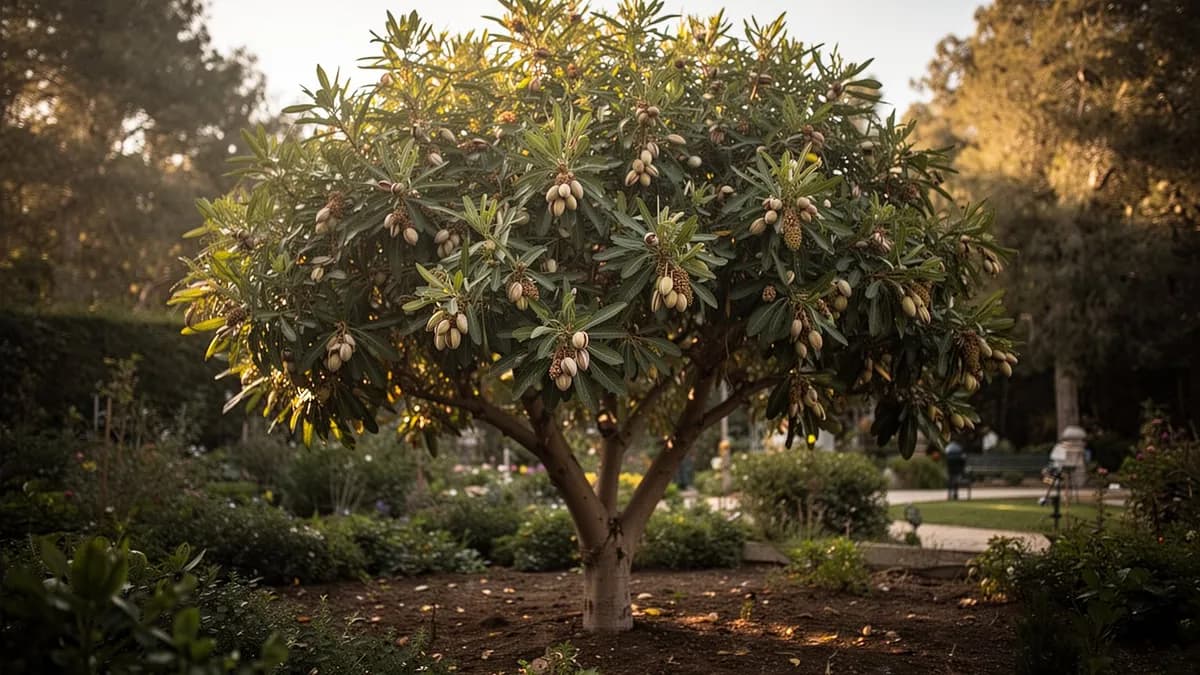
Keep Pecan Tree away from these
Grow your best Pecan Tree yet — and everything around it.
Start a free plan today. Lay out your beds, drop in your Pecan Tree, and let PlotMyGarden handle the timing, spacing, companions and reminders from seed to harvest basket.