Pistachero
Un árbol adaptado al desierto que necesita veranos largos y calurosos e inviernos fríos para producir sus preciados frutos secos de color verde.





En esta páginaResumen
Conoce Pistachero
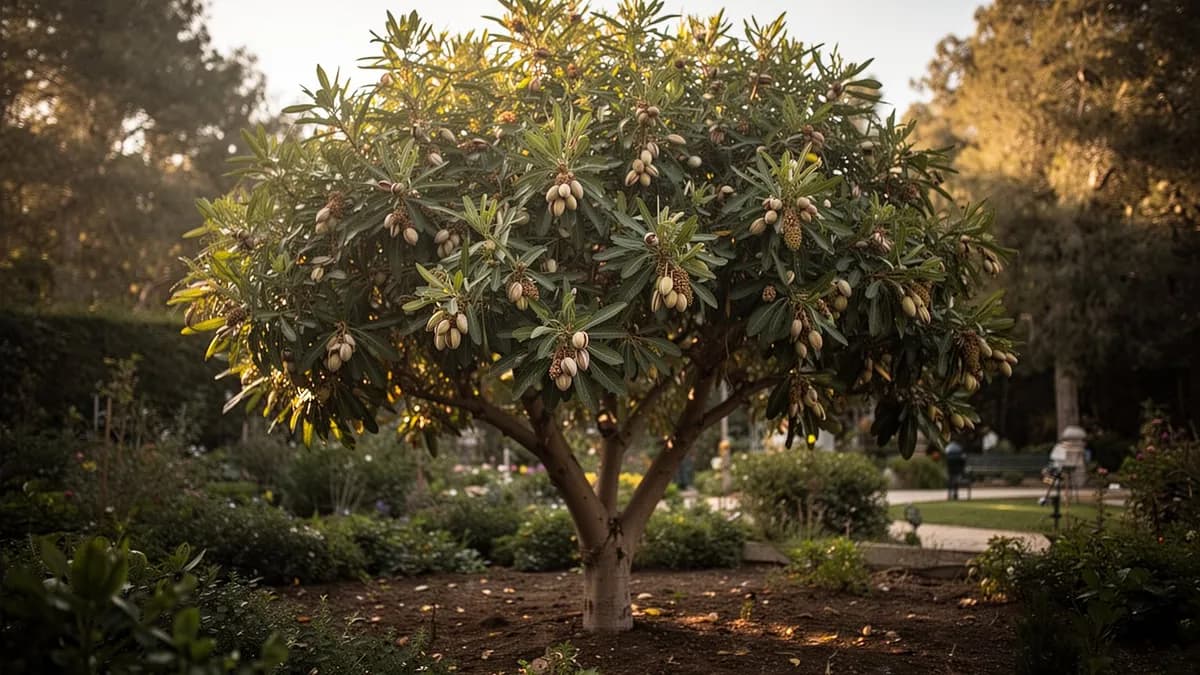
Un árbol adaptado al desierto que necesita veranos largos y calurosos e inviernos fríos para producir sus preciados frutos secos de color verde. Los pistacheros son dioicos, lo que significa que se necesitan tanto un ejemplar masculino como uno femenino para la producción de frutos, bastando un solo macho para polinizar hasta diez hembras. Son extremadamente tolerantes a la sequía una vez establecidos y prosperan en suelos alcalinos que resultarían difíciles para la mayoría de los demás árboles. Los árboles tardan entre cinco y siete años en comenzar a fructificar, pero se mantienen productivos durante más de un siglo.
Cuándo plantar Pistachero
Los pistacheros se propagan mediante injerto de yema o injerto sobre portainjertos de semilla. El portainjerto híbrido UCB-1, un cruce entre Pistacia atlantica y Pistacia integerrima, es el estándar de la industria debido a su vigor superior, tolerancia al frío y resistencia a Verticillium. Las semillas germinan tras la estratificación, pero producen descendencia variable, y el sexo no puede determinarse hasta que el árbol florece a los 4 o 5 años. El injerto de yema en T a finales de verano es el método de injertado estándar. Para plantaciones domésticas, adquiera árboles injertados de vivero con sexo conocido.
Tu año de Pistachero
Ajustado a Zona 7 · temporada típica · la helada se va hacia el 2 abr y vuelve hacia el 1 nov
Planta Pistachero Mar – Abr y cosecha Sep – Oct. Consulta los métodos de plantación y elige tu clima para adaptar los periodos.
Cómo cultivar Pistachero
Los pistacheros son árboles caducifolios adaptados al desierto, originarios de Asia Central, que requieren una combinación específica de veranos largos y extremadamente calurosos e inviernos fríos con 600 a 1000 horas de frío acumuladas. Alcanzan entre 7.5 y 9 metros de altura y prosperan en las zonas USDA 7 a 11, donde los veranos son áridos y los inviernos proporcionan el enfriamiento necesario. Plante a plena exposición solar en suelo bien drenado con un pH de 7.0 a 8.0; los pistacheros prefieren suelos ligeramente alcalinos que estresarían a la mayoría de los demás árboles. Espacie los ejemplares entre 6 y 7.5 metros.
Los pistacheros son dioicos, lo que significa que cada árbol individual es masculino o femenino. Solo los árboles femeninos producen frutos, pero es imprescindible contar con un polinizador masculino. Un solo árbol macho proporciona suficiente polen transportado por el viento para 8 a 10 árboles hembra. Plante el macho a barlovento de las hembras para optimizar la polinización. El polinizador más habitual para la variedad Kerman es Peters. Los árboles comienzan a fructificar a los 5-7 años y alcanzan la plena producción entre los 15 y 20 años.
Riegue los pistacheros de forma profunda pero espaciada, permitiendo que el suelo se seque entre riegos. Son extremadamente tolerantes a la sequía una vez establecidos, pero producen cosechas más abundantes con riegos estivales cada 2 a 4 semanas. Evite el riego excesivo, que favorece las enfermedades radiculares y reduce la calidad del fruto. Pode los árboles jóvenes para desarrollar una estructura de líder central modificado con ramas principales bien espaciadas. Los pistacheros tienden a la vecería, produciendo cosechas abundantes en años pares y cosechas ligeras en años impares.
Para Pistachero un bancal de 120 × 240 cm se queda corto
Cada Pistachero pide 600 cm de margen. El planificador guarda ese marco por ti — cada planta, cada bancal.
Los mejores vecinos de Pistachero
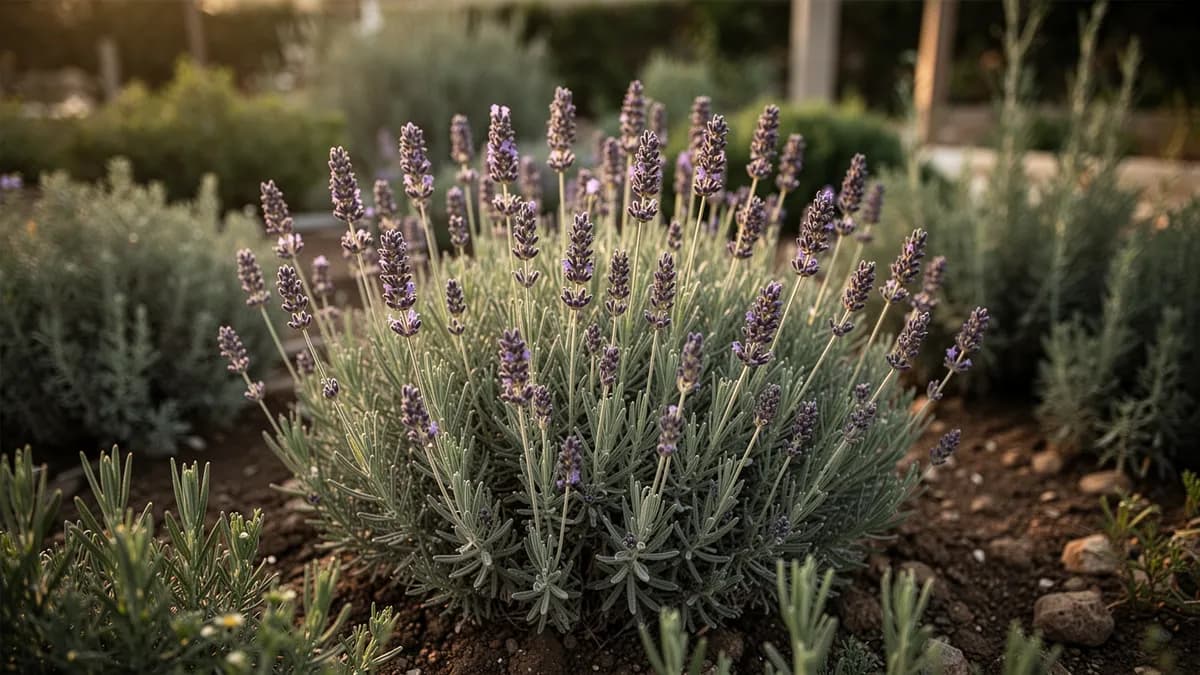
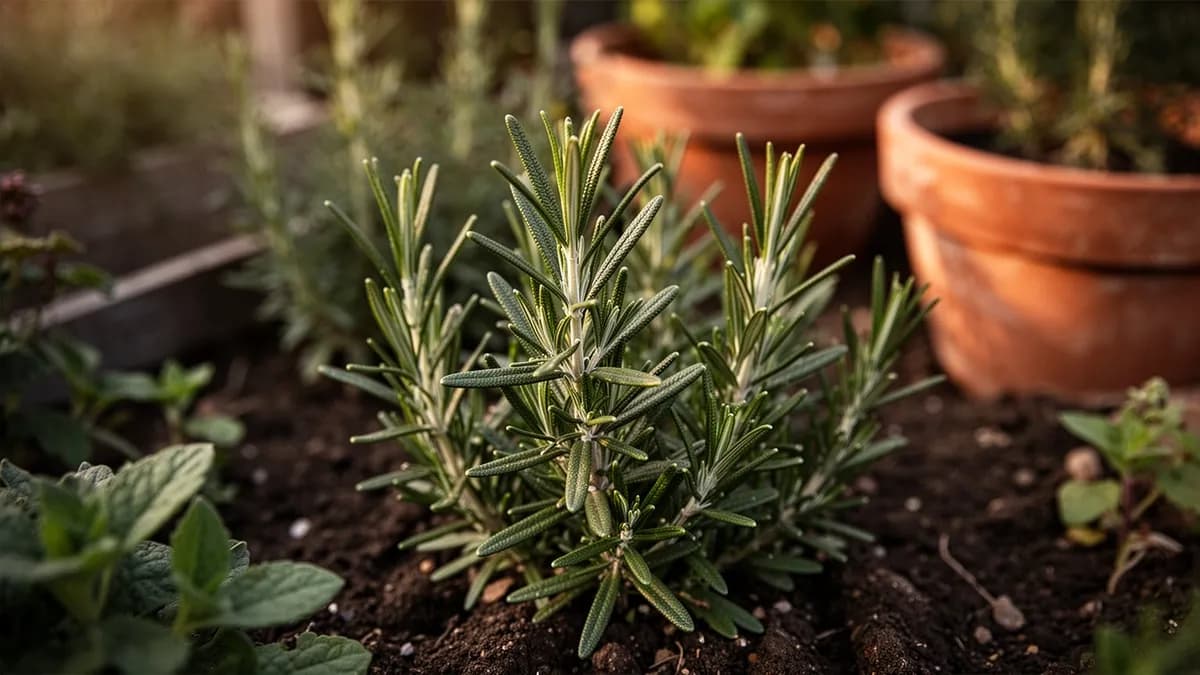
Los huertos de pistacheros suelen mantenerse con suelo desnudo o cobertura vegetal escasa debido a sus requisitos de clima árido. En jardines domésticos, plante hierbas aromáticas mediterráneas tolerantes a la sequía como romero, lavanda y orégano alrededor de los pistacheros. Estas plantas compañeras prosperan en las mismas condiciones de suelo alcalino y bien drenado, y atraen polinizadores. Evite plantas que requieran riego frecuente, ya que el exceso de agua alrededor de los pistacheros favorece las enfermedades radiculares. Las gramíneas autóctonas de crecimiento en mata y las flores silvestres tolerantes a la sequía proporcionan cobertura del suelo sin exceso de humedad.
Lavanda va a su lado. Nogal no.
Saber de huerto de siempre, cotejado con la tabla real de Pistachero — prueba cualquier planta que cultives.
Prueba Pistachero en un bancal, aquí mismo
Un bancal real del planificador con Pistachero ya plantado. Toca una planta compañera para colocarla y mira cómo responde la comprobación de vecinos: verde para buenos vecinos, rojo si hay conflicto.


Guías de cultivo relacionadas
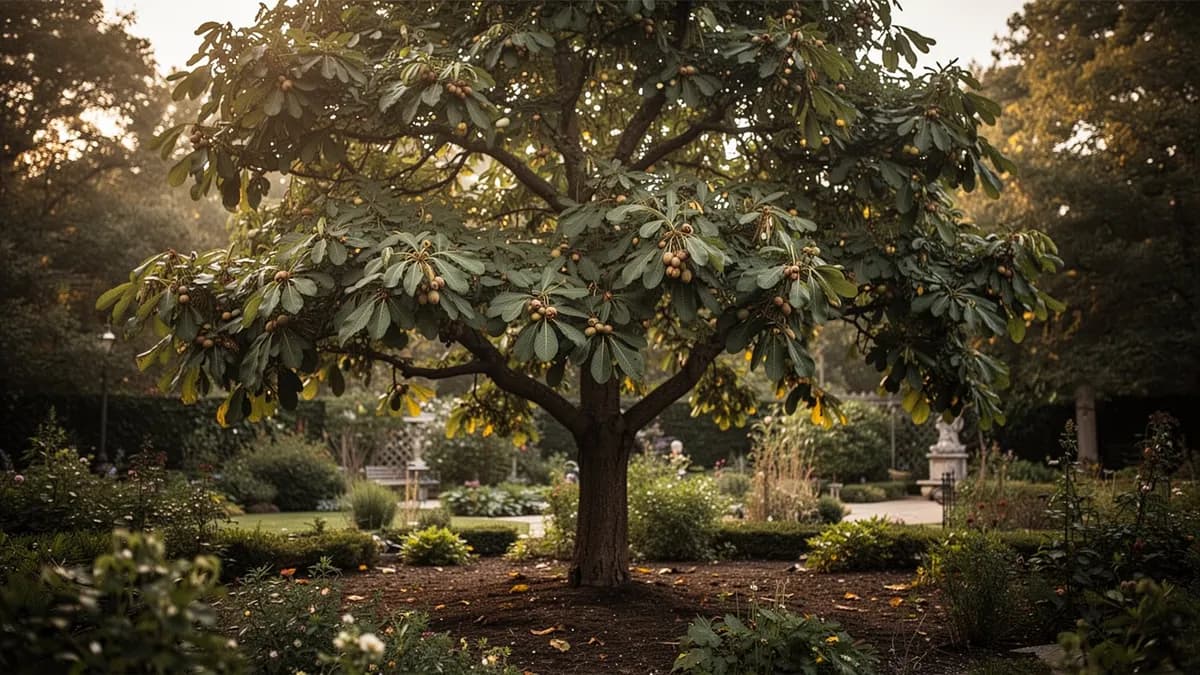
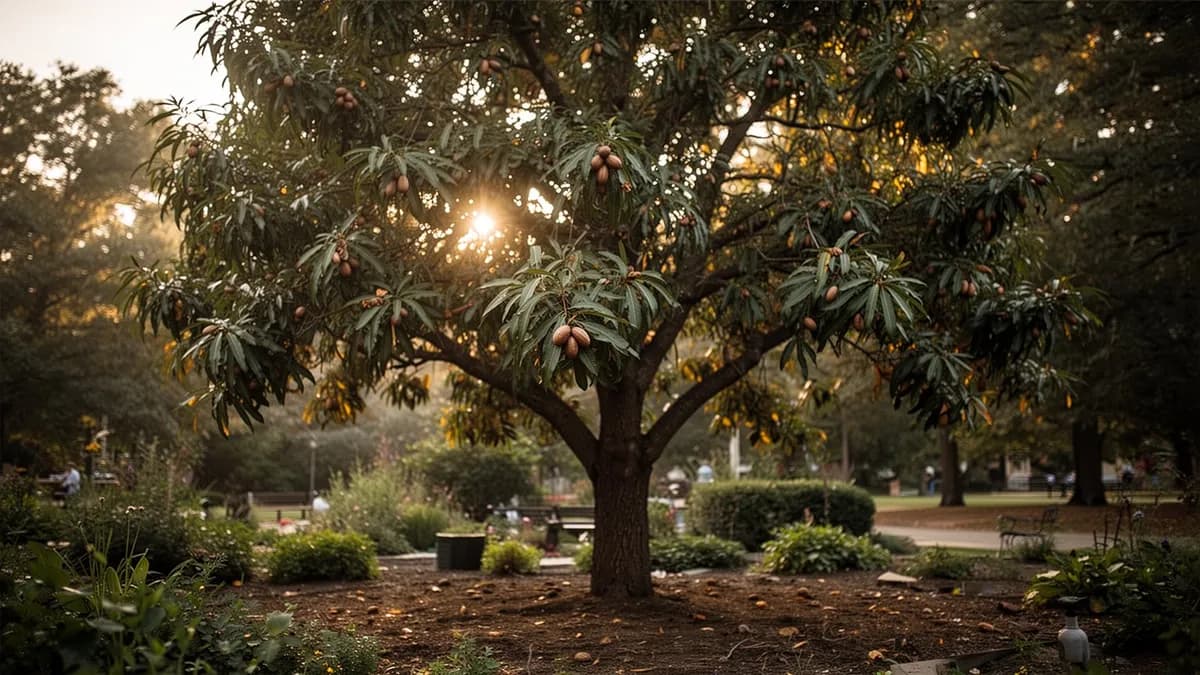
Abónalo bien
Los pistacheros están singularmente adaptados a suelos alcalinos y bien drenados con un pH de 7.0 a 8.0, donde la mayoría de los demás frutales y árboles de frutos secos tendrían dificultades. Toleran condiciones salinas y suelos pobres mejor que casi cualquier otro cultivo de frutos secos. El franco arenoso profundo es lo ideal. Aplique fertilizante nitrogenado en primavera a dosis moderadas, ya que el exceso de nitrógeno promueve el crecimiento vegetativo y empeora la vecería. El boro y el zinc son micronutrientes importantes; aplíquelos basándose en análisis foliares. El portainjerto UCB-1 tolera la gama más amplia de condiciones edáficas.
Temperatura ideal
Compatibilidad de zonas de rusticidad
De la semilla a la cosecha, etapa por etapa
Germinación de la Semilla y Establecimiento del Portainjerto
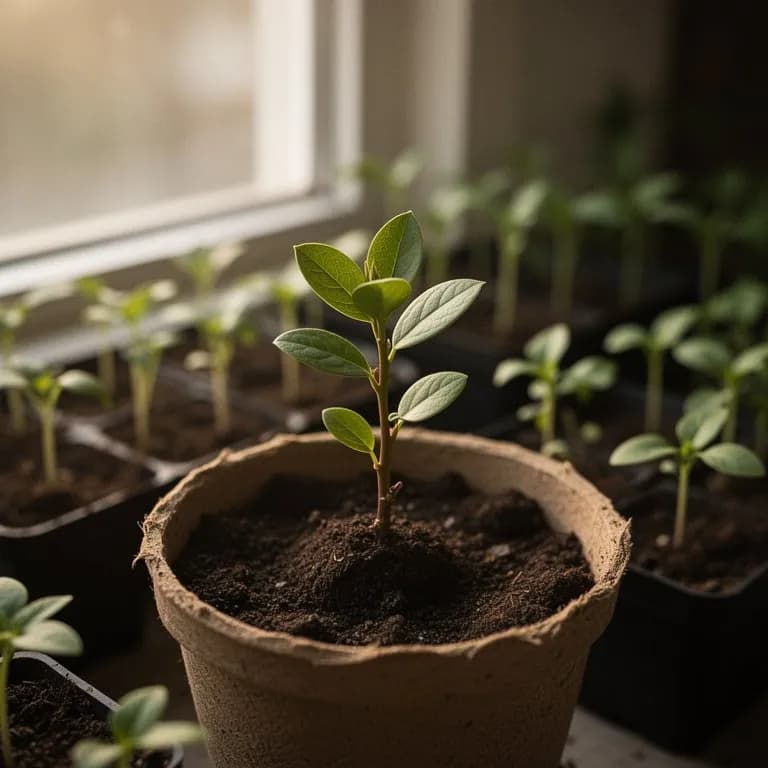
Las semillas de pistachero requieren estratificación a 5 grados Celsius durante 6 a 8 semanas antes de la siembra. Las plántulas emergen en un plazo de 2 a 4 semanas tras la siembra en suelo cálido. Las variedades de portainjerto como Pistacia atlantica o UCB-1 se utilizan habitualmente por su vigor y resistencia a enfermedades.
Crecimiento Vegetativo Juvenil
Durante los primeros cinco años, el árbol se concentra en establecer un sistema radicular fuerte y una estructura de ramas principales. El crecimiento es vigoroso, con hojas pinnadas compuestas que se desarrollan en una copa abierta y extendida. Los árboles suelen injertarse sobre portainjertos durante esta fase, normalmente en el primer o segundo año.
Fase Inicial de Fructificación
Los árboles comienzan a producir sus primeras cosechas pequeñas entre los años 5 y 7. Los árboles femeninos desarrollan racimos florales en forma de panícula sobre madera de un año. Los rendimientos son escasos e irregulares durante este período de transición, mientras el árbol establece su patrón de vecería.
Madurez en Plena Producción
Entre los años 8 y 20, los pistacheros alcanzan su plena capacidad de producción comercial. Los árboles maduros pueden producir entre 18 y 27 kilogramos de frutos secos por árbol en los años de carga. Los pistacheros presentan una fuerte vecería, produciendo cosechas abundantes en años impares seguidas de cosechas más ligeras en años pares.
Años de Producción Máxima y Prolongada
Los pistacheros son excepcionalmente longevos y pueden mantenerse productivos durante más de 100 años. Los rendimientos máximos suelen producirse entre los años 20 y 50. Los árboles se vuelven cada vez más tolerantes a la sequía con la edad y continúan ofreciendo cosechas sustanciales con los cuidados adecuados.
Mantenga el suelo uniformemente húmedo pero no encharcado durante la germinación. Proteja las plántulas jóvenes del sol directo de la tarde.
Cuidar Pistachero mes a mes
Qué hacer cada mes para tu Pistachero
Octubre
Mes actualAplique un riego posterior a la cosecha para reponer la humedad del suelo y favorecer el crecimiento radicular. Recoja muestras de hojas para análisis nutricional. Limpie todos los frutos caídos y restos para reducir las poblaciones de plagas que pasan el invierno.
Ten claro qué hacer en tu huerto, cada mes
Un correo al empezar cada mes: qué sembrar, plantar y hacer ahora mismo — para tu Pistachero y todo lo que crece alrededor. Más un breve curso inicial para esquivar los errores clásicos.
- Qué hacer ahora mismo
- Ajustado a tu temporada
- Curso inicial incluido
Cosechar Pistachero
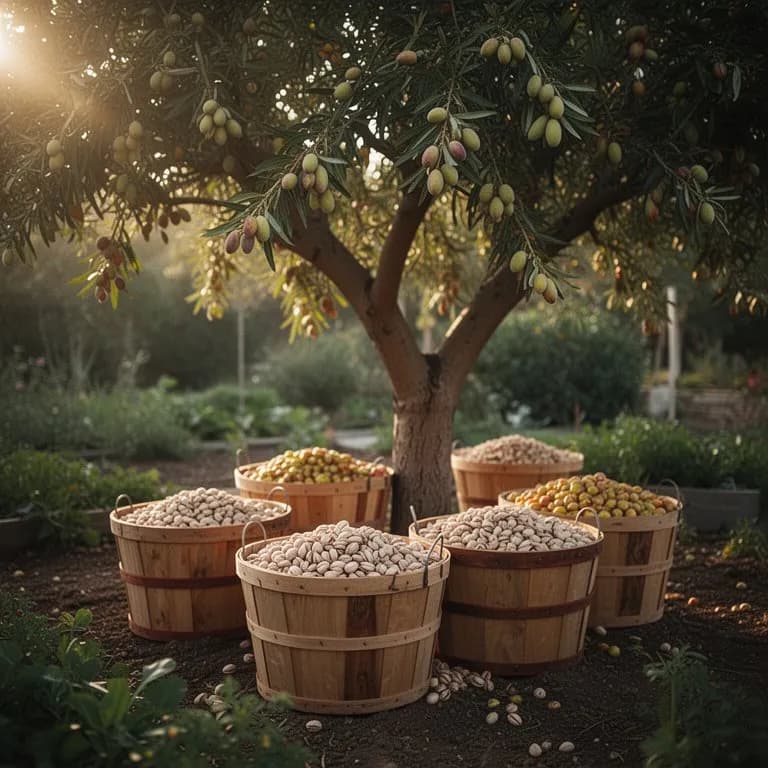
Los pistachos están listos para la cosecha en septiembre, cuando la cáscara exterior se separa de la cáscara interior y esta se abre de forma natural. La cáscara abierta es el sello distintivo de un pistacho maduro. Sacuda las ramas o utilice un vibrador mecánico para hacer caer los racimos sobre lonas. Procese de inmediato retirando las cáscaras exteriores en un plazo de 24 horas, ya que los retrasos provocan manchas en la cáscara y sabores indeseados en el grano. Clasifique los frutos en categorías de cáscara abierta (comercializables) y cáscara cerrada. Seque los frutos con cáscara abierta con prontitud para prevenir el desarrollo de moho.
se supone que plantas al comenzar el periodo — indica tu fecha real
Cosecha Pistachero a tiempo y la planta sigue produciendo.
Almacenamiento y conservación
Seque los pistachos cosechados hasta un contenido de humedad inferior al 7 por ciento, extendiéndolos en una sola capa en un lugar cálido y ventilado durante 3 a 4 días, o utilice un deshidratador a 55 grados Celsius. Los pistachos con cáscara se conservan a temperatura ambiente durante 3 meses y en el frigorífico hasta un año. Los granos pelados se conservan mejor congelados en recipientes herméticos durante hasta 2 años. El tostado con sal es el método de preparación más popular. Los pistachos también pueden molerse para hacer mantequilla, utilizarse como cobertura para carnes o incorporarse a helados y confitería.
Qué falla — y cómo solucionarlo
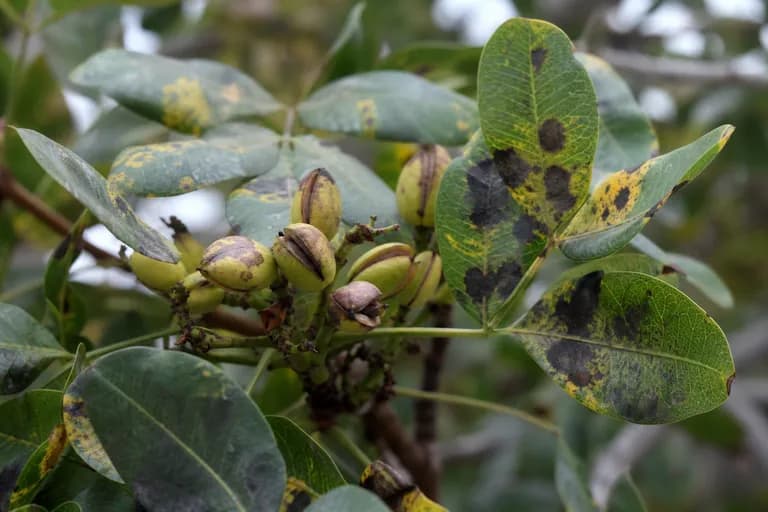
Tizón Tardío por Alternaria
EnfermedadManchas negras en hojas y racimos a finales de verano. Las cáscaras de los frutos infectados desarrollan manchas oscuras y los granos pueden decolorarse y enmohecerse.
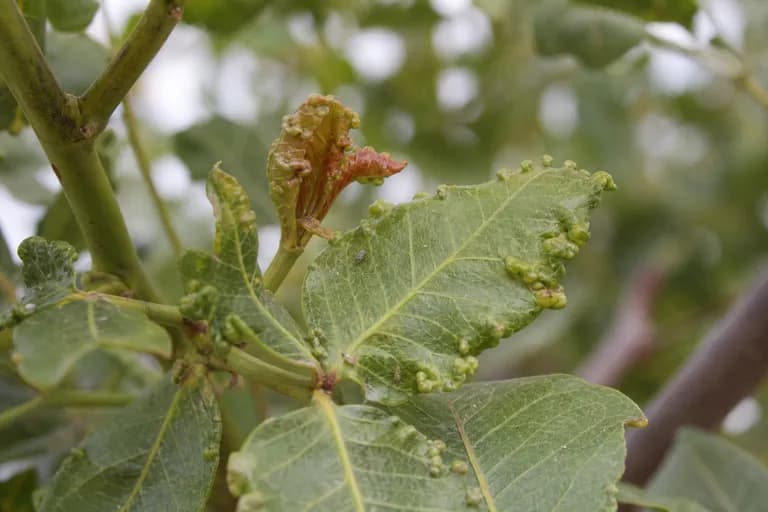
Psila del Pistachero
PlagaPequeñas formaciones similares a agallas en los márgenes de las hojas donde se alimentan las ninfas de la psila. Las infestaciones graves deforman las hojas y reducen el vigor del árbol y la producción de frutos.
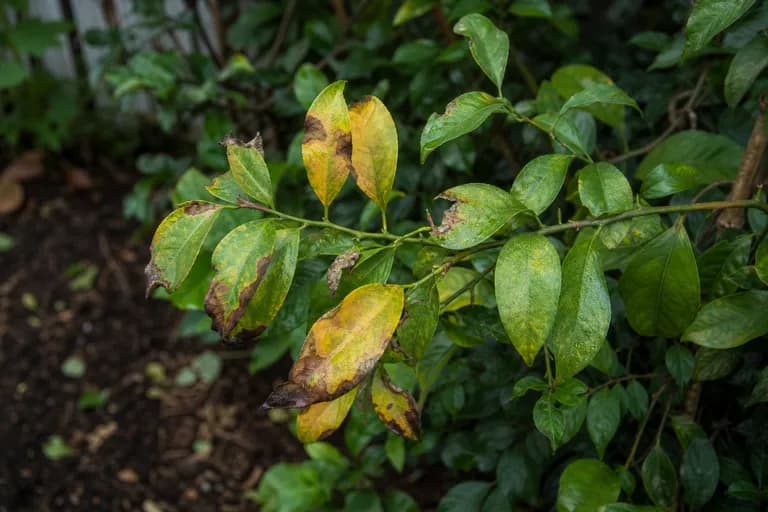
Verticilosis
EnfermedadMarchitamiento súbito de ramas individuales o secciones enteras del árbol, a menudo en un solo lado. La madera interna muestra estrías oscuras en el tejido vascular.
Solución de problemas comunes
La vecería es el problema de producción más significativo, con cosechas abundantes un año seguidas de cosechas escasas al siguiente. Este patrón es inherente a la especie y difícil de manejar. Las horas de frío insuficientes en zonas de inviernos cálidos impiden una dormancia adecuada y reducen el cuajado de frutos. La humedad y las lluvias estivales causan graves problemas fúngicos, lo que hace a los pistacheros poco aptos para climas húmedos. La necesidad de árboles tanto masculinos como femeninos implica dedicar espacio a polinizadores masculinos no productivos. La apertura prematura de la cáscara en tiempo muy caluroso expone los frutos al daño por insectos.
Consejos de cultivo
- Plante al menos un árbol polinizador masculino por cada 8 a 12 árboles femeninos, situando el macho a barlovento de las hembras para maximizar la eficiencia de la polinización por viento.
- Elija el portainjerto UCB-1 por su vigor superior, tolerancia al frío y resistencia a la verticilosis y a la podredumbre radicular por Phytophthora en comparación con otras opciones de portainjerto.
- Proporcione plena exposición solar con al menos 8 horas de luz solar directa al día y asegúrese de que el lugar de plantación tenga una excelente circulación de aire para minimizar la presión de enfermedades fúngicas.
- Utilice riegos profundos y espaciados para fomentar el desarrollo de raíces profundas. Los pistacheros son tolerantes a la sequía una vez establecidos, pero requieren humedad constante durante el período de llenado del fruto, de junio a agosto.
- Mantenga el pH del suelo entre 7.0 y 8.0, ya que los pistacheros están bien adaptados a suelos alcalinos. Evite plantar en suelos arcillosos pesados o con mal drenaje, donde la podredumbre radicular es frecuente.
- Aplique pulverizaciones foliares de zinc en primavera para prevenir la deficiencia de zinc, que es el problema de micronutrientes más habitual en los huertos de pistacho y causa arrosetamiento foliar y reducción del tamaño del fruto.
- Pode hacia una forma de copa en vaso abierto para maximizar la penetración de la luz solar y el movimiento del aire a través del árbol, lo que mejora la calidad del fruto y reduce el riesgo de tizón tardío por Alternaria.
- Retire todos los frutos momificados que queden en el árbol tras la cosecha, ya que albergan larvas de la polilla del gusano anaranjado del ombligo y hongos del género Aspergillus que pueden contaminar la cosecha de la temporada siguiente.
- Evite el riego por aspersión, ya que el follaje y las cáscaras húmedas favorecen el tizón de panículas y brotes por Botryosphaeria, la enfermedad económicamente más dañina de los pistacheros en climas húmedos.
- Proteja los troncos jóvenes de las quemaduras solares pintándolos con pintura látex blanca diluida o utilizando protectores de tronco, ya que los daños en la corteza por exposición solar crean puntos de entrada para insectos barrenadores de la madera.
Cultiva tu mejor Pistachero — y todo lo que la rodea.
Empieza un plan gratis hoy. Diseña tus bancales, coloca tu Pistachero y deja que PlotMyGarden gestione el momento, el espaciado, las asociaciones y los recordatorios de la semilla a la cesta.
Elige tu Pistachero
Kerman
La variedad femenina comercial dominante a nivel mundial, que produce frutos grandes con una excelente tasa de apertura de cáscara y granos de un verde intenso. Requiere Peters como polinizador masculino.
Peters
La variedad masculina polinizadora estándar para Kerman. Produce polen abundante con buena coincidencia temporal con la floración de Kerman.
Golden Hills
Una variedad femenina más reciente que madura antes que Kerman, permitiendo la cosecha antes de las lluvias otoñales en algunos climas. Buena calidad de fruto y productividad.
Lost Hills
Otra variedad femenina de maduración temprana con frutos grandes y excelente calidad de grano. Buena resistencia a la vecería en comparación con Kerman.
Un solo pistachero maduro puede producir entre 18 y 27 kilogramos de frutos secos con cáscara por año durante los años de carga alta. Con precios minoristas del pistacho que promedian entre 25 y 40 euros por kilogramo, un árbol productivo podría generar entre 450 y 1080 euros en frutos anualmente. Incluso teniendo en cuenta los ciclos de vecería que reducen el rendimiento en los años de baja producción, un pistachero cultivado en casa puede ahorrar a un hogar varios cientos de euros al año en compras de frutos secos una vez que alcanza la plena producción alrededor de los 10 a 12 años. Además, los árboles son excepcionalmente longevos, ofreciendo décadas de cosechas a partir de una única inversión en plantación.
Recetas rápidas
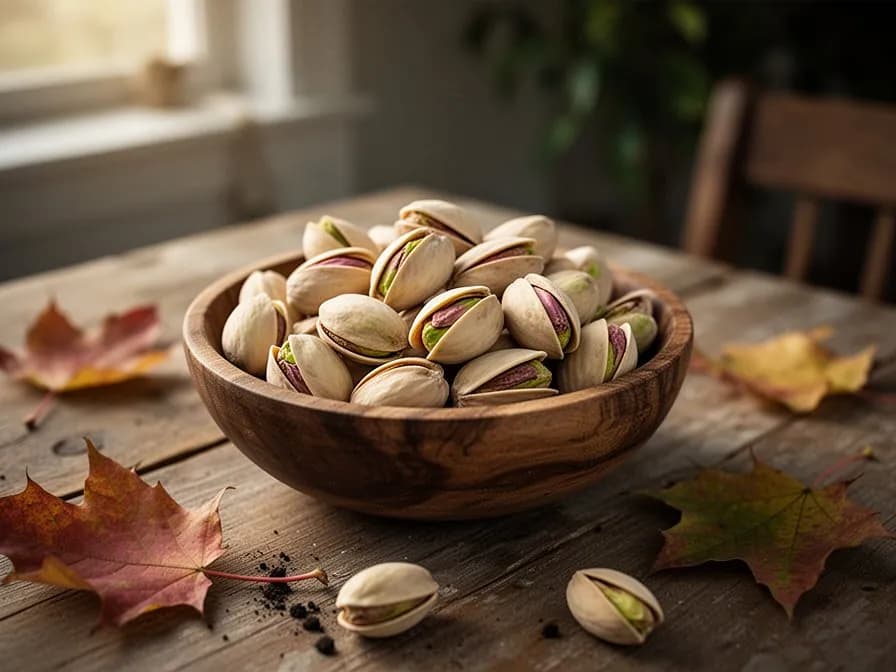
Dukkah de Pistacho (Mezcla de Especias)
10 minutosUna fragante mezcla de frutos secos y especias de inspiración egipcia, perfecta para mojar pan con aceite de oliva, sazonar verduras asadas o decorar hummus y ensaladas.
7 ingredientesPasta con Pesto de Pistacho
15 minutosUna vibrante variación del clásico pesto de albahaca, utilizando pistachos en lugar de piñones para un sabor más rico y ligeramente dulce que combina a la perfección con pasta, pollo a la parrilla o pan crujiente.
8 ingredientesBolitas Energéticas de Rosa y Pistacho
20 minutosBolitas energéticas sin horno de inspiración oriental que combinan pistachos con dátiles y un toque de agua de rosas, perfectas como tentempié saludable o recuperación tras el ejercicio.
7 ingredientesUsos culinarios
Los pistachos son apreciados por su vivo color verde, su sabor distintivo y su versatilidad. Los pistachos tostados y salados se encuentran entre los frutos secos para aperitivo más populares del mundo. Los granos molidos son esenciales en el baklava de Oriente Medio, las delicias turcas y el halva. El helado y el gelato de pistacho son clásicos atemporales. Estos frutos secos aportan color y textura crujiente a ensaladas, cuscús, pilafs de arroz, y pescado o cordero con costra. Los pistachos son ricos en proteínas, fibra y grasas saludables para el corazón.
Qué contiene
Beneficios para la salud
- Favorece la salud cardiovascular al reducir el colesterol LDL y mejorar la proporción entre colesterol LDL y HDL, con estudios clínicos que demuestran reducciones en los factores de riesgo de enfermedades cardíacas con el consumo regular.
- Promueve un control saludable del azúcar en sangre gracias a un índice glucémico bajo y un alto contenido en fibra y grasas saludables, lo que convierte a los pistachos en un aperitivo apto para diabéticos que ralentiza la absorción de glucosa.
- Contribuye al control de peso porque el acto de pelar los pistachos ralentiza el consumo, y la combinación de proteína, fibra y grasas saludables favorece la saciedad con menos calorías ingeridas.
- Contiene potentes antioxidantes como luteína, zeaxantina y antocianinas que protegen la salud ocular y reducen el riesgo de degeneración macular asociada a la edad.
- Favorece la diversidad del microbioma intestinal al proporcionar fibra prebiótica que alimenta las bacterias intestinales beneficiosas, con estudios que muestran un aumento de las poblaciones de bacterias productoras de butirato tras el consumo de pistachos.
- Aporta compuestos antiinflamatorios como polifenoles y tocoferoles que ayudan a reducir los marcadores de inflamación sistémica asociados a enfermedades crónicas.
De dónde viene Pistachero
El pistachero (Pistacia vera) es originario de las regiones áridas de Asia Central y Oriente Medio, con su centro de origen extendiéndose desde el actual Irán y Turkmenistán, a través de Afganistán, hasta partes del oeste de Pakistán. Yacimientos arqueológicos en el sureste de Turquía han revelado restos de cáscaras de pistacho que datan de aproximadamente el 7000 a. C., lo que lo convierte en uno de los cultivos de frutos secos más tempranamente cultivados en la historia humana. Los antiguos persas apreciaban los pistachos como símbolo de riqueza y prosperidad, y el fruto ocupaba un lugar destacado en los jardines reales y las rutas comerciales de la Ruta de la Seda. Los árboles se extendieron hacia el oeste a través del Imperio Romano, llegando a Italia y la cuenca mediterránea en general hacia el siglo I d. C. Los comerciantes árabes distribuyeron aún más los pistachos por el norte de África y la Península Ibérica durante el período medieval. El cultivo comercial se expandió significativamente en los siglos XIX y XX, cuando las técnicas mejoradas de riego hicieron viable la producción a gran escala en huertos en climas semiáridos. Irán se mantuvo como el productor mundial dominante durante siglos hasta finales del siglo XX, cuando el Valle Central de California emergió como una importante región productora tras la introducción del cultivar Kerman en la década de 1960 por el explorador botánico William E. Whitehouse. Hoy en día, la industria global del pistacho está valorada en más de 5000 millones de dólares anuales, con Irán, Estados Unidos y Turquía representando en conjunto aproximadamente el 85 por ciento de la producción mundial. El cultivo sigue ganando popularidad en todo el mundo debido a su perfil nutricional, su sabor distintivo y su adaptabilidad a entornos agrícolas con escasez de agua donde muchos otros cultivos tienen dificultades para prosperar.
Pistachero: ¿sabías que?
Datos fascinantes sobre Pistachero
Los pistachos son uno de los árboles de frutos secos con flor más antiguos, con evidencias arqueológicas de su consumo que datan de alrededor del 7000 a. C. en lo que hoy es Turquía y Oriente Medio.
Pistachero: preguntas frecuentes
¿Cuándo debo plantar Pistachero?
¿Cuáles son buenas plantas acompañantes para Pistachero?
¿En qué zonas de rusticidad puede crecer Pistachero?
¿Cuánto sol necesita Pistachero?
¿A qué distancia debo espaciar Pistachero?
¿Qué plagas y enfermedades afectan a Pistachero?
¿Cómo almaceno Pistachero después de la cosecha?
¿Cuáles son las mejores variedades de Pistachero para cultivar?
¿Qué suelo necesita Pistachero?
¿Cuánto tiempo tarda un pistachero en empezar a producir frutos?
¿Necesito más de un pistachero para obtener frutos?
¿Por qué mi pistachero produjo una gran cosecha un año y casi nada al siguiente?
¿Pueden crecer los pistacheros en climas húmedos?
¿Cómo sé cuándo los pistachos están listos para cosechar?
¿Cuál es el problema de plagas más común en los pistacheros?
Acabas de leer la teoría. Ahora cultívala en piloto automático.
Todo lo que hace que Pistachero sea delicado — el momento, el espaciado, las asociaciones, la ventana de cosecha — es justo lo que PlotMyGarden resuelve por ti, para cada planta de tu huerto.
Un plan que conoce tu clima
Indica tu ubicación una vez. Recibe fechas de siembra, abonado y cosecha basadas en tu última helada real y el pronóstico en vivo — sin adivinar con un sobre genérico.
De la sección “Cuándo plantar”Planificador de bancales de arrastrar y soltar
Diseña bancales sobre una cuadrícula. Cada planta encaja con su espaciado correcto y ves toda la temporada antes de gastar un céntimo en semillas.
De la sección “Cultivo”Conflictos de asociación, detectados a tiempo
Más de 200 buenas y malas combinaciones comprobadas en vivo mientras plantas — para que un error que arruine la temporada nunca llegue a la tierra.
De la sección “Asociaciones”Recordatorios que sí vas a seguir
“Riega las judías.” “Recoge hoy antes de que se pase.” Oportunos, concretos y ligados a las plantas que de verdad cultivas.
De la sección “Cosecha”Escalonado, programado
¿Quieres cosechar seis semanas en vez de seis días? Reparte tus siembras automáticamente y te avisa cuando toca el siguiente lote.
De la sección “Cuándo plantar”Un registro que se vuelve más listo
Cada cosecha que registras le enseña tu huerto. El plan del año que viene parte de lo que de verdad funcionó en tu suelo, no en un manual.
De la sección “Resumen”Planta estos junto a Pistachero
Más Árboles de frutos secos
Mantén Pistachero lejos de estos
Cultiva tu mejor Pistachero — y todo lo que la rodea.
Empieza un plan gratis hoy. Diseña tus bancales, coloca tu Pistachero y deja que PlotMyGarden gestione el momento, el espaciado, las asociaciones y los recordatorios de la semilla a la cesta.