Macadamiabaum
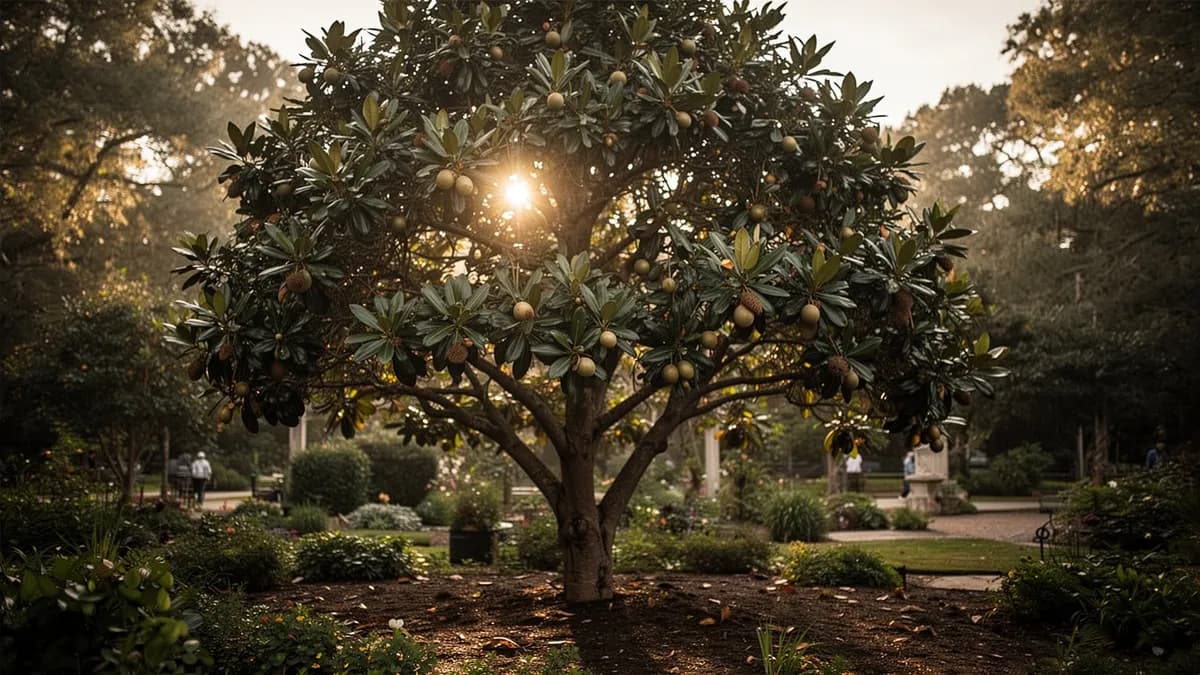
Ein subtropischer immergrüner Baum, der die teuerste Nuss der Welt produziert, mit einem buttrigen, reichhaltigen Geschmack, der beim Backen und in der Konditorei geschätzt wird.





Auf dieser SeiteÜberblick
Macadamiabaum im Überblick
Ein subtropischer immergrüner Baum, der die teuerste Nuss der Welt produziert, mit einem buttrigen, reichhaltigen Geschmack, der beim Backen und in der Konditorei geschätzt wird. Macadamias tragen erst spät und brauchen sieben oder mehr Jahre, um eine lohnende Ernte zu liefern. Sie benötigen frostfreie Bedingungen, gleichmäßige Niederschläge oder Bewässerung sowie Schutz vor starkem Wind, der die spröden Äste abbrechen kann. Ernten Sie die Nüsse, nachdem sie von selbst vom Baum gefallen sind, was auf volle Reife und maximalen Ölgehalt hinweist.
Wann Macadamiabaum pflanzen
Macadamiabäume können aus frischem Saatgut gezogen werden, das in 2 bis 3 Monaten in warmer, feuchter Blumenerde keimt. Sämlinge sind jedoch sehr variabel und brauchen 8 bis 12 Jahre bis zur Fruchtbildung. Benannte Sorten werden durch Veredelung vermehrt, wobei Seiten- oder Spaltpfropfungen auf Macadamia-Sämlingsunterlagen verwendet werden. Abmoosen (Luftschichtung) ist ebenfalls wirksam und liefert eine Pflanze, die früher als ein Sämling Früchte trägt. Kaufen Sie veredelte Baumschulbäume bekannter Sorten für die Hausgartenpflanzung, um die Nussqualität sicherzustellen und die Jahre bis zur ersten Ernte zu verkürzen.
Dein Macadamiabaum-Jahr
Abgestimmt auf Zone 7 · typische Saison · Frost geht um den 2. Apr. und kehrt um den 1. Nov. zurück
Macadamiabaum Mär – Mai pflanzen, Jul – Nov ernten. Beachte die Pflanzmethoden unten und wähle dein Klima für passende Zeiträume.
So baust du Macadamiabaum an
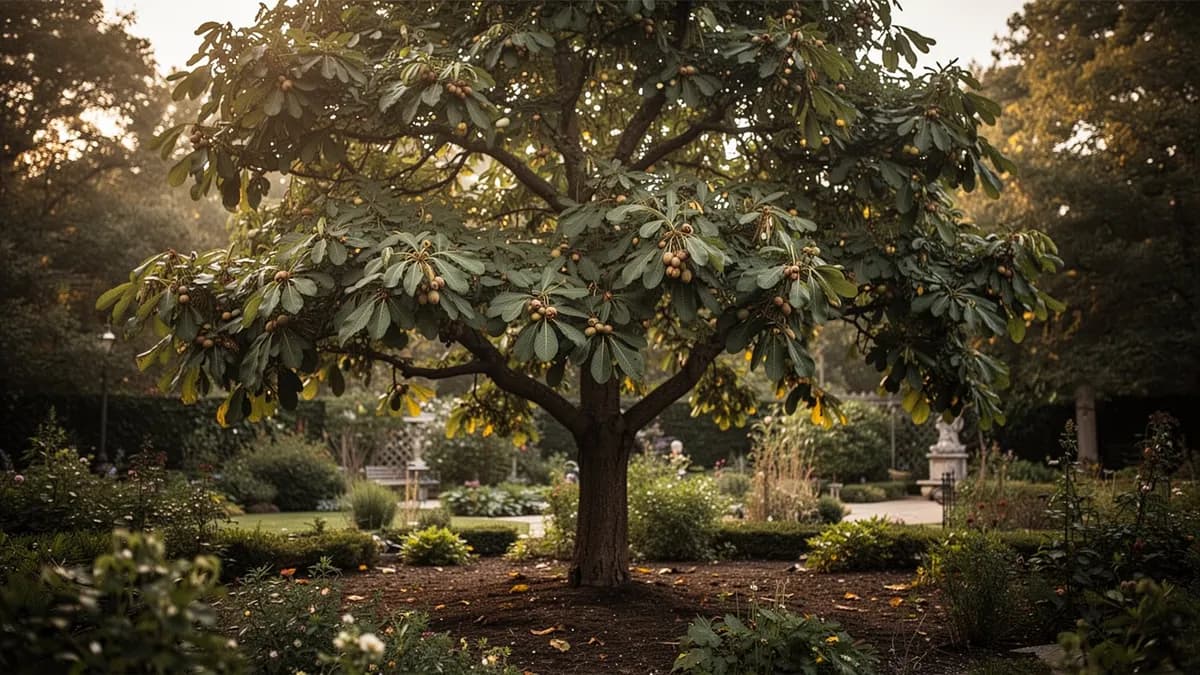
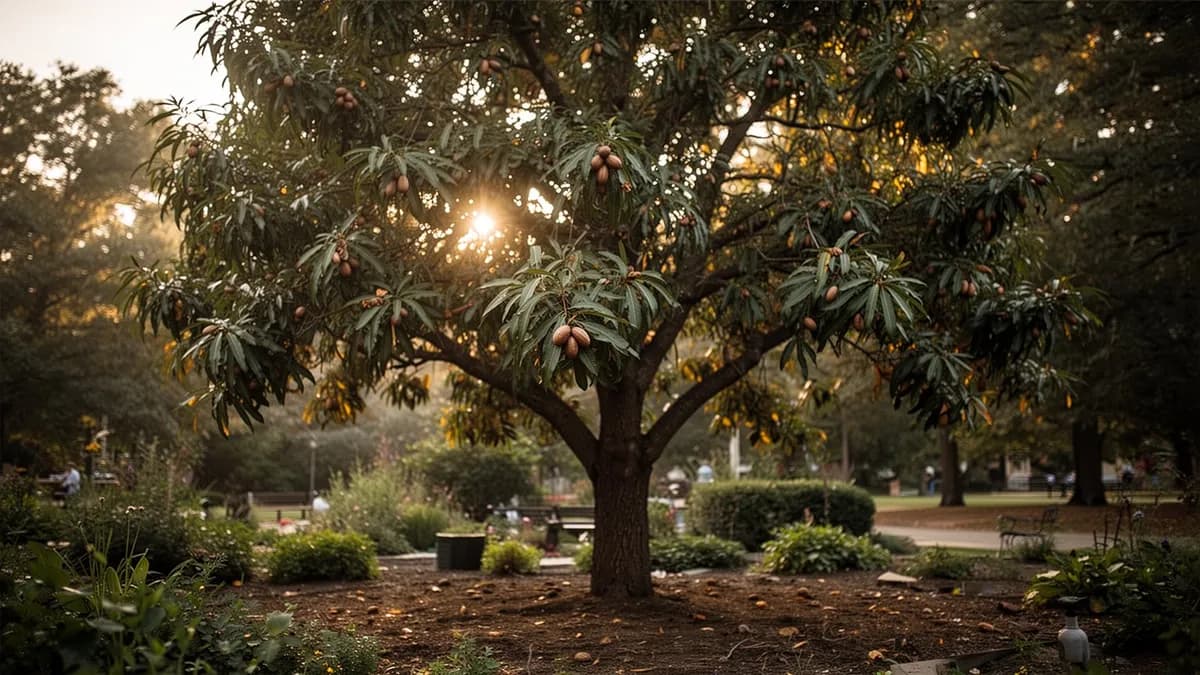
Macadamiabäume sind attraktive subtropische immergrüne Bäume, die an den Rändern australischer Regenwälder heimisch sind und 9 bis 12 Meter hoch werden mit dichtem, glänzendem Laub. Sie benötigen frostfreie Bedingungen in den USDA-Zonen 9 bis 12, mit idealen Wachstumstemperaturen zwischen 18 und 29 Grad Celsius. Pflanzen Sie in voller Sonne mit Schutz vor starkem Wind, da Macadamia-Äste spröde sind und leicht abbrechen. Wählen Sie einen Standort mit gut durchlässigem, leicht saurem Boden mit einem pH-Wert von 5,0 bis 6,5. Halten Sie einen Pflanzabstand von 7,5 bis 9 Metern ein.
Macadamias benötigen gleichmäßige Feuchtigkeit und brauchen das ganze Jahr über 25 bis 50 mm Wasser pro Woche. Sie vertragen keine Trockenheit während der Nussentwicklung, die 6 bis 7 Monate von der Blüte bis zur reifen Nuss dauert. Tragen Sie reichlich Mulch um die Wurzelzone auf, um Feuchtigkeit zu bewahren und die Bodentemperatur zu regulieren. Düngen Sie alle 2 bis 3 Monate während der Wachstumsperiode mit einem ausgewogenen Dünger für tropische Obstbäume und ergänzen Sie mit Mikronährstoffen einschließlich Eisen, Mangan und Zink.
Macadamiabäume tragen erst spät und produzieren ihre erste nennenswerte Ernte typischerweise im Alter von 7 bis 10 Jahren. Die volle Produktion wird mit 12 bis 15 Jahren erreicht, wenn ein einzelner Baum jährlich 14 bis 23 Kilogramm Nüsse in der Schale liefern kann. Die meisten Macadamia-Sorten sind teilweise selbstfruchtbar, liefern aber deutlich bessere Erträge bei Kreuzbestäubung durch eine andere Sorte. Schneiden Sie junge Bäume so, dass sie einen starken Mitteltrieb entwickeln, und entfernen Sie tief hängende Äste. Ausgewachsene Bäume benötigen nur minimalen Rückschnitt, abgesehen vom Entfernen von Totholz und der Aufrechterhaltung des Zugangs für die Ernte.
Für Macadamiabaum ist ein Beet von 120 × 240 cm zu klein
Macadamiabaum braucht 800 cm Platz pro Pflanze. Der Planer hält diesen Abstand für dich ein — jede Pflanze, jedes Beet.
Die besten Nachbarn für Macadamiabaum
Macadamiabäume gedeihen gut in tropischen Mischkultursystemen neben Kaffee, Avocado und Banane. Stickstoffbindende Schattenbäume wie Leucaena oder Albizia können in jungen Macadamia-Plantagen zwischengepflanzt und entfernt werden, wenn sich das Kronendach schließt. Bodendecker aus Süßkartoffel, Pinto-Erdnuss oder tropischen Leguminosen unterdrücken Unkraut und binden Stickstoff. Ingwer und Kurkuma vertragen den Halbschatten unter jungen Macadamia-Kronen und liefern zusätzliche Erträge. Vermeiden Sie das Pflanzen an exponierten Standorten, wo Windschäden schwerwiegend sein werden.
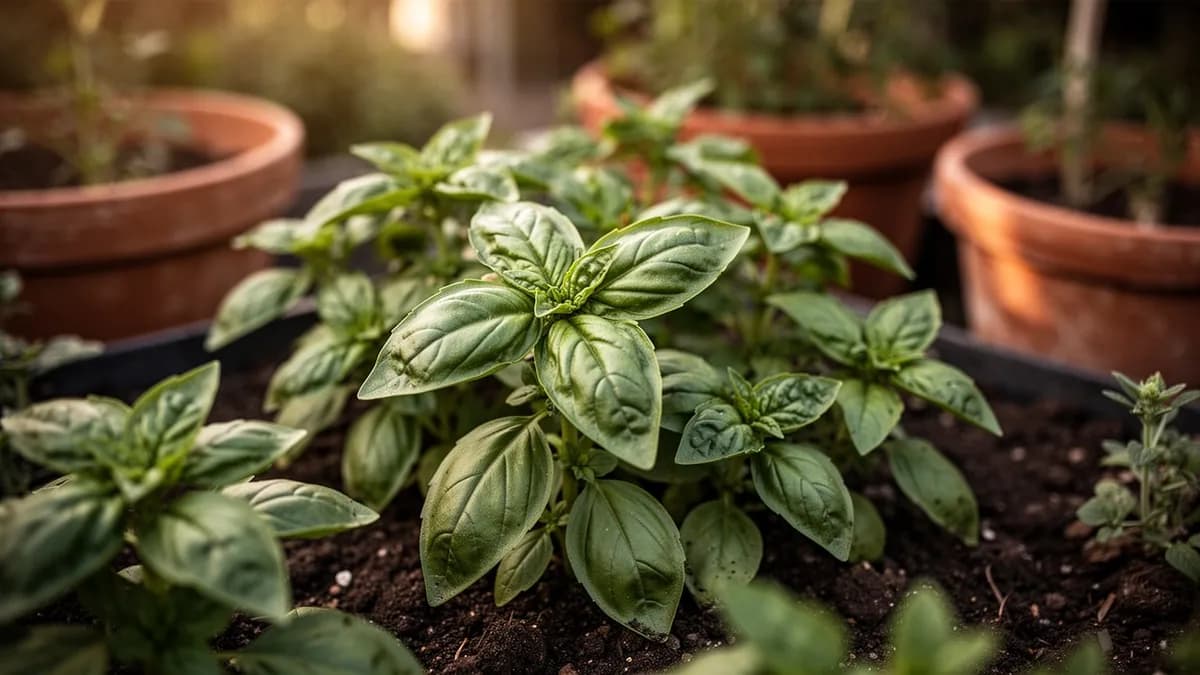
Basilikum gehört daneben. Walnussbaum nicht.
Altes Gärtnerwissen, geprüft an der echten Nachbartabelle von Macadamiabaum — teste jede Pflanze, die du anbaust.
Probiere Macadamiabaum direkt hier im Beet
Ein echtes Planer-Beet, Macadamiabaum steht schon drin. Tippe einen Begleiter an, platziere ihn und sieh, wie die Nachbarschaftsprüfung antwortet — grün für gute Nachbarn, rot bei Streit.


Passende Anbau-Ratgeber
Richtig düngen
Macadamias bevorzugen tiefgründigen, gut durchlässigen, leicht sauren Boden mit einem pH-Wert von 5,0 bis 6,5. Sie wachsen gut in vulkanischen, sandigen oder lehmigen Böden, die in tropischen und subtropischen Regionen verbreitet sind. Düngen Sie alle 2 bis 3 Monate mit einem ausgewogenen Dünger für tropische Bäume oder verwenden Sie zweimal jährlich Langzeitdünger in Granulatform. Ergänzen Sie mit chelatiertem Eisen und Mangan, wenn die Blätter Zwischenadern-Vergilbung zeigen. Macadamias sind empfindlich gegenüber Salz im Boden und Gießwasser. Halten Sie eine dicke organische Mulchschicht über der Wurzelzone aufrecht, um den Boden zu nähren und Feuchtigkeit zu bewahren.
Ideale Temperatur
Winterhärtezone-Kompatibilität
Von der Saat zur Ernte, Schritt für Schritt
Keimung und Sämling
Macadamia-Samen keimen langsam über 2 bis 6 Monate. Sämlinge entwickeln ihren ersten Satz glänzender, lederartiger Blätter und bilden ein flaches, aber sich ausbreitendes Wurzelsystem. Die Samen sollten mit der flachen Seite nach unten in eine gut durchlässige Blumenerde gepflanzt werden, die gleichmäßig feucht gehalten wird.
Jugendliches Wachstum
Junge Bäume wachsen in den ersten drei Jahren kräftig und legen unter idealen Bedingungen jährlich 60 bis 90 Zentimeter an Höhe zu. Die Krone beginnt sich mit charakteristischen Quirlen aus dunkelgrünen, länglichen Blättern zu füllen. Das Wurzelsystem breitet sich eher seitlich als in die Tiefe aus.
Vortragephase
Zwischen dem dritten und fünften Jahr entwickelt der Baum das Grundgerüst, das die zukünftige Nussproduktion tragen wird. Die Astarchitektur wird definierter und die Krone erreicht eine Höhe von 3 bis 5 Metern. Einige frühreife Sorten können in dieser Phase vereinzelt Blüten bilden.
Frühe Tragephase
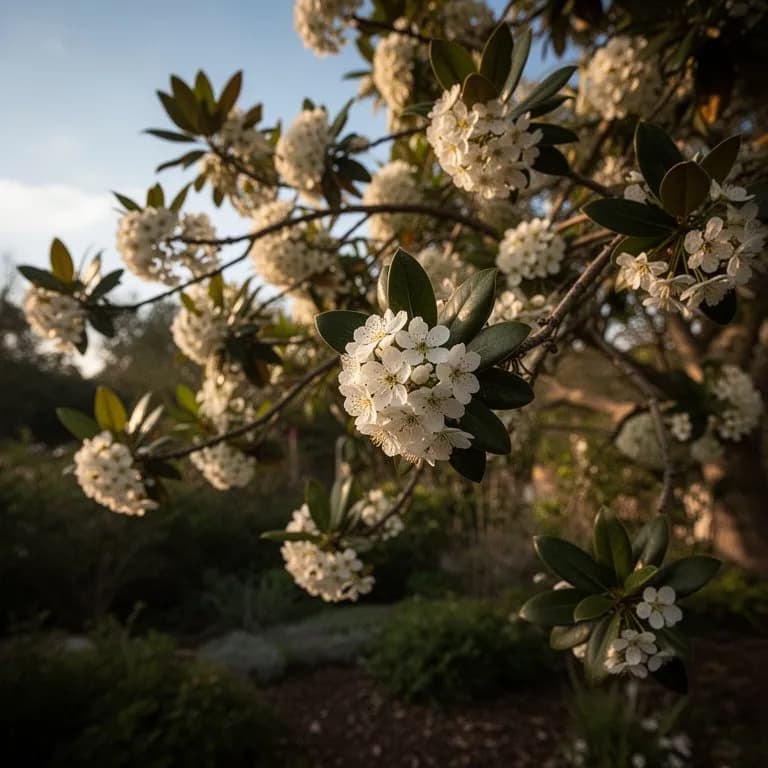
Bäume beginnen zwischen dem fünften und achten Jahr ihre ersten nennenswerten Ernten zu produzieren. Blütentrauben erscheinen im Spätwinter bis Frühjahr und die Bestäubung erfolgt hauptsächlich durch Wind und Schwerkraft. Die anfänglichen Erträge sind mit 5 bis 10 Kilogramm Nüssen in der Schale pro Baum bescheiden, steigen aber von Jahr zu Jahr stetig an.
Volle Produktionsreife
Ausgewachsene Macadamiabäume erreichen zwischen dem 8. und 15. Jahr ihr volles Produktionspotenzial und liefern jährlich 30 bis 50 Kilogramm Nüsse in der Schale. Bäume können bei richtiger Pflege über 60 Jahre produktiv bleiben. Die Krone kann sich 10 bis 12 Meter breit ausdehnen und der Stamm entwickelt eine raue, gräuliche Rinde.
Altbaumphase
Gut gepflegte Macadamiabäume tragen 40 bis 100 Jahre lang Nüsse. Die Produktion kann nach 40 Jahren allmählich zurückgehen, bleibt aber mit Verjüngungsschnitt kommerziell rentabel. Altbäume werden zu beeindruckenden Landschaftsexemplaren mit Stämmen von über 60 Zentimetern Durchmesser.
Halten Sie Sämlinge im Halbschatten und sorgen Sie für gleichmäßige Feuchtigkeit ohne Staunässe. Eine beheizte Vermehrungsmatte kann die Keimung deutlich beschleunigen.
Macadamiabaum Monat für Monat pflegen
Was du jeden Monat für deine Macadamiabaum tun solltest
Oktober
Aktueller MonatÜberwachen Sie den Fruchtansatz nach Abschluss der Blüte. Erhöhen Sie die Bewässerungshäufigkeit bei längeren Tagen und steigenden Temperaturen. Achten Sie auf durch Botrytis verursachte Blütenfäule und entfernen Sie befallene Trauben
Immer wissen, was jetzt im Garten zu tun ist
Eine E-Mail zum Monatsanfang: was du jetzt säen, pflanzen und anpacken solltest — für deine Macadamiabaum und alles, was drumherum wächst. Dazu ein kurzer Startkurs, der dich vor den klassischen Fehlern bewahrt.
- Was jetzt zu tun ist
- Passend zu deiner Saison
- Startkurs inklusive
Macadamiabaum ernten
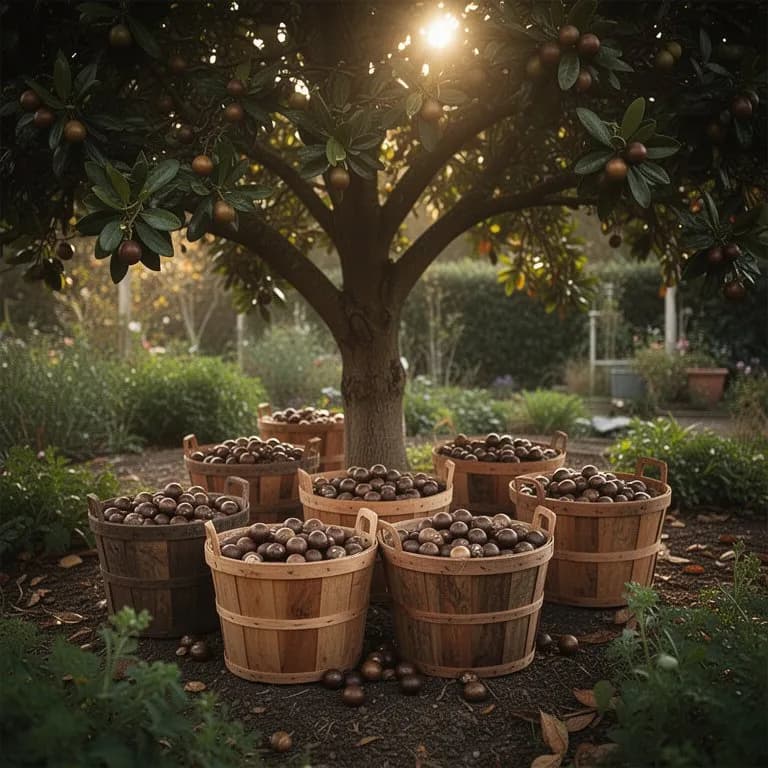
Macadamianüsse sind erntereif, wenn sie von selbst vom Baum fallen, was darauf hinweist, dass der Kern volle Reife und maximalen Ölgehalt erreicht hat. Sammeln Sie heruntergefallene Nüsse alle 2 bis 3 Wochen während der Erntezeit ein, die je nach Sorte und Klima von Juli bis November dauern kann. Entfernen Sie die äußere grüne Schale innerhalb von 24 Stunden nach dem Einsammeln, um Schimmelbildung zu vermeiden. Die extrem harte Schale, die härteste aller kommerziellen Nüsse, erfordert einen speziellen Nussknacker oder eine Schraubzwinge zum Öffnen.
angenommen, du pflanzt zu Beginn des Zeitraums — trage dein tatsächliches Datum ein
Ernte Macadamiabaum zügig, dann trägt die Pflanze weiter.
Lagerung & Konservierung
Trocknen Sie Macadamianüsse nach dem Enthülsen 2 bis 3 Wochen in ihrer Schale in einem warmen, gut belüfteten Bereich, bis der Kern von der Schale schrumpft und beim Schütteln klappert. Nüsse in der Schale halten bei Raumtemperatur 3 bis 4 Monate und gekühlt bis zu einem Jahr. Geschälte Kerne lagern am besten in luftdichten Behältern im Gefrierschrank bis zu 2 Jahre aufgrund ihres sehr hohen Ölgehalts. Rösten verstärkt den buttrigen Geschmack und verlängert die Haltbarkeit. Macadamias können zu ihrem hochwertigen Speiseöl gepresst werden.
Was schiefgeht — und die Lösung
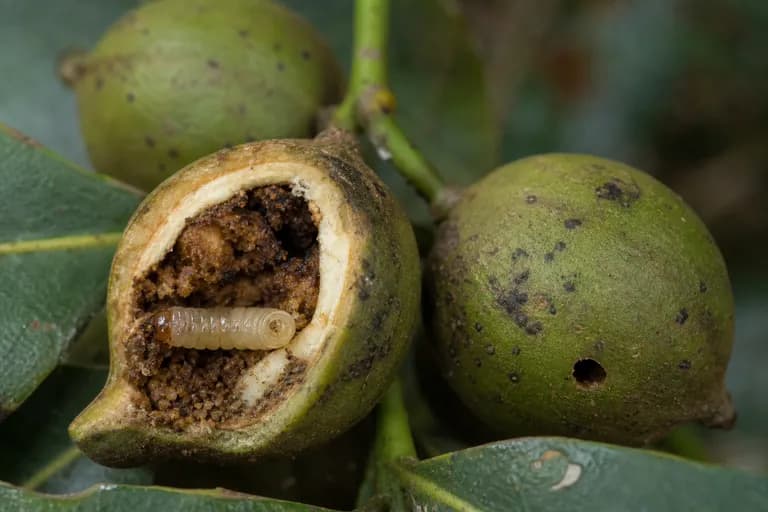
Macadamia-Nussbohrer
SchädlingLarven bohren sich in die sich entwickelnden Nüsse, fressen den Kern und hinterlassen Fraßmehl in der Schale. Austrittslöcher sind an heruntergefallenen Nüssen sichtbar.
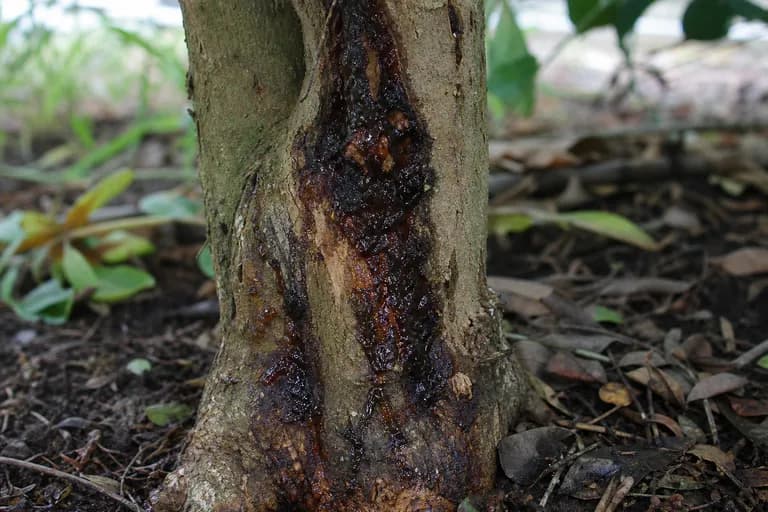
Phytophthora-Stammkrebs
KrankheitDunkle, wässrig durchtränkte Krebsstellen am unteren Stamm, die rotbraunen Saft absondern. Die Rinde reißt auf und schält sich um die Krebsstelle herum ab. Der Baum kann über mehrere Jahre hinweg absterben.
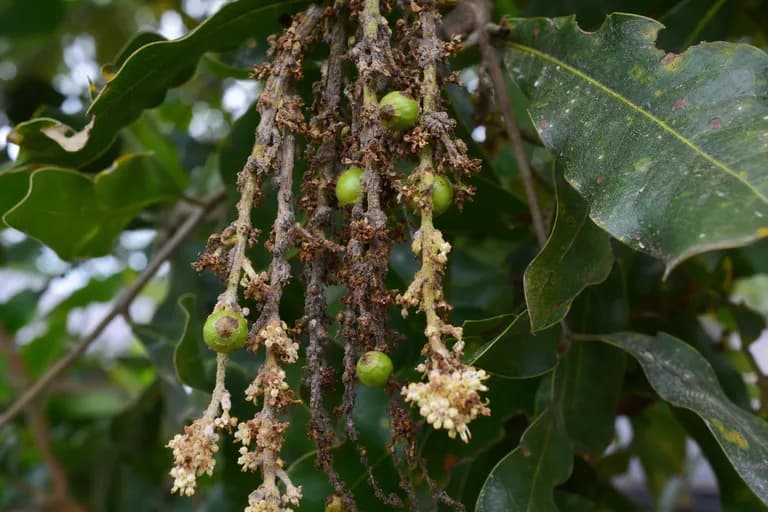
Blütenfäule (Botrytis)
KrankheitGrauschimmel entwickelt sich bei kühlem, nassem Wetter an den Blütentrauben. Befallene Blüten setzen keine Nüsse an, was den Ertrag erheblich reduziert.
Fehlerbehebung bei häufigen Problemen
Frost ist der wichtigste limitierende Faktor, da Temperaturen unter minus 2 Grad Celsius das Laub schädigen und anhaltende Kälte die Bäume abtötet. Windschäden an spröden Ästen sind häufig und können bei Stürmen schwerwiegend sein. Die extrem lange Wartezeit bis zur ersten Ernte, 7 bis 10 Jahre nach der Pflanzung, schreckt viele Hobbygärtner ab. Die unglaublich harte Schale ist ohne Spezialausrüstung schwer zu knacken. Ratten- und Vogelschäden an nicht geernteten Nüssen können in einigen Gebieten erheblich sein. Macadamias sind giftig für Hunde und sollten dort gepflanzt werden, wo Haustiere keinen Zugang zu heruntergefallenen Nüssen haben.
Anbautipps
- Pflanzen Sie veredelte Sorten anstelle von Sämlingen, da veredelte Bäume 2 bis 3 Jahre früher Nüsse tragen und eine vorhersehbare Nussqualität und Schalendicke aufweisen.
- Wählen Sie einen Pflanzort mit gut durchlässigem, saurem bis neutralem Boden mit einem pH-Wert zwischen 5,0 und 6,5, da Macadamias sehr empfindlich auf Staunässe und alkalische Bedingungen reagieren.
- Schützen Sie junge Bäume vor starkem Wind, indem Sie Windschutzhecken pflanzen oder sie auf der windgeschützten Seite bestehender Gebäude positionieren, da Macadamia-Holz spröde ist und Äste leicht abbrechen.
- Tragen Sie eine 10 bis 15 Zentimeter dicke Schicht organischen Mulch bis zur Trauflinie auf, halten Sie ihn aber mindestens 30 Zentimeter vom Stamm entfernt, um Wurzelhalsfäule und Pilzkrankheiten zu vermeiden.
- Bewässern Sie tief und selten, anstatt flach und häufig, um die Entwicklung eines breiten und widerstandsfähigen seitlichen Wurzelsystems zu fördern.
- Vermeiden Sie stickstoffreiche Dünger, sobald die Bäume zu tragen beginnen, da überschüssiger Stickstoff das vegetative Wachstum auf Kosten der Blüten- und Nussproduktion fördert.
- Pflanzen Sie mindestens zwei verschiedene Sorten innerhalb von 10 Metern voneinander, um die Kreuzbestäubung zu maximieren und den Fruchtansatz zu verbessern.
- Ernten Sie Nüsse umgehend, nachdem sie auf den Boden gefallen sind, da längerer Kontakt mit feuchtem Boden Schimmelwachstum fördert und die Kernqualität mindert.
- Schneiden Sie sparsam und konzentrieren Sie sich auf das Entfernen von Totholz, sich kreuzenden Ästen und tief hängenden Ästen, anstatt die Krone stark zu reduzieren, was die Erträge für mehrere Saisons drastisch verringern kann.
- Überwachen Sie die Bodenfeuchtigkeit sorgfältig während der Nussfüllungsphase von Dezember bis März, da Wasserstress in dieser kritischen Phase zu kleineren Kernen und erhöhtem vorzeitigem Nussfall führt.
Bau deine beste Macadamiabaum an — und alles drumherum.
Starte heute kostenlos. Lege deine Beete an, setze deine Macadamiabaum ein und lass PlotMyGarden Timing, Abstände, Begleiter und Erinnerungen von der Saat bis zum Erntekorb übernehmen.
Finde deine Macadamiabaum
Beaumont
Eine beliebte hawaiianische Sorte mit hohen Erträgen, guter Kernqualität und zuverlässiger Produktion. Selbstfruchtbar, aber mit Kreuzbestäubung bessere Ergebnisse.
Mauka
Produziert große Nüsse mit ausgezeichneter Kernausbeute und gleichbleibender Qualität. Gut an hawaiianische Anbaubedingungen angepasst mit guter Windtoleranz.
A4
Eine australische Selektion, die wegen ihrer hohen Kernqualität, zuverlässigen Produktion und guten Krankheitsresistenz weit verbreitet kommerziell angebaut wird.
Cate
Eine der besten Sorten für Südkalifornien mit guter Kältetoleranz für eine Macadamia. Produziert mittelgroße Nüsse mit ausgezeichnetem Geschmack.
Ein einzelner ausgewachsener Macadamiabaum kann jährlich 15 bis 20 Kilogramm geschälte Kerne liefern, die bei Einzelhandelspreisen von 20 bis 30 € pro Kilogramm einen Wert von 300 bis 600 € haben. Obwohl die anfängliche Wartezeit von 5 bis 7 Jahren bis zur ersten Produktion Geduld erfordert, bedeutet die produktive Lebensspanne des Baumes von 60 bis 100 Jahren, dass ein gut gepflegter, selbst angebauter Macadamiabaum über seine Lebenszeit Premium-Nüsse im Wert von Tausenden von Euro liefern kann, was die bescheidene Investition in einen veredelten Setzling und die laufende Pflege bei Weitem übersteigt.
Schnelle Rezepte
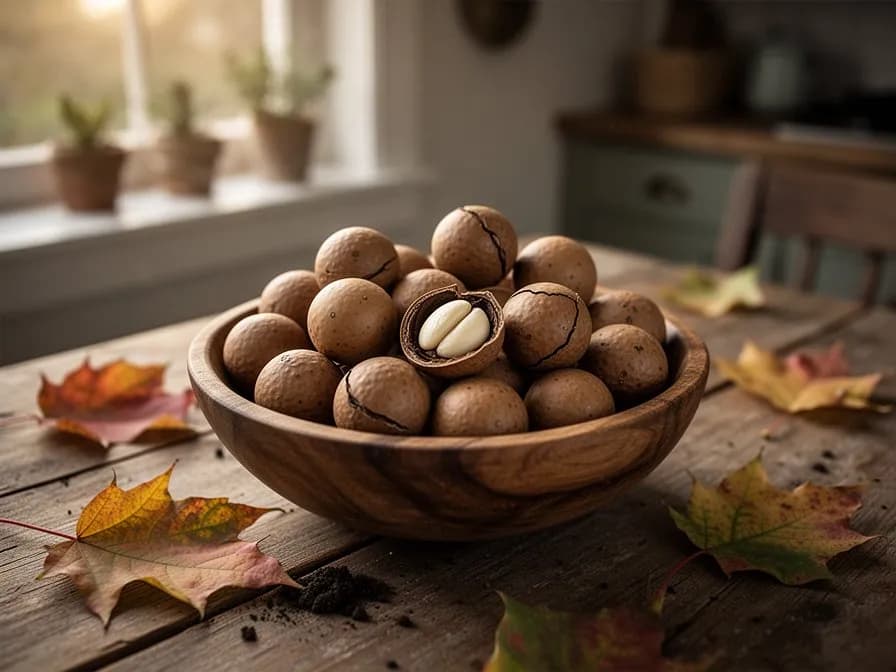
Honig-geröstete Macadamianüsse
25 Min.Süße und knusprige honiggeröstete Macadamianüsse sind der perfekte Snack oder ein tolles Geschenk. Rohe Kerne werden mit warmem Honig, einer Prise Meersalz und einem Hauch Vanilleextrakt vermengt und dann golden und duftend geröstet. Lassen Sie sie auf Backpapier vollständig abkühlen, damit die Glasur knusprig wird.
5 ZutatenMacadamianuss-Pesto
15 Min.Eine reichhaltige und cremige Variante des traditionellen Basilikum-Pestos, die Macadamianüsse anstelle von Pinienkernen verwendet. Der buttrige Geschmack der Macadamias ergänzt frisches Basilikum und Parmesan wunderbar. Alle Zutaten in einer Küchenmaschine glatt pürieren und mit heißer Pasta vermengen oder auf knuspriges Brot streichen.
7 ZutatenWeiße-Schokolade-Macadamia-Kekse
35 Min.Klassische, zäh-weiche Kekse, vollgepackt mit Stücken weißer Schokolade und gehackten Macadamianüssen. Die Kombination aus buttrigen Macadamias und süßer weißer Schokolade ergibt eine unwiderstehliche Leckerei. Kühlen Sie den Teig mindestens 30 Minuten vor dem Backen für die beste Textur und Form.
10 ZutatenKulinarische Verwendung
Macadamianüsse haben den reichhaltigsten, buttrigsten Geschmack und die cremigste Textur aller Baumnüsse, was sie zu einer erstklassigen Zutat in Desserts und Konfekt macht. Sie sind hervorragend geröstet und gesalzen als luxuriöser Snack. Weiße-Schokolade-Macadamia-Kekse sind eine ikonische hawaiianische Spezialität. Die Nüsse verleihen Eiscreme, paniertem Fisch, tropischen Salaten und Pfannengerichten Reichhaltigkeit. Kaltgepresstes Macadamiaöl ist ein geschätztes Speiseöl mit hohem Rauchpunkt. Sie sind reich an einfach ungesättigten Fettsäuren und Mangan.
Was drinsteckt
Gesundheitsvorteile
- Der hohe Gehalt an einfach ungesättigten Fettsäuren in Macadamianüssen unterstützt die Herzgesundheit, indem er dazu beiträgt, das LDL-Cholesterin zu senken und das HDL-Cholesterin zu erhöhen, wenn sie als Teil einer ausgewogenen Ernährung konsumiert werden.
- Macadamianüsse enthalten Palmitoleinsäure, eine Omega-7-Fettsäure, die in klinischen Studien mit verbesserter Insulinsensitivität und verringerter Entzündung in Verbindung gebracht wurde.
- Der beträchtliche Ballaststoffgehalt von 8,6 Gramm pro 100 g fördert eine gesunde Verdauung, unterstützt nützliche Darmbakterien und trägt zu einem Sättigungsgefühl nach dem Essen bei.
- Reich an Mangan und Kupfer, unterstützen Macadamianüsse die Knochengesundheit, die Bildung von Bindegewebe und die antioxidativen Abwehrsysteme des Körpers.
- Der Thiamin-Gehalt (Vitamin B1) in Macadamianüssen unterstützt den Energiestoffwechsel und die ordnungsgemäße Funktion des Nervensystems und liefert 80 Prozent des Tageswerts pro 100-g-Portion.
- Der regelmäßige Verzehr von Baumnüssen einschließlich Macadamias wurde in epidemiologischen Studien mit einem verringerten Risiko für metabolisches Syndrom, Typ-2-Diabetes und bestimmte entzündliche Erkrankungen in Verbindung gebracht.
Woher Macadamiabaum stammt
Der Macadamiabaum stammt aus den subtropischen Regenwäldern des südöstlichen Queensland und des nordöstlichen New South Wales in Australien, wo er seit Tausenden von Jahren wild wächst. Die australischen Ureinwohner ernteten und verzehrten die Nüsse lange vor der europäischen Besiedlung und nannten sie je nach regionaler Sprachgruppe kindal kindal oder jindilli. Der Baum wurde erstmals 1857 vom deutsch-australischen Botaniker Ferdinand von Mueller wissenschaftlich beschrieben, der die Gattung nach seinem Kollegen Dr. John Macadam benannte. Frühe europäische Siedler in Australien erkannten das kulinarische Potenzial der Nuss, fanden den kommerziellen Anbau jedoch aufgrund des langsamen Wachstums des Baumes und der extremen Härte der Schale schwierig. In den 1880er Jahren brachte William Herbert Purvis Macadamia-Samen nach Hawaii und pflanzte sie auf Big Island, wo die Bäume im vulkanischen Boden und tropischen Klima prächtig gediehen. Hawaii wurde im gesamten zwanzigsten Jahrhundert zum Zentrum der kommerziellen Macadamia-Produktion, mit großflächigen Plantagen, die in den 1930er und 1940er Jahren angelegt wurden. Die Entwicklung mechanischer Knackausrüstung in der Mitte des zwanzigsten Jahrhunderts machte die Verarbeitung im großen Maßstab schließlich wirtschaftlich tragfähig. Australien holte sich seine Position als weltweit führender Produzent in den 1990er Jahren zurück, mit großen Anbauregionen im Northern Rivers-Gebiet von New South Wales sowie den Regionen Bundaberg und Gympie in Queensland. Heute werden Macadamianüsse auch in Südafrika, Kenia, Guatemala, Brasilien und Teilen Südostasiens kommerziell angebaut. Die globale Macadamia-Industrie expandiert weiter, da die Nachfrage nach der Premium-Nuss in Märkten in Europa, Asien und Nordamerika wächst.
Macadamiabaum: Schon gewusst?
Faszinierende Fakten über Macadamiabaum
Macadamianüsse haben die härteste Schale aller kommerziell angebauten Nüsse und benötigen etwa 136 Kilogramm pro Quadratzentimeter Druck zum Knacken.
Macadamiabaum: Fragen & Antworten
Wann sollte ich Macadamiabaum pflanzen?
Was sind gute Begleitpflanzen für Macadamiabaum?
In welchen Winterhärtezonen kann Macadamiabaum wachsen?
Wie viel Sonne braucht Macadamiabaum?
Welchen Abstand sollte ich zwischen Macadamiabaum lassen?
Welche Schädlinge und Krankheiten befallen Macadamiabaum?
Wie lagere ich Macadamiabaum nach der Ernte?
Was sind die besten Macadamiabaum-Sorten zum Anbauen?
Welchen Boden braucht Macadamiabaum?
Wie lange dauert es, bis ein Macadamiabaum Nüsse trägt?
Können Macadamiabäume in kalten Klimazonen wachsen?
Warum sind Macadamianüsse im Vergleich zu anderen Nüssen so teuer?
Brauche ich mehr als einen Macadamiabaum für die Bestäubung?
Wie knacke ich Macadamia-Nussschalen zu Hause?
Welche Schädlinge und Krankheiten befallen Macadamiabäume häufig?
Du hast die Theorie gelesen. Jetzt baue sie auf Autopilot an.
Alles, was Macadamiabaum knifflig macht — das Timing, die Abstände, die Begleiter, das Erntefenster — genau das übernimmt PlotMyGarden für dich, für jede Pflanze im Garten.
Ein Plan, der dein Wetter kennt
Standort einmal festlegen. Aussaat-, Dünge- und Erntedaten rund um deinen echten letzten Frosttermin und die Live-Vorhersage — kein Raten mehr nach Saattüte.
Aus dem Abschnitt „Pflanzzeit“Beetplaner per Drag & Drop
Beete auf einem Raster gestalten. Jede Pflanze rastet im richtigen Abstand ein, und du siehst die ganze Saison, bevor du einen Cent für Saatgut ausgibst.
Aus dem Abschnitt „Anbau“Begleiter-Konflikte früh erkannt
Über 200 gute und schlechte Kombinationen werden beim Pflanzen live geprüft — so landet ein saisonruinierender Fehler nie in der Erde.
Aus dem Abschnitt „Begleiter“Erinnerungen, nach denen du wirklich handelst
„Gieß die Bohnen.“ „Heute ernten, bevor's umschlägt.“ Pünktlich, konkret und auf deine echten Pflanzen bezogen.
Aus dem Abschnitt „Ernte“Staffel-Aussaat, geplant
Sechs Wochen ernten statt sechs Tage? Die App verteilt deine Aussaaten automatisch und erinnert dich, wenn der nächste Satz fällig ist.
Aus dem Abschnitt „Pflanzzeit“Ein Verlauf, der schlauer wird
Jede protokollierte Ernte bringt der App deinen Garten bei. Der Plan fürs nächste Jahr startet bei dem, was in deinem Boden wirklich funktioniert hat.
Aus dem Abschnitt „Überblick“Pflanze diese neben Macadamiabaum
Weitere Nussbäume
Halte Macadamiabaum von diesen fern
Bau deine beste Macadamiabaum an — und alles drumherum.
Starte heute kostenlos. Lege deine Beete an, setze deine Macadamiabaum ein und lass PlotMyGarden Timing, Abstände, Begleiter und Erinnerungen von der Saat bis zum Erntekorb übernehmen.