Rudbeckia
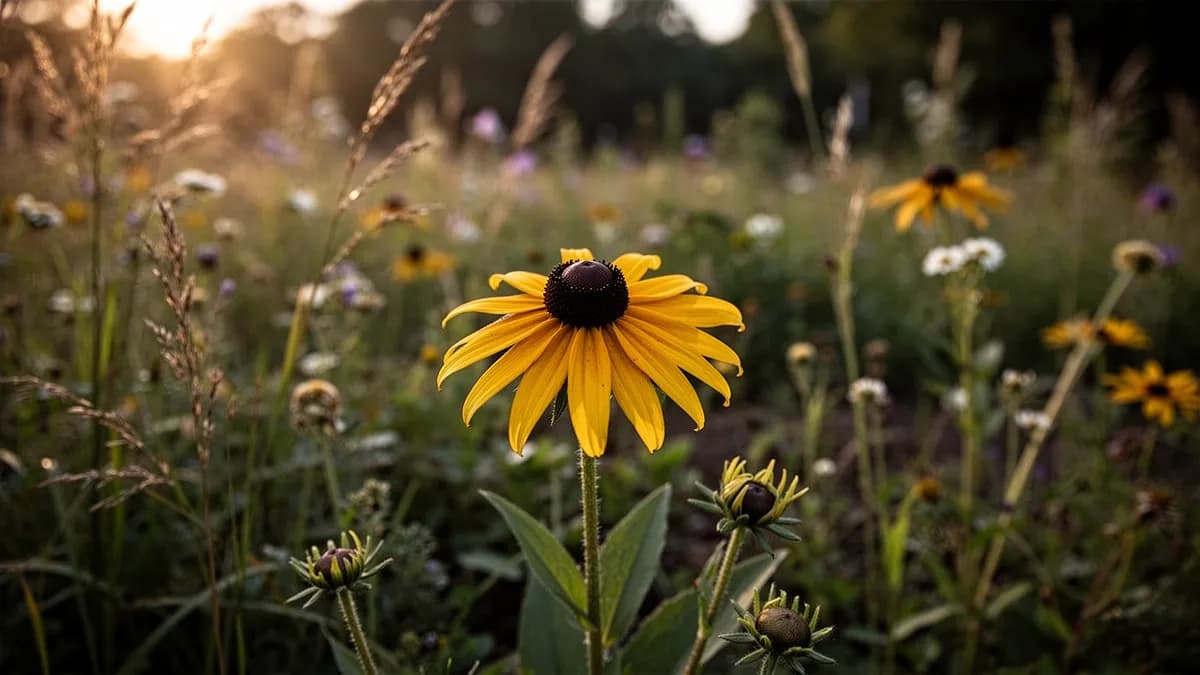
Una alegre flor silvestre de la pradera con pétalos dorados alrededor de un centro oscuro, tolerante a la sequía una vez establecida.





En esta páginaResumen
Conoce Rudbeckia
Una alegre flor silvestre de la pradera con pétalos dorados alrededor de un centro oscuro, tolerante a la sequía una vez establecida. Las rudbeckias prosperan en suelos pobres a medios y a pleno sol, y se expanden gradualmente por auto-siembra y rizomas hasta formar llamativas manchas. Florecen con fiabilidad desde mediados del verano hasta comienzos del otoño y combinan maravillosamente con gramíneas ornamentales, ásteres y otras vivaces nativas en plantaciones de estilo pradera. Corte las flores marchitas para fomentar una nueva floración o deje las cabezas de semillas para dar interés invernal y atraer aves granívoras al jardín.
Cuándo plantar Rudbeckia
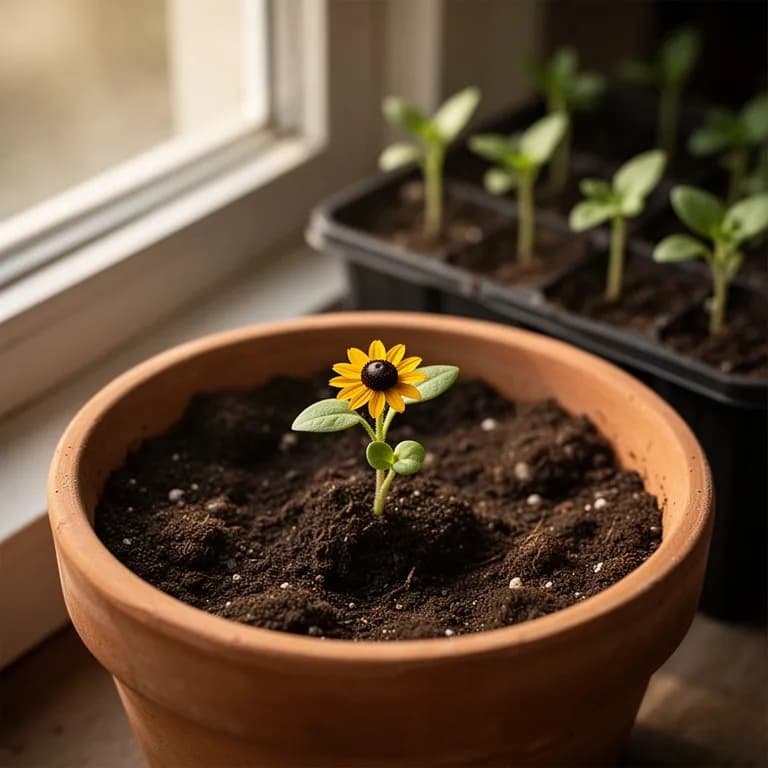
Las semillas de rudbeckia germinan fácilmente sin tratamiento especial, aunque una breve estratificación fría de dos semanas en el refrigerador puede mejorar la tasa de germinación. Siémbrelas en interior de seis a ocho semanas antes de la última helada, presionándolas sobre la superficie de una mezcla húmeda para semilleros, ya que la luz favorece la germinación. Mantenga entre 21 y 24 °C y espere la aparición de brotes en 7 a 14 días. La siembra directa al aire libre en primavera u otoño es igualmente eficaz, y las semillas sembradas en otoño se benefician de la estratificación invernal natural.
Tu año de Rudbeckia
Ajustado a Zona 7 · temporada típica · la helada se va hacia el 2 abr y vuelve hacia el 1 nov
Planta Rudbeckia Mar – May y cosecha Jul – Oct. Consulta los métodos de plantación y elige tu clima para adaptar los periodos.
Cómo cultivar Rudbeckia
Las rudbeckias son unas de las vivaces más fáciles de establecer, ya que toleran una gama de condiciones de suelo sorprendentemente amplia, desde arcilla pesada hasta franco arenoso. Plante ejemplares de vivero o divisiones en primavera u otoño, separándolos entre 45 y 60 cm a pleno sol. Se adaptan a la semisombra, pero producen menos flores y tienden a hacerse larguiruchas. Riegue a fondo al plantar y proporcione humedad regular durante la primera temporada.
Una vez establecidas, las rudbeckias son extremadamente tolerantes a la sequía y rara vez necesitan riego suplementario salvo durante sequías prolongadas. Prosperan en suelos medios a pobres y no requieren abonado regular. De hecho, un suelo demasiado rico puede causar una expansión excesiva y un crecimiento flácido. Una ligera capa de compost en primavera aporta todos los nutrientes que estas plantas robustas necesitan.
Rudbeckia hirta es técnicamente una vivaz de vida corta o una bienal, pero se auto-siembra con tanta facilidad que las plantaciones persisten indefinidamente. Deje algunas cabezas de semillas en las plantas en otoño para asegurar colonias continuas. En jardines más controlados, retire las flores marchitas para evitar plántulas espontáneas y fomentar nuevas oleadas de floración. Corte las plantas a ras del follaje basal a finales de otoño, después de la helada, o deje las cabezas de semillas en pie para dar interés invernal y alimento a las aves.
10 plantas caben en un bancal de 120 × 240 cm
Cada Rudbeckia pide 45 cm de margen. El planificador guarda ese marco por ti — cada planta, cada bancal.
Los mejores vecinos de Rudbeckia
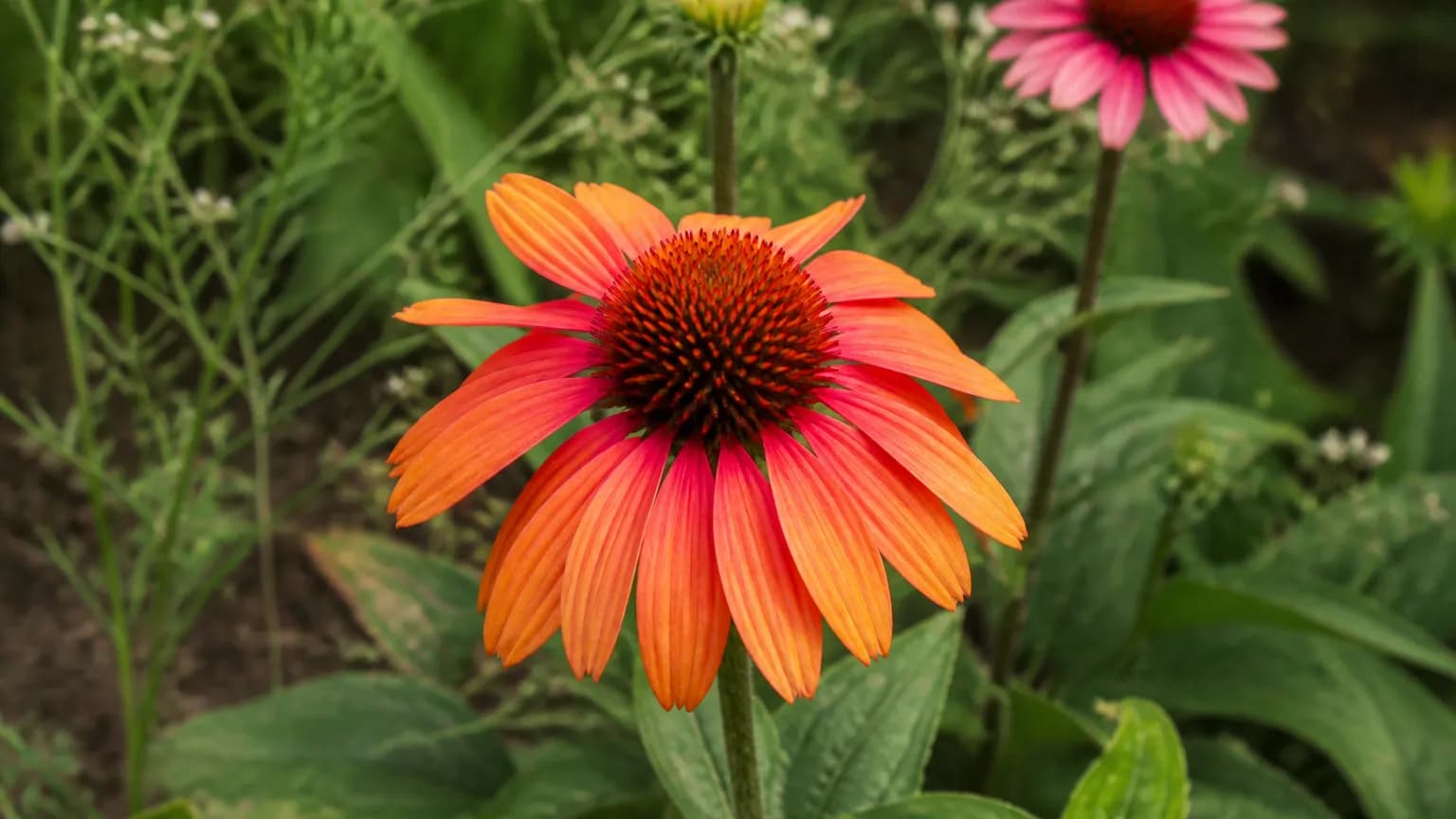
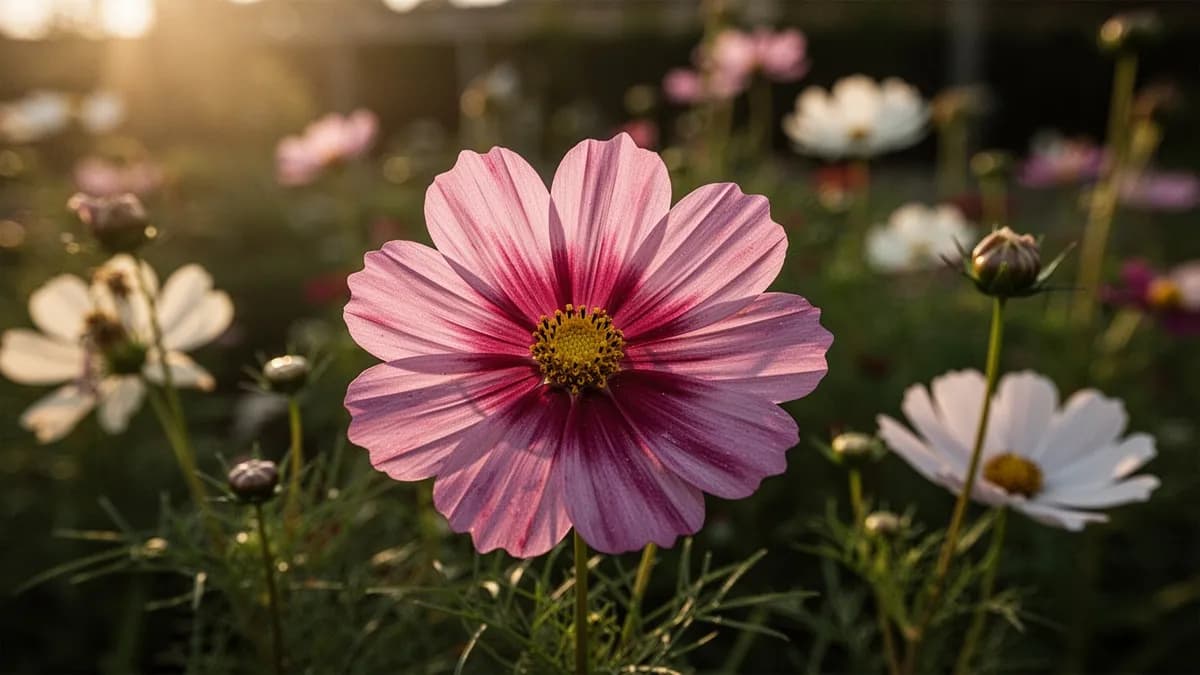
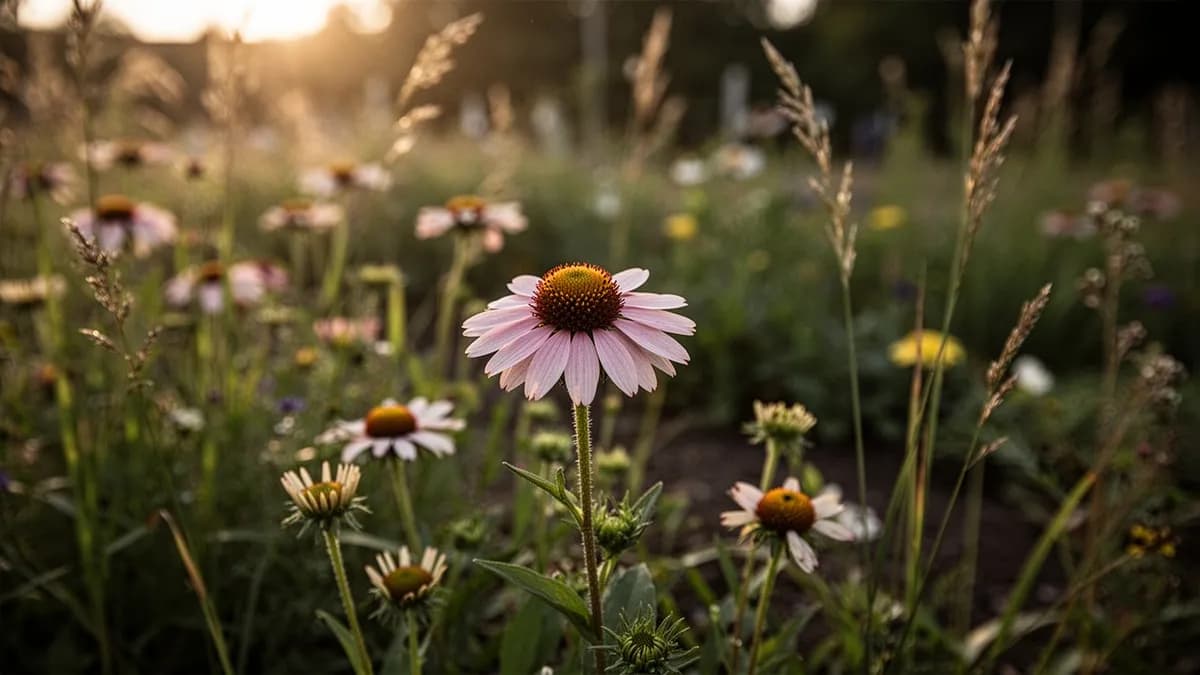
Las rudbeckias son compañeras ideales para plantaciones de pradera y de estilo natural junto a coneflores, ásteres y gramíneas ornamentales como el little bluestem y el switchgrass. Combinan maravillosamente con verbena alta, monarda y vara de oro para un jardín silvestre de finales de verano lleno de color. En borduras más formales, combínelas con salvia rusa, salvia y sedum para crear contrastes de textura. Sus flores alegres atraen mariposas, abejas nativas y sírfidos beneficiosos.
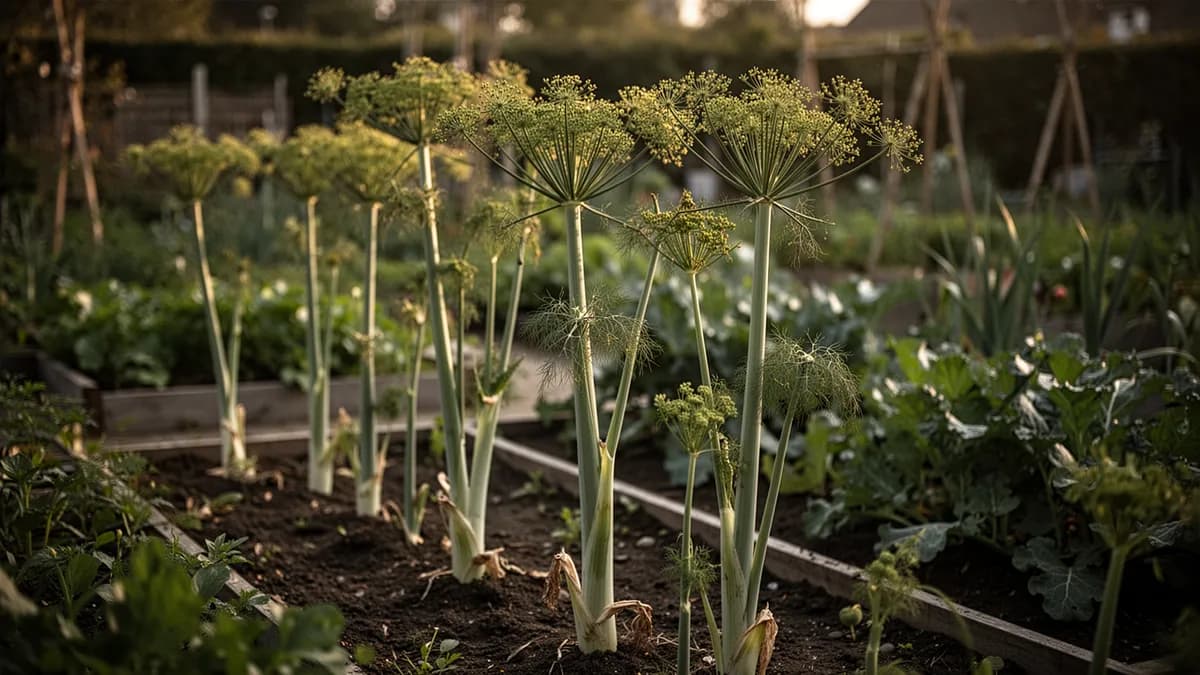
Equinácea va a su lado. Hinojo no.
Saber de huerto de siempre, cotejado con la tabla real de Rudbeckia — prueba cualquier planta que cultives.
Prueba Rudbeckia en un bancal, aquí mismo
Un bancal real del planificador con Rudbeckia ya plantado. Toca una planta compañera para colocarla y mira cómo responde la comprobación de vecinos: verde para buenos vecinos, rojo si hay conflicto.


Guías de cultivo relacionadas
Abónalo bien
Las rudbeckias se adaptan a casi cualquier tipo de suelo, desde arenoso hasta arcilloso pesado, siempre que no permanezca encharcado. Prefieren un pH neutro de 6.0 a 7.0, pero toleran condiciones ligeramente alcalinas. No necesitan un suelo rico y muy enmendado, que puede provocar crecimiento flácido y expansión excesiva. Una capa fina de compost aplicada a comienzos de primavera aporta nutrientes suficientes. Evite los fertilizantes sintéticos, que favorecen un crecimiento desmedido y pueden debilitar estas plantas naturalmente resistentes.
Temperatura ideal
Compatibilidad de zonas de rusticidad
De la semilla a la cosecha, etapa por etapa
Germinación de semillas
Las semillas germinan mejor a temperaturas de suelo de 18-24 °C. Siémbrelas en la superficie o cúbralas apenas, ya que las semillas de Rudbeckia necesitan luz para germinar. Mantenga una humedad constante, pero sin encharcar, durante esta fase crítica.
Desarrollo de plántulas
Las plántulas desarrollan sus primeras hojas verdaderas, que son ásperas y de forma ovalada. Las plantas jóvenes forman una pequeña roseta de follaje basal. El crecimiento es moderado en esta etapa mientras las raíces se establecen en el suelo.
Crecimiento vegetativo
Las plantas forman una roseta robusta de hojas ásperas y peludas y empiezan a emitir tallos fuertes y ramificados. El follaje es lanceolado a ovalado, con bordes aserrados. Los sistemas radiculares se expanden y las plantas alcanzan entre 30 y 60 cm de altura durante esta fase de crecimiento rápido.
Botonado y floración
Los botones florales se forman en las puntas de los tallos ramificados. Las flores se abren mostrando las características lígulas amarillo dorado, de 5 a 8 cm de diámetro, alrededor del prominente cono central marrón oscuro a negro. Cada planta produce docenas de flores durante una larga temporada de floración, desde mediados del verano hasta comienzos del otoño.
Cuajado y maduración de semillas
Después de la polinización, el cono central se oscurece y se seca mientras las semillas maduran en las flores del disco. Cada cono contiene cientos de pequeñas semillas oscuras. Los pétalos caen y las cabezas de semillas permanecen sobre tallos secos durante gran parte del invierno, aportando interés estructural y alimento para la fauna.
Dormancia e invernada
En climas fríos, el follaje muere hasta el suelo después de heladas fuertes. La corona radicular permanece en dormancia durante el invierno, protegida por el suelo y por cualquier acolchado restante. Las variedades bienales pueden formar una baja roseta de hojas basales invernantes. Las semillas auto-sembradas pasan por una estratificación fría natural en el suelo.
No entierre las semillas profundamente. Presiónelas suavemente sobre la superficie del suelo y rocíe ligeramente. Una cúpula de humedad o film plástico ayuda a retener la humedad hasta que aparezcan los brotes.
Cuidar Rudbeckia mes a mes
Qué hacer cada mes para tu Rudbeckia
Octubre
Mes actualEn las zonas más suaves todavía pueden aparecer floraciones tardías. Deje las cabezas de semillas restantes para alimentar a las aves durante el invierno. Rastrille las hojas caídas lejos de la corona para evitar acumulación de humedad y pudrición fúngica. Aplique una ligera capa superficial de compost alrededor de la base de las variedades perennes.
Ten claro qué hacer en tu huerto, cada mes
Un correo al empezar cada mes: qué sembrar, plantar y hacer ahora mismo — para tu Rudbeckia y todo lo que crece alrededor. Más un breve curso inicial para esquivar los errores clásicos.
- Qué hacer ahora mismo
- Ajustado a tu temporada
- Curso inicial incluido
Cosechar Rudbeckia
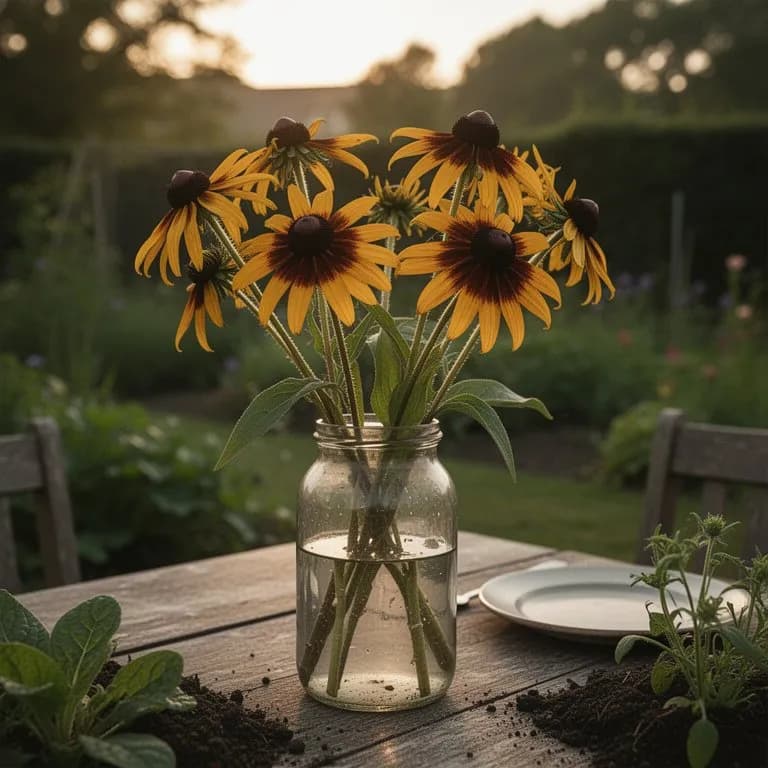
Corte los tallos de rudbeckia para ramos cuando las flores estén completamente abiertas y los pétalos sigan frescos y erguidos. Elija tallos de 30 a 45 cm y córtelos por la mañana. Para guardar semilla, deje las cabezas florales en la planta hasta que los conos centrales estén completamente secos y oscurecidos. Frote los conos secos entre las manos sobre una bandeja para liberar las pequeñas semillas oscuras. Retire las flores marchitas para prolongar la floración hasta el otoño, o deje la última tanda de cabezas de semillas para los jilgueros y otras aves granívoras.
se supone que plantas al comenzar el periodo — indica tu fecha real
Cosecha Rudbeckia a tiempo y la planta sigue produciendo.
Almacenamiento y conservación
Las rudbeckias recién cortadas duran de 6 a 10 días en un jarrón con agua limpia y conservante floral. Son de las flores silvestres más duraderas en arreglos. Para secarlas, córtelas cuando los pétalos sigan frescos y cuélguelas boca abajo en un lugar oscuro y ventilado. Los conos centrales oscuros se secan de maravilla y pueden usarse en arreglos secos y coronas. Las semillas se conservan durante 2 a 3 años en sobres de papel guardados en un lugar fresco y seco.
Qué falla — y cómo solucionarlo
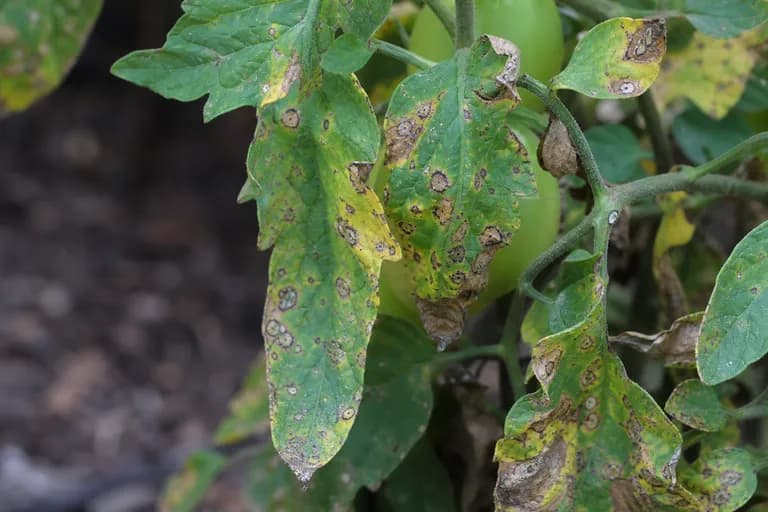
Mancha foliar por Septoria
EnfermedadPequeñas manchas circulares de color marrón oscuro a negro con centros más claros en las hojas inferiores, que avanzan hacia arriba. Las hojas muy manchadas amarillean y caen prematuramente.
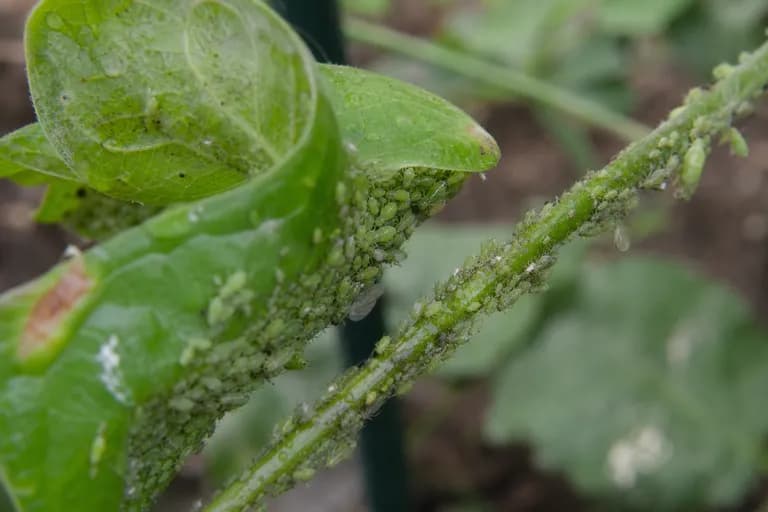
Pulgones
PlagaGrupos de pequeños insectos verdes o negros en las puntas de los tallos y botones florales, melaza pegajosa y, a veces, fumagina en las hojas inferiores.
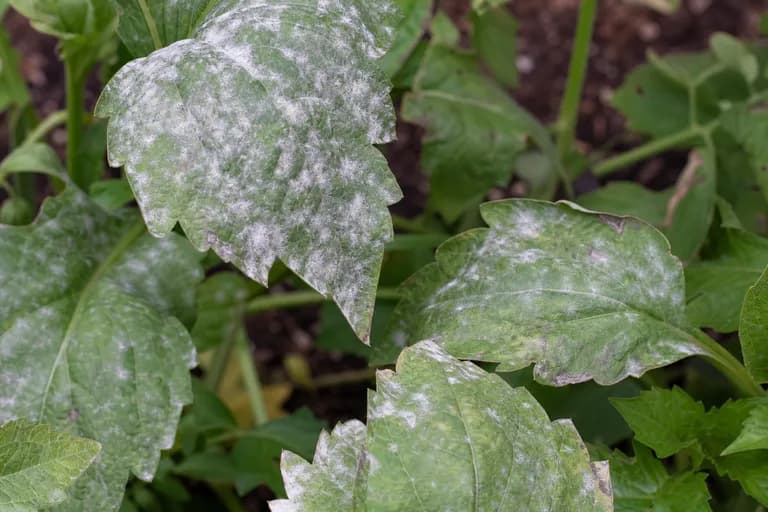
Oídio
EnfermedadCapa blanca y polvorienta sobre las hojas, especialmente a finales del verano y comienzos del otoño. Las hojas afectadas pueden deformarse y caer, aunque la enfermedad rara vez mata a las plantas establecidas.
Solución de problemas comunes
La queja más común es la auto-siembra agresiva, que puede volver a las rudbeckias algo invasoras en jardines ordenados. El despunte regular previene este problema. La mancha foliar por Septoria puede defoliar las hojas inferiores en condiciones húmedas, aunque rara vez mata la planta. Las variedades altas pueden caerse en suelo rico o semisombra. Rudbeckia hirta es de vida corta y depende de la auto-siembra para persistir, así que quienes esperen matas permanentes deberían elegir en su lugar la más longeva Rudbeckia fulgida.
Consejos de cultivo
- Sow seeds directly on the soil surface and press gently without covering, as Rudbeckia hirta seeds require exposure to light for successful germination.
- Start seeds indoors 8-10 weeks before the last frost date for blooms in the first year, since plants grown from direct outdoor sowing may not flower until their second season.
- Choose a site with full sun exposure of at least 6 hours daily for the most prolific flowering; plants tolerate partial shade but produce fewer blooms and may develop weaker, leggier stems.
- Black-eyed Susans thrive in average to poor soil and actually bloom more prolifically in lean conditions; rich, heavily fertilized soil promotes excessive foliage growth at the expense of flowers.
- Water deeply once per week during the first growing season to establish strong root systems, then reduce watering significantly as mature plants are highly drought-tolerant once established.
- Deadhead spent flowers regularly throughout the blooming season by cutting stems back to just above a leaf node to encourage continuous flowering and prevent premature self-seeding.
- Leave the final flush of seed heads standing through winter to provide food for goldfinches, juncos, and sparrows, and to allow natural self-seeding for new plants the following spring.
- Divide established clumps every 3-4 years in early spring just as new growth emerges; this rejuvenates the planting, prevents center die-out, and provides free plants for other garden areas.
- Space plants 30-45 cm (12-18 inches) apart and ensure good air circulation between plants to minimize the risk of powdery mildew, which is the most common disease issue in humid climates.
- Combine Black-eyed Susans with native ornamental grasses like little bluestem and switchgrass, along with purple coneflower and blazing star, for a naturalistic, low-maintenance prairie-style planting that supports pollinators.
Cultiva tu mejor Rudbeckia — y todo lo que la rodea.
Empieza un plan gratis hoy. Diseña tus bancales, coloca tu Rudbeckia y deja que PlotMyGarden gestione el momento, el espaciado, las asociaciones y los recordatorios de la semilla a la cesta.
Elige tu Rudbeckia
Goldsturm
El cultivar más popular de Rudbeckia fulgida, con flores doradas uniformes de unos 7.5 cm sobre plantas compactas de 60 cm, excelente para plantaciones masivas.
Indian Summer
Una selección de Rudbeckia hirta de flor grande, con flores de hasta 15 a 23 cm de diámetro en plantas de 90 cm, impresionante para jardines de corte.
Cherokee Sunset
Flores dobles y semidobles en una mezcla cálida de oro, bronce, naranja y caoba sobre plantas arbustivas de 60 a 90 cm.
Prairie Sun
Centros verde claro distintivos rodeados de pétalos dorados con puntas amarillo prímula, que dan un aspecto fresco y bicolor.
Little Goldstar
Una selección compacta de Rudbeckia fulgida que alcanza solo 35 cm, ideal para jardines pequeños, borduras y contenedores.
Black-eyed Susans are among the most cost-effective ornamental plants for home gardens. A single $3-4 seed packet yields 50-100 plants, each of which can produce over 1,500 seeds per season for free propagation in subsequent years. Once established, they require minimal watering, no fertilizer, and no pesticides, virtually eliminating ongoing maintenance costs. A mature clump can be divided every 3-4 years to create dozens of new plants for free, allowing you to fill entire garden beds, borders, and meadow areas without purchasing additional plants. Compared to buying nursery-grown perennials at $8-15 each, growing from seed saves $400-1,500 per large garden bed while providing years of reliable, self-sustaining color.
Recetas rápidas
Infusión herbal de pétalos secos de rudbeckia
10 minutosUna mezcla de té herbal suave y dorada, con pétalos secos de rudbeckia combinados con manzanilla y melisa para una infusión calmante sin cafeína. Los pétalos aportan al té un tono miel cálido y una nota terrosa sutil.
5 ingredientesQué contiene
Beneficios para la salud
- Root extracts contain immunostimulatory polysaccharides that have been studied for their ability to support immune system function, similar to the related genus Echinacea
- Traditional Native American medicine used Rudbeckia hirta root infusions as a remedy for the common cold, with modern research suggesting mild anti-inflammatory properties in the root compounds
- The sesquiterpene lactones found in Black-eyed Susan roots and leaves have demonstrated antimicrobial activity against certain bacteria in laboratory studies
- Historically used as a topical wash for sores, burns, and swelling by multiple Native American tribes, suggesting wound-healing properties that merit further scientific investigation
- Growing Black-eyed Susans in the garden supports mental well-being through horticultural therapy, as tending ornamental plants has been clinically shown to reduce cortisol levels and improve mood
- The plant's exceptional ability to attract pollinators contributes to broader ecosystem health, supporting beneficial insect populations that are essential for food crop pollination in surrounding areas
De dónde viene Rudbeckia
La rudbeckia (Rudbeckia hirta) es nativa del este y centro de Norteamérica, donde prospera en praderas, bosques abiertos, prados y a lo largo de las cunetas desde la costa atlántica hacia el oeste hasta las Grandes Llanuras. Los registros arqueológicos y etnobotánicos sugieren que tribus indígenas norteamericanas, incluidas los ojibwa, los potawatomi y los menominee, reconocieron el valor medicinal de la planta mucho antes del contacto europeo. Las preparaciones de raíz se usaban para tratar resfriados, dolencias renales, dolor de oído y como cataplasmas para heridas y mordeduras de serpiente. Los cheroqui también preparaban té de raíz como remedio para lombrices intestinales. Cuando los colonos europeos y los botánicos comenzaron a explorar la flora del Nuevo Mundo en los siglos XVII y XVIII, Rudbeckia hirta llamó rápidamente la atención por su floración abundante y sus alegres flores doradas. Carl Linneo describió formalmente el género Rudbeckia en 1753, nombrándolo en honor a sus predecesores Olof Rudbeck el Viejo y el Joven en la Universidad de Uppsala, Suecia. Para el siglo XIX, la planta se había extendido mucho más allá de su área de distribución original, apareciendo a lo largo de vías férreas y caminos de carretas a medida que los colonos avanzaban hacia el oeste. Su robusta capacidad de auto-siembra le permitió colonizar suelos alterados con una rapidez notable. En 1918, Maryland adoptó la rudbeckia como su flor estatal oficial, consolidando su importancia cultural. A lo largo del siglo XX, los horticultores desarrollaron numerosas variedades cultivadas, incluida la ganadora de All-America Selections 'Indian Summer', la compacta serie 'Toto' y la llamativa bicolor 'Cherokee Sunset'. Hoy en día, la rudbeckia sigue siendo una de las flores silvestres nativas más plantadas en Norteamérica, apreciada por igual en borduras formales, praderas naturalizadas y proyectos de restauración ecológica a gran escala destinados a apoyar a las poblaciones de polinizadores.
Rudbeckia: ¿sabías que?
Datos fascinantes sobre Rudbeckia
La rudbeckia es la flor estatal de Maryland, designada en 1918, y aparece de forma destacada en la manta floral colocada sobre el ganador de la carrera de caballos Preakness Stakes en el hipódromo de Pimlico.
Rudbeckia: preguntas frecuentes
¿Cuándo debo plantar Rudbeckia?
¿Cuáles son buenas plantas acompañantes para Rudbeckia?
¿En qué zonas de rusticidad puede crecer Rudbeckia?
¿Cuánto sol necesita Rudbeckia?
¿A qué distancia debo espaciar Rudbeckia?
¿Qué plagas y enfermedades afectan a Rudbeckia?
¿Cómo almaceno Rudbeckia después de la cosecha?
¿Cuáles son las mejores variedades de Rudbeckia para cultivar?
¿Qué suelo necesita Rudbeckia?
Are Black-eyed Susans perennial or annual plants?
When is the best time to plant Black-eyed Susan seeds?
How do I prevent Black-eyed Susans from spreading too aggressively?
What pests and diseases commonly affect Black-eyed Susans?
Can Black-eyed Susans grow in containers or pots?
Are Black-eyed Susans toxic to pets or children?
Acabas de leer la teoría. Ahora cultívala en piloto automático.
Todo lo que hace que Rudbeckia sea delicado — el momento, el espaciado, las asociaciones, la ventana de cosecha — es justo lo que PlotMyGarden resuelve por ti, para cada planta de tu huerto.
Un plan que conoce tu clima
Indica tu ubicación una vez. Recibe fechas de siembra, abonado y cosecha basadas en tu última helada real y el pronóstico en vivo — sin adivinar con un sobre genérico.
De la sección “Cuándo plantar”Planificador de bancales de arrastrar y soltar
Diseña bancales sobre una cuadrícula. Cada planta encaja con su espaciado correcto y ves toda la temporada antes de gastar un céntimo en semillas.
De la sección “Cultivo”Conflictos de asociación, detectados a tiempo
Más de 200 buenas y malas combinaciones comprobadas en vivo mientras plantas — para que un error que arruine la temporada nunca llegue a la tierra.
De la sección “Asociaciones”Recordatorios que sí vas a seguir
“Riega las judías.” “Recoge hoy antes de que se pase.” Oportunos, concretos y ligados a las plantas que de verdad cultivas.
De la sección “Cosecha”Escalonado, programado
¿Quieres cosechar seis semanas en vez de seis días? Reparte tus siembras automáticamente y te avisa cuando toca el siguiente lote.
De la sección “Cuándo plantar”Un registro que se vuelve más listo
Cada cosecha que registras le enseña tu huerto. El plan del año que viene parte de lo que de verdad funcionó en tu suelo, no en un manual.
De la sección “Resumen”Planta estos junto a Rudbeckia
Más Flores silvestres
Mantén Rudbeckia lejos de estos
Diseños de jardín con Rudbeckia
Cultiva tu mejor Rudbeckia — y todo lo que la rodea.
Empieza un plan gratis hoy. Diseña tus bancales, coloca tu Rudbeckia y deja que PlotMyGarden gestione el momento, el espaciado, las asociaciones y los recordatorios de la semilla a la cesta.