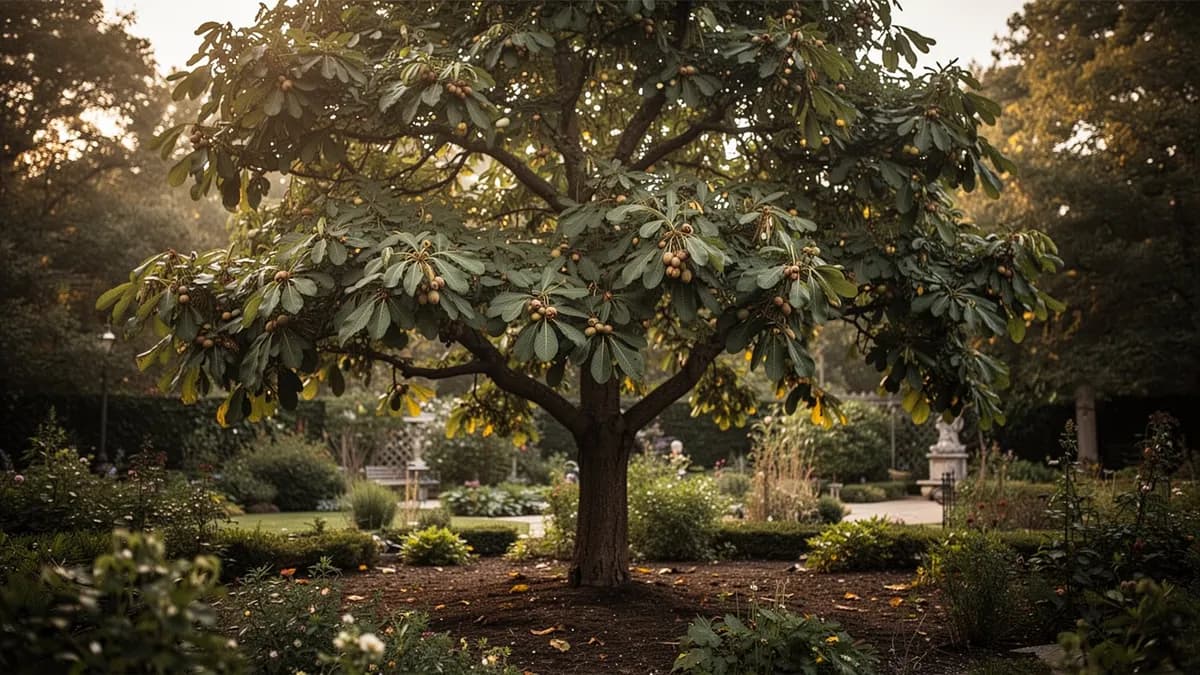
Cherry Tree
An ornamental and fruiting tree valued for stunning spring blossoms and summer harvests, best protected with bird netting as fruit ripens.





On this pageOverview
Meet Cherry Tree
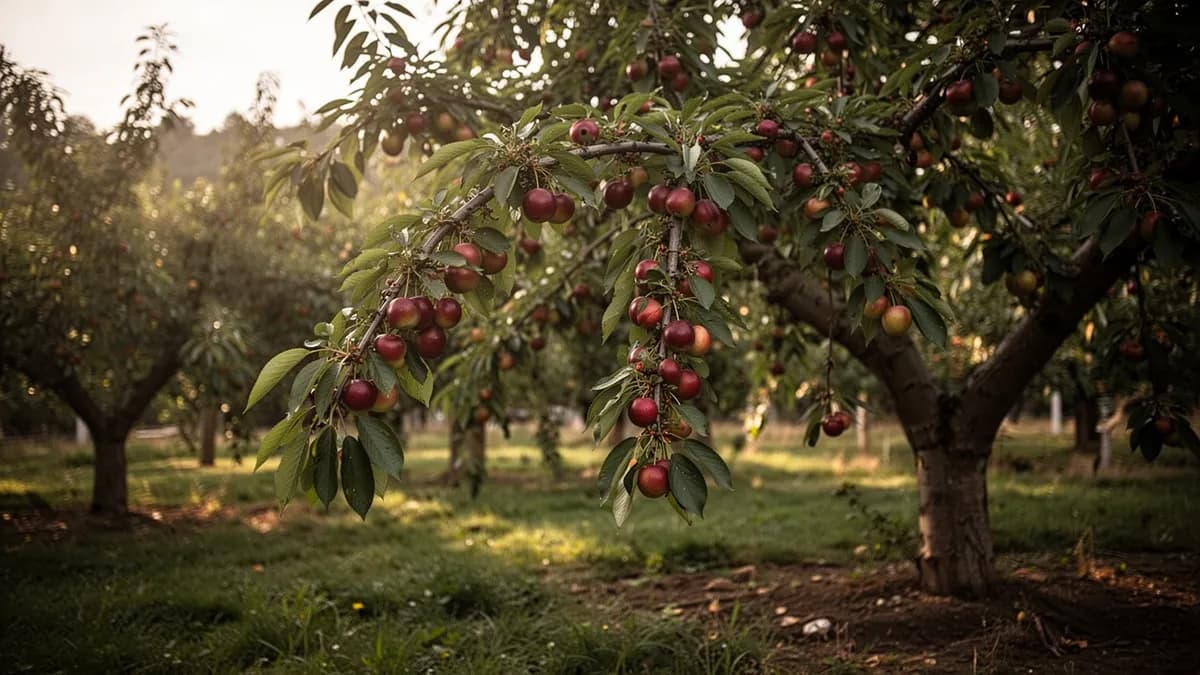
An ornamental and fruiting tree valued for stunning spring blossoms and summer harvests, best protected with bird netting as fruit ripens. Sweet cherry varieties typically require a compatible cross-pollinator, while sour cherries are usually self-fertile and better suited for pies and preserves. Prune cherry trees in midsummer after harvest to minimize the risk of bacterial canker and silver leaf disease, which enter through winter pruning wounds. Provide well-drained soil and avoid heavy clay, as cherry trees are particularly sensitive to waterlogged root conditions.
When to plant Cherry Tree
Cherry trees are propagated by grafting named varieties onto compatible rootstock. Mazzard rootstock produces full-sized trees, while Gisela 5 and Gisela 6 create semi-dwarf trees suitable for home gardens. Purchase grafted bare-root trees and plant in late winter while dormant. Soak roots for 1 to 2 hours before planting. Cherry pits can be cold-stratified and grown, but seedlings will not produce fruit true to the parent variety and may take 7 or more years to bear.
Your Cherry Tree Year
Composed for Zone 7 · typical seasons · frost passes Apr 2, returns Nov 1
Plant Cherry Tree Mar – Apr, Nov, pick Jun – Jul. Check the planting methods below and set your climate to personalize these windows.
How to grow Cherry Tree
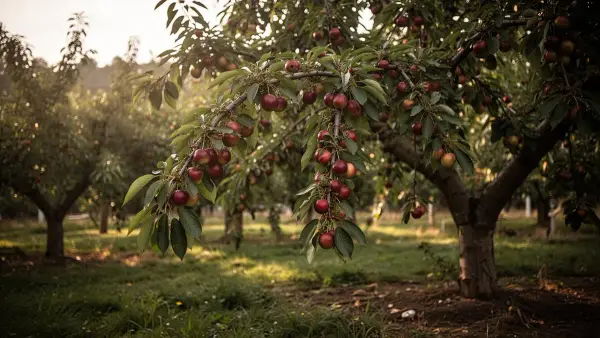
Select a site with full sun and excellent drainage, as cherry trees are highly sensitive to waterlogged soil and root rot. A gentle slope with good cold air drainage helps protect early blossoms from late frosts. Avoid heavy clay soil or amend it thoroughly with compost and coarse organic matter. Space sweet cherry trees 25 to 30 feet apart and sour cherry or dwarf types 12 to 15 feet apart.
Plant bare-root cherry trees in late winter or early spring while dormant. Dig a hole wide enough to spread roots without bending. Set the graft union 2 inches above soil level and water deeply at planting. Mulch with 3 to 4 inches of wood chips, keeping mulch away from the trunk. Water weekly during the first growing season, providing 1 to 2 inches per week.
Prune cherry trees in midsummer after harvest rather than in winter to reduce the risk of bacterial canker and silver leaf disease entering through pruning wounds. Train sweet cherries to an open center or modified central leader and sour cherries to an open vase shape. As fruit approaches ripeness, cover trees with bird netting to prevent significant crop loss to birds.
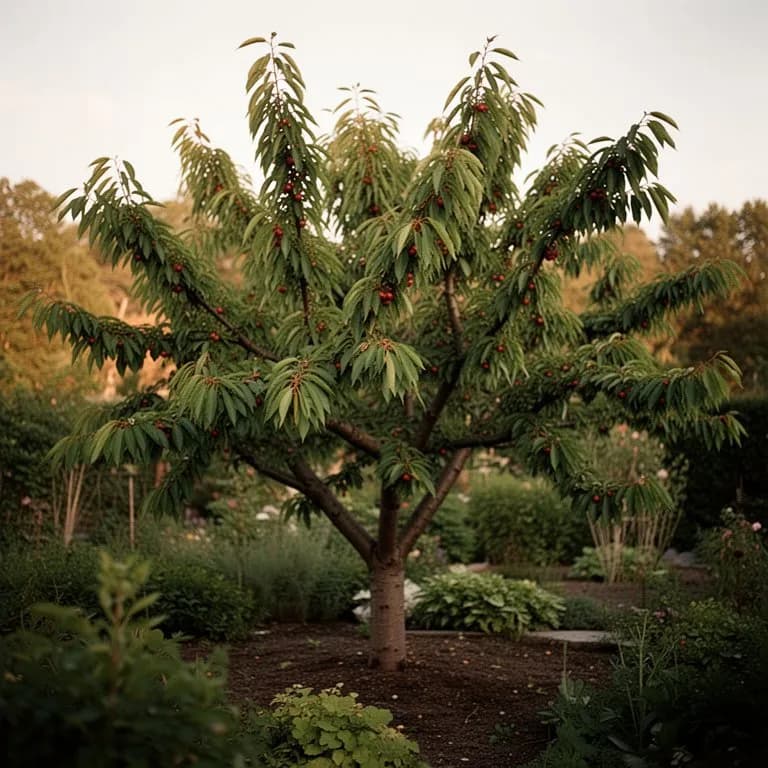
Cherry Tree needs more room than a 4 × 8 ft bed gives
Each Cherry Tree wants 500 cm of elbow room. The planner keeps that spacing for you — every plant, every bed.
Cherry Tree's best neighbours
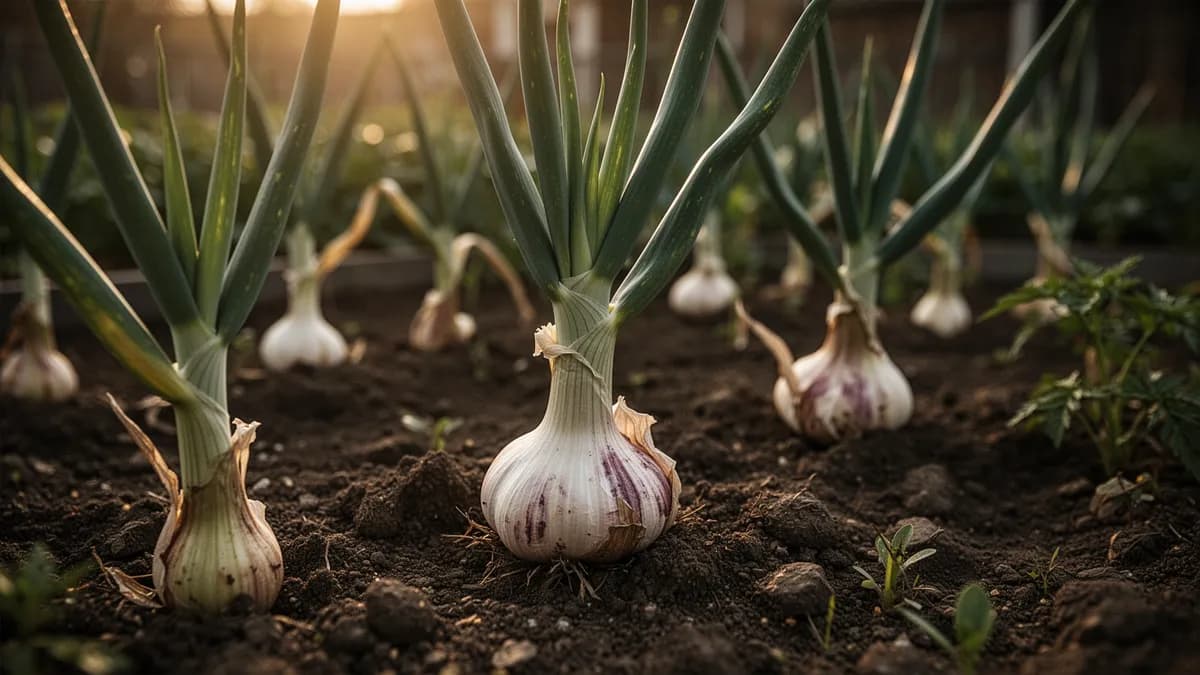
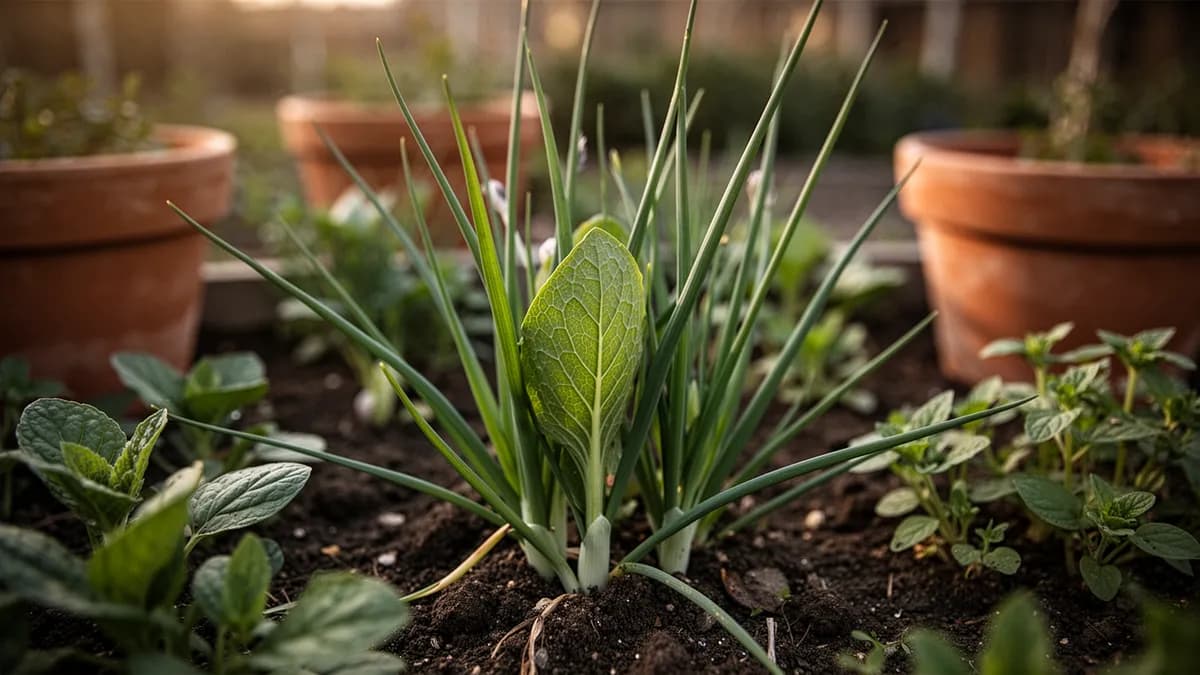
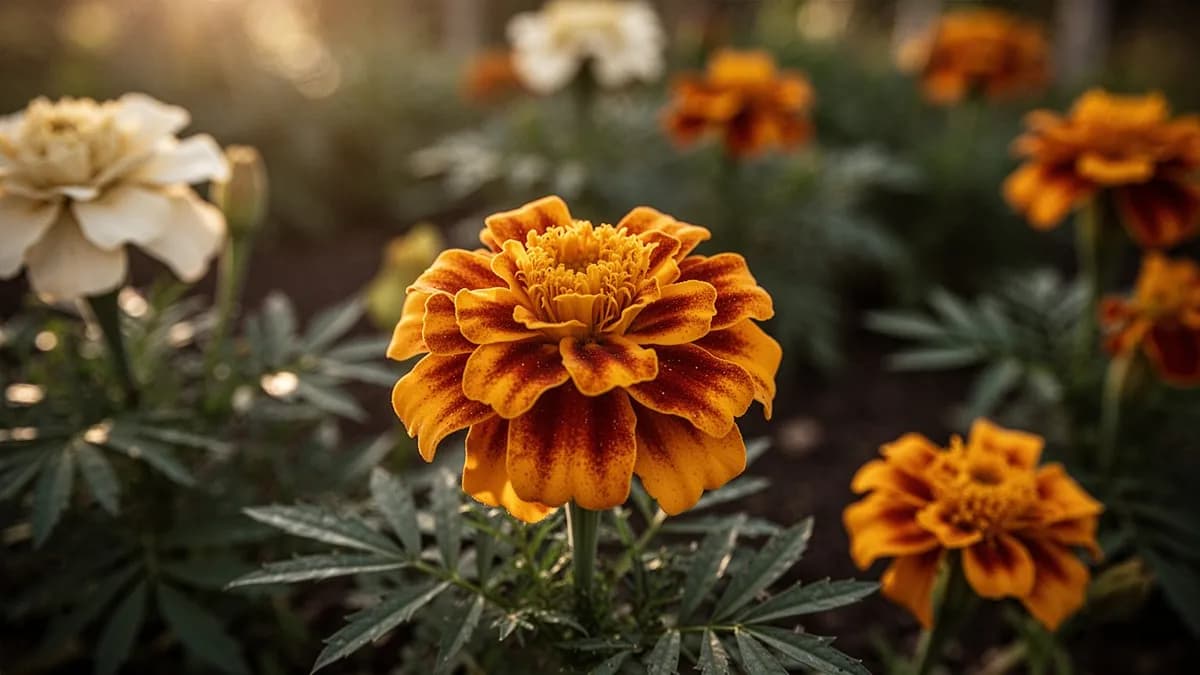
Garlic and chives planted around cherry trees help deter aphids and borers. Marigolds attract beneficial insects and add a colorful understory. White clover between trees fixes nitrogen and provides ground cover that suppresses weeds. Avoid planting nightshades near cherry trees, as they can harbor verticillium wilt which affects stone fruits. Comfrey's deep roots mine nutrients and its leaves make excellent mulch.
Garlic belongs beside it. Walnut Tree doesn't.
Old growers' knowledge, checked against Cherry Tree's real companion table below — test any plant you're growing.
Try Cherry Tree in a bed — right here
A real planner bed with Cherry Tree already in it. Tap a companion to place it and watch the pairing checks answer — green for good neighbours, red for a clash.


Related growing guides
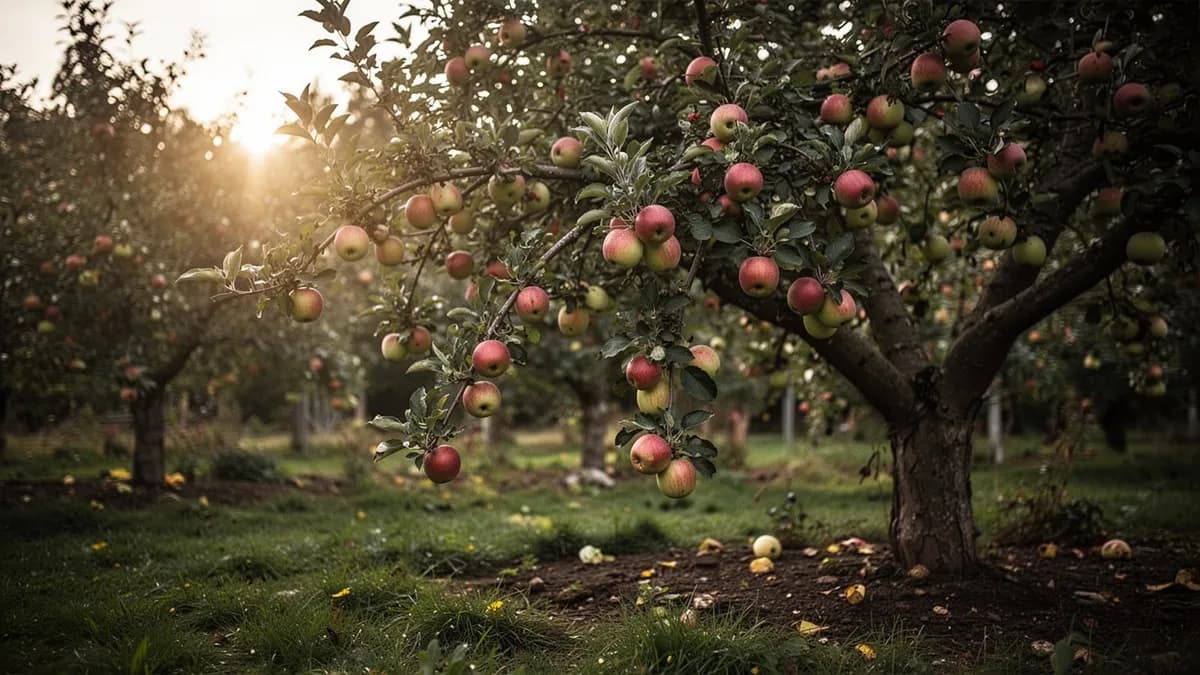
Feed it well
Cherry trees require well-drained soil with a pH of 6.0 to 7.0. Sandy loam is ideal, and heavy clay must be amended or avoided entirely. Apply a balanced fertilizer in early spring before bloom, using about 1/8 pound of nitrogen per year of tree age up to a maximum of 1 pound. Avoid excessive nitrogen, which promotes vegetative growth at the expense of fruit. Supplement with potassium if fruit color development is poor.
Ideal Temperature
Hardiness Zone Compatibility
From seed to harvest, stage by stage
Winter Dormancy and Chill Accumulation
The cherry tree is completely dormant throughout the coldest months. All visible growth ceases and the tree stands leafless, but critical physiological processes continue internally. The tree must accumulate 700-1,000 chill hours below 7 degrees Celsius during this period to break dormancy successfully. Without sufficient chilling, spring blossom will be sparse, uneven, and poorly timed, resulting in negligible fruit set. The root system remains mildly active, slowly absorbing water and minerals from the soil to sustain stored carbohydrate reserves in the woody tissue.
Bud Swell and Blossom
As daily temperatures consistently rise above 8-10 degrees Celsius in late winter to early spring, the accumulated chilling requirement is met and flower buds begin to swell visibly. Within days the buds burst open into dense clusters of pure white flowers, typically five-petalled and arranged in umbels of two to six blossoms. This flowering window lasts only 7-14 days and is the most critical period of the entire growing season. Successful pollination by bees during this narrow window determines the entire crop. Sweet cherry blossom is exceptionally vulnerable to spring frosts, with temperatures of minus 2 degrees Celsius for even a few hours sufficient to destroy open flowers and the developing ovules within them.
Petal Fall and Fruit Set
Following pollination, the petals drop and tiny green fruitlets begin to develop at the base of each successfully fertilised flower. Simultaneously the tree produces a full canopy of fresh leaves, which begin photosynthesising vigorously to fuel the developing fruit. Unpollinated or incompletely fertilised fruitlets are shed naturally during a brief period of physiological fruit drop. The fruitlets that remain begin to grow steadily, developing their internal stone and the fleshy pericarp around it.
Rapid Fruit Enlargement
The developing cherries enter a phase of rapid cell expansion, growing visibly each week. Fruit colour begins to change from green to the characteristic yellow, red, or deep burgundy-black of the variety as anthocyanin pigments accumulate in the skin. Sugar concentration increases dramatically in the final two to three weeks before harvest. The tree is under its highest demand for water and nutrients during this stage, and any deficiency will directly reduce fruit size, sweetness, and overall quality.
Harvest Window
Sweet cherries ripen over a concentrated window of one to three weeks depending on the variety and local climate conditions. Ripe fruit is fully coloured, glossy, firm but with a slight yield when pressed gently, and releases from the spur with a clean twist of the stem. Unlike many fruits, cherries do not continue to ripen after picking — they will soften and deteriorate but will not become sweeter. Early varieties such as Burlat ripen from mid-June; mid-season varieties like Stella in July; and late varieties such as Lapins and Sweetheart from late July into August.
Post-Harvest Recovery and Bud Formation
After the harvest is complete, the tree redirects its energy into vegetative growth, replenishing depleted carbohydrate reserves and forming the flower buds that will produce the following year's crop. The leaves remain actively photosynthesising through late summer and into early autumn, and the quality of the tree's nutrition and watering during this period directly influences next season's blossom density and fruit potential. This is also the optimal window for summer pruning of sweet cherry trees.
Leaf Fall and Entry into Dormancy
As autumn progresses and daylight hours shorten, the tree begins withdrawing nutrients and chlorophyll from its leaves back into the permanent woody tissue for winter storage. Leaves turn attractive shades of gold, amber, and copper before falling. Growth hormones decline, metabolic activity slows, and the tree enters its dormant state in preparation for the chill accumulation period that will enable the next season's successful flowering. The annual cycle is complete.
Apply a dormant oil spray on a calm, dry day when the temperature is above 4 degrees Celsius to control overwintering scale insects, mite eggs, and fungal spores on the bark. Inspect all branches carefully for canker — sunken, discoloured patches of bark often weeping amber gum — and remove affected wood with clean, sterilised cuts at least 15 cm below any visible staining. Refresh the mulch layer to insulate roots from freeze-thaw cycles.
Caring for Cherry Tree month by month
What to do each month for your Cherry Tree
October
You are hereRake up and remove all fallen leaves and any remaining fruit from beneath the tree to minimise overwintering fungal spore populations. Apply a thick mulch of well-rotted compost or composted bark around the root zone, keeping it 10-15 cm clear of the trunk. Inspect branches and trunk for canker lesions and remove affected wood before winter dormancy.
Know exactly what to do in your garden — every month
One email at the start of each month: what to sow, plant, and tackle right now — for your Cherry Tree and everything growing around it. Plus a short starter course that helps you dodge the classic mistakes.
- What to do, right now
- Matched to your season
- Starter course included
Harvesting Cherry Tree
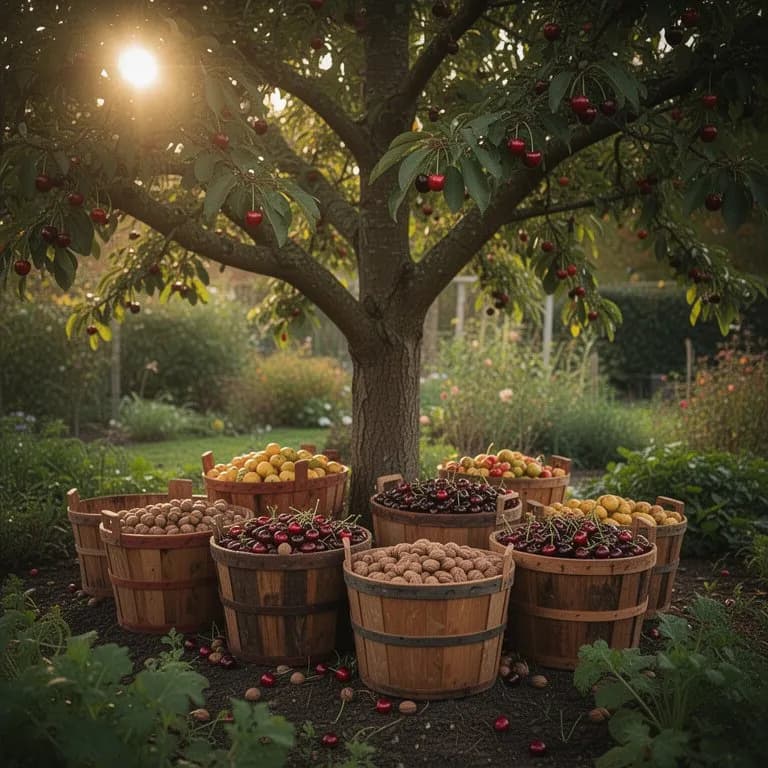
Sweet cherries are ready when fully colored and slightly soft to the touch. Taste-test a few cherries for sweetness before harvesting the whole tree, as cherries do not ripen further after picking. Cut cherries from the tree with stems attached using scissors to extend shelf life and prevent wound infections on the spurs. Sour cherries are picked when they have reached full color and pull away easily from the stem. Harvest in the morning when fruit is cool for best quality.
assuming you plant when the window opens — set your real date
Pick Cherry Tree promptly and the plant keeps producing.
Storage & Preservation
Fresh cherries keep for 5 to 7 days refrigerated. Do not wash until ready to eat, as moisture promotes mold. Cherries freeze exceptionally well: pit them, spread on a baking sheet to freeze individually, then transfer to freezer bags. Sweet cherries are delicious dried and rival raisins for snacking. Sour cherries are superior for canning in light syrup, making preserves, and baking into pies. Cherry juice can be pasteurized and stored for months.
What goes wrong — and the fix
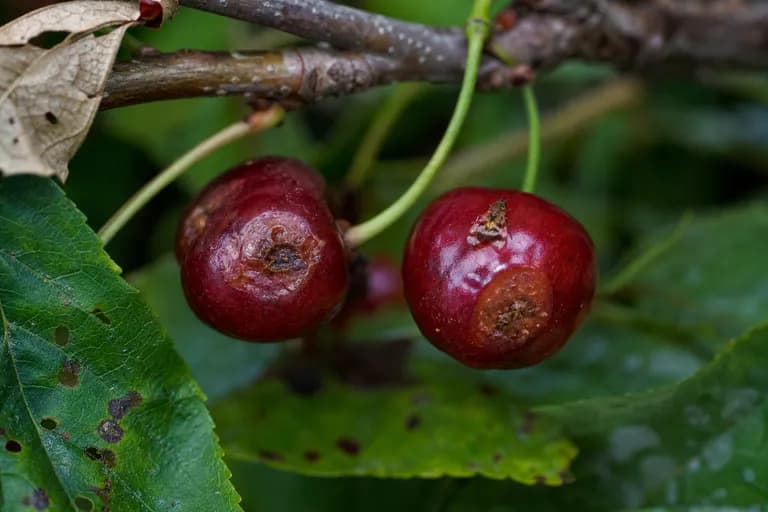
Cherry Fruit Fly
PestSmall maggots inside ripe cherries. Dimpled or deformed fruit surface with soft, rotting spots around larvae.
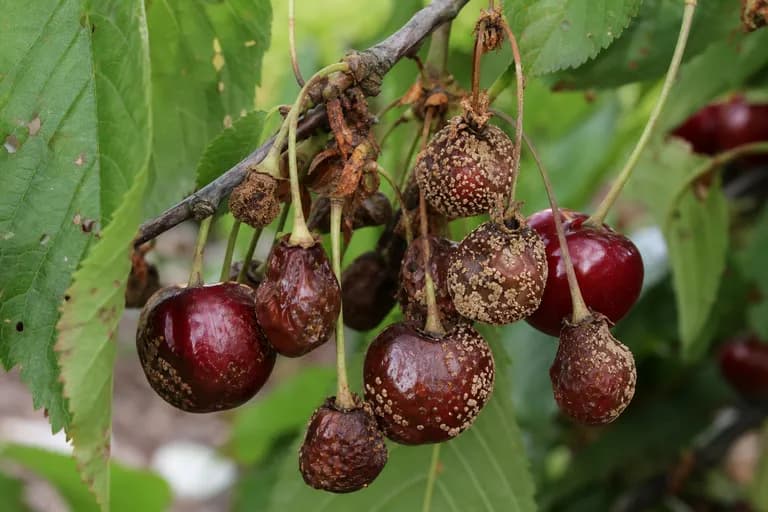
Brown Rot
DiseaseFuzzy brown mold on ripening fruit. Blossoms wilt and turn brown. Infected fruit mummifies and clings to branches.
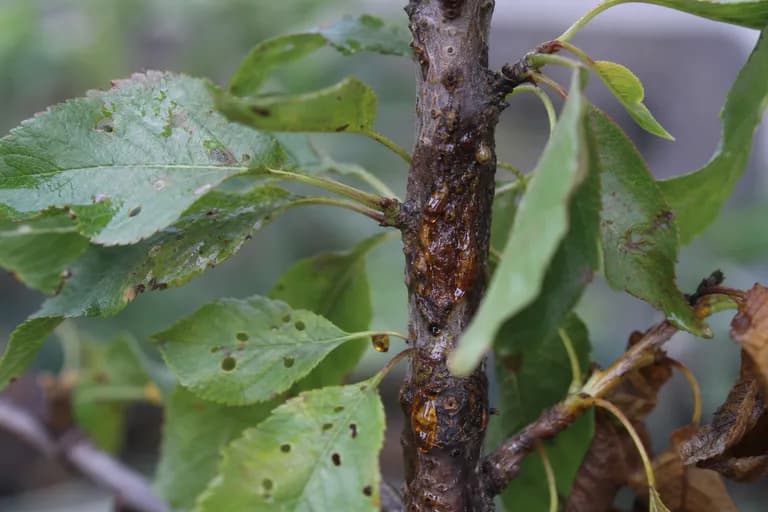
Bacterial Canker
DiseaseSunken, oozing lesions on branches and trunk. Leaves develop shot-hole spots. Branch dieback occurs in spring.
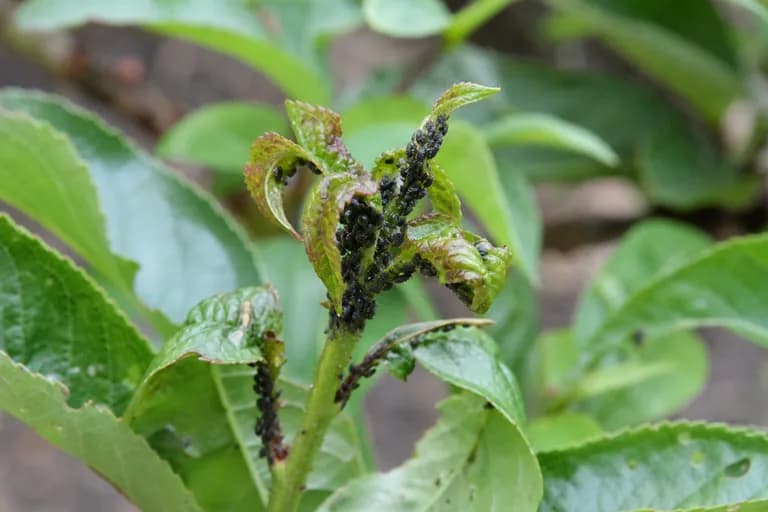
Black Cherry Aphid
PestCurled, distorted leaves at branch tips. Colonies of shiny black aphids on undersides of young leaves. Sticky honeydew residue.
Troubleshooting Common Problems
Fruit cracking from rain near harvest is a major issue for sweet cherries. Choose crack-resistant varieties and consider rain covers for small plantings. Bird damage can claim the entire crop if netting is not used. Poor fruit set in sweet cherries usually indicates a pollination issue, so ensure a compatible variety is nearby. Gummosis, the oozing of amber sap from bark, can indicate stress, bacterial canker, or borer damage.
Growing Tips
- Choose the planting site with great care. Sweet cherry trees demand full sun for at least six to eight hours per day, shelter from strong winds that can damage blossom and dislodge developing fruit, and excellent soil drainage. They are among the least tolerant of all fruit trees to waterlogged roots, which rapidly causes root asphyxiation and fatal crown rot. A gentle south-facing slope is ideal, as it provides both warmth for early ripening and cold-air drainage away from the blossom zone on frosty spring nights.
- Research your variety's pollination requirements thoroughly before purchasing. The majority of sweet cherry cultivars are self-infertile and require a different compatible variety flowering at the same time within 15 to 30 metres to set fruit successfully. Compatibility is determined by pollination groups, and not all cross-combinations work. If garden space is limited to a single tree, select a confirmed self-fertile variety such as Stella, Lapins, Sunburst, Sweetheart, or Celeste.
- Select an appropriate rootstock to control the ultimate size of the tree. Gisela 5 is the most popular semi-dwarfing rootstock, producing trees of 3 to 4 metres — ideal for home gardens, manageable netting, and safe ladder-free or short-ladder harvesting. Colt rootstock produces a slightly larger tree of 4 to 6 metres. Avoid planting on vigorous rootstocks or seedling roots in small gardens, as the resulting tree can reach 12 to 20 metres and become impossible to net or harvest without commercial equipment.
- Prune sweet cherry trees exclusively in late summer, immediately after the harvest is complete and while warm, dry weather persists. This timing is critical because the two most serious diseases of cherry — silver leaf and bacterial canker — enter through pruning wounds and are most active in cool, wet autumn and winter conditions. Wounds made in July or August heal rapidly in the warmth and are far less vulnerable to infection. Never prune sweet cherries during winter or early spring, as this dramatically increases disease risk.
- Install bird netting over the full canopy at least two weeks before the first fruit begins to show any colour change. Birds — particularly starlings, blackbirds, wood pigeons, and thrushes — can identify and strip an unprotected tree of its entire crop within hours once ripening begins. Use fine-mesh netting of 15 to 20 mm and secure it tightly at the base to prevent birds finding gaps. Reflective tape, decoy predators, and noise devices provide minimal and very short-lived deterrence.
- Avoid planting in frost pockets or low-lying areas where cold air pools on clear spring nights. The brief cherry blossom period is the single most vulnerable stage of the annual cycle, and even a few hours at minus 2 degrees Celsius can destroy most or all open flowers. If your site is prone to late frost, choose late-flowering varieties, site the tree on elevated ground or against a south-facing wall, and keep horticultural fleece on hand for emergency overnight protection.
- Maintain consistent and even soil moisture throughout the fruit development and ripening period from May through July. The primary cause of cherry fruit splitting is the sudden rapid absorption of water through the fruit skin after a period of relative dryness, typically caused by heavy rain following a dry spell or by inconsistent irrigation. Use drip irrigation or soaker hoses at the root zone to deliver water steadily and avoid alternating between drought and saturation.
- Consider fan-training a sweet cherry tree against a warm south-facing or southwest-facing wall or fence. This approach is excellent for smaller gardens: the reflected warmth from the wall advances ripening by one to two weeks, the flat two-dimensional form makes netting straightforward and secure, and the annual pruning and training process keeps the tree compact, productive, and within easy reach for all maintenance tasks.
- Apply a generous mulch of well-rotted garden compost, composted bark, or aged manure around the drip line each autumn, working it gently into the surface and keeping it at least 10 to 15 cm clear of the trunk. This feeds the soil biology, improves moisture retention, suppresses competing weeds, and provides a slow-release source of nutrients. Avoid applying high-nitrogen fertilisers after midsummer, as they promote soft, sappy late-season growth that is more susceptible to disease and frost damage.
- Watch for amber or reddish-brown gum oozing from the bark, around pruning wounds, or from cracks in the trunk and branches. This gummosis is a classic symptom of bacterial canker infection or physical damage and can become serious or fatal if neglected. Cut back to clean, healthy, unstained wood at least 15 cm below the visible margin of disease, sterilise tools between cuts, and seal large wounds with grafting wax or a proprietary wound sealant to reduce reinfection risk.
Grow your best Cherry Tree yet — and everything around it.
Start a free plan today. Lay out your beds, drop in your Cherry Tree, and let PlotMyGarden handle the timing, spacing, companions and reminders from seed to harvest basket.
Pick your Cherry Tree
Bing
The most popular dark sweet cherry with firm, deep mahogany flesh and excellent flavor. Requires a compatible pollinator and produces heavily in zones 5 to 8.
Rainier
Premium yellow sweet cherry with a red blush and exceptionally sweet, delicate flavor. Commands top prices at markets but is more prone to cracking from rain.
Montmorency
The standard sour cherry for pies and preserves. Self-fertile, very productive, and the most cold-hardy cherry widely available.
Stella
Self-fertile sweet cherry that eliminates the need for a pollinator partner. Produces large, dark red fruit with good flavor.
Lapins
Self-fertile sweet cherry with large, firm, dark fruit and excellent crack resistance. A reliable producer in a wide range of climates.
Fresh sweet cherries are consistently among the most expensive seasonal fruits at retail, typically priced at 5 to 9 pounds per kilogram in the UK and 4 to 7 dollars per pound in North America during peak season. A semi-dwarf sweet cherry tree on Gisela 5 rootstock costs 25 to 60 pounds to purchase as a bare-root tree and, once established after 4 to 5 years, can reliably produce 15 to 25 kg of fruit per season. At retail prices this represents 75 to 225 pounds worth of fruit per annual harvest. Over the 25 to 40 productive years of a well-maintained tree, cumulative savings compared to purchasing equivalent-quality fruit easily exceed 2,000 to 5,000 pounds, making the initial investment extremely worthwhile. Home-grown cherries can be picked at genuine peak ripeness, delivering flavour, texture, and nutritional quality that commercially harvested fruit — which is almost always picked underripe for shipping durability — simply cannot match.
Quick recipes
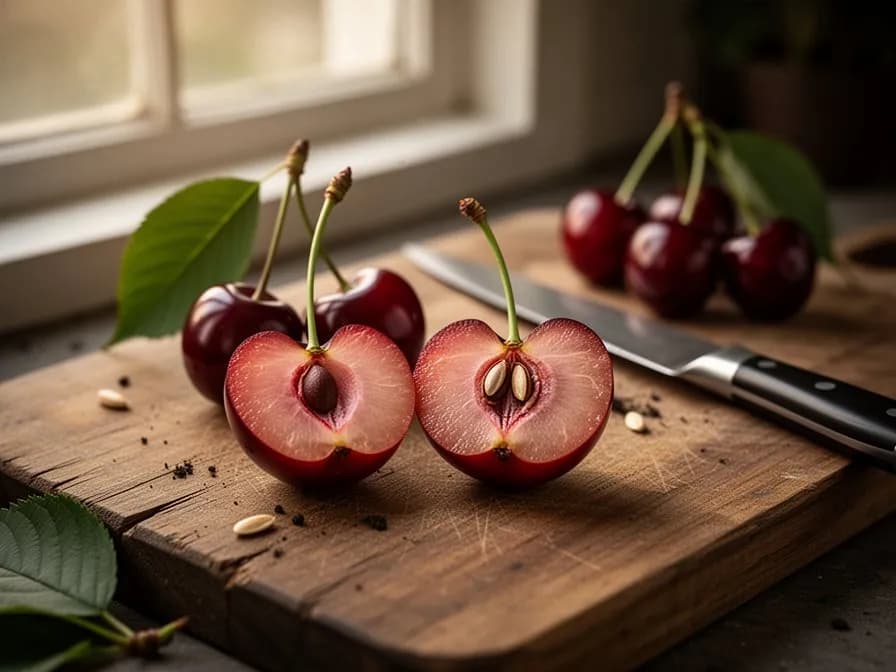
Fresh Cherry and Almond Galette
20 minutes prep + 35 minutes bakingA rustic free-form tart featuring a buttery rough-puff pastry base spread with frangipane and piled with halved fresh cherries. The edges are folded up casually around the filling, giving the galette its characteristic homespun appearance. The almond cream melts into the cherry juices during baking, creating a fragrant, sticky, golden pastry that looks impressively professional but requires no special tins or techniques.
9 ingredients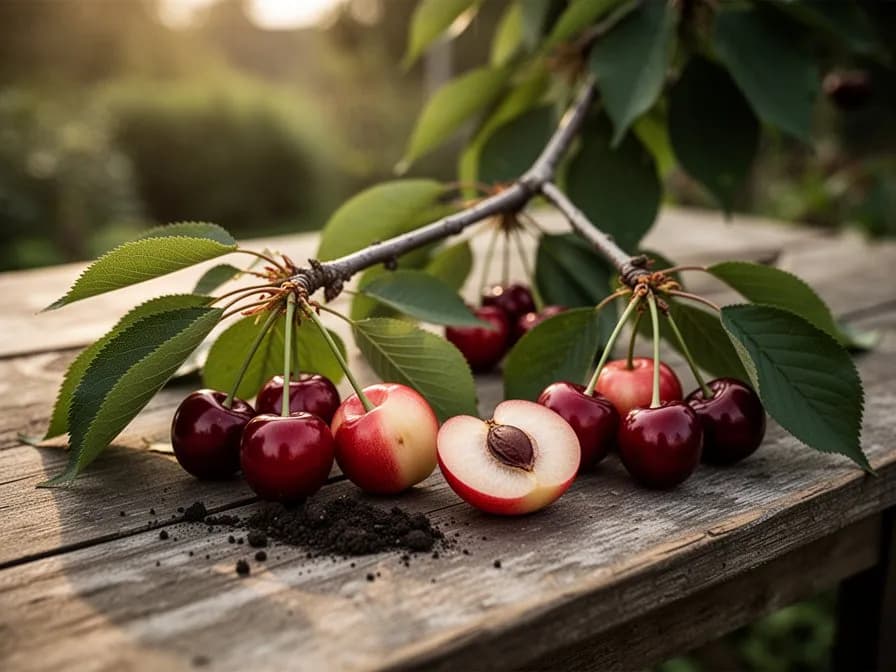
Spiced Cherry Chutney
15 minutes prep + 40 minutes cookingA rich, tangy condiment that transforms a surplus cherry harvest into a preserve that keeps for months. Sweet and sour cherries are simmered with red wine vinegar, brown sugar, warm spices, and shallots until thick and glossy. Outstanding paired with strong cheeses, cold meats, roast duck, grilled pork chops, or simply spread on good bread with butter. Improves considerably after two weeks of maturing in the jar.
10 ingredients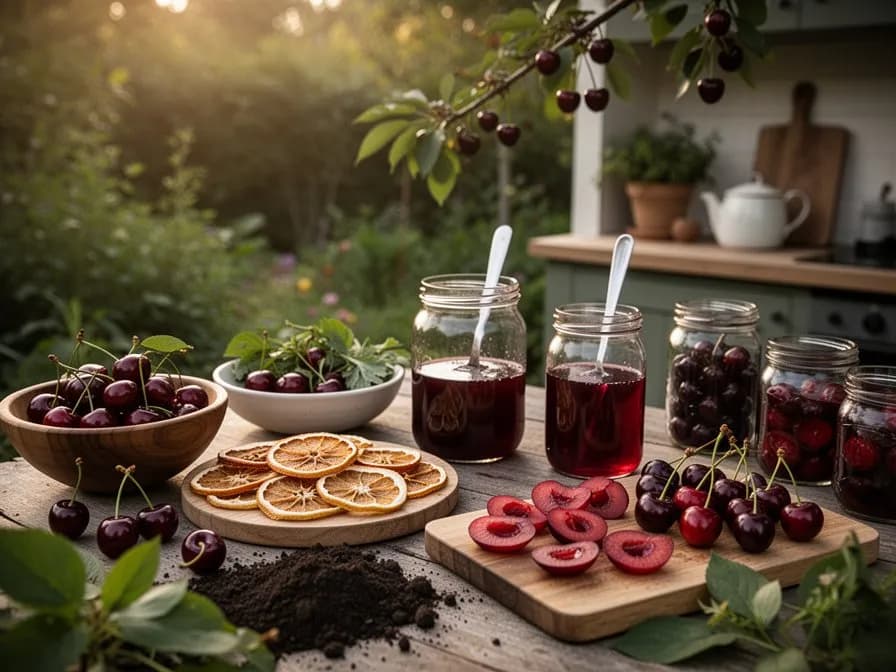
Cherry Leaf and Vanilla Infused Syrup
10 minutes prep + 30 minutes simmering + coolingYoung cherry leaves contain trace amounts of coumarin, which gives this syrup a subtle almond and vanilla-like fragrance that beautifully complements the fruit itself. The resulting syrup is floral and aromatic, ideal for drizzling over pancakes or waffles, stirring into sparkling water for a sophisticated cordial, or using as the base for cherry cocktails and mocktails. Keeps refrigerated for up to three weeks.
7 ingredientsCulinary Uses
Sweet cherries are best enjoyed fresh, in salads, or dipped in chocolate. Sour cherries are indispensable for classic cherry pie, cobbler, and clafoutis. Cherries pair well with almond, dark chocolate, balsamic vinegar, and game meats like duck. They are rich in anthocyanins and melatonin, both with documented health benefits. Dried cherries add tartness to grain salads, trail mix, and baked goods.
What's inside
Health Benefits
- Sweet cherries are among the richest dietary sources of anthocyanin antioxidants, particularly cyanidin-3-glucoside, which multiple clinical studies have shown to reduce biomarkers of systemic inflammation and oxidative stress, potentially lowering long-term risk of cardiovascular disease and metabolic syndrome.
- Regular consumption of cherries or tart cherry juice has been demonstrated in randomised controlled trials to lower serum uric acid levels and reduce the frequency of gout flare-ups, making cherries one of the best-evidenced dietary interventions for gout management.
- The natural melatonin content of cherries, particularly tart varieties, has been shown in clinical research to improve both sleep quality and total sleep duration, with some studies reporting increases of up to 84 minutes of sleep per night with twice-daily tart cherry juice consumption.
- Sports nutrition research has demonstrated that cherry consumption before and after intense exercise can significantly reduce exercise-induced muscle damage, soreness, and strength loss, attributed to the combined anti-inflammatory and antioxidant activity of cherry polyphenols.
- Cherries have a low glycaemic index of approximately 22 and contain beneficial dietary fibre, producing a slow and moderate blood glucose response that supports blood sugar management and makes them a suitable fruit choice for individuals with type 2 diabetes or insulin resistance.
- Emerging preclinical and early clinical research suggests that the diverse polyphenol profile in cherries, including chlorogenic acid, quercetin, and anthocyanins, may exert neuroprotective effects that could support cognitive function and reduce risk of age-related neurodegeneration, though larger human trials are still needed to confirm these effects.
Where Cherry Tree comes from
The sweet cherry tree (Prunus avium) originated in the temperate deciduous forests between the Black Sea and the Caspian Sea, in a region spanning modern-day Turkey, Georgia, Armenia, and northern Iran. Wild Prunus avium trees still grow naturally across this area and throughout much of Europe, from the British Isles east to the Caucasus and from Scandinavia south to the Mediterranean mountains. Archaeological excavations of Neolithic and Bronze Age settlements across Europe have revealed cherry stones in hearth deposits and refuse middens, confirming that humans have collected and consumed wild cherries for at least 8,000 to 10,000 years.
The Roman general Lucullus is traditionally credited with introducing cultivated cherry trees to Rome around 74 BC, bringing grafted specimens from the city of Giresun on the Black Sea coast of modern Turkey — known to the ancient Greeks and Romans as Cerasus. Most linguists trace the English word "cherry" through Old French cerise and Latin cerasus back to this place name. While wild cherries were certainly known throughout Europe long before Lucullus, Roman horticulture contributed the systematic selection of superior fruiting varieties and the deliberate spreading of cultivated orchards along military and trade routes into Gaul, Britain, the Rhine valley, and the Iberian Peninsula.
Through the medieval period, European monasteries became the primary centres of cherry cultivation and improvement. Monastic orchards preserved and refined selected varieties, and monks developed early techniques for preserving cherries in sugar, honey, vinegar, and alcohol. By the sixteenth century, dozens of named cherry cultivars were documented in European herbals and garden manuals, and cherry growing had become a commercially significant enterprise across temperate Europe.
European settlers transported cherry trees to North America in the early 1600s, and by the nineteenth century the Pacific Northwest of the United States — particularly Washington, Oregon, and parts of California — had been identified as offering near-ideal conditions for sweet cherry production. The combination of dry summers that minimise fruit splitting and fungal disease, fertile volcanic soils, cold winters with adequate chill hours, and access to irrigation from snowmelt rivers created the foundation of what is now one of the world's most productive cherry-growing regions. Washington State alone produces over half of the total United States sweet cherry crop. Today Turkey remains the world's largest cherry producer, followed by the United States, Uzbekistan, Chile, and Iran.
Cherry Tree: did you know?
Fascinating facts about Cherry Tree
The wild sweet cherry tree (Prunus avium) can live for over 200 years and reach heights of 25 metres or more in native European forests, making it one of the tallest and longest-lived fruiting trees in temperate regions.
Cherry Tree questions, answered
When should I plant Cherry Tree?
What are good companion plants for Cherry Tree?
What hardiness zones can Cherry Tree grow in?
How much sun does Cherry Tree need?
How far apart should I space Cherry Tree?
What pests and diseases affect Cherry Tree?
How do I store Cherry Tree after harvest?
What are the best Cherry Tree varieties to grow?
What soil does Cherry Tree need?
Why does my cherry tree produce abundant blossom every spring but set very little or no fruit?
When should I prune my cherry tree, and why is timing so important?
How do I prevent my cherries from splitting and cracking on the tree just before they are ripe enough to pick?
Can I grow a sweet cherry tree in a large pot or container on a patio or terrace?
How long does it take for a newly planted cherry tree to produce its first crop of fruit?
What is the difference between sweet cherry trees and sour cherry trees, and which is better for a home garden?
You just read the theory. Now grow it on autopilot.
Everything that makes Cherry Tree fiddly — the timing, the spacing, the companions, the harvest window — is exactly what PlotMyGarden handles for you, for every plant in your garden.
A plan that knows your weather
Set your location once. Get sow, feed and harvest dates built around your real last-frost date and live forecast — no more guessing from a generic seed packet.
From the “When to plant” sectionDrag-and-drop bed planner
Design beds on a grid. Every plant snaps to its proper spacing, and you can see your whole season laid out before you spend a cent on seed.
From the “Growing guide” sectionCompanion conflicts, caught early
200+ good-and-bad pairings checked live as you plant — so a season-wrecking mistake never makes it into the ground.
From the “Companions” sectionReminders you'll actually act on
“Water the beans.” “Pick today before it turns.” Timely, specific, and tied to the plants you're really growing.
From the “Harvest” sectionSuccession, scheduled
Want a harvest for six weeks, not six days? It spaces your sowings automatically and reminds you when each new block is due.
From the “When to plant” sectionA record that gets smarter
Every harvest you log teaches it your garden. Next year's plan starts from what actually worked in your soil, not a textbook's.
From the “Overview” sectionPlant these alongside Cherry Tree
More Fruit Trees
Keep Cherry Tree away from these
Grow your best Cherry Tree yet — and everything around it.
Start a free plan today. Lay out your beds, drop in your Cherry Tree, and let PlotMyGarden handle the timing, spacing, companions and reminders from seed to harvest basket.