Bergamota silvestre
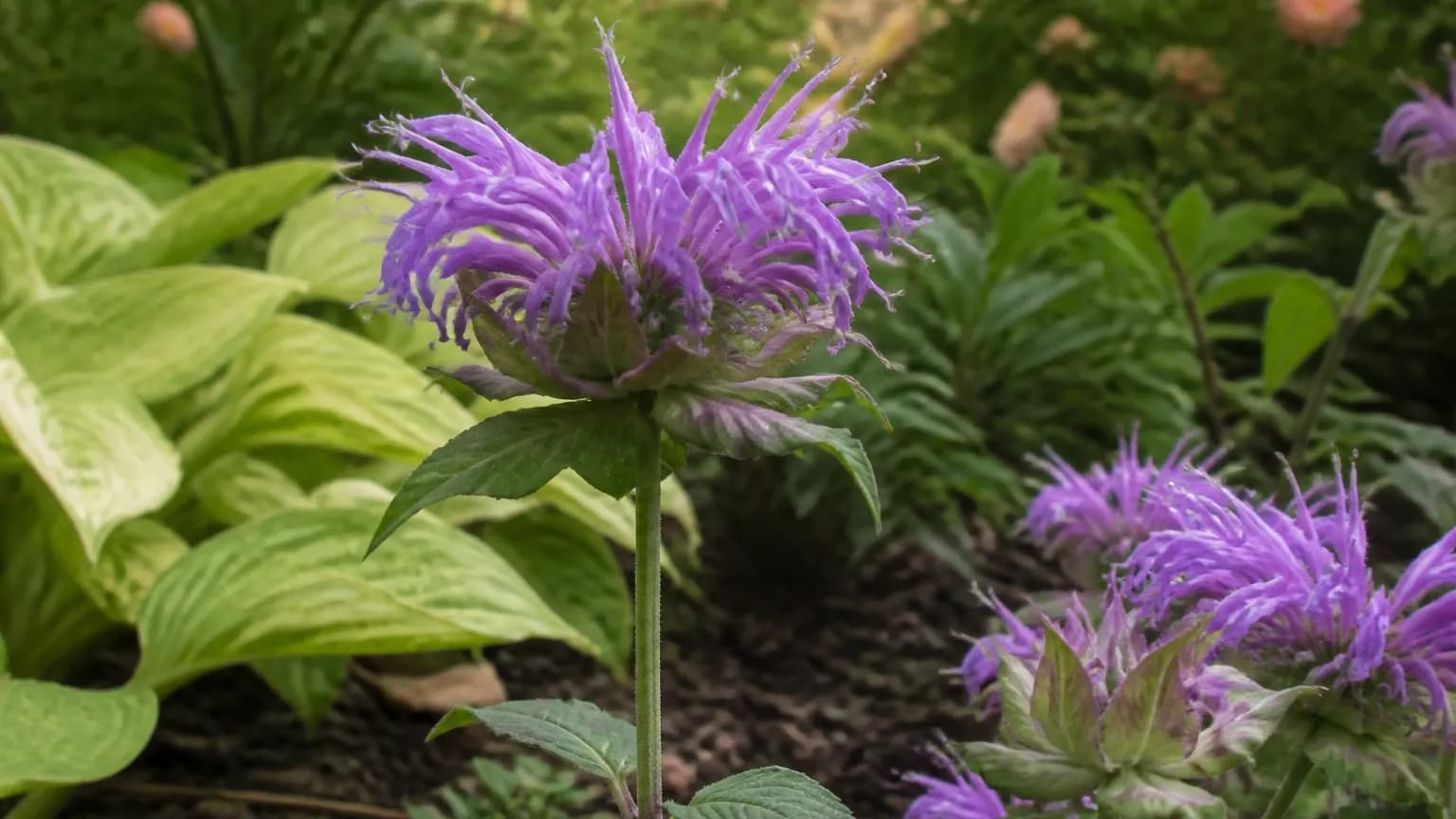
Una flor silvestre nativa con flores tubulares rosa lavanda que atrae y sostiene a abejas nativas, mariposas y colibríes.





En esta páginaResumen
Conoce Bergamota silvestre
Una flor silvestre nativa con flores tubulares rosa lavanda que atrae y sostiene a abejas nativas, mariposas y colibríes. La bergamota silvestre es más tolerante a la sequía y más resistente al oídio que su pariente cultivada, la monarda o bálsamo de abeja. Las hojas aromáticas pueden secarse para preparar té y la planta se naturaliza con belleza en jardines de pradera.
Cuándo plantar Bergamota silvestre
La bergamota silvestre se cultiva fácilmente a partir de semilla, lo que la hace ideal para grandes plantaciones de pradera. Siembre las semillas en superficie en otoño para una estratificación fría natural, o estratifíquelas en el refrigerador durante 2-4 semanas antes de la siembra primaveral. Espárzalas sobre sustrato húmedo y presiónelas ligeramente sin cubrirlas, ya que necesitan luz. La germinación tarda 10-21 días a 18-22°C. Para establecer una pradera, mezcle las semillas con arena y espárzalas sobre el terreno preparado en otoño. La división en primavera es la forma más rápida de multiplicar plantas concretas.
Tu año de Bergamota silvestre
Ajustado a Zona 7 · temporada típica · la helada se va hacia el 2 abr y vuelve hacia el 1 nov
Planta Bergamota silvestre Mar – Abr, Sep y cosecha Jul – Ago. Consulta los métodos de plantación y elige tu clima para adaptar los periodos.
Cómo cultivar Bergamota silvestre
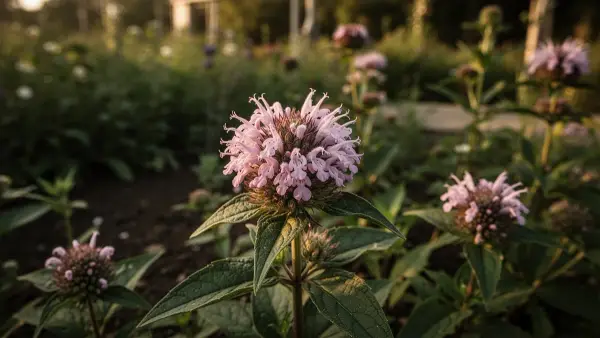
La bergamota silvestre (Monarda fistulosa) es una flor silvestre norteamericana resistente y adaptable, que crece de forma natural desde Quebec hasta Georgia y hacia el oeste hasta las Montañas Rocosas. Más tolerante a la sequía y naturalmente más resistente al oídio que su prima más vistosa, la monarda o bálsamo de abeja (M. didyma), la bergamota silvestre es la mejor opción para plantaciones secas, naturalistas y de bajo mantenimiento. Alcanza 60-120 cm de altura con tallos rígidos rematados por cabezuelas globulares rosa lavanda.
Plántela a pleno sol en suelo medio a seco, bien drenado. La bergamota silvestre prospera en condiciones demasiado pobres y secas para la monarda, ya que es propia de praderas, prados secos y bosques abiertos. Separe las plantas a 45 cm para una plantación densa o distribúyalas entre praderas de flores silvestres. Una vez establecida, no requiere riego suplementario, fertilización ni cuidados especiales.
La bergamota silvestre se extiende tanto por estolones como por autosiembra, y se naturaliza con elegancia en entornos informales. En borduras formales, retire las cabezuelas antes de que se abran y divida las matas cada 3-4 años para contener su expansión. Corte los tallos al nivel del suelo a finales de otoño o a comienzos de la primavera. Las cabezuelas secas aportan interés invernal y alimento para las aves si se dejan en pie durante los meses fríos.
10 plantas caben en un bancal de 120 × 240 cm
Cada Bergamota silvestre pide 45 cm de margen. El planificador guarda ese marco por ti — cada planta, cada bancal.
Los mejores vecinos de Bergamota silvestre
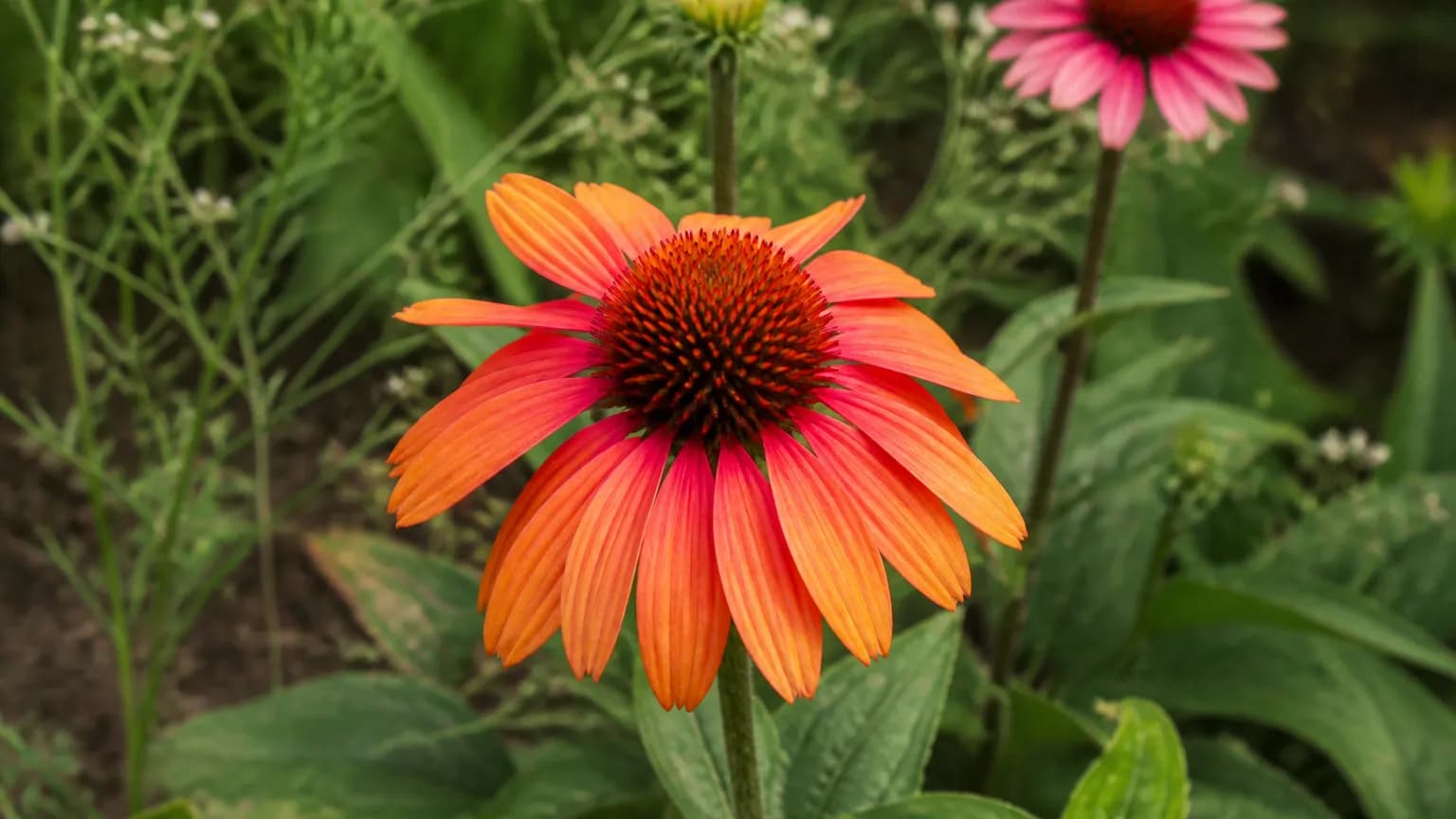
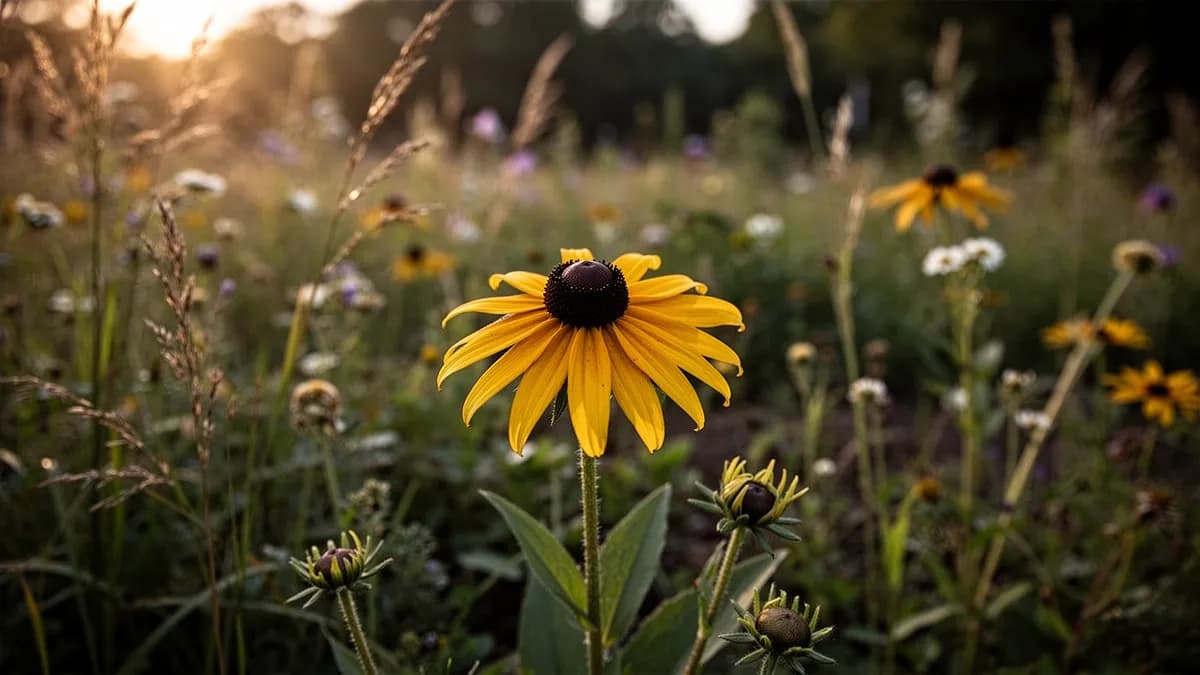
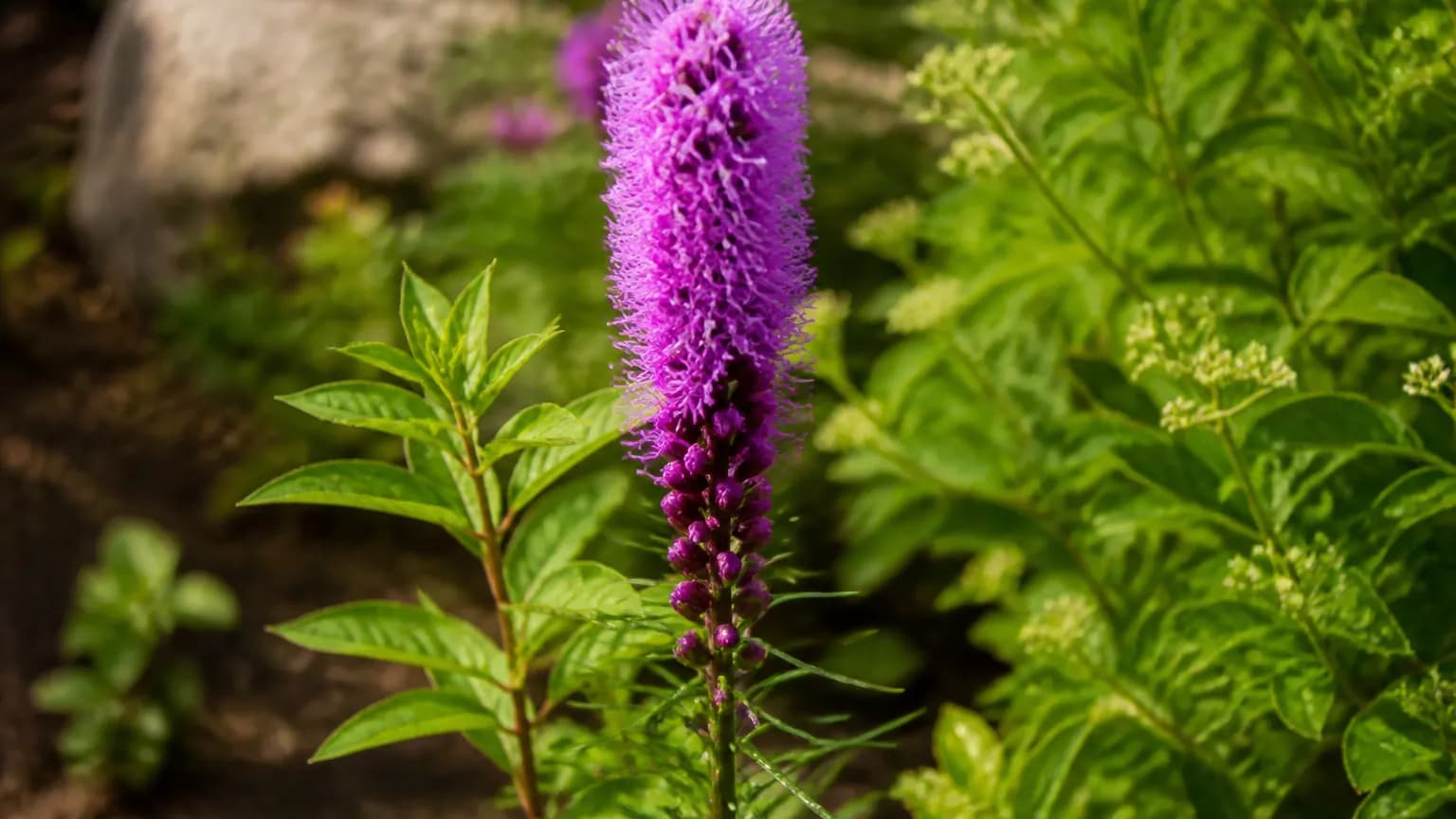
La bergamota silvestre es esencial en jardines de pradera y de flores silvestres, y combina de forma natural con equináceas, rudbeckias, gramíneas como Schizachyrium scoparium y Sporobolus heterolepis, y liatris. Es una de las mejores plantas nativas para sostener poblaciones de polinizadores, ya que aporta néctar a decenas de especies de abejas, mariposas y polillas. Plántela junto a otras flores silvestres nativas para maximizar su valor ecológico. En jardines más formales, la bergamota silvestre combina bien con gramíneas ornamentales, salvia rusa y milenrama.
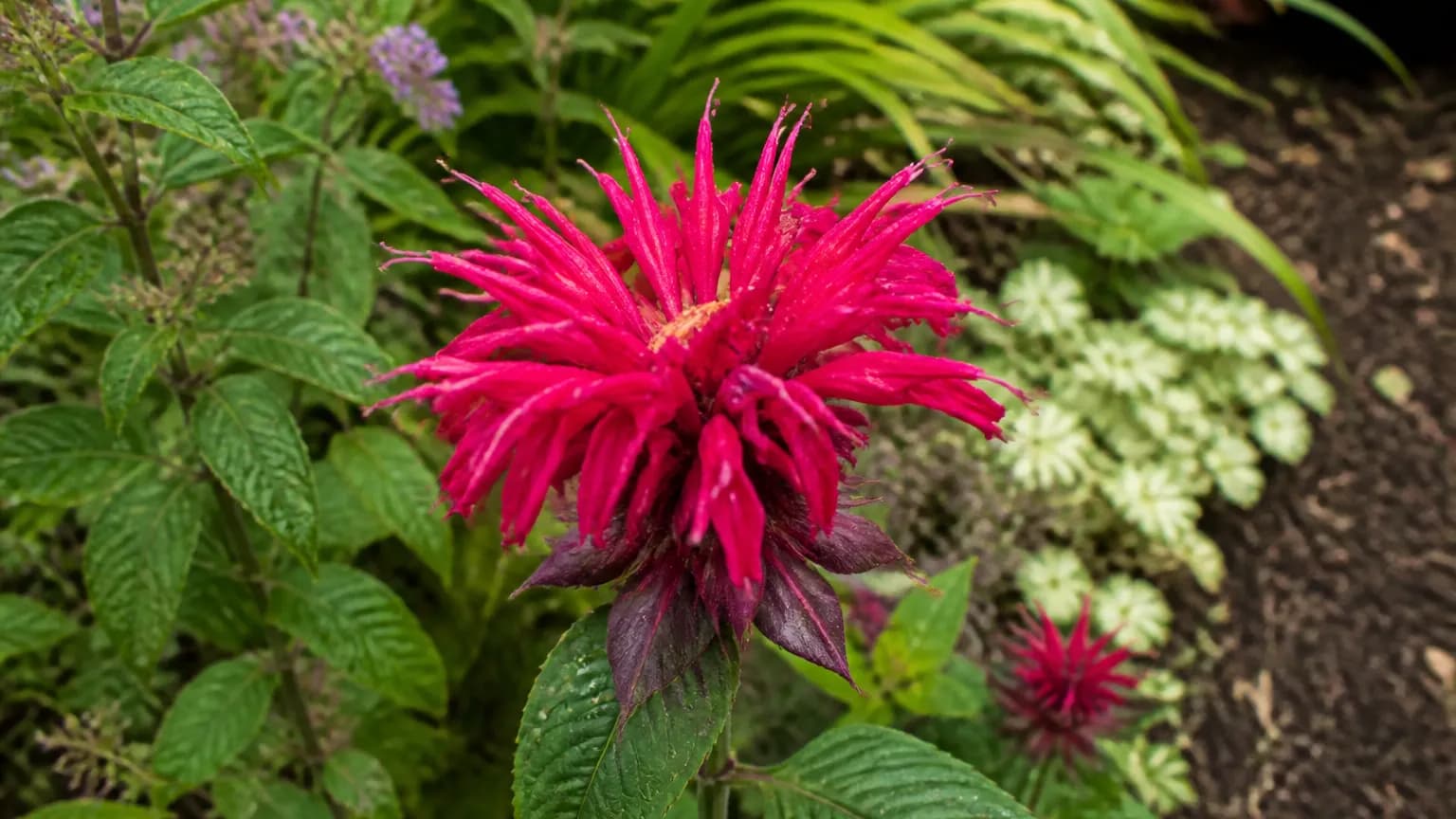
Bálsamo de abeja va a su lado.
Saber de huerto de siempre, cotejado con la tabla real de Bergamota silvestre — prueba cualquier planta que cultives.
Prueba Bergamota silvestre en un bancal, aquí mismo
Un bancal real del planificador con Bergamota silvestre ya plantado. Toca una planta compañera para colocarla y mira cómo responde la comprobación de vecinos: verde para buenos vecinos, rojo si hay conflicto.


Guías de cultivo relacionadas
Abónalo bien
La bergamota silvestre prospera en suelo medio a pobre, bien drenado, con un pH de 6.0-8.0; tolera condiciones tanto ligeramente ácidas como alcalinas. Se desarrolla bien en suelos arenosos, pedregosos y francos, y prefiere activamente condiciones más secas y menos fértiles que la monarda o bálsamo de abeja. No enmiende el suelo con compost ni fertilizante; demasiados nutrientes producen un crecimiento débil y vencido. Se trata de una verdadera planta de pradera adaptada a suelos pobres y no necesita alimentación suplementaria.
Temperatura ideal
Compatibilidad de zonas de rusticidad
De la semilla a la cosecha, etapa por etapa
Germinación de la semilla
Las semillas de bergamota silvestre son diminutas y necesitan luz para germinar. Siémbralas en la superficie de un sustrato húmedo para semilleros sin cubrirlas, presionándolas suavemente para asegurar el contacto con el suelo. Una estratificación en frío de 4-6 semanas a 1-4°C mejora mucho la germinación, imitando las condiciones invernales naturales. Espere una germinación irregular durante 10-21 días a temperaturas del suelo de 15-21°C.
Establecimiento de la plántula
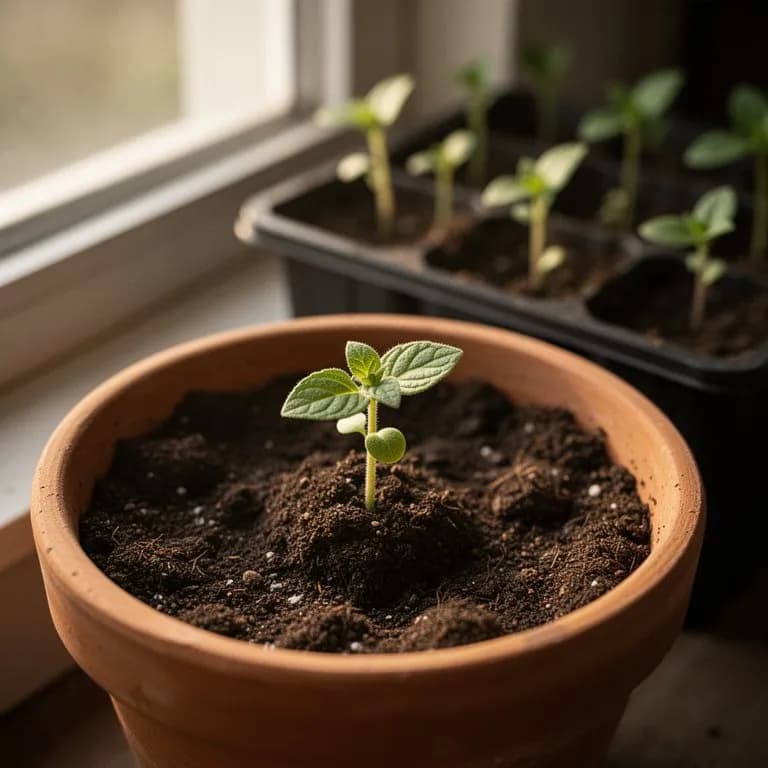
Las plántulas desarrollan sus primeras hojas verdaderas con los bordes aserrados característicos y el aroma de la familia de las mentas. Los tallos cuadrados se hacen visibles pronto. El crecimiento es lento en esta etapa mientras la planta invierte energía en el desarrollo de raíces. Las plántulas pueden trasplantarse a macetas individuales cuando tienen 2-3 pares de hojas verdaderas.
Crecimiento vegetativo
La planta entra en un crecimiento vegetativo vigoroso, produciendo varios tallos ramificados desde la base que alcanzan 60-120 cm de altura. Las raíces rizomatosas empiezan a extenderse, ampliando poco a poco la mata. El follaje verde grisáceo se vuelve denso y muy aromático, liberando el distintivo aroma a orégano y tomillo que da a la bergamota silvestre su valor culinario. Las hojas pueden cosecharse para uso fresco durante esta etapa.
Floración
Se forman capullos en las puntas de los tallos y se abren en las distintivas cabezuelas redondeadas de florecillas tubulares rosa lavanda. Cada cabezuela mide 3-5 cm de ancho y se asienta sobre un verticilo de brácteas frondosas, a veces púrpuras. La floración suele producirse desde mediados de julio hasta septiembre, y cada cabezuela florece durante 3-4 semanas. Este es el momento de máxima actividad de los polinizadores y la ventana de cosecha óptima para uso medicinal.
Formación de semillas y dormancia
Después de florecer, las cabezuelas se secan en los tallos, se vuelven marrones y liberan pequeños aquenios que se dispersan por el viento y la gravedad. El follaje amarillea gradualmente y muere hasta el suelo tras la primera helada fuerte. El sistema radicular rizomatoso permanece inactivo durante el invierno, almacenando energía para la primavera siguiente. Las cabezuelas secas aportan interés invernal y alimento a pequeñas aves como los jilgueros.
Rebrote primaveral
A comienzos o mediados de la primavera, brotan nuevos tallos desde la red rizomatosa en expansión, formando cada año una mata más grande. Las plantas establecidas producen un crecimiento vigoroso mucho antes que los ejemplares obtenidos de semilla. Las matas pueden necesitar división cada 3-4 años cuando el centro se vuelve leñoso y muere, un rasgo común en las especies de Monarda. La división a comienzos de primavera es el método de propagación más sencillo y fiable.
Humedezca la superficie a diario con un pulverizador y cubra las bandejas con una cúpula de humedad transparente. Retire la cúpula una hora al día para prevenir el mal del semillero en las plántulas delicadas.
Cuidar Bergamota silvestre mes a mes
Qué hacer cada mes para tu Bergamota silvestre
Octubre
Mes actualDeje los tallos secos y las cabezuelas en pie para aportar interés invernal y hábitat para la fauna. Anote qué plantas mostraron resistencia al oídio para futuras propagaciones. Marque las matas que deberán dividirse la próxima primavera.
Ten claro qué hacer en tu huerto, cada mes
Un correo al empezar cada mes: qué sembrar, plantar y hacer ahora mismo — para tu Bergamota silvestre y todo lo que crece alrededor. Más un breve curso inicial para esquivar los errores clásicos.
- Qué hacer ahora mismo
- Ajustado a tu temporada
- Curso inicial incluido
Cosechar Bergamota silvestre
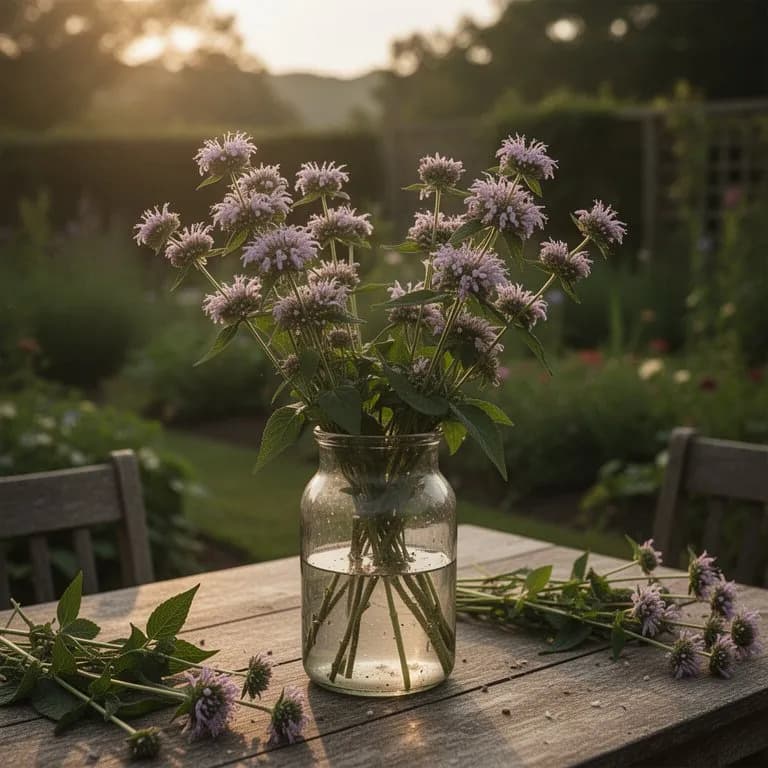
Coseche hojas y flores de bergamota silvestre para té de hierbas durante toda la temporada de crecimiento. La recolección más sabrosa se realiza justo antes o durante la floración máxima, cuando el contenido de aceites esenciales es mayor. Corte los tallos por la mañana y úselos frescos o séquelos para más tarde. Las flores también se cosechan para ramos frescos: córtelas cuando se abran las primeras florecillas. Tanto las hojas como las flores tienen un sabor característico a orégano, tomillo y bergamota que da lugar a un té de hierbas excelente.
se supone que plantas al comenzar el periodo — indica tu fecha real
Cosecha Bergamota silvestre a tiempo y la planta sigue produciendo.
Almacenamiento y conservación
Seque la bergamota silvestre agrupando los tallos y colgándolos boca abajo en una habitación cálida, oscura y aireada durante 1-2 semanas. Retire las hojas y flores secas de los tallos y guárdelas en frascos de vidrio herméticos. La bergamota silvestre seca produce un té agradable con notas de orégano, tomillo y cítricos; históricamente fue utilizada por los pueblos indígenas y los primeros colonos como té de Oswego. El material seco conserva bien su sabor durante 12-18 meses. Las cabezuelas también pueden prensarse para trabajos botánicos decorativos.
Qué falla — y cómo solucionarlo
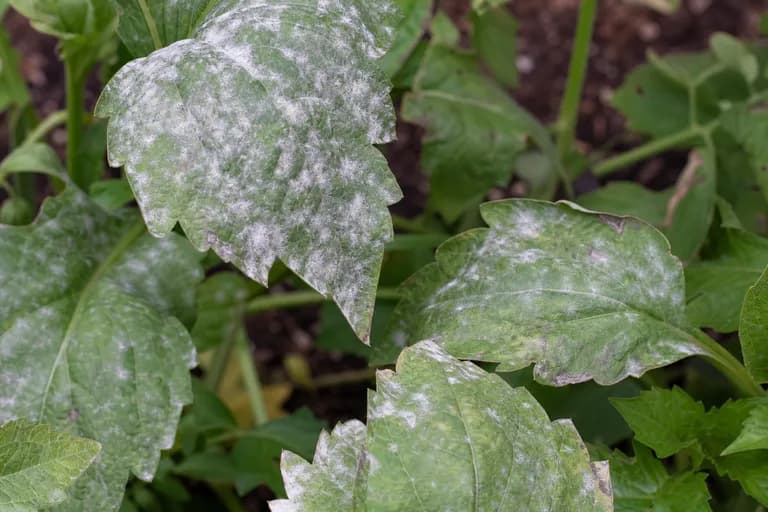
Oídio
EnfermedadCapa blanca y polvorienta sobre las hojas, aunque la bergamota silvestre es considerablemente más resistente que M. didyma. Puede aparecer a finales del verano con condiciones húmedas.
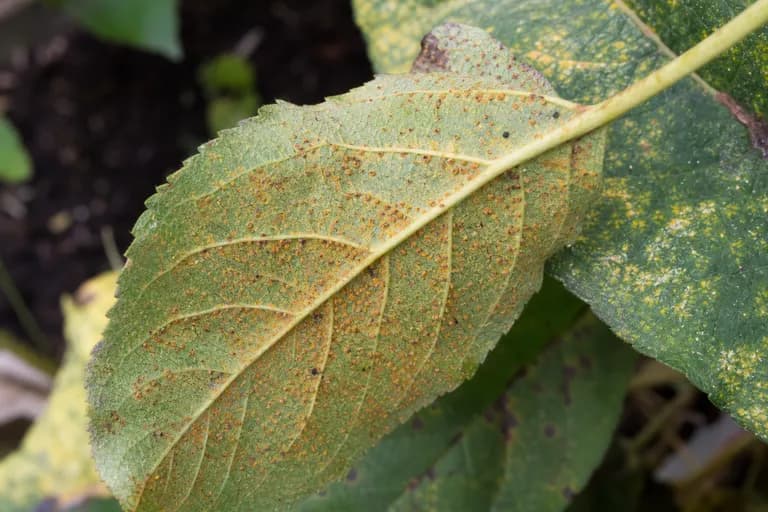
Roya
EnfermedadPústulas naranja parduzcas en el envés de las hojas con manchas amarillas en la cara superior. Puede causar defoliación prematura en casos graves.
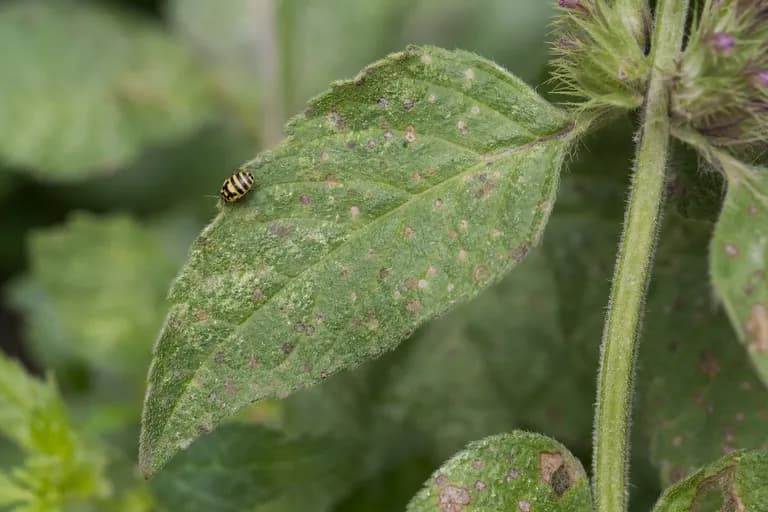
Chinche de cuatro líneas
PlagaPequeñas manchas redondas marrones o tostadas en la cara superior de las hojas, que crean un patrón moteado. Las chinches, con franjas amarillas y negras, son visibles sobre el follaje en primavera.
Solución de problemas comunes
La bergamota silvestre tiene menos problemas que la monarda, pero aun así puede desarrollar oídio en condiciones húmedas y de mucha densidad; ofrézcale sol y espacio. La autosiembra puede ser abundante en condiciones favorables; retire las cabezuelas antes de que se abran si esto le preocupa. Los estolones expansivos pueden necesitar control en borduras formales. La planta puede verse desordenada a finales del verano después de florecer; córtela hasta el follaje basal para una apariencia más limpia o deje las cabezuelas para las aves y el interés invernal.
Consejos de cultivo
- Estratifique las semillas durante 4-6 semanas en una bolsa sellada con arena húmeda en el refrigerador para mejorar de forma notable la germinación, de alrededor del 30% al 70% o más.
- Siembre las semillas en la superficie del suelo sin cubrirlas, ya que las semillas de bergamota silvestre necesitan luz para germinar. Presiónelas suavemente contra la tierra para asegurar el contacto, pero no las entierre.
- Elija un lugar a pleno sol con suelo pobre y bien drenado. La bergamota silvestre en realidad rinde mejor en suelos de pobres a medios que en condiciones ricas y fértiles, donde tiende a vencerse y a desarrollar más enfermedades.
- Separe las plantas entre 45 y 60 cm para permitir una excelente circulación del aire, que es la práctica cultural más eficaz para prevenir el oídio en todas las especies de Monarda.
- Riegue en profundidad pero con poca frecuencia durante la primera temporada de crecimiento para establecer raíces profundas. Una vez establecida, la bergamota silvestre es extraordinariamente tolerante a la sequía y rara vez necesita riego suplementario.
- Divida las matas congestionadas cada 3-4 años a comienzos de la primavera, levantando toda la planta, descartando las secciones centrales leñosas y replantando las porciones exteriores vigorosas con compost fresco.
- Pince o corte los tallos hasta un tercio a finales de mayo o principios de junio para obtener plantas más bajas y tupidas, menos propensas a vencerse y que desarrollen más cabezuelas por tallo.
- Elimine con rapidez las cabezuelas marchitas para evitar una autosiembra excesiva y fomentar una segunda oleada más ligera de flores a finales del verano y comienzos del otoño.
- Evite por completo el riego por arriba, especialmente durante la floración, para reducir la humedad alrededor del follaje y minimizar el riesgo de oídio, que es el problema más común en todas las especies de Monarda.
- Deje algunas cabezuelas secas en pie durante el invierno para alimentar a los jilgueros y otras aves canoras, y para ofrecer hábitat invernal a los insectos beneficiosos en los tallos huecos.
Cultiva tu mejor Bergamota silvestre — y todo lo que la rodea.
Empieza un plan gratis hoy. Diseña tus bancales, coloca tu Bergamota silvestre y deja que PlotMyGarden gestione el momento, el espaciado, las asociaciones y los recordatorios de la semilla a la cesta.
Elige tu Bergamota silvestre
Monarda fistulosa (tipo silvestre)
La especie pura con flores rosa lavanda suaves, la mejor opción para jardines de pradera y plantaciones naturalistas.
Monarda fistulosa 'Claire Grace'
Una forma seleccionada con mayor vigor y porte más erguido, con excelente resistencia al oídio y abundantes flores lavanda.
Monarda bradburiana (bálsamo de abeja oriental)
Una especie emparentada de cerca con flores rosa pálido moteadas, que florece antes que fistulosa y prolonga la temporada de Monarda.
Una sola planta de bergamota silvestre cuesta entre 4 y 8 dólares como trasplante de vivero y se extenderá para cubrir una gran superficie en 2-3 años mediante rizomas, proporcionando un suministro continuo de hojas frescas y secas para té de hierbas, condimento culinario y remedios caseros. Las mezclas comerciales de té seco de monarda se venden por 8-15 dólares la onza, mientras que una sola mata establecida puede dar 200-400 gramos de hierba seca por temporada. La planta además es perenne y extremadamente fácil de mantener, lo que elimina el coste de replantación anual y apenas requiere riego, fertilización o control de plagas una vez establecida.
Recetas rápidas
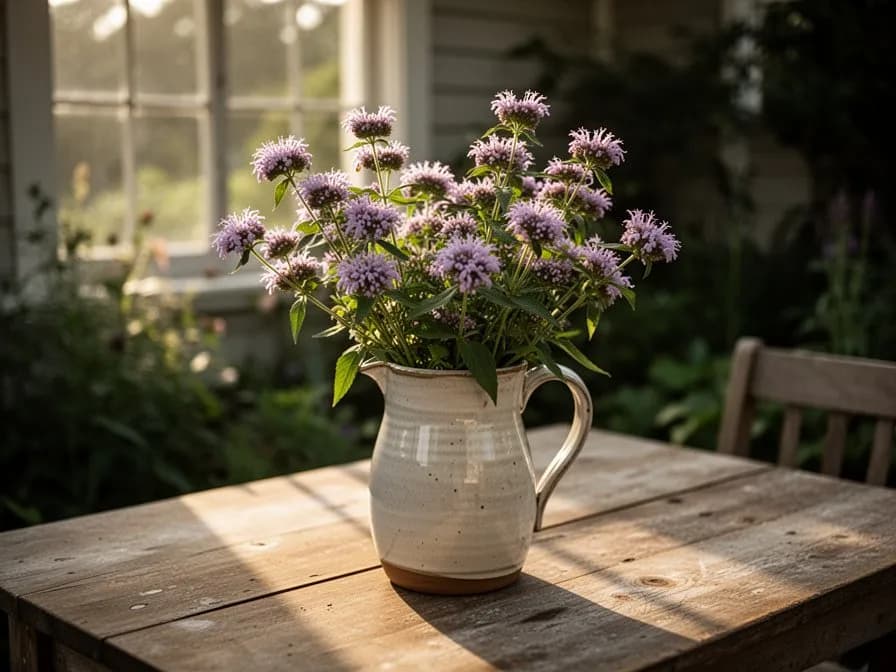
Té de hierbas de bergamota silvestre
10 minutosUn té de hierbas calmante y aromático, con notas cálidas de orégano y menta, disfrutado durante siglos tanto como bebida reconfortante como remedio tradicional para resfriados, dolor de garganta y molestias digestivas. Use hojas y flores frescas o secas.
5 ingredientesPesto de bergamota silvestre
15 minutosUna variante original del pesto tradicional que sustituye la albahaca por hojas de bergamota silvestre para obtener una pasta más intensa, con sabor a orégano y tomillo. Excelente para pasta, pan a la parrilla, verduras asadas o como marinada para pollo a la parrilla.
7 ingredientes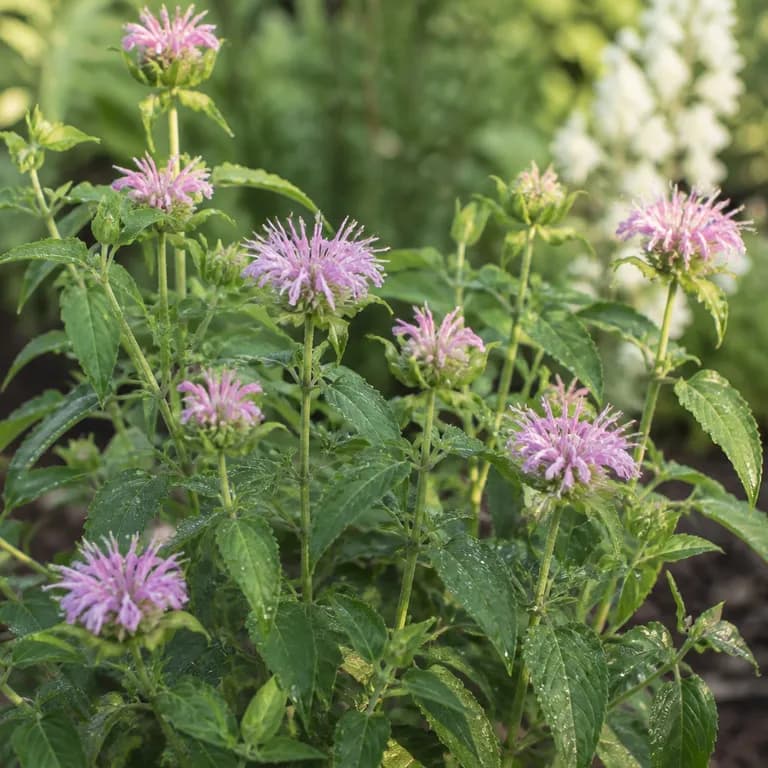
Vinagre de flores de bergamota silvestre
10 minutos más 2 semanas de infusiónUn vinagre infusionado que captura la esencia floral y ligeramente picante de las flores de bergamota silvestre. Úselo como base para aderezos, como líquido para desglasar salsas de sartén o rociado sobre tomates y mozzarella frescos de verano.
5 ingredientesQué contiene
Beneficios para la salud
- Contiene timol y carvacrol, potentes compuestos antisépticos naturales que han demostrado actividad antibacteriana y antifúngica contra patógenos comunes en estudios de laboratorio.
- Su uso tradicional como remedio respiratorio está respaldado por sus propiedades expectorantes y levemente broncodilatadoras, que ayudan a aflojar la mucosidad y a aliviar la tos durante resfriados y bronquitis.
- Es rica en ácido rosmarínico, un polifenol con efectos antiinflamatorios y antioxidantes bien documentados que puede ayudar a reducir el estrés oxidativo y favorecer la salud cardiovascular.
- El té de bergamota silvestre se ha utilizado durante siglos como ayuda digestiva y carminativa, ayudando a aliviar la hinchazón, los gases, las náuseas y los cólicos leves después de comer.
- Los aceites esenciales han mostrado propiedades calmantes y ligeramente sedantes en usos tradicionales, favoreciendo la relajación y posiblemente mejorando la calidad del sueño cuando se toma como té nocturno.
- La aplicación tópica de hojas machacadas o aceite esencial diluido se ha usado tradicionalmente para tratar irritaciones leves de la piel, picaduras de insectos y pequeñas heridas gracias a sus propiedades antimicrobianas y antiinflamatorias.
De dónde viene Bergamota silvestre
La bergamota silvestre (Monarda fistulosa) es nativa de casi toda Norteamérica, desde Quebec y Ontario a través de las Grandes Llanuras del norte hasta Columbia Británica, y hacia el sur por la mayor parte de Estados Unidos hasta el norte de México. Prospera en praderas, bosques abiertos, prados secos y bordes de caminos, formando a menudo colonias extensas mediante sus rizomas rastreros. El género Monarda fue nombrado por Linneo en 1753 en honor a Nicolás Monardes, un médico y botánico español del siglo XVI que escribió extensamente sobre las plantas medicinales del Nuevo Mundo, aunque Monardes nunca puso un pie en las Américas.
Los pueblos indígenas de toda Norteamérica confiaron durante siglos en la bergamota silvestre como una de sus plantas medicinales más versátiles, mucho antes del contacto europeo. Los blackfoot usaban cataplasmas de las hojas para tratar infecciones cutáneas e inhalaban vapor de hojas hervidas para aliviar la congestión respiratoria. Los ojibwe preparaban tés para tratar la fiebre y los resfriados, mientras que los menominee la utilizaban como tónico general y para tratar dolencias bronquiales. Los winnebago y dakota la aplicaban como remedio calmante y usaban los aceites aromáticos para repeler insectos. Muchas naciones también valoraban la bergamota silvestre como condimento culinario, usando las hojas secas de manera similar a como los cocineros europeos usaban orégano y tomillo.
Los colonos europeos adoptaron rápidamente la bergamota silvestre en sus propias tradiciones de medicina popular. En el siglo XIX, la planta apareció en varios herbarios y obras de materia médica publicadas. Los médicos eclécticos de la época recetaban preparados de monarda para molestias digestivas, fiebre y como carminativo. Hoy, la bergamota silvestre ha recuperado interés como planta nativa de jardinería para jardines de polinizadores, restauraciones de pradera y huertos herbales sostenibles, valorada por igual por su importancia ecológica y por su herencia culinaria y medicinal.
Bergamota silvestre: ¿sabías que?
Datos fascinantes sobre Bergamota silvestre
La bergamota silvestre fue una de las plantas medicinales más utilizadas por los pueblos indígenas de Norteamérica, con uso documentado entre los blackfoot, ojibwe, winnebago, menominee y muchas otras naciones para tratar resfriados, fiebre e infecciones respiratorias.
Bergamota silvestre: preguntas frecuentes
¿Cuándo debo plantar Bergamota silvestre?
¿Cuáles son buenas plantas acompañantes para Bergamota silvestre?
¿En qué zonas de rusticidad puede crecer Bergamota silvestre?
¿Cuánto sol necesita Bergamota silvestre?
¿A qué distancia debo espaciar Bergamota silvestre?
¿Qué plagas y enfermedades afectan a Bergamota silvestre?
¿Cómo almaceno Bergamota silvestre después de la cosecha?
¿Cuáles son las mejores variedades de Bergamota silvestre para cultivar?
¿Qué suelo necesita Bergamota silvestre?
¿Cuál es la diferencia entre Monarda fistulosa (bergamota silvestre) y Monarda didyma (bálsamo de abeja)?
¿Es segura para comer la bergamota silvestre y qué partes son comestibles?
¿Cómo prevengo el oídio en la bergamota silvestre?
¿La bergamota silvestre se extenderá agresivamente en mi jardín?
¿Puedo cultivar bergamota silvestre en macetas?
¿Cuándo y cómo debo cosechar la bergamota silvestre para té y cocina?
Acabas de leer la teoría. Ahora cultívala en piloto automático.
Todo lo que hace que Bergamota silvestre sea delicado — el momento, el espaciado, las asociaciones, la ventana de cosecha — es justo lo que PlotMyGarden resuelve por ti, para cada planta de tu huerto.
Un plan que conoce tu clima
Indica tu ubicación una vez. Recibe fechas de siembra, abonado y cosecha basadas en tu última helada real y el pronóstico en vivo — sin adivinar con un sobre genérico.
De la sección “Cuándo plantar”Planificador de bancales de arrastrar y soltar
Diseña bancales sobre una cuadrícula. Cada planta encaja con su espaciado correcto y ves toda la temporada antes de gastar un céntimo en semillas.
De la sección “Cultivo”Conflictos de asociación, detectados a tiempo
Más de 200 buenas y malas combinaciones comprobadas en vivo mientras plantas — para que un error que arruine la temporada nunca llegue a la tierra.
De la sección “Asociaciones”Recordatorios que sí vas a seguir
“Riega las judías.” “Recoge hoy antes de que se pase.” Oportunos, concretos y ligados a las plantas que de verdad cultivas.
De la sección “Cosecha”Escalonado, programado
¿Quieres cosechar seis semanas en vez de seis días? Reparte tus siembras automáticamente y te avisa cuando toca el siguiente lote.
De la sección “Cuándo plantar”Un registro que se vuelve más listo
Cada cosecha que registras le enseña tu huerto. El plan del año que viene parte de lo que de verdad funcionó en tu suelo, no en un manual.
De la sección “Resumen”Planta estos junto a Bergamota silvestre
Más Perennes
Diseños de jardín con Bergamota silvestre
Cultiva tu mejor Bergamota silvestre — y todo lo que la rodea.
Empieza un plan gratis hoy. Diseña tus bancales, coloca tu Bergamota silvestre y deja que PlotMyGarden gestione el momento, el espaciado, las asociaciones y los recordatorios de la semilla a la cesta.