Runner Bean
A vigorous climbing bean with showy scarlet flowers that attract hummingbirds and produce large, flavorful pods.





On this pageOverview
Meet Runner Bean
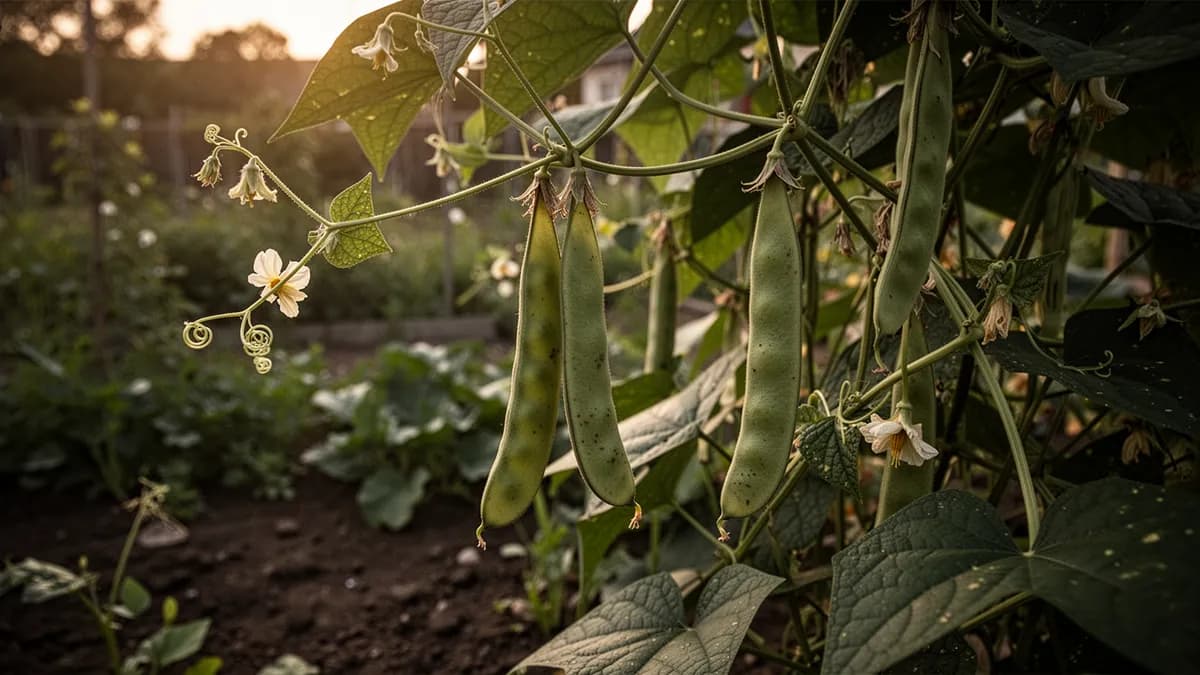
A vigorous climbing bean with showy scarlet flowers that attract hummingbirds and produce large, flavorful pods. Runner beans prefer cooler conditions than other bean types and may stop setting pods in extreme heat. Provide tall poles, a teepee structure, or netting for the twining vines that can reach eight feet or more. Harvest young pods for snap beans or let them mature for shelling beans, and enjoy the ornamental value of the bright flowers.
When to plant Runner Bean
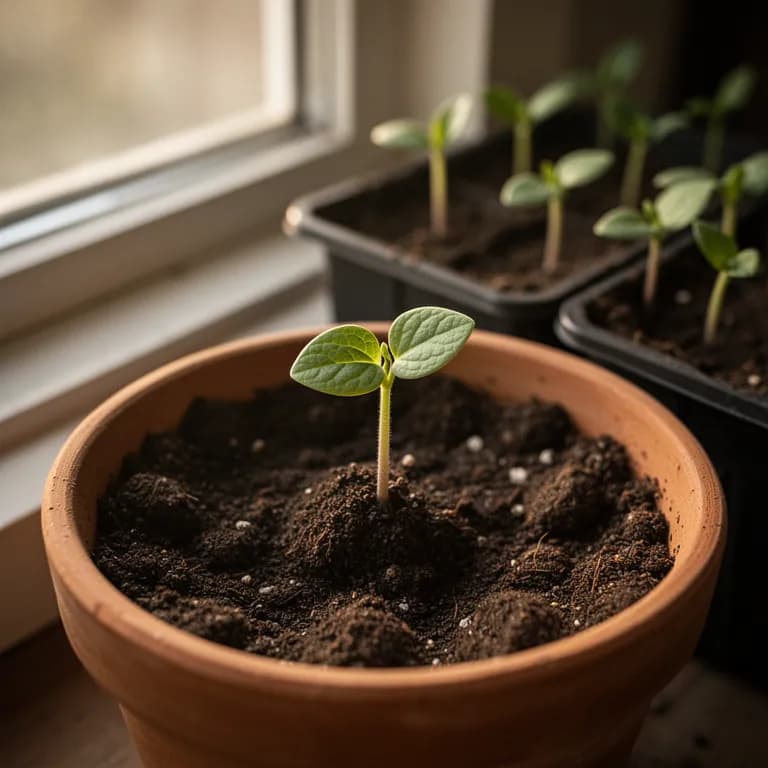
Soak runner bean seeds overnight in warm water to speed germination. Start indoors 3-4 weeks before the last frost date in deep pots or root trainers, as runner beans develop long taproots. Plant seeds 2 inches deep in moist seed-starting mix at 65-70°F. Germination takes 7-14 days. Harden off seedlings for a week before transplanting after all frost danger has passed. Alternatively, direct sow outdoors when soil temperature reaches 60°F, planting seeds 2 inches deep and 6 inches apart.
Your Runner Bean Year
Composed for Zone 7 · typical seasons · frost passes Apr 2, returns Nov 1
Plant Runner Bean May – Jun, pick Jul – Oct. Check the planting methods below and set your climate to personalize these windows.
How to grow Runner Bean
Runner beans thrive in cooler summer temperatures between 60-75°F and may struggle in areas with prolonged heat above 85°F. Start seeds indoors 3-4 weeks before the last frost or direct sow after all danger of frost has passed. Plant seeds 2 inches deep and 6 inches apart along a sturdy support structure. Runner beans are perennial in mild climates and can be grown from saved tubers in zones 7-10.
Provide a robust support system at least 8 feet tall, as runner beans are vigorous climbers. Teepees made from bamboo poles, trellises, or string supports all work well. Water consistently, especially during flowering and pod development, providing about 1 inch per week. Mulch around the base to retain moisture and keep roots cool during warm spells.
Runner beans fix nitrogen in the soil through symbiotic root bacteria, reducing the need for nitrogen fertilizer. Apply a balanced low-nitrogen fertilizer at planting time and side-dress with compost midseason. Pinch out growing tips when plants reach the top of their supports to encourage bushier growth and more pod production. In hot climates, provide afternoon shade to help with pod set.
72 plants fit a 4 × 8 ft bed
Each Runner Bean wants 20 cm of elbow room. The planner keeps that spacing for you — every plant, every bed.
Runner Bean's best neighbours
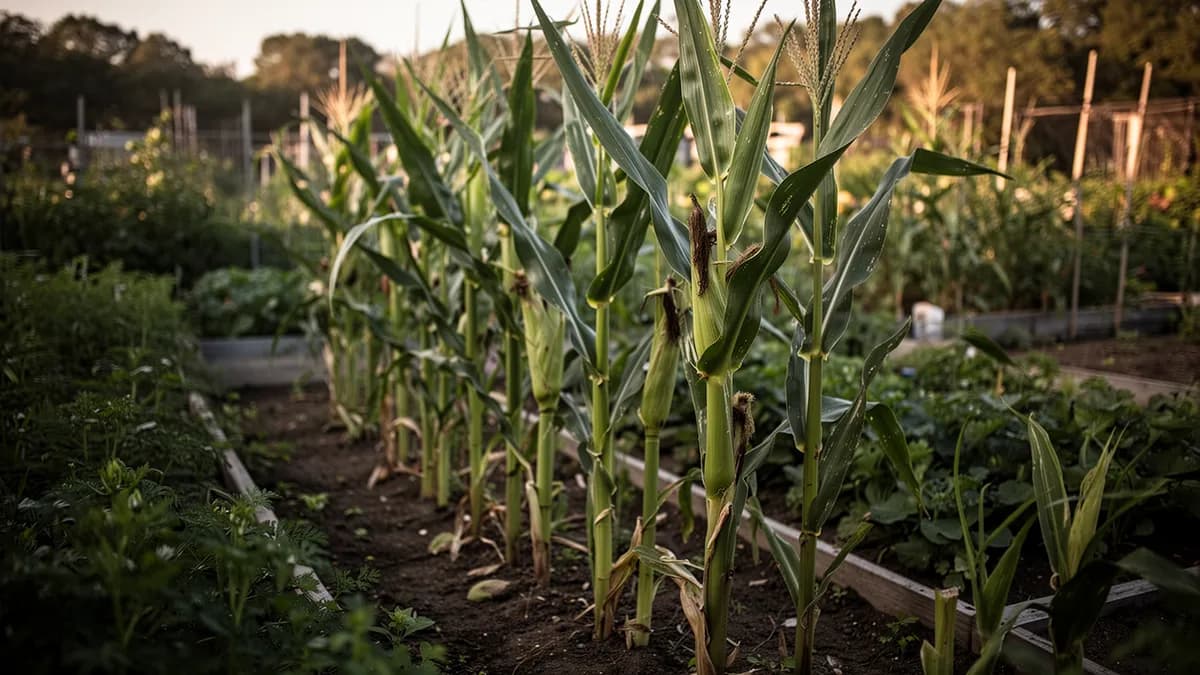
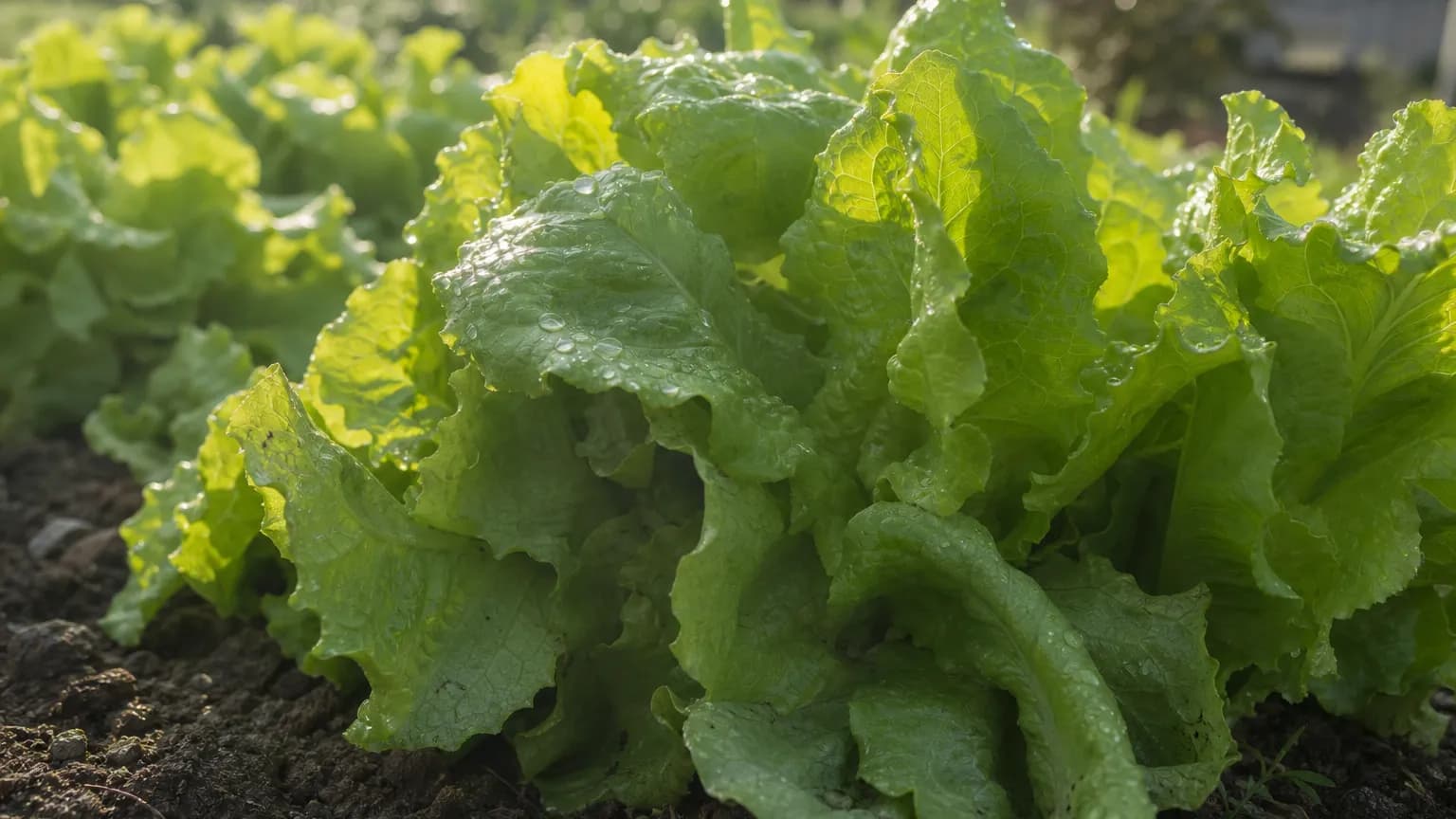
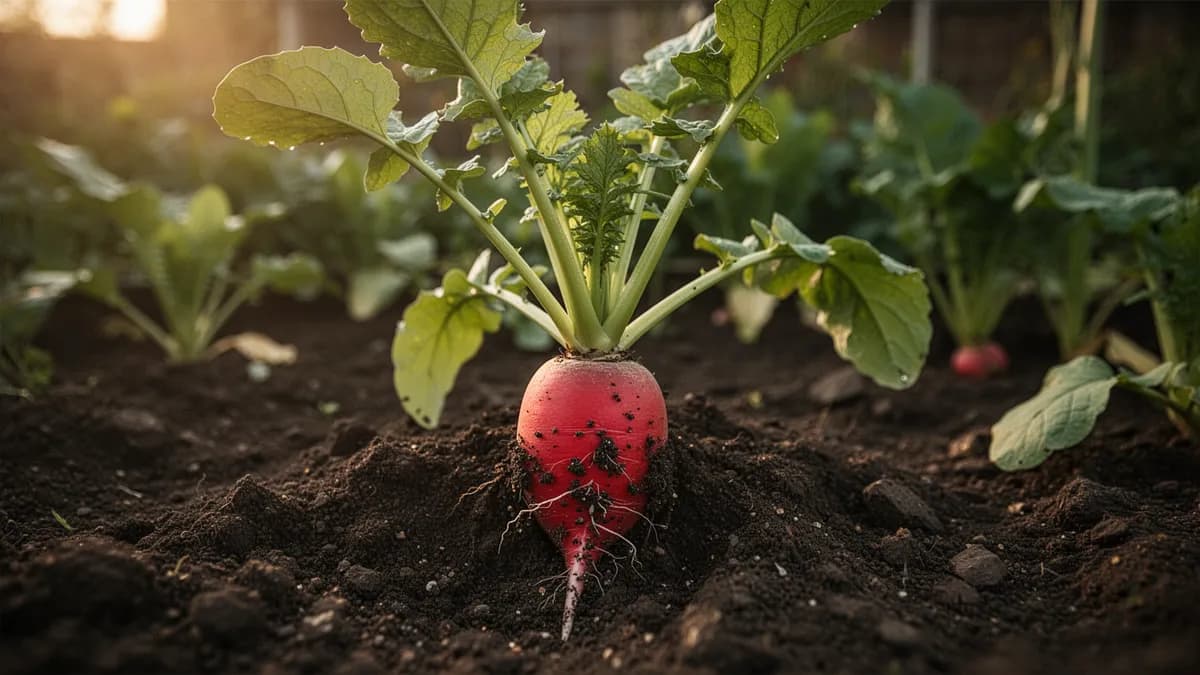
Runner beans benefit from being planted near corn, which provides a natural climbing support, and squash, creating the traditional Three Sisters planting. They pair well with lettuce, radishes, and beets which appreciate the light shade from the tall vines. Marigolds planted nearby help deter bean beetles. Avoid planting near alliums such as onions, garlic, and chives, as these can inhibit bean growth. Sunflowers make excellent companion supports and attract pollinators.
Corn belongs beside it. Onion doesn't.
Old growers' knowledge, checked against Runner Bean's real companion table below — test any plant you're growing.
Try Runner Bean in a bed — right here
A real planner bed with Runner Bean already in it. Tap a companion to place it and watch the pairing checks answer — green for good neighbours, red for a clash.


Related growing guides
Feed it well
Runner beans prefer well-drained, fertile soil with a pH of 6.0-7.0. As nitrogen-fixing legumes, they need less nitrogen than most vegetables. Work in compost or well-rotted manure before planting. Apply a low-nitrogen fertilizer such as 5-10-10 at planting time. Side-dress with compost when plants begin flowering. Avoid high-nitrogen feeds which promote foliage at the expense of pods. Inoculate seeds with Rhizobium bacteria if growing in soil that has not previously supported legumes.
Ideal Temperature
Hardiness Zone Compatibility
From seed to harvest, stage by stage
Seed Germination
Large kidney-shaped seeds absorb water rapidly after soaking and produce a thick white radicle root within 3-5 days. The strong, hooked hypocotyl pushes through the soil surface, pulling the large cotyledon leaves upward. Runner bean seeds are among the fastest-germinating of all garden beans when soil is warm enough.
Climbing Establishment
The first pair of true heart-shaped leaves unfolds and the growing tip begins searching for support, twining anticlockwise. Vigorous stem elongation begins as the plant finds its support structure, and early tendrils grip firmly within hours of contact.
Rapid Vine Growth
Vines grow rapidly in favorable conditions, adding 3-6 inches per day and quickly covering their support structure. A dense canopy of large trifoliate leaves develops. The root system establishes nitrogen-fixing nodules with Rhizobium bacteria in the soil.
Flowering
Racemes of brilliant scarlet (or bicolor/white, depending on variety) flowers appear in clusters along the stems. Each flower is insect-pollinated, primarily by bumblebees whose long tongues can reach the nectar. Flowers open progressively along each raceme over 2-3 weeks.
Pod Development and Harvest
Flat, slightly rough-textured pods develop from pollinated flowers and reach harvestable size of 6-8 inches within 10-14 days. Plants produce pods continuously for 8-12 weeks if picked regularly. Each plant can yield 2-3 kg of pods over the full season.
Late Season and Seed Saving
As autumn temperatures drop, flowering and pod production slows. Plants remain green until the first hard frost kills the above-ground growth. For seed saving, allow the final pods to remain on the vine until completely dry and papery. The large, beautifully patterned seeds inside can be stored for next year.
Soak seeds overnight in warm water before planting. Sow 2 inches deep in soil at least 60°F (15°C). In cold springs, start in deep pots indoors to get a head start.
Caring for Runner Bean month by month
What to do each month for your Runner Bean
October
You are hereFinal harvests in most zones. Collect fully dried seed pods and shell out the beautifully patterned seeds for storage. In zones 7-10, consider mulching the crown heavily with straw after the first frost to overwinter the tuberous roots.
Know exactly what to do in your garden — every month
One email at the start of each month: what to sow, plant, and tackle right now — for your Runner Bean and everything growing around it. Plus a short starter course that helps you dodge the classic mistakes.
- What to do, right now
- Matched to your season
- Starter course included
Harvesting Runner Bean
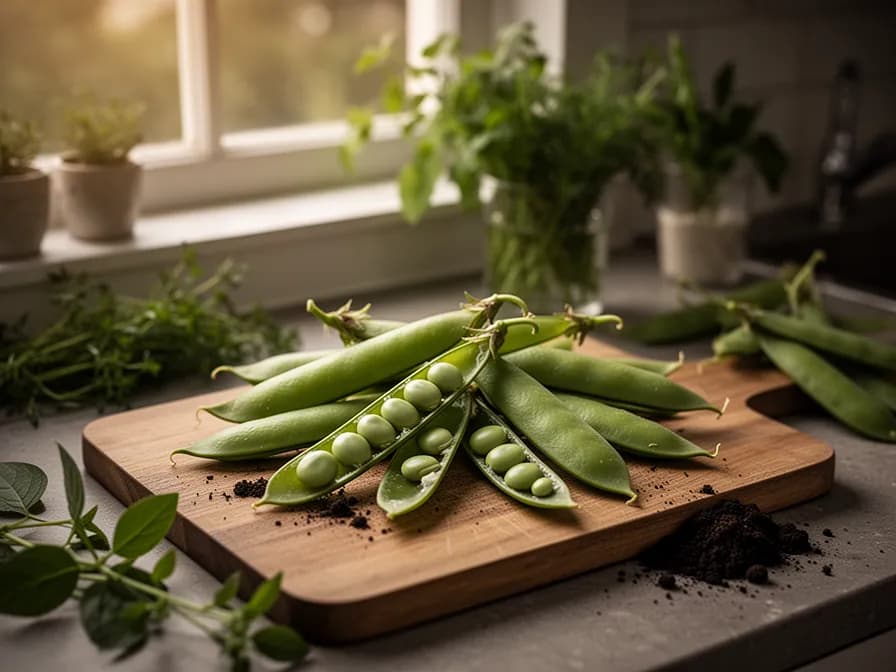
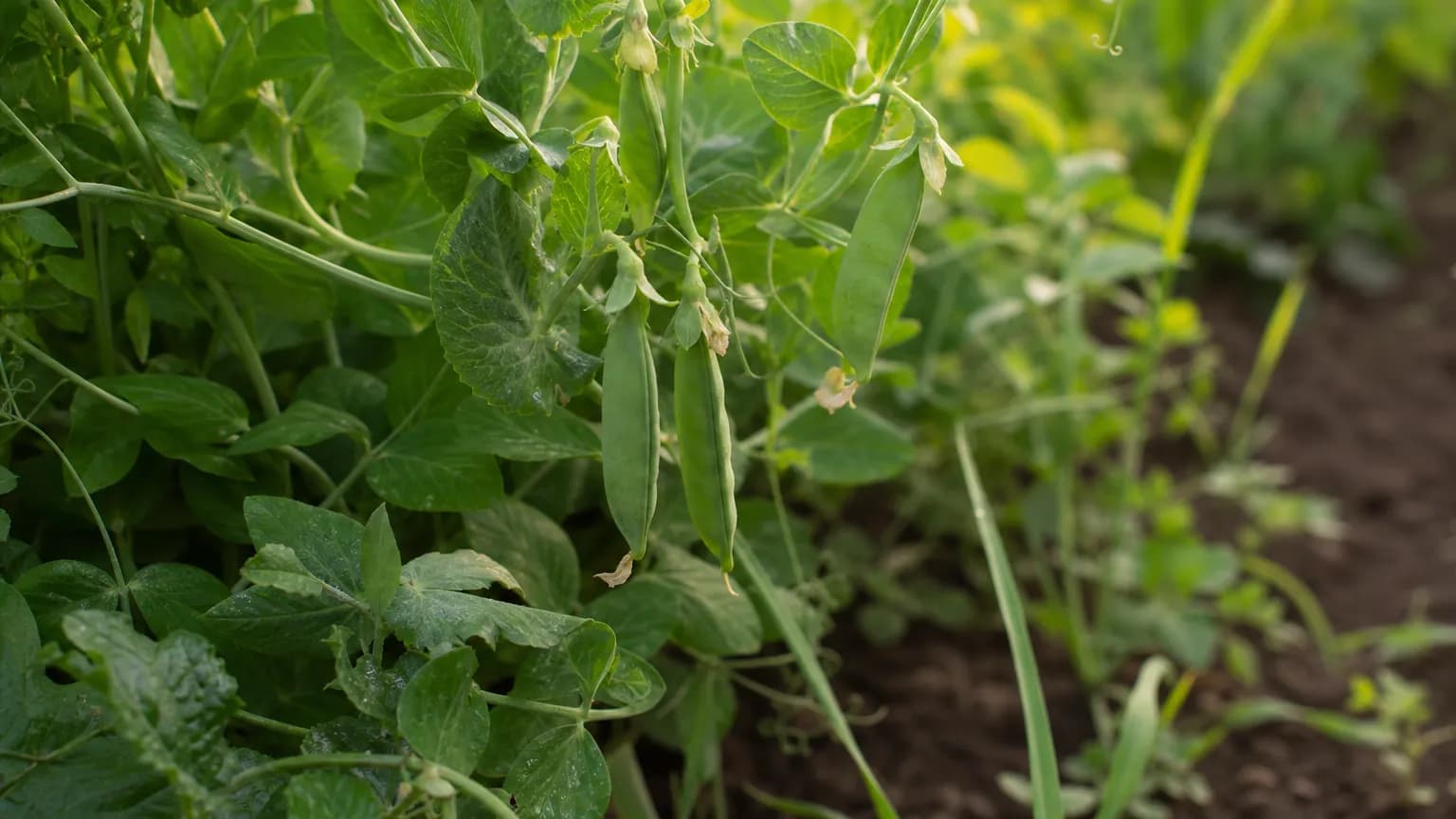
Harvest runner bean pods when they are 6-8 inches long and still tender, before the seeds inside become prominent. Pick every 2-3 days to encourage continued production. Snap the pods cleanly from the vine to avoid damaging the plant. For shelling beans, allow pods to dry on the vine until they rattle when shaken, then harvest and shell. Regular picking is essential as allowing pods to mature signals the plant to stop flowering and producing new pods.
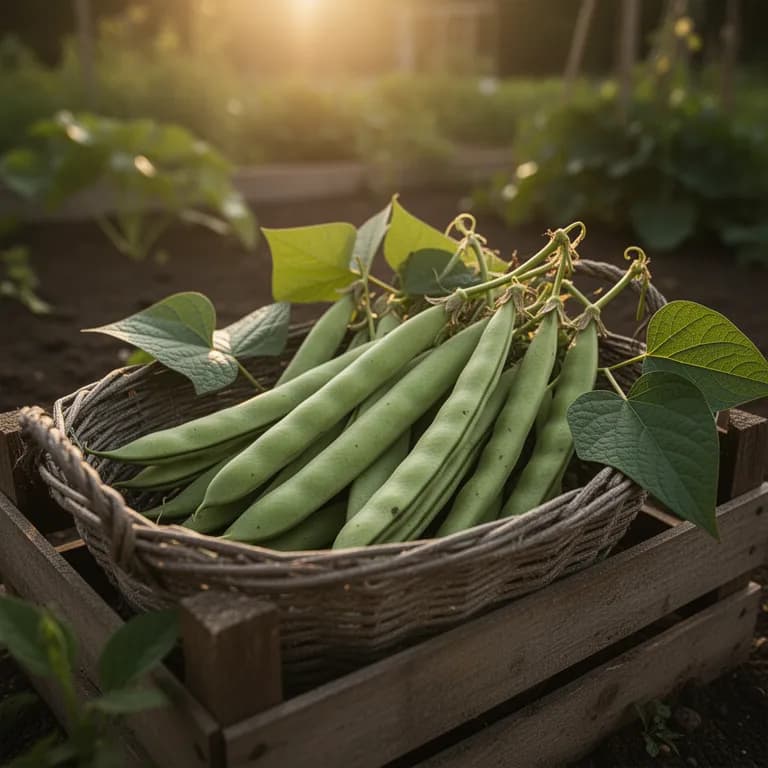
assuming you plant when the window opens — set your real date
Pick Runner Bean promptly and the plant keeps producing.
Storage & Preservation
Fresh runner beans keep in the refrigerator for up to 5 days in a perforated plastic bag. For longer storage, blanch sliced beans for 2-3 minutes, then freeze in airtight containers for up to 12 months. Runner beans can also be salted in layers using coarse salt for traditional preservation. Dried shelling beans should be stored in airtight containers in a cool, dry place where they will keep for up to a year. Pickled runner beans make excellent preserves.
What goes wrong — and the fix
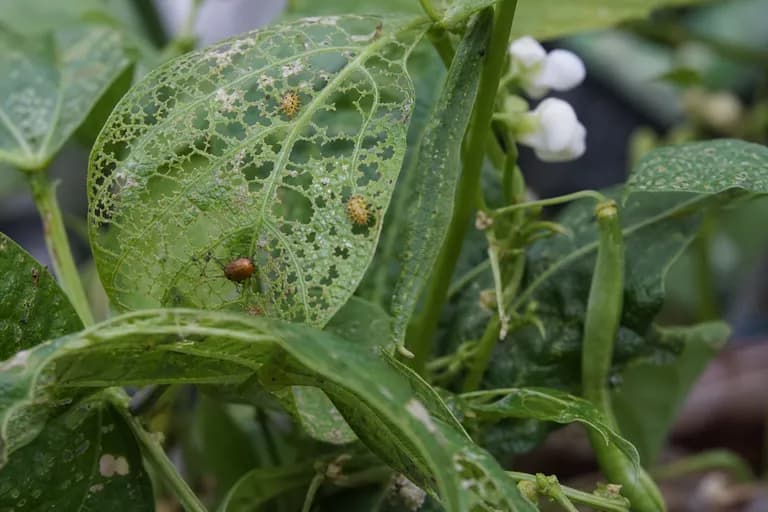
Mexican Bean Beetle
PestSkeletonized leaves with lacy appearance, yellow egg clusters on leaf undersides, and damaged pods.
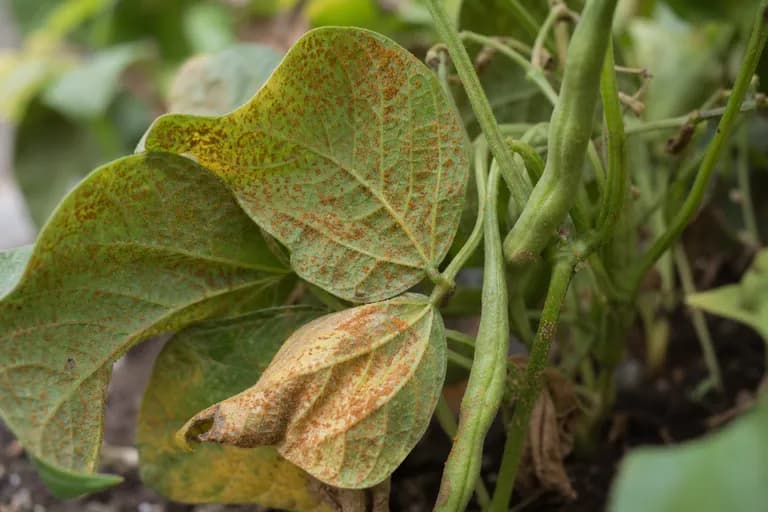
Bean Rust
DiseaseSmall reddish-brown pustules on leaves and stems that release powdery spores when disturbed.
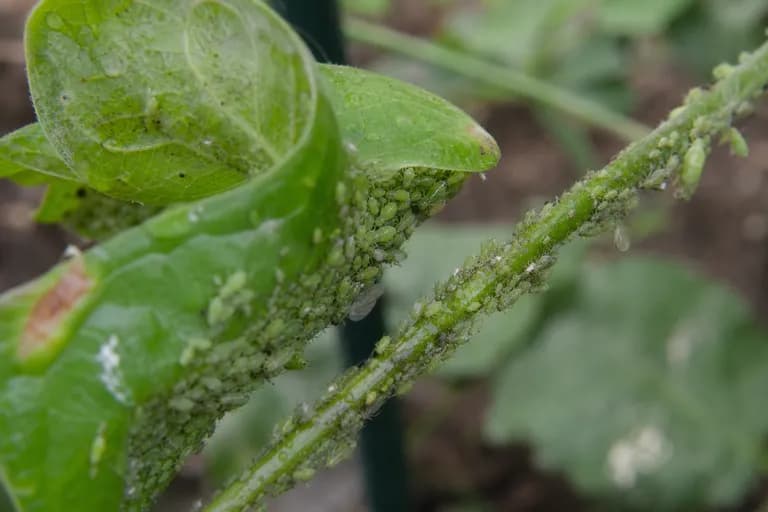
Aphids
PestClusters of small green or black insects on stems and leaf undersides, curled or distorted new growth, sticky honeydew residue.
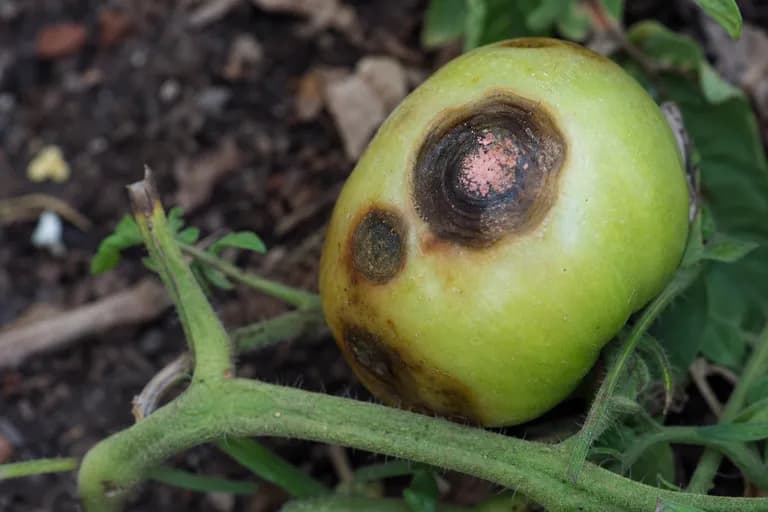
Anthracnose
DiseaseDark sunken lesions on pods, stems, and leaves with pink spore masses in wet conditions.
Troubleshooting Common Problems
Flower drop without pod set is the most common issue, usually caused by high temperatures above 85°F or insufficient pollination. Mist flowers during hot spells and attract pollinators by interplanting with flowers. Tough, stringy pods result from delayed harvesting. Poor germination can occur in cold, wet soil, so wait until soil reaches 60°F before direct sowing. Wind damage to tall vines is common; ensure supports are deeply anchored and sturdy enough to handle the weight of mature plants.
Growing Tips
- Invest in robust supports from the outset. Runner beans produce heavy crops on vigorous vines — flimsy supports will collapse in wind or under the weight of mature plants. Use poles at least 8 feet long, sunk 12 inches into the ground, and cross-braced at the top.
- Soak seeds overnight in warm water before sowing. Runner bean seeds germinate faster and more uniformly after soaking — germination time drops from 14 days to as few as 5-7 days with this simple step.
- Always sow two seeds per station and thin to the strongest seedling. Runner bean germination is not 100% reliable, and this insurance approach ensures no gaps in your row or wigwam.
- Mist flowers during hot spells above 85°F (30°C). Runner beans evolved in cool mountain conditions and their pollen becomes non-viable in extreme heat. A fine mist from a hose in the early morning or evening dramatically improves pod set during warm periods.
- Pick pods at 6-8 inches without fail every 2-3 days. This is the single most important tip for a productive harvest. Pods left to swell with mature seeds send a hormonal signal to the plant to stop flowering — one missed harvest can reduce total yield by 30-50%.
- Pinch out the growing tips when vines reach the top of their support. This redirects energy into side shoots and flower production rather than continued upward growth, resulting in more pods from a denser, bushier plant.
- Water consistently during flowering and pod development — at least 1 inch per week. Irregular watering causes flower drop and produces tough, stringy pods. Mulch around the base to retain soil moisture during dry periods.
- Save your own seed from the best-performing plants. Allow the final pods of the season to dry completely on the vine, then shell and store the beautiful mottled seeds in paper envelopes. Home-saved runner bean seeds remain viable for 2-3 years and are perfectly adapted to your local conditions.
Grow your best Runner Bean yet — and everything around it.
Start a free plan today. Lay out your beds, drop in your Runner Bean, and let PlotMyGarden handle the timing, spacing, companions and reminders from seed to harvest basket.
Pick your Runner Bean
Scarlet Emperor
Classic variety with bright red flowers and long, flat pods. Heavy cropper with excellent flavor and reliable performance.
Painted Lady
Heirloom variety with bicolor red and white flowers. Slightly more heat-tolerant than all-red varieties and very ornamental.
White Lady
White-flowered variety that tends to set pods more reliably in warm weather. Stringless pods with mild, sweet flavor.
Enorma
Exhibition variety producing exceptionally long, smooth pods up to 20 inches. Excellent for showing and eating.
Sunset
Beautiful pink-flowered variety with good flavor and strong climbing habit. Attractive in ornamental gardens.
Runner bean seeds cost just $3-5 per packet (enough for 20-40 plants), and a single wigwam of 8 plants can produce 10-15 kg of fresh beans over the season — equivalent to $40-75 at supermarket prices for fresh runner beans. Because runner beans freeze exceptionally well after blanching, a productive summer patch can supply beans well into winter. Factor in the ornamental value of the stunning scarlet flowers (replacing the need for a separate climbing ornamental), and runner beans are among the best value-for-space crops in any garden.
Quick recipes
Classic Buttered Runner Beans
10 minThe quintessential British summer side — freshly picked runner beans sliced on the diagonal, briefly steamed, and tossed with salted butter and a crack of black pepper. Simple preparation that lets the sweet, earthy bean flavor shine through.
5 ingredientsRunner Bean and Bacon Warm Salad
20 minTender-crisp runner beans combined with smoky crispy bacon lardons, toasted hazelnuts, and a tangy mustard vinaigrette. A hearty warm salad that makes the most of the runner bean season.
8 ingredientsRunner Bean Chutney
90 minA traditional British preserve that transforms a glut of runner beans into a sweet-tangy condiment perfect with cheese, cold meats, and crusty bread. Makes excellent gifts and uses up even slightly overgrown beans.
8 ingredientsCulinary Uses
Young runner bean pods are sliced diagonally or French-cut and steamed, sauteed, or added to stews and curries. They pair well with butter, garlic, bacon, and tomatoes. Shelling beans can be used fresh or dried in soups and casseroles. The flowers are edible and make colorful additions to salads. In British cuisine, runner beans are a summer staple often served simply with butter and black pepper.
What's inside
Health Benefits
- High in dietary fiber (2.8g per 100g) which promotes healthy digestion, regular bowel movements, and feeds beneficial gut bacteria to support a balanced microbiome.
- Provides plant-based protein (2.1g per 100g) that complements grains and cereals to form complete amino acid profiles — particularly valuable for vegetarian and vegan diets.
- Rich in folate (vitamin B9), which is critical for DNA synthesis, cell division, and red blood cell formation — especially important during pregnancy to prevent neural tube defects.
- Contains vitamin C and iron together, a combination that enhances non-heme iron absorption, making runner beans a useful food for preventing iron-deficiency anemia in plant-based diets.
- Low calorie density (37 calories per 100g) combined with high fiber makes runner beans an excellent food for weight management, promoting satiety without excessive caloric intake.
- Provides manganese (important for bone health and antioxidant enzyme function) and potassium (which supports healthy blood pressure regulation and cardiovascular function).
Where Runner Bean comes from
Runner beans (Phaseolus coccineus) originated in the cloud forests and highland valleys of Central America, from southern Mexico through Guatemala and Honduras. Unlike the common bean (Phaseolus vulgaris), runner beans evolved as perennial climbers adapted to cooler mountain conditions at elevations of 1,500-2,800 meters, which explains their preference for moderate temperatures and their struggle in extreme heat. Archaeological remains from Mexico suggest cultivation by indigenous peoples dating back at least 2,000 years, where the starchy seeds were a staple protein source.
Spanish explorers brought runner beans to Europe in the early 17th century, but remarkably they were grown almost exclusively as ornamental flowers for over two centuries. The dramatic scarlet flowers made them prized garden plants in England, France, and the Netherlands long before anyone thought to eat the pods. It was not until the mid-1800s that British gardeners began harvesting and cooking the immature pods, and by the Victorian era runner beans had become one of the most important garden vegetables in the British Isles.
The runner bean became deeply woven into British gardening culture during the 20th century, particularly during the wartime Dig for Victory campaigns of the 1940s when every available space was turned over to food production. The classic bamboo wigwam covered in scarlet-flowered runner beans became an iconic image of the British allotment and cottage garden. Giant runner bean competitions became a fixture at village shows and agricultural fairs, with growers pursuing ever-longer pods. Today, runner beans remain the most popular climbing bean in Britain and Ireland, grown in millions of gardens each summer, though they remain relatively uncommon in North American and continental European gardens where French and common beans dominate.
Runner Bean: did you know?
Fascinating facts about Runner Bean
Runner beans (Phaseolus coccineus) are actually perennials native to the cool highlands of Central America, where they grow as permanent climbing plants. In temperate gardens they are grown as annuals, but their tuberous roots can survive mild winters and resprout each spring.
Runner Bean questions, answered
When should I plant Runner Bean?
What are good companion plants for Runner Bean?
What hardiness zones can Runner Bean grow in?
How much sun does Runner Bean need?
How far apart should I space Runner Bean?
What pests and diseases affect Runner Bean?
How do I store Runner Bean after harvest?
What are the best Runner Bean varieties to grow?
What soil does Runner Bean need?
Why are my runner bean flowers dropping off without forming pods?
Can I grow runner beans in containers?
Are runner bean roots really perennial — can I overwinter them?
How do I stop runner beans from becoming tough and stringy?
What is the best support structure for runner beans?
Why are my runner beans not climbing their supports?
You just read the theory. Now grow it on autopilot.
Everything that makes Runner Bean fiddly — the timing, the spacing, the companions, the harvest window — is exactly what PlotMyGarden handles for you, for every plant in your garden.
A plan that knows your weather
Set your location once. Get sow, feed and harvest dates built around your real last-frost date and live forecast — no more guessing from a generic seed packet.
From the “When to plant” sectionDrag-and-drop bed planner
Design beds on a grid. Every plant snaps to its proper spacing, and you can see your whole season laid out before you spend a cent on seed.
From the “Growing guide” sectionCompanion conflicts, caught early
200+ good-and-bad pairings checked live as you plant — so a season-wrecking mistake never makes it into the ground.
From the “Companions” sectionReminders you'll actually act on
“Water the beans.” “Pick today before it turns.” Timely, specific, and tied to the plants you're really growing.
From the “Harvest” sectionSuccession, scheduled
Want a harvest for six weeks, not six days? It spaces your sowings automatically and reminds you when each new block is due.
From the “When to plant” sectionA record that gets smarter
Every harvest you log teaches it your garden. Next year's plan starts from what actually worked in your soil, not a textbook's.
From the “Overview” sectionPlant these alongside Runner Bean
More Legumes
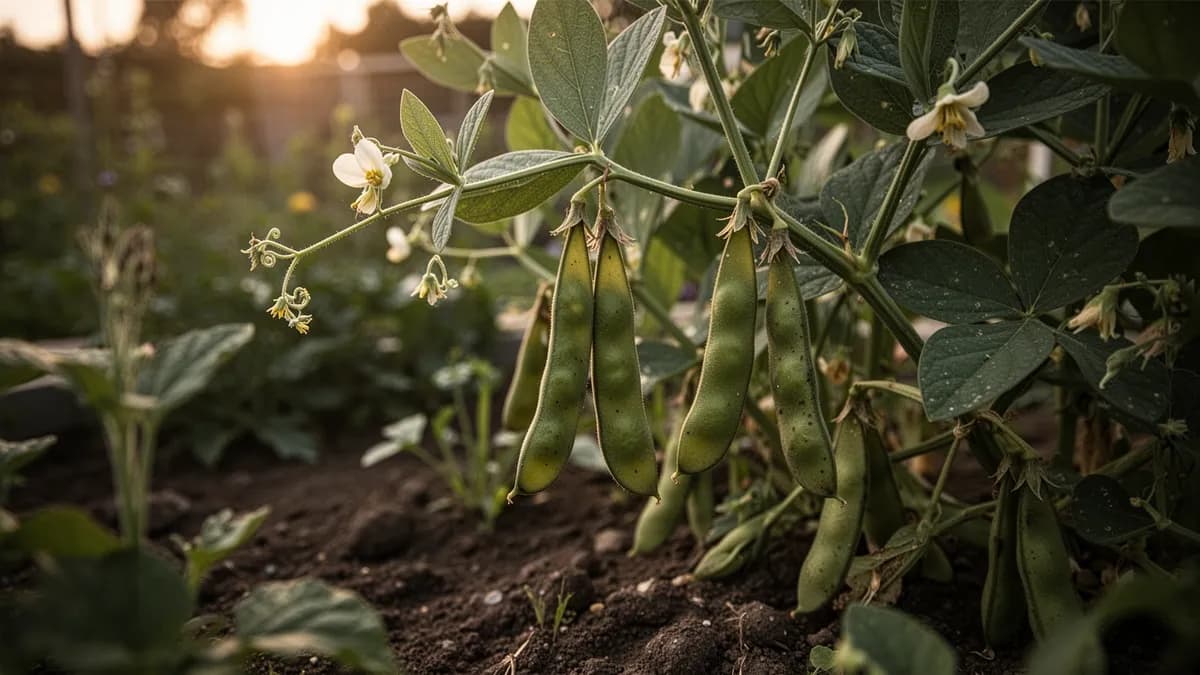
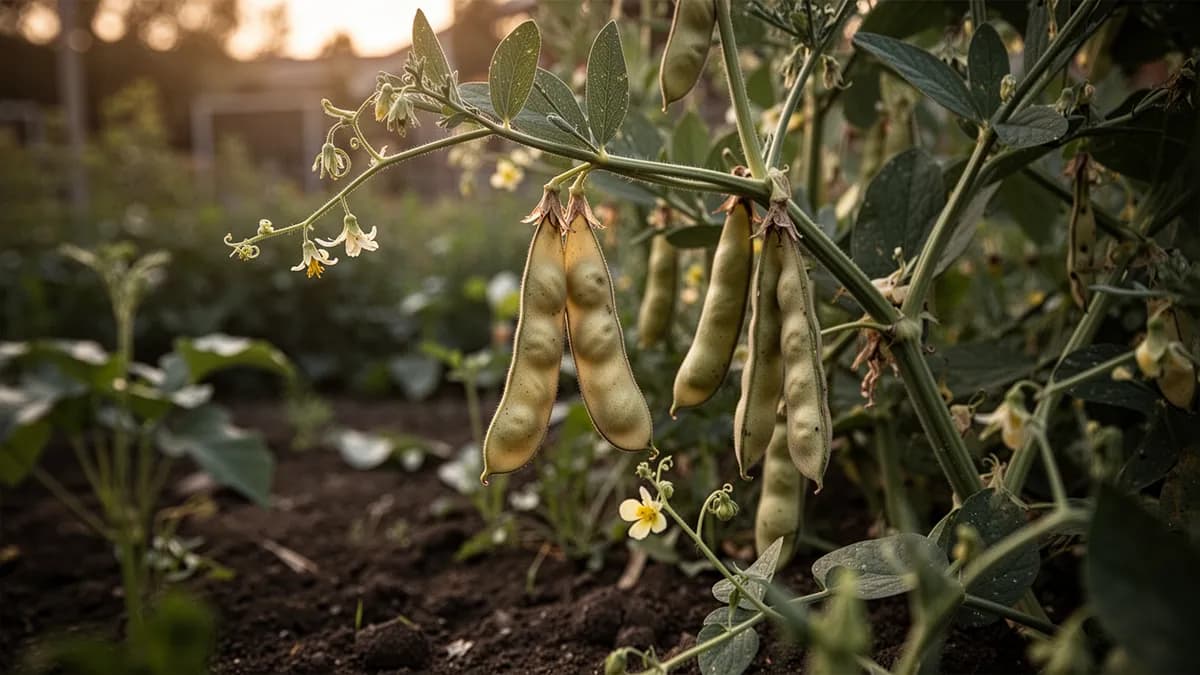
Keep Runner Bean away from these
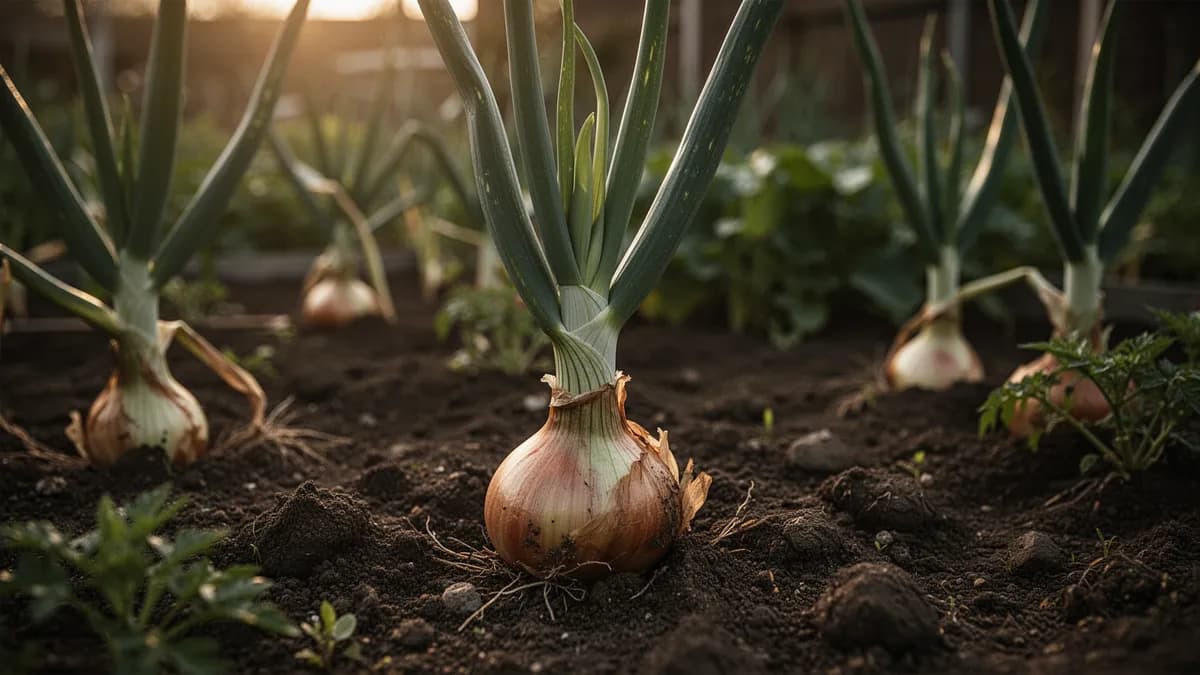
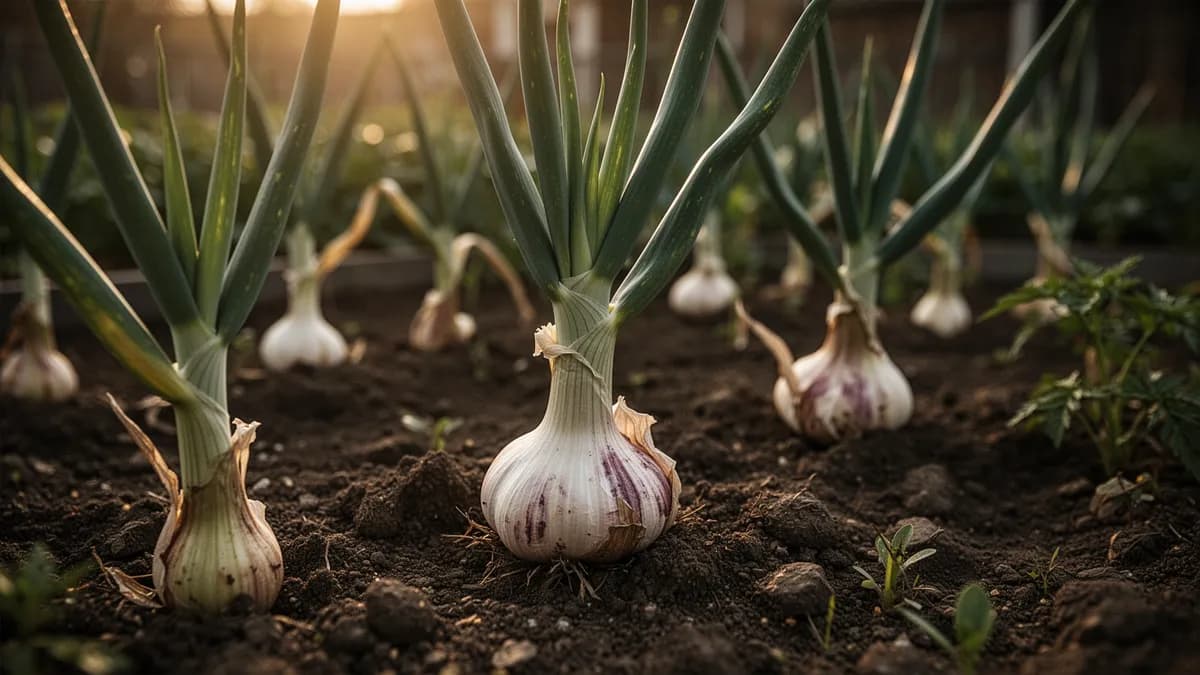
Grow your best Runner Bean yet — and everything around it.
Start a free plan today. Lay out your beds, drop in your Runner Bean, and let PlotMyGarden handle the timing, spacing, companions and reminders from seed to harvest basket.