Edamame
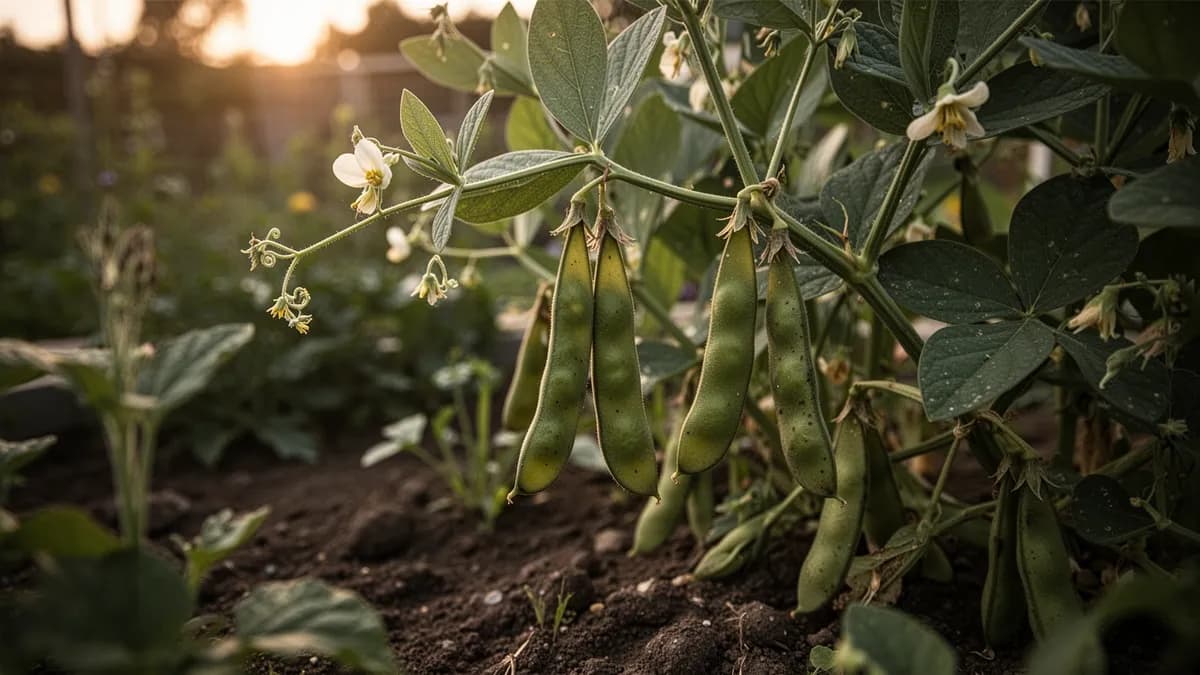
A fresh green soybean that is boiled in the pod and served as a protein-rich snack or appetizer.





On this pageOverview
Meet Edamame
A fresh green soybean that is boiled in the pod and served as a protein-rich snack or appetizer. Edamame needs warm soil and a relatively long growing season but is rewarding once pods fill out and turn plump. Plant after all frost danger has passed and inoculate seeds with rhizobium bacteria to enhance nitrogen fixation. Harvest when pods are bright green and beans are visibly plump, then blanch and freeze immediately for the freshest taste.
When to plant Edamame
Direct sow edamame seeds outdoors after the last frost when soil temperatures reach at least 60°F. Do not start indoors, as soybeans have sensitive roots that do not transplant well. Sow seeds 1-2 inches deep and 3-4 inches apart. Inoculate with Bradyrhizobium japonicum bacteria before planting, especially in soil where soybeans have not been grown before. Seeds germinate in 7-14 days in warm soil. Make successive plantings every 2-3 weeks through early summer for an extended harvest. In short-season areas, choose varieties maturing in 75-85 days.
Your Edamame Year
Composed for Zone 7 · typical seasons · frost passes Apr 2, returns Nov 1
Plant Edamame May – Jun, pick Aug – Sep. Check the planting methods below and set your climate to personalize these windows.
How to grow Edamame
Edamame requires warm soil of at least 60°F for germination and a growing season of 75-120 days depending on the variety. Sow seeds 1-2 inches deep and 3-4 inches apart in rows 18-24 inches wide, directly in the garden after all danger of frost has passed. Inoculate seeds with soybean-specific Bradyrhizobium japonicum bacteria to maximize nitrogen fixation and yields.
Edamame plants are bushy and compact, typically growing 2-3 feet tall without need for trellising. They prefer full sun and moderate, consistent moisture, especially during flowering and pod fill. Avoid overhead watering during flowering, which can reduce pollination success and pod set.
Mulch around plants to conserve moisture and suppress weeds. Edamame is relatively low-maintenance once established and has fewer pest problems than many other garden vegetables. Most varieties mature all pods simultaneously, allowing for a single harvest. In short-season areas, choose early-maturing varieties that ripen in 75-85 days. Successive plantings 2-3 weeks apart extend the harvest window.
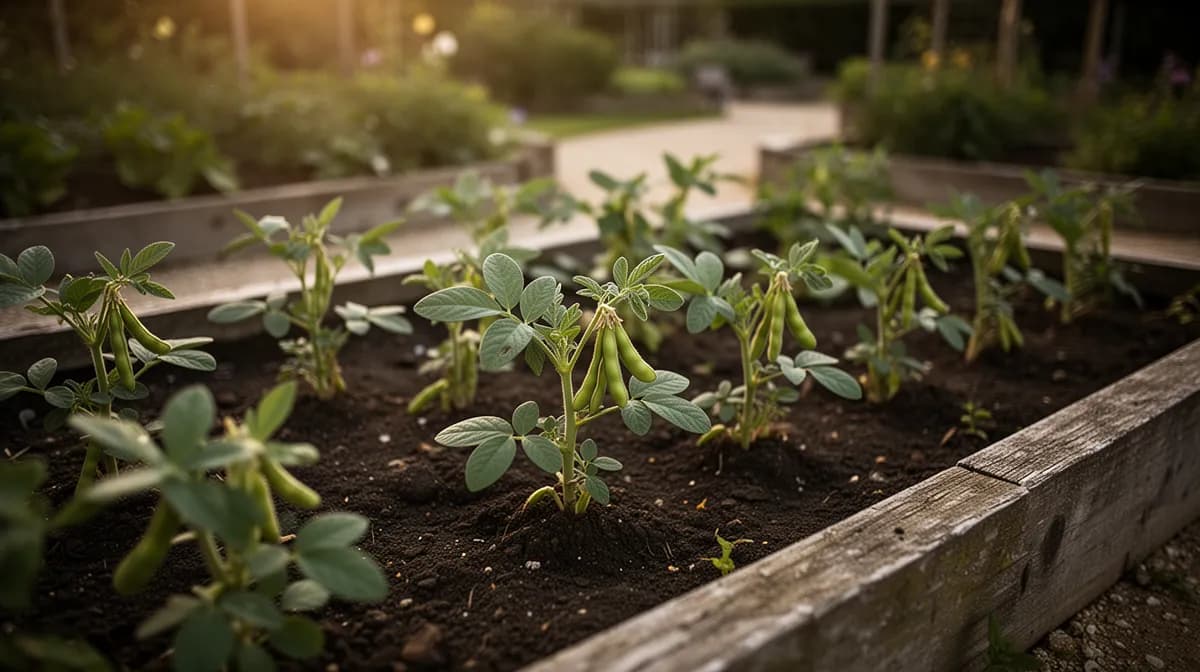
128 plants fit a 4 × 8 ft bed
Each Edamame wants 15 cm of elbow room. The planner keeps that spacing for you — every plant, every bed.
Edamame's best neighbours
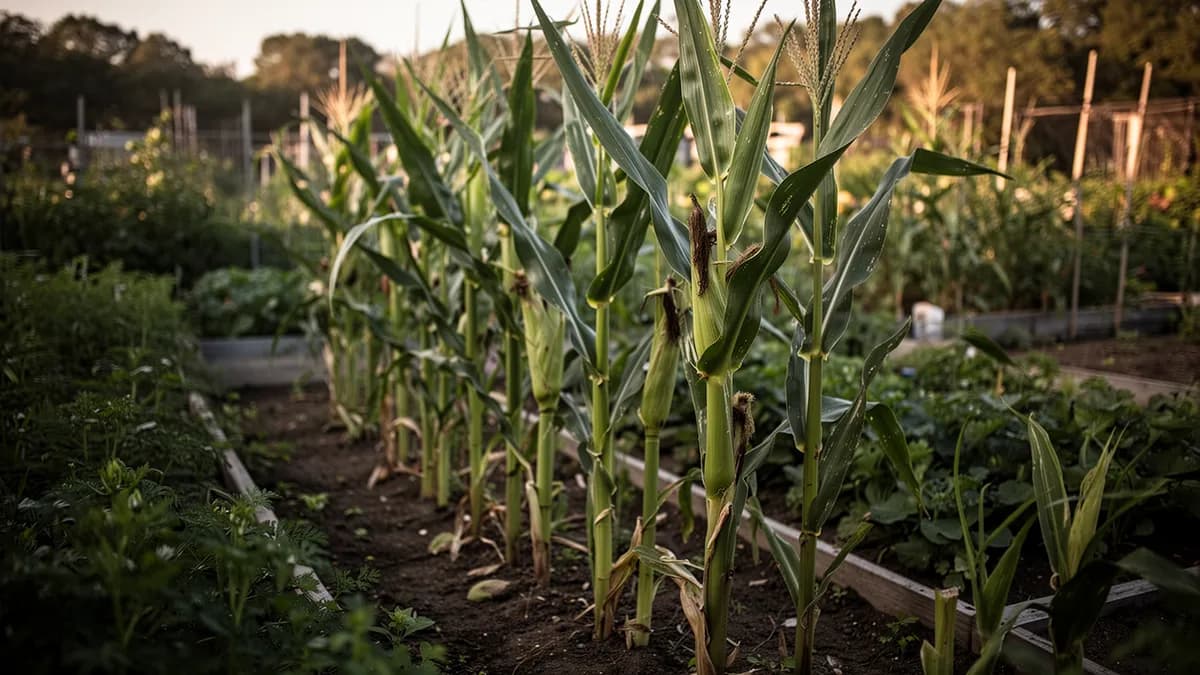
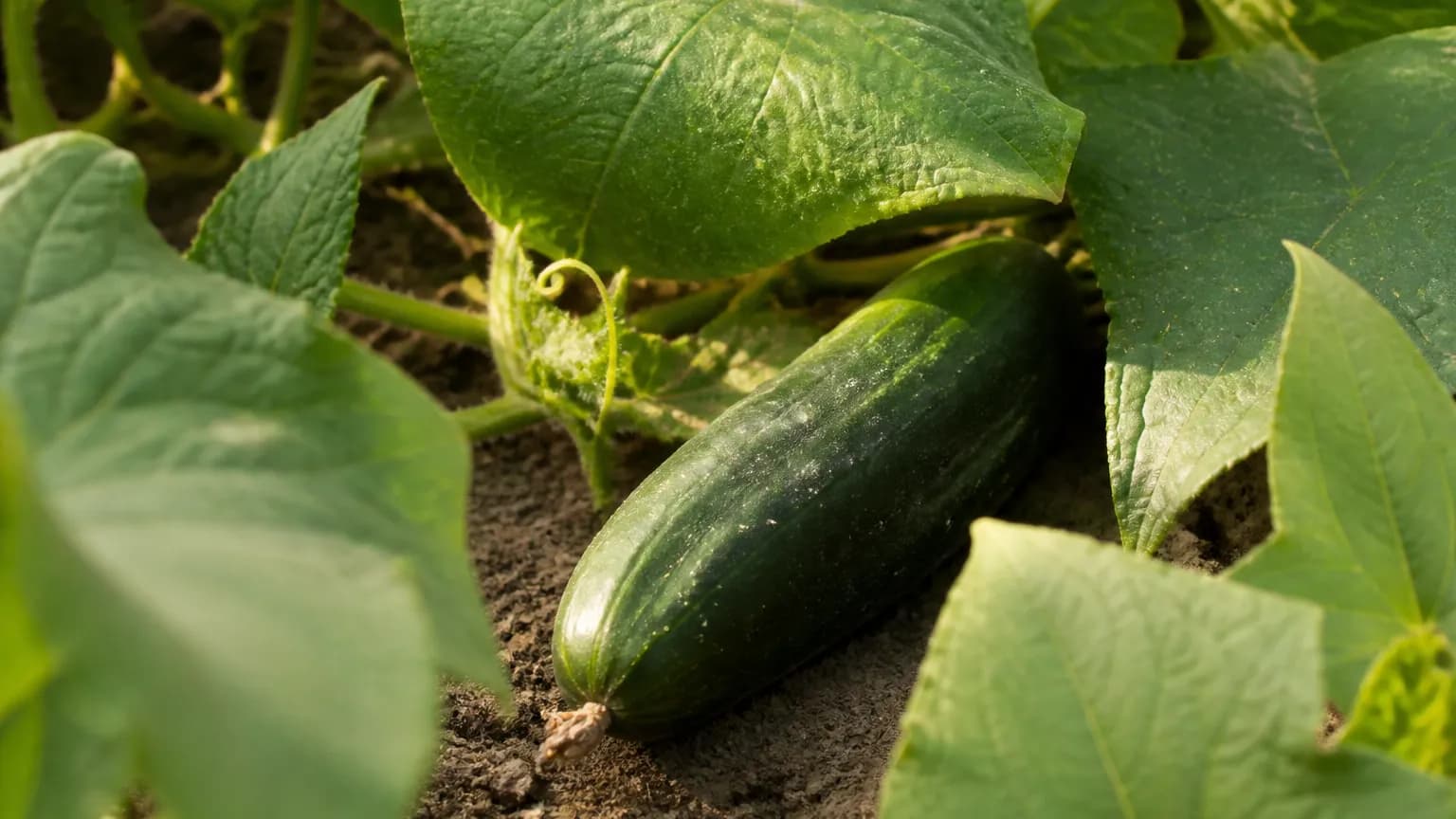
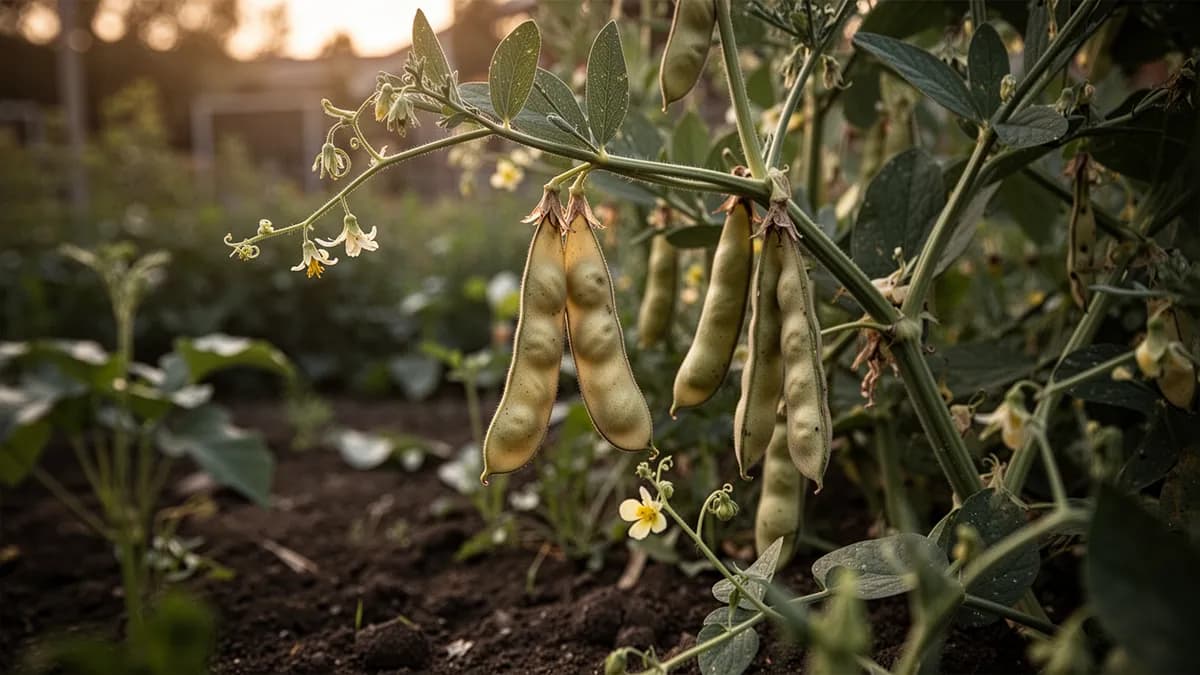
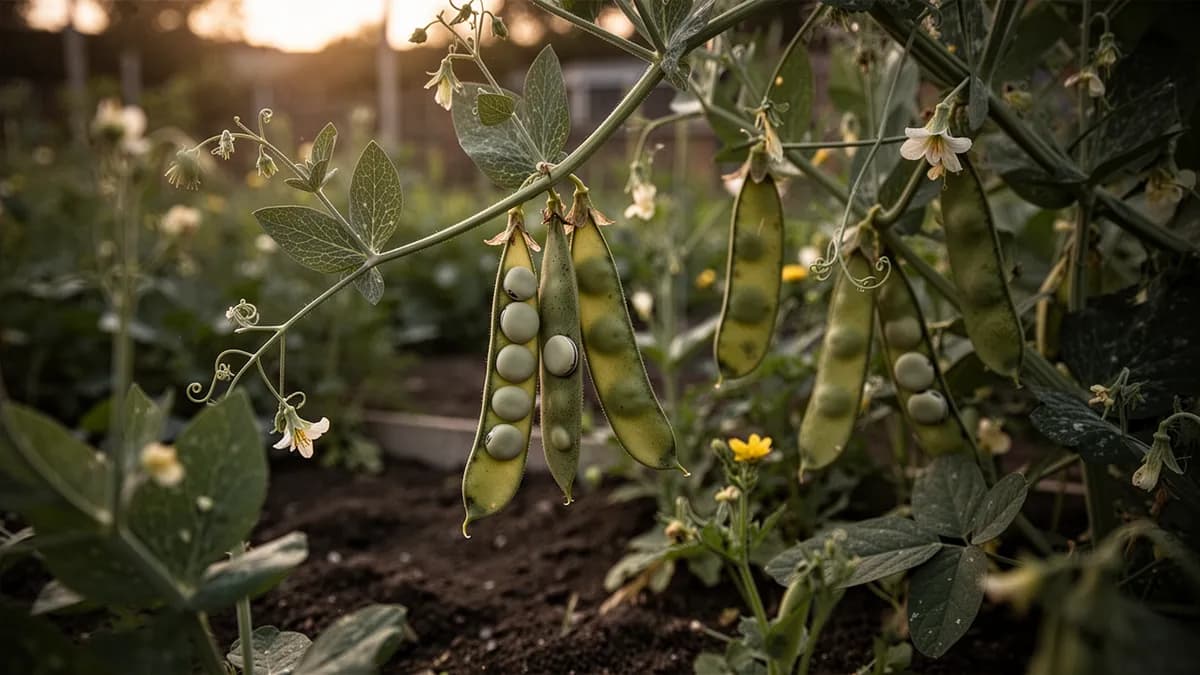
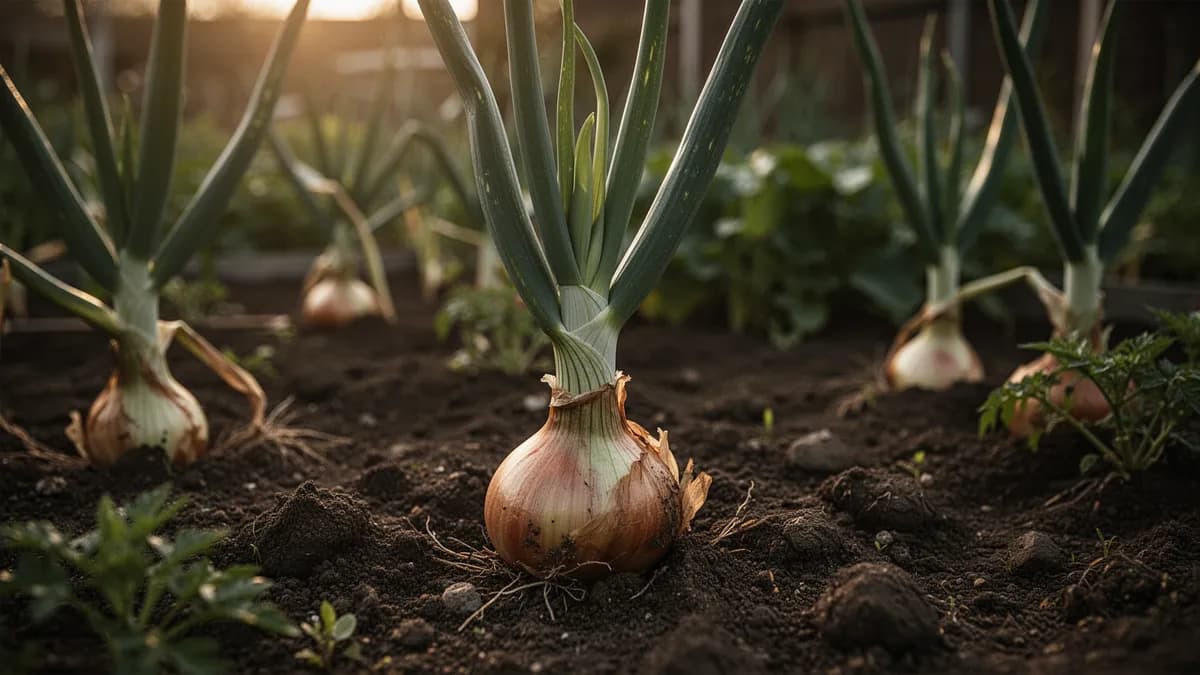
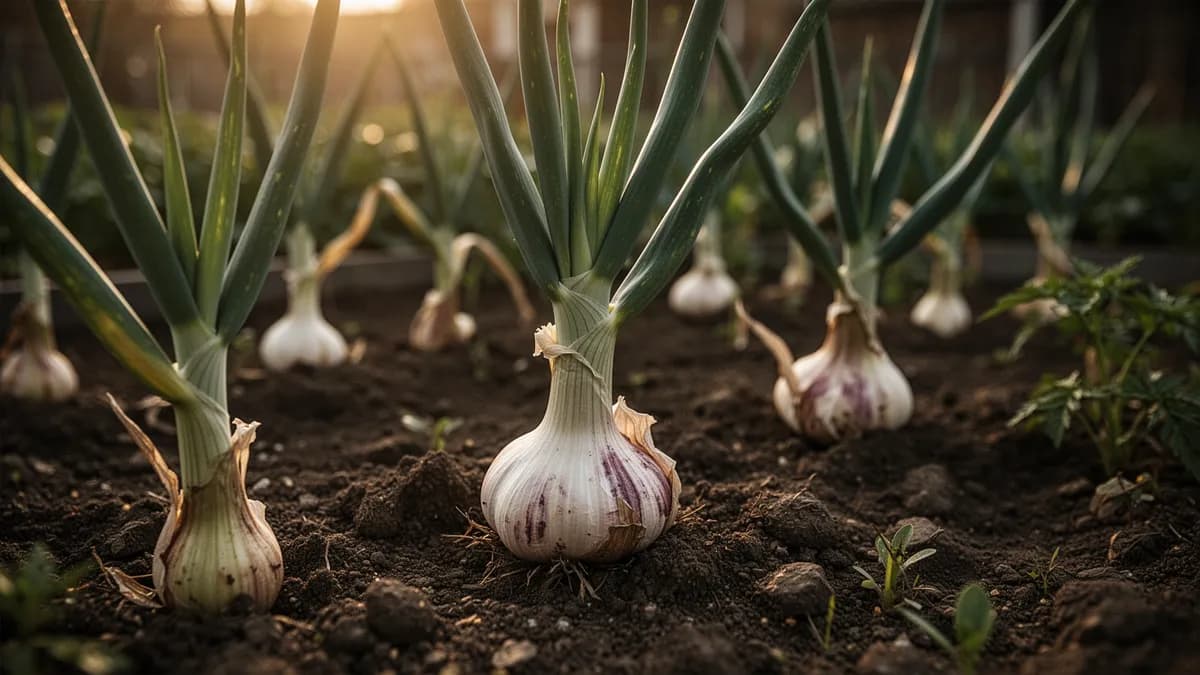
Edamame pairs well with corn, which benefits from the nitrogen fixation soybeans provide. Cucumbers and squash are compatible neighbors. Interplant with fast-growing lettuce or radishes that mature before edamame shades them out. Avoid planting near onions, garlic, and fennel, which can inhibit legume growth. Marigolds planted nearby help deter certain pests. As nitrogen fixers, edamame plants enrich the soil for subsequent crops when residues are tilled in after harvest.
Corn belongs beside it. Onion doesn't.
Old growers' knowledge, checked against Edamame's real companion table below — test any plant you're growing.
Try Edamame in a bed — right here
A real planner bed with Edamame already in it. Tap a companion to place it and watch the pairing checks answer — green for good neighbours, red for a clash.


Related growing guides
Feed it well
Edamame grows well in fertile, well-drained soil with a pH of 6.0-7.0. As a nitrogen-fixing legume, it needs minimal nitrogen fertilization. Inoculate seeds with soybean-specific Bradyrhizobium bacteria at planting for optimal nitrogen fixation. Apply a low-nitrogen, higher-phosphorus fertilizer (5-10-10) at planting. Excessive nitrogen causes lush foliage with poor pod production. Add compost to improve soil structure and provide micronutrients. Potassium supports pod development, so ensure adequate levels through soil testing.
Ideal Temperature
Hardiness Zone Compatibility
From seed to harvest, stage by stage
Germination
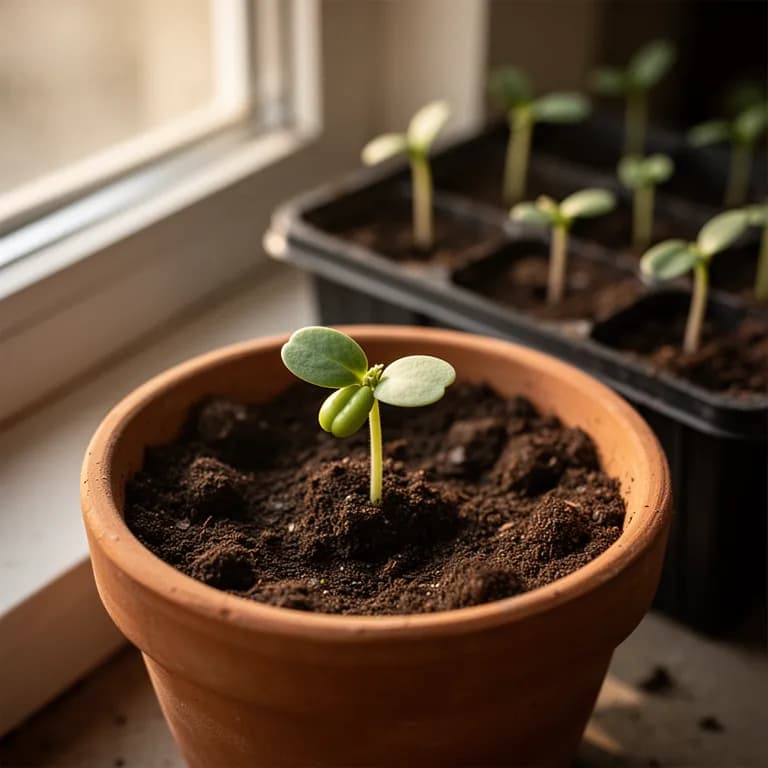
Seeds swell and crack open in warm, moist soil. A strong taproot pushes downward while thick, fleshy cotyledons emerge above the surface. Germination requires soil temperatures of at least 15°C (60°F) and fails in cold, wet conditions.
Vegetative Growth
The plant develops a sturdy central stem with trifoliate leaves (three leaflets per leaf). Bushy, compact growth reaches 45-75cm (18-30 inches) tall. Nitrogen-fixing root nodules form during this stage, visible as small pink bumps on the roots.
Flowering
Small, inconspicuous white to pale purple flowers appear in clusters at leaf axils along the stem. Flowers are self-pollinating and do not require insect pollination, though bees may visit. This is the most moisture-critical stage.
Pod Development
Fuzzy green pods form at each flower site and begin to swell as beans develop inside. Pods are covered in fine trichomes (hairs) characteristic of soybeans. Each pod contains two to three beans that plump up over several weeks.
Harvest
Pods reach full size and beans are plump and bright green. The harvest window is brief — about 7-14 days. Most varieties mature all pods simultaneously, allowing a single whole-plant harvest. Beans should be tender and sweet, not starchy.
Keep soil evenly moist but never waterlogged. Inoculate seeds with Bradyrhizobium japonicum bacteria before sowing for optimal nitrogen fixation. Plant 2.5-5cm (1-2 inches) deep.
Caring for Edamame month by month
What to do each month for your Edamame
October
You are hereClear spent plants from the garden. Cut stems at soil level rather than pulling — leave roots in the ground so nitrogen-rich nodules decompose and feed the soil. Compost healthy plant material. Note variety performance.
Know exactly what to do in your garden — every month
One email at the start of each month: what to sow, plant, and tackle right now — for your Edamame and everything growing around it. Plus a short starter course that helps you dodge the classic mistakes.
- What to do, right now
- Matched to your season
- Starter course included
Harvesting Edamame
Harvest edamame when pods are plump, bright green, and the beans inside are fully swollen but before pods begin to yellow. The pods should be fuzzy and slightly firm to the touch. Most edamame varieties mature all pods at roughly the same time, so you can pull entire plants and strip pods off at once. Taste-test a few beans: they should be tender and sweet, not starchy. Harvest promptly, as over-mature beans become hard and lose their sweet flavor. Process immediately after picking for the best quality.
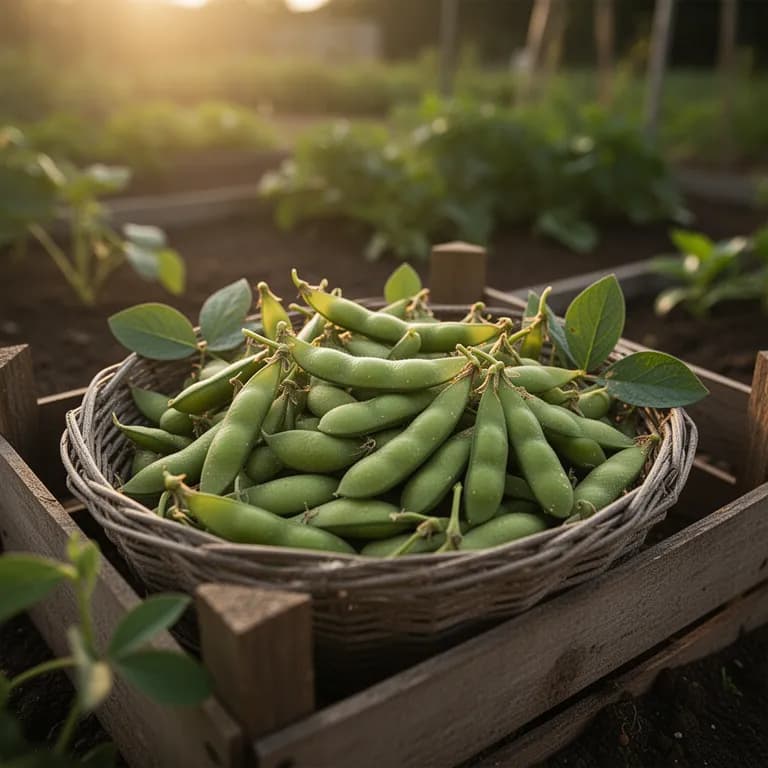
assuming you plant when the window opens — set your real date
Pick Edamame promptly and the plant keeps producing.
Storage & Preservation
Fresh edamame pods keep for only 2-3 days in the refrigerator before quality declines. For the best preservation, blanch pods in boiling salted water for 3-5 minutes immediately after harvest, cool in ice water, drain, and freeze in zip-lock bags for up to 12 months. Shelled edamame can be blanched for 2 minutes and frozen similarly. For dried soybeans, allow pods to dry completely on the plant until brown and brittle, then shell and store in airtight containers. Fresh edamame can also be refrigerator-pickled for a tangy snack.
What goes wrong — and the fix
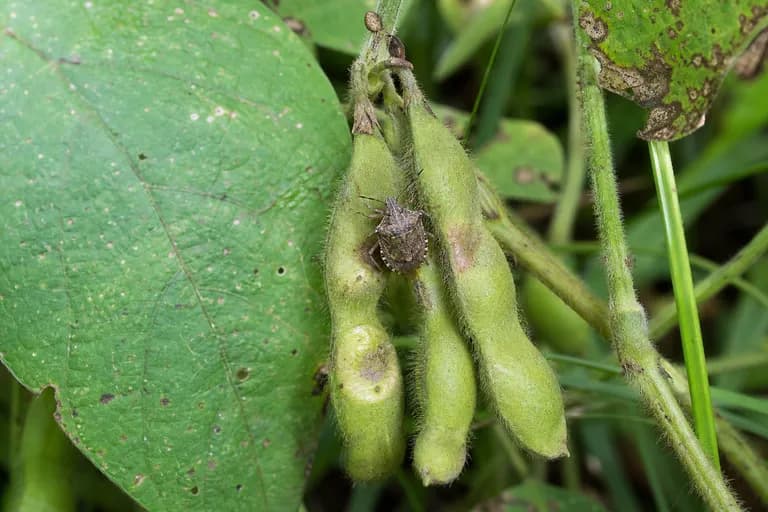
Stink Bugs
PestFlattened, discolored spots on developing beans where bugs have pierced the pod, leading to shriveled or deformed beans.
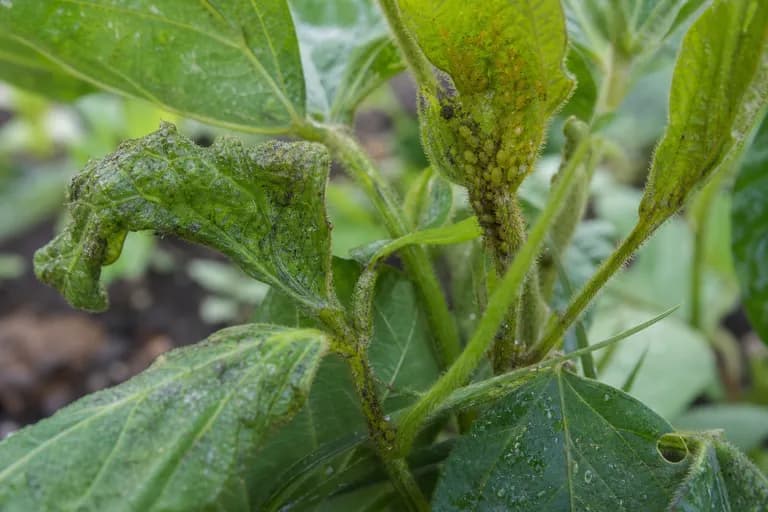
Soybean Aphid
PestClusters of tiny yellow-green aphids on stems and leaf undersides, causing curled leaves, stunted growth, and sticky honeydew.
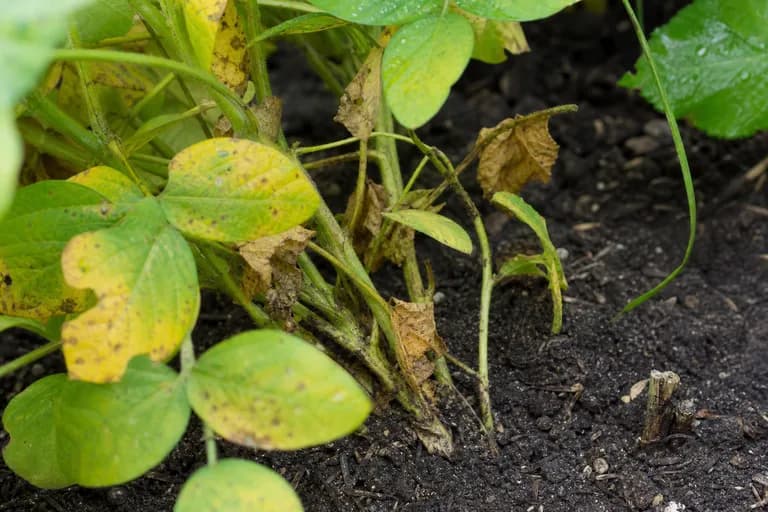
Phytophthora Root Rot
DiseaseWilting and yellowing of plants despite adequate moisture, brown discoloration of roots and lower stems.
Troubleshooting Common Problems
Poor pod fill is the most common disappointment, usually caused by planting too late, drought stress during flowering, or excessive heat above 95°F. Seeds planted in cold soil may rot before germinating. Failure to inoculate with Bradyrhizobium reduces yields and nitrogen fixation. Deer and rabbits are attracted to soybean plants and may need fencing. Birds sometimes pull up newly germinated seedlings. In humid climates, fungal diseases can be problematic; ensure good air circulation. Over-mature beans become hard and starchy, losing their characteristic sweetness.
Growing Tips
- Always inoculate seeds with soybean-specific Bradyrhizobium japonicum bacteria before planting, especially in soil where soybeans have never been grown. This dramatically improves nitrogen fixation and can increase yields by 20-30%. Inoculant is inexpensive and available at most garden centers.
- Never start edamame indoors — soybeans have a taproot system that resents transplanting. Direct sow after the last frost when soil is at least 15°C (60°F). Push seeds 2.5-5cm (1-2 inches) into warm soil and water gently.
- Plant in full sun with at least 6-8 hours of direct sunlight daily. Edamame tolerates light afternoon shade in hot climates but produces fewer pods with less than full sun exposure.
- Water consistently during flowering and pod fill — these are the two stages where drought stress causes the greatest yield loss. About 2.5cm (1 inch) per week from rain or irrigation is ideal. Reduce watering once pods are fully filled.
- Do not fertilize with nitrogen. As a legume, edamame fixes its own nitrogen from the atmosphere through symbiotic root bacteria. Excess nitrogen causes excessive leafy growth at the expense of pod production. A light application of phosphorus and potassium at planting is sufficient.
- Make succession plantings every 2-3 weeks from late spring through early summer to extend the harvest window. Most varieties mature all pods at once, giving you only a 7-14 day harvest window per planting.
- Use floating row covers during pod development to protect against stink bugs, which are the most damaging edamame pest. Stink bugs pierce pods and cause shriveled, discolored beans that are unappetizing.
- Harvest the entire plant when most pods are plump and bright green. Cut at the base and strip pods by running your hand along the stem. Process immediately — blanch for 3-5 minutes, ice bath, then freeze for up to 12 months of garden-fresh quality.
Grow your best Edamame yet — and everything around it.
Start a free plan today. Lay out your beds, drop in your Edamame, and let PlotMyGarden handle the timing, spacing, companions and reminders from seed to harvest basket.
Pick your Edamame
Midori Giant
Large-podded variety with 2-3 big beans per pod. Excellent buttery flavor and early maturity at about 85 days.
Chiba Green
A popular early variety maturing in about 78 days with sweet, tender beans. Good choice for short-season areas.
Sayamusume
A Japanese variety prized for its superior sweet flavor and large pod size. Matures in about 85-90 days.
Butterbean
An extra-early variety maturing in just 75 days with notably sweet, buttery beans. Ideal for northern gardens.
Beer Friend
A heavy-yielding variety with excellent flavor, developed specifically as a snacking bean. Matures in about 85 days.
A packet of edamame seeds costs $3-5 and plants 20-30 plants. Each plant produces roughly 300g of shelled beans, equivalent to one 350g frozen bag costing $3-4 at the grocery store. A small planting of 20 plants can yield $60-80 worth of frozen organic edamame from a $4 seed investment. Homegrown edamame harvested at peak freshness is noticeably sweeter and more tender than commercially frozen products.
Quick recipes
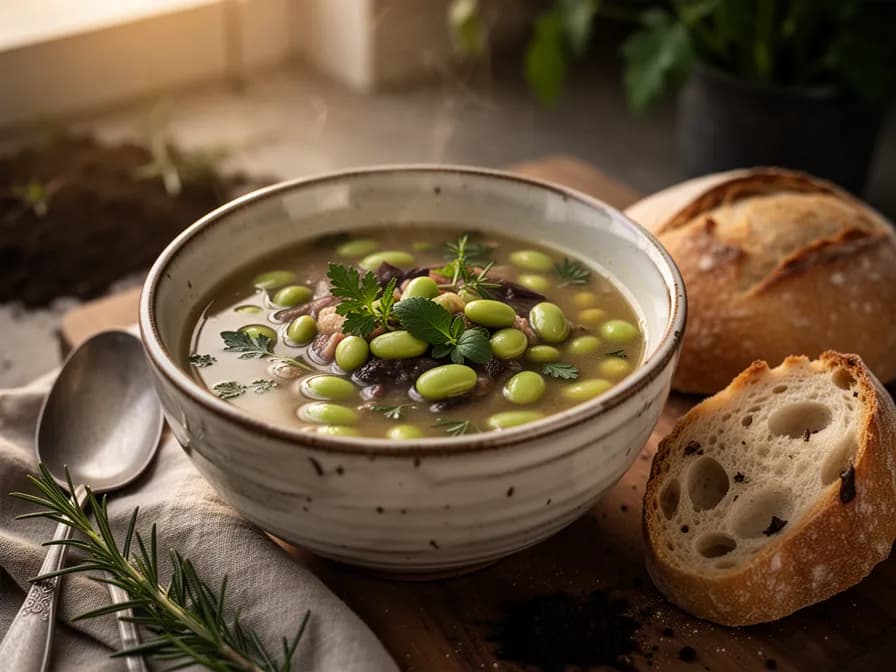
Classic Salted Edamame
10 minThe simplest and most popular way to enjoy edamame. Boiled in salted water until tender, then tossed with flaky sea salt. Squeeze the pods to pop the warm beans directly into your mouth — addictive and impossibly satisfying.
6 ingredientsEdamame Hummus
15 minA vibrant green twist on classic hummus that is lighter and fresher than the chickpea original. The natural sweetness of edamame pairs beautifully with garlic, lemon, and tahini for a protein-packed dip or spread.
7 ingredientsSesame Ginger Edamame Bowl
20 minA nourishing grain bowl built around shelled edamame. Warm rice topped with edamame, shredded carrots, cucumber, and avocado, all drizzled with a tangy sesame-ginger dressing. A complete meal in a bowl.
9 ingredientsCulinary Uses
Edamame is traditionally boiled or steamed in the pod with salt and served as a snack or appetizer. Pop the beans directly from the pod into your mouth. Shelled edamame is excellent in salads, stir-fries, fried rice, and grain bowls. Puree edamame with garlic and lemon for a vibrant green hummus alternative. Add to soups, pasta dishes, and wraps for protein. Edamame is also delicious roasted with spices for a crunchy snack.
What's inside
Health Benefits
- Complete plant protein containing all nine essential amino acids — 11g of protein per 100g serving makes edamame one of the best plant protein sources for vegetarians and vegans.
- Rich in isoflavones (genistein and daidzein), which research suggests may support cardiovascular health by improving blood vessel function and reducing LDL cholesterol levels.
- Excellent source of folate (vitamin B9), with one cup providing 121% of the daily value — essential for DNA synthesis, cell division, and critically important during pregnancy.
- High in dietary fiber (5.2g per 100g) which supports digestive health, promotes satiety, and helps regulate blood sugar levels after meals.
- Contains significant amounts of vitamin K (26mcg per 100g), important for proper blood clotting and maintaining bone mineral density as we age.
- Provides plant-based iron and calcium in meaningful amounts, along with magnesium and zinc — minerals often lacking in plant-based diets.
Where Edamame comes from
The soybean is one of the most ancient cultivated crops on Earth. Wild soybeans (Glycine soja) originated in eastern China, and archaeological evidence suggests deliberate cultivation began around 3,000 BCE in the Yellow River valley. Chinese farmers initially grew soybeans primarily for their dried seeds, used in making tofu, soy sauce, and fermented pastes.
The practice of eating immature green soybeans — what we now call edamame — appears to have developed in Japan. The earliest known written reference to edamame dates to 1275 CE, when a Japanese monk wrote a thank-you note for a gift of edamame from a parishioner. By the Edo period (1603-1868), street vendors in Japanese cities commonly sold boiled edamame as a popular snack food.
Edamame remained relatively unknown outside East Asia until the late 20th century. It was introduced to the United States in the early 1900s but was grown exclusively as a field crop for oil and animal feed. The fresh green bean only gained popularity in Western markets in the 1990s and 2000s, driven by the rise of Japanese cuisine, health food trends, and growing interest in plant-based protein. Today edamame is widely available frozen in supermarkets worldwide and has become a staple appetizer in restaurants far beyond its Asian origins.
Edamame: did you know?
Fascinating facts about Edamame
Edamame literally means 'stem beans' in Japanese (eda = stem, mame = bean), referring to the traditional practice of selling the pods still attached to the stem at market stalls.
Edamame questions, answered
When should I plant Edamame?
What are good companion plants for Edamame?
What hardiness zones can Edamame grow in?
How much sun does Edamame need?
How far apart should I space Edamame?
What pests and diseases affect Edamame?
How do I store Edamame after harvest?
What are the best Edamame varieties to grow?
What soil does Edamame need?
Do I need to inoculate edamame seeds before planting?
Why are my edamame pods flat and empty?
Can I grow edamame in containers?
How do I know exactly when to harvest edamame?
Is edamame the same as soybeans?
You just read the theory. Now grow it on autopilot.
Everything that makes Edamame fiddly — the timing, the spacing, the companions, the harvest window — is exactly what PlotMyGarden handles for you, for every plant in your garden.
A plan that knows your weather
Set your location once. Get sow, feed and harvest dates built around your real last-frost date and live forecast — no more guessing from a generic seed packet.
From the “When to plant” sectionDrag-and-drop bed planner
Design beds on a grid. Every plant snaps to its proper spacing, and you can see your whole season laid out before you spend a cent on seed.
From the “Growing guide” sectionCompanion conflicts, caught early
200+ good-and-bad pairings checked live as you plant — so a season-wrecking mistake never makes it into the ground.
From the “Companions” sectionReminders you'll actually act on
“Water the beans.” “Pick today before it turns.” Timely, specific, and tied to the plants you're really growing.
From the “Harvest” sectionSuccession, scheduled
Want a harvest for six weeks, not six days? It spaces your sowings automatically and reminds you when each new block is due.
From the “When to plant” sectionA record that gets smarter
Every harvest you log teaches it your garden. Next year's plan starts from what actually worked in your soil, not a textbook's.
From the “Overview” sectionPlant these alongside Edamame
More Legumes
Keep Edamame away from these
Grow your best Edamame yet — and everything around it.
Start a free plan today. Lay out your beds, drop in your Edamame, and let PlotMyGarden handle the timing, spacing, companions and reminders from seed to harvest basket.