Caupí
El caupí (Vigna unguiculata), también conocido como frijol de ojo negro, judía de careta o chícharo, es una leguminosa originaria de África occidental extremadamente resistente al calor y la sequía.





En esta páginaResumen
Conoce Caupí
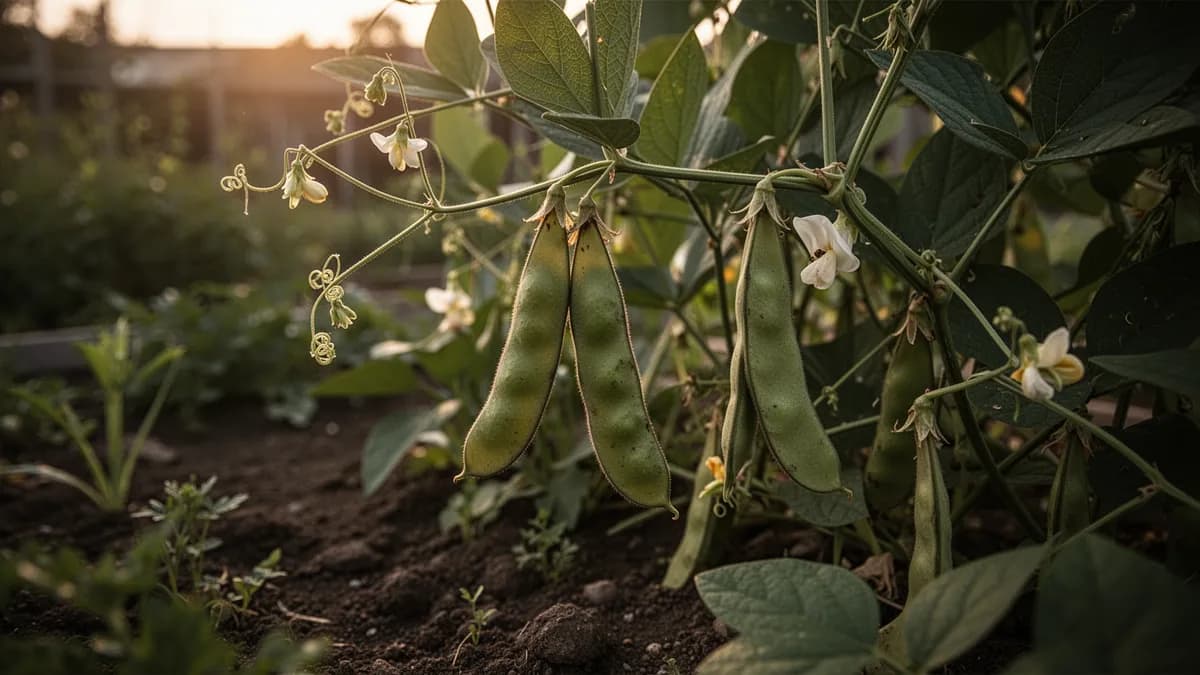
El caupí (Vigna unguiculata), también conocido como frijol de ojo negro, judía de careta o chícharo, es una leguminosa originaria de África occidental extremadamente resistente al calor y la sequía. Es una de las legumbres más importantes en las regiones tropicales y subtropicales del mundo, valorada tanto por sus semillas nutritivas ricas en proteínas como por su capacidad de fijar nitrógeno y mejorar el suelo.
Cuándo plantar Caupí
Siembre directamente al aire libre cuando la temperatura del suelo supere los 18 °C, ya que el caupí no tolera el frío y no trasplanta bien. Plante las semillas a 2-3 cm de profundidad, espaciadas 10-15 cm. Inocule con Rhizobium específico si es el primer cultivo de caupí en ese suelo. La germinación ocurre en 7-10 días. No remoje las semillas antes de sembrar, ya que pueden agrietarse.
Tu año de Caupí
Ajustado a Zona 7 · temporada típica · la helada se va hacia el 2 abr y vuelve hacia el 1 nov
Planta Caupí May – Jul y cosecha Ago – Oct. Consulta los métodos de plantación y elige tu clima para adaptar los periodos.
Cómo cultivar Caupí
Plante en pleno sol en un lugar cálido después de que haya pasado todo riesgo de helada y la temperatura del suelo supere los 18 °C. El caupí es excepcionalmente tolerante al calor y la sequía, prosperando donde otras leguminosas fallan. El suelo debe ser bien drenado, de textura ligera a media, con pH entre 5,5 y 7,0.
Siembre las semillas directamente a 2-3 cm de profundidad, espaciadas 10-15 cm en hileras separadas 60-75 cm. Para variedades trepadoras, proporcione tutores o enrejados. Inocule las semillas con Rhizobium específico para Vigna si es la primera vez que cultiva caupíes en ese suelo.
Riegue moderadamente al establecimiento; una vez asentadas, las plantas toleran periodos de sequía notables. No fertilice con nitrógeno, ya que como leguminosa fija el suyo propio. Un aporte de fósforo y potasio al inicio favorece la floración y fructificación. El caupí también es un excelente abono verde que mejora la estructura y fertilidad del suelo.
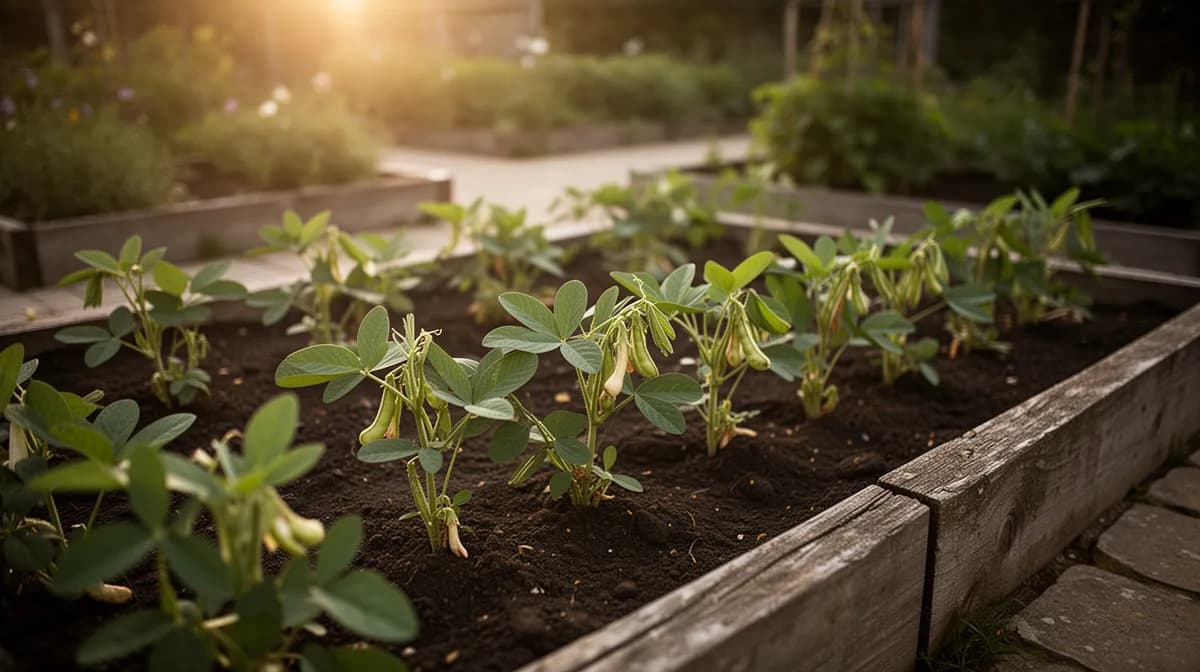
128 plantas caben en un bancal de 120 × 240 cm
Cada Caupí pide 15 cm de margen. El planificador guarda ese marco por ti — cada planta, cada bancal.
Los mejores vecinos de Caupí
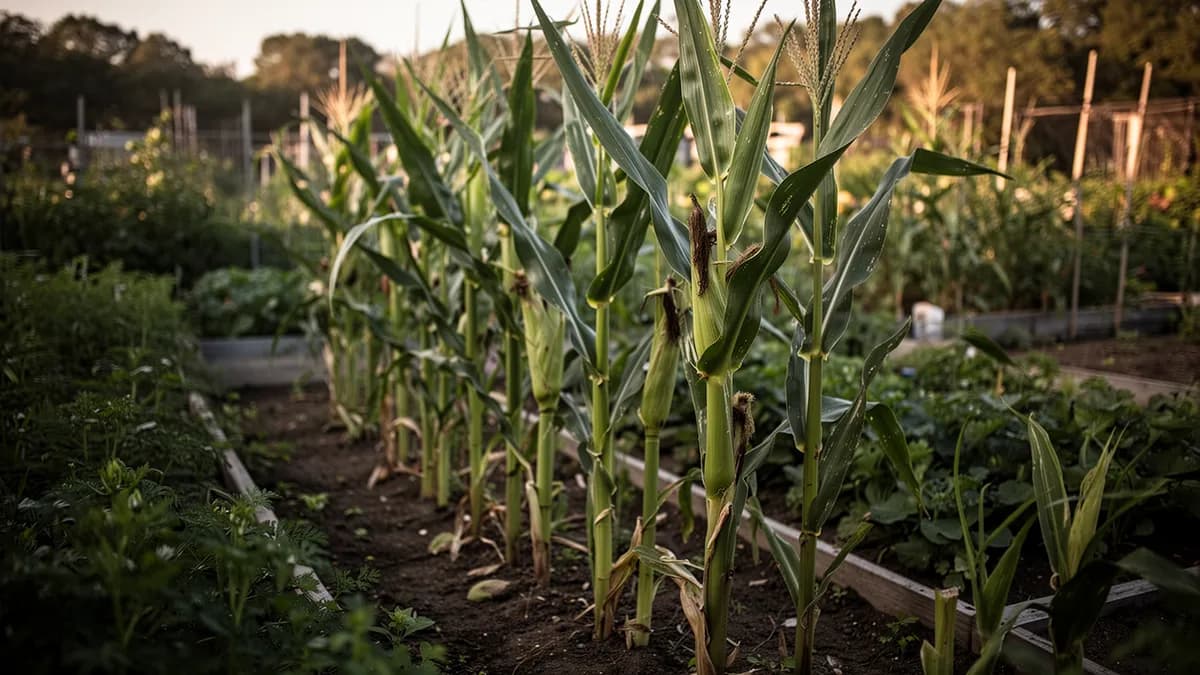
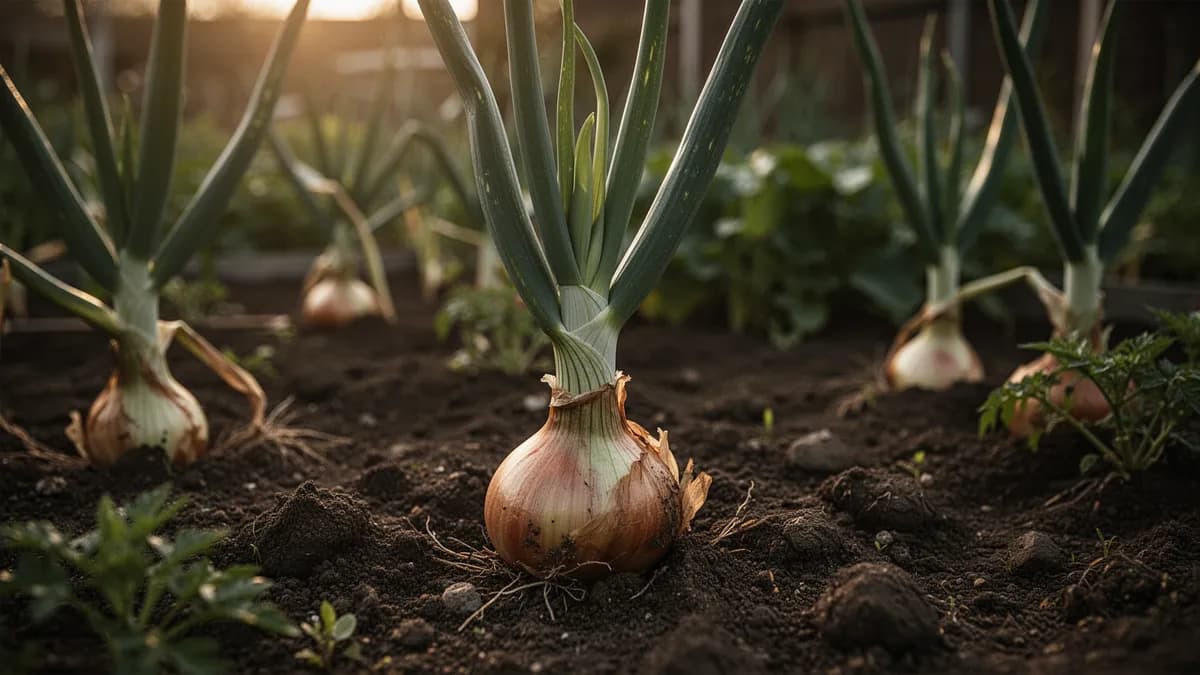
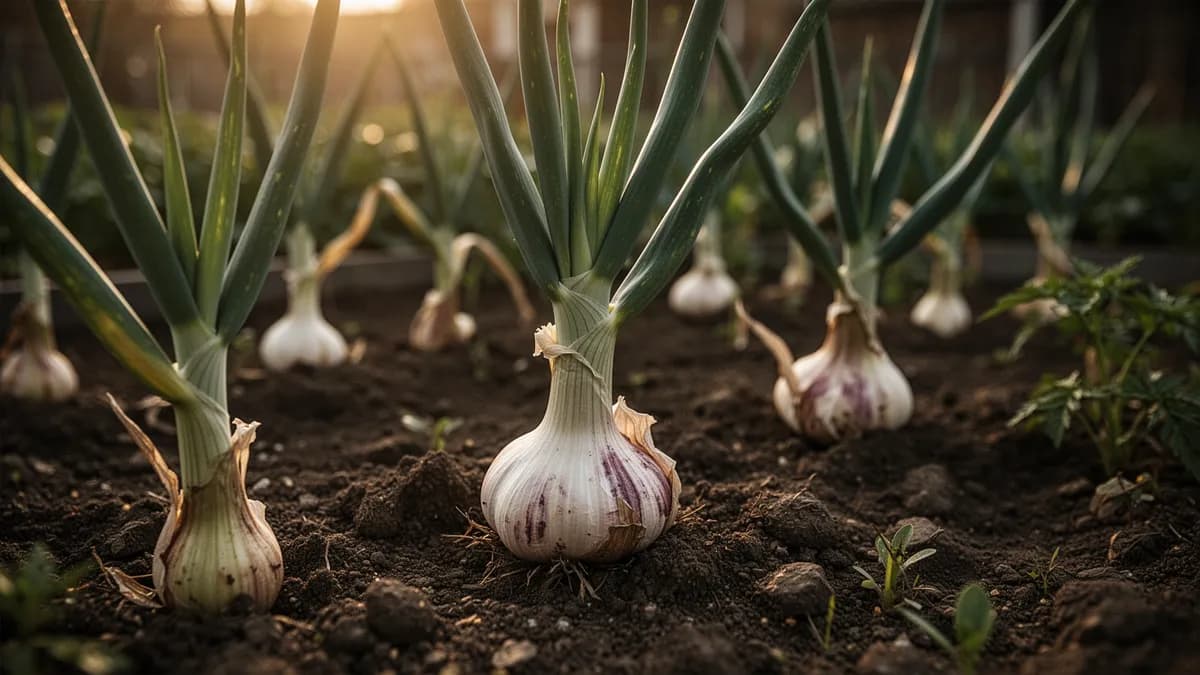
Se asocia excelentemente con maíz y sorgo, donde las plantas de caupí cubren el suelo y fijan nitrógeno que beneficia a los cereales. Las calabazas completan la triada de cultivos de cobertura. Evite plantar junto a ajos, cebollas y otras aliáceas que pueden inhibir la nodulación de las raíces.
Maíz va a su lado. Cebolla no.
Saber de huerto de siempre, cotejado con la tabla real de Caupí — prueba cualquier planta que cultives.
Prueba Caupí en un bancal, aquí mismo
Un bancal real del planificador con Caupí ya plantado. Toca una planta compañera para colocarla y mira cómo responde la comprobación de vecinos: verde para buenos vecinos, rojo si hay conflicto.


Guías de cultivo relacionadas
Abónalo bien
Prospera en suelos bien drenados de textura ligera a media con pH entre 5,5 y 7,0. Tolera suelos pobres y arenosos donde otras leguminosas fallan. No aplique nitrógeno, ya que la planta lo fija del aire a través de simbiosis con Rhizobium. Un aporte de fósforo y potasio al plantar favorece la nodulación y la producción de vainas.
Temperatura ideal
Compatibilidad de zonas de rusticidad
De la semilla a la cosecha, etapa por etapa
Germinación
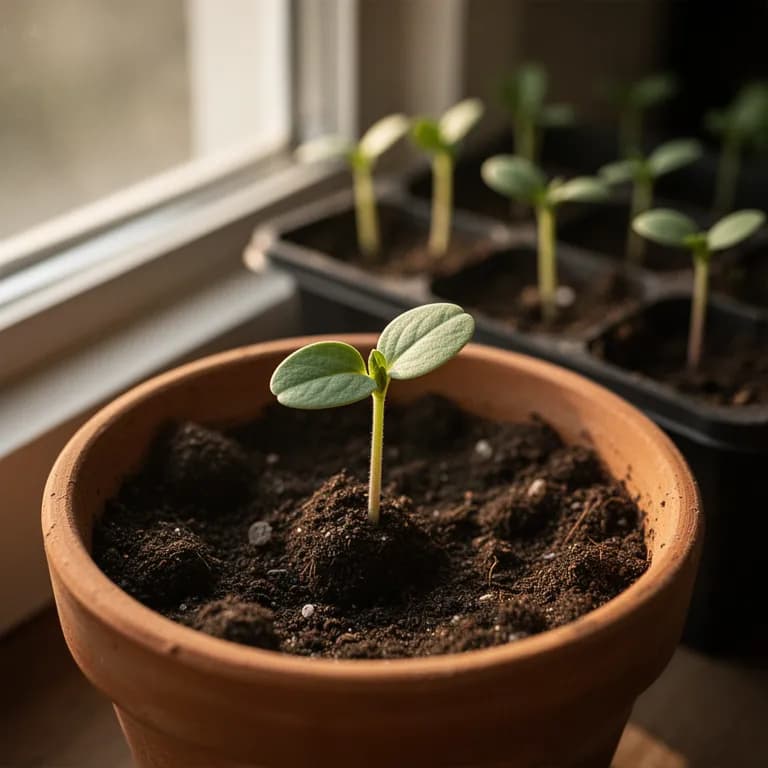
Las semillas germinan rápidamente en suelo cálido por encima de 65°F, y envían un hipocótilo grueso que eleva dos grandes y carnosos cotiledones por encima de la superficie. La raíz principal se establece con rapidez, anclando la planta y comenzando a formar nódulos radiculares con bacterias Rhizobium para la fijación de nitrógeno.
Desarrollo de plántulas
Aparecen las primeras hojas verdaderas trifoliadas, cada una compuesta por tres folíolos anchos. El sistema radicular se expande rápidamente y los nódulos fijadores de nitrógeno de color rosa o blanco se vuelven visibles en las raíces. Las plántulas toleran sorprendentemente bien el calor desde etapas tempranas.
Crecimiento vegetativo
Las plantas crecen con vigor, desarrollando un dosel frondoso de hojas trifoliadas que da sombra al suelo y suprime las malas hierbas. Las variedades arbustivas se mantienen compactas con 45-60 cm, mientras que las semivolubles comienzan a extenderse. La fijación de nitrógeno alcanza aquí su máxima eficiencia.
Desarrollo de vainas
Las vainas largas y delgadas se desarrollan rápidamente a partir de las flores polinizadas y cuelgan en racimos. Las vainas miden 15-25 cm de largo según la variedad. Para consumo fresco, las vainas están gordas y verdes; para frijoles secos, comienzan a amarillear y secarse en la planta.
Secado y madurez de la semilla
Las vainas que se dejan para cosecha de frijol seco se vuelven papiráceas y quebradizas a medida que el contenido de humedad baja por debajo del 14 %. Los granos del interior se endurecen y desarrollan su color final — el característico ojo negro, ojo rosado o color uniforme según la variedad. Las plantas senescen de forma natural a medida que los nutrientes se redirigen al desarrollo de la semilla.
Cosechado
El cultivo ha completado su ciclo de vida y el material vegetal restante puede retirarse o compostarse.
Asegúrate de que la temperatura del suelo sea de al menos 65°F antes de sembrar. Inocula las semillas con un inoculante de Rhizobium específico para cowpea para una fijación óptima de nitrógeno. Mantén el suelo húmedo, pero no encharcado, durante la germinación.
Cuidar Caupí mes a mes
Qué hacer cada mes para tu Caupí
Octubre
Mes actualComplete dry bean harvest — pods should be brittle and beans should rattle inside. Thresh by crushing pods in a cloth bag and winnow to separate beans from chaff. Freeze dried beans for 48 hours to kill any weevil eggs before long-term storage.
Ten claro qué hacer en tu huerto, cada mes
Un correo al empezar cada mes: qué sembrar, plantar y hacer ahora mismo — para tu Caupí y todo lo que crece alrededor. Más un breve curso inicial para esquivar los errores clásicos.
- Qué hacer ahora mismo
- Ajustado a tu temporada
- Curso inicial incluido
Cosechar Caupí
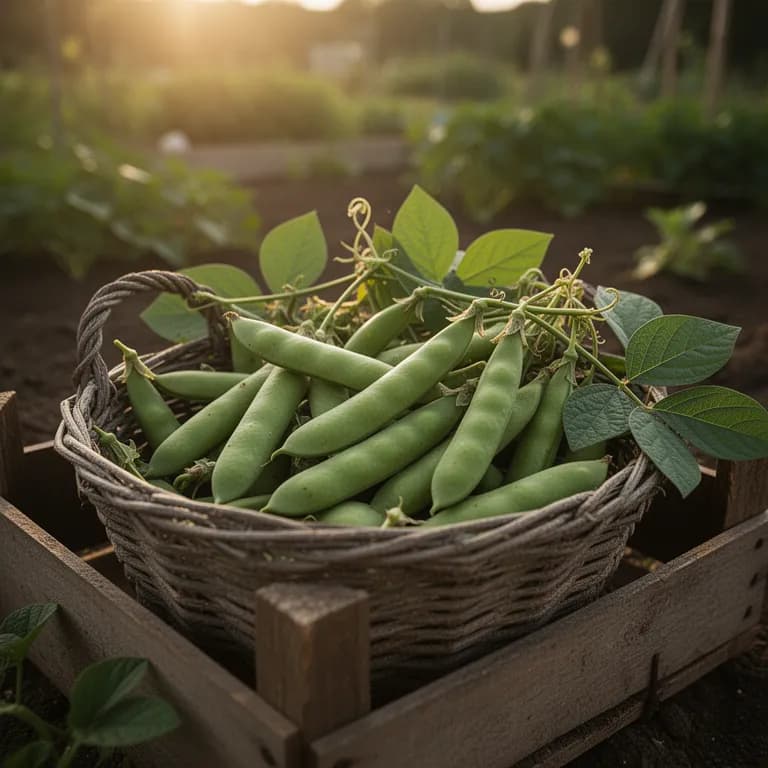
Para consumo en fresco, coseche las vainas cuando estén llenas pero aún verdes y tiernas, aproximadamente 60-70 días después de la siembra. Para grano seco, deje las vainas en la planta hasta que se tornen marrones y secas, unos 80-100 días. Arranque las plantas enteras y cuélguelas boca abajo en un lugar seco y ventilado para completar el secado antes de desgranar.
se supone que plantas al comenzar el periodo — indica tu fecha real
Cosecha las vainas para consumo en fresco cuando estén gordas, completamente formadas y todavía verdes o apenas empezando a tornarse amarillas.
Almacenamiento y conservación
Los granos completamente secos (menos del 12 % de humedad) se conservan en recipientes herméticos en lugar fresco y seco durante 1-2 años. Congele los granos secos durante 48 horas tras la cosecha para eliminar posibles gorgojos. Las vainas frescas pueden blanquearse y congelarse durante 6-8 meses. También pueden enlatarse al baño maría.
Qué falla — y cómo solucionarlo
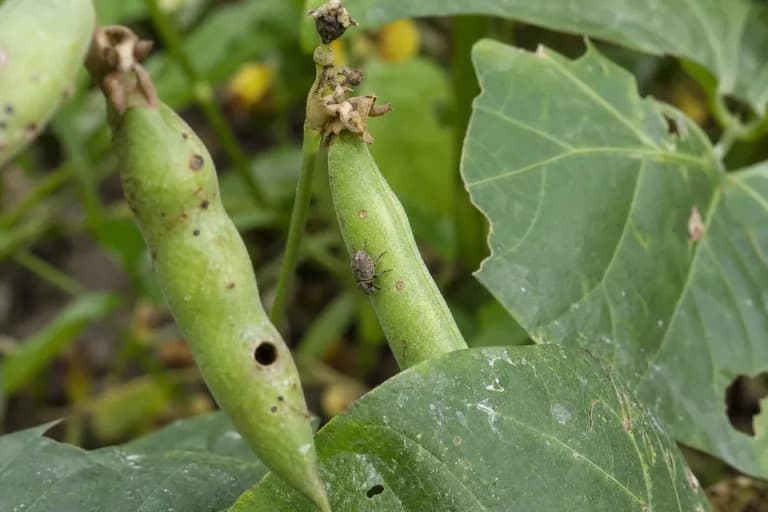
Pulgón del caupí (Aphis craccivora)
PlagaColonias densas de insectos negros en brotes tiernos, vainas jóvenes y envés de las hojas, causando enrollamiento, deformación y transmisión de virus.
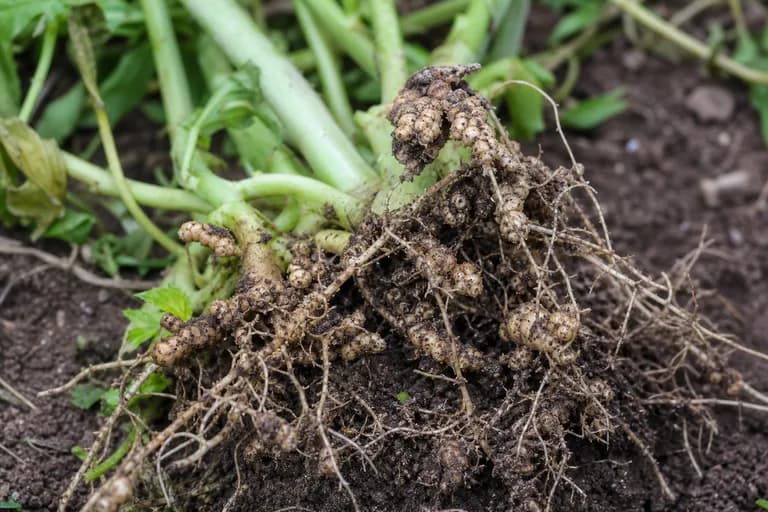
Gorgojo del caupí (Callosobruchus maculatus)
PlagaAgujeros circulares en las semillas almacenadas, polvo fino dentro de los contenedores. Las larvas se desarrollan dentro de los granos.
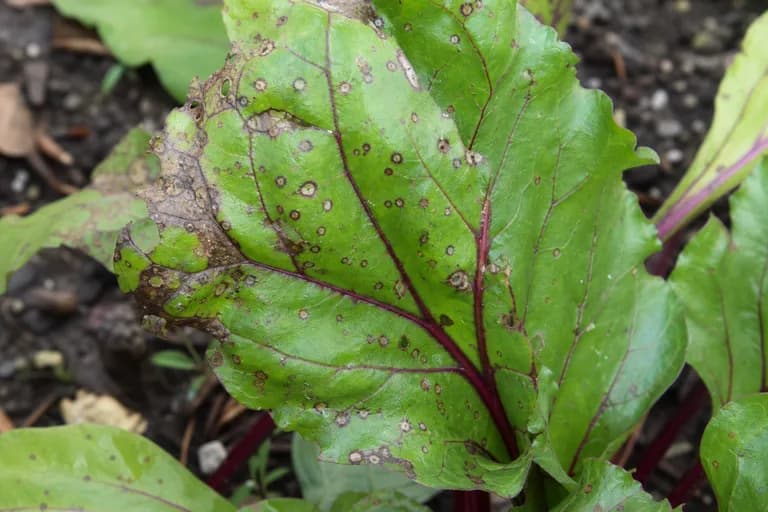
Mosaico del caupí (virus CpMV)
EnfermedadMoteado verde claro y oscuro en las hojas, deformación foliar, enanismo de la planta y reducción severa del rendimiento.
Solución de problemas comunes
El caupí es una de las legumbres más fáciles de cultivar y tiene pocos problemas significativos. El mayor desafío es el gorgojo del almacenamiento que puede destruir cosechas enteras si los granos no se secan y almacenan correctamente. Las temperaturas frías detienen el crecimiento y las heladas matan las plantas. En climas húmedos pueden aparecer enfermedades fúngicas.
Consejos de cultivo
- Never add nitrogen fertilizer to cowpeas. As champion nitrogen fixers, cowpeas produce their own nitrogen through symbiotic Rhizobium bacteria in root nodules. Adding nitrogen fertilizer actually suppresses this natural process and promotes excessive leafy growth at the expense of pod production.
- Inoculate seeds with cowpea-specific Rhizobium before every planting, especially in soil that has not grown cowpeas or yard-long beans in the past 3-4 years. Moisten seeds lightly, dust with inoculant powder, and plant immediately — this simple step can increase yields by 20-40%.
- Be patient with soil temperature. Cowpeas planted in cool soil below 65°F germinate poorly or rot entirely. Use a soil thermometer at 4-inch depth and wait for consistently warm readings. A week of patience in spring translates to dramatically better stands.
- Grow cowpeas as a dual-purpose crop — harvest some pods at the green-shell stage for fresh eating (superior flavor and texture) and leave others to dry on the vine for storage beans. This strategy provides both immediate summer meals and a pantry supply for winter.
- Use cowpeas as a living mulch and soil improver by interplanting with corn, okra, or other tall warm-season crops. The cowpea canopy suppresses weeds, conserves soil moisture, and fixes nitrogen that benefits neighboring plants.
- For the freshest green-shell peas, harvest in the morning when pods are cool and turgid. Shell immediately and cook or freeze within hours — fresh-shelled cowpeas have a delicate, sweet flavor that deteriorates rapidly after shelling.
- Leave cowpea roots in the soil after harvest rather than pulling entire plants. The nitrogen-rich root nodules decompose over winter and release fixed nitrogen for the next season's crop — this is free fertilizer worth $20-40 per garden bed.
- In humid climates where pods are slow to dry on the vine, cut entire plants at ground level when most pods have turned yellow and hang them upside down in a dry, well-ventilated barn or garage to finish drying. This prevents mold and ensures clean, high-quality dried beans.
Cultiva tu mejor Caupí — y todo lo que la rodea.
Empieza un plan gratis hoy. Diseña tus bancales, coloca tu Caupí y deja que PlotMyGarden gestione el momento, el espaciado, las asociaciones y los recordatorios de la semilla a la cesta.
Elige tu Caupí
California Blackeye
Variedad clásica de frijol de ojo negro con semillas grandes blancas y una mancha negra característica. Alto rendimiento y planta arbustiva compacta. 75-80 días.
Iron and Clay
Mezcla tradicional del sur de EE. UU. utilizada principalmente como abono verde y cobertura del suelo. Fija grandes cantidades de nitrógeno. También produce semillas comestibles. 80-90 días.
Red Ripper
Variedad vigorosa con semillas rojas y hábito trepador. Extremadamente tolerante al calor y la sequía. Excelente como abono verde y para consumo. 85-90 días.
Pinkeye Purple Hull
Variedad popular con vainas púrpuras fáciles de ver para la cosecha y semillas con ojo rosado. Sabor excelente fresco o seco. 70-80 días.
A single packet of cowpea seeds ($3-5) can plant a 6-meter row that produces 2-4 kg of dried beans, equivalent to $12-24 worth of organic dried black-eyed peas at grocery store prices. Fresh-shelled cowpeas are a true luxury item, rarely found in stores outside the Deep South and commanding $6-10 per pound at farmers markets when available. Growing your own provides access to this seasonal delicacy at virtually no cost. As a bonus, cowpeas fix nitrogen in the soil, reducing fertilizer costs for subsequent crops — an economic benefit that compounds year after year in a well-planned crop rotation.
Recetas rápidas
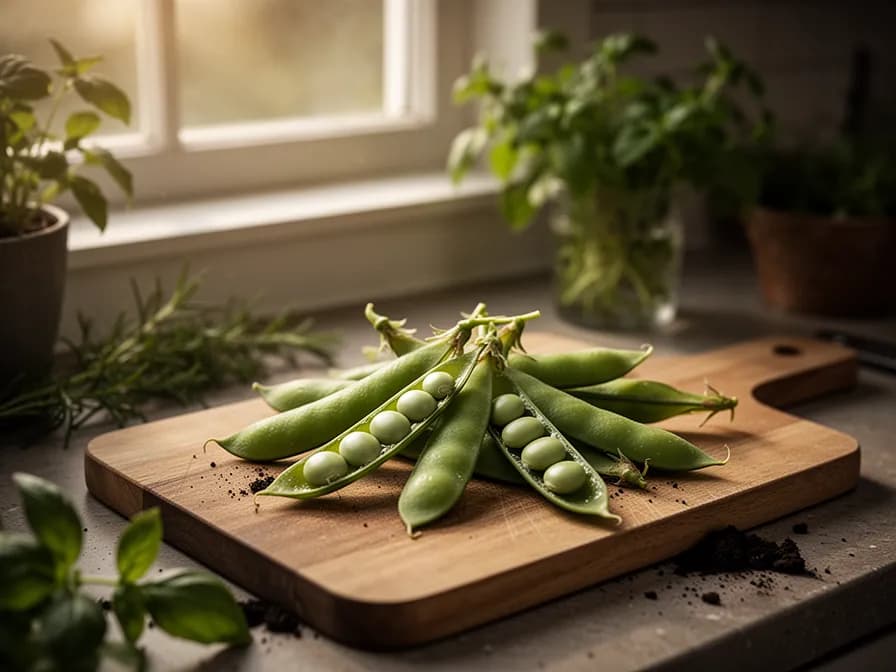
Classic Hoppin' John
45 minThe iconic Southern New Year's dish of black-eyed peas simmered with smoky pork and served over fluffy rice. Traditionally eaten on January 1st for good luck and prosperity, this comforting one-pot meal is delicious any day of the year.
9 ingredientesTexas Caviar (Black-Eyed Pea Salad)
20 minA bright, tangy, and refreshing cold salad that makes a perfect summer side dish or party dip. The vinaigrette-dressed cowpeas with crunchy peppers and corn are even better after marinating overnight in the refrigerator.
10 ingredientesWest African Cowpea Fritters (Akara)
35 minCrispy, golden bean fritters that are a beloved street food across West Africa and Brazil. Made from a simple batter of ground cowpeas seasoned with onion and chili, these protein-rich fritters are traditionally served for breakfast or as a satisfying snack.
6 ingredientesUsos culinarios
Los frijoles de ojo negro son un pilar de la cocina del sur de Estados Unidos, donde el plato Hoppin' John (caupíes con arroz) se come tradicionalmente en Año Nuevo. En África occidental se preparan como akara (buñuelos fritos) y moin-moin (pastel al vapor). En Brasil se usan en acarajé. Las vainas tiernas se consumen como judías verdes. Los granos secos son excelentes en guisos, sopas y ensaladas.
Qué contiene
Beneficios para la salud
- Exceptionally high in plant-based protein at 23-25% of dry weight, providing all essential amino acids when combined with grains like rice — the nutritional basis behind the universal pairing of beans and rice across cultures worldwide.
- Rich in soluble fiber that slows glucose absorption and supports stable blood sugar levels, making cowpeas an excellent dietary choice for managing type 2 diabetes and insulin resistance.
- Outstanding source of folate (B9), with a single cup of cooked cowpeas providing over 50% of the daily value — critical for DNA synthesis, red blood cell formation, and preventing neural tube defects during pregnancy.
- Contains resistant starch that acts as a prebiotic, feeding beneficial gut bacteria and promoting the production of short-chain fatty acids that support colon health and may reduce the risk of colorectal cancer.
- Provides significant iron (2.5mg per 100g cooked) and zinc — two minerals often deficient in plant-based diets — with bioavailability enhanced by soaking, sprouting, or pairing with vitamin C-rich foods.
- The antioxidant phenolic compounds in cowpea seed coats, particularly in darker-colored varieties like Red Ripper and Mississippi Silver, have demonstrated anti-inflammatory properties in clinical studies.
De dónde viene Caupí
Cowpeas (Vigna unguiculata) were domesticated in West Africa between 3,000 and 5,000 years ago, with the oldest archaeological evidence found in the Kintampo culture sites of Ghana dating to approximately 1800 BCE. Wild cowpea ancestors still grow across the savannas of sub-Saharan Africa, and the plant remains a cornerstone crop throughout the continent. From West Africa, cowpeas spread eastward along ancient trade routes to East Africa, the Indian subcontinent, and Southeast Asia, where they were adopted as a staple protein source and soil-building crop in diverse agricultural systems.
Cowpeas arrived in the Americas through the transatlantic slave trade beginning in the 1600s, carried by enslaved West Africans who brought seeds of their essential food crops to the New World. The plant became deeply rooted in the agriculture and cuisine of the American South, where the hot, humid climate perfectly suited its tropical origins. Black-eyed peas, crowder peas, and field peas became staples of Southern cooking, featured in dishes like Hoppin' John, which evolved from West African rice-and-bean preparations. During the Civil War, cowpeas sustained both soldiers and civilians when other food sources were scarce, cementing their cultural importance.
Today, cowpeas are grown on approximately 14 million hectares worldwide, with Nigeria as the largest producer, contributing roughly 45% of global production. Niger, Burkina Faso, Tanzania, and Brazil are also major producers. The International Institute of Tropical Agriculture (IITA) in Nigeria has developed improved cowpea varieties with enhanced pest resistance and drought tolerance that are helping to secure food supplies across the Sahel region of Africa. In the United States, cowpeas remain important in Southern agriculture both as a food crop and as a summer cover crop valued for its exceptional nitrogen fixation and ability to improve depleted soils.
Caupí: ¿sabías que?
Datos fascinantes sobre Caupí
Cowpeas were domesticated in West Africa over 5,000 years ago, making them one of the oldest cultivated crops on the continent. Archaeological evidence of cowpea cultivation has been found in sites across Ghana, Nigeria, and Senegal.
Caupí: preguntas frecuentes
¿Cuándo debo plantar Caupí?
¿Cuáles son buenas plantas acompañantes para Caupí?
¿En qué zonas de rusticidad puede crecer Caupí?
¿Cuánto sol necesita Caupí?
¿A qué distancia debo espaciar Caupí?
¿Qué plagas y enfermedades afectan a Caupí?
¿Cómo almaceno Caupí después de la cosecha?
¿Cuáles son las mejores variedades de Caupí para cultivar?
¿Qué suelo necesita Caupí?
What is the difference between black-eyed peas, crowder peas, and field peas?
Do cowpeas need a trellis or support structure?
Why are my cowpea plants growing lots of leaves but few pods?
Can I eat cowpea leaves like other greens?
How do I prevent weevils in my stored dried cowpeas?
Are cowpeas good for improving poor soil?
Acabas de leer la teoría. Ahora cultívala en piloto automático.
Todo lo que hace que Caupí sea delicado — el momento, el espaciado, las asociaciones, la ventana de cosecha — es justo lo que PlotMyGarden resuelve por ti, para cada planta de tu huerto.
Un plan que conoce tu clima
Indica tu ubicación una vez. Recibe fechas de siembra, abonado y cosecha basadas en tu última helada real y el pronóstico en vivo — sin adivinar con un sobre genérico.
De la sección “Cuándo plantar”Planificador de bancales de arrastrar y soltar
Diseña bancales sobre una cuadrícula. Cada planta encaja con su espaciado correcto y ves toda la temporada antes de gastar un céntimo en semillas.
De la sección “Cultivo”Conflictos de asociación, detectados a tiempo
Más de 200 buenas y malas combinaciones comprobadas en vivo mientras plantas — para que un error que arruine la temporada nunca llegue a la tierra.
De la sección “Asociaciones”Recordatorios que sí vas a seguir
“Riega las judías.” “Recoge hoy antes de que se pase.” Oportunos, concretos y ligados a las plantas que de verdad cultivas.
De la sección “Cosecha”Escalonado, programado
¿Quieres cosechar seis semanas en vez de seis días? Reparte tus siembras automáticamente y te avisa cuando toca el siguiente lote.
De la sección “Cuándo plantar”Un registro que se vuelve más listo
Cada cosecha que registras le enseña tu huerto. El plan del año que viene parte de lo que de verdad funcionó en tu suelo, no en un manual.
De la sección “Resumen”Planta estos junto a Caupí
Más Legumbres
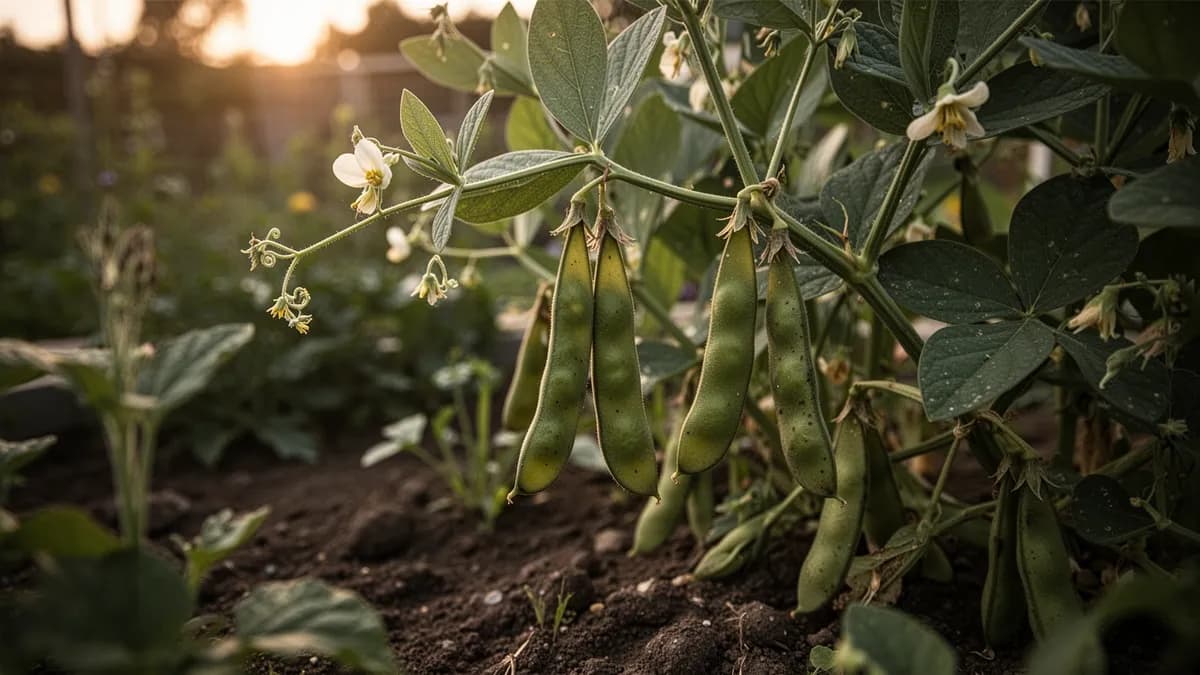
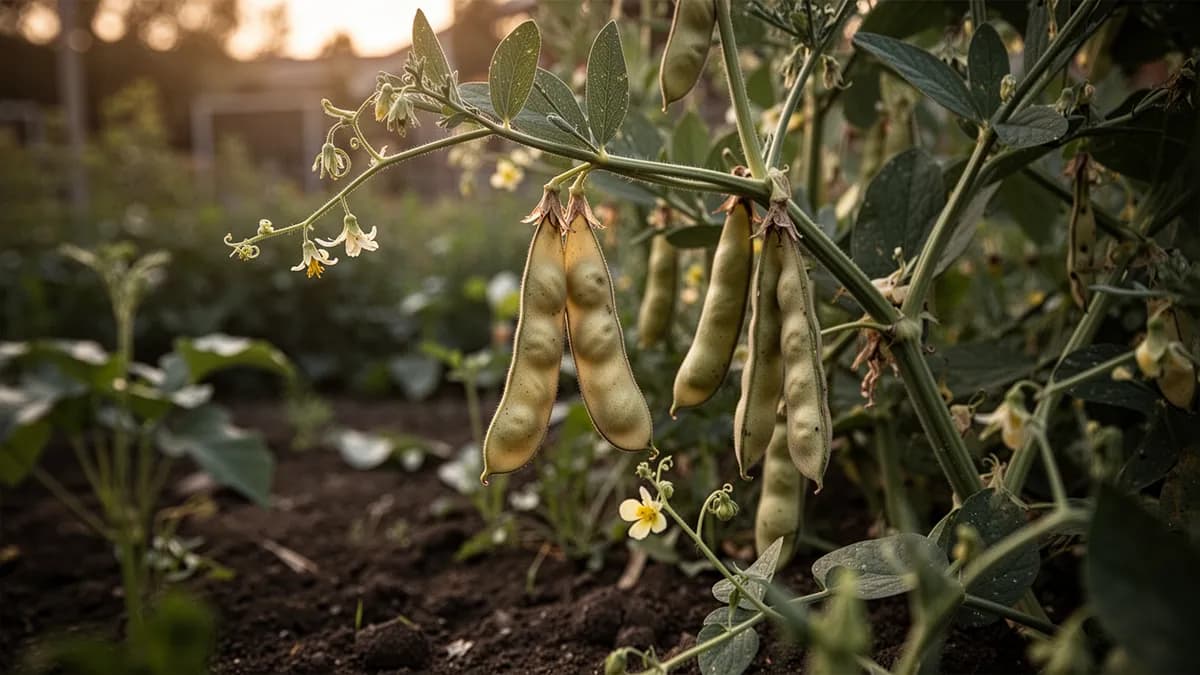
Mantén Caupí lejos de estos
Cultiva tu mejor Caupí — y todo lo que la rodea.
Empieza un plan gratis hoy. Diseña tus bancales, coloca tu Caupí y deja que PlotMyGarden gestione el momento, el espaciado, las asociaciones y los recordatorios de la semilla a la cesta.