Japanese Sedge
A graceful, evergreen grass-alike that forms low, arching mounds of slender foliage, most famously in the gold-and-green variegation of the cultivar 'Evergold'.





On this pageOverview
Meet Japanese Sedge
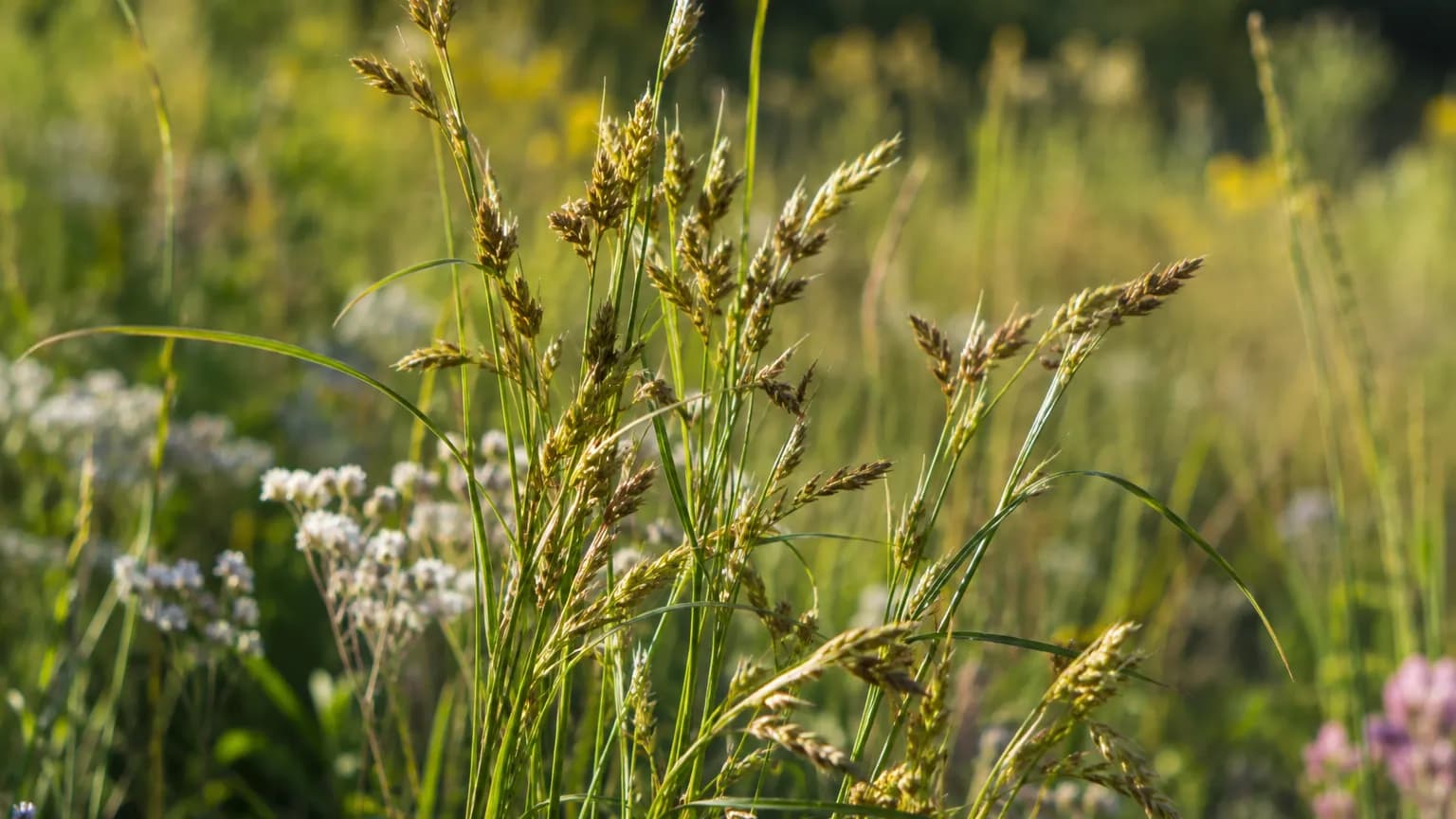
A graceful, evergreen grass-alike that forms low, arching mounds of slender foliage, most famously in the gold-and-green variegation of the cultivar 'Evergold'. Japanese sedge thrives where lawn and many perennials fail — in partial to full shade with moist soil — and asks for almost nothing in return. True to the old saying "sedges have edges", its stems are distinctly triangular, though it is grown for its year-round fountain of foliage rather than its modest spring flower spikes. Deer and rabbits leave it alone, and an established clump needs little more than an annual comb-out of tired leaves.
When to plant Japanese Sedge
Named cultivars must be propagated by division to stay true, but species plants grow readily from seed. Sow fresh seed in autumn or cold-stratify it for four to six weeks before spring sowing, as sedge seed germinates erratically without chilling. Surface-sow on a moist, fine seed mix and cover only lightly, since light aids germination. Keep the tray at 15 to 20 degrees Celsius and never let it dry out; germination may take anywhere from two weeks to three months. Prick out seedlings into small pots and grow them on in bright shade for a full season before planting out. Division in spring is far quicker: lift a mature clump, tease it into rooted sections, and replant immediately.
Your Japanese Sedge Year
Composed for Zone 7 · typical seasons · frost passes Apr 2, returns Nov 1
Plant Japanese Sedge Mar – Apr, Sep, pick May – Sep. Check the planting methods below and set your climate to personalize these windows.
How to grow Japanese Sedge
Plant Japanese sedge in spring or early autumn in partial to full shade, in moist but well-drained soil enriched with compost or leaf mold. Set the crown exactly at soil level and space plants about 30 cm apart for a flowing ground cover, or slightly wider for individual specimen mounds. Water thoroughly after planting and keep the soil evenly moist through the first growing season while the dense, fibrous root system establishes. Although the species tolerates average garden soil, the brightest variegation develops in bright shade with a few hours of gentle morning sun.
Once established, Japanese sedge is virtually care-free. It prefers consistent moisture and resents prolonged drought, which scorches the leaf tips, but it has no need for regular feeding: a top-dressing of compost each spring is ample, and heavy fertilization only produces soft, floppy growth. Mulch with shredded leaves or fine bark to hold moisture, keeping the mulch clear of the crown. In hot climates position plants where they are shaded from the fierce afternoon sun; in cooler zones they take more light without complaint.
Pruning is minimal but worth doing at the right moment. In late winter or very early spring, comb through the clump with gloved fingers or a small rake to pull out dead and weathered leaves, and snip off brown tips with scissors. If the clump looks exhausted after a hard winter, shear the whole mound back by half to trigger a flush of fresh blades — but never scalp it to the ground, as sedges are slow to recover from hard cuts. Divide congested clumps every three to five years in spring, replanting the vigorous outer sections at the same depth. Snip out the brown flower spikes after they fade in early summer if you prefer a tidy look, though leaving them does the plant no harm.
32 plants fit a 4 × 8 ft bed
Each Japanese Sedge wants 30 cm of elbow room. The planner keeps that spacing for you — every plant, every bed.
Japanese Sedge's best neighbours
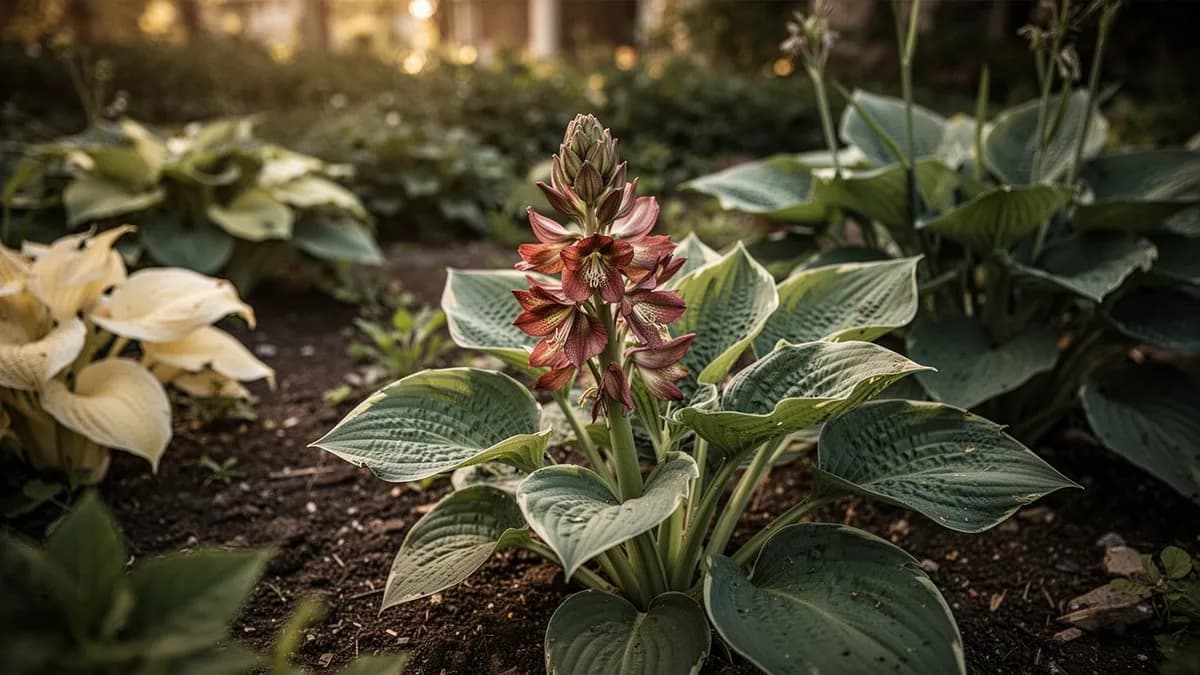
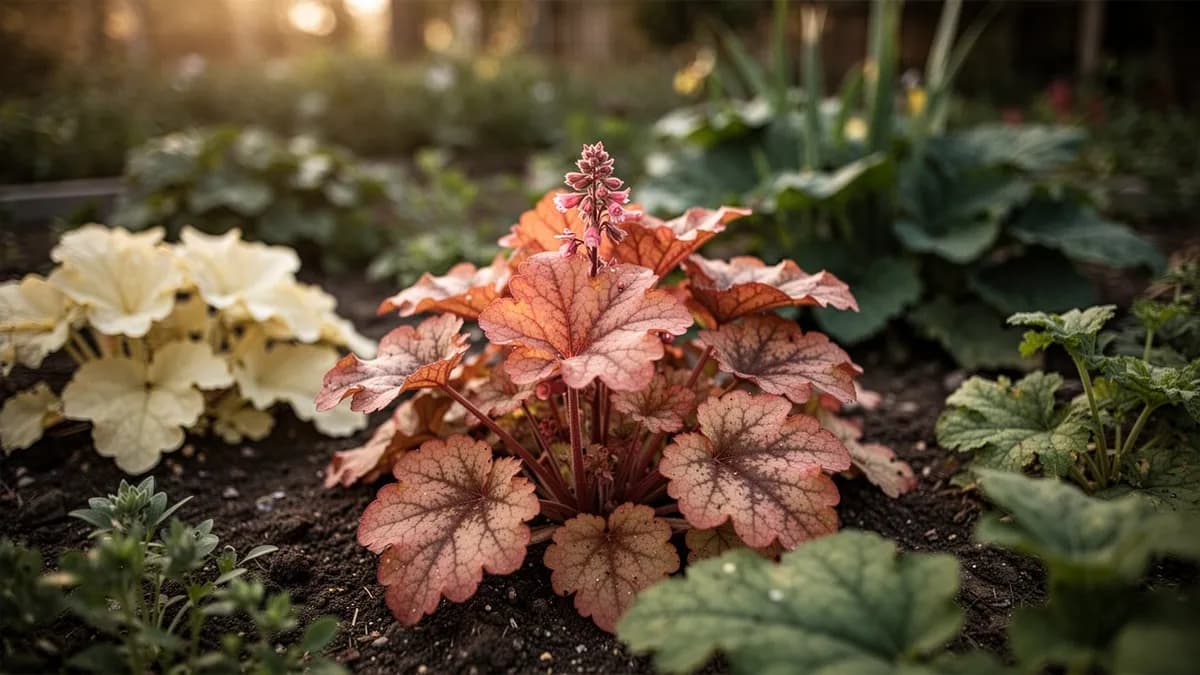
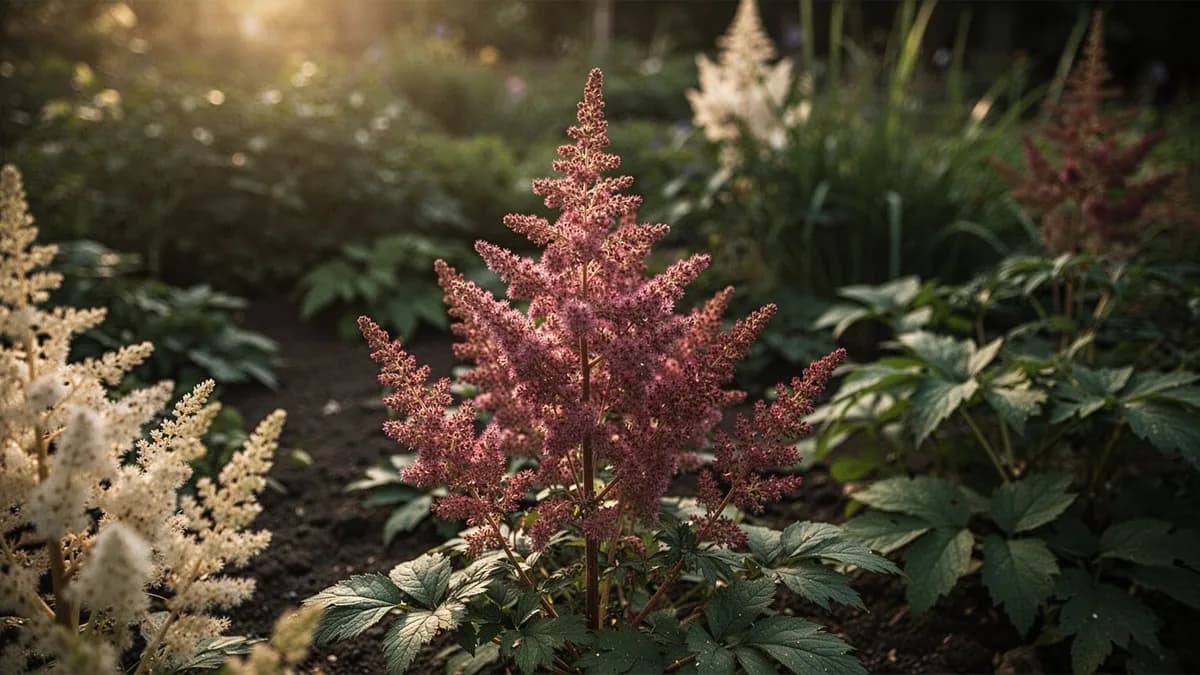
Japanese sedge is a natural partner for other shade lovers. Weave it between hostas and heucheras, where its fine, arching blades contrast beautifully with their bold leaves, or let it spill around the feet of astilbes and ferns along a woodland path. Variegated cultivars echo the cream-edged leaves of hostas and lighten the darkest corner of a bed. Because it is evergreen, shallow-rooted, and untroubled by deer, it makes an excellent living mulch under shrubs and a graceful edging that hides the bare stems of taller perennials. As a clumper it stays exactly where you plant it and will never invade its neighbors.
Hosta belongs beside it.
Old growers' knowledge, checked against Japanese Sedge's real companion table below — test any plant you're growing.
Try Japanese Sedge in a bed — right here
A real planner bed with Japanese Sedge already in it. Tap a companion to place it and watch the pairing checks answer — green for good neighbours, red for a clash.


Related growing guides

Feed it well
Japanese sedge grows best in moist, humus-rich, well-drained loam with a slightly acidic to neutral pH of about 5.5 to 7.0, but it adapts to clay and sandy soils as long as they never dry out completely. Work about five centimeters of compost or leaf mold into the planting area. Feeding needs are minimal: a spring top-dressing of compost or a single light application of balanced slow-release fertilizer is plenty. Overfeeding produces lush, floppy growth that collapses out of its tidy mound shape.
Ideal Temperature
Hardiness Zone Compatibility
From seed to harvest, stage by stage
Seed Germination
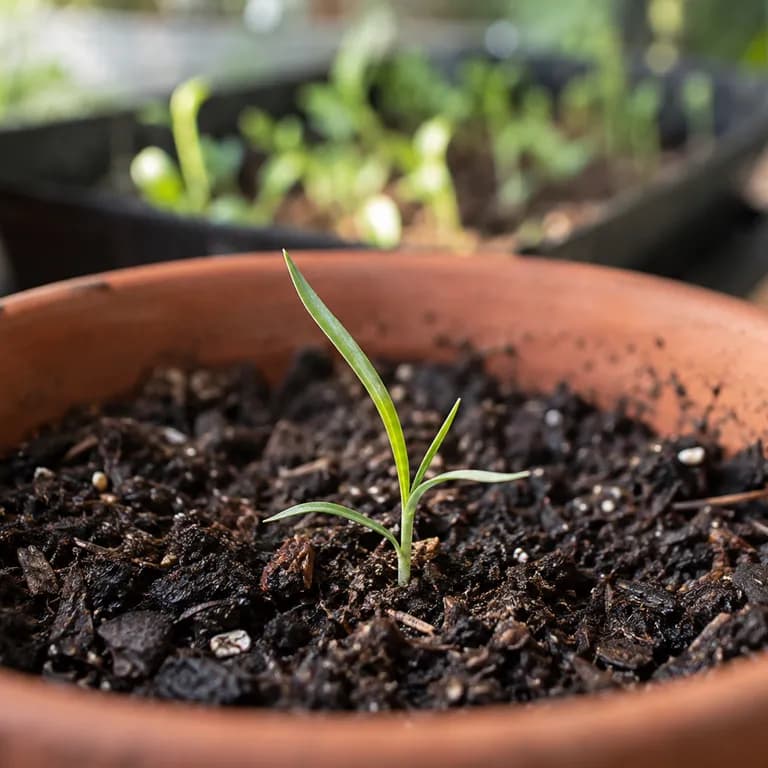
Sedge seed is small and germinates erratically without a period of cold. After four to six weeks of cold stratification, surface-sown seed kept moist at 15 to 20 degrees Celsius sprouts over two weeks to three months. The first blades are thread-fine and bright green.
Seedling Establishment
Seedlings put on slender new blades while building the dense, fibrous root system that will anchor the clump. Top growth looks slow, which is normal — the plant is investing underground. Pot seedlings on individually once they carry three to four true leaves.
Clump Formation
The young plant pushes fresh shoots from the crown and begins to form its characteristic low, arching mound. Variegated cultivars show their striping clearly from the first season, and the roots spread through the top 20 to 30 cm of soil.
First Winter Display
Japanese sedge is evergreen to semi-evergreen, so the arching clump keeps its color through autumn and winter, often looking its freshest in cool, damp weather when other perennials have collapsed. In zone 5 winters the foliage may scorch and tatter without insulating snow cover.
Spring Grooming and Bloom
As the soil warms, fresh blades emerge from the crown. In late spring, modest brown flower spikes rise above the mound on the triangular stems that give sedges their "edges". This is the moment for the annual tidy-up and for dividing any congested clumps.
Keep the seed tray evenly moist and in bright, indirect light, never full sun. Be patient — uneven germination spread over several weeks is normal for Carex.
Caring for Japanese Sedge month by month
What to do each month for your Japanese Sedge
September
You are hereThe second planting window opens as the heat relents. Divide and transplant established clumps now so roots settle before winter. Ease off watering gradually as growth slows.
Know exactly what to do in your garden — every month
One email at the start of each month: what to sow, plant, and tackle right now — for your Japanese Sedge and everything growing around it. Plus a short starter course that helps you dodge the classic mistakes.
- What to do, right now
- Matched to your season
- Starter course included
Harvesting Japanese Sedge
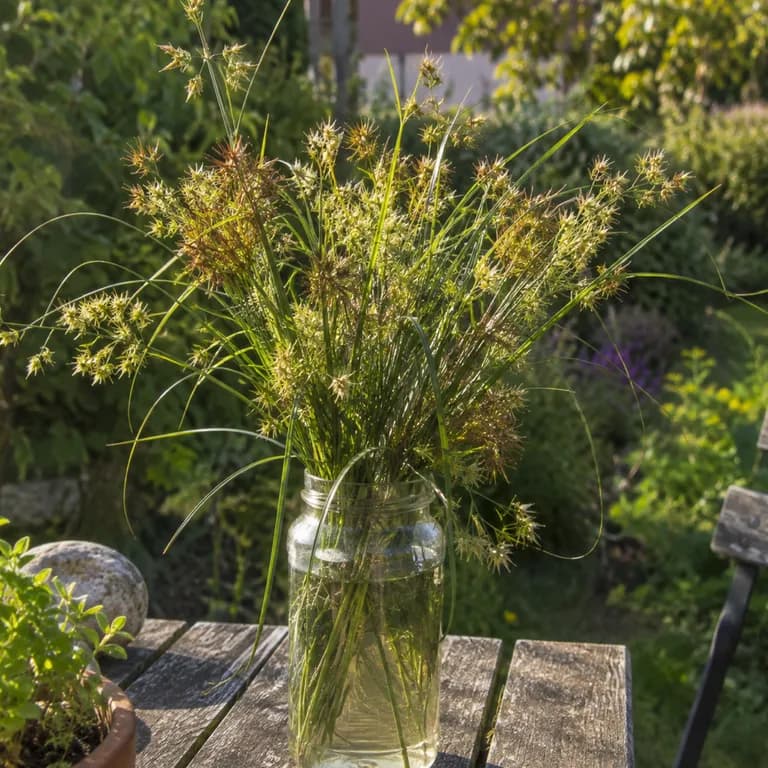
Cut Japanese sedge foliage for arrangements any time the clump is full, taking no more than a third of the blades at once. Slice individual leaves low near the crown with clean scissors, choosing unblemished outer growth. The arching variegated sprays last one to two weeks in water and lighten shaded bouquets beautifully. Cut stems early in the morning and stand them in cool water immediately. Blades can also be taken freely in late winter just before the spring tidy-up, when the previous year's growth is about to be removed anyway.
assuming you plant when the window opens — set your real date
Pick Japanese Sedge promptly and the plant keeps producing.
What goes wrong — and the fix
Crown and Root Rot
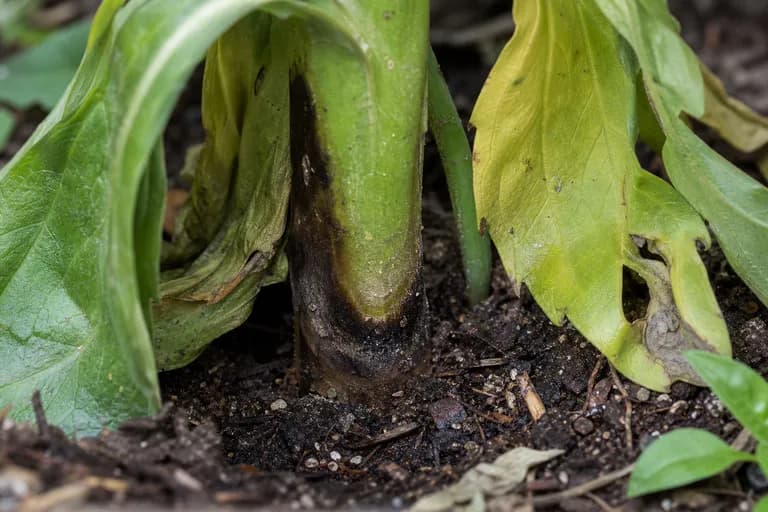
DiseaseThe center of the clump browns, softens, and collapses while outer leaves yellow and pull away easily. Roots look dark, mushy, and foul-smelling, most often in heavy, waterlogged soil.
Rust
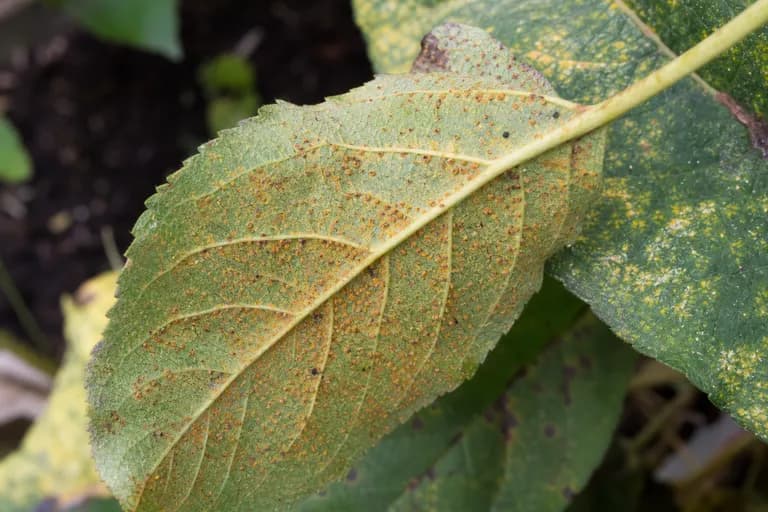
DiseaseSmall orange-brown pustules scattered along the blades, appearing mainly in humid, still conditions in late summer. Heavy infections cause premature browning of the older leaves.
Aphids
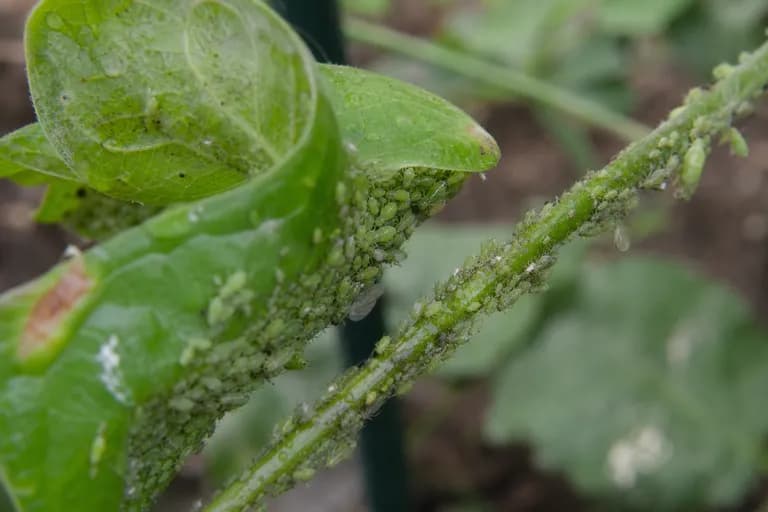
PestClusters of small green or gray insects on young blades and flower stalks, sticky honeydew, and distorted new growth, most common on soft, overfed plants.
Spider Mites
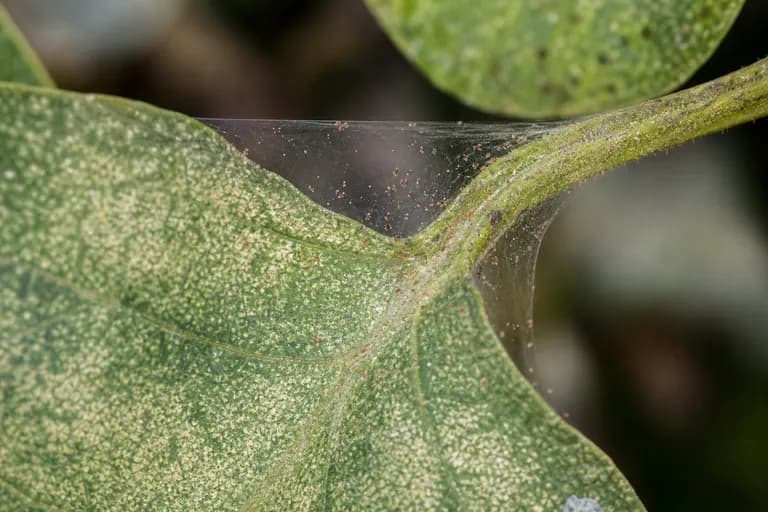
PestFine stippling and a dusty, bronzed look to the blades during hot, dry spells, sometimes with faint webbing between leaves. Plants in dry shade under eaves are most vulnerable.
Troubleshooting Common Problems
Brown leaf tips are the most frequent complaint, caused by drought, dry wind, winter cold, or too much direct afternoon sun — snip the tips off at an angle and correct the underlying condition. Scorch shows as bleached, papery patches on variegated blades in hot sun. Crown rot strikes clumps sitting in soggy soil or buried under mulch. A tired, open center means the clump wants dividing. In deep, dark shade the plants languish and the variegation fades toward plain green, so give them at least bright, dappled light.
Growing Tips
- Give Japanese sedge bright shade rather than deep gloom: a few hours of gentle morning sun intensifies the gold and cream variegation, while hot afternoon sun scorches it.
- Plant in spring or early autumn so roots establish in cool, moist soil. Set the crown exactly at soil level — burying it invites crown rot.
- For a flowing ground cover, space clumps about 30 cm apart and let them knit together over two to three seasons. The evergreen weave suppresses weeds and never needs mowing.
- Water consistently, especially in the first year and during summer dry spells. Moist but well-drained is the goal; soggy soil kills more sedges than cold ever will.
- Skip the fertilizer habit: one spring top-dressing of compost is all this plant wants. Rich feeding produces floppy blades that collapse out of the neat mound.
- Tidy, don't scalp. In late winter comb out dead leaves with your fingers and snip brown tips. Only if a clump is truly shabby, shear it back by half in early spring and let it regrow.
- Divide every three to five years when the center of the clump thins out. Spring is best; replant the vigorous outer pieces and discard the woody middle.
- Grow it in pots: sedges are outstanding container plants, and a pot of 'Everillo' on a shaded patio delivers color for years in exchange for nothing but watering.
- Pair it with bold-leaved hostas, heucheras, and astilbes — the contrast between fine, arching sedge blades and broad foliage is the backbone of good shade-garden design.
Grow your best Japanese Sedge yet — and everything around it.
Start a free plan today. Lay out your beds, drop in your Japanese Sedge, and let PlotMyGarden handle the timing, spacing, companions and reminders from seed to harvest basket.
Pick your Japanese Sedge
Evergold
The classic cultivar with dark green blades centered by a broad creamy-gold stripe, forming cascading mounds about 30 cm tall. Holder of the Royal Horticultural Society's Award of Garden Merit.
Everest
Dark green leaves edged with crisp silvery-white margins that brighten deep shade; also sold as 'Finwhite' or 'Carfitol'. Slightly more upright than 'Evergold' and superb in containers.
Everillo
Lime-green leaves that mature to a glowing solid golden yellow, lighting up shady corners. Part of the Irish-bred EverColor series and one of the brightest sedges available.
Everlime
A fresh lime-and-green variegated selection with a neat, weeping habit, valued for year-round color in pots, edging, and woodland borders.
Everoro
Green blades with a bold golden central band — almost the reverse pattern of 'Evergold' — forming tidy mounds that hold their color well through winter.
Where Japanese Sedge comes from
Carex oshimensis is native to Japan, where it grows in dry woods and on rocky slopes throughout Honshu, the country's largest island. In its homeland it is known as Oshima kan suge, a name that ties both the plant and its botanical epithet to Oshima. Like most of the roughly two thousand sedges in the genus Carex, it spent centuries as an unassuming understory plant, appreciated locally but unknown to Western gardens.
The species reached European and North American nurseries in the late twentieth century, riding the wave of enthusiasm for ornamental grasses and shade perennials. Gardeners quickly discovered that this tidy, evergreen clumper thrived exactly where the showier grasses failed — in shade — and that it asked for almost no care in return. The variegated form 'Evergold', with its broad cream-and-green striped blades, became one of the most widely sold ornamental grass-alikes in the world and earned the Royal Horticultural Society's Award of Garden Merit.
The modern breakthrough came from Ireland, where breeder Pat FitzGerald of FitzGerald Nurseries in Kilkenny selected a series of brightly colored sports from Japanese sedge stock. Marketed as the EverColor series, cultivars such as 'Everest', 'Everillo', 'Everlime', and 'Everoro' turned a quiet woodland sedge into a year-round color plant for containers and borders. Today Japanese sedge is a fixture of shade gardens on both sides of the Atlantic, celebrated for delivering four seasons of structure in exchange for a single annual tidy-up.
Japanese Sedge: did you know?
Fascinating facts about Japanese Sedge
"Sedges have edges" is the famous botanist's mnemonic: Carex stems are triangular in cross-section, unlike the round, hollow, jointed stems of true grasses. The full rhyme runs "Sedges have edges, rushes are round, grasses have nodes from their tips to the ground".
Japanese Sedge questions, answered
When should I plant Japanese Sedge?
What are good companion plants for Japanese Sedge?
What hardiness zones can Japanese Sedge grow in?
How much sun does Japanese Sedge need?
How far apart should I space Japanese Sedge?
What pests and diseases affect Japanese Sedge?
What are the best Japanese Sedge varieties to grow?
What soil does Japanese Sedge need?
Is Japanese sedge a good lawn alternative?
Is Japanese sedge really deer resistant?
Why are the tips of my sedge turning brown?
Does Japanese sedge need to be cut back every year?
Can I grow Japanese sedge in a container?
Will Japanese sedge grow in deep shade?
You just read the theory. Now grow it on autopilot.
Everything that makes Japanese Sedge fiddly — the timing, the spacing, the companions, the harvest window — is exactly what PlotMyGarden handles for you, for every plant in your garden.
A plan that knows your weather
Set your location once. Get sow, feed and harvest dates built around your real last-frost date and live forecast — no more guessing from a generic seed packet.
From the “When to plant” sectionDrag-and-drop bed planner
Design beds on a grid. Every plant snaps to its proper spacing, and you can see your whole season laid out before you spend a cent on seed.
From the “Growing guide” sectionCompanion conflicts, caught early
200+ good-and-bad pairings checked live as you plant — so a season-wrecking mistake never makes it into the ground.
From the “Companions” sectionReminders you'll actually act on
“Water the beans.” “Pick today before it turns.” Timely, specific, and tied to the plants you're really growing.
From the “Harvest” sectionSuccession, scheduled
Want a harvest for six weeks, not six days? It spaces your sowings automatically and reminds you when each new block is due.
From the “When to plant” sectionA record that gets smarter
Every harvest you log teaches it your garden. Next year's plan starts from what actually worked in your soil, not a textbook's.
From the “Overview” sectionPlant these alongside Japanese Sedge
More Wildflowers

Grow your best Japanese Sedge yet — and everything around it.
Start a free plan today. Lay out your beds, drop in your Japanese Sedge, and let PlotMyGarden handle the timing, spacing, companions and reminders from seed to harvest basket.