Purpurglöckchen
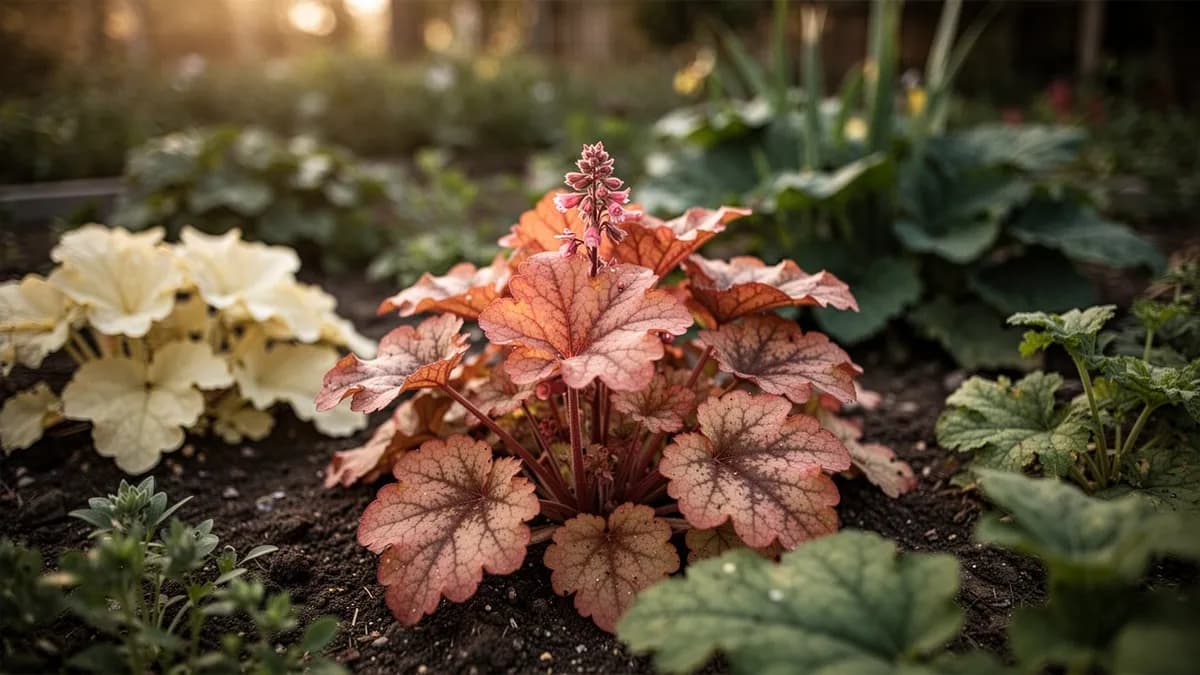
Eine vielseitige Staude, die hauptsächlich wegen ihres farbenfrohen Laubs in Violett-, Limetten-, Karamell- und Silbertönen mit zarten Blütenrispen angebaut wird.





Auf dieser SeiteÜberblick
Purpurglöckchen im Überblick
Eine vielseitige Staude, die hauptsächlich wegen ihres farbenfrohen Laubs in Violett-, Limetten-, Karamell- und Silbertönen mit zarten Blütenrispen angebaut wird. Purpurglöckchen gedeihen im Halbschatten mit gut durchlässigem Boden und eignen sich hervorragend als Einfassungs- und Kübelpflanzen. Kronenfäule kann in schweren, nassen Böden auftreten, daher sollte für gute Drainage gesorgt und gemulcht werden, um die flachen Wurzeln zu schützen.
Wann Purpurglöckchen pflanzen
Heuchera kann aus Samen gezogen werden, wobei benannte Sorten nicht sortenecht fallen. Säen Sie die Samen auf die Oberfläche feuchter Erde, ohne sie abzudecken, da sie Licht zum Keimen benötigen. Kühlen Sie sie 6 Wochen im Kühlschrank, bevor Sie sie an einen warmen, hellen Platz bei 18–22 °C stellen. Die Keimung dauert 2–6 Wochen und ist oft unregelmäßig. Die Sämlinge sind winzig und wachsen langsam. Die Teilung ist weitaus zuverlässiger zur Erhaltung bestimmter Sorten – heben Sie Horste im Frühling aus, waschen Sie die Wurzeln und schneiden Sie die holzige Krone mit einem scharfen Messer durch, wobei jedes Stück Wurzeln und Wachstumspunkte haben sollte. Pflanzen Sie sofort in der richtigen Tiefe wieder ein.
Dein Purpurglöckchen-Jahr
Abgestimmt auf Zone 7 · typische Saison · Frost geht um den 2. Apr. und kehrt um den 1. Nov. zurück
Purpurglöckchen Mär – Apr, Sep pflanzen, Mai – Jul ernten. Beachte die Pflanzmethoden unten und wähle dein Klima für passende Zeiträume.
So baust du Purpurglöckchen an
Purpurglöckchen (Heuchera) haben in den letzten Jahren eine Renaissance erlebt und sich dank einer atemberaubenden Vielfalt an Laubfarben von bescheidenen Wildblumen zu Gartenstars entwickelt. Erhältlich in Tönen von tiefem Violett, Burgunder, Karamell, Pfirsich, Limonengrün, Silber und fast Schwarz, bieten diese immergrünen bis halbimmergrünen Stauden ganzjährig Farbe und Interesse. Das niedrige, kissenförmige Laub (20–30 cm) wird von schlanken 30–60 cm hohen Stielen mit zarten Rispen winziger glockenförmiger Blüten überragt.
Pflanzen Sie im Halbschatten mit gut durchlässigem Boden – Heuchera verträgt in kühlen Klimazonen mehr Sonne, benötigt aber Nachmittagsschatten, wo die Sommer heiß sind. Gute Drainage ist unerlässlich, da die flache, holzige Krone in staunassen Verhältnissen zum Faulen neigt. Setzen Sie die Krone auf oder leicht über dem Bodenniveau ein, niemals vergraben. Ein Kiesmulch um die Krone hilft, feuchtigkeitsbedingte Fäulnis zu verhindern, die die häufigste Ursache für Heuchera-Verluste ist.
Heuchera-Kronen drücken sich mit zunehmendem Alter natürlich aus dem Boden nach oben. Häufeln Sie jeden Herbst frischen Kompost um freiliegende Kronen an, oder teilen und pflanzen Sie alle 3–4 Jahre neu, um die Pflanzen auf der richtigen Tiefe zu halten. Entfernen Sie verblühte Blütenstängel und beschädigte Blätter regelmäßig, um ein ordentliches Erscheinungsbild zu bewahren. In kalten Klimazonen kann das immergrüne Laub bis zum Spätwinter unansehnlich aussehen – schneiden Sie alte Blätter kurz vor dem Neuaustrieb im Frühling zurück.
18 Pflanzen passen in ein Beet von 120 × 240 cm
Purpurglöckchen braucht 35 cm Platz pro Pflanze. Der Planer hält diesen Abstand für dich ein — jede Pflanze, jedes Beet.
Die besten Nachbarn für Purpurglöckchen
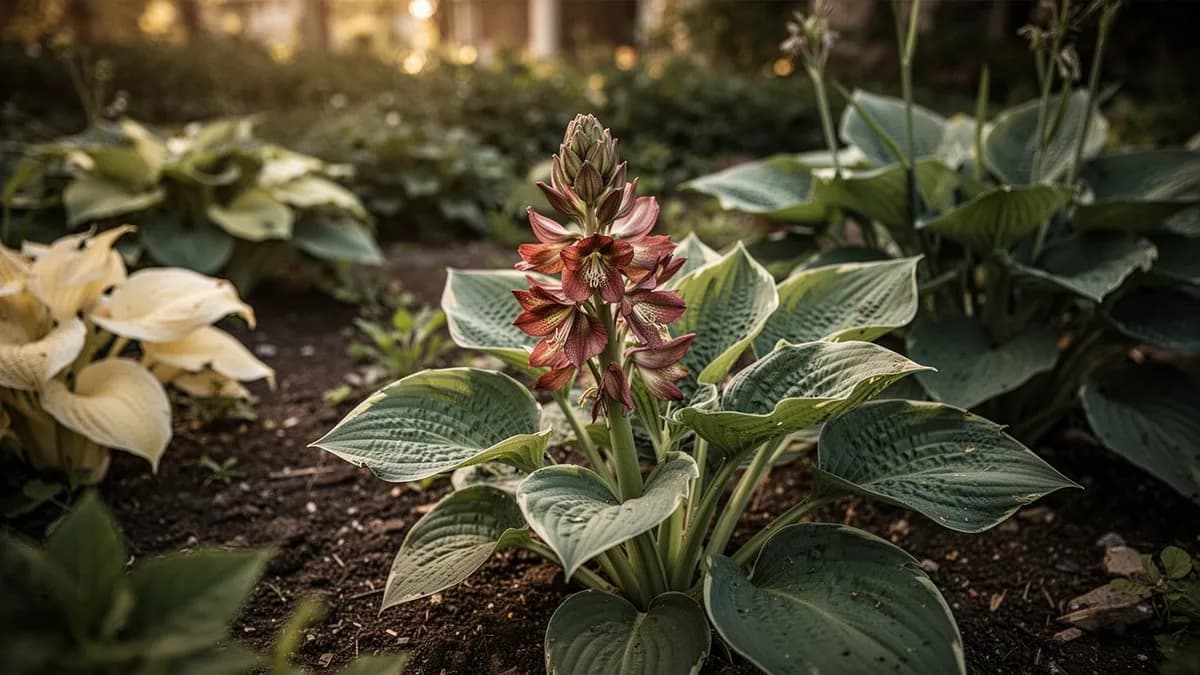
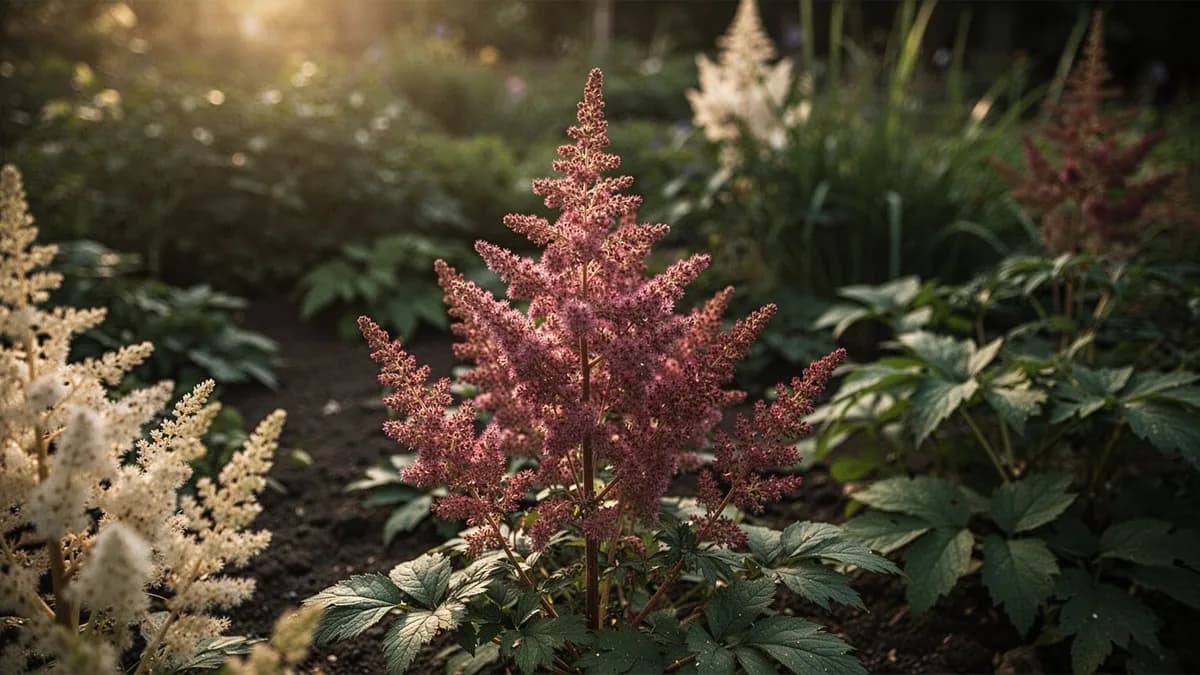
Heuchera ist eine der vielseitigsten Begleitpflanzen für Schatten- und Halbschattengärten. Das farbenfrohe Laub bildet atemberaubende Kontraste mit den grünen Blättern von Funkien, den silbernen Wedeln von Japanischen Schmuckfarnen und den leuchtenden Blüten von Prachtspieren. Verwenden Sie dunkle Violettsorten hinter helleren Pflanzen für einen dramatischen Hintergrundeffekt oder limonengrüne Sorten, um dunkle Pflanzungen aufzuhellen. Heuchera eignet sich hervorragend als Einfassung für schattige Wege und Beete. In Kübeln kombiniert sie sich wunderschön mit hängenden Pflanzen und saisonalen Blumen.
Funkie gehört daneben.
Altes Gärtnerwissen, geprüft an der echten Nachbartabelle von Purpurglöckchen — teste jede Pflanze, die du anbaust.
Probiere Purpurglöckchen direkt hier im Beet
Ein echtes Planer-Beet, Purpurglöckchen steht schon drin. Tippe einen Begleiter an, platziere ihn und sieh, wie die Nachbarschaftsprüfung antwortet — grün für gute Nachbarn, rot bei Streit.


Passende Anbau-Ratgeber
Richtig düngen
Heuchera benötigt einen gut durchlässigen, mäßig fruchtbaren Boden mit einem neutralen bis leicht sauren pH-Wert von 6,0–7,0. Gute Drainage ist von größter Bedeutung – die flache Krone fault leicht in nassen Bedingungen. Verbessern Sie schweren Ton mit grobem Kies und organischem Material vor dem Pflanzen. Ein leichter, lehmiger Boden mit guter Struktur ist ideal. Düngen Sie im Frühling sparsam mit einem ausgewogenen Langzeitdünger. Vermeiden Sie starkes Mulchen direkt an der Krone; verwenden Sie stattdessen Kies- oder Splittmulch um die Basis und organischen Mulch weiter von der Pflanze entfernt. Kübelpflanzen benötigen ein gut durchlässiges Substrat und alle zwei Wochen Flüssigdüngergaben während der Wachstumsperiode.
Ideale Temperatur
Winterhärtezone-Kompatibilität
Von der Saat zur Ernte, Schritt für Schritt
Samenkeimung
Heuchera-Samen sind extrem feine, staubartige Partikel, die Licht zum Keimen benötigen und niemals mit Erde bedeckt werden sollten. Die Samen werden auf die Oberfläche einer feuchten, fein strukturierten Anzuchterde gestreut und brauchen typischerweise 14–21 Tage zum Keimen bei Temperaturen zwischen 15–20 °C. Eine Kaltschichtung über 4–6 Wochen vor der Aussaat kann die Keimraten erheblich verbessern.
Sämlingsentwicklung
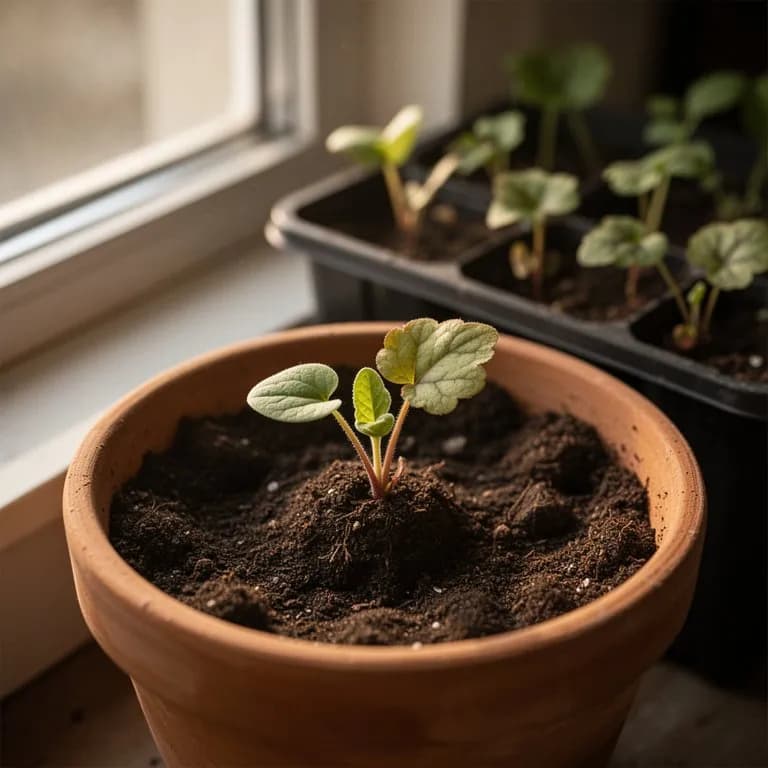
Winzige Sämlinge erscheinen mit miniaturisierten gerundeten Keimblättern, gefolgt von den ersten echten Blättern, die klein, gewellt sind und bereits Andeutungen ihrer reifen Färbung zeigen. Das Wachstum ist in dieser Phase langsam, während die Pflanze ein zartes Wurzelsystem entwickelt. Sämlinge sind anfällig für Umfallkrankheit und Austrocknung aufgrund ihrer sehr geringen Größe.
Kronenbildung
Die junge Pflanze beginnt, ihre charakteristische holzige Krone an der Bodenoberfläche zu bilden, mit einer Rosette aus zunehmend größeren und farbenfroheren Blättern, die nach außen strahlen. Das Wurzelsystem entwickelt sich zu einem faserigen Netzwerk, das die Krone fest verankert. Die Laubfarbe intensiviert sich mit zunehmender Reife der Pflanze, und die Blattstruktur wird stärker gekräuselt und definierter.
Reife Laubentfaltung
Am Ende ihres ersten vollständigen Jahres bildet die Heuchera einen üppigen Laubhügel von typischerweise 25–40 cm Höhe und 30–45 cm Breite. Die Blätter erreichen ihre volle Größe von 5–10 cm Durchmesser und zeigen ihre reife Färbung und Musterung. Die Krone kann beginnen, Ableger zu bilden, und die Pflanze ist nun etabliert genug, um typischen Gartenbedingungen einschließlich mäßiger Trockenheit standzuhalten.
Blütezeit
Im späten Frühling bis Frühsommer ihres zweiten Jahres und darüber hinaus treiben Heuchera schlanke, drahtige Blütenstängel von 30–60 cm Höhe, die mit lockeren Rispen winziger glockenförmiger Blüten in Korall-, Rosa-, Rot-, Weiß- oder Grüntönen je nach Sorte gekrönt sind. Die Blüten blühen 4–8 Wochen und sind bei Kolibris, Bienen und Schmetterlingen sehr beliebt.
Kronenreifung und Teilung
Nach 2–3 Jahren wird die holzige zentrale Krone über dem Bodenniveau angehoben, ein natürlicher Prozess, der als Hochfrieren bezeichnet wird. Die Pflanze kann einen holzigen, freiliegenden Stängel unterhalb der Blattrosette entwickeln und kann an Vitalität verlieren, wenn nicht eingegriffen wird. Dies ist der ideale Zeitpunkt, die Krone zu teilen, was die Pflanze verjüngt und neue Exemplare für den Garten schafft.
Besprühen Sie die Bodenoberfläche vorsichtig, um sie gleichmäßig feucht zu halten, ohne die winzigen Samen zu verlagern. Bedecken Sie die Saatschalen mit Klarsichtfolie oder einer Feuchtigkeitshaube, um die Feuchtigkeit zu erhalten. Sorgen Sie für helles indirektes Licht, aber vermeiden Sie direkte Sonne, die die Oberfläche zu schnell austrocknen kann. Bodenbewässerung wird empfohlen, sobald die Sämlinge erscheinen.
Purpurglöckchen Monat für Monat pflegen
Was du jeden Monat für deine Purpurglöckchen tun solltest
Oktober
Aktueller MonatBringen Sie eine 5–8 cm dicke Mulchschicht um die Kronen auf, wenn die Temperaturen sinken, achten Sie aber darauf, die Krone selbst nicht zu vergraben. Viele Heuchera-Sorten zeigen eine verstärkte Herbstlaubfärbung bei kühleren Temperaturen. Notieren Sie, welche Sorten im Herbst am besten aussehen, für die zukünftige Gartenplanung.
Immer wissen, was jetzt im Garten zu tun ist
Eine E-Mail zum Monatsanfang: was du jetzt säen, pflanzen und anpacken solltest — für deine Purpurglöckchen und alles, was drumherum wächst. Dazu ein kurzer Startkurs, der dich vor den klassischen Fehlern bewahrt.
- Was jetzt zu tun ist
- Passend zu deiner Saison
- Startkurs inklusive
Purpurglöckchen ernten
Heuchera-Blätter sind attraktive Ergänzungen für Blumenarrangements und bieten farbenfrohen Laubkontrast zwischen Schnittblumen. Schneiden Sie einzelne Blätter mit langen Stielen von der Basis der Pflanze. Die zarten Blütenrispen können ebenfalls für kleine Arrangements geschnitten werden, sind jedoch in der Vase kurzlebig. Für Bastelzwecke lassen sich Heuchera-Blätter wunderschön pressen, wobei sie viel von ihrer satten Farbe behalten, was sie beliebt für botanische Kunst und Pressblumendesigns macht.
angenommen, du pflanzt zu Beginn des Zeitraums — trage dein tatsächliches Datum ein
Ernte Purpurglöckchen zügig, dann trägt die Pflanze weiter.
Lagerung & Konservierung
Heuchera wird normalerweise nicht konserviert, aber die farbenfrohen Blätter lassen sich gut für Bastelprojekte pressen. Legen Sie die Blätter zwischen Lagen saugfähigen Papiers unter schwere Bücher für 2–3 Wochen. Die tiefen Violett- und Silbertöne behalten beim Pressen ihre Farbe gut. Zur Gartenerhaltung vermehren Sie Lieblingssorten durch Teilung im Frühling oder Herbst oder durch Blattstecklinge im Spätfrühling – entfernen Sie ein Blatt mit einem kleinen Stück Krone, bestäuben Sie es mit Bewurzelungshormon und stecken Sie es in sandige Erde.
Was schiefgeht — und die Lösung
Kronenfäule
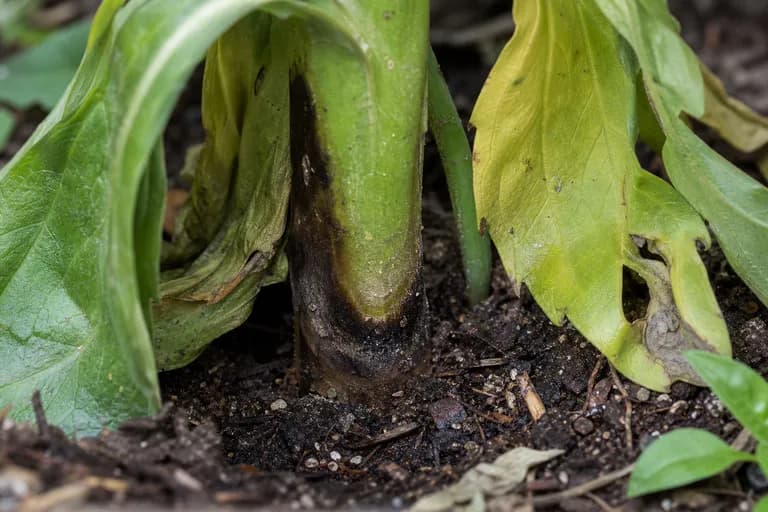
KrankheitMatschige, geschwärzte Krone an der Stelle, wo die Blätter austreiben. Das Laub welkt und löst sich leicht von der faulenden Basis. Am häufigsten in nassen Wintern oder schweren Tonböden.
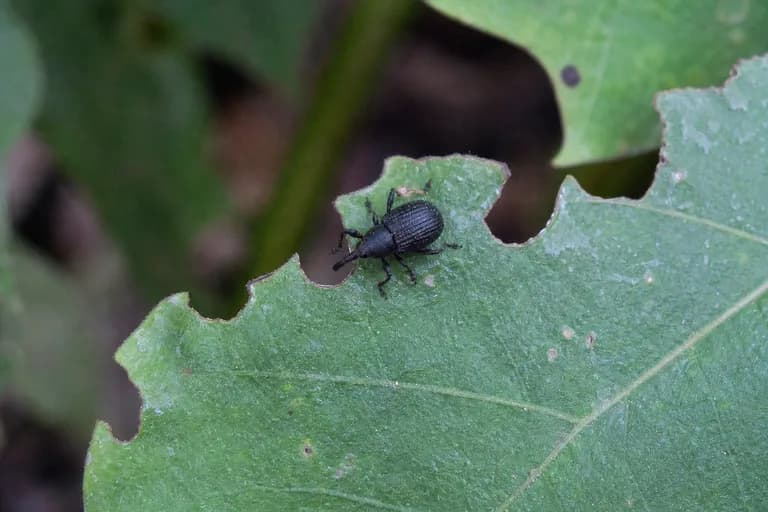
Dickmaulrüssler
SchädlingEingekerbte Blattränder durch nachtaktive erwachsene Käfer und wurzelfressende weiße Larven, die ein plötzliches Zusammenbrechen der Pflanze verursachen.
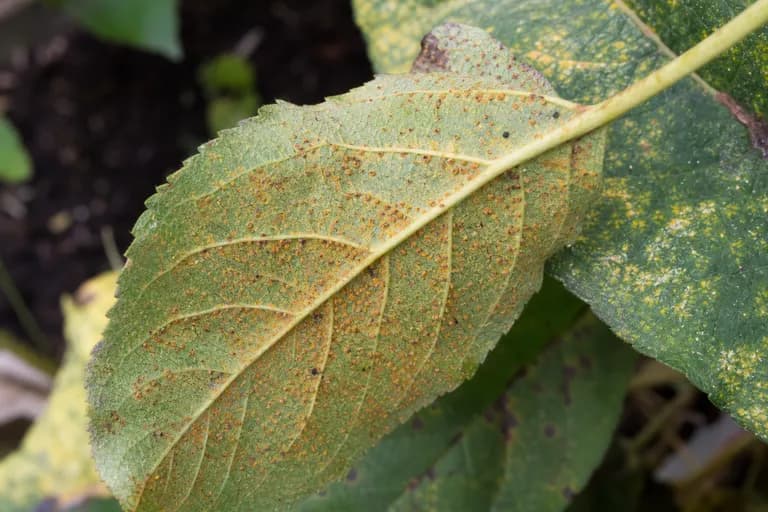
Rost
KrankheitKleine rostig-orangefarbene Pusteln auf der Blattunterseite mit entsprechenden gelben Flecken auf der Oberseite. Kann zu erheblichem Blattverlust führen.
Fehlerbehebung bei häufigen Problemen
Kronenfäule durch schlechte Drainage ist der häufigste Grund für das Absterben von Heuchera. Stellen Sie sicher, dass die Krone über dem umgebenden Bodenniveau sitzt und kein Wasser darum herum staut. Das Hochfrieren durch Frost-Tau-Zyklen drückt Kronen aus dem Boden – häufeln Sie im Herbst Kompost über freiliegende Wurzeln an. Ältere Pflanzen werden holzig und verlieren an Vitalität; teilen Sie alle 3–4 Jahre. Dunkellaubige Sorten können im tiefen Schatten Schwierigkeiten haben, wo sie ihre satte Färbung verlieren und grün werden. Manche Sorten sind hitzetoleranter als andere – wählen Sie in heißen Klimazonen Züchtungen, die auf Hitzebeständigkeit gezüchtet wurden.
Anbautipps
- Pflanzen Sie Heuchera in Halb- bis Vollschatten mit gefiltertem Sonnenlicht für die beste Laubfarbe. Während einige Sorten Morgensonne vertragen, verursacht intensive Nachmittagssonne in warmen Klimazonen Blattverbrennungen und verblasste Färbung. Violette und dunkellaubige Sorten vertragen generell mehr Sonne als hellere.
- Sorgen Sie für hervorragende Drainage am Pflanzstandort, da Heuchera-Kronen sehr anfällig für Fäulnis in staunassem Boden sind. Verbessern Sie schwere Tonböden mit großzügigen Mengen grobem Kompost, Perlit oder Splitt vor dem Pflanzen, um die Drainage um die Krone zu verbessern.
- Positionieren Sie die Krone beim Pflanzen genau auf Bodenniveau. Zu tief gesetzte Kronen faulen, während zu hoch gepflanzte austrocknen und instabil werden. Der Punkt, an dem die Blätter aus dem holzigen Stängel austreiben, sollte genau an der Bodenoberfläche sitzen.
- Mulchen Sie um Heuchera-Pflanzen mit 5–8 cm organischem Material wie gehäckselter Rinde oder Laubkompost und halten Sie den Mulch 2–3 cm von der Krone entfernt. Dies erhält die Bodenfeuchtigkeit, mäßigt die Temperatur und unterdrückt Unkraut, ohne Kronenfäule zu fördern.
- Überprüfen Sie Heuchera-Kronen jährlich im zeitigen Frühling auf Hochfrieren, das die holzige Krone während der Frost-Tau-Zyklen über die Bodenoberfläche drückt. Drücken Sie hochgefrorene Pflanzen vorsichtig zurück und häufeln Sie frischen Kompost um den freiliegenden Stängel an, um neues Wurzelwachstum zu fördern.
- Entfernen Sie verblühte Blütenstängel, indem Sie sie an der Basis der Krone abschneiden, sobald die Blüten verwelkt sind. Dies leitet die Energie der Pflanze in die Produktion frischen Laubs um und hält den Hügel ordentlich. Lassen Sie Blütenstängel bei Wildarten stehen, wenn Sie Samen sammeln möchten.
- Gießen Sie Heuchera während trockener Perioden ein- bis zweimal pro Woche tief, anstatt häufig oberflächlich zu wässern. Das faserige Wurzelsystem profitiert von gründlichem Durchfeuchten, das tiefes Wurzelwachstum fördert. Reduzieren Sie die Bewässerung im Winter, wenn die Pflanzen halbdormant sind.
- Teilen Sie Heuchera-Horste alle 3–4 Jahre im zeitigen Frühling oder Frühherbst, um die Pflanzen zu verjüngen und zu verhindern, dass sich die holzige Krone zu sehr anhebt. Heben Sie den gesamten Horst aus, schneiden Sie ihn mit einem scharfen Messer in Abschnitte und pflanzen Sie die Teilstücke in der richtigen Tiefe mit frischem Kompost wieder ein.
- Überwachen Sie auf Dickmaulrüssler, den schwerwiegendsten Schädling der Heuchera. Erwachsene Rüssler erzeugen nachts charakteristische halbkreisförmige Einkerbungen an den Blatträndern, während ihre Larven unterirdisch zerstörerisch an den Wurzeln fressen. Wenden Sie im Spätsommer biologische Nematodenbekämpfung an, um die Larven im Boden zu bekämpfen.
- Wählen Sie Sorten basierend auf Ihren spezifischen Standortbedingungen. Für tiefen Schatten wählen Sie limonengrüne oder silberlaubige Sorten, die dunkle Bereiche aufhellen. Für sonnigere Standorte vertragen dunklere Sorten wie 'Palace Purple' oder 'Obsidian' mehr Licht und entwickeln ihre satteste Färbung bei etwas direkter Sonneneinstrahlung.
Bau deine beste Purpurglöckchen an — und alles drumherum.
Starte heute kostenlos. Lege deine Beete an, setze deine Purpurglöckchen ein und lass PlotMyGarden Timing, Abstände, Begleiter und Erinnerungen von der Saat bis zum Erntekorb übernehmen.
Finde deine Purpurglöckchen
Heuchera 'Palace Purple'
Die klassische tiefviolett-bronzefarbene Sorte, die die Heuchera-Revolution ausgelöst hat, mit metallischen Blättern, die in voller Sonne fast schwarz werden.
Heuchera 'Caramel'
Atemberaubendes warm-aprikosen-karamellfarbenes Laub, das im Schattengarten leuchtet und Hitze und Feuchtigkeit besser verträgt als viele violette Sorten.
Heuchera 'Lime Rickey'
Leuchtend chartreuse-limonenfarbene Blätter, die dunkle Ecken erhellen, mit weißen Blüten, die das lebhafte Laub wunderschön ergänzen.
Heuchera 'Obsidian'
Die dunkelste Heuchera, mit glänzendem fast schwarzem Laub, das die ganze Saison seine Farbe behält, ohne zu verblassen, selbst im Halbschatten.
Eine einzelne Heuchera-Pflanze, die für 8–15 € gekauft wird, kann alle 3–4 Jahre in 4–8 neue Pflanzen geteilt werden, was sie zu einer der kosteneffektivsten Stauden für die Bepflanzung von Gartenbeeten macht. Über ein Jahrzehnt kann eine Originalpflanze 30 oder mehr Teilstücke im Wert von 240–450 € zu Einzelhandelspreisen hervorbringen. Da Heuchera ganzjährig Laubinteresse unter schwierigen Schattenbedingungen bietet, wo nur wenige andere farbenfrohe Pflanzen gedeihen, entfällt auch die Notwendigkeit saisonaler Einjähriger-Ersatzpflanzungen, die typischerweise 3–5 € pro Pflanze mehrmals pro Jahr kosten.
Schnelle Rezepte
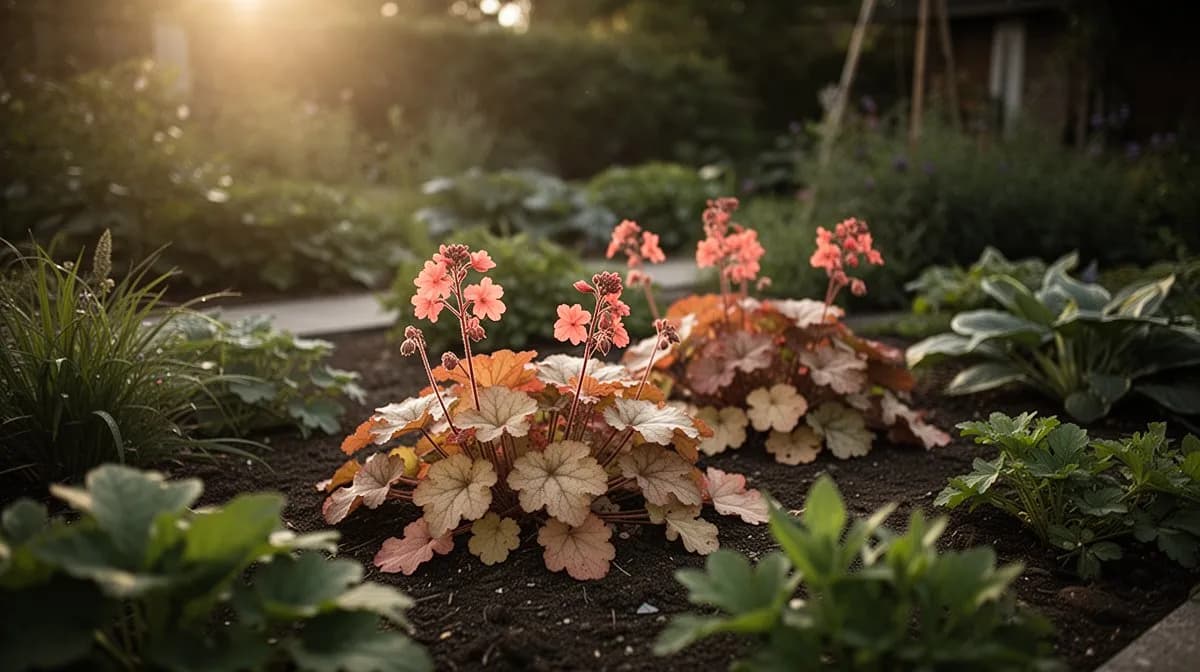
Heuchera-Kronenteilung und Neupflanzung
30 Min.Ein praktisches Gartenrezept zur Verjüngung reifer Heuchera-Pflanzen und zur kostenlosen Vermehrung Ihrer Sammlung. Die Teilung hält die Pflanzen vital und verhindert, dass sich die holzige Krone über den Boden erhebt, was ihre Lebensdauer und ihren Zierwert verringert. Am besten im zeitigen Frühling bei Neuaustrieb oder im Frühherbst durchgeführt, solange die Wurzeln noch aktiv wachsen.
6 ZutatenSchatten-Kübelbepflanzung mit Heuchera
45 Min.Erstellen Sie eine atemberaubende, langlebige Kübelbepflanzung mit Heuchera als Hauptlaubpflanze, kombiniert mit ergänzenden schattenliebenden Begleitern. Dieses Arrangement bietet mehrsaisonales Interesse und gedeiht auf einer schattigen Veranda, Terrasse oder am Nordeingang. Die Heuchera wird das Display vom Frühling bis zum Spätherbst mit ihrem farbenfrohen, immergrünen Laub verankern.
6 ZutatenHeuchera-Blattvermehrungsmethode
20 Min.Eine einfache Vermehrungstechnik, mit der Sie neue Heuchera-Pflanzen aus einzelnen Blättern geschätzter Sorten gewinnen können. Diese Methode ist langsamer als die Kronenteilung, ermöglicht es Ihnen aber, eine einzelne Pflanze zu vermehren, ohne sie zu stören. Blattstecklinge bewurzeln am besten im späten Frühling oder Frühsommer während des aktiven Wachstums, und neue Pflänzchen entwickeln sich typischerweise innerhalb von 6–8 Wochen.
6 ZutatenWas drinsteckt
Gesundheitsvorteile
- Heuchera-Wurzeln enthalten hohe Mengen an Gerbstoffen mit starken adstringierenden Eigenschaften, die traditionell von nordamerikanischen Ureinwohnerstämmen zur Behandlung von Durchfall, Ruhr und anderen Magen-Darm-Beschwerden verwendet wurden
- Wurzelpräparate haben dokumentierte antimikrobielle Wirkung und wurden historisch als Umschläge auf Wunden, Geschwüre und Hautulzerationen aufgetragen, um die Heilung zu fördern und Infektionen zu verhindern
- Die traditionelle Kräutermedizin setzte Heuchera-Wurzelgurgellösung als wirksames Heilmittel bei Halsschmerzen, Mundgeschwüren und Zahnfleischentzündungen ein, dank ihrer starken adstringierenden und entzündungshemmenden Verbindungen
- Die Anwesenheit von Heuchera in Gärten unterstützt die psychische Gesundheit und das Wohlbefinden durch biophile Vorteile, da Studien durchweg zeigen, dass die Pflege von Ziergärten Stress, Angst und Cortisolspiegel reduziert
- Heuchera-Blüten liefern wichtige Nektarressourcen für Kolibris und einheimische Bestäuber und unterstützen die Biodiversität, die zu einer breiteren Ökosystemgesundheit und zum Umweltwohlbefinden in Wohngebieten beiträgt
- Der Anbau von Heuchera in Schattengärten fördert Aktivitäten im Freien in kühleren Garten-Mikroklimaten während heißer Sommermonate und fördert die gesundheitlichen Vorteile regelmäßiger Gartenarbeit
Woher Purpurglöckchen stammt
Heuchera, allgemein bekannt als Purpurglöckchen oder Alaunwurzel, ist eine Gattung mehrjähriger Pflanzen, die ausschließlich in Nordamerika heimisch ist. Die Gattung umfasst etwa 37 Arten, die über eine bemerkenswert vielfältige Palette von Lebensräumen verteilt sind – von alpinen Felsspalten in den Rocky Mountains bis zu feuchten Waldböden in der Appalachen-Region und trockenen Canyonwänden im Südwesten der USA. Indigene Völker in ganz Nordamerika erkannten die medizinischen Eigenschaften der Heuchera lange vor dem europäischen Kontakt. Die Blackfoot, Cherokee und andere Stämme verwendeten Wurzelpräparate als starke Adstringenzien zur Behandlung von Durchfall, Halsschmerzen, Wunden und Leberleiden. Der englische Trivialname Alumroot (Alaunwurzel) spiegelt den stark adstringierenden, alaunartigen Geschmack der Wurzeln wider, die hohe Konzentrationen an Gerbstoffen enthalten. Europäische Botaniker beschrieben die Gattung erstmals formell im frühen 18. Jahrhundert und benannten sie nach Johann Heinrich von Heucher, einem deutschen Medizinprofessor, obwohl diese Ehre eher zufällig war, da Heucher keine direkte Verbindung zur Pflanze hatte. Während des 19. und frühen 20. Jahrhunderts blieb Heuchera eine relativ unbedeutende Gartenpflanze, die hauptsächlich wegen ihrer zarten korallenroten Blüten und nicht wegen ihres Laubs geschätzt wurde. Die Verwandlung der Heuchera zu einer der beliebtesten Schattenstauden der Welt begann in den 1980er und 1990er Jahren, maßgeblich vorangetrieben durch die Arbeit des amerikanischen Züchters Dan Heims von Terra Nova Nurseries in Oregon. Heims und sein Team begannen, verschiedene nordamerikanische Arten zu kreuzen und auf außergewöhnliche Laubfarben, Muster und Texturen zu selektieren, die es bei Gartenpflanzen zuvor nicht gegeben hatte. Diese Zuchtrevolution brachte Sorten mit Blättern in Violett-, Silber-, Bernstein-, Chartreuse- und fast Schwarztönen hervor und verwandelte Heuchera von einer bescheidenen Wildblume in einen Laubstar. Heute zählt Heuchera zu den meistverkauften Stauden weltweit, mit Hunderten benannter Sorten und jährlich neuen Einführungen.
Purpurglöckchen: Schon gewusst?
Faszinierende Fakten über Purpurglöckchen
Heuchera ist nach Johann Heinrich von Heucher (1677–1747) benannt, einem deutschen Botaniker und Arzt, der Professor für Medizin an der Universität Wittenberg war, obwohl er die Pflanze, die seinen Namen trägt, nie tatsächlich studiert hat.
Purpurglöckchen: Fragen & Antworten
Wann sollte ich Purpurglöckchen pflanzen?
Was sind gute Begleitpflanzen für Purpurglöckchen?
In welchen Winterhärtezonen kann Purpurglöckchen wachsen?
Wie viel Sonne braucht Purpurglöckchen?
Welchen Abstand sollte ich zwischen Purpurglöckchen lassen?
Welche Schädlinge und Krankheiten befallen Purpurglöckchen?
Wie lagere ich Purpurglöckchen nach der Ernte?
Was sind die besten Purpurglöckchen-Sorten zum Anbauen?
Welchen Boden braucht Purpurglöckchen?
Warum hebt sich die Krone meiner Heuchera aus dem Boden?
Was tötet meine Heuchera-Pflanzen in Kübeln?
Brauchen Heuchera-Pflanzen Sonne oder Schatten?
Wie vermehre ich Heuchera durch Stecklinge?
Warum werden die Blätter meiner Heuchera braun und trocken?
Sind Heuchera rehresistent?
Du hast die Theorie gelesen. Jetzt baue sie auf Autopilot an.
Alles, was Purpurglöckchen knifflig macht — das Timing, die Abstände, die Begleiter, das Erntefenster — genau das übernimmt PlotMyGarden für dich, für jede Pflanze im Garten.
Ein Plan, der dein Wetter kennt
Standort einmal festlegen. Aussaat-, Dünge- und Erntedaten rund um deinen echten letzten Frosttermin und die Live-Vorhersage — kein Raten mehr nach Saattüte.
Aus dem Abschnitt „Pflanzzeit“Beetplaner per Drag & Drop
Beete auf einem Raster gestalten. Jede Pflanze rastet im richtigen Abstand ein, und du siehst die ganze Saison, bevor du einen Cent für Saatgut ausgibst.
Aus dem Abschnitt „Anbau“Begleiter-Konflikte früh erkannt
Über 200 gute und schlechte Kombinationen werden beim Pflanzen live geprüft — so landet ein saisonruinierender Fehler nie in der Erde.
Aus dem Abschnitt „Begleiter“Erinnerungen, nach denen du wirklich handelst
„Gieß die Bohnen.“ „Heute ernten, bevor's umschlägt.“ Pünktlich, konkret und auf deine echten Pflanzen bezogen.
Aus dem Abschnitt „Ernte“Staffel-Aussaat, geplant
Sechs Wochen ernten statt sechs Tage? Die App verteilt deine Aussaaten automatisch und erinnert dich, wenn der nächste Satz fällig ist.
Aus dem Abschnitt „Pflanzzeit“Ein Verlauf, der schlauer wird
Jede protokollierte Ernte bringt der App deinen Garten bei. Der Plan fürs nächste Jahr startet bei dem, was in deinem Boden wirklich funktioniert hat.
Aus dem Abschnitt „Überblick“Pflanze diese neben Purpurglöckchen
Weitere Stauden
Bau deine beste Purpurglöckchen an — und alles drumherum.
Starte heute kostenlos. Lege deine Beete an, setze deine Purpurglöckchen ein und lass PlotMyGarden Timing, Abstände, Begleiter und Erinnerungen von der Saat bis zum Erntekorb übernehmen.