Little Gem Salat
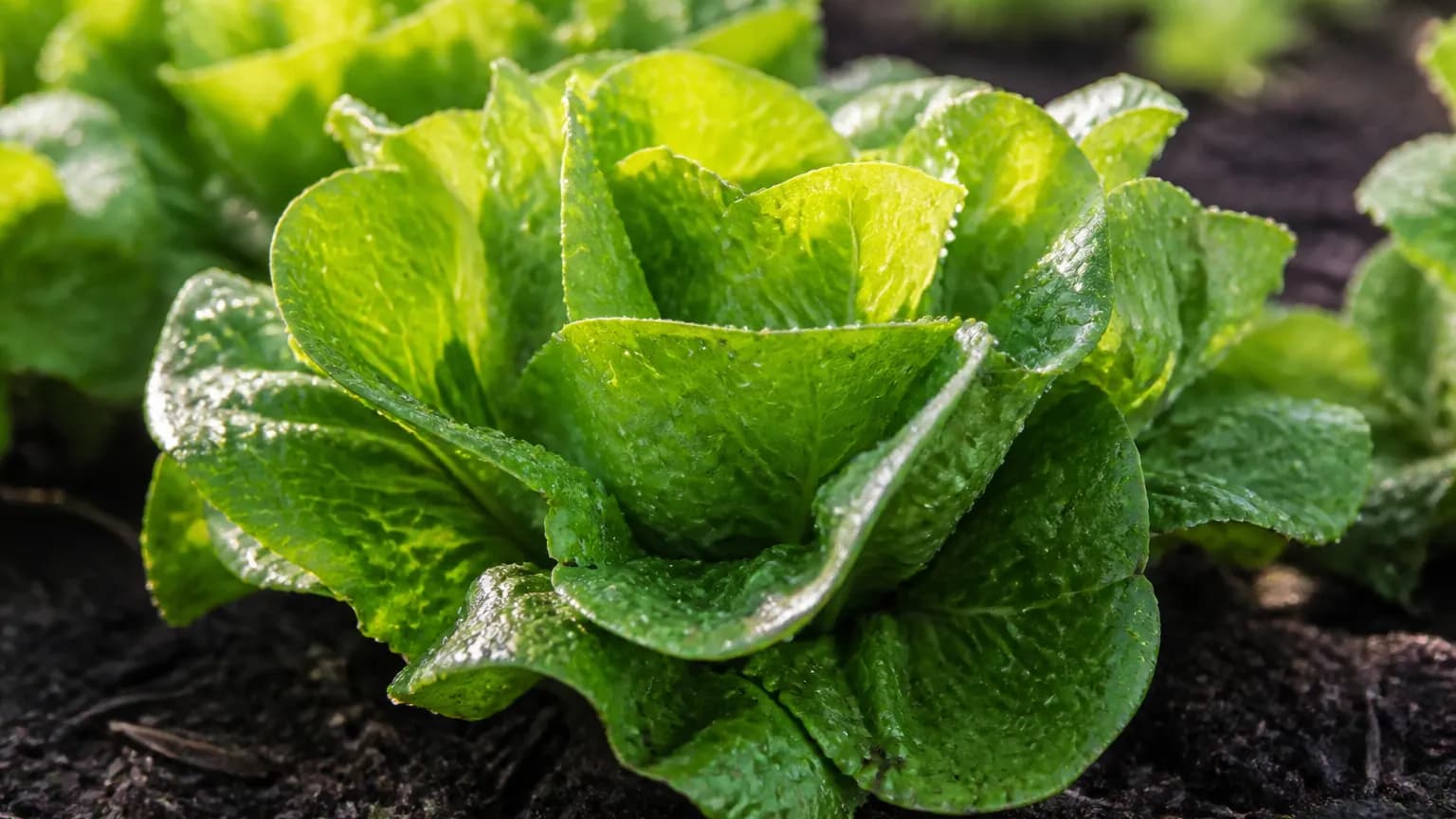
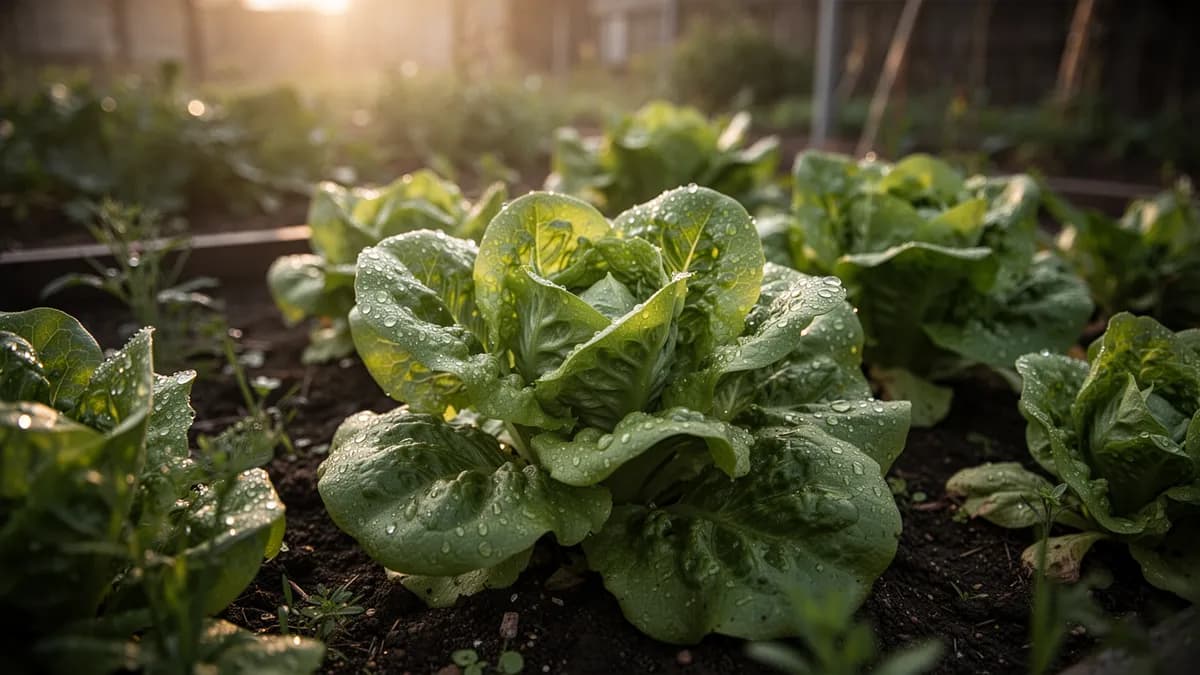
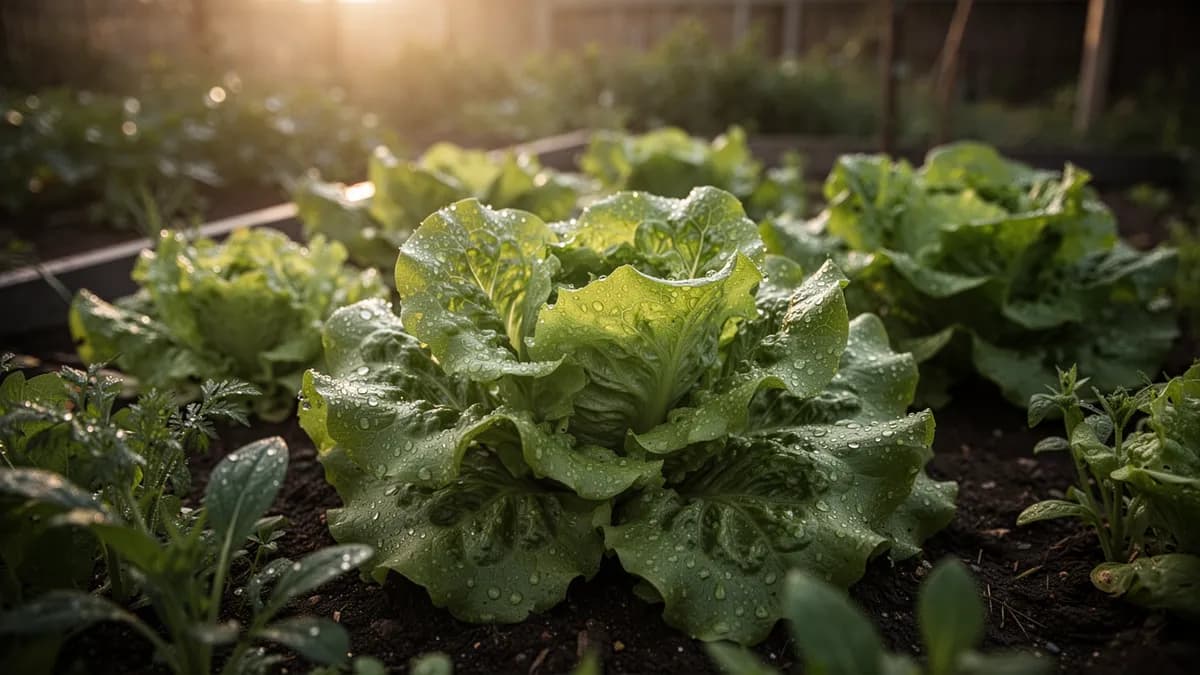
Ein kompakter Miniatur-Romanasalat, der feste, süße Köpfe von etwa 15 cm Höhe bildet – perfekt für Salate in Einzelportionsgröße.





Auf dieser SeiteÜberblick
Little Gem Salat im Überblick
Ein kompakter Miniatur-Romanasalat, der feste, süße Köpfe von etwa 15 cm Höhe bildet – perfekt für Salate in Einzelportionsgröße. Vereint die Knackigkeit von Romana mit einem süßeren, buttrigeren Geschmack in einem platzsparenden Format. Hervorragend für Kübelgärtnerei und eng bepflanzte Intensivbeete. Schossresistenter als Standard-Romanasalat, was die Erntezeit bis in wärmeres Wetter verlängert.
Wann Little Gem Salat pflanzen
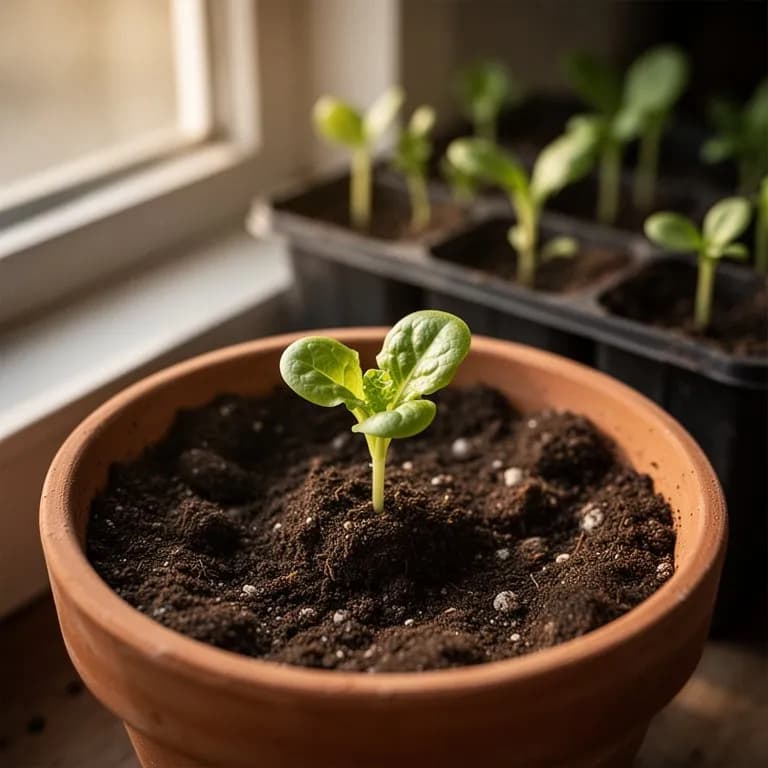
Säen Sie die Samen 3 mm tief in feuchte Anzuchterde bei 15 bis 20 Grad Celsius. Bedecken Sie sie nicht stark, da Salat Licht zum Keimen benötigt. Die Keimung dauert 5 bis 8 Tage. Ziehen Sie die Setzlinge bei kühlen Temperaturen von 13 bis 18 Grad unter hellem Licht. Pflanzen Sie sie mit 4 echten Blättern nach 5 bis 7 Tagen Abhärtung um. Direktsaat in Gartenbeete funktioniert ebenfalls gut von Frühling bis Herbst.
Dein Little Gem Salat-Jahr
Abgestimmt auf Zone 7 · typische Saison · Frost geht um den 2. Apr. und kehrt um den 1. Nov. zurück
Little Gem Salat Mär – Apr, Sep – Okt pflanzen, Mai – Jun, Okt – Nov ernten. Beachte die Pflanzmethoden unten und wähle dein Klima für passende Zeiträume.
So baust du Little Gem Salat an
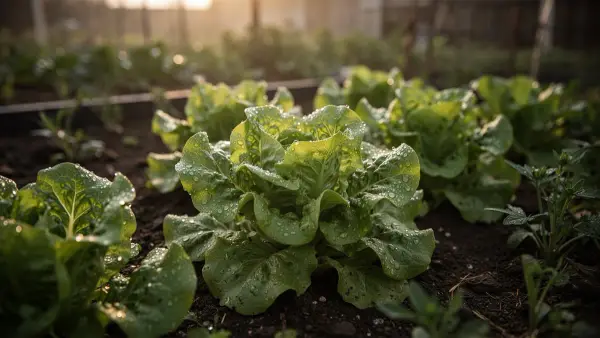
Little Gem ist eine Miniatur-Kreuzung aus Romana- und Kopfsalat, die kompakte, süße, knackige Köpfe von etwa 15 cm Höhe bildet. Starten Sie die Samen 4 bis 6 Wochen vor dem letzten Frost drinnen oder säen Sie im frühen Frühling direkt aus. Säen Sie die Samen 3 mm tief und bedecken Sie sie kaum, da Salat Licht zum Keimen benötigt. Setzen Sie die Pflanzen im Abstand von 15 bis 20 cm in Reihen mit 25 cm Abstand.
Little Gem gedeiht bei kühlem Wetter zwischen 13 und 21 Grad Celsius. Er ist hitzetoleranter als viele Salatsorten, schosst jedoch, wenn die Temperaturen dauerhaft 27 Grad überschreiten. Säen Sie alle 2 Wochen von Frühling bis Herbst nach, um eine kontinuierliche Ernte zu gewährleisten.
Halten Sie den Boden mit leichtem, häufigem Gießen gleichmäßig feucht. Mulchen Sie um die Pflanzen, um die Wurzeln kühl zu halten und Feuchtigkeit zu bewahren. Little Gem reift schnell in 50 bis 60 Tagen und ist damit ideal für intensiven Gartenbau. Seine kompakte Größe macht ihn perfekt für Kübel, Hochbeete und kleine Flächen. Düngen Sie alle 2 Wochen mit verdünntem Flüssigdünger für die beste Kopfentwicklung.
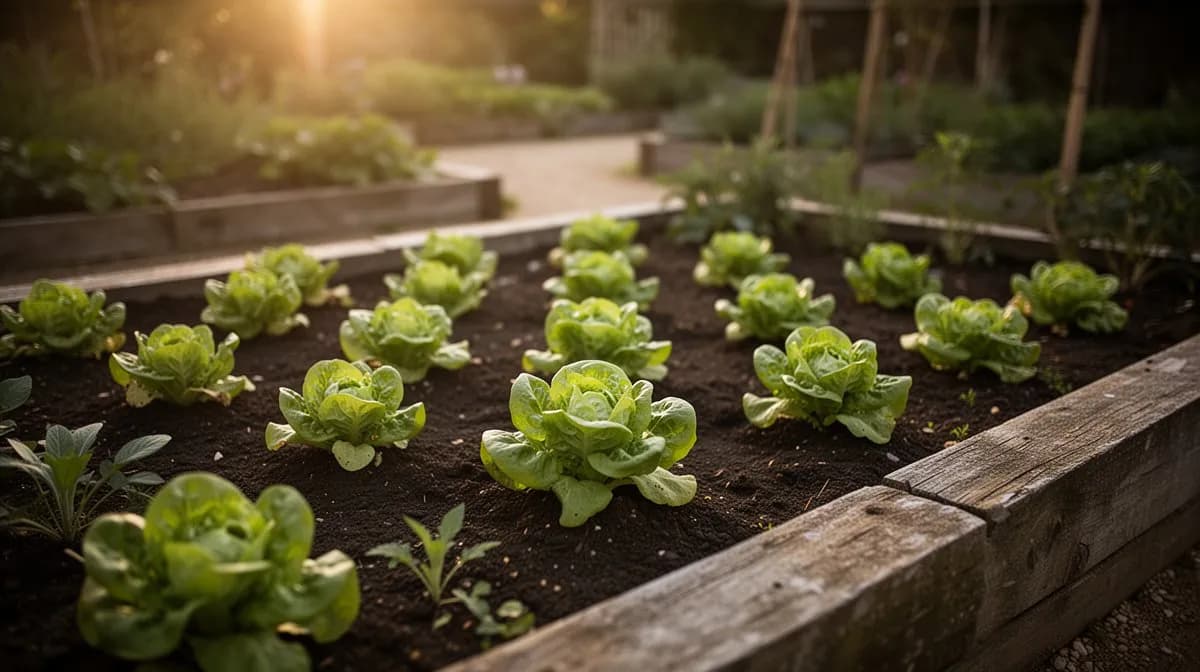
72 Pflanzen passen in ein Beet von 120 × 240 cm
Little Gem Salat braucht 20 cm Platz pro Pflanze. Der Planer hält diesen Abstand für dich ein — jede Pflanze, jedes Beet.
Die besten Nachbarn für Little Gem Salat
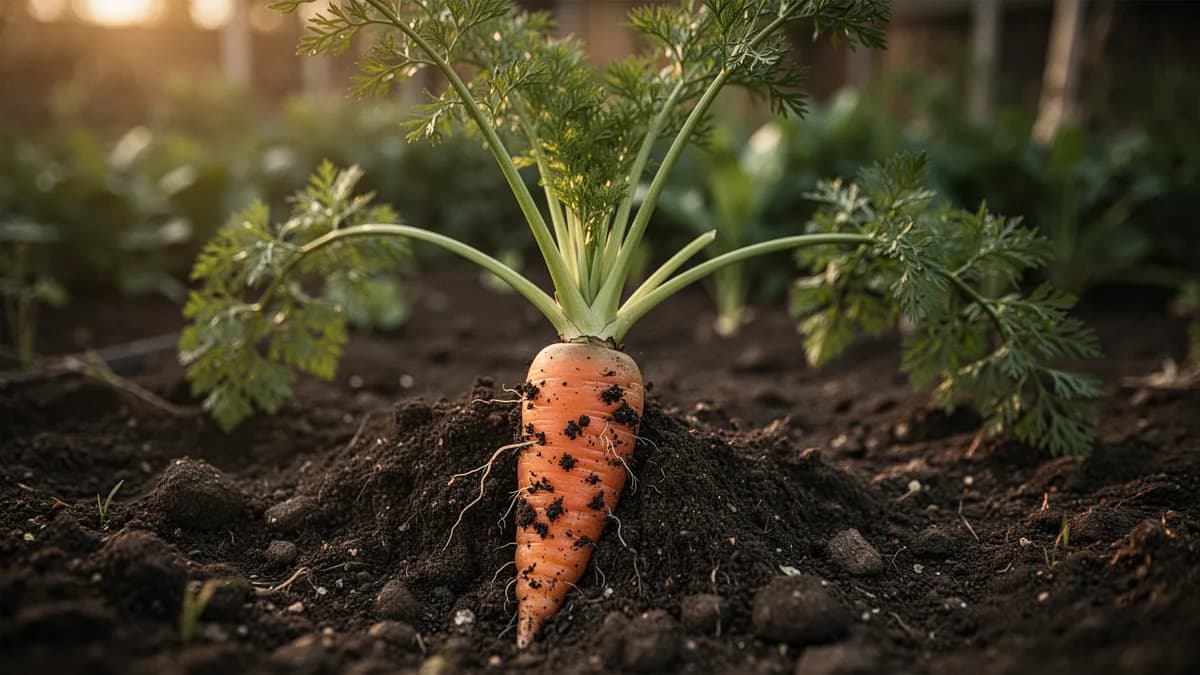
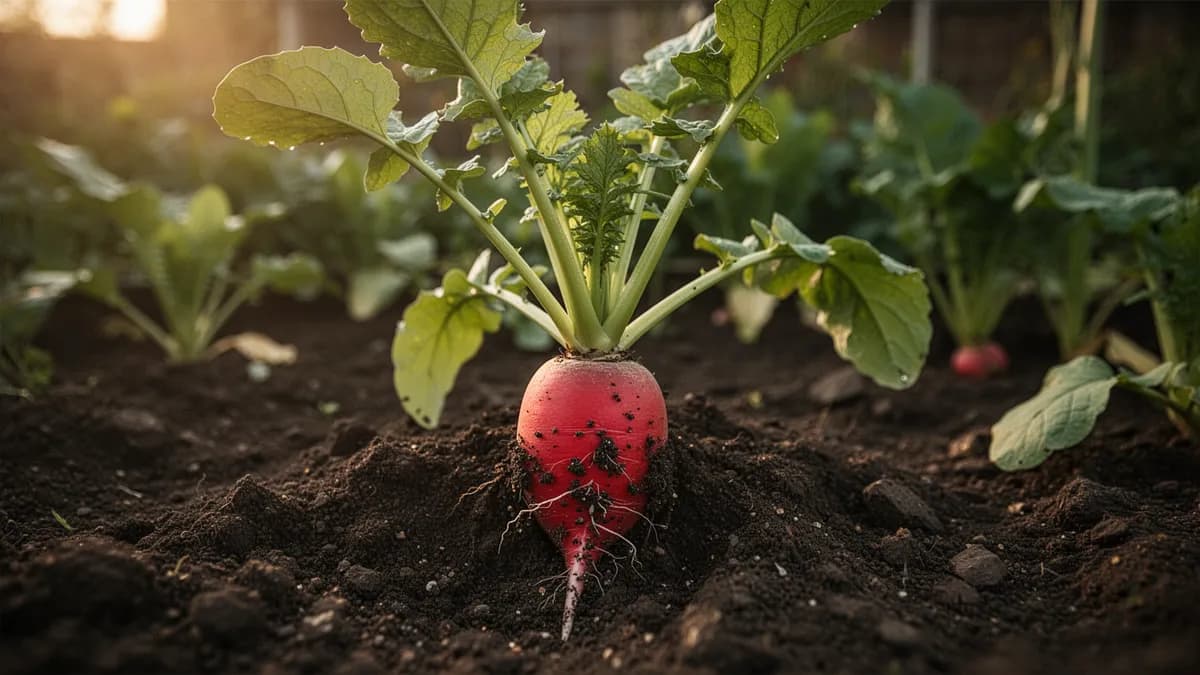
Pflanzen Sie Little Gem neben Karotten, Radieschen und Erdbeeren. Höhere Kulturen wie Erbsen und Bohnen bieten wohltuenden Nachmittagsschatten. Schnittlauch und Knoblauch helfen, Blattläuse abzuwehren. Die kompakte Größe von Little Gem macht ihn zu einem hervorragenden Zwischenpflanzpartner zwischen langsamer wachsenden Kulturen wie Kohlgewächsen und Tomaten.
Karotte gehört daneben.
Altes Gärtnerwissen, geprüft an der echten Nachbartabelle von Little Gem Salat — teste jede Pflanze, die du anbaust.
Probiere Little Gem Salat direkt hier im Beet
Ein echtes Planer-Beet, Little Gem Salat steht schon drin. Tippe einen Begleiter an, platziere ihn und sieh, wie die Nachbarschaftsprüfung antwortet — grün für gute Nachbarn, rot bei Streit.


Passende Anbau-Ratgeber
Richtig düngen
Little Gem wächst am besten in nährstoffreichem, gut durchlässigem Boden mit einem pH-Wert zwischen 6,0 und 7,0. Arbeiten Sie vor dem Pflanzen 5 cm Kompost ein. Düngen Sie alle 2 Wochen mit verdünntem Flüssigdünger für eine gleichmäßige Kopfentwicklung. Ausreichend Calcium beugt Innenblattnekrose vor. Vermeiden Sie übermäßigen Stickstoff, der lockere, schlaffe Köpfe statt der gewünschten festen, kompakten Form erzeugt.
Ideale Temperatur
Winterhärtezone-Kompatibilität
Von der Saat zur Ernte, Schritt für Schritt
Keimung
Samen keimen unter kühlen, feuchten Bedingungen schnell, oft innerhalb von 2-5 Tagen. Die winzige weiße Keimwurzel erscheint zuerst und verankert sich im Boden, gefolgt von zarten Keimblättern, die sich zur Photosynthese entfalten. Salatsamen benötigen Licht zum Keimen und sollten auf der Oberfläche gesät oder nur dünn mit einer feinen Schicht Erde oder Vermiculit bedeckt werden.
Setzlingsentwicklung
Echte Blätter erscheinen mit der charakteristischen glatten, leicht becherförmigen Form von Romanasalat-Typen. Die Sämlinge entwickeln ein flaches, aber faseriges Wurzelsystem. Das Wachstum ist bei kühlen Bedingungen stetig und die ersten Anzeichen des aufrechten Wuchses zeigen sich, wenn sich die Blätter vertikal statt flach ausrichten.
Rosettenbildung
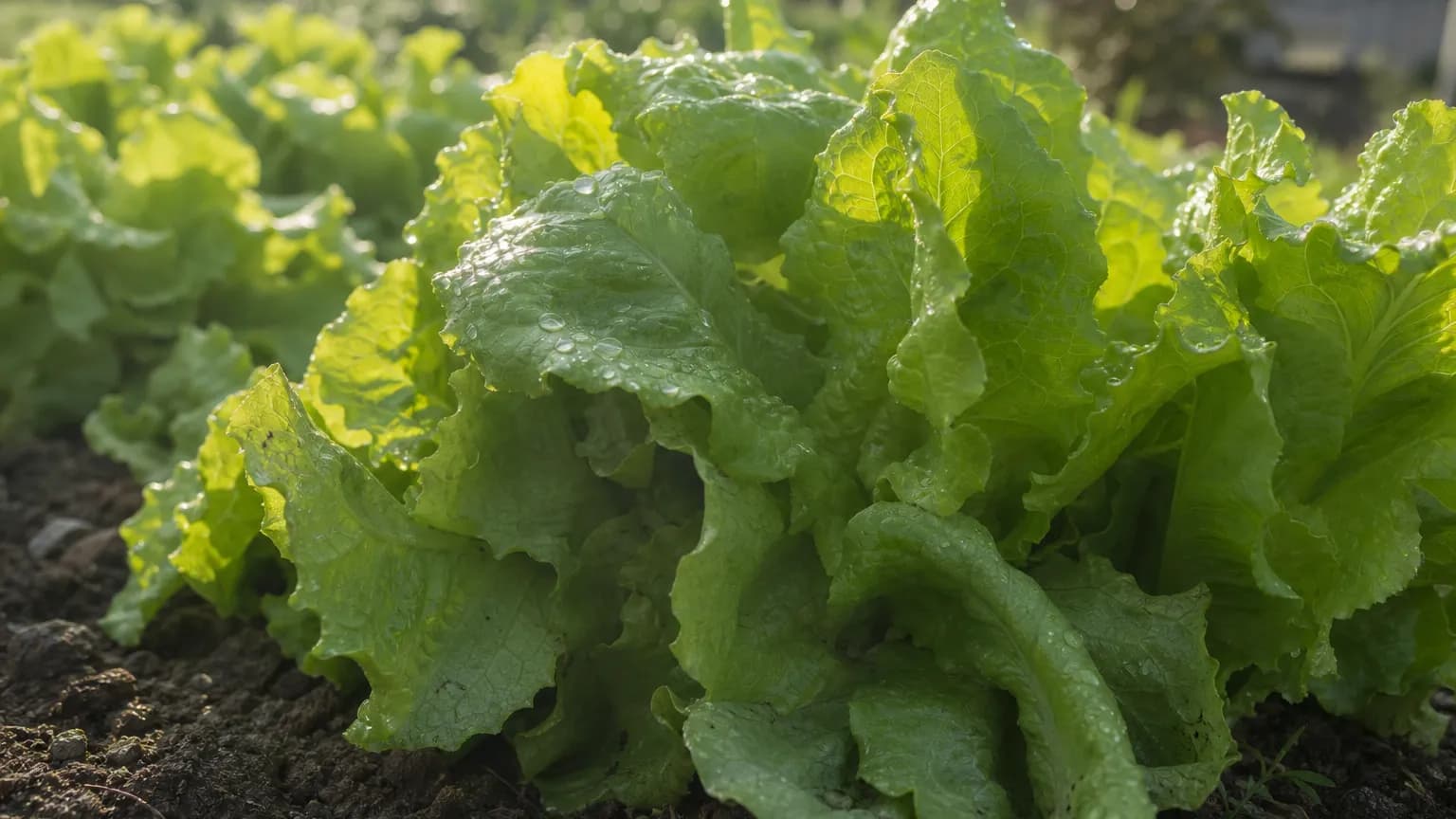
Die Pflanze produziert rasch neue Blätter vom zentralen Vegetationspunkt und bildet eine enge aufrechte Rosette, die deutlich kompakter ist als ein Standard-Romanasalat. Äußere Blätter werden mittelgrün, während innere Blätter heller bleiben. Die charakteristische süße Knackigkeit von Little Gem beginnt sich zu entwickeln, wenn die Blätter dicker werden.
Herzbildung
Die innersten Blätter beginnen sich eng nach innen zu falten und bilden das dichte, gebleichte Herz, das Little Gem so geschätzt macht. Die äußeren Hüllblätter schützen das Herz vor Sonne und erzeugen einen natürlichen Bleicheffekt, der das blasse, süße und außergewöhnlich knackige Innere hervorbringt. Der Kopf fühlt sich beim sanften Drücken deutlich fest an.
Erntefenster
Die Köpfe erreichen ihre ideale Erntegröße von 12-15 cm Höhe und 8-10 cm Breite mit einem Gewicht von 150-200 g pro Stück. Der Kopf sollte sich beim sanften seitlichen Drücken fest und dicht anfühlen. Little Gem hält sich im Garten 7-10 Tage nach Erreichen der Reife, bevor Anzeichen von Schossen auftreten – ein großzügiges Erntefenster im Vergleich zu vielen Salatsorten.
Schossen
Wird nicht geerntet, streckt sich der zentrale Stängel schnell, da die Pflanze zur Blüte übergeht. Der Kopf lockert sich und öffnet sich, die Blätter werden zunehmend bitter und ein hoher Blütenstiel mit kleinen gelben gänseblümchenähnlichen Blüten erscheint. Obwohl der Salat nicht mehr zum Essen geeignet ist, ziehen die Blüten Nützlinge an und die Samen können für zukünftige Pflanzungen gesammelt werden.
Säen Sie die Samen nicht tiefer als 3 mm – Salat ist ein lichtabhängiger Keimer und zu tiefes Vergraben ist die häufigste Ursache für schlechte Keimung. Halten Sie den Boden mit einem Feinzerstäuber gleichmäßig feucht, um ein Verrutschen der winzigen Samen zu vermeiden.
Little Gem Salat Monat für Monat pflegen
Was du jeden Monat für deine Little Gem Salat tun solltest
Oktober
Aktueller MonatErnten Sie im Herbst reifende Köpfe auf ihrem Höhepunkt – kühl angebauter Little Gem ist oft der beste des gesamten Jahres. In milden Klimazonen (Zonen 7-10) säen Sie weiter für die spätherbstliche und frühwinterliche Ernte unter Schutz. Verwenden Sie Reihenabdeckungen oder Hauben, um die Saison zu verlängern.
Immer wissen, was jetzt im Garten zu tun ist
Eine E-Mail zum Monatsanfang: was du jetzt säen, pflanzen und anpacken solltest — für deine Little Gem Salat und alles, was drumherum wächst. Dazu ein kurzer Startkurs, der dich vor den klassischen Fehlern bewahrt.
- Was jetzt zu tun ist
- Passend zu deiner Saison
- Startkurs inklusive
Little Gem Salat ernten
Ernten Sie Little Gem, wenn die Köpfe fest und kompakt sind, etwa 50 bis 60 Tage nach der Aussaat. Schneiden Sie den gesamten Kopf morgens mit einem scharfen Messer an der Basis ab. Jeder Kopf hat die perfekte Größe für eine Einzelportion. Alternativ können Sie ab Tag 30 einzelne Außenblätter ernten, um ein längeres Erntefenster zu erhalten. Warten Sie nicht, bis sich die Mitte zu strecken beginnt, da dies ein Zeichen für Schossen ist.
angenommen, du pflanzt zu Beginn des Zeitraums — trage dein tatsächliches Datum ein
Ernte Little Gem Salat zügig, dann trägt die Pflanze weiter.
Lagerung & Konservierung
Little Gem Köpfe lagern außergewöhnlich gut für Salat und halten 1 bis 2 Wochen im Kühlschrank in einem perforierten Plastikbeutel. Ihre kompakte Struktur hilft ihnen, länger knackig zu bleiben als Pflücksalat-Sorten. Waschen Sie sie nicht vor der Lagerung. Little Gem lässt sich nicht gut einfrieren oder trocknen. Für den frischesten Vorrat pflanzen Sie gestaffelt für eine kontinuierliche Ernte während der gesamten Wachstumsperiode.
Was schiefgeht — und die Lösung
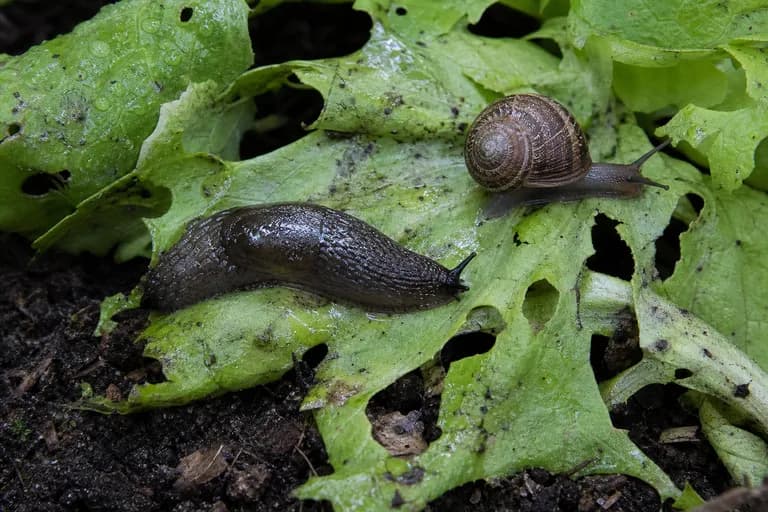
Schnecken und Nacktschnecken
SchädlingLöcher in den äußeren Blättern, schleimige Spuren und Schäden am Herz des sich entwickelnden Kopfes.
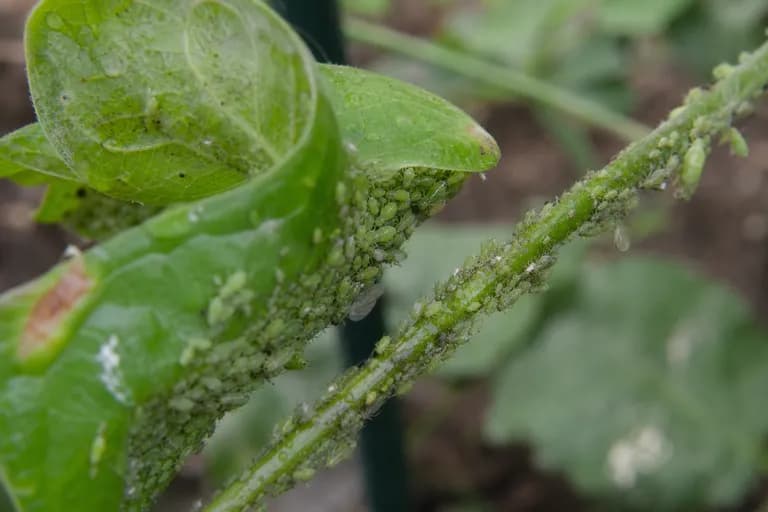
Blattläuse
SchädlingKleine grüne Insekten, die sich in Blattfalten verstecken und eingerollte, verformte Innenblätter verursachen.
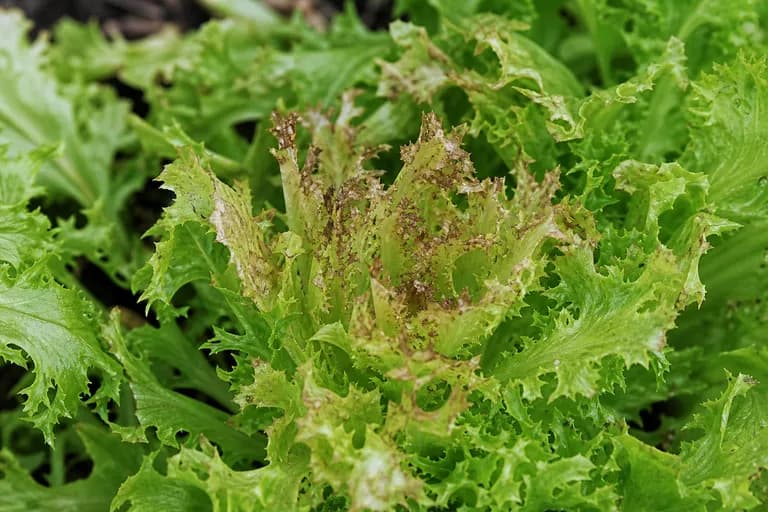
Innenblattnekrose
KrankheitBraune, papierartige Ränder an den Innenblättern, verursacht durch Calciummangel oder ungleichmäßiges Gießen.
Fehlerbehebung bei häufigen Problemen
Schossen durch Hitze oder lange Tage verursacht bittere, gestreckte Köpfe. Innenblattnekrose resultiert aus ungleichmäßigem Gießen oder Calciummangel. Schnecken schädigen sich entwickelnde Köpfe, indem sie sich in den engen Blattfalten verstecken. Blattläuse können aus dem kompakten Herz schwer zu entfernen sein. Lockere Köpfe entstehen durch unzureichendes Licht oder übermäßige Stickstoffdüngung.
Anbautipps
- Säen Sie alle 2-3 Wochen von Frühjahr bis Spätsommer gestaffelt nach, um eine kontinuierliche Ernte zu erhalten. Eine einzelne Aussaat bringt Köpfe hervor, die alle innerhalb desselben engen Zeitfensters reifen, daher ist versetztes Pflanzen unerlässlich, um einen Wechsel zwischen Überfluss und Mangel zu vermeiden.
- Säen Sie die Samen auf die Oberfläche und drücken Sie sie sanft in den Boden – vergraben Sie sie niemals. Salat ist ein lichtabhängiger Keimer und Samen, die mehr als 3-5 mm tief bedeckt sind, haben dramatisch reduzierte Keimraten.
- Wenn Sie im Sommer bei Bodentemperaturen über 25 °C säen, kühlen Sie die Samen 24-48 Stunden im Kühlschrank vor und säen Sie am späten Nachmittag, wenn der Boden abkühlt. Dies durchbricht die hitzebedingte Keimruhe, die die Keimung verhindert.
- Setzen Sie die Pflanzen in alle Richtungen 15-20 cm auseinander für die effizienteste Flächennutzung. Little Gems kompakter aufrechter Wuchs bedeutet, dass er deutlich weniger Platz benötigt als ein Standard-Romanasalat, was ihn ideal für intensiven Hochbeetanbau und Quadratfuß-Gärtnerei macht.
- Halten Sie die Bodenfeuchtigkeit während der gesamten Wachstumsperiode gleichmäßig – Salat hat ein flaches Wurzelsystem und kann kein Wasser aus tiefen Bodenschichten ziehen. Unregelmäßiges Gießen verursacht bitteren Geschmack, Innenblattnekrose und vorzeitiges Schossen.
- Bringen Sie nach dem Umpflanzen eine dünne Schicht organischen Mulch (Stroh, Grasschnitt oder Kompost) um die Pflanzen auf, um die Wurzeln kühl zu halten, Feuchtigkeit zu bewahren und Unkraut zu unterdrücken. Bei heißem Wetter kann Mulch die Bodentemperatur um 3-5 °C senken und das Schossen deutlich verzögern.
- Verwenden Sie im Sommer 30-50 % Schattiergewebe, um die Anbauzeit in wärmere Monate zu verlängern. Little Gem ist hitzetoleranter als die meisten Salate, aber Schatten hält die Wurzeln kühl und den Geschmack süß, wenn die Temperaturen 24 °C überschreiten.
- Ernten Sie den ganzen Kopf, indem Sie ihn mit einem scharfen Messer an der Basis abschneiden und einen 2 cm langen Strunk stehen lassen. Little Gem kann manchmal innerhalb von 3-4 Wochen einen kleineren zweiten Kopf vom Strunk nachtreiben und Ihnen so eine Bonusernte von derselben Pflanzung bescheren.
Bau deine beste Little Gem Salat an — und alles drumherum.
Starte heute kostenlos. Lege deine Beete an, setze deine Little Gem Salat ein und lass PlotMyGarden Timing, Abstände, Begleiter und Erinnerungen von der Saat bis zum Erntekorb übernehmen.
Finde deine Little Gem Salat
Little Gem
Der klassische Miniatur-Romanasalat mit dichten, süßen, knackigen Köpfen und hervorragendem Geschmack.
Winter Gem
Eine winterharte Auslese zur Überwinterung unter Abdeckung, die im frühen Frühling feste Köpfe bildet.
Little Gem Red
Eine rotgetönte Variante mit burgunderroten Außenblättern und süßen grünen Herzen.
Sucrine
Eine französische Sorte, die Little Gem sehr ähnlich ist, mit einer etwas buttrigeren Textur.
Little Gem Salatköpfe kosten im Einzelhandel 2-4 € pro Stück oder 5-8 € pro Beutel mit zwei Köpfen, und erstklassige Bio-Köpfe erzielen auf Wochenmärkten noch höhere Preise. Ein einzelnes Saatgutpäckchen für 3 € enthält 500-1000 Samen – genug für eine ganze Salatsaison von Frühling bis Herbst. Der Anbau von 10-15 Pflanzen in gestaffelter Aussaat über die gesamte Saison kann 80-150 € an frischem Salat einsparen, und der Geschmack von gartenfrischem Little Gem, der Minuten vor dem Servieren geerntet wird, ist unvergleichlich besser als alles, was in Geschäften erhältlich ist, wo Köpfe typischerweise 3-7 Tage alt sind, wenn sie ins Regal kommen.
Schnelle Rezepte
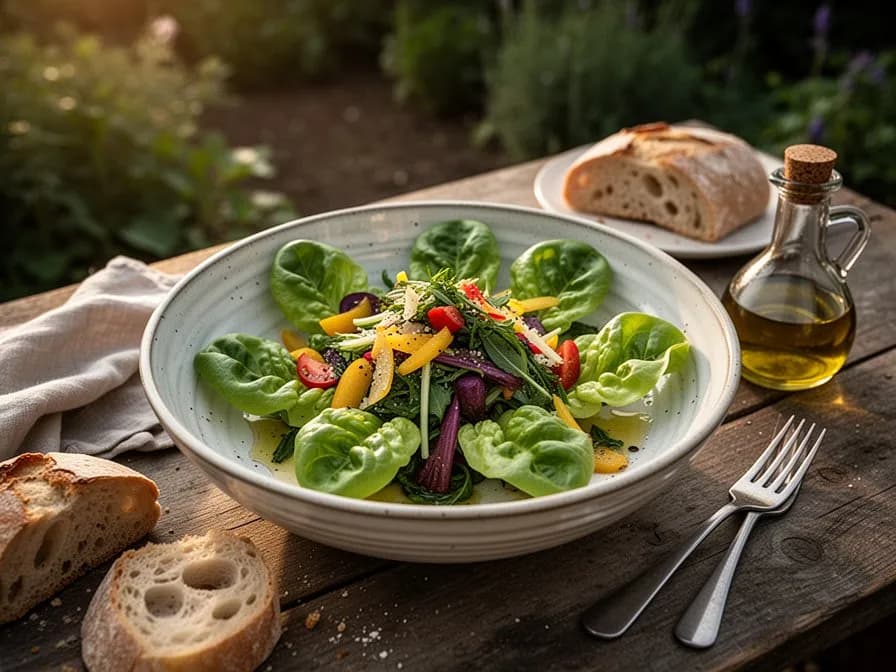
Gegrillter Little Gem mit Sardellen-Dressing
15 Min.Die robusten Blätter von Little Gem halten sich hervorragend auf dem heißen Grill – das Anrösten der Schnittfläche karamellisiert den natürlichen Zucker, während das dichte Herz kühl und knackig bleibt. Ein kräftiges Sardellen-Zitronen-Dressing und gehobelter Parmesan machen dieses Gericht zur spektakulären Beilage oder leichten Hauptspeise.
8 ZutatenLittle Gem Salatschiffchen mit asiatischem Hähnchen
20 Min.Die becherförmigen Blätter von Little Gem sind die perfekten essbaren Schalen der Natur. Gefüllt mit würzigem Hähnchenhack in einer süß-salzigen Sauce, bieten sie in jedem Bissen befriedigenden Biss – ganz ohne Besteck, perfekt als leichtes Abendessen oder Party-Vorspeise.
9 ZutatenKlassischer Little Gem Caesar Salad
15 Min.Little Gem ist wie geschaffen für Caesar Salad – die kompakten Herzen können halbiert oder geviertelt und angemacht werden, ohne zu welken, und ihre natürliche Süße harmoniert wunderbar mit dem kräftigen Knoblauch-Dressing. Ein moderner Bistro-Klassiker, der dieses beliebte Gericht aufwertet.
8 ZutatenKulinarische Verwendung
Little Gem wird für seine süße Knackigkeit und die perfekte Einzelportionsgröße geschätzt. Halbieren Sie ihn längs und grillen Sie ihn mit Olivenöl – eine beliebte Restaurantzubereitung. Verwenden Sie ihn als Schiffchen für zusammengestellte Salate und Vorspeisenfüllungen. Die süßen, knackigen Blätter sind ideal für Caesar Salad. Vierteln Sie ihn und servieren Sie ihn mit Blauschimmelkäse-Dressing als klassischen Wedge-Salat.
Was drinsteckt
Gesundheitsvorteile
- Außergewöhnlich reich an Vitamin A und Beta-Carotin – die dunkleren äußeren Blätter liefern bis zu 120 % des Tageswertes pro 100 g und unterstützen gesundes Sehvermögen, Immunfunktion und Erneuerung der Hautzellen.
- Gute Quelle für Vitamin K (ca. 85 % TW pro 100 g), das eine entscheidende Rolle bei der Blutgerinnung und Calciumregulierung für die Erhaltung starker Knochen spielt.
- Enthält Lutein und Zeaxanthin, zwei Carotinoid-Antioxidantien, die in der Netzhaut konzentriert sind und stark mit einem verringerten Risiko altersbedingter Makuladegeneration und Grauem Star in Verbindung stehen.
- Liefert Folsäure (Vitamin B9), wichtig für DNA-Synthese und Zellteilung, was Salat zu einem wertvollen Nahrungsbestandteil während der Schwangerschaft und für die Herz-Kreislauf-Gesundheit macht.
- Sehr hoher Wassergehalt (ca. 95 %) in Kombination mit Ballaststoffen macht Little Gem zu einem hervorragenden Lebensmittel für Flüssigkeitszufuhr, Sättigung und Verdauungsregulierung bei praktisch keinen Kalorien.
- Enthält geringe Mengen der natürlichen Verbindung Lactucarium im milchigen Stängelsaft, der traditionell mit leicht beruhigenden und schlaffördernden Eigenschaften in Verbindung gebracht wird – die alten Ägypter und Römer verwendeten Salat als mildes Beruhigungsmittel.
Woher Little Gem Salat stammt
Little Gem Salat ist eine historische Sorte, die Mitte des 19. Jahrhunderts in England entstand, wo er erstmals als kompakter, süßherziger Salat für kleine Küchengärten katalogisiert wurde. Er wird als Semi-Cos-Typ (Romana) eingestuft und steht einzigartig zwischen den Kategorien Kopfsalat und Romanasalat mit Eigenschaften beider – der zarten Süße eines Kopfsalats und der knackigen, aufrechten Struktur eines Romanasalats. Die Sorte wurde schnell zu einem festen Bestandteil britischer und französischer Marktgärten, wo ihre kompakte Größe, zuverlässige Leistung und ihr außergewöhnlicher Geschmack ihr dauerhafte Beliebtheit bei Hobbygärtnern und professionellen Anbauern gleichermaßen einbrachten.
In Frankreich, wo er als Sucrine bekannt ist, wurde Little Gem tief in die Traditionen der Bistro- und Hausmannsküche eingebettet. Französische Köche schätzten ihn für seine dichten, natürlich gebleichten Herzen, die halbiert und als elegante Einzelportion serviert werden konnten – eine Präsentation, die bis heute ein Markenzeichen französischer und mediterraner Salatgänge geblieben ist. Die Sorte verbreitete sich in ganz Europa und schließlich nach Nordamerika, Australien und darüber hinaus, blieb jedoch in den Vereinigten Staaten relativ unbekannt, bis die Farm-to-Table-Restaurantbewegung der frühen 2000er Jahre sie amerikanischen Gästen und Hobbyköchen vorstellte.
Heute genießt Little Gem weltweite Beliebtheit und wird kommerziell in ganz Europa, Nordamerika sowie Teilen Asiens und Australiens angebaut. Im Vereinigten Königreich rangiert er durchgehend als eine der meistverkauften Salatsorten und übertrifft Eisbergsalat in vielen Supermarktketten. Moderne Pflanzenzüchter haben verbesserte Linien mit erhöhter Krankheitsresistenz und noch größerer Schosstoleranz entwickelt, aber der wesentliche Charakter von Little Gem – kompakt, süß, knackig und perfekt portioniert – bleibt der ursprünglichen viktorianischen Sorte treu, die englische Gärtner vor mehr als 150 Jahren begeisterte.
Little Gem Salat: Schon gewusst?
Faszinierende Fakten über Little Gem Salat
Little Gem ist ein echter Miniatur-Romanasalat, der Mitte des 19. Jahrhunderts in England entwickelt wurde, und trotz des Aufstiegs und Falls unzähliger Salatsorten über die Jahrzehnte ist er seit über 150 Jahren ununterbrochen beliebt geblieben – ein bemerkenswertes Zeugnis seines außergewöhnlichen Geschmacks und seiner Anpassungsfähigkeit.
Little Gem Salat: Fragen & Antworten
Wann sollte ich Little Gem Salat pflanzen?
Was sind gute Begleitpflanzen für Little Gem Salat?
In welchen Winterhärtezonen kann Little Gem Salat wachsen?
Wie viel Sonne braucht Little Gem Salat?
Welchen Abstand sollte ich zwischen Little Gem Salat lassen?
Welche Schädlinge und Krankheiten befallen Little Gem Salat?
Wie lagere ich Little Gem Salat nach der Ernte?
Was sind die besten Little Gem Salat-Sorten zum Anbauen?
Welchen Boden braucht Little Gem Salat?
Warum keimen meine Little Gem Salatsamen nicht?
Warum ist mein Little Gem Salat bitter?
Kann ich Little Gem Salat in Kübeln anbauen?
Wie lange hält Little Gem Salat nach der Ernte?
Was ist der Unterschied zwischen Little Gem und Romanasalat?
Kann ich Little Gem Salat ganzjährig anbauen?
Du hast die Theorie gelesen. Jetzt baue sie auf Autopilot an.
Alles, was Little Gem Salat knifflig macht — das Timing, die Abstände, die Begleiter, das Erntefenster — genau das übernimmt PlotMyGarden für dich, für jede Pflanze im Garten.
Ein Plan, der dein Wetter kennt
Standort einmal festlegen. Aussaat-, Dünge- und Erntedaten rund um deinen echten letzten Frosttermin und die Live-Vorhersage — kein Raten mehr nach Saattüte.
Aus dem Abschnitt „Pflanzzeit“Beetplaner per Drag & Drop
Beete auf einem Raster gestalten. Jede Pflanze rastet im richtigen Abstand ein, und du siehst die ganze Saison, bevor du einen Cent für Saatgut ausgibst.
Aus dem Abschnitt „Anbau“Begleiter-Konflikte früh erkannt
Über 200 gute und schlechte Kombinationen werden beim Pflanzen live geprüft — so landet ein saisonruinierender Fehler nie in der Erde.
Aus dem Abschnitt „Begleiter“Erinnerungen, nach denen du wirklich handelst
„Gieß die Bohnen.“ „Heute ernten, bevor's umschlägt.“ Pünktlich, konkret und auf deine echten Pflanzen bezogen.
Aus dem Abschnitt „Ernte“Staffel-Aussaat, geplant
Sechs Wochen ernten statt sechs Tage? Die App verteilt deine Aussaaten automatisch und erinnert dich, wenn der nächste Satz fällig ist.
Aus dem Abschnitt „Pflanzzeit“Ein Verlauf, der schlauer wird
Jede protokollierte Ernte bringt der App deinen Garten bei. Der Plan fürs nächste Jahr startet bei dem, was in deinem Boden wirklich funktioniert hat.
Aus dem Abschnitt „Überblick“Pflanze diese neben Little Gem Salat
Weitere Blattgemüse
Gartenpläne mit Little Gem Salat
Bau deine beste Little Gem Salat an — und alles drumherum.
Starte heute kostenlos. Lege deine Beete an, setze deine Little Gem Salat ein und lass PlotMyGarden Timing, Abstände, Begleiter und Erinnerungen von der Saat bis zum Erntekorb übernehmen.