Coreopsis
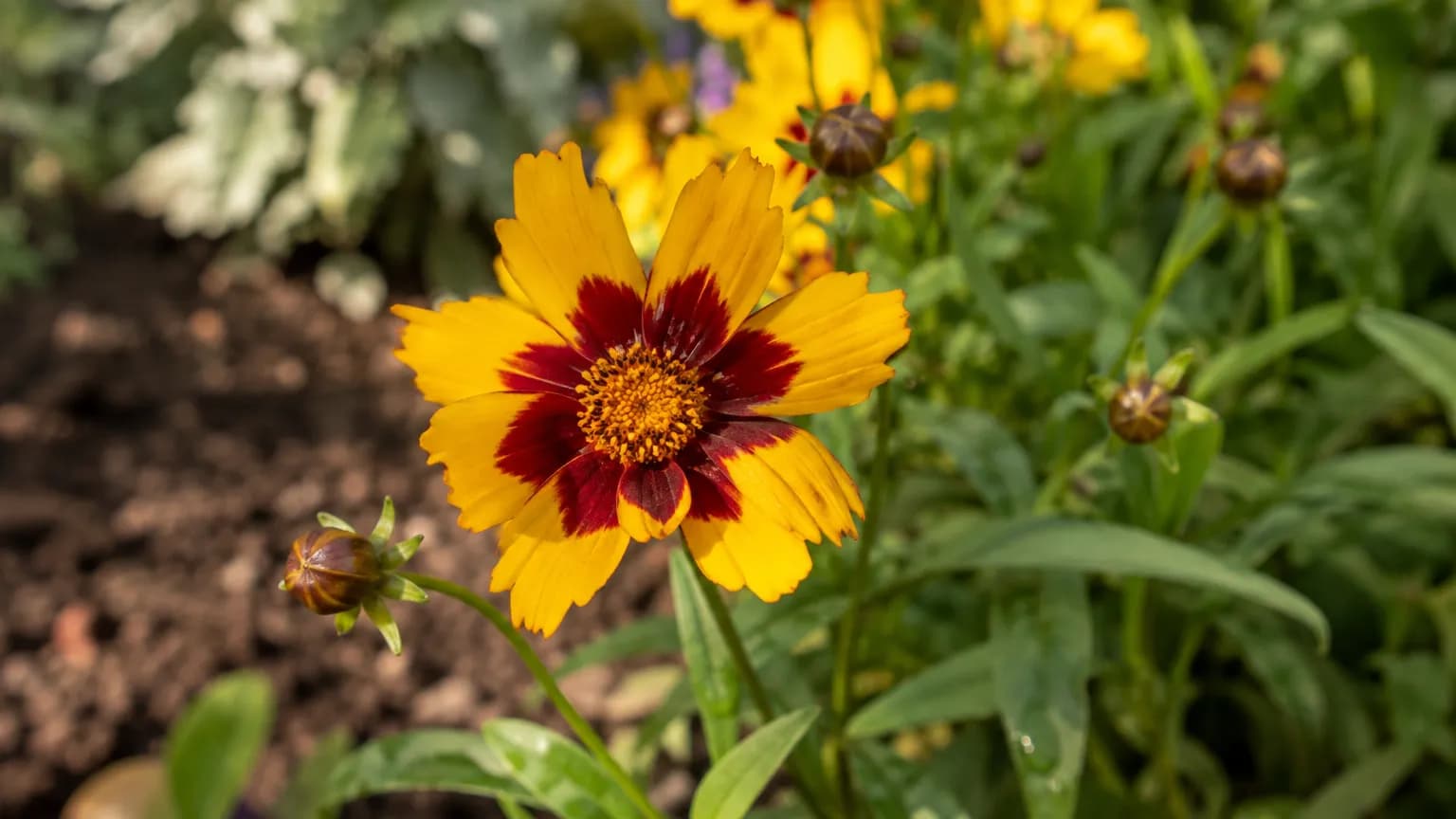
A cheerful golden daisy that blooms tirelessly from June to September, bringing sunny color to borders, meadows, and cutting gardens.





On this pageOverview
Meet Coreopsis
A cheerful golden daisy that blooms tirelessly from June to September, bringing sunny color to borders, meadows, and cutting gardens. Coreopsis is a North American prairie native that carries its large single flowers on wiry stems above a neat mound of finely divided foliage. Once established it is remarkably drought-tolerant and asks for little more than full sun and well-drained soil. Deadheading every few days keeps the blooms coming for months, and shearing tired plants by a third in midsummer triggers a strong late-summer encore. Butterflies and native bees visit constantly, and the sturdy stems hold up well in summer bouquets.
When to plant Coreopsis
Start coreopsis seeds indoors six to eight weeks before the last frost, or sow directly outdoors once the soil has warmed in mid to late spring. Press the seeds lightly onto the surface of moist seed-starting mix and do not cover them, as light aids germination. Keep the tray at 20 to 24 degrees Celsius and expect sprouting in five to fourteen days. Prick seedlings out into individual cells when they carry two true leaves, and harden them off for a week before transplanting after the last frost. Early-blooming cultivars such as Early Sunrise flower the first year from an early indoor sowing; most other types bloom freely from their second season onward.
Your Coreopsis Year
Composed for Zone 7 · typical seasons · frost passes Apr 2, returns Nov 1
Plant Coreopsis Feb – May, Sep, pick Jun – Sep. Check the planting methods below and set your climate to personalize these windows.
How to grow Coreopsis
Plant coreopsis in spring after the last frost or in early fall at least six weeks before the ground freezes, choosing a spot in full sun with sharply drained soil. It thrives in average to lean ground and actually performs poorly in rich, heavily amended beds, where lush growth leads to floppy stems and few flowers. Space plants 35 to 45 cm apart so air can move freely through the clump. Water deeply at planting and keep the soil evenly moist through the first growing season while the root system establishes.
Once established, coreopsis needs supplemental water only during prolonged drought. The single most important maintenance task is deadheading: snip spent flowers back to the next lateral bud every few days to keep the plant producing new blooms from June into September. When flowering slows in midsummer and the clump begins to look ragged, shear the whole plant back by one third; fresh foliage and a generous flush of late-summer flowers follow within three to four weeks. Divide congested clumps every two to three years in early spring, because large-flowered coreopsis is naturally short-lived and regular division keeps the planting vigorous.
In autumn, cut the stems back after the first hard frost, or leave a few seed heads standing for finches and tidy up in early spring instead. Avoid piling heavy winter mulch directly over the crown, which invites rot in wet climates. Taller selections grown in rich soil or partial shade may sprawl and benefit from a discreet grow-through ring, though plants raised lean in full sun are usually self-supporting.
18 plants fit a 4 × 8 ft bed
Each Coreopsis wants 40 cm of elbow room. The planner keeps that spacing for you — every plant, every bed.
Coreopsis's best neighbours
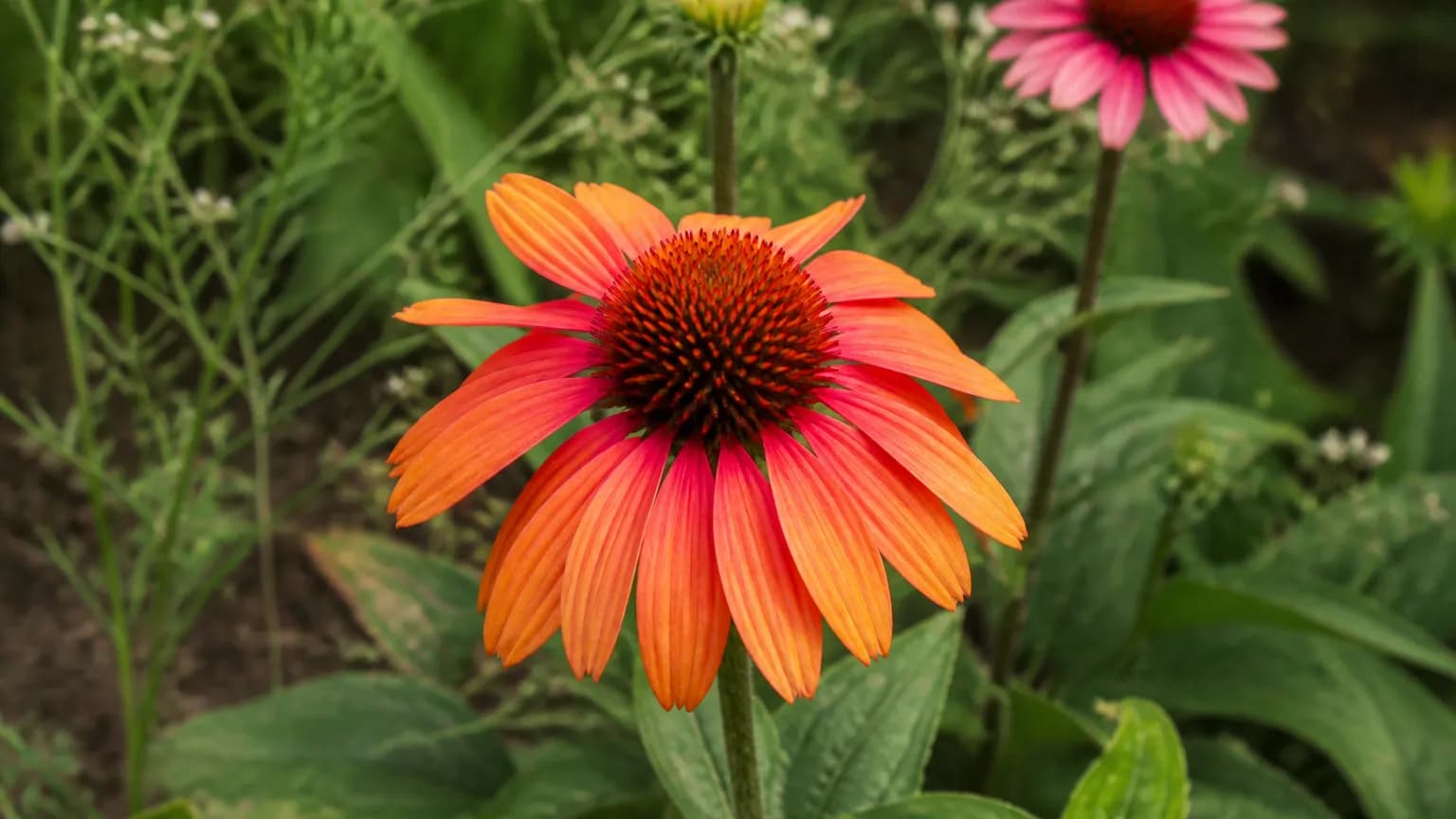
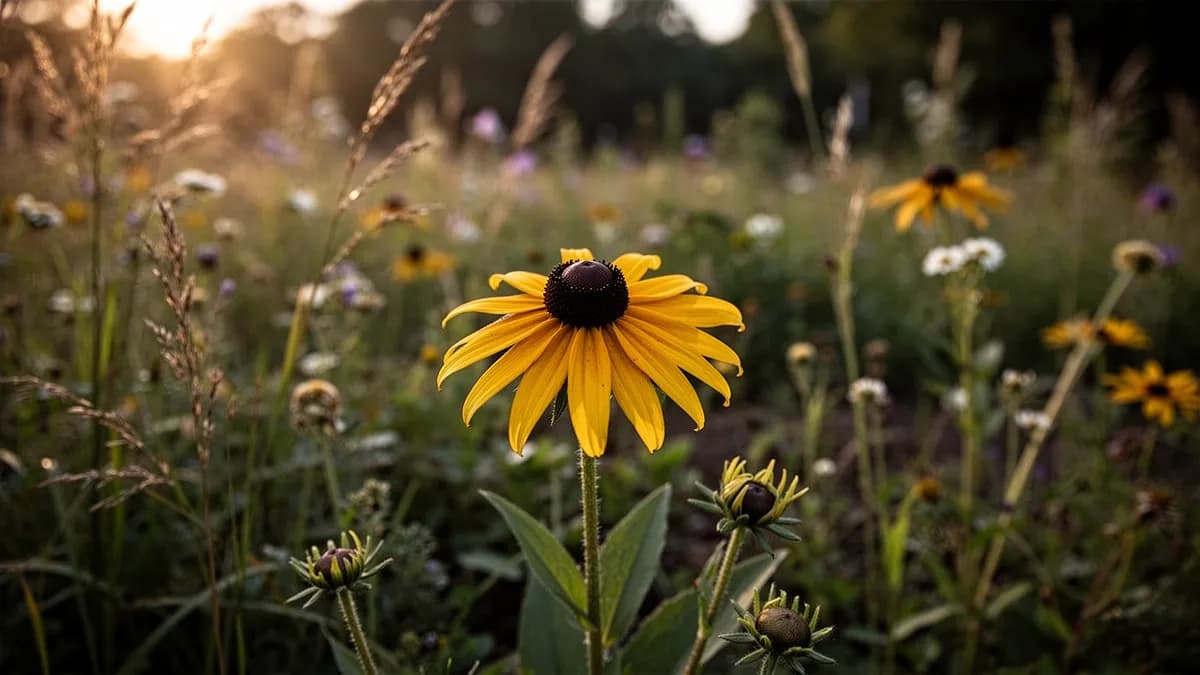
Coreopsis is a natural partner for other prairie perennials that share its love of sun and lean, well-drained soil. Combine it with coneflowers, black-eyed Susans, and salvias for a long-blooming pollinator border in gold, purple, and blue. Ornamental grasses such as little bluestem and prairie dropseed make an airy backdrop, while catmint and lavender echo its relaxed habit at the front of the bed. Avoid pairing coreopsis with plants that demand rich, moist soil or heavy feeding, because those conditions shorten its life.
Coneflower belongs beside it. Fennel doesn't.
Old growers' knowledge, checked against Coreopsis's real companion table below — test any plant you're growing.
Try Coreopsis in a bed — right here
A real planner bed with Coreopsis already in it. Tap a companion to place it and watch the pairing checks answer — green for good neighbours, red for a clash.


Related growing guides
Feed it well
Coreopsis performs best in average to lean, well-drained soil with a slightly acidic to neutral pH of 5.5 to 7.0. Sandy or gravelly ground suits it perfectly, and it tolerates poor soil that defeats fussier perennials. Heavy clay must be lightened with grit or coarse sand, or plants should go into raised beds, because winter wet is the surest way to lose coreopsis. Feeding should be minimal: a light top-dressing of compost in spring is plenty. Rich soil and high-nitrogen fertilizers push lush, floppy foliage at the expense of flowers and shorten the life of the clump.
Ideal Temperature
Hardiness Zone Compatibility
From seed to harvest, stage by stage
Seed Sowing and Germination
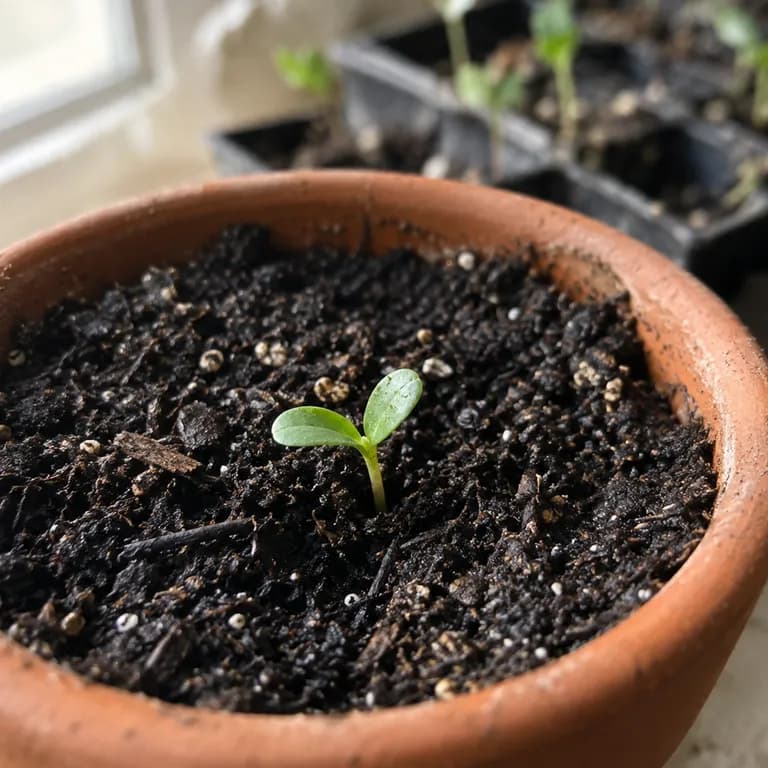
Coreopsis seeds are small and flat and germinate quickly without stratification. Surface-sow on moist seed-starting mix and press lightly without covering, because light aids germination. At 20 to 24 degrees Celsius, sprouts appear in five to fourteen days.
Seedling Establishment
Seedlings raise a pair of narrow cotyledons, then produce their first true leaves, which are slender and bright green. Growth is steady rather than fast, and the young plants begin to show the finely divided foliage typical of the species.
Basal Mound Formation
The young plant builds a low, dense mound of finely divided, almost ferny foliage while its root system pushes deep into the soil. First-year plants of early cultivars may send up a modest first flush of stems; most plants invest this phase in root and leaf growth.
Stem Elongation and Bud Formation
Wiry, branching stems rise 45 to 60 cm above the foliage mound, each carrying several round green buds. The stems are slender but surprisingly tough, and buds swell gradually before the golden ray florets unfold.
Main Bloom
Golden daisy flowers open continuously from June into September, each lasting a week or more on the plant. Bees, butterflies, and hoverflies work the blooms all day. With regular deadheading the show runs three to four months without a real pause.
Seed Set and Dormancy
After pollination the petals drop and the central disk dries into a dark button of small flat seeds, which goldfinches and other small birds pick through in autumn. As frost arrives, the foliage dies back and the plant overwinters as a dormant crown just at the soil surface.
Sow indoors six to eight weeks before the last frost for first-year flowers on early cultivars. Keep the surface consistently moist with a fine mist until seedlings are up, and give them bright light immediately to prevent leggy growth.
Caring for Coreopsis month by month
What to do each month for your Coreopsis
September
You are hereEarly fall is the second planting window: set out new plants or divisions at least six weeks before the ground freezes so roots establish before winter. Enjoy the last flush, then leave a few seed heads standing for the birds.
Know exactly what to do in your garden — every month
One email at the start of each month: what to sow, plant, and tackle right now — for your Coreopsis and everything growing around it. Plus a short starter course that helps you dodge the classic mistakes.
- What to do, right now
- Matched to your season
- Starter course included
Harvesting Coreopsis
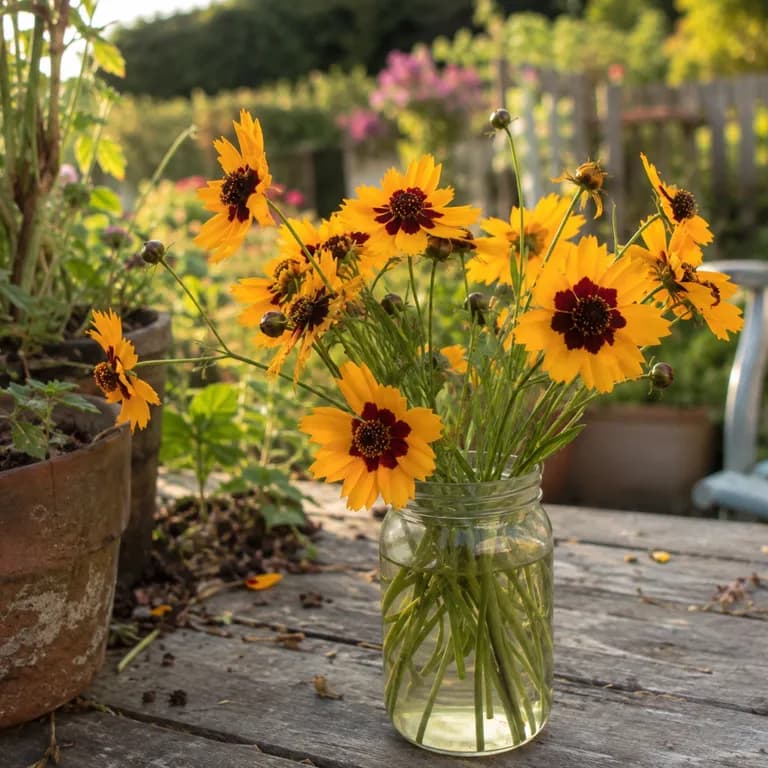
Cut coreopsis for fresh arrangements in the cool of early morning, choosing stems whose buds are just opening or flowers that opened within the past day. Use clean, sharp pruners and strip any foliage that would sit below the waterline. Stand the stems immediately in a bucket of cool water and let them condition in a cool, dark place for several hours before arranging. Coreopsis typically lasts five to seven days in a vase; recut the stems and refresh the water every two days to stretch the display. For seed saving, leave a few flower heads on the plant until the petals drop and the head is dry and dark, then clip it and shake the small flat brown seeds into a paper envelope.
assuming you plant when the window opens — set your real date
Pick Coreopsis promptly and the plant keeps producing.
What goes wrong — and the fix
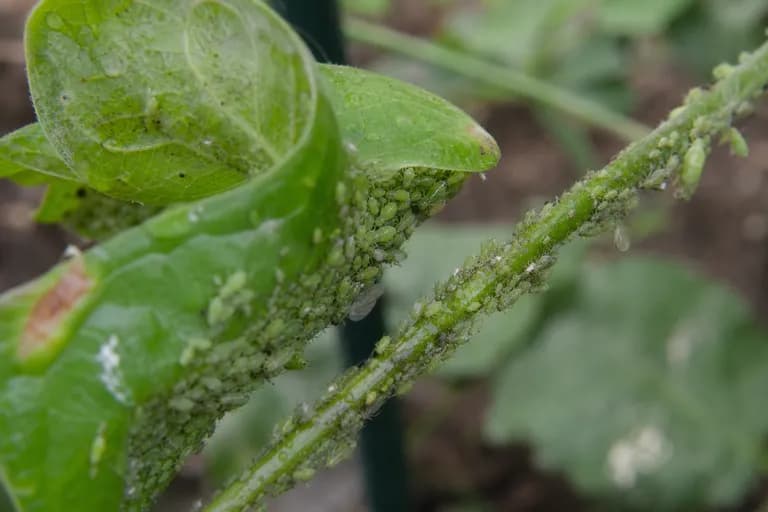
Aphids
PestClusters of small green, black, or gray insects on tender shoot tips and flower buds, often with sticky honeydew and distorted new growth.
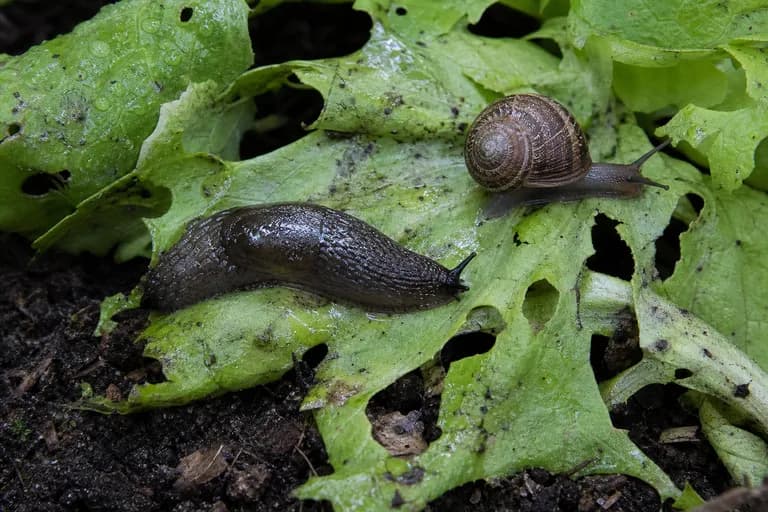
Slugs and Snails
PestRagged holes chewed in young leaves and basal foliage, with silvery slime trails visible in the morning. Damage is worst on soft spring growth.
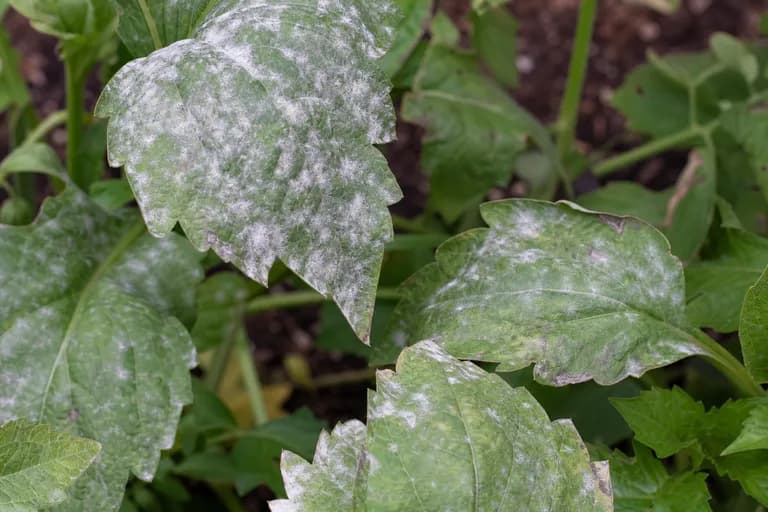
Powdery Mildew
DiseaseWhite to gray powdery coating on leaves and stems, appearing mainly in late summer when days are warm, nights are cool, and humidity is high.
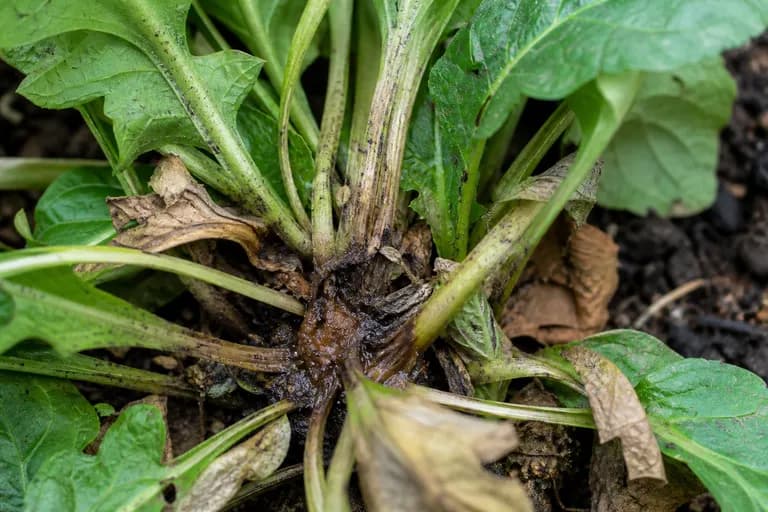
Crown Rot
DiseasePlants wilt even though the soil is moist, the crown at soil level turns brown and mushy, and whole stems collapse. Worst in heavy, waterlogged ground, especially over winter.
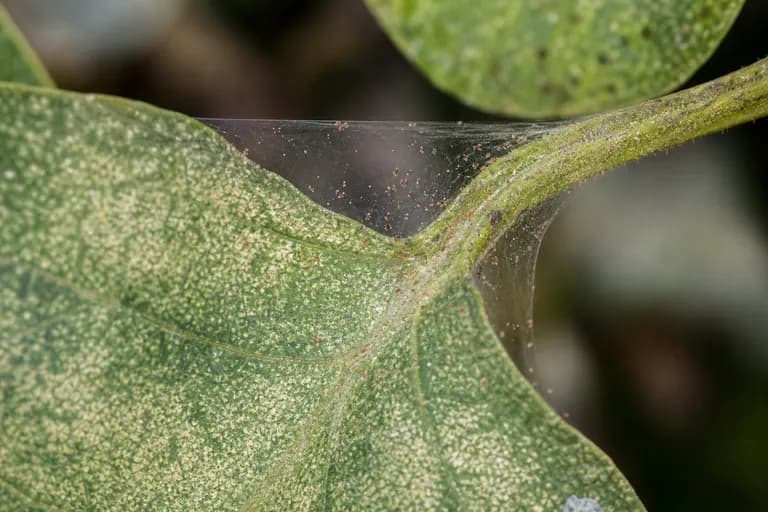
Spider Mites
PestFine yellow stippling on the foliage, leaves turning bronze and dry, and delicate webbing on the undersides of leaves during hot, dry spells.
Troubleshooting Common Problems
The most common disappointment is a clump that dies out after two or three years; large-flowered coreopsis is naturally short-lived, so plan on dividing every two to three years or letting plants self-seed to keep the display going. Crown and root rot strike in heavy, wet soil, especially over winter. Floppy, sprawling stems usually mean too much shade, too much fertilizer, or skipped deadheading. In hot, humid summers powdery mildew can coat the foliage, though it rarely does lasting harm. Aphids occasionally cluster on buds and tender tips in spring but are easily washed off.
Growing Tips
- Sow coreopsis seeds on the surface of the mix and do not cover them; they need light to germinate, and buried seeds often fail to sprout.
- Grow coreopsis lean. Skip rich compost and heavy feeding, because plants on fertile soil flop, mildew more readily, and flower less than those on average ground.
- Deadhead every few days at the height of summer, cutting each spent stem back to the next lateral bud instead of just snapping off the old flower head.
- When bloom slows in midsummer, shear the whole clump back by one third. It looks drastic, but fresh foliage and a strong late-summer flush follow within a few weeks.
- Treat large-flowered coreopsis as a short-lived perennial: divide clumps every two to three years in spring or let plants self-seed so the display never fades out.
- Plant in early fall, around six weeks before the ground freezes, to give roots a cool, moist establishment period and a head start on next year's bloom.
- Water to establish, then sparingly. Overwatering, and especially winter wet over the crown, kills far more coreopsis plants than drought ever does.
- In wet-winter regions, plant on a slope, in a raised bed, or with a handful of grit under the crown so water never pools around the plant.
- Leave some seed heads standing in autumn for goldfinches, and cut the clump back after frost rather than in fall if your winters are mild and wet.
- Choose a first-year-flowering cultivar like Early Sunrise if you want golden daisies the same summer you sow the seed.
Grow your best Coreopsis yet — and everything around it.
Start a free plan today. Lay out your beds, drop in your Coreopsis, and let PlotMyGarden handle the timing, spacing, companions and reminders from seed to harvest basket.
Pick your Coreopsis
Early Sunrise
An All-America Selections Gold Medal winner with semi-double golden-yellow flowers on compact 45 to 60 cm plants, and one of the few hardy perennials that reliably blooms the first year from seed.
Sunfire
A Fleuroselect award winner carrying large single golden flowers with a deep mahogany-red blotch at the base of each petal on uniform 45 to 50 cm plants.
Sunray
A classic compact selection with fully double, rich golden-yellow pompon flowers on sturdy 40 to 45 cm stems, ideal for the front of a sunny border.
Rising Sun
A Fleuroselect Gold Medal winner that flowers up to a week earlier than Early Sunrise, with semi-double yellow blooms flecked red at the petal bases.
Double the Sun
A naturally compact 30 to 36 cm selection producing clear golden semi-double flowers continuously all summer without pinching or growth regulators.
Where Coreopsis comes from
Coreopsis grandiflora is native to the southeastern and south-central United States, where it grows on dry prairies, rocky glades, and open pine woodlands from the Carolinas and Florida west to Texas and Kansas. The genus Coreopsis holds around eighty species, the great majority of them native to North America, and golden-flowered coreopsis species were among the first North American wildflowers carried into European gardens in the early eighteenth century.
Through the nineteenth century the plant appeared in cottage gardens under the name calliopsis, valued for its willingness to bloom in poor soil where little else would flower. Modern breeding transformed it in the twentieth century, when seed companies selected compact, uniform, first-year-flowering forms of Coreopsis grandiflora. Early Sunrise took the All-America Selections Gold Medal in 1989, and European trials later honored Sunfire, Rising Sun, and Presto with Fleuroselect awards.
Today coreopsis anchors prairie-style plantings, pollinator borders, and municipal roadside meadows across its homeland. Florida's 1991 designation of coreopsis as the state wildflower was tied directly to the golden plantings along its highways. Its blend of drought tolerance, months of bloom, and first-year flowering from seed keeps Coreopsis grandiflora a staple of sunny gardens on both sides of the Atlantic.
Coreopsis: did you know?
Fascinating facts about Coreopsis
The name Coreopsis comes from the Greek words koris, meaning bug, and opsis, meaning resembling, because the small dry seeds were thought to look like ticks. That is also where the common name tickseed comes from.
Coreopsis questions, answered
When should I plant Coreopsis?
What are good companion plants for Coreopsis?
What hardiness zones can Coreopsis grow in?
How much sun does Coreopsis need?
How far apart should I space Coreopsis?
What pests and diseases affect Coreopsis?
What are the best Coreopsis varieties to grow?
What soil does Coreopsis need?
Is coreopsis an annual or a perennial?
Why did my coreopsis disappear after two or three years?
Do I really need to deadhead coreopsis?
Can coreopsis grow in partial shade?
Is coreopsis resistant to deer and rabbits?
Can I grow coreopsis in a pot on a balcony?
You just read the theory. Now grow it on autopilot.
Everything that makes Coreopsis fiddly — the timing, the spacing, the companions, the harvest window — is exactly what PlotMyGarden handles for you, for every plant in your garden.
A plan that knows your weather
Set your location once. Get sow, feed and harvest dates built around your real last-frost date and live forecast — no more guessing from a generic seed packet.
From the “When to plant” sectionDrag-and-drop bed planner
Design beds on a grid. Every plant snaps to its proper spacing, and you can see your whole season laid out before you spend a cent on seed.
From the “Growing guide” sectionCompanion conflicts, caught early
200+ good-and-bad pairings checked live as you plant — so a season-wrecking mistake never makes it into the ground.
From the “Companions” sectionReminders you'll actually act on
“Water the beans.” “Pick today before it turns.” Timely, specific, and tied to the plants you're really growing.
From the “Harvest” sectionSuccession, scheduled
Want a harvest for six weeks, not six days? It spaces your sowings automatically and reminds you when each new block is due.
From the “When to plant” sectionA record that gets smarter
Every harvest you log teaches it your garden. Next year's plan starts from what actually worked in your soil, not a textbook's.
From the “Overview” sectionPlant these alongside Coreopsis
More Perennials
Keep Coreopsis away from these
Grow your best Coreopsis yet — and everything around it.
Start a free plan today. Lay out your beds, drop in your Coreopsis, and let PlotMyGarden handle the timing, spacing, companions and reminders from seed to harvest basket.