Runde Zucchini
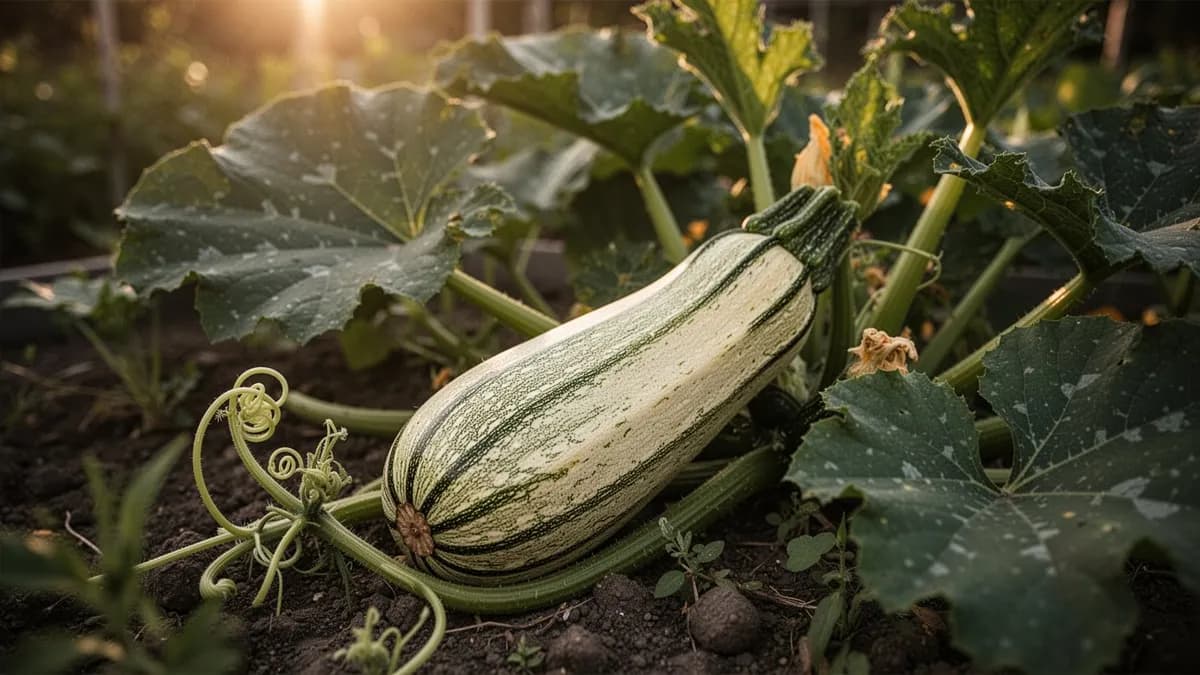
Eine französische Erbstück-Zucchini, die perfekt runde, grüne Früchte hervorbringt – ideal zum Füllen mit Reis, Käse und Kräutermischungen.





Auf dieser SeiteÜberblick
Runde Zucchini im Überblick
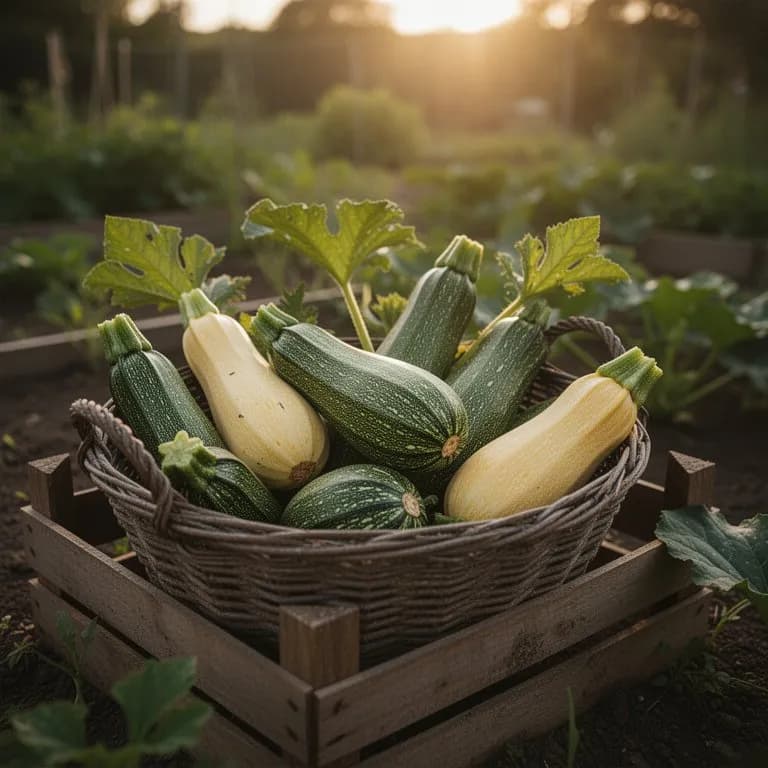
Eine französische Erbstück-Zucchini, die perfekt runde, grüne Früchte hervorbringt – ideal zum Füllen mit Reis, Käse und Kräutermischungen. Die Pflanzen sind genauso ertragreich wie gewöhnliche Zucchini, mit kompaktem Buschwuchs und kontinuierlicher Sommerernte. Ernten Sie bei Tennisball- bis Softballgröße für das zarteste Fruchtfleisch und das beste Verhältnis von Füllung zu Kürbis. Die Kugelform sorgt für eine beeindruckende Präsentation, wenn sie als einzelne gefüllte Portionen serviert wird.
Wann Runde Zucchini pflanzen
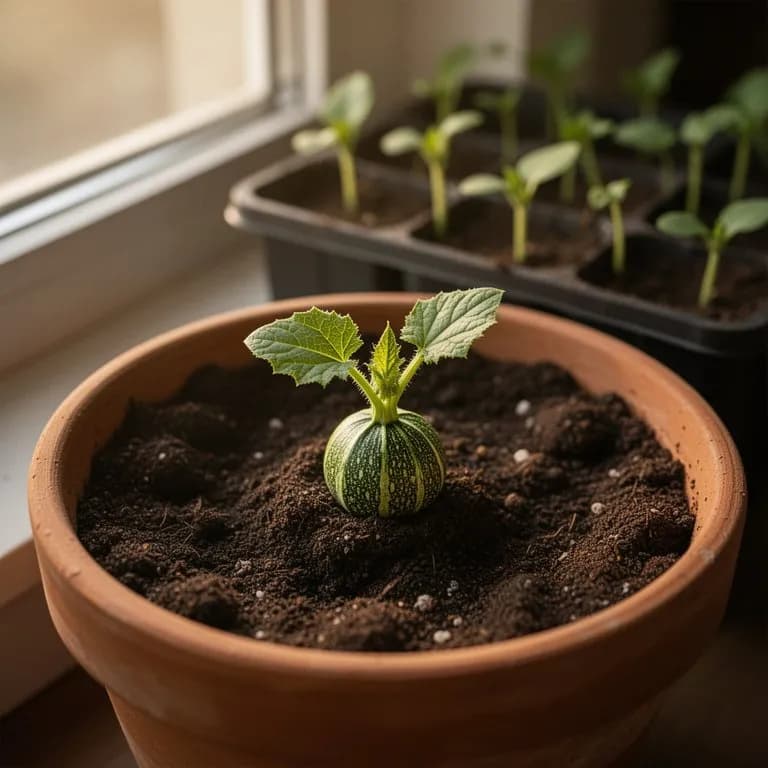
Säen Sie die Samen zwei bis drei Wochen vor dem letzten Frosttermin drinnen in 7,5-cm-Torftöpfe aus. Pflanzen Sie ein bis zwei Samen pro Topf, 2,5 cm tief in feuchte Anzuchterde. Halten Sie die Bodentemperatur bei 24 bis 29 Grad Celsius für die Keimung in fünf bis sieben Tagen. Geben Sie 12 bis 14 Stunden helles Licht täglich. Vereinzeln Sie auf einen Setzling pro Topf nach Erscheinen der ersten echten Blätter. Eine Woche abhärten vor dem Umpflanzen. Für Direktsaat im Freiland nach dem letzten Frost säen, wenn der Boden 15 Grad Celsius erreicht, zwei bis drei Samen pro Stelle 2,5 cm tief setzen und nach dem Aufgehen auf eine Pflanze vereinzeln.
Dein Runde Zucchini-Jahr
Abgestimmt auf Zone 7 · typische Saison · Frost geht um den 2. Apr. und kehrt um den 1. Nov. zurück
Runde Zucchini Apr – Jun pflanzen, Jul – Sep ernten. Beachte die Pflanzmethoden unten und wähle dein Klima für passende Zeiträume.
So baust du Runde Zucchini an
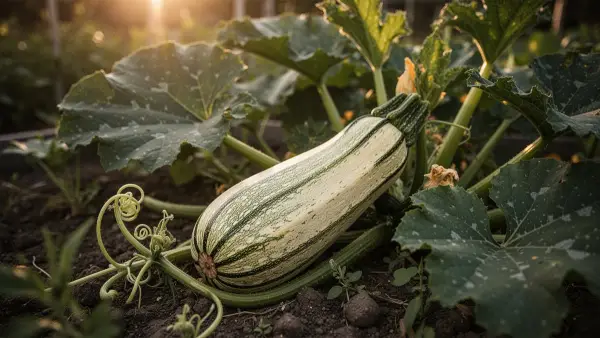
Säen Sie runde Zucchinisamen zwei bis drei Wochen vor dem letzten Frost drinnen aus, oder säen Sie direkt ins Freiland, sobald die Bodentemperaturen 15 Grad Celsius erreichen. Pflanzen Sie die Samen 2,5 cm tief in 7,5-cm-Torftöpfe mit feuchter Anzuchterde. Die Samen keimen schnell innerhalb von fünf bis sieben Tagen bei 24 bis 29 Grad Celsius. Runde Zucchini wächst als kompakte Buschpflanze und ist daher eine ausgezeichnete Wahl für Hochbeete, Kübel und kleinere Gartenflächen.
Setzen Sie Setzlinge um oder vereinzeln Sie direkt gesäte Pflanzen auf 60 bis 90 cm Abstand in Reihen mit 90 bis 120 cm Abstand. Bereiten Sie den Boden mit 5 bis 7,5 cm gereiftem Kompost und einem ausgewogenen Granulatdünger vor. Runde Zucchini gedeiht in voller Sonne mit mindestens sechs bis acht Stunden direktem Licht täglich. Bringen Sie organischen Mulch um die Pflanzen aus, um Feuchtigkeit zu bewahren, die Bodentemperatur zu regulieren und Unkraut zu unterdrücken. Installieren Sie eine Tröpfchenbewässerung, um am Fuß der Pflanze zu wässern und das Laub trocken zu halten.
Gießen Sie ein- bis zweimal pro Woche gründlich und geben Sie insgesamt 2,5 bis 4 cm Wasser. Vermeiden Sie Überkopfbewässerung, die Pilzkrankheiten an den großen Blättern fördert. Düngen Sie alle zwei bis drei Wochen während der Produktionszeit mit ausgewogenem Dünger nach. Beginnen Sie mit der Ernte, wenn die Früchte Tennisball- bis Softballgröße erreichen, für den besten Geschmack und die beste Textur. Regelmäßiges Pflücken alle zwei bis drei Tage regt die fortlaufende Produktion an und verhindert übergroße, samenreiche Früchte.
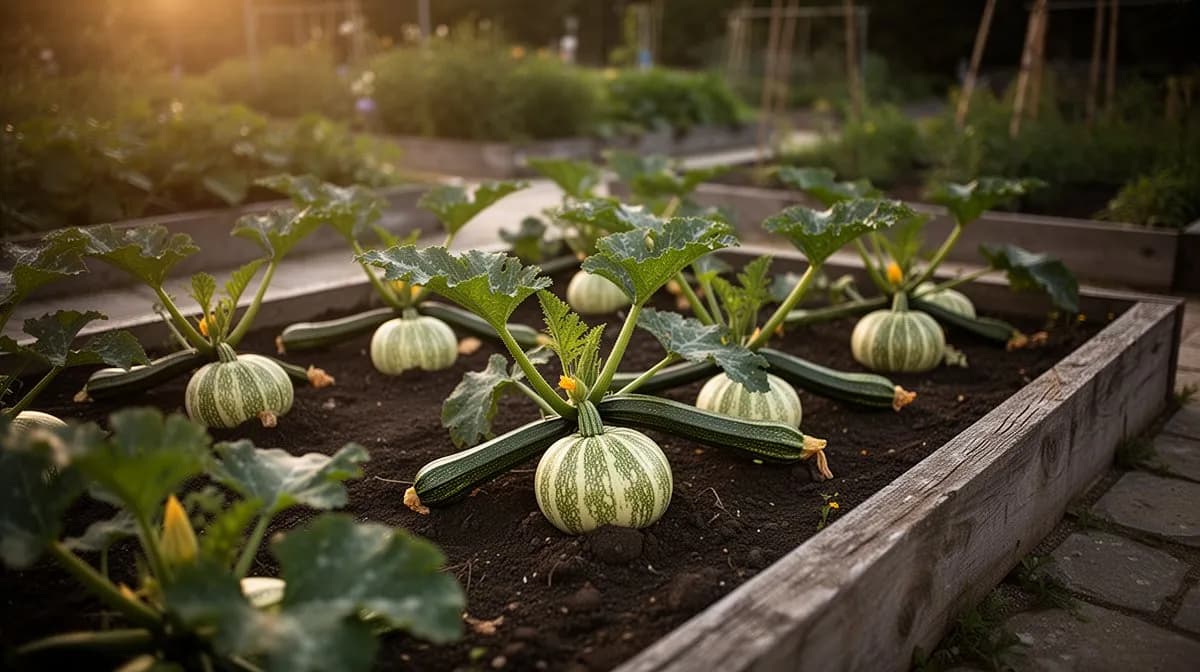
2 Pflanzen passen in ein Beet von 120 × 240 cm
Runde Zucchini braucht 90 cm Platz pro Pflanze. Der Planer hält diesen Abstand für dich ein — jede Pflanze, jedes Beet.
Die besten Nachbarn für Runde Zucchini
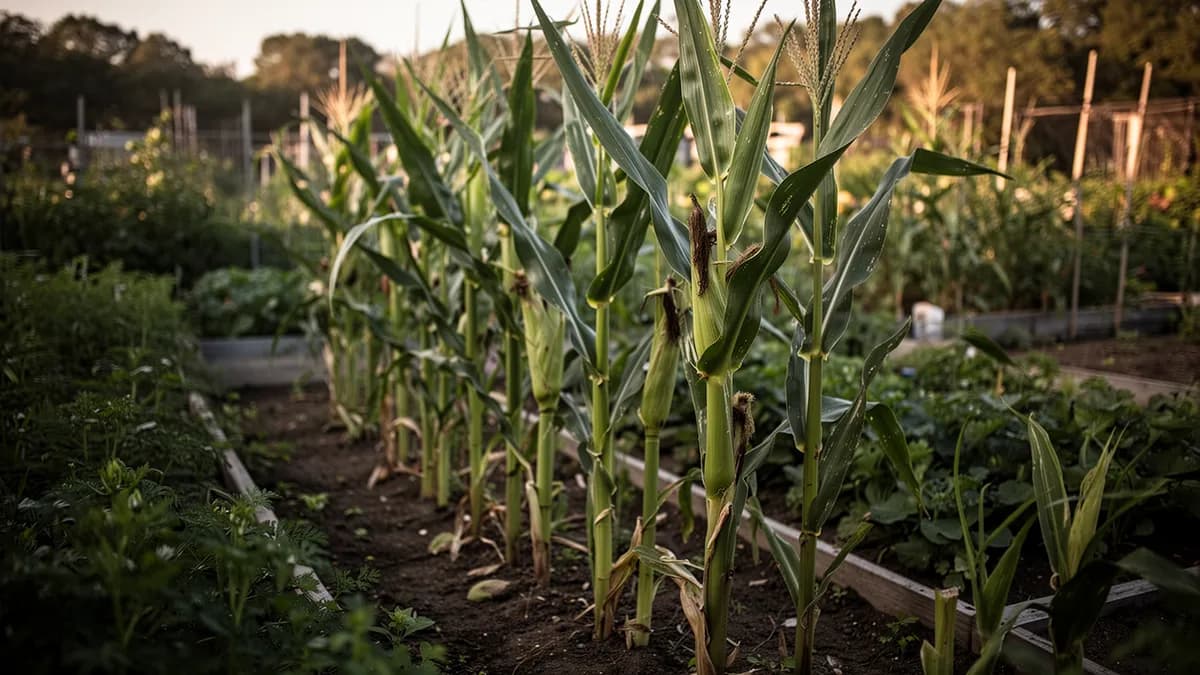
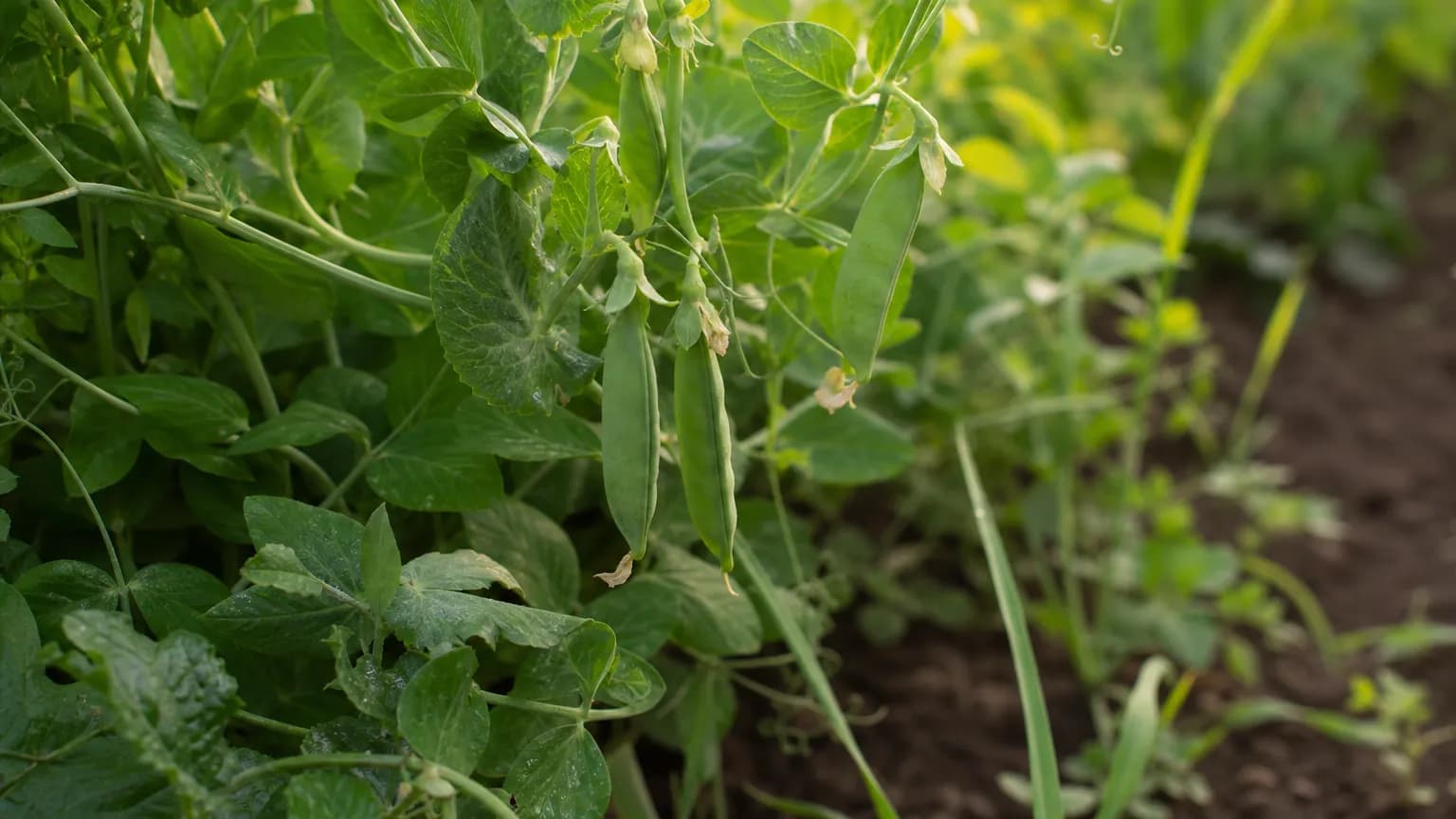
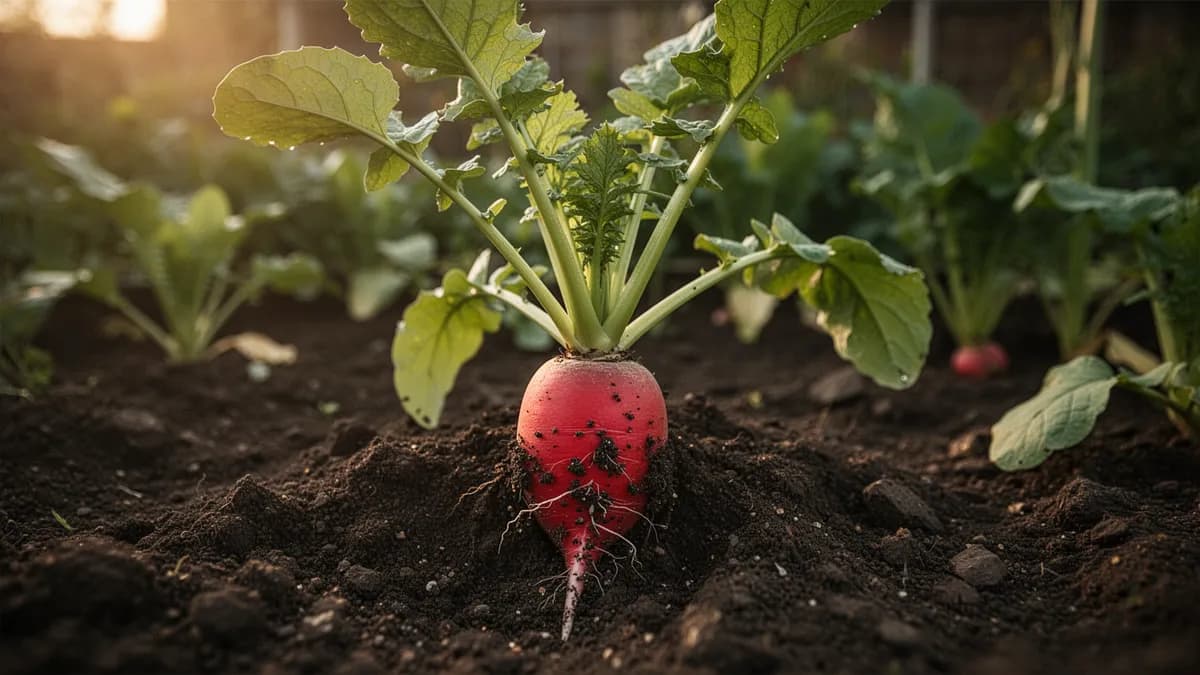
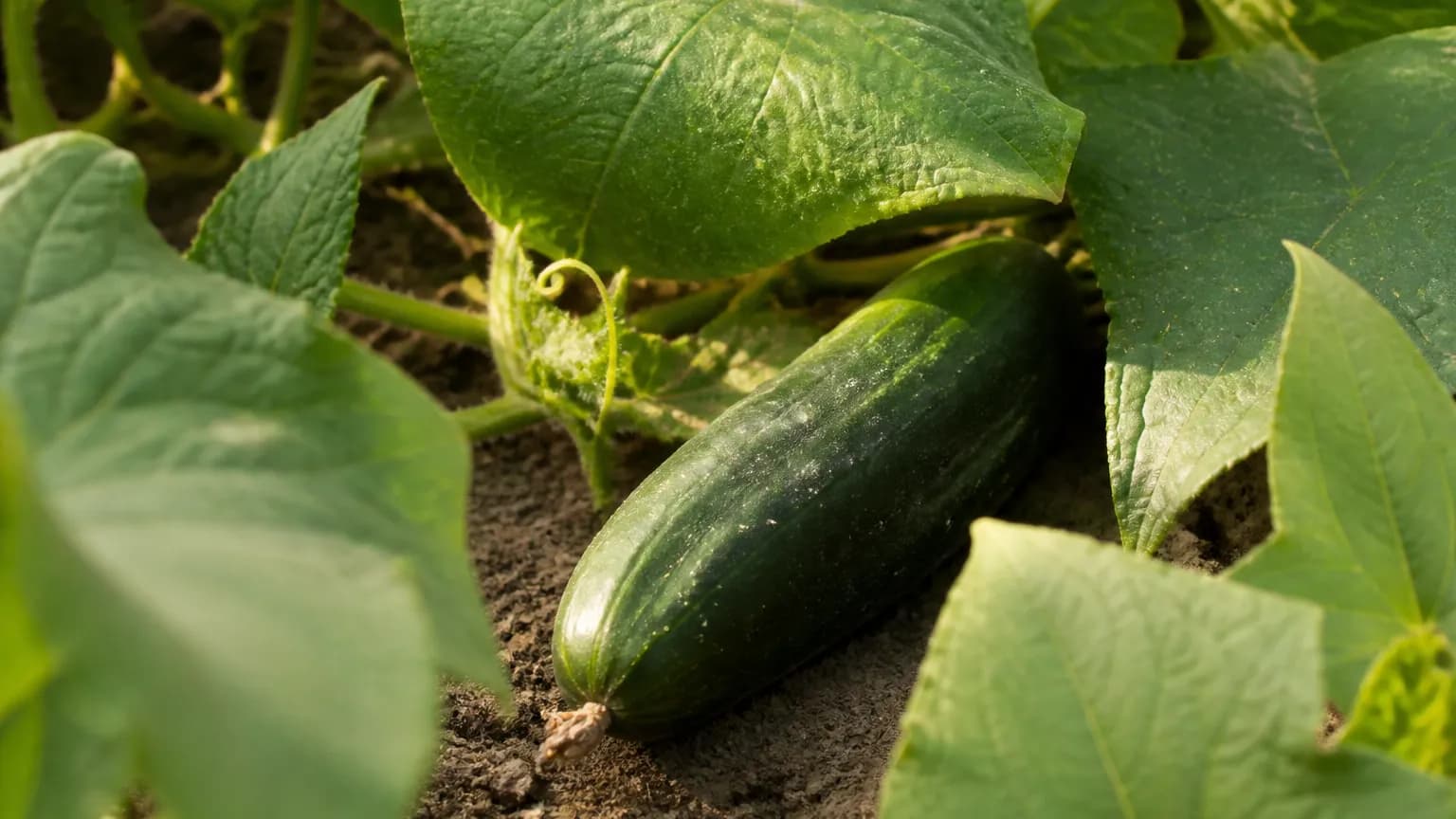
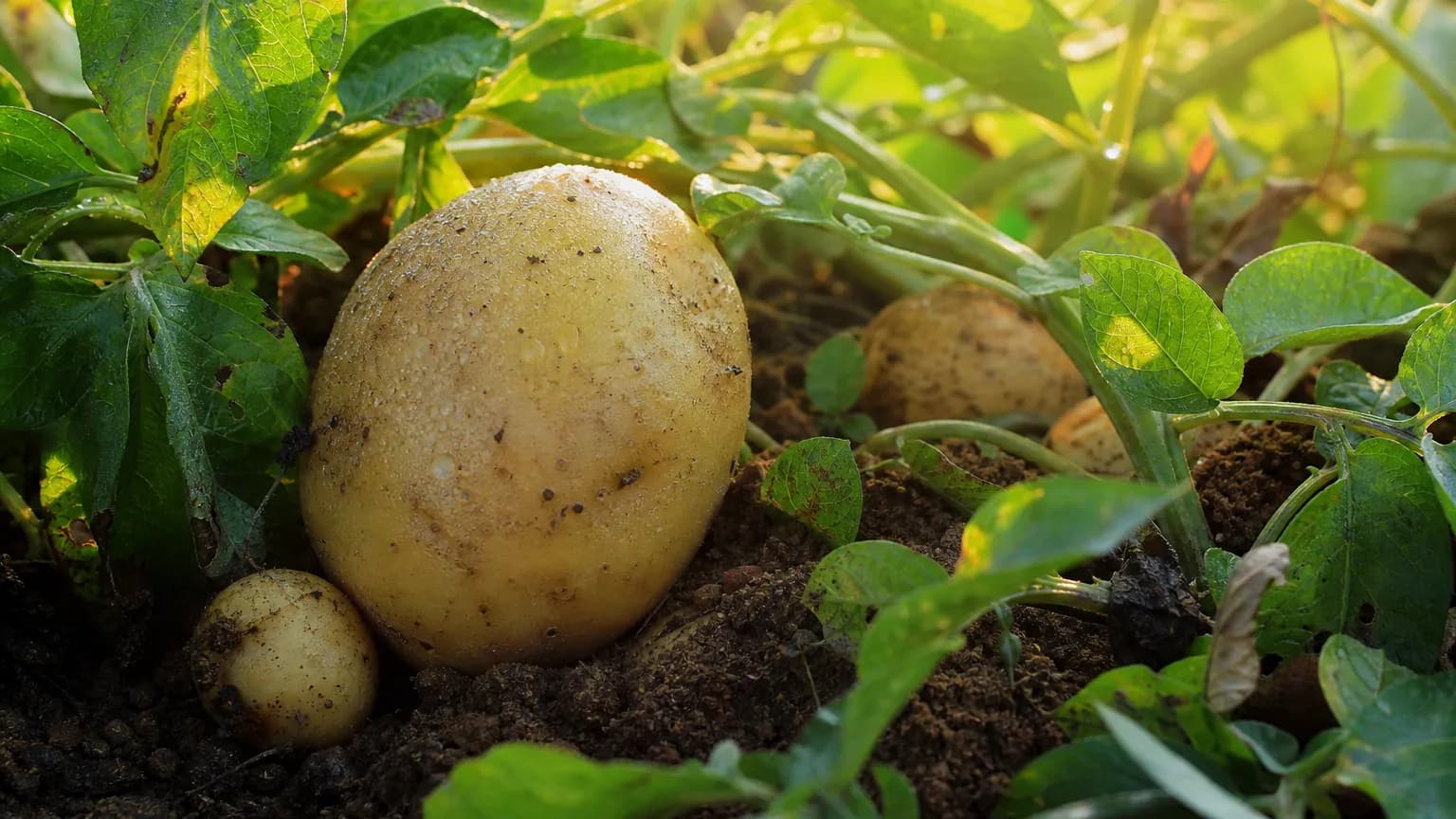
Pflanzen Sie runde Zucchini neben Mais, Erbsen und Radieschen zum gegenseitigen Nutzen. Mais bietet einen leichten Windschutz, während Erbsen Stickstoff im Boden fixieren. Radieschen, die zwischen junge Kürbispflanzen gesät werden, reifen schnell als platzsparende Zwischenkultur. Tagetes und Kapuzinerkresse schrecken Kürbiswanzen ab und locken Bestäuber an, die für den Fruchtansatz entscheidend sind. Borretsch ist ein ausgezeichneter Begleiter, der Bienen anzieht und die Vitalität der Kürbispflanzen verbessern kann. Vermeiden Sie die Pflanzung in der Nähe von Kartoffeln und Fenchel, die um Ressourcen konkurrieren und das Wachstum benachbarter Gemüsepflanzen hemmen.
Mais gehört daneben. Kartoffel nicht.
Altes Gärtnerwissen, geprüft an der echten Nachbartabelle von Runde Zucchini — teste jede Pflanze, die du anbaust.
Probiere Runde Zucchini direkt hier im Beet
Ein echtes Planer-Beet, Runde Zucchini steht schon drin. Tippe einen Begleiter an, platziere ihn und sieh, wie die Nachbarschaftsprüfung antwortet — grün für gute Nachbarn, rot bei Streit.


Passende Anbau-Ratgeber
Richtig düngen
Runde Zucchini gedeiht in fruchtbarem, gut durchlässigem Boden mit einem pH-Wert von 6,0 bis 7,0. Pflanzflächen vor der Pflanzung mit 7,5 bis 10 cm gereiftem Kompost verbessern. Einen ausgewogenen 10-10-10-Dünger beim Umpflanzen ausbringen, dann alle zwei bis drei Wochen während des aktiven Wachstums mit stickstoffreichem Dünger nachdüngen. Nach Blühbeginn auf eine Formel mit höherem Kalium- und Phosphoranteil umstellen, um die Fruchtbildung zu unterstützen. Übermäßigen Stickstoff während der Fruchtphase vermeiden, da dieser das Blattwachstum auf Kosten der Fruchtentwicklung fördert. Organischer Mulch um die Pflanzen herum nährt den Boden, während er sich im Laufe der Saison zersetzt.
Ideale Temperatur
Winterhärtezone-Kompatibilität
Von der Saat zur Ernte, Schritt für Schritt
Aussaat
Große, flache Samen keimen schnell in warmem Boden und treiben einen dicken Hypokotyl, der breite Keimblätter über die Oberfläche schiebt. Die Keimung dauert 5–10 Tage bei Bodentemperaturen von mindestens 18 °C und ist am schnellsten bei 24–30 °C. Die aufgehenden Setzlinge sind von Anfang an robust und wüchsig.
Setzlingswachstum
Echte Blätter erscheinen mit dem charakteristischen tief gelappten, leicht stacheligen Kürbislaub. Die Blätter wachsen schnell und können 20–30 cm Durchmesser erreichen. Eine kräftige zentrale Krone bildet sich, von der alle zukünftigen Stängel, Blätter und Blüten ausgehen werden. Das Wurzelwachstum ist in dieser Phase kräftig.
Vegetatives Wachstum
Die Pflanze breitet sich schnell zu einem breiten, buschigen Hügel aus großen Blättern auf dicken, hohlen Stängeln aus. Runde Zucchinisorten neigen dazu, einen etwas kompakteren Buschwuchs als längliche Sorten zu bilden. Die Blattmasse kann 90–120 cm Durchmesser erreichen. Stängel und Blattstiele sind mit kurzen, steifen Haaren bedeckt.
Blüte
Große goldgelbe Blüten erscheinen, wobei männliche Blüten zuerst an langen, dünnen Stielen aufgehen. Weibliche Blüten folgen einige Tage später, erkennbar an der winzigen runden Frucht, die sich an der Basis jeder Blüte bildet. Jede Blüte öffnet sich bei Morgengrauen und schließt sich bis Mittag. Die Bestäubung durch Bienen ist für den Fruchtansatz unerlässlich.
Fruchtentwicklung
Bestäubte weibliche Blüten schwellen zu kleinen kugelförmigen Früchten an, die bei warmem Wetter erstaunlich schnell wachsen – eine runde Zucchini kann sich in 48 Stunden verdoppeln. Die Schale ist glatt, glänzend und dunkel- bis mittelgrün, manchmal mit hellerer Fleckung oder Streifung je nach Sorte. Mehrere Früchte entwickeln sich gleichzeitig.
Haupternte
Die Pflanze tritt in einen nachhaltigen Produktionszyklus ein und blüht und fruchtet kontinuierlich über 6–10 Wochen. Eine gesunde Pflanze kann während der Hauptsaison 2–4 Früchte pro Woche produzieren. Die Produktion setzt sich bis zum ersten Frost oder bis Echter Mehltau die Pflanze im Spätsommer schwächt fort.
Samen 2,5 cm tief in warmen Boden direkt aussäen, nachdem alle Frostgefahr vorüber ist. Bei Vorkultur drinnen große biologisch abbaubare Töpfe verwenden, um die empfindlichen Wurzeln beim Umpflanzen nicht zu stören. Die Bodentemperatur ist der wichtigste Faktor für schnelle, zuverlässige Keimung.
Runde Zucchini Monat für Monat pflegen
Was du jeden Monat für deine Runde Zucchini tun solltest
Oktober
Aktueller MonatLetzte Ernten in den meisten Zonen vor dem Frost. Abgetragene Pflanzen entfernen und gesundes Laub kompostieren. Pflanzen mit starkem Mehltau- oder Schädlingsbefall nicht kompostieren. Notieren, welche Sorten am besten abgeschnitten haben.
Immer wissen, was jetzt im Garten zu tun ist
Eine E-Mail zum Monatsanfang: was du jetzt säen, pflanzen und anpacken solltest — für deine Runde Zucchini und alles, was drumherum wächst. Dazu ein kurzer Startkurs, der dich vor den klassischen Fehlern bewahrt.
- Was jetzt zu tun ist
- Passend zu deiner Saison
- Startkurs inklusive
Runde Zucchini ernten
Ernten Sie runde Zucchini, wenn die Früchte 5 bis 10 cm Durchmesser haben – für zartes Baby-Gemüse oder 7,5 bis 12,5 cm für Füllgröße. Bei Füllgröße lässt sich das Innere leicht aushöhlen, während die Wände fest genug bleiben, um Füllungen zu halten. Kontrollieren Sie die Pflanzen während der Hauptproduktion alle ein bis zwei Tage, da warmes Wetter schnelles Wachstum verursacht. Schneiden Sie den Stiel sauber mit einem scharfen Messer ab und lassen Sie einen kurzen Stummel dran. Lassen Sie die Früchte nicht größer als Softballgröße werden, da sie dann samenreich werden und die Schale zäh wird. Regelmäßiges Ernten ist der Schlüssel zur Aufrechterhaltung der kontinuierlichen Produktion während des gesamten Sommers.
angenommen, du pflanzt zu Beginn des Zeitraums — trage dein tatsächliches Datum ein
Ernte Runde Zucchini zügig, dann trägt die Pflanze weiter.
Lagerung & Konservierung
Frische runde Zucchini hält sich im Kühlschrank bis zu einer Woche in einem perforierten Plastikbeutel. Vor der Lagerung nicht waschen, um feuchtigkeitsbedingte Fäulnis zu vermeiden. Zum Einfrieren das Fruchtfleisch in Scheiben schneiden oder raspeln, zwei bis drei Minuten blanchieren, in Eiswasser abkühlen und portionsweise zum Backen und Kochen einfrieren. Gefüllte runde Zucchini können zusammengestellt, gekocht und als praktische Fertiggerichte eingefroren werden. Das Fruchtfleisch lässt sich gut in dünnen Scheiben trocknen, um es in Suppen und Eintöpfen während der Wintermonate zu verwenden. Zucchini lässt sich auch hervorragend in einer Brot-und-Butter-Essigmarinade einlegen.
Was schiefgeht — und die Lösung
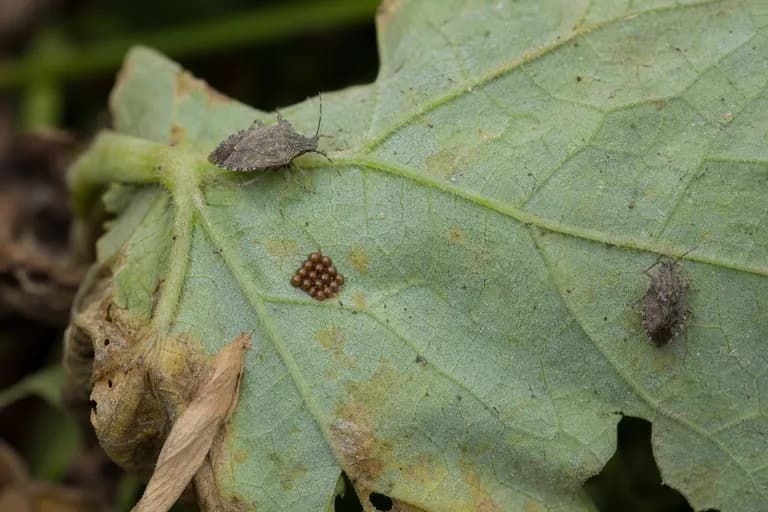
Kürbis-Wanze
SchädlingVergilbende und welkende Blätter, bronzefarbene Eigelege auf Blattunterseiten und nachlassende Pflanzenvitalität durch anhaltendes Saugen.

Gurkenkäfer
SchädlingLöcher in Blättern und Blüten, vernarbte Fruchtoberflächen und mögliche Übertragung von bakterieller Welke auf die Pflanzen.
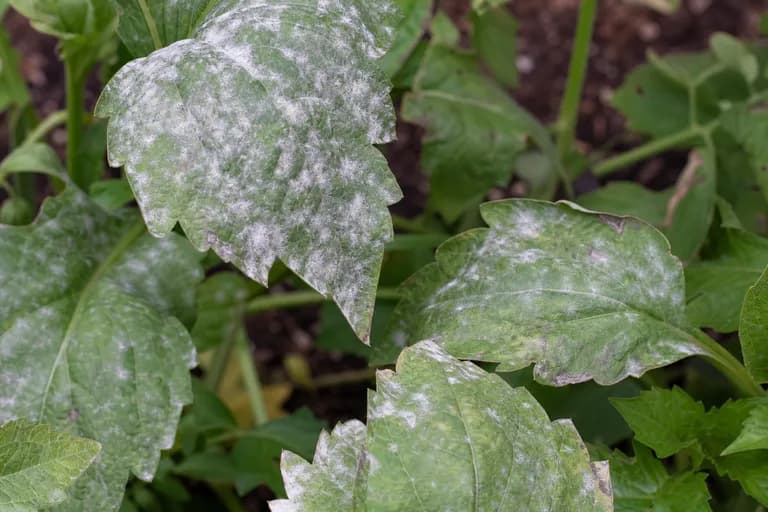
Echter Mehltau
KrankheitWeißer, pudriger Belag, der sich über die Blattoberflächen ausbreitet, verminderte Pflanzenvitalität, vorzeitiges Absterben der Blätter und verringerte Produktion.
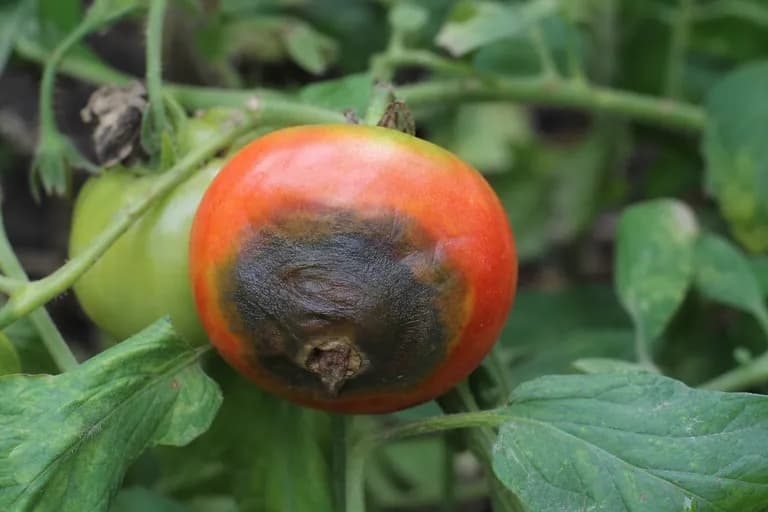
Blütenendfäule
KrankheitDunkle, eingesunkene Flecken am Boden sich entwickelnder Früchte, verursacht durch Kalziumaufnahmeprobleme bei ungleichmäßiger Bewässerung.
Fehlerbehebung bei häufigen Problemen
Das häufigste Problem ist, die Früchte zu groß werden zu lassen, was zu zähem, samenreichem Kürbis führt. Während der Hauptproduktion bei hohen Temperaturen täglich ernten. Schlechter Fruchtansatz durch unzureichende Bestäubung ist bei kühlem oder regnerischem Wetter häufig – bestäuben Sie von Hand, indem Sie morgens mit einem kleinen Pinsel Pollen von männlichen Blüten auf weibliche Blüten übertragen. Echter Mehltau tritt typischerweise im Spätsommer auf; gute Luftzirkulation und Bewässerung am Boden verzögern seinen Beginn. Früchte, die nassen Boden berühren, können Bodenfäule entwickeln – legen Sie daher Stroh oder kleine Bretter unter die sich entwickelnden Früchte.
Anbautipps
- Warten Sie auf wirklich warmen Boden vor der Pflanzung. Runde Zucchinisamen, die in kalten, nassen Boden unter 18 °C gepflanzt werden, verfaulen statt zu keimen. Verwenden Sie ein Bodenthermometer und seien Sie geduldig – eine Woche Wärme macht den entscheidenden Unterschied.
- Pflanzen Sie am sonnigsten verfügbaren Platz mit mindestens 6–8 Stunden direkter Sonne täglich. Mehr Sonne bedeutet mehr Blüten, bessere Bestäubung und höhere Erträge. Selbst leichter Schatten verringert die Produktion merklich.
- Gießen Sie gründlich und gleichmäßig, mit 2,5–4 cm pro Woche. Tröpfchenbewässerung oder Perlschläuche am Fuß sind ideal – Überkopfbewässerung fördert Echten Mehltau und Blattkrankheiten. Morgens gießen, damit das Laub vor dem Abend trocknet.
- Reichlich düngen, da runde Zucchini ein Starkzehrer ist. Kompost und gut abgelagerten Mist vor der Pflanzung in die Beete einarbeiten, dann alle 3–4 Wochen während der Wachstumsperiode mit ausgewogenem Dünger nachdüngen. Nach Blühbeginn auf eine phosphorreiche Formel umstellen.
- Bei 6–8 cm Durchmesser ernten – etwa Tennisball- bis Softballgröße – für den besten Geschmack, die beste Textur und Samenentwicklung. Größere Früchte werden samenreich, wässrig und fade. Ein scharfes Messer verwenden, um die Früchte von der Pflanze zu schneiden und einen kurzen Stielrest stehen lassen.
- Pflanzen alle 2–3 Tage während der Hauptproduktion kontrollieren. Runde Zucchini wächst schnell und eine Frucht, die heute perfekt ist, kann in 48 Stunden übergroß sein. Regelmäßiges Ernten hält die Pflanze blühend und neue Früchte bildend.
- Auf Kürbiszünsler achten, den zerstörerischsten Schädling. Auf sägemehlartigen Fraß am Stängelgrund und Welke trotz ausreichender Bewässerung achten. Junge Pflanzen mit Reihenabdeckungen bis zum Blühbeginn schützen, dann für den Bestäuberzugang entfernen.
- Echten Mehltau proaktiv bekämpfen, indem Sie für gute Luftzirkulation sorgen, am Fuß statt von oben gießen und vorbeugend ab Hochsommer mit einer Lösung aus Kaliumbicarbonat oder verdünnter Milch (1 Teil Milch auf 9 Teile Wasser) alle 7–10 Tage sprühen.
Bau deine beste Runde Zucchini an — und alles drumherum.
Starte heute kostenlos. Lege deine Beete an, setze deine Runde Zucchini ein und lass PlotMyGarden Timing, Abstände, Begleiter und Erinnerungen von der Saat bis zum Erntekorb übernehmen.
Finde deine Runde Zucchini
Ronde de Nice
Klassisches französisches Erbstück mit gefleckter hellgrüner Schale, zartem Fruchtfleisch und hervorragendem Geschmack zum Füllen.
Eight Ball
Moderne Hybride, die gleichmäßige dunkelgrüne Kugeln mit ausgezeichneter Krankheitsresistenz und hohen Erträgen hervorbringt.
Tondo di Piacenza
Italienisches Erbstück mit hellgrüner Schale und dichtem, geschmackvollem Fruchtfleisch, geschätzt zum Füllen und Grillen.
Geode
Kompakte Hybride, die perfekt runde, dunkelgrüne Früchte an platzsparenden Buschpflanzen hervorbringt.
One Ball
Leuchtend gelbe runde Zucchini, die Farbvielfalt bietet – mit der gleichen großartigen Füllform und mildem Geschmack.
Eine einzelne runde Zucchinipflanze, gezogen aus einer 2–3 € teuren Samentüte (mit 15–25 Samen), kann über eine Saison 3–5 kg Spezialkürbis produzieren. Runde Zucchinisorten werden auf Wochenmärkten und in Feinkostgeschäften für 6–13 € pro Kilogramm verkauft – deutlich mehr als Standard-Zucchini aufgrund ihrer Besonderheit und kulinarischen Attraktivität. Der Anbau von nur 2–3 Pflanzen kann leicht 35–70 € pro Saison einsparen, und der Überschuss eignet sich hervorragend als Geschenk, Tiefkühlvorrat für Puffer und Grundlage für kreative Füllrezepte.
Schnelle Rezepte
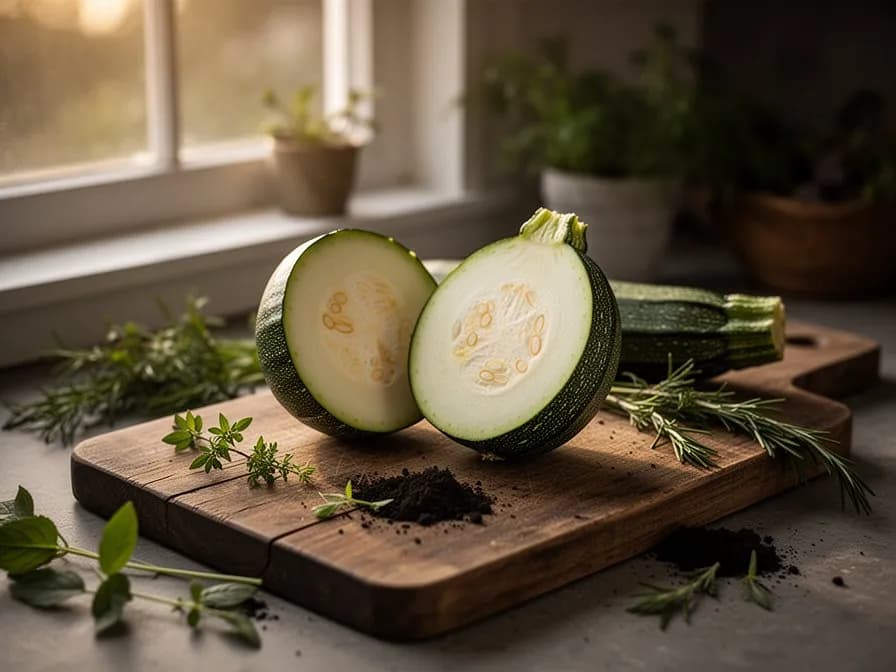
Gefüllte runde Zucchini
40 Min.Die natürliche Schalenform der runden Zucchini macht sie zum perfekten Gefäß für eine herzhafte Füllung. Die Mitte aushöhlen, mit einer Mischung aus Reis, Kräutern und Käse füllen und goldbraun und zart backen – ein elegantes Gericht, das sich praktisch von selbst präsentiert.
8 Zutaten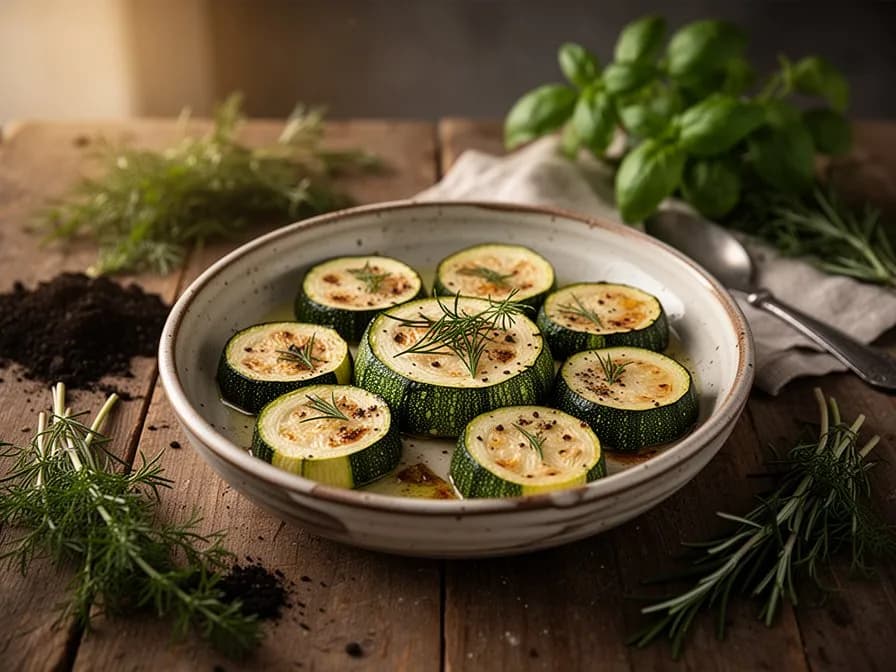
Gegrillte runde Zucchinischeiben
20 Min.In dicke runde Scheiben schneiden, die auf dem Grill perfekt zusammenhalten. Eine schnelle Marinade aus Olivenöl, Knoblauch und Zitrone ergibt angeröstete, rauchige Scheiben mit zartem, cremigem Inneren – eine herausragende Beilage für jedes Sommergrillen.
7 ZutatenRunde Zucchini-Puffer
25 Min.Geraspelte runde Zucchini mit Kräutern und Feta gemischt, dann in der Pfanne zu knusprig-goldenen Puffern gebraten. Das Auspressen der überschüssigen Feuchtigkeit ist das Geheimnis für eine perfekt knusprige Außenseite mit zartem, geschmackvollem Kern.
8 ZutatenKulinarische Verwendung
Runde Zucchini ist das ultimative Füllgemüse, perfekt geformt zum Aushöhlen und Füllen mit mediterranen Mischungen aus Reis, Lammhackfleisch, Kräutern und Tomatensauce. Horizontal aufschneiden zum Grillen oder Backen als einzelne Portionen. Halbieren und Kerne aushöhlen für bootsförmiges Füllen mit Käse- und Semmelbrösel-Topping. Raspeln für Puffer, Zucchinibrot und Muffins. Kleine Früchte können in Scheiben geschnitten und angebraten, eingelegt oder roh zum Salat gegeben werden. Die Blüten sind ebenfalls essbar und hervorragend mit Ricotta gefüllt und frittiert.
Was drinsteckt
Gesundheitsvorteile
- Extrem niedrige Kaloriendichte (17 kcal pro 100 g) bei hohem Wassergehalt macht runde Zucchini zu einem der gewichtsmanagementfreundlichsten Gemüse überhaupt.
- Gute Vitamin-C-Quelle, die antioxidativen Schutz bietet und die Immunfunktion, Kollagensynthese und Eisenaufnahme aus pflanzlichen Lebensmitteln unterstützt.
- Enthält Kalium (261 mg pro 100 g), einen Elektrolyt, der zur Regulierung des Blutdrucks, des Flüssigkeitshaushalts sowie der Muskel- und Nervenfunktion beiträgt.
- Liefert Lutein und Zeaxanthin, Carotinoid-Pigmente, die in der Schale konzentriert sind und die Augengesundheit unterstützen sowie altersbedingter Makuladegeneration vorbeugen können.
- Die löslichen Ballaststoffe, insbesondere Pektin, in der Zucchini unterstützen nützliche Darmbakterien und können helfen, den Blutzuckerspiegel nach den Mahlzeiten zu regulieren.
- Enthält entzündungshemmende Verbindungen wie Vitamin C, Beta-Carotin und Polyphenole, die chronische Entzündungen und oxidativen Stress im gesamten Körper reduzieren können.
Woher Runde Zucchini stammt
Die runde Zucchini gehört zur Art Cucurbita pepo, die in Mesoamerika beheimatet ist, wo wilde Kürbisgewächse vor mindestens 8.000–10.000 Jahren im heutigen Südmexiko und Mittelamerika domestiziert wurden. Archäologische Funde aus der Guilá-Naquitz-Höhle in Oaxaca, Mexiko, umfassen einige der ältesten bekannten Kürbiskerne. Diese frühen Kulturkürbisse wurden zunächst wegen ihrer nährstoffreichen Samen und nicht wegen ihres bitteren Fruchtfleisches angebaut, und über Jahrtausende der Selektion wurden von den indigenen Völkern Amerikas größerfrüchtige Sorten mit milderem Fruchtfleisch entwickelt.
Nachdem Kolumbus und spätere europäische Entdecker im späten 15. und 16. Jahrhundert Kürbissamen nach Europa brachten, erlebte die Art eine rasche Diversifizierung in mediterranen Klimazonen. Italienische Gärtner, insbesondere in den Regionen um Neapel und Sizilien, züchteten selektiv die zarten, mildfleischigen Sommersorten, die zur modernen Zucchini werden sollten. Die runden Formen – allen voran die Erbstücksorte Ronde de Nice – wurden entlang der französischen und italienischen Riviera entwickelt, wo das warme mediterrane Klima und die reichen kulinarischen Traditionen zum Experimentieren mit Form, Farbe und Geschmack anregten. Diese kugelförmigen Sorten wurden zu einem Grundpfeiler der provenzalischen und niçoiser Küche, geschätzt für ihre ideale Füllform und ihren im Vergleich zu länglichen Typen leicht nussigeren Geschmack.
Heute werden runde Zucchinisorten weltweit überall dort angebaut, wo Sommerkürbis gedeiht. Beliebte Kultivare sind Ronde de Nice (das klassische französische Erbstück mit hellgrüner gefleckter Schale), Eight Ball (eine moderne Hybride mit dunkelgrüner Schale), Geode (eine kompakte Hybride ideal für Kübel) und Tondo di Piacenza (ein italienisches Erbstück). Obwohl sie in Supermärkten weniger verbreitet sind als Standard-Zucchini, werden runde Sorten bei Hobbygärtnern und Wochenmarktanbietern zunehmend beliebt – wegen ihrer Besonderheit, ihres kompakten Wuchses und ihrer überlegenen kulinarischen Vielseitigkeit zum Füllen und Rösten.
Runde Zucchini: Schon gewusst?
Faszinierende Fakten über Runde Zucchini
Runde Zucchinisorten wie Ronde de Nice stammen aus der französischen Riviera-Region rund um die Stadt Nizza, wo sie seit mindestens dem 19. Jahrhundert angebaut werden und ein geschätztes Zutat der provenzalischen Küche geblieben sind.
Runde Zucchini: Fragen & Antworten
Wann sollte ich Runde Zucchini pflanzen?
Was sind gute Begleitpflanzen für Runde Zucchini?
In welchen Winterhärtezonen kann Runde Zucchini wachsen?
Wie viel Sonne braucht Runde Zucchini?
Welchen Abstand sollte ich zwischen Runde Zucchini lassen?
Welche Schädlinge und Krankheiten befallen Runde Zucchini?
Wie lagere ich Runde Zucchini nach der Ernte?
Was sind die besten Runde Zucchini-Sorten zum Anbauen?
Welchen Boden braucht Runde Zucchini?
Was ist der Unterschied zwischen runder und normaler Zucchini?
Warum verfaulen meine runden Zucchinifrüchte, bevor sie reif werden?
Wie groß sollte ich runde Zucchini werden lassen, bevor ich sie pflücke?
Kann ich runde Zucchini im Kübel anbauen?
Warum hat meine runde Zucchinipflanze viele Blüten, aber keine Früchte?
Wie verhindere ich Echten Mehltau an runder Zucchini?
Du hast die Theorie gelesen. Jetzt baue sie auf Autopilot an.
Alles, was Runde Zucchini knifflig macht — das Timing, die Abstände, die Begleiter, das Erntefenster — genau das übernimmt PlotMyGarden für dich, für jede Pflanze im Garten.
Ein Plan, der dein Wetter kennt
Standort einmal festlegen. Aussaat-, Dünge- und Erntedaten rund um deinen echten letzten Frosttermin und die Live-Vorhersage — kein Raten mehr nach Saattüte.
Aus dem Abschnitt „Pflanzzeit“Beetplaner per Drag & Drop
Beete auf einem Raster gestalten. Jede Pflanze rastet im richtigen Abstand ein, und du siehst die ganze Saison, bevor du einen Cent für Saatgut ausgibst.
Aus dem Abschnitt „Anbau“Begleiter-Konflikte früh erkannt
Über 200 gute und schlechte Kombinationen werden beim Pflanzen live geprüft — so landet ein saisonruinierender Fehler nie in der Erde.
Aus dem Abschnitt „Begleiter“Erinnerungen, nach denen du wirklich handelst
„Gieß die Bohnen.“ „Heute ernten, bevor's umschlägt.“ Pünktlich, konkret und auf deine echten Pflanzen bezogen.
Aus dem Abschnitt „Ernte“Staffel-Aussaat, geplant
Sechs Wochen ernten statt sechs Tage? Die App verteilt deine Aussaaten automatisch und erinnert dich, wenn der nächste Satz fällig ist.
Aus dem Abschnitt „Pflanzzeit“Ein Verlauf, der schlauer wird
Jede protokollierte Ernte bringt der App deinen Garten bei. Der Plan fürs nächste Jahr startet bei dem, was in deinem Boden wirklich funktioniert hat.
Aus dem Abschnitt „Überblick“Pflanze diese neben Runde Zucchini
Weitere Kürbisgewächse
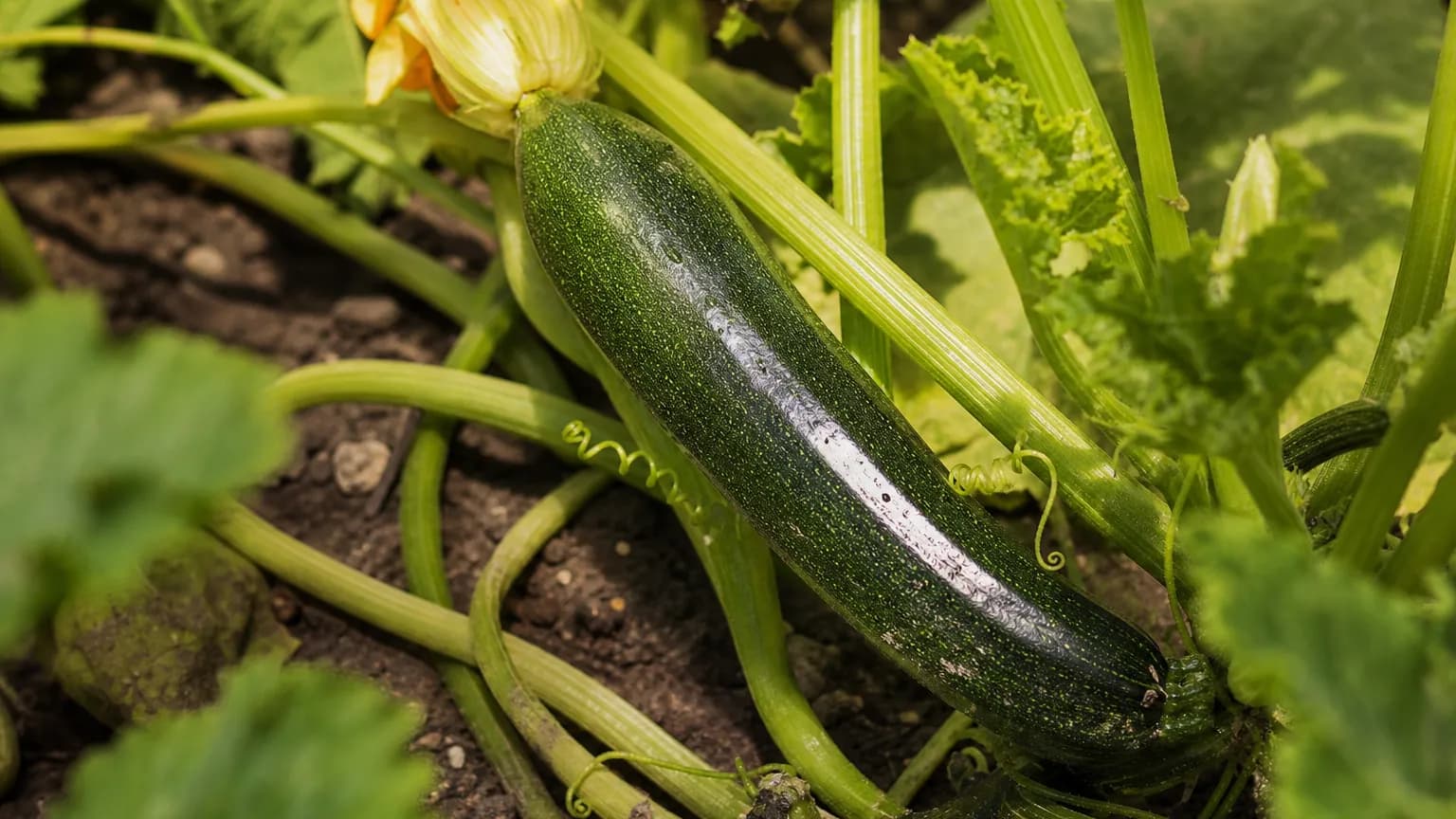
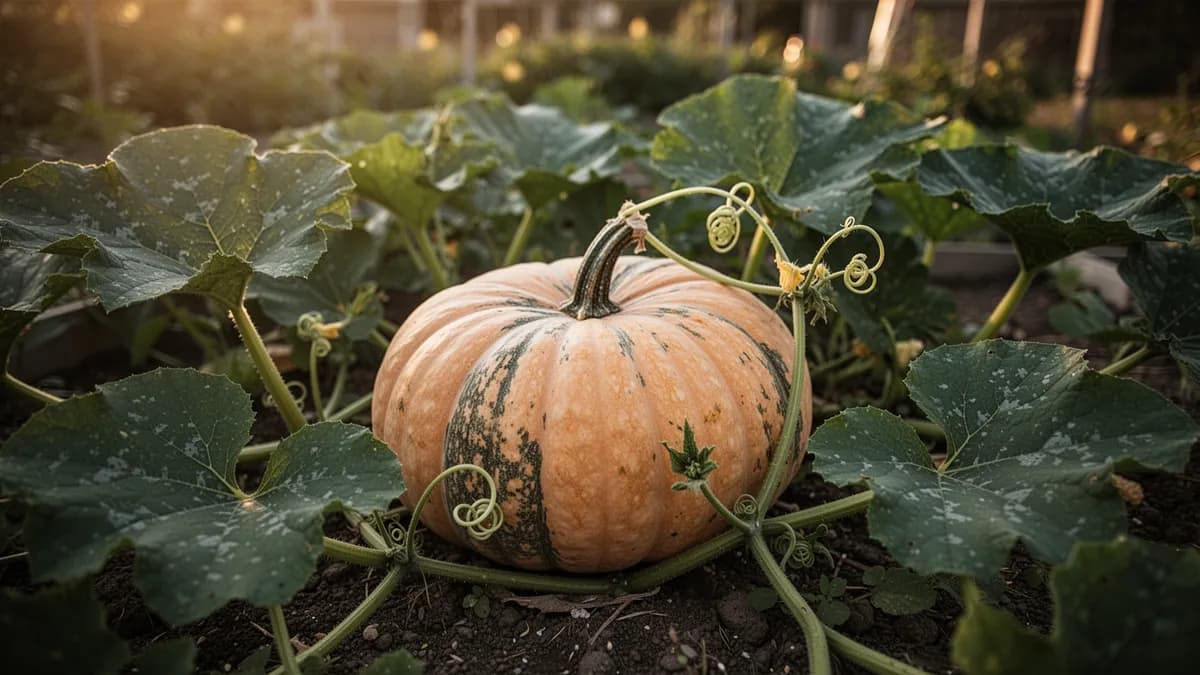
Halte Runde Zucchini von diesen fern
Bau deine beste Runde Zucchini an — und alles drumherum.
Starte heute kostenlos. Lege deine Beete an, setze deine Runde Zucchini ein und lass PlotMyGarden Timing, Abstände, Begleiter und Erinnerungen von der Saat bis zum Erntekorb übernehmen.