Pumpkin
A sprawling vine requiring ample space and warm soil, producing large fruits that store well into winter.





On this pageOverview
Meet Pumpkin
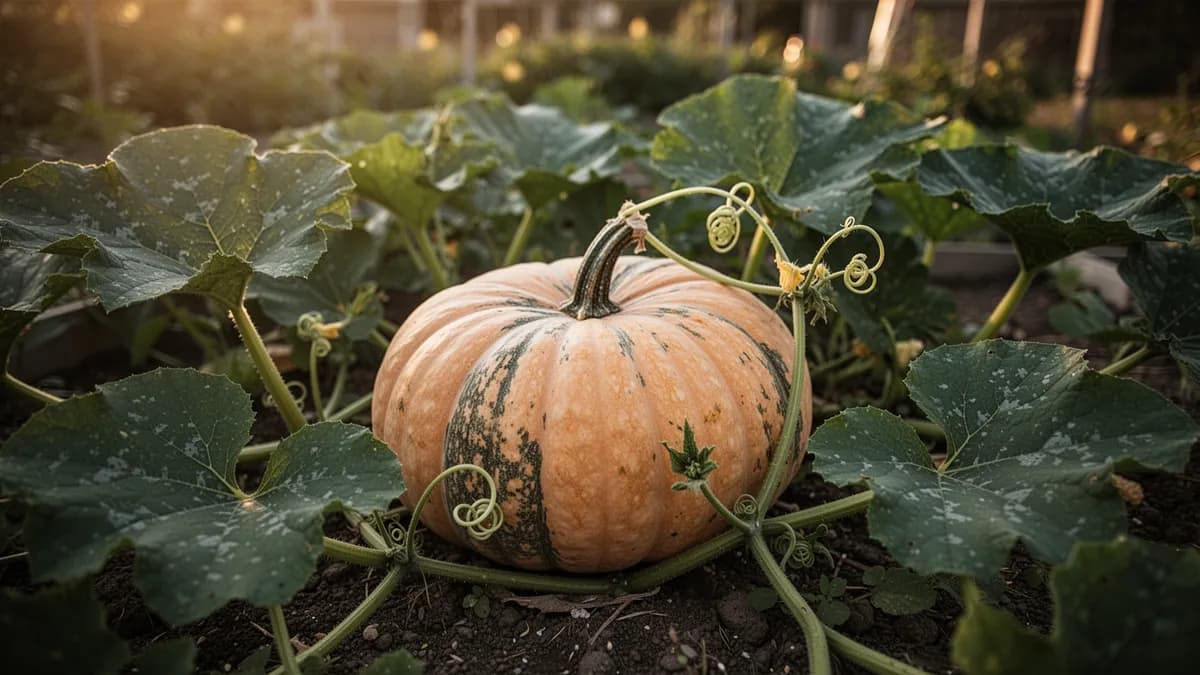
A sprawling vine requiring ample space and warm soil, producing large fruits that store well into winter. Direct sow seeds into hills of compost-enriched soil after all frost danger has passed and soil temperature reaches 70 degrees Fahrenheit. Limit each vine to two or three fruits for larger pumpkins, and slip a board under developing fruits to prevent rot from soil contact. Harvest after the rind hardens and resists puncture from a fingernail, leaving several inches of stem attached for longer storage.
When to plant Pumpkin
Pumpkins are best direct-sown since they dislike root disturbance, but in short-season areas (fewer than 100 frost-free days) they can be started indoors 3-4 weeks before the last frost in large biodegradable peat pots or soil blocks. Sow seeds 2.5 cm (1 inch) deep, pointed end down, at 24-30°C (75-85°F). Germination takes 5-10 days. Do not start seeds too early indoors — overgrown, root-bound pumpkin seedlings suffer severe transplant shock and rarely perform as well as direct-sown plants. Use individual 10 cm pots rather than cell trays, as pumpkin roots resent confinement.
For direct sowing, wait until soil has warmed to at least 21°C (70°F) — use black plastic mulch to pre-warm soil if needed. Plant 4-6 seeds per hill and thin to 2-3 strongest seedlings. Handle transplants very carefully, disturbing roots as little as possible. Count backwards from your first fall frost date to determine the latest safe planting date, allowing 90-120 days depending on variety maturity.
Your Pumpkin Year
Composed for Zone 7 · typical seasons · frost passes Apr 2, returns Nov 1
Plant Pumpkin May – Jun, pick Sep – Oct. Check the planting methods below and set your climate to personalize these windows.
How to grow Pumpkin
Pumpkins are warm-season sprawling vines that need generous space, fertile soil, and a long frost-free growing season of 90-120 days. Wait to plant until soil temperatures reach 21°C (70°F) and all danger of frost has passed — pumpkin seeds and seedlings are very frost-sensitive and rot in cold, wet soil. Create planting hills by mounding soil mixed with generous compost into 60 cm wide, 15 cm tall mounds spaced 150-300 cm apart, depending on variety. The raised hills warm quickly, drain well, and provide the rich root environment pumpkins demand.
Sow 4-6 seeds per hill, 2.5 cm (1 inch) deep, and thin to the 2-3 strongest seedlings when they develop their first true leaves. Pumpkin vines are aggressive growers that can extend 6-8 meters, so plan for the space commitment or train vines in a specific direction. For small gardens, choose compact bush varieties or train vines along fence lines.
Water deeply with 2.5-5 cm per week, ideally with drip irrigation or soaker hoses to keep foliage dry and reduce disease risk. Increase watering during flowering and fruit development. Feed every 2-3 weeks with a balanced fertilizer, switching to a phosphorus-rich formula once fruits begin setting. For the largest pumpkins, limit each vine to 1-2 fruits and remove all subsequent female flowers. Place a board, cardboard, or straw pad under developing fruits to prevent bottom rot from soil contact. As fruits near maturity, reduce watering to concentrate sugars and toughen the rind for storage.
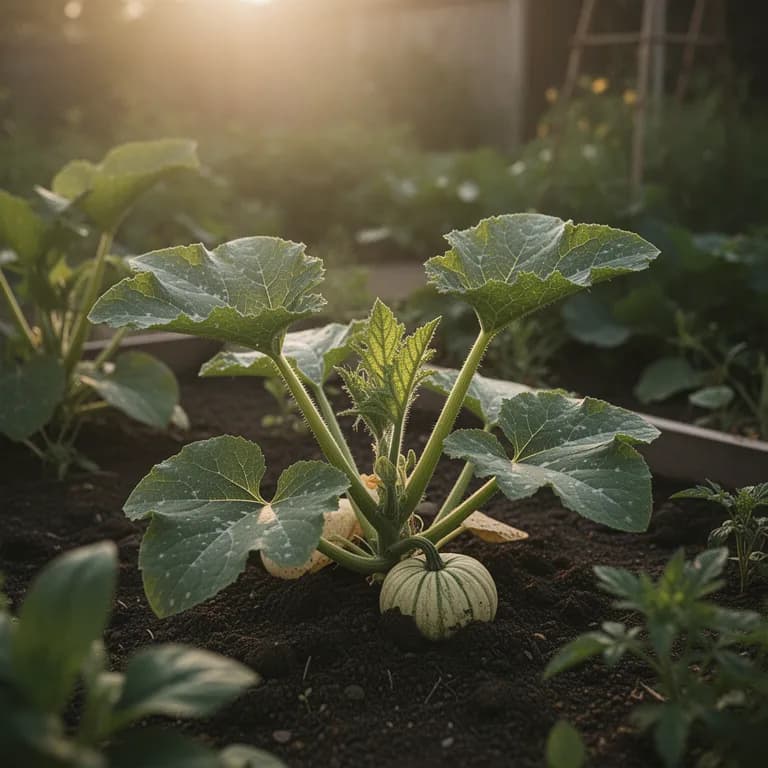
Pumpkin needs more room than a 4 × 8 ft bed gives
Each Pumpkin wants 150 cm of elbow room. The planner keeps that spacing for you — every plant, every bed.
Pumpkin's best neighbours
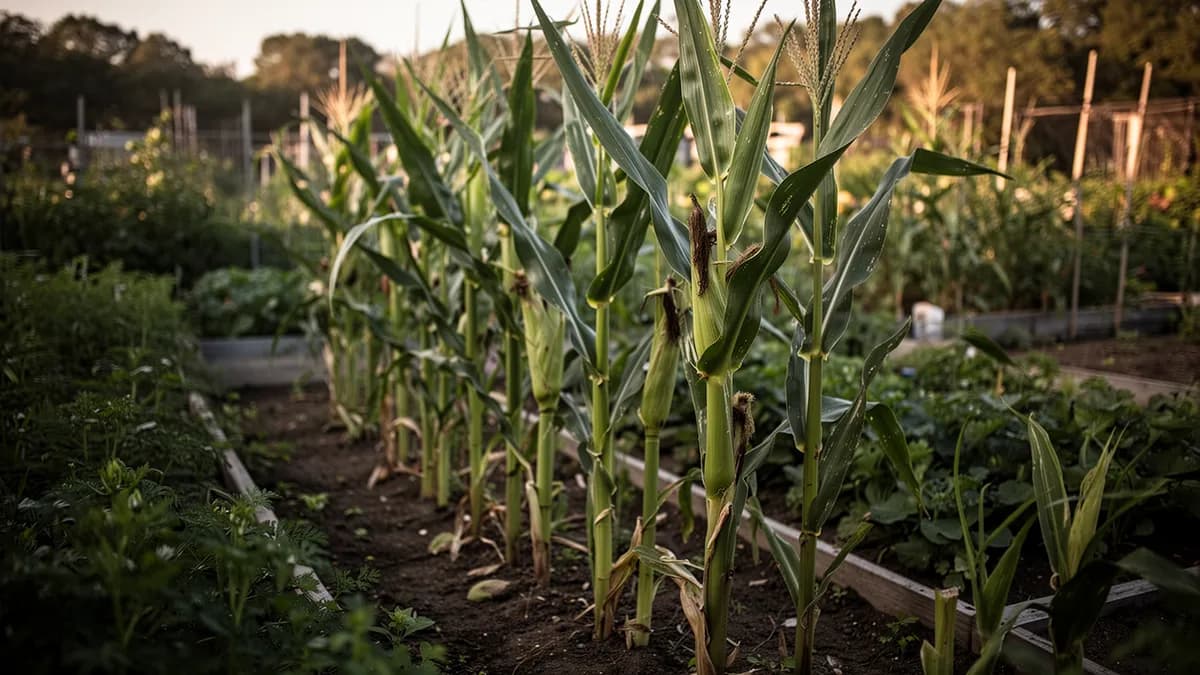
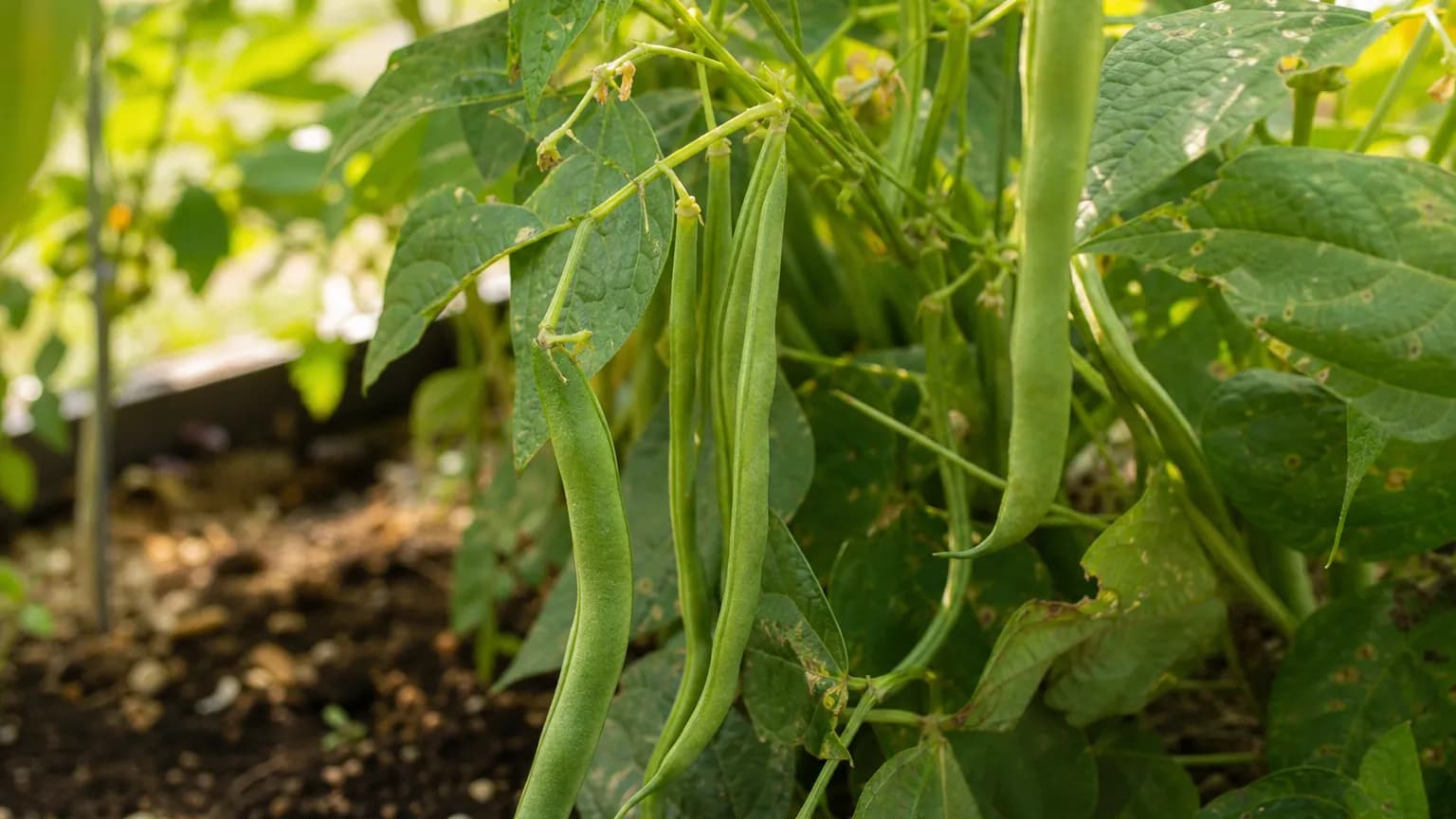
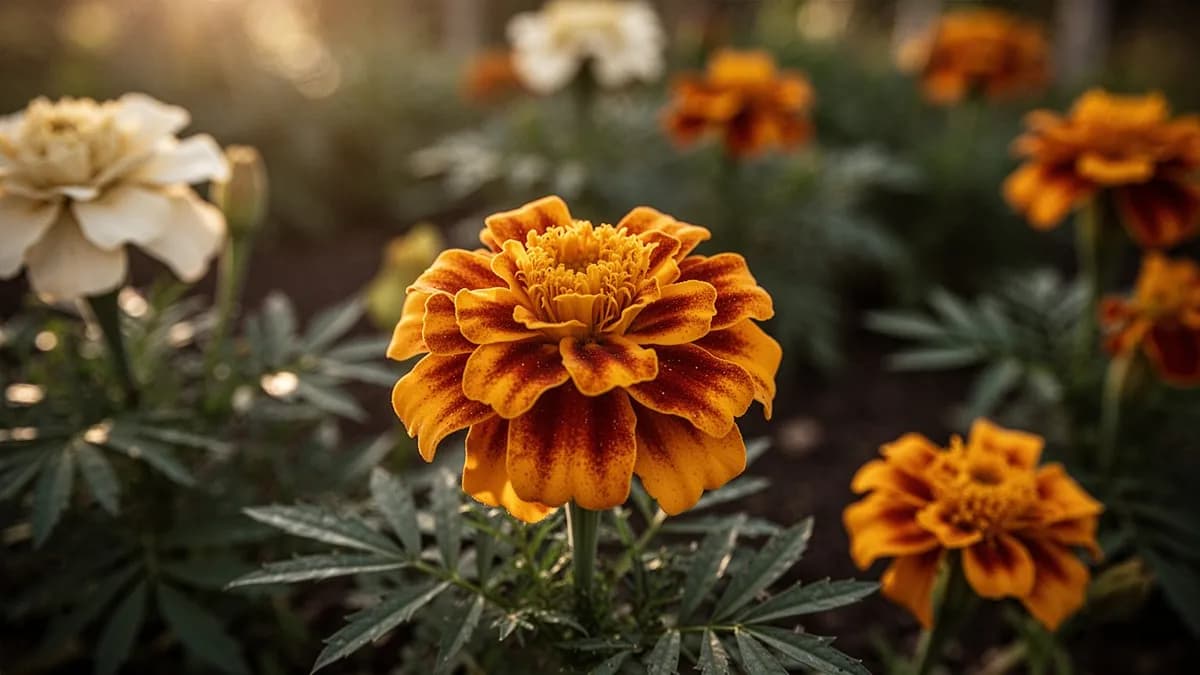
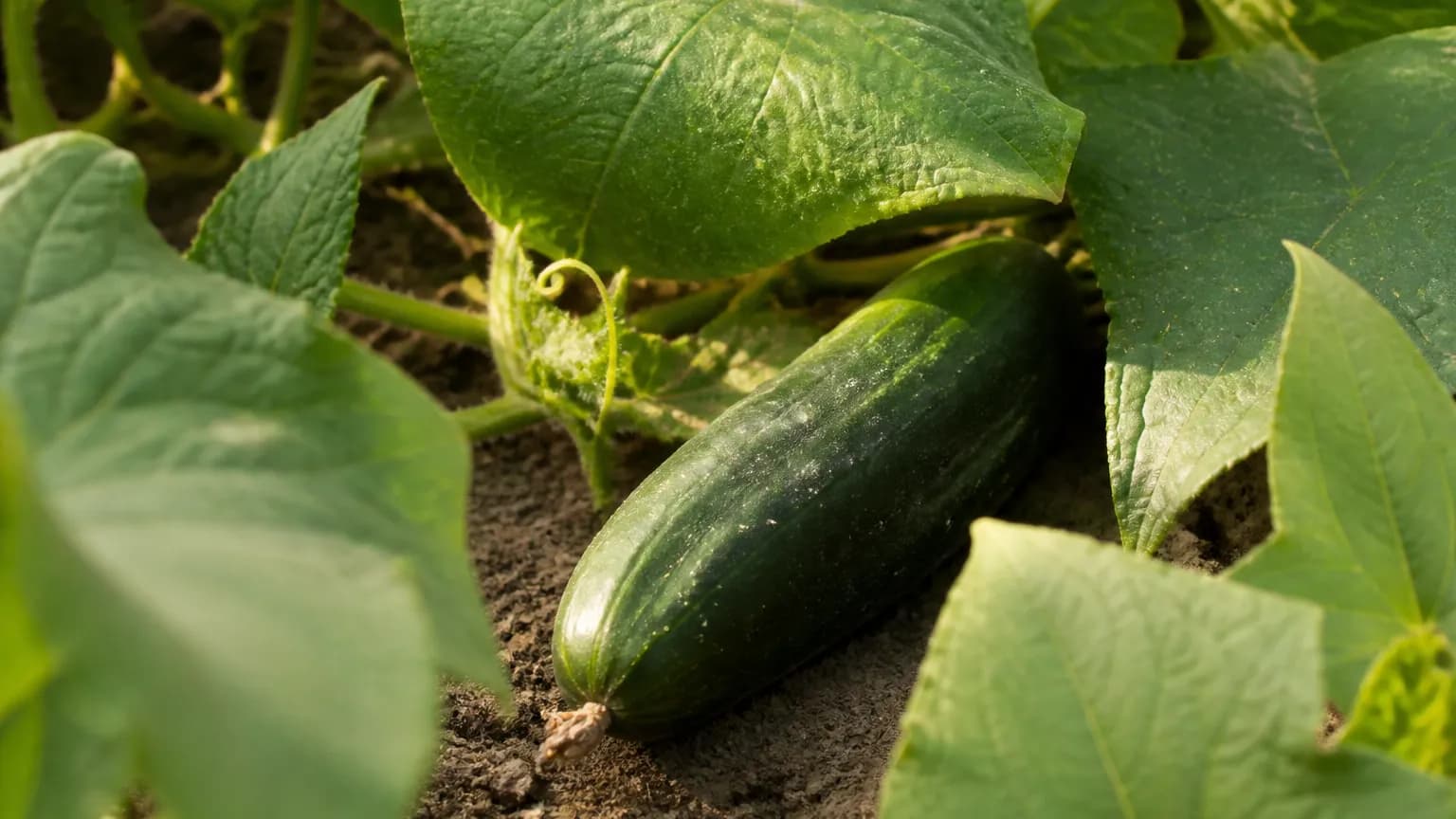
The Three Sisters planting (corn, beans, pumpkin) is one of the oldest companion planting traditions — pumpkin's large leaves shade the ground, suppressing weeds and retaining soil moisture, while beans fix nitrogen for the heavy-feeding pumpkin and corn provides structure for bean vines. Marigolds planted around the perimeter deter cucumber beetles and squash bugs. Nasturtiums serve as trap crops, luring aphids away from pumpkins. Avoid planting near potatoes, which compete for nutrients and are susceptible to similar blight diseases.
Corn belongs beside it. Potato doesn't.
Old growers' knowledge, checked against Pumpkin's real companion table below — test any plant you're growing.
Try Pumpkin in a bed — right here
A real planner bed with Pumpkin already in it. Tap a companion to place it and watch the pairing checks answer — green for good neighbours, red for a clash.


Related growing guides
Feed it well
Pumpkins are extremely heavy feeders demanding rich, well-drained soil with a pH of 6.0-6.8. Before planting, build hills with equal parts garden soil and aged compost, working in a balanced granular fertilizer (10-10-10) at the base. The classic approach is planting on top of a compost pile or burying a generous shovelful of well-rotted manure 30 cm beneath each hill — pumpkin roots will grow down into this nutrient reservoir as the season progresses. If your soil is heavy clay, add coarse sand or perlite to improve drainage, as pumpkins are susceptible to root rot in waterlogged conditions.
Side-dress with compost or balanced fertilizer every 3 weeks during vine growth, switching to a high-phosphorus, high-potassium formula (such as 5-10-10) when the first female flowers appear to support fruit development and sugar accumulation. Pumpkins respond exceptionally well to foliar feeding with dilute liquid fertilizer, compost tea, or liquid kelp extract — spray early in the morning when leaf stomata are open for maximum absorption. Avoid excessive nitrogen once fruits are setting, as it promotes continued vine growth at the expense of fruit maturation and rind hardening.
In poor or sandy soils, plant directly on top of partially decomposed compost piles where vines can access concentrated nutrients and the organic matter retains moisture during dry spells. A thick layer of straw mulch (8-10 cm) applied after the soil has warmed helps conserve moisture, moderate soil temperature, and suppress weeds around the base of the vines. For competition-size giant pumpkins, growers often amend each hill with 50-100 liters of compost, add mycorrhizal inoculant at planting, and feed weekly with liquid fish emulsion and kelp throughout the growing season.
Ideal Temperature
Hardiness Zone Compatibility
From seed to harvest, stage by stage
Seed Germination
Large seeds germinate quickly in warm soil (21-32°C). Thick cotyledons push through the surface with considerable force.
Seedling Stage
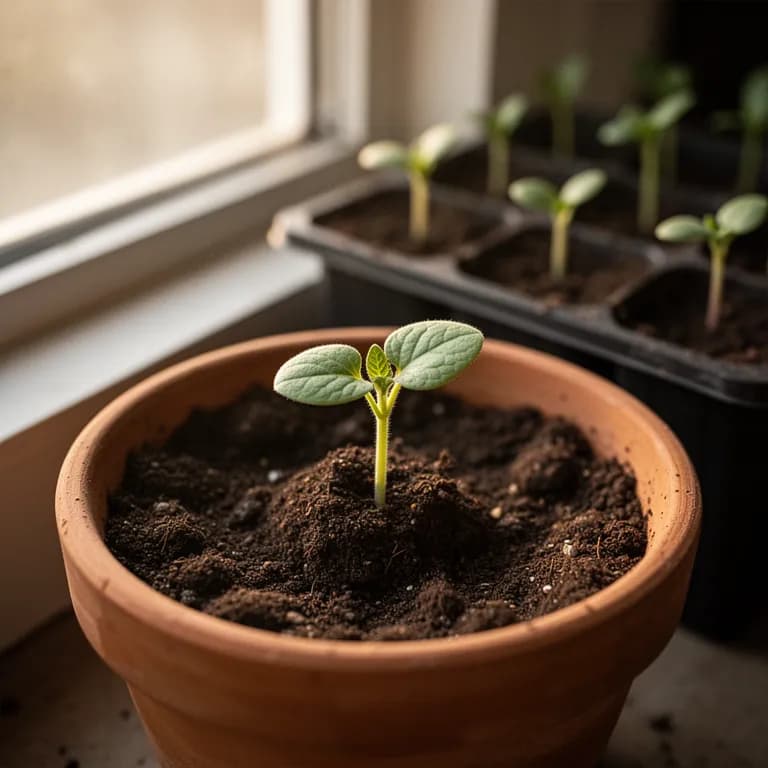
First true leaves appear — large, rough-textured, and distinctly lobed. Root system develops rapidly. The plant establishes before vining begins.
Vine Growth
Explosive vegetative growth as vines extend 15-30 cm per day in optimal conditions. Tendrils anchor the vine to anything nearby. Leaves grow enormous to power fruit development.
Flowering
Large golden flowers open in early morning. Male flowers appear first, followed by females identifiable by the small swelling (ovary) at their base. Pollination is primarily by bees.
Fruit Development
Pollinated fruits swell rapidly, gaining several centimeters per day. The vine channels enormous resources into the developing pumpkin. Fruit color transitions from green to the final orange.
Maturity & Harvest
Skin hardens, color deepens to full orange, and the stem begins to dry and turn corky. A ripe pumpkin sounds hollow when tapped and resists fingernail pressure on the skin.
Plant seeds 2.5 cm deep in soil that has warmed to at least 18°C. Sow 2-3 seeds per hill and thin to the strongest.
Caring for Pumpkin month by month
What to do each month for your Pumpkin
October
You are hereHarvest mature pumpkins when the skin is fully colored, hard enough to resist fingernail scratching, and the stem has turned corky. Cut stems with sharp pruners — never twist or pull. Cure harvested pumpkins in warm sun for 10 days before storing.
Know exactly what to do in your garden — every month
One email at the start of each month: what to sow, plant, and tackle right now — for your Pumpkin and everything growing around it. Plus a short starter course that helps you dodge the classic mistakes.
- What to do, right now
- Matched to your season
- Starter course included
Harvesting Pumpkin
Pumpkins are ready to harvest when the rind has reached its full, deep color (orange, white, or whatever is typical for the variety), the rind is hard enough that your fingernail cannot easily puncture it, and the stem begins to dry and crack where it meets the fruit. The vine tendrils nearest the fruit will also turn brown and dry, and the vine itself may start to die back naturally. Tap the pumpkin with your knuckles — a ripe fruit produces a hollow, drum-like sound, while an immature one sounds dull and solid. Most varieties need 90-120 days from planting and are typically ready in September or October, depending on your planting date and climate.
Cut the stem cleanly with sharp pruning shears or a sturdy knife, leaving 10-15 cm (4-6 inches) of stem attached — a longer stem acts as a seal against rot organisms and significantly extends storage life. Never twist, snap, or carry a pumpkin by its stem, as breaking it off creates an open wound that invites bacteria and mold, drastically reducing shelf life. Handle pumpkins gently to avoid bruising, which creates invisible damage beneath the rind that leads to soft spots during storage. Harvest before the first hard frost, as even a single night of freezing temperatures damages cell walls and causes rapid decay. If a light frost is forecast, cover pumpkins in the field with blankets or straw overnight.
After harvest, cure pumpkins in the sun for 7-10 days or in a warm (27°C / 80°F), dry, well-ventilated location. Curing hardens the rind, heals minor surface scratches, and converts some starches to sugars, improving both storage life and flavor. Turn pumpkins once during curing to ensure even drying on all sides. Wipe the surface with a dilute vinegar solution (one part vinegar to ten parts water) to kill surface mold spores before moving into long-term storage. Properly cured pumpkins feel noticeably harder and the stem should be completely dry and corky.
assuming you plant when the window opens — set your real date
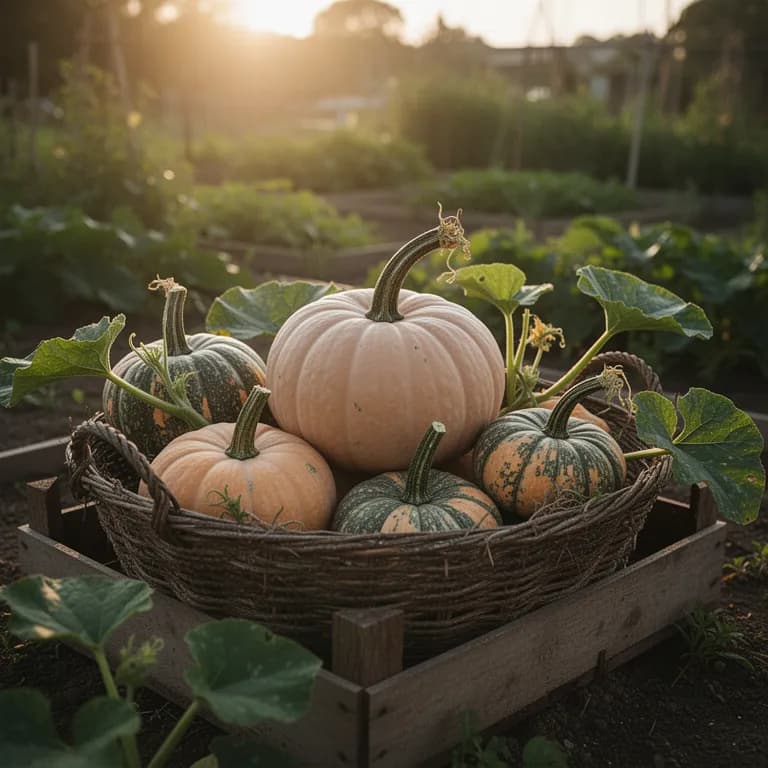
Rind resists a fingernail, stem turns corky, and tapping the fruit sounds hollow.
Storage & Preservation
Cured pumpkins store well in a cool (10-15°C / 50-60°F), dry location with good air circulation for 3-6 months, depending on variety — thick-walled types like Cinderella and winter luxury pumpkins store longest due to their dense rind structure. Place them on a shelf, board, or piece of cardboard rather than directly on concrete, which wicks moisture and accelerates rot. Do not stack pumpkins; allow at least 5-8 cm of airflow around each one. Check stored pumpkins weekly and use any showing soft spots, mold, or weeping immediately — one rotting pumpkin can spoil its neighbors through fungal spread.
For freezing, the simplest method is to cut pumpkins into large chunks, roast at 190°C (375°F) until fork-tender (about 45 minutes), scoop out the flesh, mash or puree, and freeze in measured portions (typically 425g / 15 oz, matching one standard can) for up to 12 months. Frozen pumpkin puree is perfect for pies, soups, muffins, and bread. You can also freeze roasted cubes for adding directly to curries and stews. Pressure canning cubed pumpkin is safe but requires strict adherence to tested recipes — never water-bath can pumpkin, as it is a low-acid food that requires the higher temperatures of pressure canning to be safe.
Dehydrating pumpkin puree into fruit-leather-style sheets at 57°C (135°F) for 8-10 hours produces a compact, shelf-stable product that rehydrates easily for baking. Pumpkin seeds are a valuable secondary harvest — scoop them out, rinse thoroughly, toss with oil and salt (or spice blends like cumin and chili), and roast at 160°C (325°F) for 20-25 minutes until golden and crispy. The seeds are rich in zinc, magnesium, and healthy fats, making them a nutritious snack that stores in an airtight container at room temperature for several weeks.
What goes wrong — and the fix
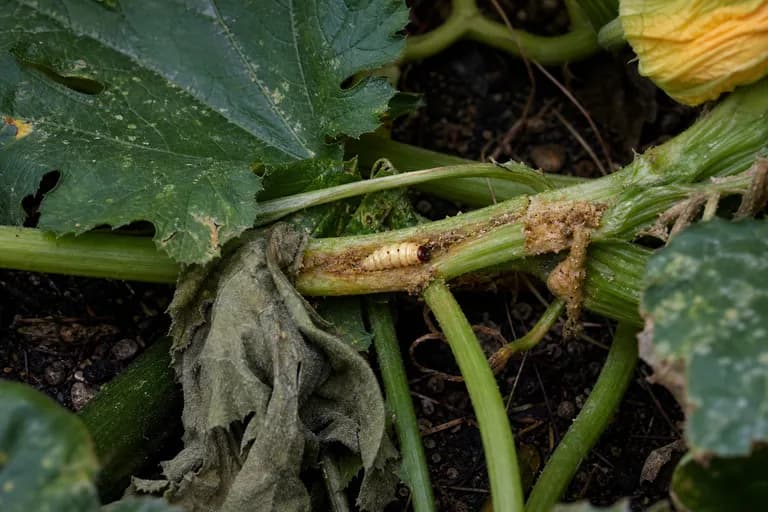
Squash Vine Borer
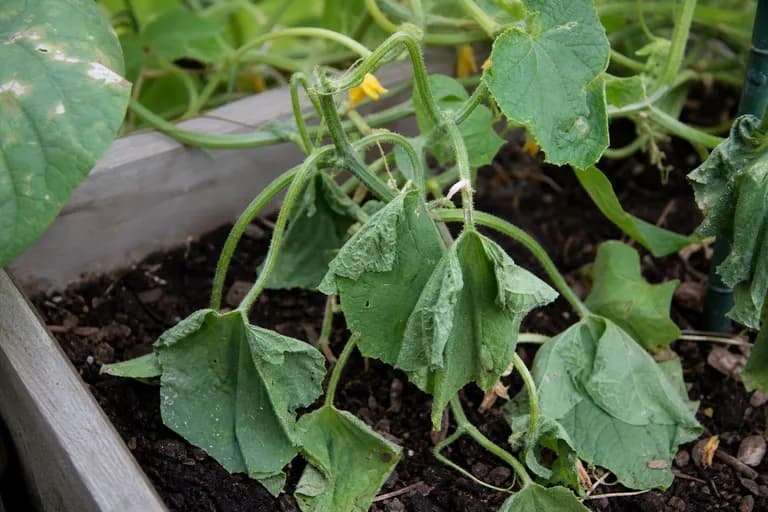
PestA clearwing moth larva bores into the vine stem at the base, causing sudden wilting of the entire vine despite adequate watering. Sawdust-like frass extrudes from a hole in the stem near soil level. Often fatal to the vine.
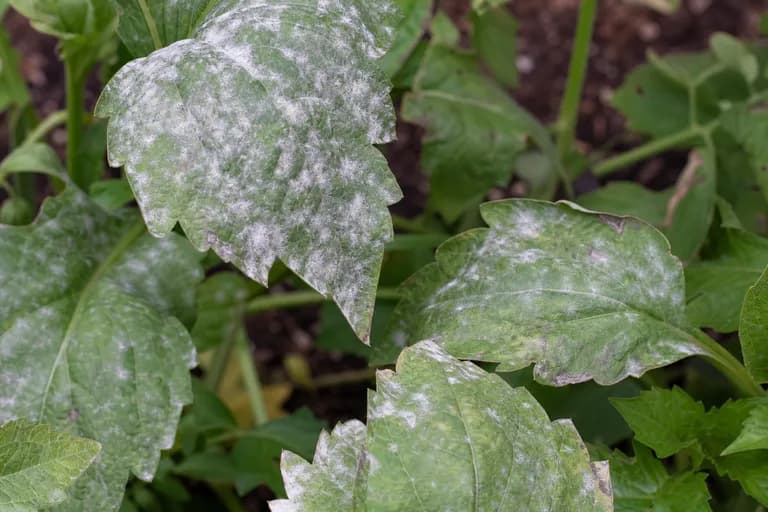
Powdery Mildew
DiseaseWhite, powdery fungal coating on upper leaf surfaces, spreading rapidly in warm, dry days with cool, humid nights. Severely infected leaves yellow, curl, and die, reducing fruit size and sugar content.
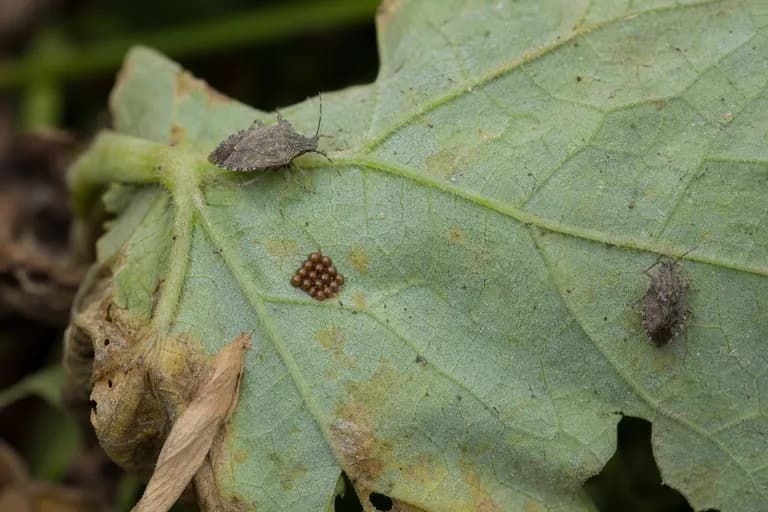
Squash Bug
PestGray-brown shield-shaped adults and clusters of nymphs suck sap from leaves, causing yellow spots that progress to brown, wilted foliage. Adults inject a toxin while feeding that causes vine wilt. Copper-colored eggs laid in neat rows on leaf undersides.
Bacterial Wilt
DiseaseSudden wilting of individual leaves or entire vines that does not recover with watering. Cut stem exudes sticky, stringy bacterial ooze when squeezed. Spread by striped and spotted cucumber beetles.
Troubleshooting Common Problems
Male flowers appearing weeks before female flowers is completely normal — be patient, as female flowers (identifiable by the small round swelling behind the flower) appear once vines are well-established, typically after the vine has grown 3-4 meters long. The male flowers serve an important purpose: they attract pollinators to your pumpkin patch before the critical female flowers open, ensuring bees know where to find nectar when pollination matters most.
Poor fruit set despite abundant flowers usually indicates inadequate pollination — hand-pollinate by transferring pollen from a freshly opened male flower to a female flower with a small brush or by removing the male flower petals and dabbing the anther directly onto the female stigma in the early morning before 10 AM. Fruits rotting on the bottom before ripening is caused by prolonged contact with wet soil — place a barrier (board, straw, tile, or cardboard) under each developing fruit as soon as it reaches softball size. Blossom end rot, similar to that seen in tomatoes, occasionally affects pumpkins during hot, dry spells and is caused by inconsistent watering disrupting calcium uptake.
Vines wilting suddenly despite adequate water almost certainly indicates squash vine borer — inspect the stem base for sawdust-like frass and entry holes. If caught early, you can slit the stem, remove the larva, and bury the damaged section to encourage re-rooting. Powdery mildew is nearly universal on pumpkin foliage by late summer and can be slowed but rarely eliminated entirely — focus on keeping the plant productive long enough to ripen its fruit. Sunscald (pale, bleached patches on the rind) occurs on fruits suddenly exposed to intense sun after leaf loss; shade developing fruits with a lightweight cloth if mildew has destroyed significant foliage.
Growing Tips
- Build 'pumpkin hills' by mounding soil 15-20 cm high and 60-90 cm across, enriched with a full shovel of compost and aged manure — pumpkins are among the heaviest feeders in the garden.
- Protect young seedlings from cucumber beetles using row cover until flowering begins — these beetles spread bacterial wilt which kills vines rapidly once infected.
- For the biggest pumpkins, allow only one fruit per vine by removing all additional female flowers after the first fruit has set and reached softball size.
- Bury vine nodes every 60-90 cm where leaf stems emerge by covering with soil — the vine roots at these points, creating additional nutrient and water uptake capacity.
- Water deeply at the base of the plant using soaker hoses or drip irrigation — overhead watering promotes powdery mildew and other fungal diseases on the large, dense leaves.
- Place a board, thick cardboard, or straw pad under developing pumpkins to prevent bottom rot from soil contact and make harvesting cleaner.
- When pumpkins are developing, switch from balanced fertilizer to a phosphorus-potassium heavy formula (like 5-10-10) to support fruit development rather than more vine growth.
- Cure harvested pumpkins in the field for 10 days at 27-29°C (80-85°F) to harden the skin, heal minor wounds, and dramatically extend storage life from weeks to months.
Grow your best Pumpkin yet — and everything around it.
Start a free plan today. Lay out your beds, drop in your Pumpkin, and let PlotMyGarden handle the timing, spacing, companions and reminders from seed to harvest basket.
Pick your Pumpkin
Jack O'Lantern (Connecticut Field)
The classic carving pumpkin with smooth, deep-orange rind and moderate size (4-7 kg). 115 days. Prolific producer of traditional Halloween pumpkins. Edible but not the best for cooking.
Sugar Pie (New England Pie)
The standard pie pumpkin — small (2-3 kg) with sweet, dense, smooth-textured flesh ideal for baking. 115 days. Better flavor and texture than carving types for culinary use.
Cinderella (Rouge Vif d'Etampes)
A stunning French heirloom with deeply lobed, flattened shape and rich red-orange skin. Excellent sweet flesh for cooking and baking. 110 days. Beautiful ornamental and culinary dual-purpose variety.
Atlantic Giant
The variety grown for world-record giant pumpkins, capable of reaching 200+ kg with intensive cultivation. 130 days. Requires enormous space, heavy feeding, and dedicated vine management for competition growing.
Baby Bear
A miniature pumpkin producing numerous small (0.5-1 kg) fruits perfect for decoration and individual-serving baked dishes. Compact vines. 105 days. Hull-less seeds excellent for snacking.
Pumpkins offer good value with a single €2 seed packet producing 6-10 plants yielding 20-50+ pumpkins worth €40-100+ at retail prices (€3-8 per pumpkin for decorating, €2-4/kg for cooking varieties). Their long storage life (3-6 months) provides winter food from a single summer planting. Seeds saved from your harvest are free for next year.
Quick recipes
Classic Pumpkin Soup
35 minA velvety, warming soup that showcases pumpkin's natural sweetness. Roasting the pumpkin first adds deep caramelized flavor. Finished with cream and toasted pepitas.
8 ingredientsRoasted Pumpkin Wedges
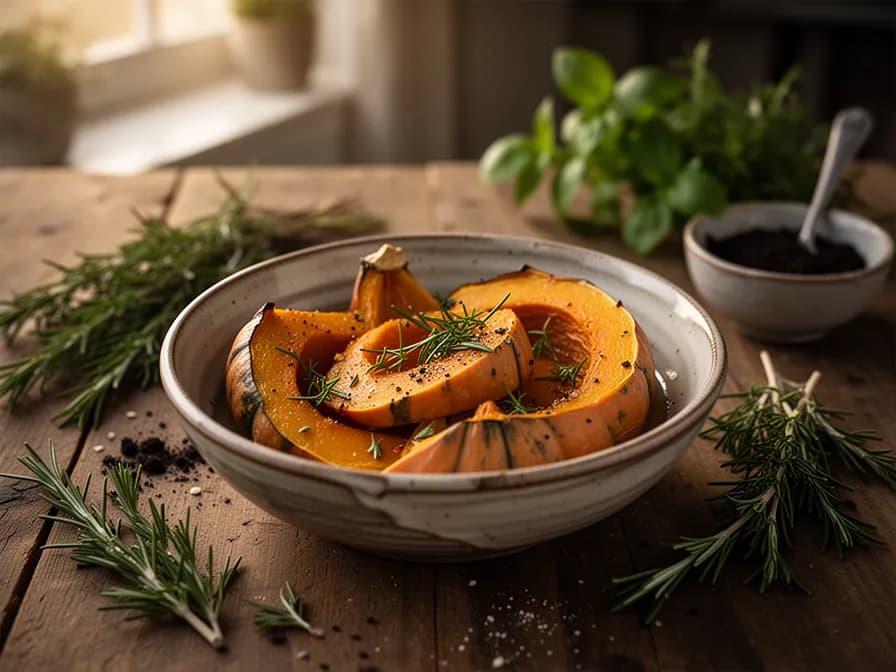
40 minSimple, caramelized pumpkin wedges roasted at high heat with olive oil, maple syrup, and warm spices. The edges crisp while the interior becomes silky and sweet.
7 ingredients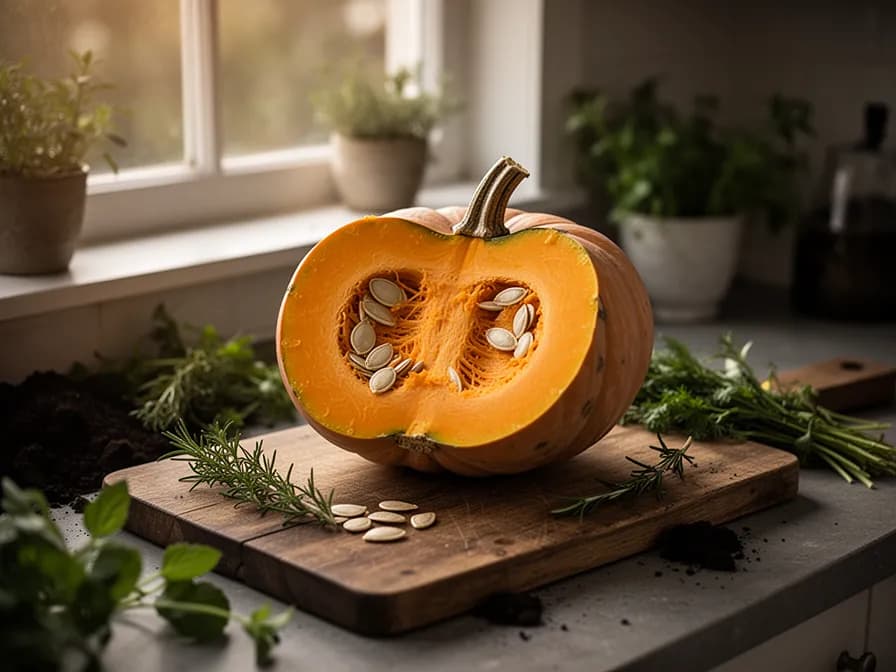
Spiced Pumpkin Seeds
25 minCrunchy, addictive roasted pepitas coated in spices. Clean seeds from the pumpkin, toss with seasoning, and roast until golden. A zero-waste harvest snack.
7 ingredientsCulinary Uses
Pumpkin flesh is remarkably versatile in the kitchen — roast, steam, or puree it for pies, soups, curries, risottos, bread, muffins, ravioli filling, and gnocchi. Small sugar or pie pumpkins (such as Sugar Pie, Baby Bear, or Long Island Cheese) have far superior flavor and texture compared to large carving types, which tend to be watery and stringy. The best culinary pumpkins have dense, sweet, deep-orange flesh with low moisture content, making them ideal for baking where excess water would ruin the texture.
Pumpkin pairs beautifully with warm spices like cinnamon, nutmeg, ginger, allspice, and cloves — the classic pumpkin pie spice blend. For savory preparations, combine with sage, rosemary, brown butter, Parmesan, toasted pecans, or goat cheese. Pumpkin soup elevated with a swirl of cream and toasted pepitas is a quintessential autumn dish, while pumpkin risotto with crispy sage leaves showcases its ability to add body and sweetness to savory recipes. In many cuisines worldwide, pumpkin features in Thai curries, Italian tortellini, Mexican mole, and Indian sabzi.
The seeds (pepitas) are a valuable byproduct — rich in zinc, magnesium, iron, and healthy fats, they are delicious roasted with oil and salt, spiced with cumin and chili, or added raw to salads and granola. Pumpkin flowers are edible and considered a delicacy when stuffed with ricotta and herbs, then battered and fried. Even the rind of thin-skinned varieties can be pickled or candied. Nutritionally, pumpkin flesh is exceptionally rich in beta-carotene (converted to vitamin A in the body), vitamin C, fiber, potassium, and iron, all at a remarkably low calorie count of about 26 calories per 100g.
What's inside
Health Benefits
- One of the richest natural sources of beta-carotene (provitamin A), with one cup providing over 200% of daily vitamin A needs — essential for vision, immune function, and skin health.
- Pumpkin seeds contain high levels of zinc (supporting immune function and wound healing) and magnesium (supporting nerve and muscle function, blood sugar regulation).
- Rich in antioxidants including alpha-carotene, beta-carotene, and beta-cryptoxanthin that may reduce the risk of certain cancers and heart disease.
- Excellent source of soluble fiber supporting digestive health, beneficial gut bacteria, and helping regulate blood sugar levels after meals.
- Contains tryptophan, an amino acid the body converts to serotonin (mood regulation) and melatonin (sleep quality) — pumpkin seeds eaten before bed may improve sleep.
- Low in calories (26 per cup cooked) while being nutrient-dense and highly satiating, making it an excellent food for weight management and metabolic health.
Where Pumpkin comes from
Pumpkins (Cucurbita species) are among the oldest domesticated plants in the world, with archaeological evidence of cultivation in the Oaxaca Valley of Mexico dating to approximately 7500 BC. The earliest pumpkins were small, hard-shelled, and bitter — valued primarily for their nutrient-rich seeds rather than their flesh. Over thousands of years, indigenous peoples of the Americas selectively bred pumpkins for larger size, sweeter flesh, and thinner rinds, developing the diverse range of squash species we know today.
Pumpkins were a cornerstone of the 'Three Sisters' agricultural system practiced by Native Americans across North America — corn, beans, and squash grown together in a mutually beneficial polyculture. The large pumpkin leaves shaded the soil, conserving moisture and suppressing weeds while the vines stabilized the corn stalks. European explorers encountered pumpkins throughout the Americas and brought seeds back to Europe in the 16th century, where they quickly became valued both as livestock feed and human food.
In American culture, pumpkins hold a uniquely prominent position. Pumpkin pie became a Thanksgiving tradition in the 18th century, and the jack-o'-lantern is now the universal symbol of Halloween. The canned pumpkin industry began in the early 1900s and today over 80% of the world's canned pumpkin comes from Morton, Illinois. Competitive giant pumpkin growing has become a global phenomenon with international competitions and specialized genetics producing fruits exceeding 1,000 kg — a testament to the pumpkin's extraordinary genetic potential for rapid growth.
Pumpkin: did you know?
Fascinating facts about Pumpkin
The world record pumpkin weighed 1,226 kg (2,702 lbs), grown in Italy in 2021 — competitive giant pumpkin growing is a serious international sport with dedicated breeding programs.
Pumpkin questions, answered
When should I plant Pumpkin?
What are good companion plants for Pumpkin?
What hardiness zones can Pumpkin grow in?
How much sun does Pumpkin need?
How far apart should I space Pumpkin?
What pests and diseases affect Pumpkin?
How do I store Pumpkin after harvest?
What are the best Pumpkin varieties to grow?
What soil does Pumpkin need?
How much space do pumpkins actually need?
Why do my pumpkin flowers fall off without producing fruit?
Can I grow pumpkins vertically to save space?
How do I know when pumpkins are ripe and ready to harvest?
What's the difference between 'pie pumpkins' and carving pumpkins?
How long can I store pumpkins after harvest?
You just read the theory. Now grow it on autopilot.
Everything that makes Pumpkin fiddly — the timing, the spacing, the companions, the harvest window — is exactly what PlotMyGarden handles for you, for every plant in your garden.
A plan that knows your weather
Set your location once. Get sow, feed and harvest dates built around your real last-frost date and live forecast — no more guessing from a generic seed packet.
From the “When to plant” sectionDrag-and-drop bed planner
Design beds on a grid. Every plant snaps to its proper spacing, and you can see your whole season laid out before you spend a cent on seed.
From the “Growing guide” sectionCompanion conflicts, caught early
200+ good-and-bad pairings checked live as you plant — so a season-wrecking mistake never makes it into the ground.
From the “Companions” sectionReminders you'll actually act on
“Water the beans.” “Pick today before it turns.” Timely, specific, and tied to the plants you're really growing.
From the “Harvest” sectionSuccession, scheduled
Want a harvest for six weeks, not six days? It spaces your sowings automatically and reminds you when each new block is due.
From the “When to plant” sectionA record that gets smarter
Every harvest you log teaches it your garden. Next year's plan starts from what actually worked in your soil, not a textbook's.
From the “Overview” sectionPlant these alongside Pumpkin
More Cucurbits
Keep Pumpkin away from these
Grow your best Pumpkin yet — and everything around it.
Start a free plan today. Lay out your beds, drop in your Pumpkin, and let PlotMyGarden handle the timing, spacing, companions and reminders from seed to harvest basket.