Zucchini
A prolific summer squash that produces abundantly and is best harvested young at six to eight inches for tender flesh.





On this pageOverview
Meet Zucchini
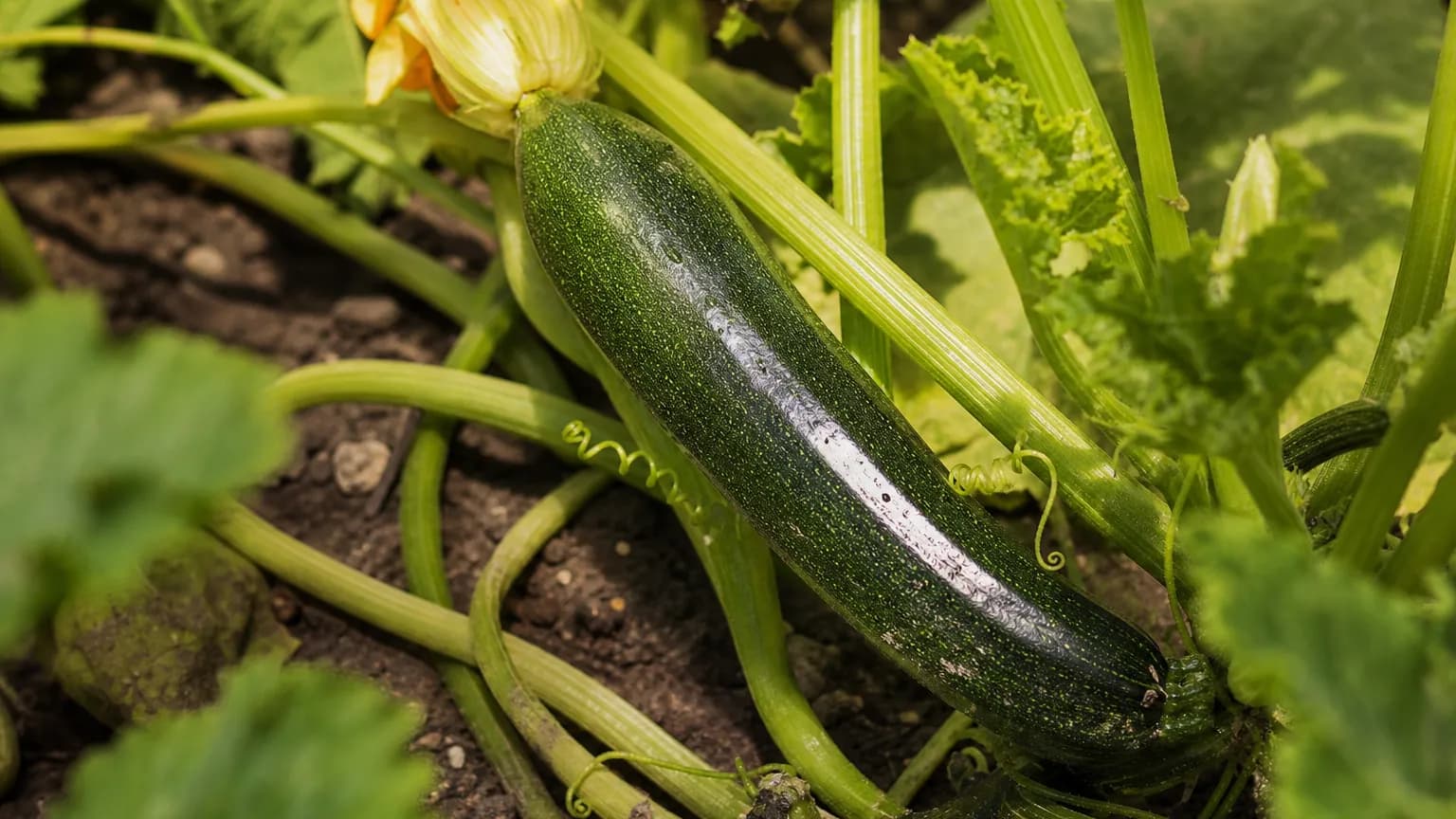
A prolific summer squash that produces abundantly and is best harvested young at six to eight inches for tender flesh. Plant in rich, well-drained soil amended with compost and water deeply at the base to avoid powdery mildew on the broad leaves. The large golden blossoms are edible and considered a delicacy when stuffed or battered and fried. Check plants daily during peak season as fruits can double in size overnight in warm weather.
When to plant Zucchini
Direct sowing is the preferred method for zucchini and produces the most vigorous plants. The large seeds are easy to handle and germinate quickly in warm soil — there is no need for the elaborate indoor setup that tomatoes and peppers require. Wait until soil temperatures reach at least 18°C (65°F), typically 1-2 weeks after your last frost date. Sow seeds 2.5 cm (1 inch) deep, placing 2-3 seeds per hill, and thin to the single strongest seedling once true leaves appear. Water the planting area thoroughly after sowing.
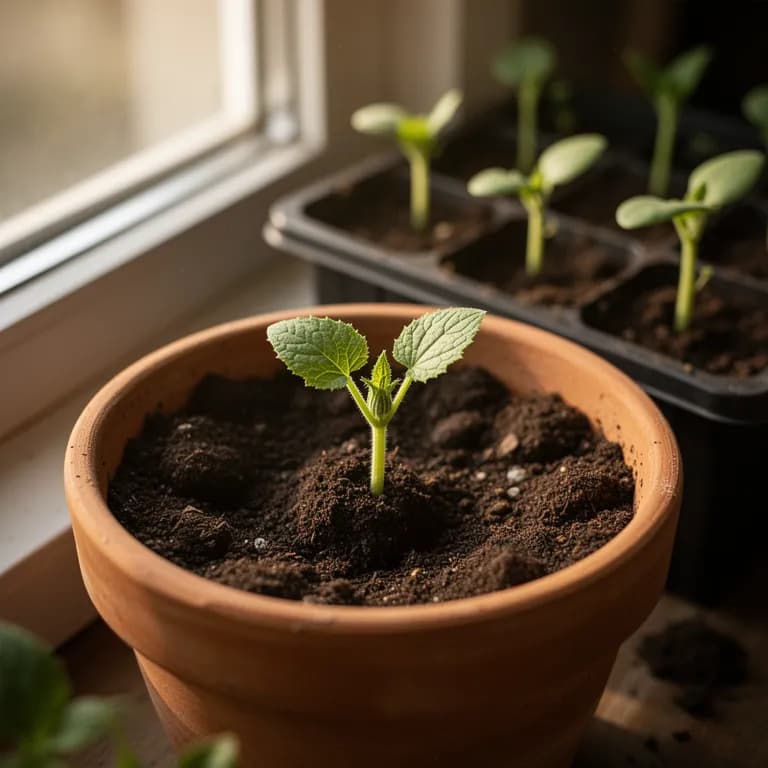
For a 2-3 week head start in short-season climates, start seeds indoors 3-4 weeks before your outdoor transplant date. Use large (10 cm) biodegradable peat pots or coir pots — never standard plastic cell trays, as zucchini resents root disturbance and transplant shock from popping root balls out of cells can set plants back significantly. Sow one seed per pot at 2.5 cm deep and maintain soil temperature of 24-29°C with a heat mat. Germination happens quickly — 4-7 days at optimal temperatures.
Once seedlings emerge, provide strong light immediately (14-16 hours from grow lights) to prevent leggy growth. Zucchini seedlings are vigorous growers that can become oversized and rootbound surprisingly fast in small pots — this is why starting too early indoors is a common mistake. Feed with dilute liquid fertilizer (quarter strength) weekly from the first true leaf stage.
Harden off seedlings for 5-7 days before transplanting, starting with a few hours of sheltered outdoor time and increasing daily. Transplant on a cloudy day or in late afternoon and water deeply immediately. Handle the root ball as gently as possible — slide the entire peat pot into the planting hole rather than removing the seedling from it. Direct-sown zucchini often catches up to transplanted ones within 2-3 weeks, which is why many experienced gardeners simply skip indoor starting and go straight to direct sowing.
Your Zucchini Year
Composed for Zone 7 · typical seasons · frost passes Apr 2, returns Nov 1
Plant Zucchini Apr – Jun, pick Jul – Sep. Check the planting methods below and set your climate to personalize these windows.
How to grow Zucchini
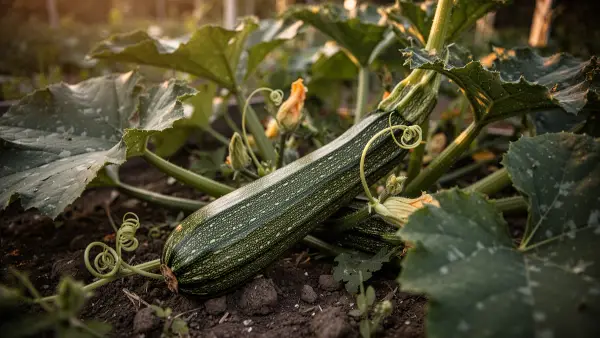
Zucchini is among the most productive garden vegetables, with just 2-3 plants providing enough fruit for a family throughout the summer. Direct sow seeds outdoors 1-2 weeks after the last frost when soil temperatures reach at least 18°C (65°F), planting 2-3 seeds per hill at 2.5 cm (1 inch) deep, then thinning to the strongest plant. Space hills 90-120 cm apart to accommodate the large, spreading plants. For an earlier start, begin seeds indoors 3-4 weeks before transplanting in large peat pots.
Prepare planting sites by building raised mounds or hills 30 cm high with soil enriched by a generous shovelful of compost and a handful of slow-release balanced fertilizer per hill. The mound improves drainage and warms the soil faster in spring. Zucchini has large, shallow root systems that benefit from consistently moist but never waterlogged soil. Install drip irrigation or soaker hoses at planting time for efficient watering.
Water deeply 2-3 times per week, providing 2.5-5 cm (1-2 inches) total, always at the base of the plant to keep foliage dry and prevent powdery mildew. Mulch heavily with straw or shredded leaves to suppress weeds and retain soil moisture. Remove the oldest leaves near the base of the plant periodically to improve air circulation. Feed with a balanced liquid fertilizer every 2-3 weeks once fruiting begins, and monitor daily for fruits that are ready to pick.
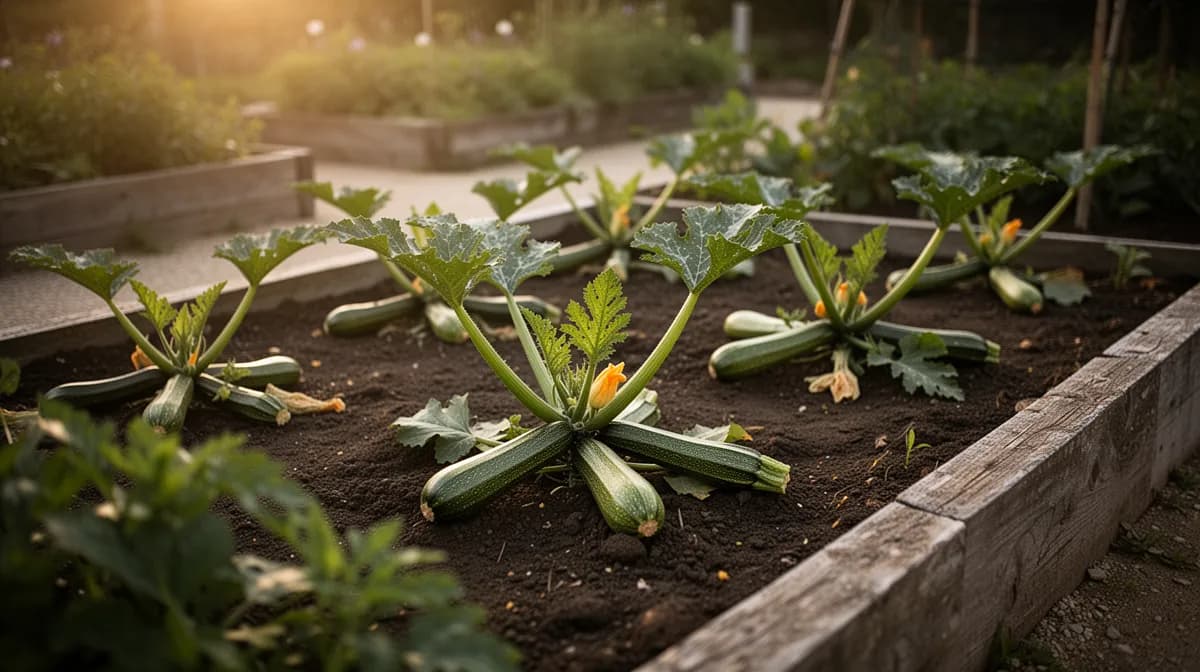
2 plants fit a 4 × 8 ft bed
Each Zucchini wants 90 cm of elbow room. The planner keeps that spacing for you — every plant, every bed.
Zucchini's best neighbours
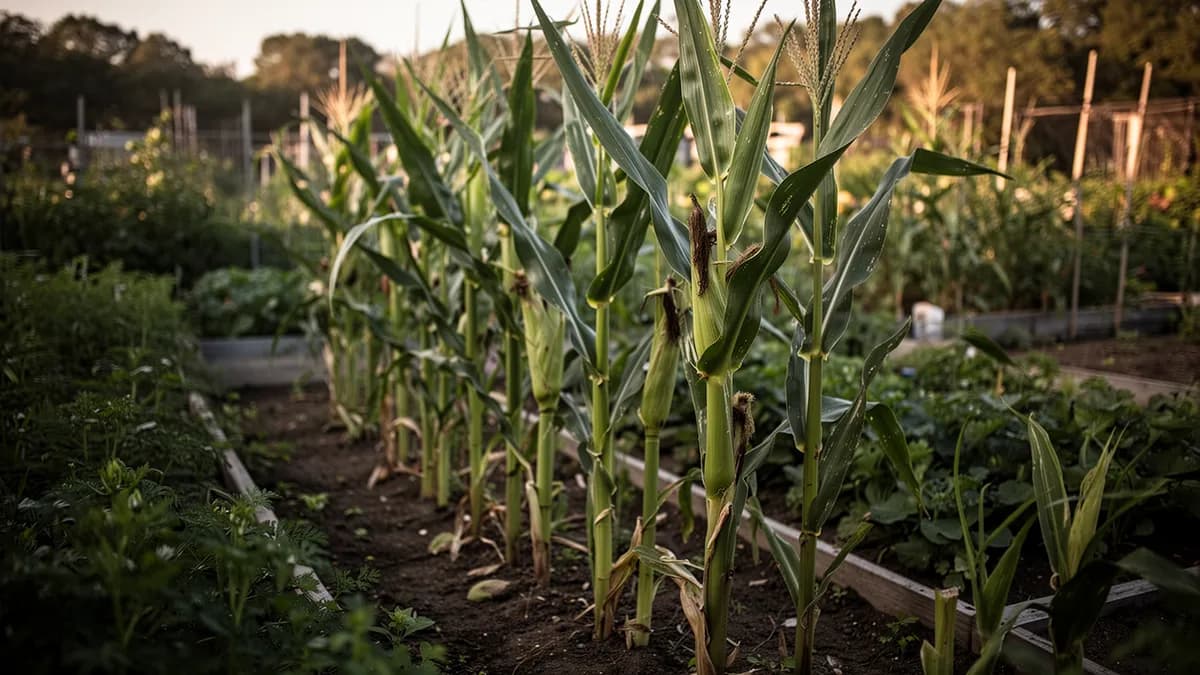
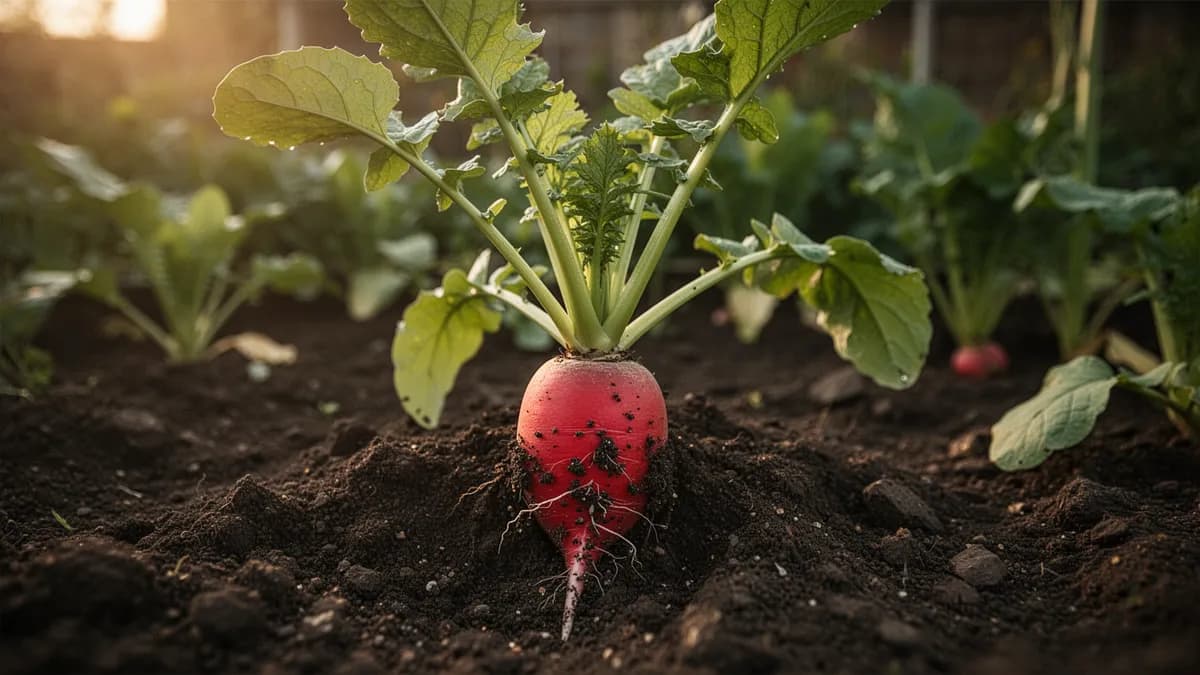
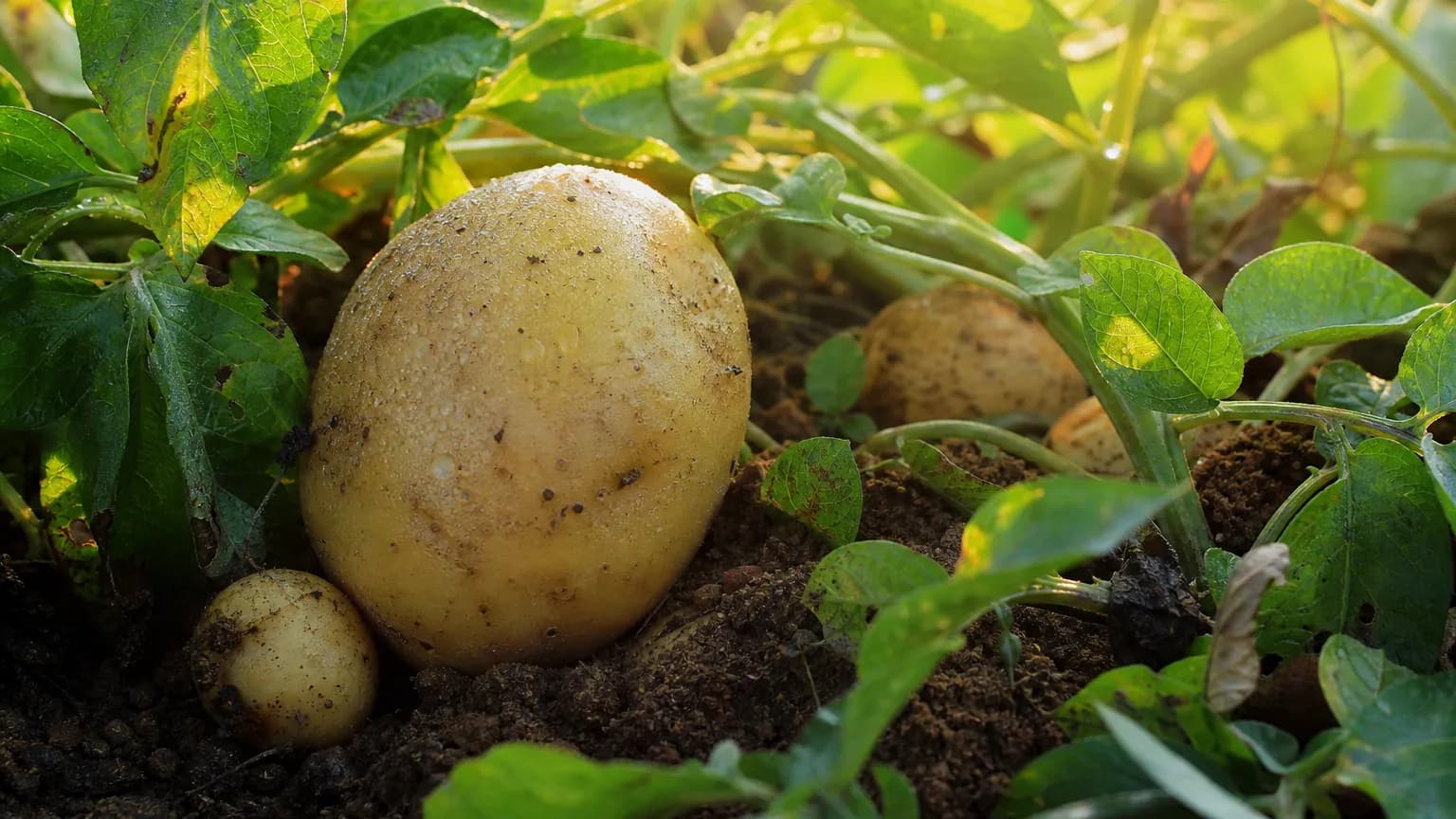
Corn provides natural shade and wind protection for zucchini plants in the classic Three Sisters planting method, while zucchini's large leaves shade the soil to retain moisture and suppress weeds beneath the corn. Peas and beans fix nitrogen in the soil, feeding the heavy-nutrient demands of zucchini plants. Radishes interplanted around zucchini hills mature quickly before the squash spreads, making efficient use of space. Nasturtiums serve as trap crops, luring aphids and squash bugs away from zucchini. Avoid planting near potatoes, which compete for the same nutrients and can spread blight.
Corn belongs beside it. Potato doesn't.
Old growers' knowledge, checked against Zucchini's real companion table below — test any plant you're growing.
Try Zucchini in a bed — right here
A real planner bed with Zucchini already in it. Tap a companion to place it and watch the pairing checks answer — green for good neighbours, red for a clash.


Related growing guides

Feed it well
Zucchini demands rich, fertile soil and rewards generous soil preparation with explosive growth and heavy yields. They prefer well-drained soil with a pH of 6.0-7.5 and thrive when the planting area is loaded with organic matter. Build raised planting hills or mounds 30 cm high with soil enriched by a shovelful of aged compost, a shovelful of well-rotted manure, and a handful of balanced slow-release fertilizer (10-10-10) per hill. The mound improves drainage, warms faster in spring, and creates a deep, rich root zone.
Zucchini are among the heaviest feeders in the vegetable garden — their rapid growth and prolific fruiting depletes soil nutrients quickly. Once the first fruits begin to form, side-dress with compost or aged manure every 3 weeks to replenish nutrients. Apply a liquid fertilizer higher in phosphorus and potassium (5-10-10 or a dedicated squash fertilizer) every 2 weeks during peak production to keep up with the plant's enormous appetite. A mid-season top-dressing of worm castings provides gentle, sustained nutrition without the risk of nitrogen burn.
Avoid excessive nitrogen, especially after flowering begins. Too much nitrogen is the classic zucchini mistake — it produces spectacularly enormous leaves (a single leaf can span 50+ cm) but delays flowering and reduces fruit set. The goal is balanced nutrition that supports both vegetative growth and fruiting. Mulch heavily with 8-10 cm of straw around the base to retain moisture, suppress weeds, and keep developing fruits clean and off bare soil. Consistent soil moisture is critical during fruiting — fluctuating moisture causes blossom end rot and misshapen fruits, and drip irrigation on a timer is the best insurance.
Ideal Temperature
Hardiness Zone Compatibility
From seed to harvest, stage by stage
Seed Starting
Sow large seeds 2.5 cm deep in warm soil. Zucchini germinates quickly in 4-7 days at 24-29°C. Direct sowing is preferred as seedlings grow rapidly.
Seedling Growth
Large, vigorous seedlings develop quickly with broad cotyledon leaves and the first true leaves. Growth is rapid in warm conditions.
Vegetative Growth
Plants grow explosively, producing massive leaves on thick stems. The bush habit becomes established, spanning up to 1 meter across.
Flowering
Large, showy golden flowers open in the morning. Male flowers appear first on long stems, followed by female flowers with a tiny zucchini at the base.
Fruiting
Fruits develop extremely rapidly — a zucchini can grow from flower to harvest size in just 4-6 days during warm weather. Check plants daily.
Harvest
Continuous harvest season lasting 6-8 weeks. A single plant can produce 6-10 pounds of fruit. Regular picking is essential to keep the plant producing.
Sow 2-3 seeds per hill and thin to the strongest seedling. Zucchini resents root disturbance, so use peat pots if starting indoors.
Caring for Zucchini month by month
What to do each month for your Zucchini
October
You are hereClean garden beds. Compost healthy plant material. Add fresh compost for next season's plantings.
Know exactly what to do in your garden — every month
One email at the start of each month: what to sow, plant, and tackle right now — for your Zucchini and everything growing around it. Plus a short starter course that helps you dodge the classic mistakes.
- What to do, right now
- Matched to your season
- Starter course included
Harvesting Zucchini
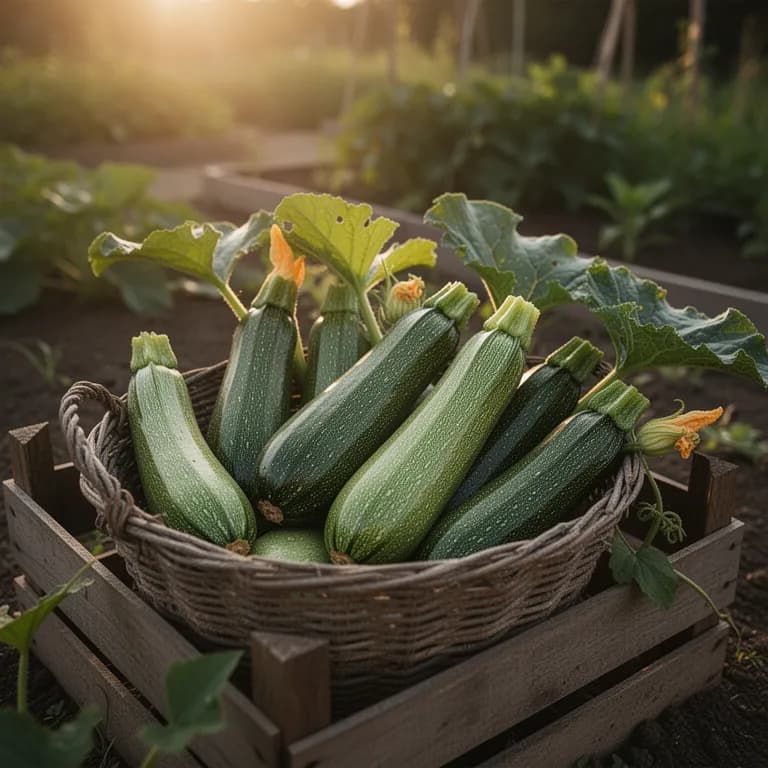
With zucchini, the golden rule is: harvest early, harvest often. The ideal size is 15-20 cm (6-8 inches) long and about 5 cm in diameter — at this stage, the skin is thin and tender, seeds are tiny and barely noticeable, and the flesh is firm with the best flavor. Once zucchini grow past 25 cm, they become watery, seedy, tough-skinned, and significantly less flavorful. Use a sharp knife or pruning shears to cut the stem cleanly, leaving a 2-3 cm stub attached to the fruit. Never twist or pull, as zucchini stems are thick and connected firmly to the plant — yanking can uproot the entire shallow root system.
Check plants every single day during peak production — this cannot be overstated. In warm weather (above 25°C), a zucchini can grow from a tiny 5 cm nub to a 25 cm monster in just 3-4 days. The large leaves hide fruits remarkably well, so lift leaves and look underneath at every check. This is especially important with green varieties, which camouflage perfectly against the stem. Golden/yellow varieties are easier to spot, which is one reason many gardeners prefer them.
Don't forget the blossoms — they are edible and considered a genuine delicacy in Italian cuisine. Harvest male flowers (those growing on long, thin stems with no fruit swelling at the base) in the morning when they are fully open. Leave female flowers (with a tiny zucchini behind them) to produce fruit. A healthy plant produces far more male flowers than needed for pollination, so harvesting males for cooking does not reduce yield. Remove any overlooked oversized fruits immediately, even if they are past eating quality — leaving them on the plant signals it to slow production, and composting a few giants is better than losing weeks of future harvest.
assuming you plant when the window opens — set your real date
At 15-20 cm for best texture — check daily, they grow overnight.
Storage & Preservation
Fresh zucchini keeps in the refrigerator for 5-7 days when stored unwashed in a loosely sealed plastic bag or paper bag in the crisper drawer. Do not wash before storing, as surface moisture accelerates decay. Avoid airtight containers. Zucchini is ethylene-sensitive, so keep it away from apples, bananas, and tomatoes. Store at 7-10°C if possible — standard refrigerators (around 4°C) are slightly too cold and can cause pitting after a week.
Freezing is the best long-term preservation method for surplus zucchini. Shred or dice zucchini and blanch briefly (1-2 minutes in boiling water, then plunge into ice water) before freezing in measured portions — 2-cup bags are perfect for baking. Frozen shredded zucchini works beautifully in breads, muffins, pancakes, and fritters for up to 10-12 months. Tip: squeeze out excess moisture from thawed zucchini before adding to batter, or your baked goods will be soggy. Spiralized zucchini noodles can also be frozen raw — they work best in cooked dishes rather than raw preparations after thawing.
Dehydrating produces an excellent shelf-stable snack. Slice zucchini 3-4 mm thick, season lightly with salt and herbs if desired, and dry at 52°C (125°F) for 8-12 hours until crispy. Zucchini chips are surprisingly addictive and store for months in airtight containers. They also rehydrate well in soups and stews.
Pickling zucchini in a spiced vinegar brine with onions, mustard seeds, and turmeric produces a bread-and-butter style pickle that keeps for 6-12 months. This is an excellent way to handle the mid-summer harvest glut when you simply cannot eat, freeze, or give away zucchini fast enough. Grilled or roasted zucchini packed in olive oil with garlic and herbs can also be frozen in portions as a ready-to-use ingredient for pasta and grain bowls.
What goes wrong — and the fix
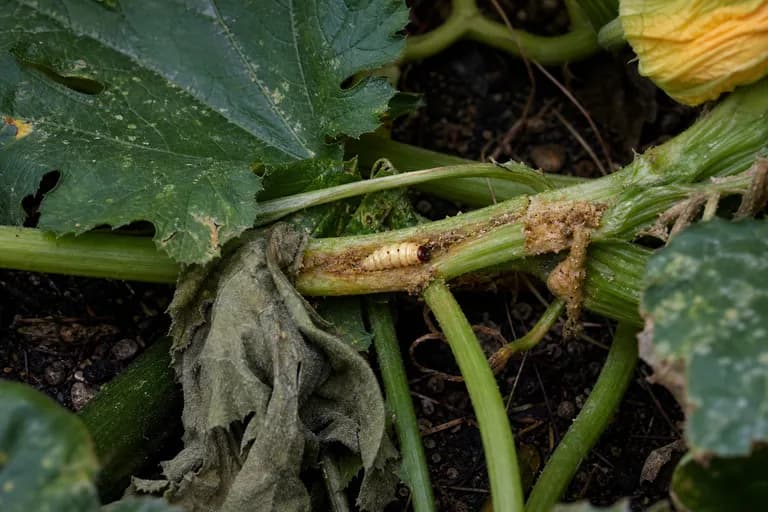
Squash Vine Borer
PestSudden wilting of an entire vine or section of the plant, often despite adequate watering. Sawdust-like frass visible at the base of stems where the fat, white larvae bore into the hollow interior. Affected stems become soft and mushy at the entry point.
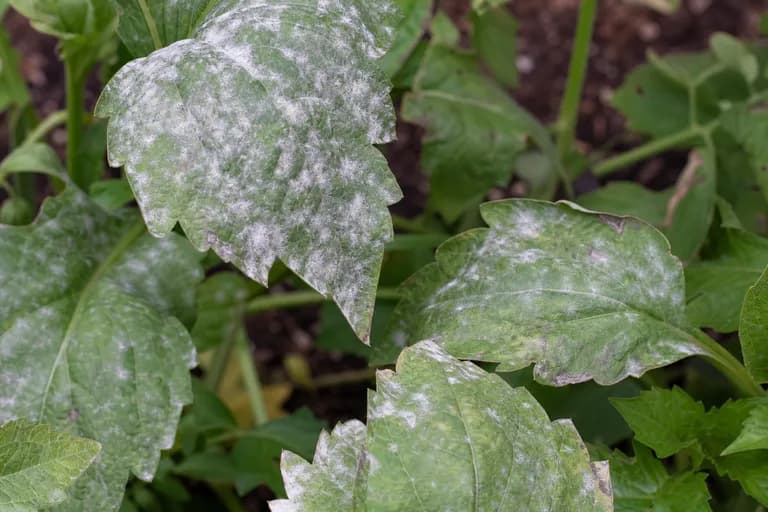
Powdery Mildew
DiseaseWhite, talcum-like patches on upper leaf surfaces that spread rapidly during warm, humid weather. Leaves become yellow, crispy, and die back prematurely, reducing fruit quality and exposing developing fruits to sunscald.
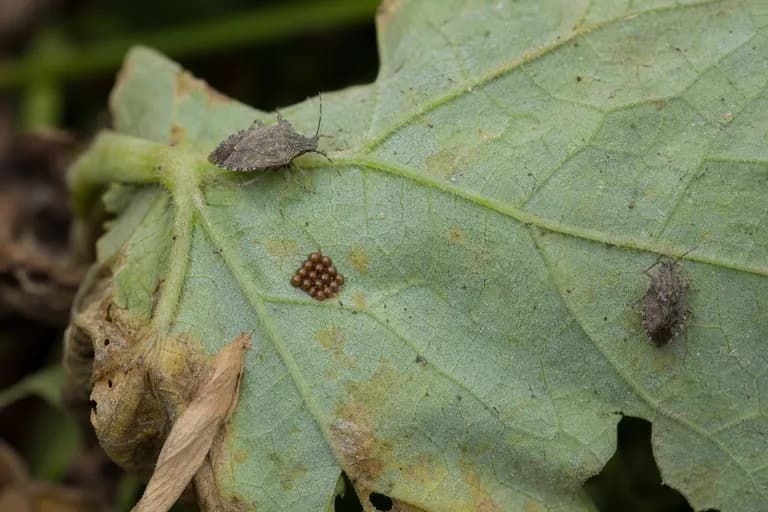
Squash Bug
PestGray-brown, shield-shaped bugs clustering on leaf undersides and stems, sucking sap and causing leaves to wilt, yellow, and turn brown. Clusters of bronze-colored eggs laid in neat rows on leaf undersides. Severe infestations can kill plants.

Blossom End Rot
DiseaseDark, sunken, water-soaked areas on the blossom end of developing fruits. The affected tissue turns leathery and black. Most common on the first fruits of the season during periods of rapid growth.
Troubleshooting Common Problems
Poor fruit set despite abundant flowers is the most common frustration for zucchini growers and is almost always a pollination issue. Zucchini plants produce male and female flowers separately — males appear first (often 1-2 weeks before females), grow on long thin stems, and produce pollen, while females have a tiny zucchini-shaped swelling at the base. Both must be open simultaneously, and bees must transfer pollen between them. If you see fruits forming but then shriveling, yellowing, and rotting from the tip, pollination failed. Plant pollinator-attracting flowers nearby (sunflowers, zinnias, borage) or hand-pollinate by touching a small paintbrush to the inside of a male flower, then brushing it across the stigma inside a female flower — do this in the early morning when flowers are freshly open.
Oversized, seedy, tough-skinned fruits are simply the result of not harvesting frequently enough. Zucchini grow at an astonishing rate in warm weather — a fruit can go from perfect harvest size (15-20 cm) to an oversized bat (40+ cm) in just 3-4 days. The large leaves hide fruits incredibly well, so always lift foliage and check underneath. Make daily harvest checks a non-negotiable habit during peak season.
Powdery mildew is nearly inevitable by late summer and appears as white, talcum-like patches on older leaves. It gradually spreads upward, killing leaves and reducing fruit quality. Prevention includes wide spacing for airflow, watering only at the base, and removing the oldest affected leaves promptly. Spray preventatively with dilute neem oil or a baking soda solution (1 tablespoon per liter of water) every 7-10 days. Some powdery mildew is normal and manageable — the plant continues producing from newer growth even as older leaves succumb.
Squash vine borers are devastating pests in eastern North America. The adult is a wasp-like moth that lays eggs at the base of stems in early summer. The fat white larvae bore into the hollow stems, causing sudden wilting of entire vines despite adequate watering. Look for sawdust-like frass at the stem base. Prevention includes wrapping stem bases with aluminum foil or nylon stocking, using row covers until flowering, and planting resistant varieties like 'Tromboncino' that have solid (not hollow) stems. If caught early, you can slit the stem lengthwise, extract the larva, and mound moist soil over the wound to encourage rerooting.
Excessive leaf growth with minimal fruiting indicates too much nitrogen. Switch immediately to a low-nitrogen, high-phosphorus fertilizer (5-10-10) and avoid fresh manure or nitrogen-rich amendments during the flowering phase.
Growing Tips
- Don't plant too many! Two to three zucchini plants are usually plenty for a family of four. Overplanting leads to overwhelming harvests that go to waste.
- Harvest zucchini at 15-20 cm (6-8 inches) for the best flavor and texture. Larger fruits become watery, seedy, and tough-skinned.
- Check plants daily during peak production — zucchini can literally double in size overnight in warm weather.
- Space plants at least 90 cm apart to allow adequate air circulation. Crowding promotes powdery mildew and other fungal diseases.
- Water deeply at the base of the plant, not over the leaves. Wet foliage promotes powdery mildew, the #1 disease of zucchini.
- Pollination is crucial — if fruits form but then shrivel, hand-pollinate by transferring pollen from male to female flowers with a small paintbrush in the morning.
- Wrap the base of the stem with aluminum foil or row cover fabric to deter squash vine borers from laying eggs.
- Remove the oldest, bottom leaves as the plant grows to improve air circulation and reduce disease pressure.
- Harvest blossoms for cooking — pick male flowers (long thin stem, no fruit behind the flower) in the morning when they're wide open.
- Plant radishes or nasturtiums around zucchini hills as trap crops to draw pest pressure away from your squash plants.
Grow your best Zucchini yet — and everything around it.
Start a free plan today. Lay out your beds, drop in your Zucchini, and let PlotMyGarden handle the timing, spacing, companions and reminders from seed to harvest basket.
Pick your Zucchini
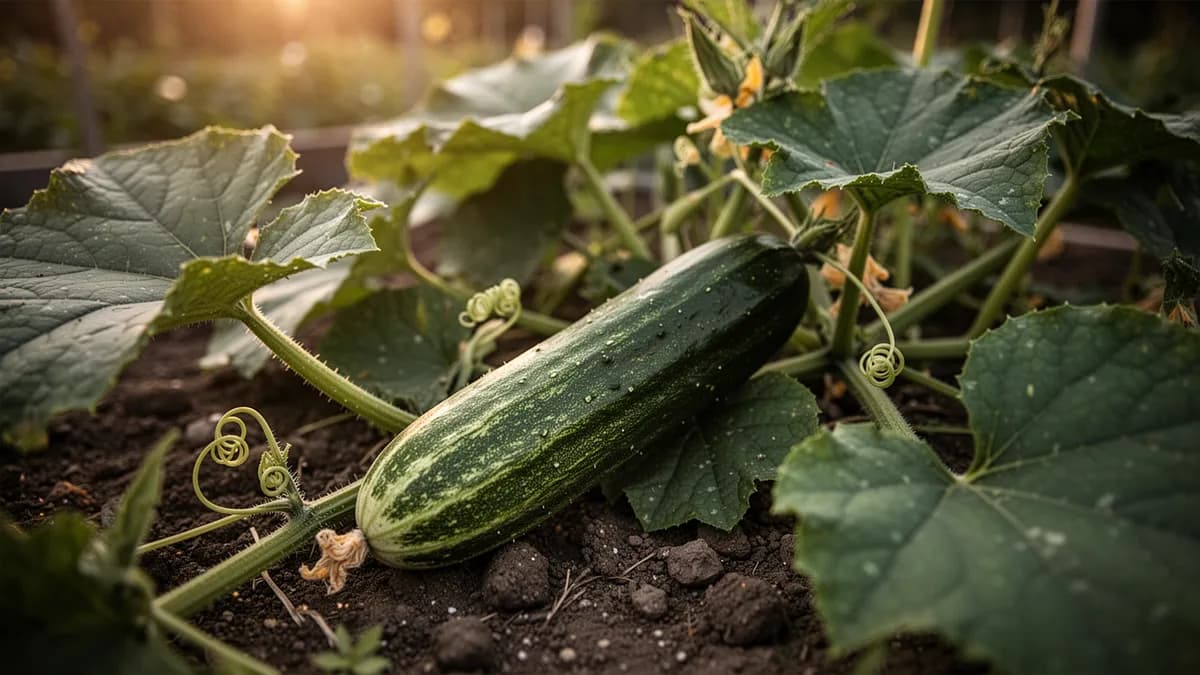
Black Beauty
The classic dark green zucchini with glossy skin and creamy white flesh. Open-pollinated, 50 days. Extremely productive on compact, bushy plants. The standard by which all other zucchini are measured.
Costata Romanesco
An Italian heirloom with deeply ribbed, gray-green skin and exceptional nutty flavor that surpasses standard varieties. 60 days. The ribs create a beautiful scalloped pattern when sliced.
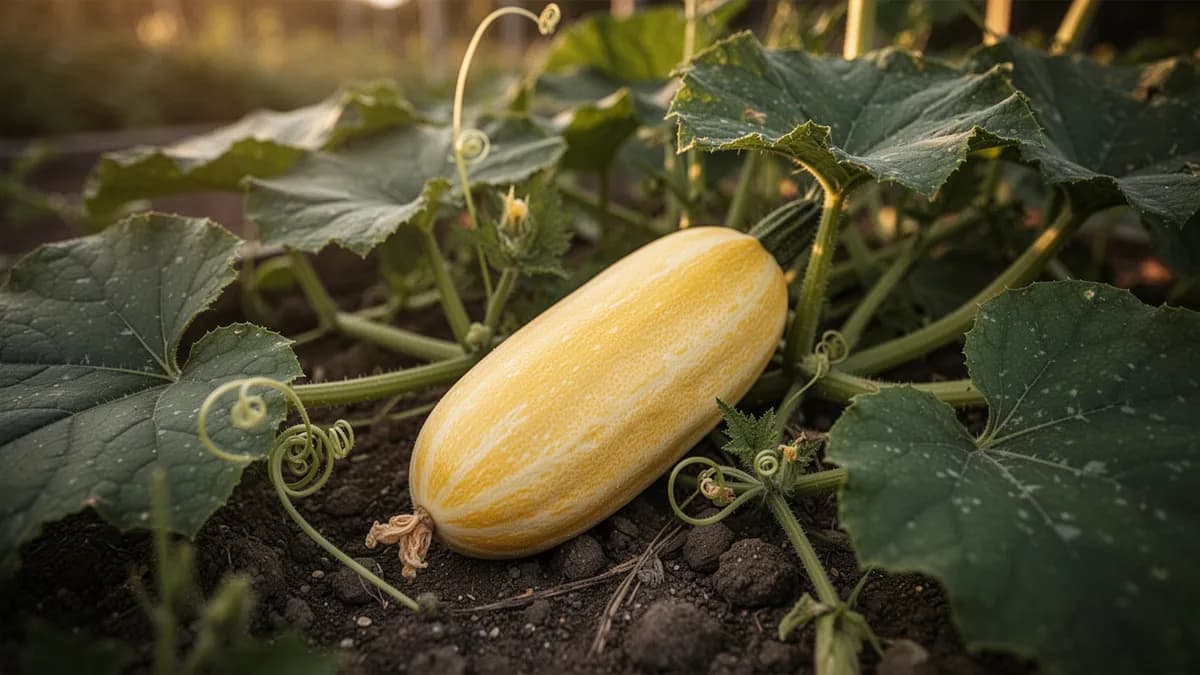
Golden Zucchini
A bright yellow variety that is easier to spot among the large green leaves, reducing the chance of overlooked oversized fruits. 50 days. Mild, slightly sweet flavor with tender skin.
Ronde de Nice
A French heirloom producing round, speckled fruits that are ideal for stuffing. Harvest at golf ball to tennis ball size for the best texture. 52 days. Excellent flavor and beautiful presentation.
Tromboncino
An Italian climbing zucchini with long, curved neck and bulbous seed end. Grown on a trellis. 60 days. Resistant to squash vine borers due to its solid stems. Superb flavor when harvested young.
A single zucchini plant costing $2-4 produces 3-5 kg of fruit over the season, worth $10-25 at the store. Two plants are typically more than enough for a family, providing abundant fresh zucchini plus surplus for baking, freezing, and sharing with neighbors. Total savings of $20-50+ per season from just two plants, and homegrown zucchini harvested at the perfect young stage offers dramatically better texture and flavor than the oversized, waxy specimens commonly sold in stores.
Quick recipes
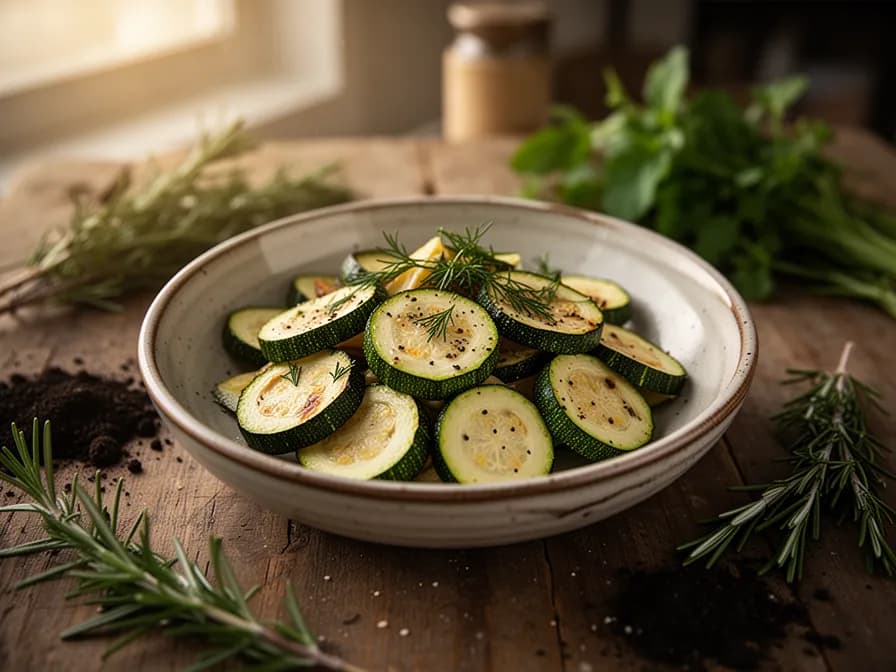
Zucchini Noodles with Pesto
15 minLight, fresh spiralized zucchini tossed with homemade basil pesto, cherry tomatoes, and pine nuts — a quick low-carb meal.
7 ingredients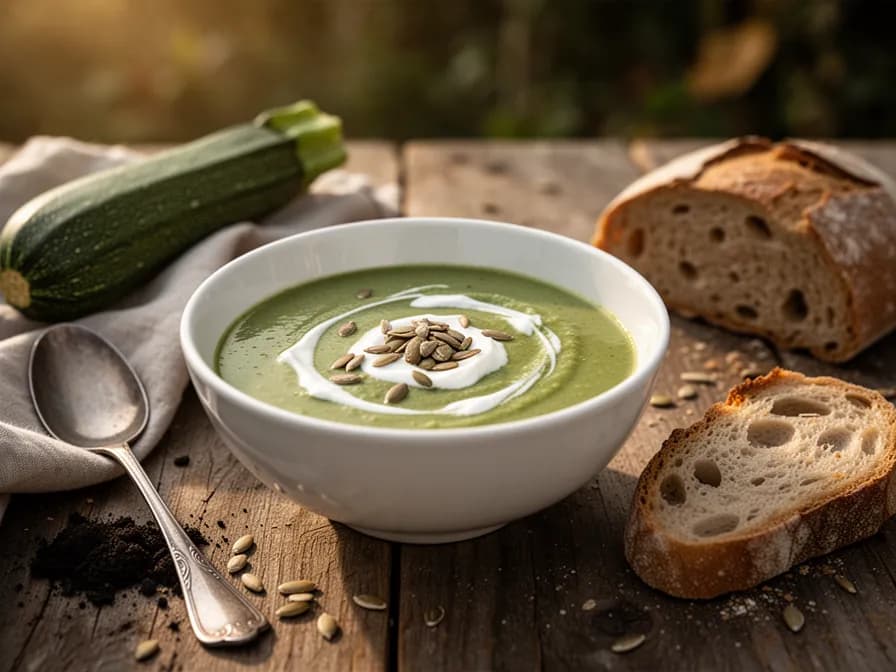
Stuffed Zucchini Boats
35 minHalved zucchini filled with a savory mixture of sausage, tomatoes, and cheese, baked until golden and bubbling.
8 ingredientsClassic Zucchini Bread
60 minMoist, tender quick bread loaded with grated zucchini, warm spices, and optional walnuts — perfect for using up surplus harvest.
9 ingredientsCulinary Uses
Zucchini is arguably the most versatile vegetable in the garden — it can be spiralized into noodles, grated into batter, grilled, roasted, sautéed, stuffed, pickled, and even baked into sweet breads and cakes. Its mild flavor and tender texture make it a chameleon ingredient that absorbs and complements whatever seasonings and sauces you pair it with. Spiralized into noodles (zoodles), it serves as one of the most popular low-carb pasta substitutes — toss with pesto, marinara, or garlic butter for a light meal that satisfies without the carbs.
Grilled zucchini is a summer barbecue essential — cut lengthwise into 1 cm slabs, brush with olive oil and garlic, and grill until char marks appear. The smoky sweetness pairs perfectly with crumbled feta, fresh mint, and a drizzle of balsamic. Stuffed zucchini boats (halved, hollowed, filled with seasoned meat, rice, tomatoes, and cheese, then baked) make a complete meal. Grated zucchini is the secret ingredient in incredibly moist quick breads, muffins, pancakes, and even chocolate cake — it adds moisture without a detectable vegetable flavor.
The golden blossoms are a genuine culinary treasure and a privilege of growing your own zucchini. In Italian cuisine, fiori di zucca (zucchini flowers) stuffed with ricotta, mozzarella, and fresh herbs, then lightly battered and fried until golden, are a seasonal delicacy. You can also add them to frittatas, fold them into quesadillas, or scatter them raw over pizza just before serving. Classic pairings include garlic, tomatoes, basil, Parmesan, lemon, olive oil, and grilled meats. Nutritionally, zucchini is extremely low in calories (only 17 per 100g) while providing vitamin C, potassium, manganese, and dietary fiber — making it an ideal food for weight management.
What's inside
Health Benefits
- Extremely low in calories and carbohydrates, making zucchini a top choice for low-carb and keto diets as a pasta substitute
- Vitamin C content supports immune function, collagen production, and acts as a powerful antioxidant against free radicals
- Lutein and zeaxanthin carotenoids in zucchini skin support eye health and may reduce the risk of cataracts
- High in potassium, which helps regulate blood pressure, supports heart rhythm, and aids muscle function
- Dietary fiber promotes healthy digestion, feeds beneficial gut bacteria, and helps maintain steady blood sugar levels
- Anti-inflammatory pectin in zucchini may support digestive tract health and help manage inflammatory conditions
Where Zucchini comes from
Zucchini (Cucurbita pepo) traces its ancestry to wild squash from Central America and Mexico, where squash has been cultivated for over 10,000 years. However, the zucchini we know today is actually a relatively modern creation — it was developed in Italy in the late 19th century from squash varieties that had been brought to Europe by Spanish explorers in the 1500s.
Italian gardeners near Milan selectively bred summer squash for tender, elongated fruits harvested young, creating what they called 'zucchini' (little squashes). The variety spread throughout Italian cuisine and became a staple of Mediterranean cooking. Italian immigrants brought zucchini to North America in the 1920s, where it gained popularity during the gardening boom of the mid-20th century.
Today, zucchini is grown worldwide and has become one of the most prolific home garden vegetables. Its versatility in the kitchen — from spiralized noodles to breads and grilled dishes — has made it indispensable in modern cuisine. China, India, and the United States are among the top producers of summer squash varieties.
Zucchini: did you know?
Fascinating facts about Zucchini
A single zucchini plant can produce 3-5 kg (6-10 lbs) of fruit per season — the joke about leaving zucchini on neighbors' doorsteps exists because production is so overwhelming.
Zucchini questions, answered
When should I plant Zucchini?
What are good companion plants for Zucchini?
What hardiness zones can Zucchini grow in?
How much sun does Zucchini need?
How far apart should I space Zucchini?
What pests and diseases affect Zucchini?
How do I store Zucchini after harvest?
What are the best Zucchini varieties to grow?
What soil does Zucchini need?
Why are my zucchini rotting on the vine before they grow?
How do I prevent powdery mildew on zucchini?
What do I do with oversized zucchini?
Can I grow zucchini in containers?
Why do I get lots of flowers but no fruit?
Are zucchini leaves and flowers edible?
You just read the theory. Now grow it on autopilot.
Everything that makes Zucchini fiddly — the timing, the spacing, the companions, the harvest window — is exactly what PlotMyGarden handles for you, for every plant in your garden.
A plan that knows your weather
Set your location once. Get sow, feed and harvest dates built around your real last-frost date and live forecast — no more guessing from a generic seed packet.
From the “When to plant” sectionDrag-and-drop bed planner
Design beds on a grid. Every plant snaps to its proper spacing, and you can see your whole season laid out before you spend a cent on seed.
From the “Growing guide” sectionCompanion conflicts, caught early
200+ good-and-bad pairings checked live as you plant — so a season-wrecking mistake never makes it into the ground.
From the “Companions” sectionReminders you'll actually act on
“Water the beans.” “Pick today before it turns.” Timely, specific, and tied to the plants you're really growing.
From the “Harvest” sectionSuccession, scheduled
Want a harvest for six weeks, not six days? It spaces your sowings automatically and reminds you when each new block is due.
From the “When to plant” sectionA record that gets smarter
Every harvest you log teaches it your garden. Next year's plan starts from what actually worked in your soil, not a textbook's.
From the “Overview” sectionPlant these alongside Zucchini
More Cucurbits
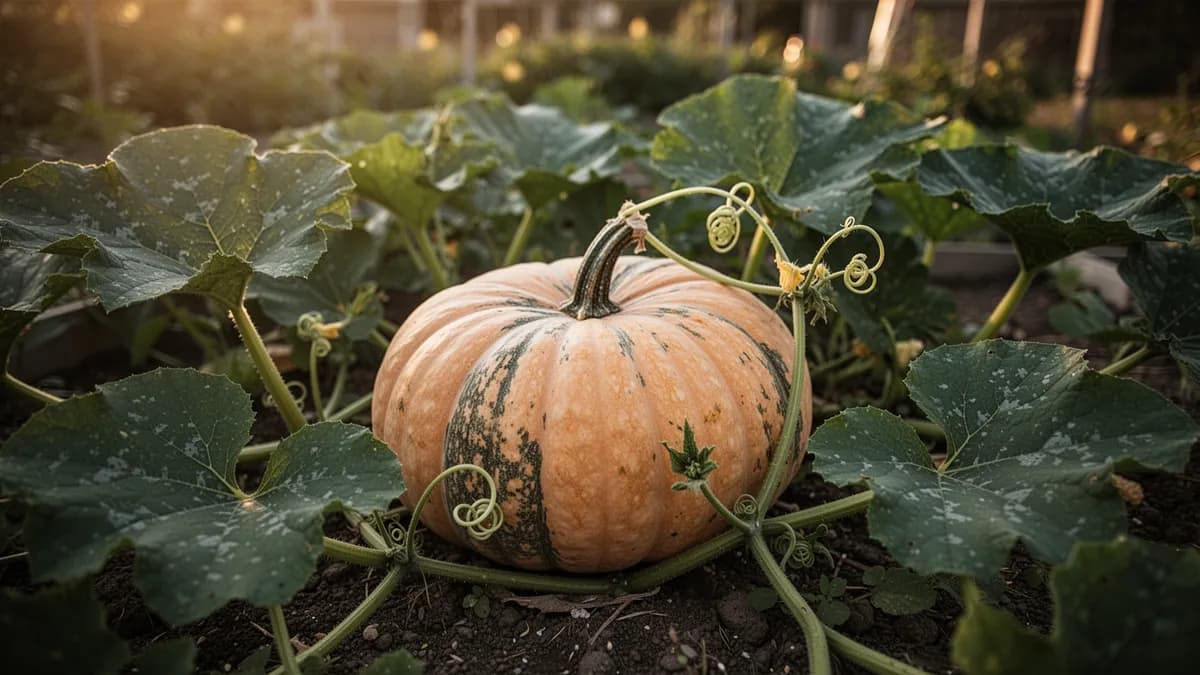
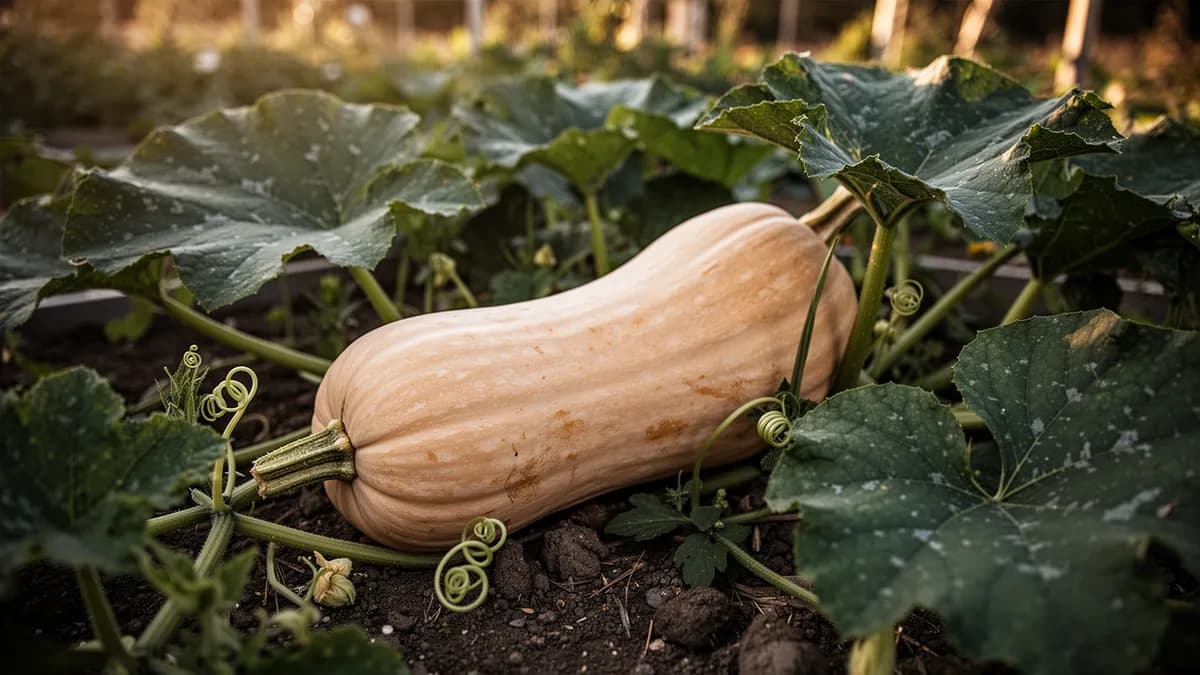
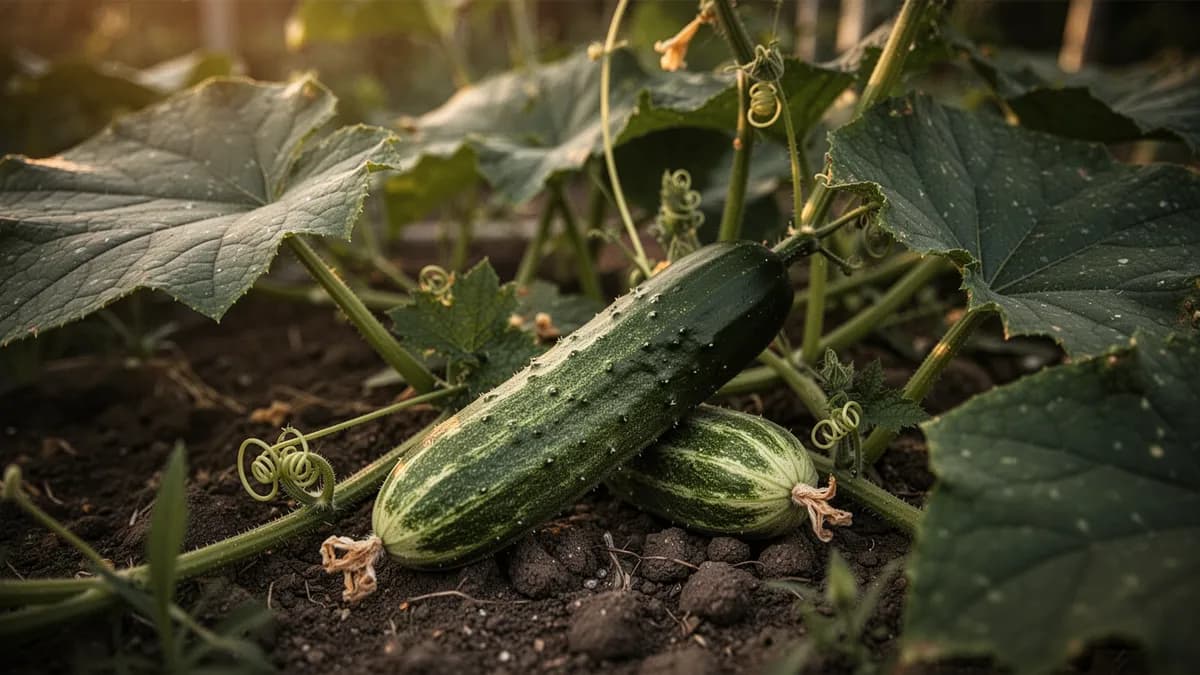
Keep Zucchini away from these
Garden plans featuring Zucchini
Grow your best Zucchini yet — and everything around it.
Start a free plan today. Lay out your beds, drop in your Zucchini, and let PlotMyGarden handle the timing, spacing, companions and reminders from seed to harvest basket.