Gelber Kürbis
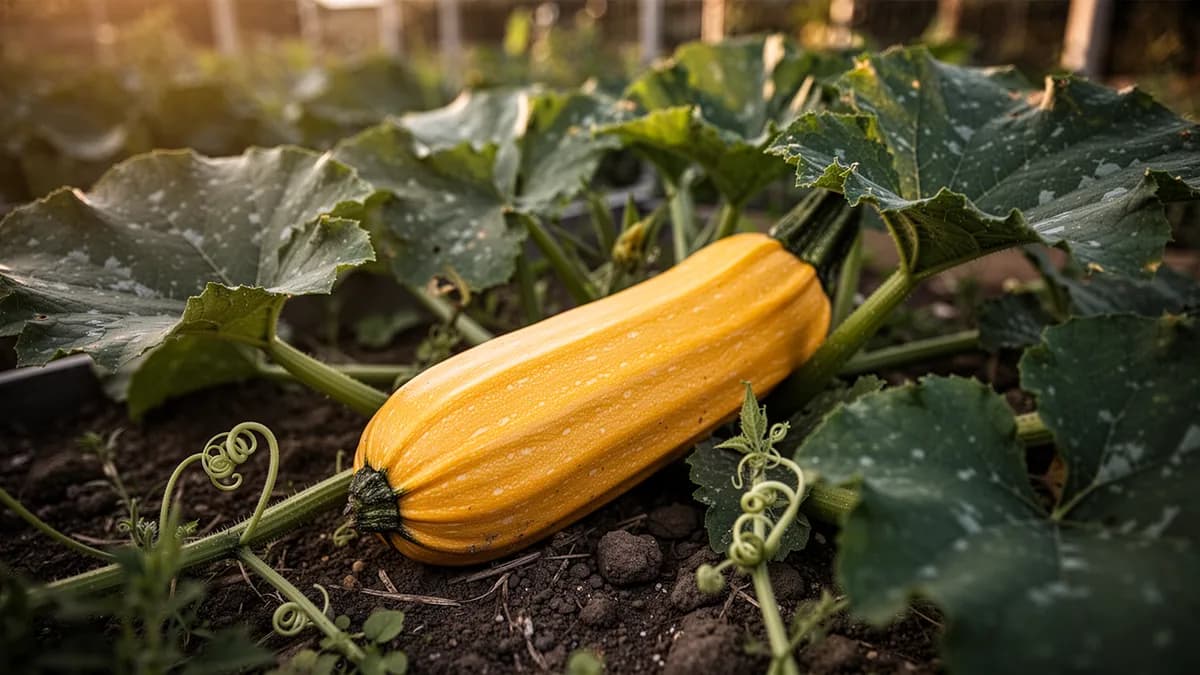
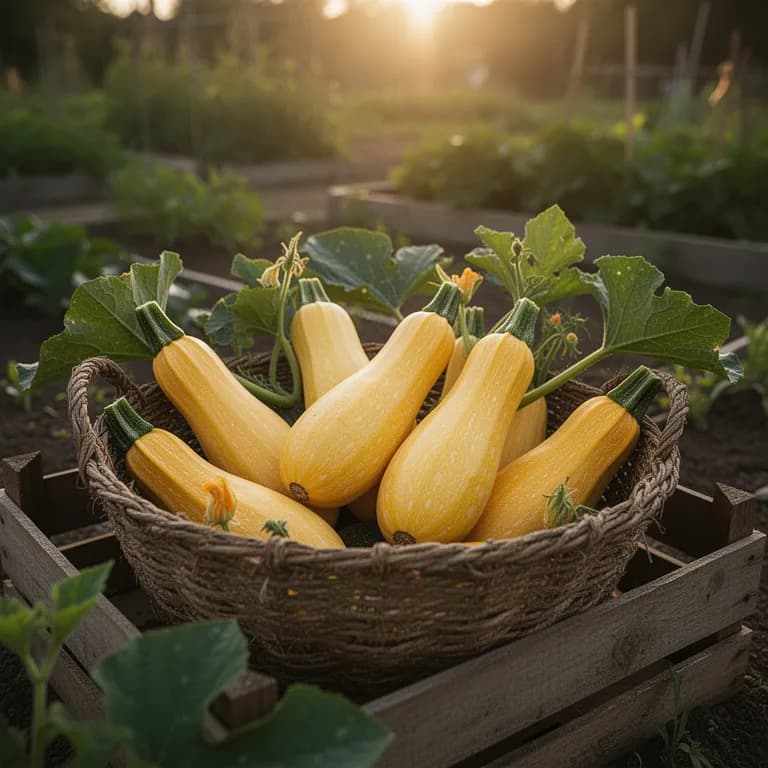
Ein klassischer Sommerkürbis mit charakteristischer gebogener oder gerader Halsform und buttergelber Schale.





Auf dieser SeiteÜberblick
Gelber Kürbis im Überblick
Ein klassischer Sommerkürbis mit charakteristischer gebogener oder gerader Halsform und buttergelber Schale. Gelber Kürbis hat einen etwas süßeren, nussigeren Geschmack als Zucchini und eine weichere Textur, die sich hervorragend für Aufläufe und Pfannengerichte eignet. Die Buschpflanzen sind kompakt und ertragreich, was sie bei regelmäßiger Ernte auch für kleinere Gärten und Kübel geeignet macht. Ernten Sie, wenn die Schale noch glänzend ist und der Kürbis 15 bis 20 Zentimeter lang ist, für das zarteste, kernfreie Fruchtfleisch.
Wann Gelber Kürbis pflanzen
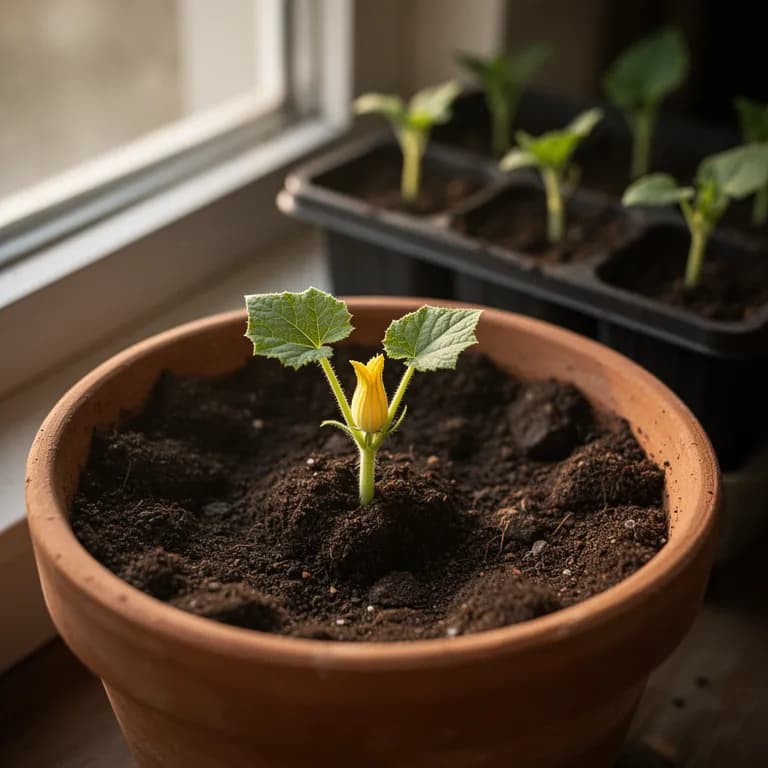
Säen Sie gelbe Kürbissamen direkt 2,5 cm tief, sobald die Bodentemperatur 18°C erreicht hat, für eine schnelle Keimung in 5-10 Tagen. Pflanzen Sie 2-3 Samen pro Hügel und vereinzeln Sie auf den kräftigsten Sämling. Für eine frühere Ernte starten Sie die Samen 3-4 Wochen vor dem letzten Frost drinnen in großen biologisch abbaubaren Töpfen. Halten Sie 24-29°C mit einer Heizmatte. Beginnen Sie nicht zu früh, da übergroße Setzlinge stärker unter Verpflanzungsschock leiden. Härten Sie eine Woche lang ab, bevor Sie sie ins Freie setzen. Setzen Sie die Pflanzen 60-90 cm auseinander in Reihen oder Hügeln.
Dein Gelber Kürbis-Jahr
Abgestimmt auf Zone 7 · typische Saison · Frost geht um den 2. Apr. und kehrt um den 1. Nov. zurück
Gelber Kürbis Apr – Jun pflanzen, Jul – Sep ernten. Beachte die Pflanzmethoden unten und wähle dein Klima für passende Zeiträume.
So baust du Gelber Kürbis an
Gelber Kürbis, einschließlich der gebogenen (Crookneck) und geraden (Straightneck) Typen, ist ein klassischer Sommerkürbis und gehört zu den produktivsten Gemüsesorten, die Sie anbauen können. Säen Sie die Samen nach dem letzten Frost direkt 2,5 cm tief und 60-90 cm auseinander, sobald sich der Boden auf 18°C erwärmt hat. Diese Buschpflanzen produzieren reichlich von einer kompakten Basis aus, benötigen aber dennoch 90-120 cm Platz zum Ausbreiten.
Gießen Sie gleichmäßig mit 2,5-4 cm pro Woche und leiten Sie das Wasser auf Bodenniveau, um die Blätter trocken zu halten. Gelber Kürbis ist anfällig für Echten Mehltau, daher ist eine gute Luftzirkulation unerlässlich. Entfernen Sie alternde untere Blätter, sobald sie vergilben, und lichten Sie den Innenwuchs aus, um den Luftstrom zu verbessern. Mulchen Sie um die Pflanzen herum mit Stroh oder Holzhäckseln, um Feuchtigkeit zu bewahren und das Spritzen von Erde auf die Blätter zu reduzieren.
Gelber Kürbis beginnt sehr schnell zu produzieren, oft innerhalb von 45-50 Tagen nach der Aussaat. Die Pflanzen sind einhäusig, wobei männliche Blüten vor den weiblichen öffnen. Handbestäubung kann in Gewächshäusern oder bei kühlem, regnerischem Wetter erforderlich sein, wenn Bienen inaktiv sind. Für eine kontinuierliche Versorgung säen Sie alle 3-4 Wochen nach, da einzelne Pflanzen nach 6-8 Wochen intensiver Produktion aufgrund von Krankheitsdruck oft nachlassen. Zwei oder drei Pflanzen in Hochproduktion können eine Familie leicht versorgen.
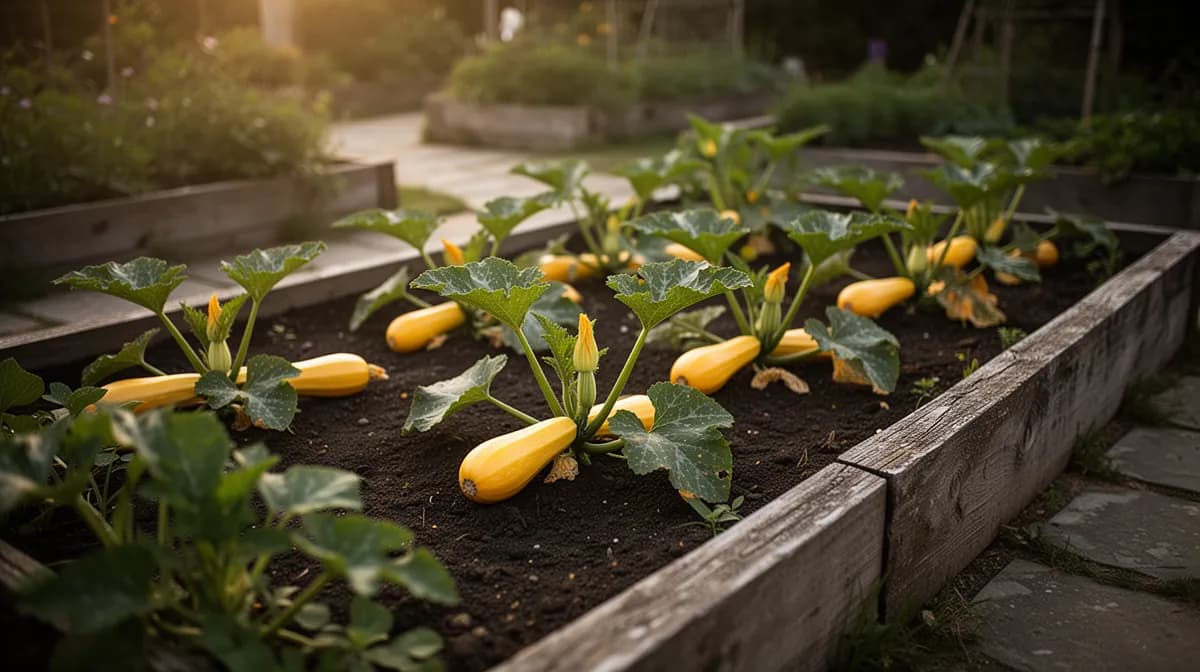
2 Pflanzen passen in ein Beet von 120 × 240 cm
Gelber Kürbis braucht 90 cm Platz pro Pflanze. Der Planer hält diesen Abstand für dich ein — jede Pflanze, jedes Beet.
Die besten Nachbarn für Gelber Kürbis
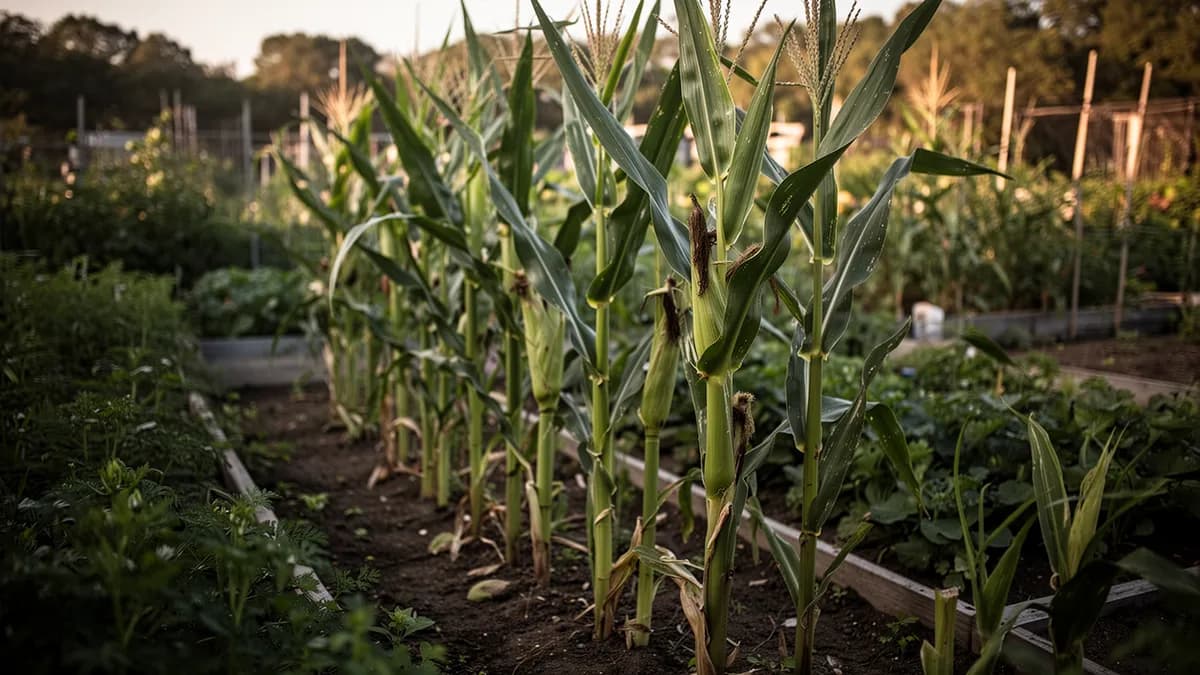
Gelber Kürbis harmoniert hervorragend mit Mais und Bohnen in der traditionellen Drei-Schwestern-Mischkultur. Kapuzinerkresse lockt Blattläuse vom Kürbis weg, während Borretsch bestäubende Bienen anzieht. Tagetes, die um Kürbishügel gepflanzt werden, halten viele häufige Schädlinge ab. Zwischen Kürbis gesäte Radieschen können Kürbiszünsler abschrecken. Oregano und Dill locken nützliche Raubinsekten an. Vermeiden Sie das Pflanzen in der Nähe von Kartoffeln, die um Nährstoffe konkurrieren und gemeinsame Krankheiten beherbergen können. Hohe Sonnenblumen bieten leichten Schatten während intensiver Nachmittagshitze.
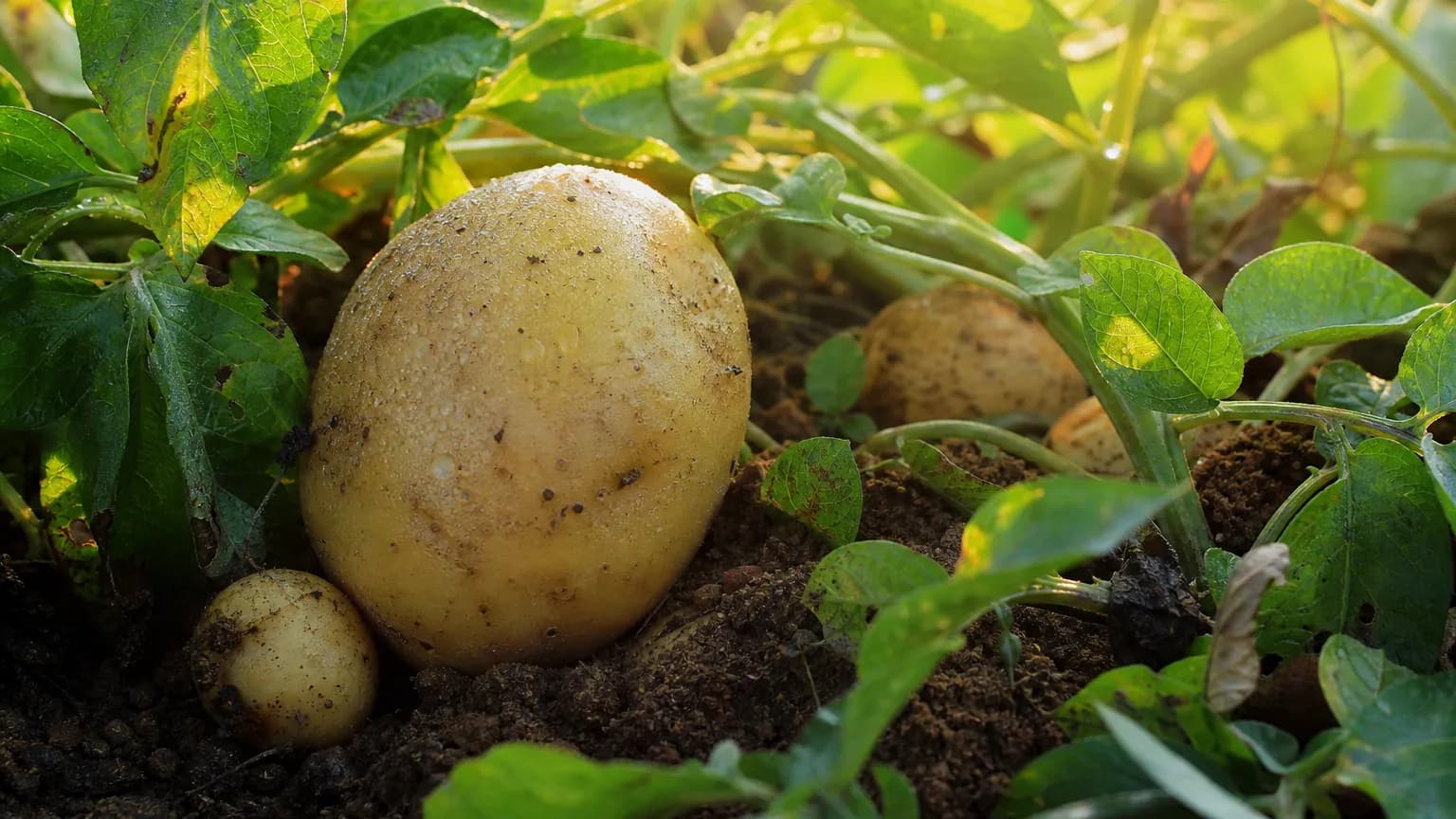
Mais gehört daneben. Kartoffel nicht.
Altes Gärtnerwissen, geprüft an der echten Nachbartabelle von Gelber Kürbis — teste jede Pflanze, die du anbaust.
Probiere Gelber Kürbis direkt hier im Beet
Ein echtes Planer-Beet, Gelber Kürbis steht schon drin. Tippe einen Begleiter an, platziere ihn und sieh, wie die Nachbarschaftsprüfung antwortet — grün für gute Nachbarn, rot bei Streit.


Passende Anbau-Ratgeber
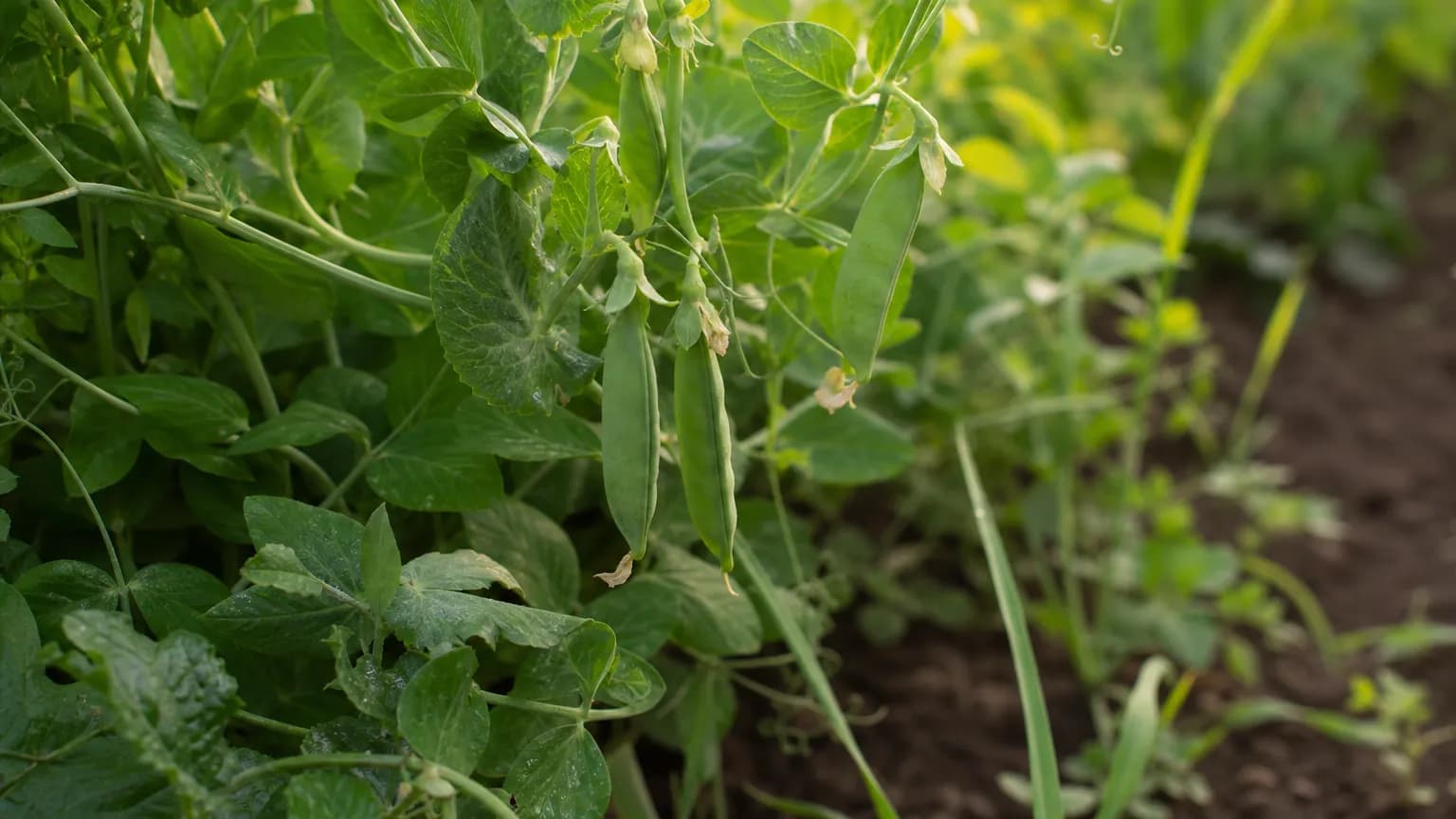
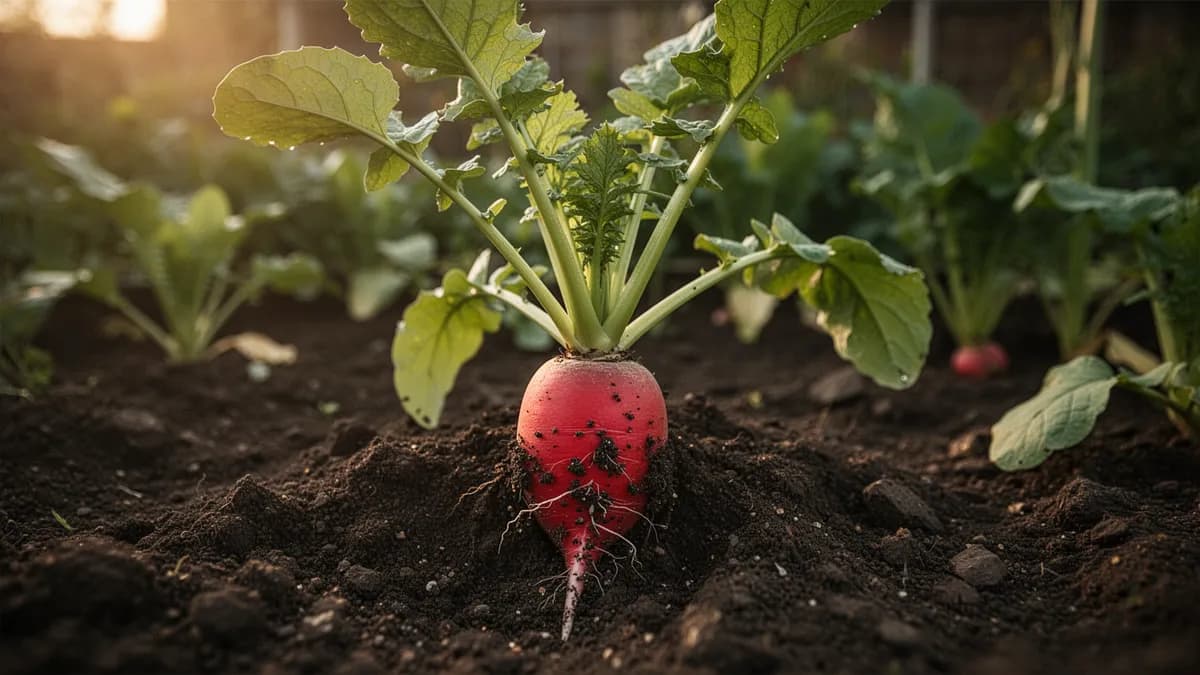
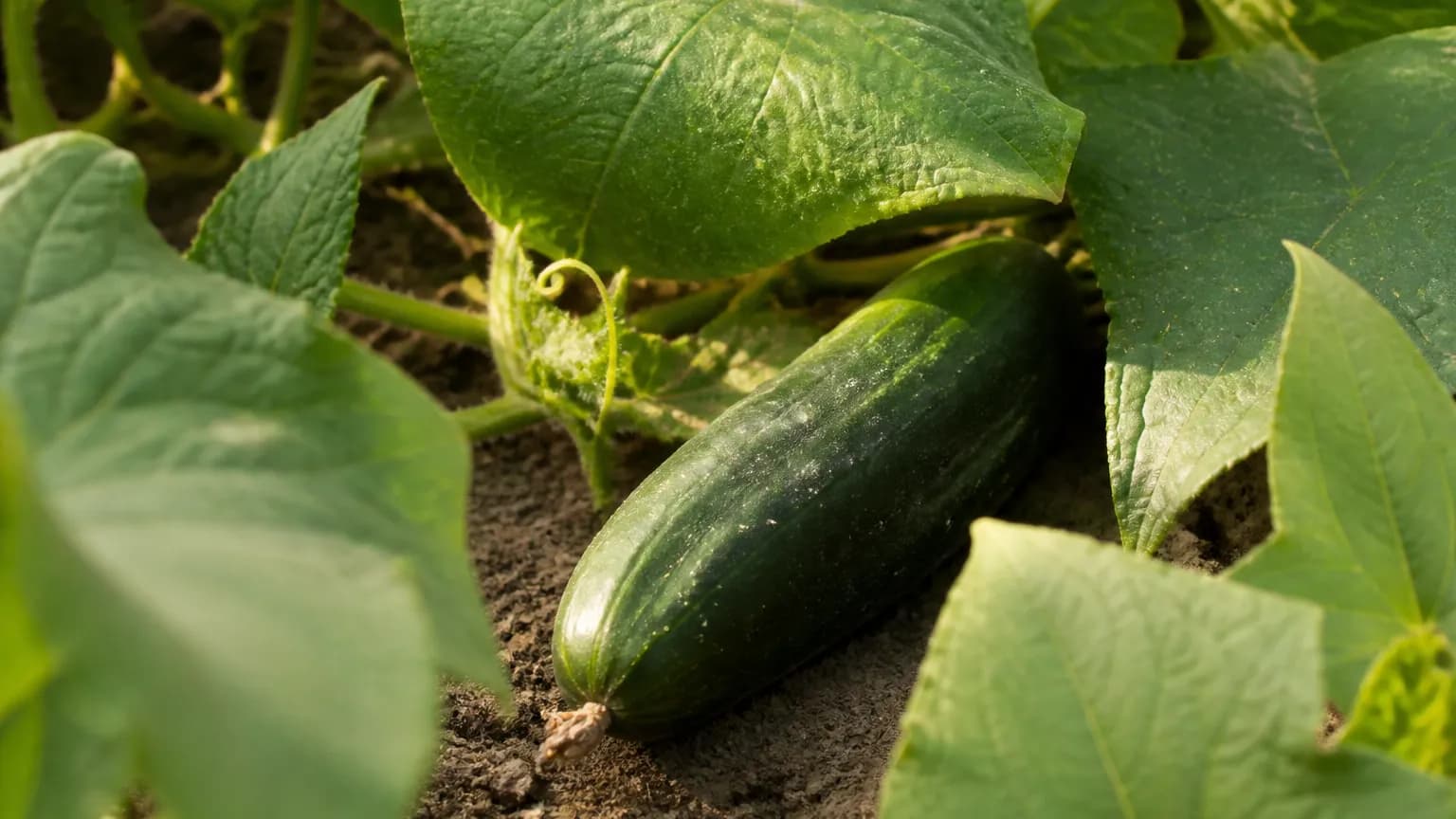
Richtig düngen
Gelber Kürbis wächst am besten in reichhaltigem, gut durchlässigem Boden mit einem pH-Wert von 6,0-7,0. Reichern Sie den Boden vor der Pflanzung großzügig mit Kompost an, da Kürbis ein Starkzehrer ist. Bringen Sie bei der Pflanzung einen ausgewogenen Dünger aus und düngen Sie alle 3-4 Wochen mit Kompost nach. Wenn die Blüte beginnt, wechseln Sie zu einem phosphorreichen Dünger, um die Fruchtentwicklung zu unterstützen. Vermeiden Sie übermäßigen Stickstoff spät in der Saison, da dieser das Blattwachstum auf Kosten der Fruchtbildung fördert. Hochbeete mit tiefem, reichhaltigem Boden produzieren kräftige Pflanzen und reichliche Ernten. Halten Sie den Bodencalciumgehalt mit Gips aufrecht, wenn Blütenendfäule auftritt.
Ideale Temperatur
Winterhärtezone-Kompatibilität
Von der Saat zur Ernte, Schritt für Schritt
Keimung
Die Samen keimen rasch in warmem Boden und schieben große, runde Keimblätter innerhalb von 5-10 Tagen durch die Oberfläche. Der dicke Stängel und das anfängliche Wurzelsystem etablieren sich schnell bei Bodentemperaturen über 18°C. Kühlere Böden verzögern die Keimung erheblich und erhöhen das Risiko von Samenfäule.
Sämlingsentwicklung
Echte Blätter erscheinen mit der charakteristischen gelappten, rauen Textur der Kürbisgewächse. Der Sämling entwickelt einen kräftigen Zentralstängel und ein expandierendes Wurzelsystem. Das Wachstum beschleunigt sich, wenn die Tagestemperaturen über 24°C steigen und die Pflanze ihre Buschform ausbildet.
Vegetatives Buschwachstum
Die Pflanze entwickelt ihren charakteristischen kompakten Buschhabitus und bildet große, tief gelappte Blätter an dicken, hohlen Stängeln. Schnelles vegetatives Wachstum erzeugt ein dichtes Blätterdach von 90-120 cm Durchmesser. Das Wurzelsystem breitet sich nach außen und unten aus, um das schwere Oberwachstum zu stützen.
Blüte
Große, goldgelbe trompetenförmige Blüten erscheinen — männliche Blüten an langen Stielen öffnen sich zuerst, gefolgt von weiblichen Blüten mit einer winzigen unreifen Frucht an der Basis. Jede Blüte öffnet sich für einen einzigen Tag und muss in den Morgenstunden von Bienen oder per Hand bestäubt werden, damit sich eine Frucht entwickelt.
Fruchtentwicklung und Ernte
Bestäubte weibliche Blüten entwickeln sich zu schnell wachsenden Früchten. Gelber Kürbis kann bei warmem Wetter in nur 4-6 Tagen von der Bestäubung zur erntereifen Größe heranwachsen. Mehrere Früchte entwickeln sich gleichzeitig, da die Pflanze den ganzen Sommer über kontinuierlich neue Blüten produziert.
Hochproduktion
Die Pflanze tritt in den Dauerproduzier-Modus ein und blüht und fruchtet gleichzeitig über 6-8 Wochen. Eine gesunde Buschpflanze kann in der Hochsaison 3-5 Kürbisse pro Woche produzieren. Die Produktion lässt allmählich nach, wenn Echter Mehltau und Kürbiszünsler im Hochsommer ihren Tribut fordern.
Pflanzen Sie Samen 2,5 cm tief in Boden, der sich auf mindestens 18°C erwärmt hat. Gießen Sie nach der Aussaat sanft und halten Sie den Boden gleichmäßig feucht, aber nicht staunass. Ein Bodenthermometer nimmt das Rätselraten beim richtigen Zeitpunkt.
Gelber Kürbis Monat für Monat pflegen
Was du jeden Monat für deine Gelber Kürbis tun solltest
Oktober
Aktueller MonatLetzte Ernten in den meisten Zonen, wenn der Frost naht. In den Zonen 9-10 können Herbstpflanzungen noch produzieren. Entfernen Sie erschöpfte Pflanzen nach dem ersten Frost. Geben Sie Kompost auf leere Beete. Notieren Sie die Sortenleistung für die Planung des nächsten Jahres.
Immer wissen, was jetzt im Garten zu tun ist
Eine E-Mail zum Monatsanfang: was du jetzt säen, pflanzen und anpacken solltest — für deine Gelber Kürbis und alles, was drumherum wächst. Dazu ein kurzer Startkurs, der dich vor den klassischen Fehlern bewahrt.
- Was jetzt zu tun ist
- Passend zu deiner Saison
- Startkurs inklusive
Gelber Kürbis ernten
Ernten Sie gelben Kürbis, wenn die Früchte bei Crookneck-Typen 10-18 cm oder bei Straightneck-Sorten 15-20 cm lang sind. Die Schale sollte leuchtend gelb, glänzend und zart genug sein, um sie leicht mit dem Fingernagel einzudrücken. Kontrollieren Sie die Pflanzen alle 1-2 Tage, da die Früchte bei warmem Wetter bemerkenswert schnell wachsen. Schneiden Sie die Früchte mit einem scharfen Messer von der Pflanze ab und lassen Sie einen kurzen Stiel stehen. Lassen Sie Früchte nicht an der Pflanze vollständig ausreifen, da dies der Pflanze signalisiert, die Blüten- und Fruchtproduktion zu reduzieren. Übergroße Früchte sind holzig und voller Kerne.
angenommen, du pflanzt zu Beginn des Zeitraums — trage dein tatsächliches Datum ein
Ernte Gelber Kürbis zügig, dann trägt die Pflanze weiter.
Lagerung & Konservierung
Frischer gelber Kürbis hält sich im Kühlschrank 5-7 Tage in einem perforierten Plastikbeutel. Zum Einfrieren in Scheiben oder Würfel schneiden und 3 Minuten blanchieren, bevor Sie ihn in luftdichten Behältern bis zu 12 Monate einfrieren. Geraspelter Kürbis lässt sich in abgemessenen Portionen gut einfrieren und zum Backen verwenden. Gelber Kürbis kann auch zu Chips getrocknet, in süßer Essiglake eingelegt oder zu Relish verarbeitet werden. Überschüssiger Kürbis lässt sich wunderbar zu Broten, Kuchen und Aufläufen verbacken, die zum späteren Genuss eingefroren werden können.
Was schiefgeht — und die Lösung
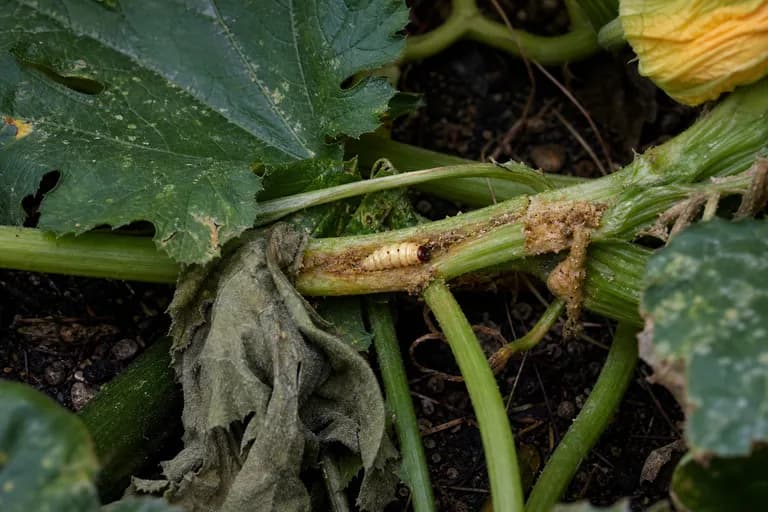
Kürbiszünsler
SchädlingPlötzliches Welken trotz ausreichender Bewässerung, sägemehlartiger Kot am Stängelgrund und dicke weiße Larven in hohlen Stängeln.
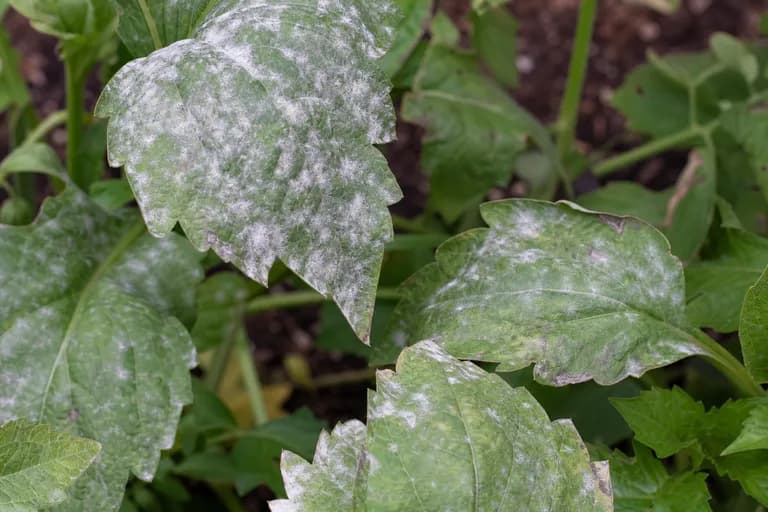
Echter Mehltau
KrankheitWeißer, pudriger Belag, der sich über die Blattoberflächen ausbreitet und Vitalität sowie Fruchtproduktion in der Mitte bis Ende der Saison verringert.
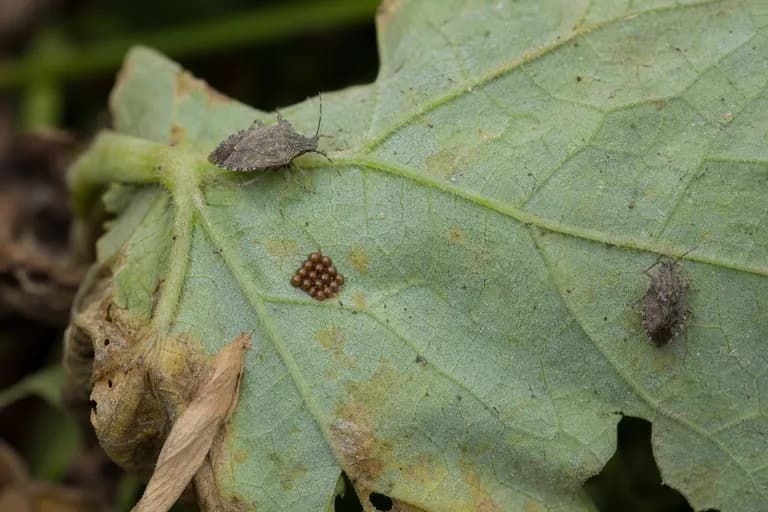
Kürbiswanze
SchädlingBraune Adulte und graue Nymphen, die an Blättern saugen und Welken sowie Zusammenbruch verursachen; bronzefarbene Eigelege in Reihen auf Blattunterseiten.
Blütenendfäule
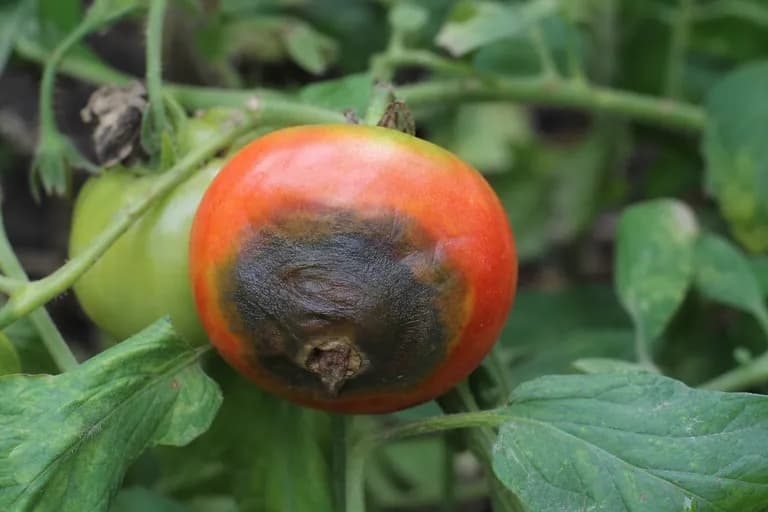
KrankheitDunkle, eingesunkene, ledrige Flecken am Blütenende sich entwickelnder Früchte, verursacht durch Calciummangel oder unregelmäßige Bewässerung.
Fehlerbehebung bei häufigen Problemen
Übergroße, kernige Früchte resultieren aus zu seltenem Ernten; pflücken Sie alle 1-2 Tage. Schlechter Fruchtansatz zu Beginn der Saison ist normal und löst sich, sobald weibliche Blüten erscheinen. Kürbiszünsler können Pflanzen schnell zerstören; überwachen Sie die Stängel genau und ergreifen Sie vorbeugende Maßnahmen. Echter Mehltau ist bis Hochsommer fast unvermeidlich; Nachsaaten liefern gesunde Ersatzpflanzen. Missgebildete Früchte deuten auf schlechte Bestäubung hin; bestäuben Sie bei Regenperioden von Hand oder locken Sie mehr Bienen mit Begleitblumen an.
Anbautipps
- Überstürzen Sie die Pflanzung nicht — gelber Kürbis, der in kalten Boden gepflanzt wird, fault, statt zu wachsen. Warten Sie, bis die Bodentemperatur mindestens 18°C erreicht hat, idealerweise 21°C. Verwenden Sie schwarze Mulchfolie, um Beete 2-3 Wochen vor der Pflanzung vorzuwärmen, für einen früheren Start.
- Ernten Sie häufig und ernten Sie jung. Die wichtigste Einzelmaßnahme zur Maximierung der gelben Kürbisproduktion ist das Pflücken der Früchte alle 1-2 Tage bei 15-20 cm. Lässt man eine Frucht ihre volle Größe erreichen, signalisiert dies der Pflanze, die Blüten- und Fruchtproduktion dramatisch zu verlangsamen.
- Umwickeln Sie die unteren 15 cm des Hauptstängels mit Aluminiumfolie oder Vliesstoff als physische Barriere gegen Kürbiszünsler — diese zerstörerischen Motten legen Eier an der Stängelbasis ab, und die Larven bohren sich hinein, um zu fressen, wobei sie oft die gesamte Pflanze töten.
- Pflanzen Sie auf aufgehäuften Hügeln oder in Hochbeeten für verbesserte Drainage und schnellere Bodenerwärmung im Frühjahr. Gelbe Kürbiswurzeln sind anfällig für Fäulnis in staunassem Boden, und die erhöhte Position fördert eine tiefere Wurzelentwicklung.
- Entfernen Sie die ältesten, untersten Blätter vorbeugend während der gesamten Saison, um die Luftzirkulation um die Pflanzenbasis zu verbessern. Echter Mehltau ist bis Hochsommer nahezu unvermeidlich, und gute Belüftung ist Ihre beste Verteidigung, um seine Ausbreitung zu verlangsamen.
- Planen Sie Nachsaaten alle 3-4 Wochen von Spätfrühling bis Hochsommer. Einzelne gelbe Kürbispflanzen lassen typischerweise nach 6-8 Wochen intensiver Produktion aufgrund von kumulativem Krankheitsdruck nach, sodass frische Pflanzen eine ununterbrochene Versorgung sicherstellen.
- Pflanzen Sie Kräuter und Blumen dazwischen, die Bestäuber anlocken. Borretsch, Tagetes, Dill und Oregano ziehen Bienen in Ihr Kürbisbeet und locken auch nützliche Raubinsekten an, die bei der Bekämpfung von Blattläusen und Kürbiswanzen helfen.
- Gießen Sie an der Pflanzenbasis mit Tropfbewässerung oder einem Sickerschlauch statt mit Überkopfberegnern. Nasses Laub beschleunigt Echten Mehltau und andere Pilzkrankheiten dramatisch. Morgendliches Gießen ist vorzuziehen, wenn Überkopfbewässerung unvermeidbar ist.
Bau deine beste Gelber Kürbis an — und alles drumherum.
Starte heute kostenlos. Lege deine Beete an, setze deine Gelber Kürbis ein und lass PlotMyGarden Timing, Abstände, Begleiter und Erinnerungen von der Saat bis zum Erntekorb übernehmen.
Finde deine Gelber Kürbis
Early Prolific Straightneck
Klassische Straightneck-Sorte, die äußerst produktiv und früh reifend ist. Keulenförmige gelbe Früchte mit glatter, cremiger Schale.
Yellow Crookneck
Traditioneller Crookneck-Typ mit buckliger, goldener Schale und gebogenem Hals. Reichhaltiger, buttriger Geschmack bei junger Ernte.
Goldbar
Hybride Straightneck-Sorte mit gleichmäßigen, leuchtend gelben Früchten und hervorragender Krankheitsresistenz. Sehr produktiv über eine lange Saison.
Tempest
Halboffener Buschtyp mit geraden, goldenen Früchten und starker Resistenz gegen Echten Mehltau. Hervorragend für kleine Gärten.
Eine einzige gelbe Kürbispflanze, gezogen aus einem Saatgutpäckchen für 2-3 € (das 15-25 Samen enthält), kann über eine Saison 20-40 Kürbisse produzieren, wobei Bio-Kürbisse im Handel und auf Märkten 2-4 € pro Pfund kosten. Nur 2-3 Pflanzen können 8-15 kg Kürbis im Wert von 30-80 € zu Einzelhandelspreisen liefern. Die Einsparungen multiplizieren sich, wenn Sie den überlegenen Geschmack und die Frische von Kürbis berücksichtigen, der Minuten vor dem Kochen geerntet wurde, im Vergleich zu im Laden gekauften Früchten, die Tage zuvor gepflückt und Hunderte von Kilometern transportiert wurden. Überschüssiger Kürbis lässt sich leicht einfrieren, zu Brot verarbeiten oder mit Nachbarn teilen.
Schnelle Rezepte
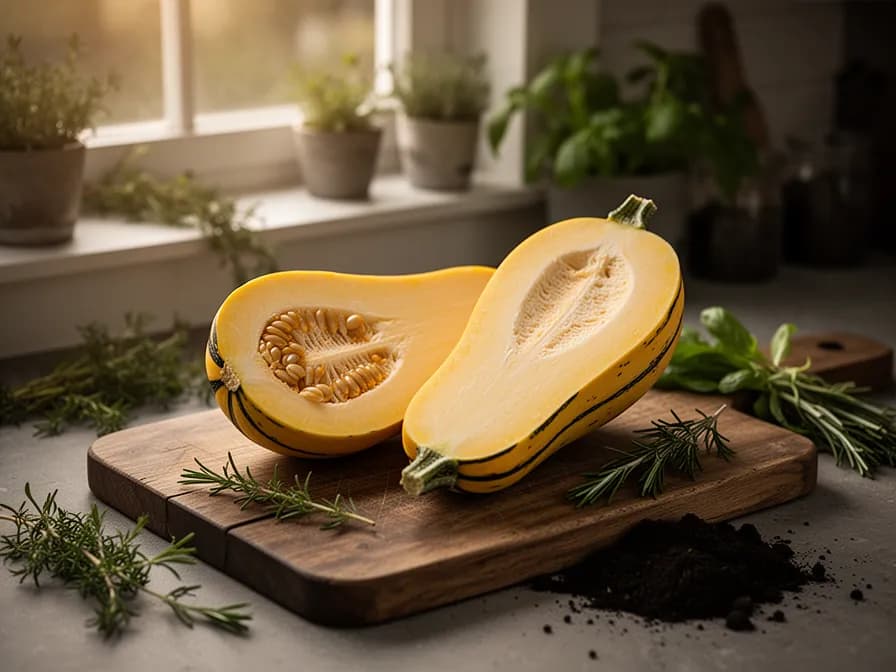
Southern-Kürbisauflauf
45 Min.Ein beliebtes Southern-Comfort-Gericht, bei dem zarter, angebratener Kürbis mit einer cremigen, käsigen Füllung geschichtet und mit buttrigen, zerkrümelten Crackern überbacken wird. Dieser Auflauf ist ein fester Bestandteil bei Familienfeiern und Gesellschaftsessen.
8 Zutaten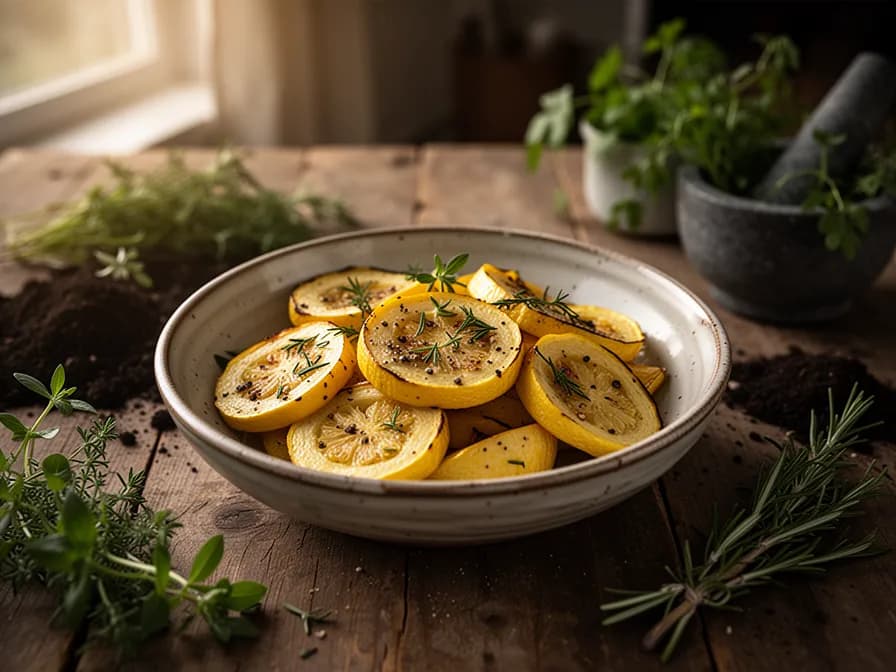
Gegrillter gelber Kürbis mit Kräuterbutter
15 Min.Dicke Scheiben gelben Kürbisses, gegrillt bis sie zart sind mit schönen Grillstreifen, dann verfeinert mit einer Kräuterbutter aus frischen Kräutern. Die hohe Hitze karamellisiert die natürlichen Zucker und konzentriert den buttrigen, nussigen Geschmack des Kürbisses.
6 ZutatenGelbe Kürbispuffer
25 Min.Knusprige, in der Pfanne gebratene Puffer aus geraspeltem gelbem Kürbis, gebunden mit Ei und einem leichten Mehlteig. Diese goldenen Küchlein sind eine wunderbare Möglichkeit, eine reichliche Ernte zu verwerten, und eignen sich hervorragend als Vorspeise oder leichtes Mittagessen.
8 ZutatenKulinarische Verwendung
Gelber Kürbis ist in der Küche wunderbar vielseitig. Braten Sie geschnittenen Kürbis mit Butter, Zwiebeln und Kräutern für eine einfache Beilage an. Grillen Sie dicke Scheiben mit Olivenöl für ein rauchiges Aroma. Panieren und frittieren Sie Scheiben für einen knusprigen Vorspeise. Fügen Sie gewürfelten Kürbis zu Suppen, Eintöpfen und Nudelgerichten hinzu. Raspeln Sie ihn für schnelle Brote, Muffins und Puffer. Spiralisieren Sie ihn als kohlenhydratarmen Nudelersatz. Füllen Sie halbierte große Kürbisse mit Wurst und Reis. Rohe Scheiben bringen Biss in Salate und Gemüseplatten.
Was drinsteckt
Gesundheitsvorteile
- Äußerst kalorienarm (nur 16 pro 100 g) bei gleichzeitig bedeutsamen Mengen an Vitaminen und Mineralstoffen, was gelben Kürbis zu einem idealen Lebensmittel für Gewichtsmanagement und kalorienbewusste Ernährung macht.
- Reich an Vitamin C, das 19 % des Tageswertes pro 100 g liefert und die Immunfunktion, die Kollagensynthese für gesunde Haut unterstützt sowie als starkes Antioxidans wirkt, das Zellen vor Schäden durch freie Radikale schützt.
- Enthält Lutein und Zeaxanthin, Carotinoid-Antioxidantien, die in der gelben Schale konzentriert sind und sich in der Netzhaut anreichern, was zum Schutz vor altersbedingter Makuladegeneration und Grauem Star beitragen kann.
- Gute Manganquelle, ein Spurenelement, das für die Knochenbildung, Blutgerinnung und die Funktion der Superoxiddismutase unerlässlich ist — eines der wichtigsten antioxidativen Enzyme des Körpers.
- Der hohe Wassergehalt (ca. 95 %) in Kombination mit Ballaststoffen unterstützt die Flüssigkeitszufuhr und Verdauungsregularität, während der Kaliumgehalt (262 mg pro 100 g) zur Regulierung des Blutdrucks und des Flüssigkeitshaushalts beiträgt.
- Liefert Folat (B9), das für die DNA-Synthese, Zellteilung und Bildung roter Blutkörperchen entscheidend ist — besonders wichtig während der Schwangerschaft zur Vorbeugung von Neuralrohrdefekten beim sich entwickelnden Fötus.
Woher Gelber Kürbis stammt
Der gelbe Kürbis (Cucurbita pepo) stammt aus Amerika und wurde erstmals in Mesoamerika vor 8.000 bis 10.000 Jahren domestiziert, was den Kürbis zu einer der frühesten Kulturpflanzen der westlichen Hemisphäre macht. Wilde Vorfahren der Art wurden wahrscheinlich zunächst wegen ihrer proteinreichen Samen gesammelt und nicht wegen ihres bitteren, kleinfrüchtigen Fruchtfleisches. Über Jahrtausende selektiver Züchtung durch indigene Völker von Mexiko bis zu den östlichen Wäldern Nordamerikas wurde der Kürbis in die vielfältige Palette von Sommer- und Wintertypen verwandelt, die wir heute kennen.
Gelber Kürbis war ein zentraler Bestandteil des Drei-Schwestern-Agrarsystems, das von indianischen Nationen in ganz Ostamerika praktiziert wurde, bei dem Kürbis, Mais und Bohnen in einer symbiotischen Anordnung zusammen gepflanzt wurden — Mais bot eine Kletterhilfe für Bohnen, Bohnen fixierten Luftstickstoff zur Ernährung aller drei Kulturen, und die breiten Kürbisblätter beschatteten den Boden, um Feuchtigkeit zu bewahren und Unkraut zu unterdrücken. Spanische und portugiesische Entdecker brachten Kürbis im 16. Jahrhundert nach Europa, wo er schnell in der mediterranen und mitteleuropäischen Küche Einzug hielt.
Die Crookneck- und Straightneck-Formen des gelben Kürbisses, die heute amerikanische Gärten dominieren, wurden hauptsächlich im Südosten der Vereinigten Staaten im 18. und 19. Jahrhundert entwickelt. Der Early Yellow Crookneck mit seinem charakteristischen gebogenen Hals und der buckligen goldenen Schale wurde bereits um 1700 dokumentiert und ist bis heute beliebt. Moderne Hybridzüchtung hat krankheitsresistente, hochproduktive Buschsorten hervorgebracht, die für kleinere Gärten und kommerzielle Produktion geeignet sind. Heute wird gelber Kürbis kommerziell in den südlichen und östlichen USA angebaut, wobei Florida, Georgia und Kalifornien die Produktion anführen, während Hobbygärtner auf dem gesamten Kontinent ihn als eines der lohnendsten und ertragreichsten Gemüse schätzen.
Gelber Kürbis: Schon gewusst?
Faszinierende Fakten über Gelber Kürbis
Gelber Kürbis ist eine der ältesten Kulturpflanzen Amerikas — archäologische Funde aus mexikanischen Höhlen zeigen, dass Vorfahren der Kürbisarten bereits vor 8.000-10.000 Jahren domestiziert wurden, Tausende von Jahren vor Mais und Bohnen.
Gelber Kürbis: Fragen & Antworten
Wann sollte ich Gelber Kürbis pflanzen?
Was sind gute Begleitpflanzen für Gelber Kürbis?
In welchen Winterhärtezonen kann Gelber Kürbis wachsen?
Wie viel Sonne braucht Gelber Kürbis?
Welchen Abstand sollte ich zwischen Gelber Kürbis lassen?
Welche Schädlinge und Krankheiten befallen Gelber Kürbis?
Wie lagere ich Gelber Kürbis nach der Ernte?
Was sind die besten Gelber Kürbis-Sorten zum Anbauen?
Welchen Boden braucht Gelber Kürbis?
Warum produzieren meine gelben Kürbispflanzen Blüten, aber keine Früchte?
Was ist der Unterschied zwischen Crookneck und Straightneck bei gelbem Kürbis?
Wie verhindere ich, dass Kürbiszünsler meine Pflanzen zerstören?
Kann ich gelben Kürbis in Kübeln anbauen?
Warum entwickeln meine gelben Kürbisse braune, eingesunkene Flecken am Blütenende?
Meine gelben Kürbisse werden sehr groß und zäh — was ist schiefgelaufen?
Du hast die Theorie gelesen. Jetzt baue sie auf Autopilot an.
Alles, was Gelber Kürbis knifflig macht — das Timing, die Abstände, die Begleiter, das Erntefenster — genau das übernimmt PlotMyGarden für dich, für jede Pflanze im Garten.
Ein Plan, der dein Wetter kennt
Standort einmal festlegen. Aussaat-, Dünge- und Erntedaten rund um deinen echten letzten Frosttermin und die Live-Vorhersage — kein Raten mehr nach Saattüte.
Aus dem Abschnitt „Pflanzzeit“Beetplaner per Drag & Drop
Beete auf einem Raster gestalten. Jede Pflanze rastet im richtigen Abstand ein, und du siehst die ganze Saison, bevor du einen Cent für Saatgut ausgibst.
Aus dem Abschnitt „Anbau“Begleiter-Konflikte früh erkannt
Über 200 gute und schlechte Kombinationen werden beim Pflanzen live geprüft — so landet ein saisonruinierender Fehler nie in der Erde.
Aus dem Abschnitt „Begleiter“Erinnerungen, nach denen du wirklich handelst
„Gieß die Bohnen.“ „Heute ernten, bevor's umschlägt.“ Pünktlich, konkret und auf deine echten Pflanzen bezogen.
Aus dem Abschnitt „Ernte“Staffel-Aussaat, geplant
Sechs Wochen ernten statt sechs Tage? Die App verteilt deine Aussaaten automatisch und erinnert dich, wenn der nächste Satz fällig ist.
Aus dem Abschnitt „Pflanzzeit“Ein Verlauf, der schlauer wird
Jede protokollierte Ernte bringt der App deinen Garten bei. Der Plan fürs nächste Jahr startet bei dem, was in deinem Boden wirklich funktioniert hat.
Aus dem Abschnitt „Überblick“Pflanze diese neben Gelber Kürbis
Weitere Kürbisgewächse
Halte Gelber Kürbis von diesen fern
Bau deine beste Gelber Kürbis an — und alles drumherum.
Starte heute kostenlos. Lege deine Beete an, setze deine Gelber Kürbis ein und lass PlotMyGarden Timing, Abstände, Begleiter und Erinnerungen von der Saat bis zum Erntekorb übernehmen.