Pavía plana
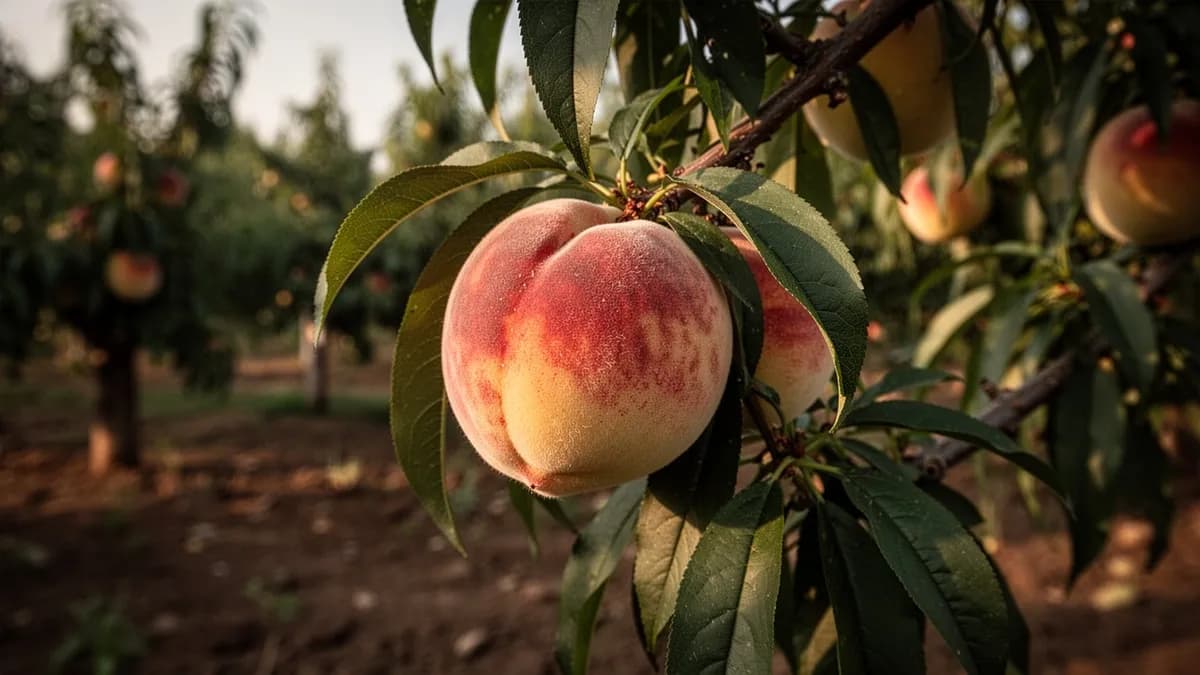
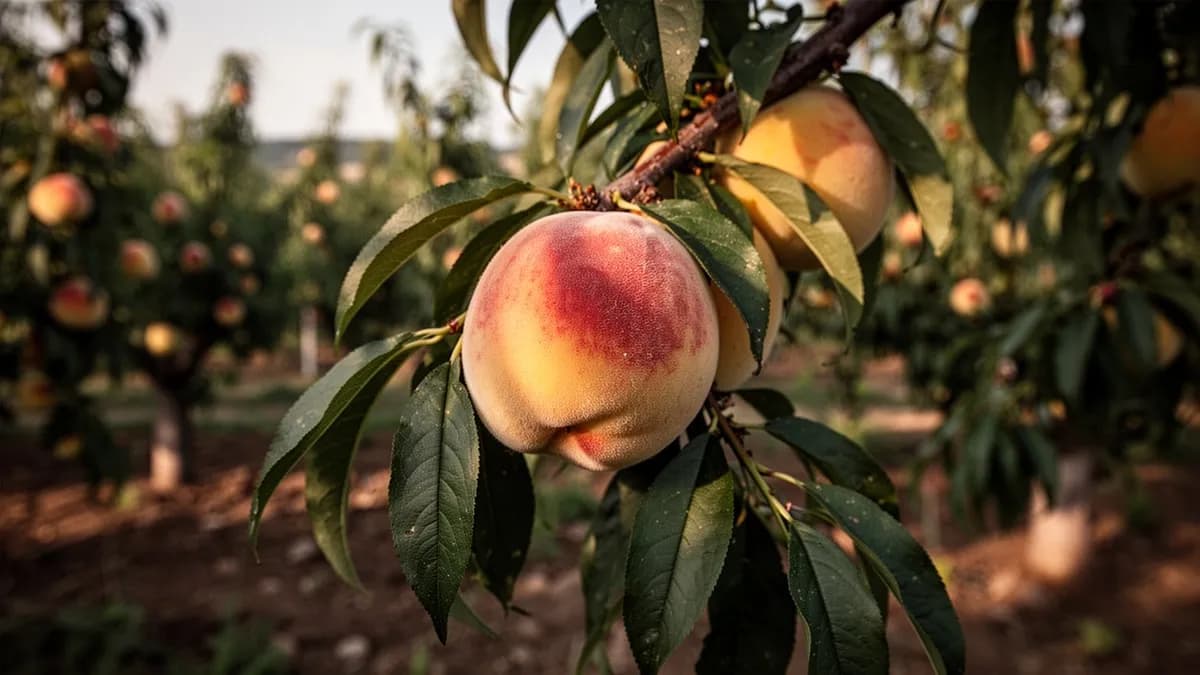
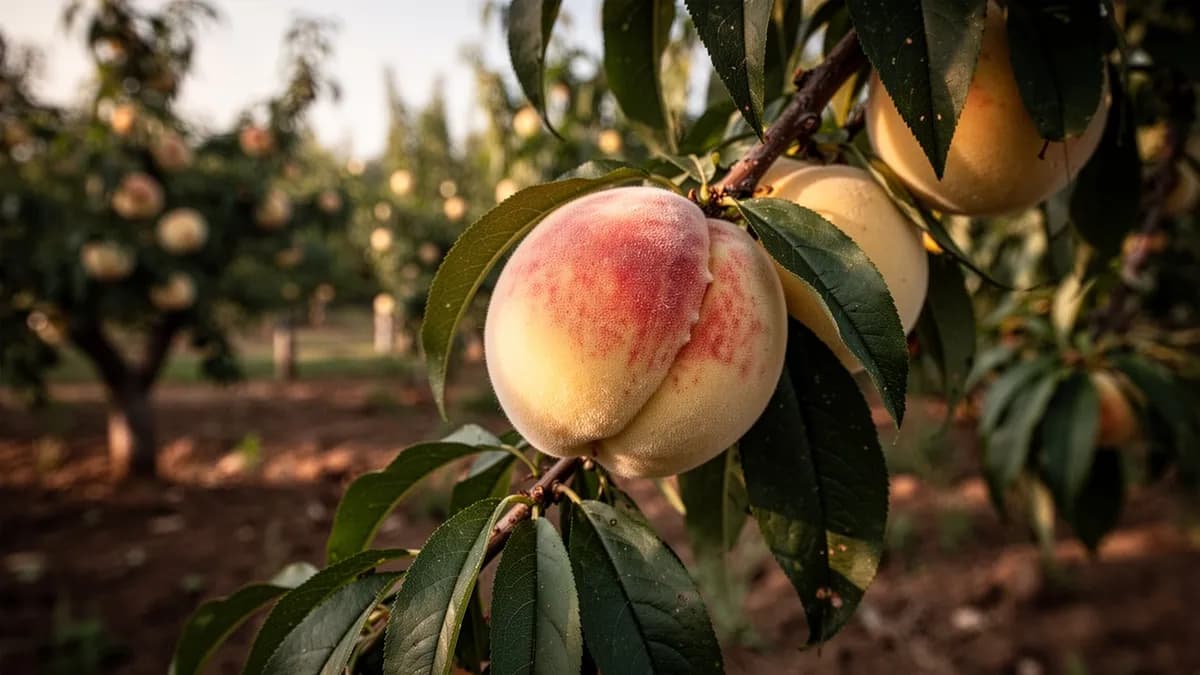
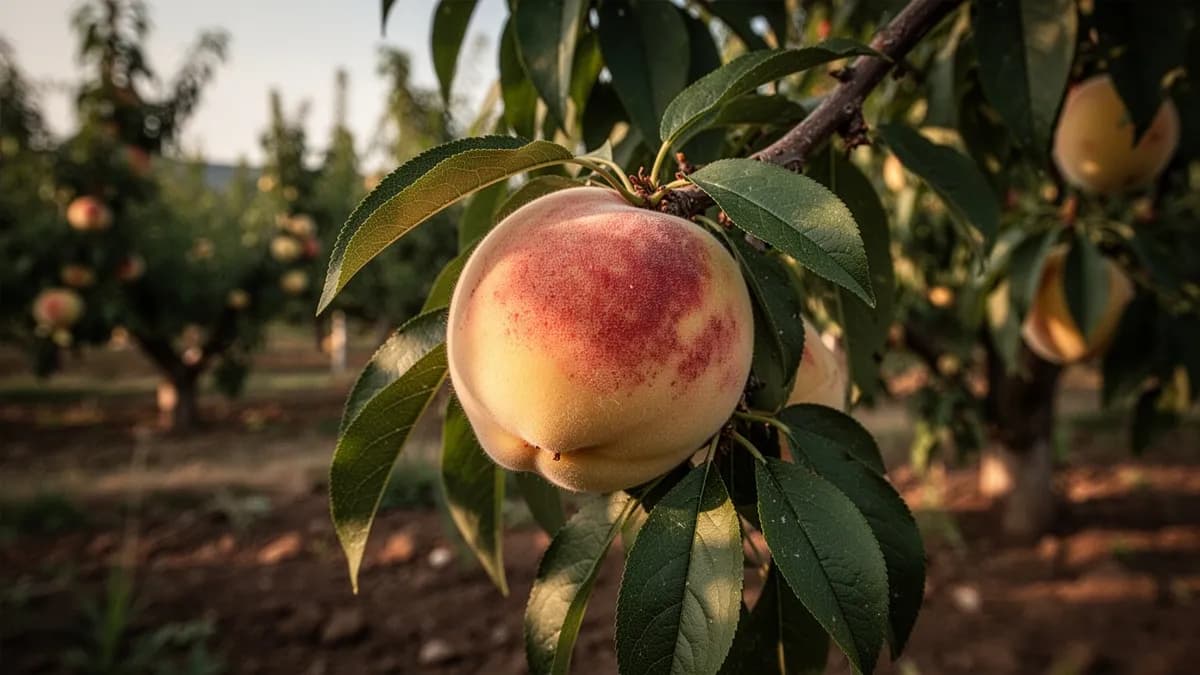
Una variedad de melocotón de forma plana, también conocida como melocotón Saturno, con pulpa blanca y un sabor extraordinariamente dulce con matices de almendra.





En esta páginaResumen
Conoce Pavía plana
Una variedad de melocotón de forma plana, también conocida como melocotón Saturno, con pulpa blanca y un sabor extraordinariamente dulce con matices de almendra. Su forma singular hace que el hueso pequeño sea fácil de retirar y que la fruta resulte especialmente cómoda de comer para los niños. Los melocotones donut requieren menos horas de frío que los melocotones estándar, por lo que también se adaptan mejor a climas con inviernos suaves.
Cuándo plantar Pavía plana
Donut peach pits require 90 to 120 days of cold stratification before germination. Clean pits and wrap in damp paper towels in a sealed bag in the refrigerator over winter. Plant outdoors in spring one inch deep after the last frost. Seedlings will produce variable fruit that may not retain the flat shape. For guaranteed donut-shaped fruit, purchase grafted trees on Lovell, Nemaguard, or Citation rootstock. Grafted trees typically fruit in two to three years.
Tu año de Pavía plana
Ajustado a Zona 7 · temporada típica · la helada se va hacia el 2 abr y vuelve hacia el 1 nov
Planta Pavía plana Mar – Abr y cosecha Jul – Ago. Consulta los métodos de plantación y elige tu clima para adaptar los periodos.
Cómo cultivar Pavía plana
Los melocotoneros donut prosperan en las zonas USDA 5 a 9 y suelen requerir entre 400 y 600 horas de frío, menos que los melocotones estándar, lo que los hace adecuados para climas con inviernos más templados. Plante árboles a raíz desnuda a finales del invierno, dejando entre 4.5 y 6 metros para árboles estándar o entre 2.5 y 3 metros para semienanos. Elija un lugar con pleno sol, buena circulación de aire y un suelo bien drenado.
Poda el árbol como cualquier melocotonero, en forma de vaso abierto, y retire aproximadamente un tercio del crecimiento del año anterior cada invierno. La forma aplanada del fruto hace que los melocotones donut sean especialmente propensos a agrietarse con la lluvia, por lo que un riego uniforme es importante para evitar el ciclo de estrés e hinchado que provoca las grietas. Aclare los frutos a principios del verano, dejando entre 15 y 20 centímetros entre ellos para lograr el mejor tamaño y dulzor.
Fertilice a comienzos de primavera con un abono equilibrado para frutales. Aplique a finales del otoño y a finales del invierno una pulverización de cobre o de azufre cal para prevenir la abolladura o rizado del melocotonero. Riegue en profundidad cada siete a diez días durante la temporada de crecimiento. En primavera, los árboles producen flores rosadas, decorativas y fragantes. Los melocotones donut suelen formar árboles algo más pequeños que las variedades estándar, lo que los hace manejables en jardines reducidos.
Para Pavía plana un bancal de 120 × 240 cm se queda corto
Cada Pavía plana pide 300 cm de margen. El planificador guarda ese marco por ti — cada planta, cada bancal.
Los mejores vecinos de Pavía plana
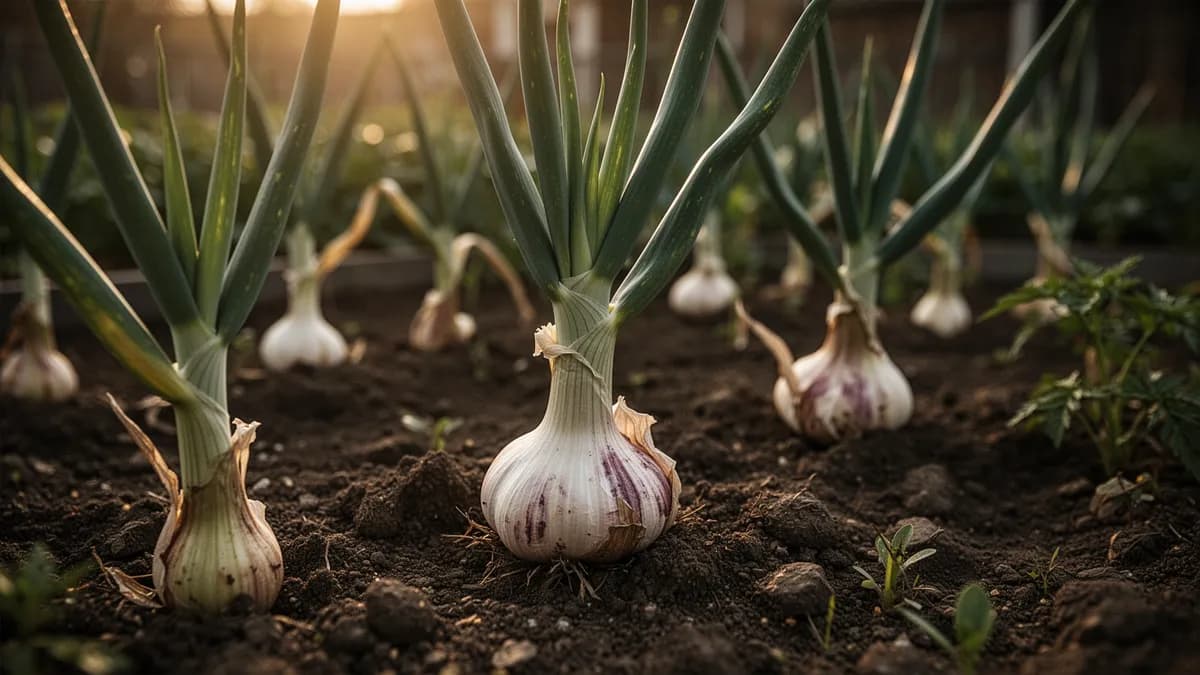
Plant garlic, chives, and alliums around the base to deter peach tree borers. Tansy and nasturtiums repel various insect pests. Crimson clover or white clover as ground cover fixes nitrogen and suppresses weeds. Comfrey at the drip line mines nutrients from deep soil. Keep the area directly under the canopy clear of tall competing plants for the first few years. Avoid planting near walnut trees due to juglone sensitivity.
Ajo va a su lado. Nogal no.
Saber de huerto de siempre, cotejado con la tabla real de Pavía plana — prueba cualquier planta que cultives.
Prueba Pavía plana en un bancal, aquí mismo
Un bancal real del planificador con Pavía plana ya plantado. Toca una planta compañera para colocarla y mira cómo responde la comprobación de vecinos: verde para buenos vecinos, rojo si hay conflicto.


Guías de cultivo relacionadas
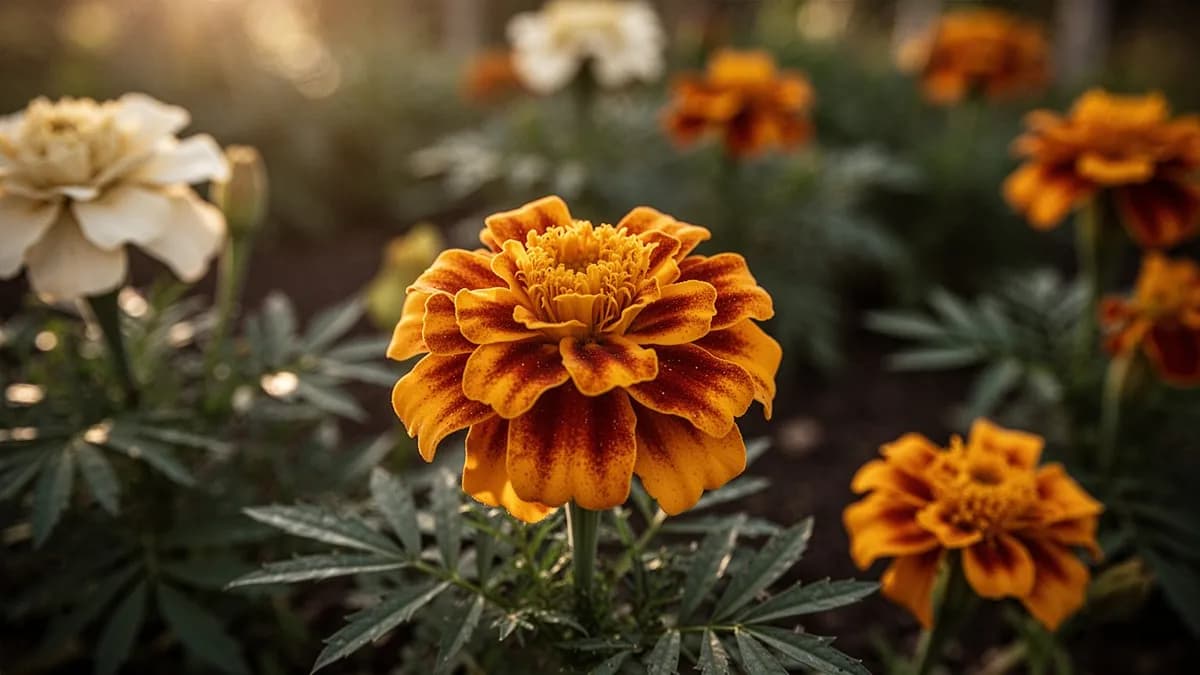
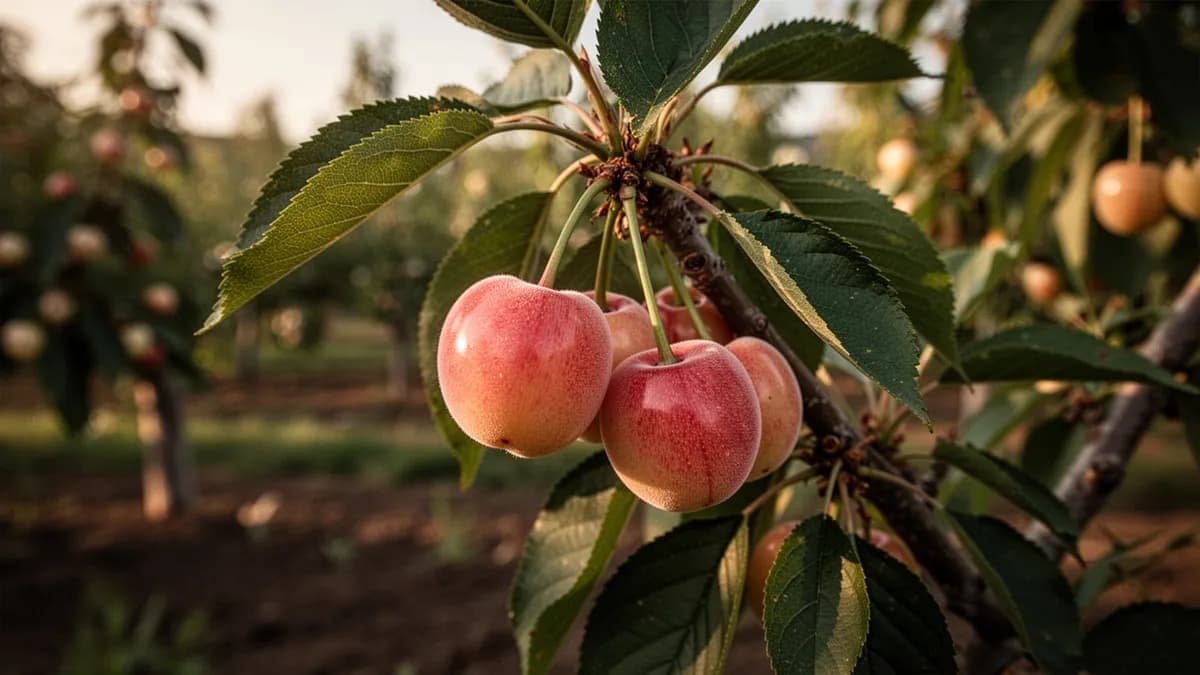
Abónalo bien
Los melocotones donut prefieren un suelo franco arenoso bien drenado, con un pH de 6.0 a 6.8, idéntico al de los melocotones estándar. El mal drenaje es la causa más frecuente de muerte del árbol. Aplique a comienzos de primavera, antes de la floración, un abono equilibrado para frutales. Evite el exceso de nitrógeno, que favorece el crecimiento vegetativo a expensas del fruto. Los suplementos de calcio mejoran la firmeza del fruto. Mantenga mantillo orgánico alrededor del árbol, pero separado del tronco, para prevenir enfermedades de la corteza relacionadas con la humedad.
Temperatura ideal
Compatibilidad de zonas de rusticidad
De la semilla a la cosecha, etapa por etapa
Reposo invernal
Durante el invierno, el melocotonero entra en reposo y acumula las horas de frío necesarias para romper la dormancia en primavera. El árbol permanece sin hojas, con la corteza lisa de tono marrón rojizo y yemas florales hinchadas y visibles a lo largo de las ramas.
Hinchazón de yemas y floración
A medida que suben las temperaturas a finales del invierno y comienzos de la primavera, las yemas florales se hinchan y se abren en vistosas flores rosadas. Los melocotoneros son autofértiles, así que un solo árbol puede dar fruto, pero las flores son vulnerables a las heladas tardías de primavera. Las flores aparecen antes que las hojas, creando un espectáculo llamativo que dura de una a dos semanas.
Cuajado y aclareo del fruto
Tras la polinización, los pétalos caen y pequeños frutos verdes comienzan a desarrollarse. Los melocotoneros suelen cuajar mucho más fruto del que pueden llevar hasta tamaño completo, por lo que el aclareo es esencial. Las hojas brotan por completo y la copa se llena rápidamente. Puede producirse una caída natural llamada June drop a medida que el árbol se aclara solo.
Desarrollo del fruto y endurecimiento del hueso
El fruto crece de forma constante durante la primavera y el inicio del verano. Durante el endurecimiento del hueso, la cubierta de la semilla en el interior se calcifica y el crecimiento del fruto se ralentiza temporalmente. Una vez completado este proceso, el fruto entra en una fase rápida de expansión celular en la que aumenta mucho de tamaño y comienzan a acumularse azúcares.
Maduración y cosecha
Los melocotones pasan de verde a su color de fondo maduro, blanco cremoso o amarillo según la variedad, y desarrollan un rubor rojo allí donde reciben sol. La pulpa se ablanda y se vuelve más dulce a medida que los ácidos se convierten en azúcares. El aroma se intensifica y el fruto se separa con facilidad del pedúnculo cuando está maduro. La cosecha suele ir de finales de junio a septiembre, según la variedad y el clima.
Poscosecha y caída de hojas
Después de la cosecha, el árbol sigue fotosintetizando para acumular reservas de carbohidratos para la cosecha del año siguiente. Las hojas pasan de amarillo a naranja en otoño antes de caer. El árbol entra gradualmente en reposo a medida que bajan las temperaturas y se acortan los días, completando el ciclo anual.
Aplique aceite hortícola en reposo a finales del invierno para asfixiar huevos de plagas y esporas de hongos que pasan el invierno. Este es el momento ideal para realizar la poda estructural importante, cuando el árbol está completamente dormido y la arquitectura de las ramas se ve con claridad. Retire cualquier fruto momificado que quede en las ramas.
Cuidar Pavía plana mes a mes
Qué hacer cada mes para tu Pavía plana
Octubre
Mes actualDeje que el árbol entre en reposo de forma natural. No abone ni pode en otoño, ya que esto puede estimular brotes tiernos vulnerables a daños invernales. Retire todas las hojas y restos de fruta caídos. Aplique una capa gruesa de mantillo alrededor de la zona radicular para aislar en invierno.
Ten claro qué hacer en tu huerto, cada mes
Un correo al empezar cada mes: qué sembrar, plantar y hacer ahora mismo — para tu Pavía plana y todo lo que crece alrededor. Más un breve curso inicial para esquivar los errores clásicos.
- Qué hacer ahora mismo
- Ajustado a tu temporada
- Curso inicial incluido
Cosechar Pavía plana
Los melocotones donut maduran desde finales de junio hasta agosto, según la variedad y el clima. La forma plana facilita evaluar la madurez: el fruto debe ceder ligeramente al presionarlo suavemente y el color de fondo debe pasar de verde a blanco cremoso o amarillo. El hueso pequeño y fácil de desprender se separa limpiamente en las variedades freestone. Coja la fruta sujetándola con delicadeza y girándola. Manipúlela con especial cuidado, ya que su forma plana la hace propensa a sufrir daños por apilamiento.
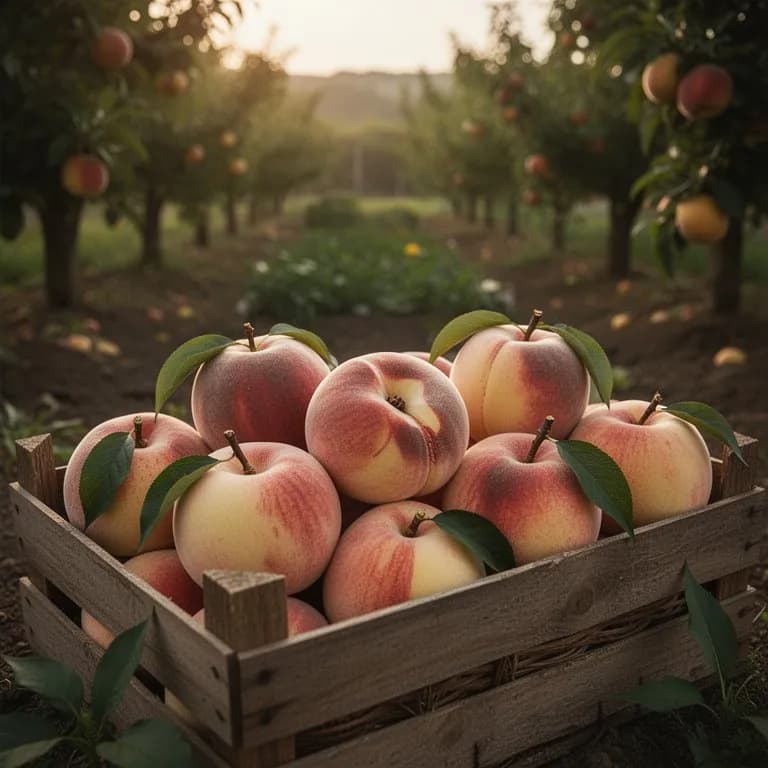
se supone que plantas al comenzar el periodo — indica tu fecha real
Cosecha Pavía plana a tiempo y la planta sigue produciendo.
Almacenamiento y conservación
Los melocotones donut tienen una vida útil corta tras la cosecha, de dos a cuatro días a temperatura ambiente. En el frigorífico se conservan hasta una semana. La pulpa blanca se oxida rápidamente al cortarla, por lo que conviene añadir zumo de limón. Puede congelar mitades con zumo de limón para usarlas más adelante. Su sabor dulce con matices de almendra da lugar a excelentes confituras y mermeladas. Las rodajas de melocotón donut también se deshidratan bien para obtener aperitivos masticables y dulces. Su forma singular los convierte en tema de conversación cuando se sirven frescos en reuniones.
Qué falla — y cómo solucionarlo
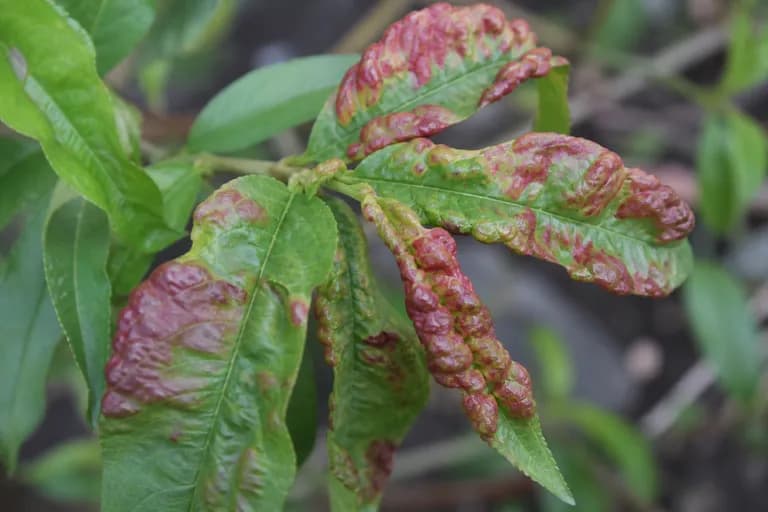
Abolladura del melocotonero
EnfermedadHojas engrosadas, deformadas y enrojecidas en primavera que finalmente amarillean y caen. Debilita el árbol y reduce la producción de fruta.
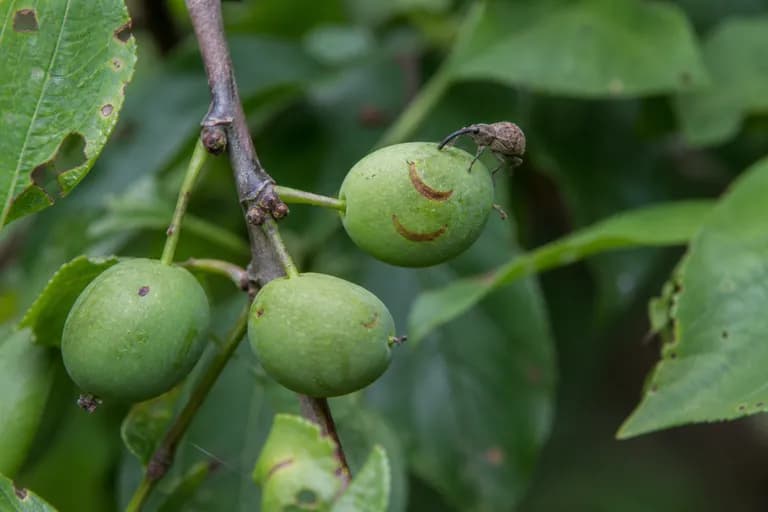
Gorgojo de la ciruela
PlagaCicatrices en forma de media luna en los frutos en desarrollo, donde las hembras depositan los huevos. Las larvas perforan la pulpa y causan caída prematura del fruto y fruta con gusanos.
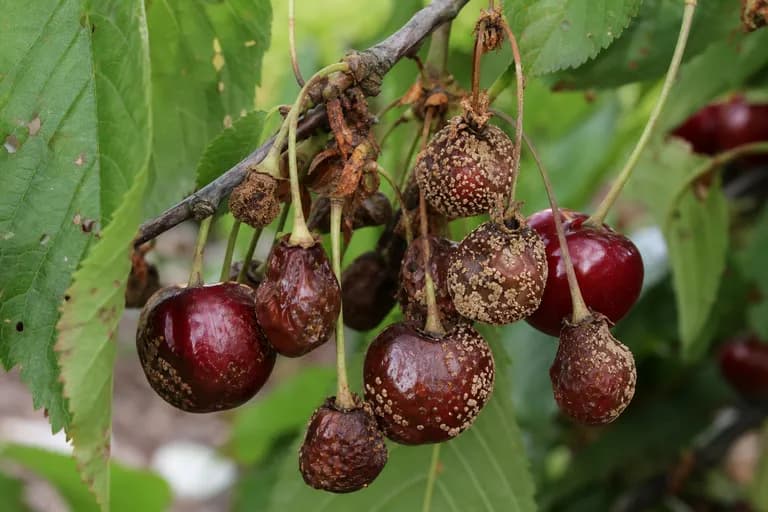
Podredumbre parda del fruto
EnfermedadManchas marrones, blandas y en expansión en los frutos en maduración, cubiertas por masas de esporas pulverulentas de color marrón claro. Puede arruinar toda la cosecha en condiciones húmedas.
Solución de problemas comunes
La forma plana del fruto tiende a agrietarse después de la lluvia porque su amplia superficie retiene agua. Un riego uniforme evita el ciclo de estrés que provoca las grietas. Los melocotones donut se abollan con facilidad por su piel fina y su forma aplanada, lo que complica su manipulación comercial. La podredumbre parda del fruto es una amenaza constante durante los periodos húmedos de maduración. La abolladura del melocotonero debe prevenirse con pulverizaciones en reposo; si se omiten, no hay forma de revertir la infección de esa temporada.
Consejos de cultivo
- Elija una variedad de melocotón adaptada a las horas de frío de su clima. Las variedades de bajo requerimiento de frío (250 a 400 horas) sirven para zonas con inviernos suaves, mientras que las variedades estándar necesitan entre 600 y 1.000 horas de frío. Plantar una variedad con requerimiento inadecuado provoca un mal cuajado y una floración irregular.
- Plante los melocotoneros a pleno sol, con al menos 8 horas de luz directa al día. Elija un lugar con excelente drenaje del aire, idealmente en una pendiente suave, para reducir el riesgo de heladas durante la floración. Evite las hondonadas donde se acumula el aire frío.
- Pode los melocotoneros en forma de vaso abierto con 3 o 4 ramas principales. Así se maximiza la entrada de luz solar y la circulación del aire en toda la copa, lo que mejora la calidad del fruto y reduce la presión de enfermedades como la podredumbre parda y la mancha bacteriana.
- Aclarea los frutos con intensidad cuando alcancen el tamaño de una canica, dejando los melocotones restantes entre 15 y 20 cm en cada rama. Este es el paso más importante para obtener frutos grandes y dulces, y para evitar la alternancia productiva y la rotura de ramas.
- Aplique una pulverización preventiva de fungicida de cobre al caer las hojas en otoño y de nuevo en la hinchazón de yemas a finales del invierno para controlar la abolladura del melocotonero, una de las enfermedades más comunes y dañinas. Una vez han salido las hojas, ya es demasiado tarde para tratarla esa temporada.
- Riegue en profundidad y de forma constante durante el desarrollo del fruto, aportando entre 2.5 y 5 cm de agua por semana. El riego irregular durante la fase final de engorde provoca huesos partidos y frutos agrietados. El riego por goteo o con mangueras exudantes es más eficiente que los aspersores.
- Fertilice los melocotoneros a comienzos de primavera, cuando las yemas empiezan a hincharse, usando un abono equilibrado o uno ligeramente más alto en nitrógeno. Evite las aportaciones fuertes de nitrógeno después de junio, ya que favorecen un crecimiento vegetativo tardío excesivo a costa de la calidad del fruto y de la resistencia al invierno.
- Vigile con regularidad las plagas comunes del melocotonero, como la polilla oriental de la fruta, el taladrador del melocotonero, el curculio de la ciruela y los pulgones. Las trampas de feromonas ayudan a seguir las poblaciones de plagas. Los barrenillos del melocotonero pueden prevenirse manteniendo despejada la base del tronco de mantillo y tierra.
- Coseche los melocotones cuando el color de fondo haya cambiado de verde a amarillo o crema y el fruto ceda ligeramente a una suave presión con el pulgar cerca del pedúnculo. Los melocotones madurados en el árbol tienen un sabor mucho mejor que los recogidos pronto, así que resista la tentación de cosechar antes de tiempo.
- Proteja los troncos jóvenes del melocotonero contra la insolación invernal pintándolos con pintura látex blanca diluida o envolviéndolos con protectores de tronco. La insolación provoca grietas en la corteza del lado sur y suroeste del tronco, creando puntos de entrada para barrenillos y enfermedades del chancro.
Cultiva tu mejor Pavía plana — y todo lo que la rodea.
Empieza un plan gratis hoy. Diseña tus bancales, coloca tu Pavía plana y deja que PlotMyGarden gestione el momento, el espaciado, las asociaciones y los recordatorios de la semilla a la cesta.
Elige tu Pavía plana
Saturn
La variedad original de melocotón donut, con pulpa blanca, dulzor con notas de almendra y un pequeño hueso freestone. Requiere entre 400 y 500 horas de frío. Madura a mediados de julio.
Galaxy
Un melocotón donut de pulpa blanca con excelente sabor y buena resistencia a enfermedades. Algo más grande que Saturn. Requiere unas 400 horas de frío. Madura a finales de julio.
Serie UFO
Una serie de variedades mejoradas de melocotón plano con mayor resistencia a enfermedades y mejor productividad. Disponible en varias ventanas de maduración, desde el comienzo hasta el final de la temporada.
Stark Saturn
Una selección mejorada de Saturn con producción más uniforme y algo mejor tolerancia al frío. Conserva el mismo perfil excelente y dulce con aroma a almendra.
Un melocotonero maduro que produzca entre 45 y 70 kg de fruta al año puede generar el equivalente a entre 150 y 400 dólares en melocotones frescos a los precios habituales de supermercado, de 3 a 6 dólares por libra. Un árbol a raíz desnuda cuesta entre 20 y 40 dólares y empieza a dar fruto en 2 o 3 años. A lo largo de una vida productiva de 12 a 15 años, un solo árbol puede producir fruta por valor de más de 2.000 dólares, sin contar el sabor y la frescura superiores de los melocotones madurados en el árbol frente a la fruta comercial recolectada antes de su punto óptimo para resistir mejor el transporte.
Recetas rápidas
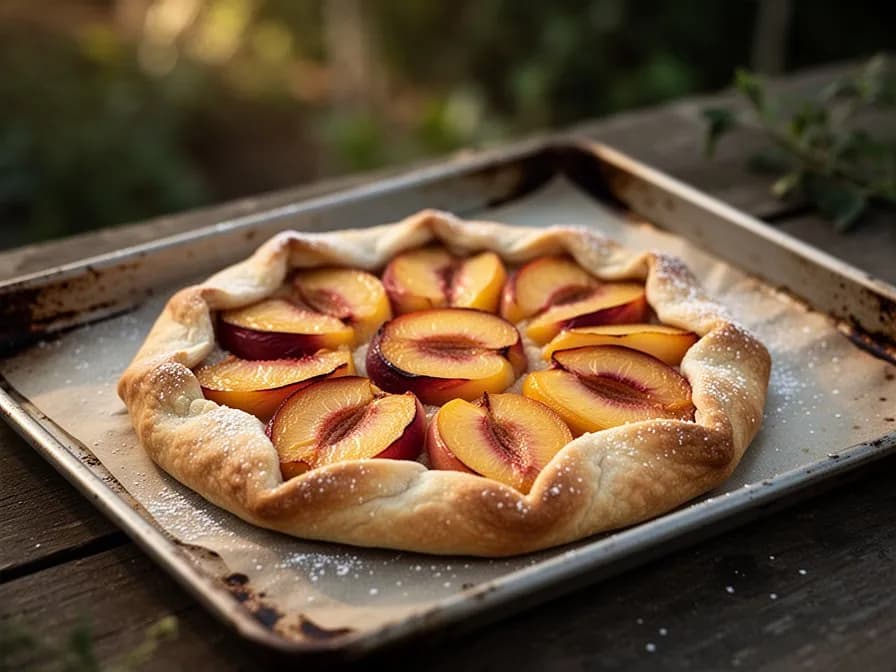
Cobbler sureño clásico de melocotón
20 minutosUn cobbler cálido y reconfortante al estilo del sur, con melocotones especiados y jugosos cubiertos por una capa dorada de masa tipo bizcocho rica en mantequilla. Se sirve mejor templado, recién salido del horno, con una bola de helado de vainilla o un chorrito de nata fresca. Esta receta destaca el dulzor natural de los melocotones maduros del jardín.
10 ingredientesMelocotones a la parrilla con miel y ricotta
15 minutosUn postre veraniego elegante pero sencillo que transforma melocotones frescos al caramelizar sus azúcares naturales en la parrilla. Las mitades de melocotón tibias se rellenan con ricotta cremosa, se rocía miel por encima y se termina con pistachos tostados para lograr un plato digno de restaurante con fruta de su propio jardín.
7 ingredientesGazpacho frío de melocotón
15 minutosUna sopa fría veraniega, vibrante y refrescante, que combina la dulzura de los melocotones maduros con el frescor del pepino y la acidez del limón. Perfecta como entrante ligero en una comida de jardín o servida en vasitos para una reunión informal.
7 ingredientesUsos culinarios
Donut peaches are best enjoyed fresh to appreciate their distinctive almond-vanilla sweetness. The flat shape and easy pit removal make them perfect for children. Slice into salads with arugula, prosciutto, and mozzarella. The sweet white flesh makes elegant tarts and galettes. Grill halved donut peaches for a smoky-sweet dessert. The flavor pairs beautifully with vanilla ice cream, honey, and toasted almonds.
Qué contiene
Beneficios para la salud
- Rico en antioxidantes, como vitamina C, betacaroteno y polifenoles como el ácido clorogénico, que ayudan a neutralizar los radicales libres y pueden reducir el riesgo de enfermedades crónicas y del envejecimiento celular
- Contiene fibra dietética que favorece la salud digestiva al promover deposiciones regulares, alimentar a las bacterias intestinales beneficiosas y ayudar a mantener estables los niveles de azúcar en sangre después de las comidas
- Aporta potasio (190 mg por cada 100 g), esencial para mantener una presión arterial saludable, un ritmo cardíaco adecuado y el equilibrio de líquidos en todo el organismo
- Contiene compuestos antiinflamatorios naturales que pueden ayudar a reducir marcadores de inflamación en el cuerpo, beneficiando potencialmente a personas con artritis y otras afecciones inflamatorias
- Es una fruta de bajo índice glucémico que aporta dulzor natural sin provocar picos rápidos de azúcar en sangre, lo que la hace adecuada para personas que controlan la diabetes o la resistencia a la insulina
- Aporta vitamina A y betacaroteno, que favorecen una visión sana, la función inmunitaria y la regeneración de las células de la piel, contribuyendo al bienestar cutáneo general y a un cutis saludable
De dónde viene Pavía plana
El melocotón (Prunus persica) tiene su origen en la provincia de Zhejiang, al este de China, donde las pruebas arqueológicas confirman su cultivo desde hace al menos 8.000 años. Los textos chinos antiguos veneraban el melocotón como símbolo de inmortalidad, y se creía que la madera de melocotonero ahuyentaba a los espíritus malignos. Se decía que la mítica Reina Madre del Oeste cuidaba un jardín de melocotones de la inmortalidad que solo maduraban una vez cada 3.000 años. Desde China, los melocotones viajaron hacia el oeste por las antiguas rutas comerciales de la Ruta de la Seda y llegaron a Persia, en el Irán actual, hace unos 2.000 años. Comerciantes y viajeros persas introdujeron la fruta en el mundo mediterráneo, y fueron los romanos quienes le dieron el nombre botánico Persica, al creer que procedía de Persia. El cultivo romano extendió los melocotones por todo su imperio, incluida España, Francia y el norte de África. Los exploradores españoles llevaron semillas de melocotón a América en el siglo XVI, donde los árboles prosperaron en los climas cálidos de Florida, México y Sudamérica. Los pueblos indígenas de América adoptaron con entusiasmo su cultivo, y cuando llegaron los colonos ingleses, los melocotones crecían tan abundantemente que muchos pensaron que eran una fruta nativa americana. La producción comercial de melocotón se expandió de forma espectacular en el siglo XIX, especialmente en el sur de Estados Unidos y en California, donde el clima suave y los valles irrigados resultaron ideales. El desarrollo de la tecnología de conservas a mediados del siglo XIX transformó al melocotón, de un lujo estacional muy perecedero, en un alimento básico de despensa disponible todo el año y disfrutado en todo el mundo. Los programas modernos de mejora han producido cientos de variedades con nombre, optimizadas para distintos climas, ventanas de maduración y usos, desde variedades freestone para consumo en fresco hasta tipos clingstone más firmes para conserva. Hoy, China sigue siendo el mayor productor mundial de melocotón con mucha diferencia, seguida por España, Italia y Estados Unidos.
Pavía plana: ¿sabías que?
Datos fascinantes sobre Pavía plana
Los melocotones donut se originaron en China hace más de 8.000 años y se consideraban un símbolo de inmortalidad y longevidad. Se domesticaron mucho antes que muchas otras frutas comunes y están profundamente arraigados en el arte, el folclore y la mitología chinos.
Pavía plana: preguntas frecuentes
¿Cuándo debo plantar Pavía plana?
¿Cuáles son buenas plantas acompañantes para Pavía plana?
¿En qué zonas de rusticidad puede crecer Pavía plana?
¿Cuánto sol necesita Pavía plana?
¿A qué distancia debo espaciar Pavía plana?
¿Qué plagas y enfermedades afectan a Pavía plana?
¿Cómo almaceno Pavía plana después de la cosecha?
¿Cuáles son las mejores variedades de Pavía plana para cultivar?
¿Qué suelo necesita Pavía plana?
¿Cuántos años tarda un melocotonero en dar fruto?
¿Por qué las hojas de mi melocotonero se enrollan y se ponen rojas?
¿Son los melocotones donut una especie distinta y necesitan un cuidado diferente?
¿Por qué mis melocotones donut saben sosos o aguados en vez de dulces?
¿Por qué el centro de mi melocotón donut está tan hundido y es normal?
¿Cómo sé si un melocotón donut está realmente maduro y listo para cosechar?
Acabas de leer la teoría. Ahora cultívala en piloto automático.
Todo lo que hace que Pavía plana sea delicado — el momento, el espaciado, las asociaciones, la ventana de cosecha — es justo lo que PlotMyGarden resuelve por ti, para cada planta de tu huerto.
Un plan que conoce tu clima
Indica tu ubicación una vez. Recibe fechas de siembra, abonado y cosecha basadas en tu última helada real y el pronóstico en vivo — sin adivinar con un sobre genérico.
De la sección “Cuándo plantar”Planificador de bancales de arrastrar y soltar
Diseña bancales sobre una cuadrícula. Cada planta encaja con su espaciado correcto y ves toda la temporada antes de gastar un céntimo en semillas.
De la sección “Cultivo”Conflictos de asociación, detectados a tiempo
Más de 200 buenas y malas combinaciones comprobadas en vivo mientras plantas — para que un error que arruine la temporada nunca llegue a la tierra.
De la sección “Asociaciones”Recordatorios que sí vas a seguir
“Riega las judías.” “Recoge hoy antes de que se pase.” Oportunos, concretos y ligados a las plantas que de verdad cultivas.
De la sección “Cosecha”Escalonado, programado
¿Quieres cosechar seis semanas en vez de seis días? Reparte tus siembras automáticamente y te avisa cuando toca el siguiente lote.
De la sección “Cuándo plantar”Un registro que se vuelve más listo
Cada cosecha que registras le enseña tu huerto. El plan del año que viene parte de lo que de verdad funcionó en tu suelo, no en un manual.
De la sección “Resumen”Planta estos junto a Pavía plana
Más Frutas de hueso
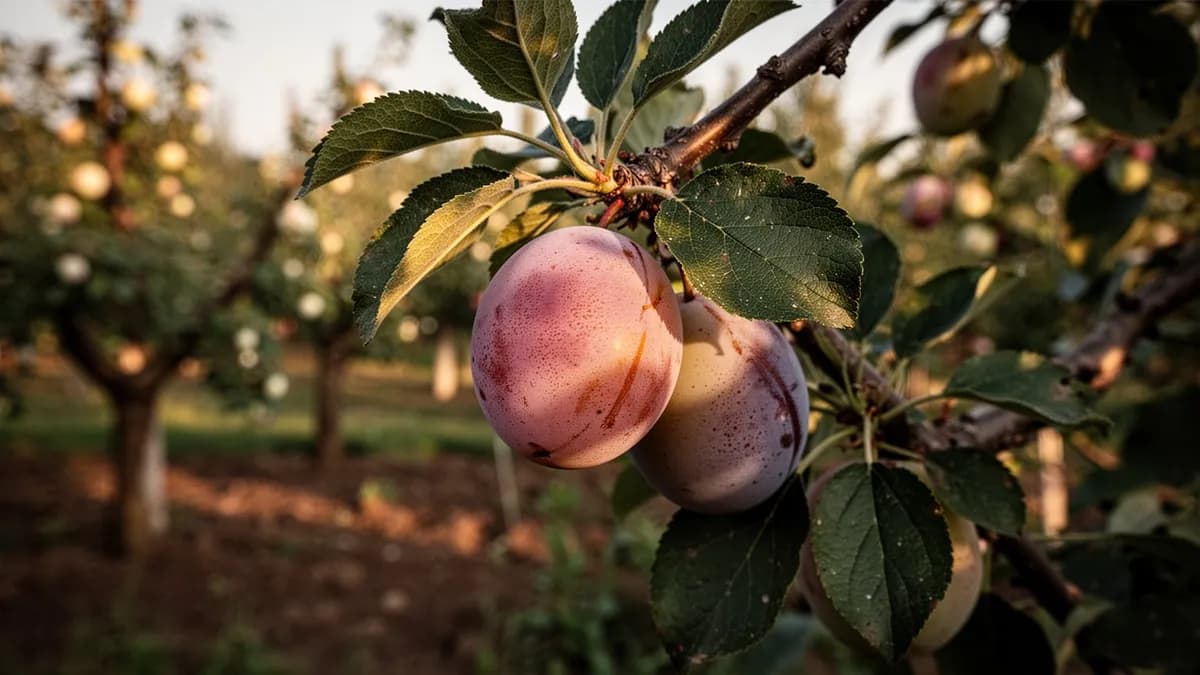
Mantén Pavía plana lejos de estos
Cultiva tu mejor Pavía plana — y todo lo que la rodea.
Empieza un plan gratis hoy. Diseña tus bancales, coloca tu Pavía plana y deja que PlotMyGarden gestione el momento, el espaciado, las asociaciones y los recordatorios de la semilla a la cesta.