Maracuyá amarillo
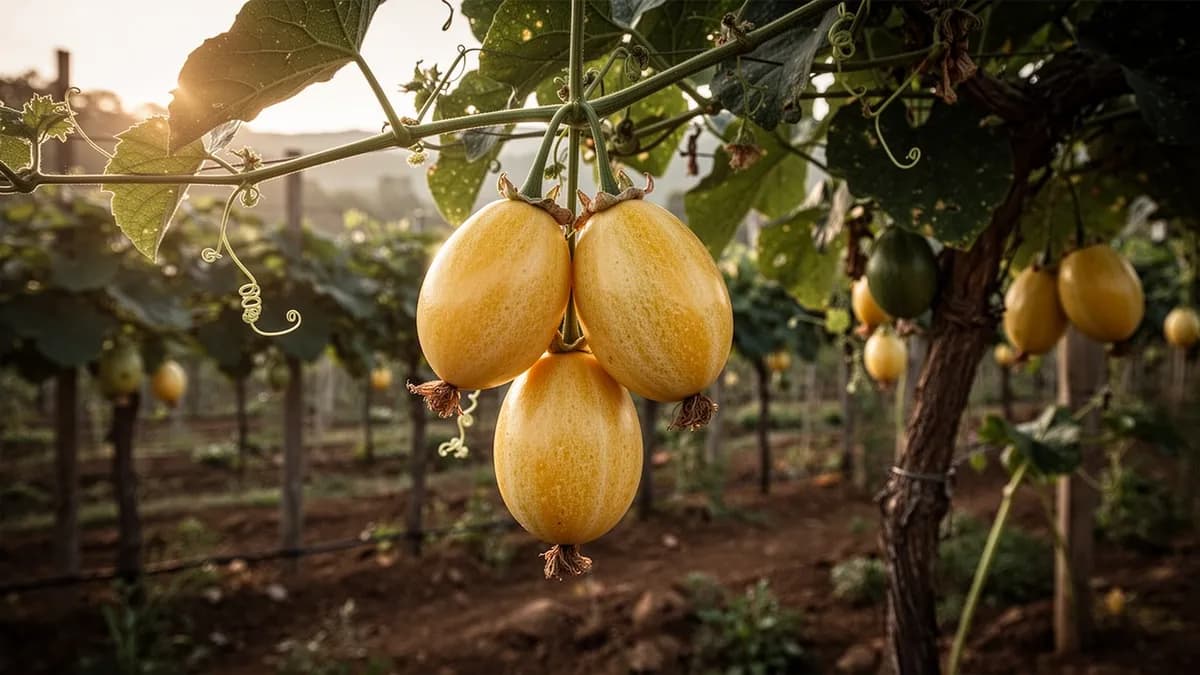
Una variedad tropical de maracuyá, más grande y ácida, con piel amarilla, muy apreciada en las regiones tropicales para la producción de zumo.





En esta páginaResumen
Conoce Maracuyá amarillo
Una variedad tropical de maracuyá, más grande y ácida, con piel amarilla, muy apreciada en las regiones tropicales para la producción de zumo. El maracuyá amarillo necesita polinización cruzada y es más vigoroso y amante del calor que la forma violeta. Su pulpa aromática y ácida es la principal variedad utilizada para la producción comercial de zumo y concentrado de maracuyá.
Cuándo plantar Maracuyá amarillo
Suele cultivarse a partir de semillas que germinan fácilmente cuando se obtienen de frutos frescos y maduros. Limpie las semillas y siémbralas de inmediato en un sustrato cálido y húmedo a 27–29 grados. La escarificación con papel de lija acelera la germinación a una o dos semanas. Las plántulas crecen con rapidez en condiciones tropicales. También se propaga mediante esquejes semileñosos. Se utiliza con frecuencia como patrón resistente a Fusarium para injertar variedades violetas.
Tu año de Maracuyá amarillo
Ajustado a Zona 7 · temporada típica · la helada se va hacia el 2 abr y vuelve hacia el 1 nov
Planta Maracuyá amarillo Abr – May y cosecha Ago – Nov. Consulta los métodos de plantación y elige tu clima para adaptar los periodos.
Cómo cultivar Maracuyá amarillo
El maracuyá amarillo es una trepadora tropical que necesita temperaturas uniformemente cálidas y pleno sol. Plántelo en un suelo profundo, bien drenado y rico en materia orgánica. Proporcione un soporte sólido, ya que esta variedad puede crecer entre 7.5 y 9 metros por temporada. Deje una separación de 4.5 a 6 metros para acomodar su vigoroso crecimiento.
El maracuyá amarillo necesita polinización cruzada, por lo que conviene plantar al menos dos lianas genéticamente distintas. Las abejas carpinteras son polinizadoras esenciales; donde falten, polinice a mano transfiriendo polen entre las flores por la mañana. Las lianas florecen sobre el brote del año.
Riegue a fondo y con regularidad, entre 2.5 y 5 cm por semana durante el crecimiento activo. Fertilice cada dos semanas con un abono líquido equilibrado y cambie a uno más rico en potasio durante la floración. El maracuyá amarillo es más resistente a la marchitez por Fusarium que la forma violeta, lo que lo hace valioso como patrón. Las lianas producen abundantemente en 12 a 18 meses y viven de cuatro a seis años.
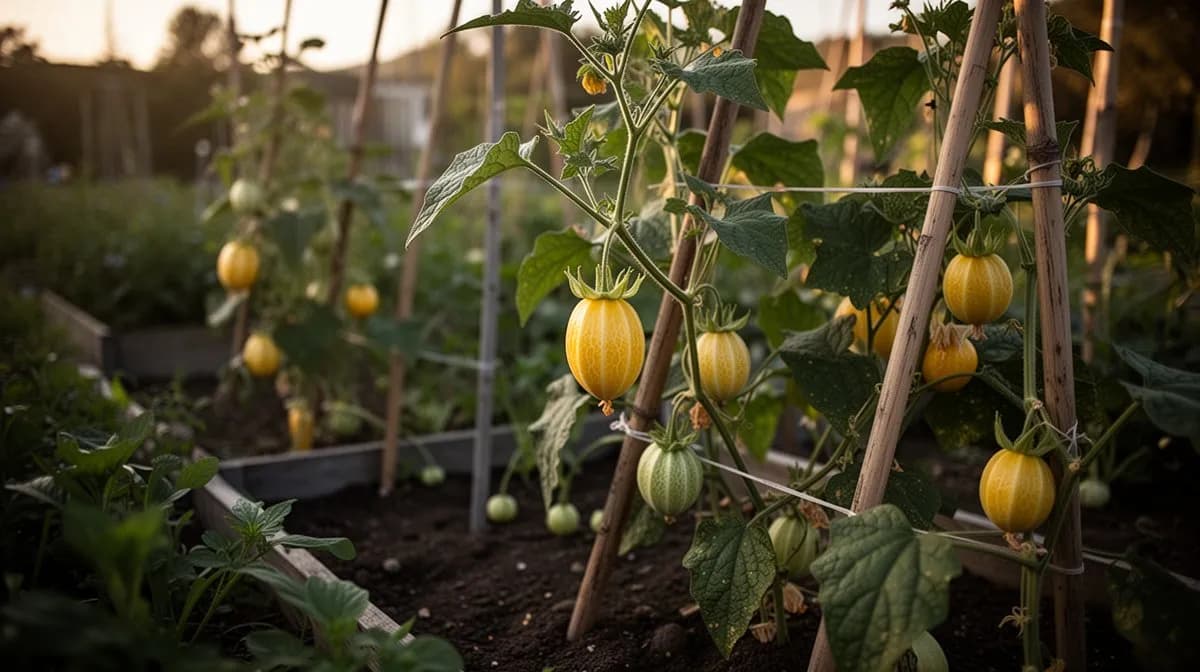
Para Maracuyá amarillo un bancal de 120 × 240 cm se queda corto
Cada Maracuyá amarillo pide 300 cm de margen. El planificador guarda ese marco por ti — cada planta, cada bancal.
Los mejores vecinos de Maracuyá amarillo
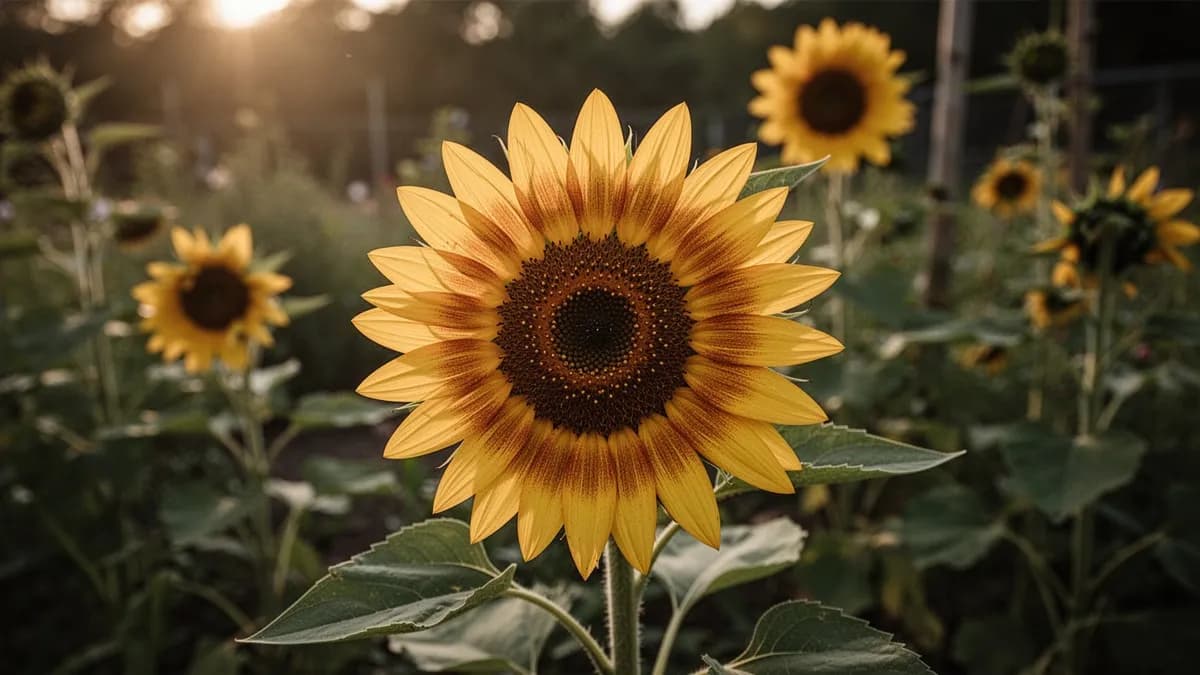
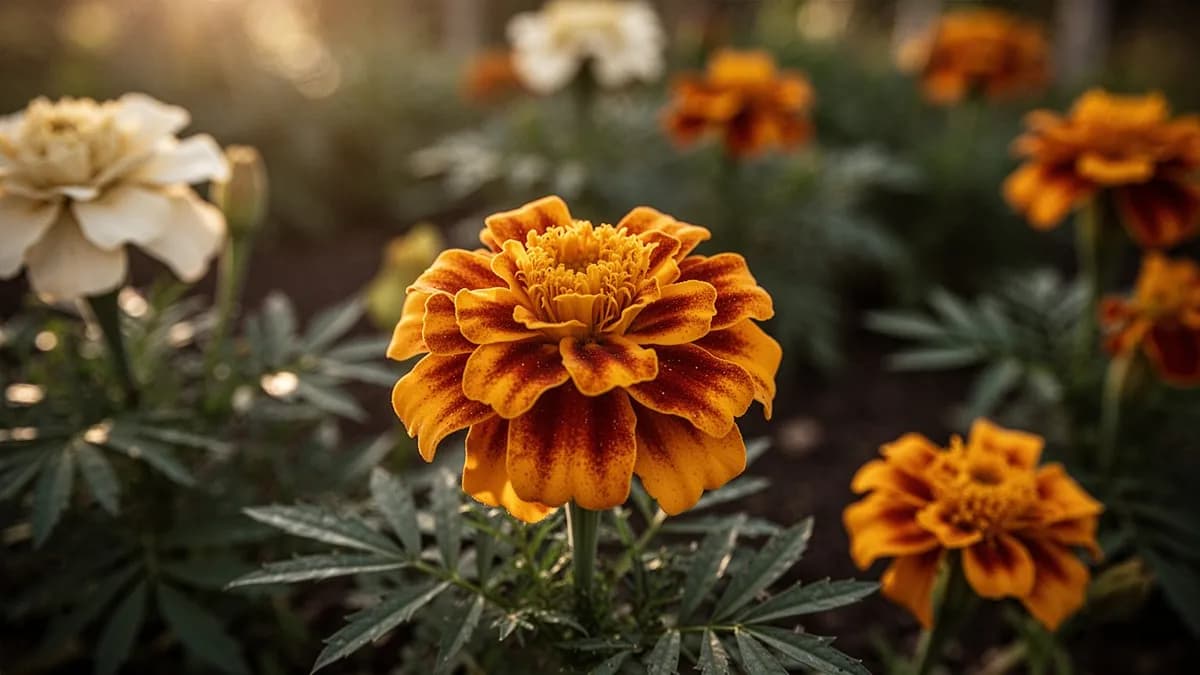
Plante girasoles y otras flores de gran tamaño para atraer a las abejas carpinteras necesarias para la polinización. Los tagetes ayudan a suprimir los nematodos agalladores de la raíz. Las leguminosas rastreras y de bajo porte fijan nitrógeno para estas lianas muy exigentes. Evite los nogales. Los bananos y las papayas crean un microclima tropical favorable con protección contra el viento.
Girasol va a su lado. Nogal no.
Saber de huerto de siempre, cotejado con la tabla real de Maracuyá amarillo — prueba cualquier planta que cultives.
Prueba Maracuyá amarillo en un bancal, aquí mismo
Un bancal real del planificador con Maracuyá amarillo ya plantado. Toca una planta compañera para colocarla y mira cómo responde la comprobación de vecinos: verde para buenos vecinos, rojo si hay conflicto.


Guías de cultivo relacionadas
Abónalo bien
Necesita un suelo profundo, bien drenado y fértil, con un pH de 6.0 a 7.0. Tolera mejor que las variedades violetas las condiciones ligeramente alcalinas. Fertilice generosamente cada dos semanas durante el crecimiento activo. Aporte sulfato potásico durante la formación del fruto para mejorar la calidad de la pulpa. Estas lianas vigorosas agotan rápidamente los nutrientes del suelo. Una capa anual de acolchado con compost es esencial para una producción sostenible.
Temperatura ideal
Compatibilidad de zonas de rusticidad
De la semilla a la cosecha, etapa por etapa
Germinación
Las semillas germinan en 10 a 20 días bajo condiciones tropicales cálidas, mucho más rápido que la variedad violeta si la temperatura del suelo se mantiene por encima de 24 °C. Remoje las semillas durante 24 a 48 horas en agua tibia para ablandar la cubierta y mejorar la tasa de germinación. Las plántulas emergen con dos cotiledones ovalados y lisos antes de desarrollar las hojas adultas profundamente lobuladas características de la especie.
Establecimiento de la plántula
La plántula desarrolla sus primeras hojas verdaderas profundamente lobuladas y comienza a producir zarcillos finos que se enroscan alrededor de cualquier soporte disponible. El desarrollo de las raíces se acelera en esta fase en suelo cálido. Las plántulas de maracuyá amarillo son mucho más vigorosas que la forma violeta y crecen con rapidez una vez que el cepellón se establece en un suelo cálido y fértil.
Crecimiento vegetativo vigoroso
El maracuyá amarillo entra en una de las fases de crecimiento vegetativo más rápidas de cualquier liana frutal. En condiciones tropicales ideales puede crecer entre 30 y 60 cm por semana y cubrir rápidamente una gran estructura de emparrado. Se desarrolla un follaje denso y verde oscuro a lo largo de los tallos principales. Los brotes laterales empiezan a ramificarse desde las guías principales; en ellos se formarán todas las flores y frutos futuros, por lo que su formación y desarrollo son esenciales.
Floración
Las flores grandes y ornamentales aparecen en nuevos brotes laterales y se abren por la mañana, cerrándose al final de la tarde o al día siguiente. Las flores son algo mayores que las de la forma violeta y presentan filamentos de la corona blancos y violetas, además de una prominente columna reproductiva. El maracuyá amarillo es en gran medida autoincompatible y necesita polinización cruzada entre dos plantas genéticamente distintas para un cuajado fiable. Las abejas carpinteras grandes son sus principales polinizadoras naturales.
Cuajado y desarrollo del fruto
Tras una polinización exitosa, el ovario se hincha rápidamente hasta convertirse en un fruto verde y duro que crece durante 60 a 75 días. Los maracuyás amarillos se hacen bastante más grandes que los violetas y a menudo alcanzan 5 a 7 cm de diámetro. La piel pasa de verde duro y brillante a un amarillo dorado suave y algo mate cuando el fruto madura. La pulpa interna y las cámaras aromáticas del jugo se desarrollan por completo en las dos últimas semanas antes de la cosecha.
Madurez de cosecha
Los frutos están maduros cuando la piel se vuelve completamente amarillo dorado a ámbar y empieza a arrugarse ligeramente a medida que se evapora la humedad superficial. Los frutos maduros suelen caer de forma natural de la liana y deben recogerse del suelo a diario. La pulpa interior es de un naranja brillante y muy aromática, con un perfil de sabor más punzante y ácido que el del maracuyá violeta. El contenido de jugo es alto: un solo fruto grande puede dar 3 a 5 cucharadas de jugo colado.
Recuperación poscosecha
Tras cada gran cosecha, la liana entra en una breve fase de recuperación antes de emitir nuevos brotes laterales que sostendrán la siguiente oleada floral. En climas tropicales sin periodo frío de reposo, el maracuyá amarillo puede ofrecer 3 o 4 fases de cosecha distintas al año en una liana bien cuidada. La poda después de cada fase de cosecha es esencial para evitar que la planta se convierta en un enredo improductivo de madera vieja agotada.
Mantenga la temperatura del suelo entre 24 y 28 °C para lograr la germinación más rápida. Siembre las semillas a 1 cm de profundidad en un sustrato de semillero bien drenado y que retenga la humedad. Un propagador calefactado reduce notablemente el tiempo de germinación en ambientes más frescos.
Cuidar Maracuyá amarillo mes a mes
Qué hacer cada mes para tu Maracuyá amarillo
Octubre
Mes actualSiga cosechando los frutos de la segunda fase. En climas subtropicales, donde las temperaturas empiezan a bajar, reduzca gradualmente la frecuencia de riego. Aplique una última dosis de abono equilibrado antes de que el tiempo más fresco ralentice el crecimiento. Planifique la poda posterior a la temporada para las semanas siguientes a la última cosecha.
Ten claro qué hacer en tu huerto, cada mes
Un correo al empezar cada mes: qué sembrar, plantar y hacer ahora mismo — para tu Maracuyá amarillo y todo lo que crece alrededor. Más un breve curso inicial para esquivar los errores clásicos.
- Qué hacer ahora mismo
- Ajustado a tu temporada
- Curso inicial incluido
Cosechar Maracuyá amarillo
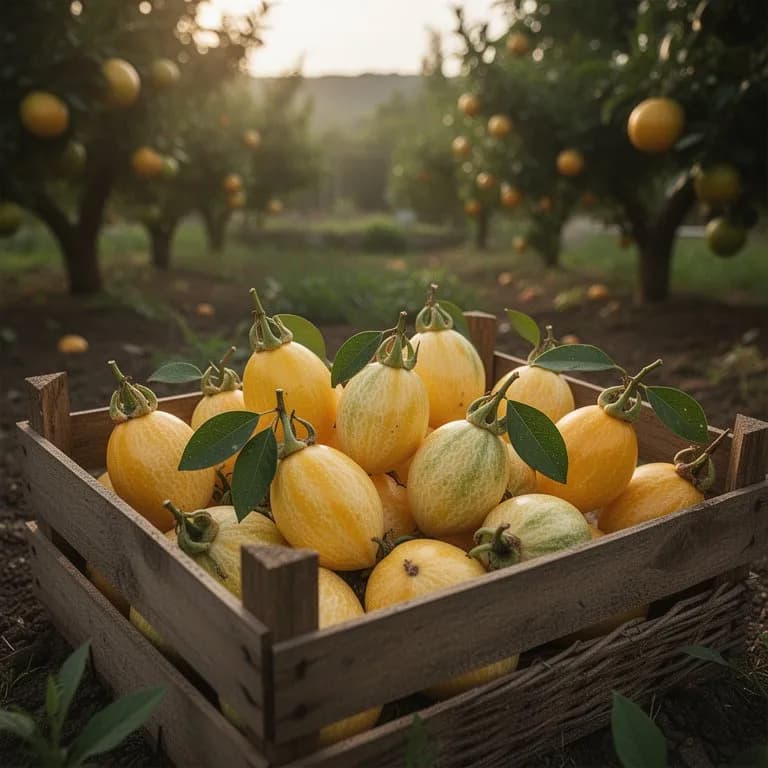
El maracuyá amarillo está listo para cosechar cuando la piel pasa de verde a un amarillo dorado brillante y cede ligeramente al presionarla. Los frutos maduros caen al suelo; recójalos a diario. Los frutos en la liana están listos cuando se desprenden con un suave giro. La pulpa debe ser de color naranja intenso y muy aromática. Más ácido que la variedad violeta, se utiliza principalmente para zumo en lugar de consumo fresco.
se supone que plantas al comenzar el periodo — indica tu fecha real
Cosecha Maracuyá amarillo a tiempo y la planta sigue produciendo.
Almacenamiento y conservación
Se conserva una o dos semanas a temperatura ambiente y hasta un mes en el frigorífico. La pulpa ácida se congela de maravilla en cubiteras durante hasta un año. Es la variedad principal para concentrado comercial de zumo y néctar. Resulta excelente para siropes, coulis y mezclas para cócteles. Para preparaciones suaves, cuele las semillas o déjelas para aportar contraste de textura en postres.
Qué falla — y cómo solucionarlo
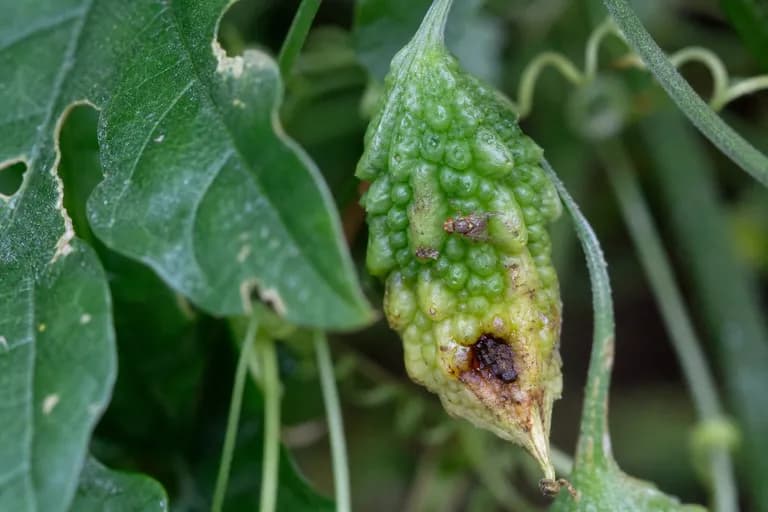
Mosca de la fruta
PlagaPuntos de picadura en la piel del fruto, desarrollo de larvas en el interior de los frutos en maduración, caída prematura y pudrición.
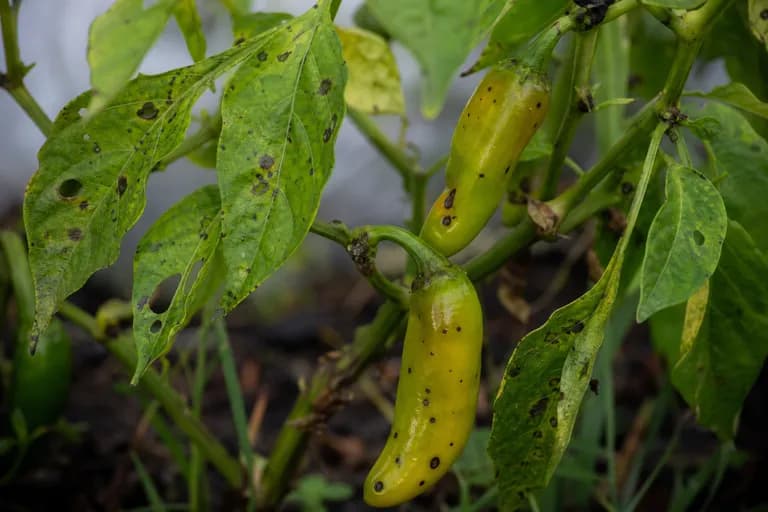
Mancha bacteriana de la hoja
EnfermedadManchas acuosas en las hojas que se expanden hasta formar lesiones angulares y necróticas. Los frutos desarrollan manchas elevadas y corchosas.
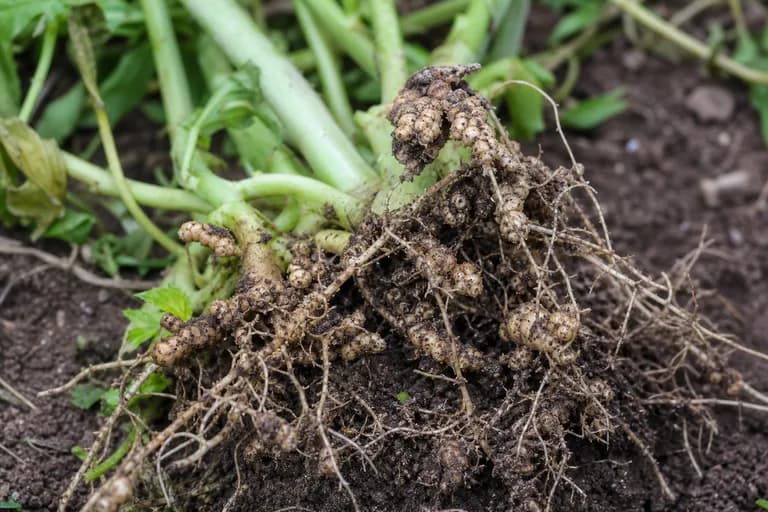
Nematodo agallador de la raíz
PlagaCrecimiento reducido, amarilleo del follaje y formación de agallas en las raíces, lo que limita la absorción de agua y nutrientes.
Solución de problemas comunes
La necesidad de polinización cruzada significa que las lianas aisladas no dan fruto. La ausencia de abejas carpinteras obliga a polinizar a mano. Es una planta estrictamente tropical y muere con cualquier helada. Su crecimiento excesivo puede sobrecargar las estructuras y ahogar a otras plantas. El daño por mosca de la fruta es grave en las regiones tropicales. La corta vida útil de la liana obliga a replantar cada cuatro o seis años.
Consejos de cultivo
- Plante siempre al menos dos lianas de maracuyá amarillo procedentes de distintas fuentes de semilla y muy cerca una de otra: la forma amarilla es en gran medida autoincompatible y necesita polinización cruzada entre plantas genéticamente distintas para un cuajado fiable. Una sola planta puede florecer con abundancia, pero sin un compañero compatible cerca producirá muy poco fruto.
- Construya el soporte más sólido que pueda antes de plantar. Las lianas de maracuyá amarillo son más pesadas y vigorosas que la forma violeta, y un emparrado cargado con varios cientos de frutos grandes puede generar una tensión estructural importante. Los postes de acero galvanizado con alambre de acero inoxidable, diseñados para soportar al menos 200 kg de carga total, son el mínimo para un rendimiento duradero.
- Polinice a mano cada mañana durante la floración para lograr el máximo cuajado. Abra una flor fresca, recoja el polen amarillo brillante con un pincel seco y páselo al estigma pegajoso de tres brazos de otra planta. Incluso en jardines con muchas abejas carpinteras, la polinización manual aumenta de forma constante el rendimiento en un 30 a 50 % en ensayos de cultivo.
- Abone de forma generosa y frecuente: el maracuyá amarillo es una de las lianas frutales más exigentes en nutrientes del jardín. Aplique un fertilizante equilibrado (NPK 10-10-10 o similar) cada tres semanas durante el crecimiento vegetativo, cambie después a una fórmula rica en potasio en cuanto aparezcan los botones florales y manténgalo hasta la cosecha.
- Riegue a fondo y de manera uniforme, en lugar de poco y con frecuencia. El maracuyá amarillo necesita una humedad del suelo constante durante todo el ciclo del fruto: el estrés hídrico provoca caída de flores, aborto de frutos inmaduros y grietas en la piel de los frutos casi maduros. Si es posible, instale riego por goteo en la zona de raíces para aportar humedad fiable y eficiente sin mojar el follaje.
- En zonas con alta presión de mosca de la fruta (las especies de Bactrocera son una plaga principal del maracuyá amarillo en Asia tropical, Australia y el Pacífico), proteja los frutos en desarrollo colocando bolsas protectoras de malla fina sobre los frutos individuales poco después del cuajado, o use trampas cebadas con proteínas en el borde de la liana para reducir el número de adultos antes de que pongan huevos en los frutos en maduración.
- Pode después de cada gran fase de cosecha, no solo una vez al año. El maracuyá amarillo produce varias oleadas en climas tropicales, y recortar los brotes laterales agotados entre un tercio y la mitad después de cada cosecha favorece un rebrote rápido que sostendrá la siguiente floración. Omitir la poda poscosecha conduce, en 18 meses, a un enredo denso e improductivo.
- Compruebe el pH del suelo y manténgalo entre 6.0 y 6.5 para lograr la máxima disponibilidad de nutrientes. El maracuyá amarillo es sensible a la carencia de hierro, que en suelos alcalinos provoca clorosis entre nervios, y a la toxicidad por manganeso en suelos muy ácidos. Corregir el pH es una medida más rentable que aplicar varios correctores de micronutrientes.
- Gestione la pudrición del cuello por Fusarium, la enfermedad del suelo más grave del maracuyá amarillo, mediante prevención y no con tratamientos curativos. Plante en suelo bien drenado, evite dañar las raíces al trabajar la tierra, no entierre la corona y cambie el lugar de plantación cada 4 o 5 años. En regiones donde la enfermedad es endémica, las lianas injertadas sobre Passiflora caerulea o sobre patrones híbridos ofrecen una supervivencia a largo plazo mucho mejor.
- Recoja los frutos maduros a diario del suelo. A diferencia de la forma violeta, el maracuyá amarillo puede madurar y caer durante todo el año en condiciones tropicales, y los frutos en el suelo atraen moscas de la fruta, hormigas y patógenos fúngicos en apenas 24 horas, lo que puede convertirse en problemas mayores de plagas y enfermedades para toda la liana.
Cultiva tu mejor Maracuyá amarillo — y todo lo que la rodea.
Empieza un plan gratis hoy. Diseña tus bancales, coloca tu Maracuyá amarillo y deja que PlotMyGarden gestione el momento, el espaciado, las asociaciones y los recordatorios de la semilla a la cesta.
Elige tu Maracuyá amarillo
Yellow Giant
Fruto especialmente grande con abundante pulpa ácida, cultivado ampliamente en Brasil para la producción comercial de concentrado de zumo.
Golden Granadilla
Una variedad amarilla más dulce y con menos acidez, más adecuada para consumo en fresco que los tipos flavicarpa típicos.
Panama Red
Un híbrido con piel rojiza amarilla que combina el vigor de la forma amarilla con parte de la dulzura de la variedad violeta.
Los maracuyás amarillos frescos rara vez se encuentran en supermercados convencionales de regiones templadas; cuando aparecen, se venden a precios premium de 3 a 6 € por fruto en tiendas especializadas o proveedores de fruta tropical, y el concentrado de pulpa importado se vende con costes similares por ración. Una sola liana de maracuyá amarillo bien establecida en un clima cálido y libre de heladas puede producir entre 200 y 500 frutos por temporada en varias oleadas de cosecha. Incluso con estimaciones conservadoras de venta al por menor, una liana productiva representa entre 600 y 1.500 € de valor anual en fruto. Más allá del fruto fresco, el zumo, la mousse y los siropes caseros de maracuyá amarillo, todos elaborables con una cosecha doméstica sencilla, alcanzan precios altos en mercados de agricultores y tiendas especializadas, lo que la convierte en una de las frutales más valiosas para horticultores de climas tropicales y subtropicales.
Recetas rápidas
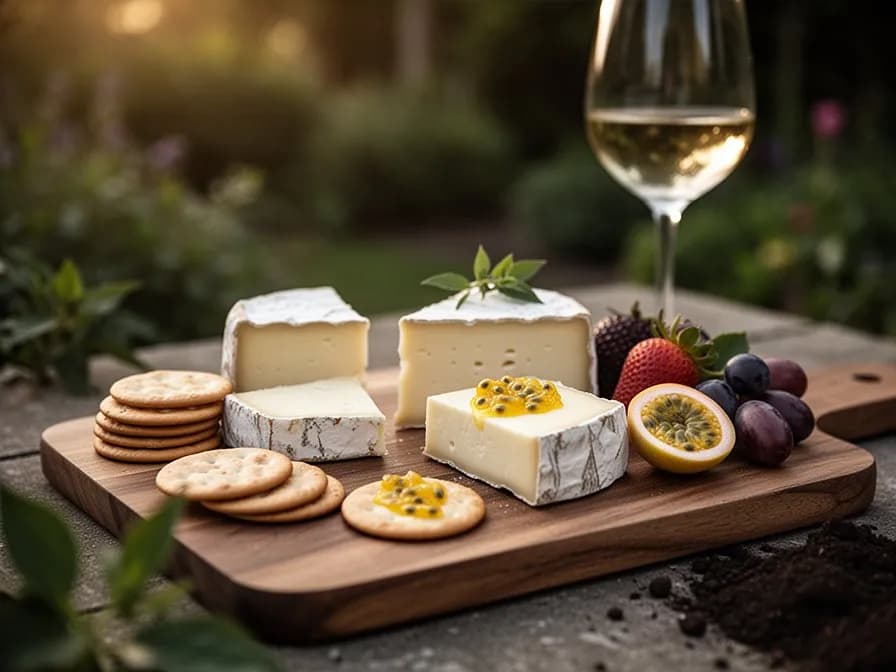
Mousse de maracuyá amarillo
20 min más 2 horas de refrigeraciónUn postre clásico brasileño que pone en valor el color luminoso y el zumo intensamente aromático del maracuyá amarillo. Ligera, aireada y de sabor brillante, esta mousse se prepara con rapidez y ofrece un final impresionante para cualquier comida. La acidez natural del maracuyá amarillo corta la riqueza de la nata para lograr un equilibrio perfecto.
5 ingredientesCaipirinha tropical de maracuyá
5 minUn clásico cóctel brasileño realzado con zumo fresco de maracuyá amarillo. La acidez intensa y el aroma floral de la variedad amarilla combinan de maravilla con el carácter nítido de la cachaça. También resulta deliciosa sin alcohol, sustituyendo el destilado por agua con gas: el aroma de la fruta sostiene la bebida por sí solo.
5 ingredientesVinagreta de maracuyá amarillo
5 minUn aderezo vibrante y afrutado que transforma las ensaladas verdes sencillas, el pescado a la parrilla o las verduras asadas. La elevada acidez natural del zumo de maracuyá amarillo hace que apenas necesite vinagre añadido: la fruta hace la mayor parte del trabajo y aporta una frescura tropical compleja que combina especialmente bien con berros, aguacate y gambas a la parrilla.
6 ingredientesUsos culinarios
La variedad comercial de zumo produce un concentrado intensamente ácido y aromático. Resulta excelente en bebidas tropicales, mezclas para cócteles y sorbetes. También se usa en salsas para pescado y aves. Es magnífico en mousse, tartas de queso y helados. Su acidez equilibra a la perfección los postres dulces. Da un sirope concentrado ideal para regar sobremesas.
Qué contiene
Beneficios para la salud
- El extraordinario contenido de fibra soluble del maracuyá amarillo, superior a 10 g por 100 g, alimenta la microbiota intestinal beneficiosa, favorece la regularidad digestiva y ayuda a reducir el colesterol LDL, lo que lo convierte en una de las frutas más ricas en fibra que puede cultivar un huerto doméstico.
- El maracuyá amarillo es una fuente importante de piceatanol, un polifenol estilbenoide derivado del resveratrol que ha mostrado propiedades antiinflamatorias, antiproliferativas y cardioprotectoras en varios estudios de laboratorio y clínicos.
- Los alcaloides y flavonoides de pasiflorina presentes en la pulpa y en las semillas interactúan con los receptores GABA-A del sistema nervioso central y producen un efecto ansiolítico documentado, que puede contribuir a reducir la ansiedad y favorecer un sueño reparador con un consumo regular.
- Una ración de 100 g de maracuyá amarillo aporta alrededor del 40 % de la ingesta diaria recomendada de vitamina C y apoya las defensas inmunitarias, la síntesis de colágeno en la piel, la absorción de hierro de alimentos vegetales y la protección antioxidante frente al estrés oxidativo.
- Los carotenoides responsables del color amarillo anaranjado brillante de la pulpa, entre ellos beta-caroteno, licopeno y beta-criptoxantina, son potentes antioxidantes liposolubles que protegen las células de la retina y se asocian con un menor riesgo de enfermedades oculares relacionadas con la edad.
- A pesar de su sabor intensamente dulce y ácido, el maracuyá amarillo tiene un índice glucémico bajo, porque su alto contenido en fibra ralentiza la digestión y la absorción de los azúcares naturales, evita picos de glucosa y lo hace apto para personas con diabetes tipo 2 o resistencia a la insulina.
De dónde viene Maracuyá amarillo
El maracuyá amarillo (Passiflora edulis f. flavicarpa) comparte su origen con la variedad violeta en las selvas subtropicales del sur de Brasil, Paraguay y el norte de Argentina, donde la forma silvestre ancestral de Passiflora edulis evolucionó durante milenios. Los pueblos indígenas de Sudamérica consumían el fruto mucho antes del contacto europeo y apreciaban tanto su pulpa agridulce como las propiedades calmantes de las hojas y las raíces, un uso tradicional que la investigación farmacológica sobre los alcaloides de pasiflorina de la planta ha venido a confirmar.
La distinción entre la forma botánica violeta y la amarilla probablemente surgió por selección natural en distintas zonas de altitud y clima. La forma amarilla (flavicarpa, "de fruto amarillo") parece haberse impuesto en regiones tropicales de tierras bajas, donde el calor, la humedad y las condiciones al nivel del mar favorecieron sus rasgos particulares: mayor vigor, frutos más grandes, mayor acidez y una resistencia a enfermedades superior a la de su hermana de fruto violeta.
Los colonizadores europeos conocieron el maracuyá en el siglo XVI, cuando los misioneros jesuitas en Sudamérica documentaron tanto la extraordinaria flor simbólica —a la que llamaron Flos passionis por su supuesta semejanza con los instrumentos de la Pasión de Cristo— como el fruto comestible. El cultivo comercial de la forma amarilla se desarrolló sobre todo en el siglo XX, cuando el sector agrario de Brasil reconoció su potencial como fruta para zumo. Su resistencia a enfermedades, su vigor y su alto contenido en zumo la hicieron ideal para la producción tropical a gran escala, algo que la forma violeta, más delicada, no podía igualar.
Hoy el maracuyá amarillo domina la producción comercial mundial. Brasil, Colombia, Ecuador, Perú e Indonesia figuran entre los principales países productores, y el fruto se procesa sobre todo en concentrados de zumo vendidos en todo el mundo. En los huertos tropicales del Caribe, América Central, el Sudeste Asiático y las islas del Pacífico, el maracuyá amarillo es una planta habitual del patio trasero, apreciada por su productividad extraordinaria, su espectacular floración diaria y los frutos intensamente aromáticos que ofrece con un mantenimiento mínimo. Su presencia cultural es especialmente fuerte en Brasil, donde el maracuyá amarillo aromatiza desde refrescos comerciales y postres helados hasta variantes tradicionales de caipirinha y mousses caseras servidas en reuniones familiares.
Maracuyá amarillo: ¿sabías que?
Datos fascinantes sobre Maracuyá amarillo
El maracuyá amarillo (Passiflora edulis f. flavicarpa) es la variedad de maracuyá con mayor importancia comercial en el mundo: solo Brasil produce más de un millón de toneladas al año, la gran mayoría de la forma amarilla cultivada para la elaboración industrial de zumo.
Maracuyá amarillo: preguntas frecuentes
¿Cuándo debo plantar Maracuyá amarillo?
¿Cuáles son buenas plantas acompañantes para Maracuyá amarillo?
¿En qué zonas de rusticidad puede crecer Maracuyá amarillo?
¿Cuánto sol necesita Maracuyá amarillo?
¿A qué distancia debo espaciar Maracuyá amarillo?
¿Qué plagas y enfermedades afectan a Maracuyá amarillo?
¿Cómo almaceno Maracuyá amarillo después de la cosecha?
¿Cuáles son las mejores variedades de Maracuyá amarillo para cultivar?
¿Qué suelo necesita Maracuyá amarillo?
¿Por qué mi liana de maracuyá amarillo florece pero no da fruto?
¿Cómo sé cuándo el maracuyá está maduro y listo para cosechar?
¿Puedo cultivar maracuyá amarillo en un clima frío o en contenedores?
¿Cuál es la diferencia entre el maracuyá violeta y el amarillo?
¿Con qué frecuencia debo abonar mi liana de maracuyá?
¿Cómo propago el maracuyá a partir de esquejes?
Acabas de leer la teoría. Ahora cultívala en piloto automático.
Todo lo que hace que Maracuyá amarillo sea delicado — el momento, el espaciado, las asociaciones, la ventana de cosecha — es justo lo que PlotMyGarden resuelve por ti, para cada planta de tu huerto.
Un plan que conoce tu clima
Indica tu ubicación una vez. Recibe fechas de siembra, abonado y cosecha basadas en tu última helada real y el pronóstico en vivo — sin adivinar con un sobre genérico.
De la sección “Cuándo plantar”Planificador de bancales de arrastrar y soltar
Diseña bancales sobre una cuadrícula. Cada planta encaja con su espaciado correcto y ves toda la temporada antes de gastar un céntimo en semillas.
De la sección “Cultivo”Conflictos de asociación, detectados a tiempo
Más de 200 buenas y malas combinaciones comprobadas en vivo mientras plantas — para que un error que arruine la temporada nunca llegue a la tierra.
De la sección “Asociaciones”Recordatorios que sí vas a seguir
“Riega las judías.” “Recoge hoy antes de que se pase.” Oportunos, concretos y ligados a las plantas que de verdad cultivas.
De la sección “Cosecha”Escalonado, programado
¿Quieres cosechar seis semanas en vez de seis días? Reparte tus siembras automáticamente y te avisa cuando toca el siguiente lote.
De la sección “Cuándo plantar”Un registro que se vuelve más listo
Cada cosecha que registras le enseña tu huerto. El plan del año que viene parte de lo que de verdad funcionó en tu suelo, no en un manual.
De la sección “Resumen”Planta estos junto a Maracuyá amarillo
Más Frutas de vid
Mantén Maracuyá amarillo lejos de estos
Cultiva tu mejor Maracuyá amarillo — y todo lo que la rodea.
Empieza un plan gratis hoy. Diseña tus bancales, coloca tu Maracuyá amarillo y deja que PlotMyGarden gestione el momento, el espaciado, las asociaciones y los recordatorios de la semilla a la cesta.