Sunflower
A towering annual with large flower heads that track the sun and produce nutritious seeds for birds and humans.





On this pageOverview
Meet Sunflower
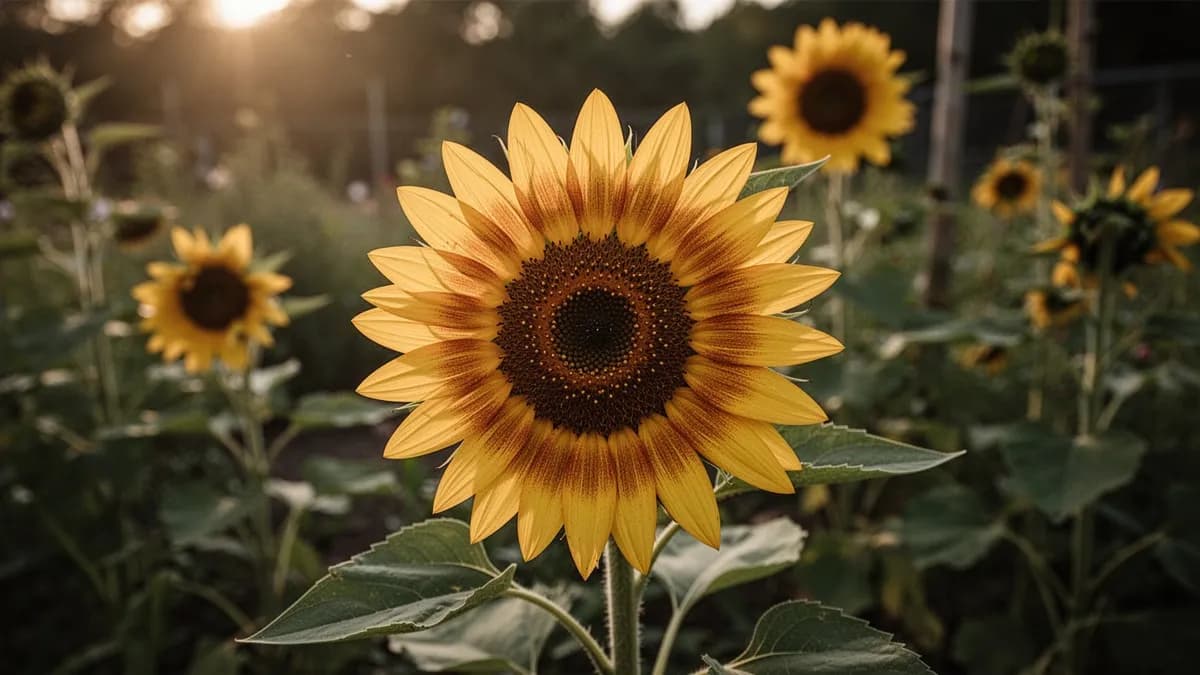
A towering annual with large flower heads that track the sun and produce nutritious seeds for birds and humans. Sow directly in the garden after frost in rich, well-drained soil and provide support stakes for tall varieties that can exceed ten feet. Sunflowers are remarkably tolerant of heat and drought once established, though consistent watering during flowering improves seed fill. Plant in blocks or rows as windbreaks and pollinator corridors, and leave spent heads on stalks in autumn to feed visiting songbirds.
When to plant Sunflower
Sunflower seeds germinate best when soil temperature reaches 55 to 70 degrees Fahrenheit. Sow directly outdoors one inch deep after the last frost date, as sunflowers develop a taproot that resents transplanting. For an earlier start, sow in biodegradable peat pots two to three weeks before the last frost and transplant the entire pot to avoid root disturbance. Seeds germinate in seven to fourteen days. Successive sowings every two weeks from mid-spring through early summer extend the bloom season.
Your Sunflower Year
Composed for Zone 7 · typical seasons · frost passes Apr 2, returns Nov 1
Plant Sunflower Apr – Jun, pick Aug – Oct. Check the planting methods below and set your climate to personalize these windows.
How to grow Sunflower
Prepare a sunny bed with loose, well-drained soil amended with compost to a depth of about twelve inches. Sunflowers are not fussy about pH but perform best in slightly acidic to neutral soil around 6.0 to 7.5. Direct sow seeds one inch deep after all danger of frost has passed, spacing them eighteen to twenty-four inches apart for large-headed varieties or twelve inches for branching types.
Water deeply at planting and then provide about one inch of water per week, increasing during bud formation and flowering. Stake tall varieties when they reach about three feet to prevent toppling in wind. Avoid excessive nitrogen fertilizer, which promotes tall, weak stems at the expense of flower development.
Once established, sunflowers require minimal care. Apply a light layer of mulch around the base to conserve moisture and suppress weeds. Side-dress with a balanced fertilizer when the first true leaves appear and again at bud stage. Monitor for birds eating seeds as heads mature and cover with netting if desired.
10 plants fit a 4 × 8 ft bed
Each Sunflower wants 45 cm of elbow room. The planner keeps that spacing for you — every plant, every bed.
Sunflower's best neighbours
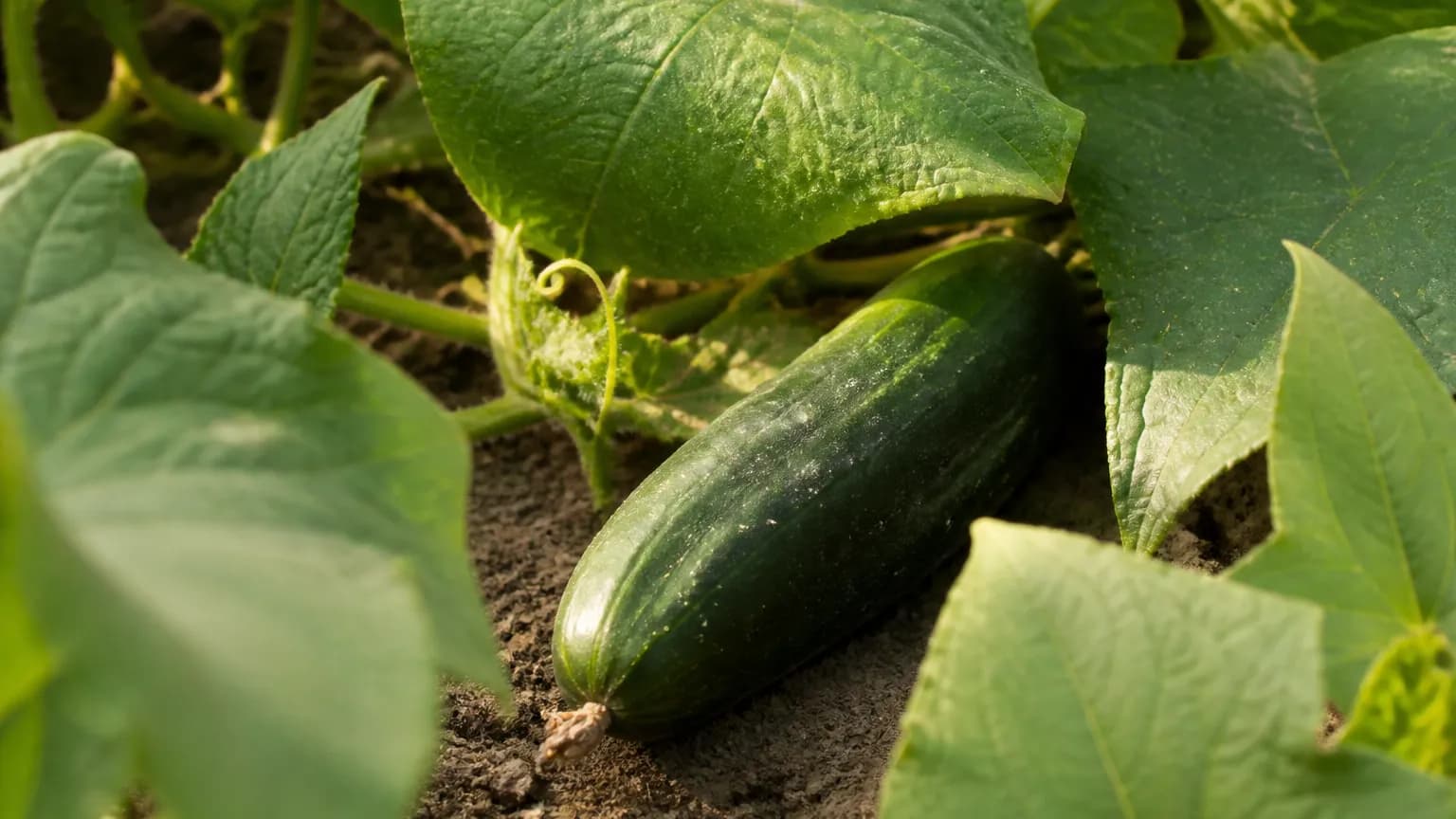
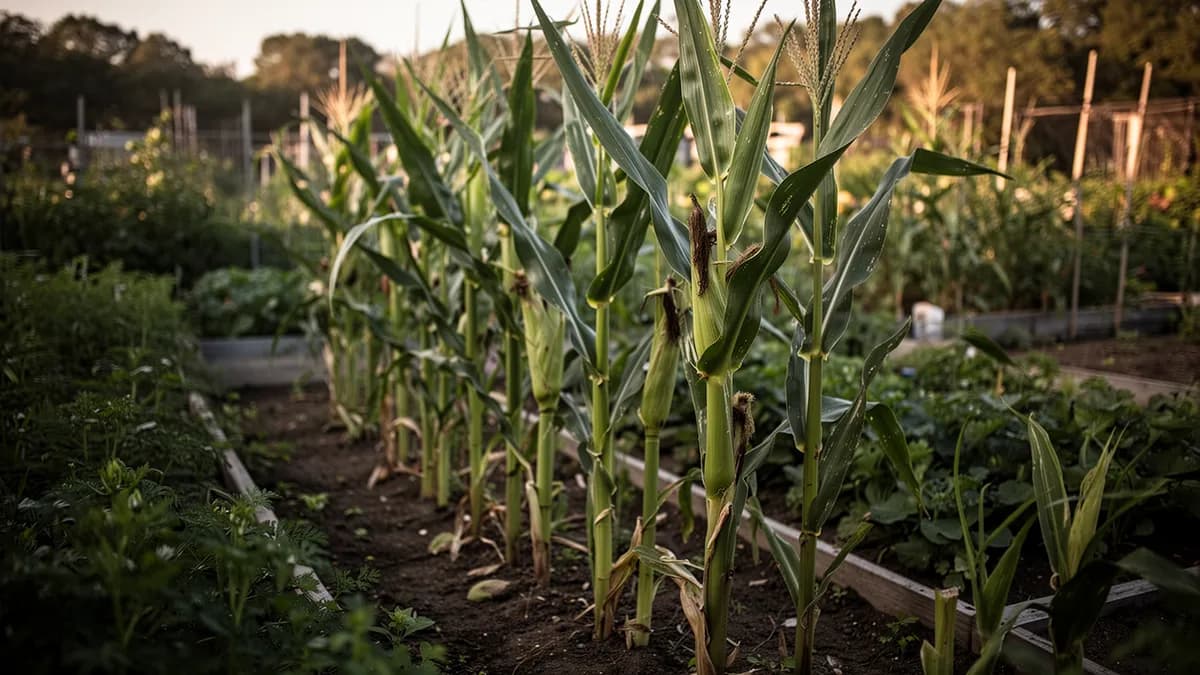
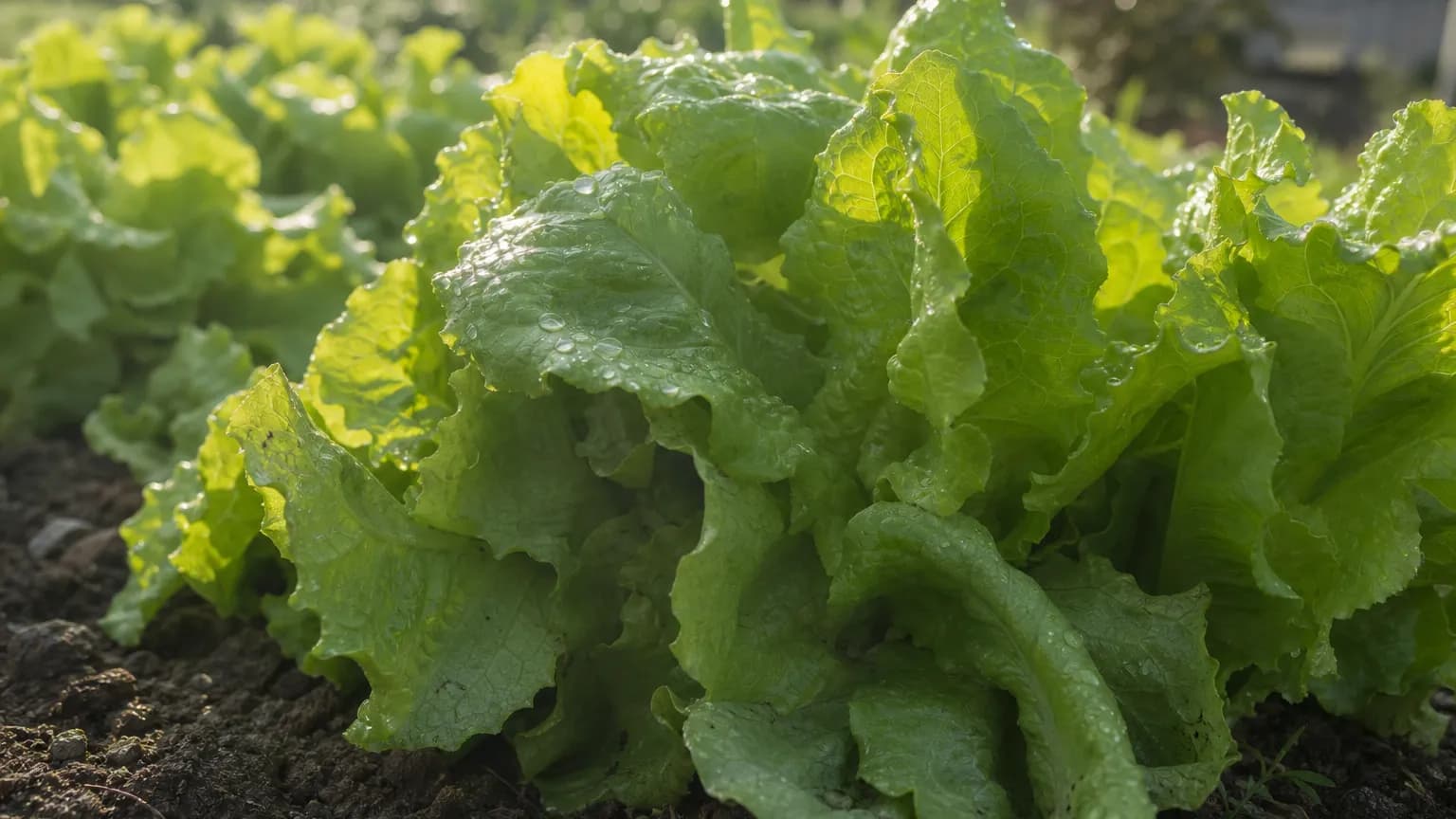
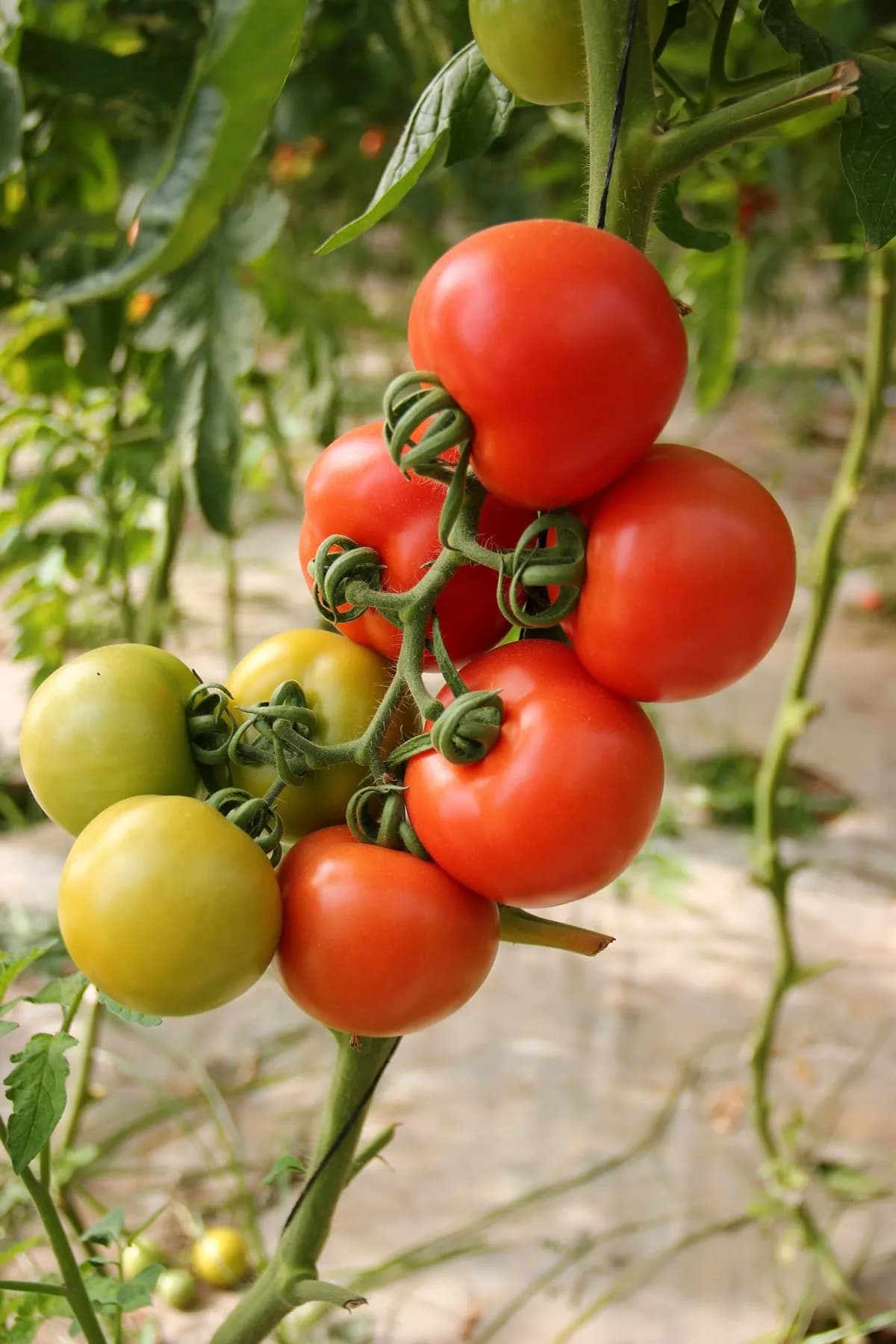
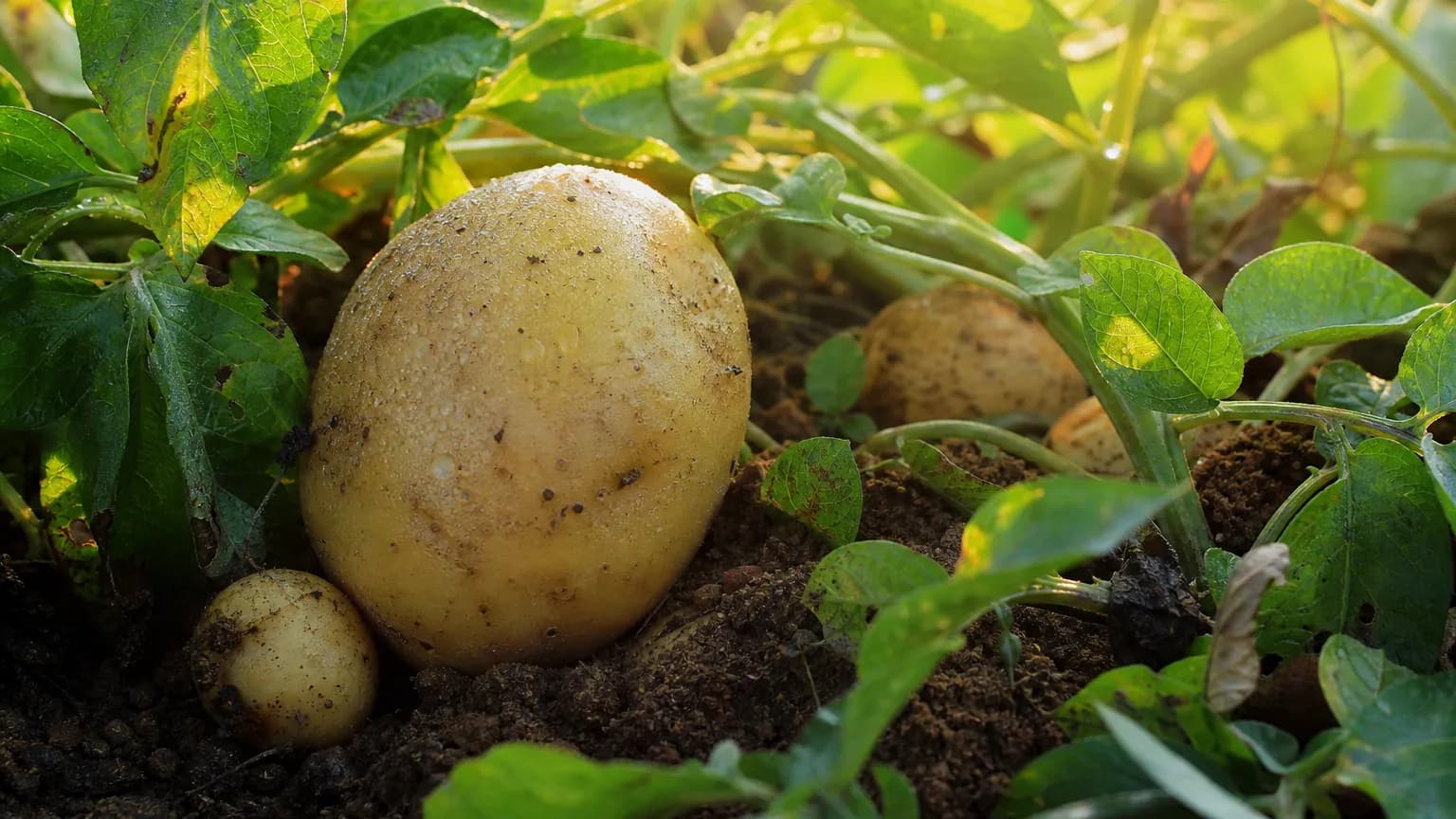
Sunflowers make excellent companions for cucumbers, squash, and corn by attracting pollinators and providing wind protection. Their tall stature offers light shade for lettuce and other cool-season crops. The roots support beneficial mycorrhizal fungi that help neighboring plants absorb nutrients. Keep sunflowers away from potatoes, as both are susceptible to similar diseases and compete for nutrients.
Cucumber belongs beside it. Potato doesn't.
Old growers' knowledge, checked against Sunflower's real companion table below — test any plant you're growing.
Try Sunflower in a bed — right here
A real planner bed with Sunflower already in it. Tap a companion to place it and watch the pairing checks answer — green for good neighbours, red for a clash.


Related growing guides
Feed it well
Sunflowers thrive in average to rich, well-drained soil with a pH of 6.0 to 7.5. They are tolerant of a wide range of soil types including sandy and clay soils. Work two to three inches of compost into the planting area before sowing. Apply a balanced 10-10-10 fertilizer at planting time and side-dress once more when flower buds begin to form. Avoid high-nitrogen feeds which produce tall, leggy growth with small heads.
Ideal Temperature
Hardiness Zone Compatibility
From seed to harvest, stage by stage
Seed Germination
Sunflower seeds are large and easy to handle, making them ideal for direct sowing. Planted 2.5 cm (1 inch) deep in warm soil at least 10°C (50°F), the seeds absorb moisture rapidly and split their hulls within 2-3 days. The thick hypocotyl pushes the seed coat above the soil surface, where the large cotyledons unfold.
Seedling Development
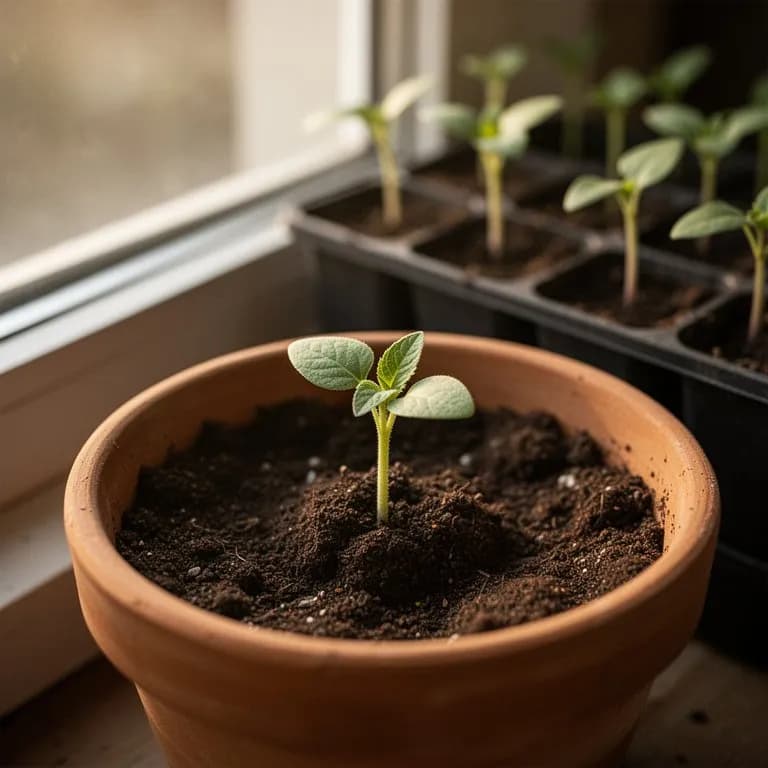
The first true leaves emerge as rough, oval-shaped foliage, followed by increasingly larger heart-shaped leaves. The stem thickens rapidly and the root system expands to support the tall growth ahead. Seedlings grow quickly in warm conditions, adding several centimeters per day.
Rapid Vegetative Growth
This is the most dramatic growth phase, during which sunflowers can grow 5-10 cm per day under optimal conditions. The stem elongates rapidly, large leaves develop in an alternating pattern, and the plant exhibits heliotropism — the growing tip tracks the sun from east to west each day, returning to face east overnight. The main stem becomes woody and sturdy.
Bud Formation and Flowering
The terminal bud swells and develops into the characteristic sunflower head (capitulum), which is actually composed of hundreds to thousands of individual tiny flowers. The outer ray florets open first, displaying the colorful petals, while the disc florets in the center open in a spiral pattern from the outside in over 5-10 days. Once flowering begins, heliotropism stops and the head faces east permanently.
Seed Development
After pollination, the disc florets develop into seeds arranged in an elegant Fibonacci spiral pattern. The petals wilt and drop, and the back of the head turns from green to yellow to brown. Seeds plump up as they fill with oils and nutrients. The entire head becomes heavy and droops downward as the seeds mature.
Harvest and Drying
When the back of the sunflower head has turned completely brown and the seeds are hard and fully developed, the head can be cut for drying. Seeds should detach easily when rubbed. A single large sunflower head can contain over 1,000 seeds, each packed with protein, healthy fats, and essential vitamins and minerals.
Sow seeds directly outdoors after the last frost date when soil temperature reaches at least 10°C. Keep soil evenly moist but not soggy. Protect from birds and squirrels with netting or row cover until seedlings are established.
Caring for Sunflower month by month
What to do each month for your Sunflower
October
You are hereComplete seed harvest and drying. Process seeds for storage — raw for planting next year or roasted for eating. Cut down dead stalks and chop them for composting (they are high in carbon). Note which varieties performed best.
Know exactly what to do in your garden — every month
One email at the start of each month: what to sow, plant, and tackle right now — for your Sunflower and everything growing around it. Plus a short starter course that helps you dodge the classic mistakes.
- What to do, right now
- Matched to your season
- Starter course included
Harvesting Sunflower
Cut sunflowers for bouquets when petals have just begun to open and the center disk is still tight. For seed harvest, leave heads on stalks until the back turns brown and seeds are plump, then cut the head with a foot of stem and hang upside down in a dry, well-ventilated area. To collect seeds, rub two dried heads together or scrape seeds out with a fork. Deadhead branching varieties regularly to encourage more blooms.
assuming you plant when the window opens — set your real date
Once the back of the head turns fully brown, petals have dropped, and seeds are plump with hard, striped shells.
Storage & Preservation
Fresh-cut sunflowers last seven to twelve days in a vase with clean water and floral preservative. Change water every two days and recut stems at an angle. To dry sunflower heads for decoration, hang them upside down in a warm, dark, well-ventilated space for two to three weeks. Harvested seeds can be stored in airtight containers in a cool, dry place for up to a year or roasted for snacking.
What goes wrong — and the fix
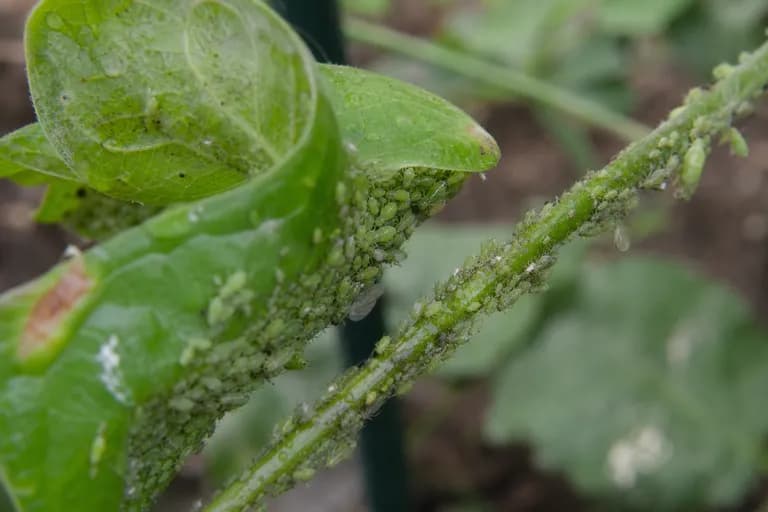
Aphids
PestClusters of small green or black insects on stems and undersides of leaves, sticky honeydew residue, curled or yellowing foliage.

Downy Mildew
DiseaseYellow or pale green patches on upper leaf surfaces with grayish-purple fuzzy growth on the undersides. Leaves may curl and die prematurely.
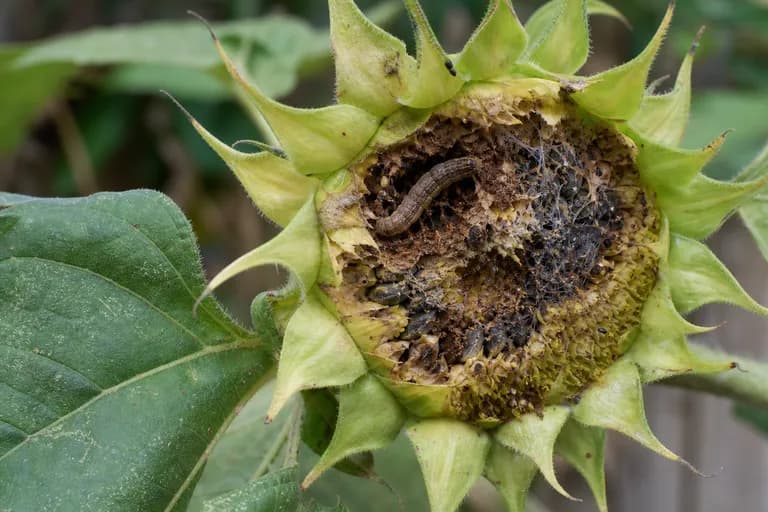
Sunflower Moth
PestLarvae bore into developing seed heads, leaving frass and webbing. Damaged heads may rot or produce hollow, empty seeds.
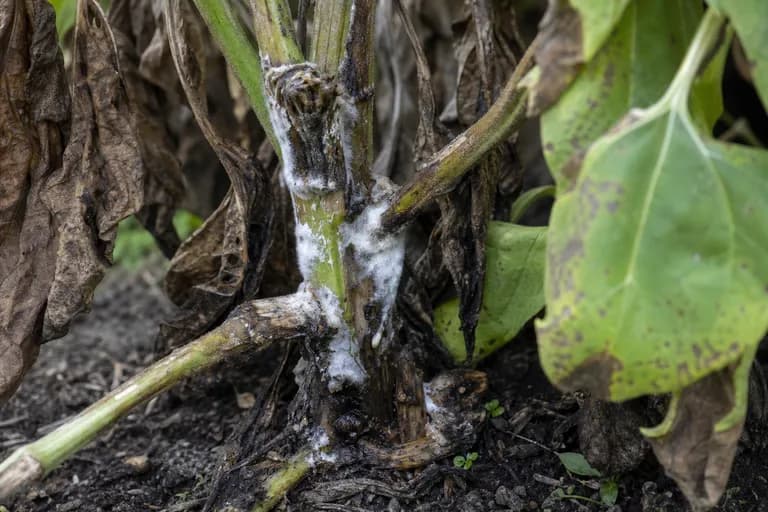
Sclerotinia White Mold
DiseaseWhite cottony fungal growth on stems, especially near the base. Plants wilt suddenly and stems may break. Internal stem tissue becomes soft and watery.
Troubleshooting Common Problems
The most frequent issues with sunflowers are lodging in wind due to top-heavy heads on tall stems, which is prevented by staking. Squirrels and birds often raid seed heads before harvest, so protective netting may be needed. Powdery mildew can appear in humid conditions but rarely causes serious harm. Poor germination usually results from planting in cold, wet soil before it reaches at least sixty degrees Fahrenheit.
Growing Tips
- Plant sunflower seeds directly outdoors rather than starting indoors, as they develop a taproot quickly and transplanting can stunt growth — they germinate readily in warm soil within 7-10 days.
- Choose a location with at least 6-8 hours of direct sunlight daily and some wind protection for tall varieties, as the large leaves and heavy heads act as sails in strong gusts.
- Space standard varieties 30-45 cm apart and giant varieties 60-75 cm apart to ensure adequate airflow and root space — overcrowding leads to spindly stems and smaller flower heads.
- Water deeply once per week with 2.5-5 cm of water rather than frequent shallow watering to encourage the deep taproot system that makes sunflowers drought-tolerant once established.
- Avoid over-fertilizing with nitrogen, which produces tall plants with weak stems and small heads — a single application of balanced fertilizer or compost at planting time is usually sufficient.
- Stake tall varieties when plants reach 60 cm high using sturdy bamboo poles or metal stakes and soft ties, securing the stem at two or three points as it grows to prevent wind damage.
- For a continuous display of blooms from midsummer through early fall, succession-plant a new row of sunflower seeds every 2-3 weeks from late spring through early summer.
- Grow sunflowers as a living trellis for climbing beans or cucumbers — the sturdy stems provide excellent support and the combination makes efficient use of garden space.
- To save seeds for next year's planting, harvest heads when the back turns fully brown, dry them for two weeks in a well-ventilated area, and store seeds in paper envelopes in a cool, dry place.
- If you are growing sunflowers for cut flowers, choose pollenless varieties like 'ProCut' or 'Sunrich' to avoid staining furniture and clothing, and harvest when petals are just starting to open.
Grow your best Sunflower yet — and everything around it.
Start a free plan today. Lay out your beds, drop in your Sunflower, and let PlotMyGarden handle the timing, spacing, companions and reminders from seed to harvest basket.
Pick your Sunflower
Mammoth Russian
The classic giant sunflower reaching ten to twelve feet with large seed heads up to a foot across, ideal for seed production and dramatic garden statements.
Teddy Bear
A dwarf variety growing two to three feet tall with fully double, fluffy golden blooms perfect for containers and children's gardens.
Autumn Beauty
A branching variety producing multiple medium-sized heads in warm shades of gold, bronze, burgundy, and bicolors on five to six foot stems.
Lemon Queen
A branching perennial-like sunflower reaching six feet with pale lemon-yellow petals, outstanding for pollinators and cottage garden style.
Sunrich Orange
A pollenless single-stem variety bred specifically for cut flowers with a long vase life and tidy, non-staining blooms.
A single packet of sunflower seeds costing $2-4 can produce dozens of plants, each yielding 1,000+ seeds. A small patch of 10-15 sunflower plants can produce 2-3 kg of edible seeds worth $15-25 at retail prices. Growing sunflowers for microgreens is especially cost-effective — a $5 bag of seeds produces weeks of sprouts that would cost $30-50 at farmers markets. As a bonus, sunflowers attract pollinators that boost yields of nearby vegetable crops.
Quick recipes
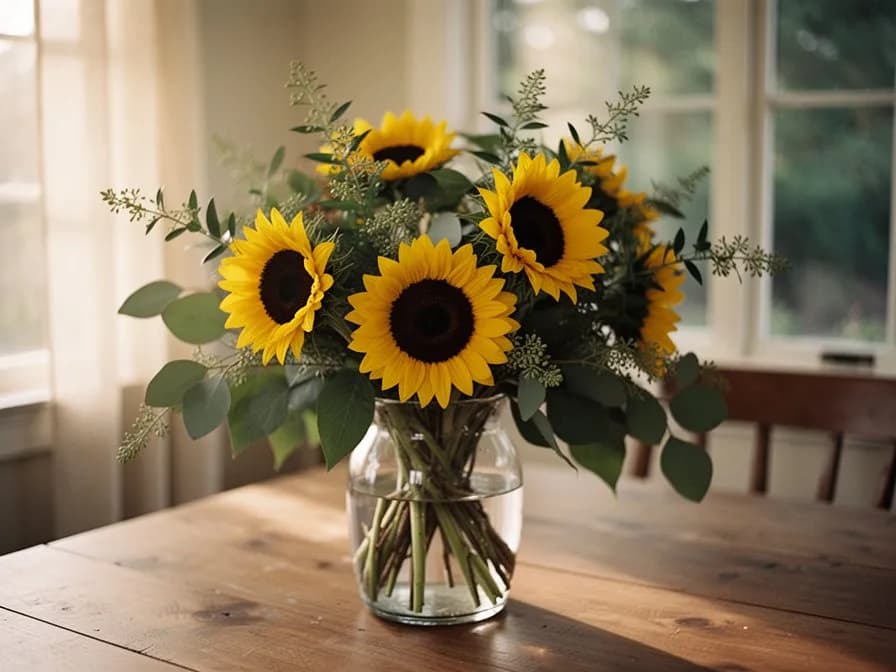
Honey Roasted Sunflower Seeds
25 minutesFreshly harvested sunflower seeds roasted with a sweet honey glaze and a touch of sea salt. This simple recipe transforms garden-fresh seeds into a crunchy, addictive snack packed with protein and healthy fats that stores well for weeks.
5 ingredientsSunflower Seed Pesto
10 minutesA nut-free alternative to traditional basil pesto, using garden-fresh sunflower seeds as the base. This creamy, flavorful pesto is perfect for pasta, sandwiches, or as a dip, and is ideal for those with tree nut allergies.
7 ingredientsSunflower Sprout and Avocado Salad
15 minutesTender sunflower microgreens paired with creamy avocado, cherry tomatoes, and a bright lemon vinaigrette. Sunflower sprouts are one of the most nutritious microgreens, rich in zinc, iron, and complete protein with a mild, nutty flavor.
7 ingredientsWhat's inside
Health Benefits
- Rich in vitamin E and selenium, sunflower seeds provide powerful antioxidant protection that helps neutralize free radicals and may reduce the risk of chronic diseases including heart disease and certain cancers.
- The high magnesium content (91 mg per 28g serving) supports muscle and nerve function, helps regulate blood sugar levels, and contributes to healthy blood pressure management.
- Sunflower seeds contain significant phytosterols, particularly beta-sitosterol, which studies suggest can help lower LDL cholesterol by blocking cholesterol absorption in the digestive tract.
- As an excellent source of B vitamins including folate, niacin, and B6, sunflower seeds support energy metabolism, red blood cell formation, and nervous system health.
- The combination of protein (5.5g per 28g), healthy fats, and fiber creates a satiating snack that can help with weight management by reducing overall calorie intake at subsequent meals.
- Sunflower seeds provide anti-inflammatory compounds including vitamin E, flavonoids, and phenolic acids that may help reduce markers of systemic inflammation linked to chronic disease.
Where Sunflower comes from
The sunflower (Helianthus annuus) is native to North America, where archaeological evidence shows it was domesticated by Indigenous peoples in the region of present-day eastern United States around 3000 to 5000 years ago. Native Americans cultivated sunflowers as an important food crop long before the arrival of Europeans, using the seeds as a staple food source ground into flour, pressed for oil, and eaten roasted. The seeds also served medicinal and ceremonial purposes, and the petals were used to produce yellow and purple dyes for textiles and body paint.
Spanish explorers brought sunflowers to Europe in the early 1500s, where they were initially grown as ornamental curiosities in botanical gardens. The plant spread across Europe over the following centuries, but it was in Russia during the 18th and 19th centuries that sunflowers found their greatest commercial potential. Peter the Great is credited with introducing the plant to Russia, and the Russian Orthodox Church's classification of sunflower oil as acceptable during Lent fasting periods fueled enormous demand. Russian agronomists developed high-oil varieties, transforming the sunflower into a major oilseed crop.
By the late 1800s, improved Russian varieties were brought back to North America by immigrants, completing a remarkable round-trip journey for the species. Today, sunflowers are cultivated worldwide on every inhabited continent, with Ukraine, Russia, Argentina, and the European Union among the largest producers. The crop serves dual purposes: confectionery types produce large, striped seeds for snacking, while oilseed types yield smaller, black seeds pressed for cooking oil. Modern breeding has also produced a vast array of ornamental varieties in colors ranging from pale cream to deep burgundy, making sunflowers one of the most beloved garden flowers globally.
Sunflower: did you know?
Fascinating facts about Sunflower
Young sunflower plants exhibit heliotropism, following the sun from east to west during the day and resetting overnight, but once they mature and begin flowering, the heads permanently face east to warm up faster in the morning and attract more pollinators.
Sunflower questions, answered
When should I plant Sunflower?
What are good companion plants for Sunflower?
What hardiness zones can Sunflower grow in?
How much sun does Sunflower need?
How far apart should I space Sunflower?
What pests and diseases affect Sunflower?
How do I store Sunflower after harvest?
What are the best Sunflower varieties to grow?
What soil does Sunflower need?
Do sunflowers really follow the sun across the sky?
Are all parts of the sunflower plant edible?
Why is my sunflower drooping or falling over?
How do I know when sunflower seeds are ready to harvest?
Can I grow sunflowers in containers or pots?
Do sunflowers come back every year or do I need to replant?
You just read the theory. Now grow it on autopilot.
Everything that makes Sunflower fiddly — the timing, the spacing, the companions, the harvest window — is exactly what PlotMyGarden handles for you, for every plant in your garden.
A plan that knows your weather
Set your location once. Get sow, feed and harvest dates built around your real last-frost date and live forecast — no more guessing from a generic seed packet.
From the “When to plant” sectionDrag-and-drop bed planner
Design beds on a grid. Every plant snaps to its proper spacing, and you can see your whole season laid out before you spend a cent on seed.
From the “Growing guide” sectionCompanion conflicts, caught early
200+ good-and-bad pairings checked live as you plant — so a season-wrecking mistake never makes it into the ground.
From the “Companions” sectionReminders you'll actually act on
“Water the beans.” “Pick today before it turns.” Timely, specific, and tied to the plants you're really growing.
From the “Harvest” sectionSuccession, scheduled
Want a harvest for six weeks, not six days? It spaces your sowings automatically and reminds you when each new block is due.
From the “When to plant” sectionA record that gets smarter
Every harvest you log teaches it your garden. Next year's plan starts from what actually worked in your soil, not a textbook's.
From the “Overview” sectionPlant these alongside Sunflower
More Annuals
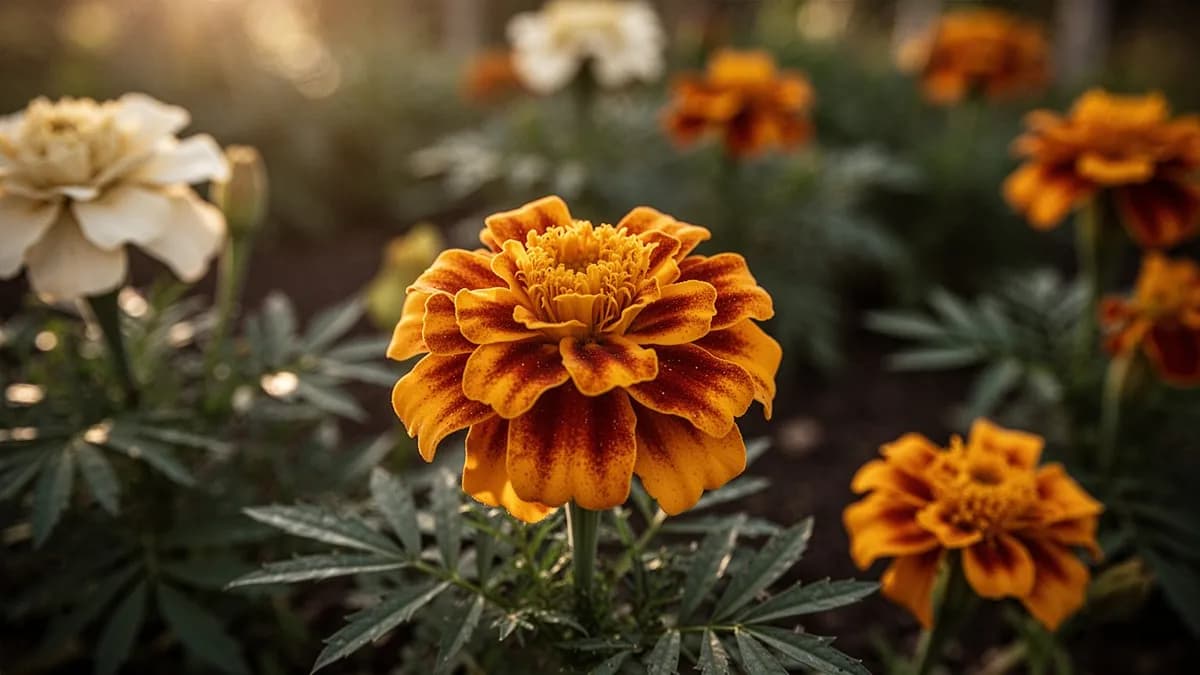
Keep Sunflower away from these
Garden plans featuring Sunflower
Grow your best Sunflower yet — and everything around it.
Start a free plan today. Lay out your beds, drop in your Sunflower, and let PlotMyGarden handle the timing, spacing, companions and reminders from seed to harvest basket.