Table Grape
A European grape cultivar bred specifically for fresh eating, with large, crisp berries and thin skins.





On this pageOverview
Meet Table Grape
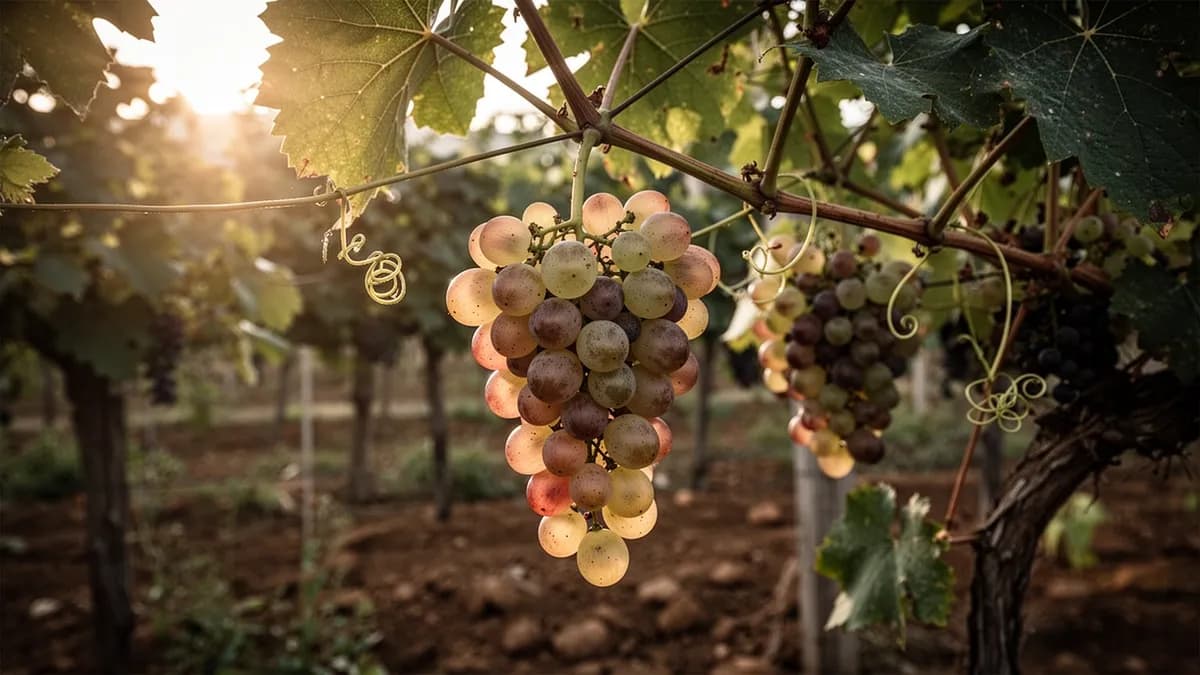
A European grape cultivar bred specifically for fresh eating, with large, crisp berries and thin skins. Table grapes are bred for eye appeal, flavor, and texture rather than sugar content for wine production. Popular seedless varieties include Flame, Crimson, and Fantasy, each offering different flavor profiles and harvest times.
When to plant Table Grape
Table grapes are propagated by hardwood cuttings or grafting onto disease-resistant rootstock. Take 12-inch dormant cuttings with three to four buds from healthy one-year-old wood in late winter. Dip in rooting hormone and plant in well-drained medium with bottom heat. Cuttings root in six to eight weeks. For phylloxera-prone areas, bench-graft varieties onto resistant rootstock such as SO4 or 5BB before planting.
Your Table Grape Year
Composed for Zone 7 · typical seasons · frost passes Apr 2, returns Nov 1
Plant Table Grape Mar – Apr, pick Aug – Oct. Check the planting methods below and set your climate to personalize these windows.
How to grow Table Grape
Table grapes require full sun, warm summers, and well-drained soil for optimal berry quality. Plant bare-root vines in early spring, spacing 6 to 8 feet apart on a sturdy trellis or overhead pergola. Amend heavy clay with organic matter for drainage. Water deeply at planting and mulch to conserve moisture.
Train vines using a bilateral cordon or cane pruning system. Most seedless table grapes respond best to cane pruning with 8 to 12 buds per cane. Cluster thinning is essential; remove excess clusters at bloom leaving one per shoot. Berry thinning within clusters improves size and reduces disease pressure.
Apply gibberellic acid at bloom and berry set to increase berry size in seedless varieties. Irrigate regularly but reduce water two weeks before harvest to concentrate flavors. Net ripening clusters against birds. Table grapes require more intensive management than wine grapes but reward the effort with superior fresh eating quality.
Table Grape needs more room than a 4 × 8 ft bed gives
Each Table Grape wants 240 cm of elbow room. The planner keeps that spacing for you — every plant, every bed.
Table Grape's best neighbours
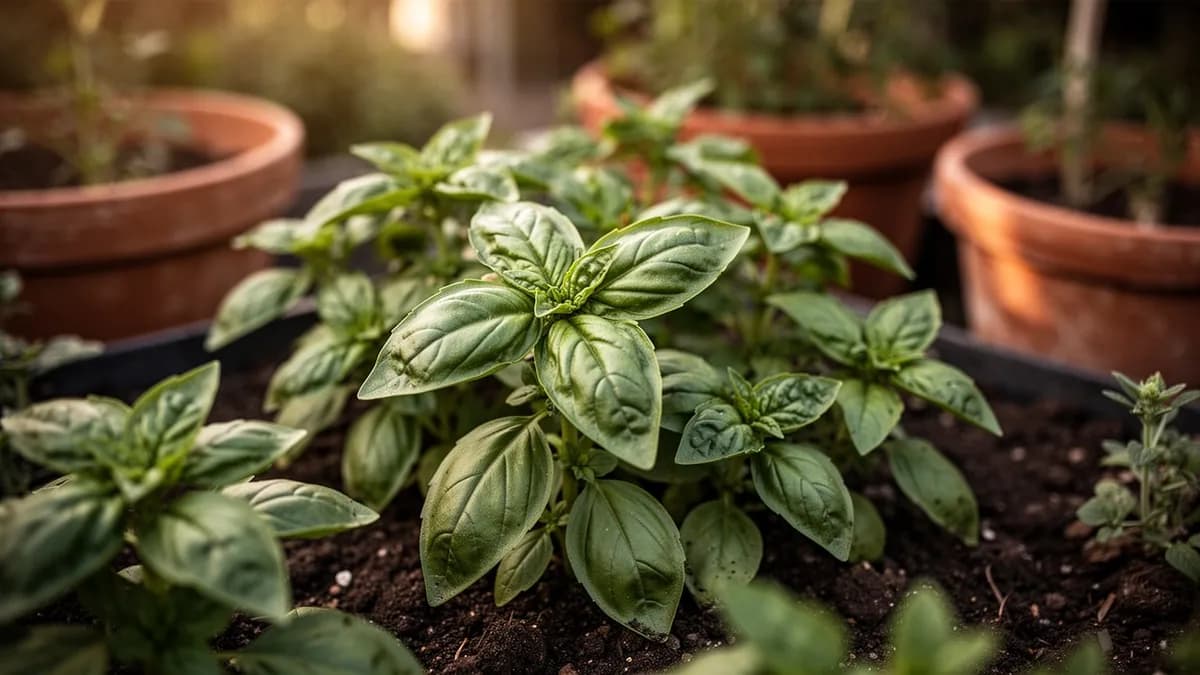
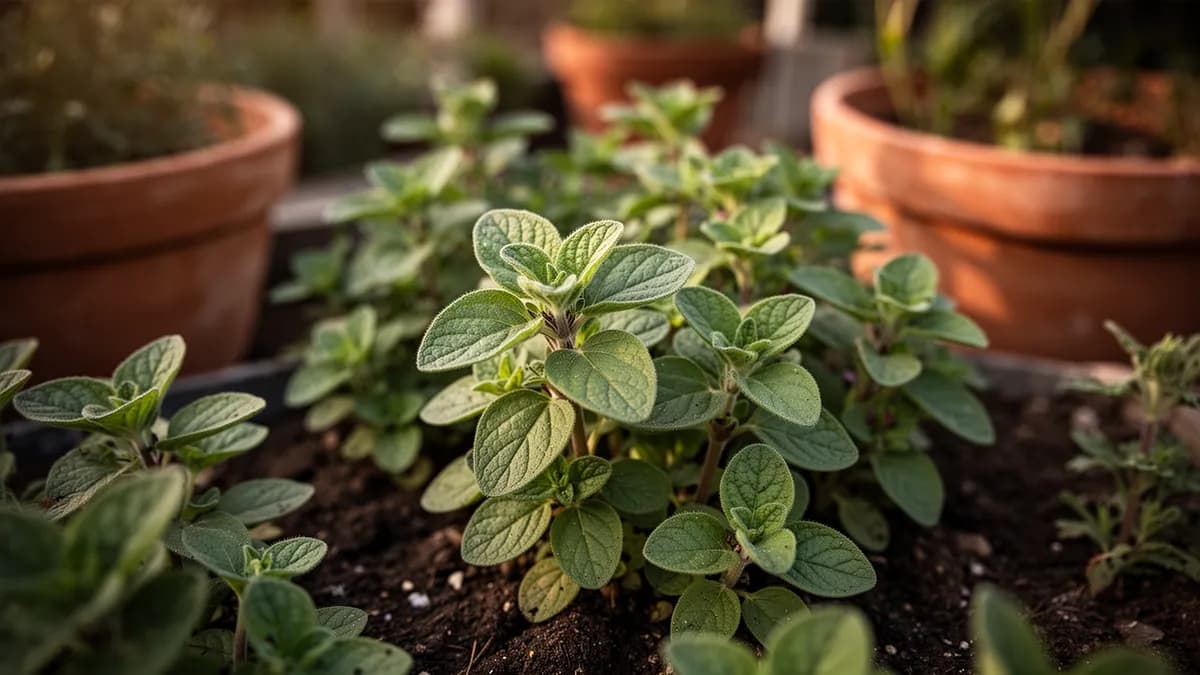
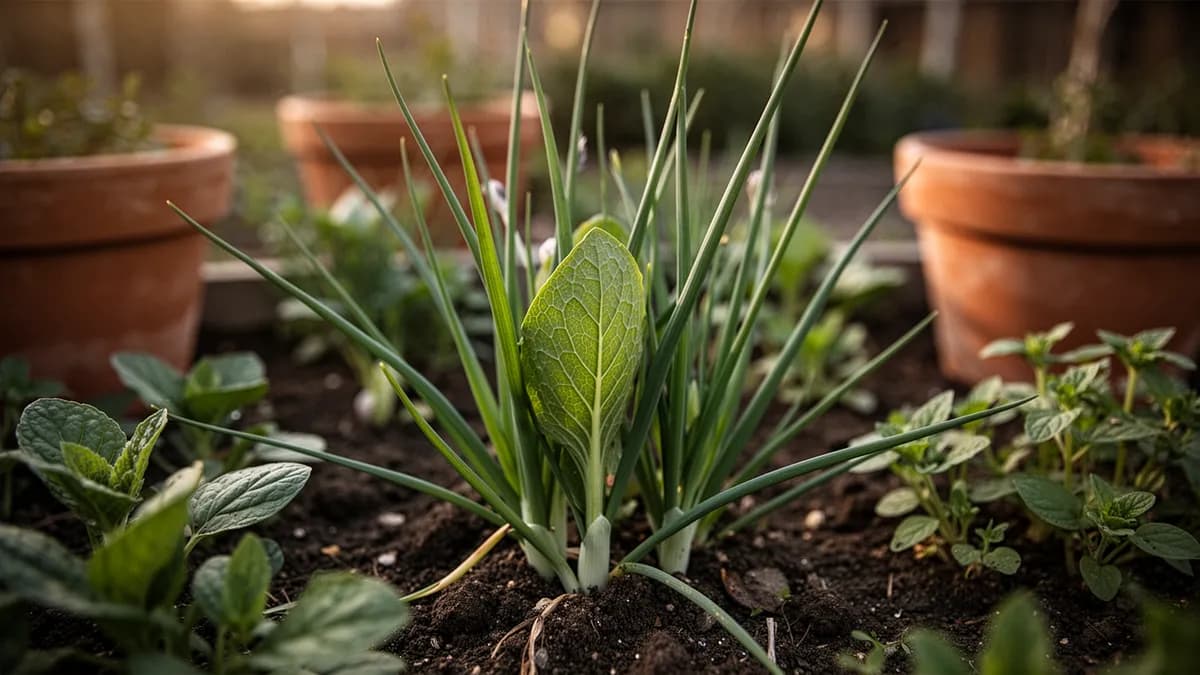
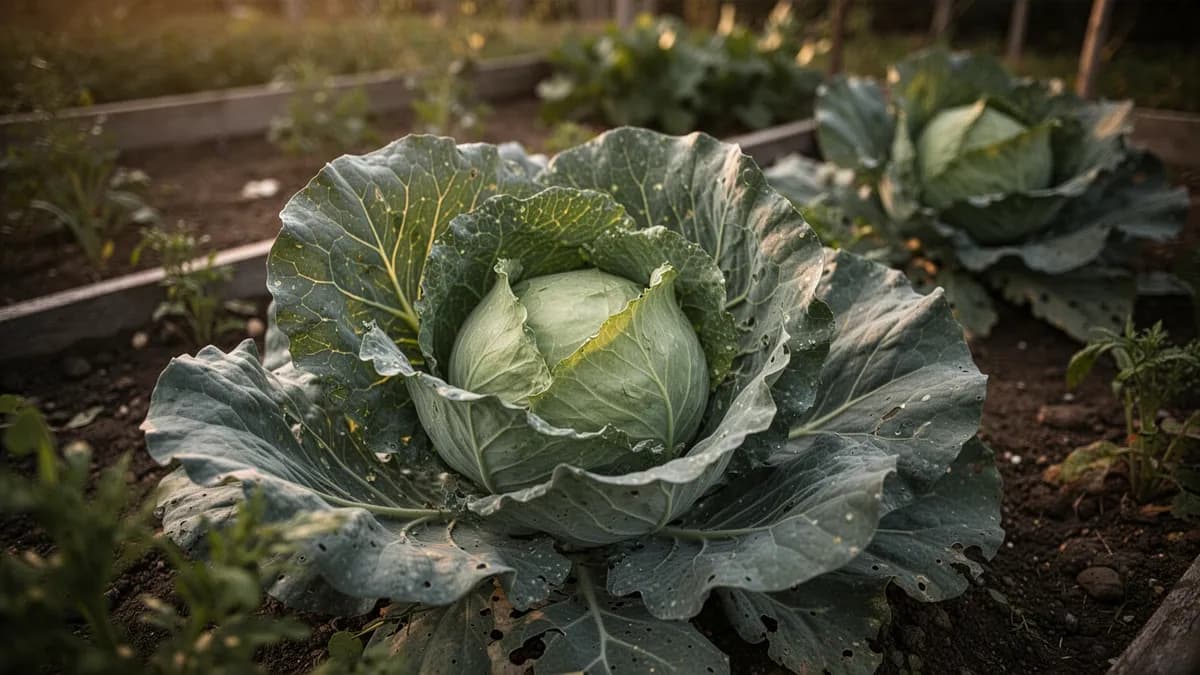
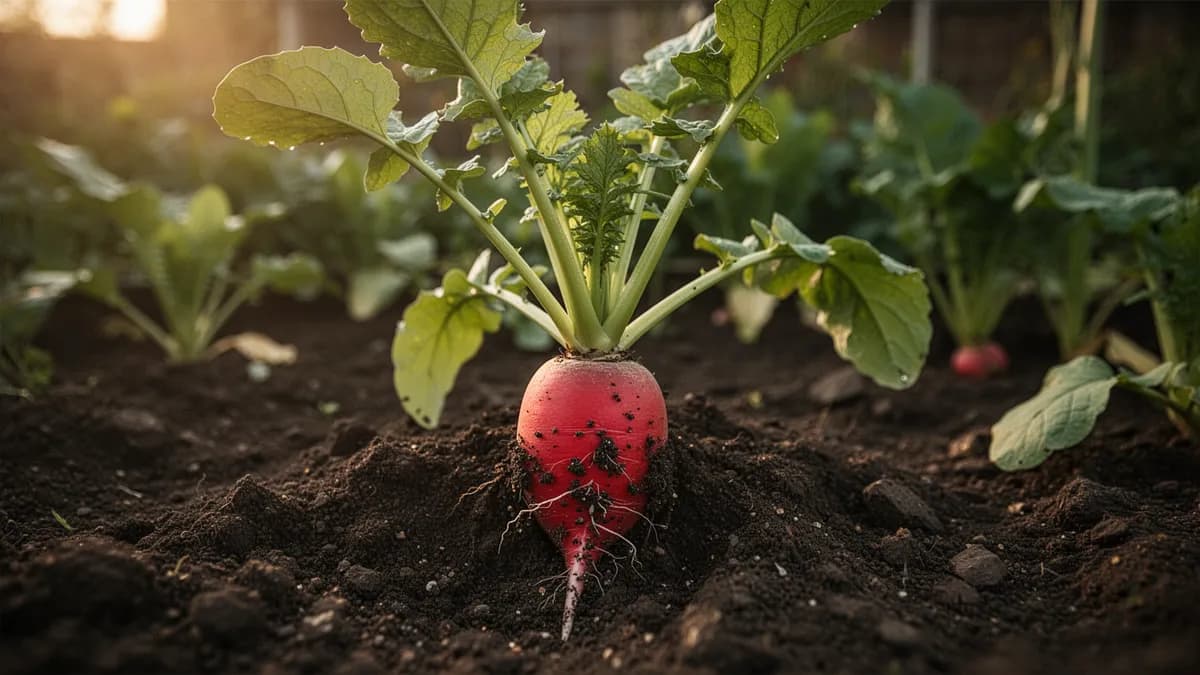
Interplant with basil, oregano, and chives to repel pests and attract pollinators. Low-growing clover or alyssum between rows provides living mulch and beneficial insect habitat. Avoid cabbage family crops and radishes nearby. Roses at row ends provide early warning of powdery mildew. Lavender nearby helps deter pests with aromatic oils.
Basil belongs beside it. Cabbage doesn't.
Old growers' knowledge, checked against Table Grape's real companion table below — test any plant you're growing.
Try Table Grape in a bed — right here
A real planner bed with Table Grape already in it. Tap a companion to place it and watch the pairing checks answer — green for good neighbours, red for a clash.


Related growing guides
Feed it well
Table grapes perform best in deep, well-drained sandy loam with a pH of 6.0 to 7.0. Apply balanced fertilizer in early spring at bud break. Transition to potassium-focused feeding after fruit set for berry quality and color. Zinc and boron foliar sprays may be needed in alkaline soils. Avoid excessive nitrogen which promotes dense canopy, delays ripening, and reduces color in red varieties.
Ideal Temperature
Hardiness Zone Compatibility
From seed to harvest, stage by stage
Dormancy and Winter Pruning
Table grapevines spend late autumn through late winter in full dormancy, their canes bare and woody. Internal carbohydrate reserves stored in the roots and trunk fuel the coming season's explosive growth. This is the critical window for performing the most important annual task in table grape cultivation: dormant pruning. Removing the vast majority of last year's growth directs the vine's energy into a limited number of high-quality fruit clusters rather than excessive vegetative growth.
Bud Break and Rapid Shoot Elongation
As soil temperatures climb above 10°C (50°F), dormant buds swell and burst open, releasing bright woolly shoot tips that elongate at a remarkable rate — often several centimeters per day in warm weather. Small embryonic flower clusters are already present inside the emerging shoots, visible as tiny bumps opposite young leaves within days of bud break. Tendrils develop in parallel with the shoots, actively searching for supports to grip. This is the period of greatest frost vulnerability; a single cold night below -1°C (30°F) can destroy the entire crop.
Flowering and Fruit Set
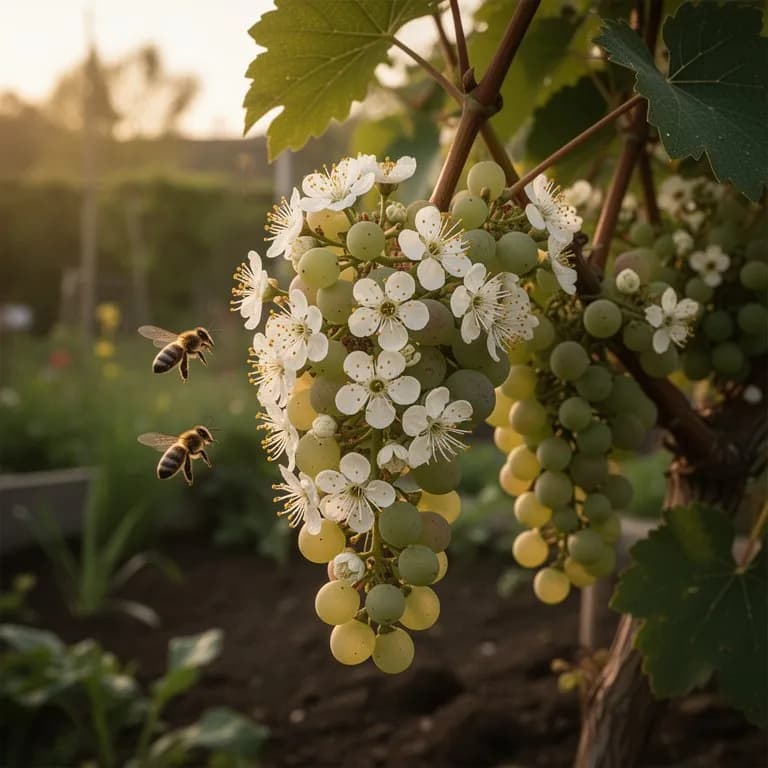
Flower clusters open to reveal tiny, inconspicuous yellowish-green flowers. Unlike many fruits, grapes are self-pollinating — pollen is released directly onto the stigmas within the same flower without the need for insects or wind cross-pollination, though slight air movement aids the process. Successful pollination results in the calyptra (flower cap) detaching cleanly. Within days, fertilised ovaries begin swelling into tiny berries while unfertilised flowers shrivel and fall. The final percentage of flowers that set as berries determines cluster density and total yield.
Berry Sizing and Veraison
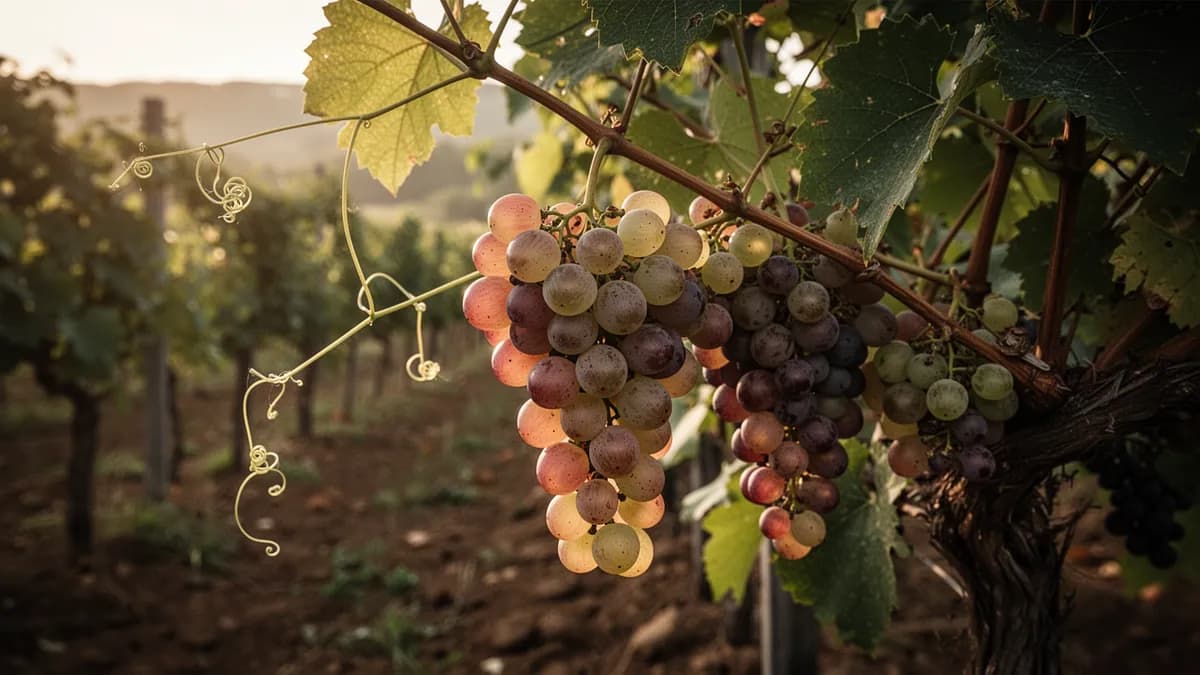
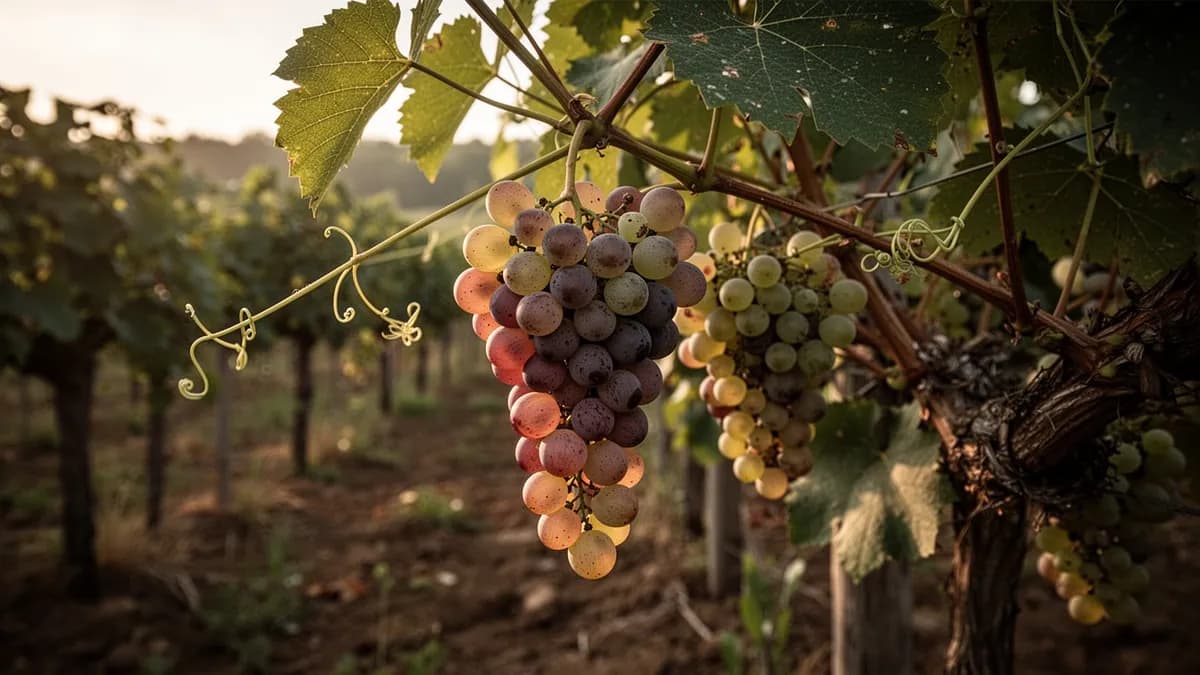
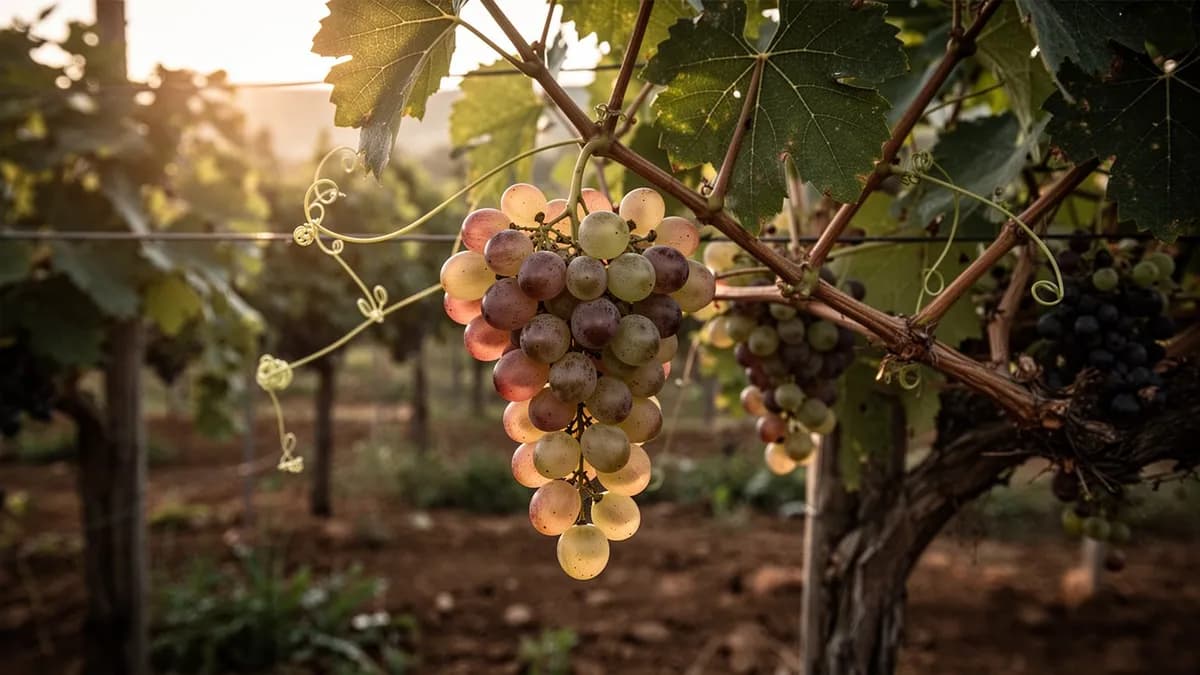
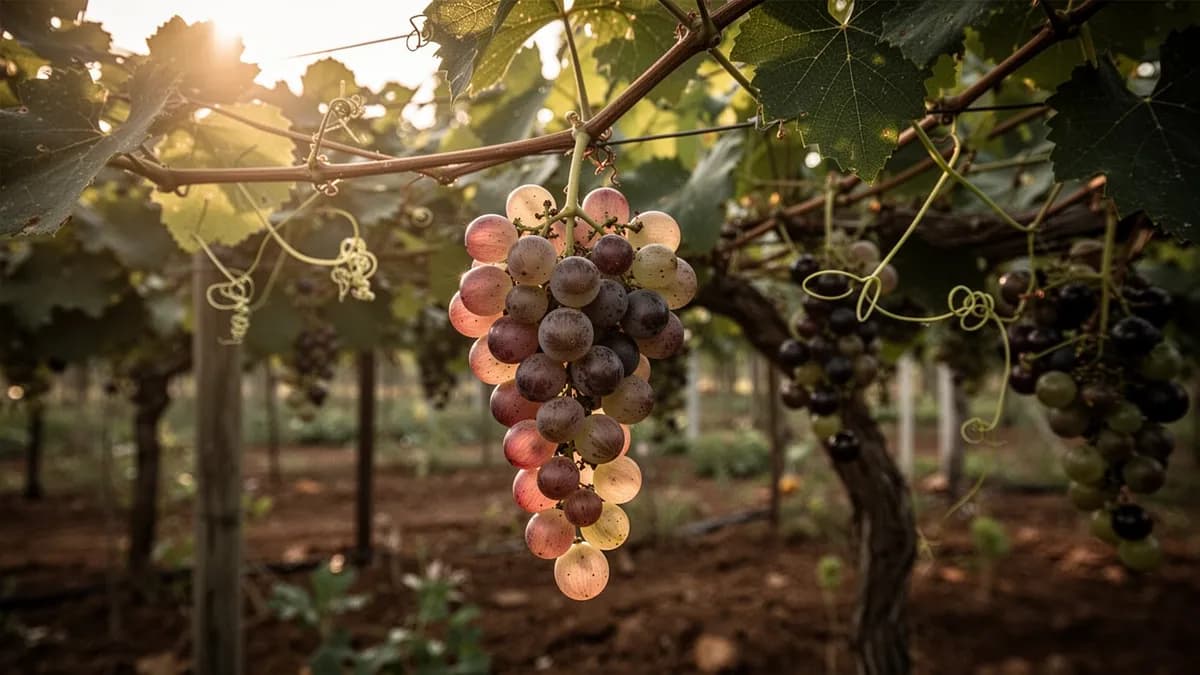
Newly set berries expand rapidly through successive rounds of cell division and cell enlargement, remaining firm, green, and highly acidic throughout. In mid to late summer, the dramatic process of veraison begins: red and black table grape varieties shift colour from green to vivid red, pink, or deep purple as anthocyanin pigments accumulate in the berry skins. Simultaneously, sugars flood into the berries from the vine's photosynthetic reserves, acids begin dropping, and the berries soften noticeably to the touch. This physiological pivot from the herbaceous stage to the ripening stage can occur across an entire cluster within just 3-5 days.
Ripening and Harvest
Table grapes reach their peak when berries achieve full colour, firm-yet-yielding texture, sweet flavour free of harsh tartness, and — in seeded varieties — seeds that have turned from pale green to medium brown. Unlike wine grapes, which are assessed primarily by sugar and acid measurements, table grapes are evaluated chiefly by eating quality: flavour complexity, skin thickness, texture, and the clean sweetness that characterises a well-grown, fully ripe table cluster. Season length varies significantly by variety, with early varieties such as Perlette ripening in mid-summer and late cultivars like Autumn Royal extending harvest into October.
Post-Harvest Senescence and Leaf Fall
Once harvest is complete, table grapevines shift their remaining photosynthetic activity toward replenishing the carbohydrate reserves in roots and permanent wood that will power the following season's burst of growth. Leaves gradually yellow, orange, or crimson depending on the variety before abscising in autumn. This post-harvest period is often overlooked by home gardeners but is critically important: a vine stripped of its leaves by disease or removed from a pergola too early will enter dormancy with reduced reserves and produce a weaker crop the following year.
Complete all dormant pruning before buds begin to swell, ideally on a dry day above freezing. For spur-pruned cordons, cut all lateral canes back to 2-3 bud spurs spaced 15-20 cm apart along permanent arms. For cane-pruned systems, select 2-4 vigorous one-year-old canes with 8-12 buds each and remove all others entirely. After pruning, apply a dormant oil and copper spray to the canes and any remaining bark to reduce overwintering fungal spores and insect eggs.
Caring for Table Grape month by month
What to do each month for your Table Grape
October
You are hereComplete the harvest of mid- and late-season varieties including Concord, Autumn Royal, and similar late cultivars. After harvest, allow vines to continue photosynthesising undisturbed. Apply a high-potassium fertiliser such as sulfate of potash to support cane hardening for the approaching winter. Begin clearing fallen leaves and debris from beneath the vine to reduce disease inoculum.
Know exactly what to do in your garden — every month
One email at the start of each month: what to sow, plant, and tackle right now — for your Table Grape and everything growing around it. Plus a short starter course that helps you dodge the classic mistakes.
- What to do, right now
- Matched to your season
- Starter course included
Harvesting Table Grape
Table grapes are harvested based on flavor, color, and texture rather than Brix alone. Taste berries from several clusters to assess sweetness and acidity. Berries should be firm, crisp, and fully colored for the variety. Cut whole clusters with sharp shears and handle gently to preserve the bloom. Harvest in cooler morning hours and refrigerate promptly. Table grapes do not ripen further after picking.
assuming you plant when the window opens — set your real date
Pick Table Grape promptly and the plant keeps producing.
Storage & Preservation
Fresh table grapes store for two to six weeks at 30 to 32 degrees Fahrenheit with high humidity. Place unwashed clusters in perforated bags or ventilated containers. For home preservation, freeze individual berries on sheet pans then bag for smoothies. Table grapes can be dried into raisins using a dehydrator at 135 degrees for 24 to 48 hours. Sulfur dioxide pads extend commercial cold storage life significantly.
What goes wrong — and the fix
Powdery Mildew
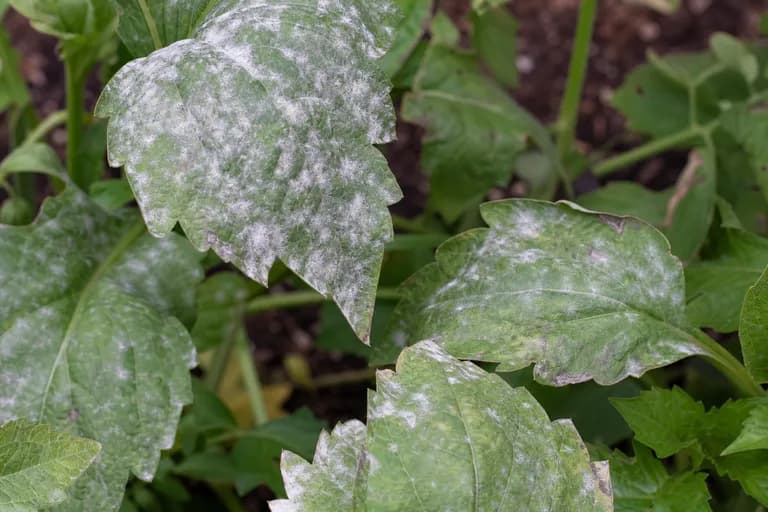
DiseaseWhite powdery coating on leaves, shoots, and berries. Infected berries crack, scar, and become unmarketable.
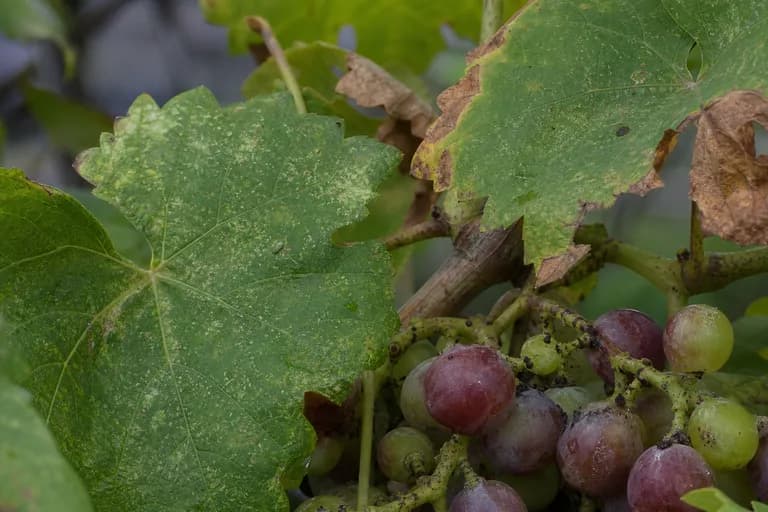
Western Grape Leafhopper
PestWhite stippling on leaf surfaces, premature leaf drop, reduced berry sugar, and honeydew on fruit.
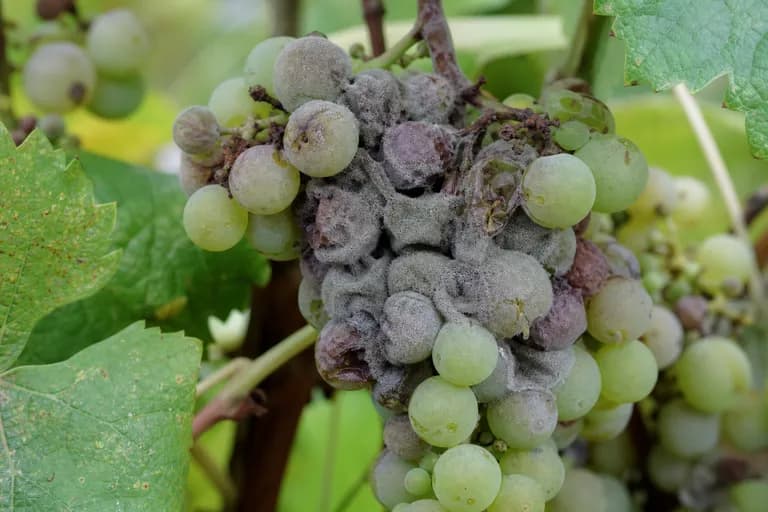
Botrytis Bunch Rot
DiseaseGray fuzzy mold on tight berry clusters during humid conditions, especially as berries approach maturity.
Troubleshooting Common Problems
The biggest challenge is achieving large berry size without gibberellic acid, which requires precise timing. Bird damage is severe and requires netting. Sunburn causes brown patches in extreme heat. Tight clusters promote bunch rot in humidity. Poor color in red varieties results from excessive shade or over-cropping. Berry cracking from rain near harvest can ruin crops.
Growing Tips
- Choose table grape varieties suited to your climate before purchasing. In warm zones 8-10, classical Vitis vinifera varieties such as Thompson Seedless, Flame Seedless, Muscat of Alexandria, and Crimson Seedless excel. In cooler zones 5-7, select cold-hardy hybrids such as Himrod, Interlaken, Reliance, or Vanessa, which combine seedless table-grape eating quality with the frost resistance needed to survive harsh winters.
- Site your table grapevine against a south-facing wall, fence, or on a free-standing trellis that receives at least 7-8 hours of direct sunlight daily. Table grapes need more heat to ripen fully than wine grapes — a warm, sheltered microclimate that reflects additional radiant heat from masonry or paving significantly advances harvest date and improves fruit sweetness in marginal climates.
- Prepare the planting hole generously — at least 60 cm wide and 60 cm deep — and amend the backfill with well-rotted compost. However, avoid excessively rich or heavily fertilised soil, which promotes lush vegetative growth at the expense of fruit production. Grapevines perform best in moderately fertile, free-draining soils with a pH between 6.0 and 6.8.
- Perform the main training and structural pruning in winter dormancy each year without exception. The single most common reason home garden table grape vines produce small, poor-quality clusters is insufficient dormant pruning. Remove at least 85-90% of last season's growth, keeping only well-positioned, pencil-thick, mature canes with clearly spaced internodes — these will produce the best fruiting shoots.
- Thin grape clusters to one per shoot on all shoots on young vines (years 2-4) and selectively on vigorous shoots of established vines. Over-cropping — allowing every cluster to develop — results in small, under-ripe berries with poor flavour, stresses the vine, and predisposes it to disease. A vine carrying 15-25 well-spaced clusters will consistently outperform one carrying 50 small, overcrowded clusters.
- Apply a thick organic mulch of wood chips or straw 7-10 cm deep in a 60-80 cm radius around the base of the vine in spring, keeping mulch clear of the trunk itself. Mulching suppresses competing weeds, moderates soil temperature, reduces evaporation (cutting irrigation needs by 30-40%), and gradually improves soil biology as it breaks down.
- If growing table grapes in a region with high summer humidity, maintain a rigorous preventive fungicide schedule from bud break through veraison. Powdery mildew can render entire clusters unmarketable by coating berries with white fungal growth; it is far easier to prevent than to cure once established. Organic options including potassium bicarbonate, dilute neem oil, and sulfur wettable powder are effective when applied on the correct 10-14 day schedule.
- Train your table grapevine on a pergola or overhead arbour structure if space and budget allow. The horizontal overhead training system mimics the natural sprawling growth habit of the species, results in a more uniform distribution of fruiting shoots across the canopy, significantly increases total yield per vine, and creates valuable summer shade for seating areas directly below the harvest.
- Remove the bottom 3-4 leaves from each fruiting shoot — a practice called basal leaf removal — when shoots reach 30-40 cm in length. This simple technique improves air circulation around developing flower clusters and newly set fruit, reduces humidity at the fruit zone, improves fungicide spray penetration, and has been shown in trials to reduce botrytis bunch rot incidence by up to 50% compared to unpruned controls.
- Propagate your best-performing table grape varieties for free from hardwood cuttings taken during the annual winter pruning. Select vigorous, pencil-thick canes from productive, healthy vines. Cut into 30 cm sections retaining 3-4 buds each, making a slanted cut 1 cm above the top bud and a flat cut 1 cm below the bottom bud. Bundle and store in slightly moist newspaper in the refrigerator until late winter, then plant with the top bud just above the soil surface in a sheltered nursery bed or large pot.
Grow your best Table Grape yet — and everything around it.
Start a free plan today. Lay out your beds, drop in your Table Grape, and let PlotMyGarden handle the timing, spacing, companions and reminders from seed to harvest basket.
Pick your Table Grape
Flame Seedless
An early-ripening red seedless with crisp texture, sweet flavor, and excellent heat tolerance. Very popular worldwide.
Crimson Seedless
A late-season red seedless with firm berries, neutral sweet flavor, and outstanding storage qualities.
Fantasy Seedless
A large blue-black seedless with rich complex flavor and elongated berries on loose rot-resistant clusters.
Autumn Royal
A very large blue-black seedless ripening late with mild sweet flavor and impressive shelf life.
Cotton Candy
A patented green seedless with distinctive sweet flavor reminiscent of cotton candy, very popular for eating.
A bare-root table grapevine costs $12-25 at planting and, once mature by year 4-5, routinely yields 8-20 kg of premium fruit per season. Organic table grapes at farmers markets and specialty grocers typically sell for $6-10 per kg, meaning a single established vine can deliver $50-200 worth of fresh fruit annually. Exceptional pergola-trained vines in warm climates can produce 25-35 kg, with a replacement value of $150-350 per season. With a productive lifespan of 30-50 years, the total lifetime return from a single vine planted today — even at conservative yields — far exceeds $2,000 at current retail prices, making table grapes one of the highest-return perennial investments available to the home gardener.
Quick recipes
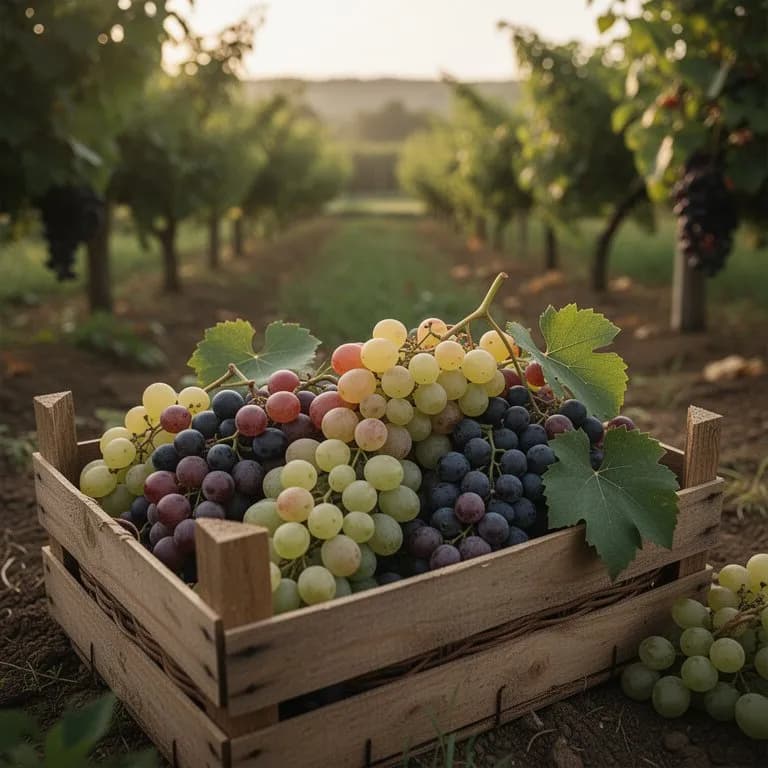
Grape and Feta Flatbread with Rosemary Honey
25 minutesA stunning sweet-savoury flatbread that showcases freshly harvested table grapes at their peak. Halved seedless grapes roast directly on a thin crispy base alongside crumbled feta, caramelising slightly at the edges and contrasting beautifully with salty cheese and fragrant rosemary-infused honey. Ready in under half an hour and impressive enough for guests.
9 ingredientsChilled Grape Gazpacho
15 minutes plus 1 hour chillingA silky, refreshing chilled soup that transforms a glut of white or green table grapes into an elegant starter or light lunch. The natural sweetness of ripe homegrown grapes balances the sharpness of sherry vinegar and the richness of blanched almonds in this classic Andalusian ajoblanco-inspired recipe. Serve in small glasses garnished with halved grapes and a drizzle of best olive oil.
8 ingredientsSpiced Pickled Table Grapes
20 minutes plus overnight standingA clever way to preserve a large harvest, these quick-pickled grapes develop a complex sweet-tart-spiced flavour within 24 hours and keep refrigerated for up to three weeks. Serve alongside cheese boards, roasted meats, or grain salads. The vivid brine takes on a beautiful crimson hue from red grape skins and becomes a flavourful vinaigrette base after the grapes are eaten.
10 ingredientsCulinary Uses
Table grapes are primarily consumed fresh as a snack or in fruit salads, cheese boards, and platters. Excellent frozen as a healthy candy alternative. Roasted grapes pair well with meats and cheeses. Used in tarts, focaccia, and savory salads. Fresh juice from table varieties is lighter and more delicate than juice grapes.
What's inside
Health Benefits
- Table grapes are one of the richest dietary sources of resveratrol, a naturally occurring polyphenol concentrated in grape skins that has been associated in population studies and clinical trials with reduced risk of cardiovascular disease, improved blood vessel elasticity, and protection against LDL cholesterol oxidation — a key step in the formation of arterial plaques
- The anthocyanins in red, purple, and black table grape varieties have been studied for their neuroprotective properties, with several clinical studies in older adults reporting improved memory performance and reduced markers of cognitive decline following regular consumption of grape-derived anthocyanin supplements equivalent to a generous daily serving of table grapes
- Table grapes provide a meaningful contribution to daily vitamin K intake — important for regulating blood clotting factors and increasingly recognised as essential for directing calcium into bone tissue rather than arterial walls, supporting both skeletal health and cardiovascular integrity
- The polyphenol quercetin found in grape skins acts as a natural antioxidant and mild anti-inflammatory agent, with research suggesting it may help reduce histamine release from mast cells, potentially alleviating seasonal allergy symptoms in sensitive individuals when consumed as part of a flavonoid-rich diet
- Fresh table grapes have a moderate glycaemic index (43-53) despite their natural sugar content, partly due to their fibre and polyphenol content slowing digestion and glucose absorption — making them a more blood-sugar-friendly sweet snack option compared to processed sugary foods with equivalent calorie counts
- Regular consumption of grapes has been associated with improved gut microbiome diversity in observational studies, with grape polyphenols acting as prebiotics that selectively promote beneficial bacteria including Lactobacillus and Bifidobacterium species while suppressing potentially harmful microorganisms, supporting overall digestive wellness
Where Table Grape comes from
The domesticated grapevine (Vitis vinifera subsp. vinifera) descends from the wild Eurasian grape (Vitis vinifera subsp. sylvestris), which grew in dense forest margins from the Atlantic coast of Europe eastward through the Caucasus and into Central Asia. The earliest definitive archaeological evidence of deliberate grape cultivation comes from the South Caucasus — present-day Georgia and Armenia — where ancient clay vessels called qvevri dating to approximately 6000 BC have been found containing tartaric acid residues, a chemical signature of grape processing. This region, nestled between the Greater and Lesser Caucasus mountain ranges, is now widely accepted as the primary centre of grape domestication. Table grape cultivation — selecting vines specifically for eating quality rather than fermentation potential — developed as a distinct discipline alongside winemaking from the earliest period of cultivation. Ancient Mesopotamian texts from around 3000 BC describe varieties valued for their large berries and sweet flavour, and royal gardens in Babylon and Assyria maintained prized table grape collections. The Egyptians depicted precise table grape harvesting scenes in tomb art, and Phoenician merchants distributed superior eating varieties throughout the Mediterranean littoral as they established trading colonies. The Greeks and Romans elevated table grape culture significantly, with Roman agricultural writers including Columella and Pliny the Elder describing dozens of named grape varieties specifically suited for fresh eating, categorising them by berry size, skin colour, seededness, and flavour profile in texts that constitute the world's first systematic ampelographies. Following the decline of Rome, Islamic scholars and horticulturalists in Persia and the Arab world preserved and advanced table grape cultivation, developing irrigation-intensive growing systems in arid regions of Central Asia that produced celebrated dessert grapes prized across the medieval Silk Road trading network. The Muscat family of aromatic table grapes, still among the most beloved for their complex floral sweetness, was widely traded as luxury fresh and dried fruit from Alexandria to China. European colonisation from the 15th century onward disseminated Vitis vinifera table varieties to California, South America, South Africa, and Australia, where warm climates proved ideal for large-scale commercial production. The modern table grape industry was fundamentally transformed in the 20th century by the development of seedless varieties — culminating in the worldwide dominance of Thompson Seedless (Sultan) and the subsequent breeding of superior seedless cultivars including Flame Seedless, Crimson Seedless, and Autumn Royal — along with refrigerated transport technology that allowed fresh grapes to reach global markets year-round.
Table Grape: did you know?
Fascinating facts about Table Grape
Table grape cultivation specifically for fresh eating — as opposed to wine or raisin production — has been practised for at least 4,000 years. Ancient Egyptian tomb paintings dating to around 2000 BC clearly depict workers harvesting and presenting large clusters of table grapes at royal feasts, with specific cluster shapes recognisable as varieties still grown today.
Table Grape questions, answered
When should I plant Table Grape?
What are good companion plants for Table Grape?
What hardiness zones can Table Grape grow in?
How much sun does Table Grape need?
How far apart should I space Table Grape?
What pests and diseases affect Table Grape?
How do I store Table Grape after harvest?
What are the best Table Grape varieties to grow?
What soil does Table Grape need?
What is the difference between table grapes and wine grapes — can I eat wine grapes fresh?
Why do my table grapes taste sour even after they change colour?
How do I grow seedless table grapes at home?
My grapevine produced fruit in its first year. Should I let it ripen and harvest it?
What is the best way to protect table grapes from birds and wasps?
Can I grow table grapes successfully in a pot or container?
You just read the theory. Now grow it on autopilot.
Everything that makes Table Grape fiddly — the timing, the spacing, the companions, the harvest window — is exactly what PlotMyGarden handles for you, for every plant in your garden.
A plan that knows your weather
Set your location once. Get sow, feed and harvest dates built around your real last-frost date and live forecast — no more guessing from a generic seed packet.
From the “When to plant” sectionDrag-and-drop bed planner
Design beds on a grid. Every plant snaps to its proper spacing, and you can see your whole season laid out before you spend a cent on seed.
From the “Growing guide” sectionCompanion conflicts, caught early
200+ good-and-bad pairings checked live as you plant — so a season-wrecking mistake never makes it into the ground.
From the “Companions” sectionReminders you'll actually act on
“Water the beans.” “Pick today before it turns.” Timely, specific, and tied to the plants you're really growing.
From the “Harvest” sectionSuccession, scheduled
Want a harvest for six weeks, not six days? It spaces your sowings automatically and reminds you when each new block is due.
From the “When to plant” sectionA record that gets smarter
Every harvest you log teaches it your garden. Next year's plan starts from what actually worked in your soil, not a textbook's.
From the “Overview” sectionPlant these alongside Table Grape
More Vine Fruits
Keep Table Grape away from these
Grow your best Table Grape yet — and everything around it.
Start a free plan today. Lay out your beds, drop in your Table Grape, and let PlotMyGarden handle the timing, spacing, companions and reminders from seed to harvest basket.