Frijol Polilla
El frijol polilla (Vigna aconitifolia), también conocido como mat bean o dew bean, es una leguminosa anual originaria de la India y el sudeste asiático, extraordinariamente resistente a la sequía y al calor extremo.





En esta páginaResumen
Conoce Frijol Polilla
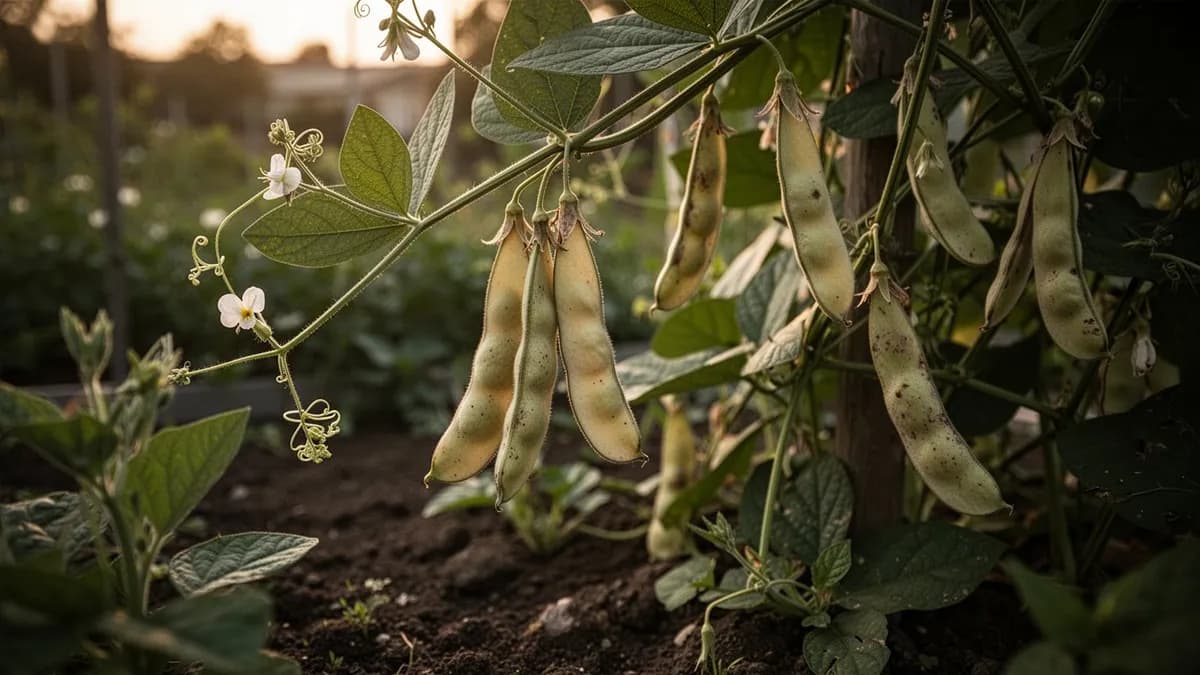
El frijol polilla (Vigna aconitifolia), también conocido como mat bean o dew bean, es una leguminosa anual originaria de la India y el sudeste asiático, extraordinariamente resistente a la sequía y al calor extremo. Es una de las leguminosas más tolerantes a condiciones áridas del mundo, capaz de producir cosechas en zonas con menos de 300 mm de precipitación anual.
Cuándo plantar Frijol Polilla
Siembra directamente en el terreno definitivo cuando la temperatura del suelo supere los 20°C. No requiere remojo previo. Coloca las semillas a 2-3 cm de profundidad con 15-20 cm de separación. La germinación ocurre rápidamente en 4-7 días con calor adecuado. Inocula con Rhizobium específico para Vigna si es la primera vez que cultivas leguminosas de este grupo en el terreno.
Tu año de Frijol Polilla
Ajustado a Zona 7 · temporada típica · la helada se va hacia el 2 abr y vuelve hacia el 1 nov
Planta Frijol Polilla May – Jul y cosecha Sep – Oct. Consulta los métodos de plantación y elige tu clima para adaptar los periodos.
Cómo cultivar Frijol Polilla
El frijol polilla es un cultivo de temporada cálida que prospera en condiciones que muchas otras leguminosas no toleran. Siembra directamente en el exterior 2-3 semanas después de la última helada, cuando la temperatura del suelo supere los 20°C. Coloca las semillas a 2-3 cm de profundidad con 15-20 cm de separación en hileras espaciadas 40-50 cm.
Las plantas tienen un hábito de crecimiento rastrero o semi-erecto, extendiéndose hasta 60-90 cm. Prefieren pleno sol intenso y son notablemente tolerantes a la sequía una vez establecidas, gracias a su sistema radicular profundo y hojas finamente divididas que reducen la transpiración. Riega moderadamente durante el establecimiento y luego solo si hay sequía prolongada.
Como leguminosa, fija nitrógeno atmosférico y raramente necesita fertilización. Es un cultivo de muy bajo mantenimiento que tolera suelos pobres, arenosos y salinos donde pocas plantas pueden crecer. Las pequeñas flores amarillas producen vainas delgadas de 3-5 cm que contienen 4-8 semillas diminutas. La planta completa su ciclo en 60-90 días, siendo una de las leguminosas más precoces.
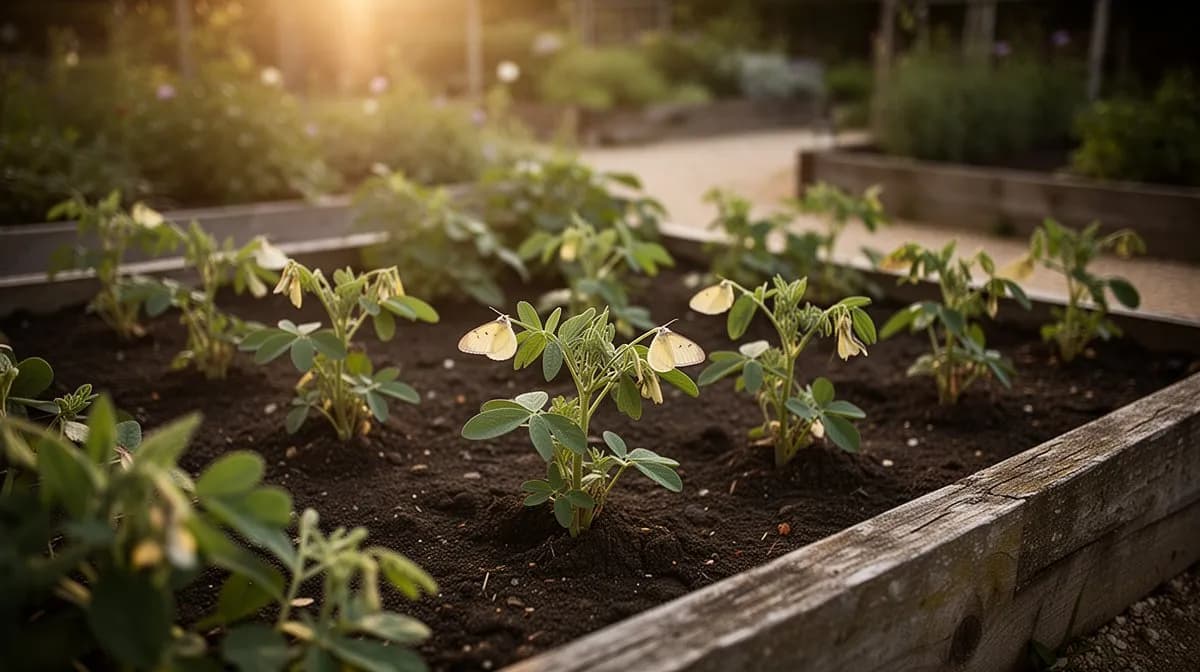
128 plantas caben en un bancal de 120 × 240 cm
Cada Frijol Polilla pide 15 cm de margen. El planificador guarda ese marco por ti — cada planta, cada bancal.
Los mejores vecinos de Frijol Polilla
Se asocia bien con mijo perla (bajra) y sorgo en sistemas de cultivo intercalado tradicionales de zonas áridas de la India. Como leguminosa fijadora de nitrógeno, enriquece el suelo para los cultivos siguientes. Puede usarse como cultivo de cobertura en rotación con cereales para mejorar la fertilidad del suelo.
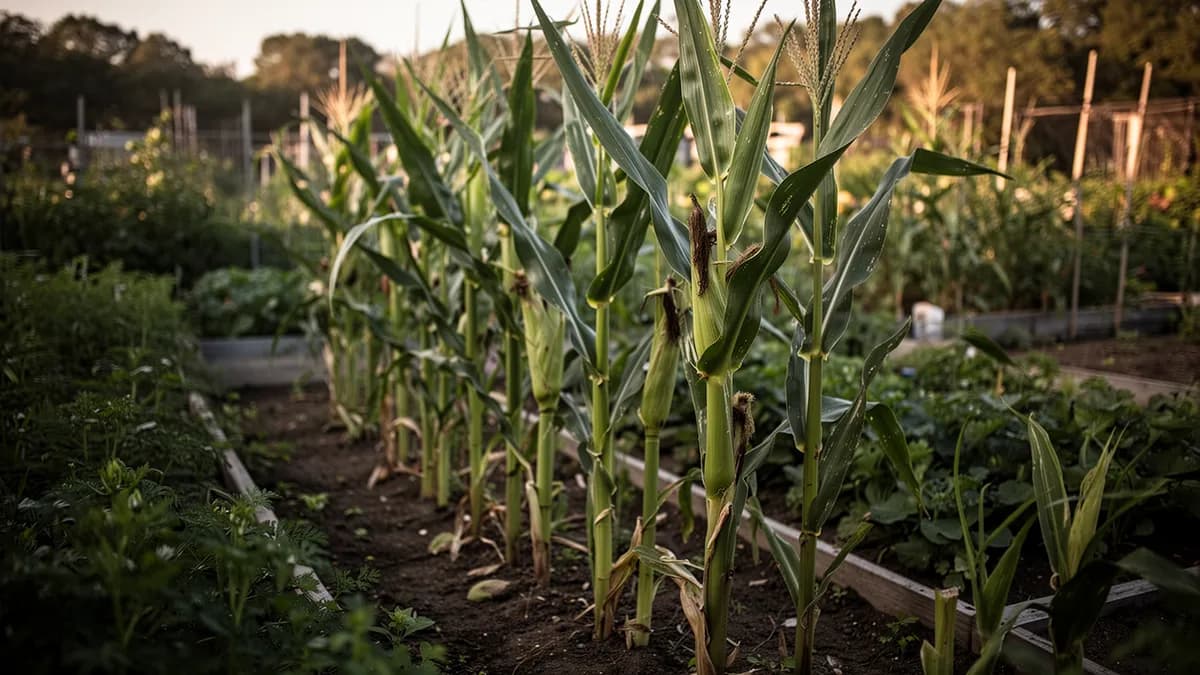
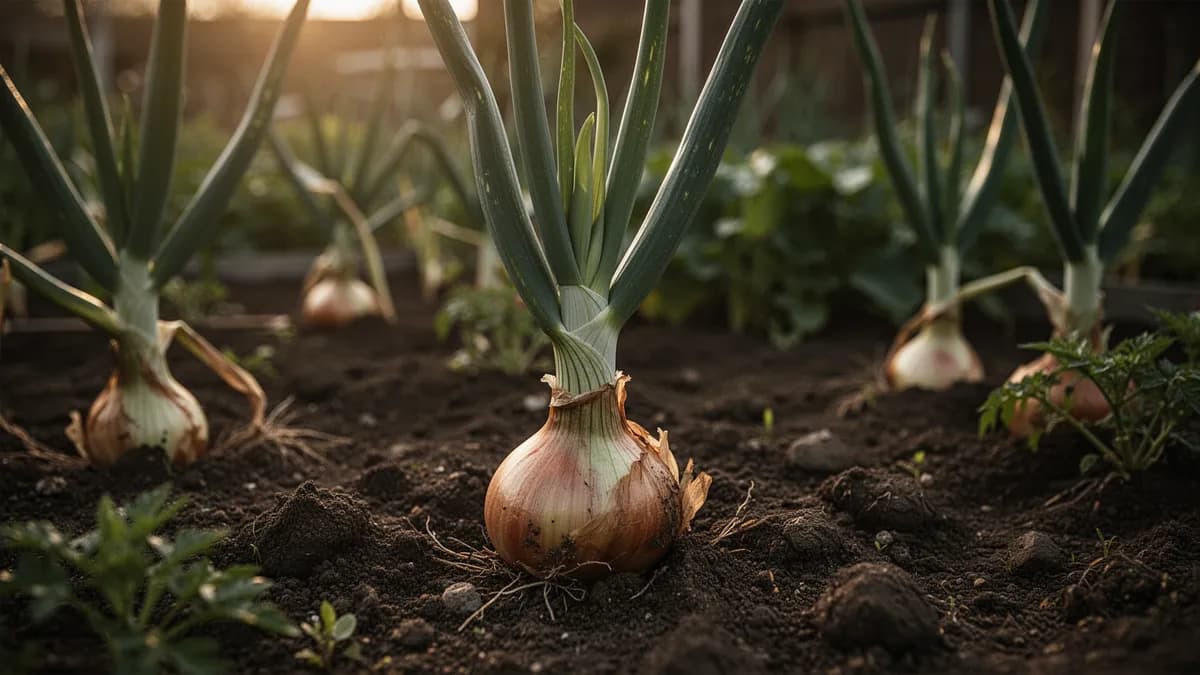
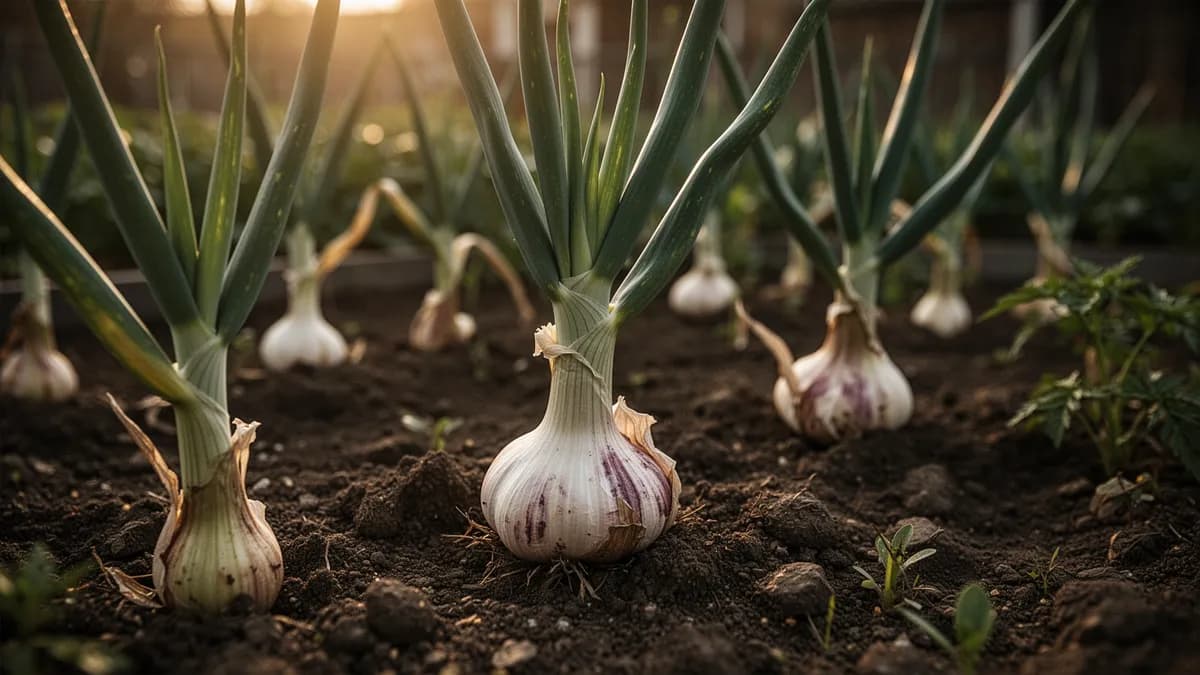
Maíz va a su lado. Cebolla no.
Saber de huerto de siempre, cotejado con la tabla real de Frijol Polilla — prueba cualquier planta que cultives.
Prueba Frijol Polilla en un bancal, aquí mismo
Un bancal real del planificador con Frijol Polilla ya plantado. Toca una planta compañera para colocarla y mira cómo responde la comprobación de vecinos: verde para buenos vecinos, rojo si hay conflicto.


Guías de cultivo relacionadas
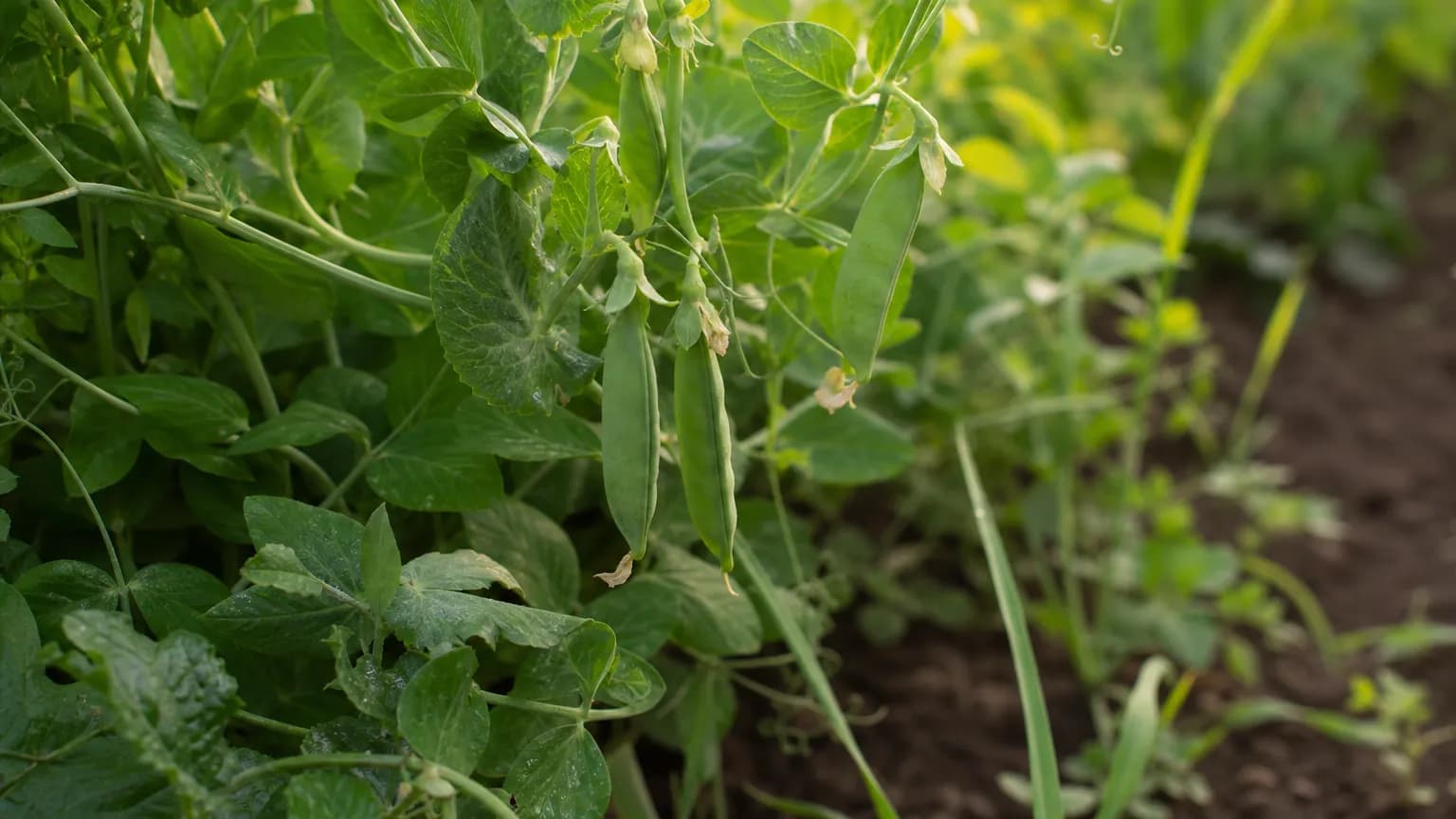
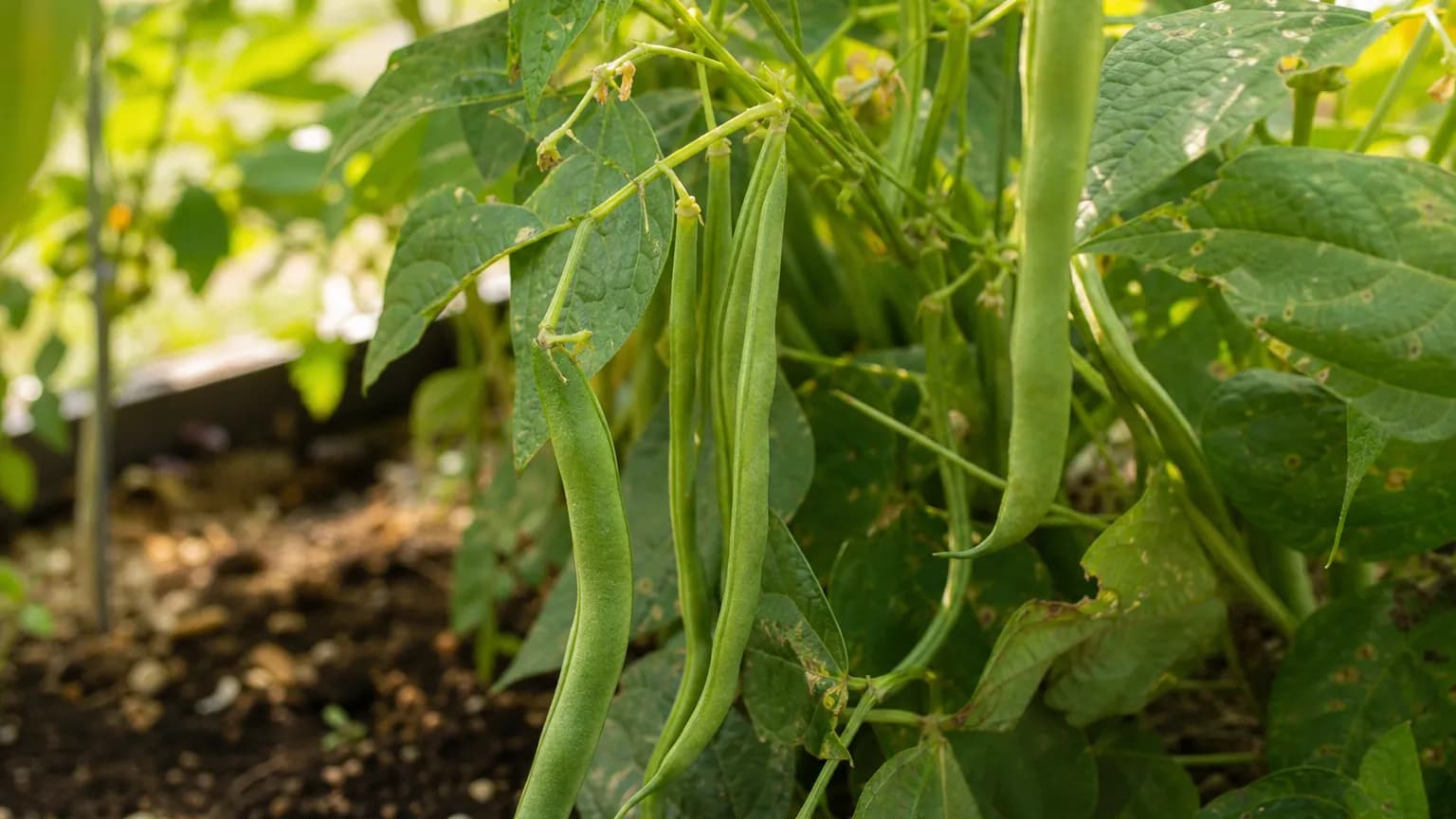
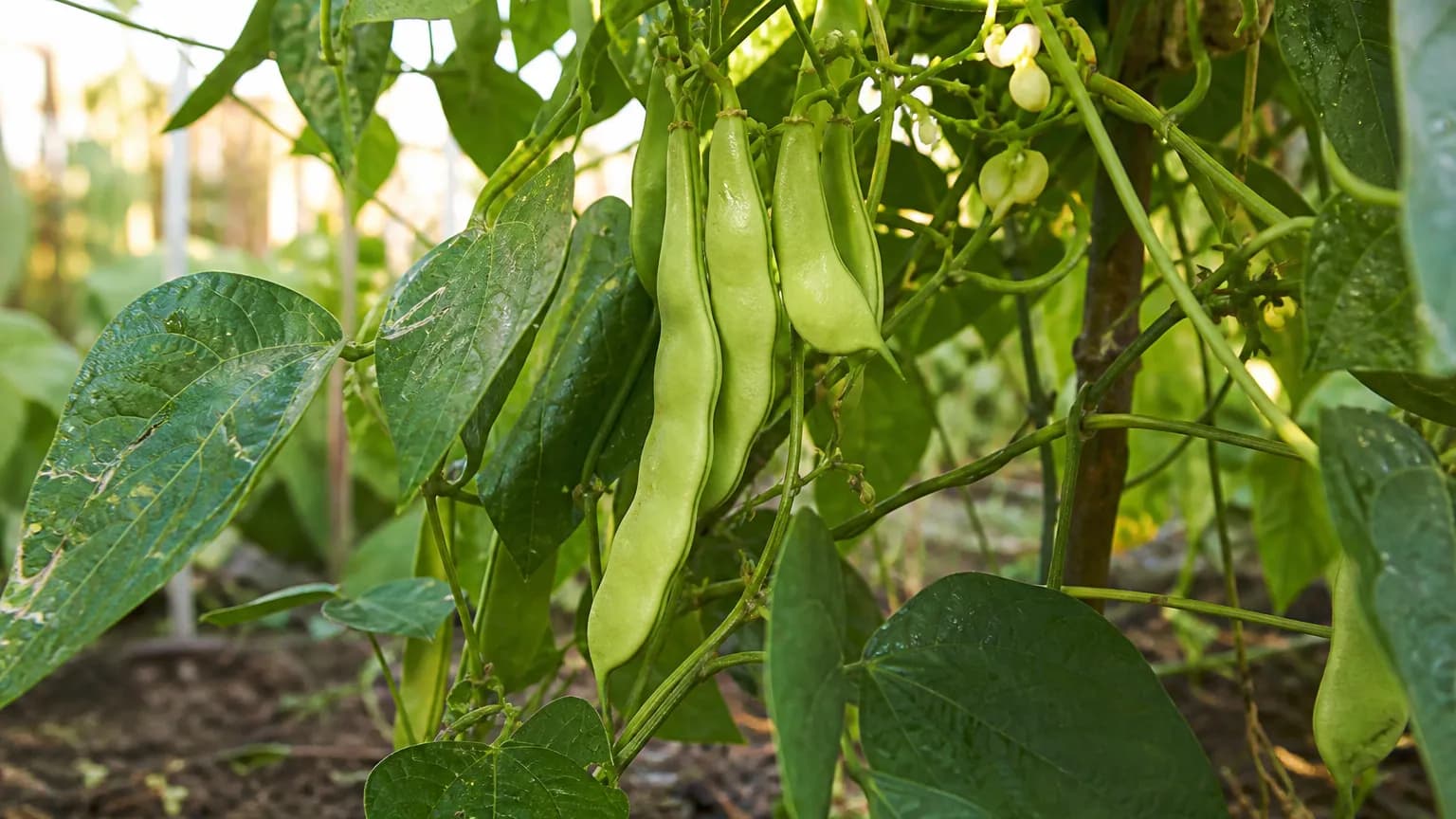
Abónalo bien
El frijol polilla prospera en suelos ligeros, arenosos y bien drenados con pH entre 6,0 y 7,5. Tolera suelos pobres, calcáreos e incluso ligeramente salinos donde otras leguminosas fallan. Como fijador de nitrógeno, no necesita fertilización nitrogenada; una aplicación ligera de fósforo antes de la siembra mejora la nodulación y el rendimiento.
Temperatura ideal
Compatibilidad de zonas de rusticidad
De la semilla a la cosecha, etapa por etapa
Germinación de la semilla
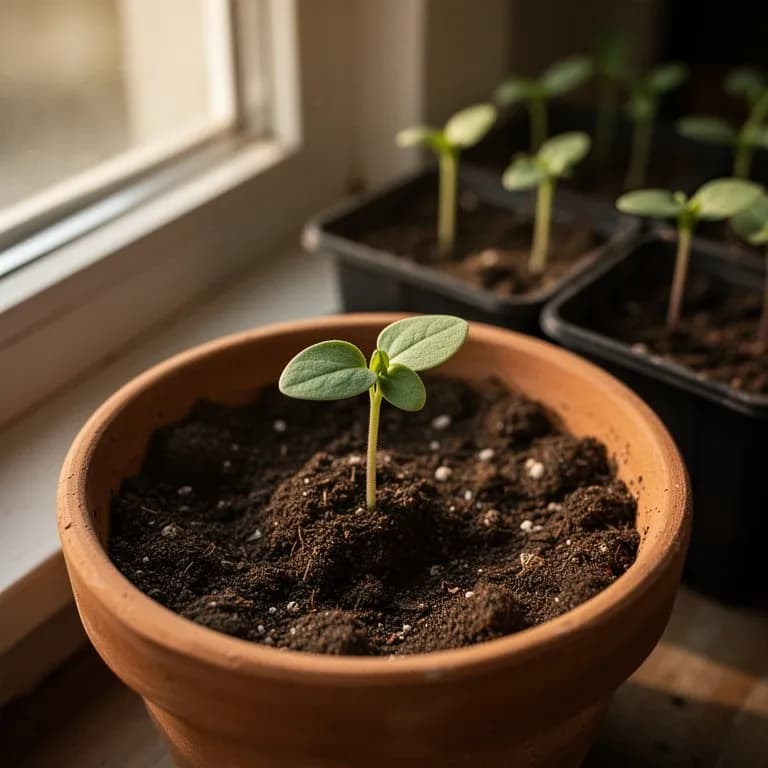
Las semillas germinan rápidamente en suelo cálido, enviando una raíz pivotante y sacando los cotiledones por encima de la superficie en 3-5 días. Las semillas de moth bean son pequeñas y solo requieren una siembra superficial de 2-3 cm de profundidad. La germinación es mejor con temperaturas del suelo superiores a 25 °C y puede fallar en condiciones frías o encharcadas.
Establecimiento de plántulas
Se desarrollan las primeras hojas trifoliadas y la planta comienza su hábito de crecimiento rastrero característico. El sistema radicular se desarrolla rápidamente, incluidas las nódulos fijadores de nitrógeno formados en asociación con bacterias Rhizobium. Las plántulas son tolerantes a la sequía incluso en esta etapa temprana.
Crecimiento vegetativo
Las enredaderas se extienden con vigor sobre el suelo, avanzando 60-120 cm desde la base. Un follaje denso forma una alfombra viva que sombrea el suelo y suprime las malezas. La planta es extremadamente tolerante al calor y a la sequía durante esta etapa, y sigue creciendo activamente incluso a temperaturas superiores a 40 °C.
Floración
En las axilas de las hojas, a lo largo de los tallos rastreros, aparecen racimos de pequeñas flores amarillas brillantes, de tipo papilionáceo (en forma de mariposa). Las flores son en gran parte autopolinizadas, pero se benefician de la visita de insectos. La floración se desencadena por la disminución de la duración del día y ocurre en varias tandas durante varias semanas.
Desarrollo de las vainas
De las flores marchitas se desarrollan vainas delgadas y algo curvadas, cada una con 4-9 semillas pequeñas. Las vainas son inicialmente verdes y carnosas, y gradualmente se vuelven amarillas y luego marrones al secarse. Las semillas del interior se hinchan y endurecen al madurar, cambiando de verde a su color final amarillo parduzco.
Cosecha y secado
Las vainas se secan por completo en la planta, volviéndose marrones y papiráceas mientras las semillas suenan dentro. Toda la planta comienza a senescer a medida que maduran las últimas vainas. La cosecha puede hacerse en una sola recolección cuando el 80-90 % de las vainas están secas, o en varias pasadas a medida que maduran de forma desigual durante 2-3 semanas.
Siembra directamente en suelo cálido y bien drenado después de que haya pasado todo riesgo de heladas. No remojes las semillas antes de sembrar: las moth beans germinan fácilmente sin tratamiento previo. Riega ligeramente al plantar y evita el exceso de agua, ya que las semillas se pudren con facilidad en suelo saturado.
Cuidar Frijol Polilla mes a mes
Qué hacer cada mes para tu Frijol Polilla
Octubre
Mes actualPrimary harvest month in most zones. Harvest when 80-90% of pods are dry and papery. Pull whole plants and hang in a dry, ventilated area to finish curing. Thresh dried pods to extract seeds and winnow away chaff.
Ten claro qué hacer en tu huerto, cada mes
Un correo al empezar cada mes: qué sembrar, plantar y hacer ahora mismo — para tu Frijol Polilla y todo lo que crece alrededor. Más un breve curso inicial para esquivar los errores clásicos.
- Qué hacer ahora mismo
- Ajustado a tu temporada
- Curso inicial incluido
Cosechar Frijol Polilla
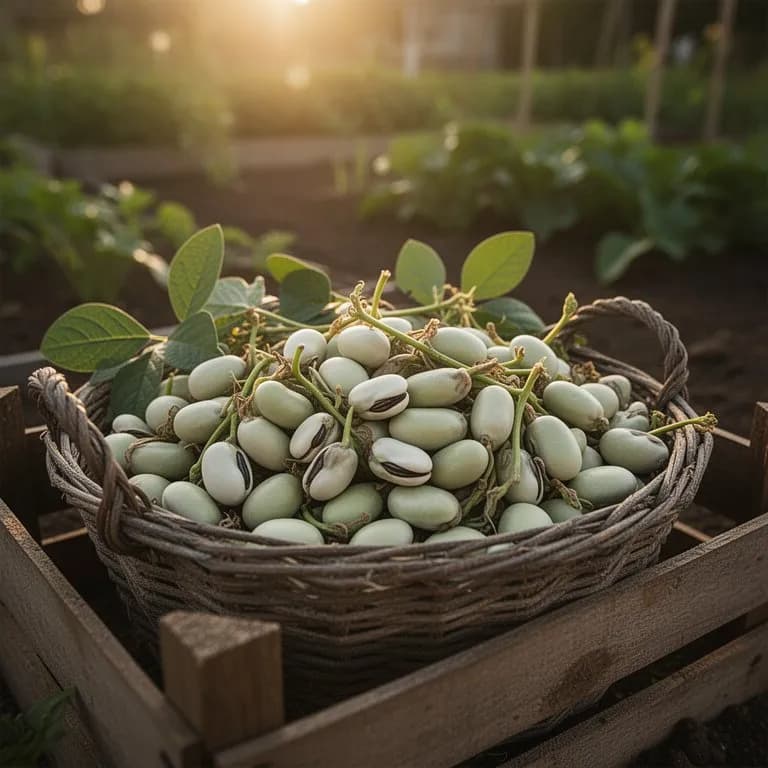
Para consumo en verde, cosecha las vainas cuando están turgentes y las semillas aún tiernas, entre 50 y 60 días. Para grano seco, deja las vainas en la planta hasta que se tornen completamente marrones y crujientes, entre 70 y 90 días. Cosecha por la mañana cuando las vainas están menos quebradizas para evitar pérdidas por desgrane.
se supone que plantas al comenzar el periodo — indica tu fecha real
Cuando las vainas estén completamente secas y marrones en la planta, aproximadamente 75 días después de la siembra.
Almacenamiento y conservación
Los frijoles secos se almacenan en recipientes herméticos en lugar fresco y seco, donde se conservan en excelentes condiciones durante 2-3 años. Para germinados, remoja las semillas durante 8-12 horas y enjuaga dos veces al día durante 2-3 días. Los germinados se conservan refrigerados durante 3-5 días.
Qué falla — y cómo solucionarlo
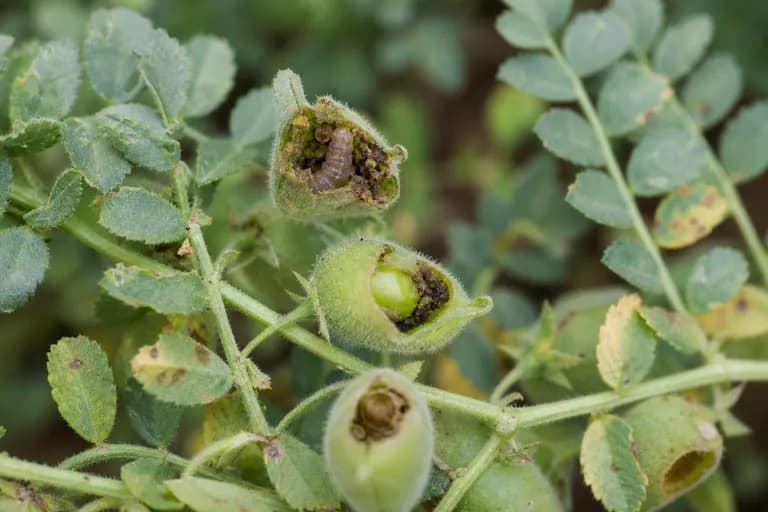
Pulgones
PlagaColonias de pequeños insectos verdes o negros en brotes tiernos y envés de hojas que causan enrollamiento foliar y debilitamiento del crecimiento. Producen melaza que puede atraer hongos de fumagina.
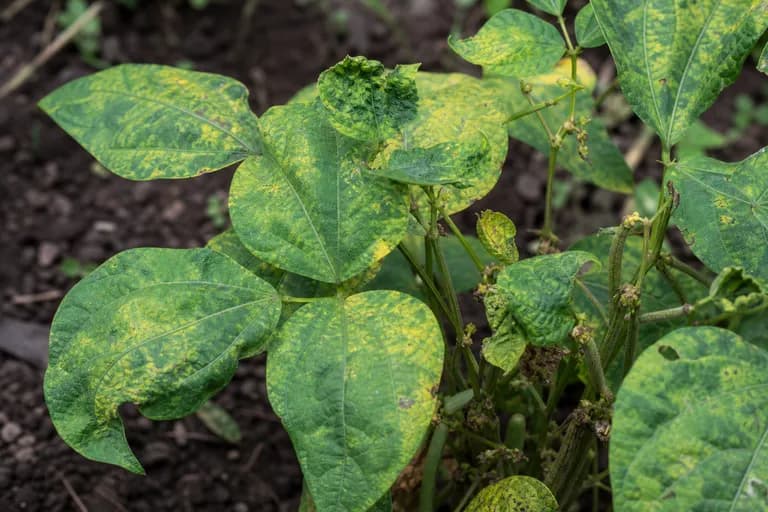
Mosaico amarillo del frijol polilla
EnfermedadHojas con manchas amarillas irregulares formando un patrón de mosaico. Las plantas afectadas muestran crecimiento atrofiado, flores reducidas y rendimiento significativamente menor.
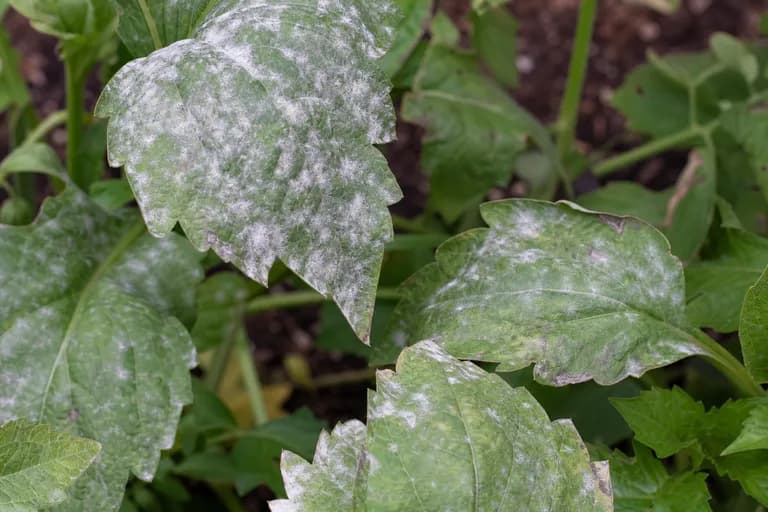
Podredumbre radicular por Rhizoctonia
EnfermedadManchas hundidas marrones en la base del tallo y raíces. Las plántulas se colapsan (damping-off) y las plantas adultas muestran marchitez y amarillamiento progresivo.
Solución de problemas comunes
Esta es una de las leguminosas con menos problemas de cultivo gracias a su rusticidad natural. El principal riesgo es el exceso de humedad y encharcamiento, que causa pudrición radicular. Evita el riego excesivo y asegura buen drenaje. En climas húmedos, puede ser susceptible a enfermedades fúngicas foliares; elige ubicaciones bien ventiladas.
Consejos de cultivo
- Choose your worst garden soil and moth beans will reward you. Heavy clay amended with compost, rich raised beds, and well-fertilized plots are actually detrimental — moth beans evolved in nutrient-poor desert sand and produce the most pods in lean, fast-draining soil.
- Never start moth beans indoors for transplanting. Their deep taproot resents any disturbance, and transplant shock often kills or severely stunts seedlings. Always direct-sow into warm garden soil after the last frost date.
- Resist the urge to water regularly. Moth beans are among the most drought-tolerant food crops on the planet and overwatering is the single most common cause of failure. Water only at planting and during severe drought — the plants actually produce better with modest water stress.
- Inoculate seeds with Rhizobium cowpea-type inoculant before planting, especially if you have never grown cowpeas, moth beans, or other Vigna species in that soil. The nitrogen-fixing bacteria dramatically improve plant vigor and eliminate any need for nitrogen fertilizer.
- Use moth beans as a living mulch between taller crops like corn, sorghum, or sunflowers. The trailing vines shade the soil surface, suppress weeds, and fix nitrogen that benefits neighboring plants — a classic intercropping strategy used for centuries in Indian agriculture.
- Harvest timing is critical for seed quality. Pick pods when they are completely dry and papery on the vine — pods that are harvested too early produce shriveled seeds with poor storage life. Conversely, leaving pods too long after drying risks shattering and seed loss.
- Save your own seed effortlessly. Unlike many vegetables, moth beans are almost entirely self-pollinating and will come true from saved seed year after year. Simply set aside your best-looking dried seeds in an airtight jar for next season.
- Try sprouting your home-grown moth beans for the freshest possible matki sprouts. Soak dried beans for 8-12 hours, then drain and rinse twice daily in a jar covered with cheesecloth. Sprouts are ready in 2-3 days when tails are 1-2 cm long.
Cultiva tu mejor Frijol Polilla — y todo lo que la rodea.
Empieza un plan gratis hoy. Diseña tus bancales, coloca tu Frijol Polilla y deja que PlotMyGarden gestione el momento, el espaciado, las asociaciones y los recordatorios de la semilla a la cesta.
Elige tu Frijol Polilla
RMO-40
Variedad mejorada de alto rendimiento desarrollada en Rajastán, India. Semillas pequeñas de color marrón claro con excelente tolerancia a la sequía y resistencia a enfermedades. 65-75 días.
RMO-225
Variedad semi-erecta de maduración precoz con buen potencial de rendimiento en condiciones áridas. Ideal para cultivos de secano con lluvias escasas. 60-70 días.
Jadia
Variedad tradicional de Rajastán con semillas marrones pequeñas y sabor pronunciado. Muy utilizada en la cocina rajasthani tradicional para dal y currys. 70-80 días.
CZM-2
Variedad mejorada con hábito de crecimiento semi-erecto y mayor uniformidad de maduración. Adaptada a cultivo mecanizado y con buen contenido proteico. 65-75 días.
Dried moth beans (matki) sell for $4-8 per pound at Indian grocery stores and specialty markets, with organic sprouting-grade moth beans fetching $8-12 per pound online. A small garden planting of 20-30 plants using seeds that cost under $3 total can produce 1-2 kg of dried beans worth $10-25 at retail prices. The real savings come from sprouting: commercially sold moth bean sprouts cost $3-6 per small container, while home-sprouted beans from your harvest cost virtually nothing and are fresher. As a bonus, moth bean improves your soil with fixed nitrogen, reducing fertilizer costs for subsequent crops.
Recetas rápidas
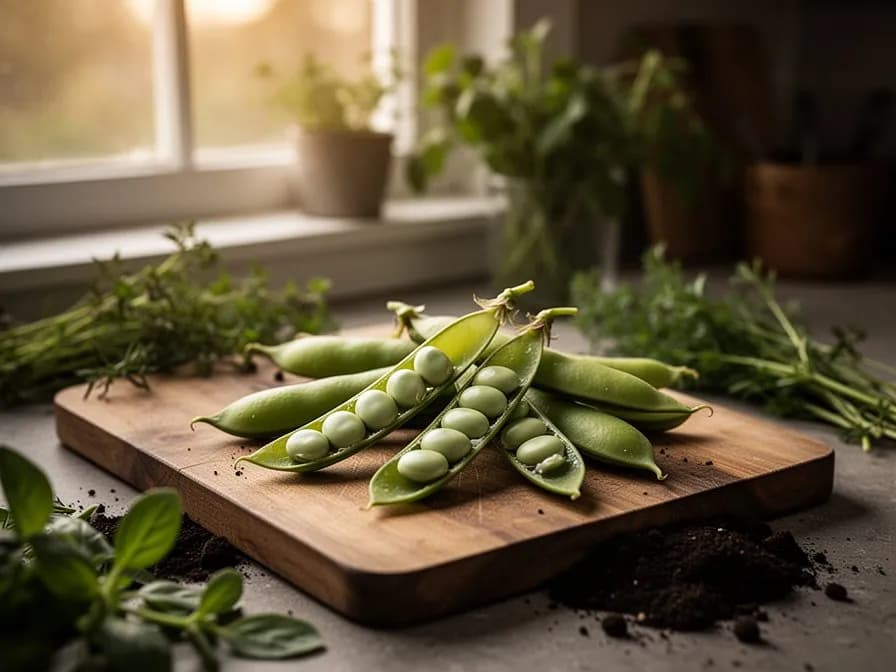
Rajasthani Moth Dal (Moth Ki Dal)
45 minA hearty, earthy dal from the desert state of Rajasthan where moth beans are a dietary staple. Whole moth beans are simmered until tender, then finished with a smoky tadka of cumin, garlic, and dried red chilies that fills the kitchen with intoxicating aromas.
10 ingredientesMoth Bean Sprout Salad (Matki Usal)
25 minA refreshing, protein-packed sprouted moth bean salad popular across Maharashtra and Gujarat. Sprouted beans are lightly steamed and tossed with crunchy onion, fresh coconut, and a bright lime-chili dressing for a light meal or energizing snack.
8 ingredientesMoth Bean and Vegetable Curry
50 minA nourishing one-pot curry combining moth beans with seasonal vegetables in a fragrant tomato-coconut gravy. The beans hold their shape beautifully and absorb the spiced sauce, creating a satisfying weeknight meal served over steamed rice.
11 ingredientesUsos culinarios
En la cocina india, especialmente en Rajastán, el frijol polilla es un ingrediente fundamental. Se prepara como dal (sopa cremosa de legumbres), en currys secos llamados sabzi, y germinado para ensaladas nutritivas. Los granos secos se muelen en harina para elaborar papad (crackers crujientes). Su sabor terroso y ligeramente amargo combina bien con especias como comino, cúrcuma y asafétida.
Qué contiene
Beneficios para la salud
- Exceptionally high plant-based protein content (23-25% of dry weight) provides essential amino acids for muscle maintenance, immune function, and tissue repair — moth bean is a cornerstone protein source for vegetarian populations across India.
- Rich in dietary fiber that promotes healthy digestion, feeds beneficial gut bacteria, and helps regulate blood sugar by slowing glucose absorption after meals — particularly valuable for managing type 2 diabetes risk.
- Outstanding source of potassium (1191mg per 100g) that supports healthy blood pressure, proper muscle contraction, and nerve signal transmission — far exceeding the potassium content of bananas on a per-gram basis.
- Contains significant iron (approximately 6.5mg per 100g) essential for hemoglobin production and oxygen transport — sprouting moth beans increases iron bioavailability by reducing antinutrient phytic acid levels.
- Low glycemic index food that produces a slow, steady rise in blood sugar rather than a spike, making it an excellent dietary choice for sustained energy and for people managing diabetes or insulin resistance.
- Sprouted moth beans contain elevated levels of vitamin C, B vitamins, and bioavailable minerals compared to the dried form — the sprouting process converts stored nutrients into more easily absorbed forms and reduces flatulence-causing oligosaccharides.
De dónde viene Frijol Polilla
Moth bean (Vigna aconitifolia) originated in the arid and semi-arid regions of the Indian subcontinent, with its center of diversity located in the Thar Desert region spanning present-day Rajasthan (India) and Sindh (Pakistan). Archaeological evidence from Chalcolithic sites in western India dates the cultivation of moth bean to approximately 1500-2000 BCE, making it one of the oldest pulse crops domesticated in South Asia. Wild forms of the plant still grow in dry scrublands and rocky outcrops across northwestern India, confirming the region as its primary center of origin.
For millennia, moth bean has been a lifeline crop for communities living in some of the harshest agricultural environments on Earth. In the Thar Desert, where temperatures routinely exceed 45°C (113°F) and annual rainfall can be as low as 150-200mm, moth bean is often the only pulse crop that reliably produces a harvest. Traditional Rajasthani agriculture developed sophisticated dryland farming systems around moth bean, planting it as a kharif (monsoon season) crop that germinates with the first rains and matures before the dry season returns. The crop became deeply woven into the culinary identity of Rajasthan and Gujarat, appearing in staple dishes like moth dal, moth ki sabzi, and the beloved street food matki usal.
Moth bean spread gradually from its Indian homeland to other arid regions of Asia and Africa through trade and migration. It is now grown on a smaller scale in Pakistan, Myanmar, Thailand, parts of China, and in dry zones of East and West Africa. Despite its remarkable nutritional profile and extraordinary drought tolerance, moth bean remains relatively unknown outside South Asia. Modern agricultural researchers have begun to recognize its potential as a climate-resilient crop for a warming world, and breeding programs in India and at international research centers are developing improved varieties with higher yields and disease resistance while preserving its legendary heat and drought tolerance.
Frijol Polilla: ¿sabías que?
Datos fascinantes sobre Frijol Polilla
Moth bean (Vigna aconitifolia) is one of the most drought-tolerant legume crops on Earth, capable of completing its entire life cycle on as little as 200mm of annual rainfall — less than most cacti need to thrive.
Frijol Polilla: preguntas frecuentes
¿Cuándo debo plantar Frijol Polilla?
¿Cuáles son buenas plantas acompañantes para Frijol Polilla?
¿En qué zonas de rusticidad puede crecer Frijol Polilla?
¿Cuánto sol necesita Frijol Polilla?
¿A qué distancia debo espaciar Frijol Polilla?
¿Qué plagas y enfermedades afectan a Frijol Polilla?
¿Cómo almaceno Frijol Polilla después de la cosecha?
¿Cuáles son las mejores variedades de Frijol Polilla para cultivar?
¿Qué suelo necesita Frijol Polilla?
Where can I find moth bean seeds for planting?
Can I grow moth beans in a humid climate?
How do I sprout moth beans at home?
Do moth beans need a trellis or support?
Are moth beans the same as mung beans?
Can I eat moth bean leaves and pods fresh, or only the dried seeds?
Acabas de leer la teoría. Ahora cultívala en piloto automático.
Todo lo que hace que Frijol Polilla sea delicado — el momento, el espaciado, las asociaciones, la ventana de cosecha — es justo lo que PlotMyGarden resuelve por ti, para cada planta de tu huerto.
Un plan que conoce tu clima
Indica tu ubicación una vez. Recibe fechas de siembra, abonado y cosecha basadas en tu última helada real y el pronóstico en vivo — sin adivinar con un sobre genérico.
De la sección “Cuándo plantar”Planificador de bancales de arrastrar y soltar
Diseña bancales sobre una cuadrícula. Cada planta encaja con su espaciado correcto y ves toda la temporada antes de gastar un céntimo en semillas.
De la sección “Cultivo”Conflictos de asociación, detectados a tiempo
Más de 200 buenas y malas combinaciones comprobadas en vivo mientras plantas — para que un error que arruine la temporada nunca llegue a la tierra.
De la sección “Asociaciones”Recordatorios que sí vas a seguir
“Riega las judías.” “Recoge hoy antes de que se pase.” Oportunos, concretos y ligados a las plantas que de verdad cultivas.
De la sección “Cosecha”Escalonado, programado
¿Quieres cosechar seis semanas en vez de seis días? Reparte tus siembras automáticamente y te avisa cuando toca el siguiente lote.
De la sección “Cuándo plantar”Un registro que se vuelve más listo
Cada cosecha que registras le enseña tu huerto. El plan del año que viene parte de lo que de verdad funcionó en tu suelo, no en un manual.
De la sección “Resumen”Planta estos junto a Frijol Polilla
Más Legumbres
Mantén Frijol Polilla lejos de estos
Cultiva tu mejor Frijol Polilla — y todo lo que la rodea.
Empieza un plan gratis hoy. Diseña tus bancales, coloca tu Frijol Polilla y deja que PlotMyGarden gestione el momento, el espaciado, las asociaciones y los recordatorios de la semilla a la cesta.