Koreanische Melone
Eine kleine, gelbgestreifte Melone mit knackigem, weißem Fruchtfleisch und milder, erfrischender Süße, die als koreanischer Sommersnack beliebt ist.





Auf dieser SeiteÜberblick
Koreanische Melone im Überblick
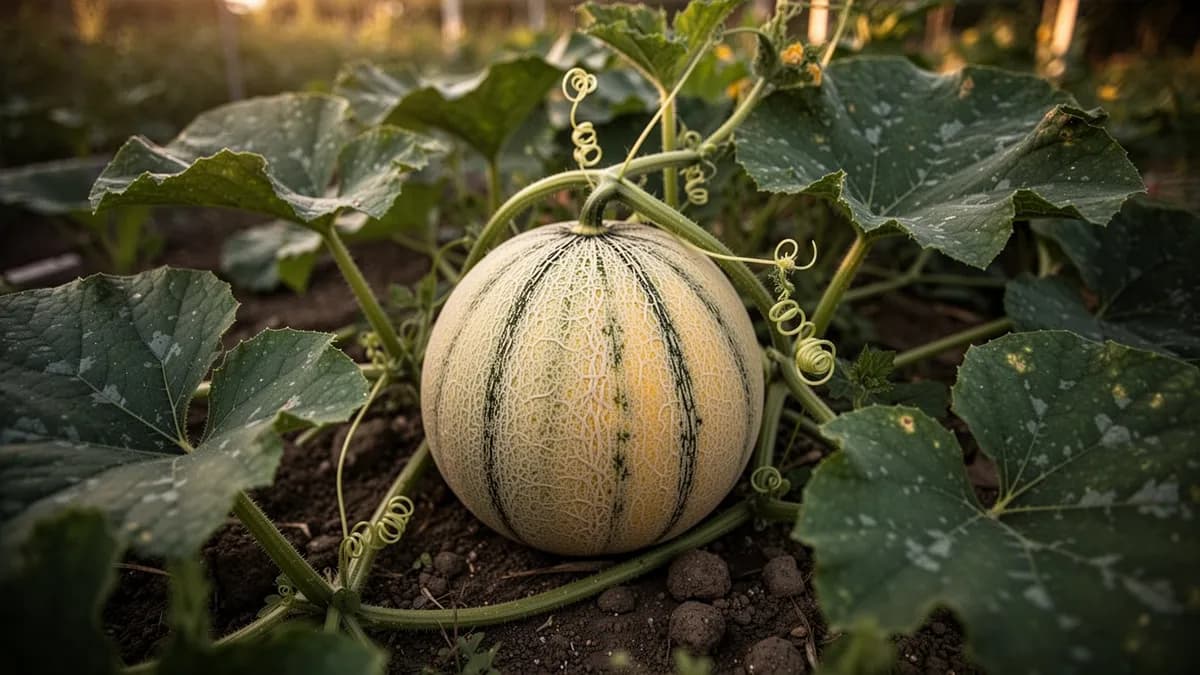
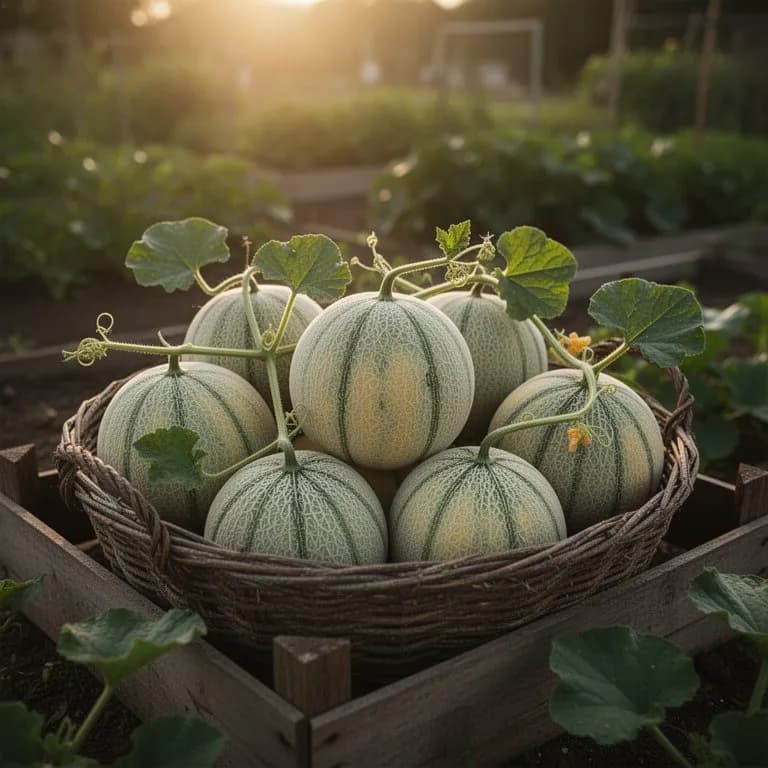
Eine kleine, gelbgestreifte Melone mit knackigem, weißem Fruchtfleisch und milder, erfrischender Süße, die als koreanischer Sommersnack beliebt ist. Anders als bei den meisten Melonen sind die dünne Schale und die Kerne essbar, und die gesamte Frucht kann in Scheiben geschnitten und wie ein Apfel gegessen werden. Die Früchte sind typischerweise softballgroß und die Pflanzen tragen in warmen Bedingungen reichlich. Ernten Sie, wenn die Frucht eine tiefgelbe Farbe entwickelt und die weißen Streifen deutlich hervortreten.
Wann Koreanische Melone pflanzen
Starten Sie Koreanische-Melonen-Samen 3–4 Wochen vor dem letzten Frost drinnen in einzelnen biologisch abbaubaren Töpfen. Pflanzen Sie die Samen 1,5 cm tief in warme Anzuchterde bei 24–30 °C. Die Keimung erfolgt in 5–10 Tagen. Härten Sie die Setzlinge über eine Woche allmählich ab, bevor Sie sie verpflanzen, wenn die Bodentemperaturen 21 °C erreichen. Für Direktsaat pflanzen Sie 2–3 Samen pro Hügel und vereinzeln auf den kräftigsten Sämling nach dem Auflaufen. Einweichen der Samen für 8–12 Stunden beschleunigt die Keimung. Koreanische-Melonen-Samen sind manchmal über asiatische Gemüsesaatgut-Spezialisten oder Online-Händler erhältlich.
Dein Koreanische Melone-Jahr
Abgestimmt auf Zone 7 · typische Saison · Frost geht um den 2. Apr. und kehrt um den 1. Nov. zurück
Koreanische Melone Mai – Jun pflanzen, Aug – Sep ernten. Beachte die Pflanzmethoden unten und wähle dein Klima für passende Zeiträume.
So baust du Koreanische Melone an
Die Koreanische Melone (Chamoe) ist eine wärmeliebende Kultur, die bei heißen, sonnigen Bedingungen mit einer frostfreien Wachstumsperiode von 75–90 Tagen am besten gedeiht. Starten Sie die Samen 3–4 Wochen vor dem letzten Frost drinnen, oder säen Sie direkt aus, wenn die Bodentemperaturen 21 °C erreichen. Pflanzen Sie die Samen 1,5–2,5 cm tief in Hügeln im Abstand von 90–120 cm mit 2–3 Samen pro Hügel und vereinzeln Sie auf den kräftigsten Sämling. Die Pflanzen können am Boden mit Mulch oder an einem Spalier für sauberere, gleichmäßigere Früchte angebaut werden.
Sorgen Sie für gleichmäßige Feuchtigkeit von 2,5–4 cm pro Woche, besonders während der Fruchtentwicklung. Reduzieren Sie die Bewässerung, wenn die Früchte sich der Reife nähern, um den Zucker zu konzentrieren und Aufplatzen zu verhindern. Geben Sie bei der Pflanzung einen ausgewogenen Dünger und wechseln Sie zu einer kaliumreicheren Formel, sobald die Früchte ansetzen. Geben Sie Kompost als Seitendüngung, wenn die Ranken zu laufen beginnen. Schwarze Plastikfolie als Mulch erwärmt den Boden früh und unterdrückt Unkraut effektiv.
Koreanische Melonen sind ergiebige Produzenten, wobei jede Ranke unter günstigen Bedingungen 8–12 Früchte ansetzt. Knipsen Sie die Hauptranke nach dem 5. oder 6. Blattknoten ab, um seitliche Verzweigung zu fördern, an der die meisten Früchte entstehen. Handbestäubung am Morgen gewährleistet zuverlässigen Fruchtansatz. Die Früchte reifen relativ schnell in 75 Tagen, was die Koreanische Melone zu einer guten Wahl für kürzere Vegetationsperioden macht. In Korea werden diese Melonen intensiv in Gewächshäusern für ganzjährige Produktion angebaut.
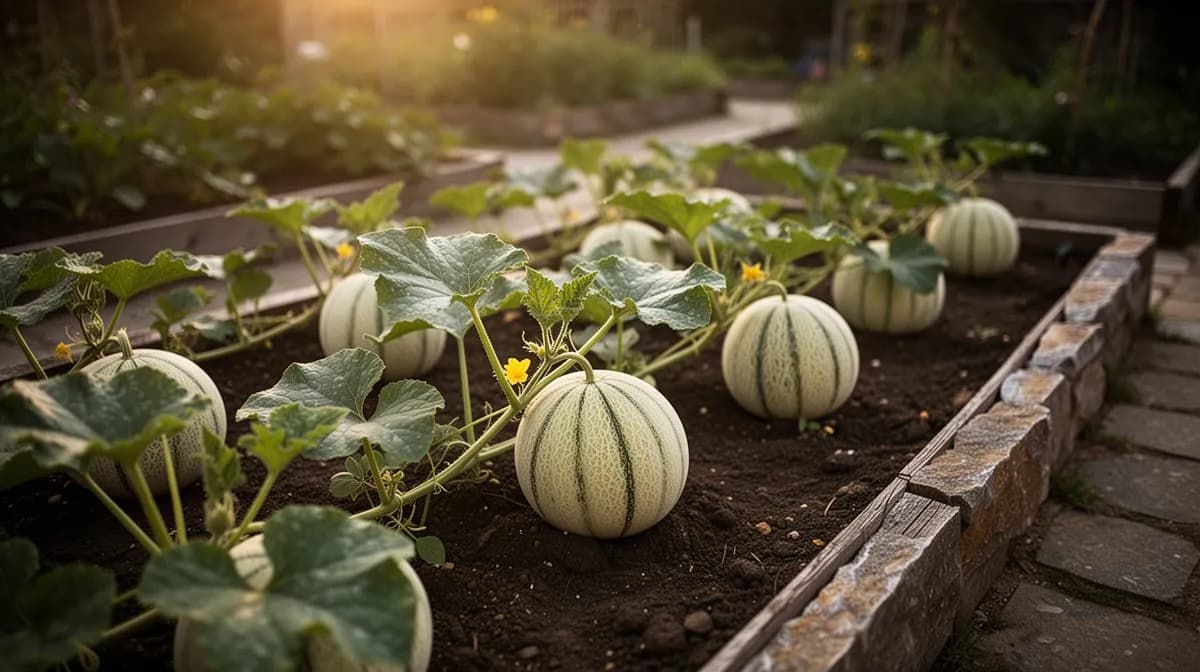
8 Pflanzen passen in ein Beet von 120 × 240 cm
Koreanische Melone braucht 60 cm Platz pro Pflanze. Der Planer hält diesen Abstand für dich ein — jede Pflanze, jedes Beet.
Die besten Nachbarn für Koreanische Melone
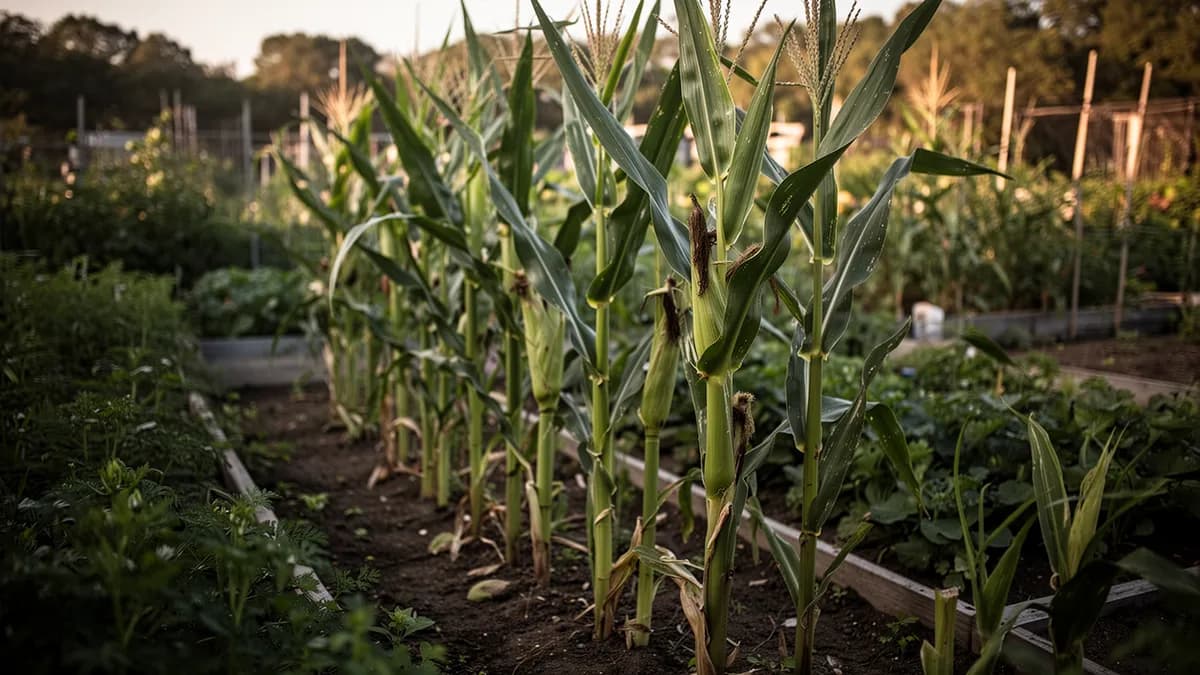
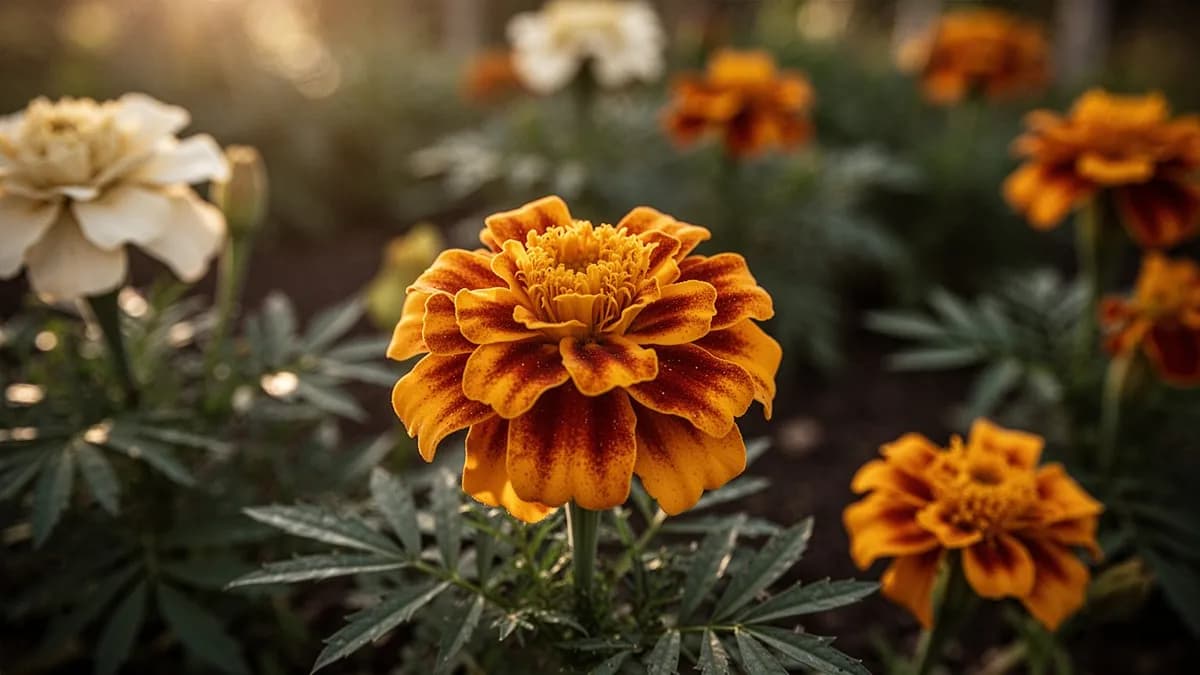
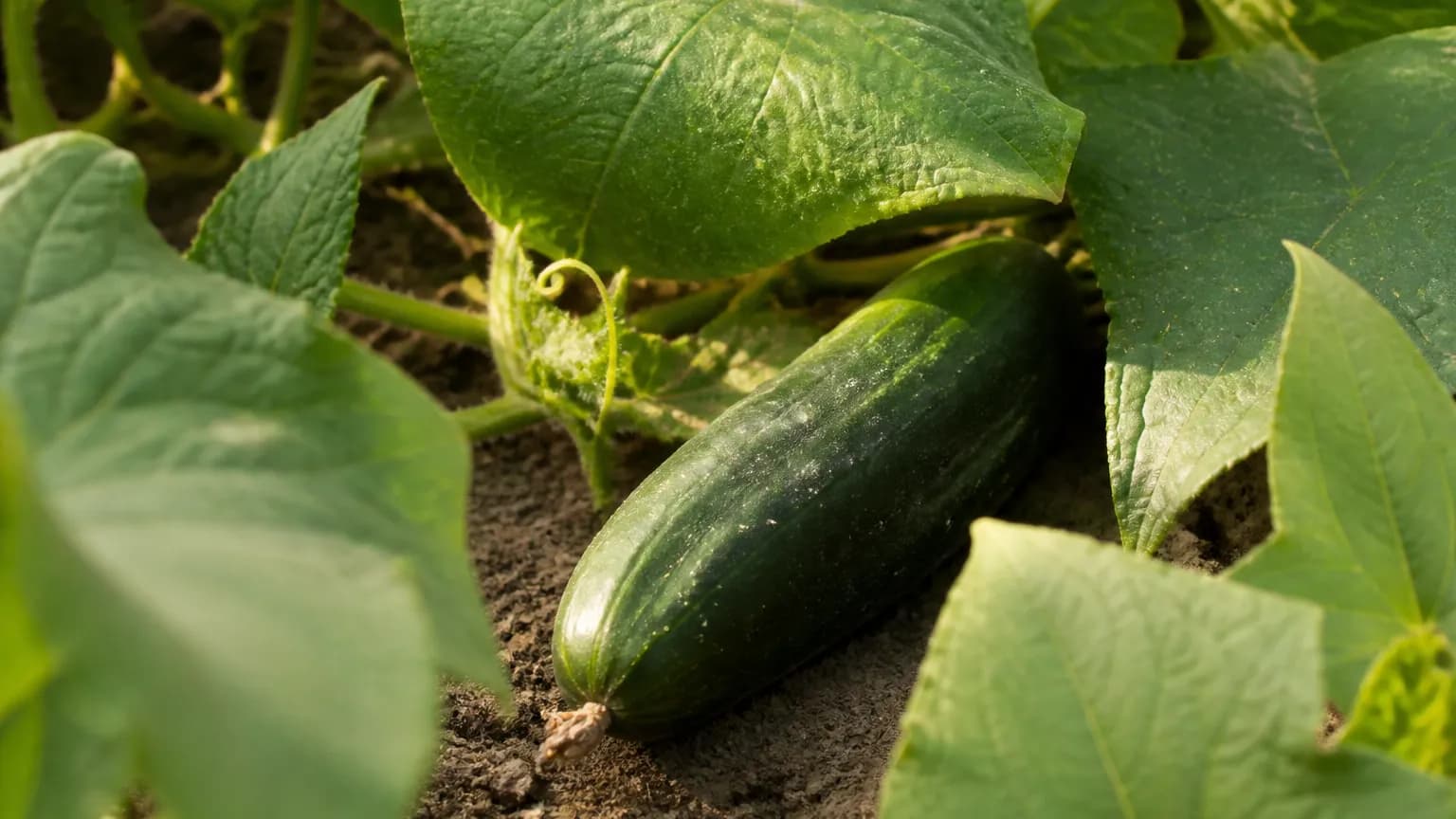
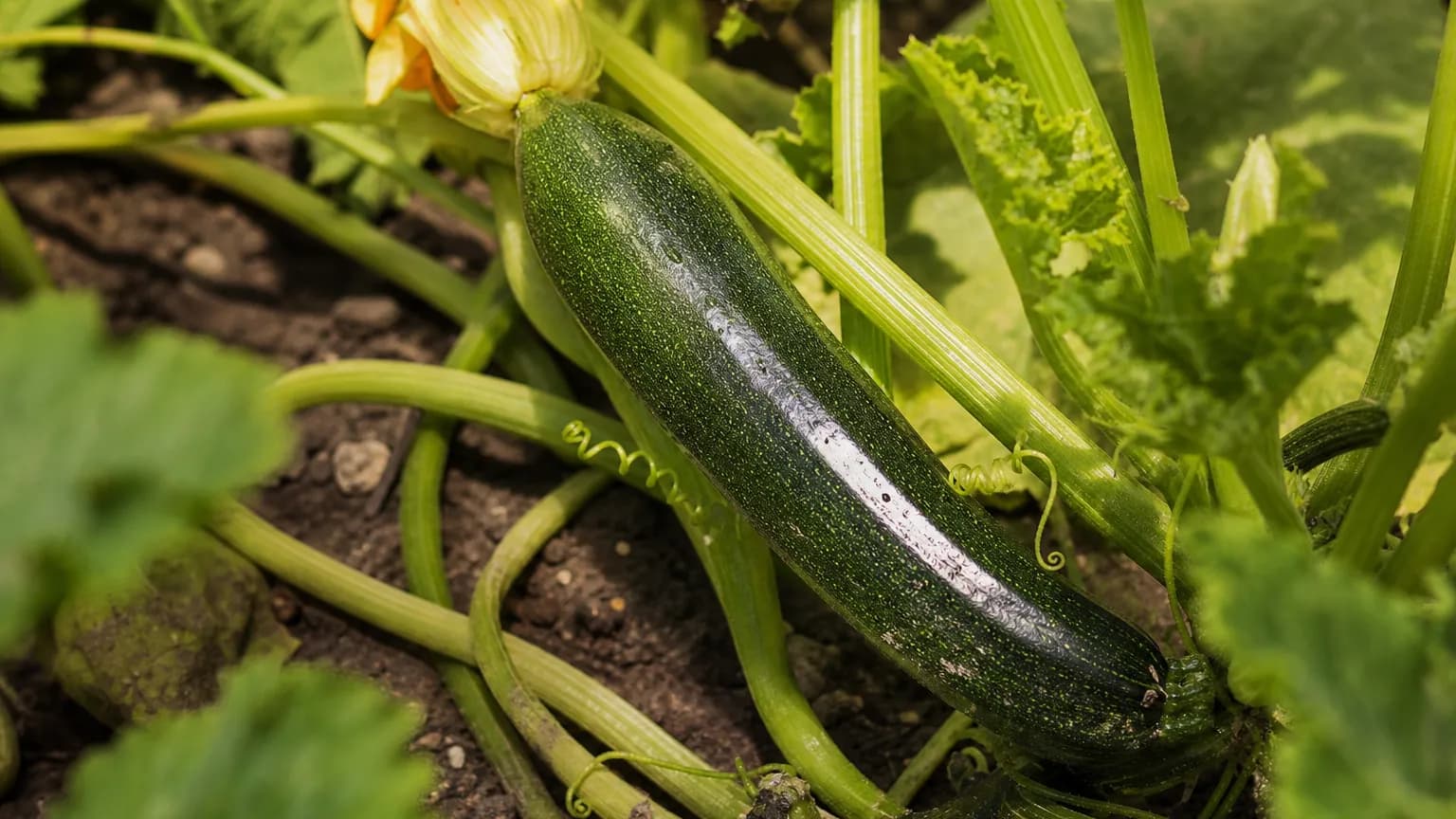
Koreanische Melone profitiert von Mais, der als Windschutz und teilweiser Schattenspender bei extremer Hitze gepflanzt wird. Tagetes schrecken Blattläuse und Gurkenkäfer ab, wenn sie am Rand gepflanzt werden. Vermeiden Sie das Pflanzen in der Nähe von Kartoffeln, die um Nährstoffe konkurrieren und gemeinsame Krankheiten beherbergen können. In der Nähe gepflanzte Bohnen binden Stickstoff, der den Melonen zugutekommt. Halten Sie Abstand zu anderen Cucumis-melo-Sorten, um Kreuzbestäubung zu verhindern, wenn Saatgut gewonnen wird. Radieschen nutzen den Platz zwischen den Melonenhügeln effizient, da sie reifen, bevor sich die Ranken ausbreiten.
Mais gehört daneben. Kartoffel nicht.
Altes Gärtnerwissen, geprüft an der echten Nachbartabelle von Koreanische Melone — teste jede Pflanze, die du anbaust.
Probiere Koreanische Melone direkt hier im Beet
Ein echtes Planer-Beet, Koreanische Melone steht schon drin. Tippe einen Begleiter an, platziere ihn und sieh, wie die Nachbarschaftsprüfung antwortet — grün für gute Nachbarn, rot bei Streit.


Passende Anbau-Ratgeber
Richtig düngen
Koreanische Melone bevorzugt fruchtbaren, gut durchlässigen sandigen Lehm mit einem pH-Wert von 6,0–7,0. Bereiten Sie Pflanzhügel mit reichlich Kompost vor und stellen Sie eine gute Drainage sicher. Geben Sie bei der Pflanzung einen ausgewogenen Dünger, dann wechseln Sie während der Fruchtentwicklung zu einer kaliumbetonten Formel, um Süße und feste Textur zu verbessern. Geben Sie Kompost als Seitendüngung, wenn die Ranken zu laufen beginnen. Vermeiden Sie übermäßigen Stickstoff, der das Rankenwachstum auf Kosten der Fruchtsüße fördert. Kalzium ist wichtig zur Vorbeugung von Blütenendfäule – testen Sie den Boden und verbessern Sie ihn bei Bedarf.
Ideale Temperatur
Winterhärtezone-Kompatibilität
Von der Saat zur Ernte, Schritt für Schritt
Aussaat
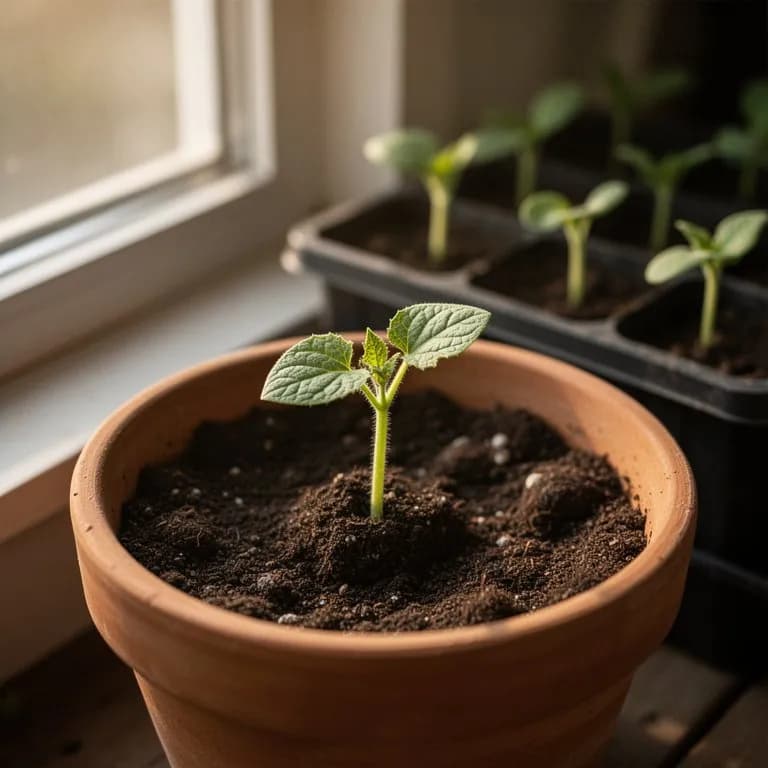
Samen keimen in warmem Boden und bilden ein gebogenes Hypokotyl, das runde Keimblätter über die Oberfläche schiebt. Koreanische-Melonen-Samen sind flach und oval, ähnlich wie Gurkensamen, und benötigen konstante Wärme von mindestens 21 °C für eine zuverlässige Keimung innerhalb von 5–10 Tagen.
Sämlingswachstum
Echte Blätter erscheinen mit der charakteristischen gelappten, leicht behaarten Kürbisgewächs-Form. Der Stängel verlängert sich und Ranken beginnen an den Blattknoten zu erscheinen. Sämlinge entwickeln in diesem Stadium ein starkes Wurzelsystem und wachsen schnell, sobald die Tagestemperaturen konstant über 24 °C liegen.
Rankenentwicklung
Ranken verlängern sich schnell und bilden große, gelappte Blätter und sich windende Ranken, die sich an jeder Stützstruktur festhalten. Die Hauptranke bildet mehrere Seitentriebe, die sich in alle Richtungen 2–3 Meter ausbreiten können. Das kräftige Blätterdach beschattet den Boden und unterdrückt Unkraut.
Blüte
Kleine, leuchtend gelbe Blüten erscheinen in den Blattachseln — männliche Blüten erscheinen zuerst in Büscheln, gefolgt von weiblichen Blüten, erkennbar an dem winzigen geschwollenen Fruchtknoten an ihrer Basis. Bienen und andere Bestäuber sind für die Pollenübertragung von männlichen auf weibliche Blüten unerlässlich. Jede weibliche Blüte ist nur einen Tag lang geöffnet.
Fruchtentwicklung
Bestäubte weibliche Blüten schwellen zu kleinen ovalen Früchten an, die über 3–4 Wochen schnell wachsen. Die Schale wechselt von grün zur ikonischen goldgelben Farbe mit 10 deutlichen weißen Nahtlinien, die längs verlaufen. Die Früchte erreichen 10–15 cm Länge und 200–400 Gramm bei der Reife.
Ernte
Die Früchte sind reif, wenn die Schale tiefgoldgelb wird und die weißen Nahtlinien deutlich hervortreten. Am Blütenende entwickelt sich ein süßes Aroma, und der Stiel löst sich bei leichtem Drehen leicht. Das Fruchtfleisch sollte knackig, weiß und mild süß sein mit einem erfrischenden Gurken-Melonen-Duft.
Starten Sie die Samen 3–4 Wochen vor dem letzten Frosttermin drinnen in biologisch abbaubaren Töpfen, um Wurzelstörungen zu vermeiden. Halten Sie die Bodentemperatur bei 25–30 °C mit einer Heizmatte. Pflanzen Sie die Samen 1,5 cm tief und halten Sie sie gleichmäßig feucht.
Koreanische Melone Monat für Monat pflegen
Was du jeden Monat für deine Koreanische Melone tun solltest
Oktober
Aktueller MonatAbgetragene Ranken entfernen und gesundes Material kompostieren. Erkranktes Laub nicht kompostieren — über den Hausmüll entsorgen. Kompost in die Beete einarbeiten und die Sortenleistung für die Planung der nächsten Saison notieren.
Immer wissen, was jetzt im Garten zu tun ist
Eine E-Mail zum Monatsanfang: was du jetzt säen, pflanzen und anpacken solltest — für deine Koreanische Melone und alles, was drumherum wächst. Dazu ein kurzer Startkurs, der dich vor den klassischen Fehlern bewahrt.
- Was jetzt zu tun ist
- Passend zu deiner Saison
- Startkurs inklusive
Koreanische Melone ernten
Ernten Sie Koreanische Melonen, wenn die Schale leuchtend goldgelb mit deutlichen weißen oder cremefarbenen Streifen wird, typischerweise 75–80 Tage nach der Pflanzung. Reife Früchte lösen sich leicht, wenn Druck auf die Stelle ausgeübt wird, an der der Stiel auf die Frucht trifft. Die Schale sollte sich fest und wachsartig anfühlen. Anders als bei vielen Melonen gibt es bei der Reife keine starke Duftveränderung. Schneiden Sie die Frucht mit einem scharfen Messer von der Ranke und lassen Sie einen kurzen Stiel stehen. Die gesamte Frucht ist essbar, einschließlich der dünnen Schale und der kleinen Kerne, sodass kein Schälen erforderlich ist. Jede Ranke produziert 8–12 Früchte über die Ernteperiode.
angenommen, du pflanzt zu Beginn des Zeitraums — trage dein tatsächliches Datum ein
Ernte Koreanische Melone zügig, dann trägt die Pflanze weiter.
Lagerung & Konservierung
Koreanische Melonen halten sich im Kühlschrank 1–2 Wochen, was sie haltbarer macht als viele Melonensorten. Lagern Sie sie ungewaschen in einem Plastikbeutel im Gemüsefach. Für längere Konservierung kann das Fruchtfleisch in Essig und Salz für koreanisch eingelegte Melone eingelegt werden. Geschnittene Melone kann leicht getrocknet oder dehydriert werden für zähe Snacks. Koreanische Melone eignet sich aufgrund ihrer knackigen Textur, die beim Auftauen matschig wird, nicht gut zum Einfrieren. Samen können aus vollreifen Früchten gewonnen, gründlich getrocknet und 3–5 Jahre unter kühlen, trockenen Bedingungen aufbewahrt werden.
Was schiefgeht — und die Lösung
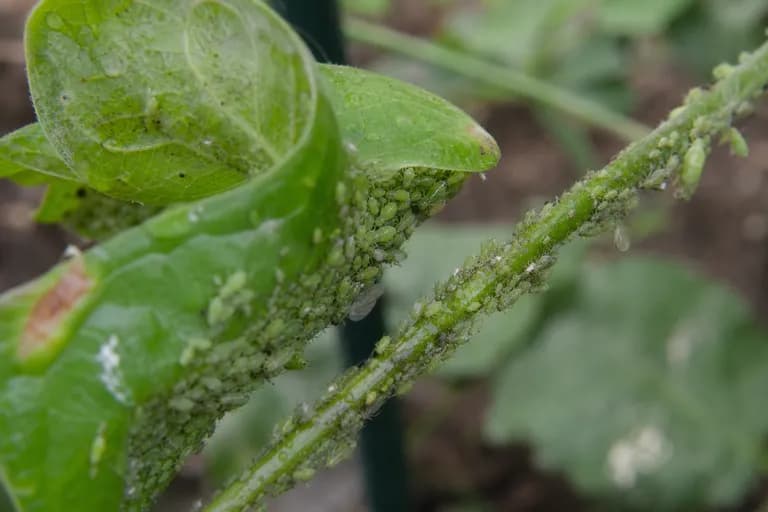
Blattläuse
SchädlingGrüne oder schwarze Insekten, die sich an Triebspitzen ansammeln, klebriger Honigtau, eingerollte Blätter, mögliche Virusübertragung.
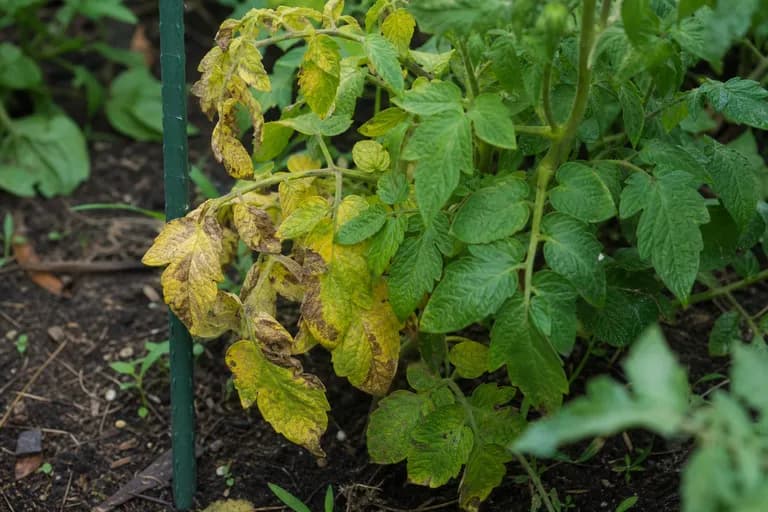
Fusarium-Welke
KrankheitVergilbung und Welken der unteren Blätter, braune Verfärbung im Stängelinneren beim Aufschneiden, schließlich Absterben der Pflanze.
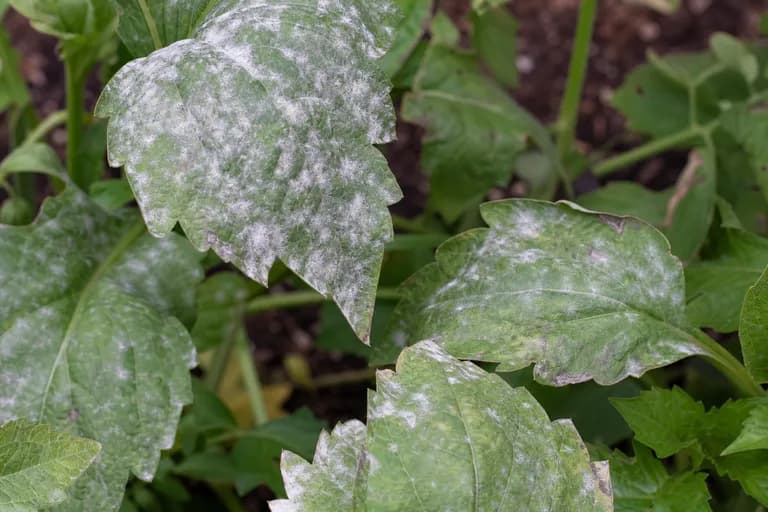
Echter Mehltau
KrankheitWeiße, pudrige Flecken auf Blättern, vorzeitiges Blattabsterben, verminderte Fruchtsüße und -qualität.
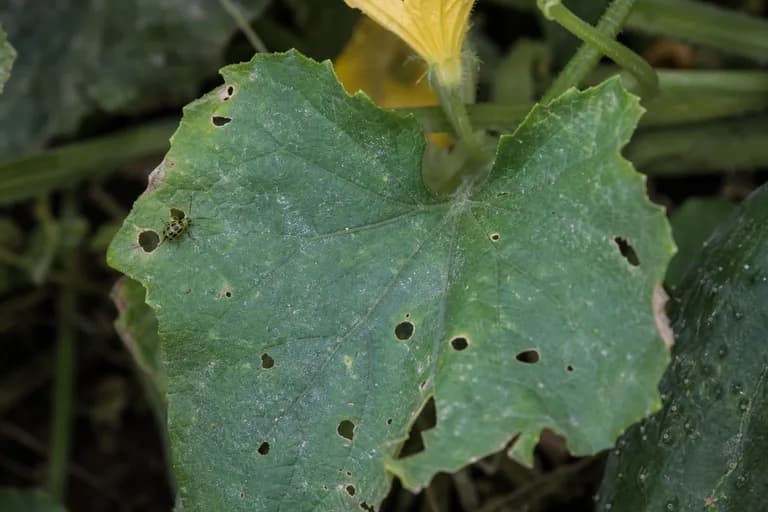
Gurkenkäfer
SchädlingGestreifte oder gefleckte Käfer auf Blüten und Blättern, Fraßschäden, Übertragung bakterieller Welke.
Fehlerbehebung bei häufigen Problemen
Ungleichmäßige Bewässerung verursacht Fruchtaufplatzen und -risse, was die häufigste Beschwerde ist. Halten Sie während der gesamten Vegetationsperiode gleichmäßige Feuchtigkeit und reduzieren Sie sie gegen die Ernte hin allmählich. Unzureichende Süße resultiert oft aus Überwässerung, zu viel Stickstoff oder zu früher Ernte. Kühles, bewölktes Wetter während der Fruchtentwicklung verringert die Zuckereinlagerung. Fusarium-Welke kann in kontaminierten Böden verheerend sein. Vögel und Kleintiere werden von reifenden Früchten angelockt und können Schäden verursachen. Saatgut ist außerhalb asiatischer Spezialanbieter manchmal schwer zu beschaffen.
Anbautipps
- Koreanische Melonen benötigen warmen Boden zum Gedeihen — überstürzen Sie das Verpflanzen nicht. Verwenden Sie schwarze Plastikfolie, um die Bodentemperatur 3–5 °C über die Umgebungstemperatur zu erhöhen, und warten Sie, bis die Nachttemperaturen konstant über 15 °C bleiben.
- Spalieranbau wird für Hausgärten sehr empfohlen. Koreanische-Melonen-Früchte sind klein und leicht genug (200–400 g), um ohne Stütznetze am Spalier zu hängen, und vertikaler Anbau spart Platz, verbessert die Luftzirkulation und produziert sauberere Früchte.
- Knipsen Sie die Hauptrankenspitze nach dem 5. oder 6. Blattknoten ab, um seitliche Verzweigung zu erzwingen. Weibliche Blüten (und damit Früchte) erscheinen hauptsächlich an Seitentrieben, daher steigert die Förderung von Seitentrieben direkt Ihren Ertrag.
- Gleichmäßige Feuchtigkeit ist während der Fruchtentwicklung entscheidend, aber reduzieren Sie die Bewässerung um 30–50 %, sobald die Früchte beginnen, von grün auf gelb umzufärben. Dieser kontrollierte Wasserstress konzentriert den Zucker und produziert süßere, aromatischere Melonen.
- Koreanische Melonen sind Starkzehrer. Arbeiten Sie bei der Pflanzung reichlich Kompost ein, dann düngen Sie alle 3 Wochen während des Rankenwachstums mit einem ausgewogenen Dünger nach. Wechseln Sie zu kaliumreicher Düngung (wie Tomatendünger), sobald die Fruchtbildung beginnt, um die Süße zu steigern.
- Begrenzen Sie jede Ranke auf 4–6 Früchte, indem Sie überschüssige weibliche Blüten oder winzige sich entwickelnde Früchte entfernen. So stellt die Pflanze ihre Energie in weniger, aber größere, süßere Melonen statt vieler kleiner, fader.
- Schützen Sie reifende Früchte vor Bodenkontaktfäulnis, indem Sie Stroh, Pappe oder kleine Holzbrettchen unter jede Melone legen, wenn sie am Boden wächst. Dies verhindert auch kosmetische Narbenbildung auf der empfindlichen goldenen Schale.
- Der Erntezeitpunkt ist alles — der Geschmack der Koreanischen Melone verändert sich dramatisch innerhalb von nur 2–3 Tagen nach der optimalen Reife. Die Frucht ist bereit, wenn die Schale gleichmäßig goldgelb ist, die weißen Nahtlinien deutlich hervortreten, am Blütenende ein süßer Duft wahrnehmbar ist und sich der Stiel mit sanftem Drehen löst.
Bau deine beste Koreanische Melone an — und alles drumherum.
Starte heute kostenlos. Lege deine Beete an, setze deine Koreanische Melone ein und lass PlotMyGarden Timing, Abstände, Begleiter und Erinnerungen von der Saat bis zum Erntekorb übernehmen.
Finde deine Koreanische Melone
Sun Jewel
Weit verbreitete Hybride mit leuchtend gelber Schale, weißen Streifen und süßem, knackigem Fruchtfleisch, ausgezeichnete Krankheitsresistenz.
Chamoe
Traditionelle koreanische samenfeste Sorte mit klassischem Aussehen und Geschmack, sortenecht für die Saatgutgewinnung.
Golden Crispy
Hybride, entwickelt für nordamerikanische Anbauer, zuverlässige Leistung bei kürzeren Vegetationsperioden mit hohem Zuckergehalt.
Koreanische Melonen kosten 3–6 € pro Frucht (oder 6–12 € pro kg) in asiatischen Lebensmittelgeschäften und auf Wochenmärkten und sind außerhalb großer Ballungsräume oft nicht erhältlich. Eine einzelne Pflanze, die 8–15 Melonen produziert, entspricht einem Fruchtwert von 24–90 € bei einer Saatgutinvestition von 2–4 €. Der eigene Anbau garantiert zudem optimale Reife und Frische — kommerzielle Koreanische Melonen werden oft leicht unreif für die Transportbeständigkeit geerntet, sodass selbst angebaute Chamoe merklich süßer und aromatischer sind.
Schnelle Rezepte
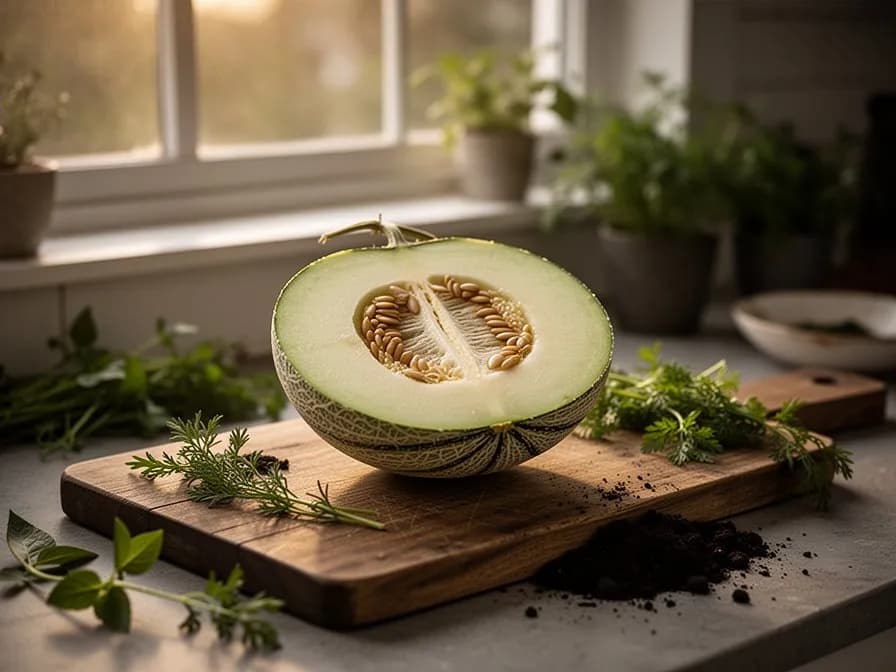
Gekühltes Koreanische-Melonen-Dessert
10 Min.Die klassische koreanische Art, Chamoe zu genießen — einfach gekühlt und geschnitten. Das knackige, mild-süße Fruchtfleisch wird mit Schale und allem gegessen (die dünne Schale ist vollständig essbar), was dies zum einfachsten Sommerdessert überhaupt macht.
4 Zutaten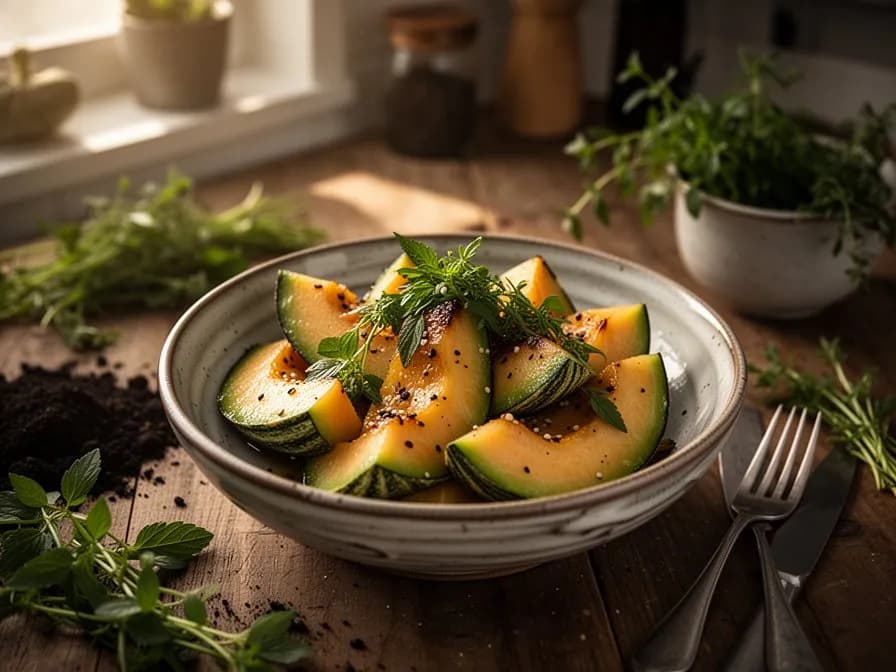
Koreanische-Melonen-Salat mit Parmaschinken
15 Min.Eine koreanisch-italienische Fusion, die die knackige Süße der Chamoe mit salzigem Parmaschinken und pfeffrigem Rucola kombiniert. Der milde Geschmack und die feste Textur der Melone machen sie zu einem perfekten Ersatz für Cantaloupe in diesem eleganten Vorspeisensalat.
7 ZutatenKoreanische-Melonen-Smoothie (Chamoe-Saft)
5 Min.Ein beliebtes koreanisches Sommergetränk, das durch Mixen reifer Chamoe zu einem erfrischenden, leicht süßen Smoothie entsteht. Die natürliche Süße der Melone bedeutet, dass wenig oder kein zusätzlicher Zucker nötig ist, und das Ergebnis ist unglaublich feuchtigkeitsspendend.
5 ZutatenKulinarische Verwendung
Koreanische Melone wird traditionell frisch als erfrischender Sommersnack gegessen, in Ringe oder Spalten geschnitten, mit essbarer Schale und Kernen. Ihre milde, gurkenähnliche Süße macht sie perfekt für leichte Desserts und Obstplatten. In Korea wird sie oft gekühlt serviert und mit anderen Sommerfrüchten kombiniert. Die knackige Textur eignet sich gut für Obstsalate und als Garnitur für Cocktails. Eingelegte Koreanische Melone ist ein beliebtes Banchan (Beilage). Das Fruchtfleisch kann für erfrischende Getränke entsaftet oder zu Smoothies und Sorbets püriert werden.
Was drinsteckt
Gesundheitsvorteile
- Über 90 % Wassergehalt macht die Koreanische Melone zu einer der feuchtigkeitsspendendsten Früchte überhaupt und hilft, Dehydrierung und Hitzschlag während heißer Sommermonate zu verhindern, wenn der Körper schnell Flüssigkeit verliert.
- Gute Vitamin-C-Quelle mit 16 % des Tageswerts pro 100 g, unterstützt die Kollagenproduktion, Immunabwehr und antioxidativen Schutz vor Zellschäden durch UV-Strahlung.
- Enthält Folsäure (Vitamin B9), wichtig für die DNA-Synthese und Zellteilung, was die Koreanische Melone zu einem vorteilhaften Lebensmittel für Schwangere und Frauen mit Kinderwunsch macht.
- Liefert Kalium (228 mg pro 100 g), das zur Blutdruckregulierung beiträgt, die richtige Muskelkontraktion unterstützt und den Natriumgehalt in der Ernährung für die Herzgesundheit ausgleicht.
- Niedriger glykämischer Index trotz ihrer Süße, was bedeutet, dass die Koreanische Melone einen allmählichen Anstieg des Blutzuckers statt eines Spitzenwerts verursacht und sie zu einer geeigneten Fruchtoption für Menschen macht, die ihren Glukosespiegel überwachen.
- Enthält Cucurbitacin-Verbindungen, die in Laborstudien entzündungshemmende Eigenschaften gezeigt haben und möglicherweise die traditionelle koreanische medizinische Verwendung von Chamoe als kühlendes, entzündungshemmendes Lebensmittel unterstützen.
Woher Koreanische Melone stammt
Die Koreanische Melone (Cucumis melo var. makuwa) ist eine alte Melonensorte, die vermutlich aus Ostasien stammt, wobei ihre nächsten wilden Verwandten in Indien und Südostasien zu finden sind. Die Art gelangte über alte Handelswege nach China, wo sie jahrhundertelang angebaut wurde, bevor sie die koreanische Halbinsel und Japan erreichte. Archäologische Funde deuten darauf hin, dass die Koreanische Melone seit mindestens 2.000 Jahren in Korea angebaut wird, was sie zu einer der am längsten ununterbrochen kultivierten Früchte in der ostasiatischen Landwirtschaft macht.
In Korea wurde Chamoe tief in die Kultur als die typische Sommerfrucht eingebettet. Historische Texte aus der Joseon-Dynastie (1392–1897) beschreiben aufwendige Methoden des Melonenanbaus, und Chamoe war geschätzt genug, um dem Königshof als Tribut dargebracht zu werden. Die Melone gedieh in Koreas heißen, feuchten Sommern und wurde zu einem Grundnahrungsmittel während der schwülen Monsunmonate, in denen ihre kühlenden Eigenschaften am meisten geschätzt wurden. Koreanische Bauern entwickelten zahlreiche lokale Sorten, die an verschiedene regionale Klimata und Bodentypen auf der gesamten Halbinsel angepasst waren.
Die moderne kommerzielle Produktion der Koreanischen Melone wird von verbesserten Hybridsorten dominiert, die seit den 1950er-Jahren entwickelt wurden und höhere Erträge, Krankheitsresistenz und gleichmäßige Fruchtqualität bieten. Die Region Seongju in der Provinz Nord-Gyeongsang wurde dank ihrer idealen sandigen Lehmböden und warmen Anbaubedingungen zum Zentrum des koreanischen Melonenanbaus und produziert heute den Großteil der kommerziellen Chamoe-Ernte Koreas. In den letzten Jahren hat die Koreanische Melone durch die globale Verbreitung der koreanischen Küche internationale Popularität gewonnen und wird nun in Gewächshäusern in Nordamerika, Europa und Australien für koreanische Diaspora-Gemeinschaften und experimentierfreudige Hobbygärtner angebaut.
Koreanische Melone: Schon gewusst?
Faszinierende Fakten über Koreanische Melone
Die Koreanische Melone (Cucumis melo var. makuwa), auf Koreanisch als Chamoe bekannt, wird seit über 2.000 Jahren auf der koreanischen Halbinsel angebaut, mit archäologischen Nachweisen von Melonensamen, die in alten koreanischen Gräbern aus der Zeit der Drei Königreiche gefunden wurden.
Koreanische Melone: Fragen & Antworten
Wann sollte ich Koreanische Melone pflanzen?
Was sind gute Begleitpflanzen für Koreanische Melone?
In welchen Winterhärtezonen kann Koreanische Melone wachsen?
Wie viel Sonne braucht Koreanische Melone?
Welchen Abstand sollte ich zwischen Koreanische Melone lassen?
Welche Schädlinge und Krankheiten befallen Koreanische Melone?
Wie lagere ich Koreanische Melone nach der Ernte?
Was sind die besten Koreanische Melone-Sorten zum Anbauen?
Welchen Boden braucht Koreanische Melone?
Kann ich die Schale der Koreanischen Melone essen?
Woran erkenne ich, dass eine Koreanische Melone reif ist?
Kann die Koreanische Melone in kühleren Klimazonen angebaut werden?
Warum sind meine Koreanischen Melonen bitter oder geschmacklos?
Welche Schädlinge und Krankheiten befallen die Koreanische Melone?
Wie unterscheidet sich die Koreanische Melone von Honigmelone oder Cantaloupe?
Du hast die Theorie gelesen. Jetzt baue sie auf Autopilot an.
Alles, was Koreanische Melone knifflig macht — das Timing, die Abstände, die Begleiter, das Erntefenster — genau das übernimmt PlotMyGarden für dich, für jede Pflanze im Garten.
Ein Plan, der dein Wetter kennt
Standort einmal festlegen. Aussaat-, Dünge- und Erntedaten rund um deinen echten letzten Frosttermin und die Live-Vorhersage — kein Raten mehr nach Saattüte.
Aus dem Abschnitt „Pflanzzeit“Beetplaner per Drag & Drop
Beete auf einem Raster gestalten. Jede Pflanze rastet im richtigen Abstand ein, und du siehst die ganze Saison, bevor du einen Cent für Saatgut ausgibst.
Aus dem Abschnitt „Anbau“Begleiter-Konflikte früh erkannt
Über 200 gute und schlechte Kombinationen werden beim Pflanzen live geprüft — so landet ein saisonruinierender Fehler nie in der Erde.
Aus dem Abschnitt „Begleiter“Erinnerungen, nach denen du wirklich handelst
„Gieß die Bohnen.“ „Heute ernten, bevor's umschlägt.“ Pünktlich, konkret und auf deine echten Pflanzen bezogen.
Aus dem Abschnitt „Ernte“Staffel-Aussaat, geplant
Sechs Wochen ernten statt sechs Tage? Die App verteilt deine Aussaaten automatisch und erinnert dich, wenn der nächste Satz fällig ist.
Aus dem Abschnitt „Pflanzzeit“Ein Verlauf, der schlauer wird
Jede protokollierte Ernte bringt der App deinen Garten bei. Der Plan fürs nächste Jahr startet bei dem, was in deinem Boden wirklich funktioniert hat.
Aus dem Abschnitt „Überblick“Pflanze diese neben Koreanische Melone
Weitere Kürbisgewächse
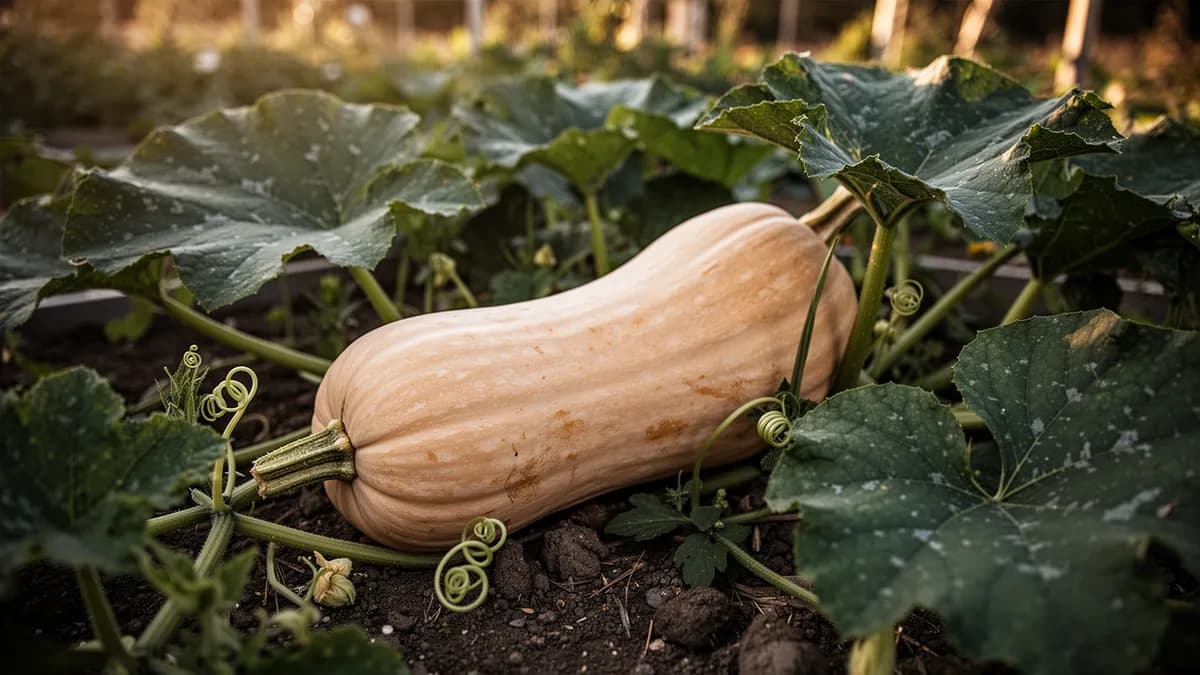
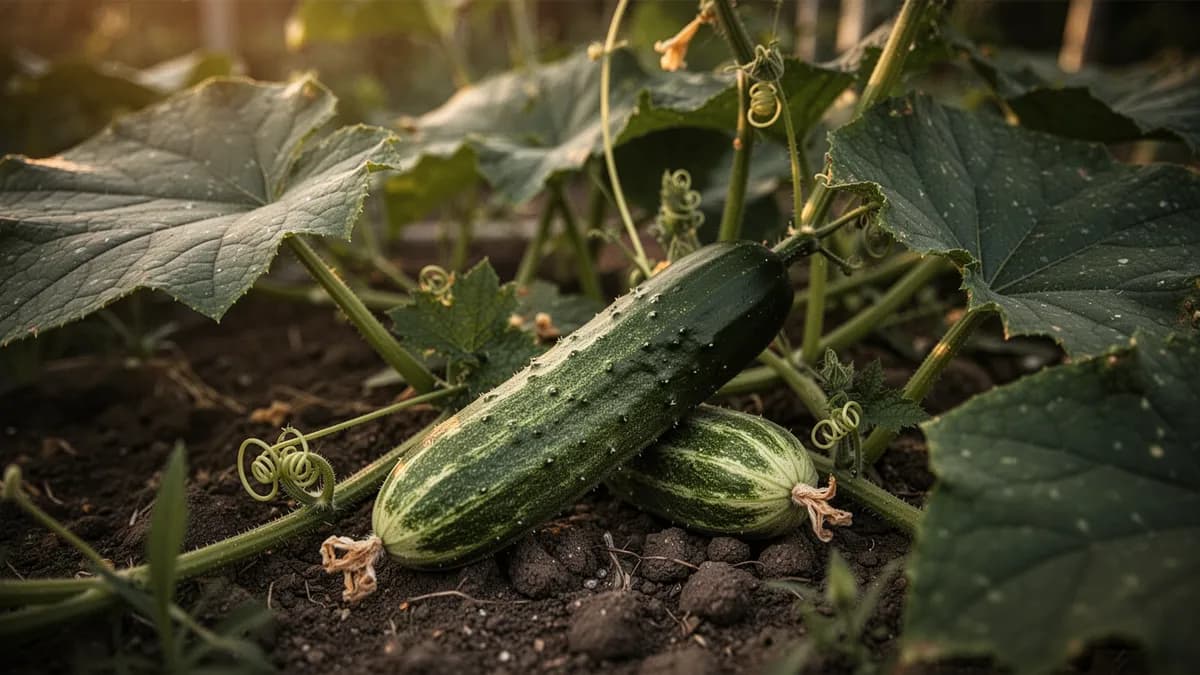
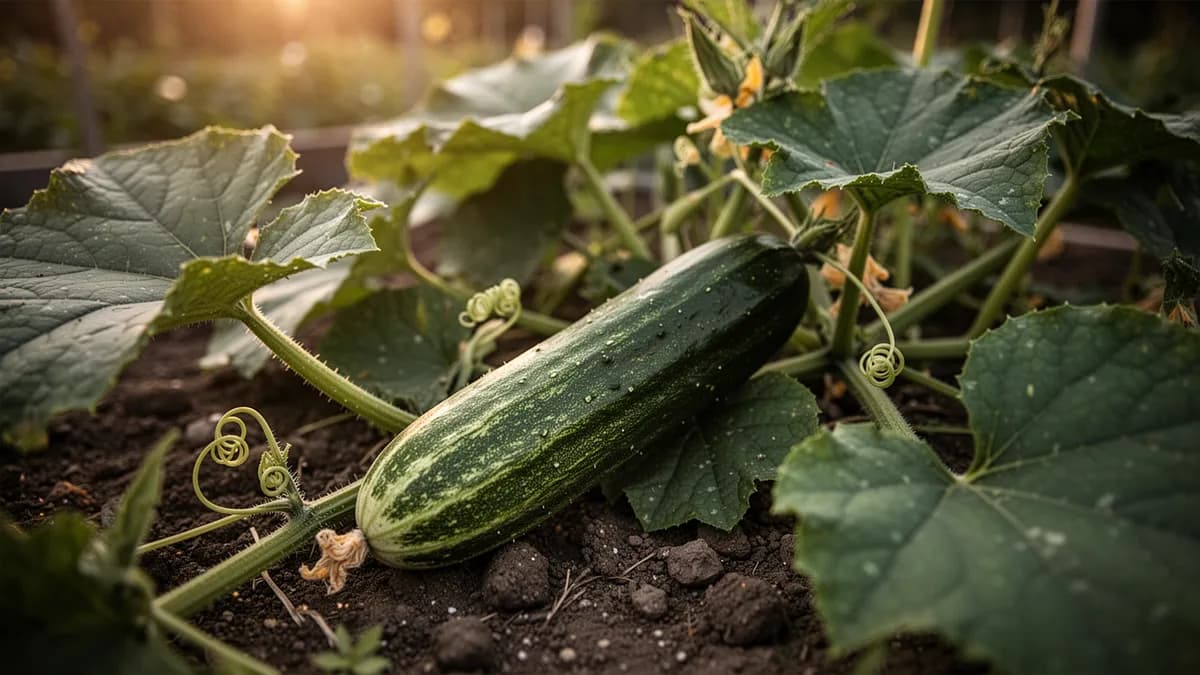
Halte Koreanische Melone von diesen fern
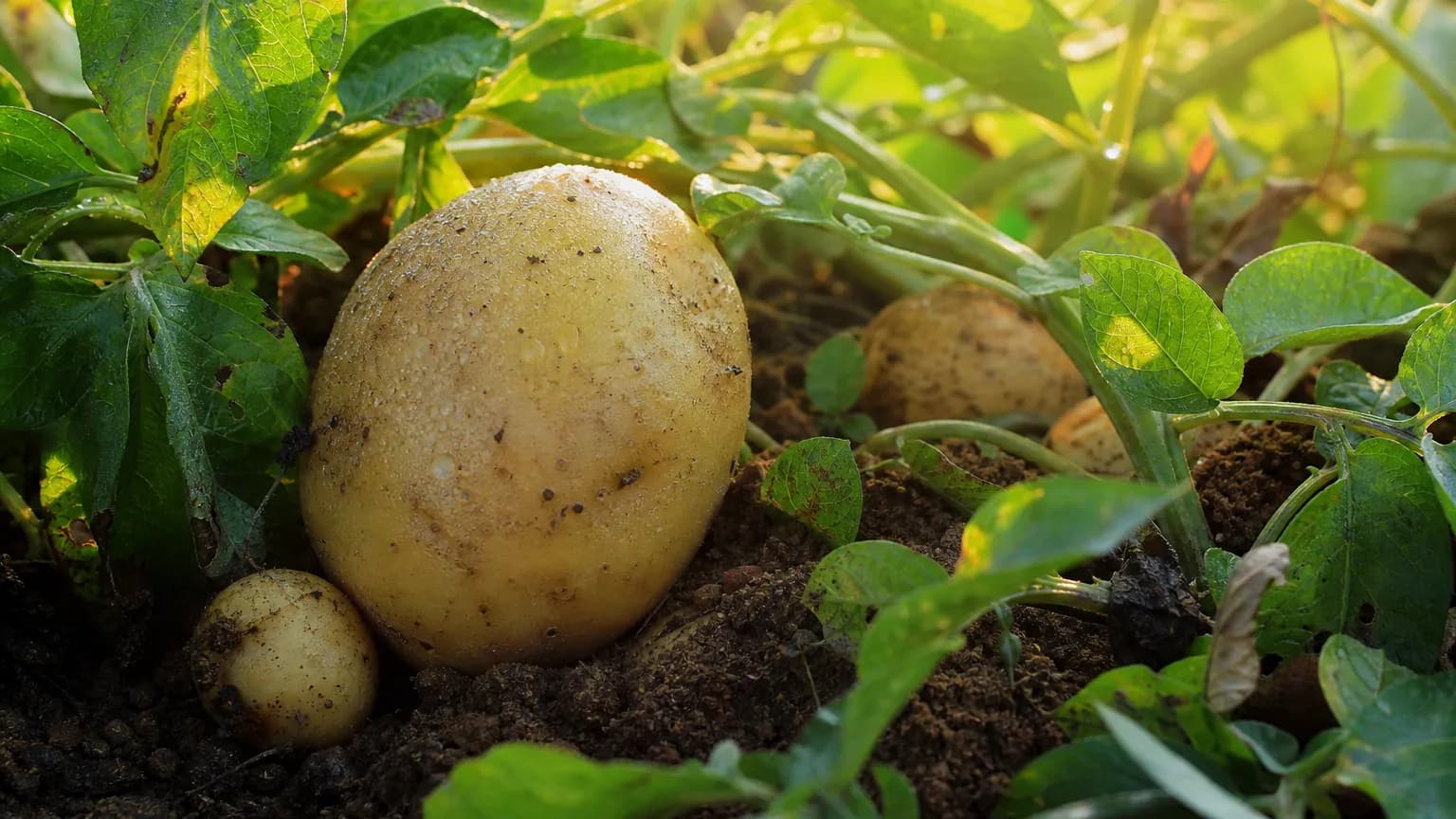
Gartenpläne mit Koreanische Melone
Bau deine beste Koreanische Melone an — und alles drumherum.
Starte heute kostenlos. Lege deine Beete an, setze deine Koreanische Melone ein und lass PlotMyGarden Timing, Abstände, Begleiter und Erinnerungen von der Saat bis zum Erntekorb übernehmen.