Comfrey
A vigorous deep-rooted perennial grown as a dynamic accumulator: its taproots mine potassium and minerals from deep soil layers into lush leaves that are cut three to four times a year for compost activator, mulch, and comfrey tea fertilizer.





On this pageOverview
Meet Comfrey
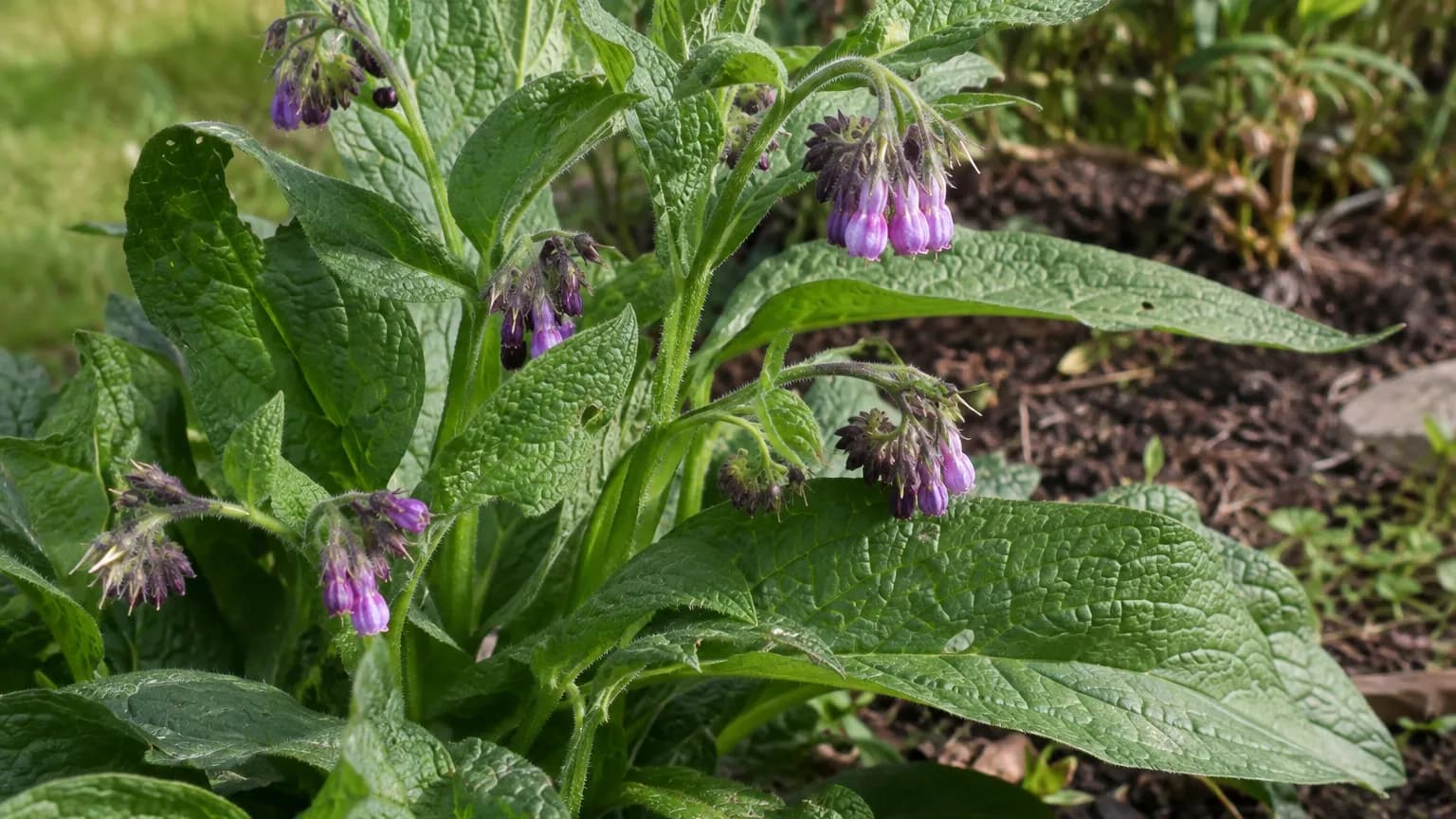
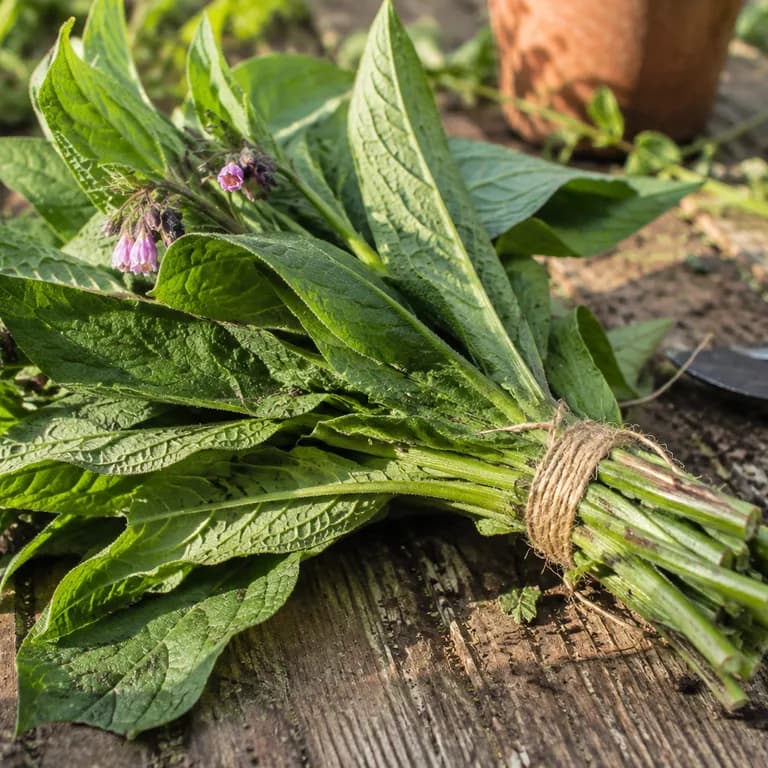
A vigorous deep-rooted perennial grown as a dynamic accumulator: its taproots mine potassium and minerals from deep soil layers into lush leaves that are cut three to four times a year for compost activator, mulch, and comfrey tea fertilizer. A traditional wound herb once called knitbone, it is now reserved for external use because its pyrrolizidine alkaloids make internal use unsafe. The sterile cultivar 'Bocking 14' is the garden standard, propagated by root cuttings rather than seed. Hardy from zones 3 to 9, it thrives in partial shade with moist, rich soil.
When to plant Comfrey
Comfrey is almost never started from seed in home gardens, and for good reason: the garden-standard cultivar 'Bocking 14' is a sterile hybrid that produces no viable seed at all. It is propagated exclusively from root cuttings or crown divisions. Buy certified root cuttings in spring or autumn, lay pieces 5 to 10 cm long horizontally about 5 cm deep in pots or directly in the bed, keep them evenly moist at 10 to 15 degrees Celsius, and expect shoots within two to four weeks. Pot-grown cuttings move to their final 60 cm spacing once they carry three to four true leaves. If you deliberately grow fertile common comfrey from seed, cold-stratify the seeds for four to six weeks and sow in autumn or early spring — germination is slow and erratic, and the resulting plants vary in quality, which is exactly why root cuttings of a proven clone are the standard route.
Your Comfrey Year
Composed for Zone 7 · typical seasons · frost passes Apr 2, returns Nov 1
Plant Comfrey Mar – Apr, Sep – Oct, pick May – Sep. Check the planting methods below and set your climate to personalize these windows.
How to grow Comfrey
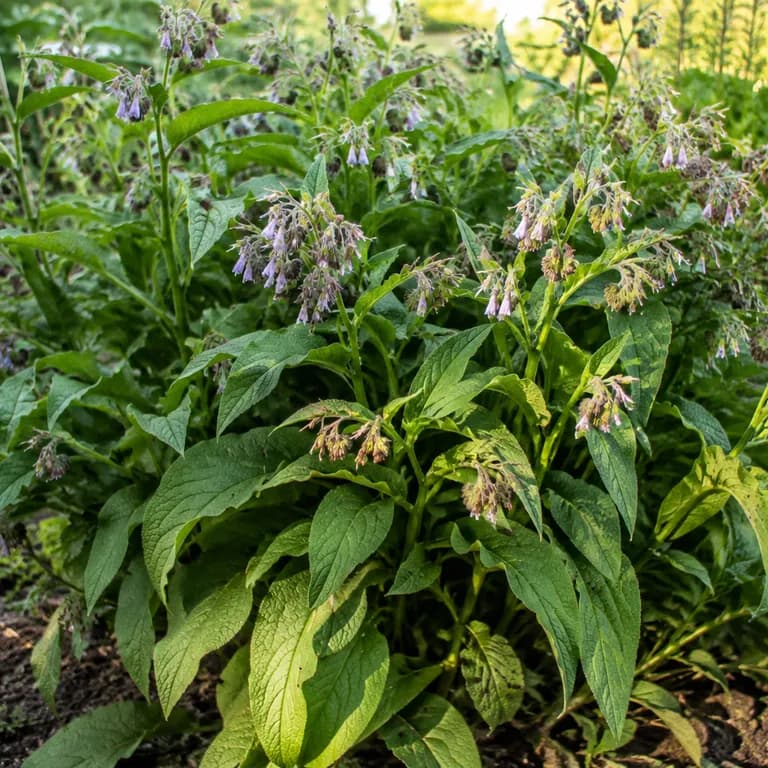
Comfrey is one of the most useful perennials a gardener can grow: a deep-rooted dynamic accumulator whose taproots draw potassium, calcium, and trace minerals from subsoil layers that ordinary crops cannot reach, concentrating them in fast-growing leaves. Cut three to four times a year, the foliage makes an outstanding compost activator, a potassium-rich mulch around fruit trees and tomatoes, and the classic homemade liquid fertilizer known as comfrey tea. Grow in full sun to partial shade in deep, moist soil; plants reach 60 to 90 cm tall and wide, so allow the full 60 cm spacing and choose a permanent position — once established, comfrey is nearly impossible to remove because any root fragment left in the soil regrows.
Plant the sterile cultivar 'Bocking 14', the garden standard since the 1950s, from root cuttings or crowns in spring (March to April) or autumn (September to October). Lay 5 to 10 cm root pieces horizontally about 5 cm deep, or set crowns just below the surface, and keep the soil consistently moist while shoots emerge over two to four weeks. Unlike fertile common comfrey, 'Bocking 14' never sets seed, so it cannot escape into the wider garden — it spreads only where you plant roots. Water generously through the first summer; from the second year the deep taproot makes plants remarkably drought-proof, though leaf yields stay highest with steady moisture.
Maintenance is simple: cut the foliage back to about 5 cm above the crown whenever plants reach bud stage, up to four times a season, wearing gloves because the bristly hairs can irritate skin. Feed the crowns with compost or well-rotted manure after each cut to fuel regrowth. Comfrey is almost pest-free, though rust can mark the leaves in damp summers — simply remove affected foliage. Let plants flower in early summer if you want to feed bumblebees, but cut before seed forms on any fertile plants. In autumn the foliage dies back; tidy the bed, mulch the crowns, and the plant re-emerges with the first mild days of spring, staying productive for 15 to 20 years.
8 plants fit a 4 × 8 ft bed
Each Comfrey wants 60 cm of elbow room. The planner keeps that spacing for you — every plant, every bed.
Comfrey's best neighbours
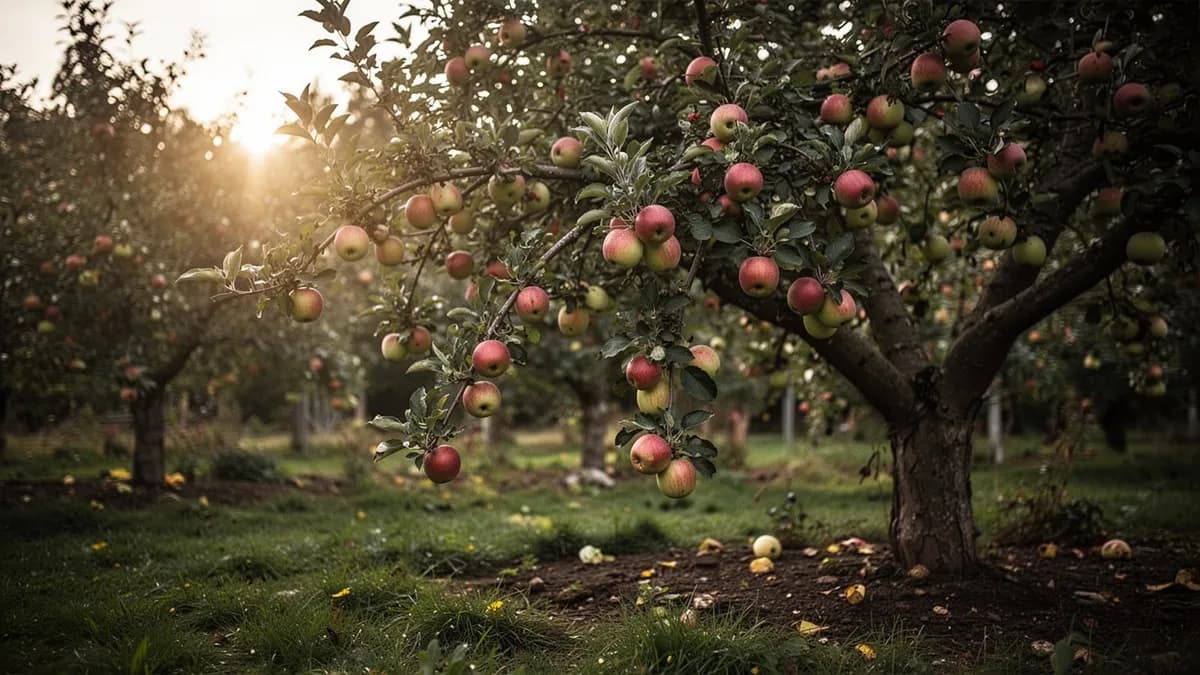
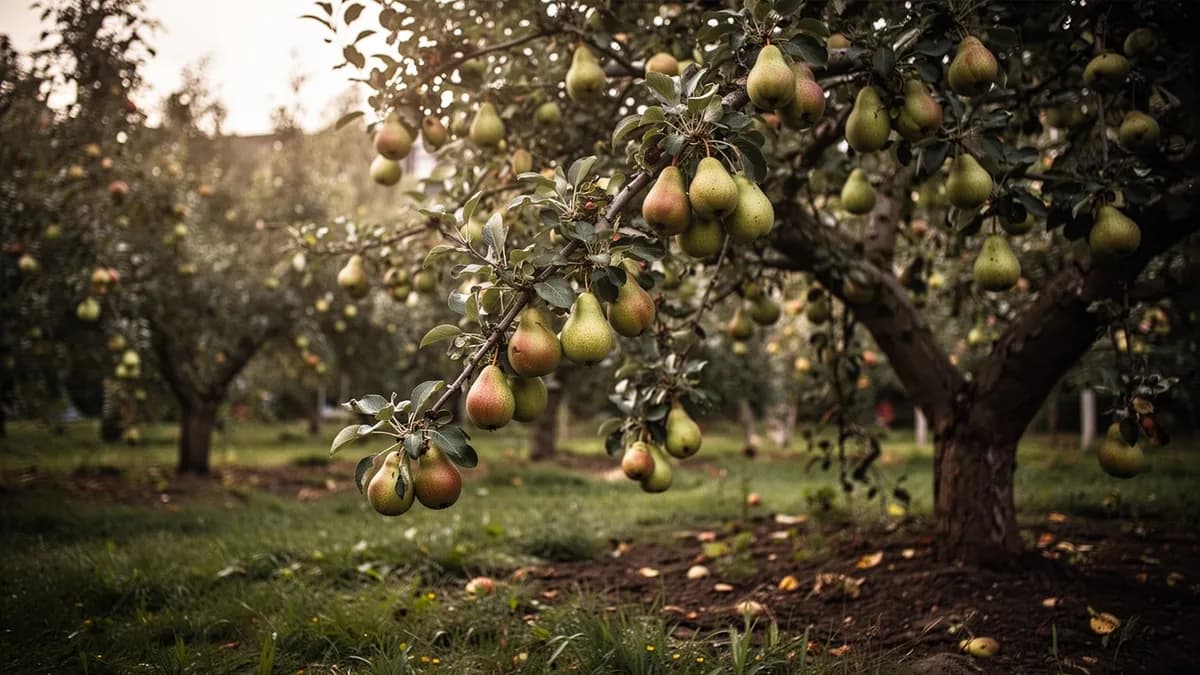
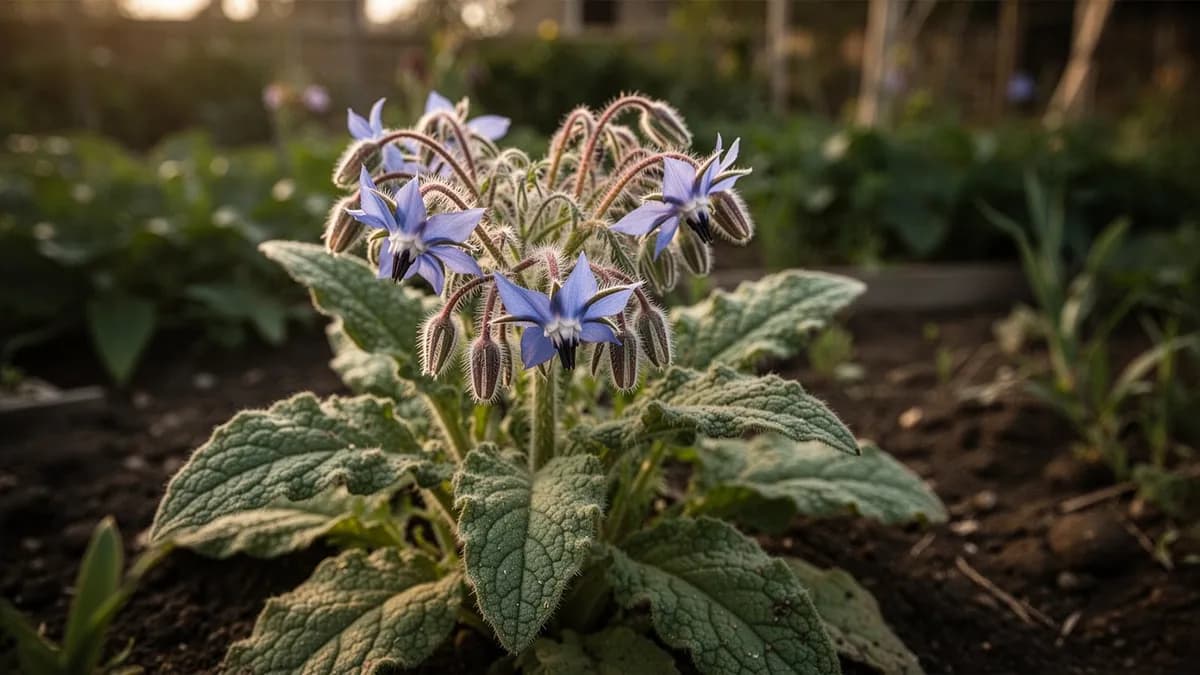
Comfrey is the classic fruit-guild companion: plant it in a ring at the drip line of apple and pear trees, where its taproot mines minerals beyond the reach of the trees' shallow roots and every cut of foliage becomes an instant potassium-rich mulch at the tree's feet. Its early-summer bells are an important nectar source for bumblebees, drawing pollinators into the orchard just as fruit sets. Comfrey also pairs well with its cousin borage in a dedicated pollinator-and-fertilizer patch near the compost bin. Keep it away from small or slow vegetables — the lush canopy shades them out — and never site it inside beds you intend to dig over regularly, because every sliced root piece becomes a new plant.
Apple Tree belongs beside it.
Old growers' knowledge, checked against Comfrey's real companion table below — test any plant you're growing.
Try Comfrey in a bed — right here
A real planner bed with Comfrey already in it. Tap a companion to place it and watch the pairing checks answer — green for good neighbours, red for a clash.


Related growing guides
Feed it well
Comfrey thrives in deep, rich, moisture-retentive loam with a pH of 6.0 to 7.0, though it tolerates clay and lighter soils as long as they do not dry out completely. It is a heavy feeder with a particular appetite for potassium — fitting for a plant grown for potash. Work a generous bucket of compost or well-rotted manure into each planting hole, then top-dress the crowns after every cut to replace the nutrients you have harvested. Avoid waterlogged sites, where crowns rot over winter; on heavy clay, plant on a slight mound. Because the taproot mines minerals from a metre or more down, established comfrey needs no synthetic fertilizer — its main demand is organic matter and reliable moisture in its first season.
Ideal Temperature
Hardiness Zone Compatibility
From seed to harvest, stage by stage
Root Cutting Sprouting
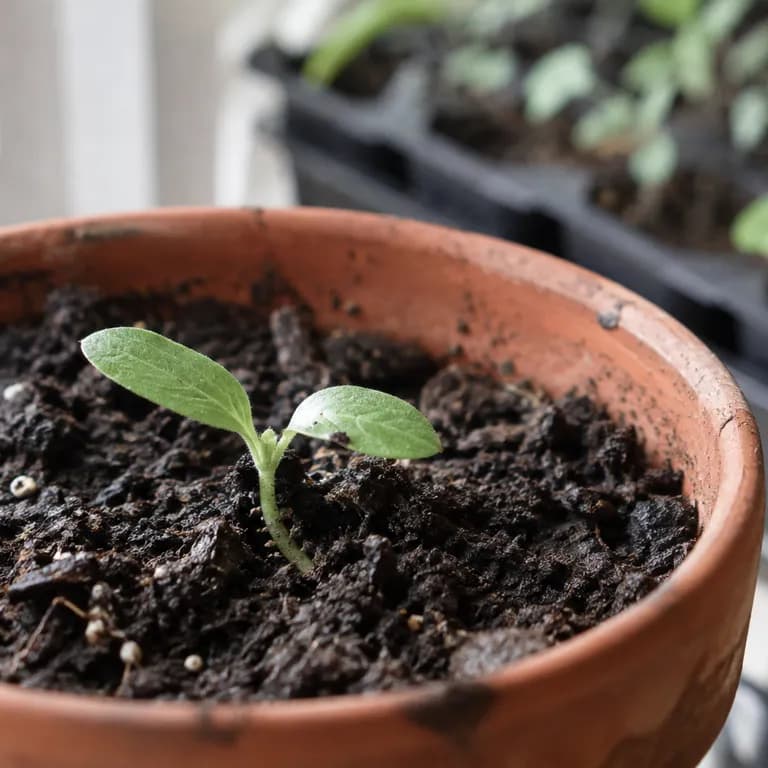
Comfrey begins life not from seed but from a bare piece of root: a 5 to 10 cm cutting laid horizontally 5 cm deep contains all the buds and energy a new plant needs. Kept evenly moist at soil temperatures of 10 to 15 degrees Celsius, cuttings push up their first bristly green shoots within two to four weeks, faster in warm spring soil.
Rosette Establishment
The young plant unfolds a low rosette of rough, lance-shaped leaves while driving its taproot downward. Top growth looks modest in these first weeks — the real action is underground, where the root system that will mine the subsoil for decades is taking shape.
First-Year Canopy
Through its first summer the clump expands into a broad canopy of coarse, deep-green leaves 60 to 90 cm across. Growth accelerates noticeably once the taproot reaches moist subsoil. A single light cut in autumn is all the first-year plant should give — every other flush of leaves is left to feed the crown for winter.
Flowering (Year 2+)
From the second spring, established clumps throw up thick flower stalks carrying drooping clusters of blue-purple bells from late spring into early summer. The flowers hum with bumblebees, which can reach the short-tubed bells easily. Sterile 'Bocking 14' flowers freely but sets no seed whatsoever.
Mature Cutting Cycles and Dormancy
A mature comfrey plant settles into a rhythm of three to four vigorous regrowth cycles a year, each flush ready to cut four to six weeks after the last. With the first hard frost the broad leaves blacken and collapse, and the plant withdraws into its crown and taproot, surviving winters down to about minus 40 degrees Celsius.
Lay root cuttings horizontally about 5 cm deep and firm the soil over them. Keep consistently moist but not waterlogged. Label the spot — shoots are easy to mistake for weeds, and hoeing nearby can slice the root into several new plants.
Caring for Comfrey month by month
What to do each month for your Comfrey
September
You are hereAutumn planting window opens in zones 4 and up — an excellent time to set root cuttings, which root quietly before winter and explode away in spring. Take the last full cut of the season by mid-month and top-dress crowns with compost.
Know exactly what to do in your garden — every month
One email at the start of each month: what to sow, plant, and tackle right now — for your Comfrey and everything growing around it. Plus a short starter course that helps you dodge the classic mistakes.
- What to do, right now
- Matched to your season
- Starter course included
Harvesting Comfrey
Begin with one light cut in the plant's first autumn, then harvest freely from the second spring onward. Cut when plants stand 45 to 60 cm tall and flower buds are just forming — leaf protein and potassium levels peak at this stage and regrowth is fastest. Shear the whole plant back to about 5 cm above the crown with shears or a sickle, wearing gloves against the bristly hairs. Expect three to four cuts per season, roughly every four to six weeks from May through September. Stop cutting by mid-autumn so the plant can rebuild root reserves before dormancy. Fresh leaves wilt and begin to decompose within hours, so process them the same day — layered into the compost, laid as mulch, or tipped into the brewing bucket.
assuming you plant when the window opens — set your real date
Pick Comfrey promptly and the plant keeps producing.
Storage & Preservation
Fresh comfrey leaves keep only a day or two in the refrigerator before turning slimy, so preserve them promptly. For liquid fertilizer, pack a lidded bucket loosely with chopped leaves, barely cover with water, weight the leaves down, and steep for two to four weeks; strain off the dark concentrate and store it in sealed bottles in a cool shed for up to a year, diluting roughly one part tea to ten parts water before use. For dry storage, hang small bundles or spread leaves on racks in a warm, airy, shaded spot for five to ten days until crisp, then crumble into airtight jars — dried leaf keeps a year and rehydrates well for external poultices. Chopped leaves also freeze well in bags for later brewing. Never seal fresh leaves in airtight bags at room temperature; they liquefy into a foul anaerobic mess within days.
What goes wrong — and the fix
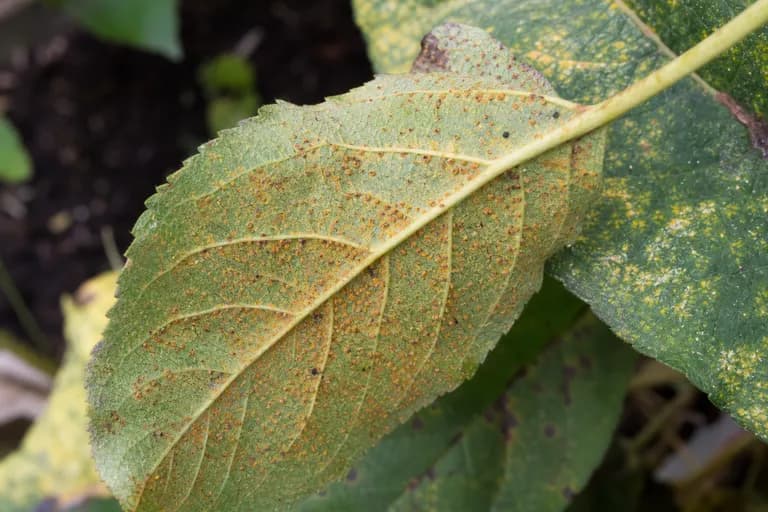
Comfrey Rust
DiseaseOrange to brown powdery pustules on the undersides of leaves with matching yellow spots on top. Leaves yellow, shrivel, and collapse early. Worst in damp, crowded summers.
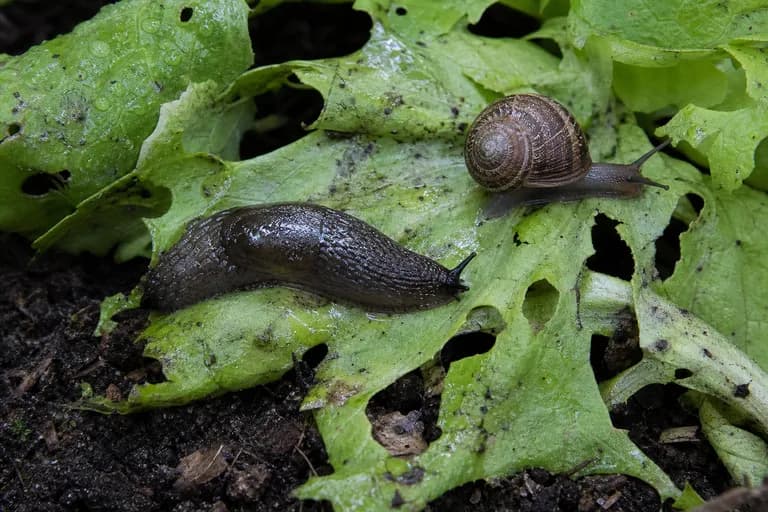
Slugs and Snails
PestRagged holes in young spring shoots and newly sprouting root cuttings, with slime trails. New plantings in damp, shady spots can be grazed to the ground overnight.
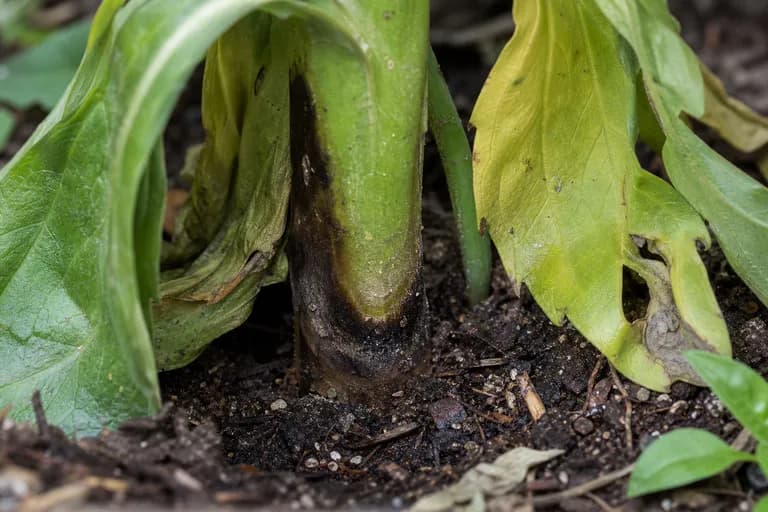
Crown Rot
DiseaseThe crown turns soft, dark, and foul-smelling; spring shoots fail to emerge or wilt and collapse. Almost always follows winter waterlogging.
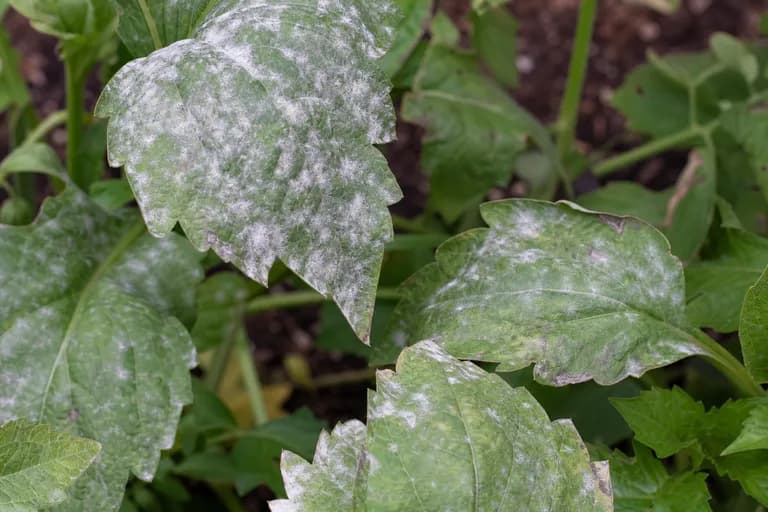
Powdery Mildew
DiseaseWhite powdery coating on older leaves in late summer, especially on plants stressed by drought or crowded by neighbours.
Troubleshooting Common Problems
The biggest comfrey problem is self-inflicted: planting fertile, seed-grown common comfrey where it can self-sow, or planting any comfrey where you may later want to dig — every overlooked root fragment regrows into a new plant, making comfrey effectively permanent. Solve it by planting only sterile 'Bocking 14' and choosing the site with care. Rust covers leaves with orange pustules in damp summers; cut and bin affected foliage rather than composting it. Slugs shred young spring growth and newly planted cuttings. Crowns rot in waterlogged winter soil, so improve drainage or mound the bed. The bristly hairs irritate bare skin, so wear gloves when cutting. Finally, lush summer growth flops outward on rich soil and can smother small neighbours — give the clump its full 60 cm and keep delicate plants out of its shade.
Growing Tips
- Always plant the sterile cultivar 'Bocking 14' from certified root cuttings or crowns. Fertile common comfrey grown from seed self-sows eagerly and can turn a tidy bed into a thicket within two seasons.
- Choose the final position as if it were a tree planting. Once established, comfrey is effectively permanent: every root fragment thicker than a pencil can regrow, so rotavating or digging the bed multiplies it rather than removing it.
- Cut with shears down to about 5 cm above the crown whenever plants reach bud stage. Regrowth is astonishing — a full new canopy in three to four weeks — and plants shrug off this treatment three or four times a season.
- Wear gloves when harvesting. The bristly hairs on stems and leaves are mildly irritating to bare skin, especially on the forearms during a big cutting session.
- Site the patch within a wheelbarrow's trundle of the compost bin. Comfrey's highest use is as a compost activator, and a patch you must trek to gets cut half as often as it should.
- Water generously in the first season while the taproot develops. Established plants survive drought easily, but leaf yield — the whole point of the crop — collapses without moisture.
- Feed the crowns after every cut with a shovel of compost or well-rotted manure. You are exporting a truckload of potassium with every harvest; the plant needs something back to keep performing.
- Ring fruit trees with comfrey at the drip line and chop-and-drop the cuts in place. This is the classic permaculture fruit guild, and it genuinely works — the mulch rots down in days and feeds the shallow tree roots directly.
- Take root cuttings in late summer from the outer edges of mature crowns. Pieces 5 to 10 cm long potted up now root before winter and give you free plants for spring — or a welcome gift for fellow gardeners.
- If rust appears in a damp summer, do not panic and do not compost the affected leaves. Cut the plant back hard, bin the debris, and let it regrow; established comfrey almost always outgrows the fungus without any spray.
Grow your best Comfrey yet — and everything around it.
Start a free plan today. Lay out your beds, drop in your Comfrey, and let PlotMyGarden handle the timing, spacing, companions and reminders from seed to harvest basket.
Pick your Comfrey
Bocking 14
The garden standard: a sterile Russian comfrey (Symphytum x uplandicum) selected by Lawrence D. Hills at the Henry Doubleday Research Association in the 1950s. Exceptionally high in potassium, it never sets seed and is propagated only from root cuttings or crowns — plant this one unless you have a reason not to.
Bocking 4
The sister sterile selection from the same Bocking trials. Deeper rooting and slightly more drought-tolerant than Bocking 14, with a nutrient profile often preferred for livestock fodder and dry sites. Equally incapable of self-seeding.
Common Comfrey (Symphytum officinale)
The true wild species with cream to purple-pink bells. Fertile and eager to self-sow, so it can become weedy in cultivated beds. The historical medicinal plant; grow it only where volunteer seedlings are welcome.
Hidcote Blue
An ornamental Symphytum grandiflorum 'Hidcote Blue' with pink buds opening to pale blue bells over a long season. Less rampant than the Bocking types and handsome enough for a mixed border, while still yielding useful cut foliage.
Axminster Gold
A variegated Russian comfrey with broad gold-edged leaves that light up a shady corner. Slightly less vigorous than green forms, making it easier to keep in bounds, and still serviceable for occasional cutting.
Bottled organic liquid feeds and tomato fertilizers cost $10 to $20 per liter of concentrate, and a productive vegetable garden can easily use $50 to $100 worth per season. One mature comfrey plant yields 4 to 8 kg of leaves a year — enough for dozens of liters of homemade comfrey tea with a potassium profile comparable to commercial tomato feed. A $10 bundle of 'Bocking 14' root cuttings establishes a patch that produces fertilizer for 15 to 20 years, pays for itself in its first summer, and divides endlessly into new plants for free.
Quick recipes
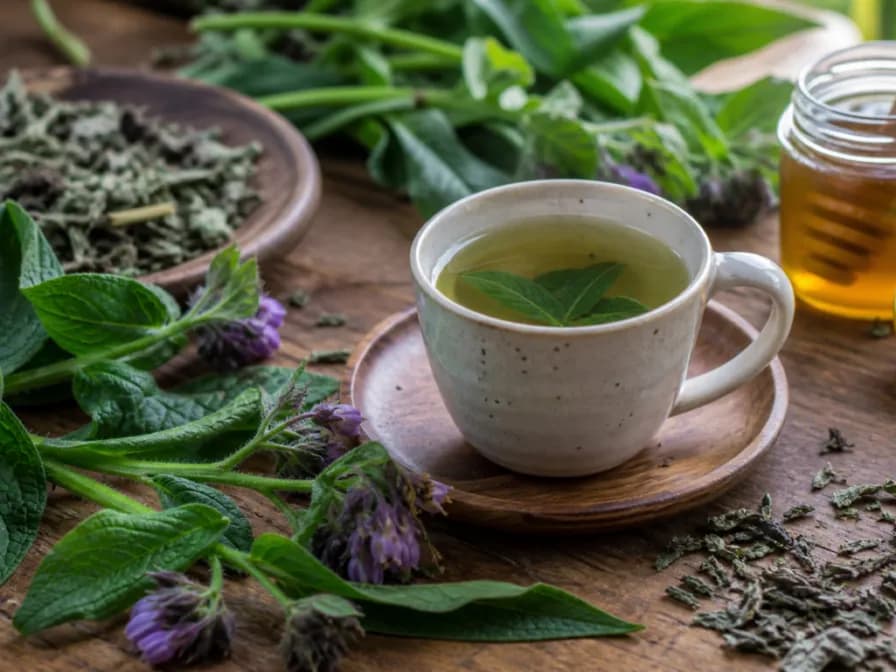
Comfrey Tea Liquid Fertilizer
15 min (plus 2-4 weeks steeping)The classic homemade potash feed for tomatoes, peppers, cucumbers, and fruiting vegetables. A bucket of chopped leaves ferments into a dark, potent concentrate — smelly while brewing, unbeatable once diluted and poured at the base of hungry summer crops.
5 ingredients
Comfrey Compost Activator
10 min per layerA 5 cm layer of chopped comfrey leaves between every 20 to 30 cm of compost material kickstarts decomposition like few other ingredients. The nitrogen-rich, fast-rotting foliage heats the heap and speeds the whole pile toward finished compost.
3 ingredientsChop-and-Drop Comfrey Mulch
10 min per plantThe simplest comfrey preparation of all: cut the leaves, lay them as a collar around fruit trees, currant bushes, or tomatoes, and let them rot in place. The leaves slump into a moisture-holding, potassium-feeding mulch within a week — no bucket, no smell.
3 ingredientsCulinary Uses
Comfrey is not a culinary herb and should not be eaten. Young leaves were historically cooked as a potherb, battered into fritters, and brewed as tea in times of scarcity, but modern analysis shows the plant contains pyrrolizidine alkaloids that can damage the liver, and food safety authorities now advise against all internal use. The plant's genuine kitchen-garden value is indirect: comfrey tea brewed from the leaves is a celebrated potassium-rich liquid feed for tomatoes, peppers, and fruiting crops, and the leaves supercharge compost and mulch. Treat comfrey as a fertilizer crop and external herb rather than an ingredient.
What's inside
Health Benefits
- Allantoin, comfrey's signature compound, promotes the proliferation of healthy skin cells, which is why poultices of the mashed root were the traditional first aid for bruises, sprains, and strains — and why synthetic allantoin now appears in many commercial skin creams.
- External compresses of comfrey leaf have a long folk record for soothing swollen joints and overused muscles; modern herbal practice continues this tradition strictly as a short-term external application.
- The leaf's mucilage is emollient and soothing, and comfrey-infused oils and ointments remain popular for dry, rough, or irritated skin when used on unbroken skin for limited periods.
- The knitbone reputation — compresses laid over closed fractures to support the healing process alongside conventional medical care — survives in traditional herbalism and explains the plant's enduring name.
- Important safety note: comfrey contains pyrrolizidine alkaloids that can cause serious liver damage. Never take comfrey internally in any form — no teas, tinctures, or salads. Use externally only, on unbroken skin, for no more than a few weeks at a time, and avoid entirely during pregnancy, while breastfeeding, in children, and with liver disease.
Where Comfrey comes from
Comfrey is native to damp meadows, riverbanks, and ditches across Europe and western Asia, where its deep taproot and lush foliage have marked it out since antiquity. The Greek physician Dioscorides recorded it in the first century, Roman soldiers carried the root on campaign, and medieval monastery gardens kept a comfrey patch beside the infirmary as standard equipment. Under names like knitbone, boneset, and bruisewort, the mashed root was the village remedy for sprains, bruises, and fractures for close to two thousand years.
The plant's modern garden story begins in the 1870s, when the Quaker smallholder Henry Doubleday imported the vigorous Russian hybrid comfrey (Symphytum x uplandicum) into Britain and promoted it as a wonder crop for fodder and food. The idea caught on in fits and starts — comfrey fed horses and pigs through both World Wars — but it was Lawrence D. Hills who transformed the plant's reputation. Working at the Henry Doubleday Research Association at Bocking in Essex in the 1950s, Hills trialled dozens of comfrey strains and released the sterile clones 'Bocking 4' and 'Bocking 14', which combine enormous yields of potassium-rich leaf with a total inability to spread by seed.
In the late twentieth century, laboratory work showed that comfrey's pyrrolizidine alkaloids can damage the liver, and regulators around the world moved against internal use — ending two millennia of comfrey teas and potherbs almost overnight. Yet the plant scarcely missed a beat: the same decades saw comfrey adopted as the flagship species of permaculture and organic gardening, valued as a dynamic accumulator, compost activator, and homemade fertilizer. Today a patch of 'Bocking 14' beside the compost bin is almost a badge of the movement Hills helped found.
Comfrey: did you know?
Fascinating facts about Comfrey
Comfrey's old English name is knitbone, and the genus name Symphytum comes from the Greek symphyo, meaning to grow together — both nod to two thousand years of poulticing bruises, sprains, and broken bones with the mashed root.
Comfrey questions, answered
When should I plant Comfrey?
What are good companion plants for Comfrey?
What hardiness zones can Comfrey grow in?
How much sun does Comfrey need?
How far apart should I space Comfrey?
What pests and diseases affect Comfrey?
How do I store Comfrey after harvest?
What are the best Comfrey varieties to grow?
What soil does Comfrey need?
Is comfrey safe to eat or to drink as a tea?
Why does everyone recommend 'Bocking 14' instead of growing comfrey from seed?
How do I make comfrey tea fertilizer?
Will comfrey take over my garden?
Can I grow comfrey in a container?
What are the orange spots on my comfrey leaves?
You just read the theory. Now grow it on autopilot.
Everything that makes Comfrey fiddly — the timing, the spacing, the companions, the harvest window — is exactly what PlotMyGarden handles for you, for every plant in your garden.
A plan that knows your weather
Set your location once. Get sow, feed and harvest dates built around your real last-frost date and live forecast — no more guessing from a generic seed packet.
From the “When to plant” sectionDrag-and-drop bed planner
Design beds on a grid. Every plant snaps to its proper spacing, and you can see your whole season laid out before you spend a cent on seed.
From the “Growing guide” sectionCompanion conflicts, caught early
200+ good-and-bad pairings checked live as you plant — so a season-wrecking mistake never makes it into the ground.
From the “Companions” sectionReminders you'll actually act on
“Water the beans.” “Pick today before it turns.” Timely, specific, and tied to the plants you're really growing.
From the “Harvest” sectionSuccession, scheduled
Want a harvest for six weeks, not six days? It spaces your sowings automatically and reminds you when each new block is due.
From the “When to plant” sectionA record that gets smarter
Every harvest you log teaches it your garden. Next year's plan starts from what actually worked in your soil, not a textbook's.
From the “Overview” sectionPlant these alongside Comfrey
More Medicinal Herbs
Grow your best Comfrey yet — and everything around it.
Start a free plan today. Lay out your beds, drop in your Comfrey, and let PlotMyGarden handle the timing, spacing, companions and reminders from seed to harvest basket.