Valerian
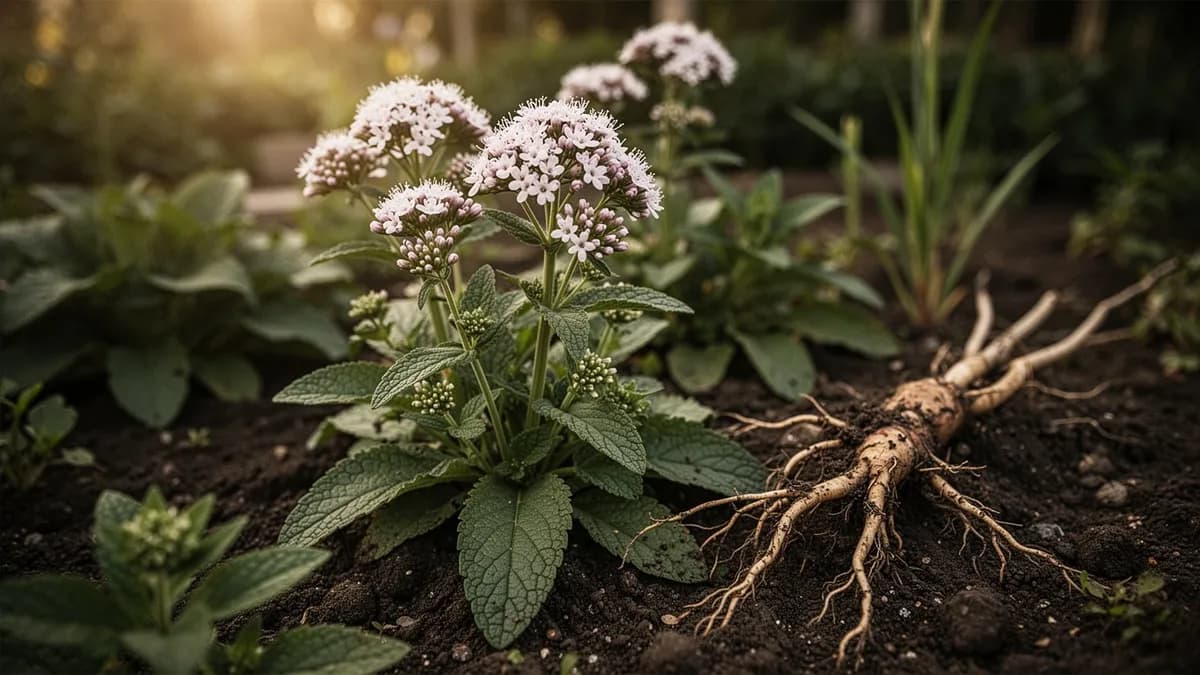
A tall perennial with sweetly scented white to pink flower clusters, prized for its root which is used as a natural sleep aid.





On this pageOverview
Meet Valerian
A tall perennial with sweetly scented white to pink flower clusters, prized for its root which is used as a natural sleep aid. Valerian roots are harvested in the second year, dried, and used in teas and tinctures for relaxation. The plant grows 3-5 feet tall and attracts cats with a scent similar to catnip.
When to plant Valerian
Valerian seeds are small and lose viability quickly; use fresh seed less than a year old for best results. Surface-sow on moist seed-starting mix, as seeds require light to germinate. Maintain temperatures of 60 to 65 degrees Fahrenheit. Germination takes 14 to 21 days and can be erratic. Keep soil consistently moist but not waterlogged. Thin seedlings to 4 inches apart and transplant to individual pots when they develop 4 true leaves. Harden off and plant outdoors after the last frost, spacing 18 to 24 inches apart.
Your Valerian Year
Composed for Zone 7 · typical seasons · frost passes Apr 2, returns Nov 1
Plant Valerian Mar – May, pick Sep – Oct. Check the planting methods below and set your climate to personalize these windows.
How to grow Valerian
Valerian is a tall, stately perennial grown primarily for its medicinally valuable root, which has been used as a natural sleep aid and anxiety remedy for over 2,000 years. The plant produces sweetly scented clusters of tiny white to pink flowers on stems reaching 3 to 5 feet tall. Grow in full sun to partial shade in moist, rich soil with a pH of 5.5 to 7.0. Space plants 18 to 24 inches apart.
Start seeds indoors in early spring by pressing onto the surface of moist seed-starting mix. Seeds need light and cool temperatures of 60 to 65 degrees for best germination, which takes 2 to 3 weeks. Transplant seedlings outdoors after the last frost. Valerian can also be propagated by dividing established clumps in spring or fall.
Maintain consistent moisture throughout the growing season; valerian wilts quickly during drought. Remove flower stalks before they set seed to direct energy to root development and prevent prolific self-sowing. For root harvest, allow plants to grow undisturbed for 2 years to develop substantial roots. Note that the dried root has a strong, pungent odor that cats find irresistible, similar to catnip.
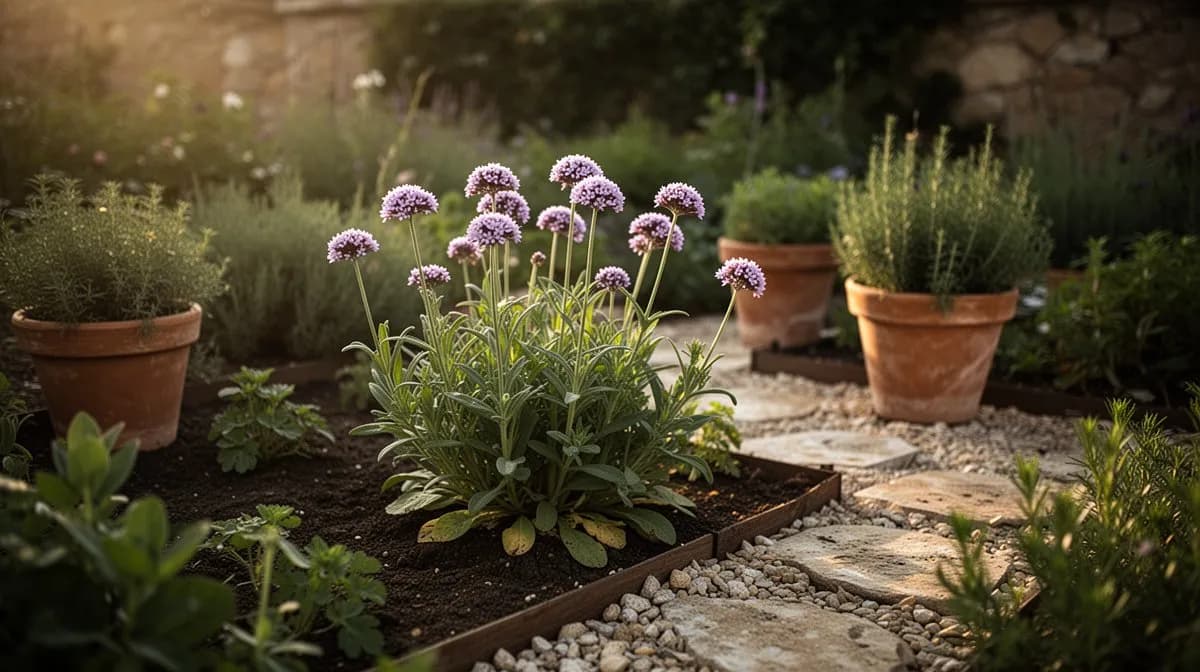
10 plants fit a 4 × 8 ft bed
Each Valerian wants 45 cm of elbow room. The planner keeps that spacing for you — every plant, every bed.
Valerian's best neighbours
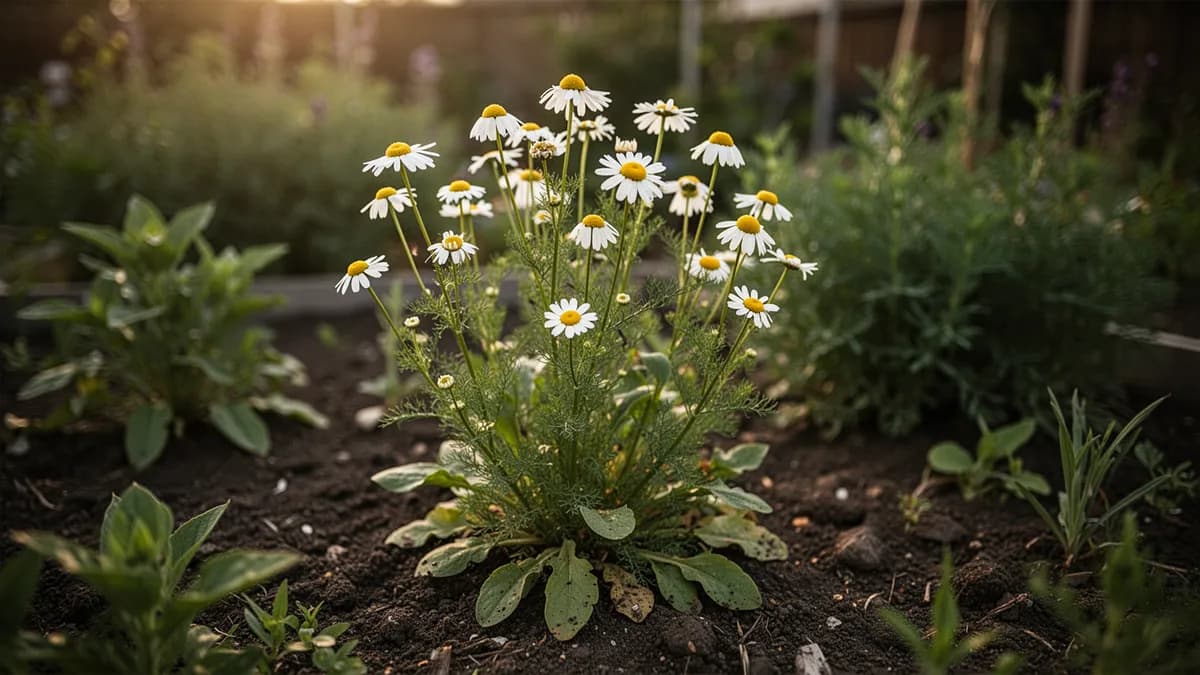
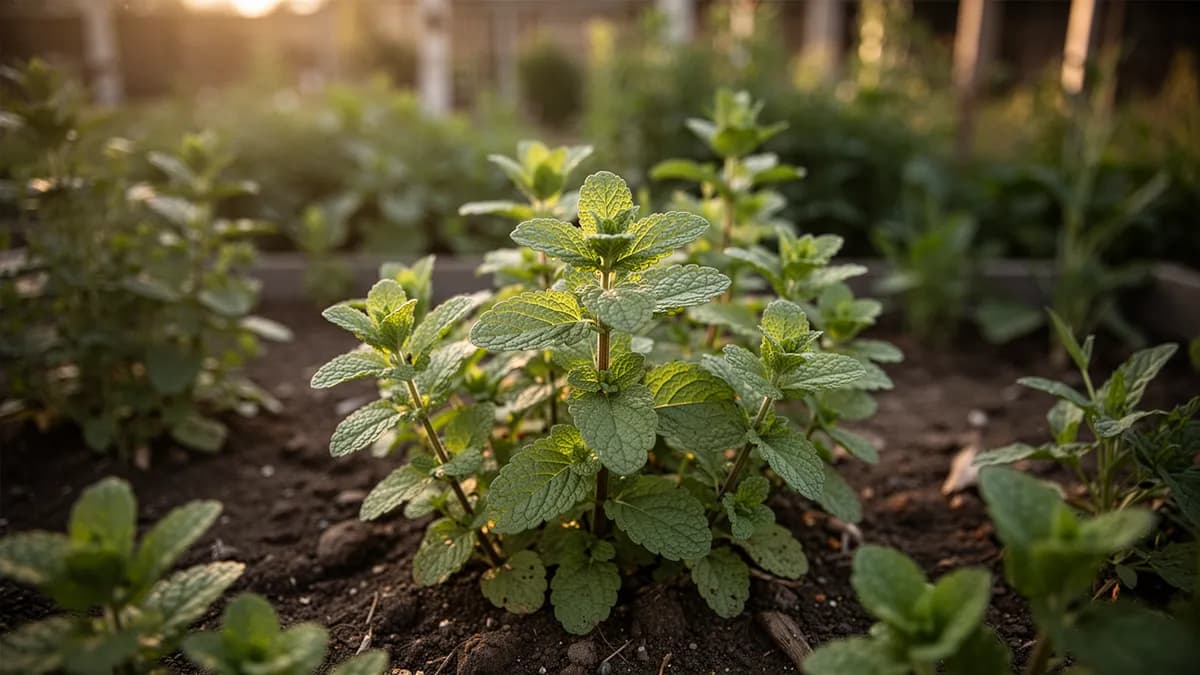
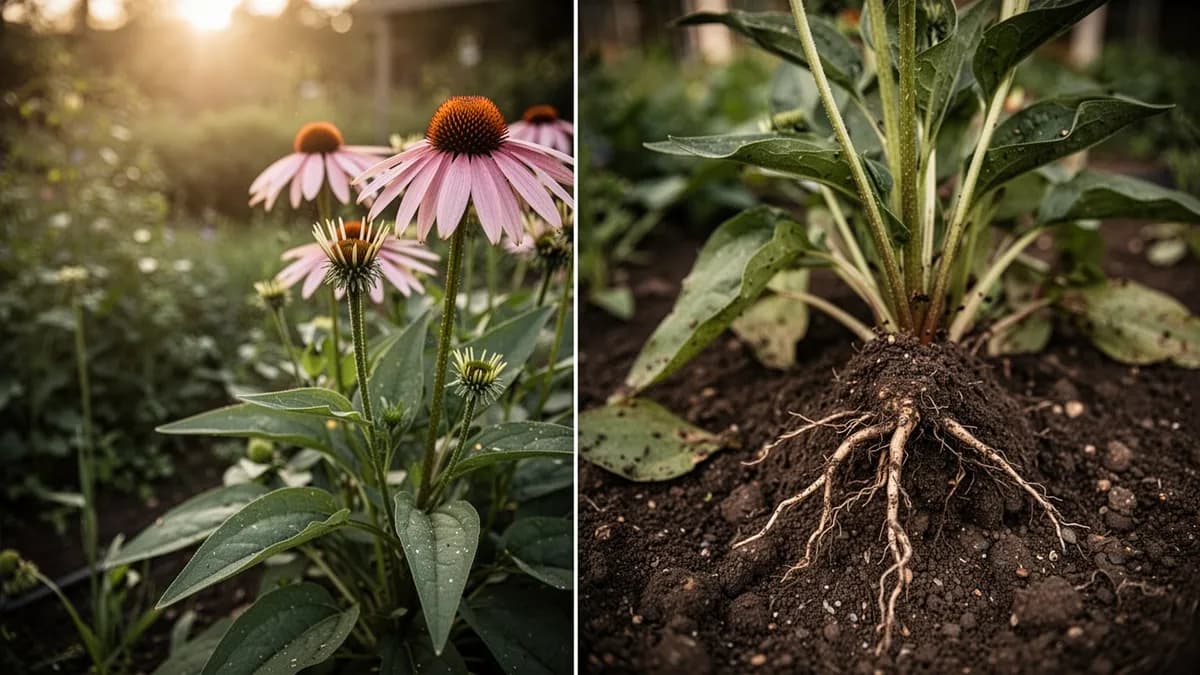
Valerian is reported to stimulate the growth of nearby plants and is particularly beneficial near vegetables. Traditional gardeners plant valerian near compost bins, as the roots are said to attract earthworms. It pairs well with other medicinal herbs including echinacea, chamomile, and lemon balm in a dedicated healing garden. The tall flower stalks provide structure in perennial borders alongside bee balm, yarrow, and ornamental grasses.
Chamomile belongs beside it.
Old growers' knowledge, checked against Valerian's real companion table below — test any plant you're growing.
Try Valerian in a bed — right here
A real planner bed with Valerian already in it. Tap a companion to place it and watch the pairing checks answer — green for good neighbours, red for a clash.


Related growing guides
Feed it well
Valerian prefers moist, rich, well-drained soil with a pH of 5.5 to 7.0. Amend garden soil with compost before planting to increase organic matter and moisture retention. For maximum root development, ensure soil is loose and deep. Apply balanced organic fertilizer in early spring and again after the first flush of flowers is removed. Maintain 2 to 3 inches of organic mulch to conserve soil moisture. Avoid waterlogged conditions that promote crown rot.
Ideal Temperature
Hardiness Zone Compatibility
From seed to harvest, stage by stage
Seed Germination
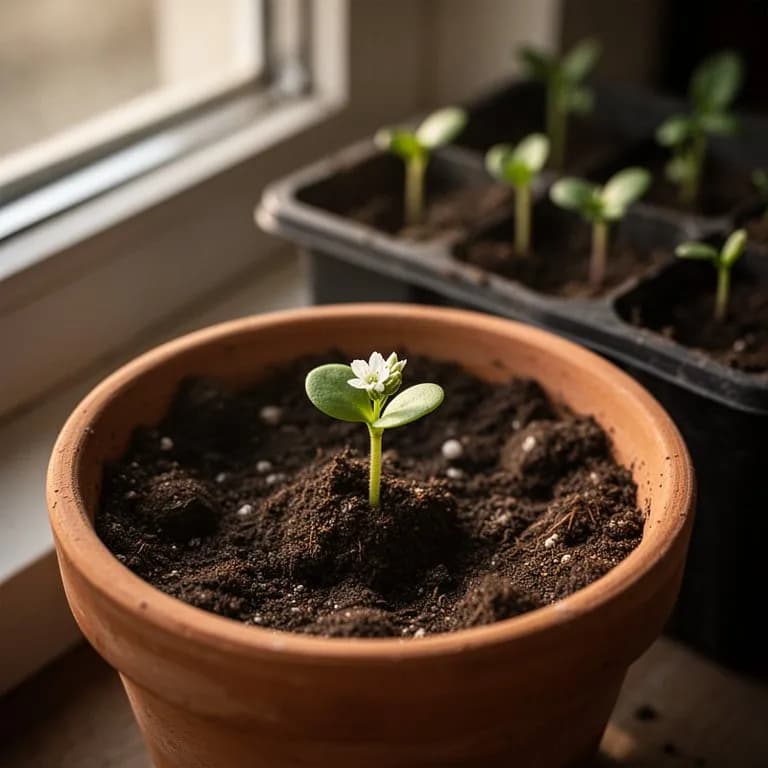
Valerian seeds are tiny, light-dependent germinators that require surface sowing and consistent moisture. Germination is notoriously slow and uneven, often taking 14-21 days even under ideal conditions. The first seedlings emerge as a pair of small, rounded cotyledons followed by simple, slightly toothed true leaves that look nothing like the mature compound foliage.
Seedling Development
Young seedlings develop their first pinnate leaves with 3-5 leaflet pairs, beginning to resemble the mature plant. Growth is relatively slow at this stage as the plant focuses on establishing a robust root system. Seedlings gradually form a low basal rosette of increasingly complex compound leaves.
Rosette Establishment (Year 1)
During its first growing season, valerian focuses energy on building a dense basal rosette of deeply divided pinnate leaves and developing the thick, fibrous root system that stores the plant's medicinal compounds. First-year plants rarely flower, instead channeling all resources into root development. By late autumn, the rosette may spread 30-45 cm wide.
Spring Regrowth and Bolting (Year 2)
In its second spring, valerian breaks dormancy with vigorous new growth from the established rootstock. The plant rapidly sends up tall, hollow flowering stems that can reach 1-1.5 meters in height. Leaves on the flower stalks become progressively more divided and narrower than the basal rosette leaves.
Flowering
Dense, flat-topped clusters (corymbs) of tiny white to pale pink flowers open at the top of the tall stems. The flowers are intensely fragrant with a sweet, honey-like scent that attracts an extraordinary diversity of pollinators. Each flower head contains dozens of individual tubular florets that open sequentially over several weeks.
Root Harvest
After two full growing seasons, the root system has reached peak potency and is ready for harvest. The dense, tangled mass of pale yellowish-brown roots has developed its characteristic strong, earthy aroma caused by the concentration of valerenic acid and other bioactive compounds. Autumn of the second year is the ideal harvest window.
Sow seeds on the surface of moist seed-starting mix and press gently without covering — they need light to germinate. Keep the soil consistently moist with a mist sprayer and maintain temperatures around 18-21°C (65-70°F). Be patient; germination is slow and erratic.
Caring for Valerian month by month
What to do each month for your Valerian
October
You are herePrimary root harvest month for second-year plants. Dig after foliage begins dying back. Wash roots thoroughly, slice large roots lengthwise, and dry slowly at low temperature. Divide any clumps you wish to propagate and replant divisions immediately.
Know exactly what to do in your garden — every month
One email at the start of each month: what to sow, plant, and tackle right now — for your Valerian and everything growing around it. Plus a short starter course that helps you dodge the classic mistakes.
- What to do, right now
- Matched to your season
- Starter course included
Harvesting Valerian
Harvest valerian roots in the fall of the second or third year, after the plant has gone dormant following the first hard frost. Dig carefully around the plant to extract the entire root system. Wash roots thoroughly to remove all soil. The fresh root has a mild, earthy scent, but develops its characteristic strong odor upon drying. For the strongest medicinal effect, harvest when the plant is fully dormant. Leaves and flowers can also be used in tea, though they are less potent than roots.
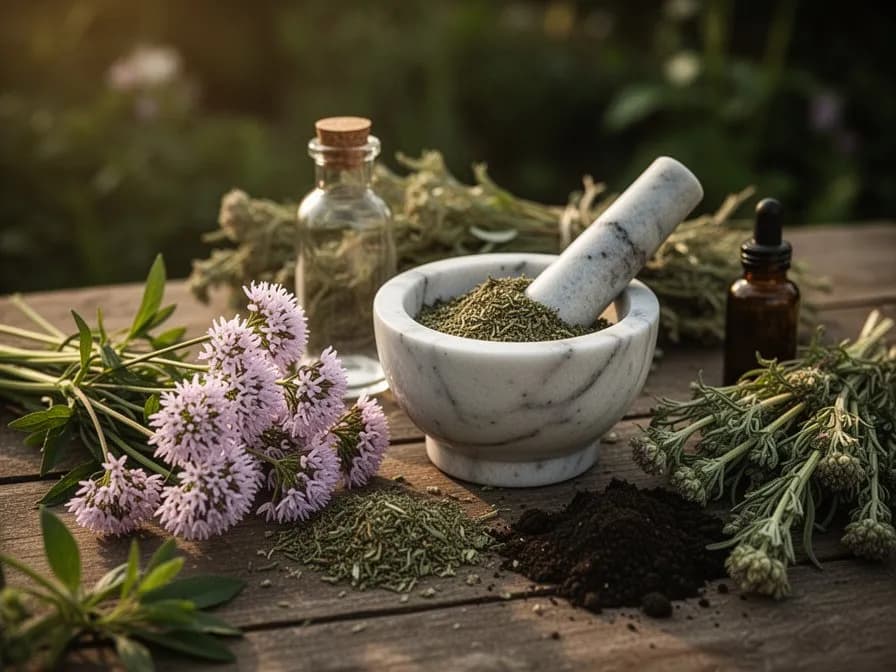
assuming you plant when the window opens — set your real date
Pick Valerian promptly and the plant keeps producing.
Storage & Preservation
Slice washed roots into thin pieces and dry in a dehydrator at 100 degrees Fahrenheit or spread on screens in a warm, well-ventilated area for 1 to 2 weeks. Dried root develops its characteristic strong, musty odor during the drying process. Store in airtight glass jars in a cool, dark place where it retains potency for up to 3 years. For tincture, pack fresh chopped root into a glass jar, cover with 80-proof vodka, and steep 6 to 8 weeks. Valerian root tea is made by steeping 1 teaspoon dried root per cup for 10 to 15 minutes.
What goes wrong — and the fix
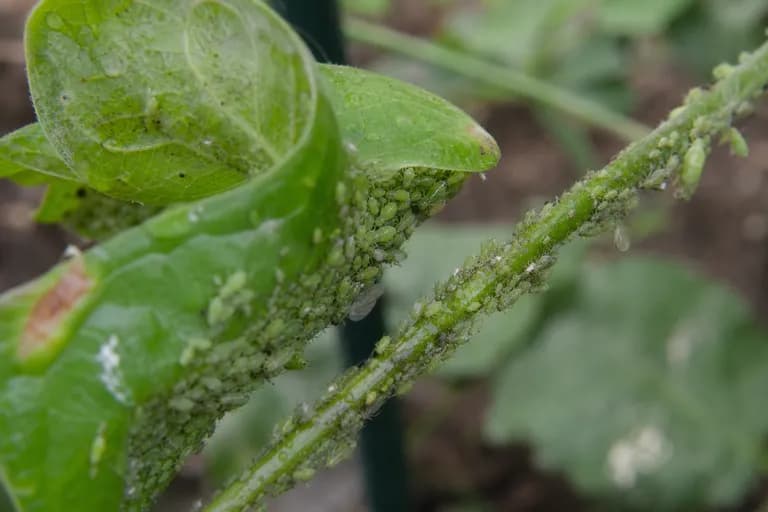
Aphids
PestClusters of small green or black aphids on tender stem tips and flower buds. Leaves curl and become sticky with honeydew. Growth may be stunted.
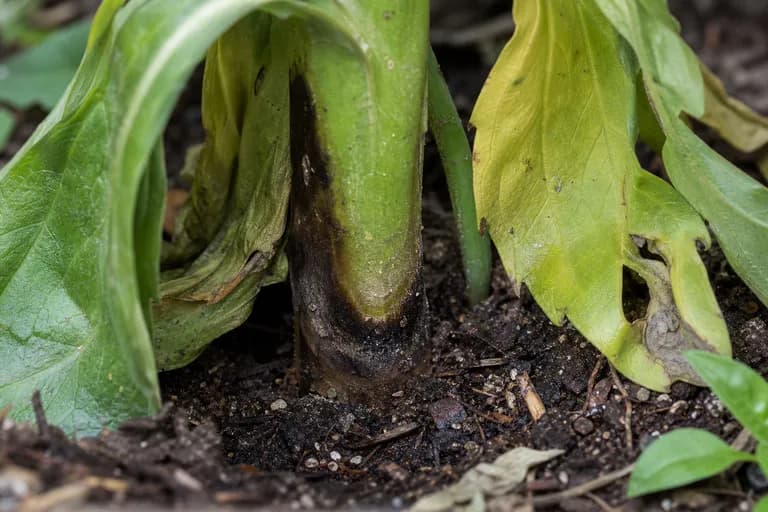
Crown Rot
DiseaseBase of stems becomes soft, dark, and mushy. Plant collapses and wilts. Most common in poorly drained soil during wet weather.
Troubleshooting Common Problems
Prolific self-sowing is the most common issue; deadhead flower stalks before seeds ripen to prevent unwanted spread. The dried root's strong odor attracts cats, who may dig up plants and roll in the disturbed soil. Protect roots with wire cages if cats are a problem. Aphids congregate on flower buds in summer. Powdery mildew can affect foliage in humid conditions. Plants flop without support in rich, moist soil; stake tall varieties or grow among sturdy companions for natural support.
Growing Tips
- Start seeds indoors rather than direct-sowing. Valerian seeds are tiny, have a short viability window, and require light and consistent moisture to germinate. Surface-sow on damp seed-starting mix, press gently, and do not cover. Bottom-watering prevents seeds from washing away.
- Use the freshest seeds you can find. Valerian seed viability drops sharply after one year of storage. If germination rates are poor, consider buying fresh seed from a reputable herb seed supplier or acquiring divisions or transplants from an established grower instead.
- Choose a site with rich, consistently moist soil and full sun to partial shade. Valerian naturally grows in damp meadows and stream margins, and it never performs well in dry, sandy, or compacted soil. Amend planting beds generously with compost before transplanting.
- Mulch heavily around established plants with 5-7 cm of organic mulch to retain soil moisture, suppress weeds, and keep roots cool during summer heat. Valerian roots grow near the surface and benefit greatly from a stable, cool root zone.
- Remove flower stalks in the first year if any appear, and consider removing them in the second year as well if your primary goal is root harvest. Flowering diverts significant energy away from root development and reduces the potency and mass of the medicinal root harvest.
- Deadhead aggressively if you allow flowering — valerian self-seeds prolifically and can become invasive in favorable conditions. Cut flower heads before seeds mature and disperse, or grow the plant in a contained bed bordered by mowing strips or edging.
- Divide established clumps every 3-4 years in spring or autumn to maintain plant vigor and prevent overcrowding. Each division should include a healthy section of root with at least 2-3 growing points. Replant divisions immediately and water thoroughly.
- Harvest roots in autumn of the second year for maximum potency. Use a garden fork to lift the entire root ball, as pulling by hand breaks the brittle roots and leaves valuable material in the ground. Wash roots immediately in cold running water to remove soil.
- Dry roots slowly at temperatures below 40°C (104°F) to preserve the volatile essential oils and valerenic acid that provide medicinal activity. A food dehydrator set to its lowest setting or a well-ventilated room works well. Roots are dry when they snap cleanly rather than bending.
- Be aware that drying valerian root produces an intense, pungent odor that many people find highly unpleasant. Dry roots in a well-ventilated area away from living spaces — a garden shed, garage, or covered porch is ideal. The smell does not indicate spoilage; it is a natural result of isovaleric acid release.
Grow your best Valerian yet — and everything around it.
Start a free plan today. Lay out your beds, drop in your Valerian, and let PlotMyGarden handle the timing, spacing, companions and reminders from seed to harvest basket.
Pick your Valerian
Common Valerian (V. officinalis)
The standard medicinal species with white to pink flower clusters and deeply divided leaves. Most widely studied and used in herbal preparations. Hardy and vigorous.
Red Valerian (Centranthus ruber)
A different genus grown ornamentally with deep pink-red flowers. Not a medicinal substitute. Drought-tolerant and self-sowing. Popular in cottage gardens and rock walls.
Dried valerian root retails for $15-30 per 100g at health food stores, and commercially prepared valerian capsules and tinctures cost $10-25 per bottle. A single packet of valerian seeds ($3-5) grows into 20-50 plants, and just 6-10 mature plants harvested after two years can yield 360-1200g of dried root — equivalent to $55-360 worth of retail dried root. Making your own tea and tinctures from homegrown root provides years of gentle herbal sleep support for a fraction of the commercial cost.
Quick recipes
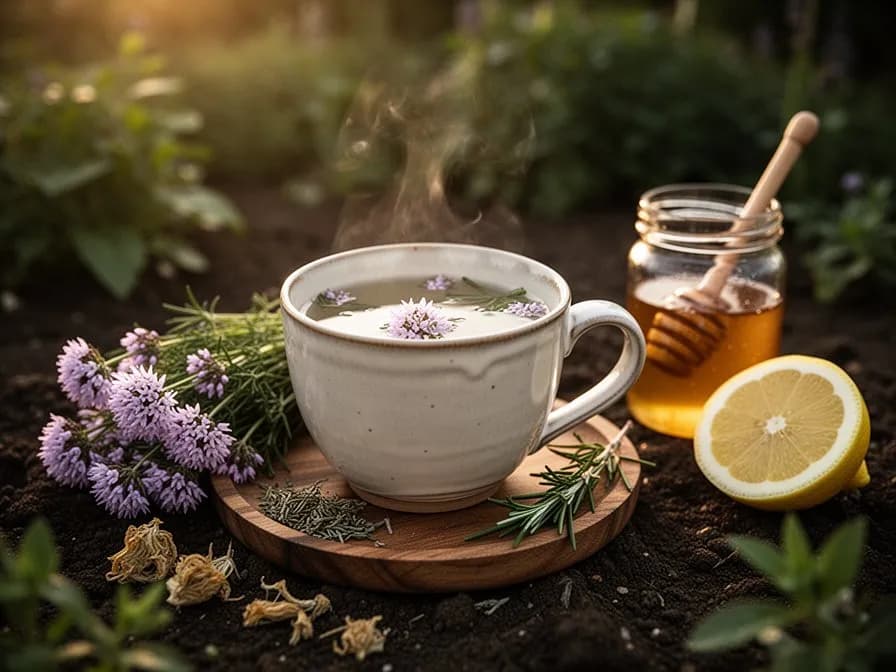
Classic Valerian Sleep Tea
15 minA soothing bedtime tea made from dried valerian root, gently simmered to extract the calming compounds. The earthy, slightly bitter flavor is best balanced with honey and a squeeze of lemon. Drink 30-60 minutes before bedtime for the best effect.
5 ingredientsValerian and Lavender Calm Tincture
10 min (plus 4-6 weeks steeping)A potent herbal tincture that combines valerian root with lavender for a dual-action calming preparation. The alcohol extraction captures compounds that hot water alone may miss, and the finished tincture stores for years. Take 1-2 ml in water as needed for nervous tension.
5 ingredientsRelaxation Bath Sachets
10 minFragrant bath sachets filled with valerian root and complementary herbs that release their soothing compounds into warm bathwater. The aromatic steam and skin absorption provide gentle relaxation before bedtime. Makes 4-6 sachets for multiple uses.
5 ingredientsWhat's inside
Health Benefits
- Traditionally used for centuries as a natural sleep aid, with several modern clinical studies suggesting that regular valerian root use may improve subjective sleep quality and reduce the time needed to fall asleep without the grogginess associated with pharmaceutical sleep medications.
- Contains valerenic acid, which has been shown in laboratory studies to inhibit the breakdown of gamma-aminobutyric acid (GABA) in the brain, potentially promoting a state of calm and reducing nervous excitability.
- Used in traditional European herbal medicine to ease anxiety and nervous tension, with some preliminary clinical evidence suggesting modest anxiolytic effects comparable to low-dose prescription anti-anxiety medications in mild cases.
- May help relieve menstrual cramps and discomfort — valerian has antispasmodic properties that have been traditionally used to ease smooth muscle tension in the uterus and digestive tract.
- Supports cardiovascular relaxation through its mild sedative and antispasmodic effects, potentially helping to lower elevated heart rate and blood pressure associated with stress and anxiety.
- Generally considered safe for short-term use with few reported side effects, making valerian one of the gentler herbal remedies available — though it should not be combined with prescription sedatives, alcohol, or used during pregnancy without medical guidance.
Where Valerian comes from
Valerian (Valeriana officinalis) is a perennial flowering herb native to Europe and parts of western Asia, with a medicinal history stretching back more than two millennia. The plant grows wild across temperate grasslands, damp meadows, and woodland margins from Scandinavia to the Mediterranean, and from the British Isles eastward through Russia and into western China. Its natural preference for moist, fertile soils near rivers and streams made it a familiar sight to ancient herbalists who gathered it from the wild long before it was cultivated in gardens.
The earliest known written references to valerian's medicinal use appear in the works of Hippocrates in the 4th century BC, and the Greek physician Dioscorides described it in his influential herbal 'De Materia Medica' around 60 AD, recommending it as a remedy for digestive complaints and urinary disorders. The Roman physician Galen elevated valerian's reputation in the 2nd century AD by prescribing it specifically as a treatment for insomnia — the use for which it remains best known today. Throughout the Middle Ages, valerian was a staple of European monastery herb gardens and was prescribed by herbalists for conditions ranging from heart palpitations and nervous disorders to epilepsy and plague.
Valerian's importance grew during times of widespread anxiety and conflict. During both World Wars, it was used extensively in Britain as a civilian nerve tonic during bombing campaigns, and it was included in official pharmacopoeias across Europe well into the 20th century. Today, valerian remains one of the most widely used herbal supplements worldwide, sold as capsules, tinctures, and teas in health food stores across North America, Europe, and Asia. Modern research has identified valerenic acid and valepotriates as key bioactive compounds, and clinical studies continue to investigate its effects on sleep quality and anxiety. The plant has naturalized across North America, where it sometimes escapes gardens and establishes in moist habitats.
Valerian: did you know?
Fascinating facts about Valerian
Valerian's name may derive from the Latin 'valere' meaning 'to be strong' or 'to be healthy,' reflecting its centuries-old reputation as a powerful medicinal herb — though some scholars believe it was named after the Roman province of Valeria in Pannonia where it grew abundantly.
Valerian questions, answered
When should I plant Valerian?
What are good companion plants for Valerian?
What hardiness zones can Valerian grow in?
How much sun does Valerian need?
How far apart should I space Valerian?
What pests and diseases affect Valerian?
How do I store Valerian after harvest?
What are the best Valerian varieties to grow?
What soil does Valerian need?
Does valerian really help with sleep?
Why does dried valerian root smell so bad?
Is valerian safe to take with other medications?
Why is my valerian not germinating?
Will valerian attract cats to my garden?
Can valerian become invasive in the garden?
You just read the theory. Now grow it on autopilot.
Everything that makes Valerian fiddly — the timing, the spacing, the companions, the harvest window — is exactly what PlotMyGarden handles for you, for every plant in your garden.
A plan that knows your weather
Set your location once. Get sow, feed and harvest dates built around your real last-frost date and live forecast — no more guessing from a generic seed packet.
From the “When to plant” sectionDrag-and-drop bed planner
Design beds on a grid. Every plant snaps to its proper spacing, and you can see your whole season laid out before you spend a cent on seed.
From the “Growing guide” sectionCompanion conflicts, caught early
200+ good-and-bad pairings checked live as you plant — so a season-wrecking mistake never makes it into the ground.
From the “Companions” sectionReminders you'll actually act on
“Water the beans.” “Pick today before it turns.” Timely, specific, and tied to the plants you're really growing.
From the “Harvest” sectionSuccession, scheduled
Want a harvest for six weeks, not six days? It spaces your sowings automatically and reminds you when each new block is due.
From the “When to plant” sectionA record that gets smarter
Every harvest you log teaches it your garden. Next year's plan starts from what actually worked in your soil, not a textbook's.
From the “Overview” sectionPlant these alongside Valerian
More Medicinal Herbs
Garden plans featuring Valerian
Grow your best Valerian yet — and everything around it.
Start a free plan today. Lay out your beds, drop in your Valerian, and let PlotMyGarden handle the timing, spacing, companions and reminders from seed to harvest basket.