Ashwagandha
An Ayurvedic adaptogenic herb whose roots are dried and powdered for stress relief and energy support.





On this pageOverview
Meet Ashwagandha
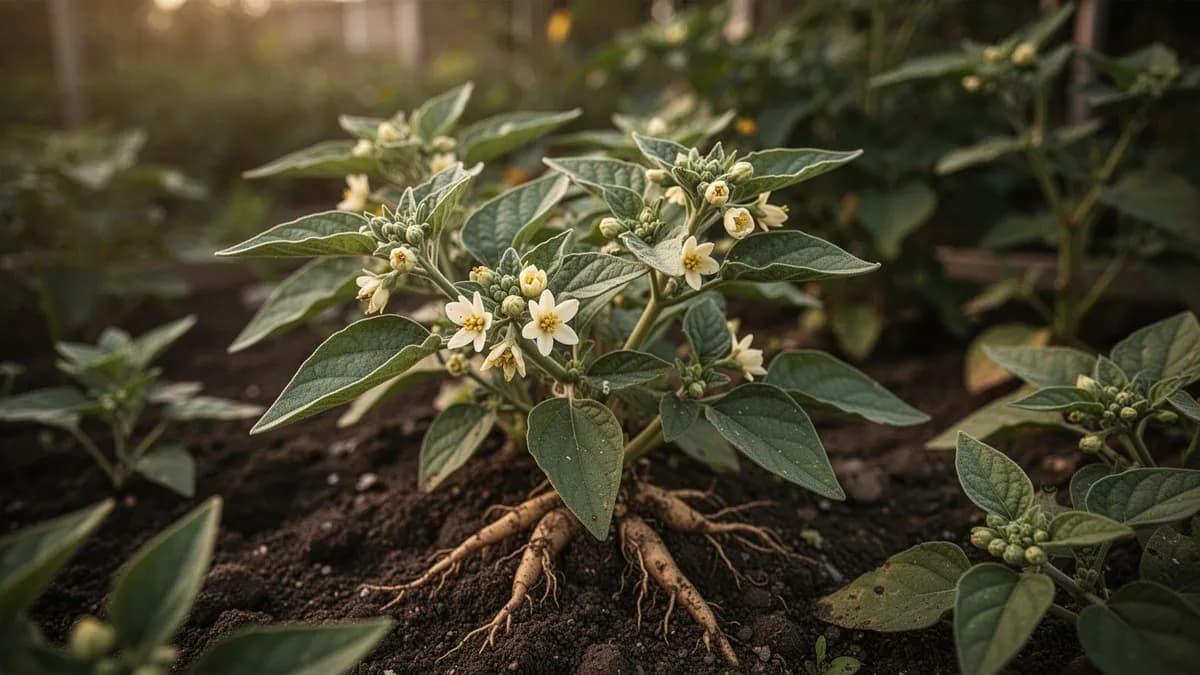
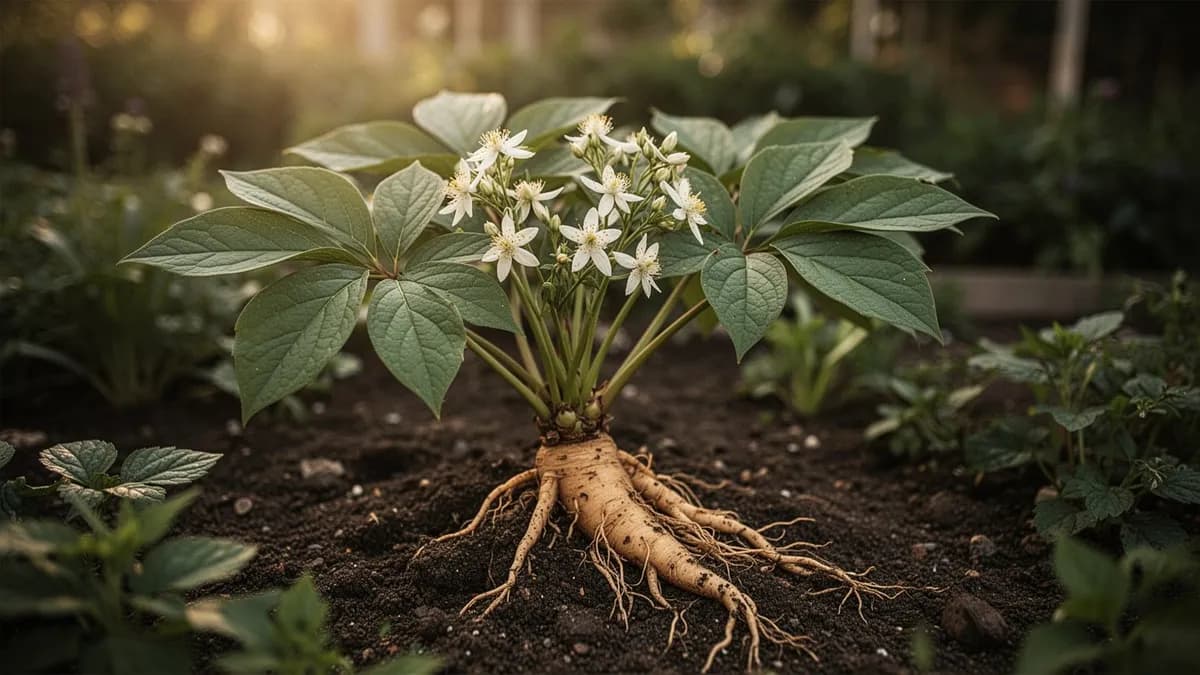
An Ayurvedic adaptogenic herb whose roots are dried and powdered for stress relief and energy support. Ashwagandha grows as a small shrub with yellow-green flowers and red berries enclosed in papery lantern-shaped husks. It thrives in dry, sandy soil with full sun and is grown as an annual in temperate climates, harvesting roots after about 150 days.
When to plant Ashwagandha
Ashwagandha seeds germinate readily without special treatment. Sow on the surface of moist seed-starting mix and press gently; seeds need light to germinate. Maintain temperatures of 70 to 75 degrees Fahrenheit. Germination occurs in 10 to 14 days. Keep seedlings under strong light to prevent legginess. Transplant to individual pots when seedlings have 4 true leaves. Harden off gradually and plant outdoors only after all frost danger has passed and soil temperatures reach 65 degrees. Space 18 to 24 inches apart in full sun.
Your Ashwagandha Year
Composed for Zone 7 · typical seasons · frost passes Apr 2, returns Nov 1
Plant Ashwagandha Apr – Jun, pick Oct – Nov. Check the planting methods below and set your climate to personalize these windows.
How to grow Ashwagandha
Ashwagandha, one of the most important herbs in Ayurvedic medicine, is a subtropical shrub that can be grown as an annual in temperate climates. The root is the primary medicinal part, harvested after about 150 to 180 days of growth. Plant in full sun with dry, sandy, well-drained soil with a pH of 6.0 to 7.5. Ashwagandha thrives in hot conditions and will not tolerate wet feet or cold temperatures.
Start seeds indoors 6 to 8 weeks before the last frost by sowing on the surface of moist seed-starting mix. Seeds need light and warmth of 70 to 75 degrees to germinate, which takes 10 to 14 days. Transplant outdoors after all danger of frost has passed and soil has warmed thoroughly. Space plants 18 to 24 inches apart.
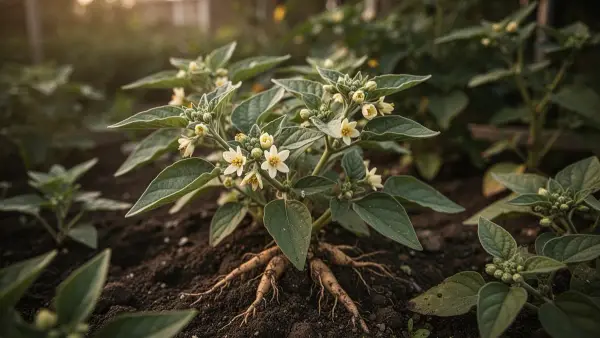
Ashwagandha grows 2 to 3 feet tall with oval leaves and small yellow-green flowers that develop into red berries enclosed in papery husks similar to tomatillos. Water sparingly once established; overwatering reduces root quality and promotes disease. The plant is remarkably drought-tolerant and actually produces more concentrated medicinal compounds under mild drought stress. In zones 8 and warmer, ashwagandha may survive as a short-lived perennial.
10 plants fit a 4 × 8 ft bed
Each Ashwagandha wants 45 cm of elbow room. The planner keeps that spacing for you — every plant, every bed.
Ashwagandha's best neighbours
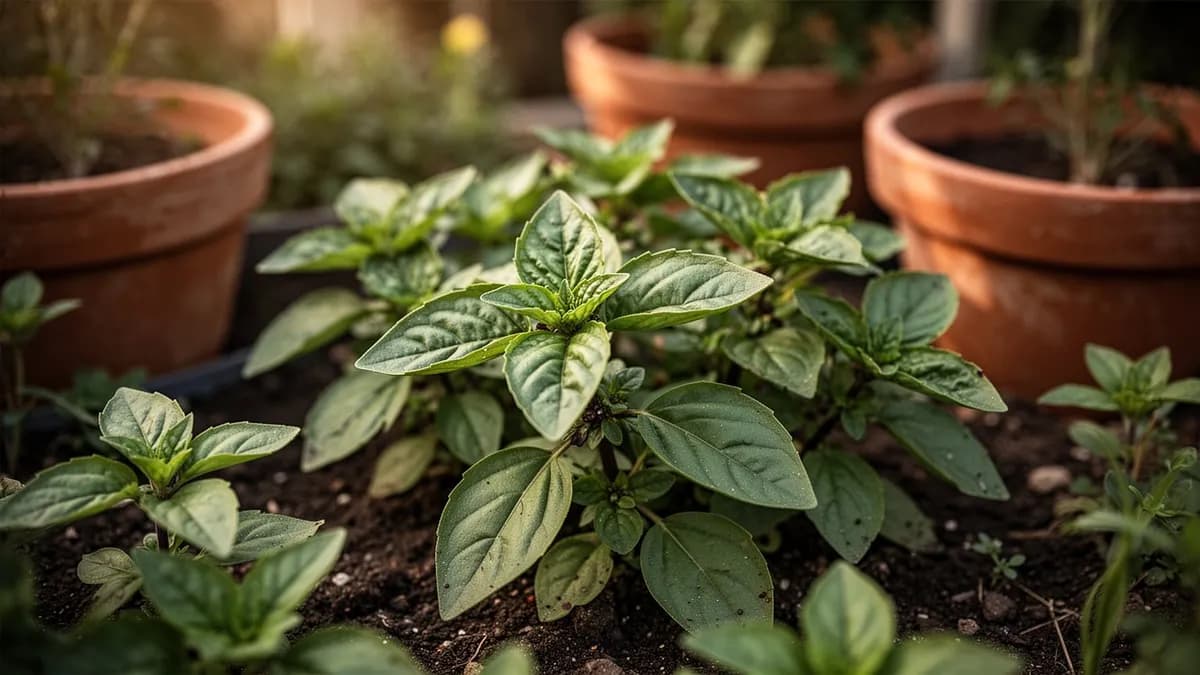
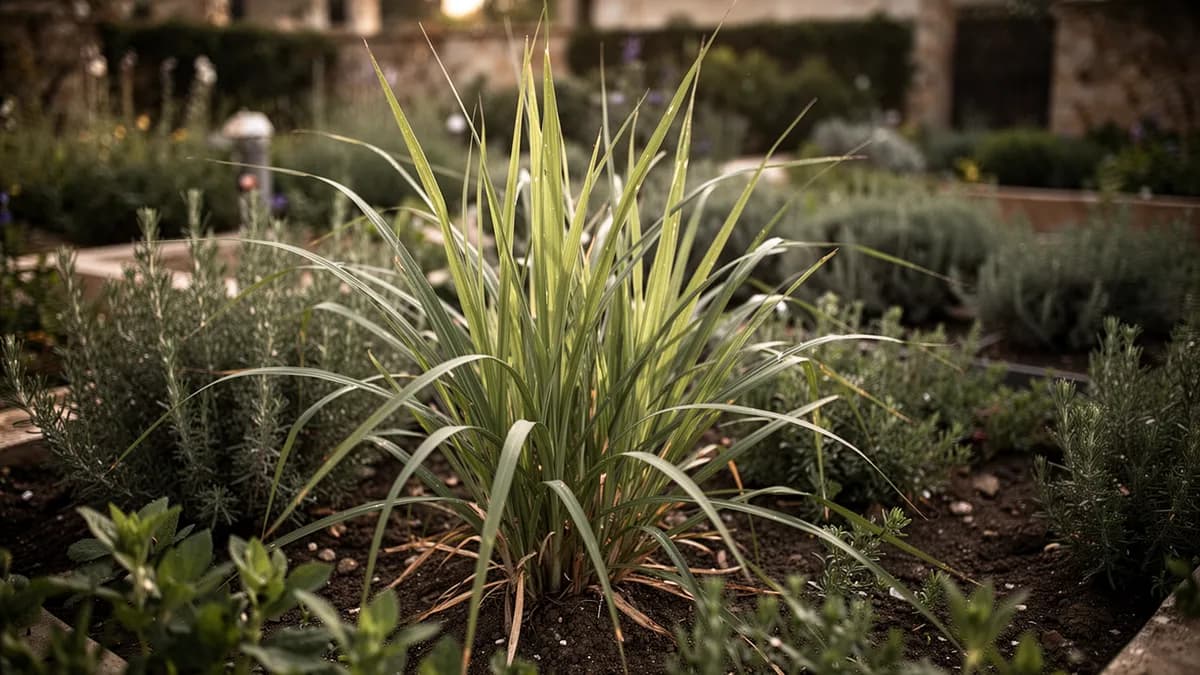
Ashwagandha grows well alongside other warm-season herbs that prefer dry, sunny conditions. Plant with holy basil (tulsi), lemongrass, and turmeric in a dedicated Ayurvedic herb garden. It also pairs well with drought-tolerant Mediterranean herbs like rosemary and oregano. Keep away from moisture-loving herbs that require very different growing conditions. As a member of the nightshade family, follow the same crop rotation principles as tomatoes and peppers.
Holy Basil belongs beside it.
Old growers' knowledge, checked against Ashwagandha's real companion table below — test any plant you're growing.
Try Ashwagandha in a bed — right here
A real planner bed with Ashwagandha already in it. Tap a companion to place it and watch the pairing checks answer — green for good neighbours, red for a clash.


Related growing guides
Feed it well
Ashwagandha thrives in dry, sandy, well-drained soil with a pH of 6.0 to 7.5. Rich, moist soil produces lush green growth with reduced root quality and lower concentrations of active medicinal compounds. Add sand and perlite to heavy soils to improve drainage. Minimal fertilization is needed; a light application of balanced organic fertilizer at planting time is sufficient. Avoid nitrogen-heavy fertilizers. For medicinal root production, lean, dry growing conditions produce the highest quality roots.
Ideal Temperature
Hardiness Zone Compatibility
From seed to harvest, stage by stage
Seed Germination
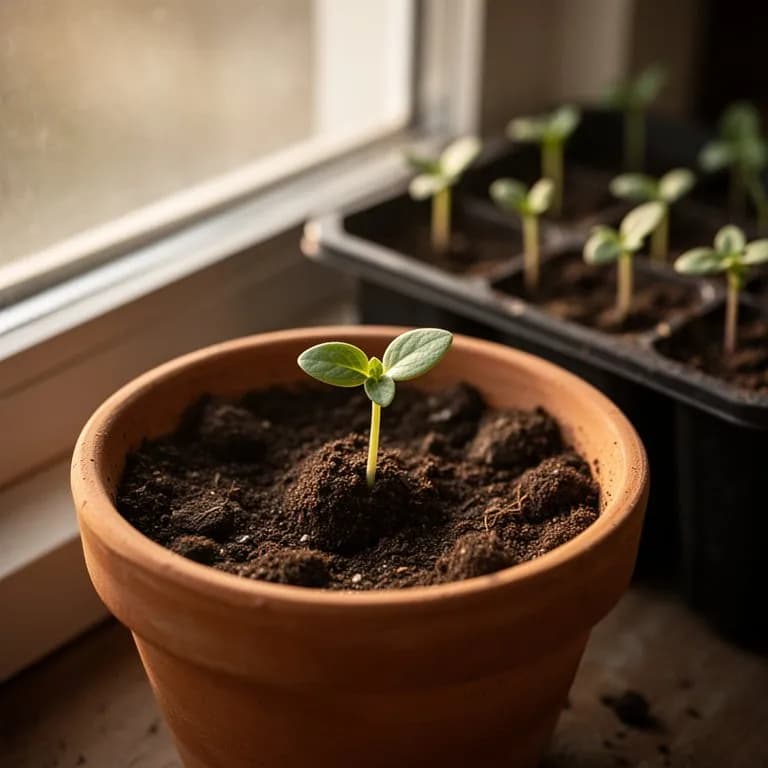
Ashwagandha seeds are small, flat, and disc-shaped, requiring warm soil temperatures of at least 20°C (68°F) for reliable germination. Seeds absorb moisture over 3-5 days, and the radicle emerges within a week under ideal conditions. The seedling pushes through the soil surface at 10-14 days, revealing its first pair of small, rounded cotyledon leaves covered in fine hairs.
Seedling Establishment
True leaves emerge with their characteristic soft, velvety texture and grey-green color. The stem begins to thicken and early lateral branching initiates at the base. Root development is vigorous during this phase, with the taproot elongating rapidly in loose, well-drained soil. Seedlings grow slowly at first but accelerate once the root system establishes.
Vegetative Growth
Plants grow rapidly into bushy, branching shrubs 60-120 cm tall and nearly as wide. Large oval leaves up to 12 cm long develop in abundance, giving the plant a lush, rounded appearance. The taproot thickens substantially during this phase, storing the withanolides and other bioactive compounds that make ashwagandha medicinally valuable. Strong lateral roots also develop, anchoring the plant firmly.
Flowering and Fruiting
Small greenish-yellow, bell-shaped flowers appear in clusters at the leaf axils. Each flower is only 4-6 mm across and self-pollinates readily. Flowers quickly give way to developing berries enclosed in an inflated, papery calyx that resembles a miniature Chinese lantern — a feature shared with its relative the cape gooseberry. Berries begin green and gradually ripen to bright orange-red over several weeks.
Berry Ripening and Seed Maturation
Berries turn from green to golden-yellow and finally to vivid orange-red as they ripen inside their papery husks. Each berry contains numerous small, kidney-shaped seeds. The plant's lower leaves may begin to yellow and drop as energy shifts to seed production. The root reaches its maximum size and potency during this final growth phase, making it the ideal time for harvest.
Root Harvest
The root is harvested after 150-180 days of growth, ideally when the berries have ripened and the plant begins its natural decline. Roots are typically 15-30 cm long with a pale, cream-colored interior and a distinctive earthy, slightly pungent aroma often compared to horses — the Sanskrit name ashwagandha literally means 'smell of the horse.' The root is washed, sliced, and dried for storage and use.
Sow seeds just 5-6 mm deep in warm, well-drained soil or seed-starting mix. Light surface coverage is sufficient — do not bury deeply. Keep soil consistently moist but not waterlogged. Bottom heat mats set to 25°C (77°F) dramatically improve germination rates when starting indoors.
Caring for Ashwagandha month by month
What to do each month for your Ashwagandha
October
You are herePrimary root harvest month in most zones. Harvest roots before the first hard frost by loosening soil deeply with a garden fork and carefully lifting the entire root system. Wash, slice, and dry roots in a dehydrator or well-ventilated area. Collect ripe berries for seed saving.
Know exactly what to do in your garden — every month
One email at the start of each month: what to sow, plant, and tackle right now — for your Ashwagandha and everything growing around it. Plus a short starter course that helps you dodge the classic mistakes.
- What to do, right now
- Matched to your season
- Starter course included
Harvesting Ashwagandha
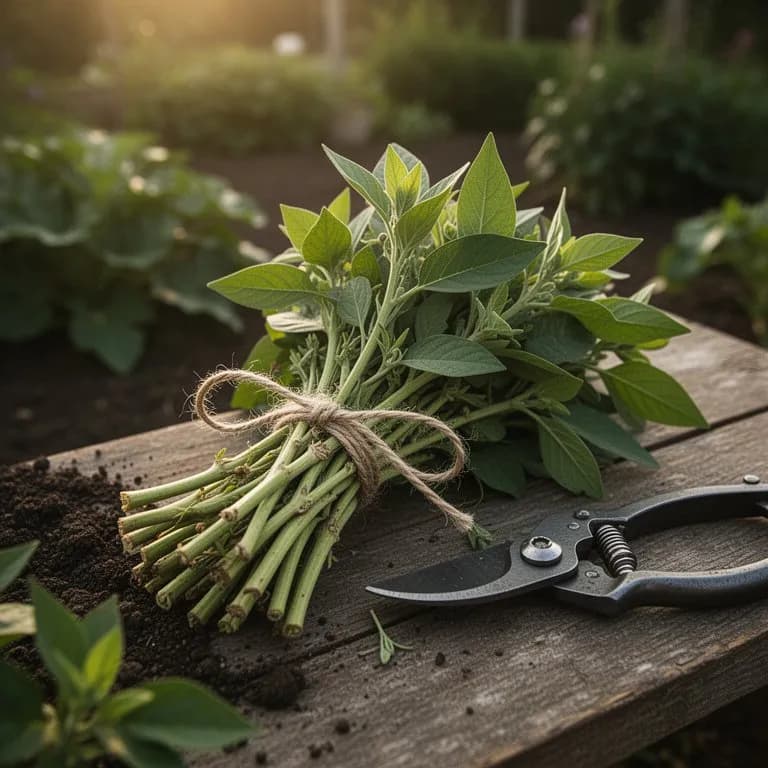
Harvest ashwagandha roots in late fall, approximately 150 to 180 days after transplanting, when the leaves begin to yellow and the berries turn red. Carefully dig the entire root system using a garden fork. The roots are tuberous and fleshy when fresh. Wash thoroughly and cut into small pieces for drying. The berries can also be collected for seed saving or for making rennet substitute in traditional Indian cheesemaking. The leaves, while less commonly used, are also medicinally active.
assuming you plant when the window opens — set your real date
Pick Ashwagandha promptly and the plant keeps producing.
Storage & Preservation
Slice fresh ashwagandha roots into thin pieces and dry in a dehydrator at 95 to 100 degrees Fahrenheit or spread on screens in a warm, well-ventilated area for 1 to 2 weeks. Dried root should snap cleanly when bent. Grind dried root into powder using a spice grinder or mortar and pestle. Store dried root or powder in airtight glass jars in a cool, dark place where it maintains potency for 2 to 3 years. For tinctures, soak dried root in vodka or glycerin for 6 to 8 weeks.
What goes wrong — and the fix
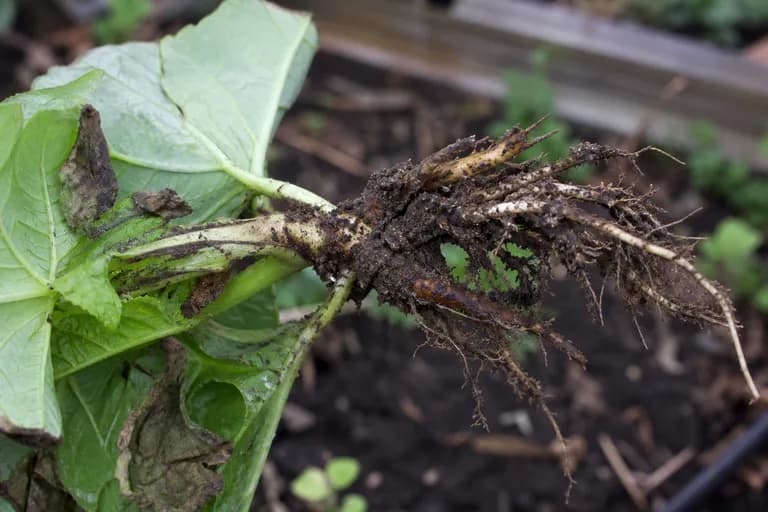
Root Rot
DiseaseYellowing leaves, wilting, and soft mushy roots. Usually fatal in waterlogged conditions. Most common in heavy, poorly drained soil.
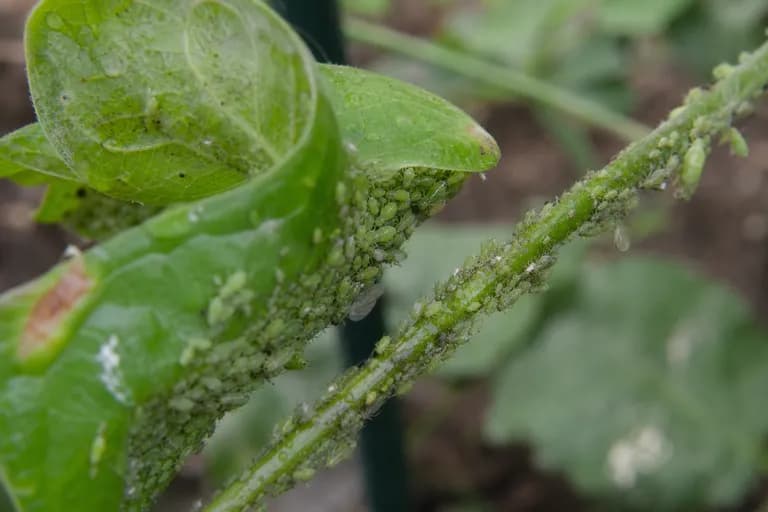
Aphids
PestClusters of small aphids on tender shoots and leaf undersides. Leaves may curl and become sticky. Growth stunted in severe infestations.
Troubleshooting Common Problems
Cold sensitivity is the primary limitation in temperate climates. Ashwagandha is killed by the first frost, so timing the growing season is critical. Start seeds early enough to allow 150 to 180 days of growth before fall frost. Overwatering is the most common cultural error, leading to root rot and poor medicinal quality. The plant belongs to the nightshade family (Solanaceae) and may be affected by the same pests and diseases as tomatoes and peppers. Flea beetles occasionally damage foliage.
Growing Tips
- Start seeds indoors 6-8 weeks before the last frost for a head start on the growing season. Ashwagandha seeds germinate best at 25°C (77°F) on a heat mat and should be barely covered with seed-starting mix — they need some light exposure to break dormancy.
- Choose a planting site with full sun and excellent drainage. Ashwagandha is native to arid, sandy soils and will develop root rot in heavy clay or waterlogged conditions. Amend heavy soils generously with coarse sand, perlite, or gravel before planting.
- Water deeply but infrequently once plants are established. Ashwagandha is remarkably drought-tolerant and actually produces higher concentrations of beneficial withanolides when subjected to moderate water stress. Overwatering is the most common cause of plant failure.
- Avoid rich or high-nitrogen fertilizers. Ashwagandha evolved in nutrient-poor soils and excessive fertility produces lush, weak growth with lower medicinal potency. A single application of balanced compost at planting time provides all the nutrition needed for the season.
- Space plants 60-90 cm apart in all directions. Ashwagandha develops a wide, bushy habit and adequate spacing ensures good air circulation, which is critical for preventing fungal diseases in humid climates.
- Pinch growing tips when plants reach 30 cm tall to encourage bushier growth and a stronger root system. This redirects energy from upward stem growth into lateral branching and root thickening, ultimately increasing your harvest yield.
- Monitor for spider mites in hot, dry weather and aphids in cooler, humid conditions. Both can be managed with strong water sprays or applications of neem oil. Ashwagandha is generally pest-resistant but these two pests are its most common visitors.
- Harvest roots after 150-180 days of growth, ideally once berries have ripened and the plant begins its natural decline. Use a garden fork to loosen soil deeply before lifting the root — the taproot can extend 30 cm or more and will break if pulled forcefully.
- Dry harvested roots at low temperatures — below 45°C (113°F) in a dehydrator or in shade with good airflow. High drying temperatures degrade the heat-sensitive withanolides that give ashwagandha its medicinal value. Properly dried root pieces should snap cleanly.
- In zones 10-12, ashwagandha can be grown as a short-lived perennial. Cut plants back to 15 cm in late winter and mulch the crown lightly. Second and third year plants develop larger roots but may have reduced withanolide concentrations compared to vigorously growing first-year plants.
Grow your best Ashwagandha yet — and everything around it.
Start a free plan today. Lay out your beds, drop in your Ashwagandha, and let PlotMyGarden handle the timing, spacing, companions and reminders from seed to harvest basket.
Pick your Ashwagandha
Withania somnifera (Common Ashwagandha)
The standard species used in Ayurvedic medicine for thousands of years. Bushy annual to 3 feet with yellow-green flowers and papery-husked red berries. The benchmark for medicinal quality.
Nagori Ashwagandha
An Indian cultivar selected for high withanolide content (the primary active compound). Slightly smaller plant but considered superior for medicinal use. Increasingly available from specialty seed suppliers.
Ashwagandha supplements are one of the best-selling herbal products globally, with a 60-count bottle of standardized root extract capsules typically costing $15-30. Bulk organic ashwagandha root powder retails for $20-40 per pound. A single home-grown plant produces 50-150g of dried root, and a garden row of 8-10 plants can yield 400g-1.5kg of dried root — worth $35-130 at retail powder prices. Growing your own also guarantees freshness and purity, avoiding the adulteration and heavy metal contamination concerns that have plagued commercial ashwagandha products. A $3-5 packet of seeds provides enough for multiple seasons of planting, making home cultivation an exceptional value for regular users of this adaptogenic herb.
Quick recipes
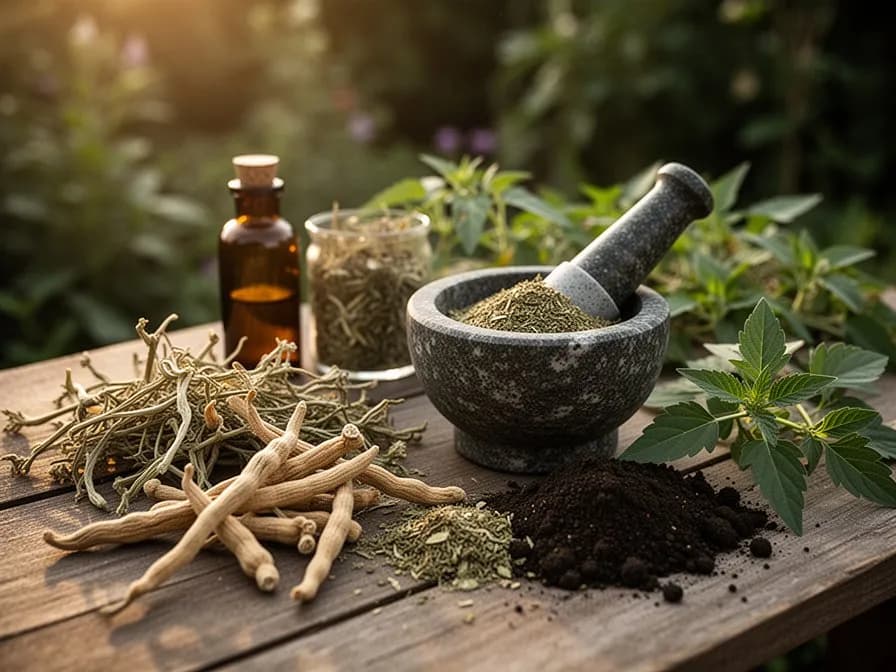
Golden Ashwagandha Moon Milk
10 minA soothing bedtime tonic rooted in Ayurvedic tradition. Warm milk infused with ashwagandha root powder, turmeric, and gentle spices creates a calming golden elixir that promotes restful sleep and helps the body recover from daily stress.
7 ingredientsAshwagandha Energy Balls
15 minNo-bake adaptogenic snack balls that combine the stress-relieving benefits of ashwagandha with wholesome nuts, dates, and cacao for a convenient on-the-go energy boost. Each ball delivers roughly 500mg of ashwagandha root powder.
8 ingredientsAshwagandha Root Chai
20 minA robust, warming chai tea featuring simmered ashwagandha root pieces alongside traditional Indian spices. Longer simmering extracts the root's adaptogenic compounds into a richly spiced, deeply comforting brew perfect for cold mornings or afternoon restoration.
9 ingredientsCulinary Uses
Ashwagandha is primarily medicinal rather than culinary, though the root powder is increasingly used in wellness beverages and smoothies. Add a teaspoon of dried root powder to warm milk with honey and spices like cinnamon and cardamom for the traditional Ayurvedic preparation called ashwagandha milk or moon milk. The powder blends well into smoothies, energy balls, and hot chocolate. The berries have been traditionally used as a vegetable rennet substitute in Indian cheesemaking.
What's inside
Health Benefits
- Clinically demonstrated adaptogenic properties help the body manage physical and psychological stress by modulating cortisol levels — multiple randomized controlled trials show significant reductions in serum cortisol and perceived stress scores with regular supplementation.
- Supports healthy sleep quality and duration without causing morning grogginess — the root's naturally occurring triethylene glycol compound has been identified as a key sleep-promoting agent, supporting ashwagandha's traditional use as a remedy for insomnia.
- May enhance physical performance and muscle strength — clinical studies in healthy adults and athletes have shown improvements in cardiorespiratory endurance, muscle strength, and recovery rate when supplementing with ashwagandha root extract over 8-12 week periods.
- Contains potent anti-inflammatory compounds, particularly withaferin A, which has shown promise in reducing markers of systemic inflammation such as C-reactive protein (CRP), potentially benefiting conditions driven by chronic low-grade inflammation.
- Supports cognitive function and memory — research suggests ashwagandha root extract may improve attention, information processing speed, and working memory in both healthy individuals and those experiencing mild cognitive decline.
- May support thyroid function by promoting healthy levels of thyroid hormones (T3 and T4) — particularly relevant for individuals with subclinical hypothyroidism, as several studies have shown normalization of TSH levels with regular ashwagandha supplementation.
Where Ashwagandha comes from
Ashwagandha (Withania somnifera) is native to the arid and semi-arid regions of the Indian subcontinent, the Middle East, and parts of North Africa. Its center of origin is believed to be the dry plains and foothills of India, where it still grows wild in Rajasthan, Madhya Pradesh, and other states with sandy, alkaline soils. Wild populations also occur across Pakistan, Afghanistan, Sri Lanka, and scattered locations in the Mediterranean Basin, suggesting a broad ancestral range shaped by ancient climate patterns and early human trade.
The herb's documented medicinal use stretches back over 3,000 years to the earliest texts of Ayurveda, the traditional Indian system of medicine. In the foundational Ayurvedic texts Charaka Samhita and Sushruta Samhita, ashwagandha is classified as a 'Rasayana' — a supreme rejuvenating tonic prescribed for enhancing vitality, strengthening the immune system, improving cognitive function, and promoting longevity. It was considered one of the most important herbs in the entire Ayurvedic pharmacopoeia, prescribed for conditions ranging from anxiety and insomnia to inflammation and reproductive health.
Ashwagandha's influence spread beyond India through ancient trade routes connecting South Asia to the Middle East, East Africa, and eventually Europe. Arab traders carried the root along spice routes, and it became incorporated into Unani medicine — the Greco-Arabic medical tradition practiced across the Islamic world. In North Africa, particularly in the Maghreb region, ashwagandha was known by local names and used in traditional healing practices that parallel its Ayurvedic applications.
The herb came to Western scientific attention in the 19th century, but serious research into its pharmacology only began in the mid-20th century when Indian scientists isolated the withanolides — the steroidal lactone compounds responsible for much of ashwagandha's biological activity. Since the 1990s, a surge of clinical trials has investigated its effects on stress, anxiety, athletic performance, thyroid function, and cognitive health, propelling ashwagandha from an obscure ethnobotanical curiosity to one of the best-selling herbal supplements worldwide. Today, India remains the dominant producer, with Madhya Pradesh and Rajasthan cultivating thousands of hectares annually to meet surging global demand.
Ashwagandha: did you know?
Fascinating facts about Ashwagandha
Ashwagandha literally means 'smell of the horse' in Sanskrit, referring both to the distinctive horsey aroma of its fresh root and to the traditional belief that consuming it bestows the strength and vitality of a stallion.
Ashwagandha questions, answered
When should I plant Ashwagandha?
What are good companion plants for Ashwagandha?
What hardiness zones can Ashwagandha grow in?
How much sun does Ashwagandha need?
How far apart should I space Ashwagandha?
What pests and diseases affect Ashwagandha?
How do I store Ashwagandha after harvest?
What are the best Ashwagandha varieties to grow?
What soil does Ashwagandha need?
Is ashwagandha safe to grow and consume at home?
Can I grow ashwagandha in a cold climate?
What parts of the ashwagandha plant are used medicinally?
How do I know when ashwagandha roots are ready to harvest?
Can ashwagandha be grown in containers?
How do I process and store homegrown ashwagandha root?
You just read the theory. Now grow it on autopilot.
Everything that makes Ashwagandha fiddly — the timing, the spacing, the companions, the harvest window — is exactly what PlotMyGarden handles for you, for every plant in your garden.
A plan that knows your weather
Set your location once. Get sow, feed and harvest dates built around your real last-frost date and live forecast — no more guessing from a generic seed packet.
From the “When to plant” sectionDrag-and-drop bed planner
Design beds on a grid. Every plant snaps to its proper spacing, and you can see your whole season laid out before you spend a cent on seed.
From the “Growing guide” sectionCompanion conflicts, caught early
200+ good-and-bad pairings checked live as you plant — so a season-wrecking mistake never makes it into the ground.
From the “Companions” sectionReminders you'll actually act on
“Water the beans.” “Pick today before it turns.” Timely, specific, and tied to the plants you're really growing.
From the “Harvest” sectionSuccession, scheduled
Want a harvest for six weeks, not six days? It spaces your sowings automatically and reminds you when each new block is due.
From the “When to plant” sectionA record that gets smarter
Every harvest you log teaches it your garden. Next year's plan starts from what actually worked in your soil, not a textbook's.
From the “Overview” sectionPlant these alongside Ashwagandha
More Medicinal Herbs
Grow your best Ashwagandha yet — and everything around it.
Start a free plan today. Lay out your beds, drop in your Ashwagandha, and let PlotMyGarden handle the timing, spacing, companions and reminders from seed to harvest basket.