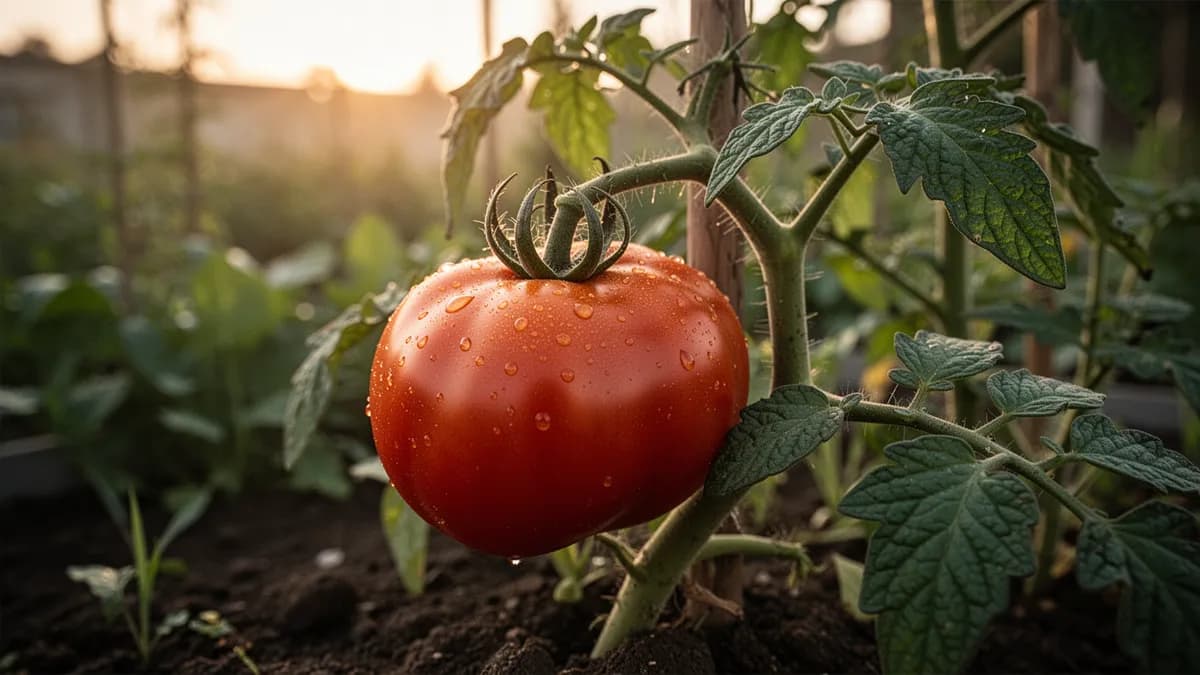
San Marzano Tomato
Solanum lycopersicum
At a Glance
The gold standard Italian paste tomato, producing elongated fruits with thick walls, low seed count, and intense sweet flavor. San Marzano types are indeterminate and need tall stakes or cages to support their vigorous growth through the season. The flesh breaks down into a velvety, rich sauce that is the foundation of authentic Italian cooking. Allow fruits to fully ripen on the vine and process in large batches for canning and freezing.
Planting & Harvest Calendar
Growth Stages
From Seed to Harvest
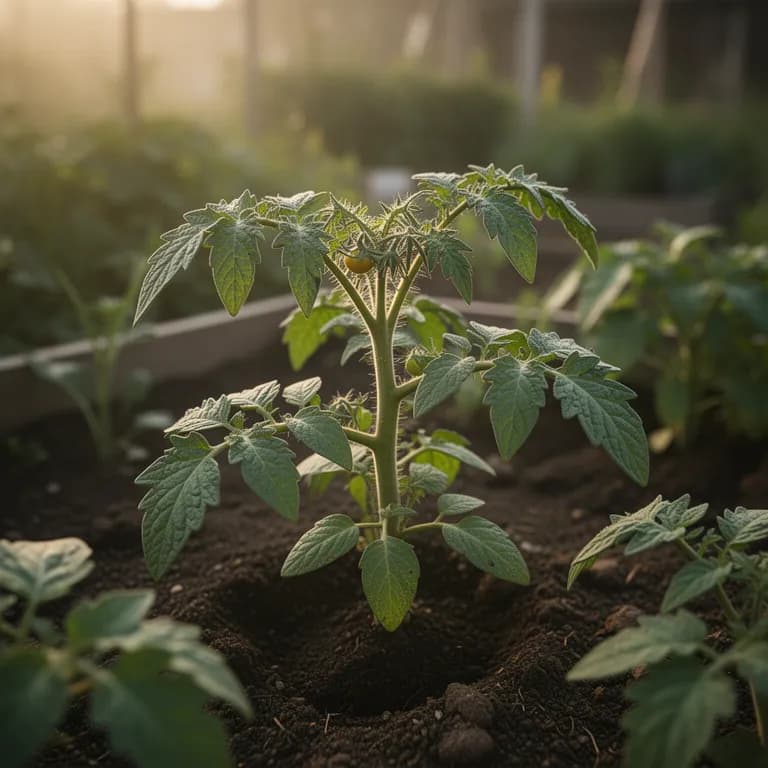
Seed Starting
Days 0–14
Seeds germinate in warm, moist seed-starting mix. The radicle root emerges first, followed by the hypocotyl arch pushing through the surface and unfolding two smooth, oval cotyledon leaves. San Marzano seeds can be slower to germinate than modern hybrids, often requiring 10-14 days even at optimal temperatures of 24-29°C (75-85°F).
💡 Care Tip
Maintain consistent soil warmth at 24-29°C using a heat mat. Do not overwater — keep mix moist but not soggy. Provide strong light immediately upon emergence to prevent leggy, weak seedlings.
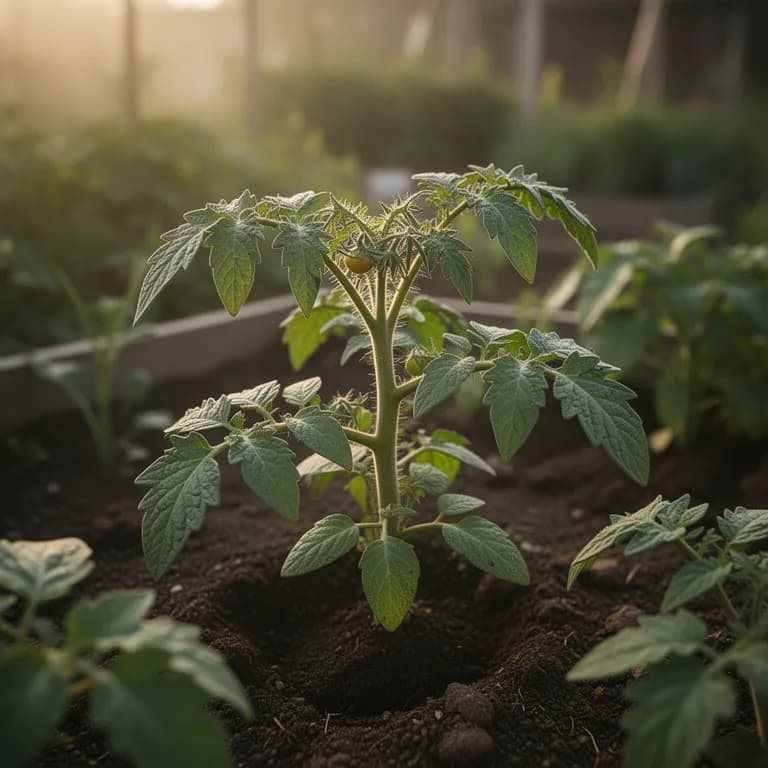
San Marzano seedlings developing their first true leaves under grow lights
Monthly Care Calendar
What to do each month for your San Marzano Tomato
June
You are hereFirst flowers appear and fruit begins to set. Switch to a low-nitrogen, high-potassium fertilizer. Continue sucker removal. Tie growing vines to stakes as they extend. Watch for early blight on lower leaves and remove any affected foliage immediately.
Did You Know?
Fascinating facts about San Marzano Tomato
San Marzano tomatoes hold DOP (Denominazione di Origine Protetta) status from the European Union — only tomatoes grown in the volcanic soil of the Agro Sarnese-Nocerino region near Mount Vesuvius in Italy can legally bear the 'San Marzano dell'Agro Sarnese-Nocerino' DOP label on canned products.
San Marzano tomatoes are the aristocrat of paste tomatoes, originating from the volcanic soils near Mount Vesuvius in the Campania region of Italy. Unlike standard Roma types, true San Marzanos are indeterminate — they grow continuously all season and produce their elongated, pointed fruits over a longer period rather than in a concentrated burst. This extended harvest gives you fresh sauce tomatoes for weeks rather than requiring a single massive canning session.
Start seeds indoors 8 weeks before the last frost at 24-29°C (75-85°F). San Marzanos need tall stakes or cages (at least 1.5m) since the indeterminate vines grow vigorously. Space plants 60-75 cm apart. Prune to 2-3 main stems for best fruit quality — more stems means more but smaller fruits. Water consistently at the base, providing 2.5-5 cm per week through drip irrigation.
The key to superior San Marzano flavor is allowing fruits to ripen completely on the vine until deep red — the elongated shape and thick walls means less chance of cracking compared to round tomatoes. The flesh is notably drier and sweeter than standard Romas, with a lower seed count and thicker walls that make it break down into an incredibly velvety sauce with minimal cooking time. San Marzanos are somewhat more disease-sensitive than modern hybrid Romas, so preventive copper fungicide sprays and excellent air circulation are important in humid climates.
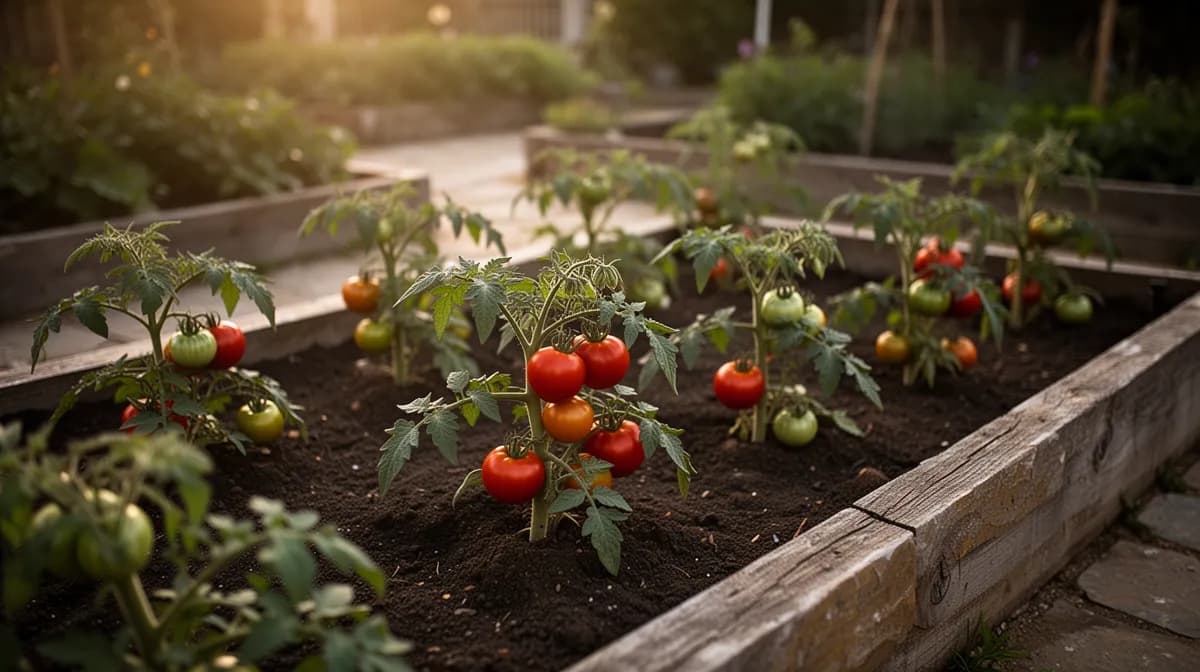
Indeterminate San Marzano vines trained on sturdy stakes can reach over 180 cm tall
The San Marzano tomato (Solanum lycopersicum 'San Marzano') traces its origins to the small town of San Marzano sul Sarno in the Campania region of southern Italy, nestled between Naples and Salerno in the shadow of Mount Vesuvius. According to tradition, the first seeds arrived in Italy around 1770 as a gift from the Viceroyalty of Peru to the Kingdom of Naples, though the exact historical record is uncertain. What is certain is that the volcanic soil of the Agro Sarnese-Nocerino plain — enriched over millennia by periodic eruptions of Vesuvius — proved to be the perfect terroir for this particular cultivar.
The unique growing conditions of the San Marzano region — mineral-rich volcanic soil, warm Mediterranean climate, reliable rainfall patterns, and proximity to the sea — produced a tomato of exceptional quality that could not be replicated elsewhere. By the late 19th century, the San Marzano tomato had become the foundation of Neapolitan cuisine and the Italian canning industry. The first commercial canning of San Marzano tomatoes began in the early 1900s, and the variety became synonymous with Italian tomato sauce worldwide. The distinctive elongated plum shape, thick flesh, low seed count, and balanced sweet-acid flavor made it the gold standard for cooking tomatoes.
In 1996, San Marzano tomatoes from the Agro Sarnese-Nocerino region received DOP (Protected Designation of Origin) status from the European Union, legally protecting the name and establishing strict production standards. Only tomatoes of the San Marzano type grown in designated municipalities, hand-harvested, and processed according to traditional methods can carry the DOP seal. Today, San Marzano seeds have been distributed worldwide and the variety is grown by home gardeners and small farms on every continent, though purists maintain that only the Vesuvian-grown product achieves the authentic flavor profile. The variety remains the most sought-after paste tomato in the world and continues to command premium prices in international markets.
Start San Marzano seeds indoors 8 weeks before the last frost for the longest possible growing season. Sow 6mm deep in warm seed-starting mix at 24-29°C (75-85°F). Germination takes 7-14 days — authentic San Marzano seed sometimes germinates more slowly than modern hybrids. Provide 14-16 hours of strong light. Pot up when first true leaves appear. San Marzanos benefit from a longer indoor growing period than other tomatoes to build strong transplants. Harden off for 10-14 days and transplant deeply after all frost danger. Source seed carefully — purchase only from reputable Italian seed companies or verified suppliers to ensure you receive the authentic variety.
San Marzano tomatoes thrive in rich, well-drained soil with a pH of 6.2-6.8, ideally mimicking the volcanic soils of their Italian homeland. Amend generously with compost and apply a balanced organic fertilizer at planting. Phosphorus and potassium are especially important for thick-walled fruit development — use a low-nitrogen formula like 5-10-10 when fruiting begins. Side-dress with compost tea every 2 weeks during the fruiting season. Calcium is critical for preventing blossom end rot on the elongated fruits — incorporate gypsum before planting. Avoid excessive nitrogen, which promotes watery flesh that makes poor sauce.
Check Your Zone
See if San Marzano Tomato is suitable for your location.
18°C – 29°C
64°F – 84°F
San Marzano tomatoes thrive in warm Mediterranean-type conditions between 18-29°C (65-85°F). Below 10°C (50°F), growth stops entirely and prolonged exposure to temperatures below 5°C causes chilling injury. Fruit set fails when nighttime temperatures drop below 13°C (55°F) or daytime temperatures exceed 35°C (95°F), as pollen becomes non-viable. The ideal range for fruit development and lycopene production is 21-27°C (70-80°F) during the day with nights around 15-18°C (60-65°F).
Common issues affecting San Marzano Tomato and how to prevent and treat them organically.
Authenticity confusion is common — many seeds sold as San Marzano are actually different varieties with inferior sauce quality. Source seeds from reputable Italian seed companies or certified strains. Blossom end rot affects the pointed tip of the elongated fruits and is caused by inconsistent watering. Lower yields per plant than determinate Roma types can disappoint gardeners expecting massive harvests — San Marzanos trade quantity for quality. The indeterminate habit requires strong support throughout the season. In humid climates, bacterial speck and other foliar diseases require proactive copper fungicide treatment.
Basil is the essential Italian garden companion — planted alongside San Marzanos, it may enhance flavor and deters aphids and whiteflies. Garlic repels red spider mites and adds to the Mediterranean garden theme. Oregano planted nearby provides another culinary companion while its aromatic oils help deter pests. Avoid planting near cabbage family crops, which are allelopathically incompatible. Keep away from fennel, which inhibits tomato growth. Parsley attracts beneficial hoverflies for natural pest control.
- 1Plant San Marzano seedlings deeply — bury at least two-thirds of the stem at transplanting. Tomatoes produce adventitious roots along any buried stem, creating a massive root system that improves drought resistance, nutrient uptake, and overall plant vigor.
- 2San Marzano is an indeterminate (vining) variety that requires strong, tall support. Use sturdy 180-210 cm stakes, heavy-duty cages, or a string trellis system. Flimsy supports will collapse under the weight of a fully loaded plant by mid-season.
- 3Remove all suckers (side shoots) below the first flower cluster to create a clean lower stem with good air circulation. Above the first cluster, you can choose to let 1-2 additional leaders develop for more fruit, or maintain a single leader for earlier, larger tomatoes.
- 4Consistent watering is critical — San Marzanos are particularly susceptible to blossom end rot (a calcium uptake disorder caused by irregular watering). Water deeply 2-3 times per week rather than shallowly every day. Drip irrigation is ideal.
- 5Mulch heavily with straw or shredded leaves once the soil has warmed to at least 18°C. Mulch conserves moisture, suppresses weeds, and prevents soil-borne disease spores from splashing onto lower leaves during rain.
- 6Remove lower leaves progressively as the plant grows — by midsummer, strip all foliage below the lowest ripening fruit cluster. This dramatically reduces early blight infection, improves air circulation, and redirects energy to fruit production.
- 7For the best sauce tomatoes, reduce watering slightly (by about 25%) once fruits begin to color. Mild water stress concentrates sugars and flavor compounds in the flesh, producing a more intensely flavored tomato for cooking.
- 8If your growing season is short (under 120 frost-free days), choose a San Marzano hybrid like 'San Marzano Redorta' or 'Granadero' that matures 10-15 days earlier than the traditional open-pollinated variety while retaining most of the classic flavor and shape.
San Marzano tomatoes should be allowed to ripen completely on the vine until deep, uniform red for maximum flavor and sauce quality. The elongated fruits are ready when they detach easily with a gentle tug and feel slightly soft. Unlike determinate Romas that ripen all at once, indeterminate San Marzanos produce over several weeks, allowing you to process in manageable batches. The thick walls and low juice content mean these tomatoes hold well on the vine for 3-4 days after peak ripeness without splitting. Harvest with pruners, leaving a short stem attached. Process as soon as possible after picking for the best-quality sauce.
Perfectly ripe San Marzano tomatoes ready for harvest — deep red with minimal seeds
San Marzanos are the premier canning tomato. For whole canned tomatoes, blanch 30-60 seconds, peel, and pack in their own juice with citric acid. Their thick walls and low moisture yield a naturally thicker sauce that requires less cooking time to reduce. For sauce, simply crush peeled tomatoes, simmer for 30-45 minutes, and can or freeze. The concentrated flesh makes outstanding tomato paste — cook down further and freeze in ice cube trays. San Marzanos dehydrate beautifully into intensely flavored dried tomatoes. Fresh fruits store at room temperature for 5-7 days. They freeze well whole for later processing.
Plan your garden with ease
Love growing San Marzano Tomato? Use our free garden planner to design your beds, track planting dates, and get personalized care reminders.
Nutritional Info
Per 100g serving
18
Calories
Health Benefits
- Exceptionally rich in lycopene — the red pigment and powerful antioxidant that gives San Marzano tomatoes their deep color. Lycopene bioavailability increases dramatically when tomatoes are cooked with olive oil, making Italian-style sauces an ideal delivery method.
- Good source of vitamin C, providing 14% of the daily value per 100g, supporting immune function and iron absorption from plant-based foods.
- Contains significant vitamin A as beta-carotene, promoting healthy vision, skin integrity, and immune system function.
- Rich in potassium (237mg per 100g), an essential mineral for blood pressure regulation and proper muscle and nerve function.
- Provides vitamin K, important for blood clotting and bone metabolism, plus B vitamins including folate and B6 for energy metabolism.
- Very low calorie (only 18 kcal per 100g) with virtually no fat, making tomato-based sauces one of the most nutritious low-calorie bases for meals.
💰 Why Grow Your Own?
A single San Marzano plant costing $3-5 (or pennies from seed) can produce 4-6 kg of tomatoes per season. Authentic DOP San Marzano canned tomatoes retail for $5-8 per 800g can, and premium domestic San Marzano-type cans cost $3-5 each. Growing just 6-8 plants produces enough to can 20-30 jars of sauce, representing $80-150 in equivalent store-bought product. The savings are even greater when you consider that homemade sauce from vine-ripened San Marzanos is superior in flavor to any canned product available at retail.
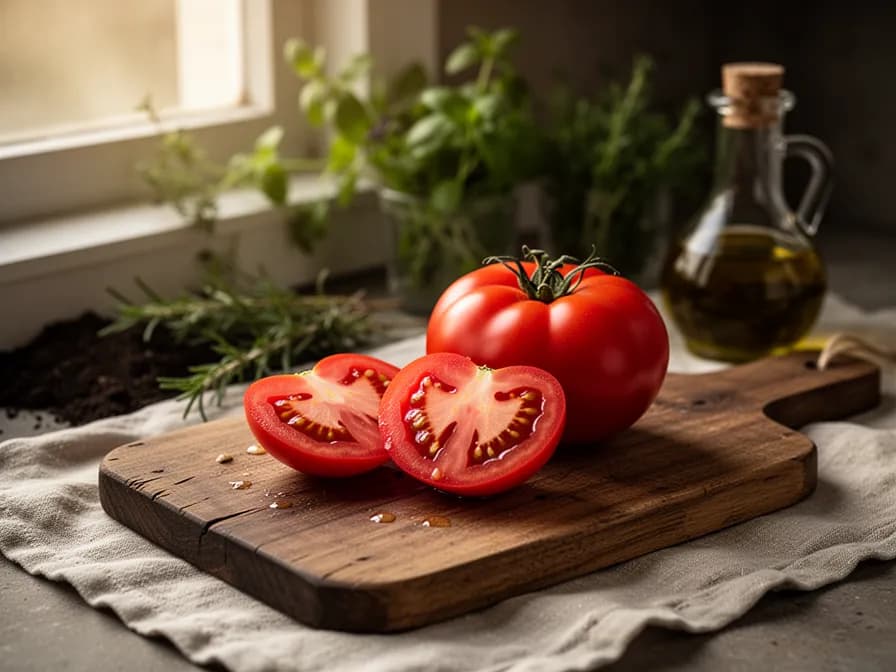
The hallmark of San Marzano — thick, meaty walls with very few seeds and little juice
Quick Recipes
Simple recipes using fresh San Marzano Tomato
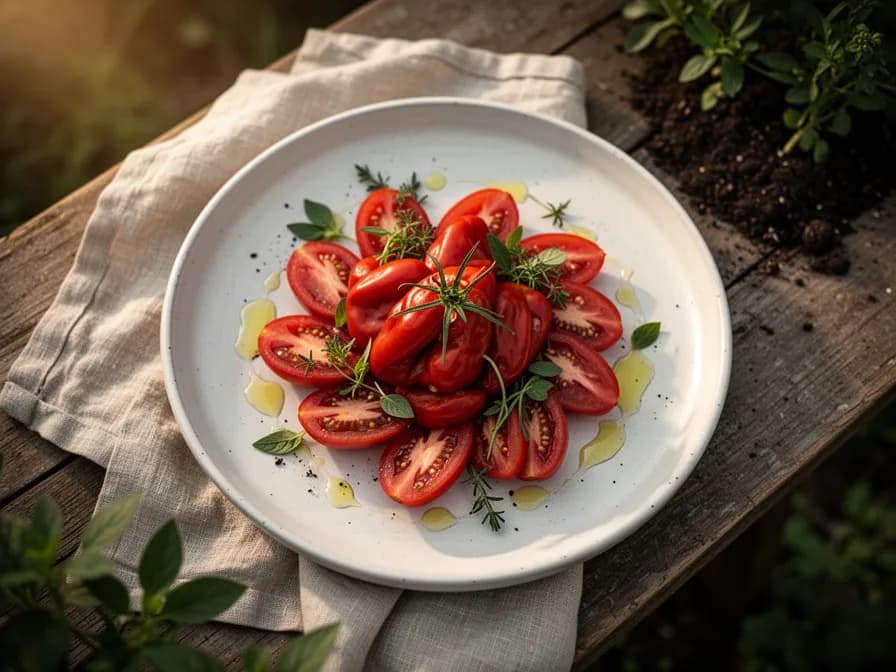
Classic San Marzano Marinara
30 minThe quintessential Italian tomato sauce — crushed San Marzano tomatoes simmered gently with garlic, olive oil, and fresh basil. The naturally thick, sweet flesh of San Marzanos means this sauce needs no added sugar, minimal cooking time, and produces a velvety consistency that clings to pasta perfectly.
Oven-Roasted San Marzano Bruschetta
25 minSan Marzano tomatoes halved and slow-roasted until concentrated and caramelized, then piled onto garlic-rubbed grilled bread with fresh mozzarella and torn basil. The roasting intensifies the tomato's natural sweetness and creates an unforgettable appetizer.
San Marzano Pizza Sauce (Neapolitan Style)
5 minAuthentic Neapolitan pizza sauce is uncooked — ripe San Marzano tomatoes are simply crushed by hand with salt, a drizzle of olive oil, and nothing else. The sauce cooks directly on the pizza in the hot oven, preserving the bright, fresh tomato flavor that defines true Neapolitan pizza.
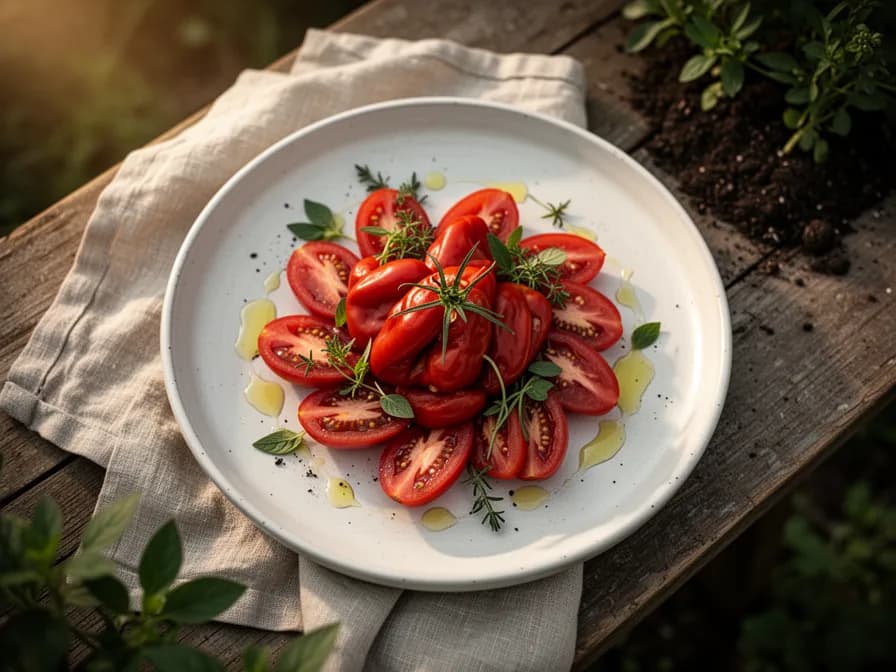
San Marzano tomatoes cook down into a thick, velvety sauce with minimal effort
Yield & Spacing Calculator
See how many San Marzano Tomato plants fit in your garden bed based on the recommended 60cm spacing.
4
San Marzano Tomato plants in a 4×4 ft bed
2 columns × 2 rows at 60cm spacing
Popular Varieties
Some of the most popular san marzano tomato varieties for home gardeners, each with unique characteristics.
San Marzano 2 (Redorta)
The authentic Italian strain with elongated, pointed fruits and incomparably sweet, rich flesh. 80 days. Indeterminate. The benchmark for paste tomatoes. DOP-certified variety from the Campania region.
San Marzano Lungo
An extra-long fruited selection producing fruits up to 12 cm with thick, dry flesh ideal for sun-drying. 85 days. Indeterminate. Outstanding concentrated flavor. Heavy yields on vigorous vines.
Granadero F1
A modern San Marzano hybrid with improved disease resistance while maintaining the classic shape and flavor. 75 days. Indeterminate. Resistant to Fusarium and Verticillium. More reliable than open-pollinated strains.
San Marzano Nano
A compact, determinate San Marzano type reaching only 90 cm tall while producing classic elongated fruits. 70 days. Excellent for containers and small gardens. Concentrated harvest over 2-3 weeks.
San Marzano tomatoes are the foundation of authentic Italian tomato sauce — their thick, dry flesh, low acidity, and intense sweetness create a velvety sauce with minimal cooking. They are the only tomato variety permitted for true Neapolitan pizza sauce (DOP certification). Use for marinara, pomodoro, arrabbiata, and puttanesca sauces. Outstanding for bruschetta, caprese-style preparations, and oven-roasted whole. The concentrated flavor means you need fewer tomatoes per batch of sauce. Crushed San Marzanos make the finest base for tomato soup.
When should I plant San Marzano Tomato?
Plant San Marzano Tomato in March, April, May. It takes approximately 80 days to reach maturity, with harvest typically in July, August, September.
What are good companion plants for San Marzano Tomato?
San Marzano Tomato grows well alongside Basil, Garlic, Oregano. Companion planting can improve growth, flavor, and natural pest control.
What hardiness zones can San Marzano Tomato grow in?
San Marzano Tomato thrives in USDA hardiness zones 3 through 11. With greenhouse protection, it may be grown in zones 1 through 12.
How much sun does San Marzano Tomato need?
San Marzano Tomato requires Full Sun (6-8h+). This means at least 6-8 hours of direct sunlight daily.
How far apart should I space San Marzano Tomato?
Space San Marzano Tomato plants 60cm (24 inches) apart for optimal growth and air circulation.
What pests and diseases affect San Marzano Tomato?
Common issues include Bacterial Speck, Blossom End Rot, Tomato Hornworm. Prevention through good garden practices like crop rotation, proper spacing, and companion planting is the best approach. See the detailed pests and diseases section above for symptoms, prevention, and treatment for each.
How do I store San Marzano Tomato after harvest?
San Marzanos are the premier canning tomato. For whole canned tomatoes, blanch 30-60 seconds, peel, and pack in their own juice with citric acid. Their thick walls and low moisture yield a naturally thicker sauce that requires less cooking time to reduce. For sauce, simply crush peeled tomatoes, sim...
What are the best San Marzano Tomato varieties to grow?
Popular varieties include San Marzano 2 (Redorta), San Marzano Lungo, Granadero F1, San Marzano Nano. Each has unique characteristics suited to different growing conditions and culinary preferences. See the varieties section above for detailed descriptions.
What soil does San Marzano Tomato need?
San Marzano tomatoes thrive in rich, well-drained soil with a pH of 6.2-6.8, ideally mimicking the volcanic soils of their Italian homeland. Amend generously with compost and apply a balanced organic fertilizer at planting. Phosphorus and potassium are especially important for thick-walled fruit dev...
What is the difference between authentic DOP San Marzano and regular San Marzano tomatoes?
DOP (Denominazione di Origine Protetta) San Marzano tomatoes are grown exclusively in the volcanic soil of the Agro Sarnese-Nocerino region near Mount Vesuvius, Italy, hand-harvested, and processed according to strict EU regulations. Regular San Marzano tomatoes grown in home gardens elsewhere use the same cultivar but lack the specific terroir of the Vesuvian soil. Home-grown San Marzanos are still excellent paste tomatoes with the signature elongated shape, thick flesh, and low seed count — they simply cannot carry the DOP designation. For home sauce-making, garden-grown San Marzanos are outstanding.
Why are my San Marzano tomatoes getting blossom end rot?
Blossom end rot — a dark, sunken, leathery patch on the bottom of the fruit — is the most common San Marzano problem and is caused by calcium deficiency in developing fruit, almost always triggered by inconsistent watering rather than insufficient soil calcium. The elongated fruit shape makes San Marzanos more susceptible than round varieties. The solution is consistent, deep watering (never letting soil dry out completely between waterings), heavy mulching to maintain even soil moisture, and avoiding excessive nitrogen fertilization which can interfere with calcium uptake. Adding calcium directly to the soil rarely helps because the issue is water-mediated transport, not soil deficiency.
How do I know when San Marzano tomatoes are ripe enough to pick?
Ripe San Marzano tomatoes are uniformly deep red from stem to tip with no green or orange patches remaining. The fruit yields slightly to gentle pressure but is not soft or squishy. Ripe fruits separate from the vine easily with a gentle twist or slight upward bend. For sauce-making, allow fruits to fully ripen on the vine for maximum sugar development and lycopene content. If frost threatens, pick any fruits showing even a blush of color — they will ripen indoors at room temperature in a paper bag within 5-10 days.
Can I save seeds from my San Marzano tomatoes for next year?
Yes — San Marzano is an open-pollinated (non-hybrid) heirloom variety, so saved seeds will produce plants true to type. To save seeds, scoop the gel and seeds from fully ripe fruits into a jar with a small amount of water, allow to ferment for 2-3 days at room temperature (this removes germination-inhibiting compounds and kills some seed-borne diseases), rinse clean, and dry thoroughly on a paper plate for 1-2 weeks. Store in a labeled envelope in a cool, dry place. Properly saved tomato seeds remain viable for 4-5 years.
Why are my San Marzano plants so tall but producing very little fruit?
Excessive vegetative growth with poor fruit set is usually caused by over-fertilization with nitrogen, insufficient sunlight (less than 8 hours direct sun), or temperatures outside the pollination range. Switch to a low-nitrogen, high-potassium fertilizer once flowering begins. Ensure full sun exposure. Gently shake flower clusters to assist pollination. Also check your pruning — unpruned indeterminate San Marzanos put enormous energy into sucker growth at the expense of fruit. Remove suckers below the first flower cluster and limit the plant to 2-3 main stems.
How many San Marzano plants do I need to make enough sauce for the year?
A general rule of thumb is that it takes approximately 8-10 kg of fresh San Marzano tomatoes to produce 3-4 liters of thick finished sauce. Each well-maintained plant yields about 4-6 kg per season. For a family of four consuming roughly one jar of sauce per week (about 50 jars per year), you would need approximately 15-20 plants. For more casual home sauce-making — 10-15 jars for special meals — 6-8 plants is usually sufficient. Growing a few extra plants provides a buffer for inevitable losses to disease, pests, or weather.
Ready to Grow San Marzano Tomato?
Add San Marzano Tomato to your garden plan and start designing your perfect layout.

Vladimir Kusnezow
Gardener and Software Developer
Zone 6b gardener. Growing vegetables and fruits in soil and hydroponics for 6 years. I built PlotMyGarden to plan my own gardens.
Jump to Section